Lucas Arruda——Deserto-Modelo
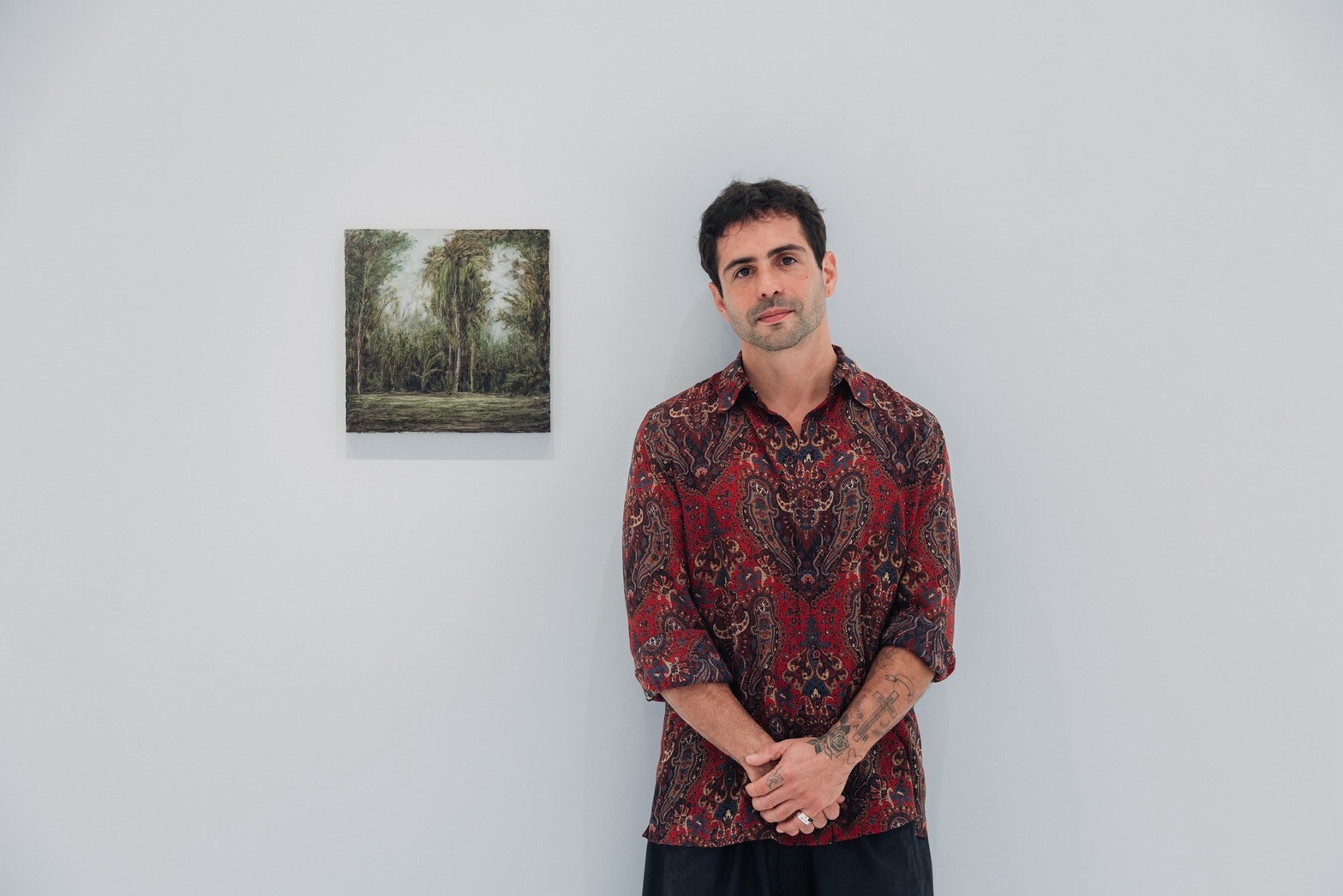
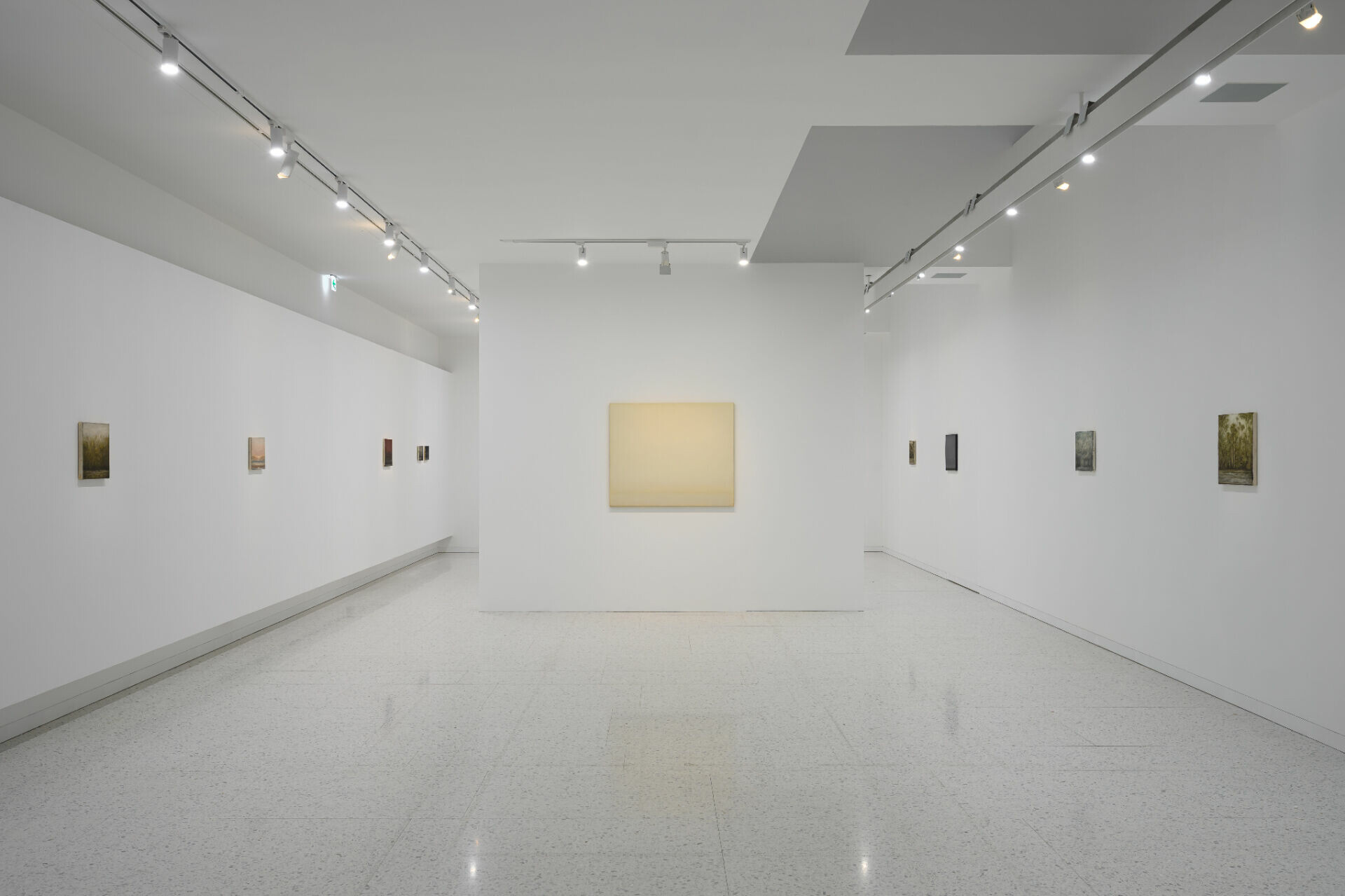
Déjà vu—the hushed sigh that arises when we encounter a scene that feels uncannily familiar. Entering Winsing Art Place and moving slowly among Lucas Arruda’s distant, pared-down paintings, landscape suddenly becomes a mysterious experience of mental flow. These images exist nowhere in the physical world, yet they are able to stir deeply rooted emotions embedded in memory. For Lucas Arruda, landscape does not point to a single, identifiable place; rather, it functions as a pictorial structure—a form through which perception and thought take shape.
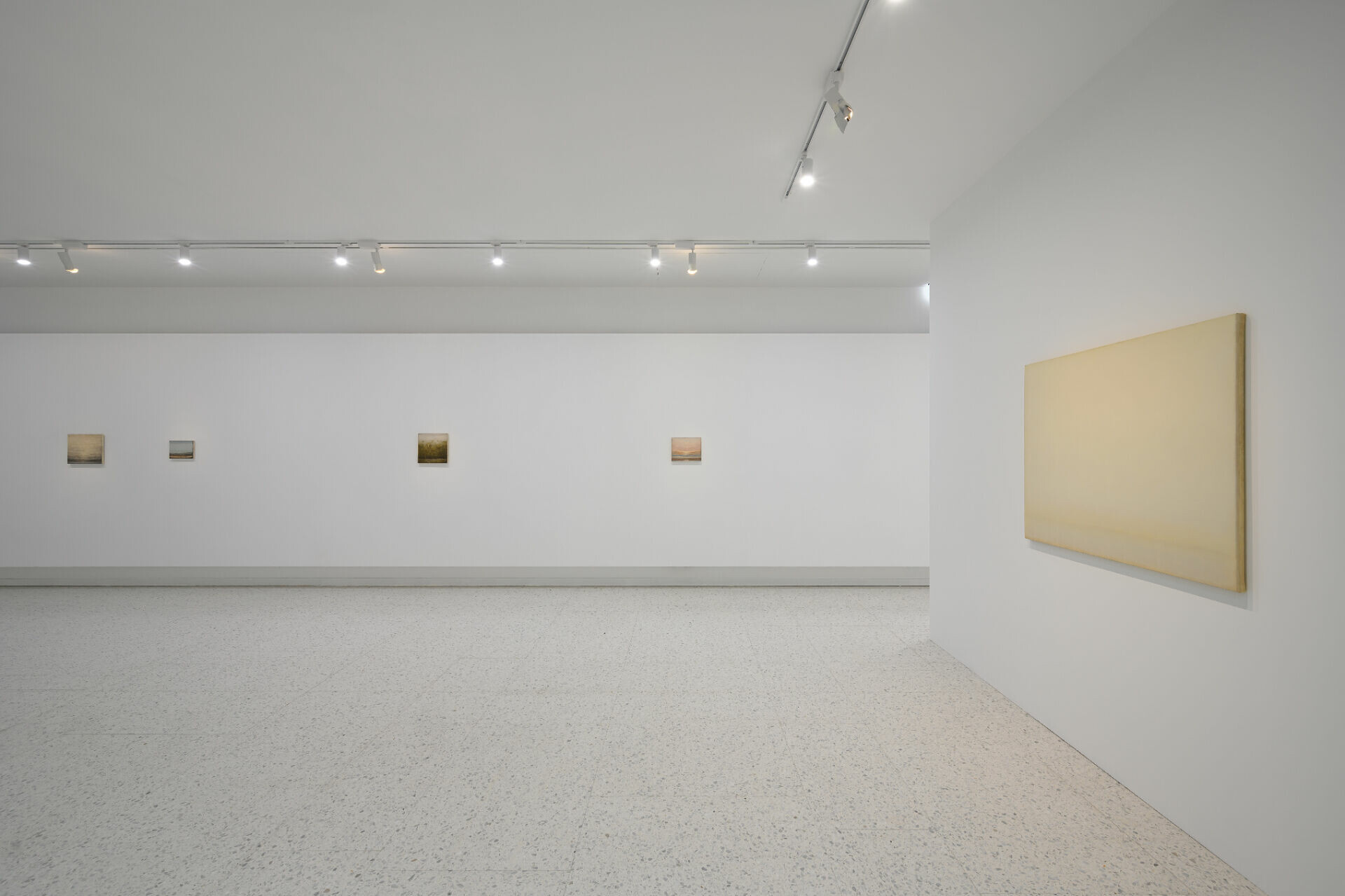
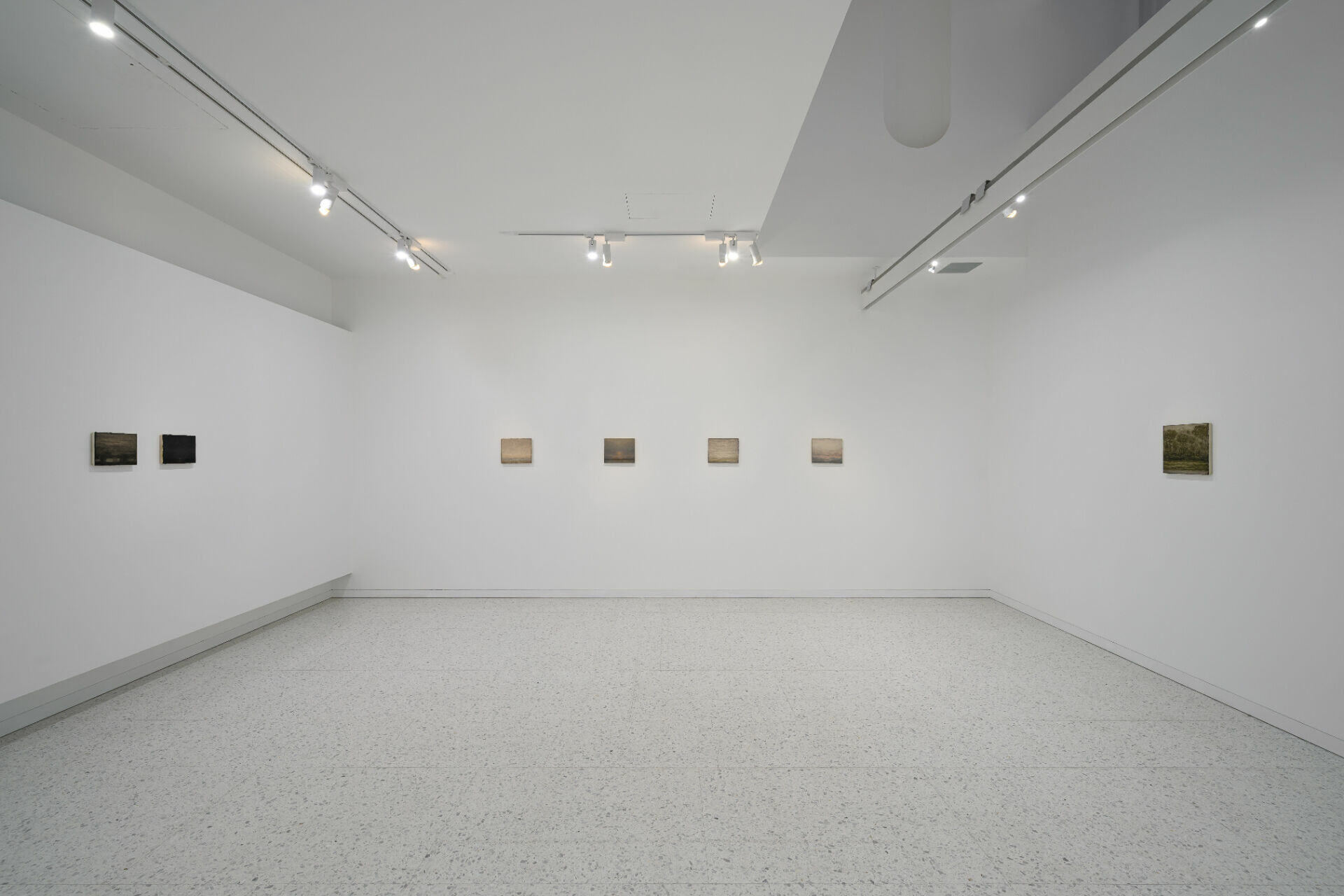
This exhibition centres on Arruda’s long-developed series Deserto-Modelo (Models of Desert). The title echoes a phrase by the Brazilian poet João Cabral de Melo Neto, for whom the desert signifies an eternal realm that lies beyond language. In Arruda’s work, however, the “Model of Desert” does not refer to any real place, but to an imagined state of landscape. Marked by the absence of life, events, and even a sense of time, this inorganic condition closely approaches a projection of the artist’s inner state. Such near-emptiness is repeatedly articulated through Arruda’s sustained practice of revisiting similar compositions and pursuing the same inquiry over an extended period.
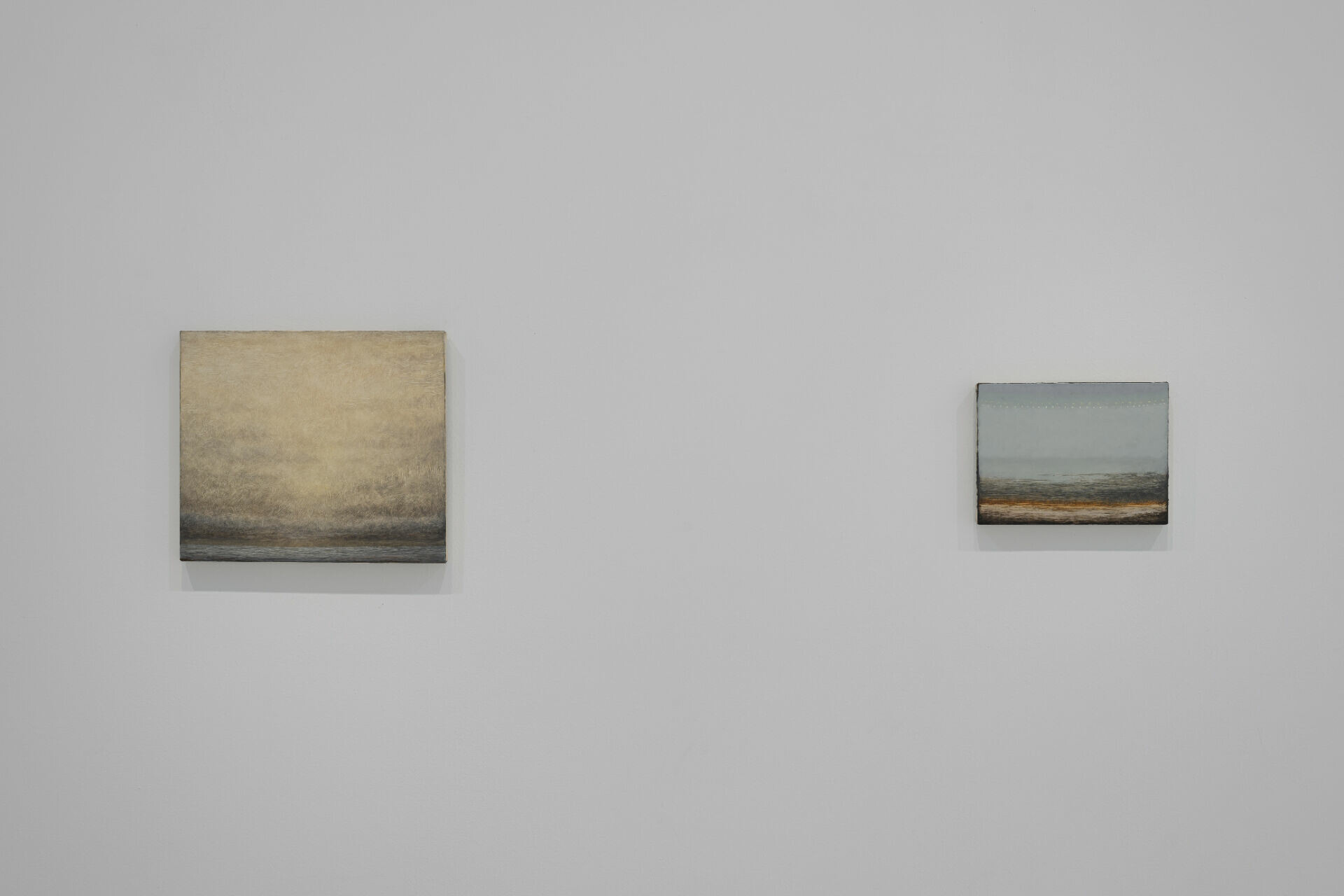
A closer look at the paintings reveals dim, brooding skies, occasionally interrupted by an extremely thin horizon line, or forests reduced to compressed silhouettes. These elements do not form a narrative, nor do they indicate a specific location. Instead, they operate as structural cues, holding the image in a state of indeterminacy. Although Arruda’s works are often perceived as landscapes, he has noted that this recognition stems largely from cultural conventions tied to compositional format. Created primarily in the studio, his paintings are constructed from visual impressions that have settled over time—an approach closer to a meditative mode of seeing than to any intention of representing reality.
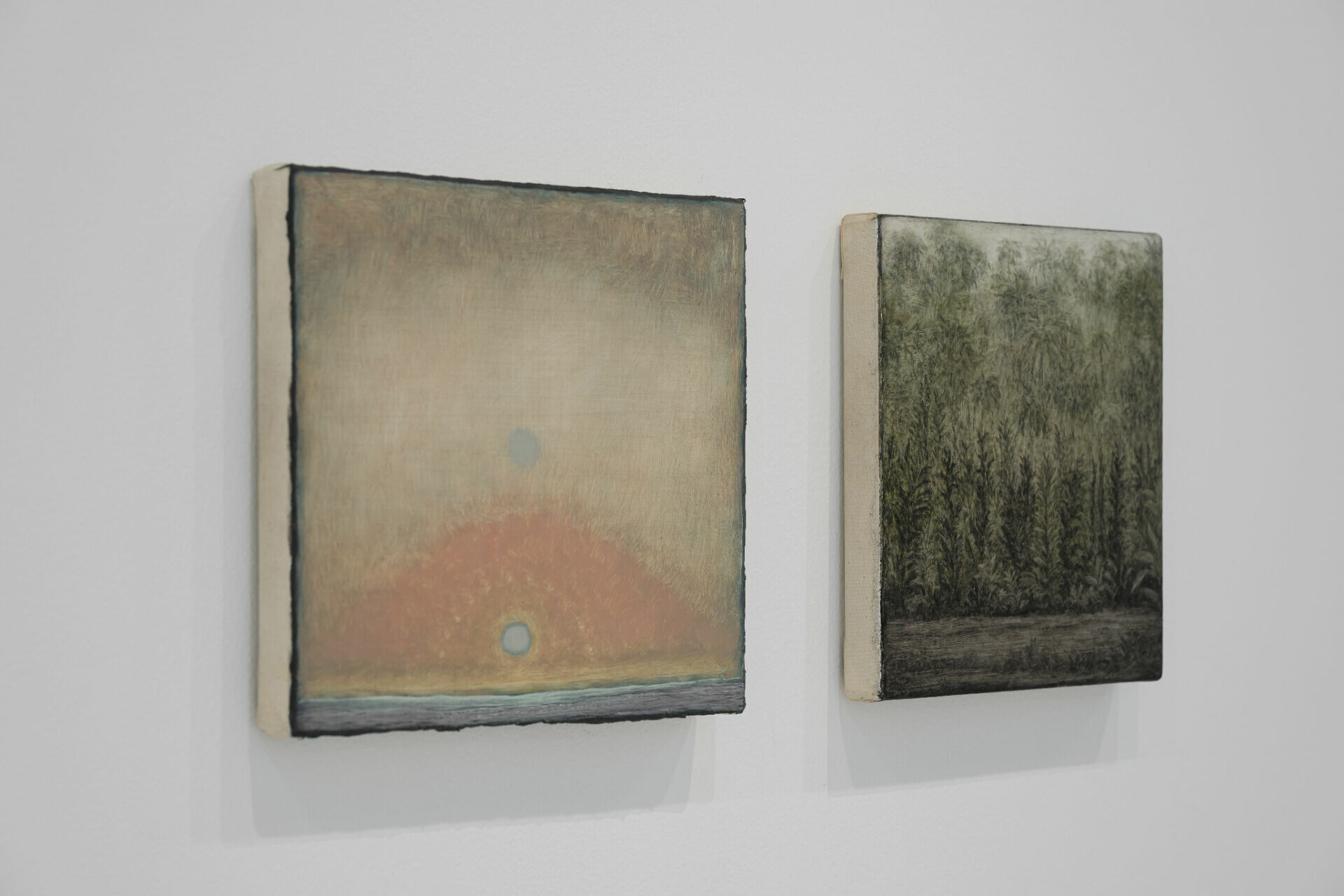
Light plays a central, connective role in Arruda’s practice. It is not predetermined as a means of describing a scene; rather, it gradually emerges through the accumulation, erasure, and revision of paint, stroke by stroke across the canvas. As the artist has described, light is movement itself—it generates intensity and ultimately opens a spatial condition that exists between abstraction and figuration. Through a conscious choice to work on a small scale, the materiality of paint is amplified: every brushstroke and scraping becomes essential, allowing variations of light to grow more concentrated and denser, producing a heightened sense of tension within the limited pictorial field.
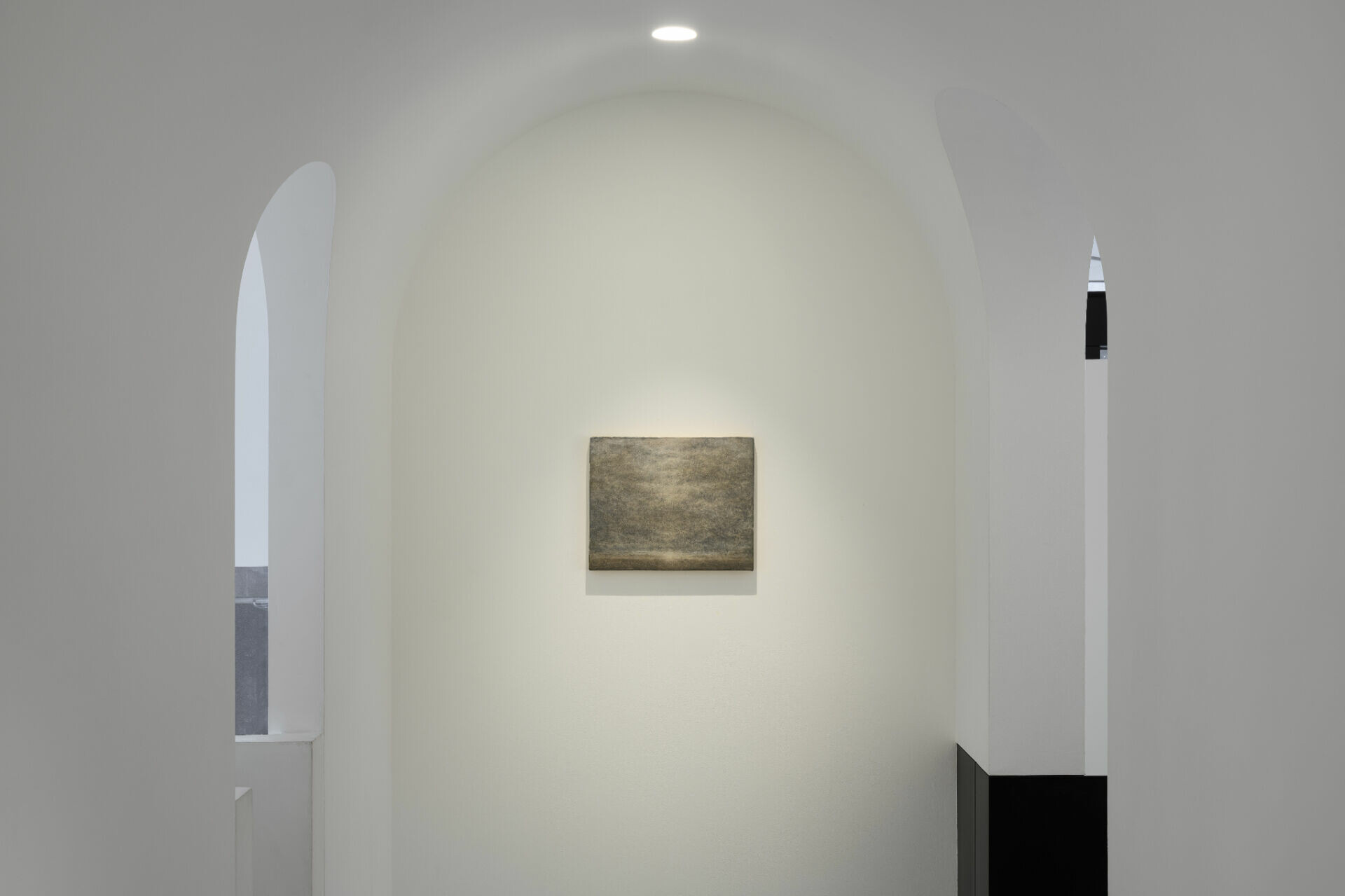
Through the repeated refinement of structure, scale, light, and material, this artist from São Paulo transforms landscape into an abstract experience shaped by time, repetition, and inner perception. Standing before these works, viewers may feel as though they are wandering through a mental landscape constructed by the artist—at the threshold between the real and the imagined, momentarily stepping away from everyday life and breathing at a slower, more contemplative pace.