Stealth
"There is a crack in everything. That’s how the light gets in." — Leonard Cohen
Why do artists move “stealthily”?
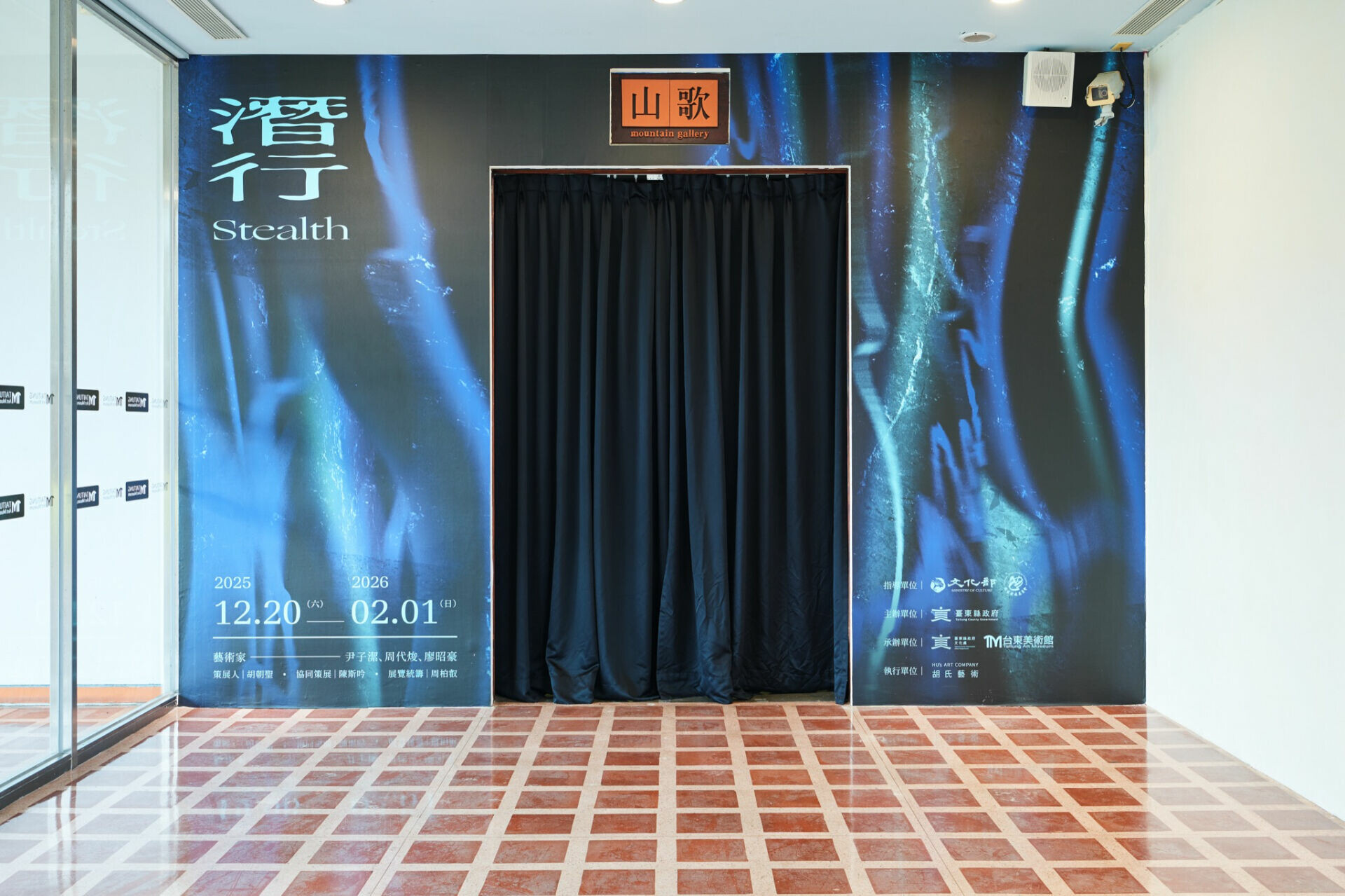
As humble observers and honest recorders, stealth is a posture. Navigating the fissures of history, culture, and environment, artists seek to reveal truths that might be hidden or overlooked in mainstream narratives. Curator Hu Chao-Sheng emphasizes that stealth is not retreat, but an active practice. The current exhibition Stealth at Taitung Art Museum explores shifting terrains—between history and the present, mainstream and marginal, natural and artificial—as well as cultures that struggle forward and fragile, contradictory forms of coexistence.
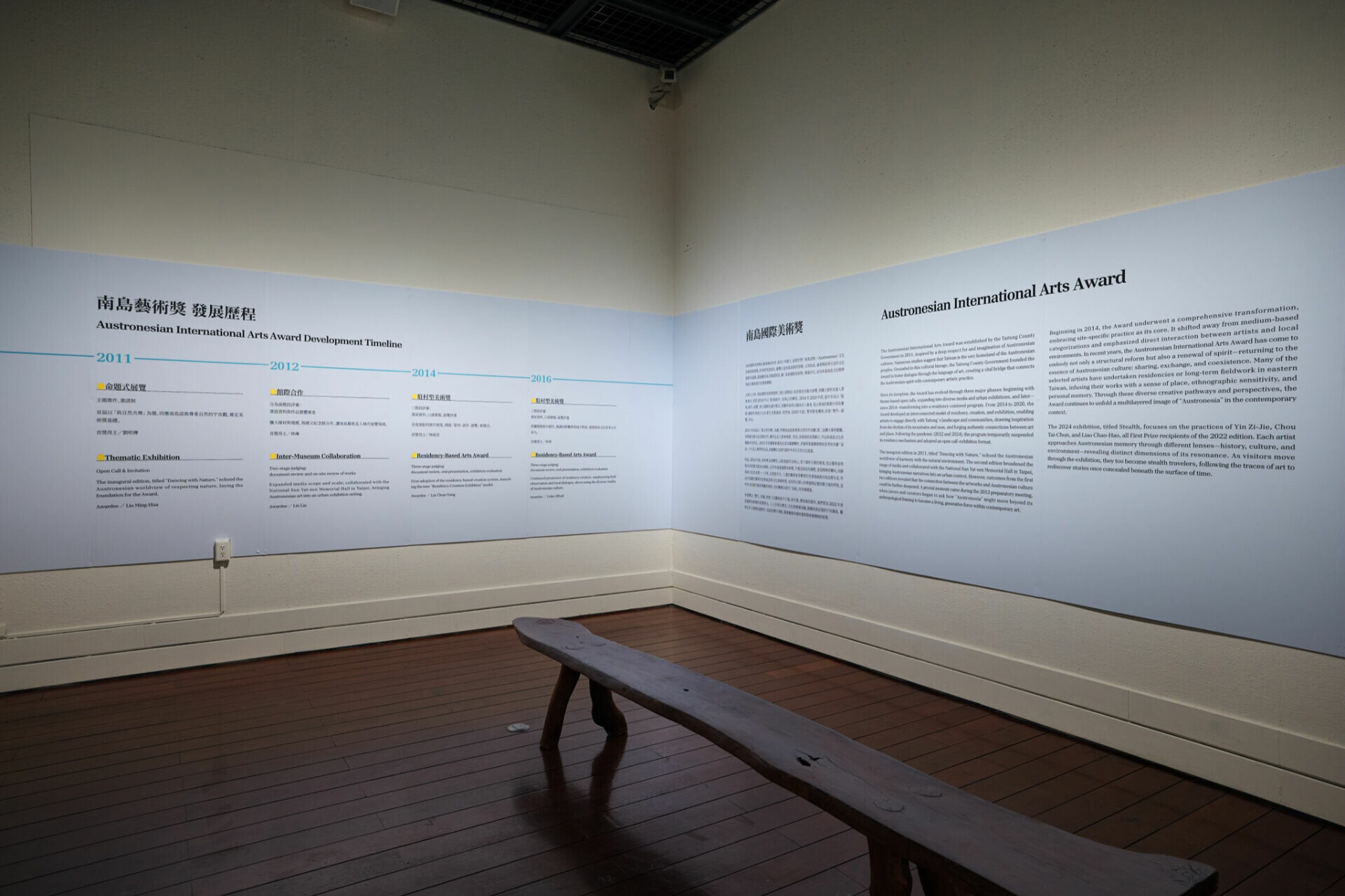
Three paths of stealth
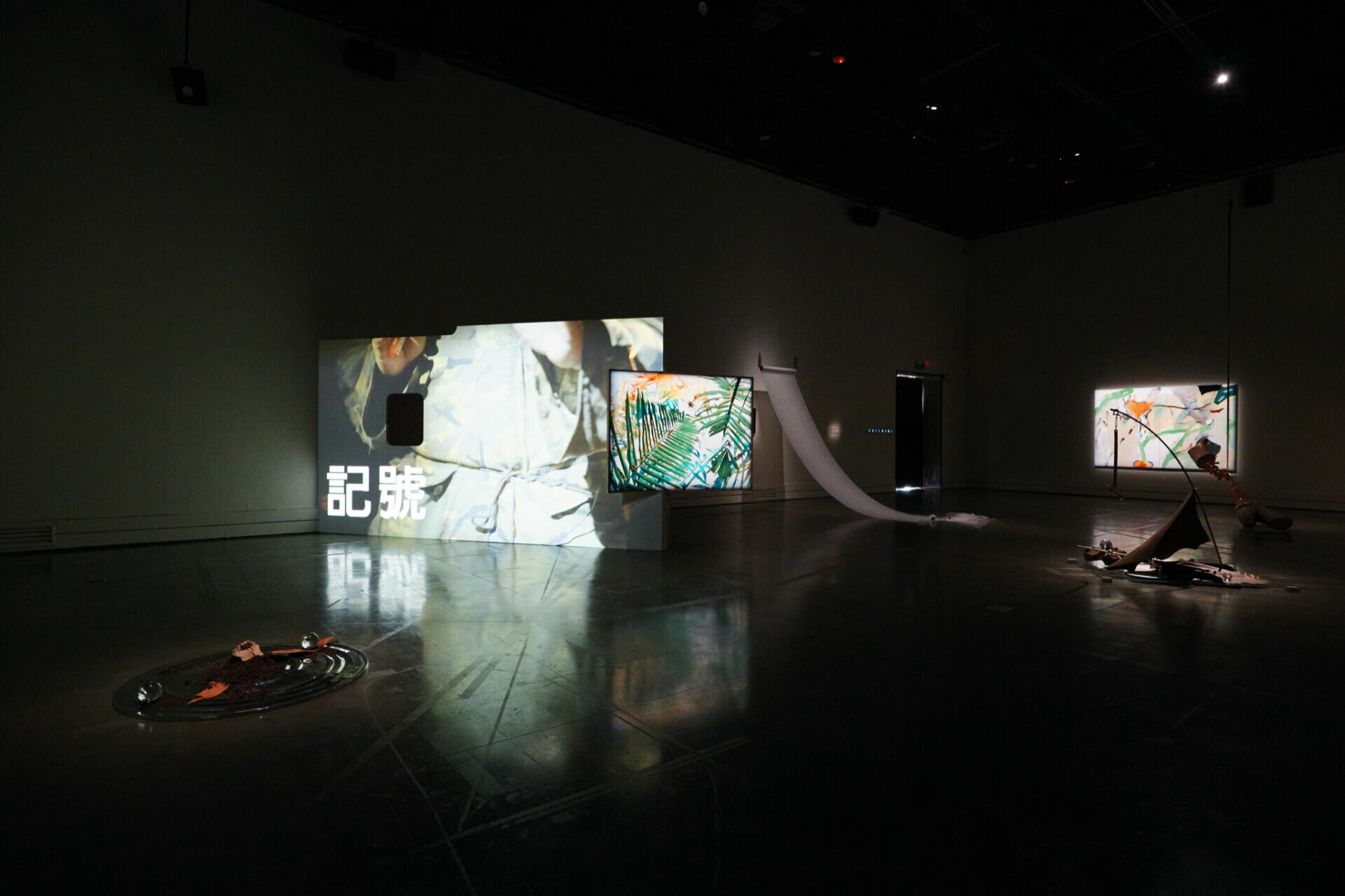
Chou Tai-Chun draws on shifting landscapes, migrations, and old maps. Using painting as a tool, he traces how land has been demarcated, overwritten, and eroded over time. His landscapes are not literal reproductions, but blurred processes of movement and reorganization, responding to singular historical narratives and inviting reconsideration of cultural positioning.
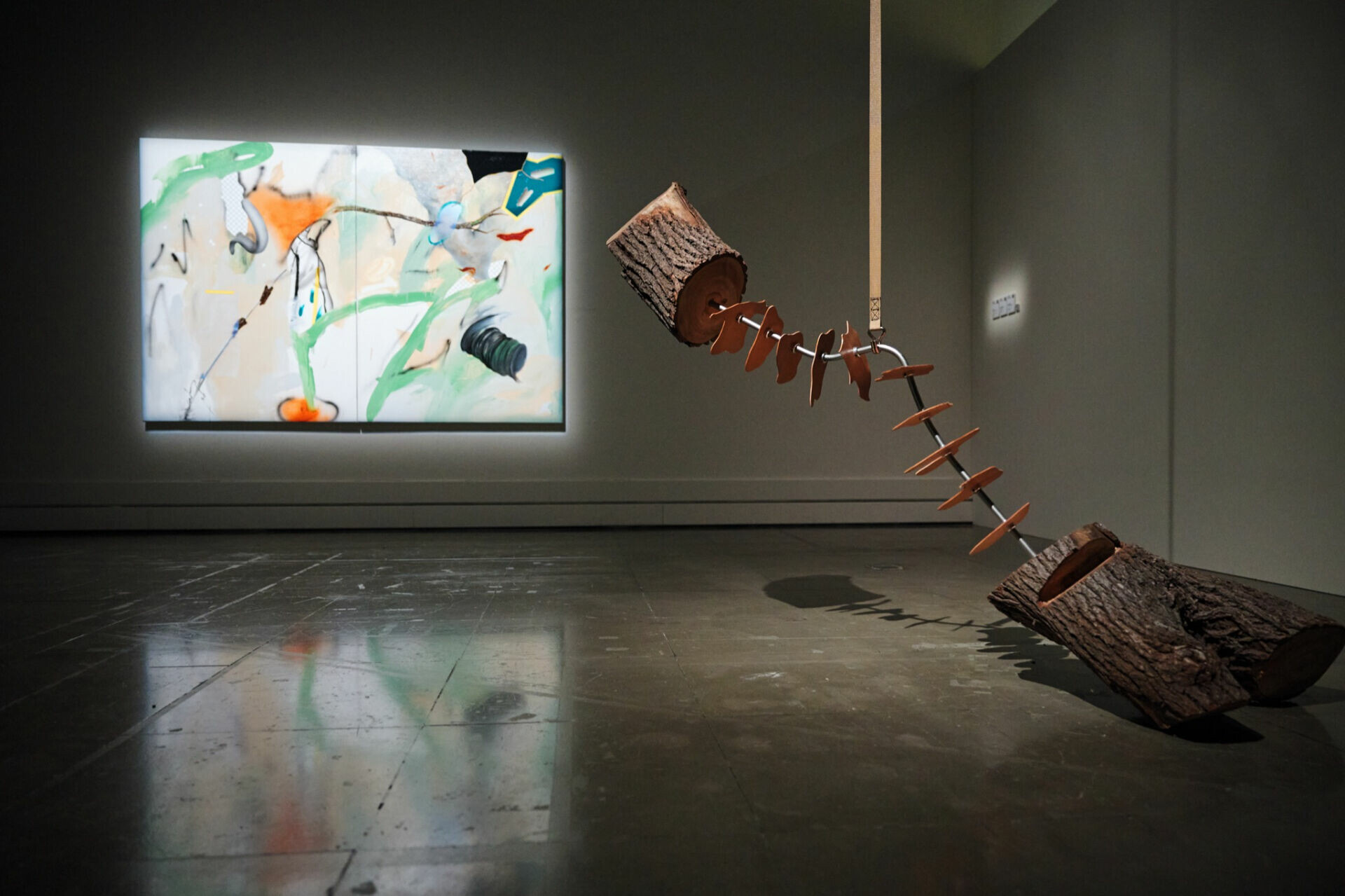
➤ Chou Tai-Chun, Signals from the Forest, 162x240cm, Acrylic on canvas, 2025. & Chou Tai-Chun, Becoming the Other’s Point of View, 200x60x30cm, Mixed media, 2025.
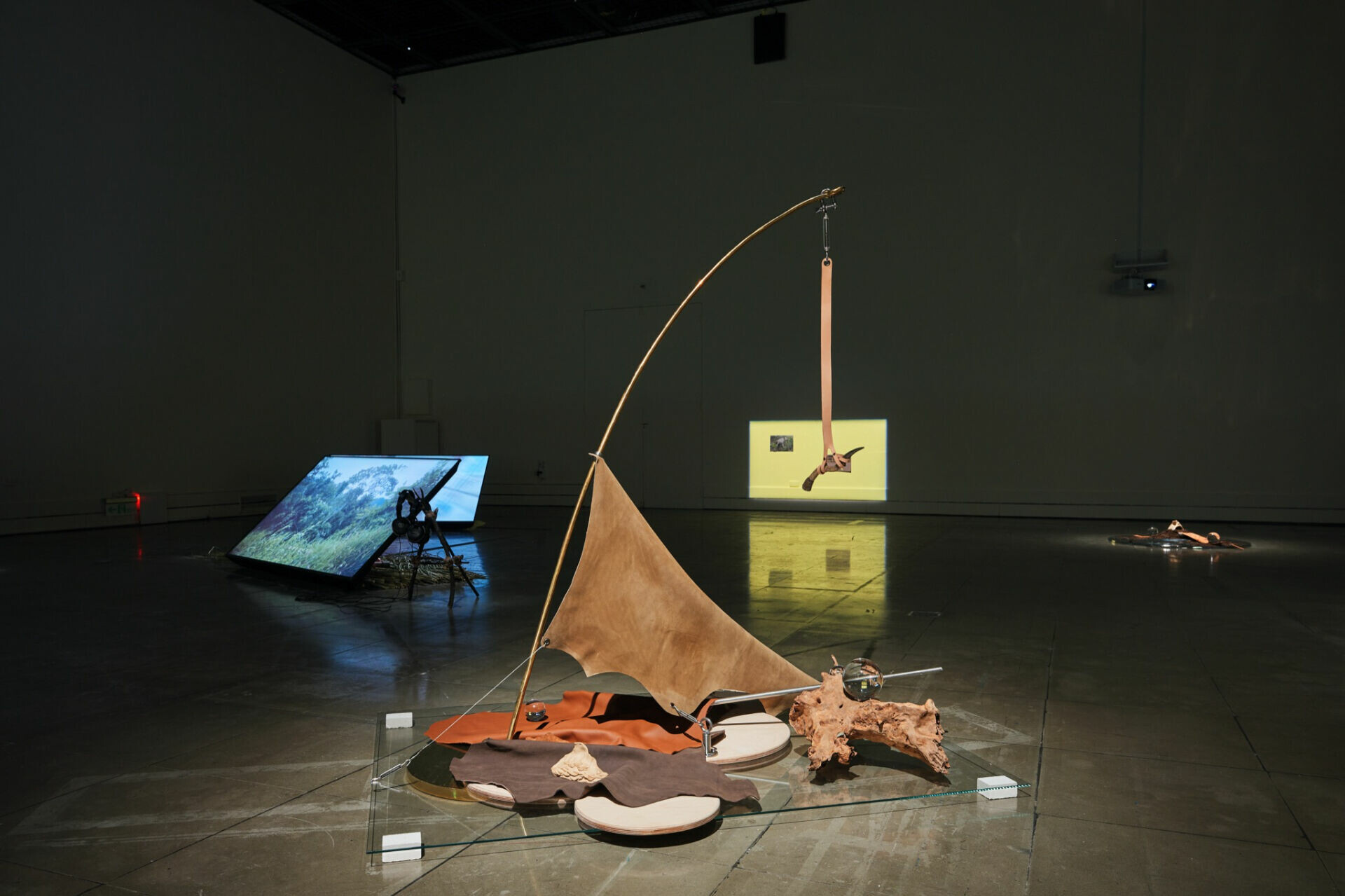
➤ Chou Tai-Chun, In the Grip of Heavy Air, 140x100x160cm,
Stainless steel, brass, cypress wood, glass, tempered glass, birch plywood, firebrick, vegetable-tanned cowhide, leather, metal hardware, ceramic, Formosan muntjac antler. 2024.
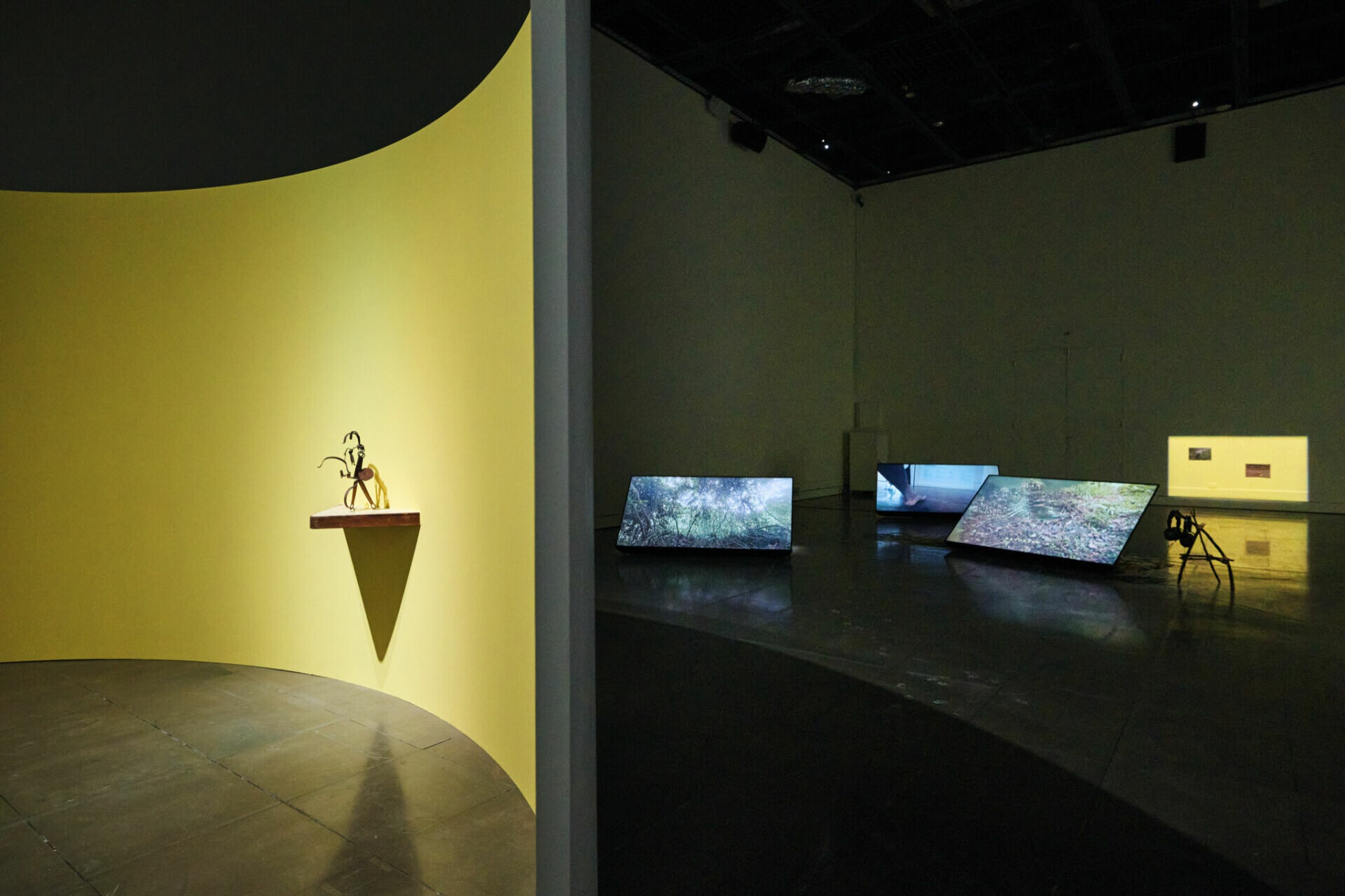
Yin Zi-Jie centers on the motif of the “three-legged dog,” transforming it into a metaphor for Indigenous peoples’ cultural ruptures and resilience amid modernization. It also symbolizes the uneven rhythm of survival under power and environmental constraints. Through this “imperfection,” her work quietly but firmly resists mainstream narratives.
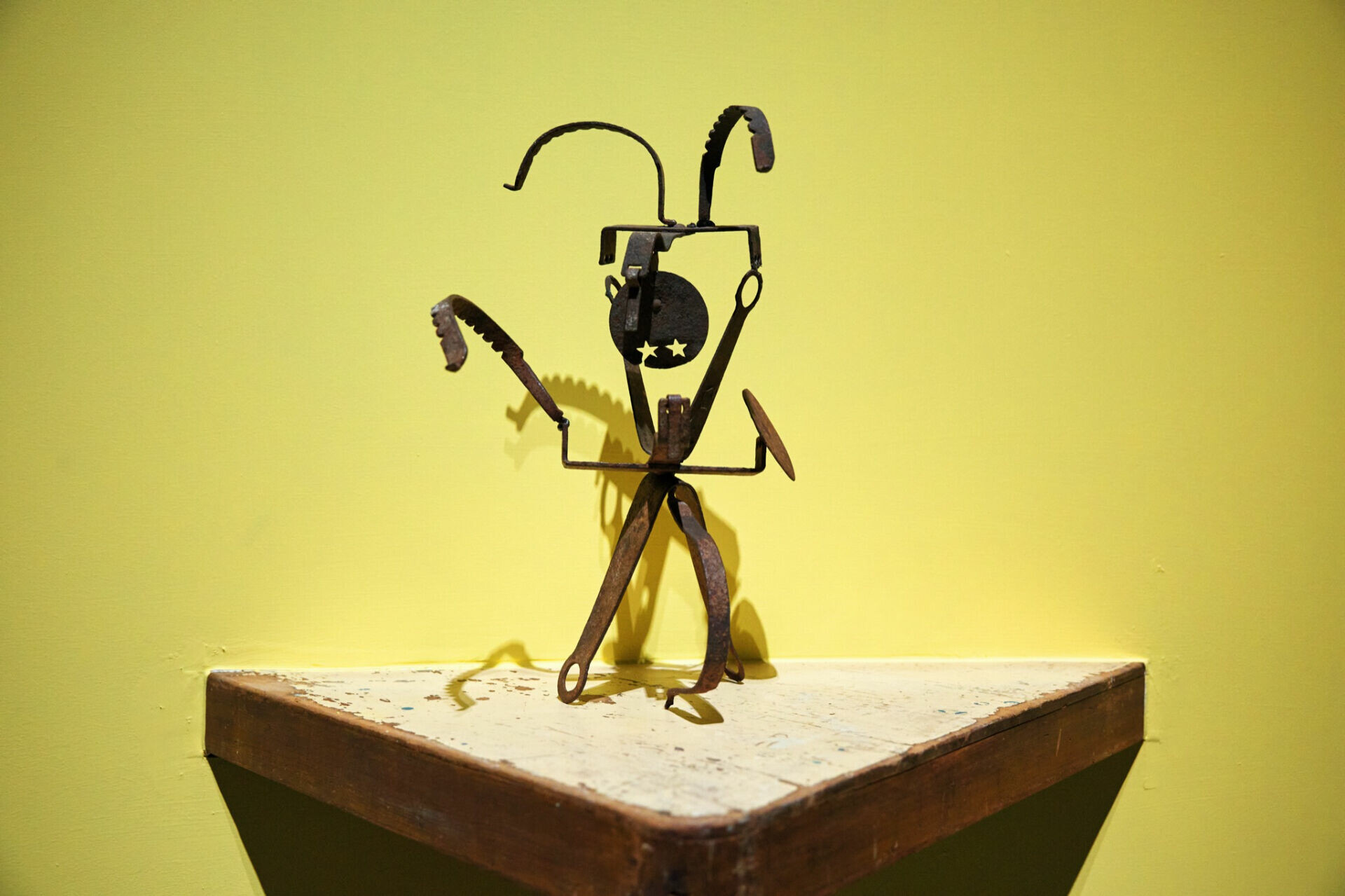
➤ Yin Zi-Jie, How to get Balance, Mixed media, 2025.
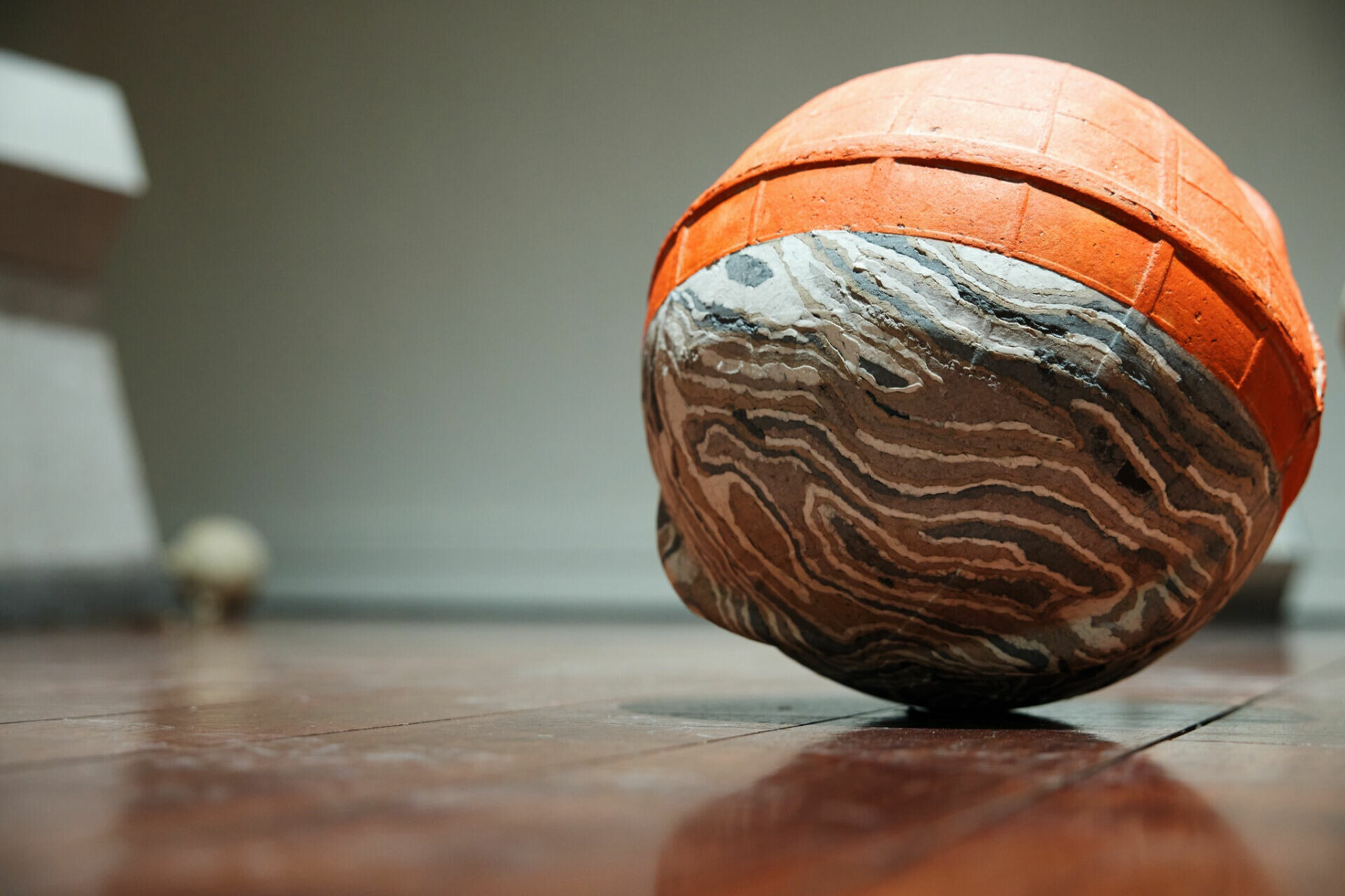
Liao Chao-Hao has long observed Taiwan’s urban and East Coast industrial landscapes, focusing on transitional functional objects. Using paper pulp to replicate concrete forms, he subverts their solidity, giving Tetrapods and Buoys a paradoxical fragility that reveals the complex, intertwined, and often contradictory relationship between the artificial and the natural.
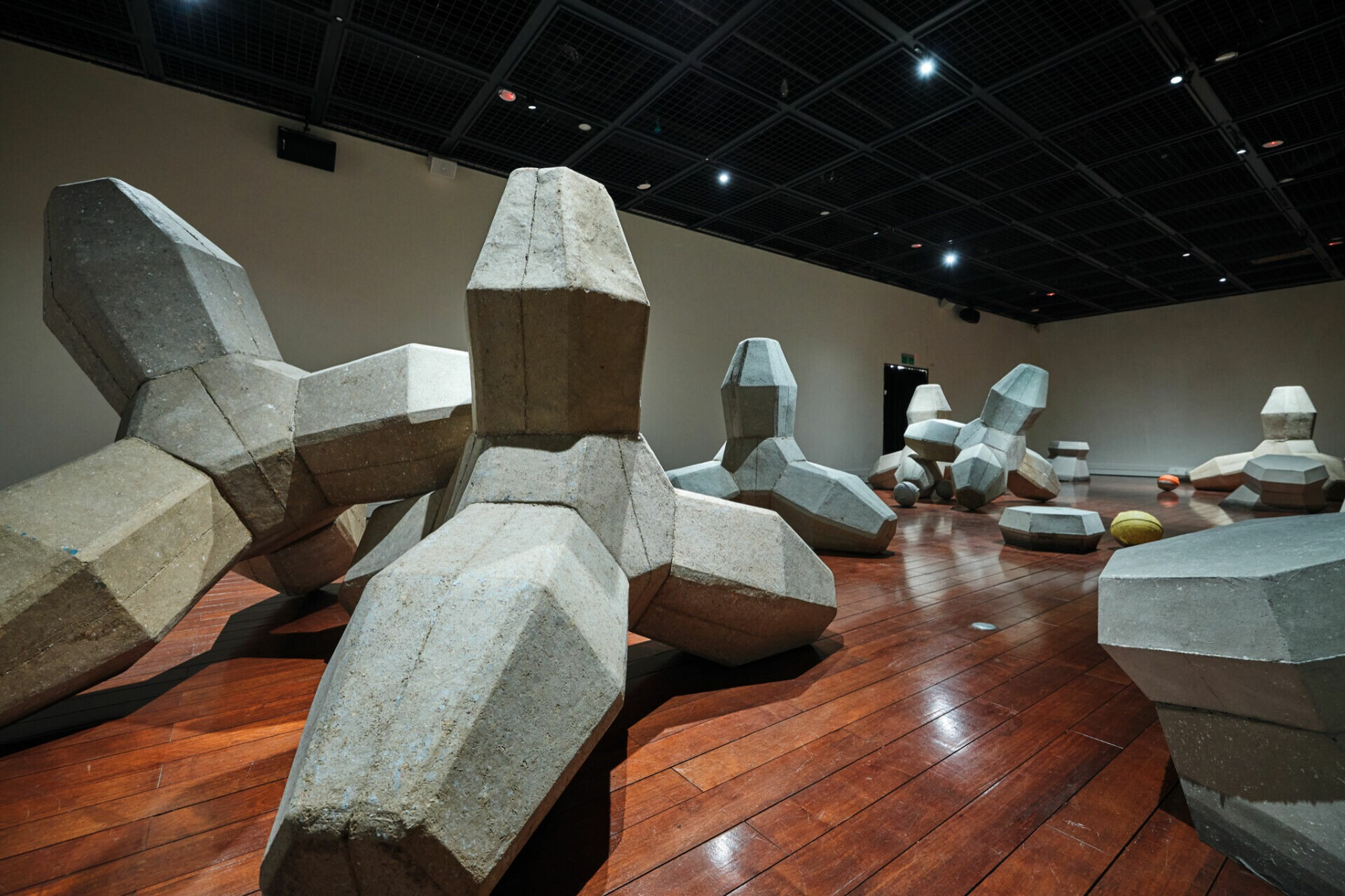
➤ Liao Chao-Hao, Imprint of water:Breakwater Blocks and Buoys, 190x190x190CM. 120x100x100cm / 96x96x40cm / 86x96x66cm. Pulp, Wood, Chinese ink, Foaming. 2022.
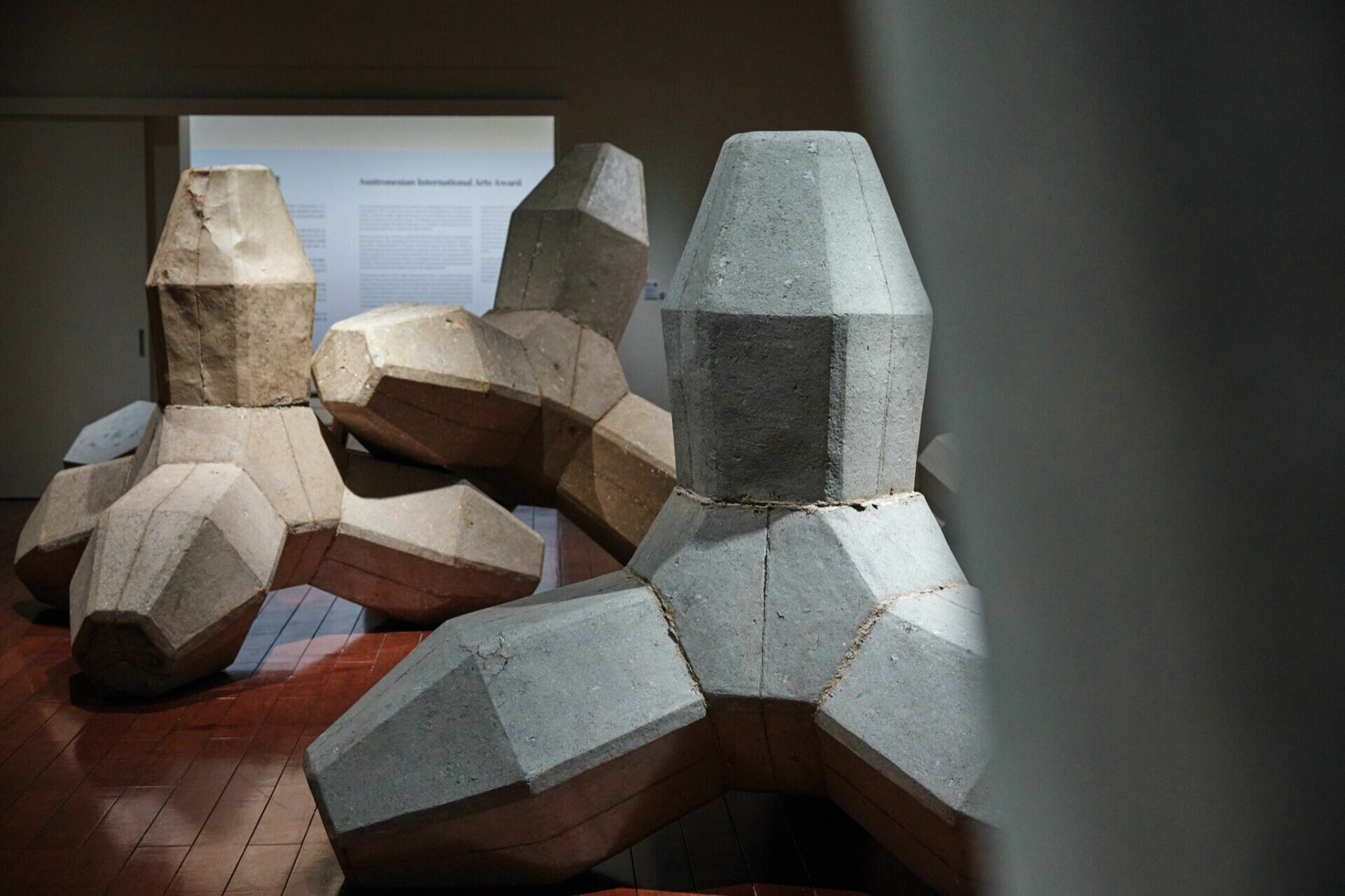
➤ Liao Chao-Hao, Imprint of water:Breakwater Blocks and Buoys, 190x190x190CM. 120x100x100cm / 96x96x40cm / 86x96x66cm. Pulp, Wood, Chinese ink, Foaming. 2022.