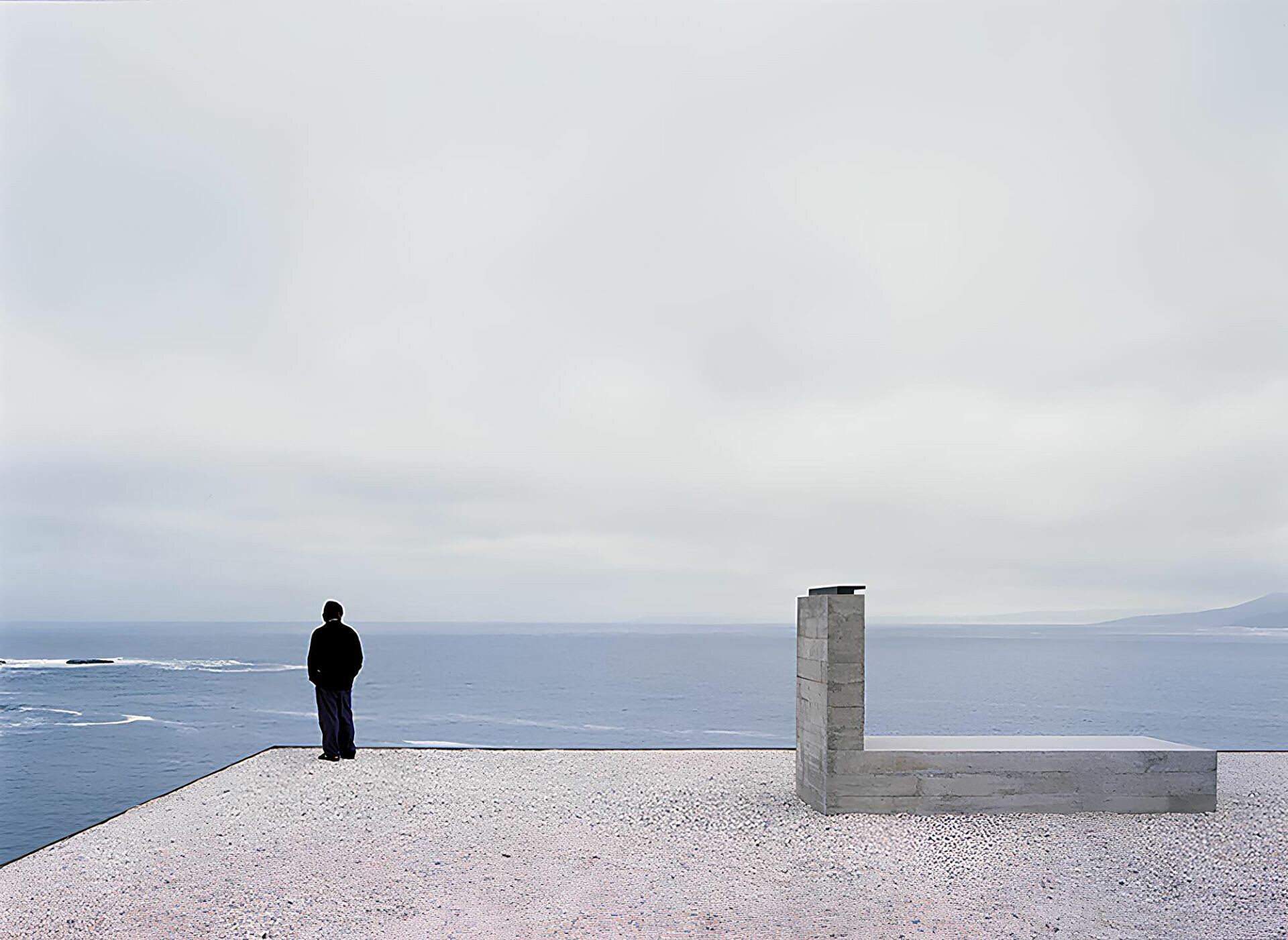
➤ Pite House, 2005
Widely regarded as the highest honor in the field, the Pritzker Architecture Prize recognizes, each year, one or more living architects whose work demonstrates a combination of vision, rigor, and commitment, contributing meaningfully to humanity and the built environment. Across its history, the prize has reflected an ongoing concern with how architecture responds to the human condition—an implicit value framework that continues to resonate with the collective emotional and environmental climate of each era.
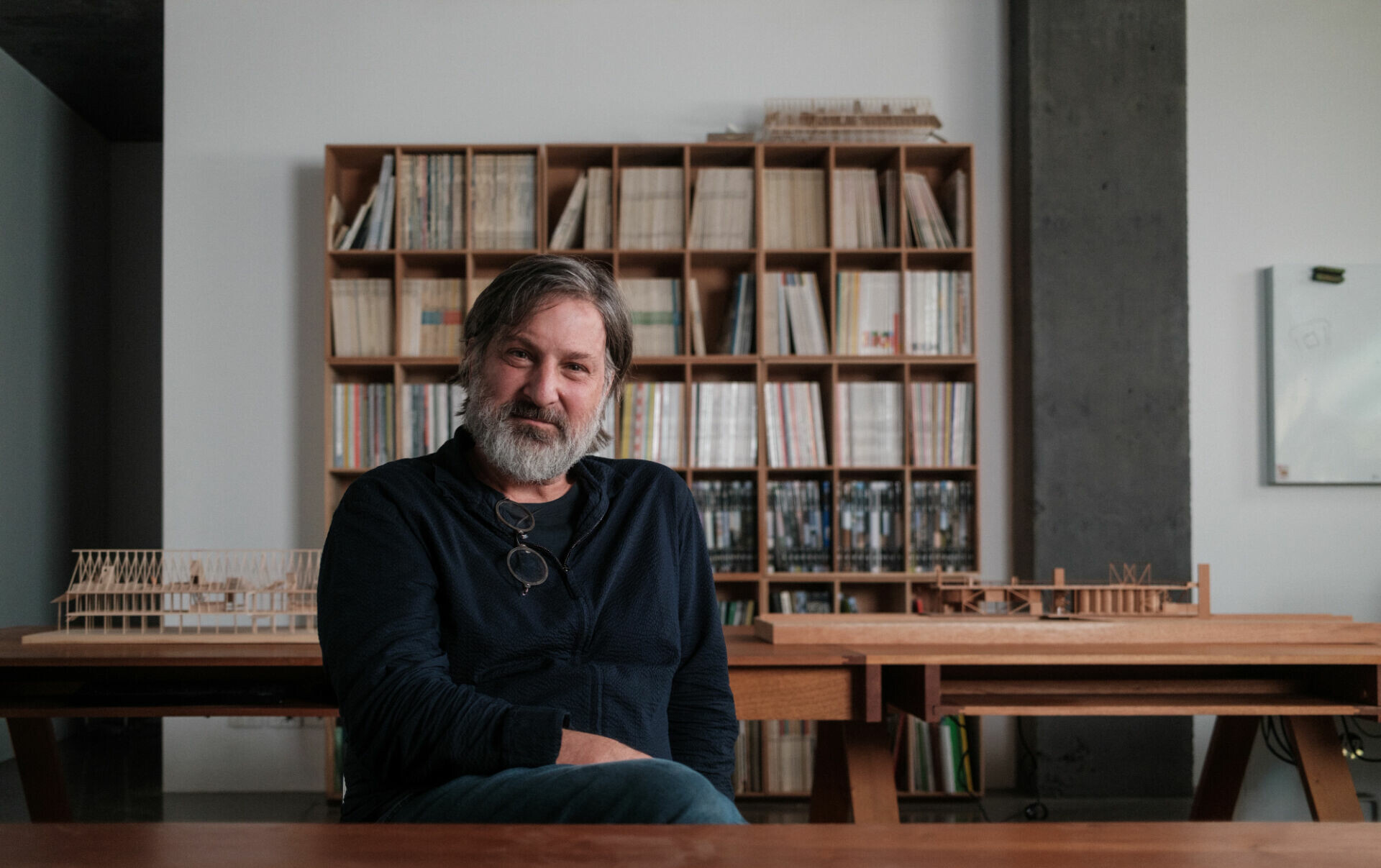
In 2026, the 55th laureate is Smiljan Radić Clarke, an architect based in Santiago, Chile. As noted in the Jury Citation, “Through a body of work positioned at the crossroads of uncertainty, material experimentation, and cultural memory, Smiljan Radić favours fragility over any unwarranted claim to certainty.”
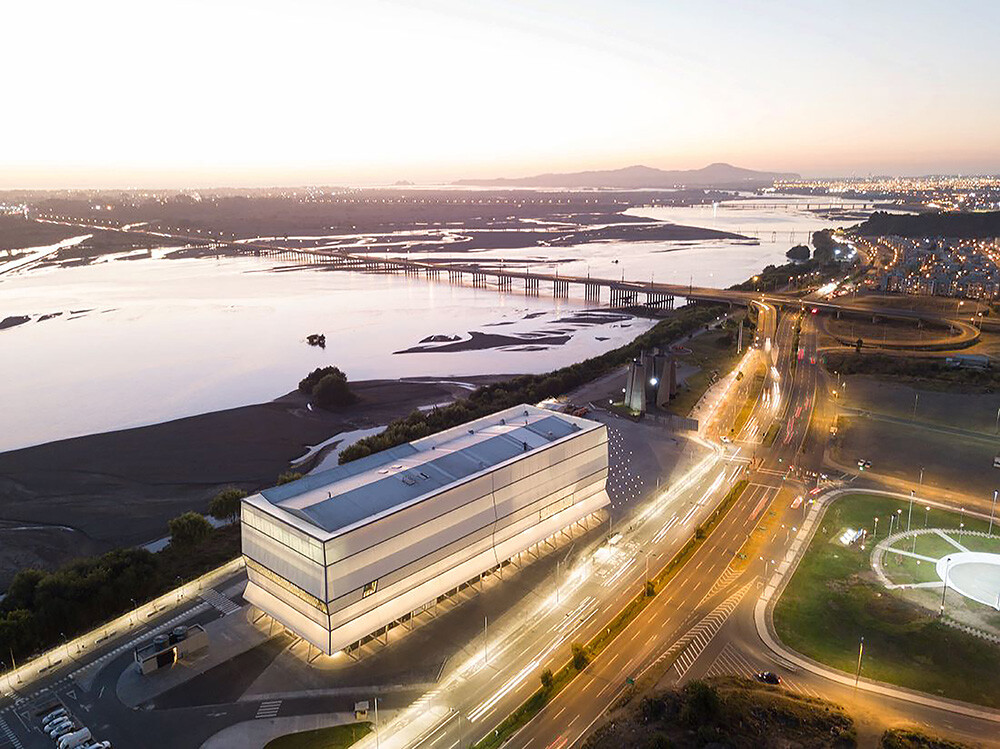
➤ Teatro Regional del Biobío, 2018
Read against the backdrop of an increasingly fluid global condition, Radić’s work resonates with contemporary realities. While societies have gradually emerged from the disruptions of the pandemic, geopolitical instability persists, extreme climate events intensify, and rapidly evolving technologies—including artificial intelligence—continue to reshape established modes of living and working. Within this atmosphere of heightened uncertainty, his architecture reflects the authenticity of change, embracing fragility as intrinsic to lived experience, and in doing so, offers a form of shelter that is both grounded in the present and quietly optimistic.
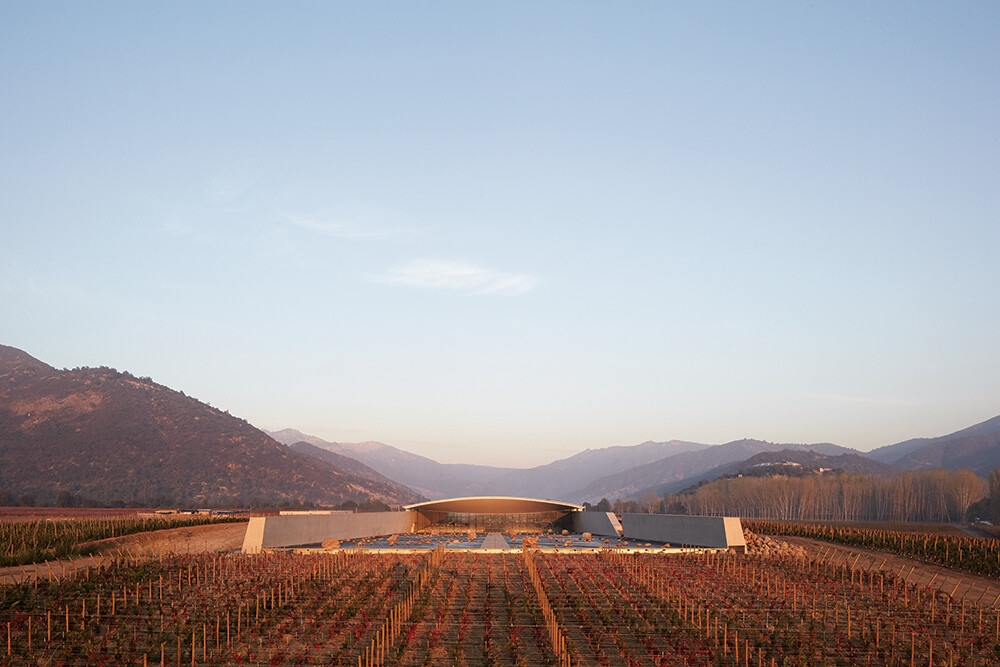
➤ Vik Winery, 2014
Architectural Expressions Rooted in Belonging
Born in Santiago to a family of immigrant heritage—his father of Croatian descent and his mother of British origin—Radić’s formative experiences, coupled with extensive travels, have made the question of “belonging” a recurring theme in his work. In his architecture, dwelling is not conceived as a fixed typology, but as an evolving condition shaped through experience and reflection.
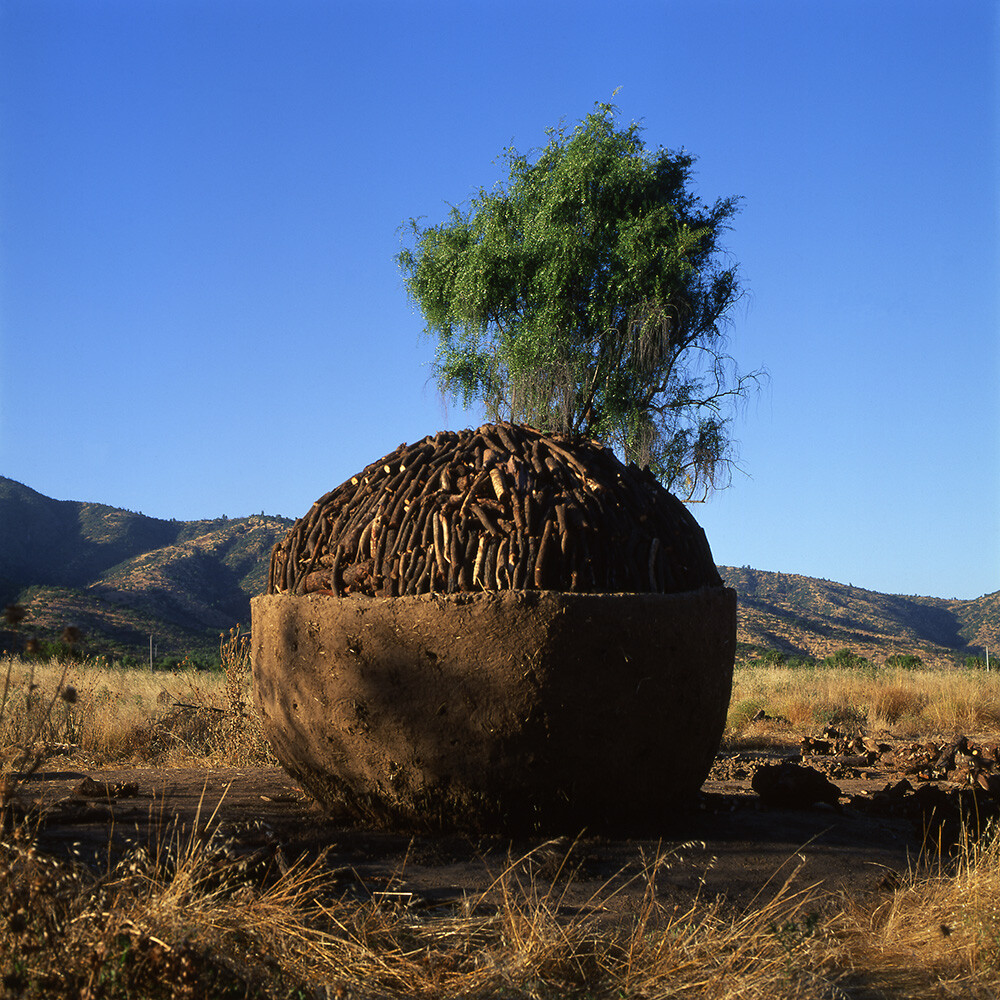
➤ Carbonero House, 1998
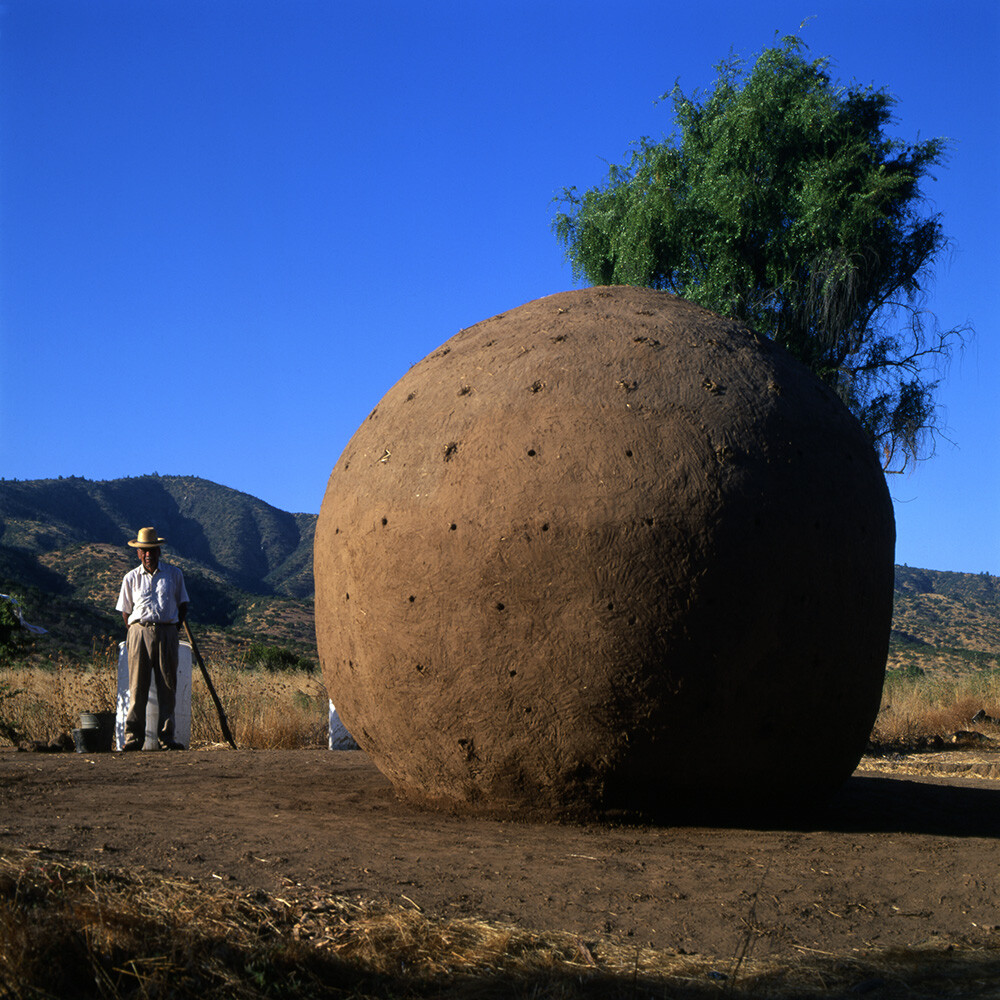
➤ Carbonero House, 1998
This line of inquiry is already evident in his early residential works, including Carbonero House (1998), which reconsiders the domestic realm. Here, formal frameworks are subdued in favor of material presence, structural logic, and the bodily perception of climate. Pite House (2005) is embedded within a rugged coastal landscape, its concrete volumes carefully positioned among rocks and cliffs, achieving a delicate equilibrium with its surroundings—an architecture that appears to touch the land lightly, in quiet dialogue with nature.
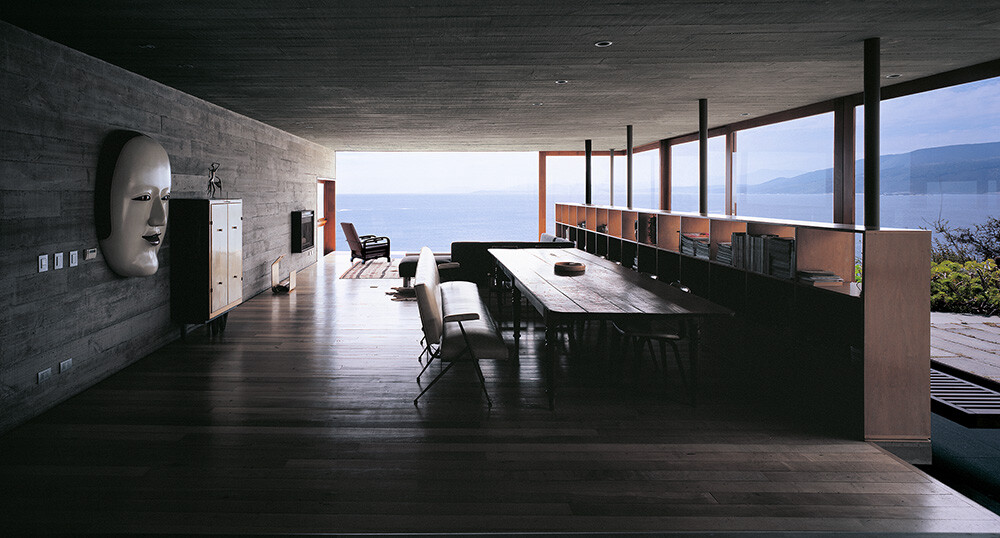
➤ Pite House, 2005
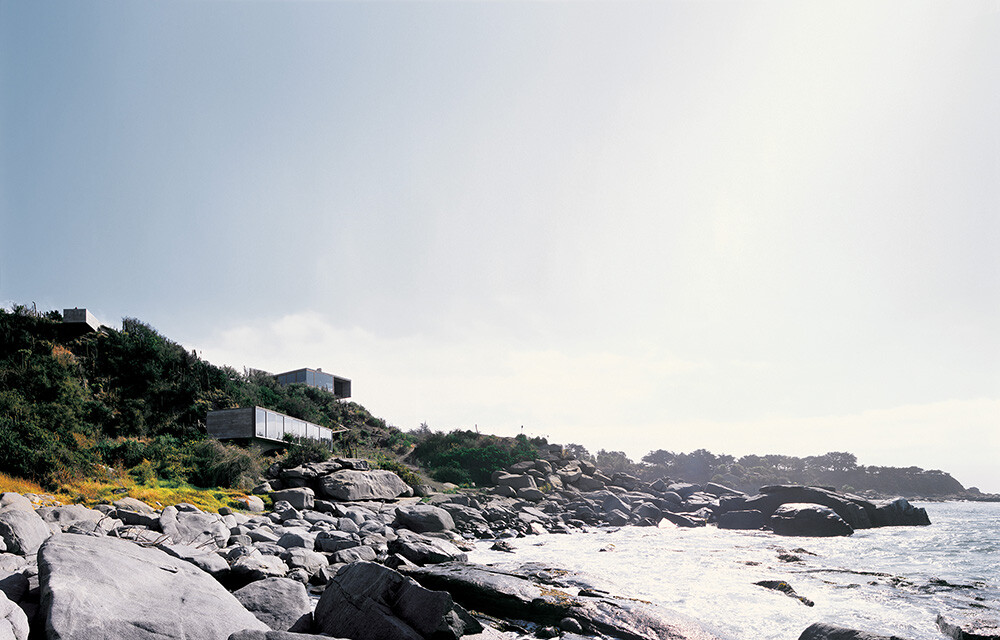
➤ Pite House, 2005
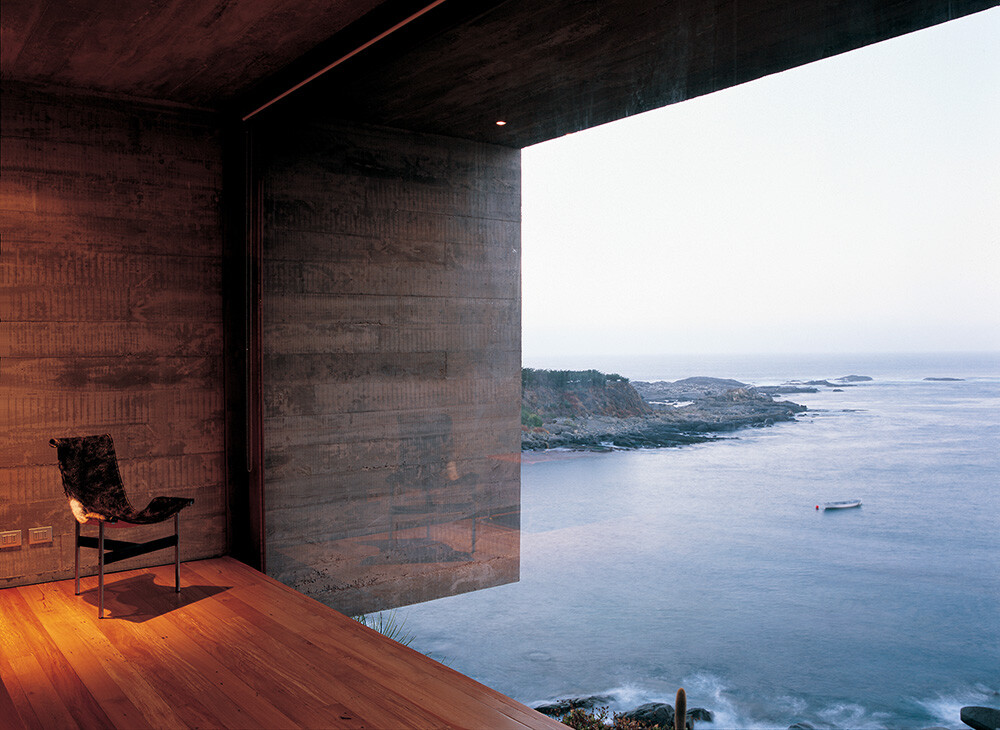
➤ Pite House, 2005
The project House for the Poem of the Right Angle (2013), inspired by Le Corbusier’s eponymous poem and drawings, further explores spatial perception through light and time. Openings oriented toward the sky and an irregularly shaped reinforced concrete roof together produce shifting conditions of daylight. The interior courtyard—defined by full-height glazing—transforms the house into an experimental field for spatial form and habitation.
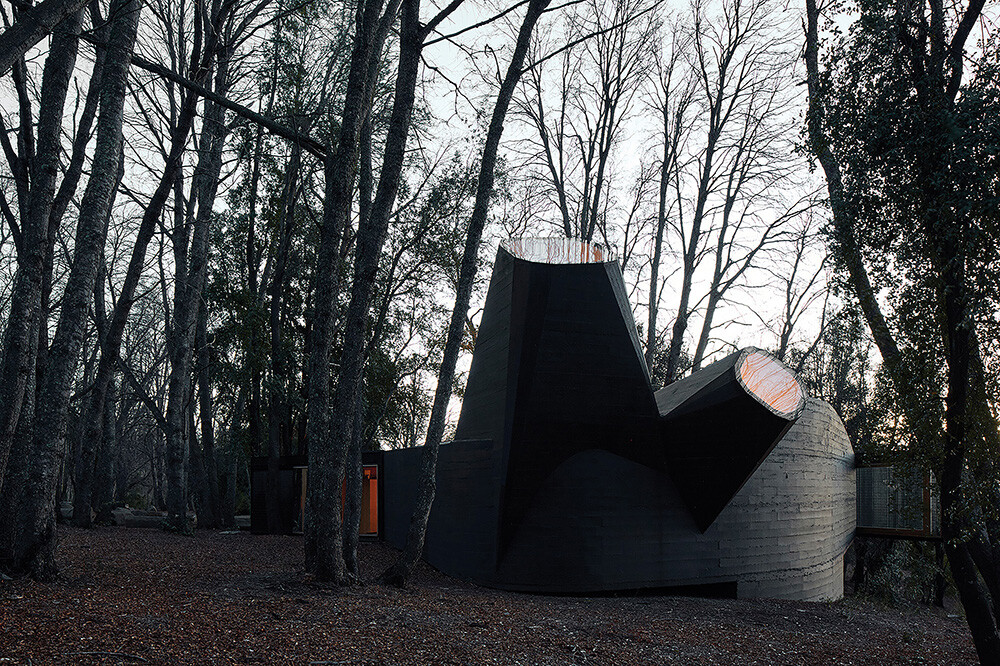
➤ House for the Poem of the Right Angle, 2013
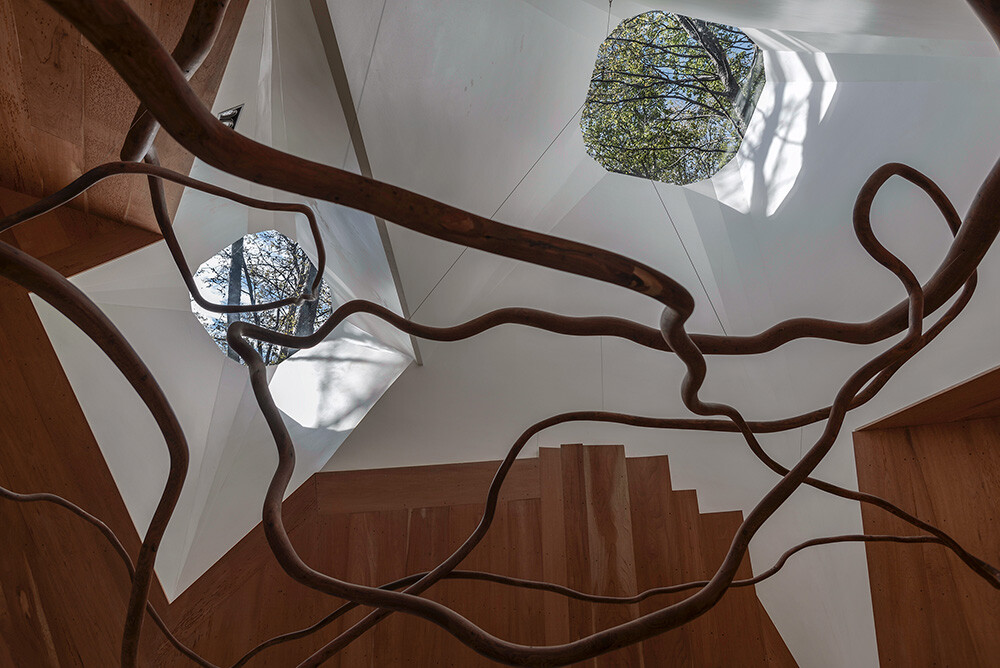
➤ House for the Poem of the Right Angle, 2013
Though his work resists a singular formal signature, it consistently engages with the human condition. The notion of “enclosure” in his architecture extends beyond physical boundaries, suggesting instead a psychological state of protection—spaces that acknowledge and accommodate human vulnerability. Rather than privileging form or scale, Radić is concerned with whether architecture enables individuals to recognize and accept their own fragility. His body of work thus unfolds as an ongoing inquiry into how we inhabit the world.
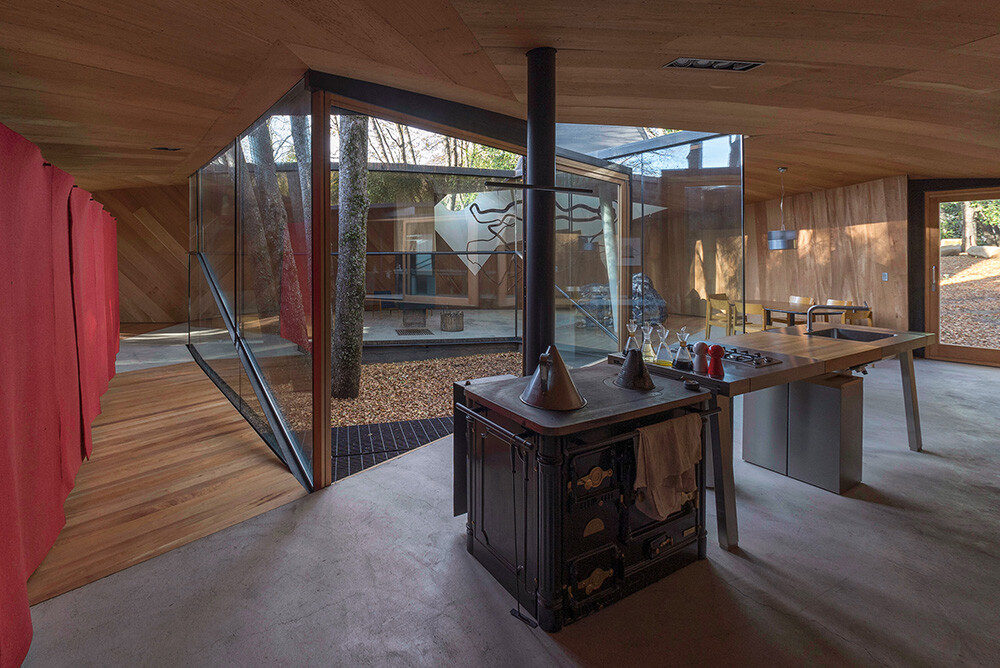
➤ House for the Poem of the Right Angle, 2013
Constructing Spatial Narratives Through Material and Landscape
When extending this experimental approach to public architecture, Radić returns to environmental logic and local materiality, treating each project as a distinct inquiry. Whether working with standardized industrial components or raw, unrefined materials, his projects articulate new relationships between buildings and their contexts—at times establishing unexpected connections with the surrounding landscape, at others intervening within partially ruined structures. As Jury Chair and 2016 laureate Alejandro Aravena observes, “He reverts back to the most irreducible basic foundations of architecture, exploring at the same time, limits that have not yet been touched.”
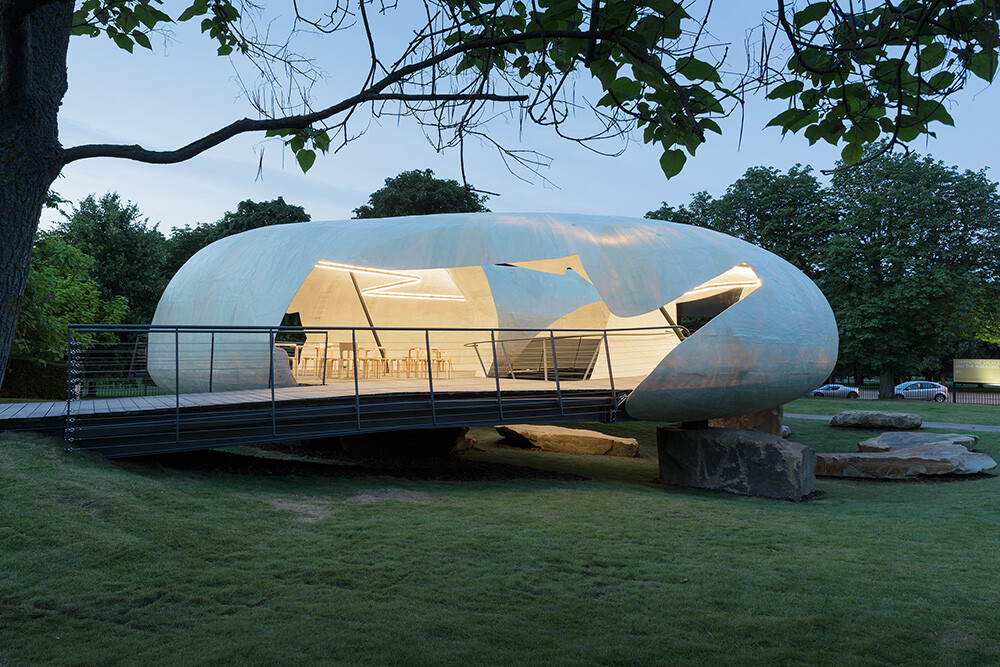
➤ Serpentine Gallery Pavilion, 2014
This approach is evident in the Serpentine Gallery Pavilion 2014 in London, where a translucent fiberglass shell rests upon massive, locally sourced stones. Through contrasts—lightness and weight, smoothness and roughness, curvature and fragmentation—the pavilion constructs a spatial tension that mediates between enclosure and openness. Light is filtered rather than revealed, and the structure remains deliberately partial, allowing visitors to experience shelter without complete separation from the surrounding Kensington Gardens.
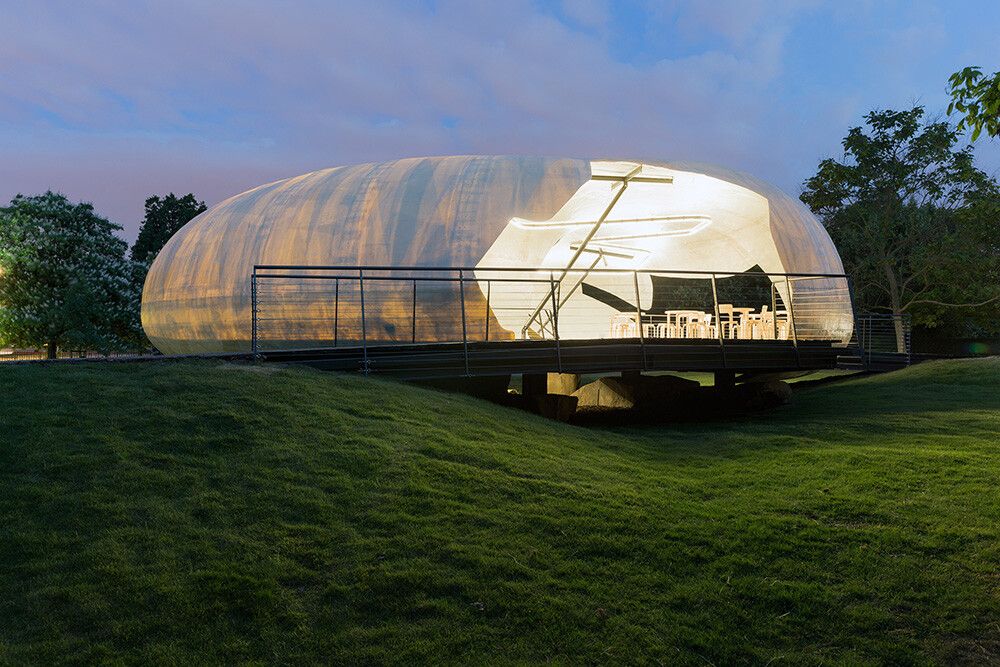
➤ Serpentine Gallery Pavilion, 2014
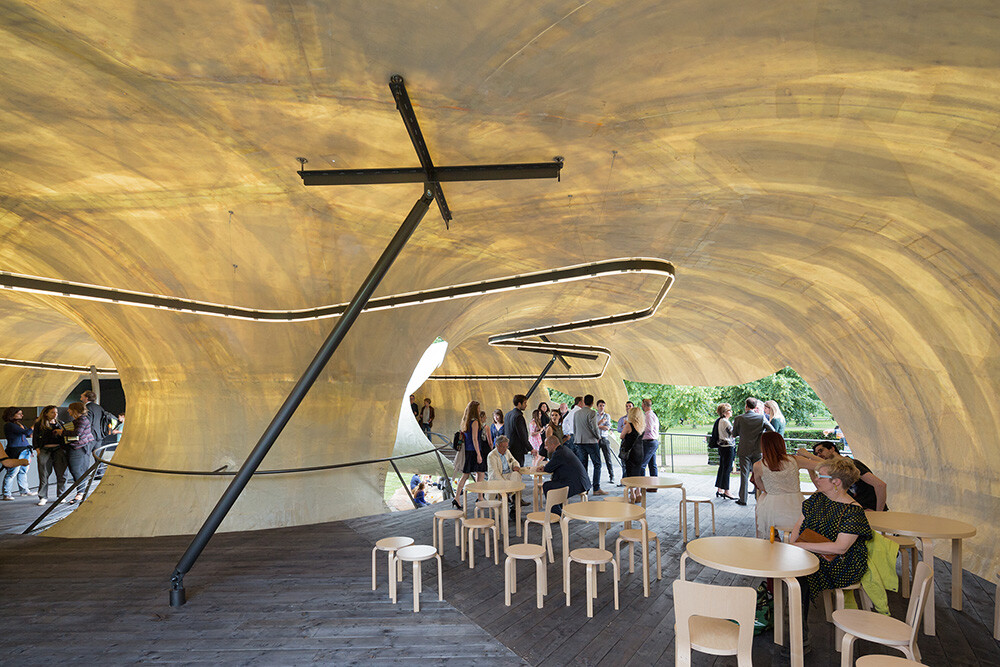
➤ Serpentine Gallery Pavilion, 2014
At NAVE Performing Arts Center (2015), Radić reconfigures a disaster-damaged early twentieth-century building, retaining its historical shell while inserting new volumes for performance, rehearsal, and workshop spaces. Rather than restoration or replacement, the intervention operates as a continuation—where past and present coexist within a layered architectural narrative. A circus tent atop the roof introduces an element of lightness and provisional celebration, contrasting with the grounded, intimate spaces below.
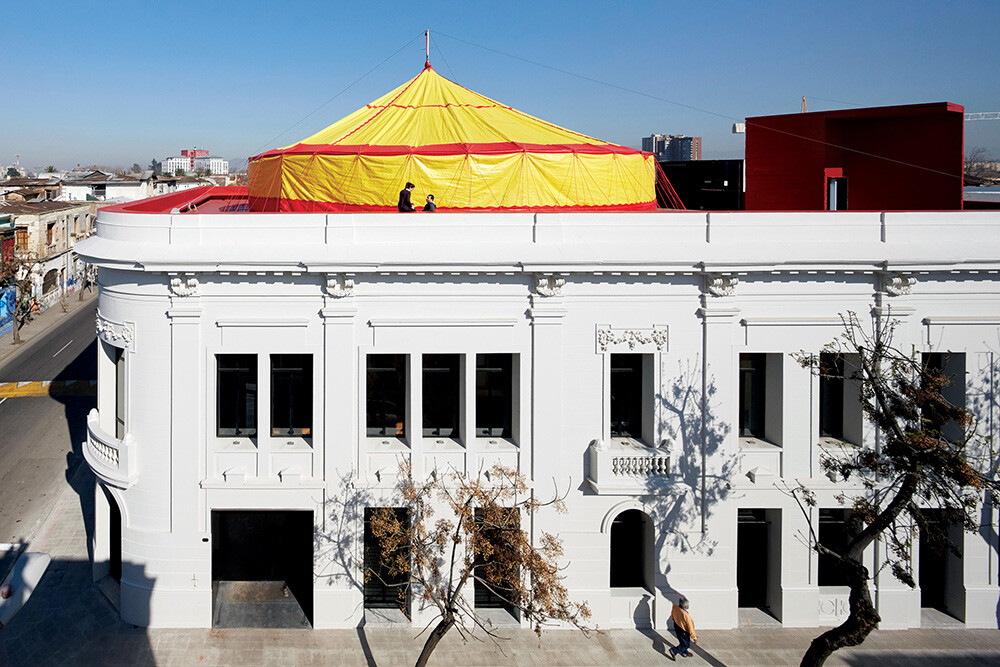
➤ NAVE Performing Arts Center, 2015
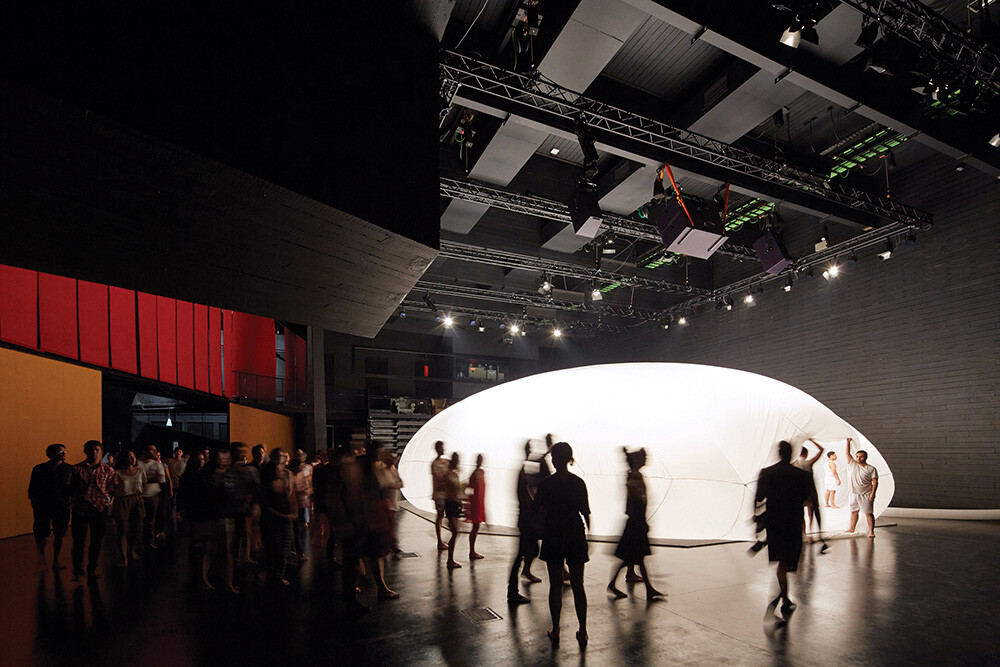
➤ NAVE Performing Arts Center, 2015
More recently, the installation Guatero (2023), created for the Chilean Architecture Biennial, pushes architecture toward the realm of atmosphere and perception. Through an inflatable polyester membrane, Radić extends his exploration of materiality and narrative, engaging dimensions of experience that are immediately perceptible yet difficult to articulate—“like the perception of time itself,” as the Jury notes. His work resists purely visual consumption, instead requiring embodied engagement.
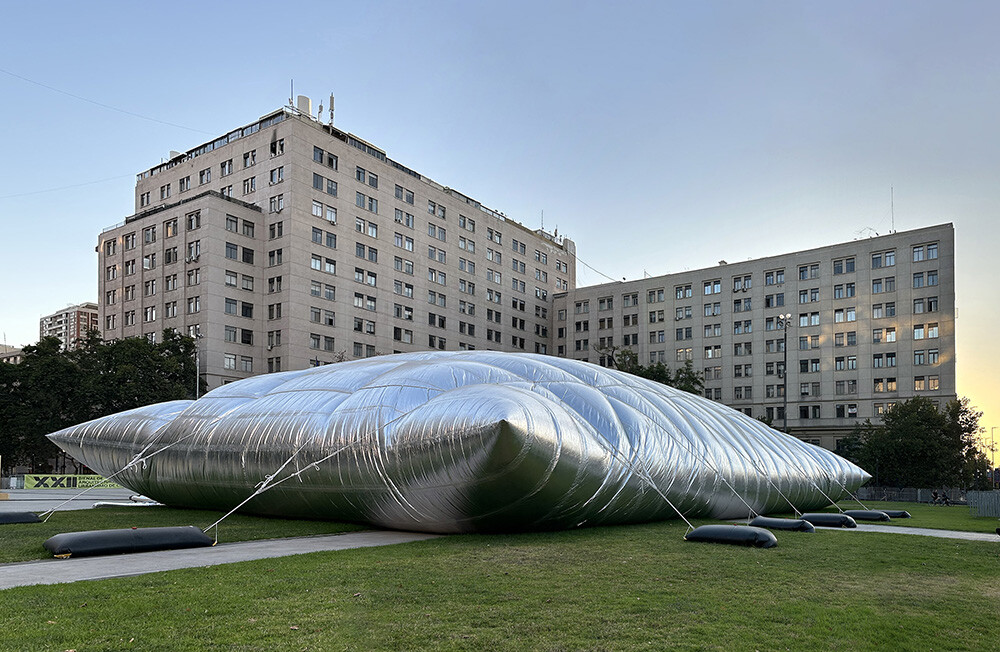
➤ Guatero, 2023
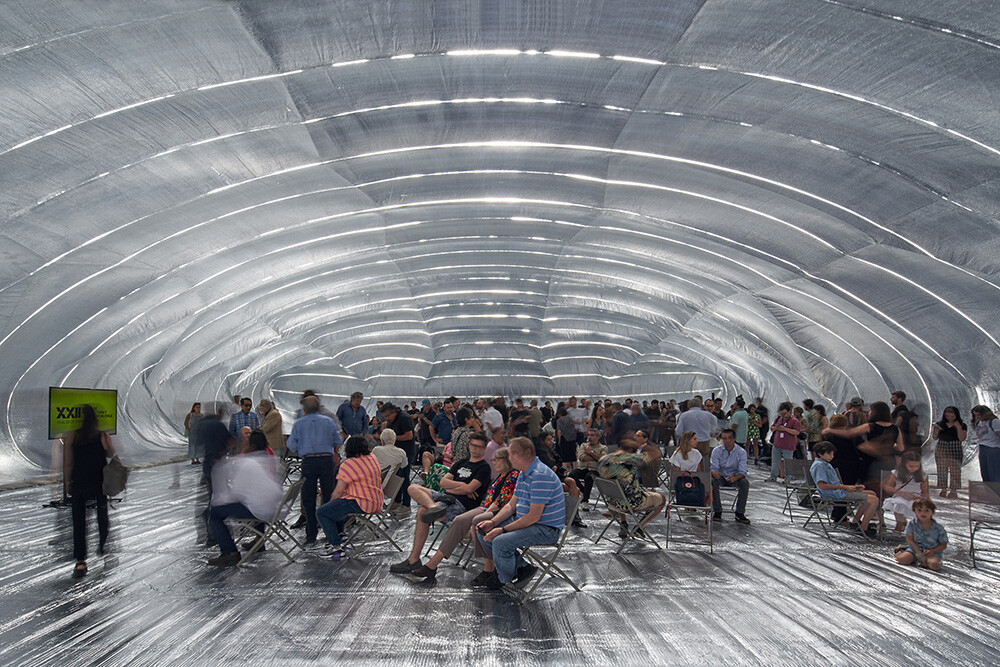
➤ Guatero, 2023
Fragility as an Architectural Position
Over more than three decades, Radić’s practice has spanned cultural institutions, civic spaces, commercial buildings, private residences, and installations across multiple continents. Despite this international reach, he continues to operate through a relatively small, studio-based practice, maintaining a highly personal mode of production. In 2017, he established the Fundación de Arquitectura Frágil in Santiago, conceived as both a platform for public exchange and an evolving archive of experimental work, research, and references.
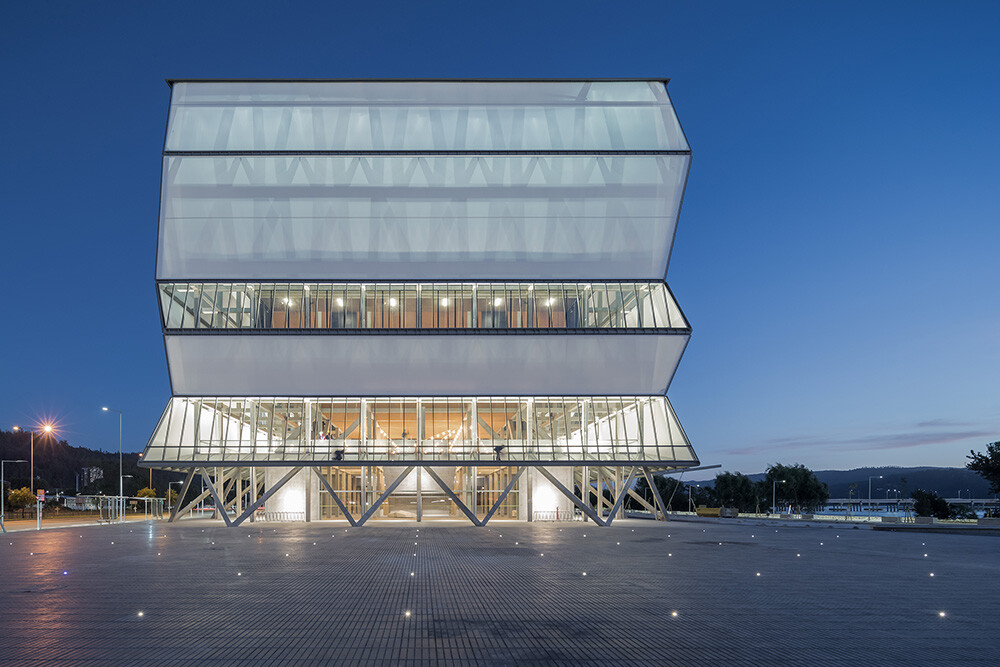
➤ Teatro Regional del Biobío, 2018
Seen against the broader trajectory of architectural discourse over the past half-century—from grand narratives toward a more nuanced engagement with human experience—Radić’s work suggests an alternative possibility. At the threshold of disappearance, architecture may still carry emotion, time, and memory, allowing individuals to rediscover a subtle yet tangible connection to the world. In embracing fragility, his work reveals a form of resilience—one that is not rigid, but adaptive, responsive, and deeply attuned to the uncertainties of the present.