Back to the Vein: Reverence for Nature’s Primal Beauty — DAHSHING
We often come to understand objects through their finished form. A chair, a watch, a car: what first captures attention is usually what lies on the surface. In a world increasingly driven by metrics and outcomes, the substance beneath that surface is easily overlooked. Wine offers a parallel worth noting. Tasting is a way of reading land and season, tracing time through colour, aroma, and structure. Beyond the origin or vintage printed on a label, what endures is shaped by terroir, limited yield, singular conditions, and, above all, the stories time itself distils. For Wei-Ting Chen of DAHSHING Stone (Dah-Shing Brothers Co., Ltd.), that sense of time is most tangible at the quarry face. Each trip to the company’s own quarry sites in Turkey, Italy, Spain, and Portugal underscores how small the human body appears when set against geological time. It is precisely there, confronted by forces that resist orchestration, that he finds a quiet resonance with the material’s origin.
Quarry Blocks: Where Value Begins
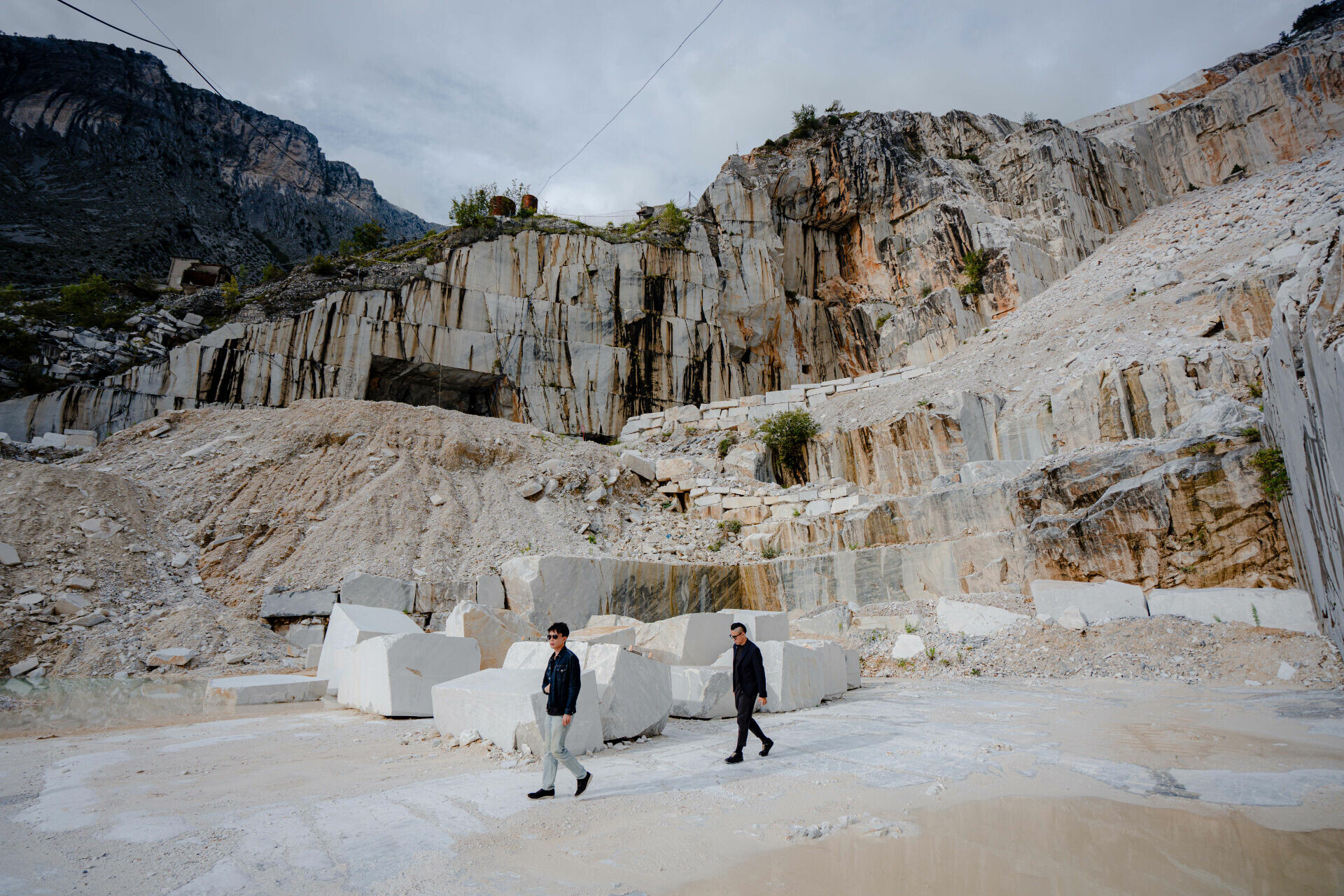
From websites and catalogues to advertisements and showroom displays, every visible layer plays a role in communication. Yet the true beginning of stone lies elsewhere. It begins with quarry blocks, extracted along veins with their own direction and lifted from strata that hold different eras within the same mass. Once processed and polished, stone reveals veining, fissures, and mineral colouration: partial records of a longer history. What cannot be replicated is not an effect of design, but a condition of nature itself. This irrepeatability is what defines rarity. Clients often respond intuitively, guided by preference. Developers and designers, working within schedules and budgets, may also overlook the narrative that precedes procurement, one that extends well beyond price. That understanding can only come from standing on the quarry’s stratified ground, reading vein orientation with the naked eye, and determining whether each block is fit to enter architecture, capable of maintaining veining continuity and material stability when applied at scale. This process itself is where its true value lies.
It was for this reason that Chen chose to document the process at its source. Together with the photography and marketing team, he travelled to Italy to record what cannot be conveyed through processed display pieces alone: the sequence of extraction, transport, and fabrication that ultimately shapes the stone as it comes to complete an interior in quiet restraint. In professional terms, the quality of a quarry block defines the stone’s natural state. Stability, tonal clarity, continuity of veining, and material integrity all begin here. One of the design studios who joined the journey, with its principal designer from SKY VISION, observed that even before cutting, each block already embodies the combined influence of highland climate, extraction methods, and industrial constraints. Making these unseen conditions visible, he noted, allows those who specify and use stone to approach the material with greater understanding, rather than imposing aesthetic expectations upon it.
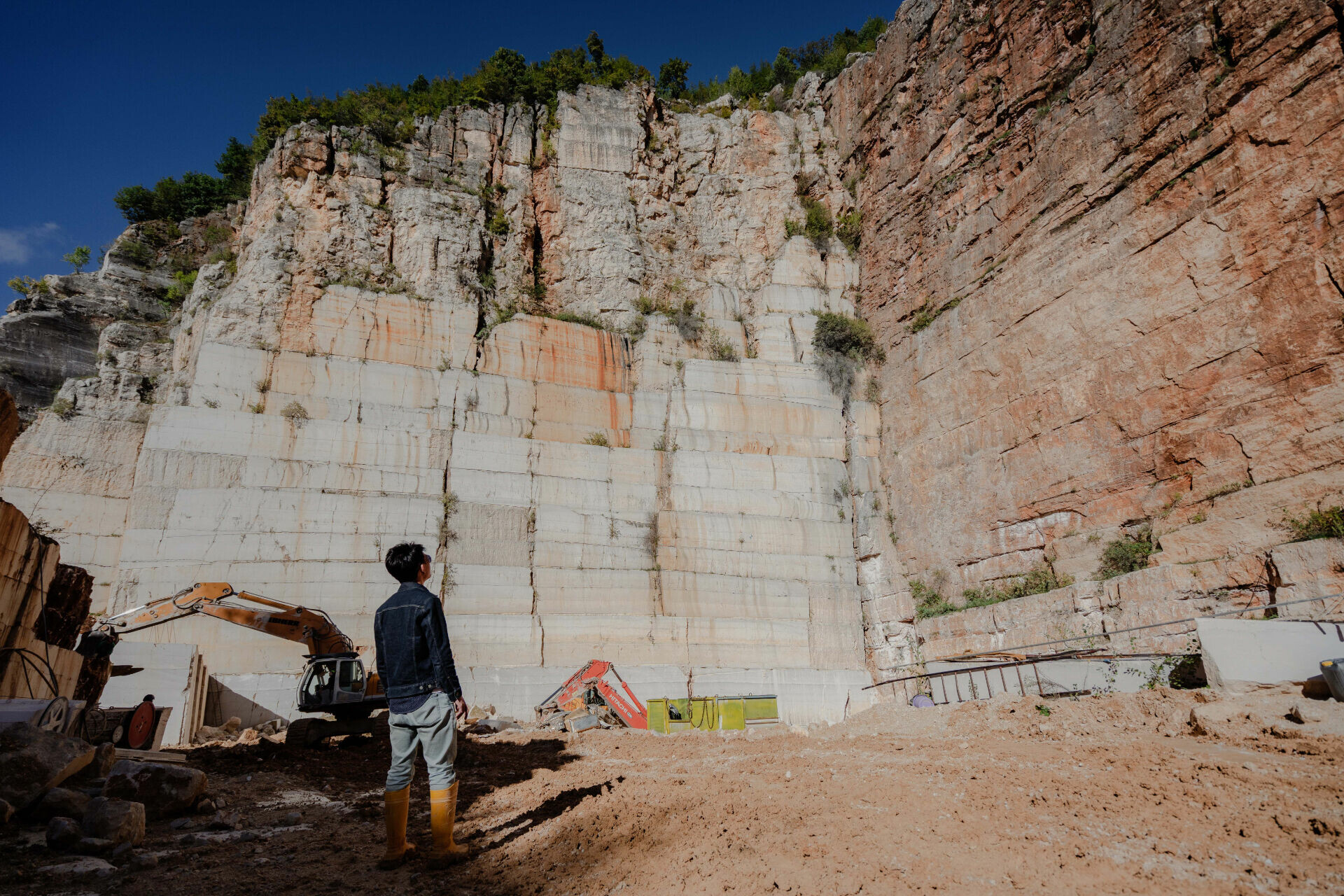
Awe: Nature’s Unscripted Mastery
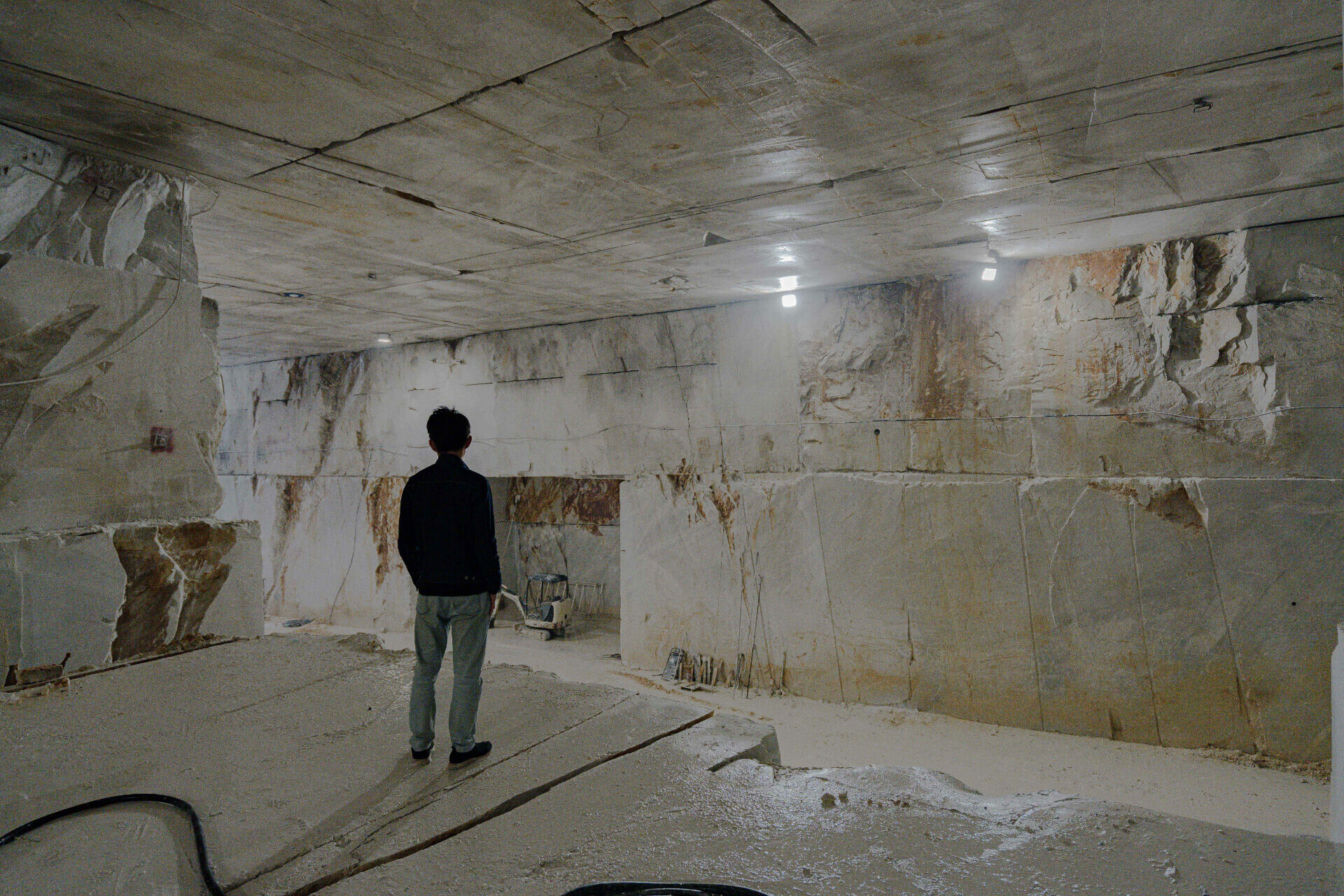
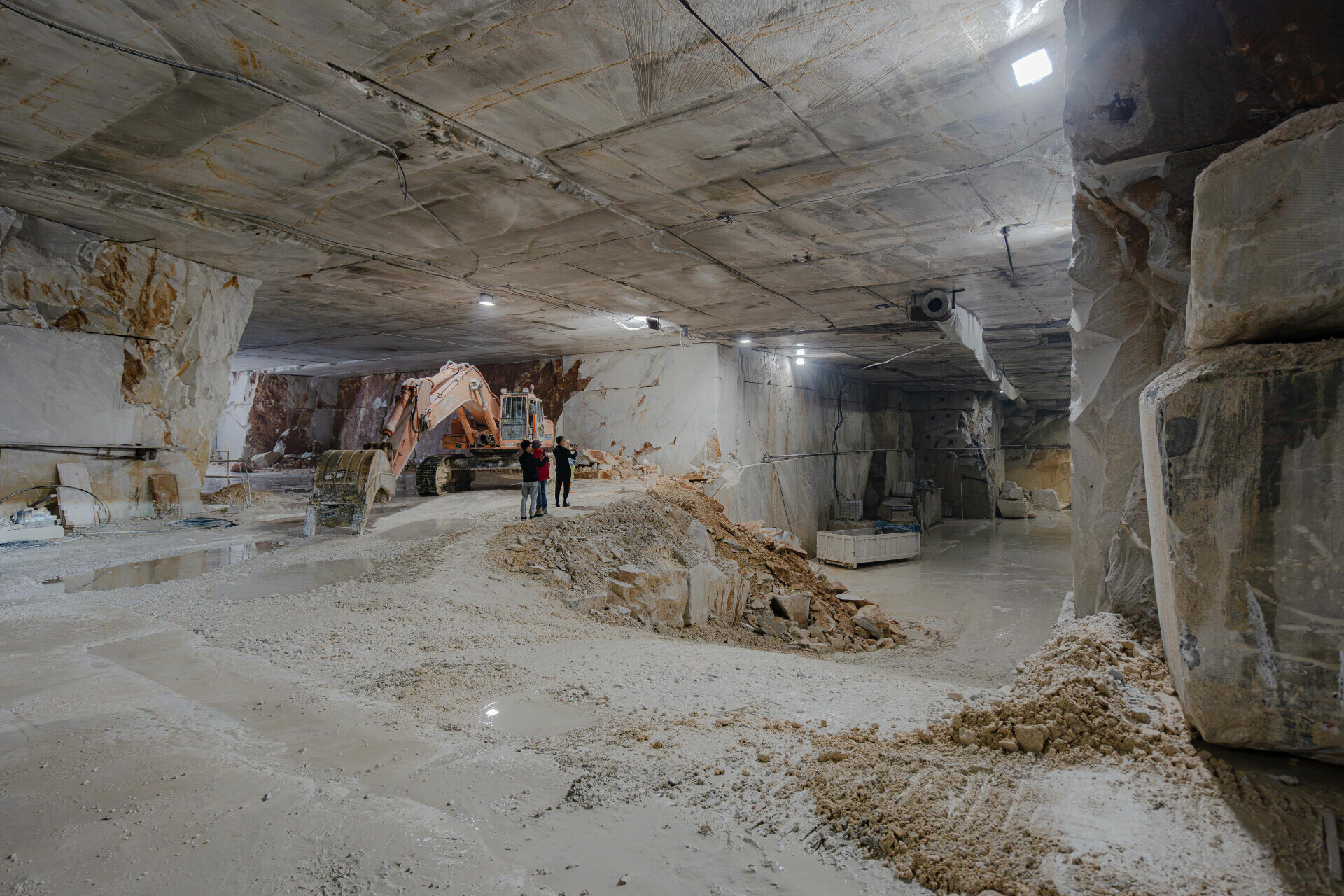
The documentation began amid a sense of awe. Setting out from Brescia, a small town at the foot of Italy’s historic Botticino marble quarries, Wei-Ting Chen and his team travelled toward the Carrara quarries along a route marked by abrupt weather shifts, with rain giving way to sudden clear skies. Footage arriving from the quarry showed access roads on the mountain temporarily cut off by flooding, adding an element of uncertainty to the journey. With the help of local workers, the group diverted to a lesser-used but steeper mountain road and eventually reached the site. What awaited them challenged any expectation of open-pit extraction. The active work zone lay inside the mountain itself. The team entered the tunnel by vehicle once again, descending into near-total darkness as temperatures dropped and only the sound of heavy machinery accompanied the passage. When the lights of the working area were finally switched on, a cavern more than ten metres high came into view. From ceiling and rock face to the ground beneath their feet, everything was Carrara white. The scene of underground quarrying unfolded in silence, and the response was immediate and instinctive.
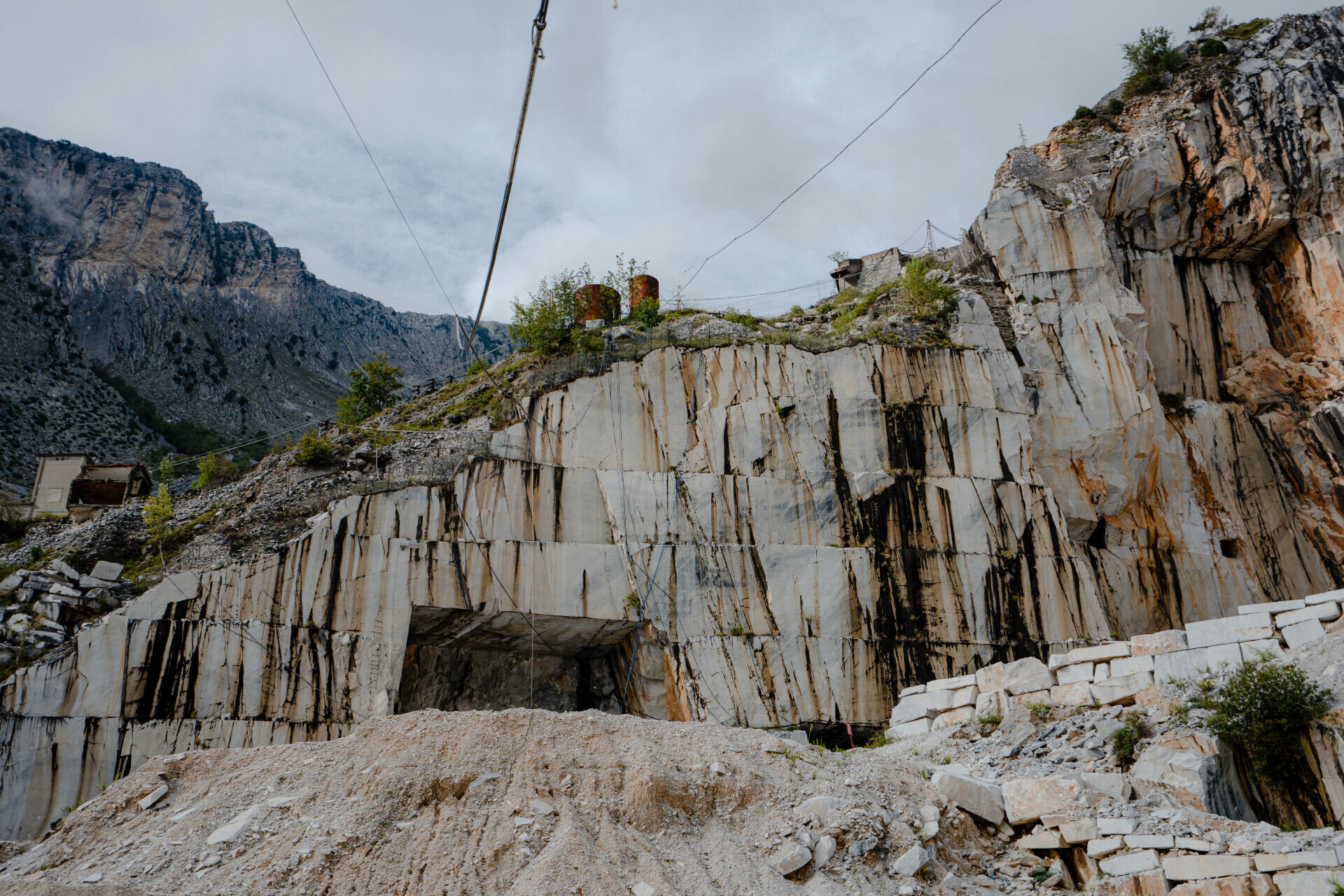
Closer observation of the stepped extraction traces clarifies the complexity of this method. Marble, formed as limestone undergoes metamorphism under heat and pressure, often retains legible bedding. Subsequent tectonic movement can tilt these layers, requiring extraction to follow structural inclination rather than convenience. At the same time, each operation must respect internal material strength to avoid compromising block integrity, increasing both difficulty and cost. Chen noted that while many marble sites are quarried in open pits, advances in extraction technology and Italy’s long-standing restraint in resource use have led to more balanced approaches, limiting disturbance while maintaining quality. This helps explain why Carrara marble has remained globally present for decades, even as surrounding landscapes, including decommissioned sites, are gradually restored.
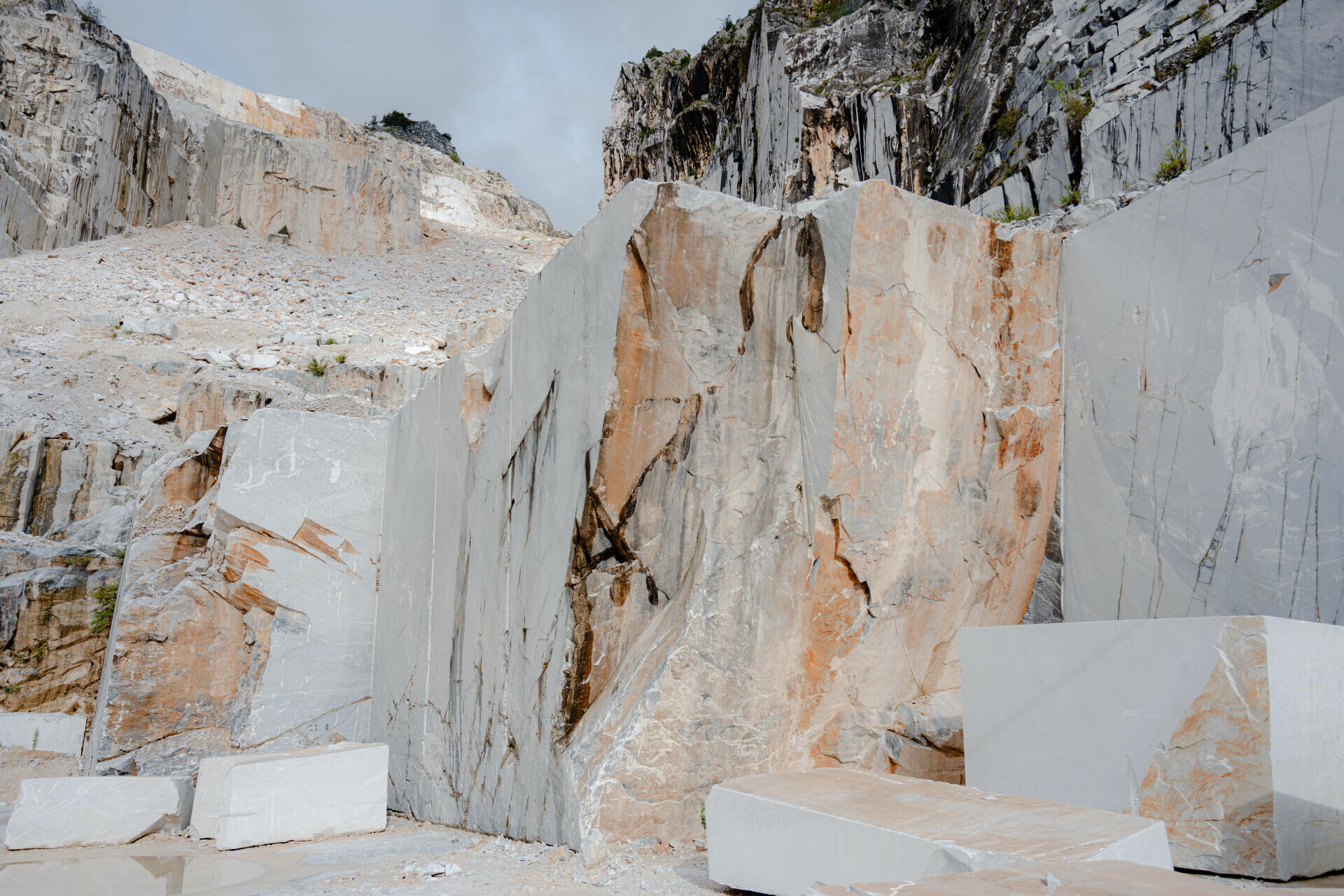
Knowing Not Only What, but Why
The journey also extended to Marmomac in Verona, one of the stone industry’s principal international gatherings. For DAHSHING, the visit was not only about market presence. It was also a way to track global material trends and to act as a gatekeeper of quality. By selecting stones with steady tonality, balanced veining, and consistent performance, the brand aims to offer clients choices that feel reliable and quietly refined, while carrying forward the discipline of the quarry itself. For the SKY VISION designer who joined the trip without prior quarry experience, the shift was immediate. Selection was no longer simply about recognition, but about understanding how stone forms, how it is extracted, what must be preserved, and why material choice carries meaning beyond taste. For him as a designer, this shift deepened the emotional connection to the act of selection itself, clarifying the purpose and significance behind each material decision. Reverence, in this context, is not a posture. It emerges from understanding, allowing stone to be appreciated as a quiet participant in architecture rather than an object to be styled.