Carcavelos Health Complex
Architectural space can be a prescription in itself. If a healthcare facility could sit in everyday life as naturally as a park, might it ease the fear people carry into care, and the resistance that fear can set off. In Carcavelos, this medical centre is translated into a quiet, companionable civic building. It reverses the stern authority medical institutions so often project. Here, feeling is given room. Sunlight and shadow, routes and pauses, and the warmth of human exchange seep into the place. It remains quietly present.
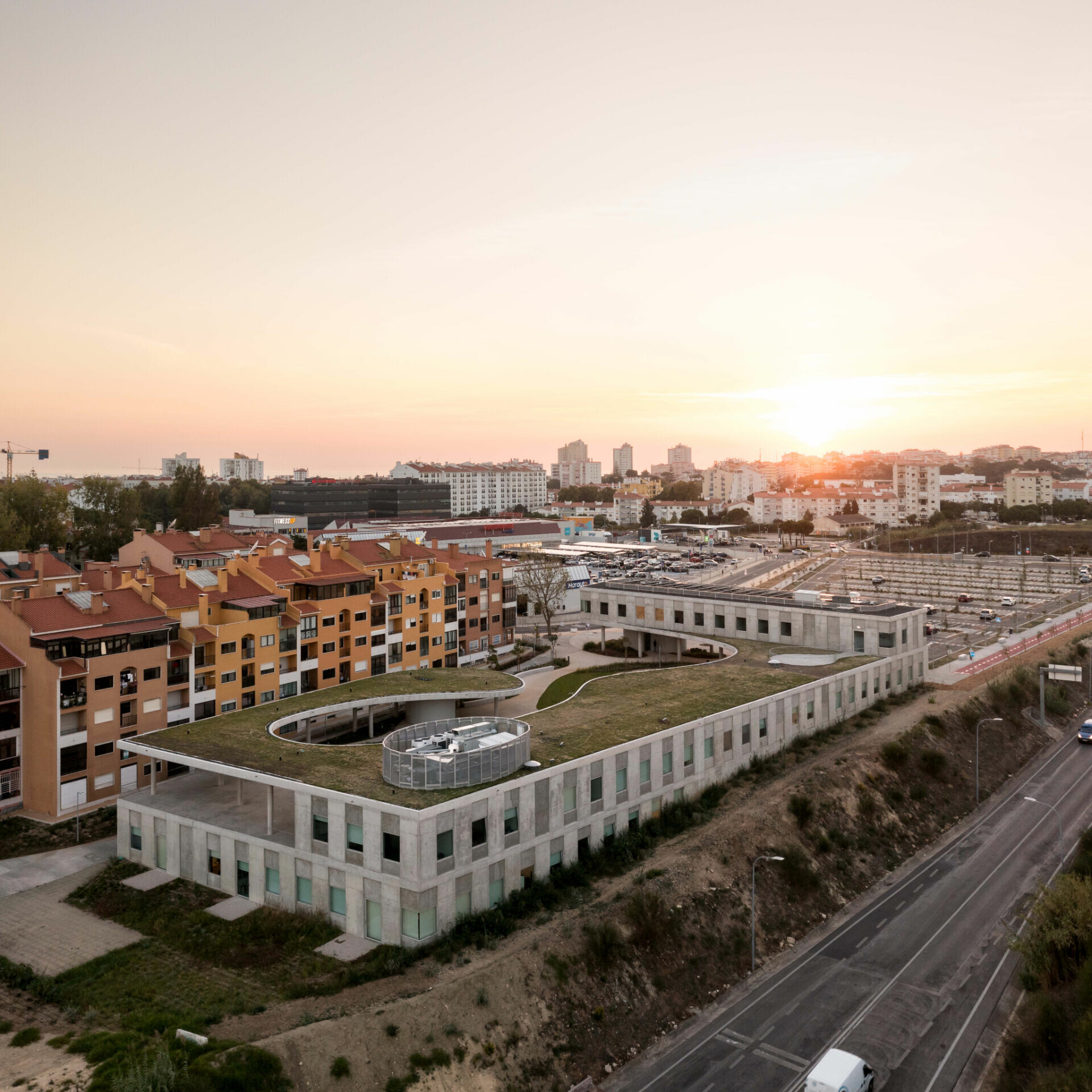
Designed by Simão Botelho, Studio-J and Duoma, the Carcavelos medical centre in Cascais, Portugal, brings four services together: family health outpatient care, shared medical resources, drug addiction treatment, and psychiatry. A central public garden ties the programmes together, accommodating more activity and allowing people in different circumstances to meet and talk.
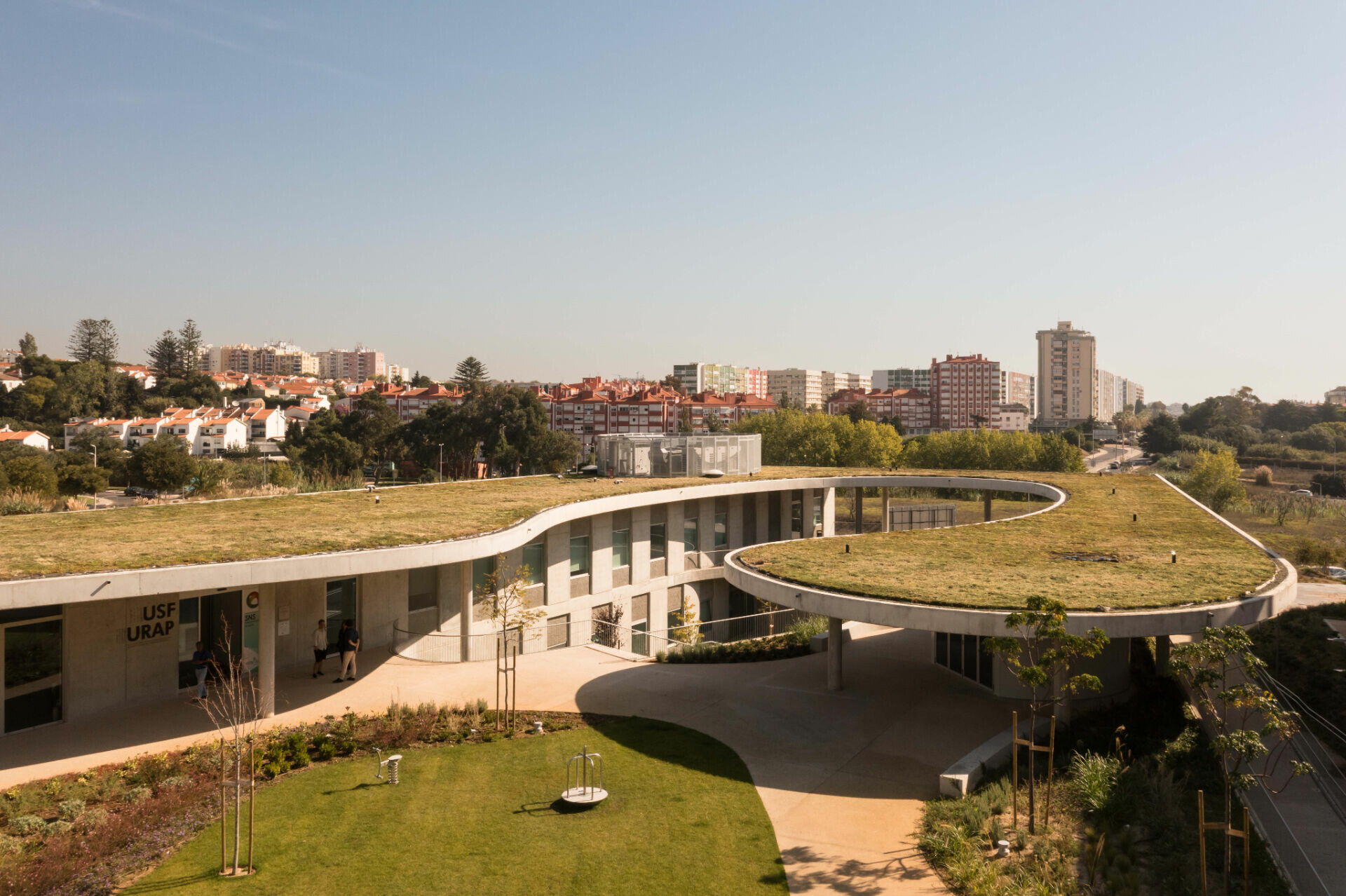
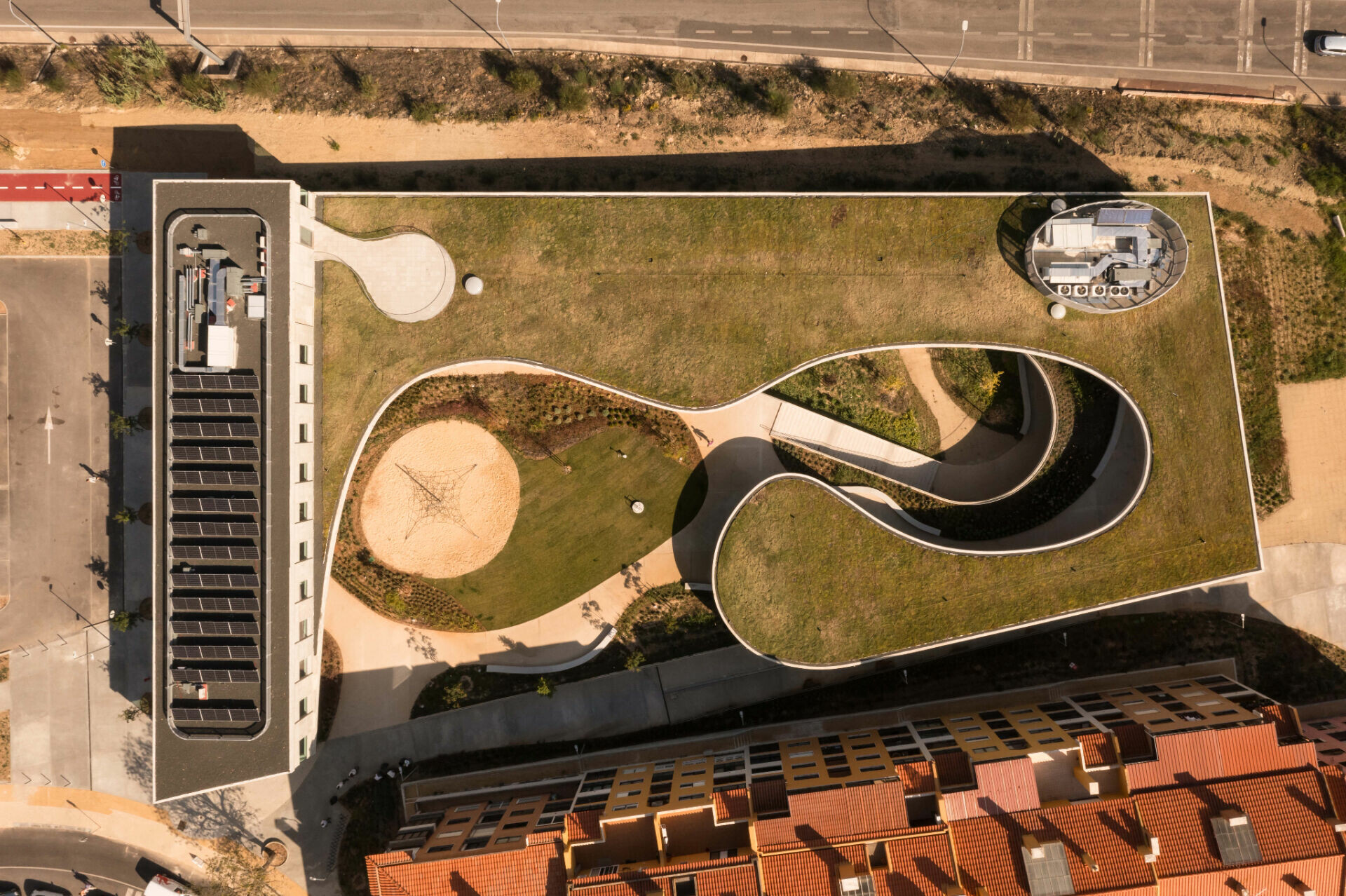
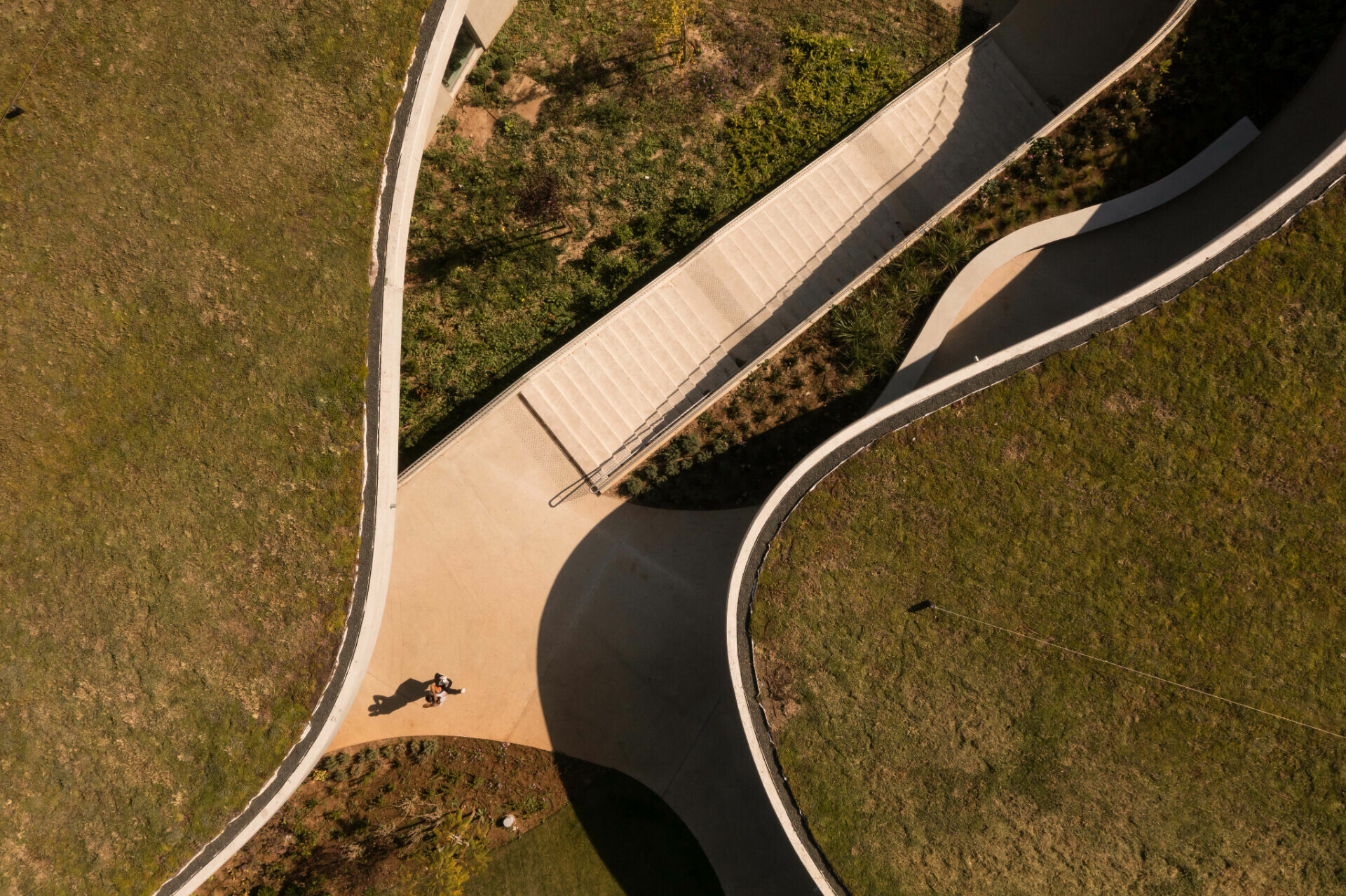
The main road runs along the northern edge. The building turns that noise into a buffer, keeping the public garden clear of the city’s din. To the south, existing residential streets define the boundary and let the centre recede into a familiar domestic backdrop. Preconceptions of a medical facility begin to fall away. It reads instead as part of everyday neighbourhood life. At ground level, the garden naturally links the family health and shared outpatient functions. To the west, a patch of soil is left for residents to water and tend vegetable seedlings, with each harvest season renewing the satisfaction of cultivation.
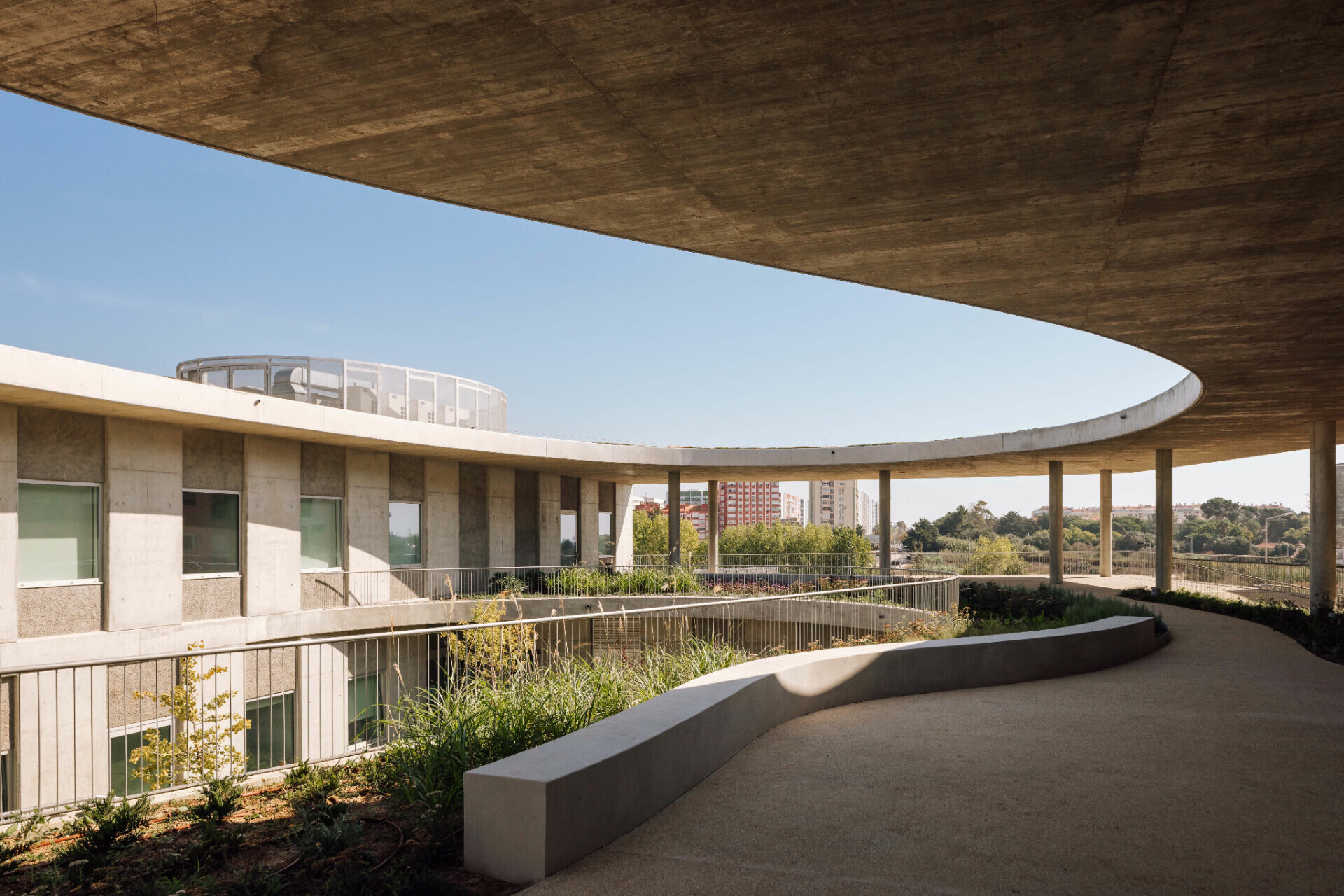
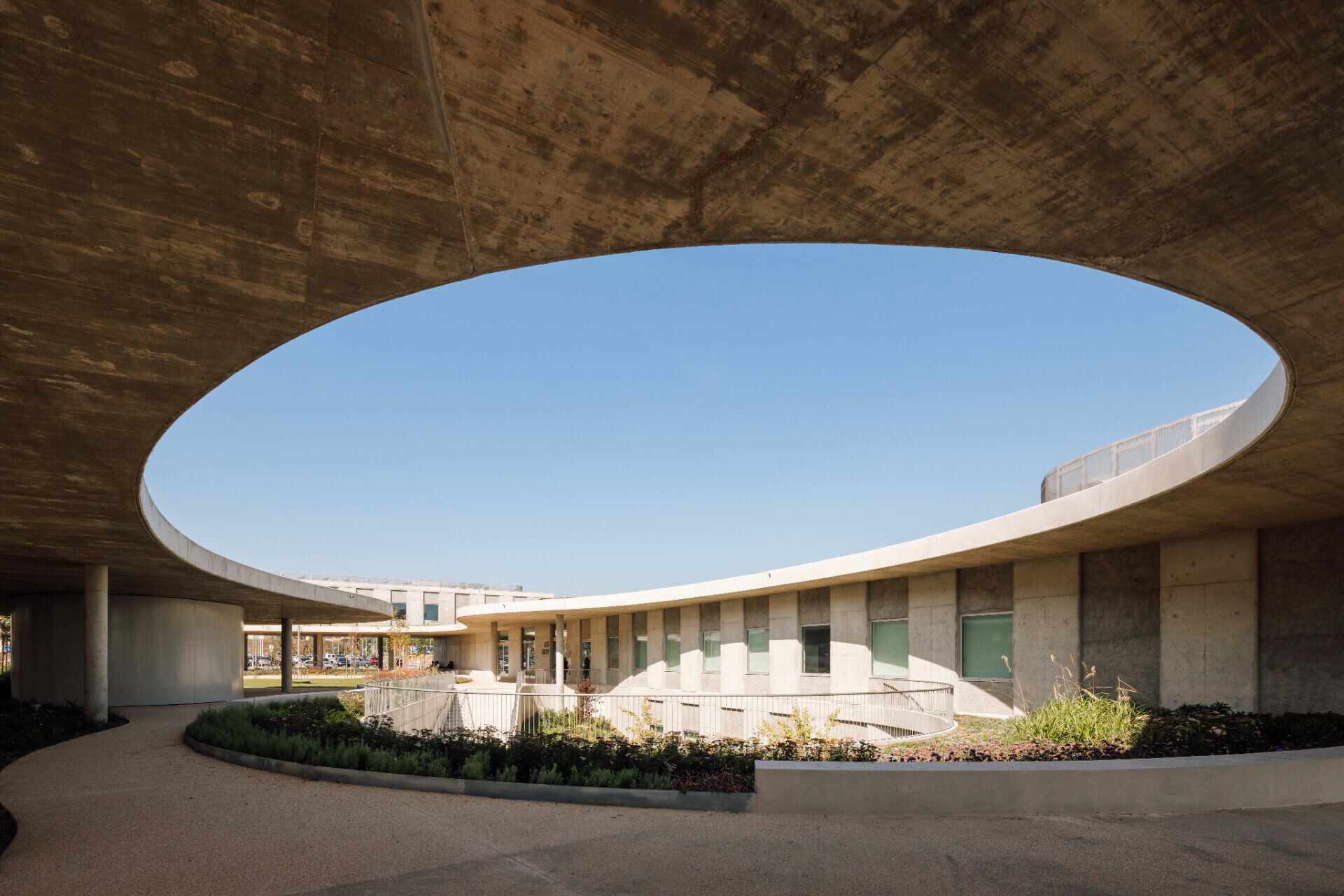
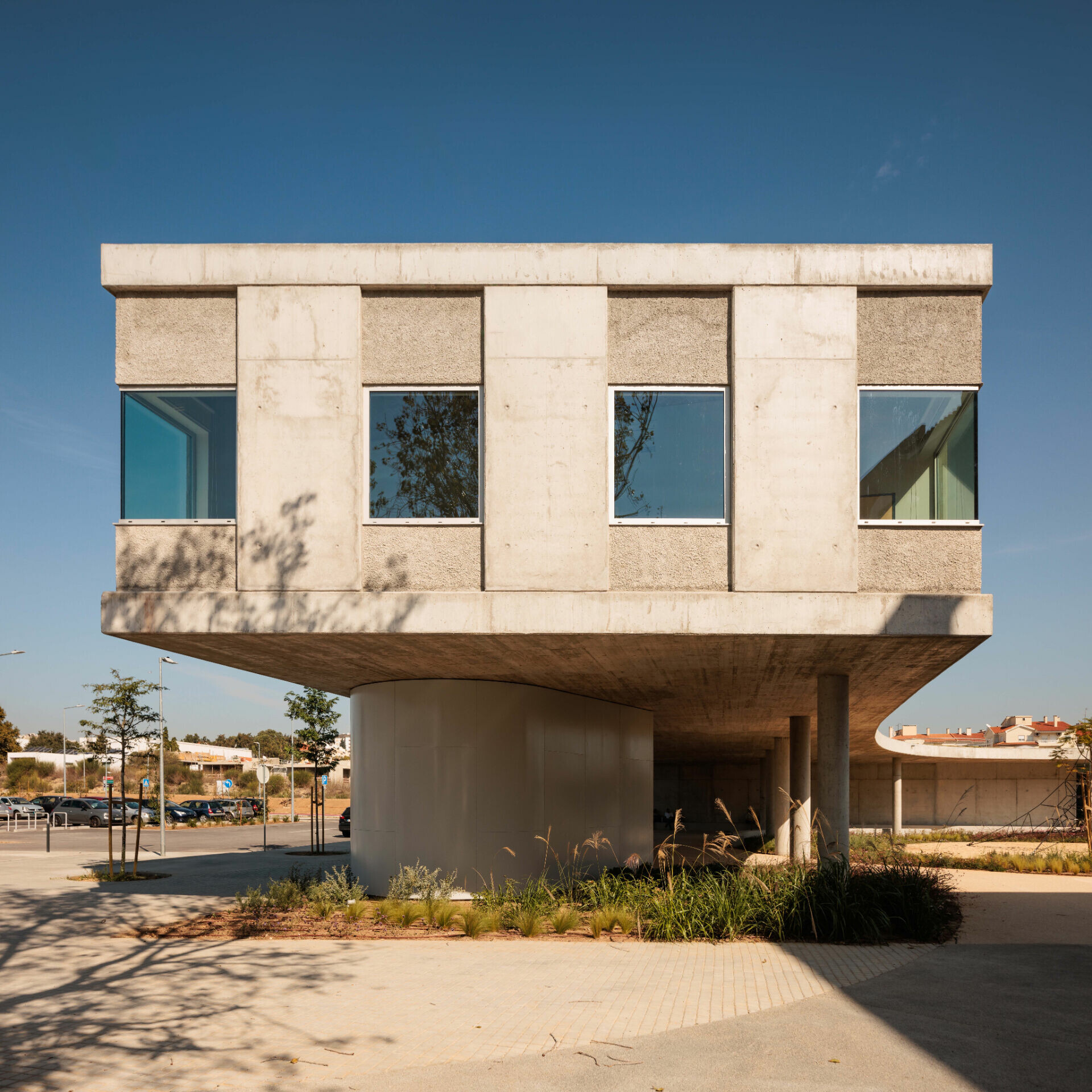
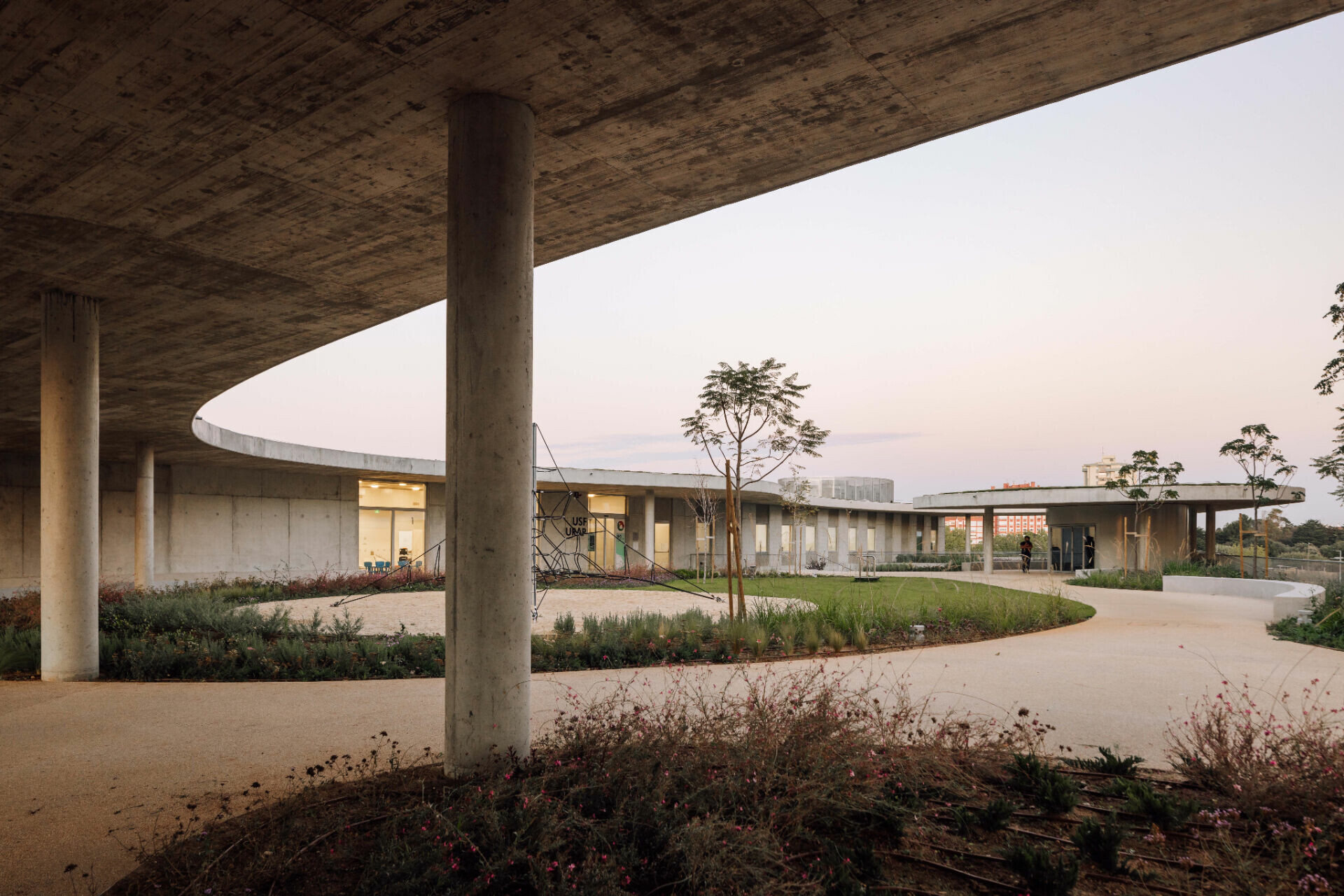
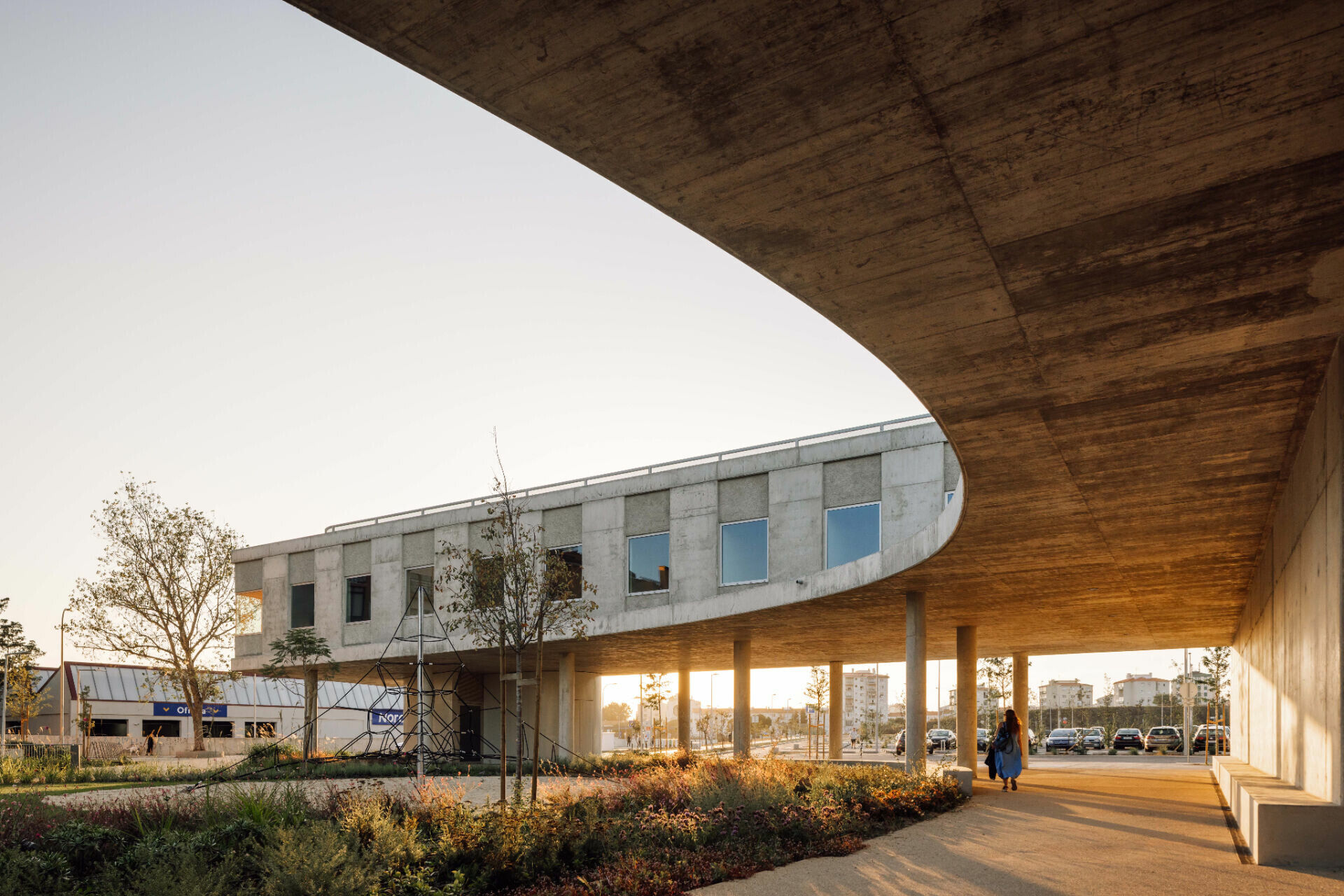
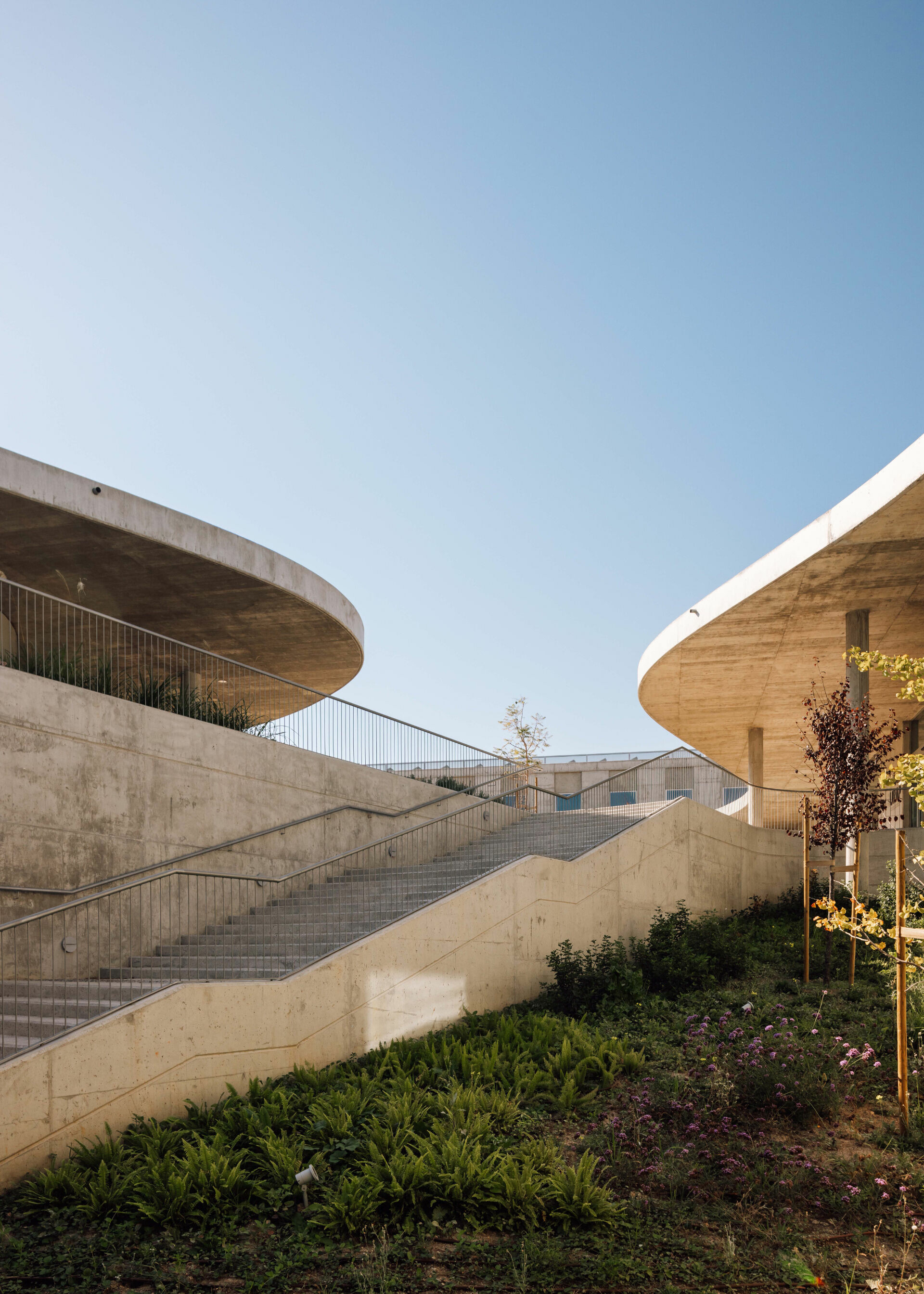
The facade is intentionally rugged. Its raw material palette stands in contrast to the garden and brings the planting’s organic presence into sharper relief. A concrete canopy extends from the volume to mark the garden edge. Its curving line reads as a gentle gesture, gathering light, shadow and vegetation beneath it. Below, tall trees and lower planting form a courtyard that steps down to the lawn. A children’s play area sits alongside a sheltered cafe space. It offers a place to pause for staff and patients, and it is open to the community for gatherings, exercise, play, shade and unhurried walks.
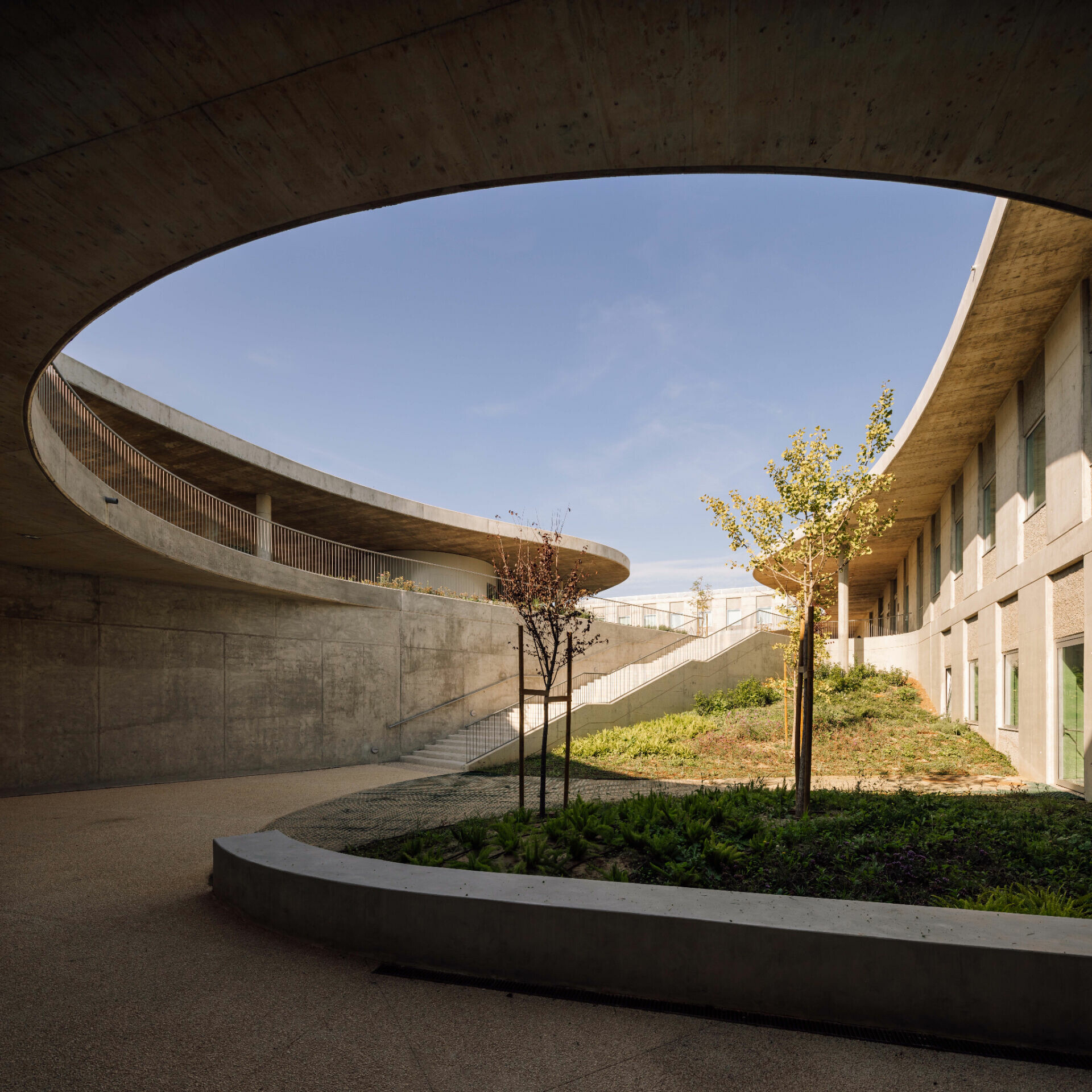
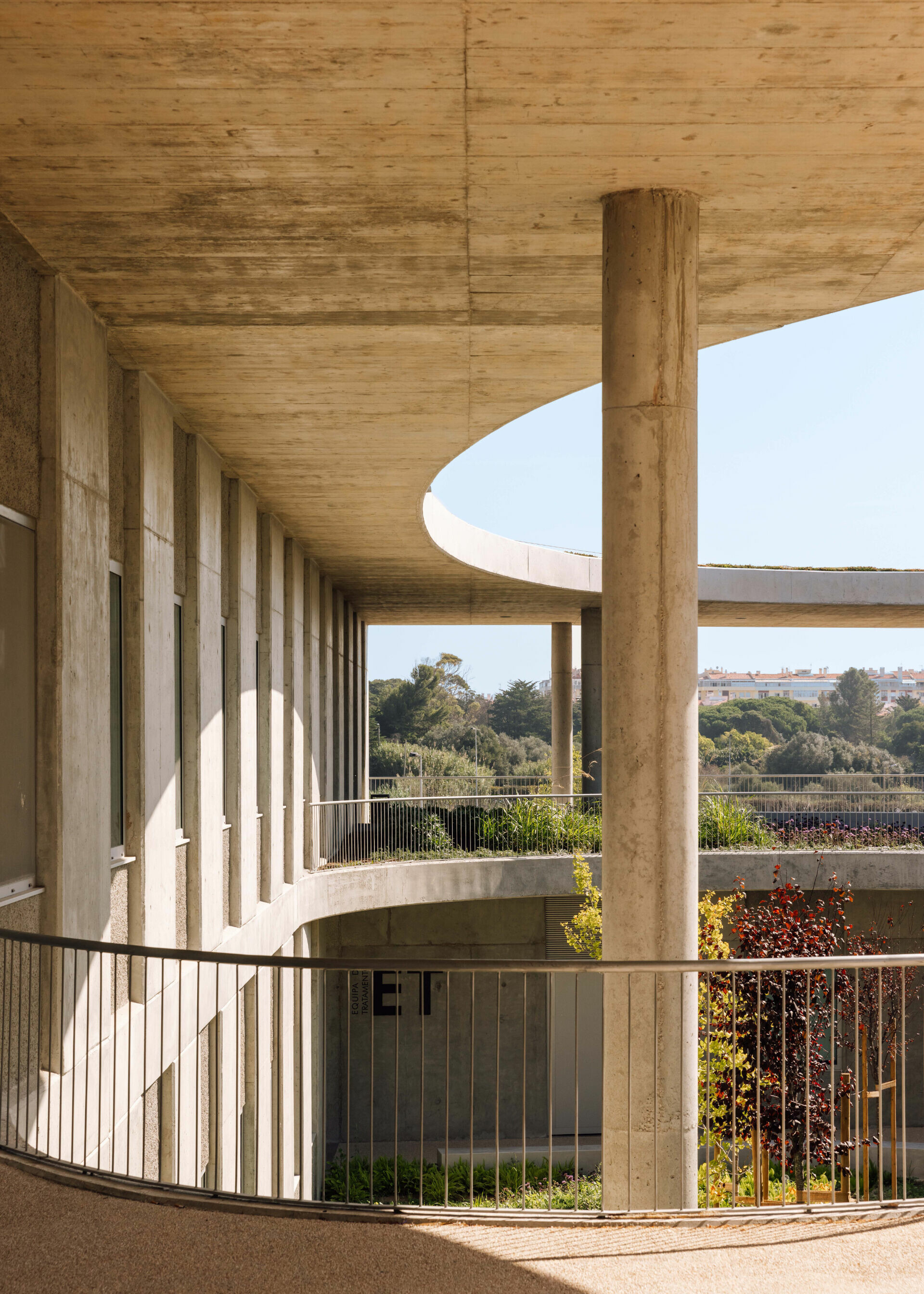
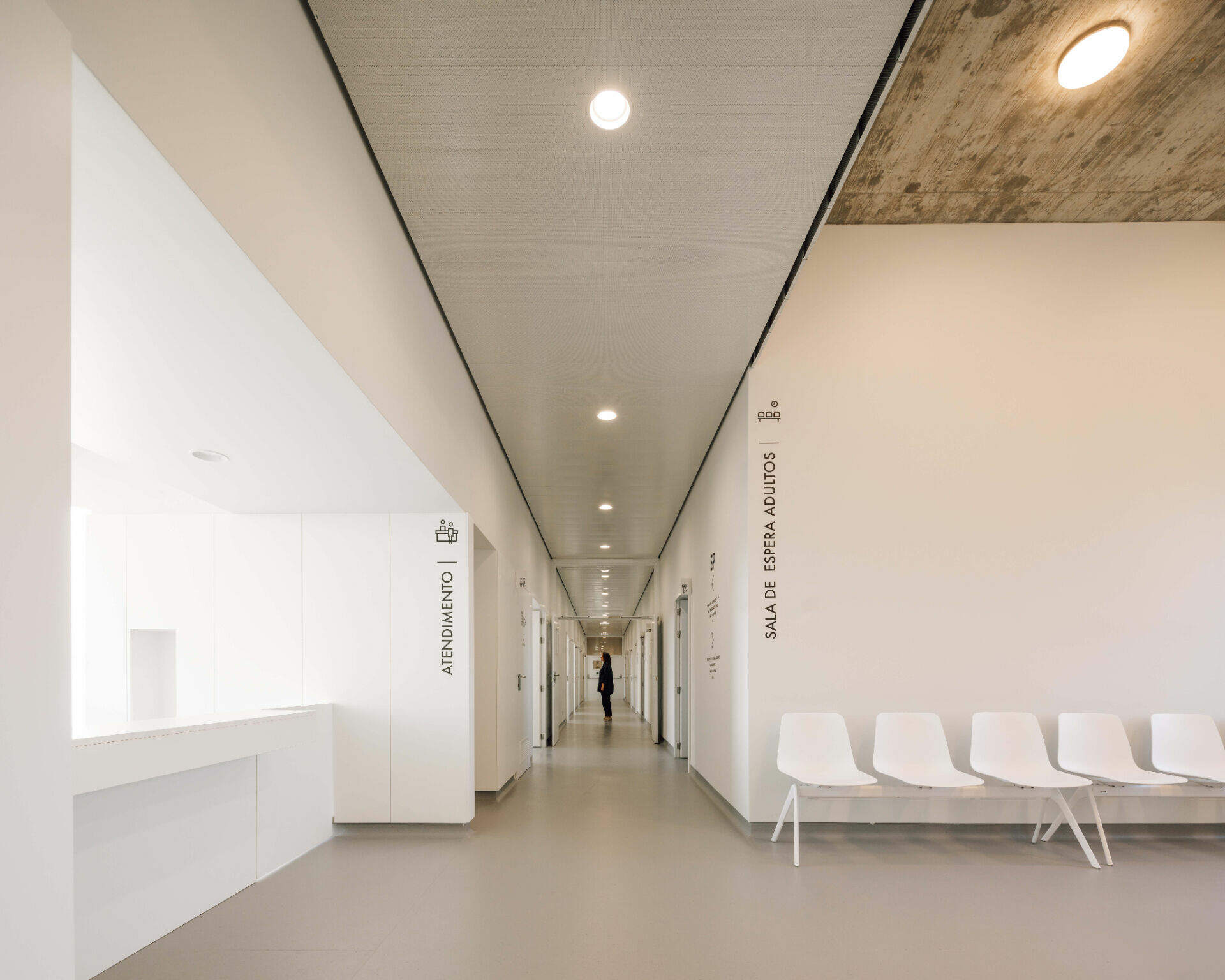
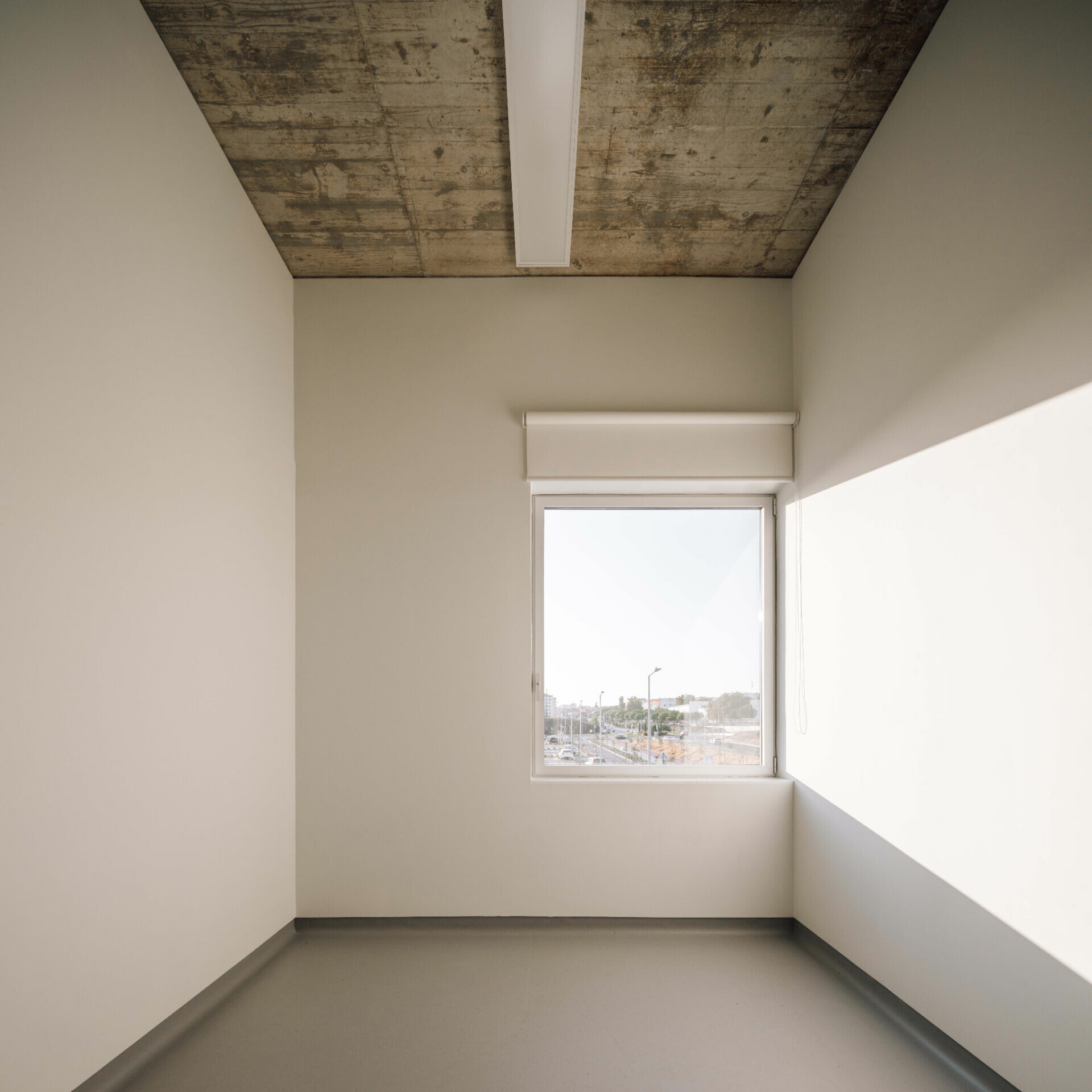
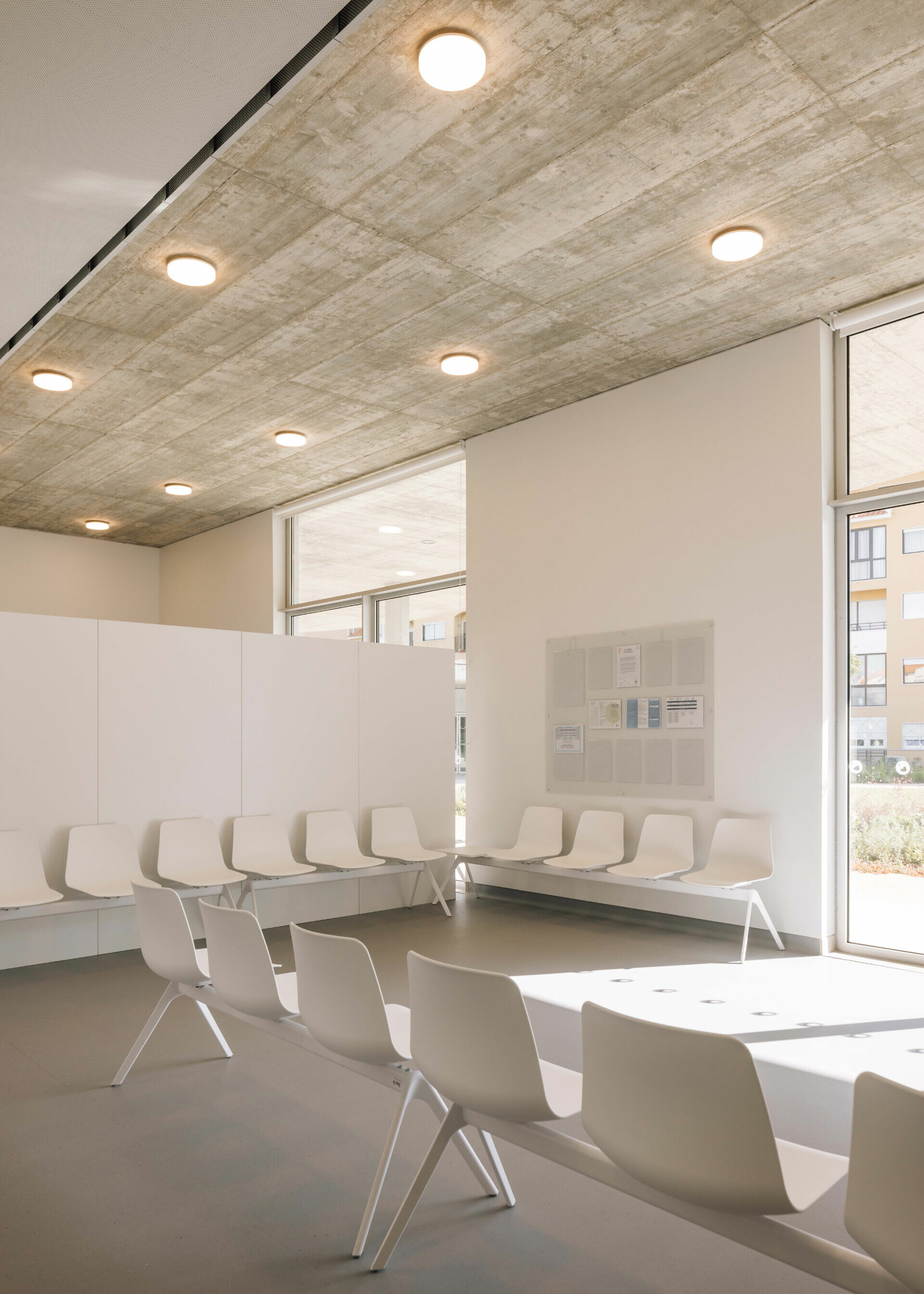
Inside, the layout follows a linear organisation. A central corridor integrates circulation with mechanical and electrical services. Consultation rooms and offices line both sides, defined by a lightweight partition system. The order is clear and practical, an essential condition of public healthcare and easy to navigate in daily use. It also anticipates change. As needs shift, the setting can adapt without losing its steadiness, allowing flexibility to endure. Within a bright, white-toned interior, circulation is given room for light and air to move. As shadows drift across surfaces, relief arrives quietly, in body and mind. By bringing public life into a healthcare building, the project suggests a different model of healing. It moves beyond one-way treatment and extends care smoothly into everyday life.