Glass House Stone House
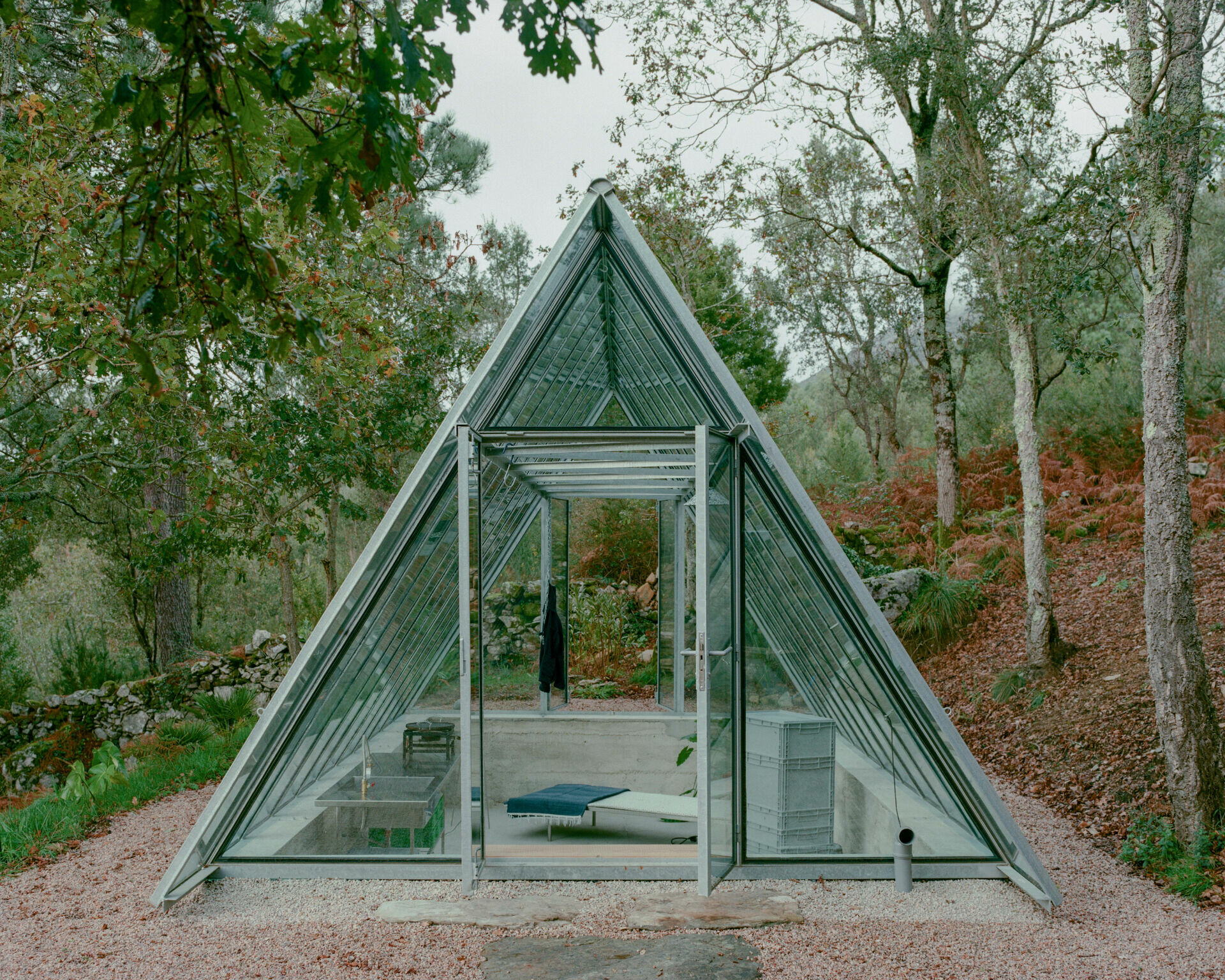
There is a particular calm that arises when immersed in nature, as if inner strength were restored. While the Industrial Revolution brought material progress, it also distanced people from the simplicity of a life lived close to nature. Today, as environmental awareness deepens and energy costs rise, architects increasingly seek not only to explore diverse forms but also to restore balance with the natural world. Set on a wooded slope in northern Portugal, a glass house with lightweight framing presents a transparent and finely detailed presence that blends seamlessly into the forest. It invites one to follow a gravel path into its sunken interior, to experience the surrounding mountains and trees, and to sense its deeper connection to the neighboring stone house.
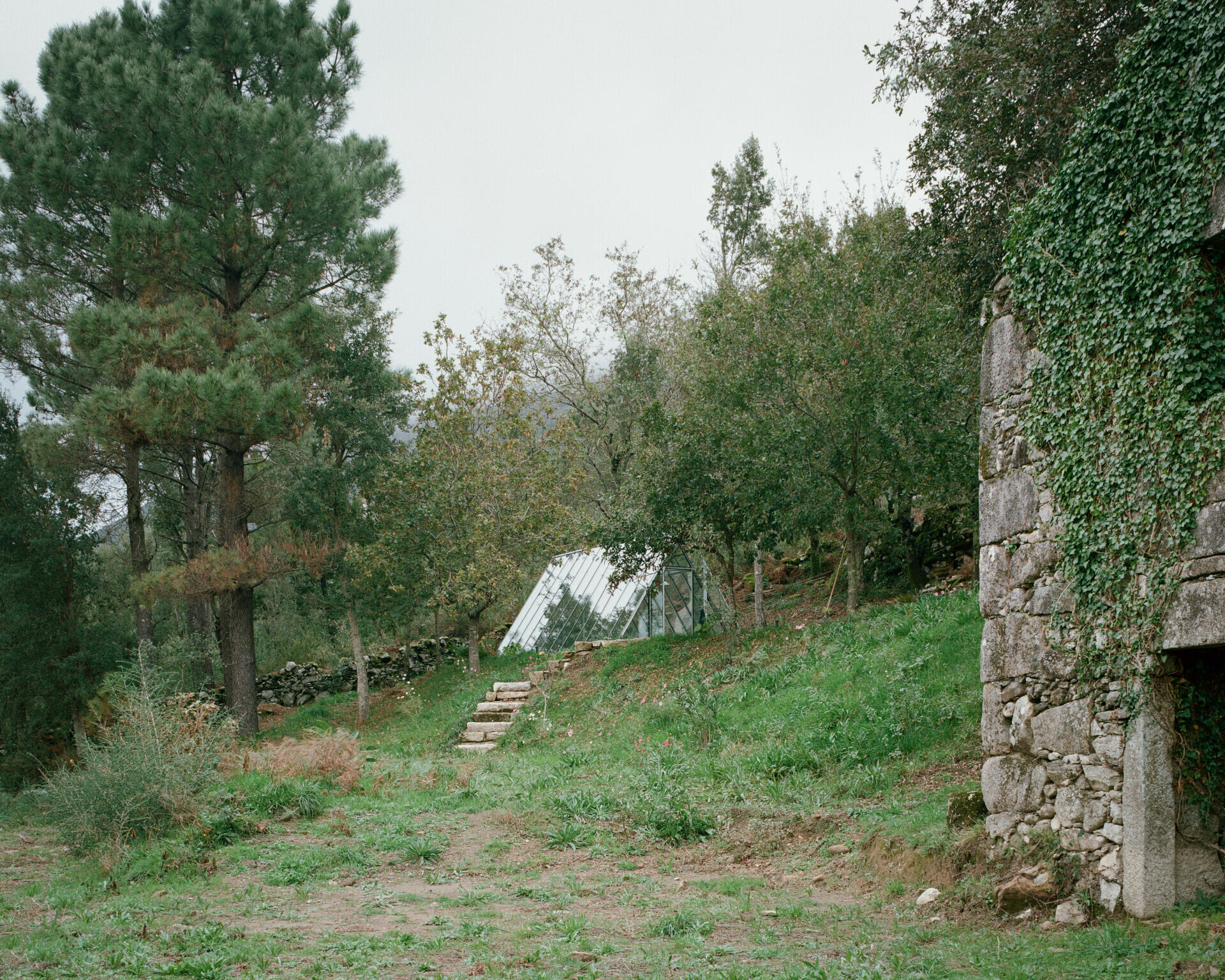
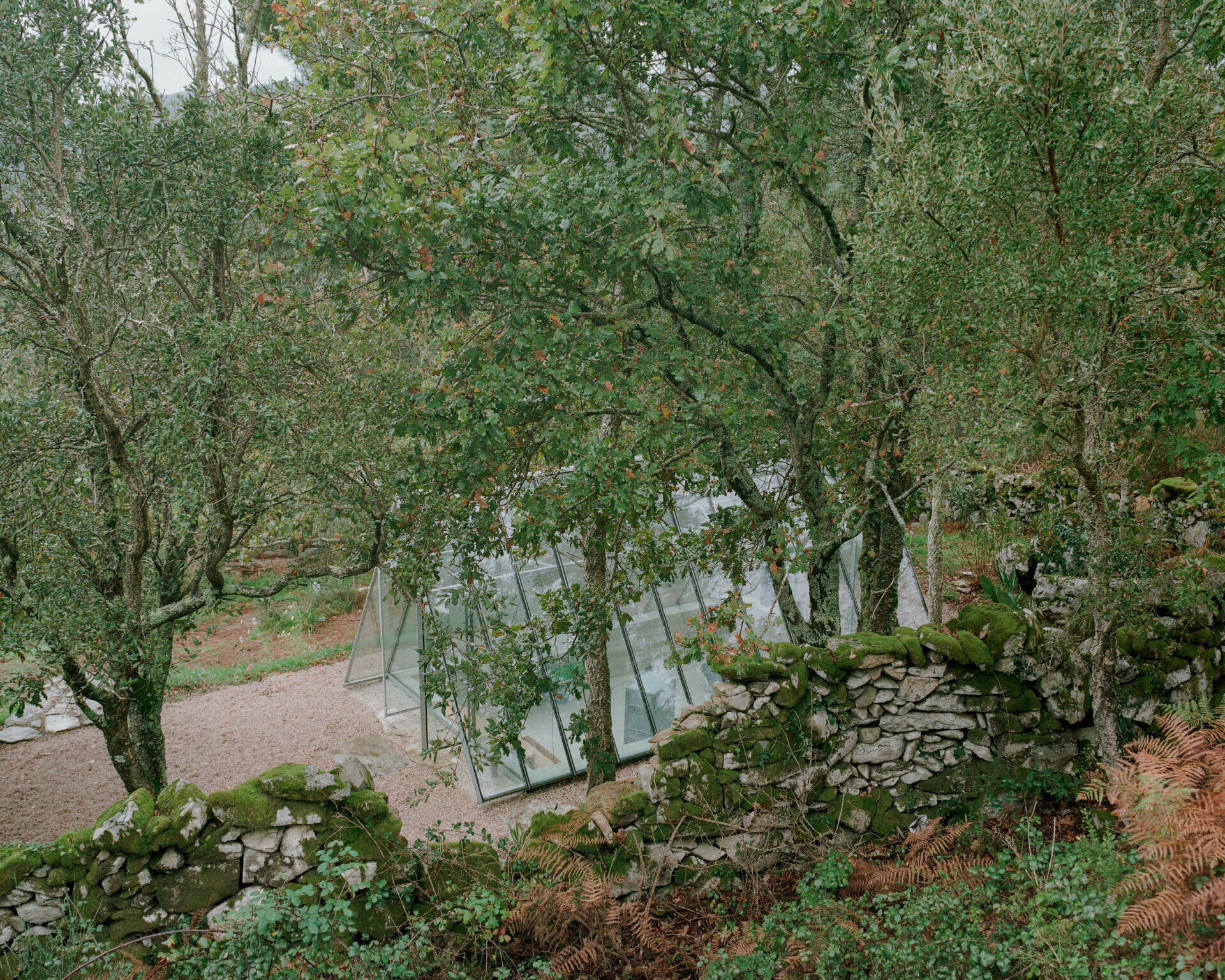
Dyvik Kahlen Architects has renovated an old farmhouse built of granite masonry in the Portuguese forest and restructured its surrounding grounds. Of the building’s seven original rooms, three have been retained as enclosed, thermally controlled living spaces, while the remaining four have been transformed into “outdoor rooms,” creating a transitional zone between architecture and landscape. Not far from the house, a new glass conservatory was added, conceived as a spatial counterpart to the solidity of the stone structure and as a study of new interactions between architecture and landscape. Subtly embedded in the terrain, the triangular glass volume rests lightly in the woodland, extending the material essence of the farmhouse while asserting its own identity.
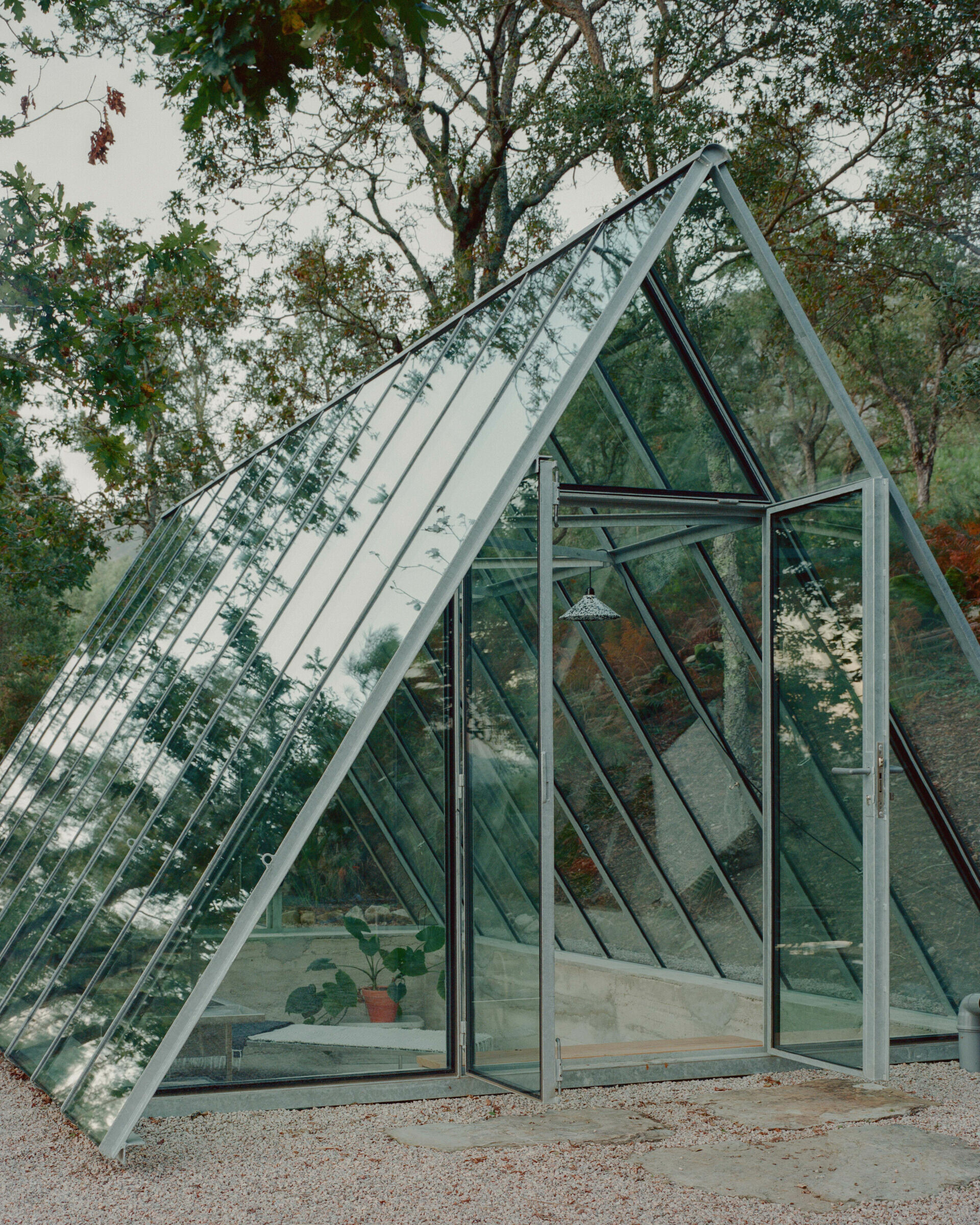
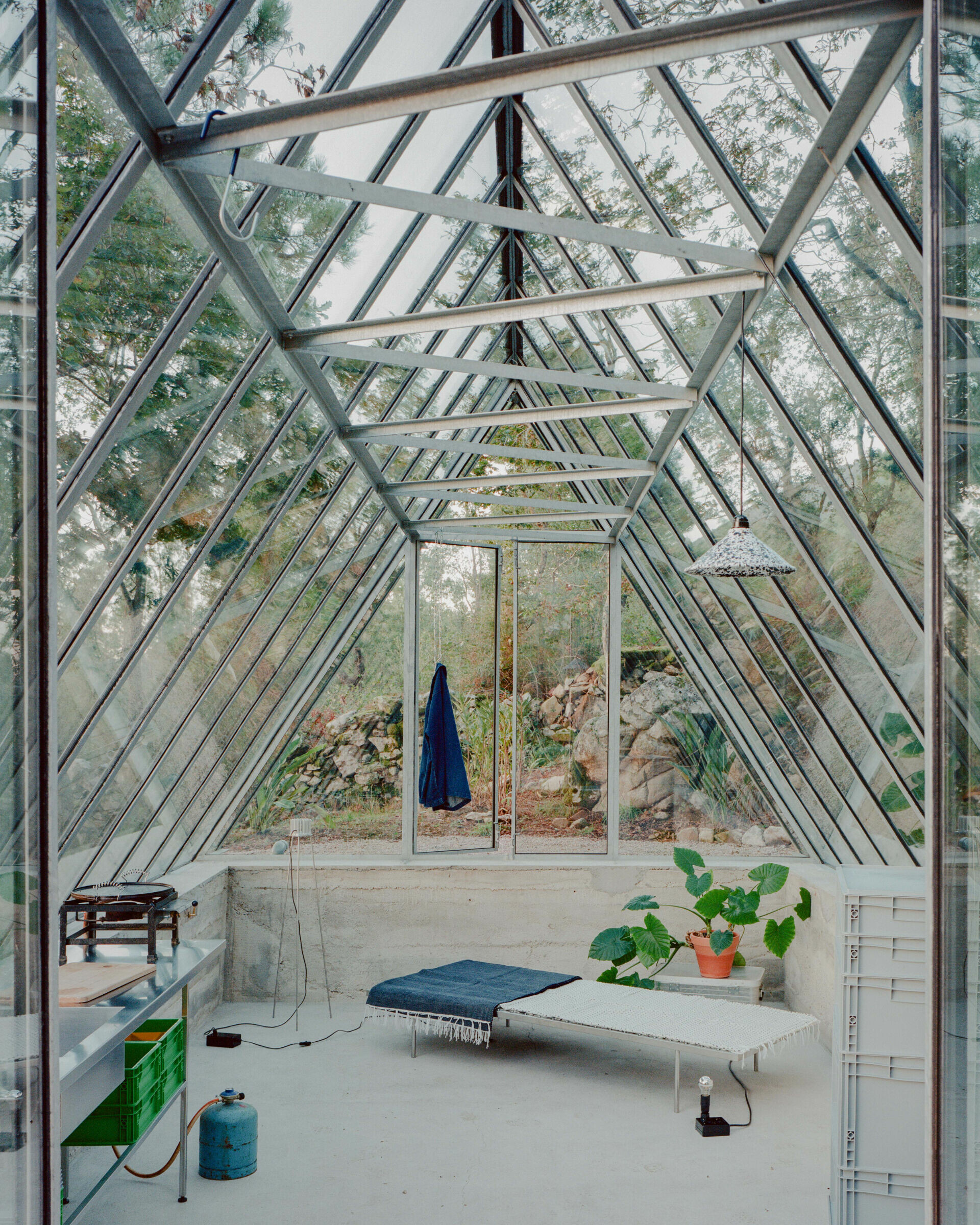
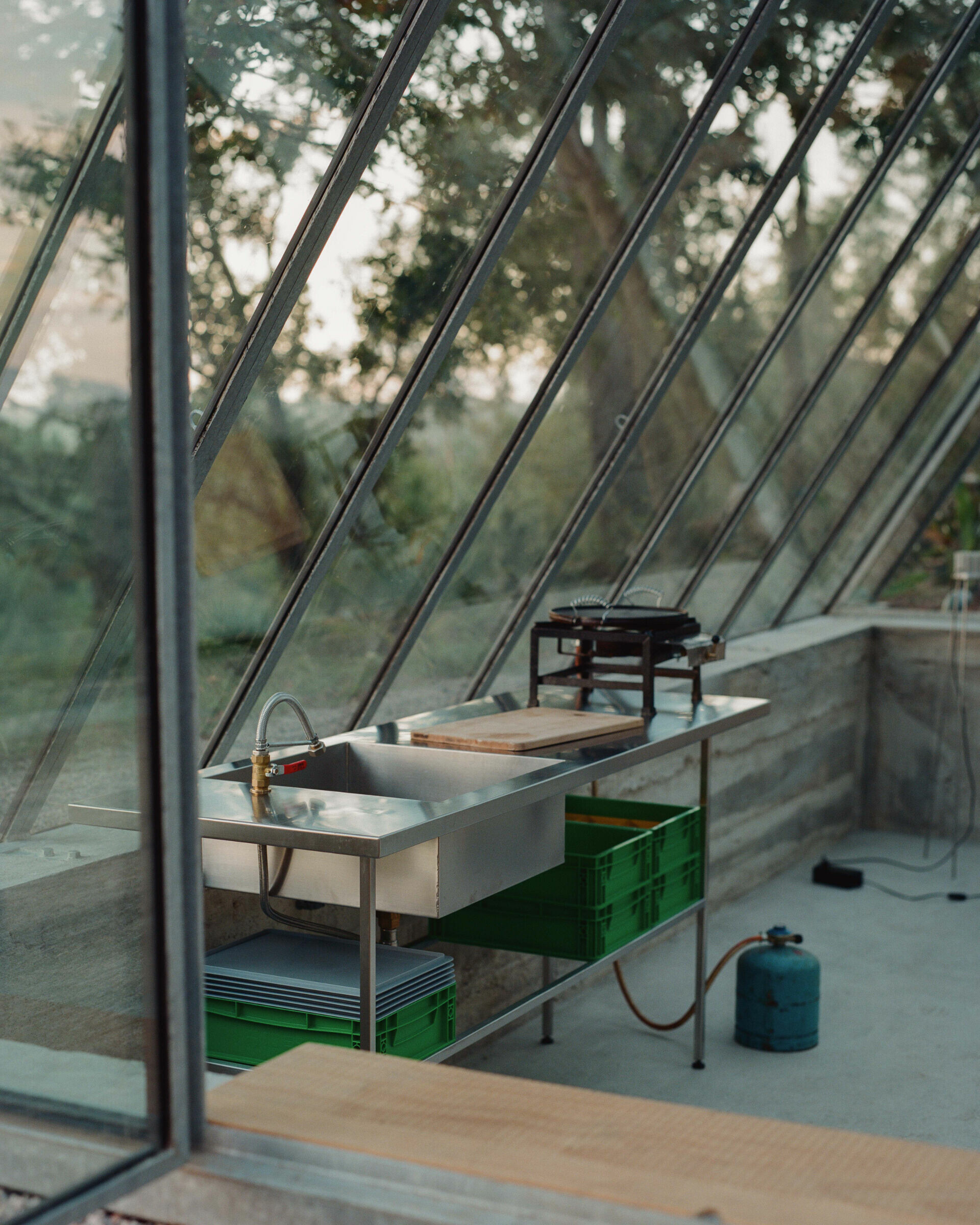
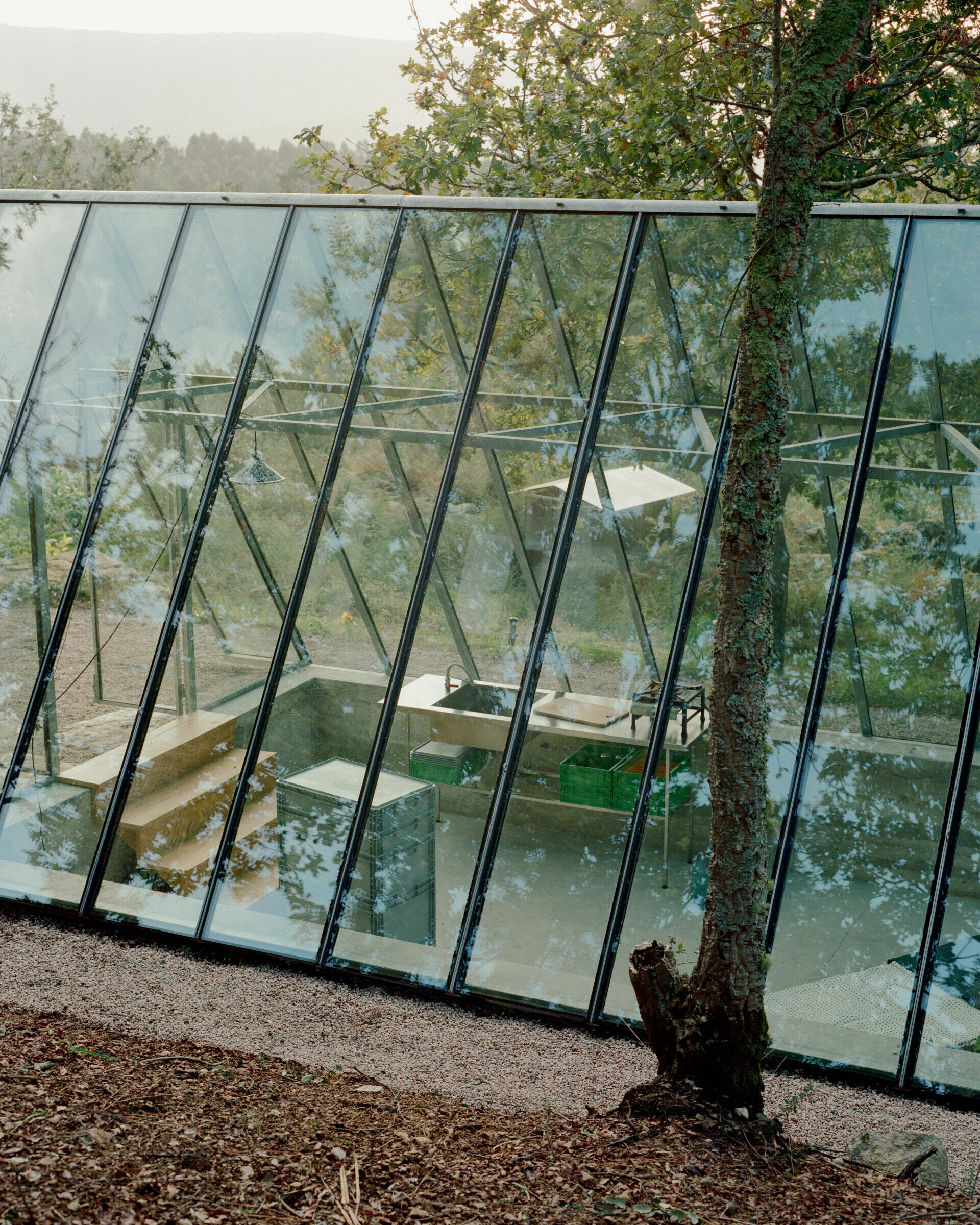
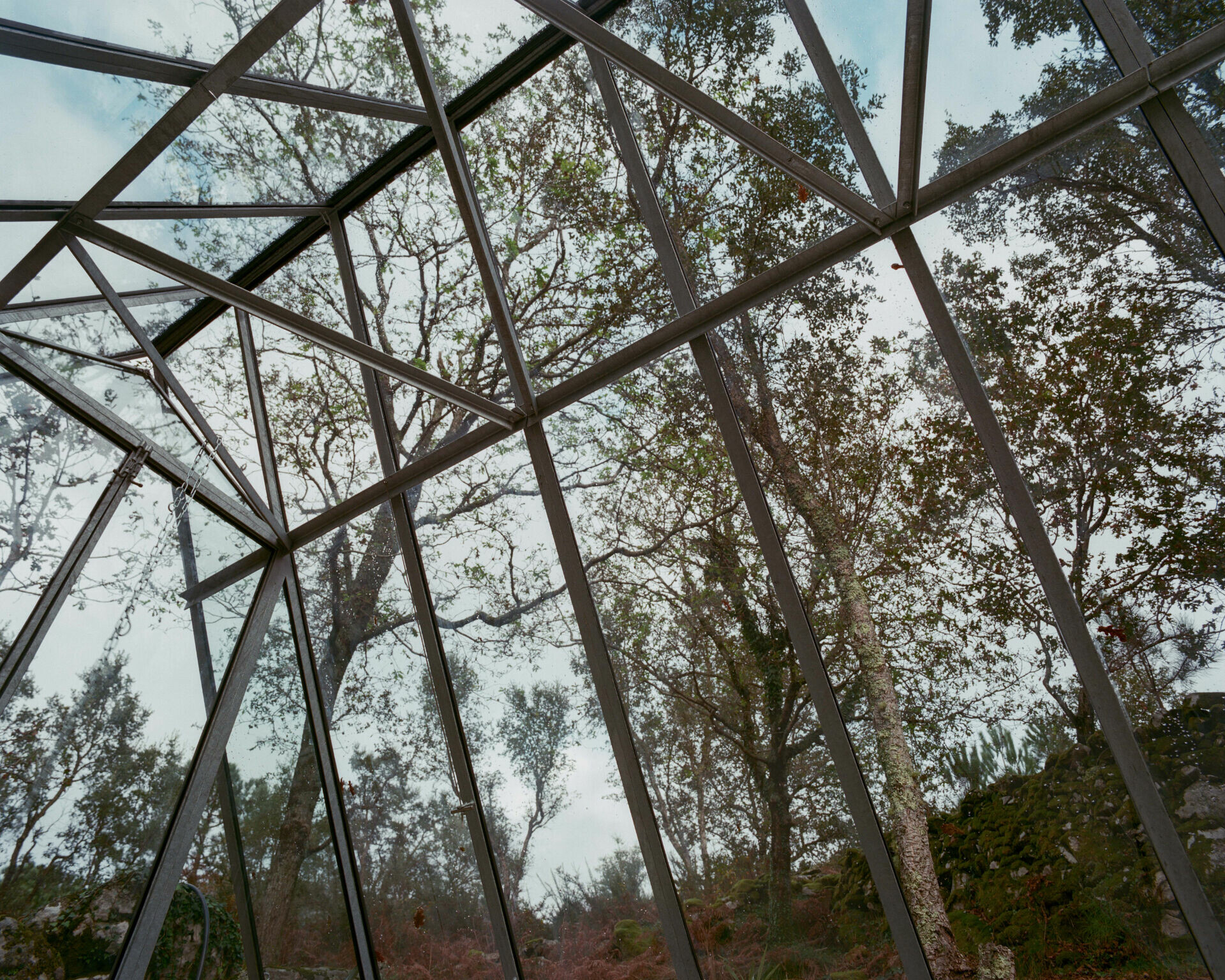
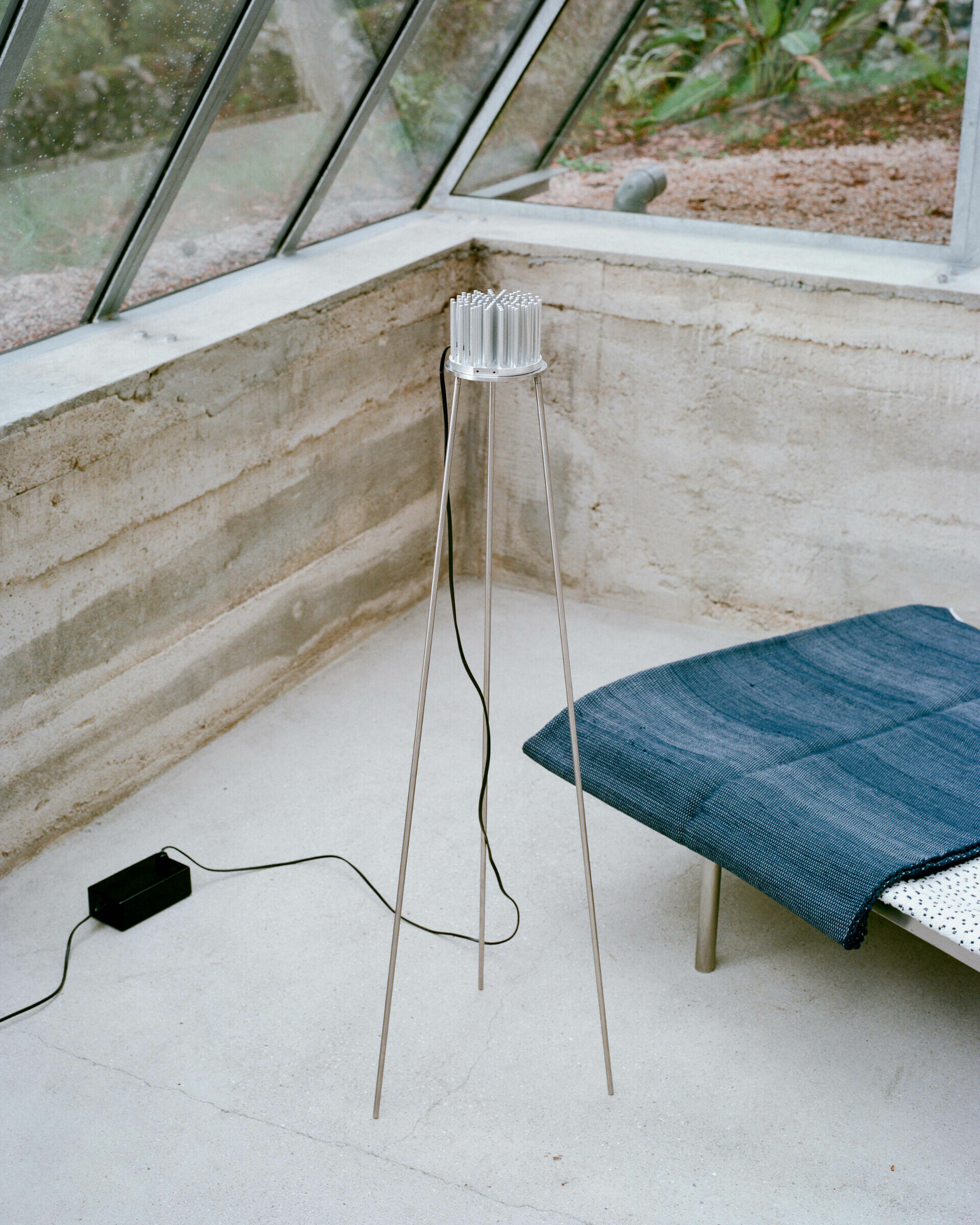
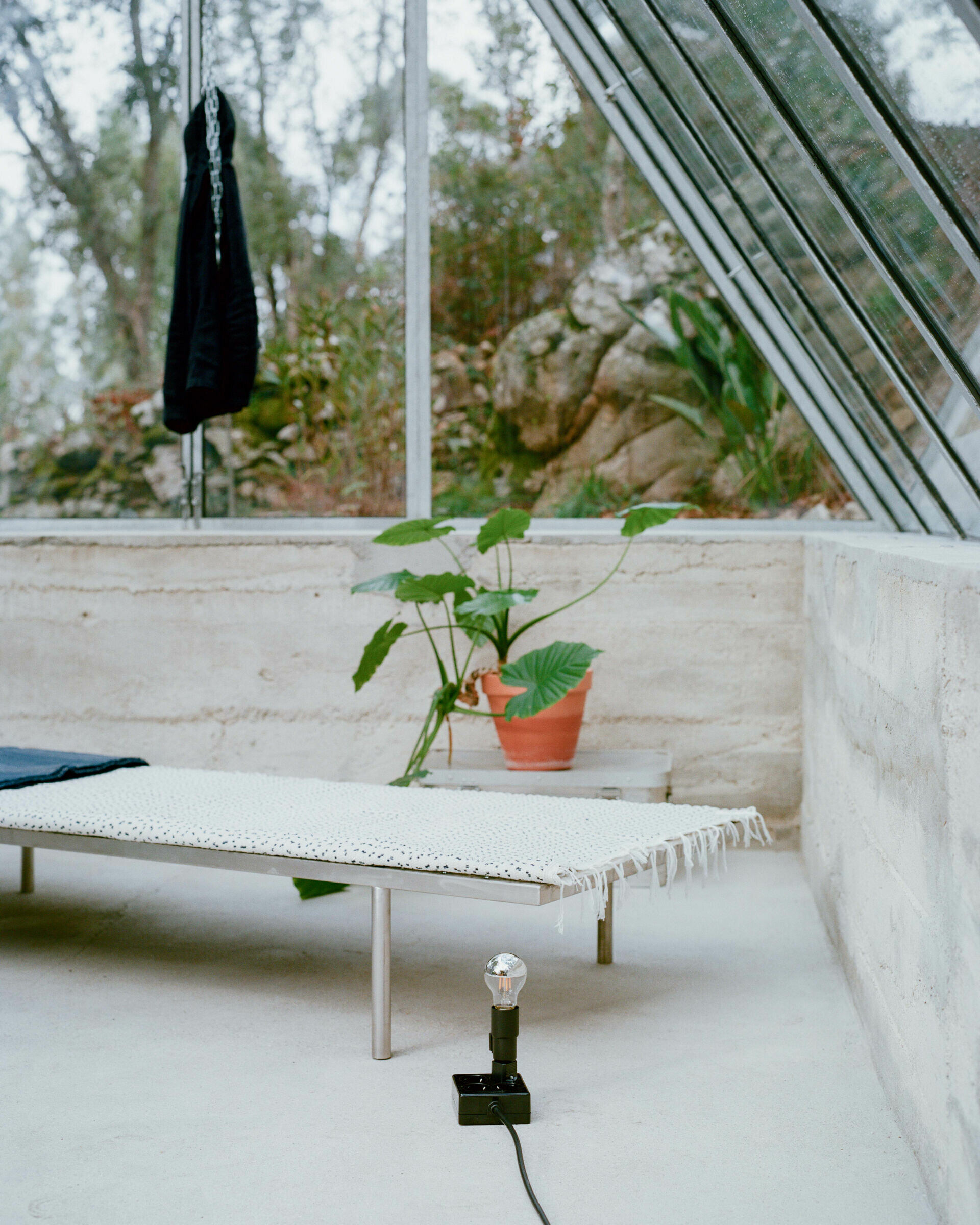
Unlike traditional structures that rise above the ground, the glass house is defined by two slender glass façades supported by lightweight framing, leaning together to form a pitched triangular roof over a sunken floor. While the glasshouse rests on a concrete base, the adjoining stone house is constructed from granite blocks salvaged from the original farmhouse, laid in dry-stone construction. Without mortar or adhesives, the walls rely on the weight and friction of the stones, honoring material integrity while creating a solid and intimate enclosure that reflects permanence and coexistence with the landscape.
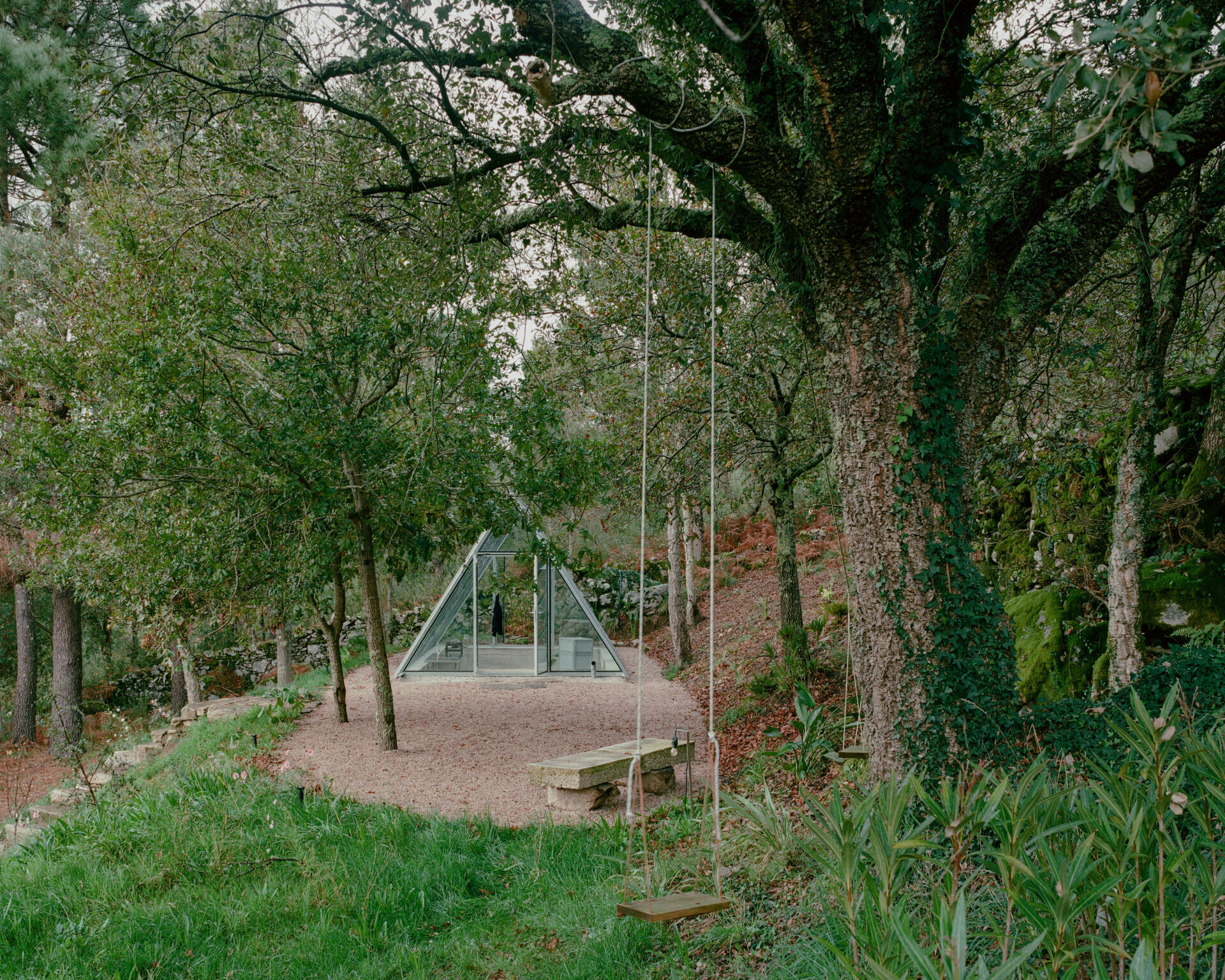
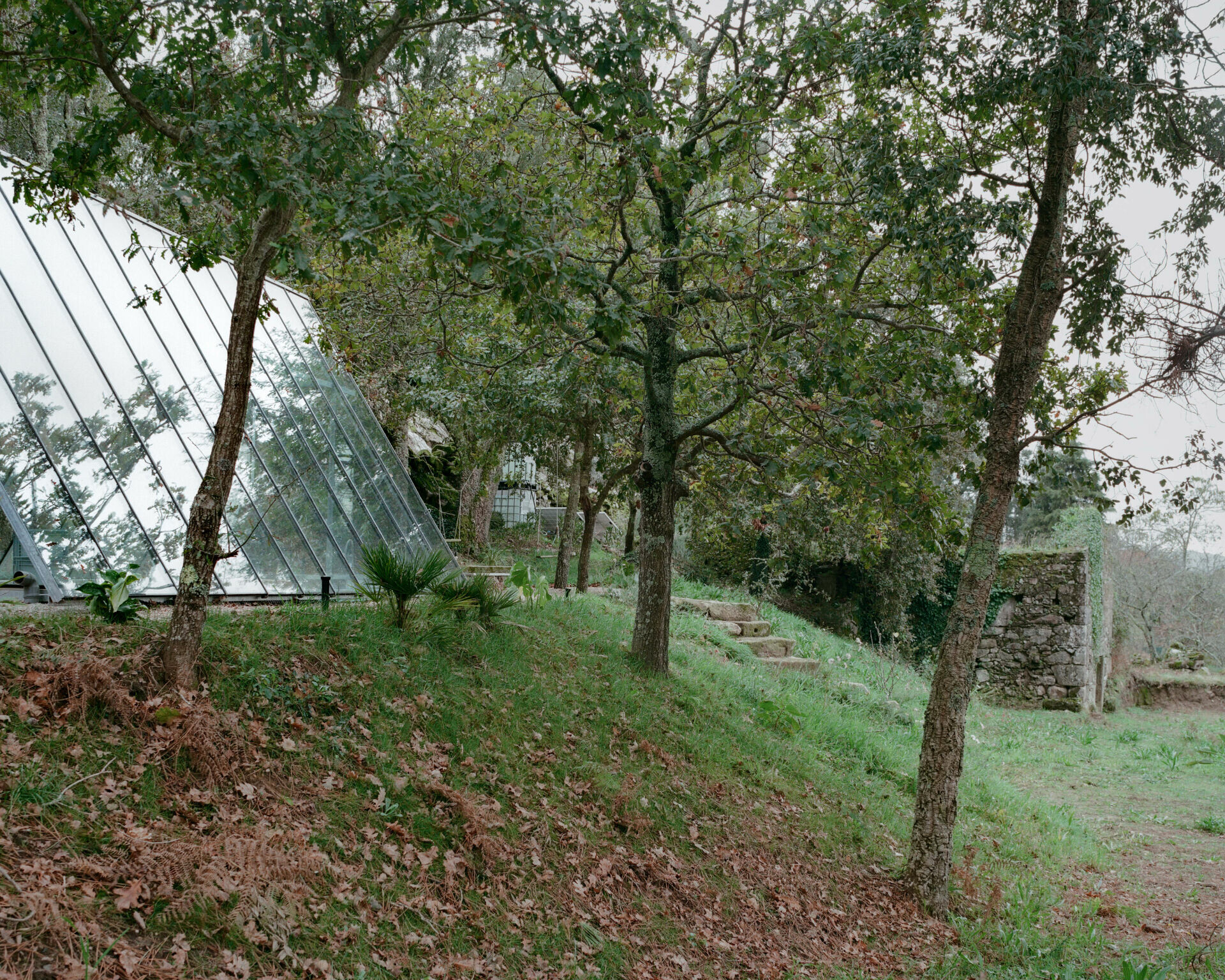
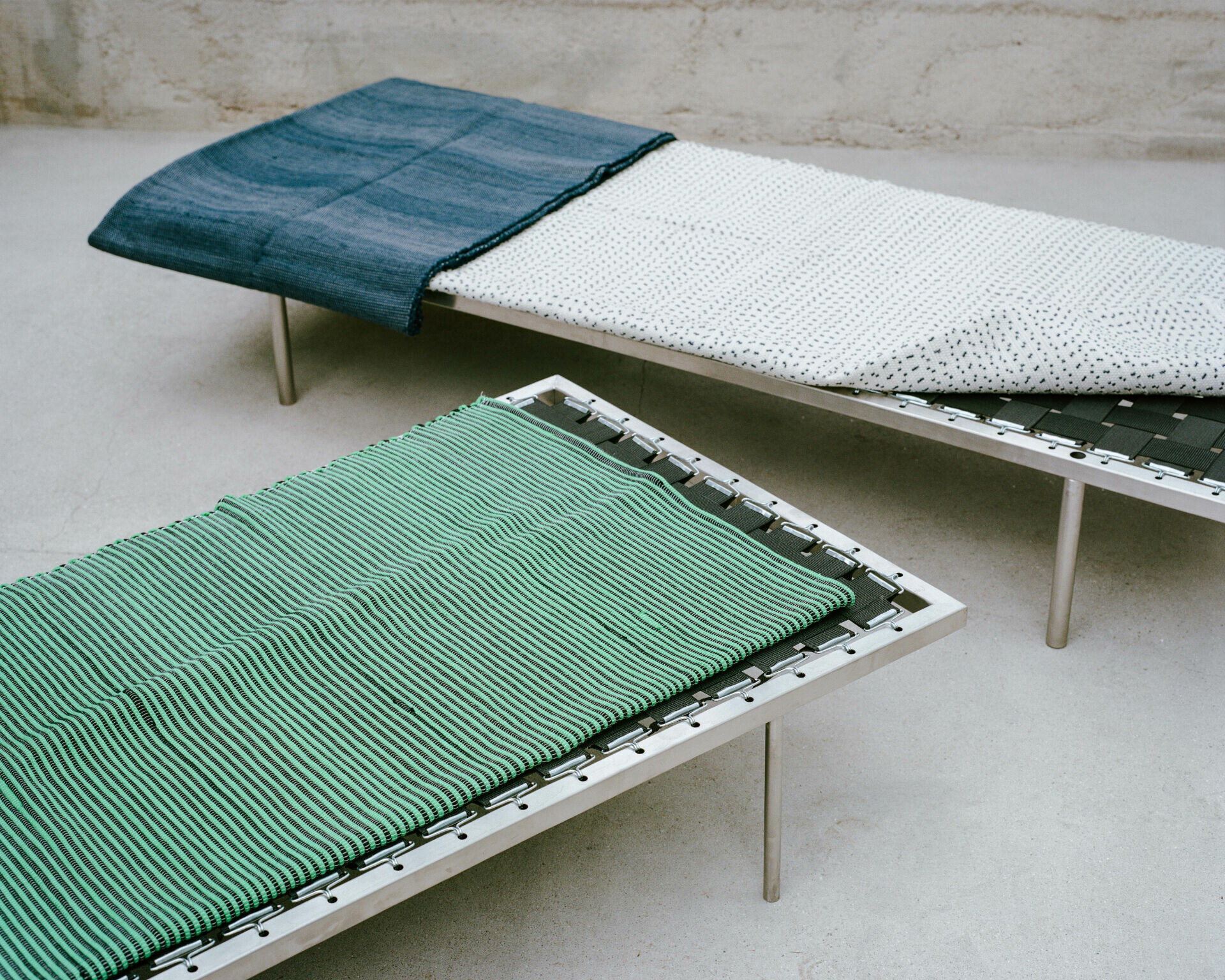
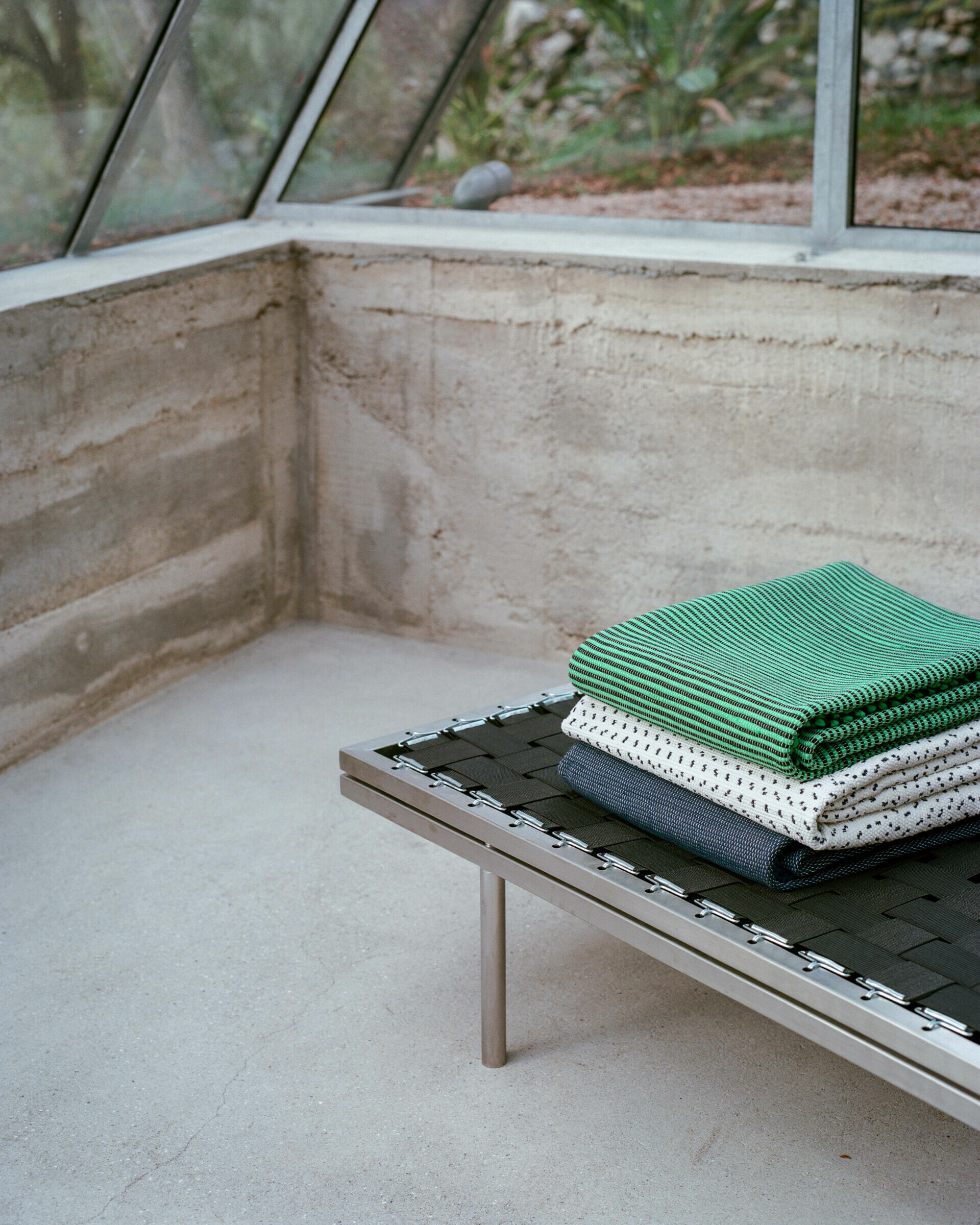
The glass house marks the first completed phase of the project. It demonstrates how contemporary architecture, when embedded in the landscape, can assume an organic presence that merges with its wooded surroundings. Beyond its pared-back minimalist aesthetic, the project engages questions of energy use, ecological interaction, and sensory experience. Copper pipes embedded in the exterior stone walls heat them continuously during colder months, interrupting capillary action and regulating humidity and temperature through radiant heat. Within this transparent environment, furnished with Dyvik Kahlen’s own double daybed, one can recline beneath the canopy, observe the shifting play of light across the trees, and experience the forest at close hand—a moment where architecture and nature are brought into seamless proximity.