House in Muko
Located in Muko, Kyoto Prefecture—a semi-rural district historically situated on the outer edges of the city—this residential reconstruction by Tomohiro Hata Architect & Associates responds to a site once characterized by farmland and bamboo groves. Traditionally, such areas were defined by stone walls that enclosed clusters of buildings: a central main house surrounded by a constellation of auxiliary structures, forming self-sufficient agrarian compounds. As urbanization extended outward from Kyoto’s core, these settlements were gradually dismantled and subdivided, leaving behind a fragmented pattern of development. Confronting this layered terrain, the architects sought to stitch together the spatial memory of the site, echoing the communal logic of the original settlement through a contemporary architectural language. The result is not a preservation of form, but a reinterpretation of spatial order—one that reestablishes a new axis of domestic life across time.
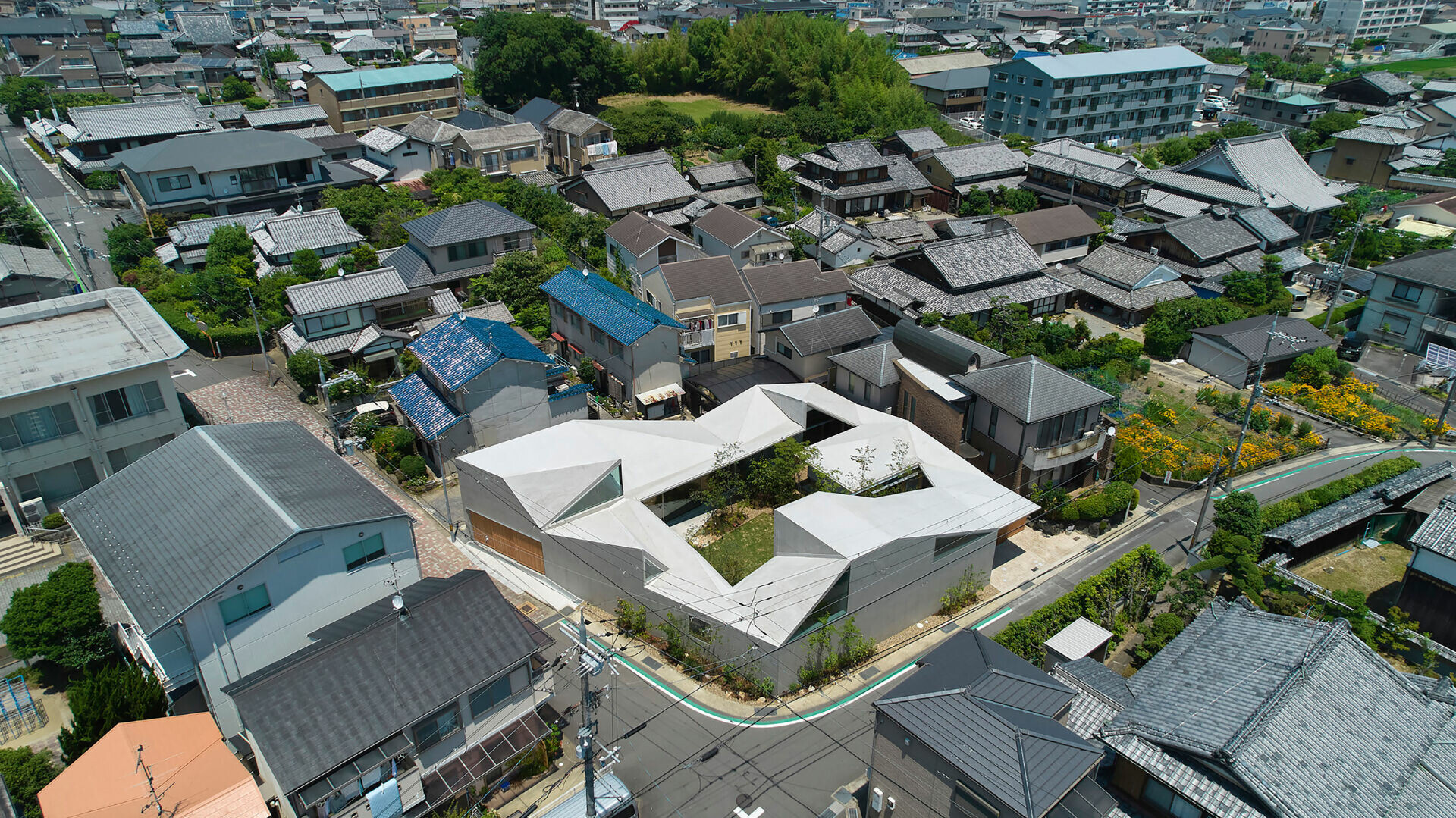
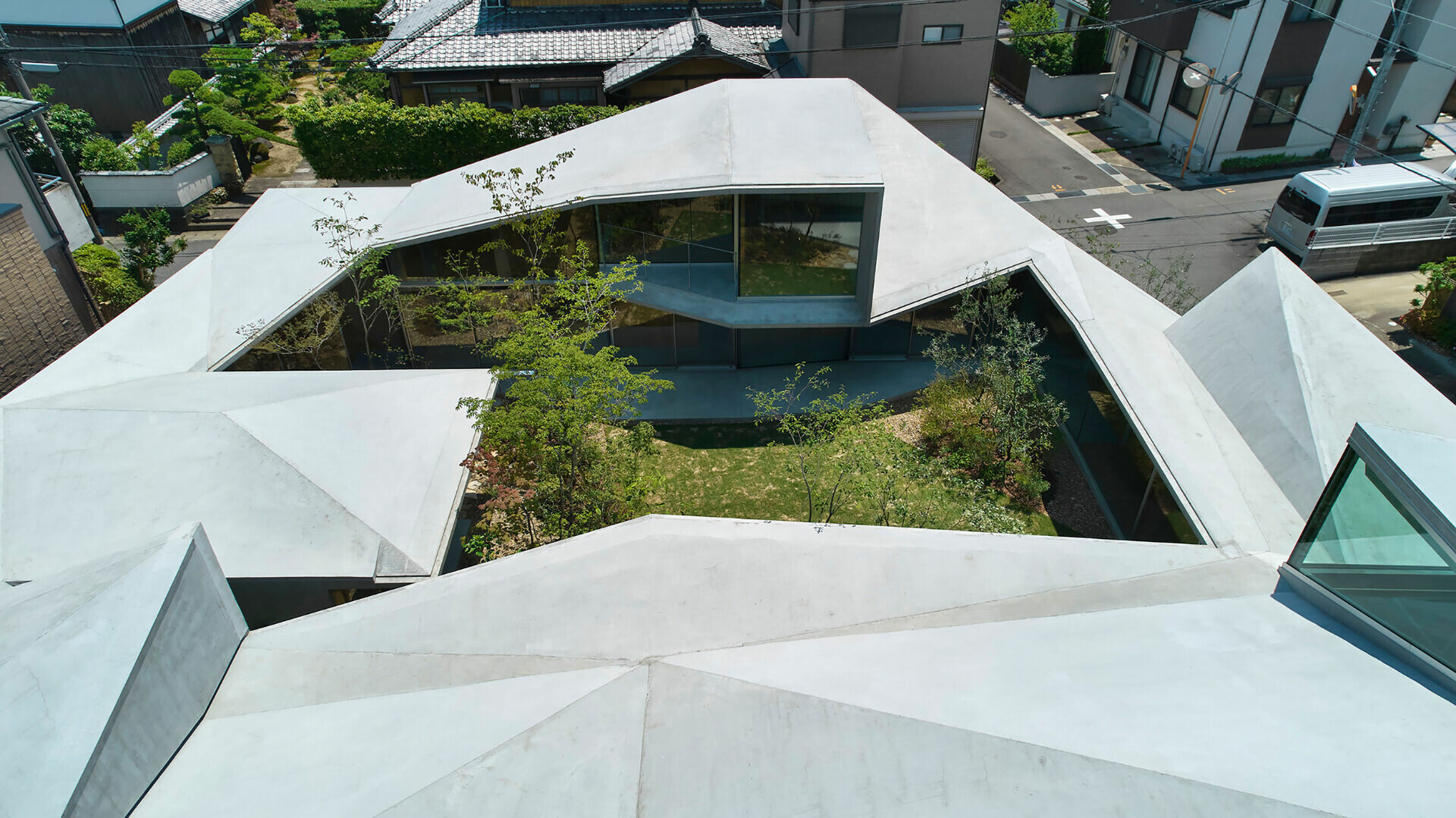
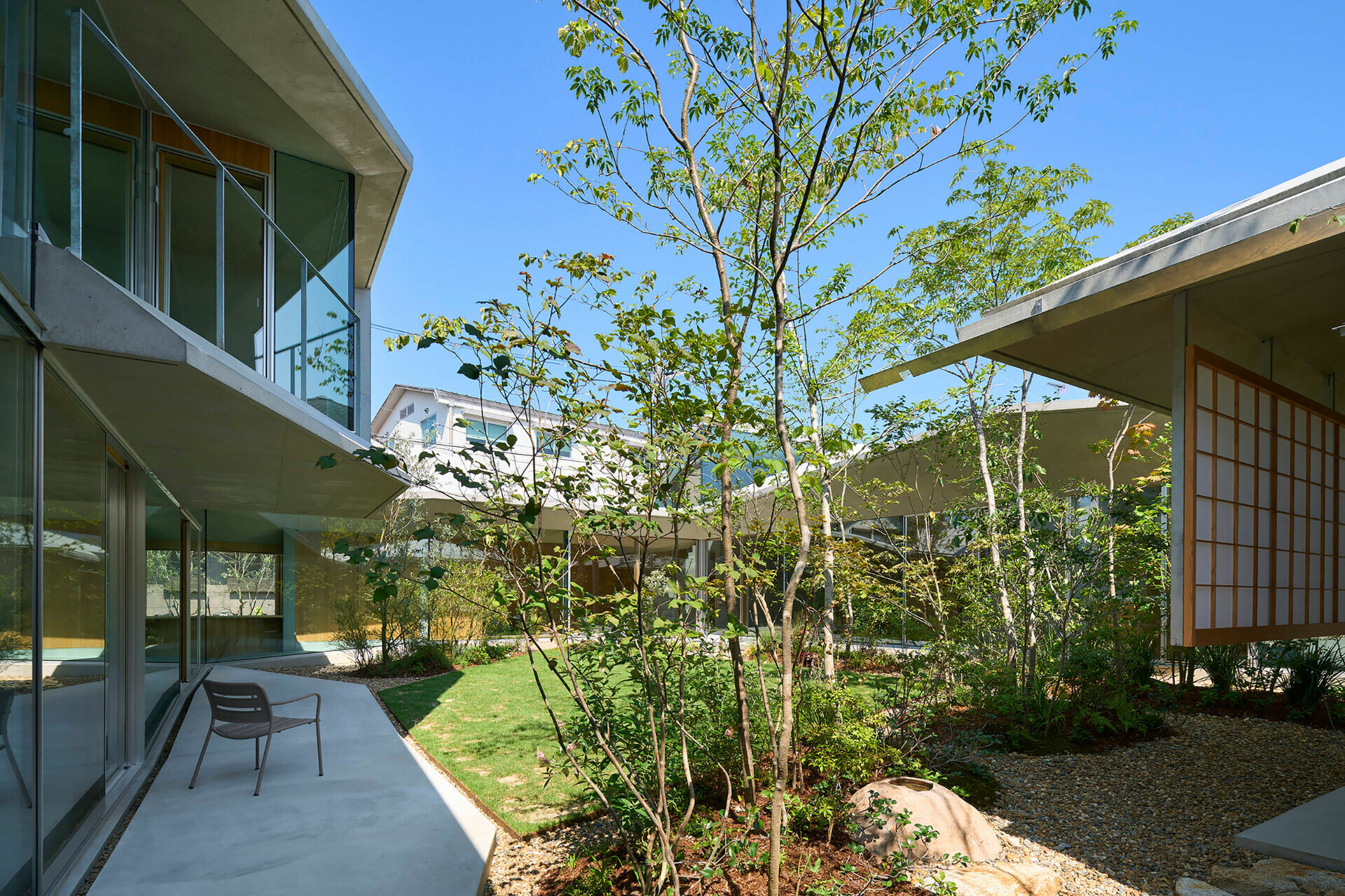
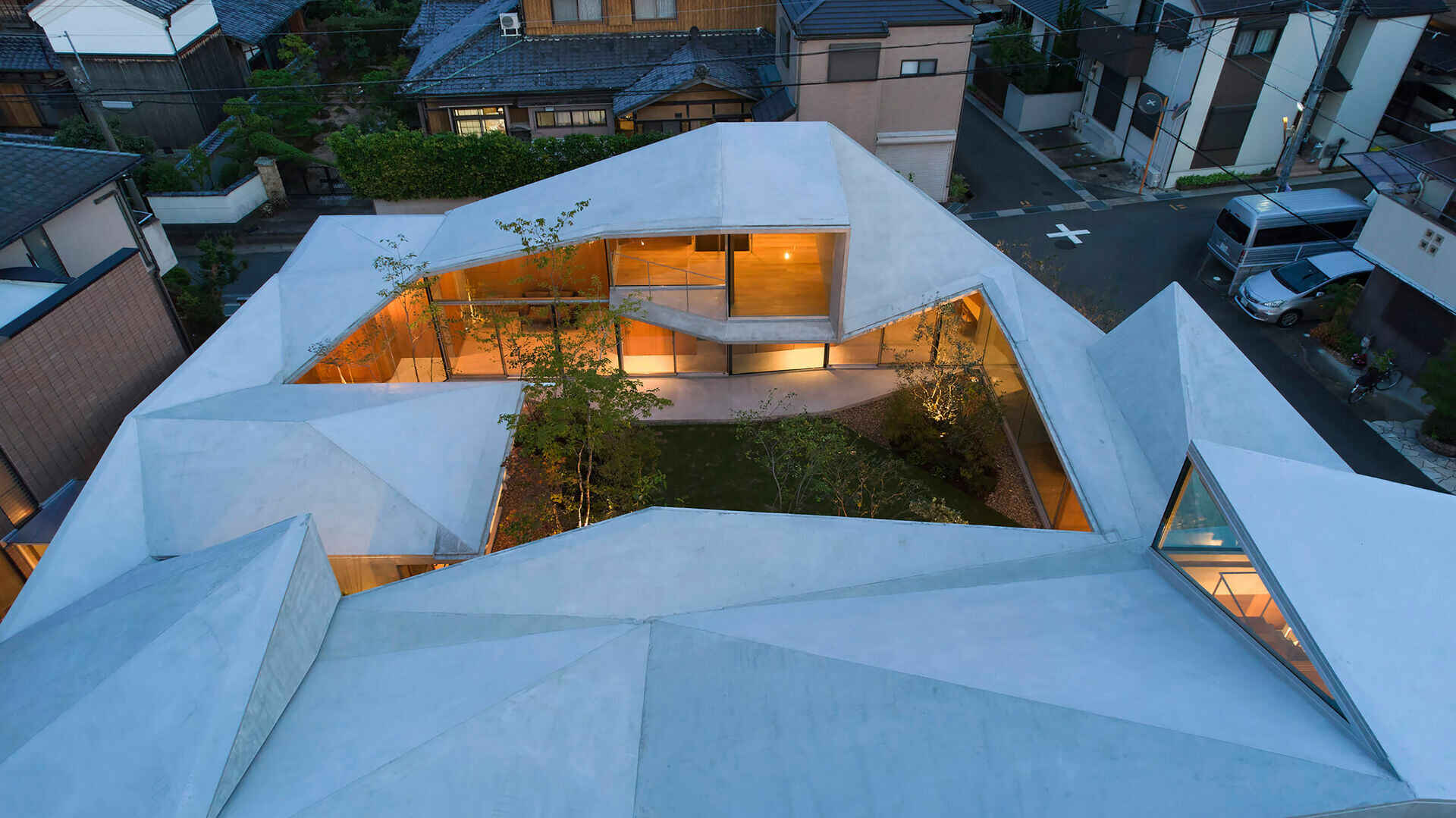
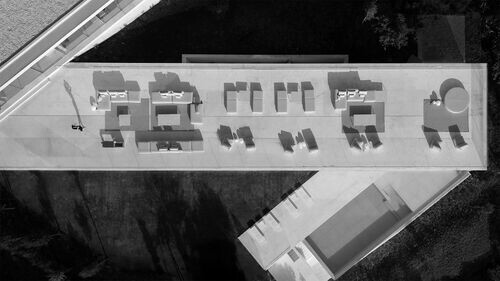
The new residence abstracts the traditional core-and-satellite configuration into a series of small, staggered volumes. Each unit stands independently, yet collectively they define a large, interconnected field of inhabitation. Rather than merging into a monolithic structure, the volumes are deliberately offset and loosely arranged, creating interstitial voids that preserve openness. These spaces act as quiet buffers, allowing light and air to move fluidly throughout the composition. In this way, the design reimagines the spatial rhythm of the rural compound as a flexible courtyard typology—where the interplay of transparency and enclosure subtly negotiates the boundaries between public and private, between presence and retreat.
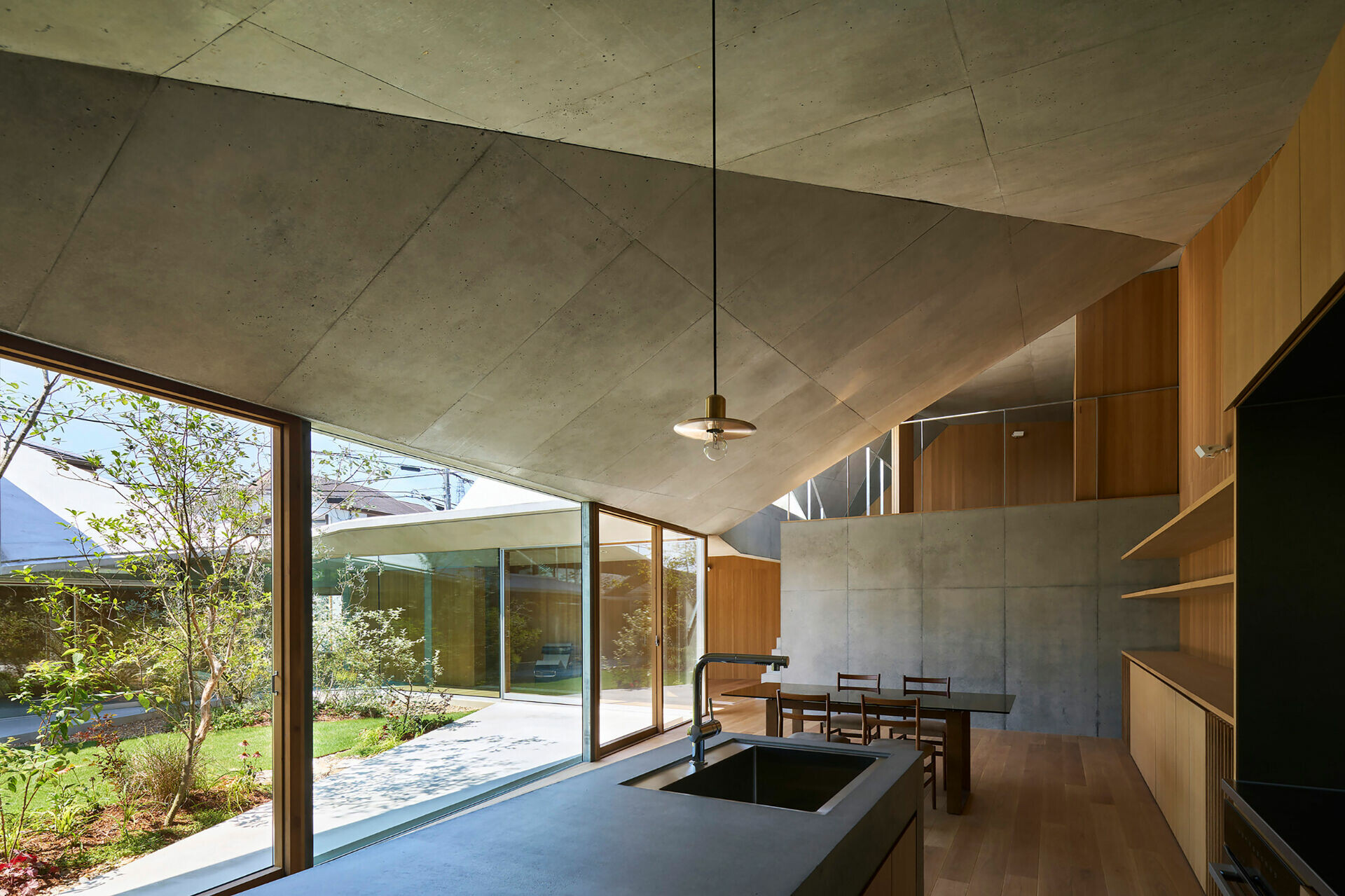
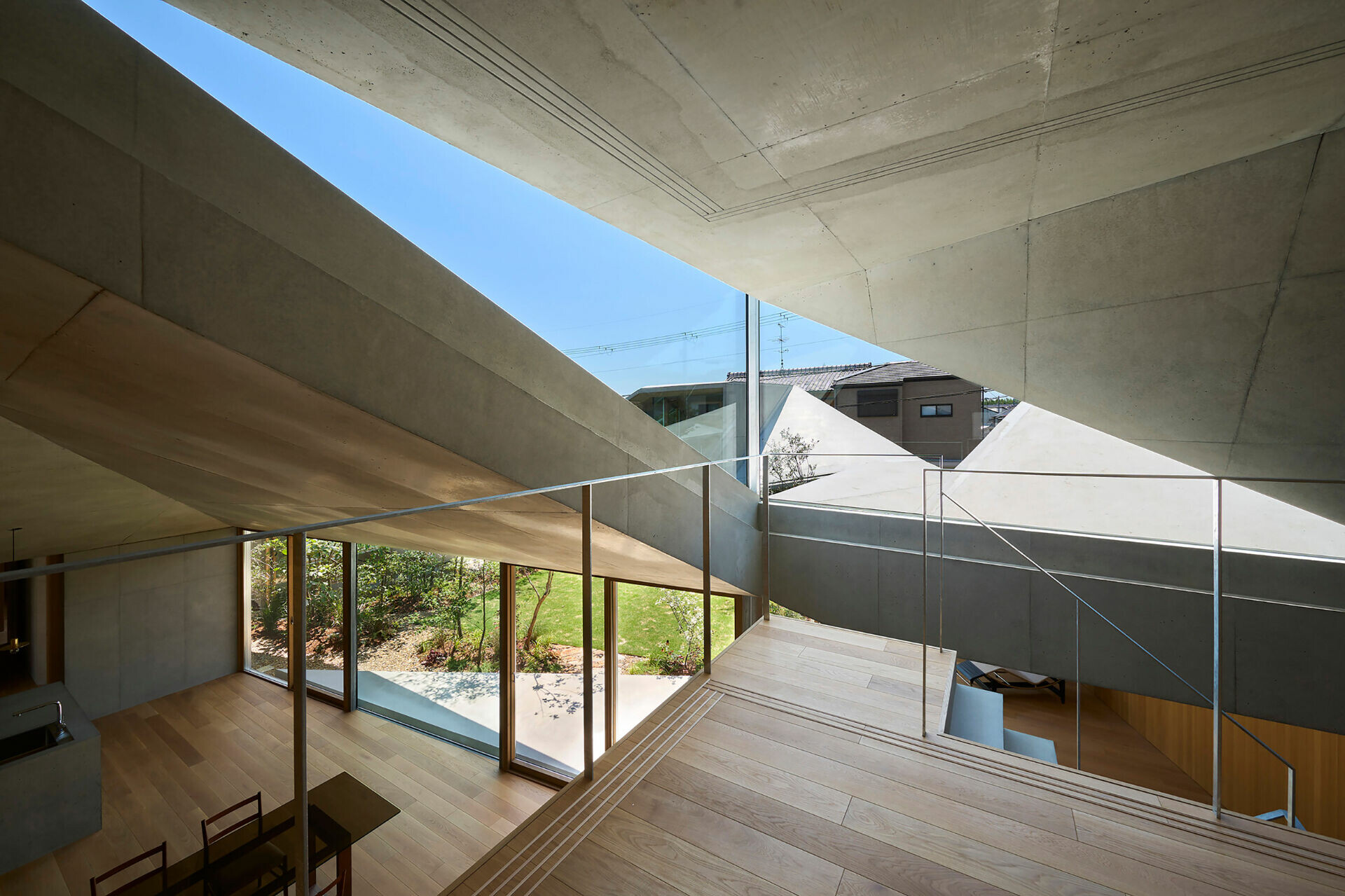
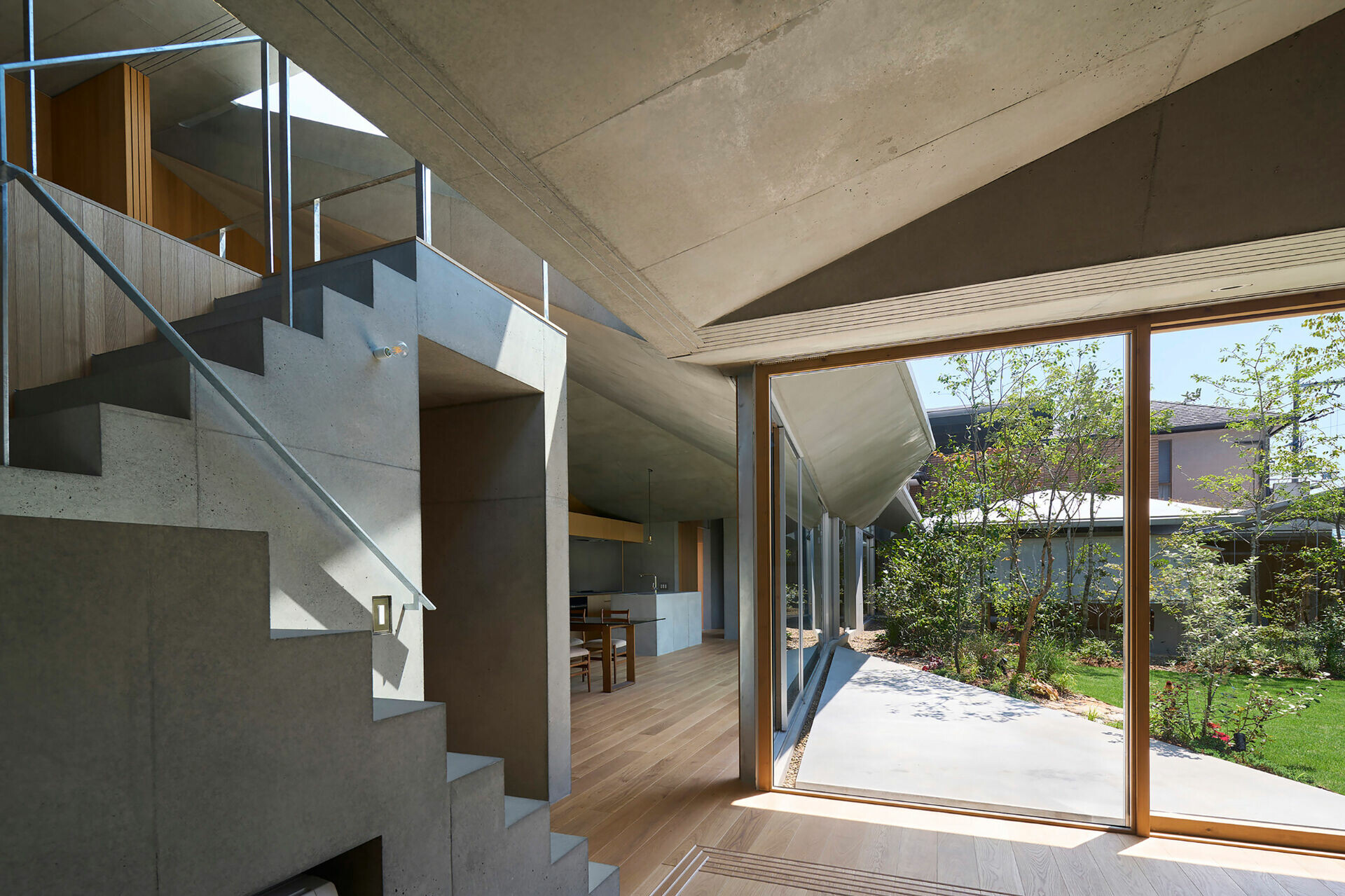
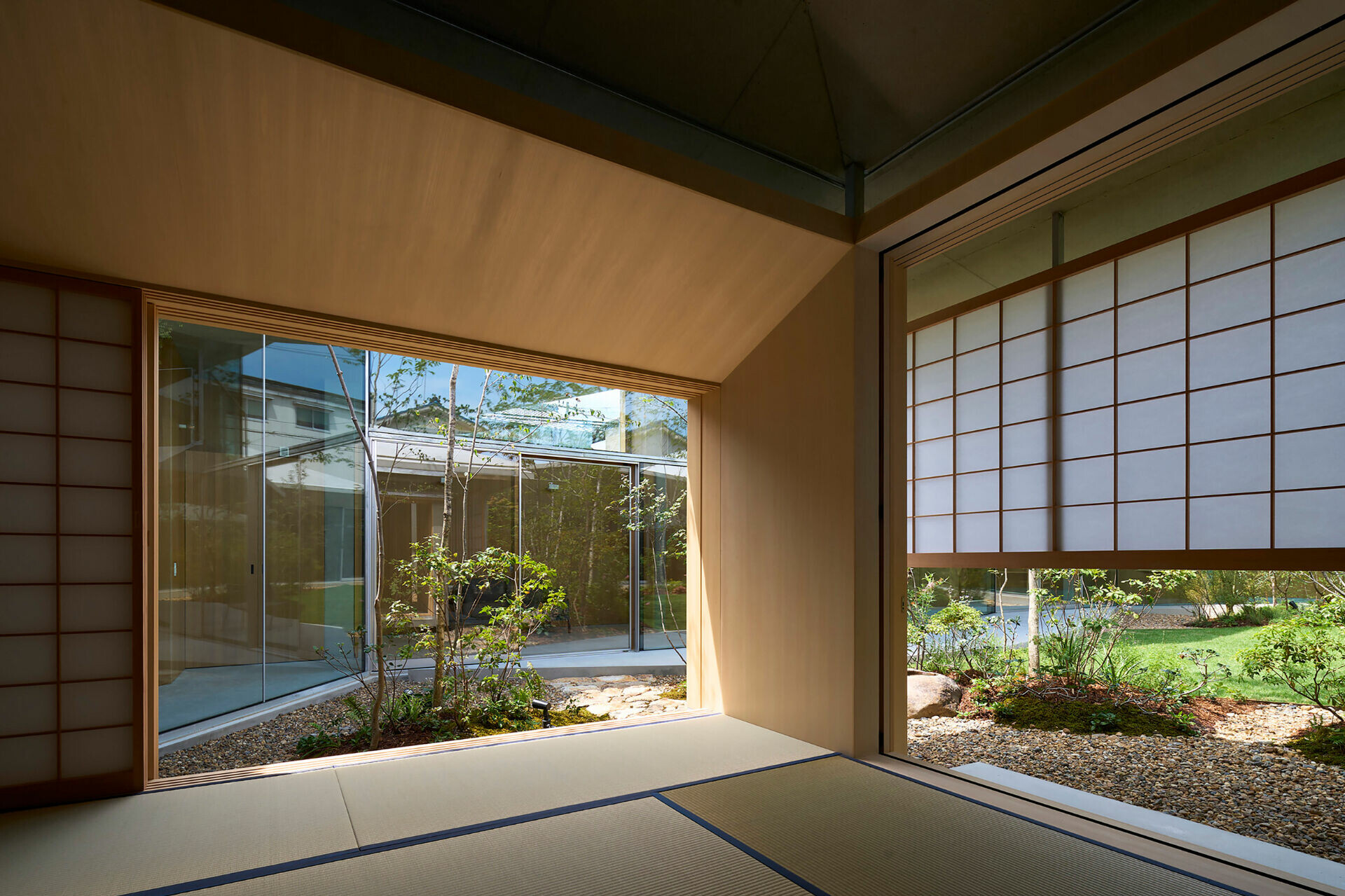
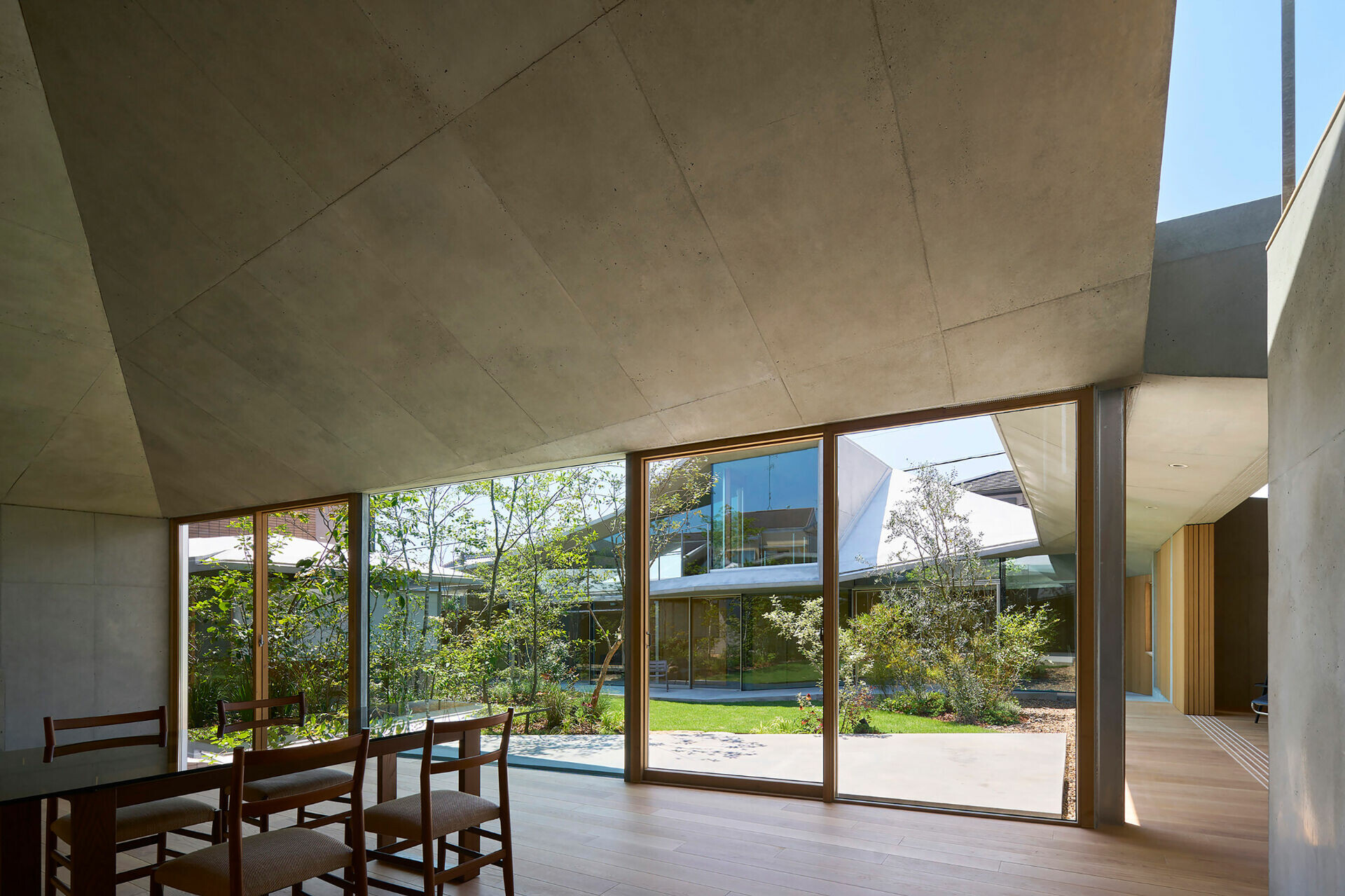
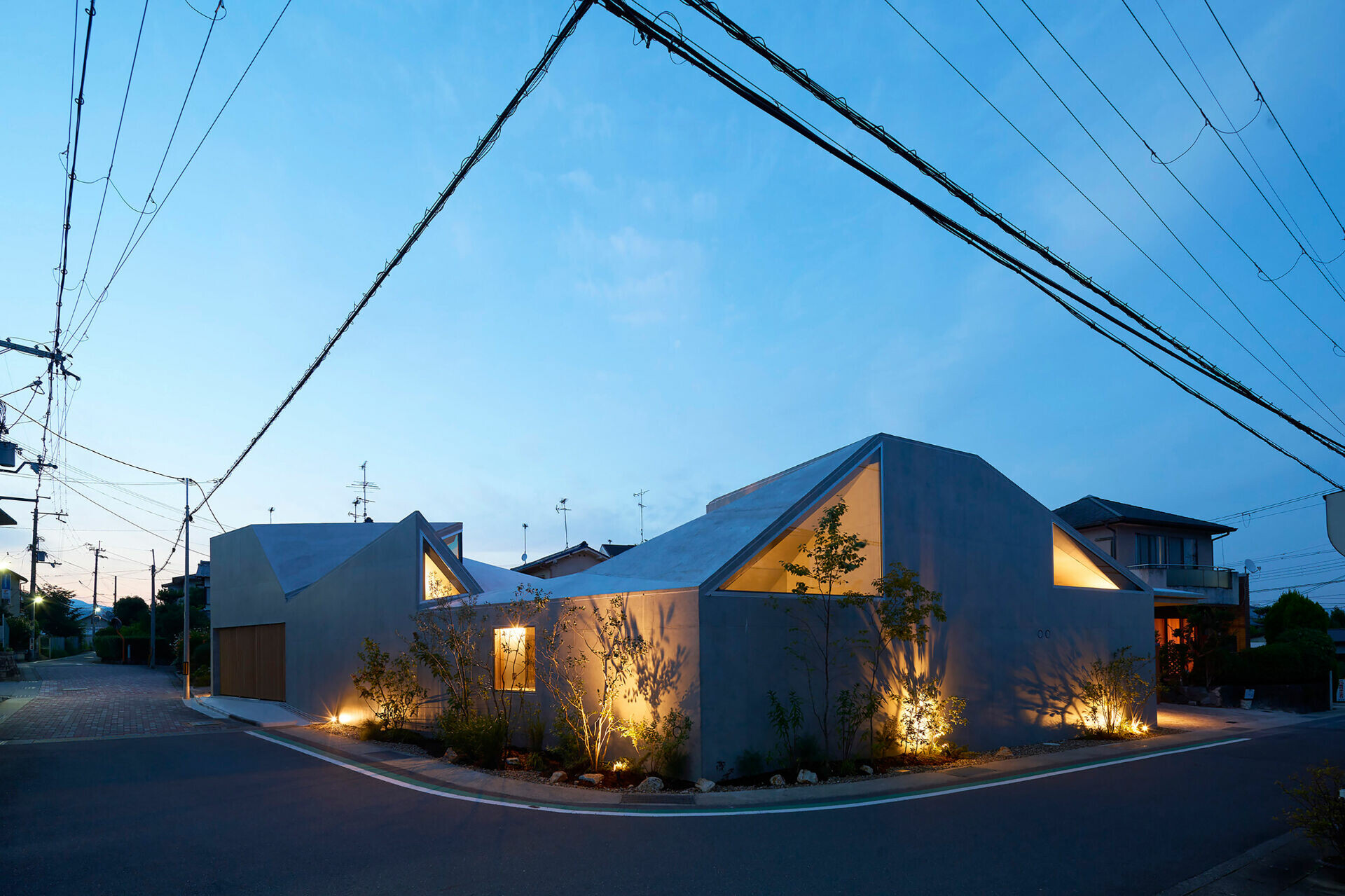
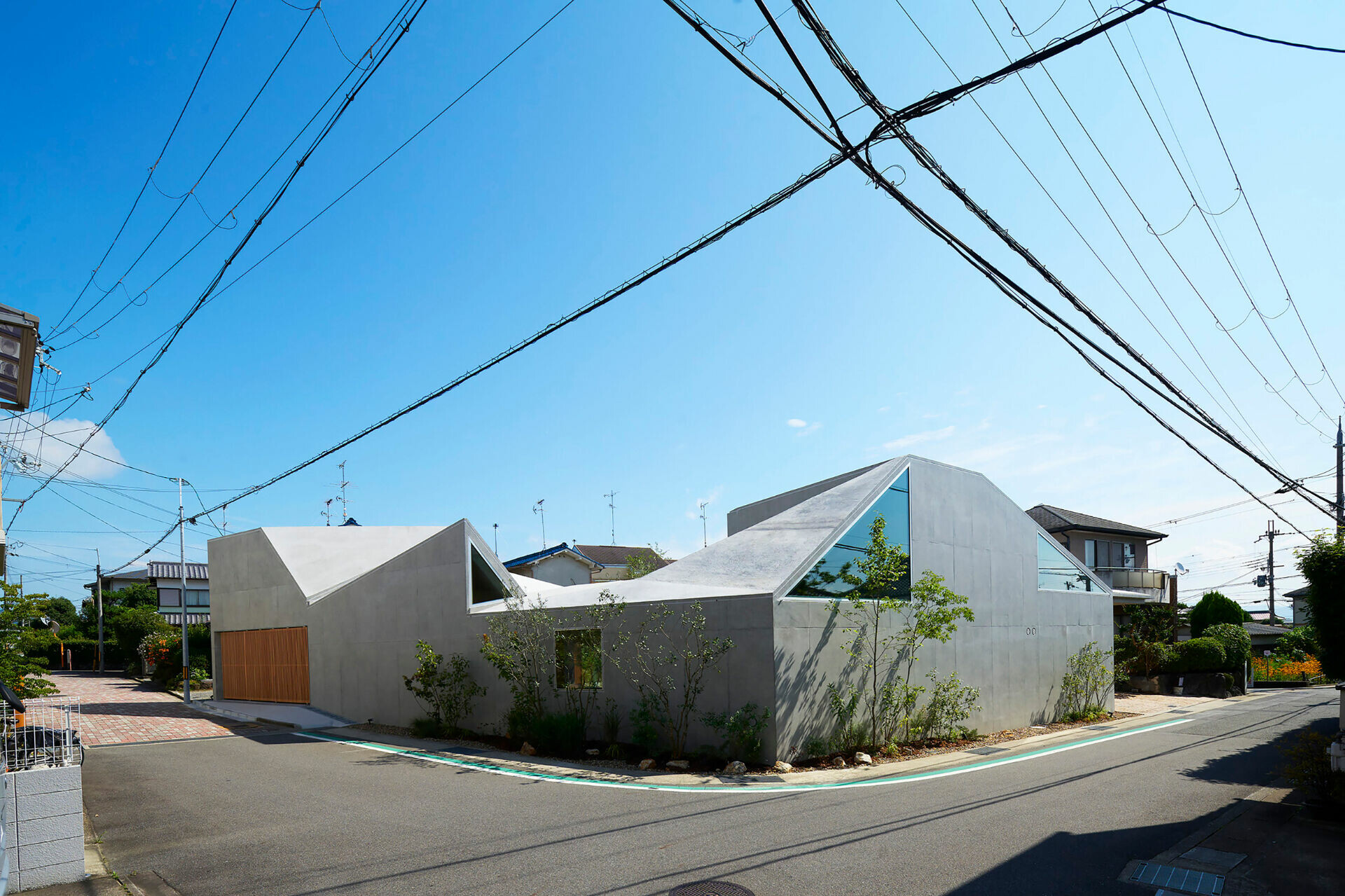
The building’s façade and structure are formed primarily in cast-in-place concrete. Left raw and unpolished after the formwork was removed, the surface retains subtle traces of its making—board marks, air pockets, irregularities. These imperfections are not concealed, but embraced as evidence of material authenticity. A network of angled lines links the corners of each volume, converging into a folded roofscape that evokes the delicate creases of origami. In this geometry, the architecture renders time as something tangible: a series of spatial folds that hold the memory of past and present in a shared physical continuum.
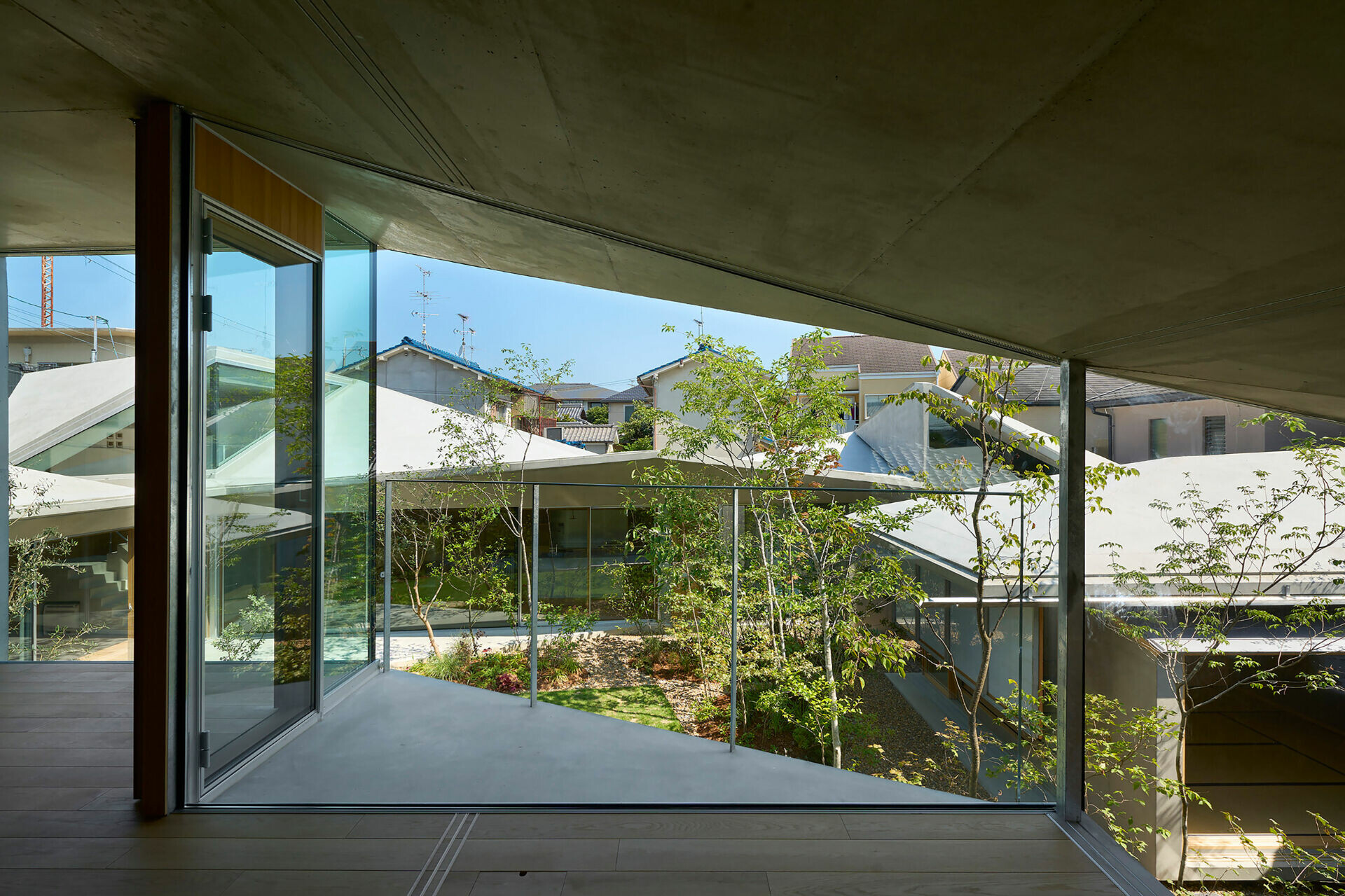
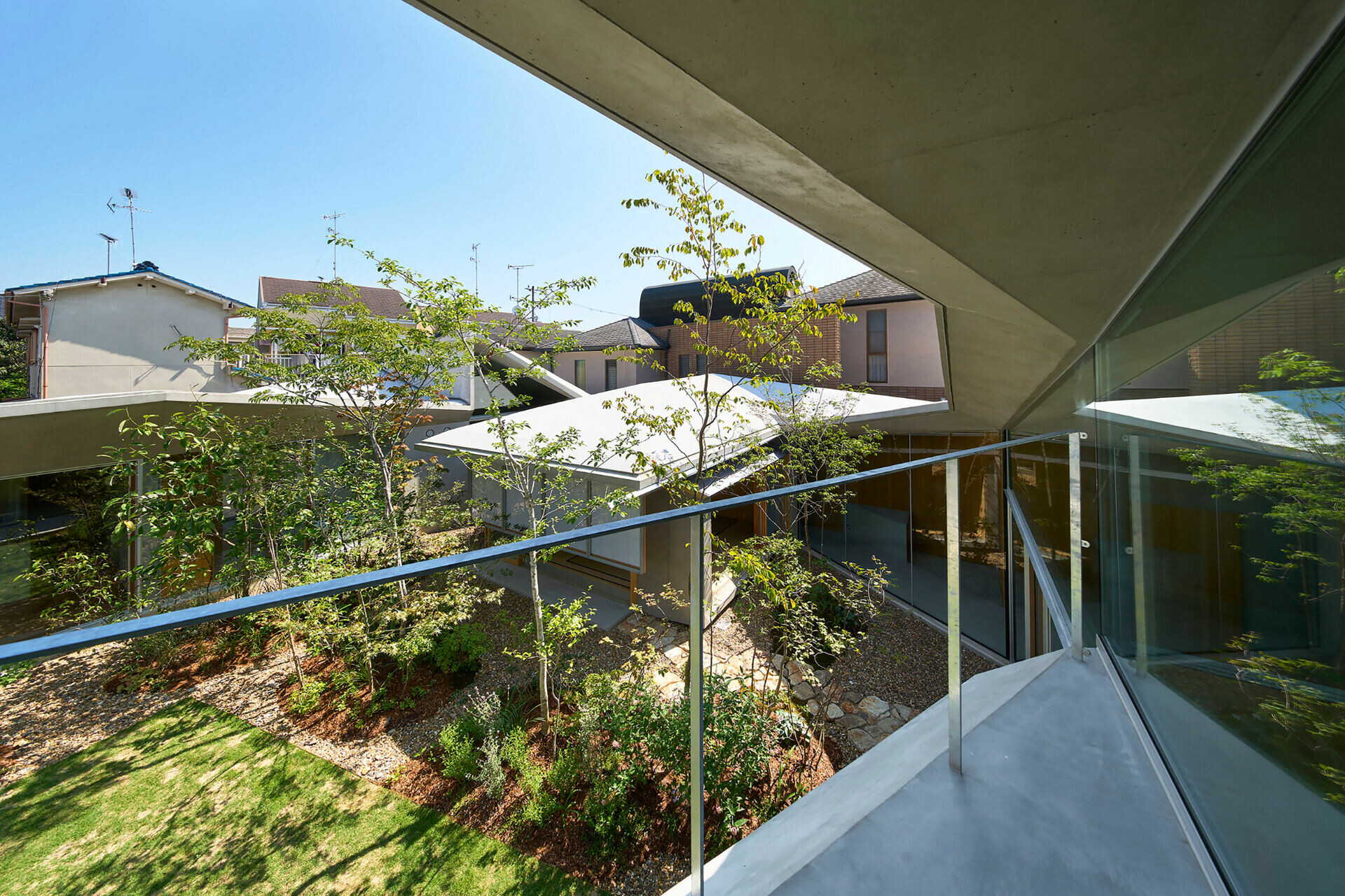
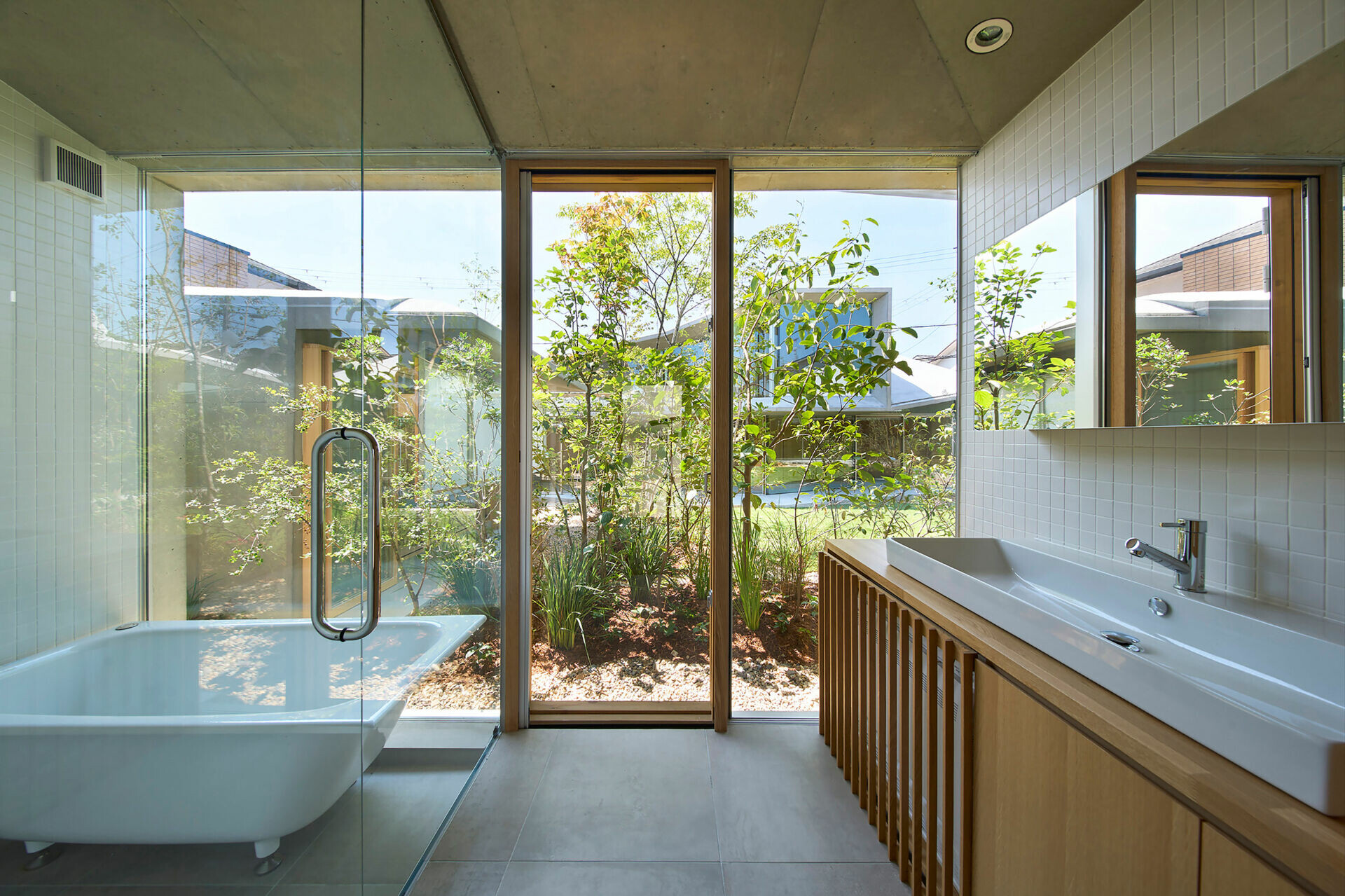
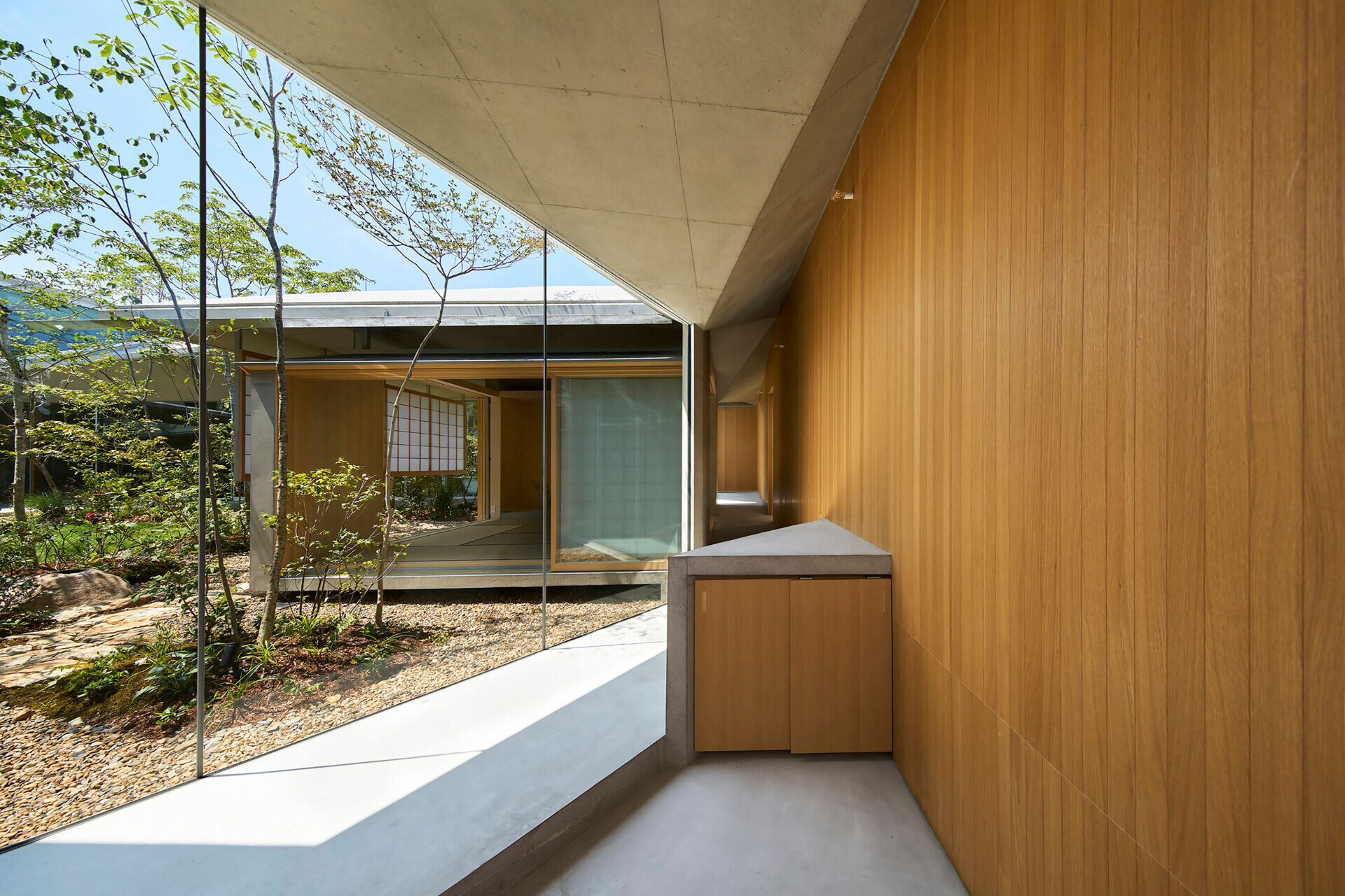
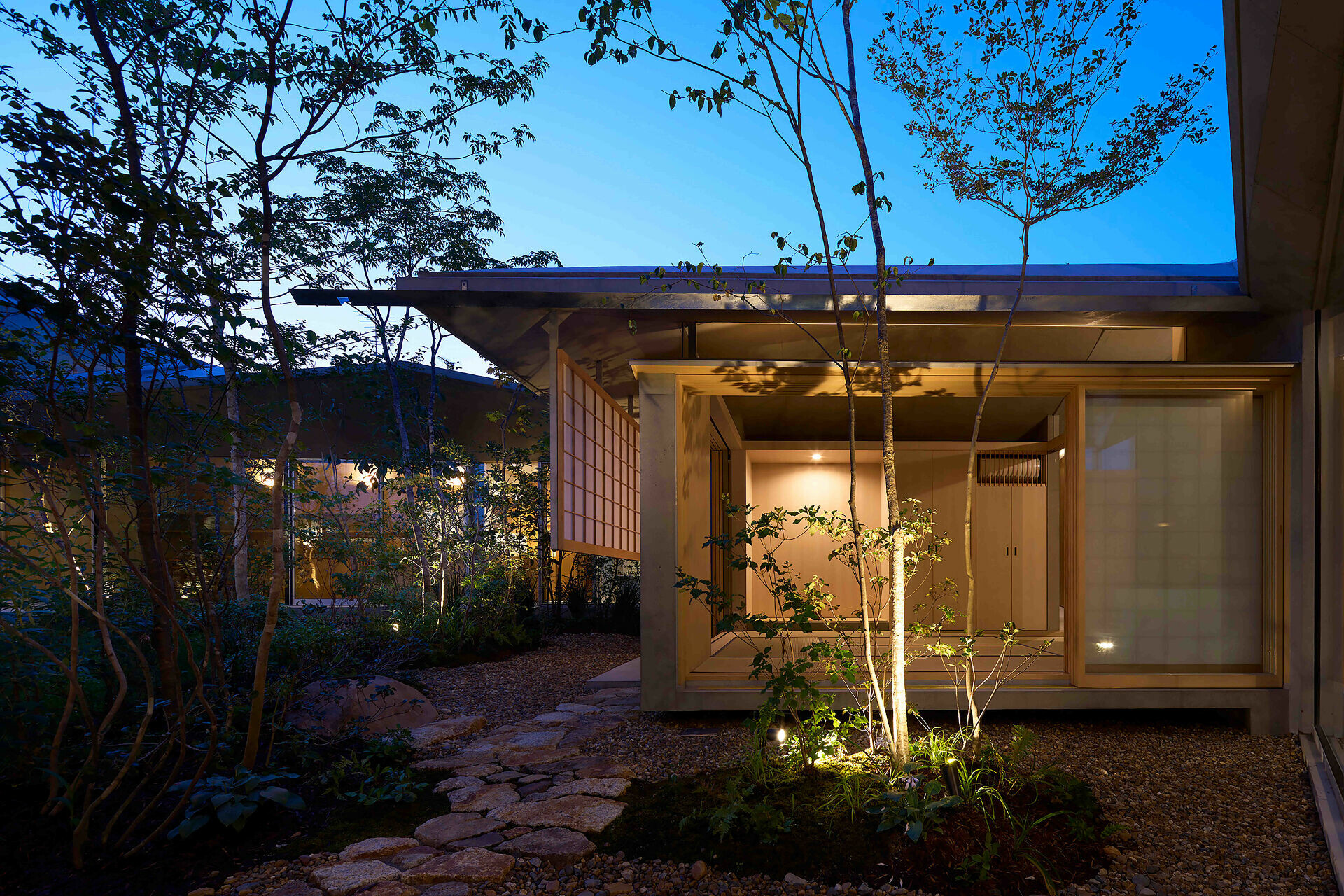
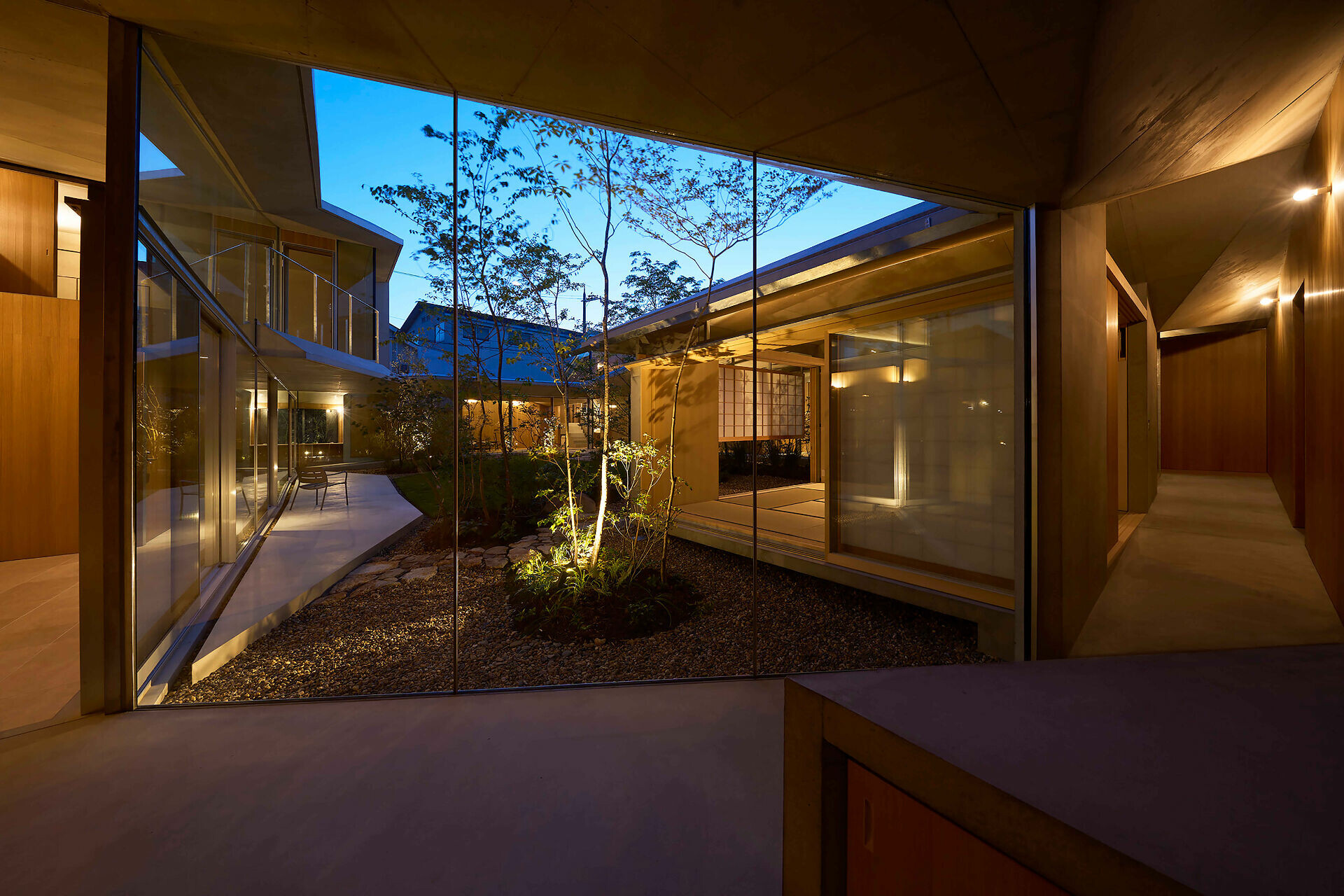
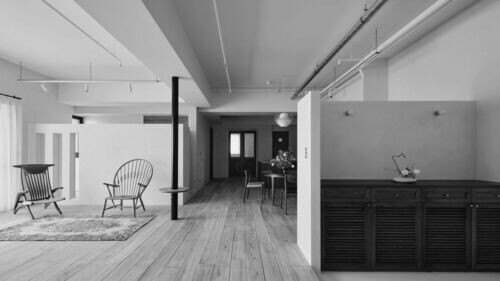
At the center of the plan, an open courtyard draws in light and air, dissolving spatial boundaries with shifting shadows. As one moves through the house, thresholds expand and contract; the spatial field responds to the body in motion. Here, architecture becomes not only a shelter, but a medium through which cultural lineage and daily life intersect. House in Muko is rooted in the past, yet composed through the lens of the present. Through site, structure, and a choreography of dislocated volumes, it reconnects the memory of a place with the evolving needs of contemporary domestic life. The design embeds historical continuity within the cadence of everyday experience—quietly advancing, without nostalgia, toward a new form of living.