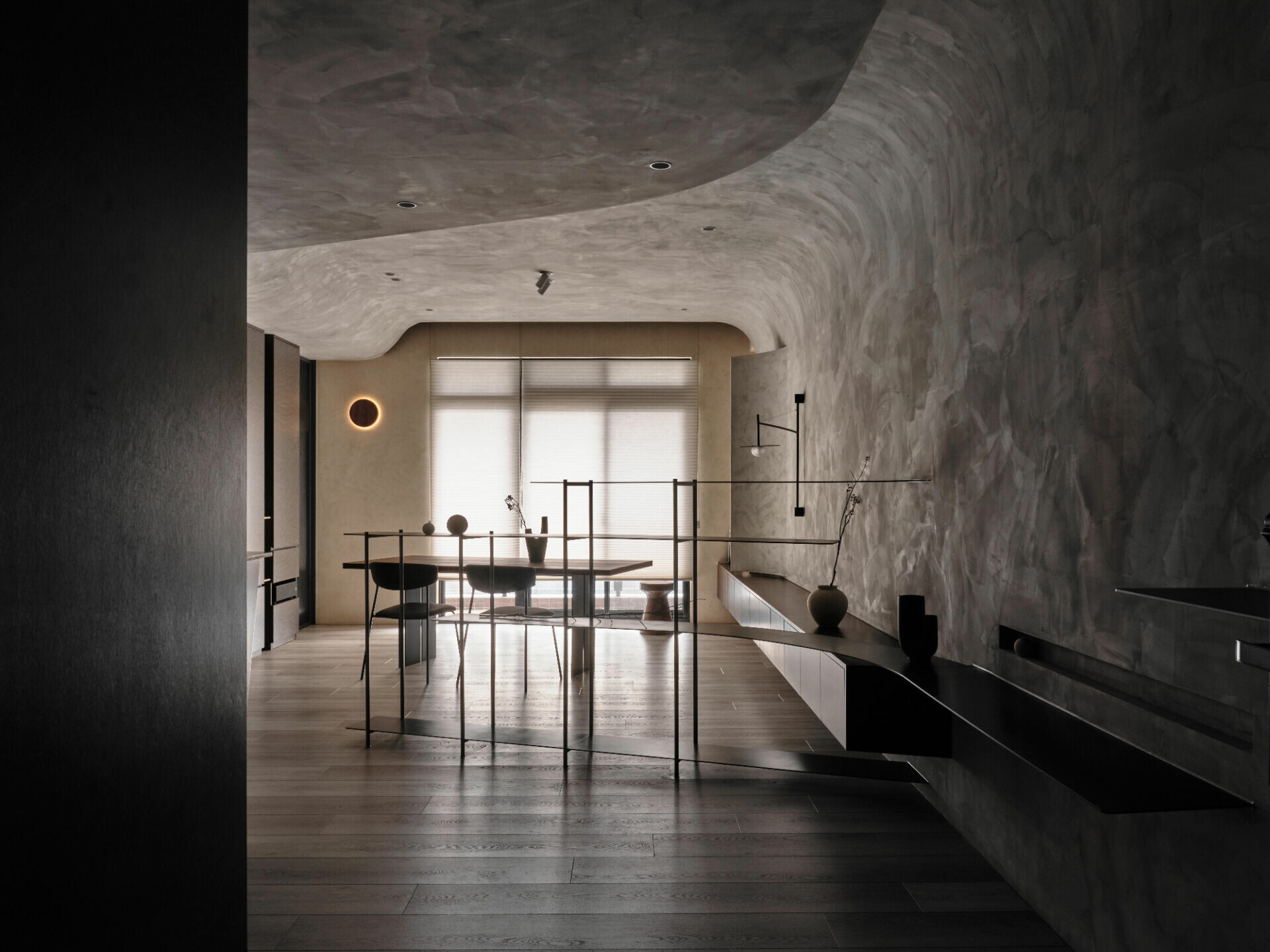
House W
"I am the space where I am."— Noël Arnaud, The Unpolished State
The home is a deeply personal domain—one that reflects the distinctive identity of its inhabitant. In the project House W, the client, a physicist with a background in astrophysics and a lifelong fascination with the cosmos, inspired the architect to translate abstract scientific passion into spatial form. The resulting design emerged from three conceptual anchors: boundlessness, territorial ambiguity, and subtlety—each echoing the vast, fluid, and unknowable nature of the universe.
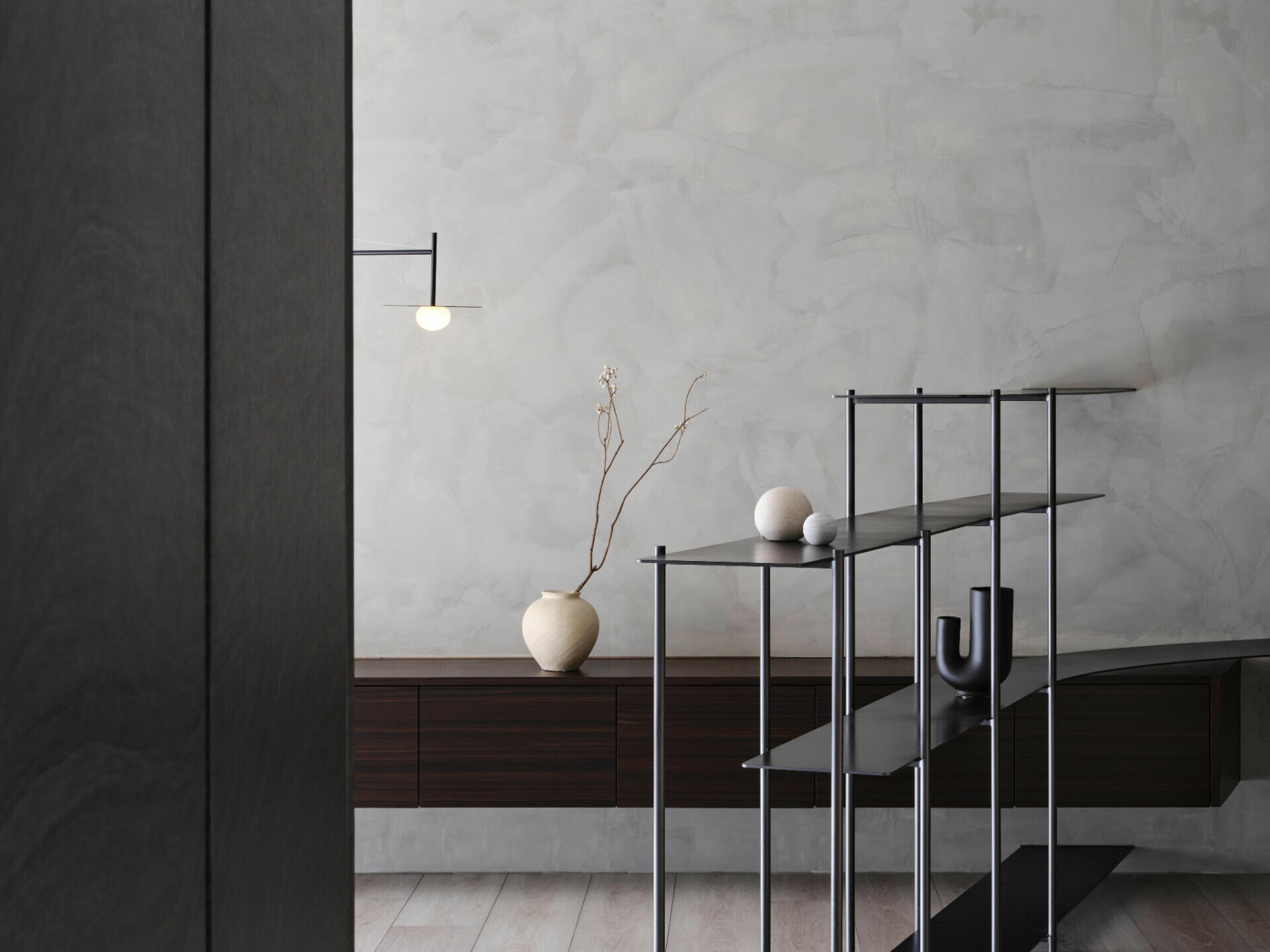
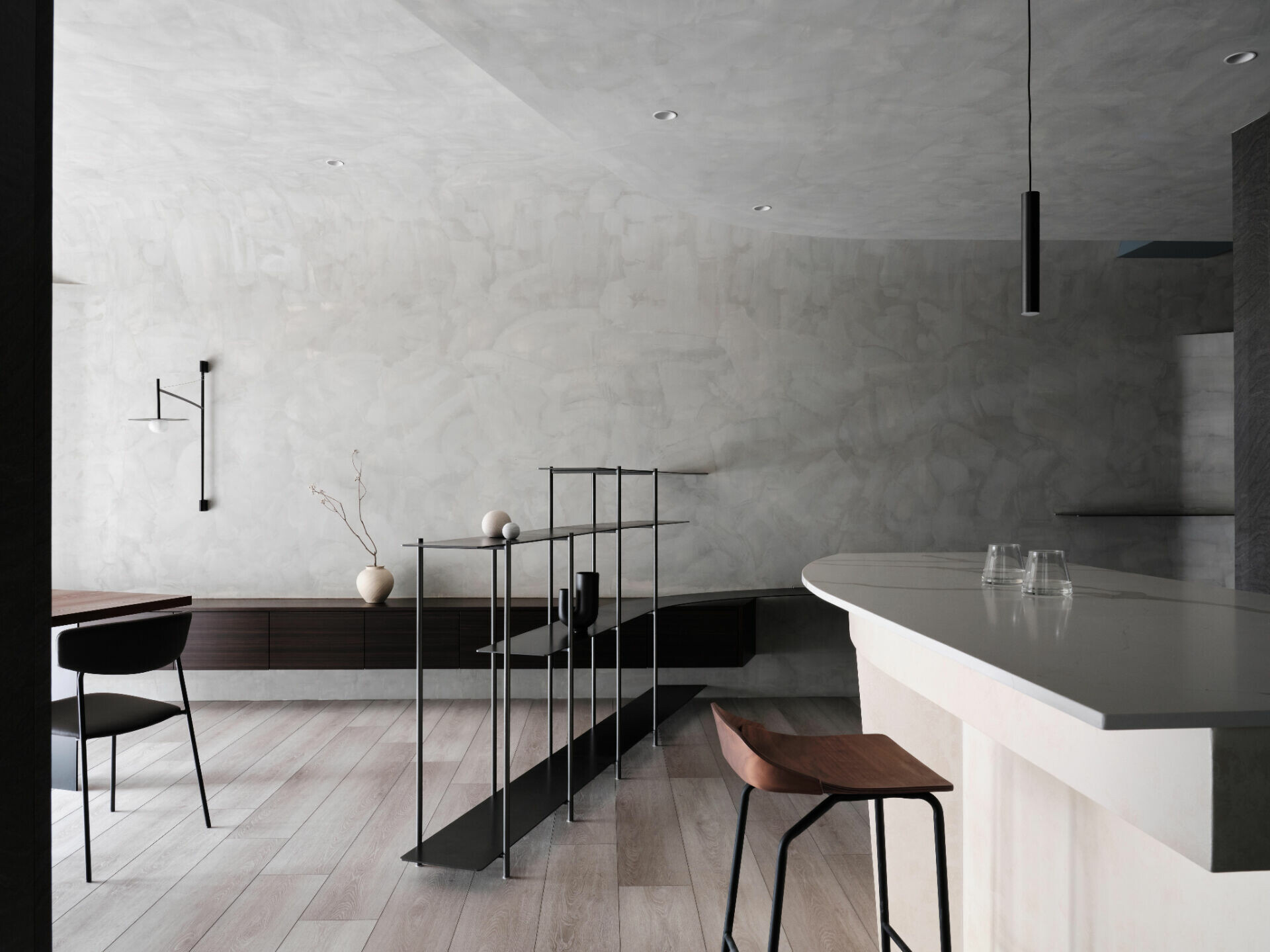
A streamlined metal shelf—part of the client’s personal collection—floats like a planetary ring or an asteroid belt orbiting Saturn, visually guiding the eye toward a grey, earth-textured wall. This curved surface gently dissolves into the ceiling, and the resulting recess casts shadows that evoke the quiet vastness of deep space. When daylight spills across the wall, the tactile finish reveals a raw, almost primitive texture—reminiscent of meteorite surfaces—reinforcing the home’s underlying cosmic theme.
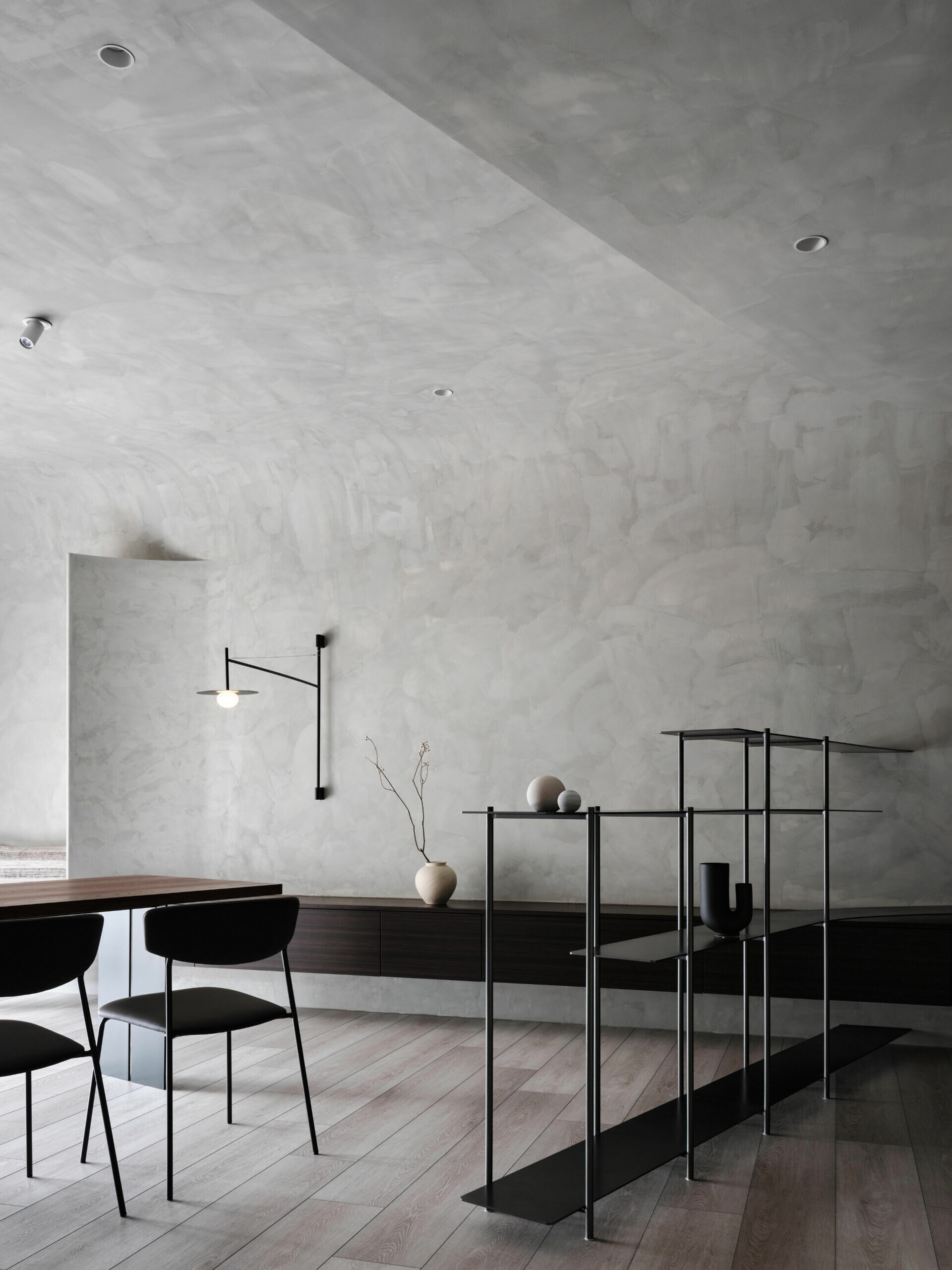
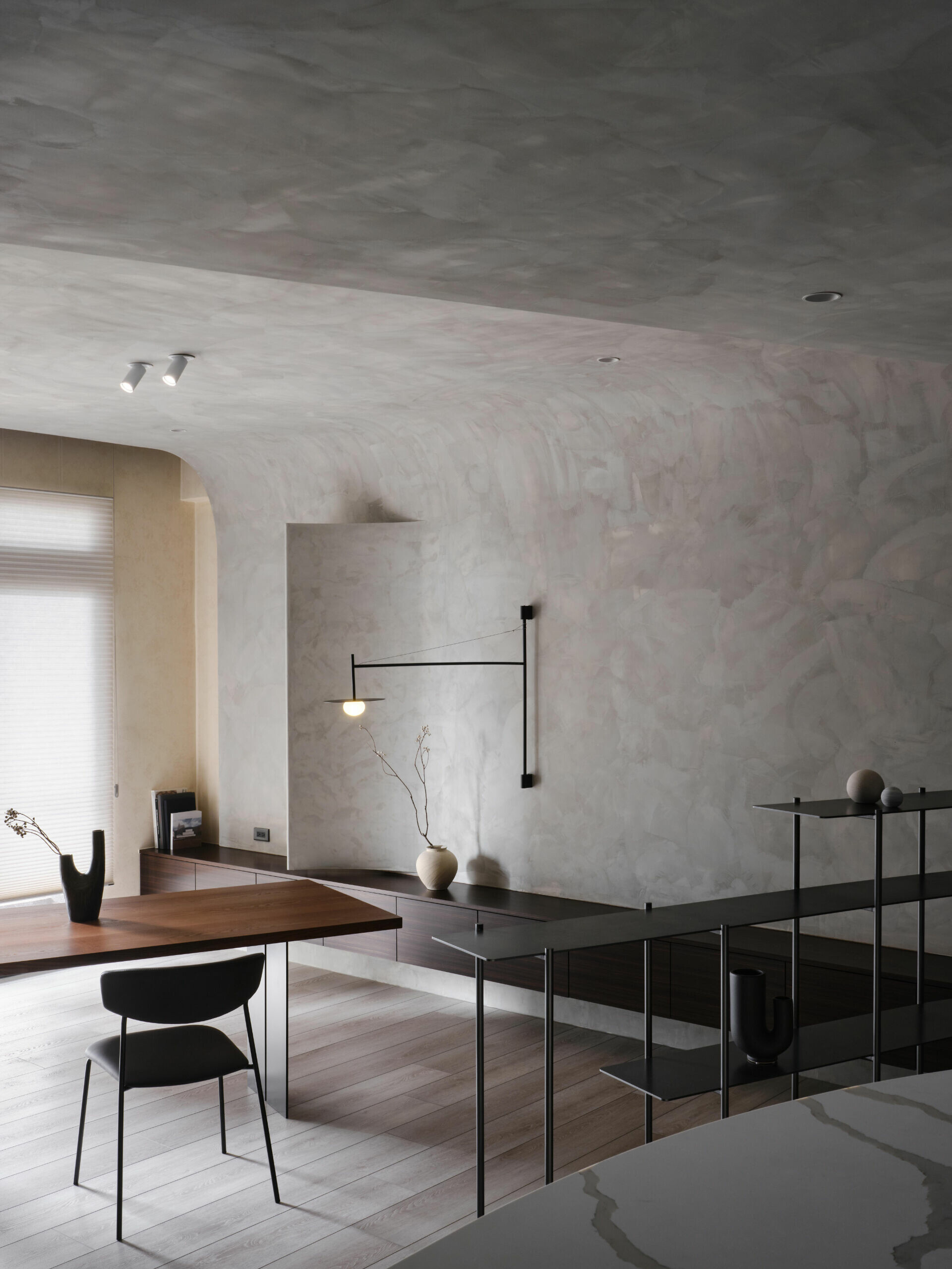
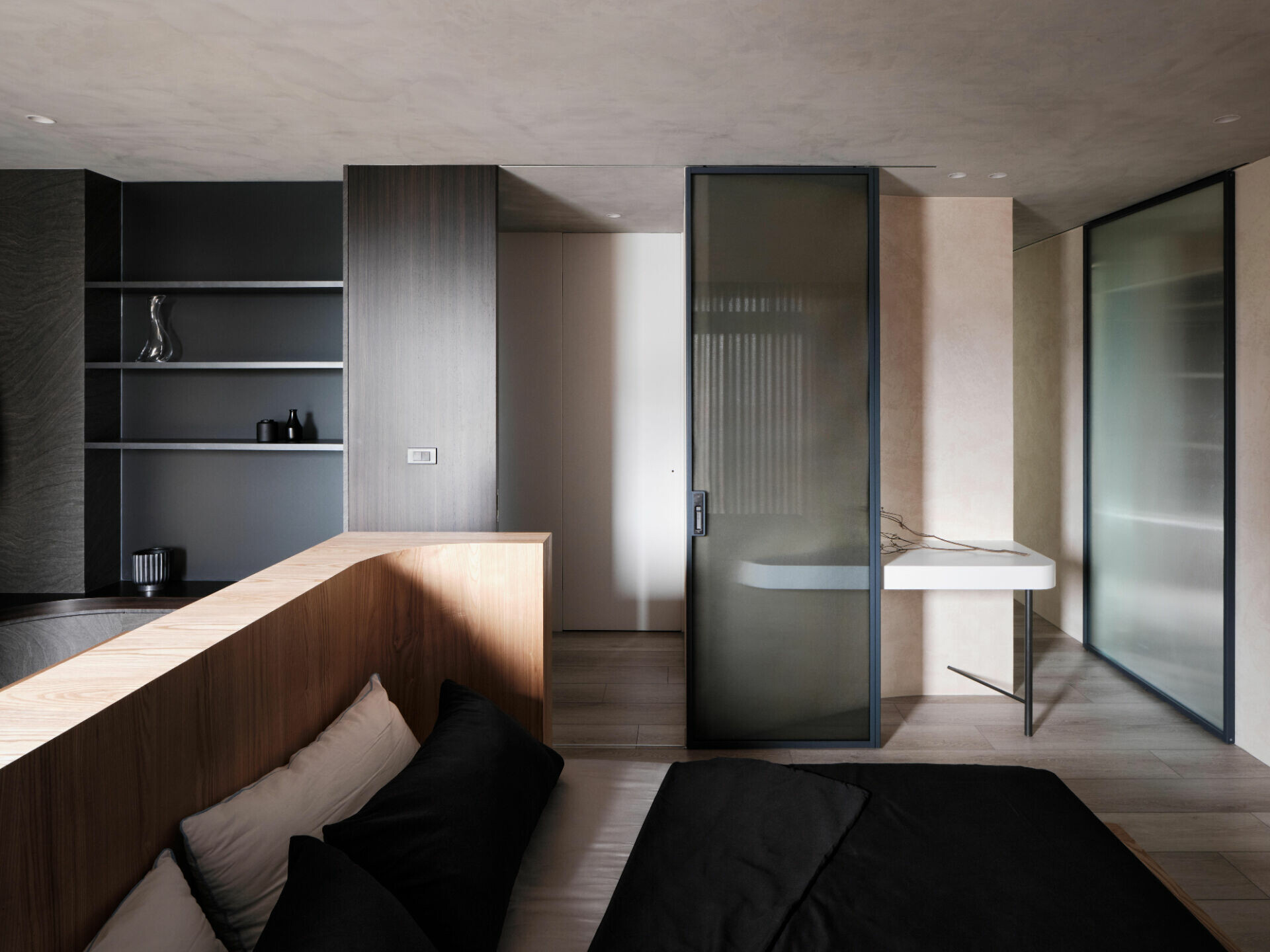
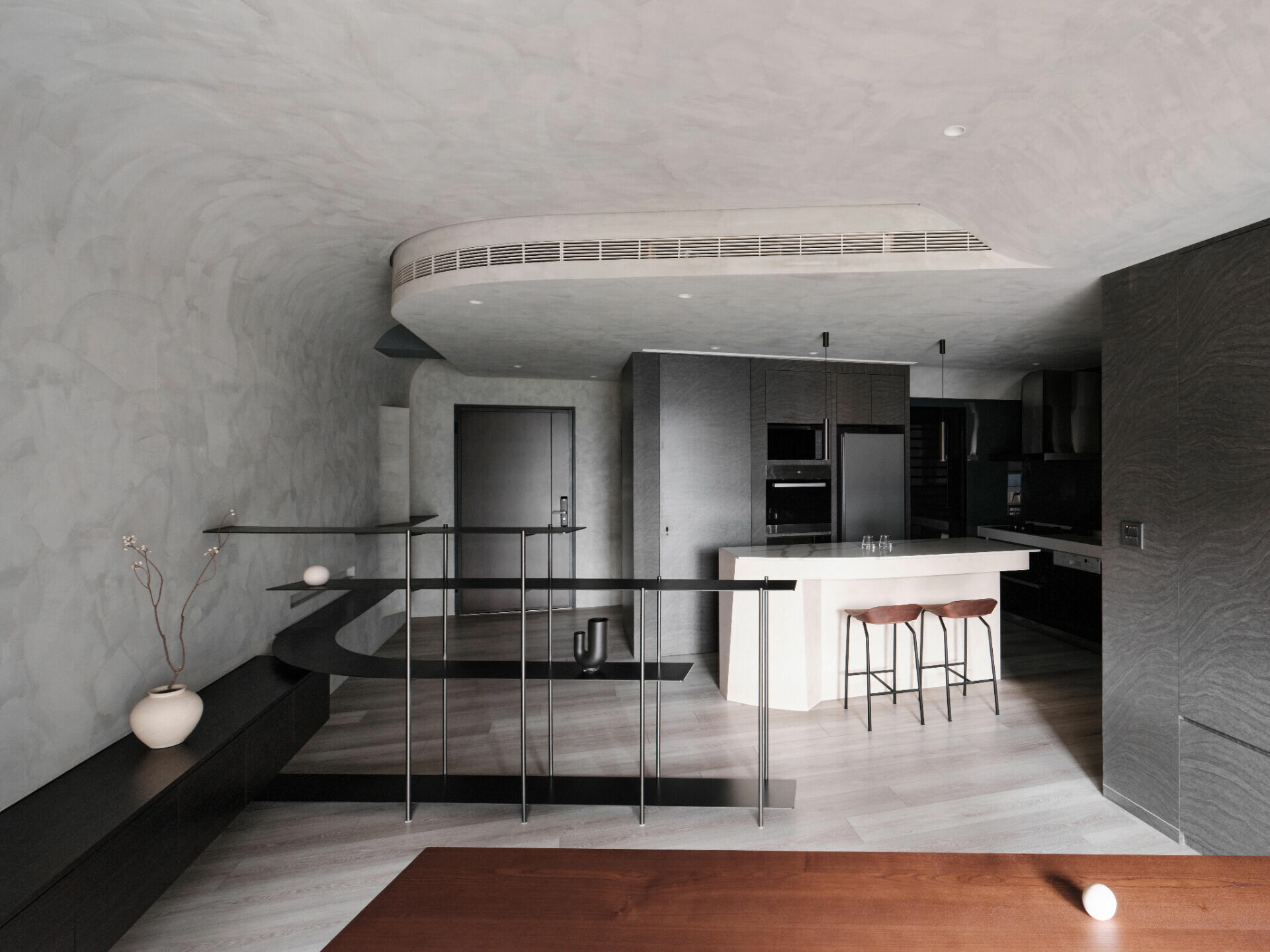
How can the logic of the universe be defined by a single wall or door? In response to this question, the architect reexamined the very essence of domestic space. The conventional three-bedroom, two-bath layout was dismantled, replaced by a more fluid and intuitive configuration. The traditional living room was intentionally omitted, making way for a minimal space outfitted with a desk and chairs for private lectures and meetings. The kitchen island was positioned at the core of the plan—both physically and metaphorically becoming the gravitational center of the home. A double-sided cabinet now delineates public from private zones, while semi-opaque grey glass punctuates the division, blurring the boundaries between functions. Work and rest spaces are merged into a single private volume, challenging spatial norms.
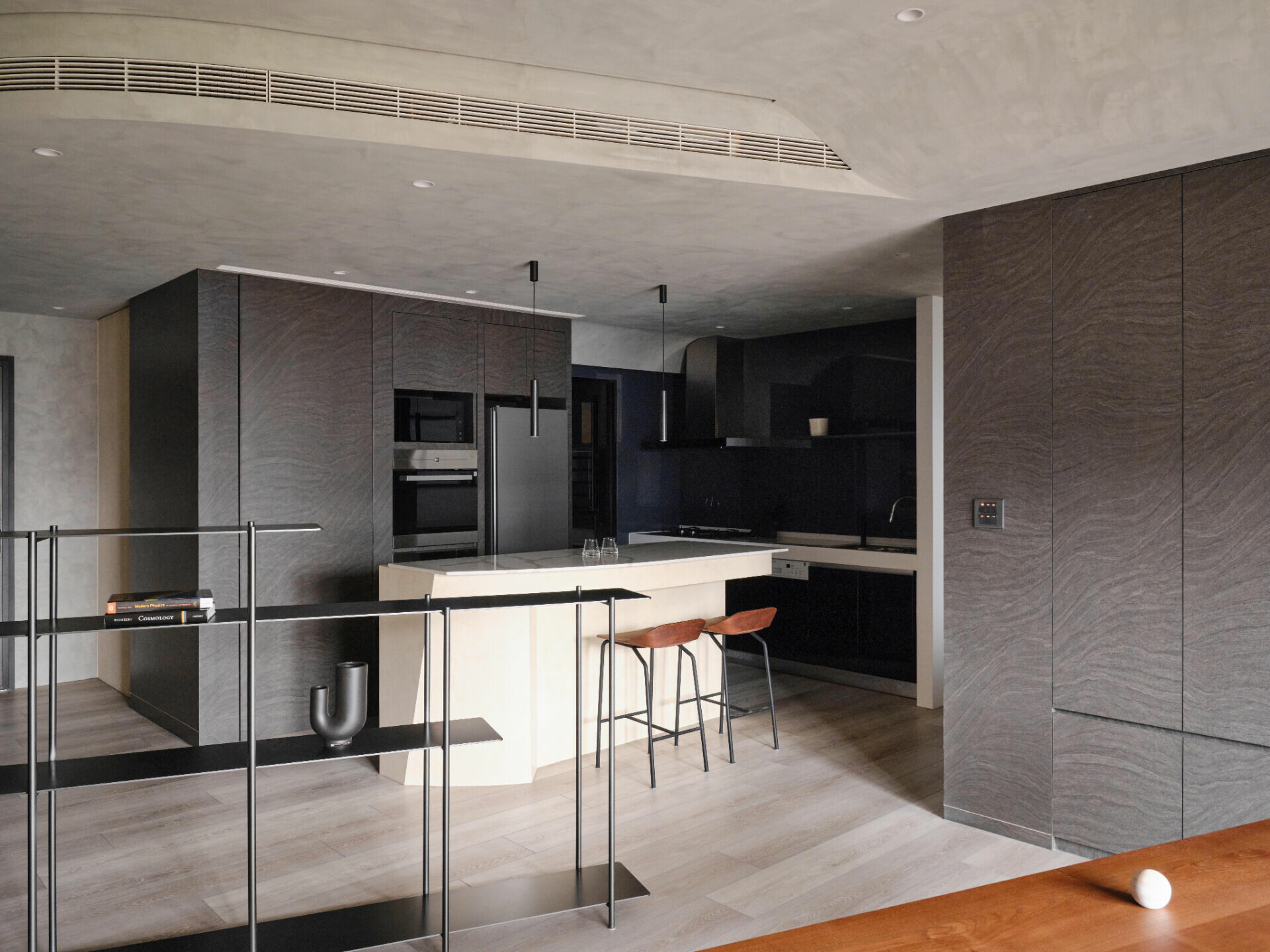
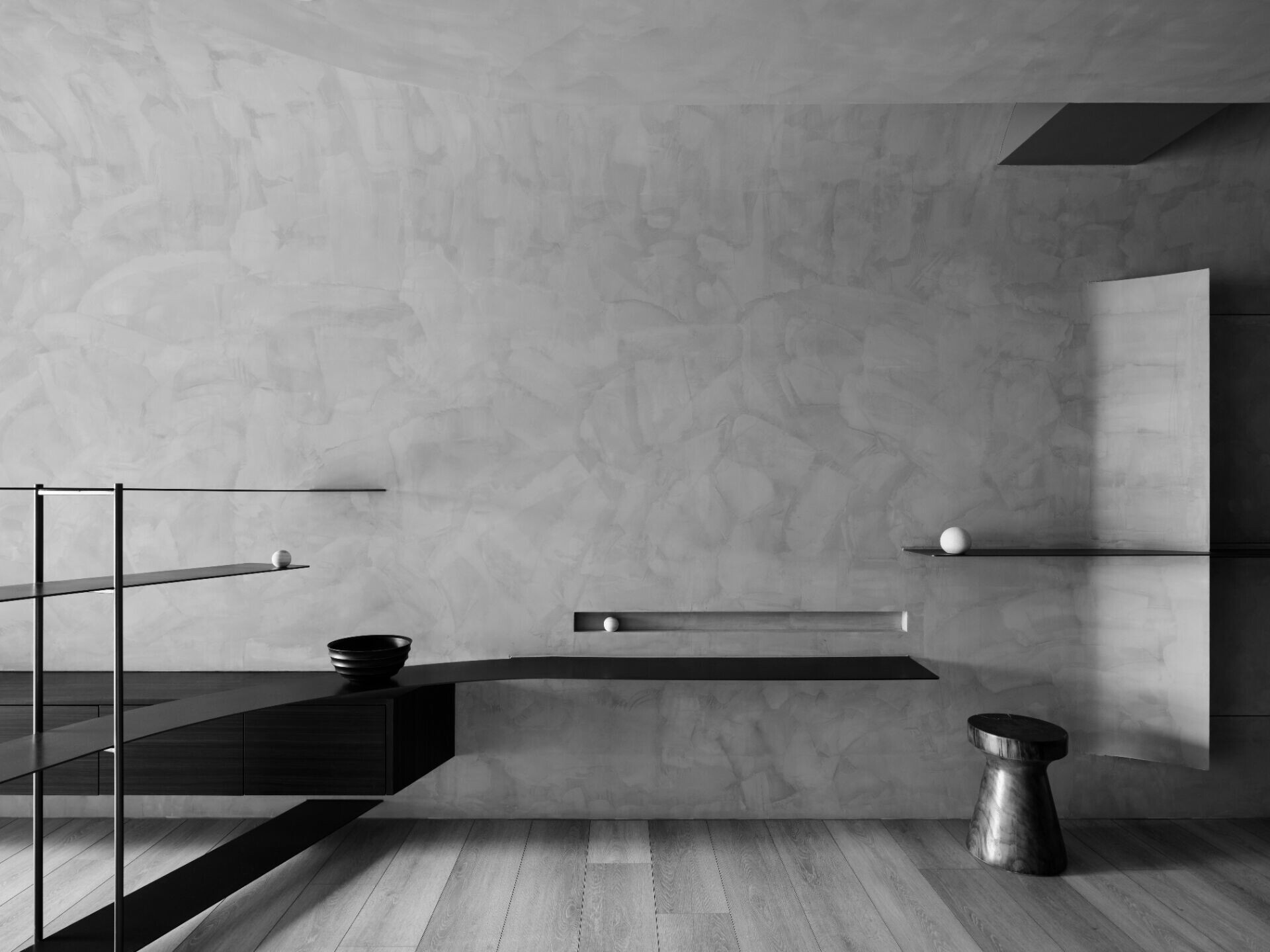
Through this deliberate spatial choreography, fixed architectural elements guide the body’s movement—allowing occupants to circulate like free particles, following orbital paths. From the entryway, the circulation naturally flows past the suspended shelf to the central island, onward to the bedroom that accommodates both work and rest, and finally to the meeting zone. This movement aligns seamlessly with the rhythms of the inhabitant’s daily life.
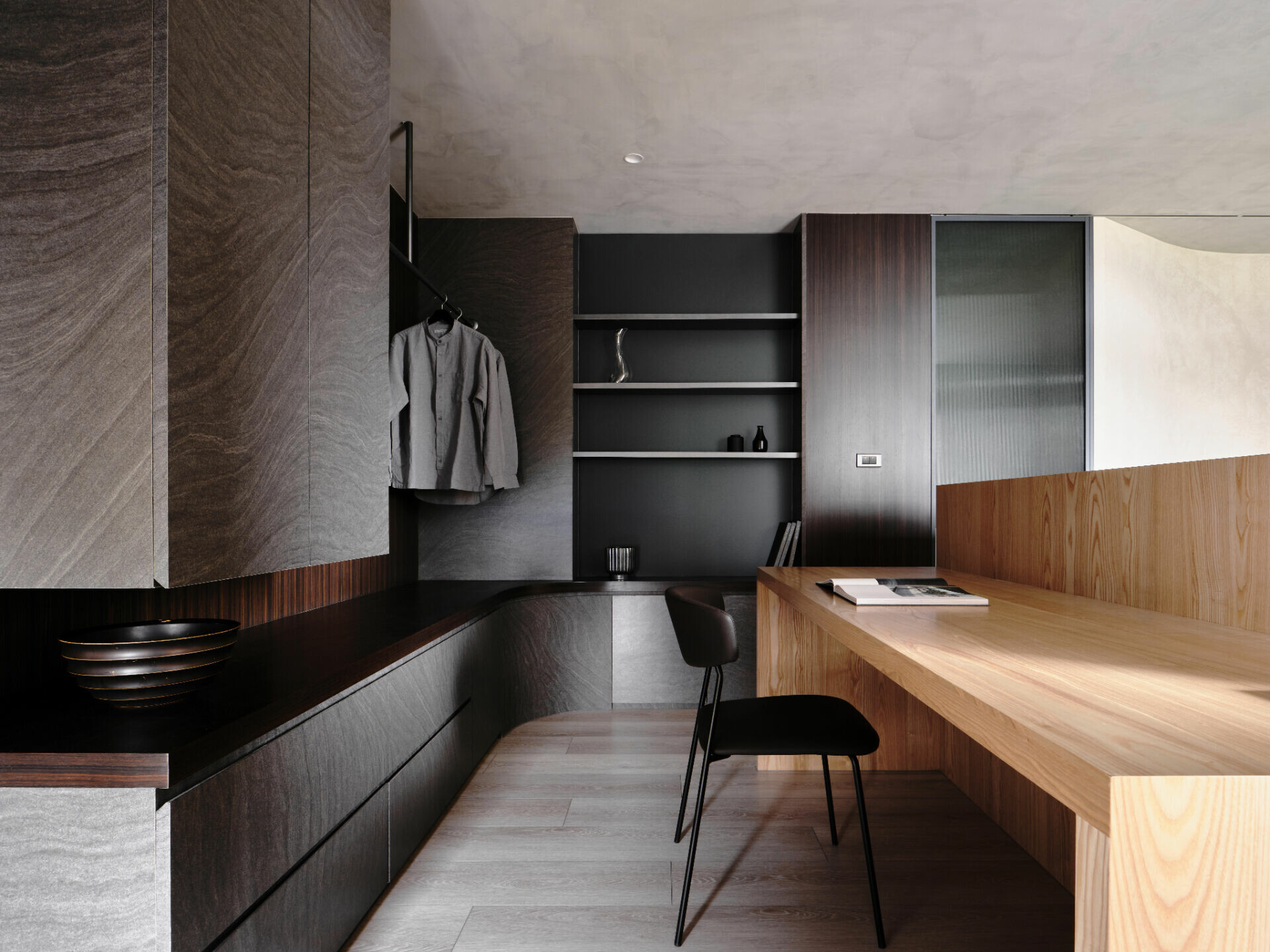
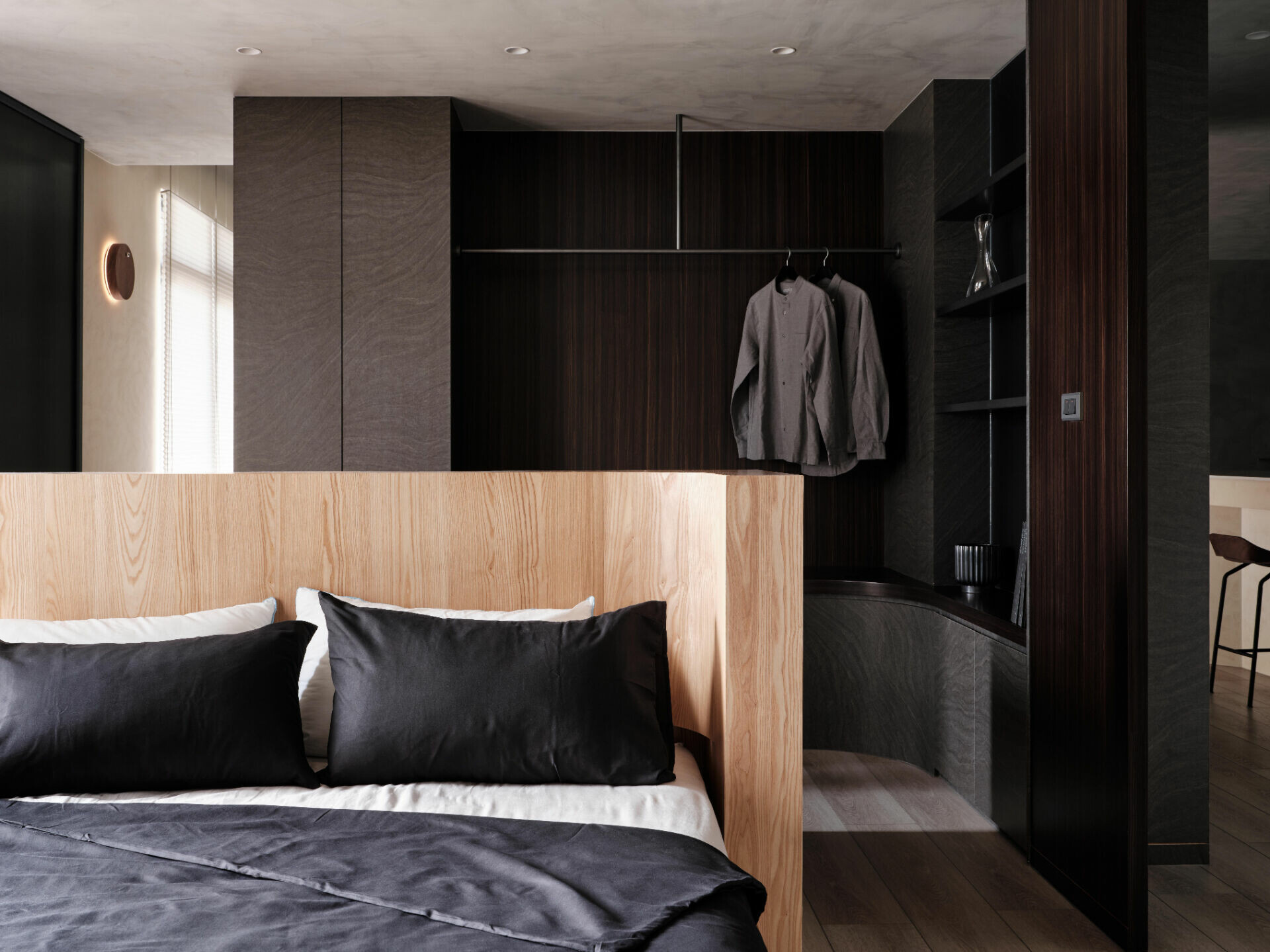
In this quiet spatial flow, a celestial narrative begins to unfold. Floating iron frames, dark cabinetry, and curved walls echo the trails of stars, while the asymmetrical, pale-toned kitchen island—sculpted in soft arcs—stands as a suspended planet at the home’s center. Other zones function like celestial bodies, orbiting along curved paths that gently draw the inhabitant inward. Each space becomes its own microcosm—an enclosed world for reflection, concentration, and inspiration. Across the entire interior, a recurring horizontal composition establishes a sense of rhythm and visual continuity, alluding to the orderly progression of star tracks and maintaining a balanced spatial dynamic.
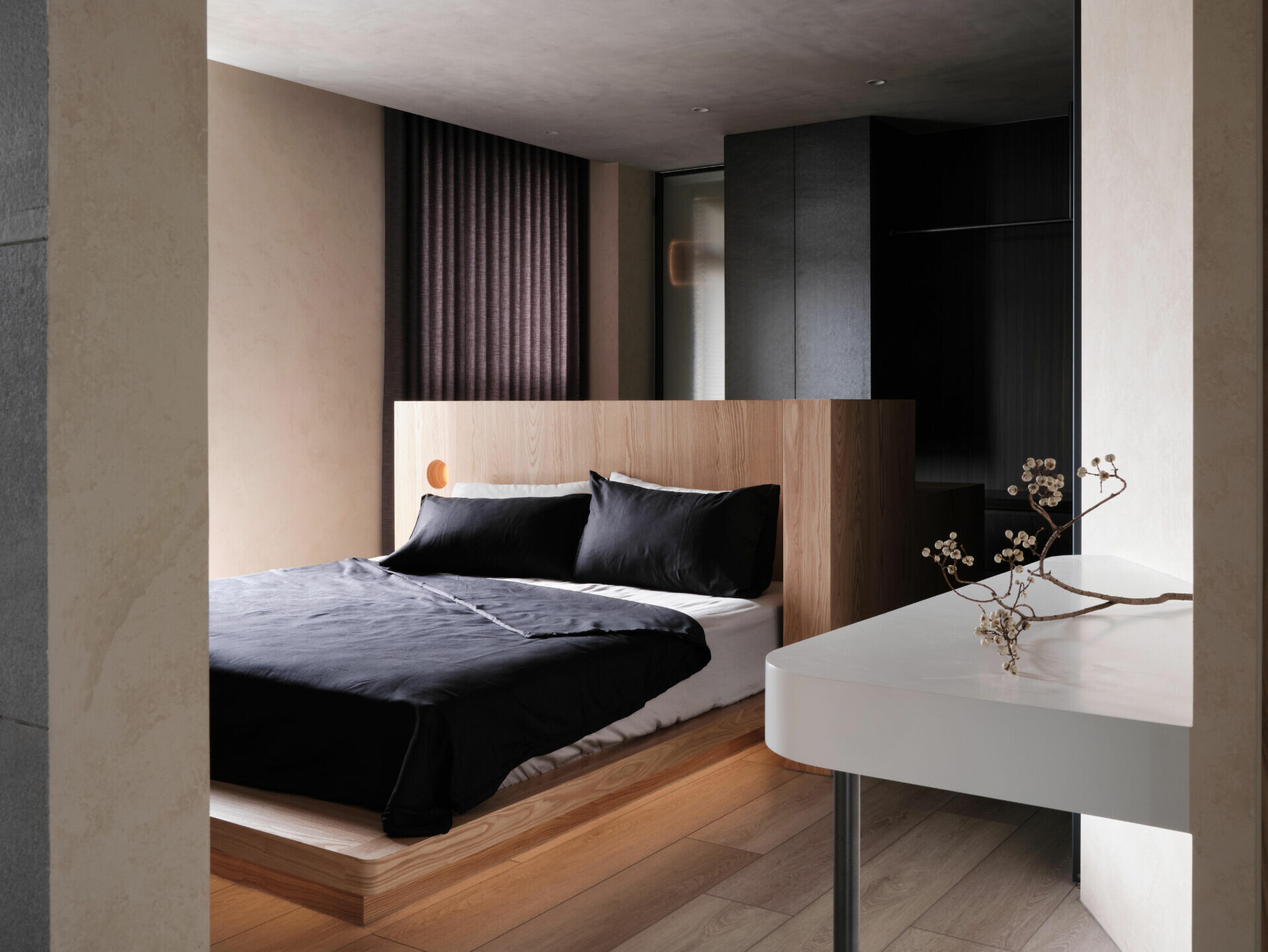
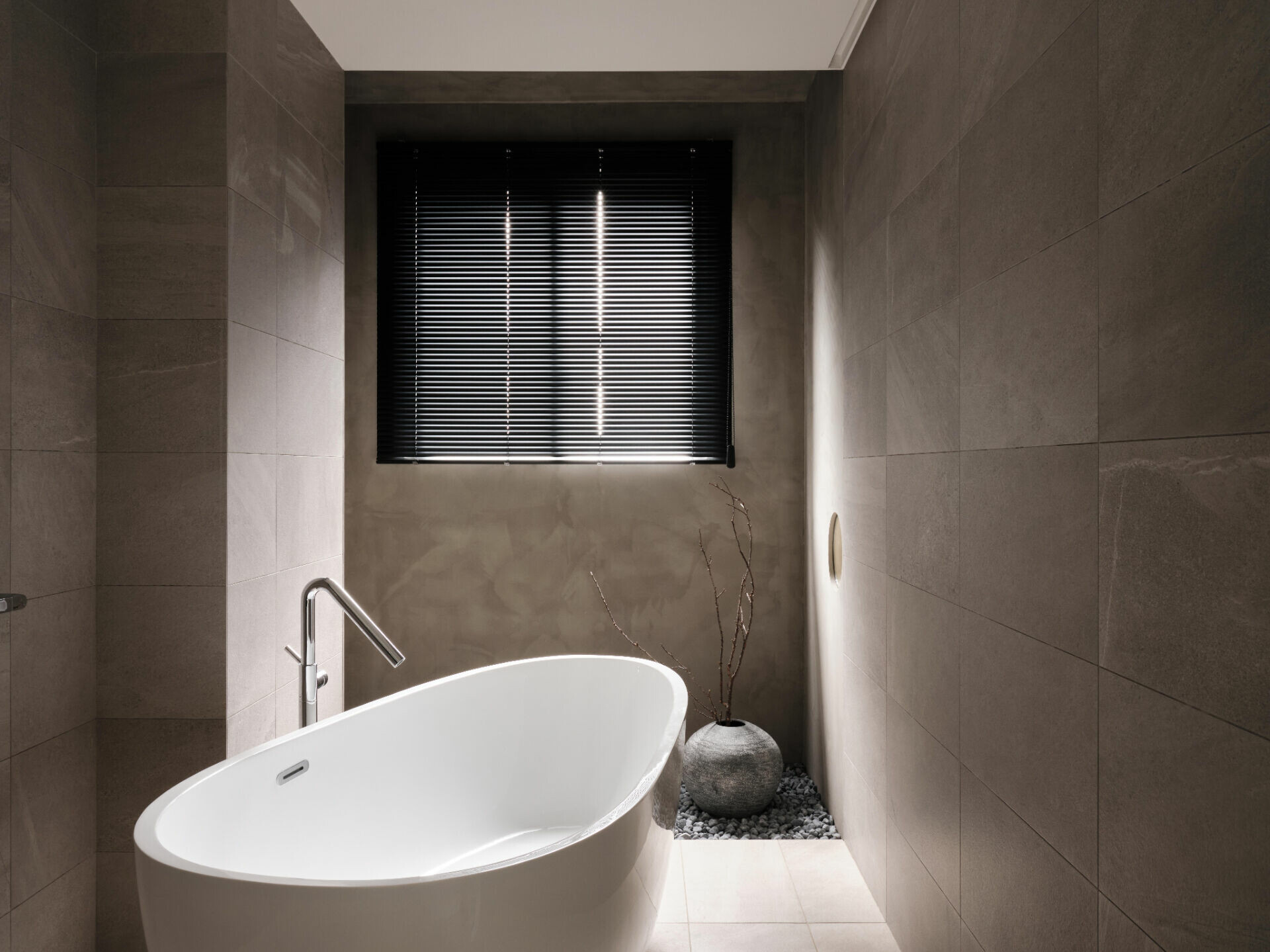
This is not merely a silent, meditative home—it also holds space for wonder. Small perforations in several corners emit quiet globes of light, encircling the sleeping area like luminous signals from another world. These points of illumination reference Voyager 1—the spacecraft that has traveled beyond the boundaries of our solar system—symbolizing the homeowner’s own longing for exploration. In these gentle glows lies an invitation: to venture further into the unknown, through imagination, through space, and through the quiet, boundless terrain of thought.