Housing Complex in Leiria
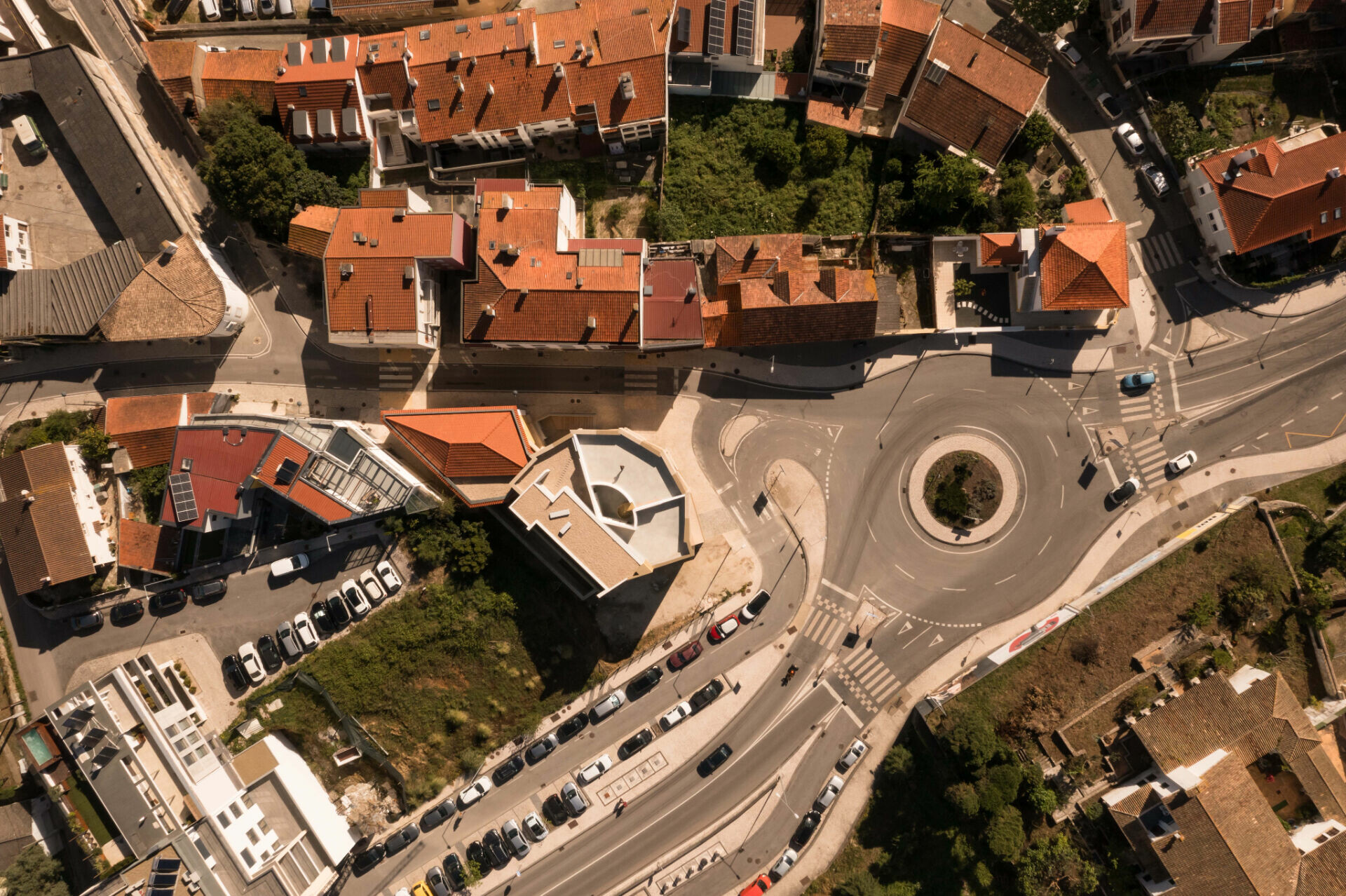
Historic renovations can be unexpectedly avant-garde. Set in the transitional edge of Rua dos Mártires in Leiria, Portugal, this residential project by Bureau des Mésarchitectures confronts the conventions of domestic architecture. At the heart of the design is a question: how might a dwelling respond to the shifting fabric of a city caught between past and present? The architects addressed this by transforming an extension into a contemporary urban apparatus—an architectural device poised at a street corner like an organic cog in motion, metaphorically bridging time as it links the memory of the past with the trajectory of the future.
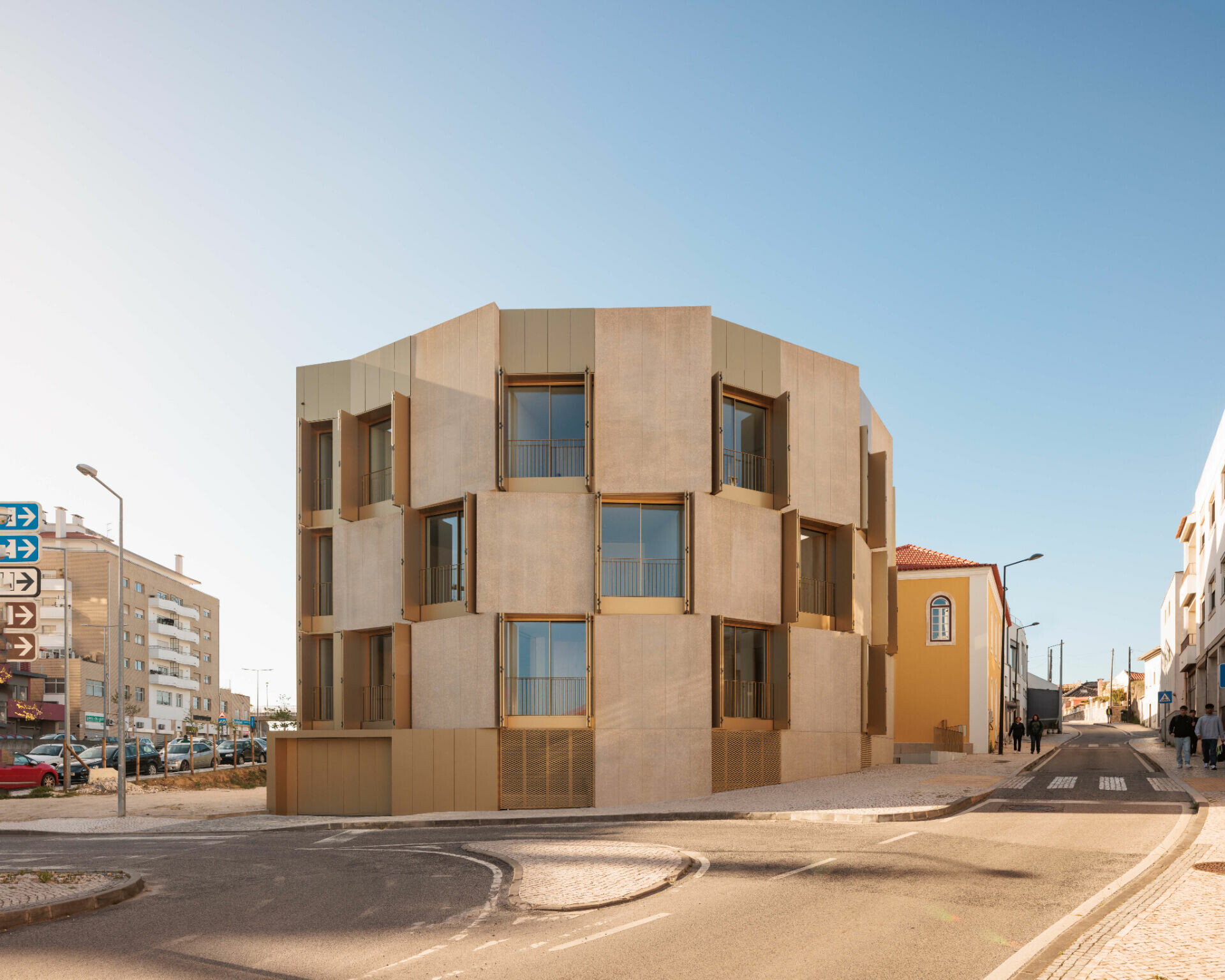
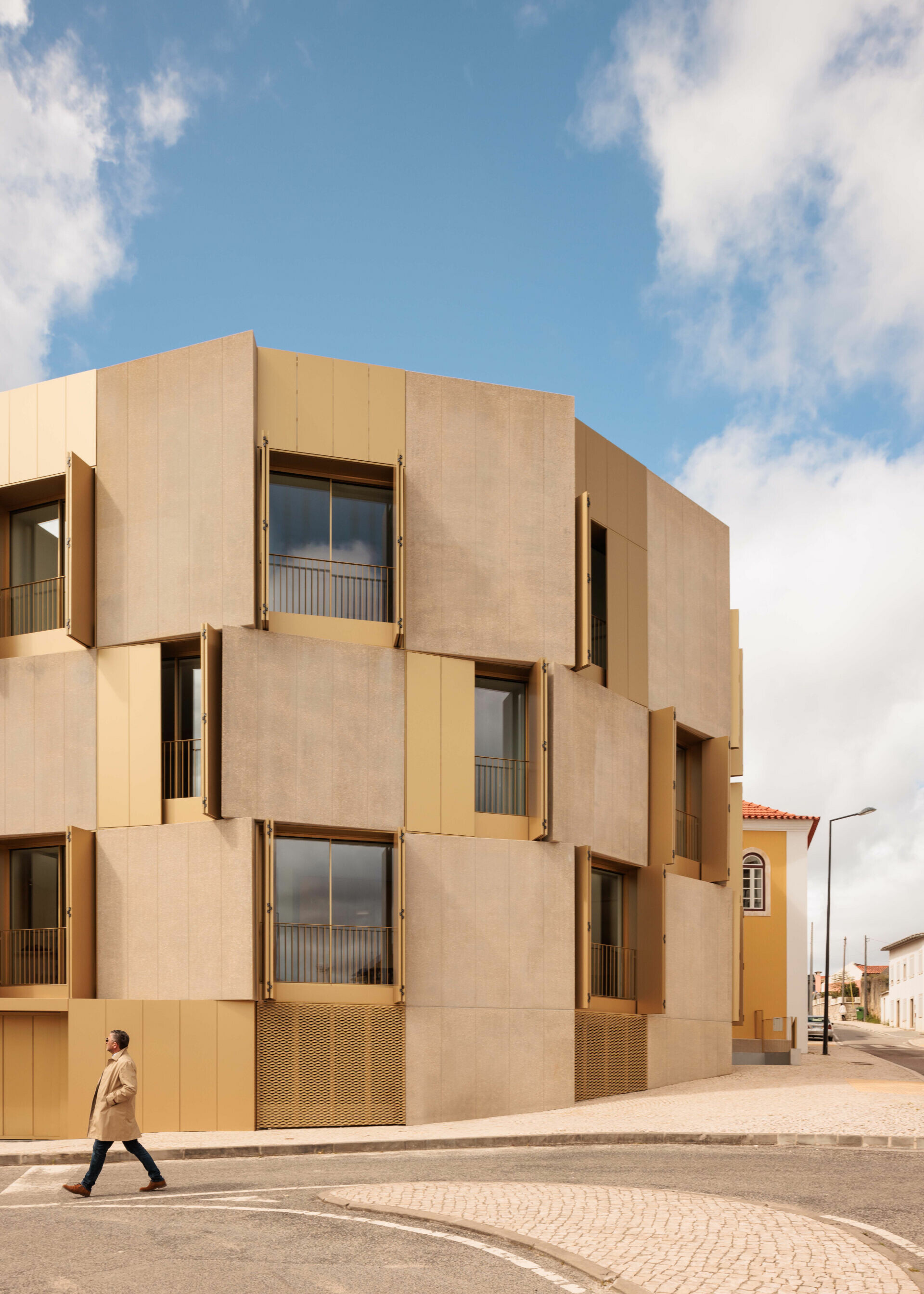
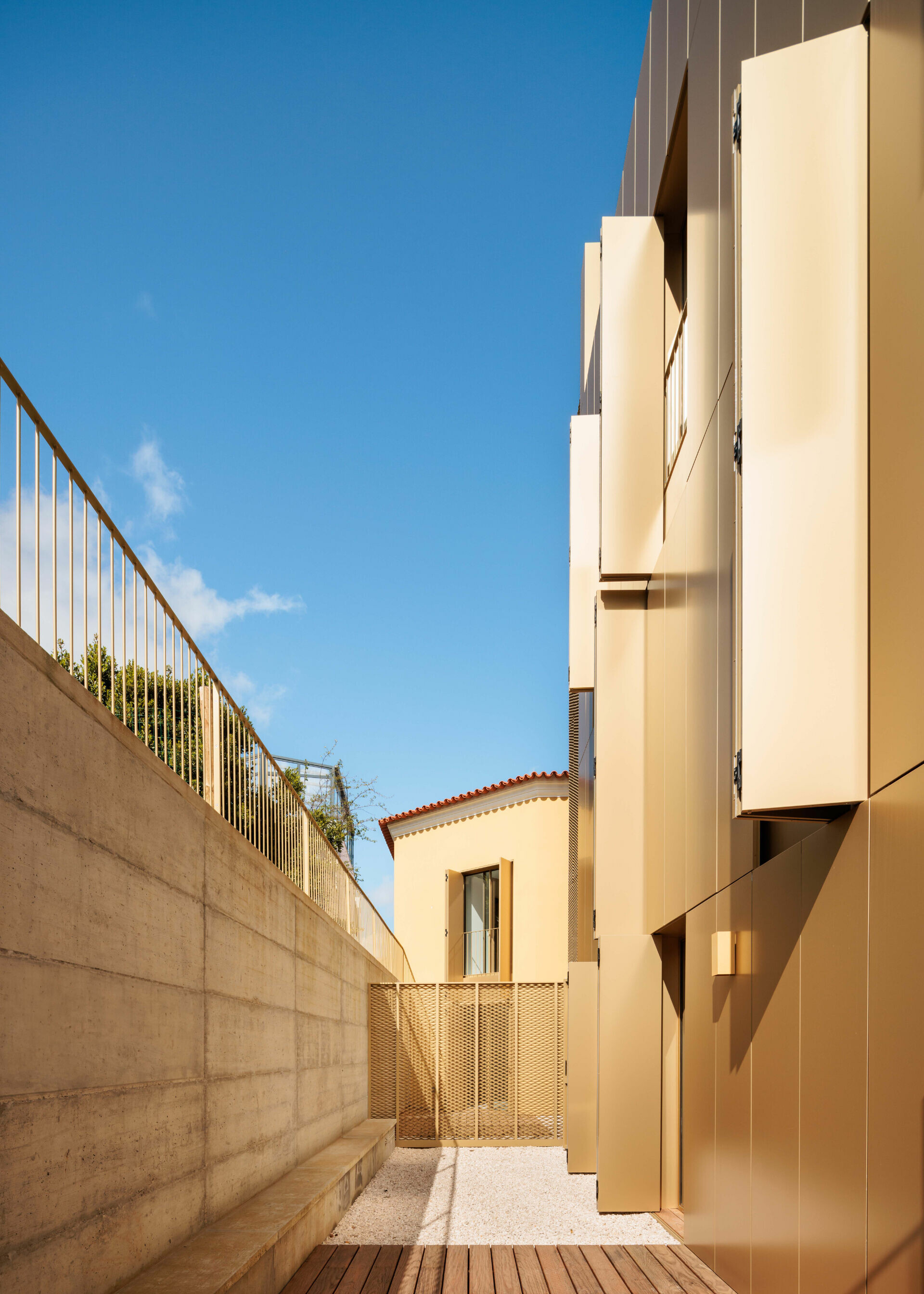
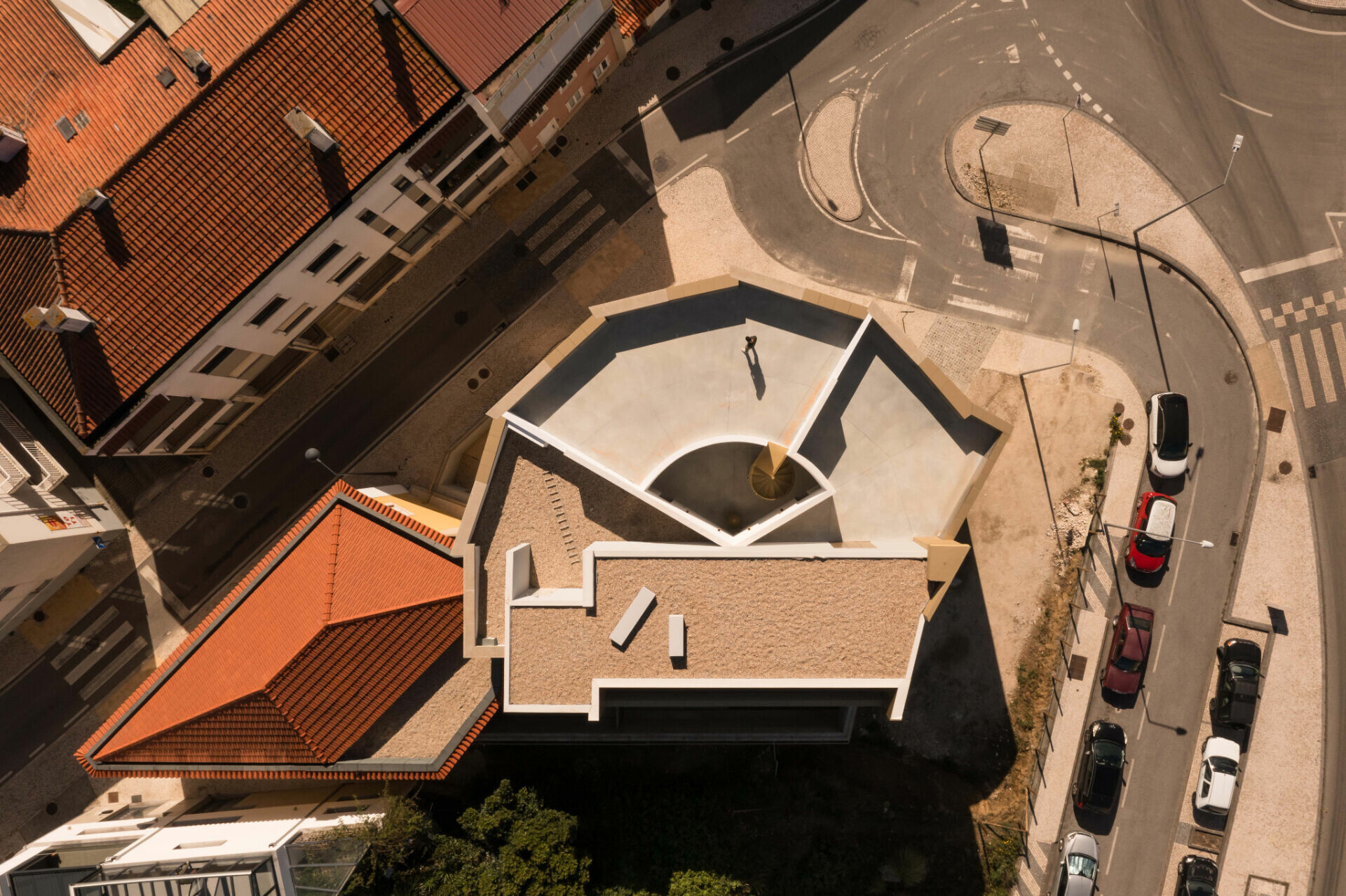
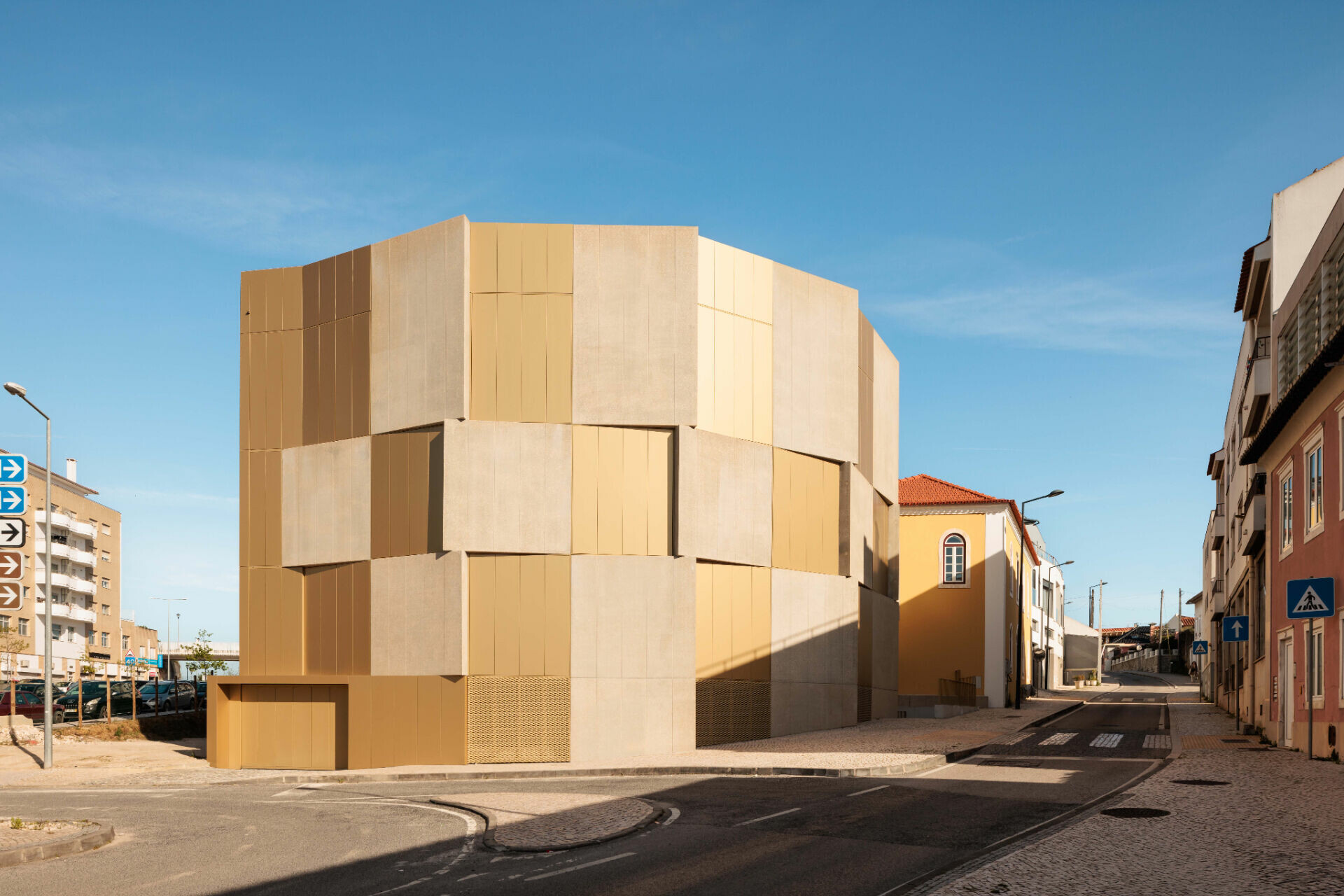
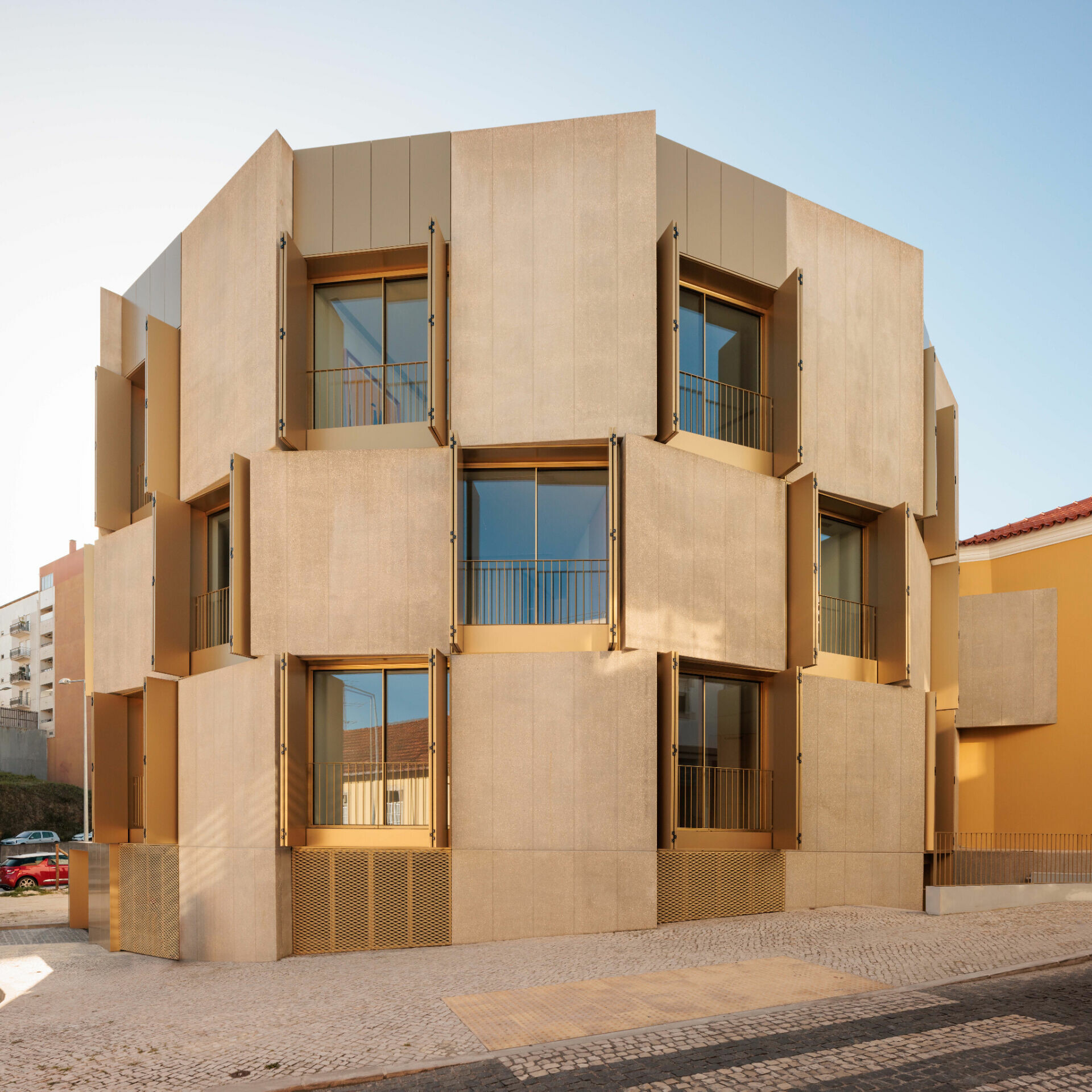
With a gross floor area of 1,369 square meters, the project comprises seven residential units. The new four-storey volume is connected via a shared stairwell to an adjacent two-storey house built in the early 20th century, featuring traditional tiled roofing and a pale yellow façade. Together, they negotiate the contrasting urban vocabularies of their context: one facing a historic narrow street, the other addressing a broad vehicular avenue. The two buildings—markedly different in form—establish a quiet tension across their shared frontage. In doing so, Bureau des Mésarchitectures embraces this dichotomy, allowing the extension’s dynamic façade to operate like a rotating mechanism that engages the urban corner and animates the building’s presence.
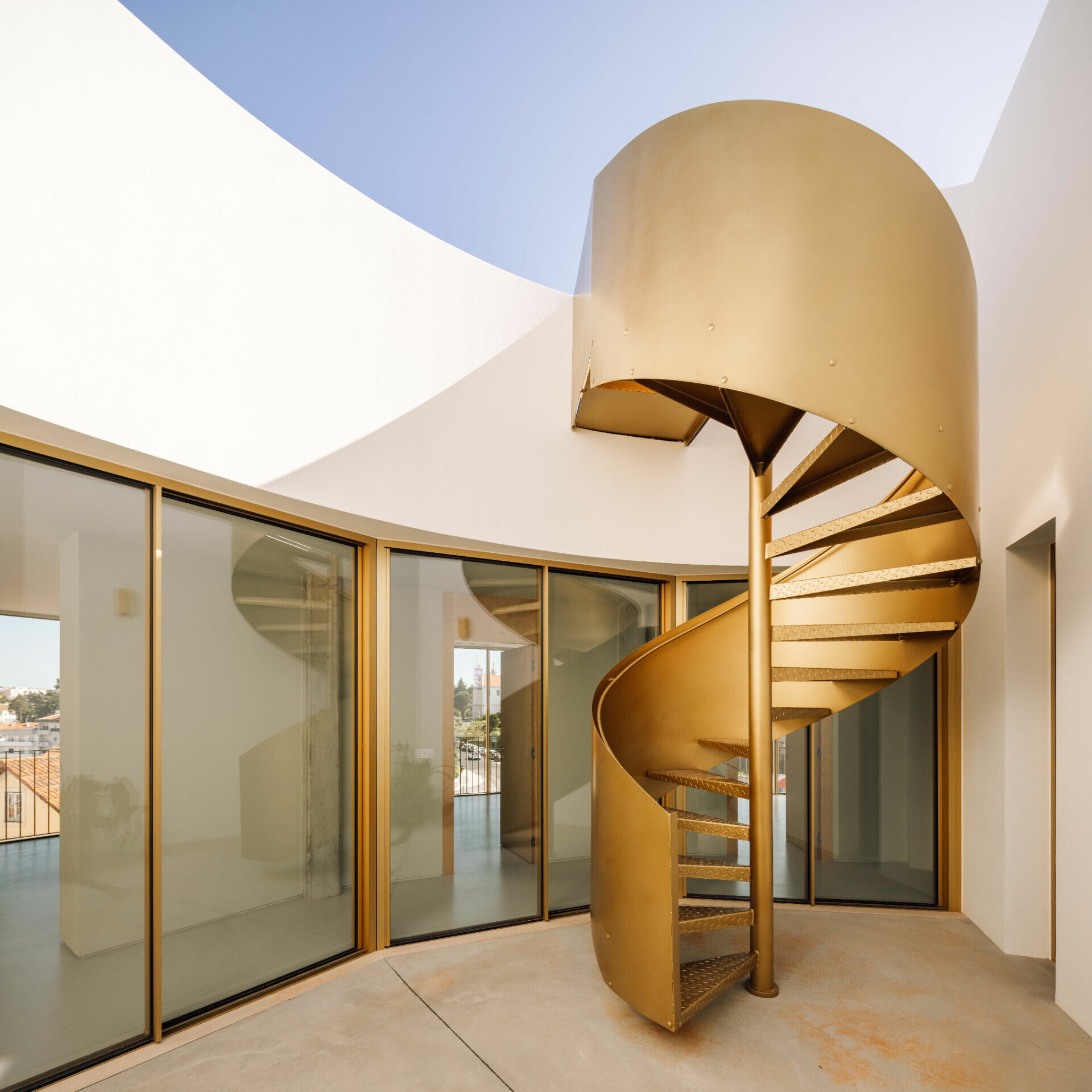
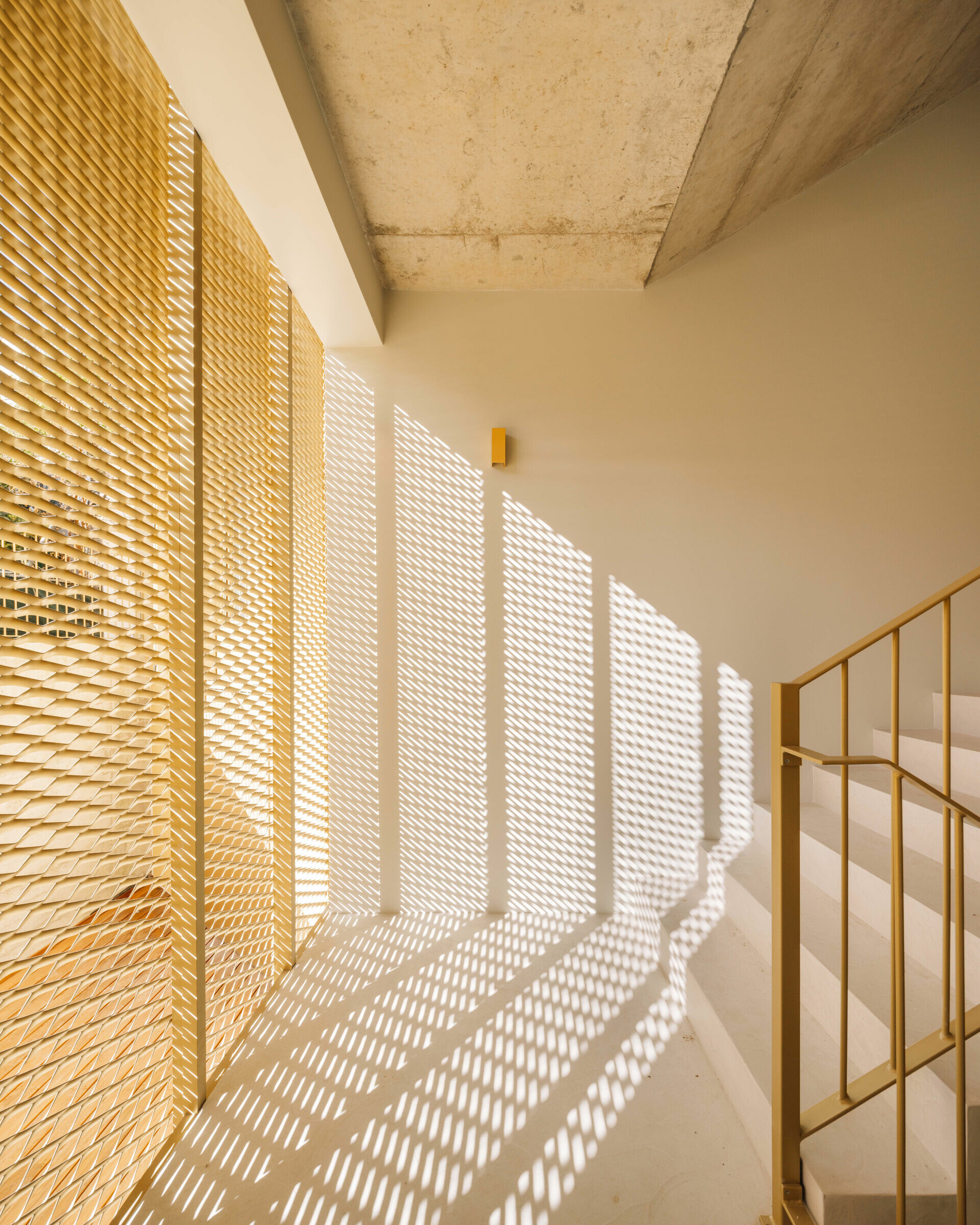
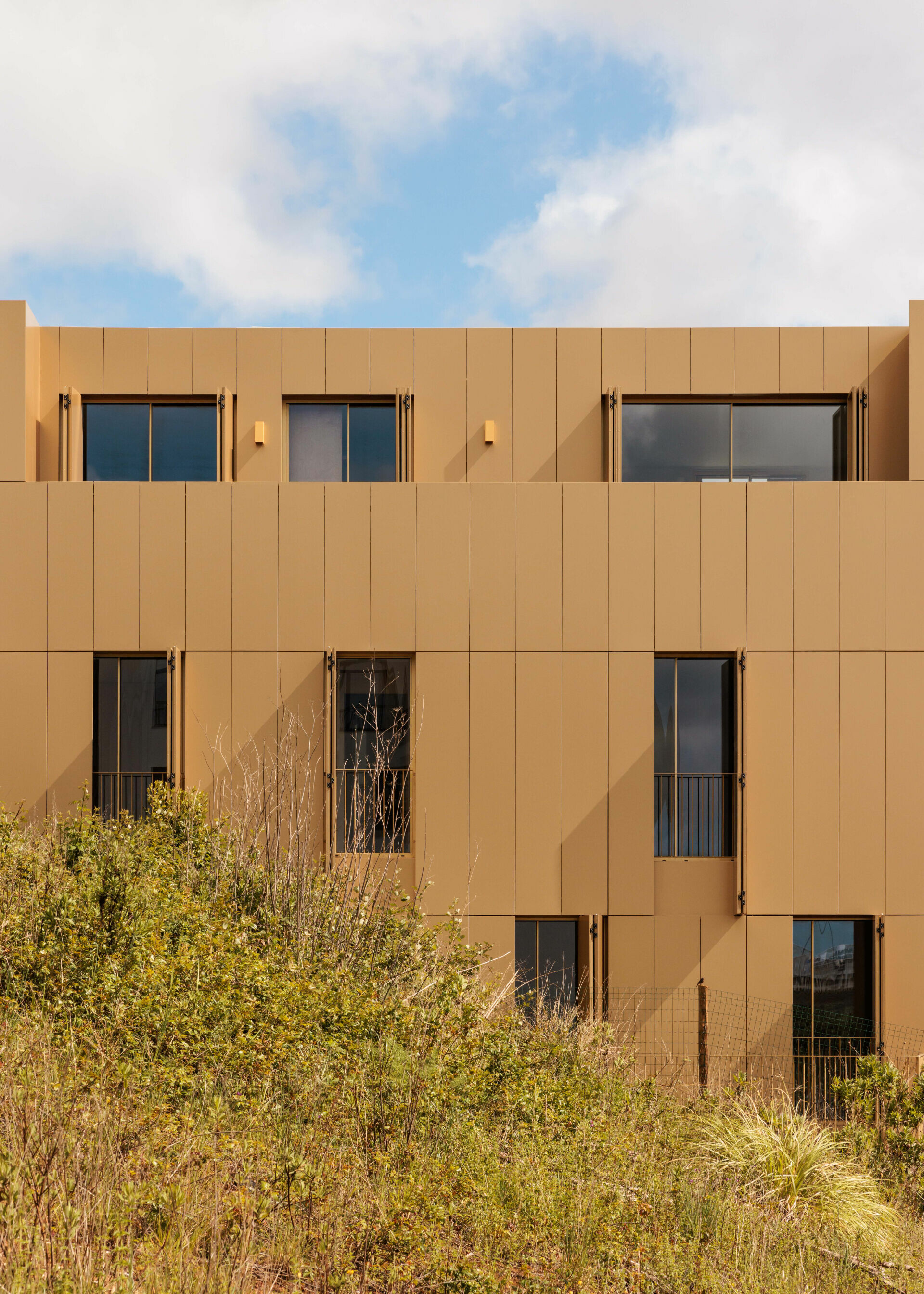
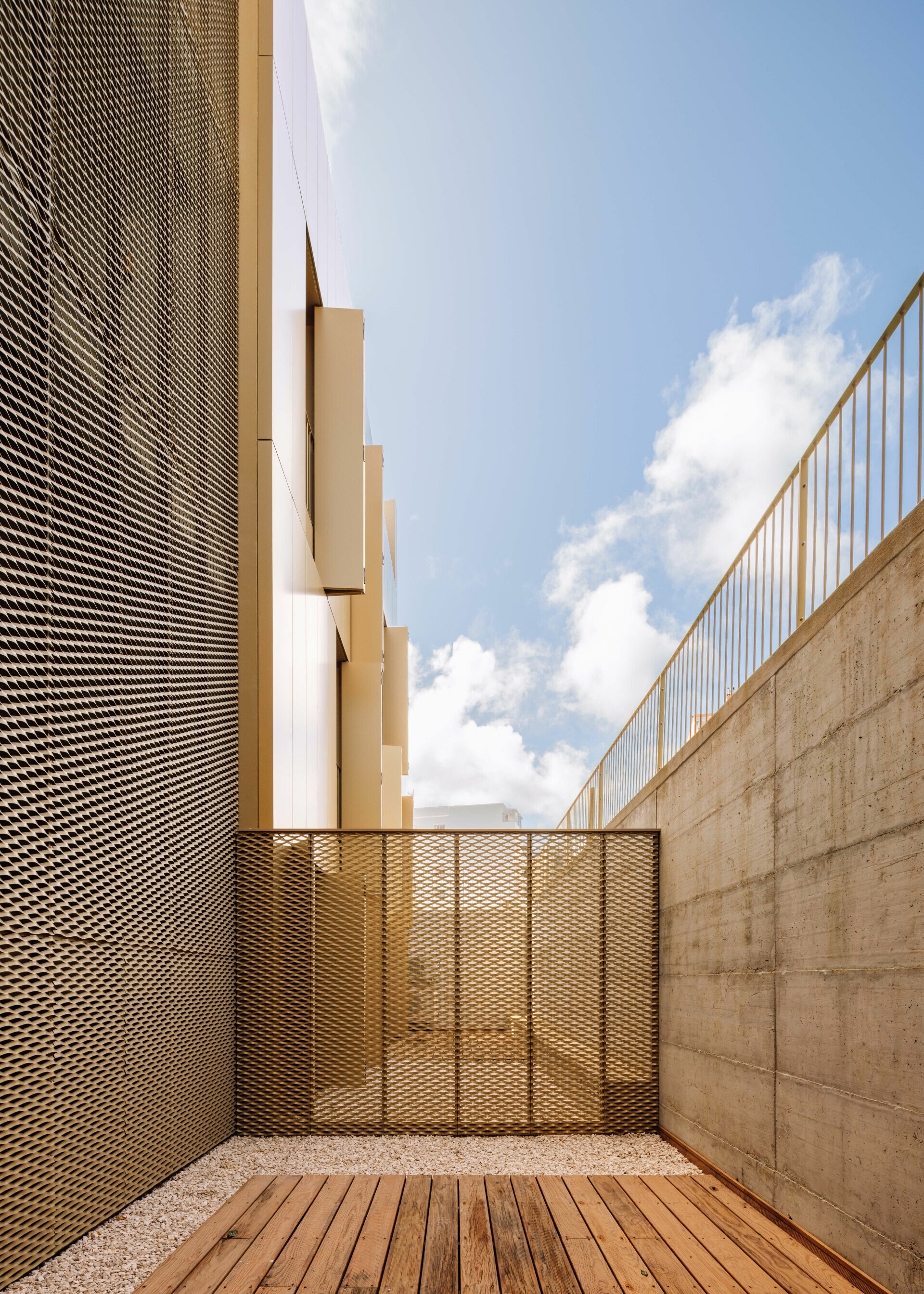
The extension’s façade is conceived as a kinetic surface, drawing upon the visual language of industrial mechanisms. It unfolds in faceted curves composed of precast concrete panels interspersed with golden-framed windows and operable aluminum shutters. This interplay of fixed and mobile elements gives rise to a fluid visual rhythm. As sunlight shifts throughout the day, it casts dynamic shadows and reflections across the façade, activating it as a “living surface”—a responsive skin that brings the architecture to life and prompts public engagement through its ever-changing expression.
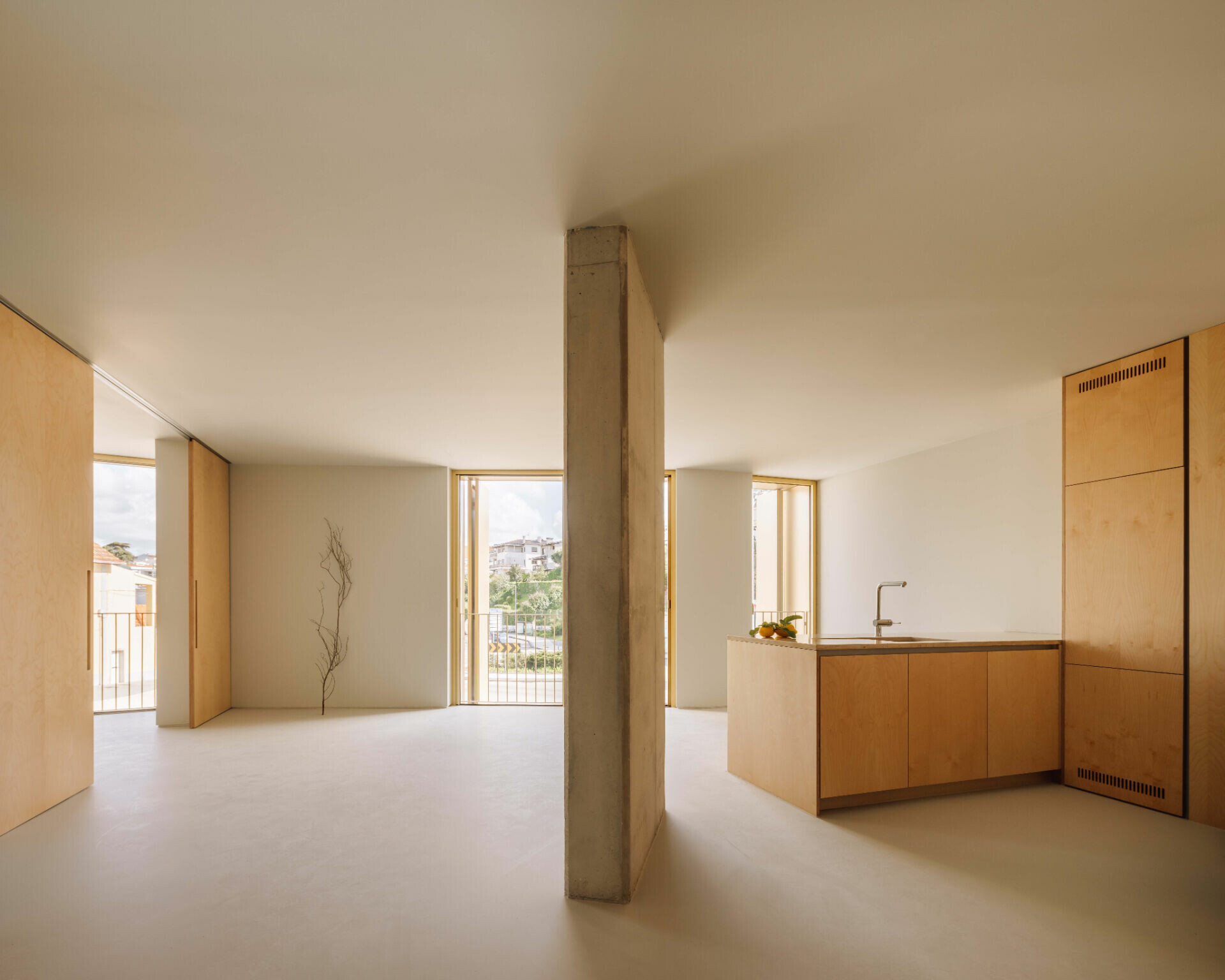
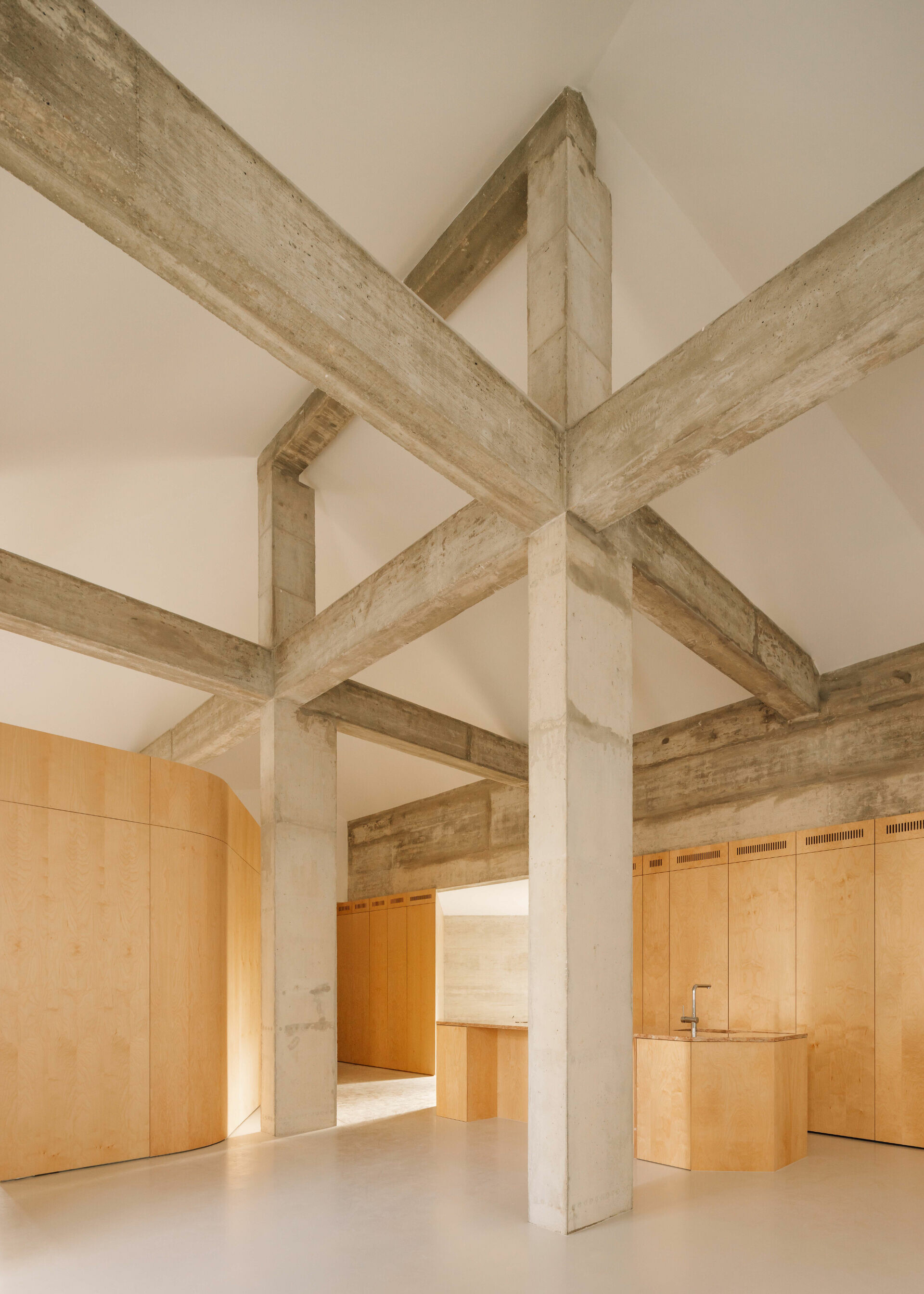
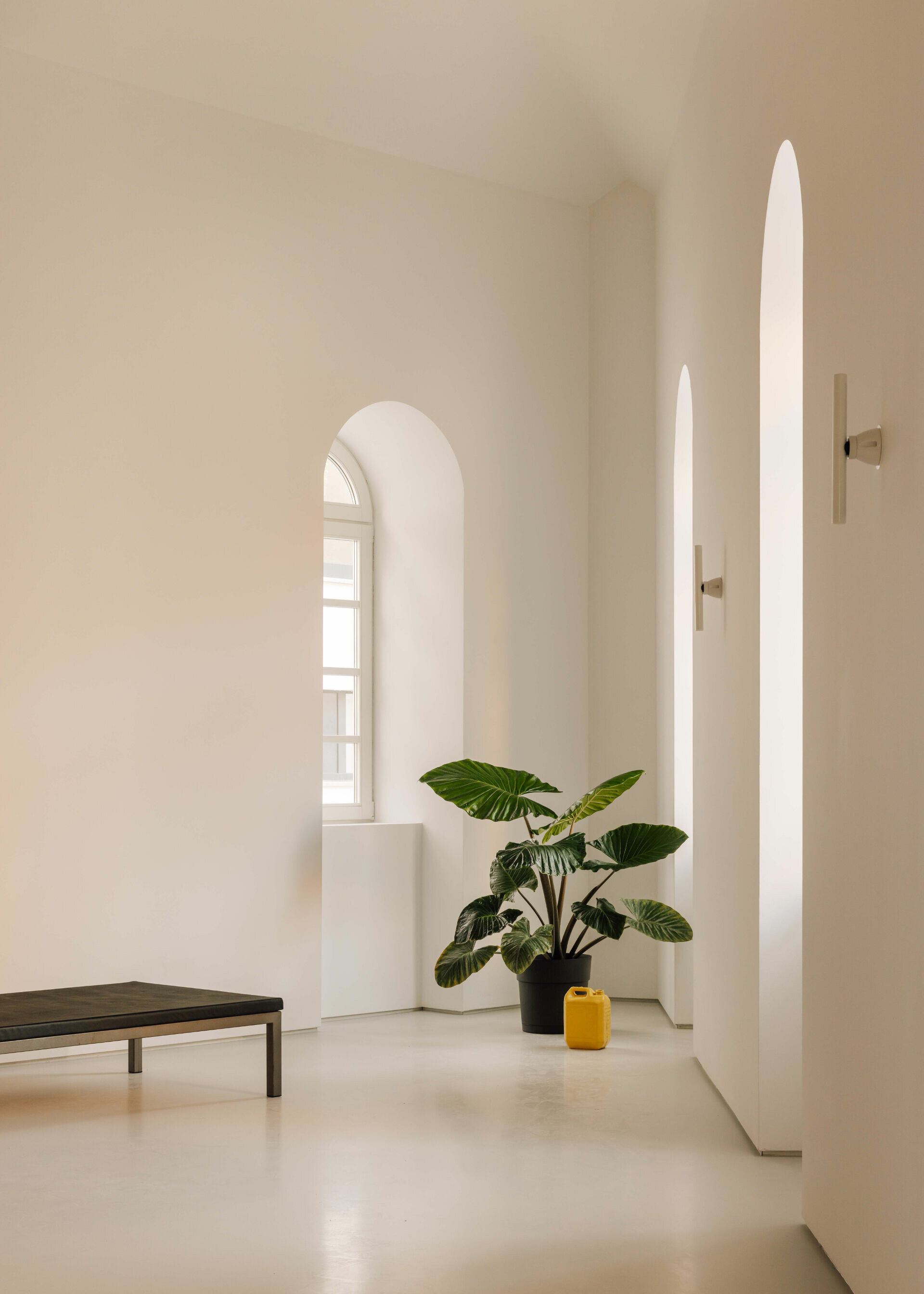
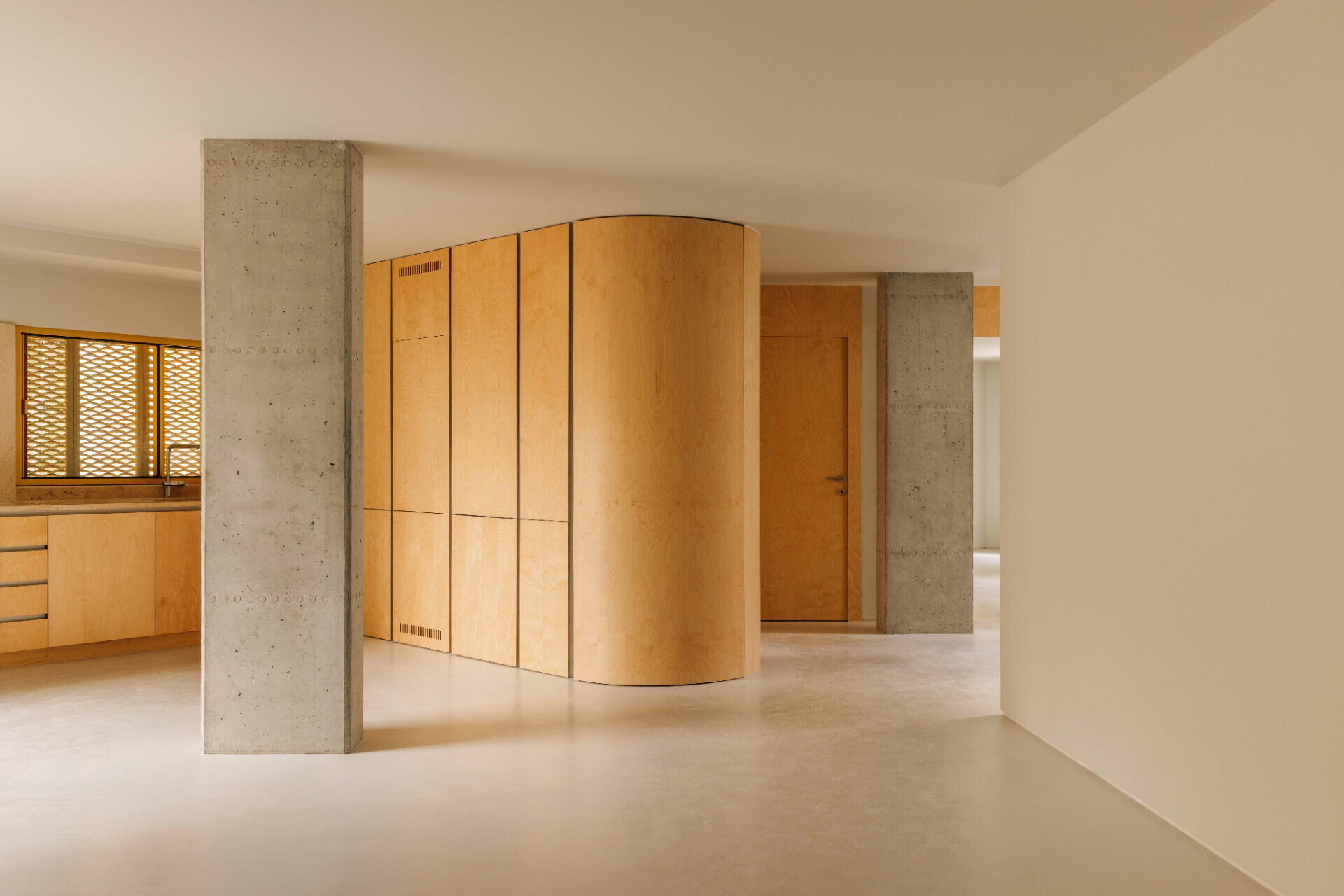
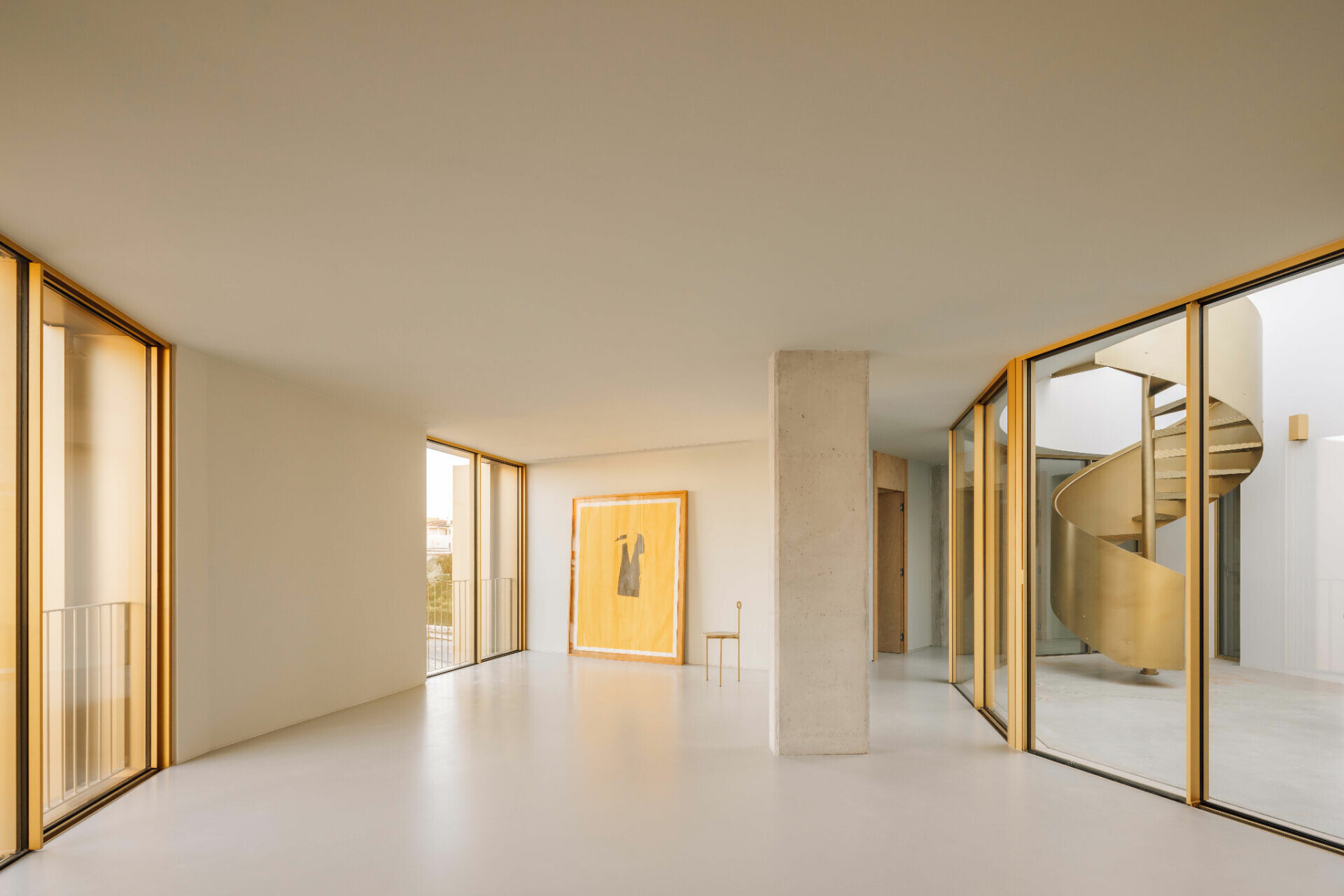
Inside, this same sensitivity to environmental context and spatial variation is extended across the building’s program. Depending on their orientation, the apartments—ranging from one to four bedrooms—are calibrated to different degrees of openness. Units facing inward adopt a more restrained layout to ensure privacy, while those on the upper floors or facing the street benefit from expansive glazing and outdoor terraces, connecting inhabitants to the city beyond. Exposed concrete beams and columns are intentionally preserved, paired with soft grey wall tones, epoxy flooring, and birch wood accents. This combination of material tactility and chromatic restraint achieves a calibrated balance between industrial austerity and domestic warmth, shaping a nuanced sensory experience along each circulation path. To the architects, architecture should not merely provide functional space—it should also frame a collective experience. In this spirit, each apartment becomes a stage: a setting for private lives to unfold within a wider urban drama. By weaving together themes of temporality, movement, and social interaction, Bureau des Mésarchitectures proposes an alternative reading of domestic architecture—one that blurs the line between shelter and spectacle, and between the individual and the collective.