Into The Wild
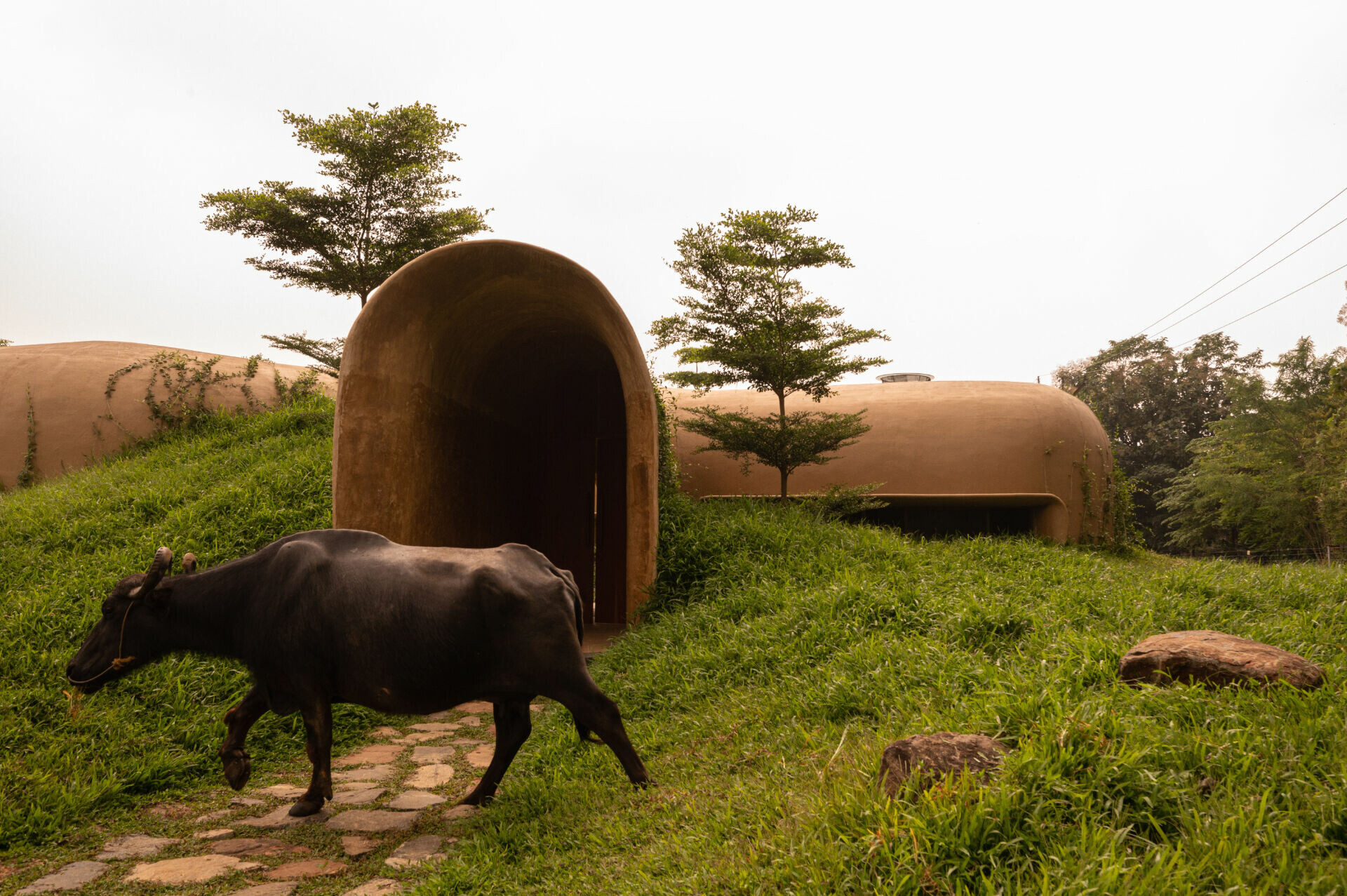
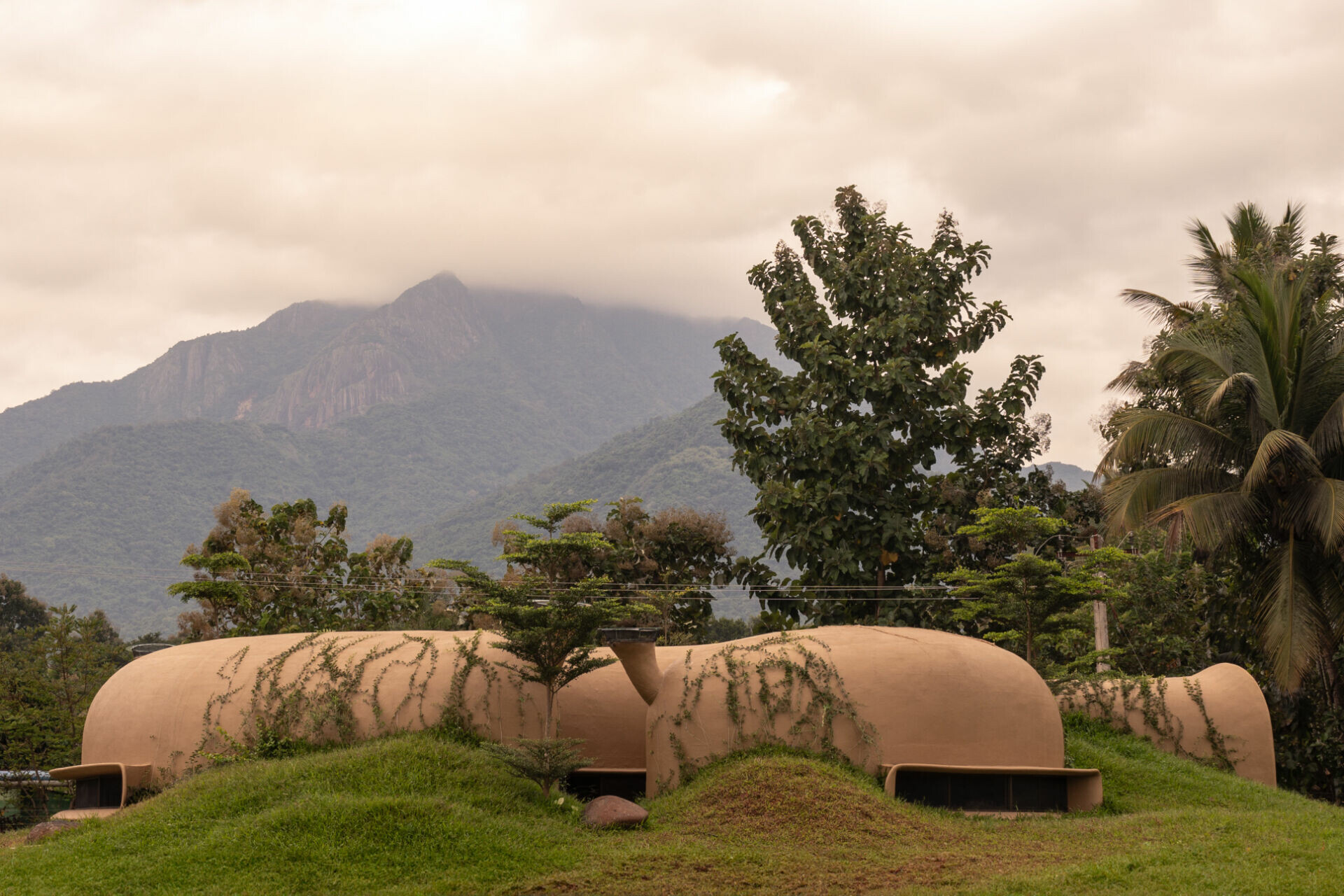
Nestled at the foothills of the Nilgiris in Tamil Nadu, South India, a striking architectural form emerges amidst lush greenery—a structure that appears to flow like earthy red lime plaster across the land, undulating, extending, and even reaching out as if in a playful embrace of the terrain. Amidst the flat landscape, its organic, freeform silhouette is particularly eye-catching, making it hard to guess that this is, in fact, a farmhouse. However, this expressive form is not merely a stylistic choice; rather, it is the result of a bold and thoughtful design approach by Earthscape Architects. Through in-depth exploration of the local climate, topography, and cultural context, the firm has reimagined the relationship between dwelling and environment, redefining sustainable living with a profound ecological consciousness.
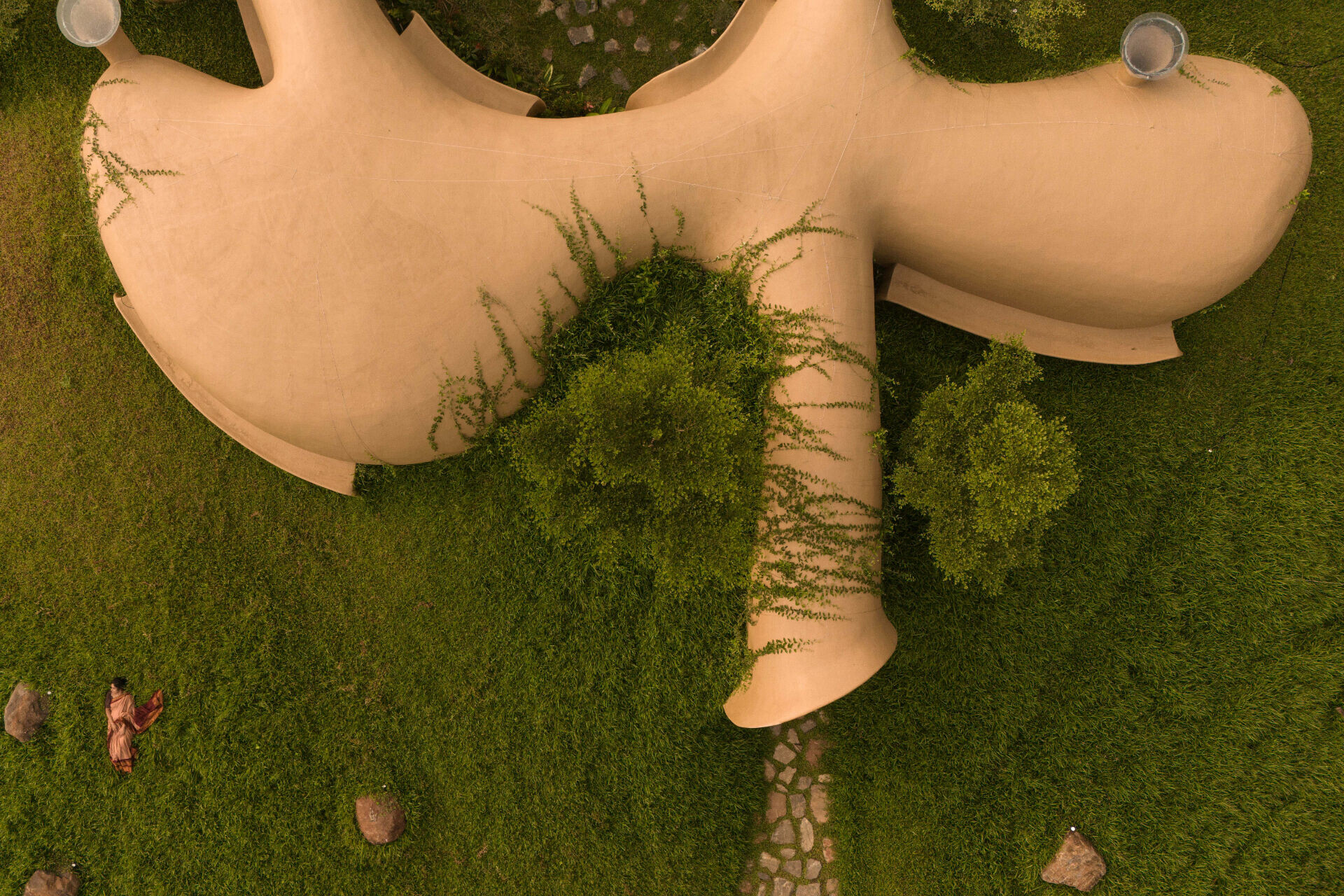
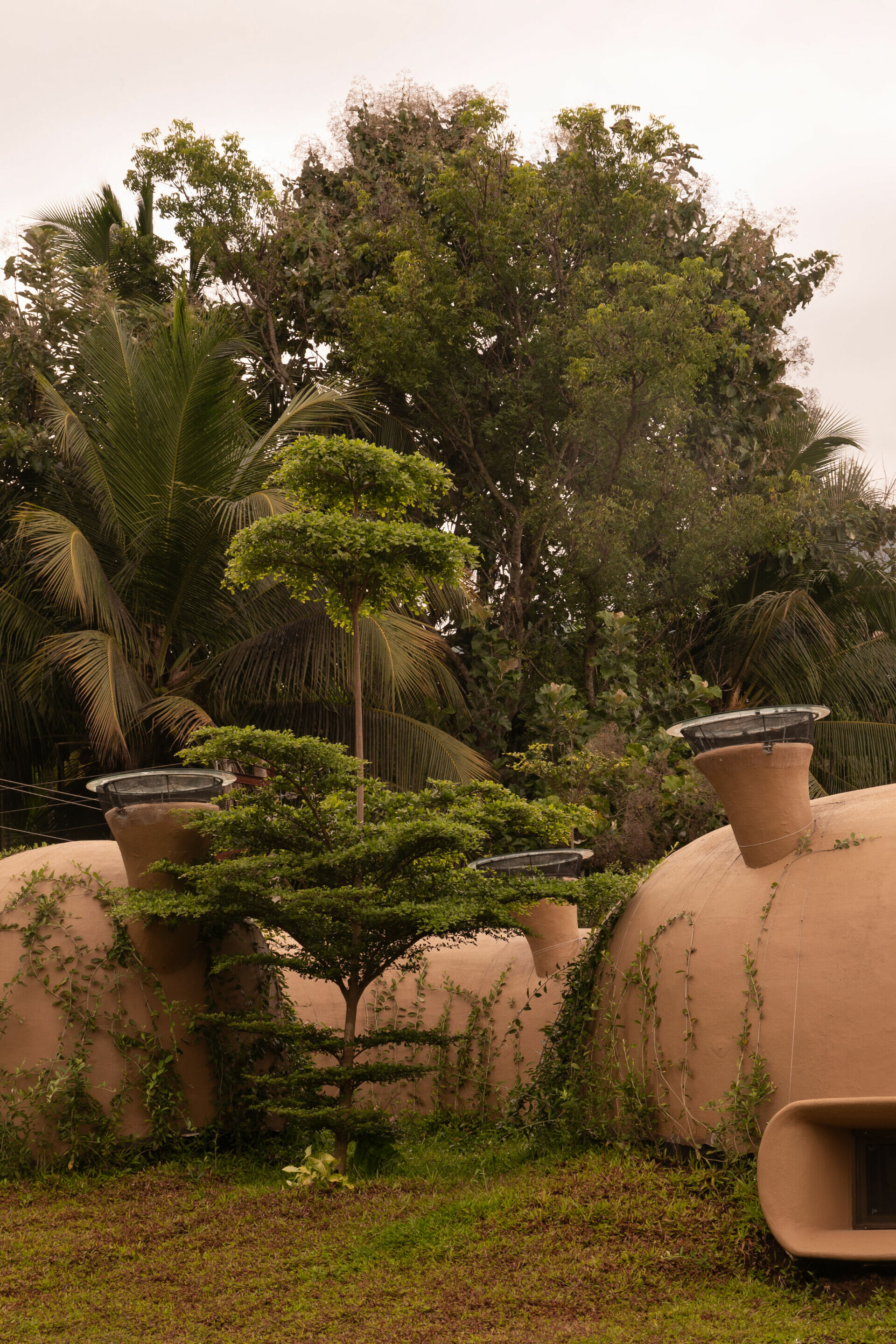
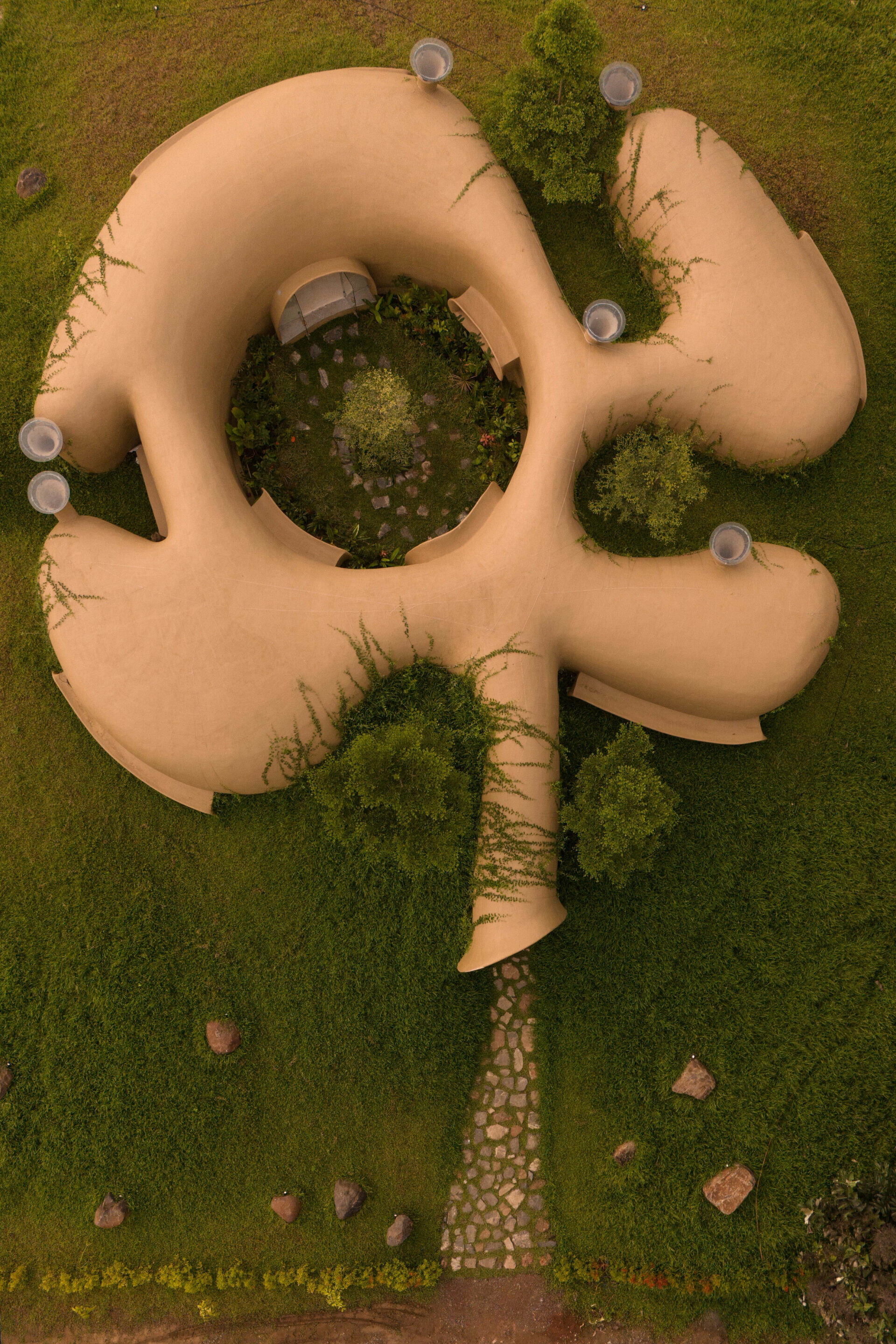
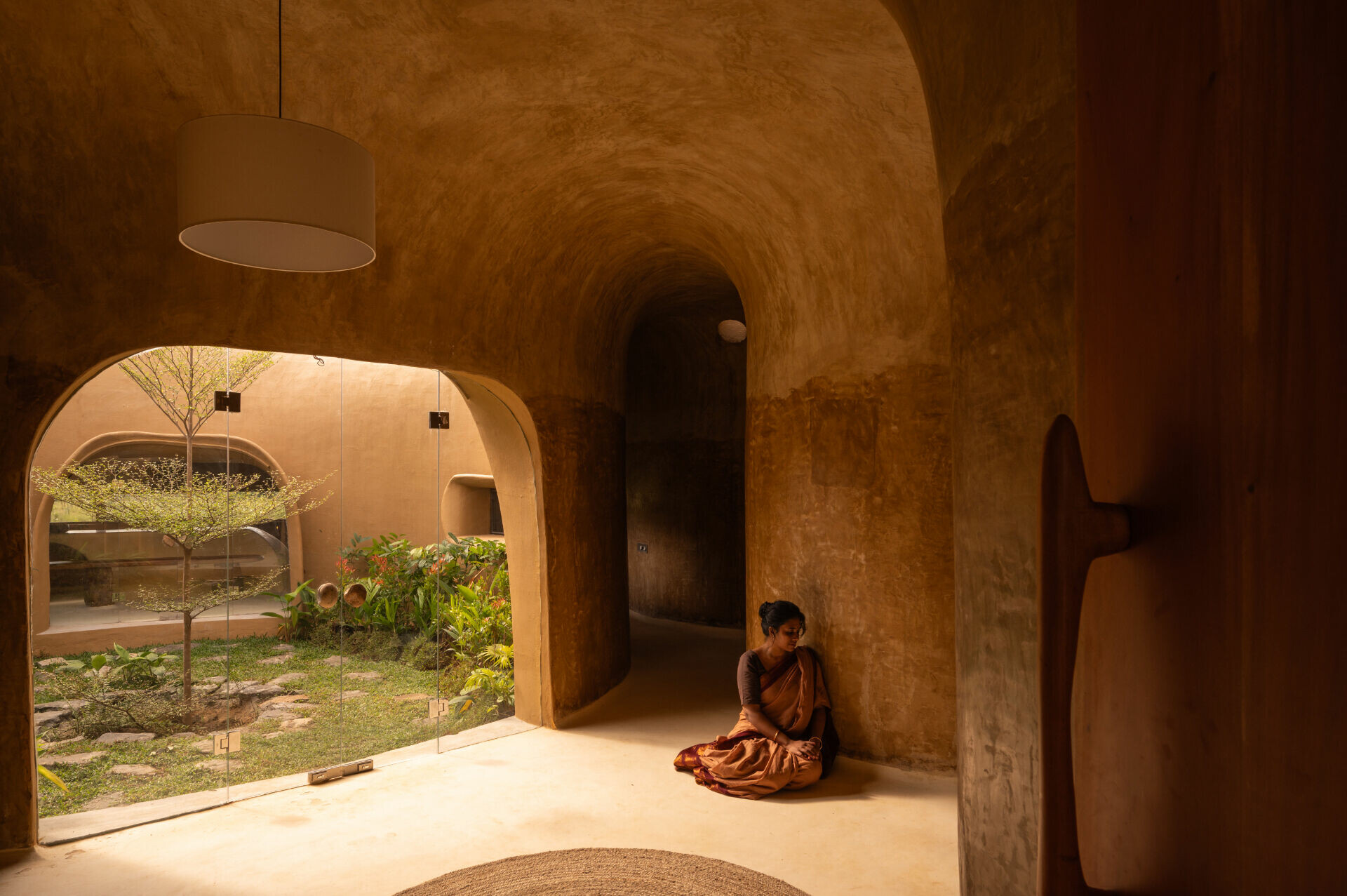
Striking a balance between architecture and nature has long been a challenge for contemporary architects. For the Earthscape team, every individual perceives the landscape differently, and architecture must serve as a bridge between humans and nature. Their design process begins with this understanding, prioritizing 25% of the project for the built structure and dedicating 75% to the surrounding environment. A key focus was on construction techniques that minimize carbon emissions. The result is a farmhouse that seamlessly integrates into the wilderness through an innovative "folded architecture" technique. Despite its seemingly fluid and unrestrained form, the structure is built with precision—its 4.5-inch-thick ferrocement shell is coated with locally sourced Thappi plaster on the exterior and traditional Indian lime plaster on the interior. This smooth, continuous materiality extends across floors and built-in furniture, creating a cohesive and immersive spatial experience while reducing indoor temperatures by approximately 3°C. The organically curved structure, free of columns, evokes the sensation of dwelling within a cave, inviting an instinctive sense of curiosity and discovery with every turn.
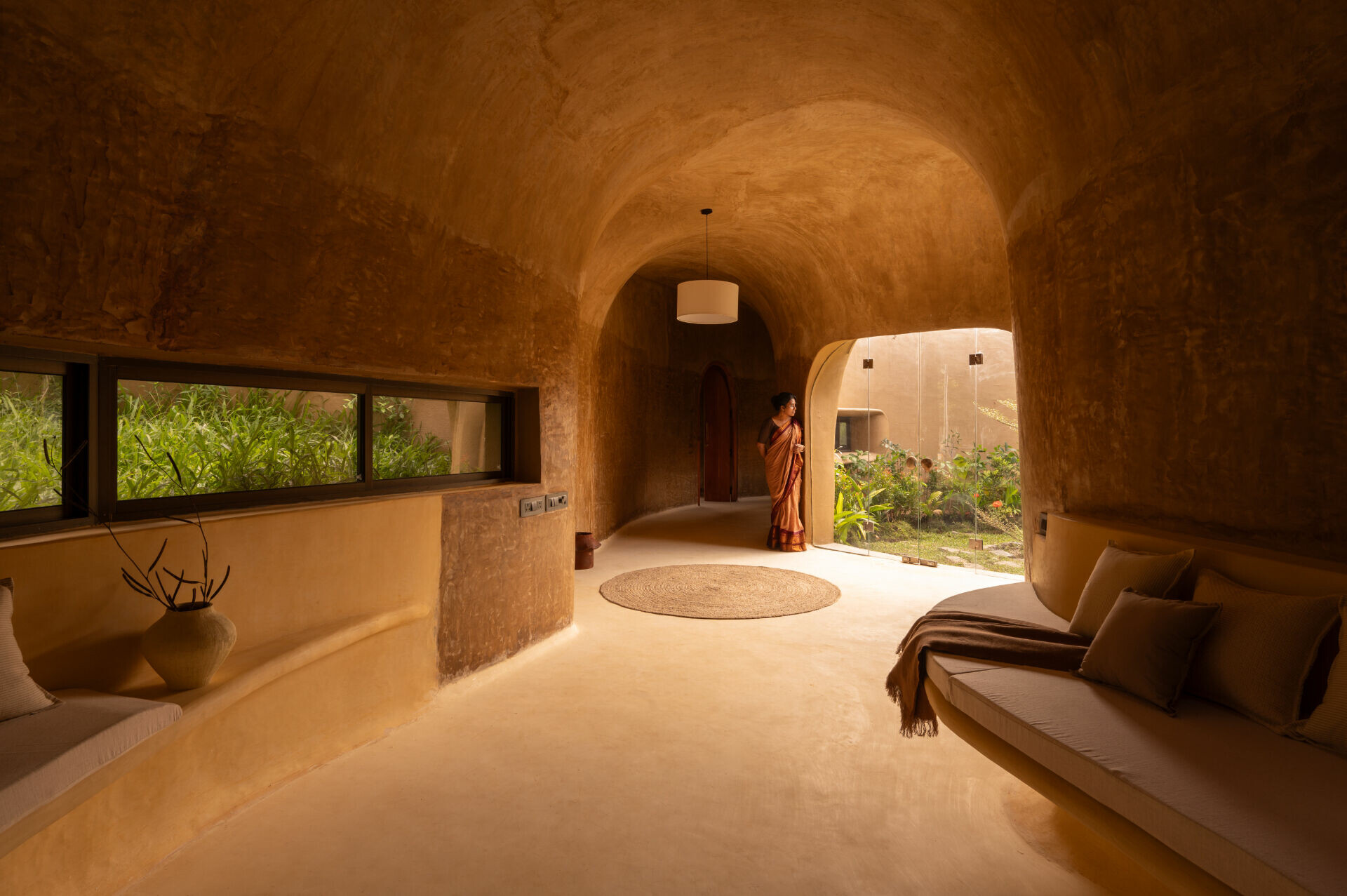
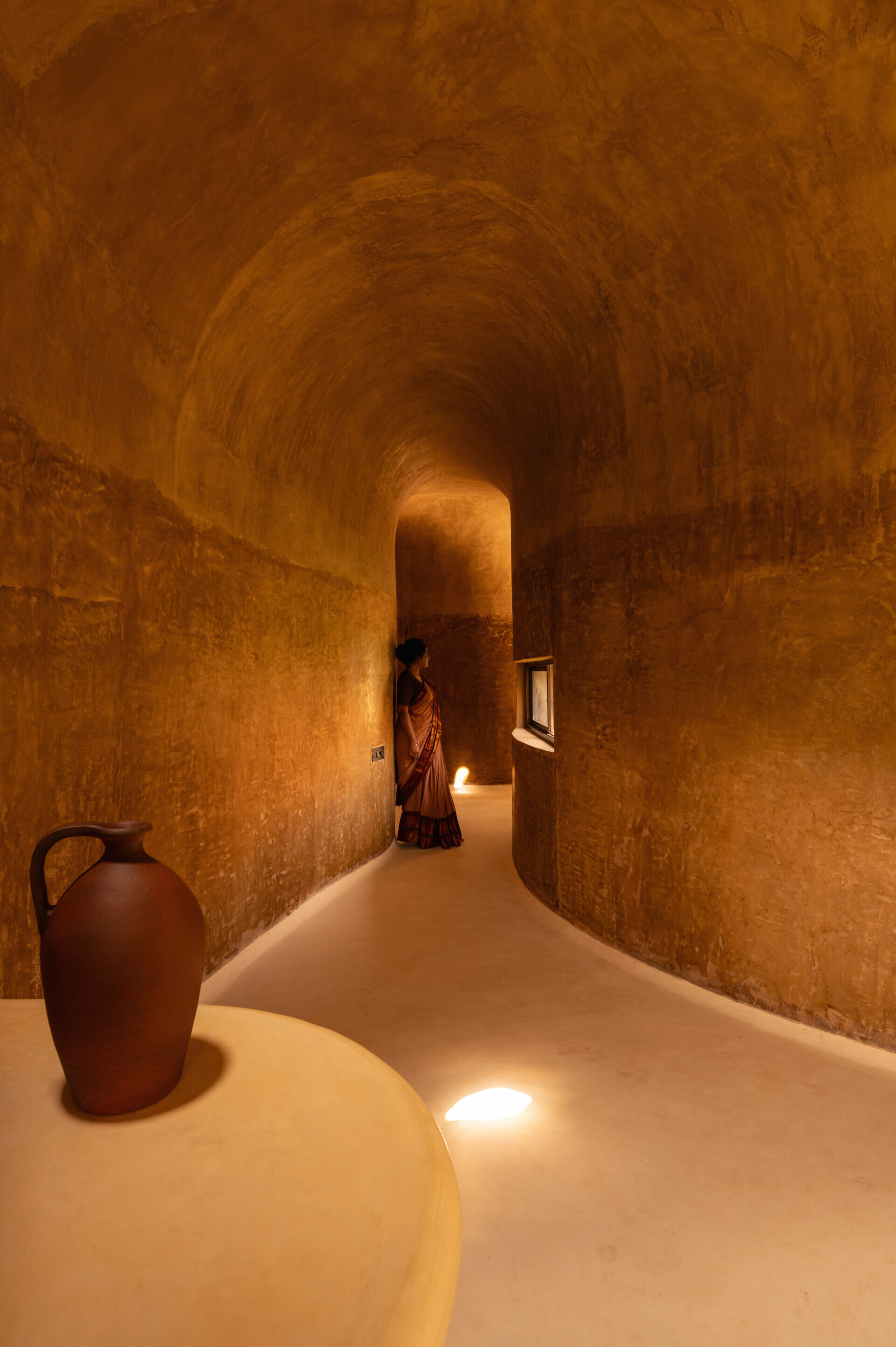
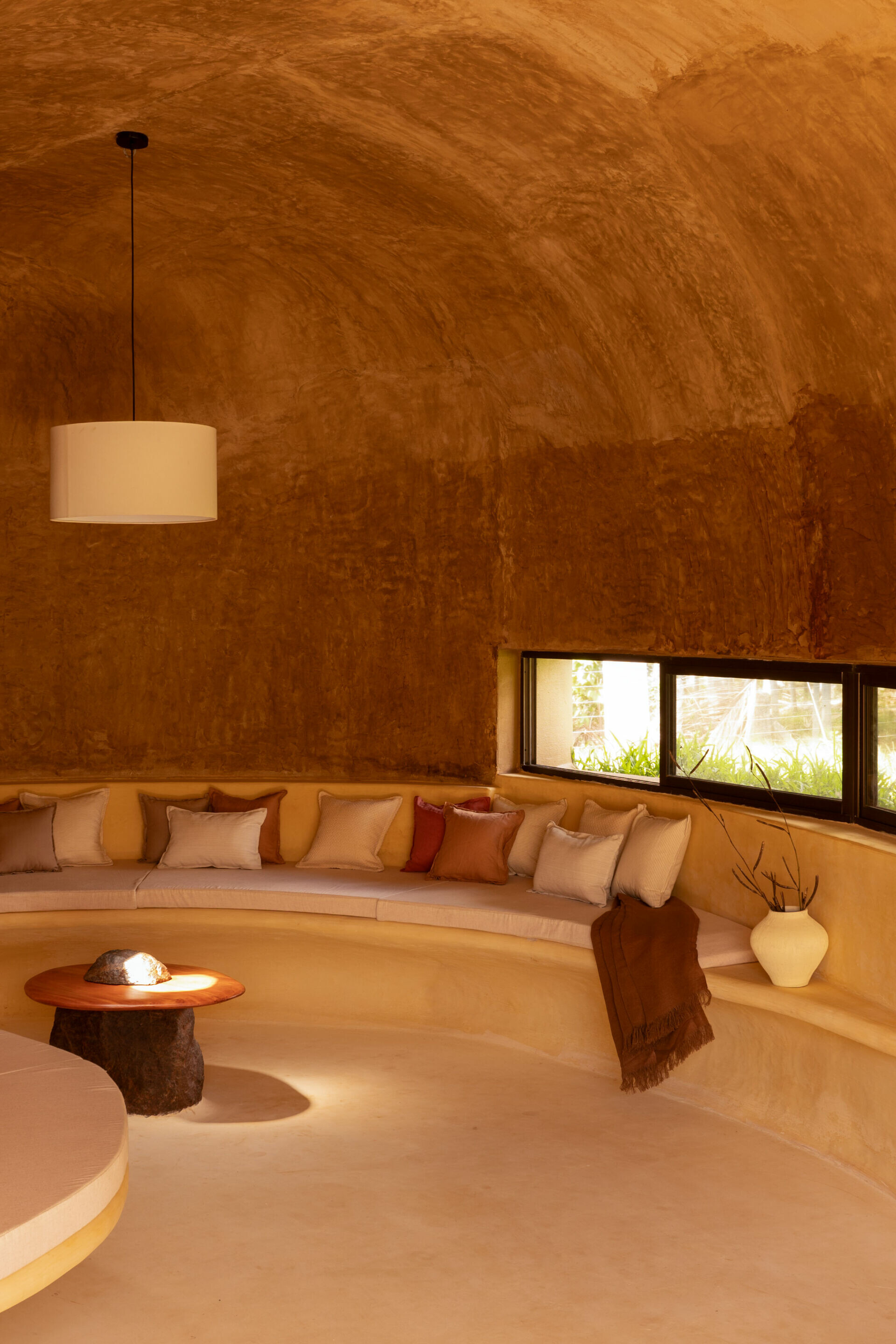
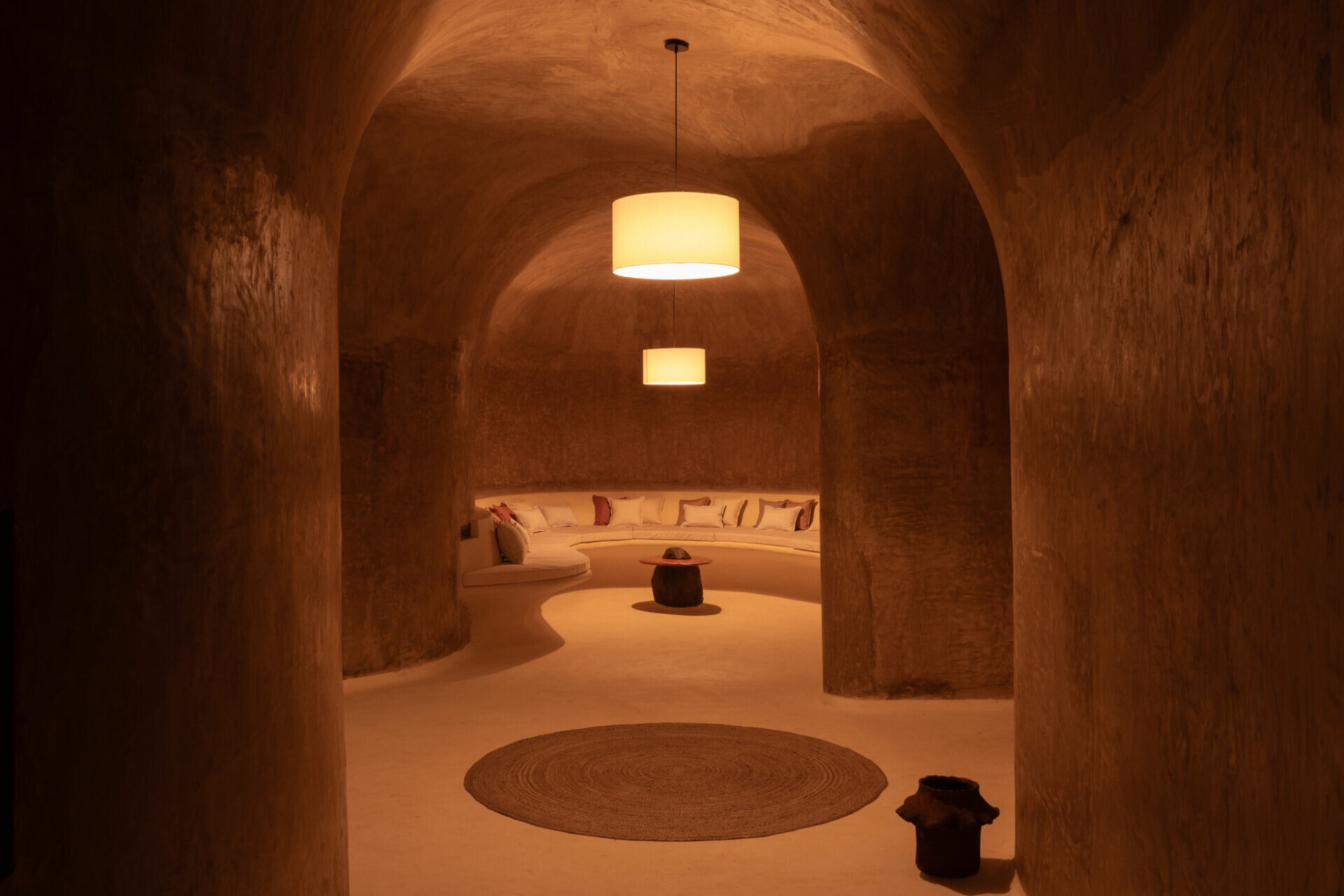
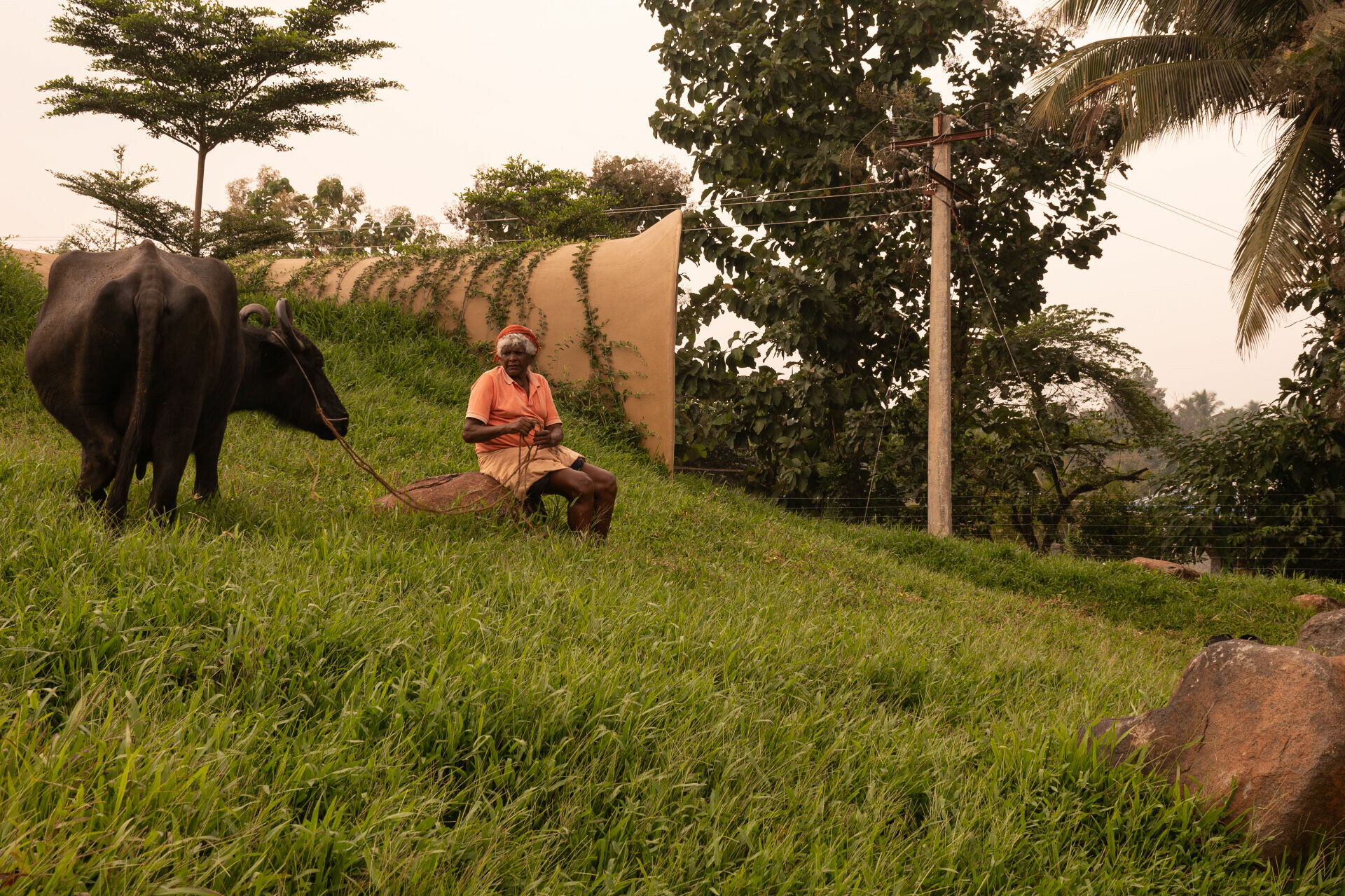
Beyond its self-sustaining structural design, the farmhouse harmonizes with the surrounding mountains through an earthy palette, further enhanced by a verdant green covering that envelops the exterior. The integration of lush landscaping not only strengthens the connection between the structure and its environment but also serves as a natural insulating layer, regulating indoor temperatures and improving comfort in the humid climate. When the lower-level windows are opened, they invite the cool forest breeze inside, while strategically protruding ventilation openings facilitate the escape of warm air, creating a chimney effect that maintains natural airflow throughout the space.
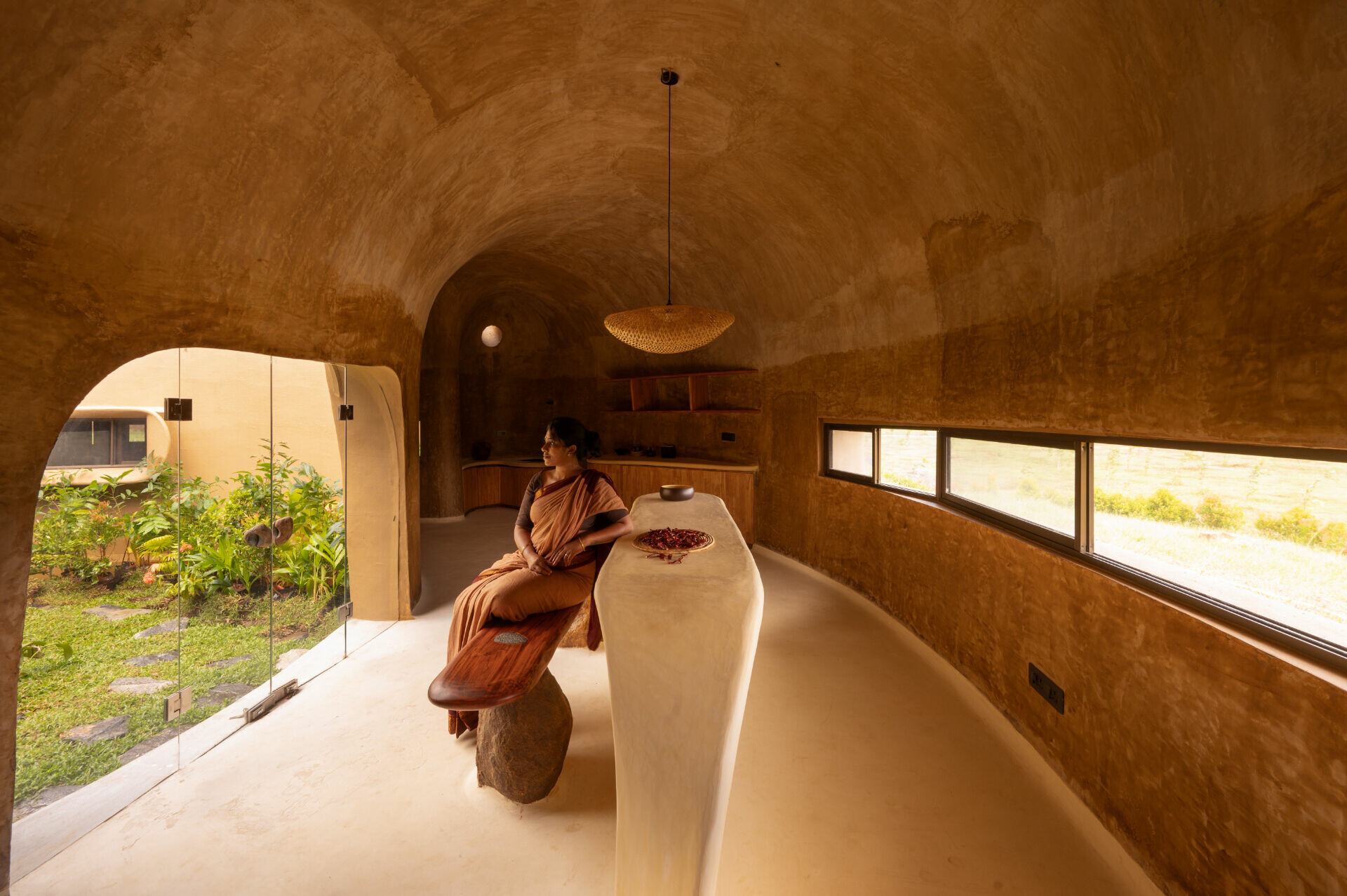
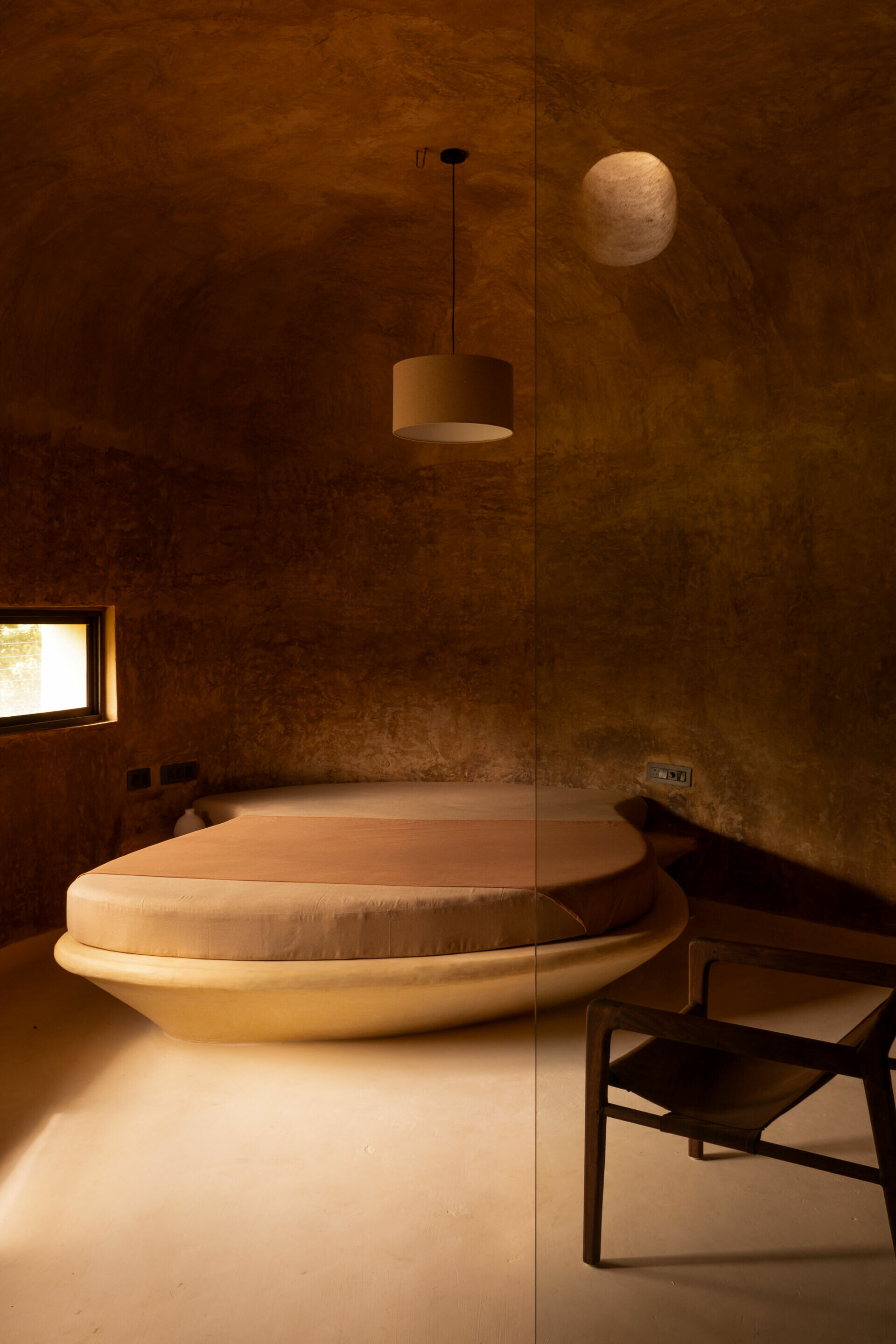
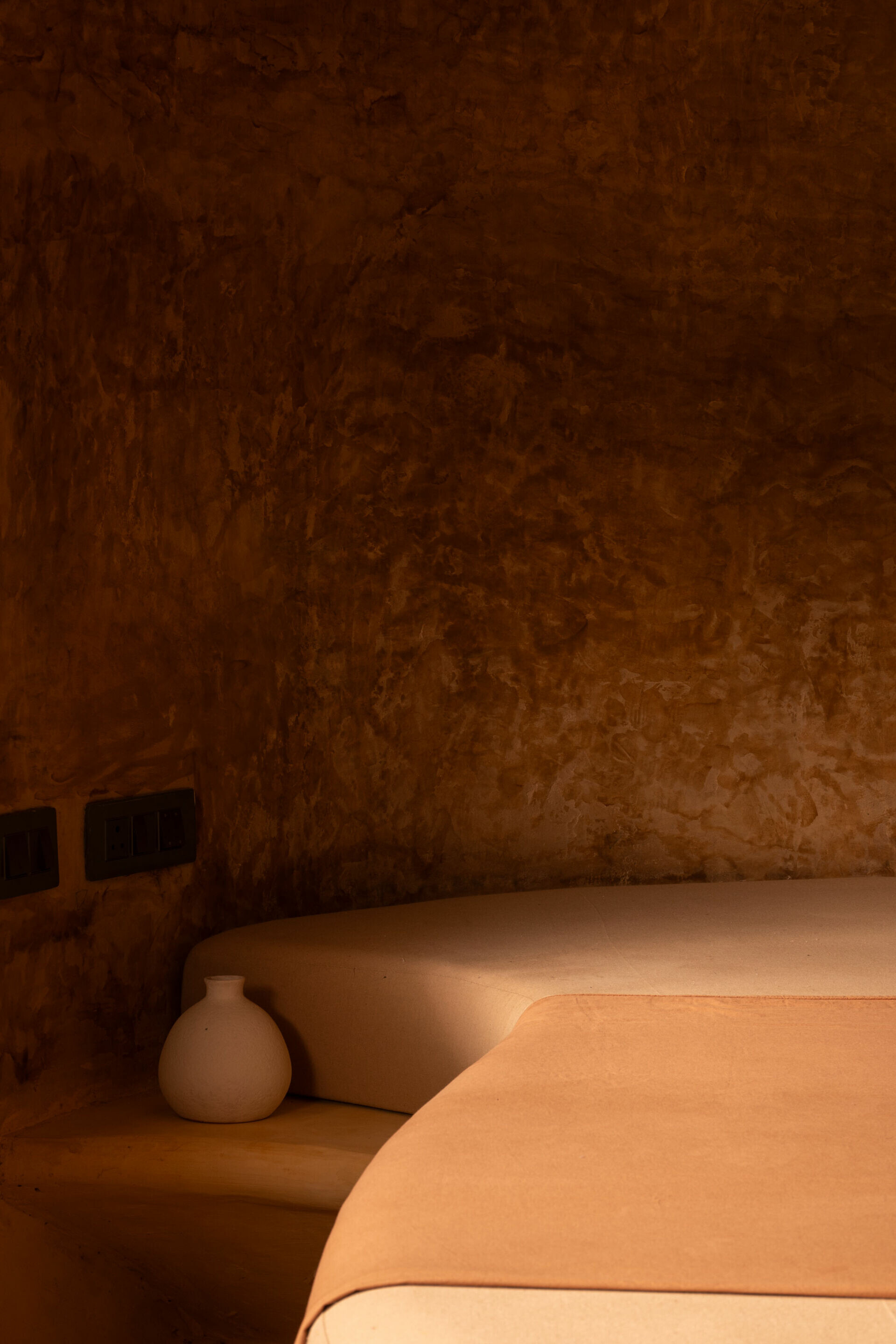
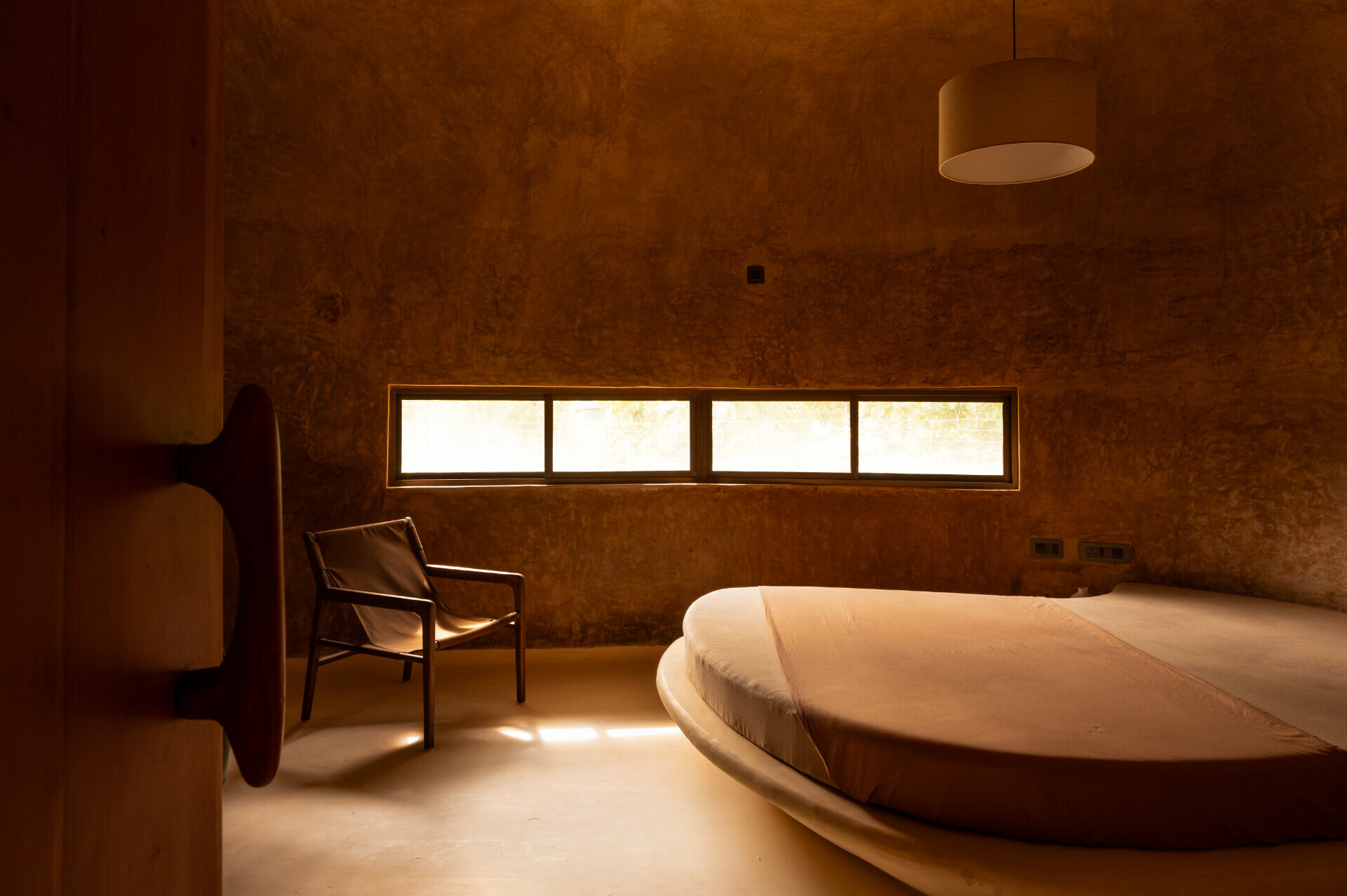
Every transition and aperture within this wilderness retreat has been meticulously designed to frame light and views with precision, enhancing the spatial experience through carefully orchestrated connections to the landscape. The interior furnishings, crafted from reclaimed wood and locally sourced stone, reflect a deep respect for nature. Every detail, from the material selection to the playful spatial transitions, serves to heighten awareness of the surrounding environment, subtly reinforcing the intrinsic bond between human habitation and the land.