WABISABI
  • Projects
    • Worldwide
    • Interiors
    • Features
  • Contemporary
    • Exhibitions
  • Record
  • Lifestyle
  • City Explore
  • News
  • Issue
  • Account
  • Search
  • Language
Mobile nav


Kirchberg Tower of Birds and Water


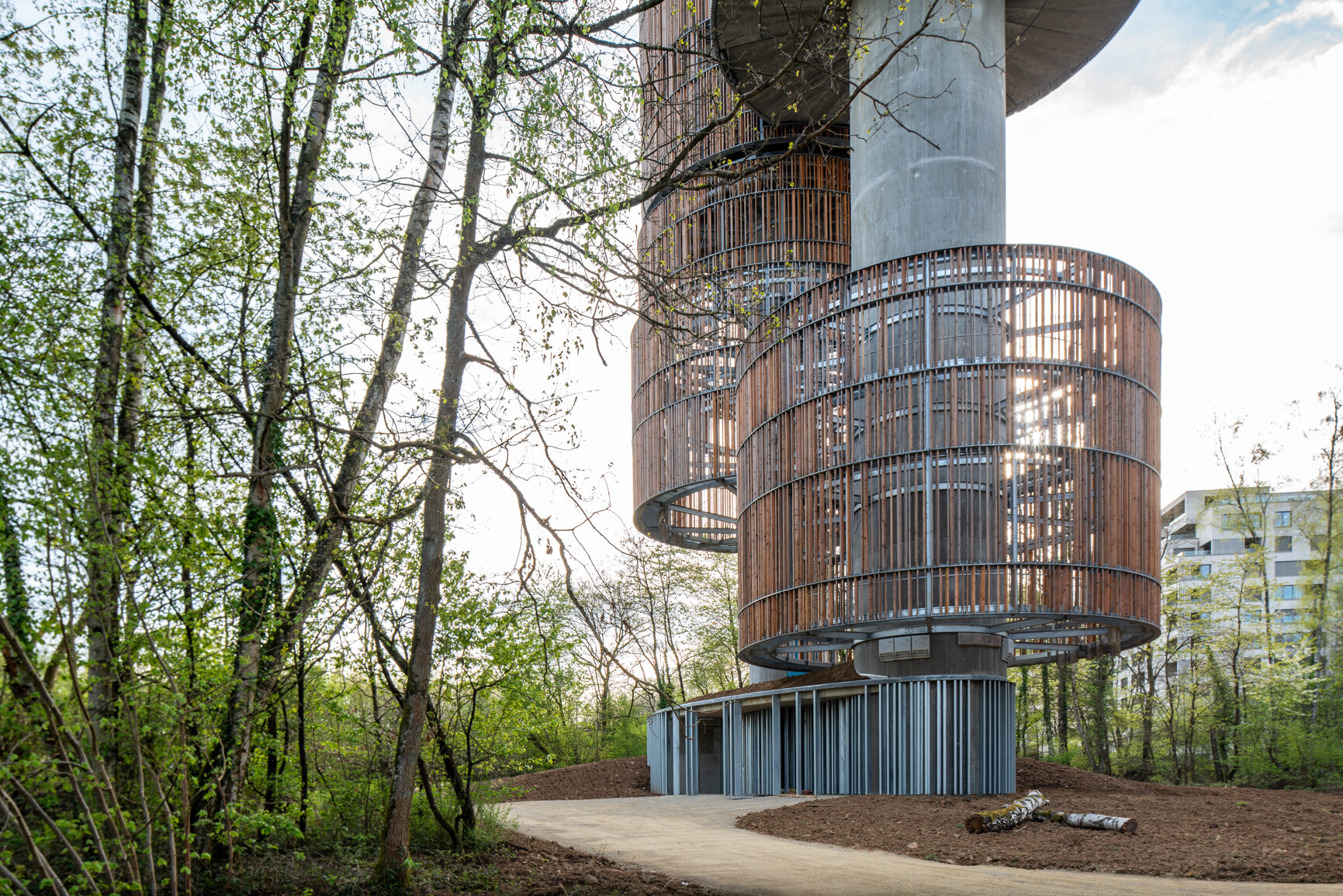
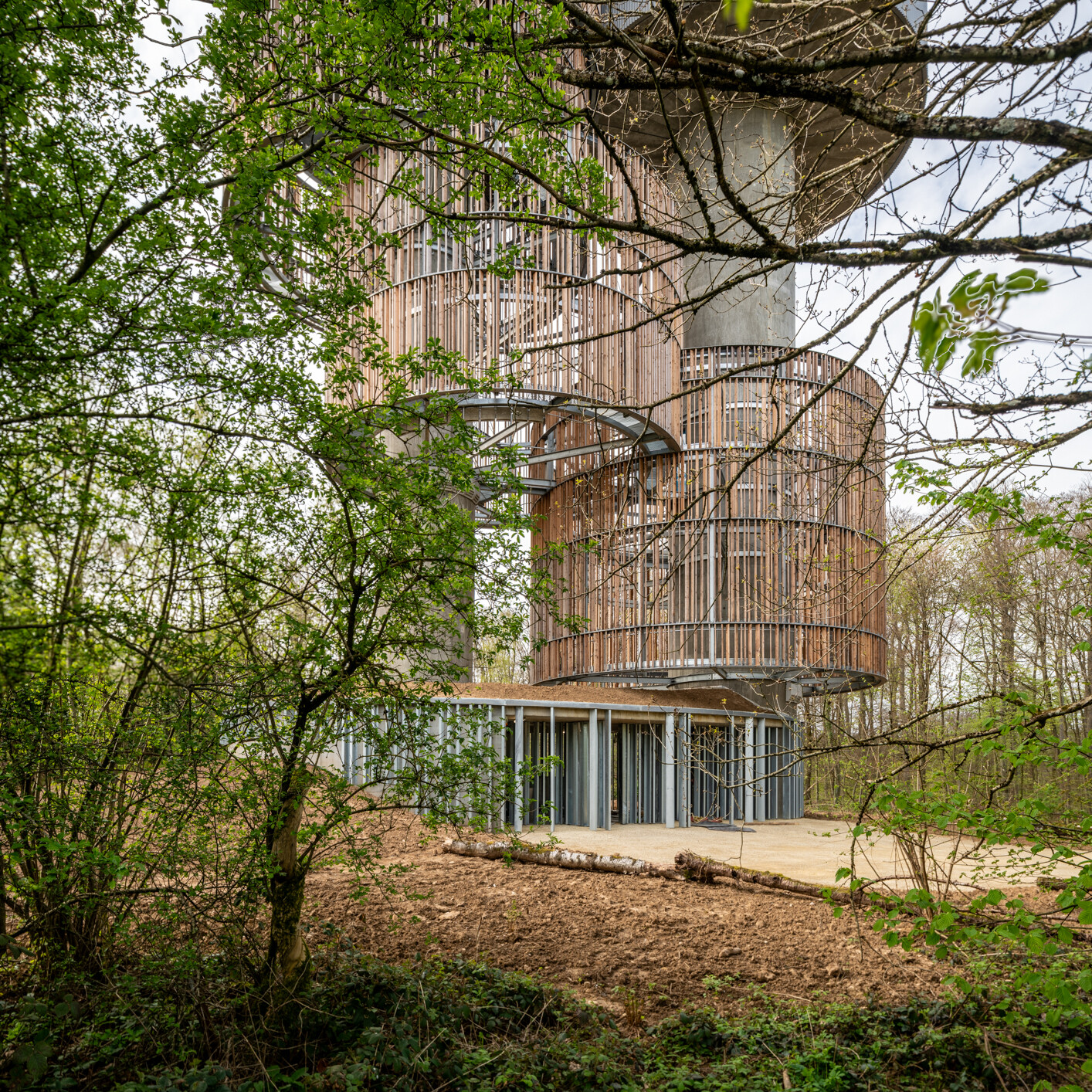
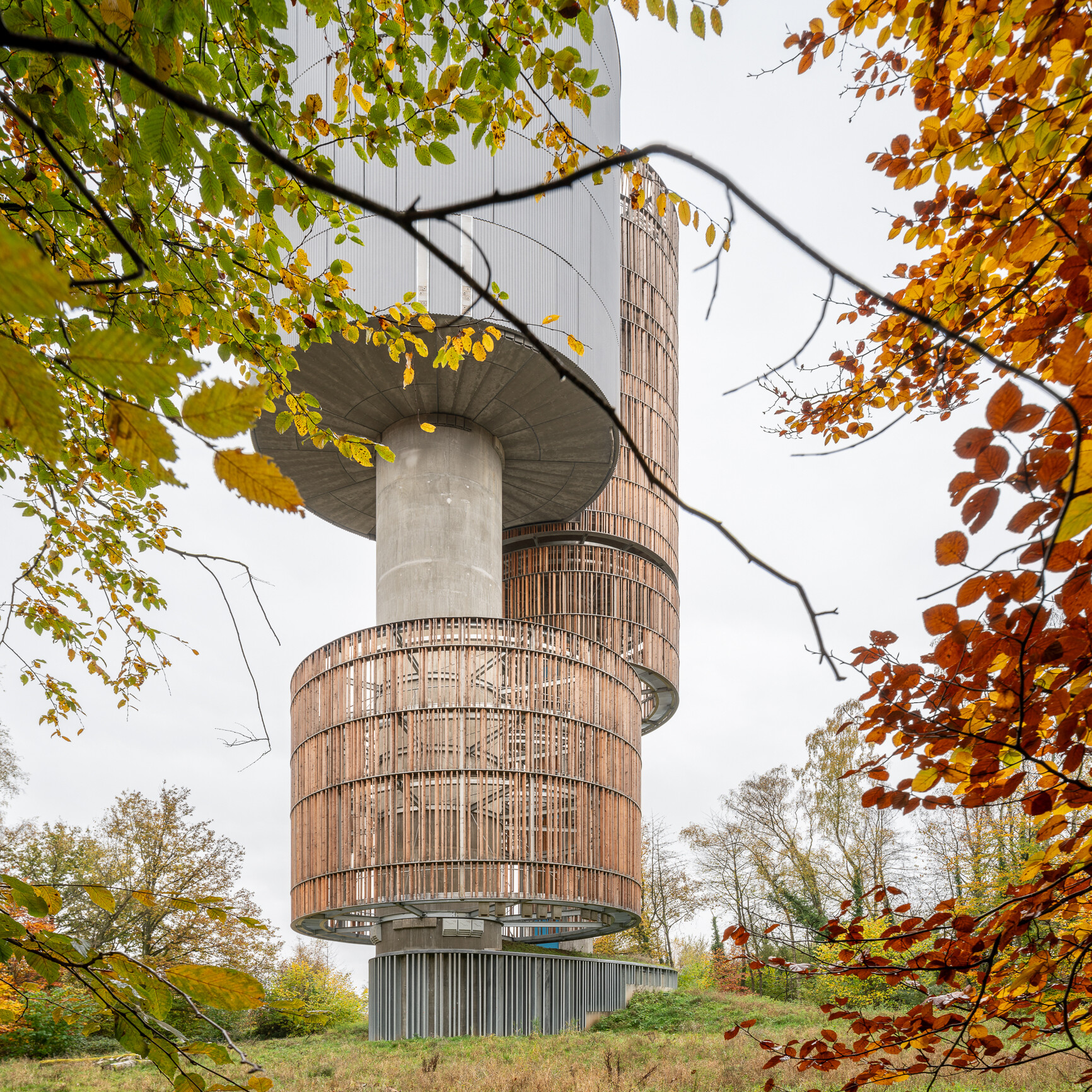
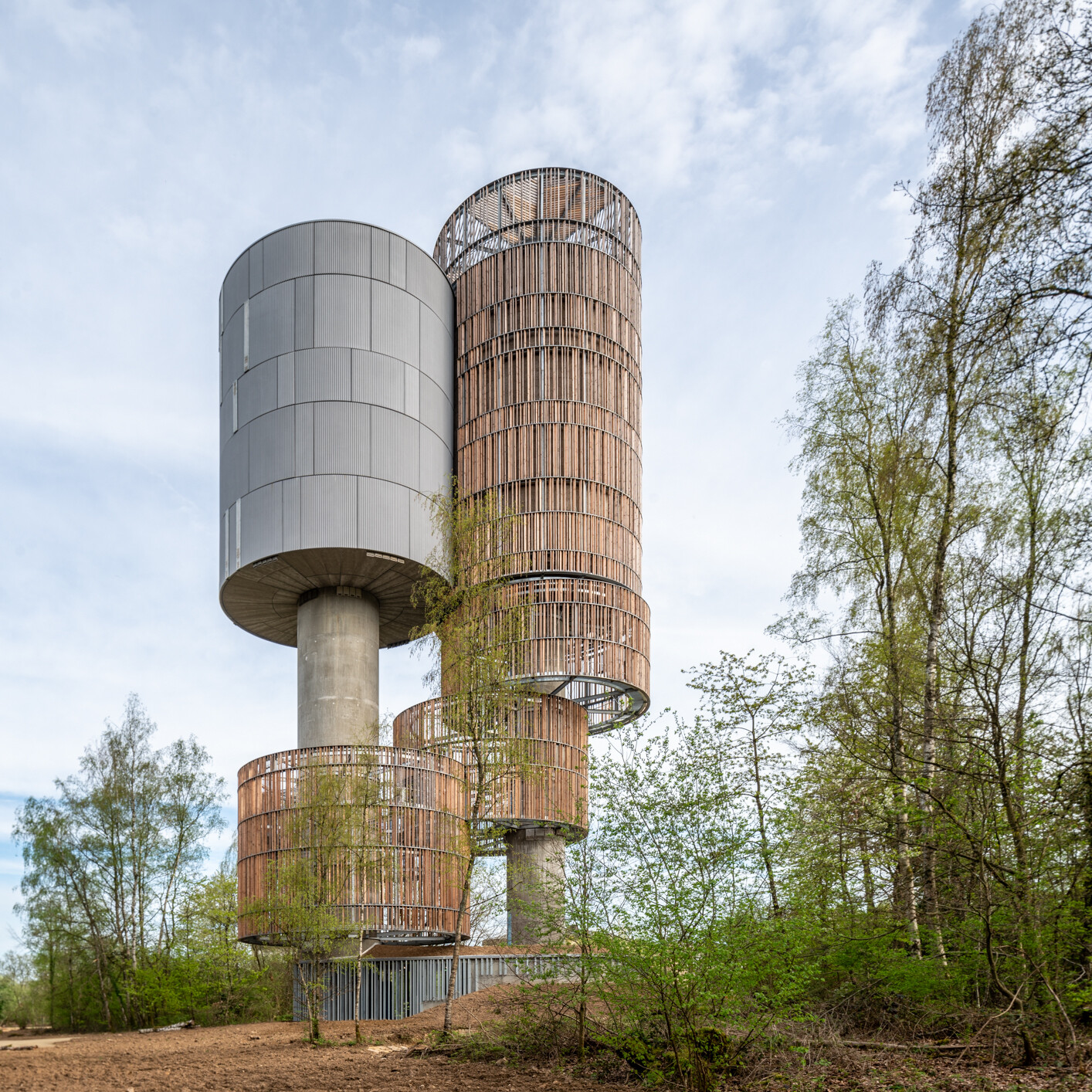
No matter how advanced technology becomes, the bond between humans and nature remains inseparable. Across this vast terrain, buildings of concrete and latticed structures—dense or sparse—have, often invisibly, established formidable physical barriers. These walls and frames separate people from their environment and from the many species with which they coexist. At the same time, they compel architects to reflect on new modes of building, striving to mitigate environmental impact and give something back to nature. In an era when architectural design seeks to reconcile aesthetic expression with ecological sustainability, Spanish studio Temperaturas Extremas has undertaken this challenge in Luxembourg City’s northeastern Kirchberg Plateau Natura 2000 protected forest. Here, the practice has embedded a 50-meter-tall drinking water tower with a total capacity of 1,000 cubic meters into the woodland landscape. Rising with an organic presence, the tower stands like a great tree, offering refuge for nesting birds and seasonal species while extending its role far beyond water supply to coexist in harmony with the ecosystem.


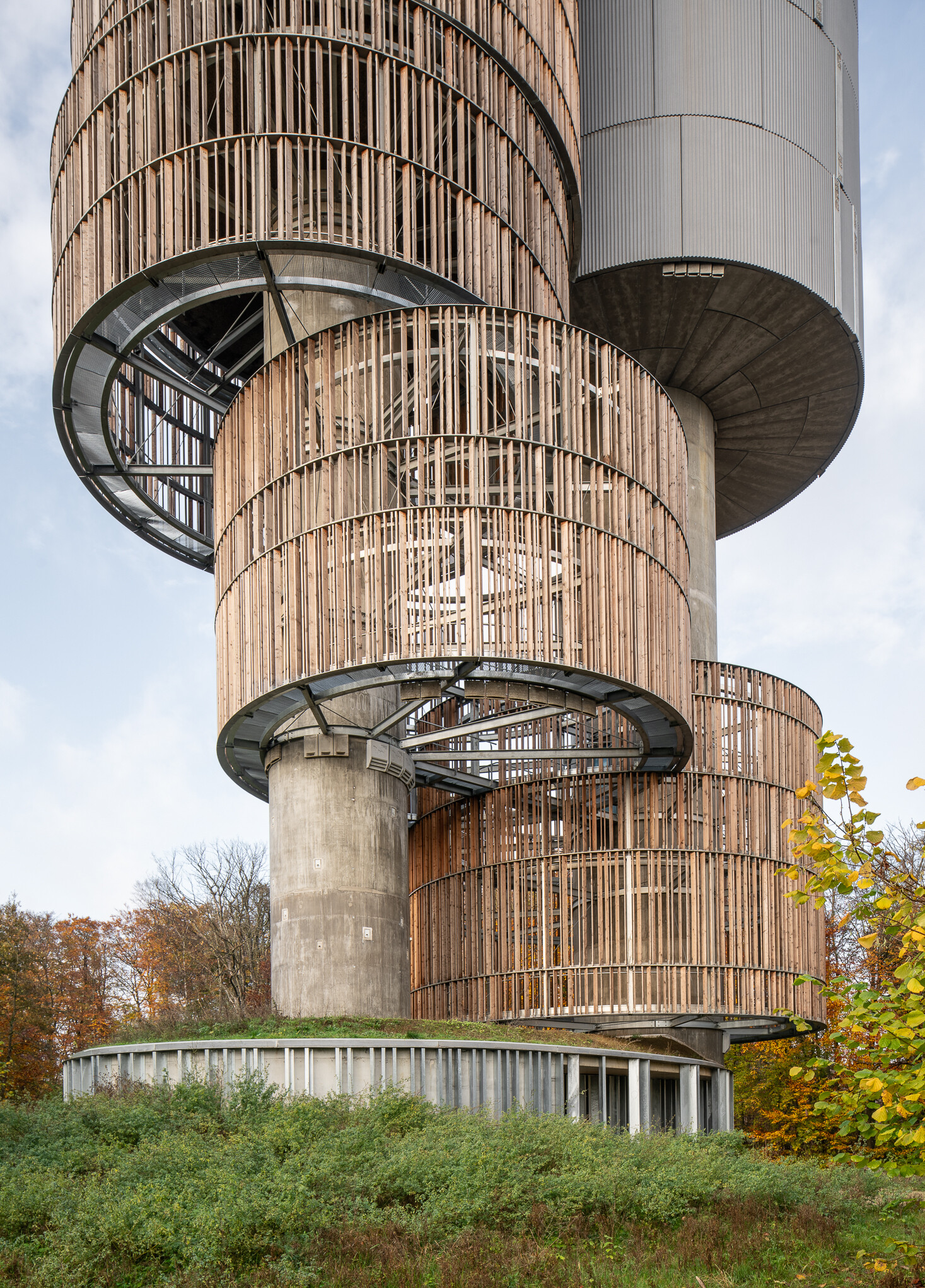
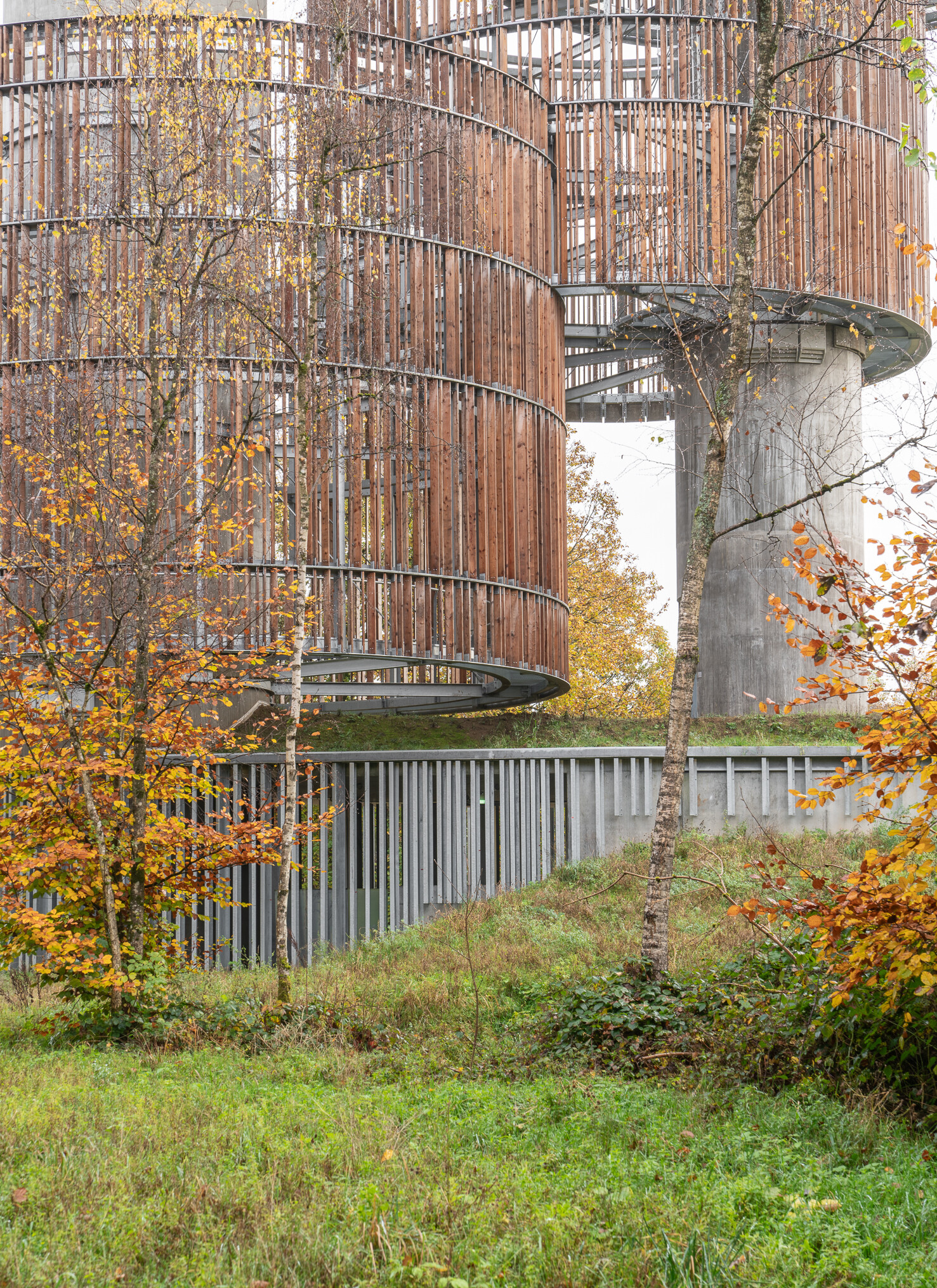
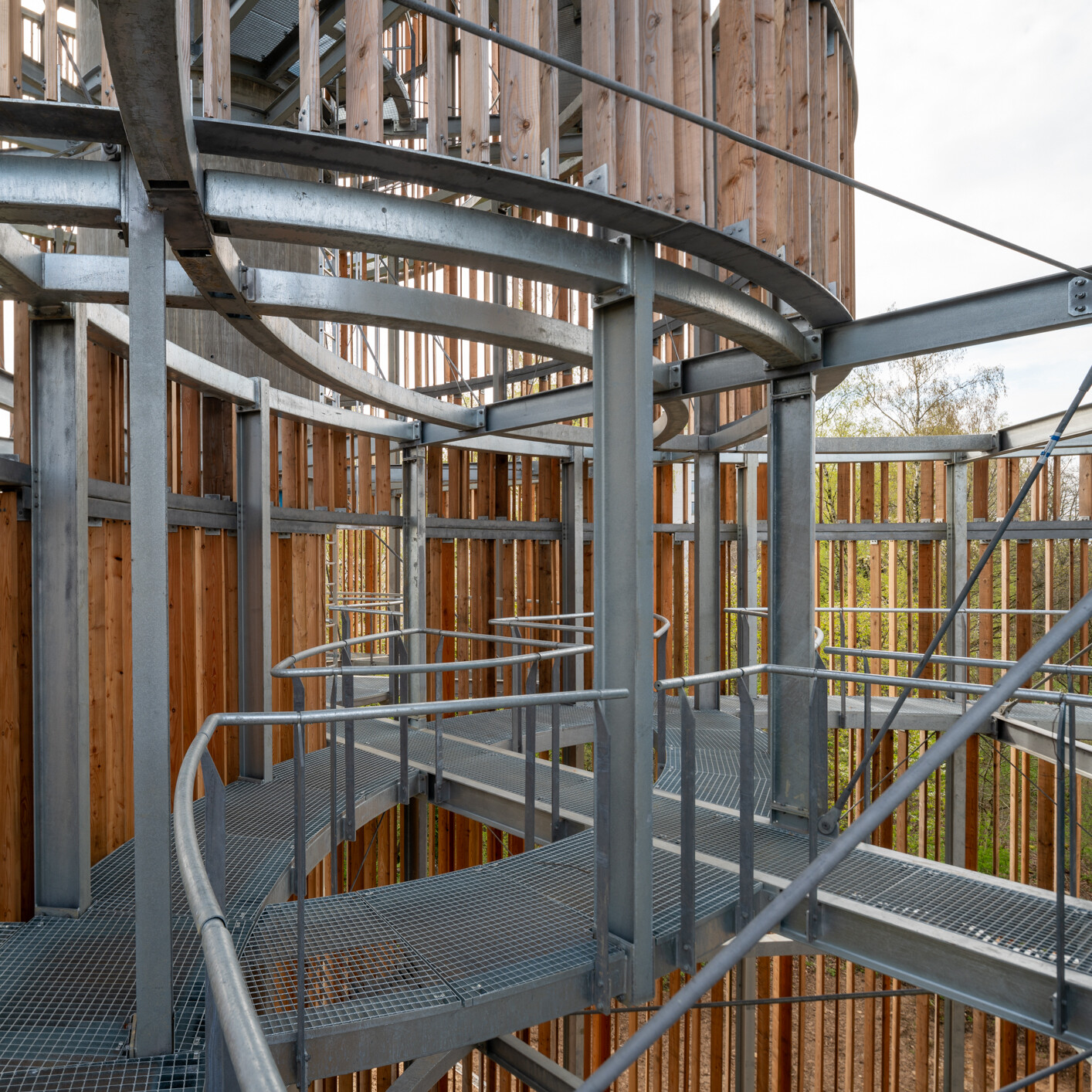
For decades, architecture has often overlooked the safety of birds and the loss of their habitats. Yet, what if buildings could be reconceived as mediators, reconnecting people with surrounding ecologies? Acknowledging the critical importance of biodiversity, Temperaturas Extremas sought to soften the ecological impact of reinforced concrete by dividing the tower into two elevated cylindrical tanks. Each was given distinct surface treatments, material layers, and nesting provisions tailored to different species and functional needs. In close collaboration with naturalists and ornithologists, the team clad the first tank with a rough prefabricated concrete skin, embedding swallow nests at carefully studied heights and orientations, and incorporating a dedicated nesting site for peregrine falcons at 50 meters above ground. The second tank was insulated with cork and then enveloped in untreated larch slats, forming a permeable outer layer that encourages roosting bats and seasonal birds.


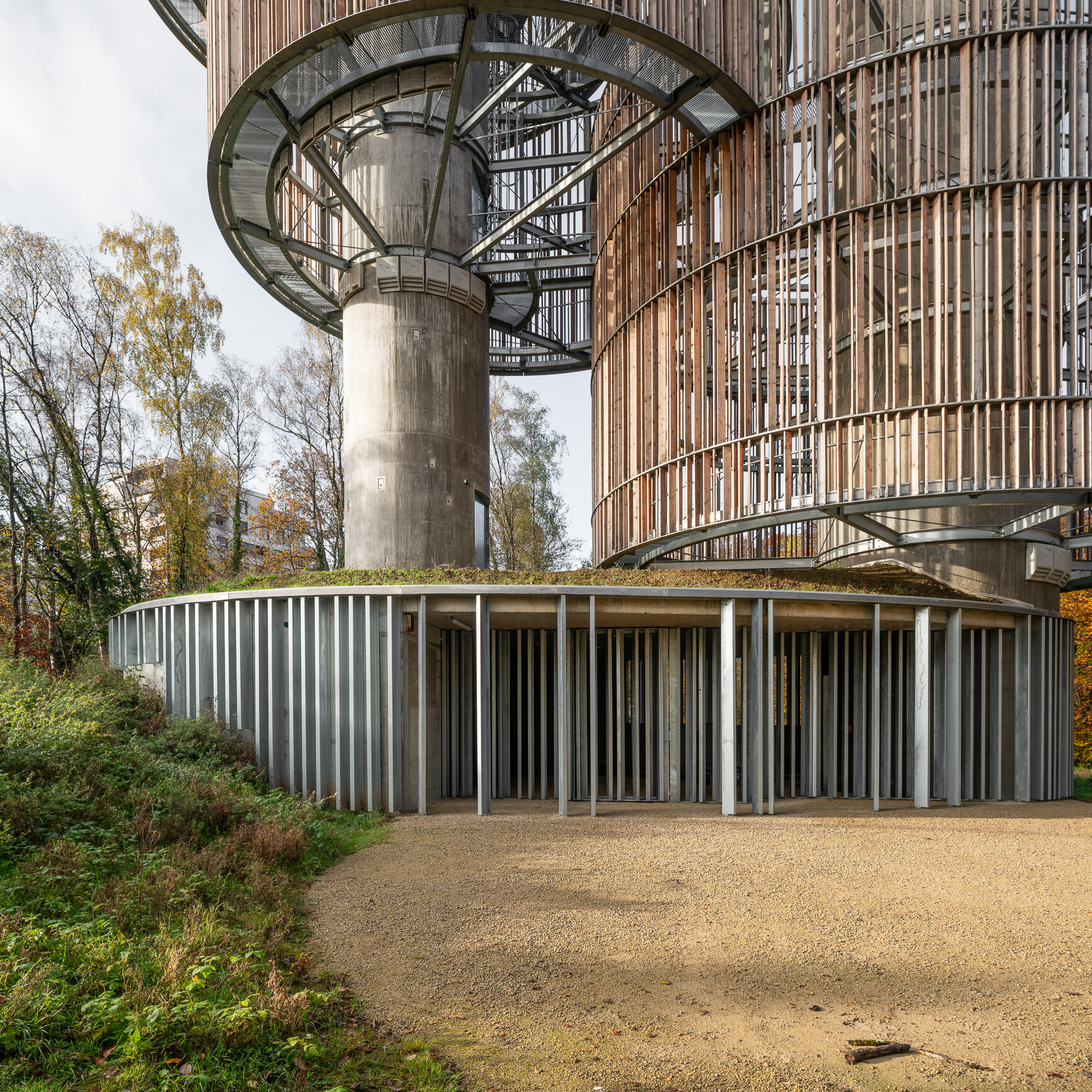
Like a tree that draws strength from its roots, the tower is anchored in the forest floor. Its base is paved in rammed earth, resonating with the surrounding soil, while a permeable metal screen of vertical bars wraps the ground level, deterring human intrusion yet allowing light, air, and moisture to circulate so the structure can “breathe” with the forest. Above, a vegetated roof extends the canopy of the woodland across the tower. This water tower not only safeguards future habitats for birds and mammals through its materials and structure but also integrates a rainwater harvesting system, reinforcing ecological cycles. It stands as a built gesture of reciprocity: architecture reconnected with the natural world, at once infrastructure and sanctuary.
Design Studio | Temperaturas Extremas SLP
 
Photography | Miguel Fernández-Galiano
Office P&L
Prev

Office P&L

Neverland Ranch
Next

Neverland Ranch

  • About
  • Privacy policy
  • Track Order
  • Customer
  • Contact
  • Join us
FACEBOOK
instagram
Language

Copyright © WABISABI ISSUE. 侘寂傳媒有限公司 統一編號:90451315

  • Projects
    • Worldwide
    • Interiors
    • Features
  • Contemporary
    • Exhibitions
  • Record
  • Lifestyle
  • City Explore
  • News
  • Issue
  • About
  • Privacy policy
  • Track Order
  • Customer
  • Contact
  • Join us
Language