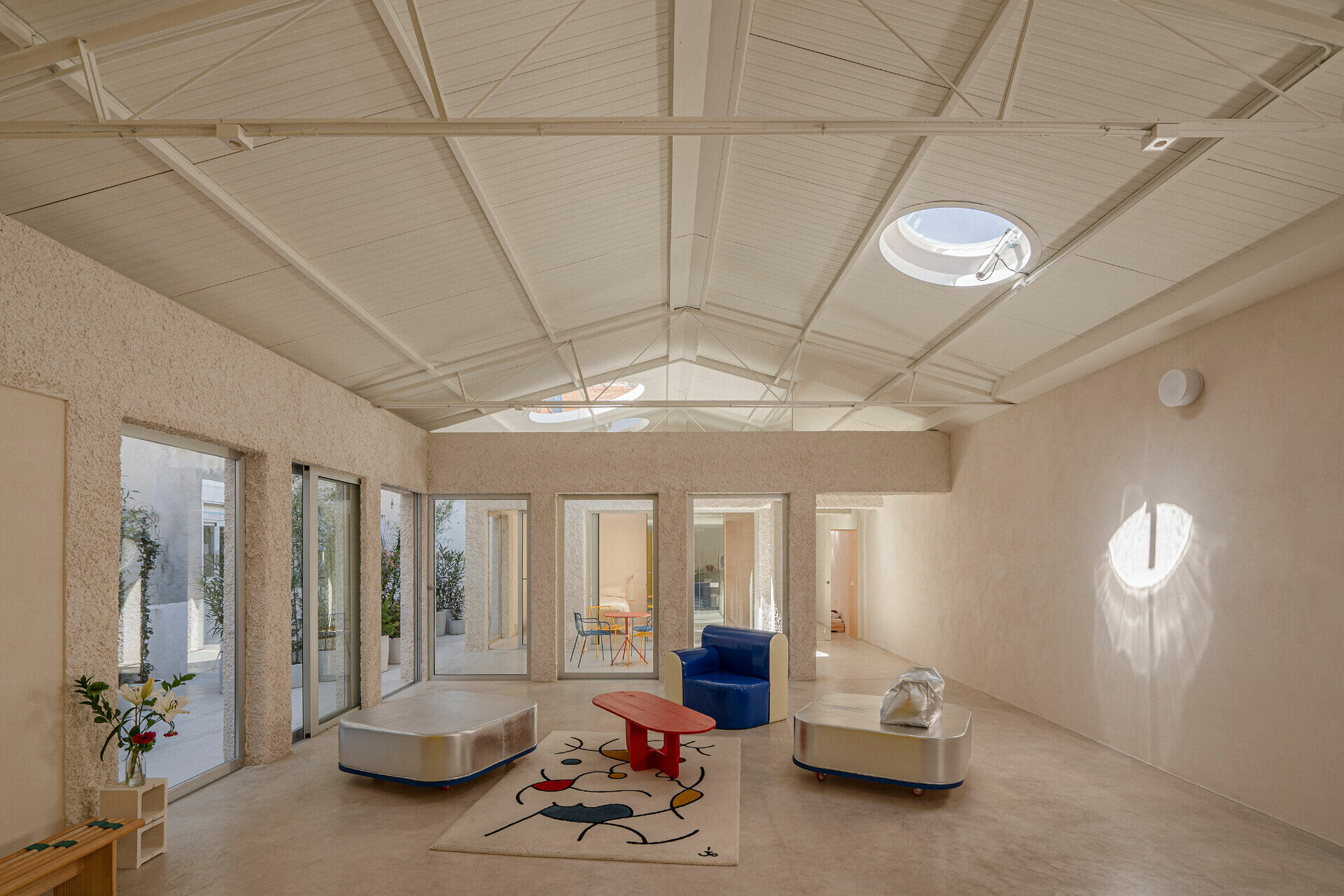
PATIO
As cities transform, many traditional industrial spaces are gradually absorbed or erased from the urban fabric. Beyond demolition and redevelopment, what other forms of renewal might these structures embody? Faced with escalating land values and layers of regulatory constraint, preservation—rather than replacement—can offer balance: by removing rigid preconceptions, these spaces may once again accommodate flexible, adaptive modes of use.
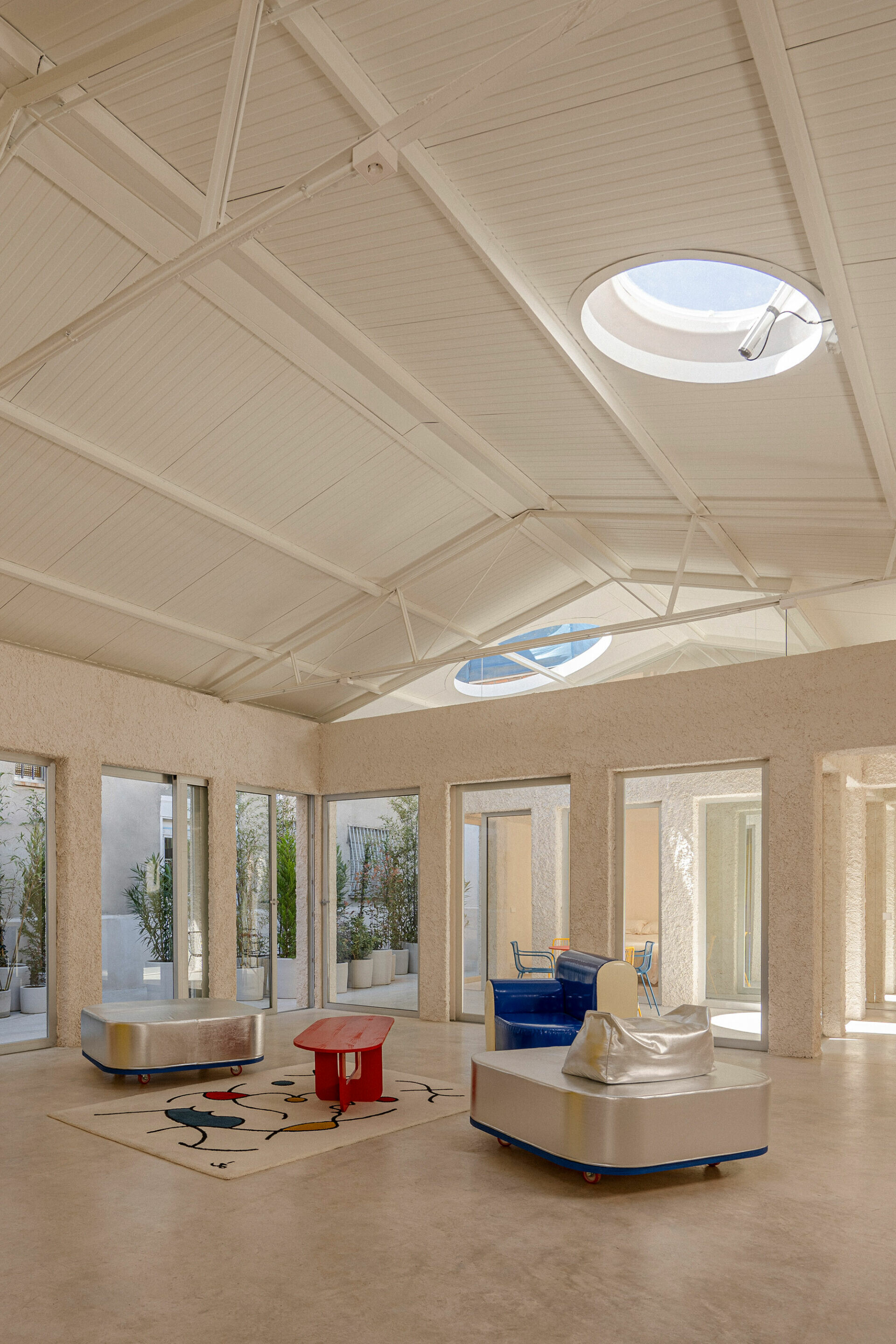
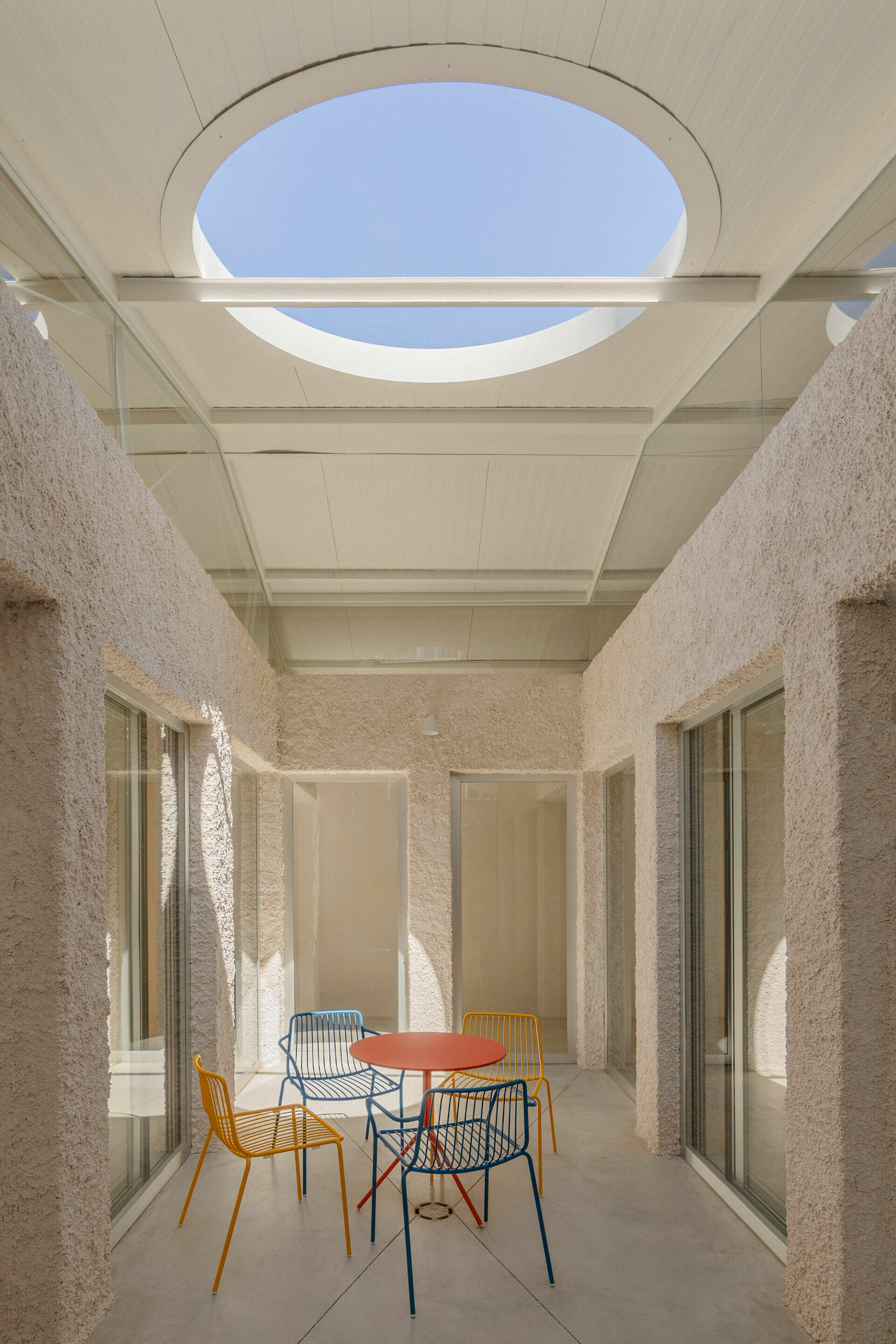
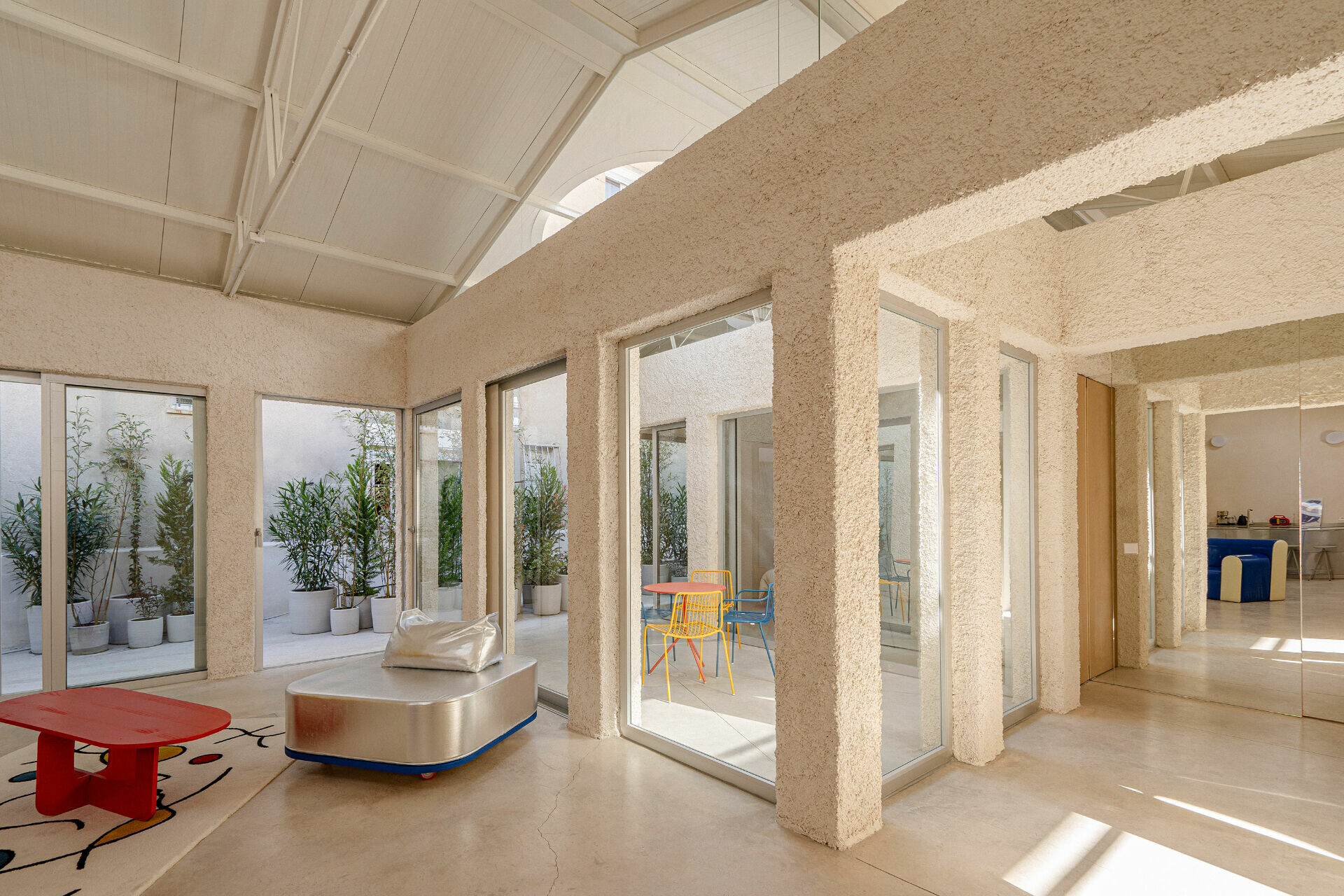
Set within Madrid’s urban grain, PATIO is part of the Elements for Industrial Recovery series—a framework dedicated to reactivating the city’s industrial heritage. Designed by BURR in collaboration with Guillermo Trapiello, the project transforms an abandoned warehouse into a creative environment that examines how industrial architecture might sustain its life in the contemporary city. The conversion of CNM, the specific site of intervention, becomes a micro-scale manifestation of this broader urban strategy.
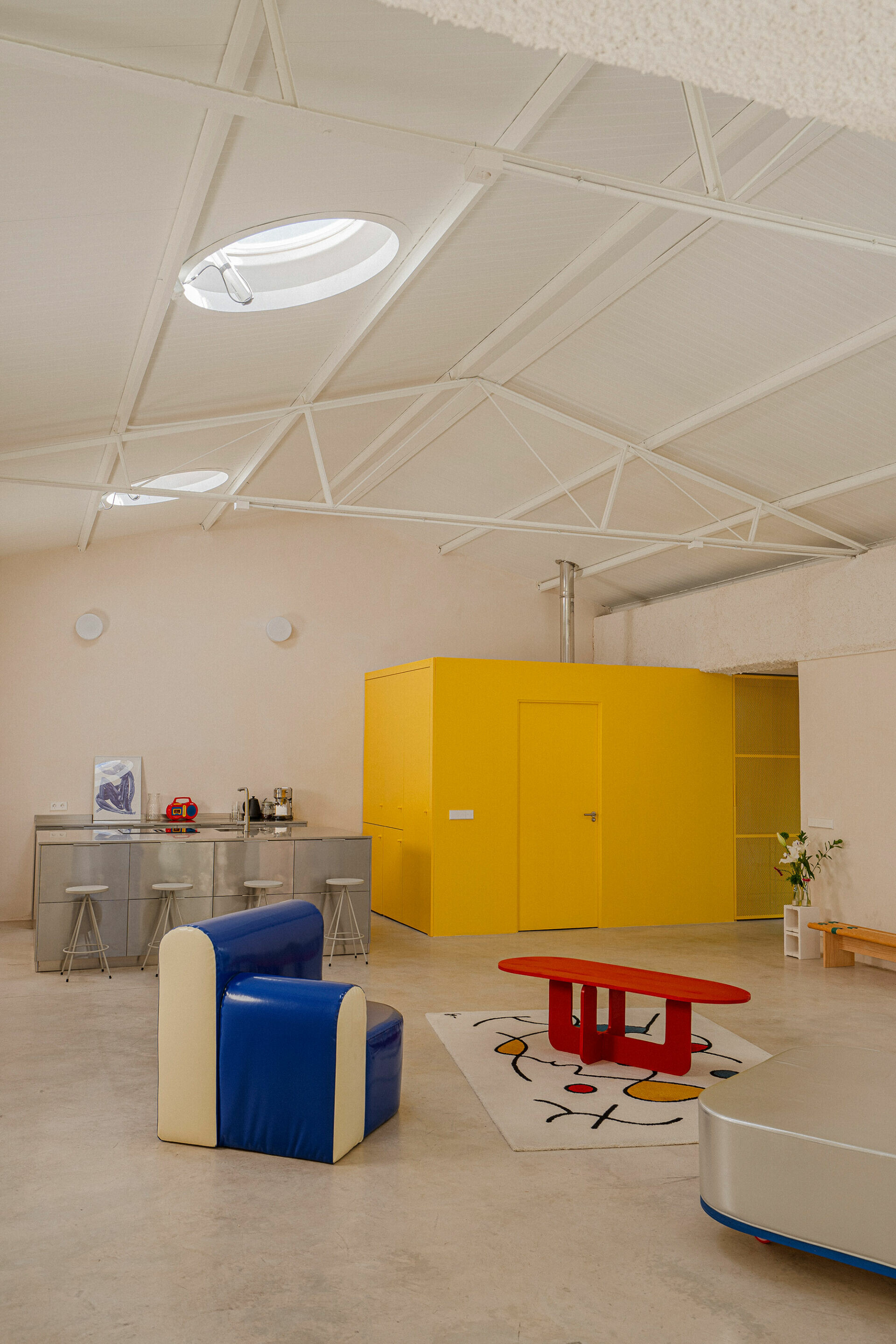
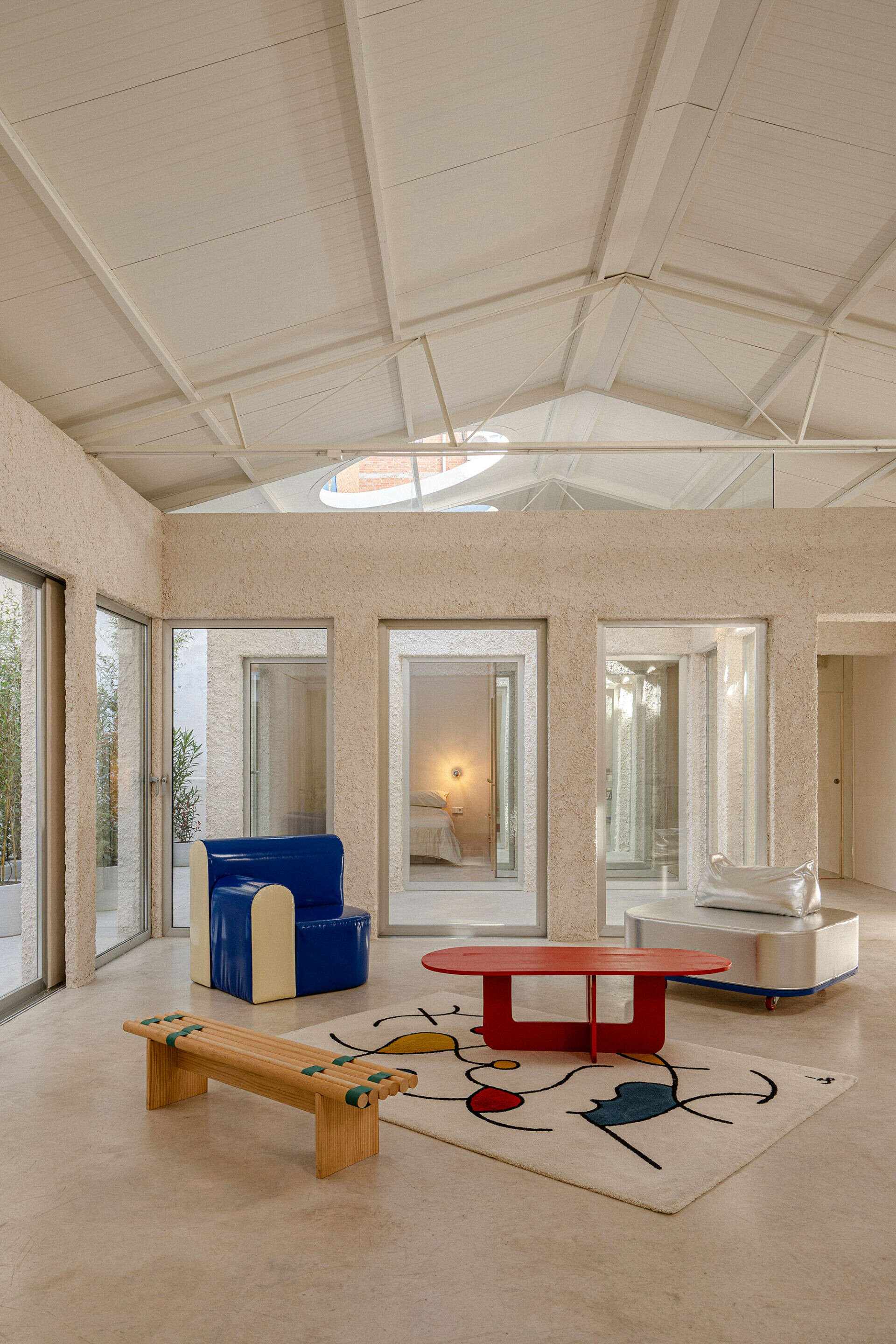
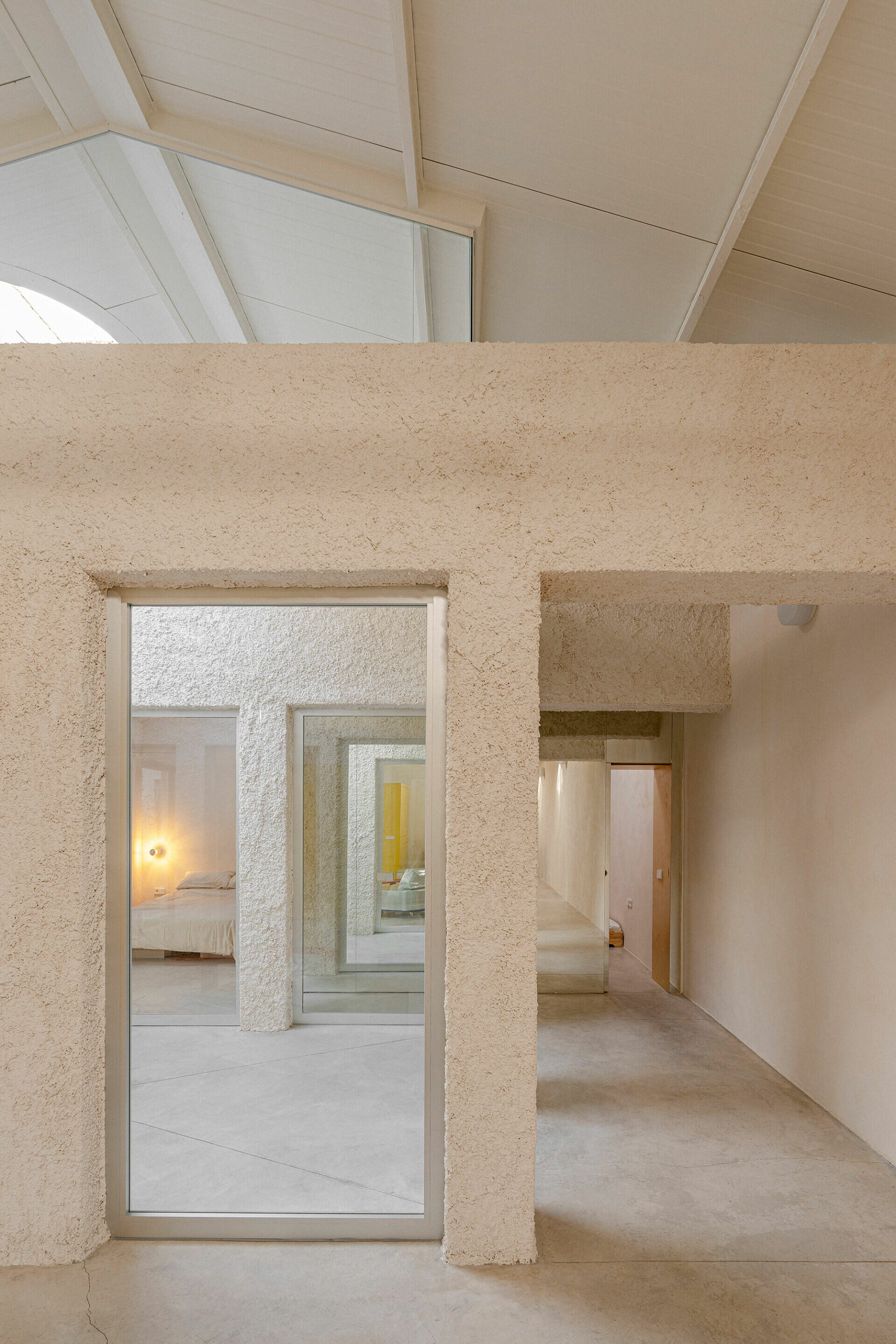
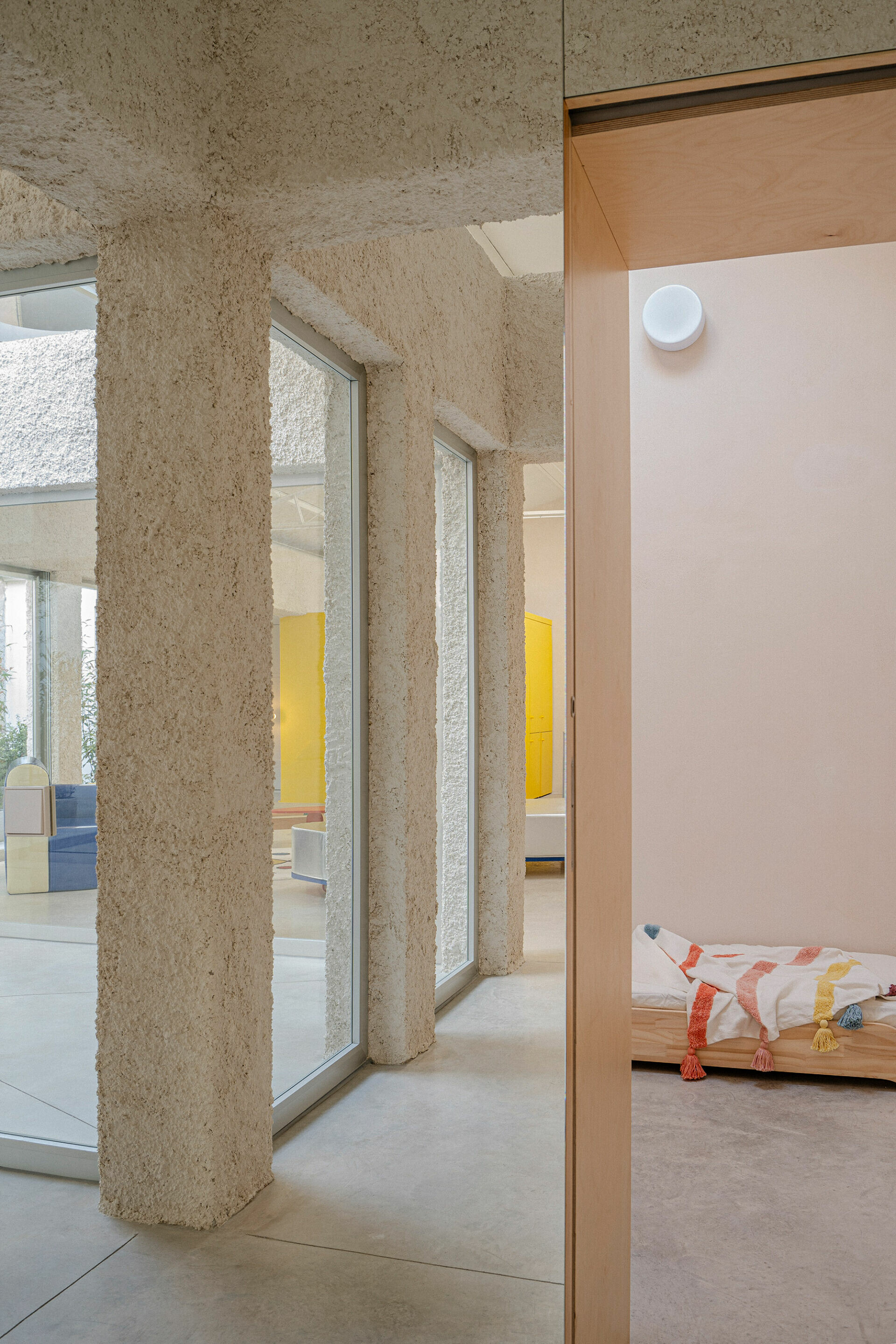
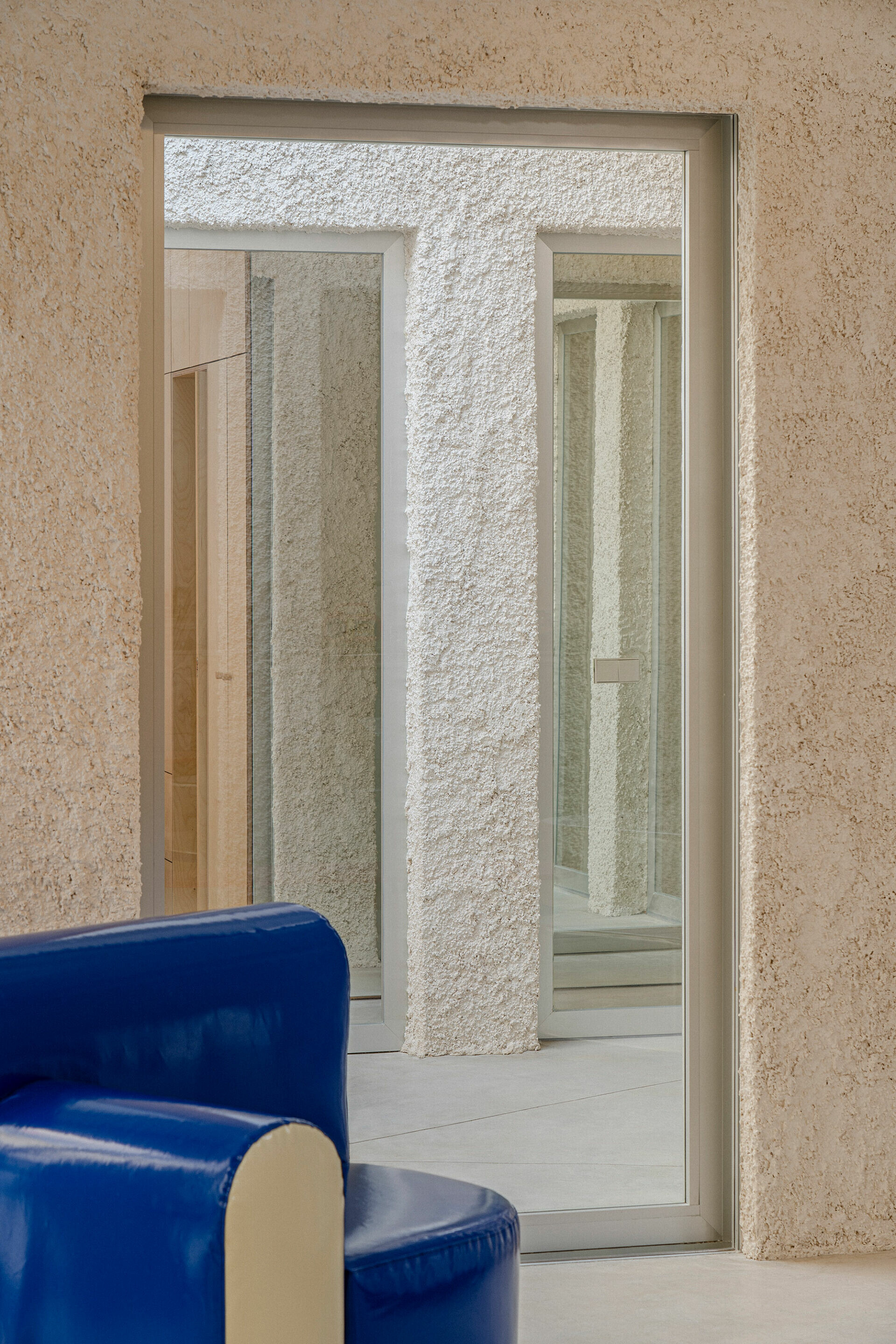
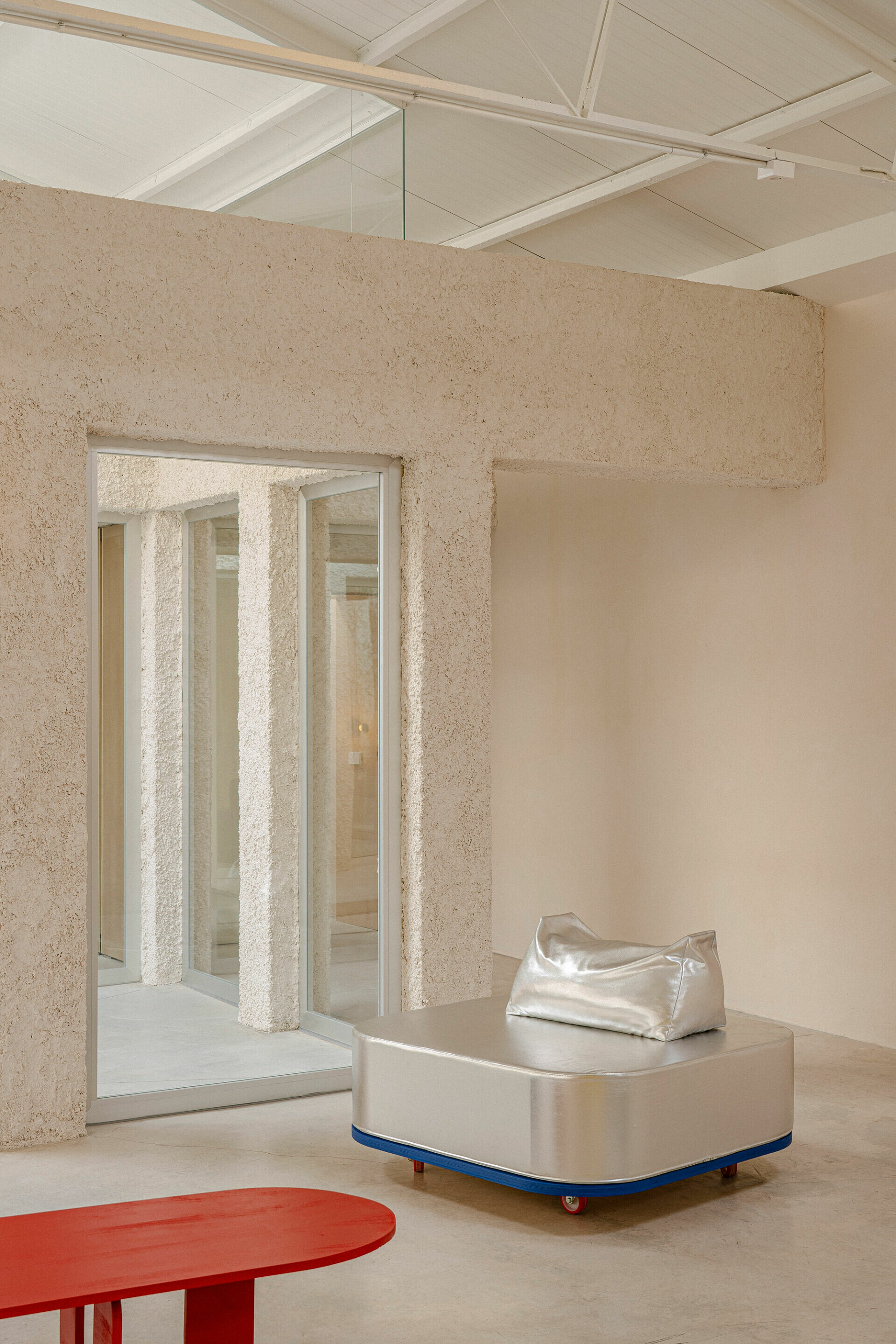
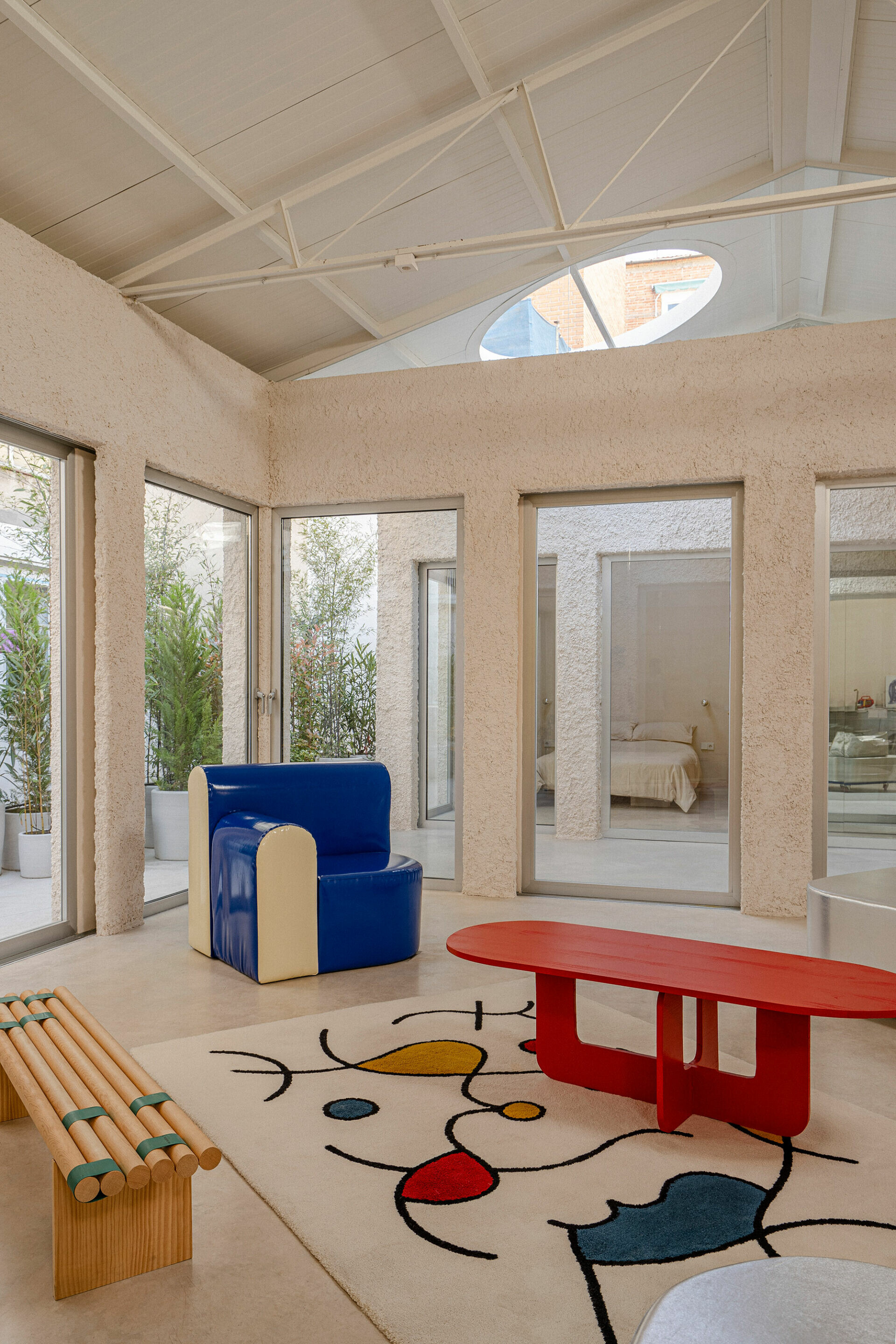
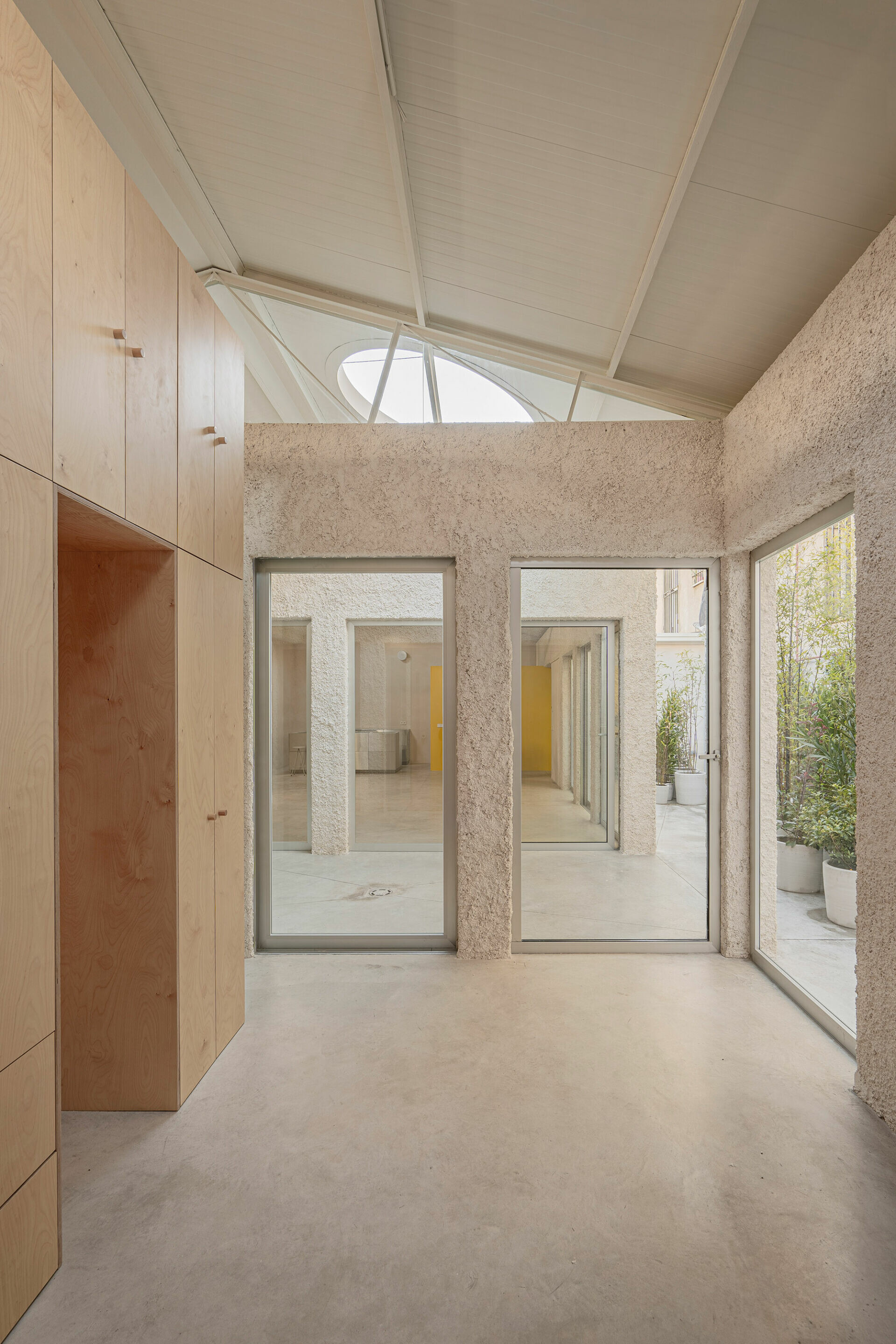
Originally a workshop embedded within a residential block, the building was defined by its large continuous pitched roof and nearly opaque masonry sidewalls. The design preserves the roof in its entirety, introducing selective roof openings to draw natural light into the interior. Along the perimeter, the solid walls are carved into a rhythmic colonnade finished in textured plaster. Each opening integrates fixed glazing with overlapping sliding glass doors, producing a layered threshold where light and reflection interact. As daylight moves across these transparent surfaces, the distinction between inside and outside gradually dissolves, turning the once-closed shell into a fluid creative platform.
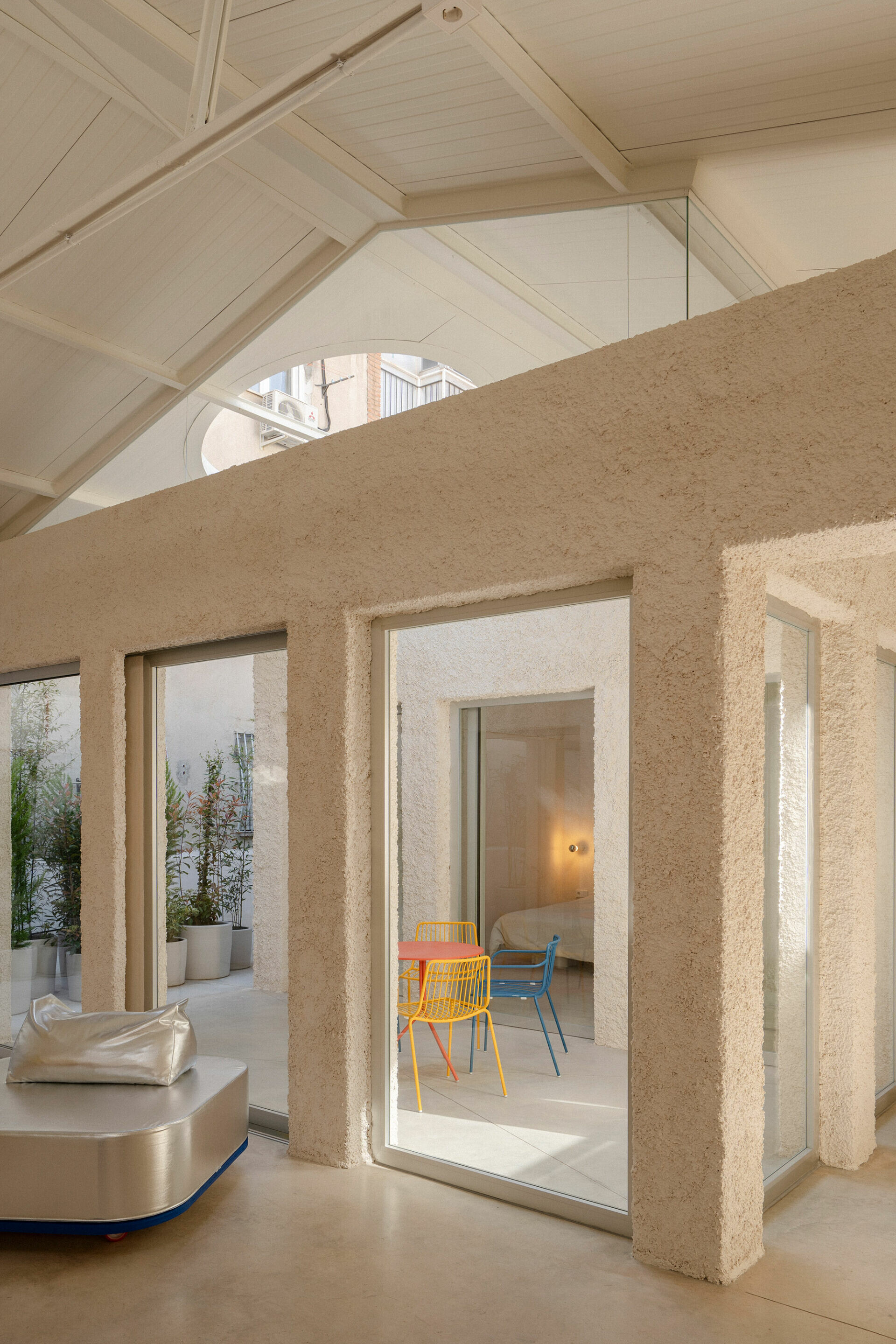
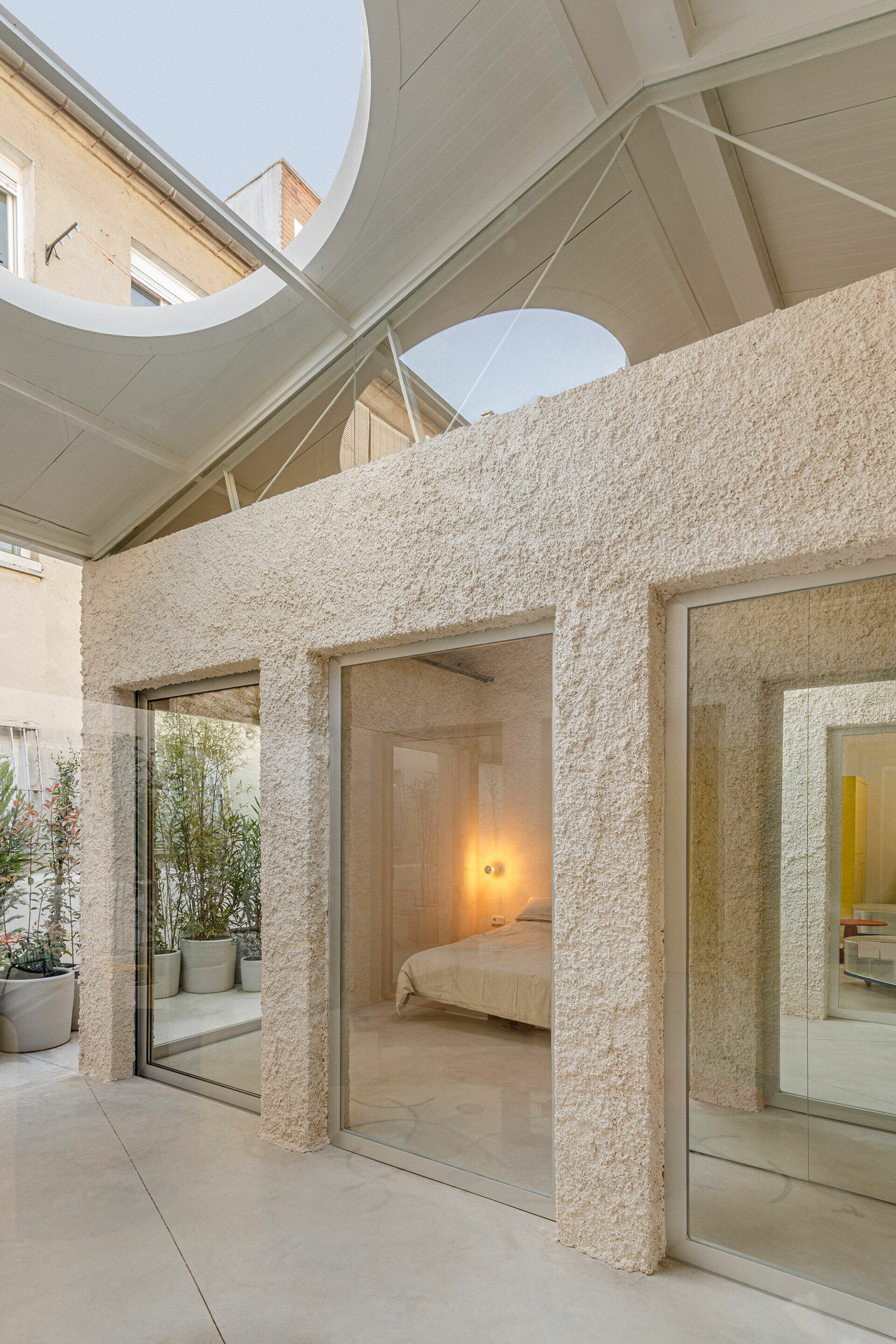
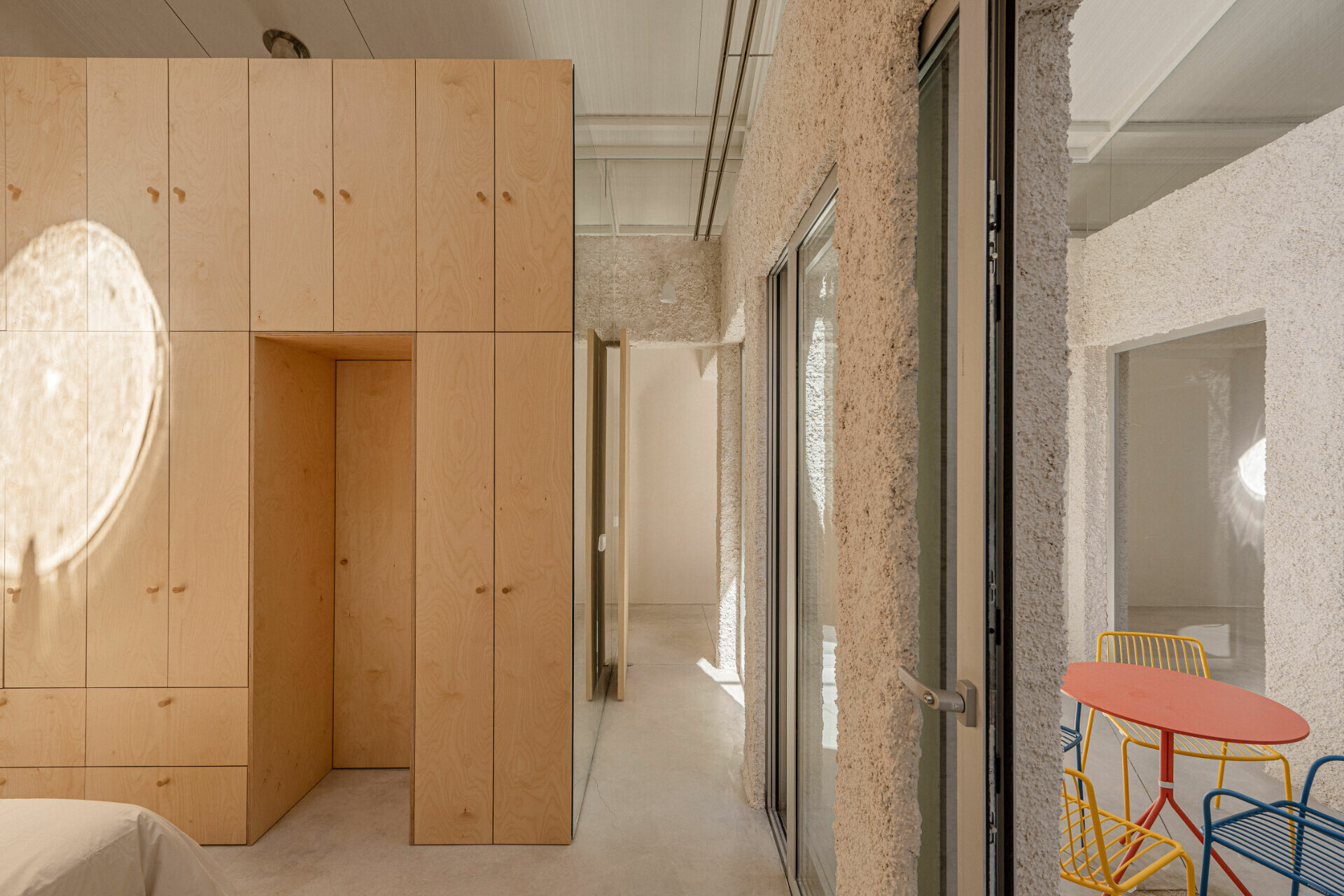
Circulation is choreographed through two contrasting volumes that anchor the spatial sequence. At the entrance, a bright-yellow box encloses restrooms, storage, and mechanical systems. Light flows freely through successive openings, guiding movement toward the far end. There, a timber structure introduces warmth and tactile contrast. This dialogue between the rough industrial envelope and the crafted wooden volume balances solidity with softness, linking material weight to human scale.
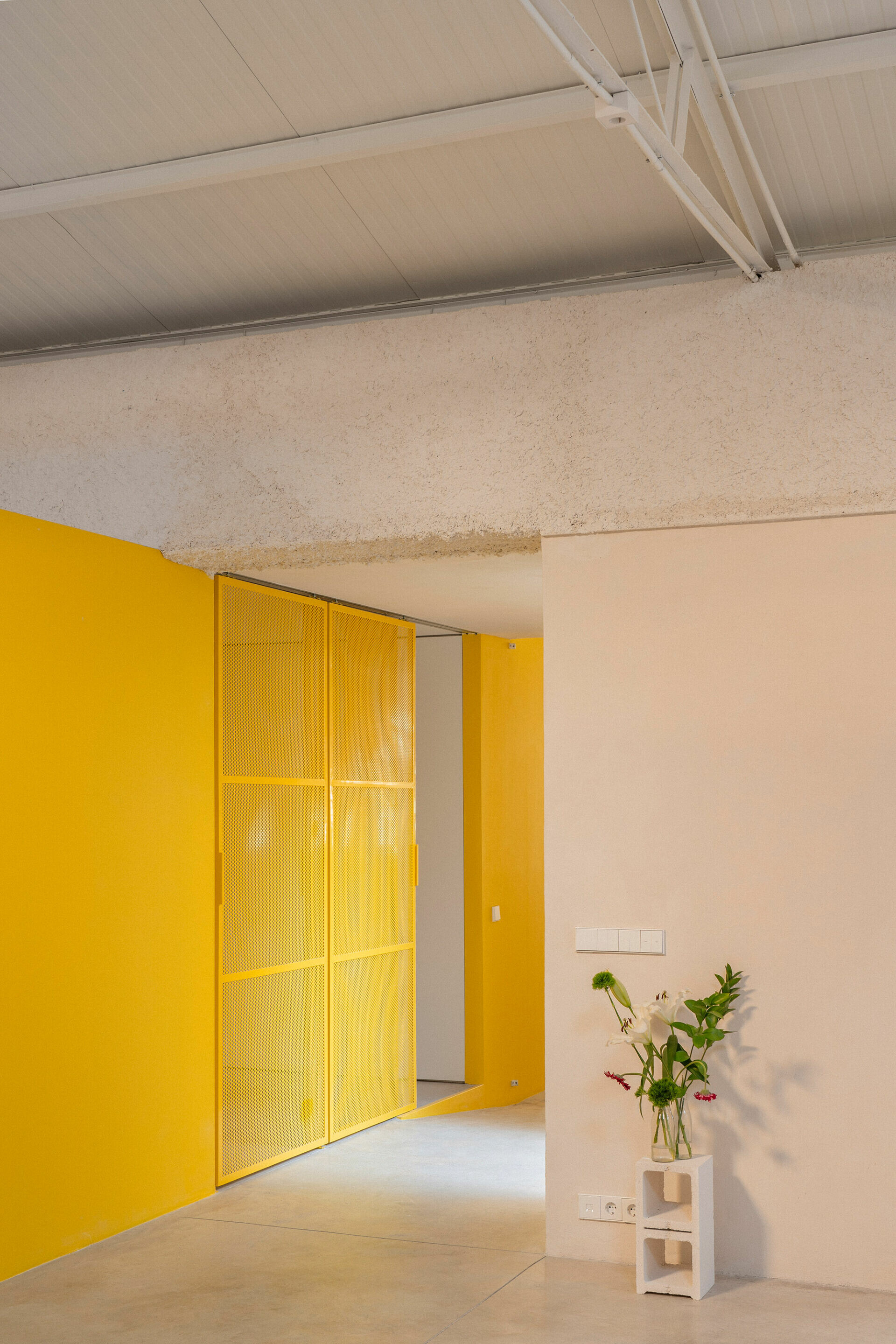
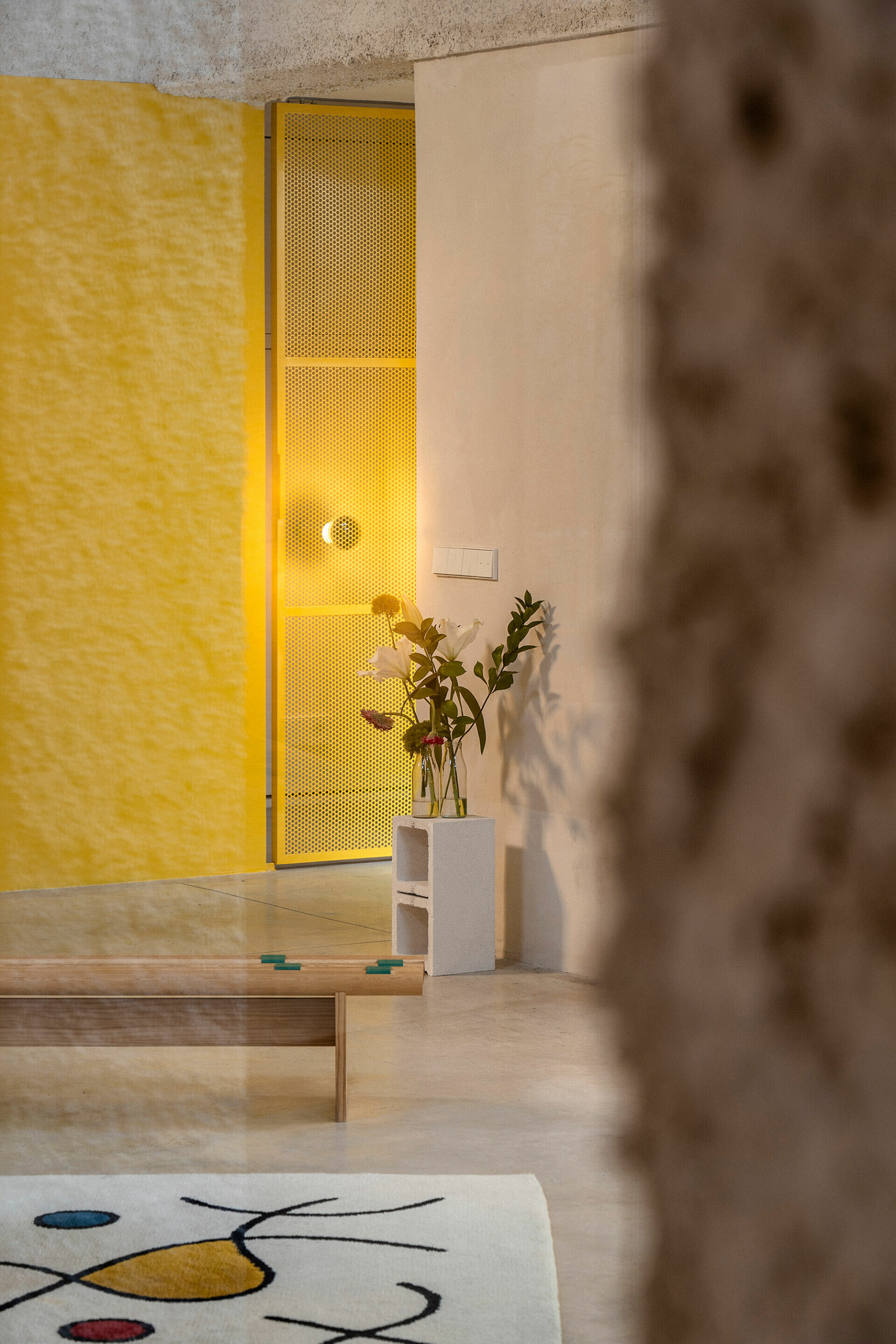
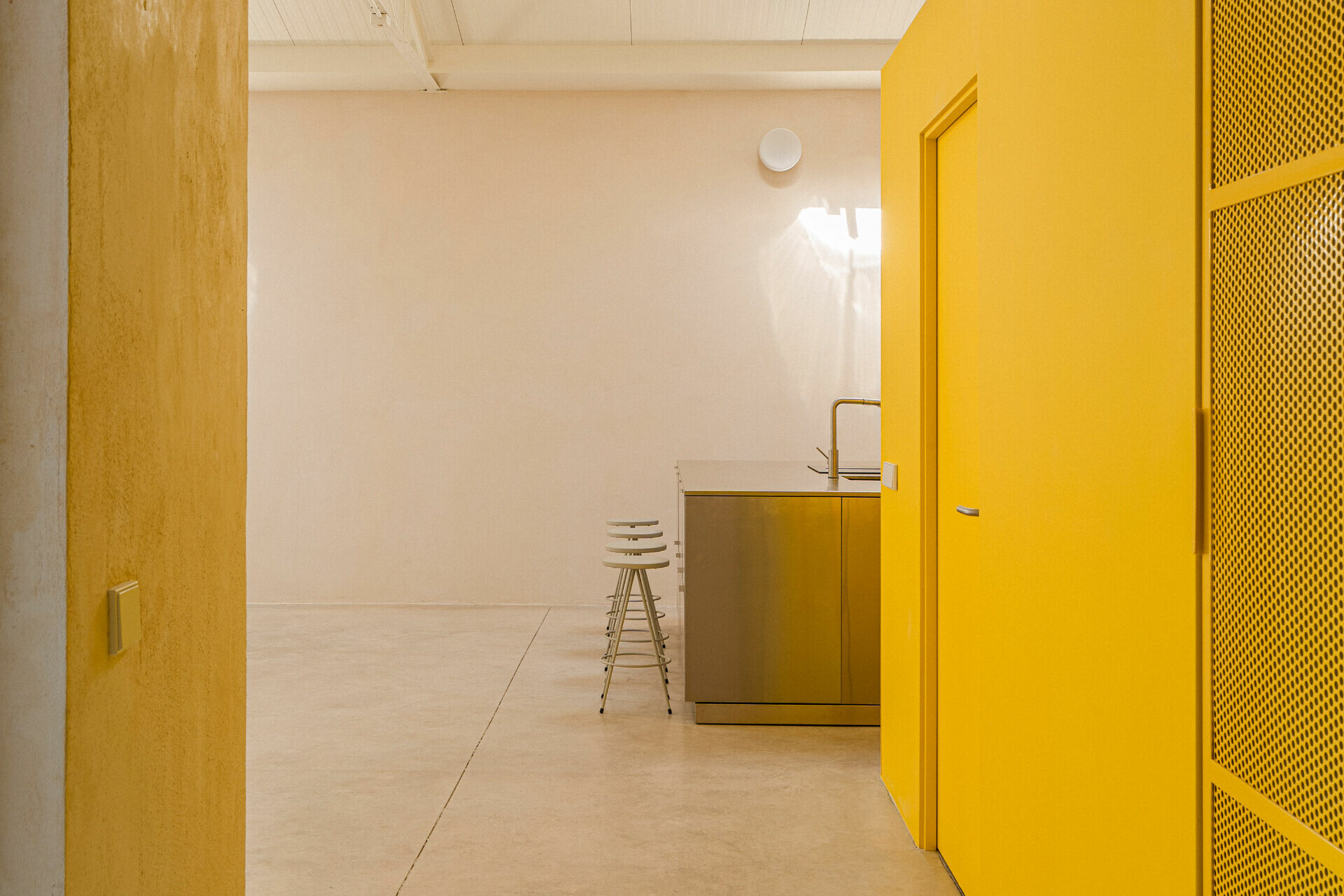
The project avoids imposing a fixed program, instead leaving the space open to multiple interpretations. All furniture and movable elements are precisely dimensioned to pass through the arches, allowing them to migrate between zones. Responding to the client—an artist whose work explores perceptual distortion through digital and technological media—the design employs mobility as a strategy, enabling the space to remain in continuous formation. Functions shift, relationships evolve, and the architecture becomes a living field of change.
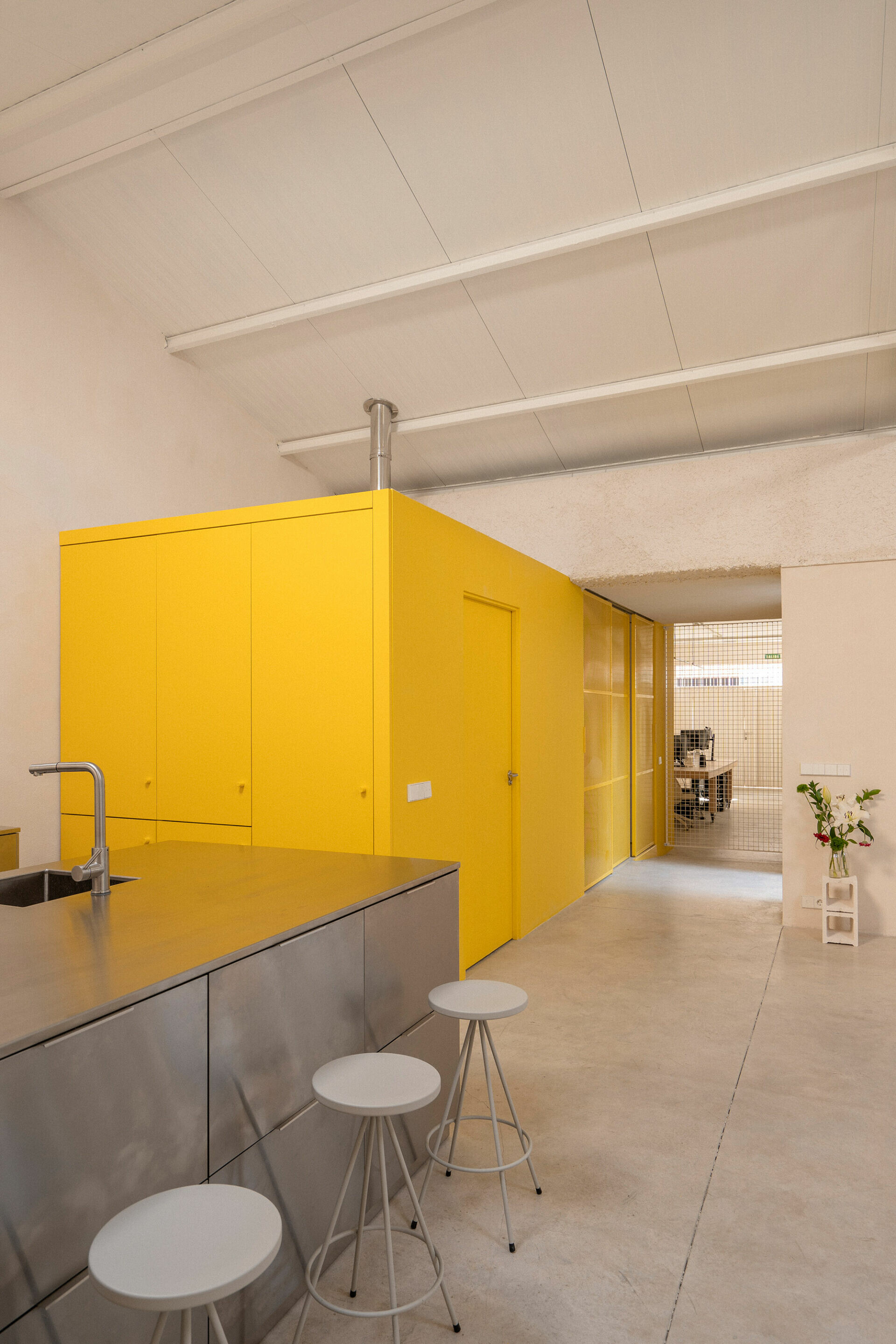
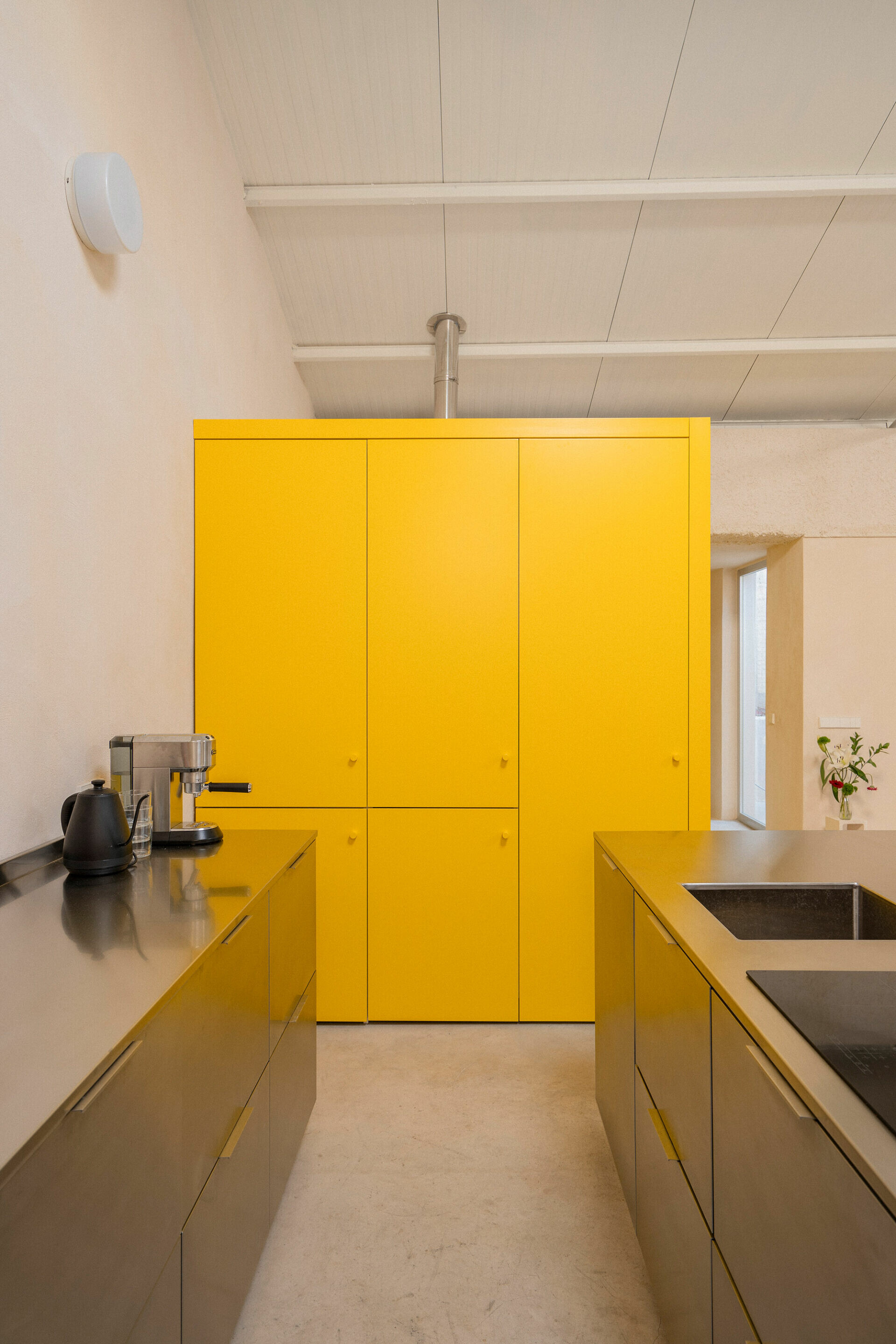
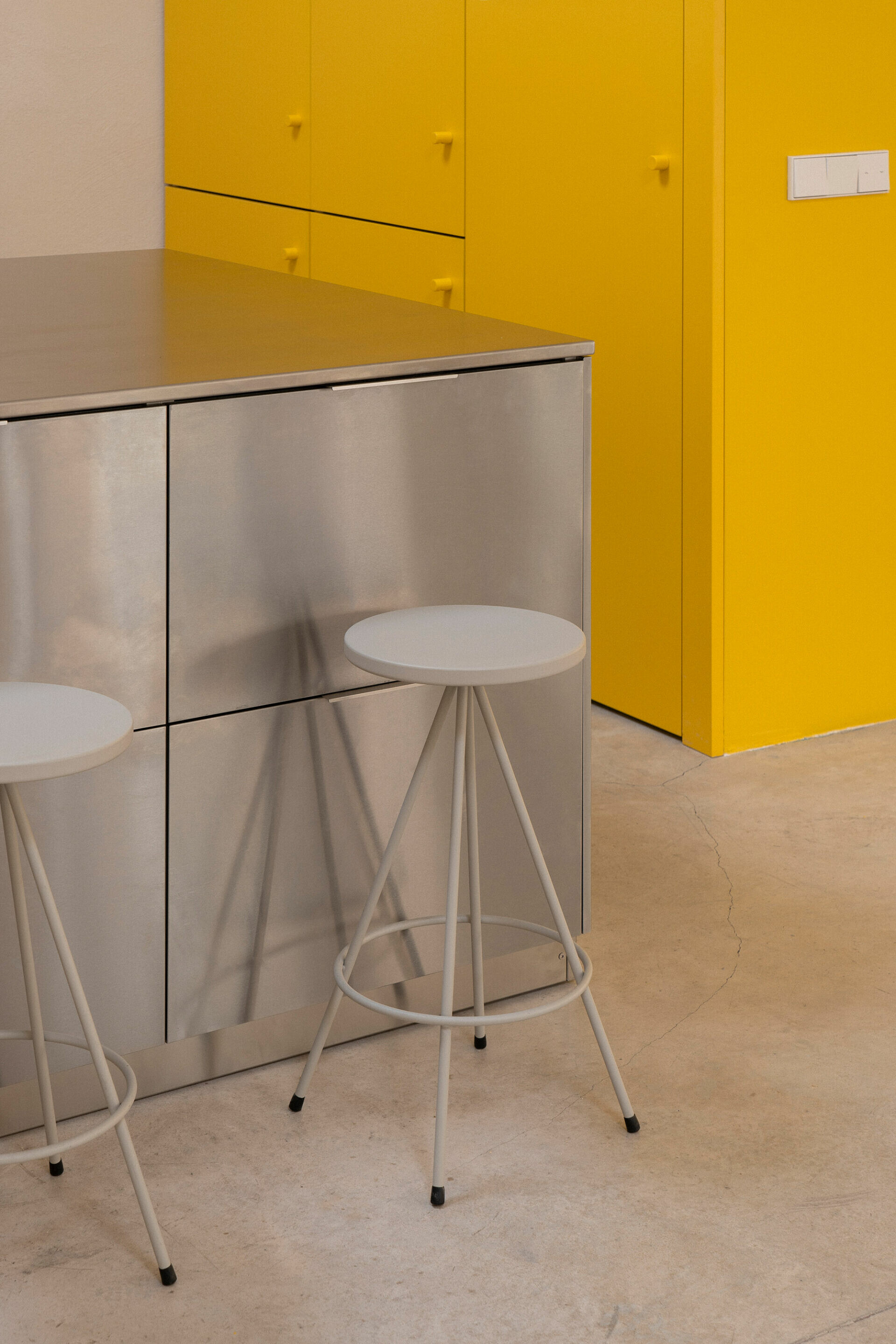
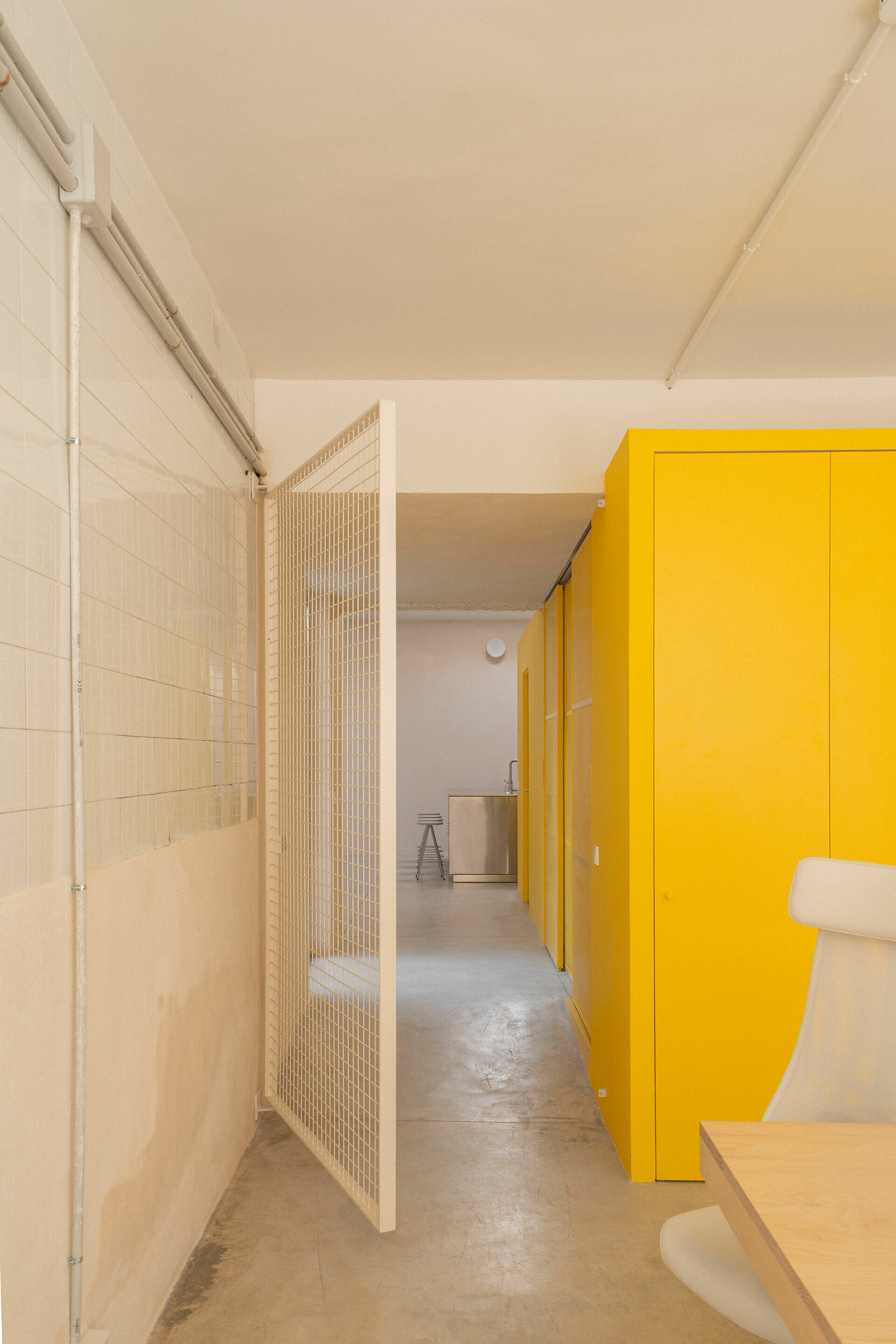
Although PATIO occupies only 200 square meters and does not represent a large-scale redevelopment, the project embodies a tangible act of urban infill regeneration—a precise, small-scale intervention that transforms an industrial remnant into a space capable of hosting creativity and public life. Through this modest yet deliberate approach, BURR and Guillermo Trapiello address the broader question of industrial renewal within Madrid, positioning their work as a microcosmic reflection of global practices. On its own terms, PATIO quietly dialogues with larger-scale precedents such as Barcelona’s 22@ District, Taipei’s Songshan Cultural Park, and Beijing’s 798 Art Zone, collectively shaping a cross-cultural language of industrial revival.