Project HC
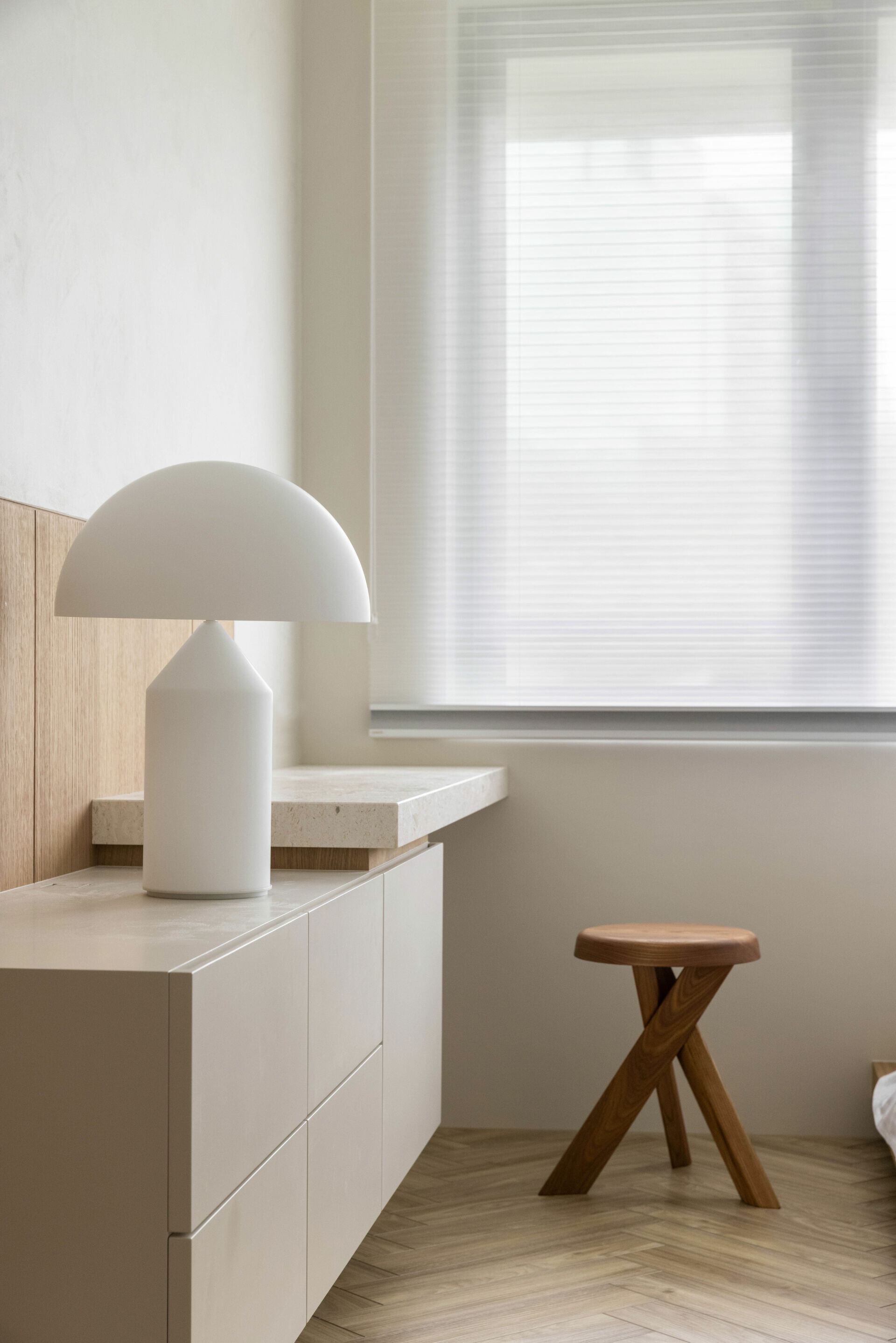
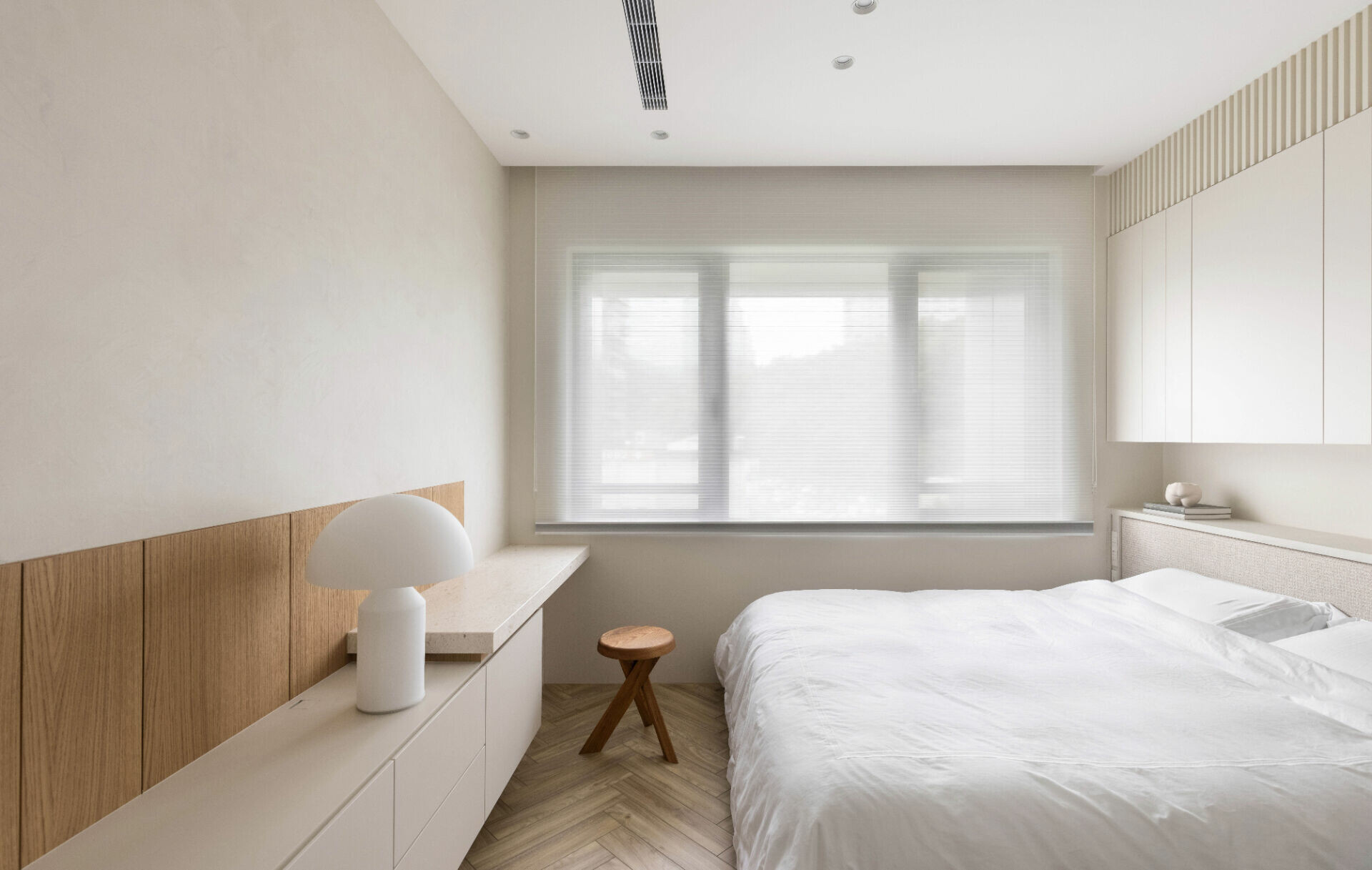
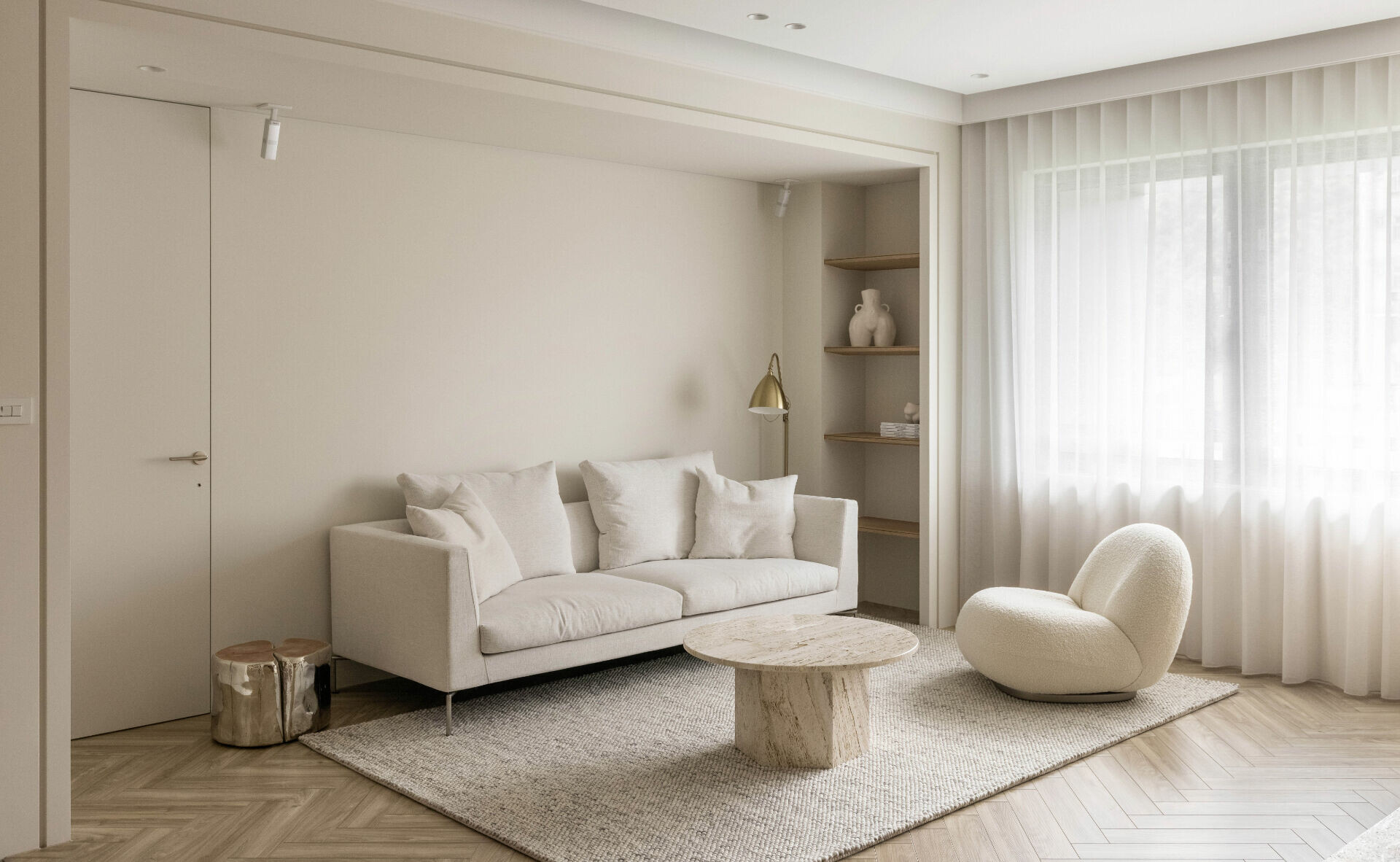
Light becomes a primary medium throughout the interior. Natural illumination is not merely admitted but orchestrated—allowed to pass through architectural thresholds, filtered by interstitial zones, and captured in subtle recesses. These calibrated apertures pause the passage of daylight, giving even the most ephemeral rays a spatial presence. The shifting light traces across the herringbone floor, enhancing its grain and dimensionality, while layered shadows activate otherwise minimal planes. Tseng’s spatial sensibility transforms light into a form of drawing—inscribing time through its movement across surface and depth. These were complemented by carefully chosen furnishings and accessories that added a light touch of French sophistication to the overall calm minimalism.
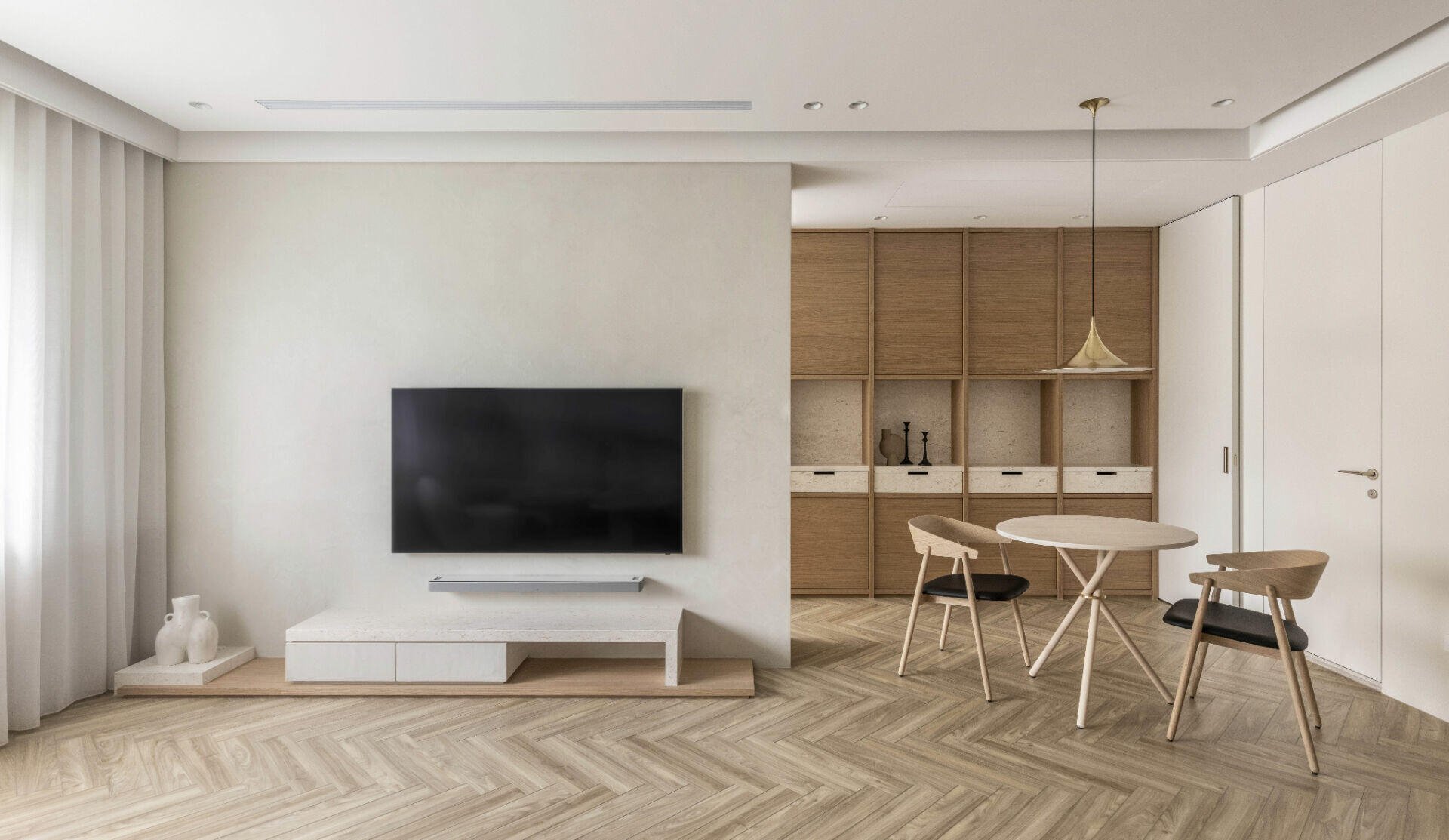
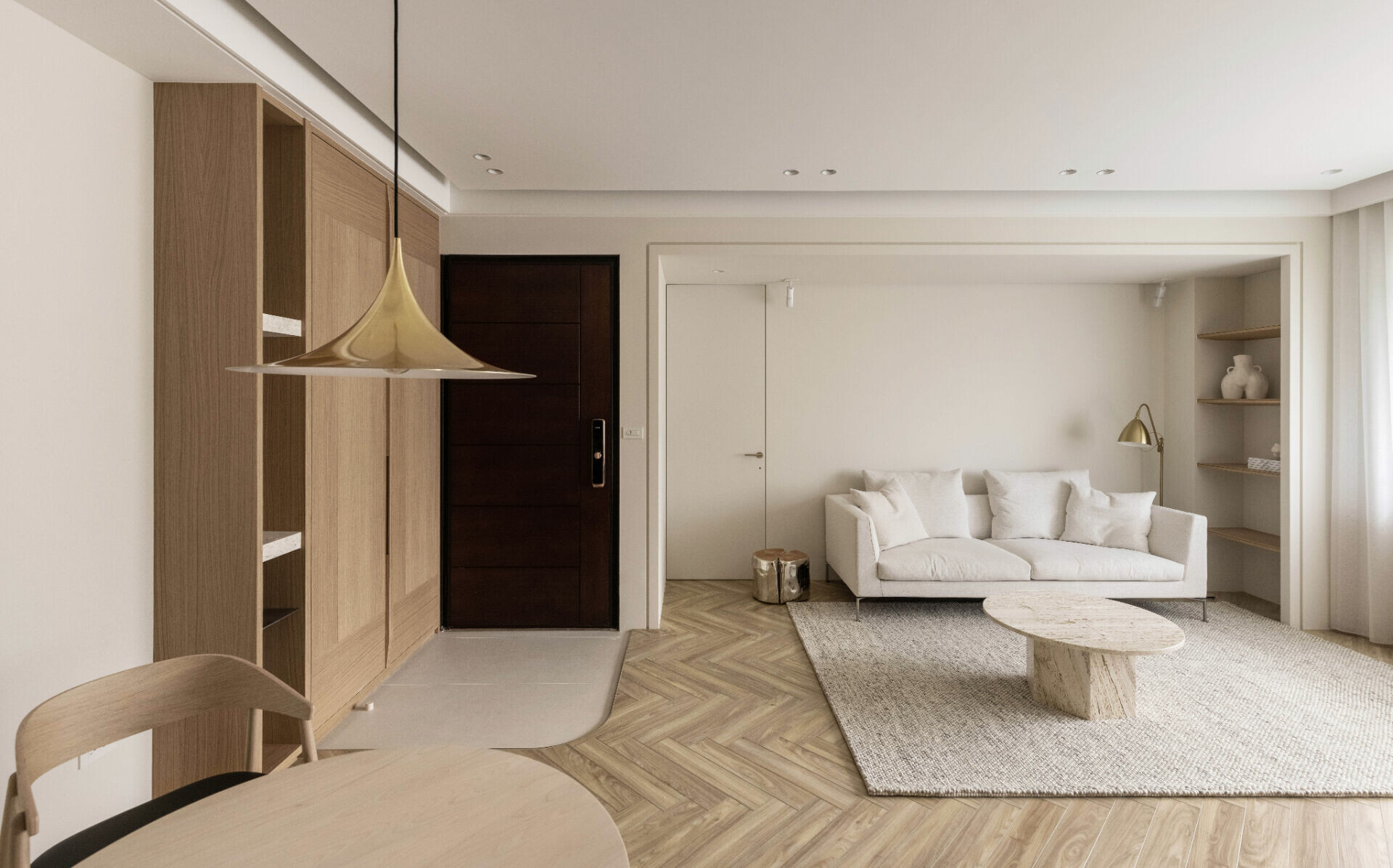
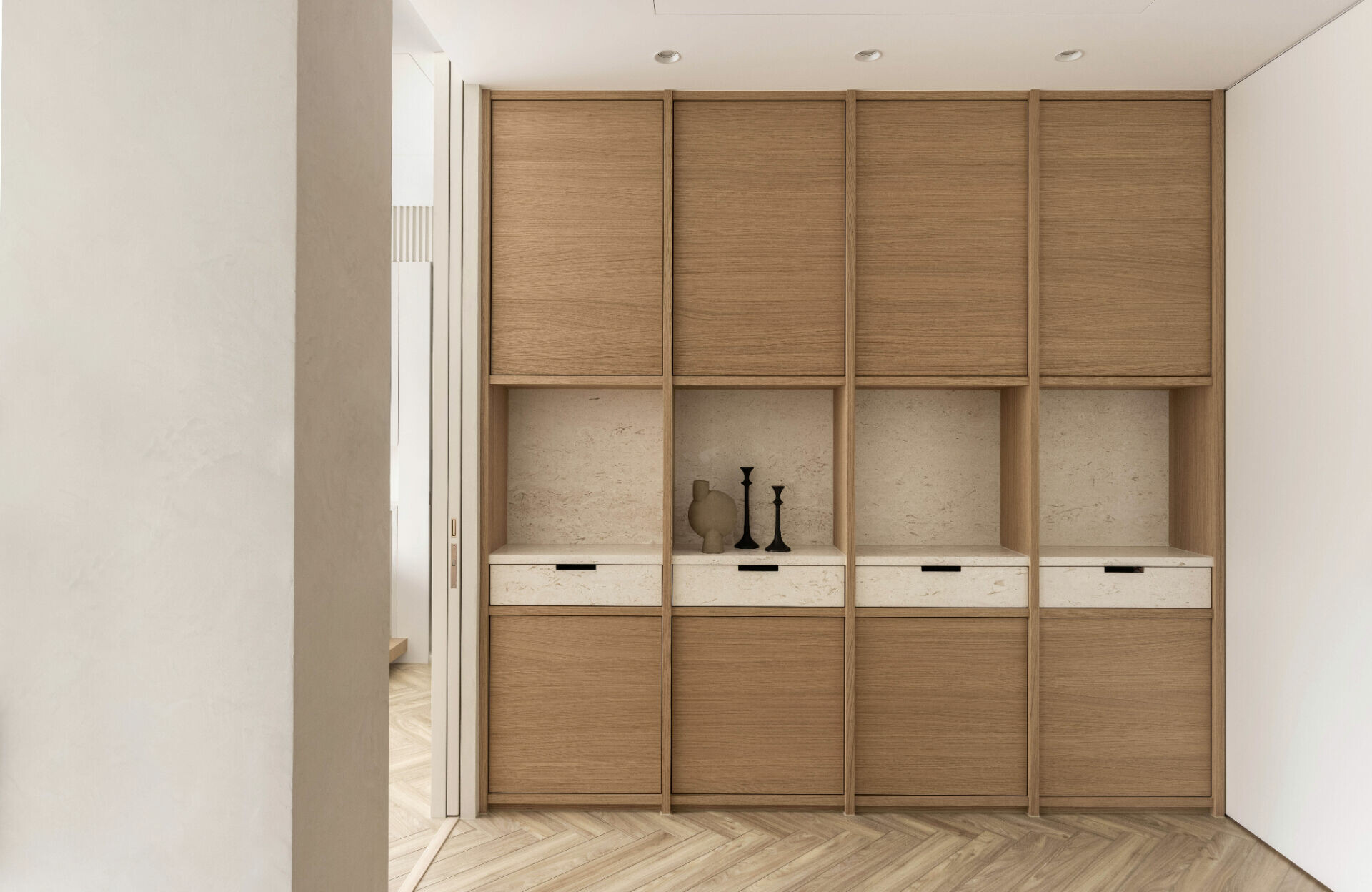
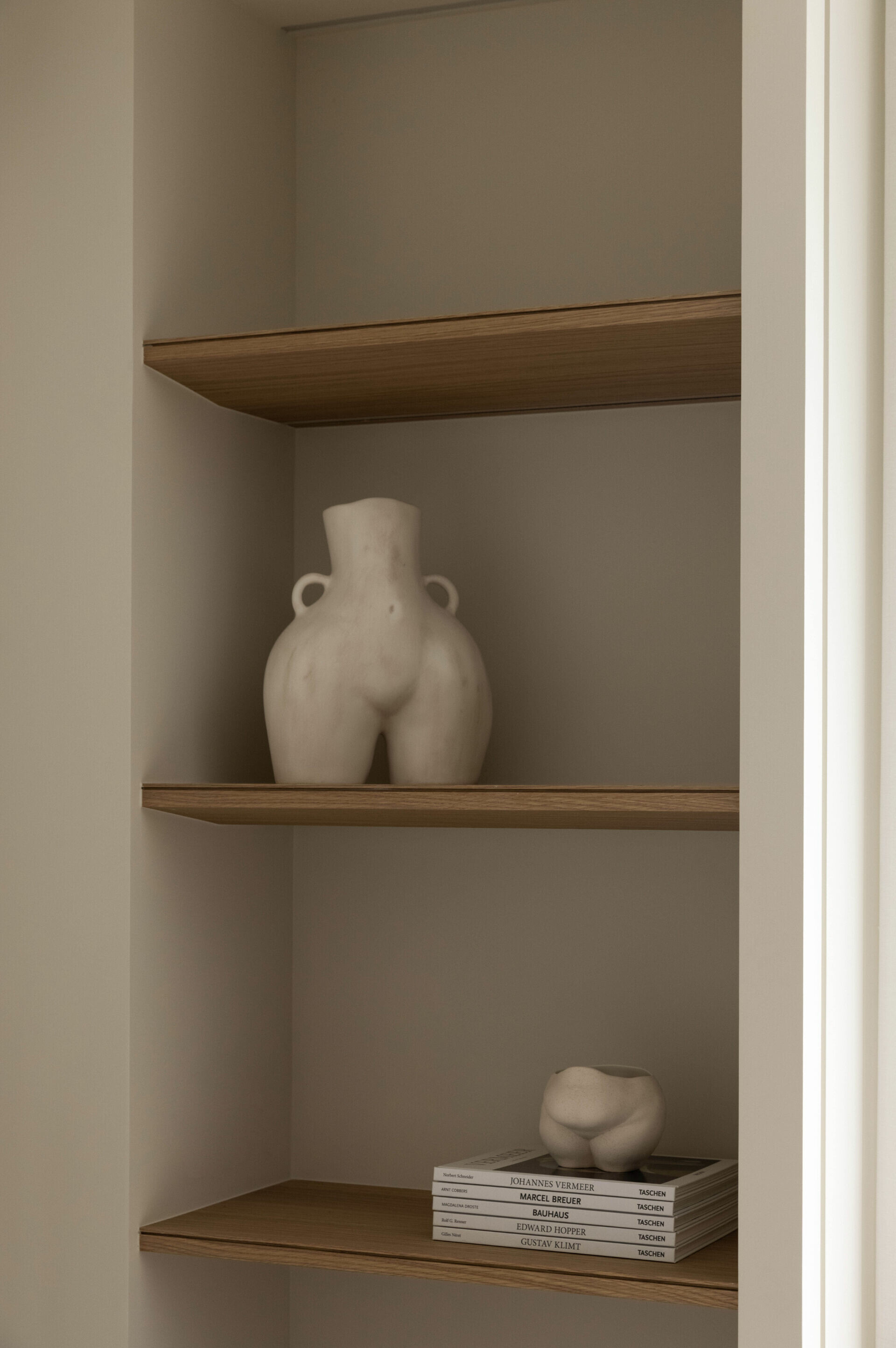
“I often approach space through the lens of photographic composition—how to articulate foreground, middle ground, and background across a single elevation,” Tseng notes. This conceptual framework is visible in the spatial sequencing, material detailing, and formal resolution. At the entry, bespoke cabinetry is clad in veneer panels oriented in alternating grain directions—horizontal and vertical—creating a subtle tectonic rhythm. Within the voids, Tseng inserts brushed stainless steel shelving and inlaid stone planes, introducing a quiet visual cadence that dissolves uniformity while avoiding overt ornamentation.
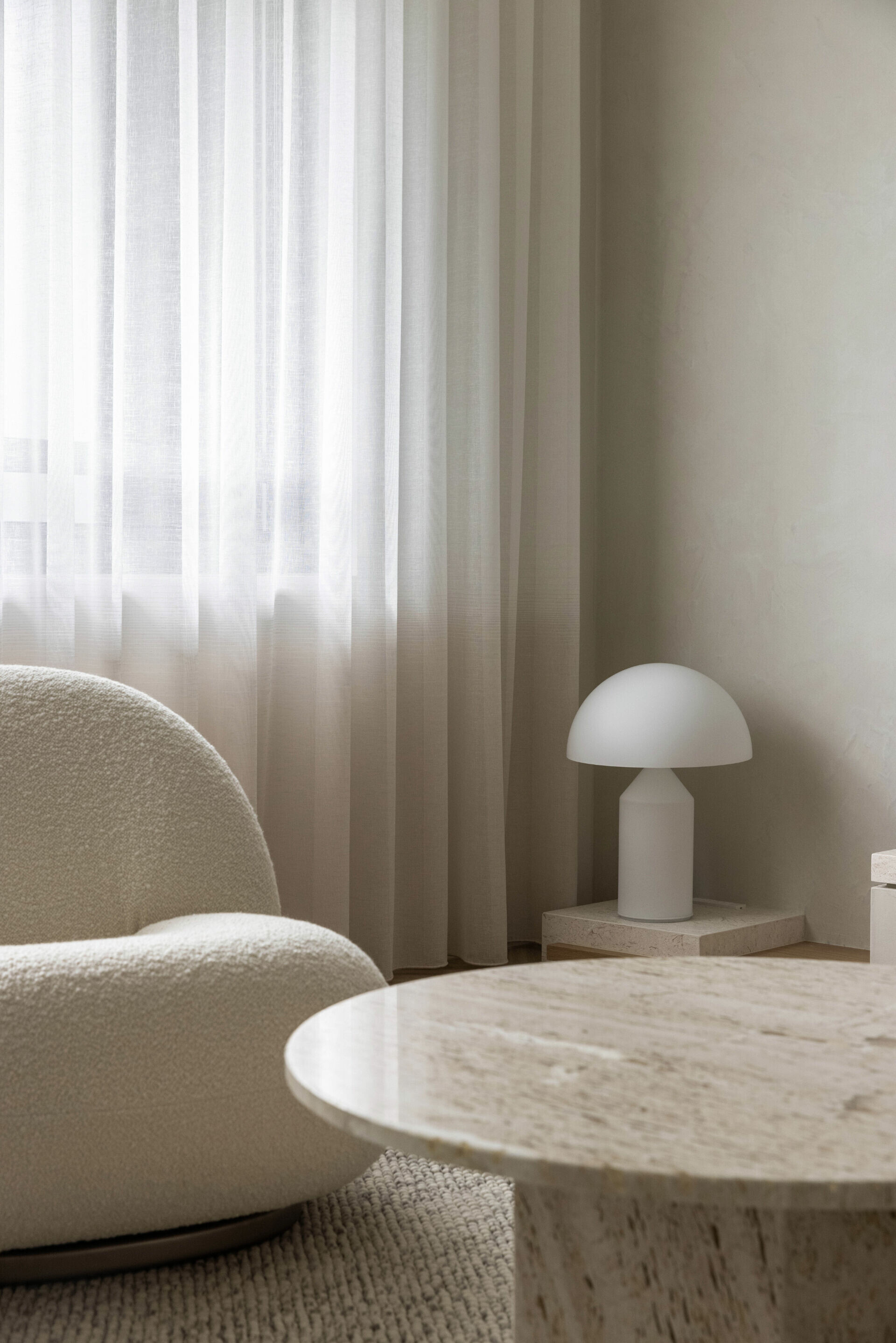
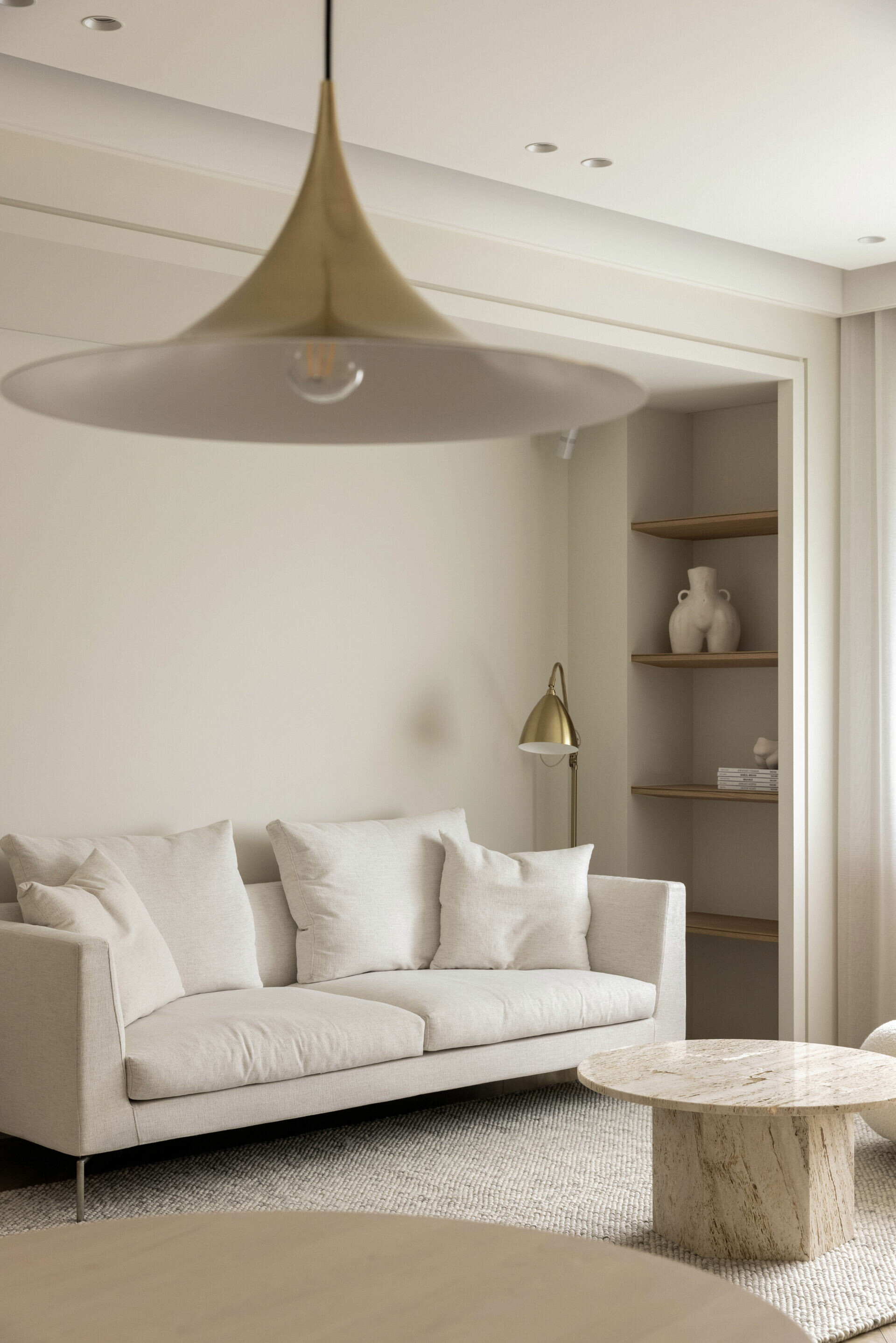
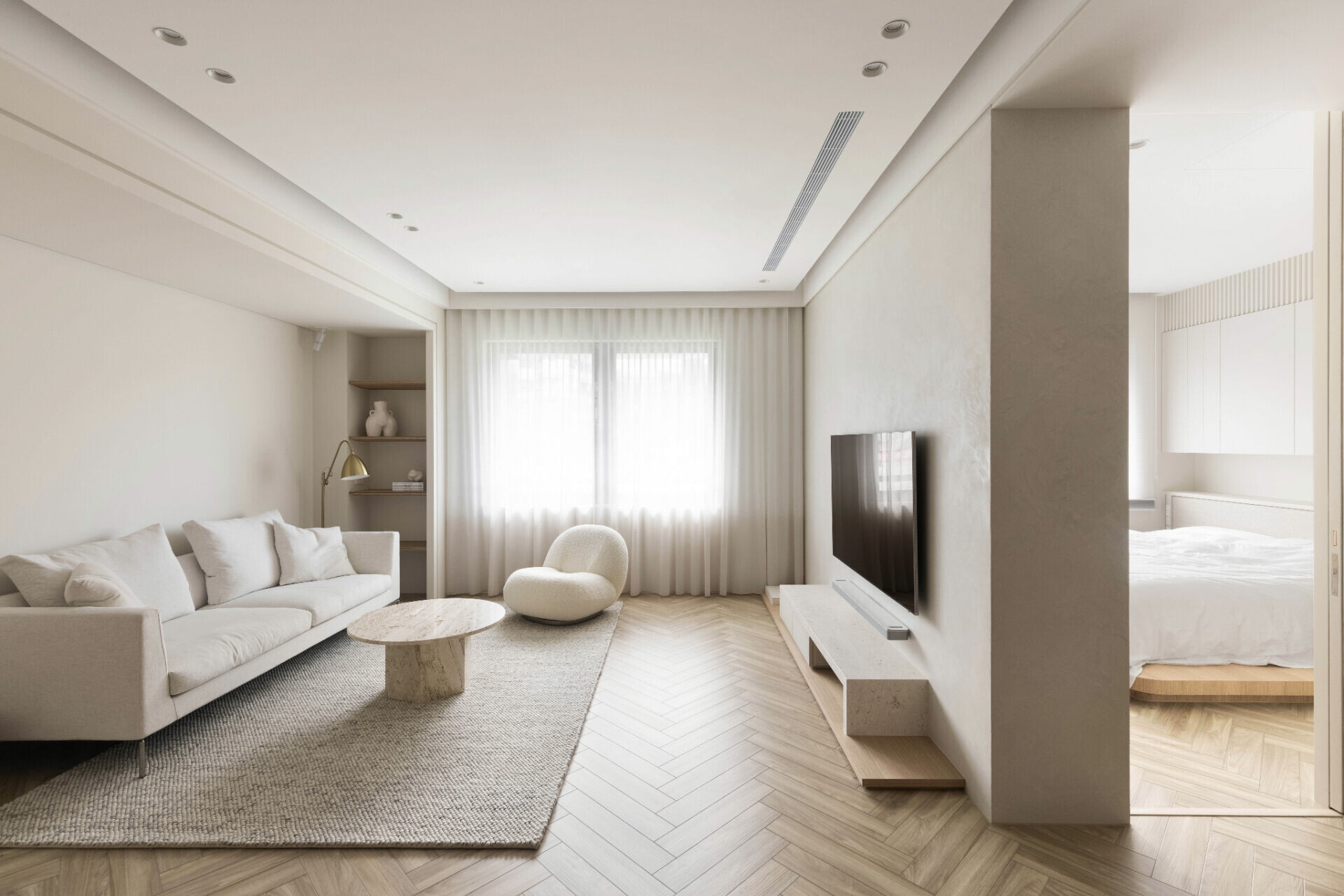
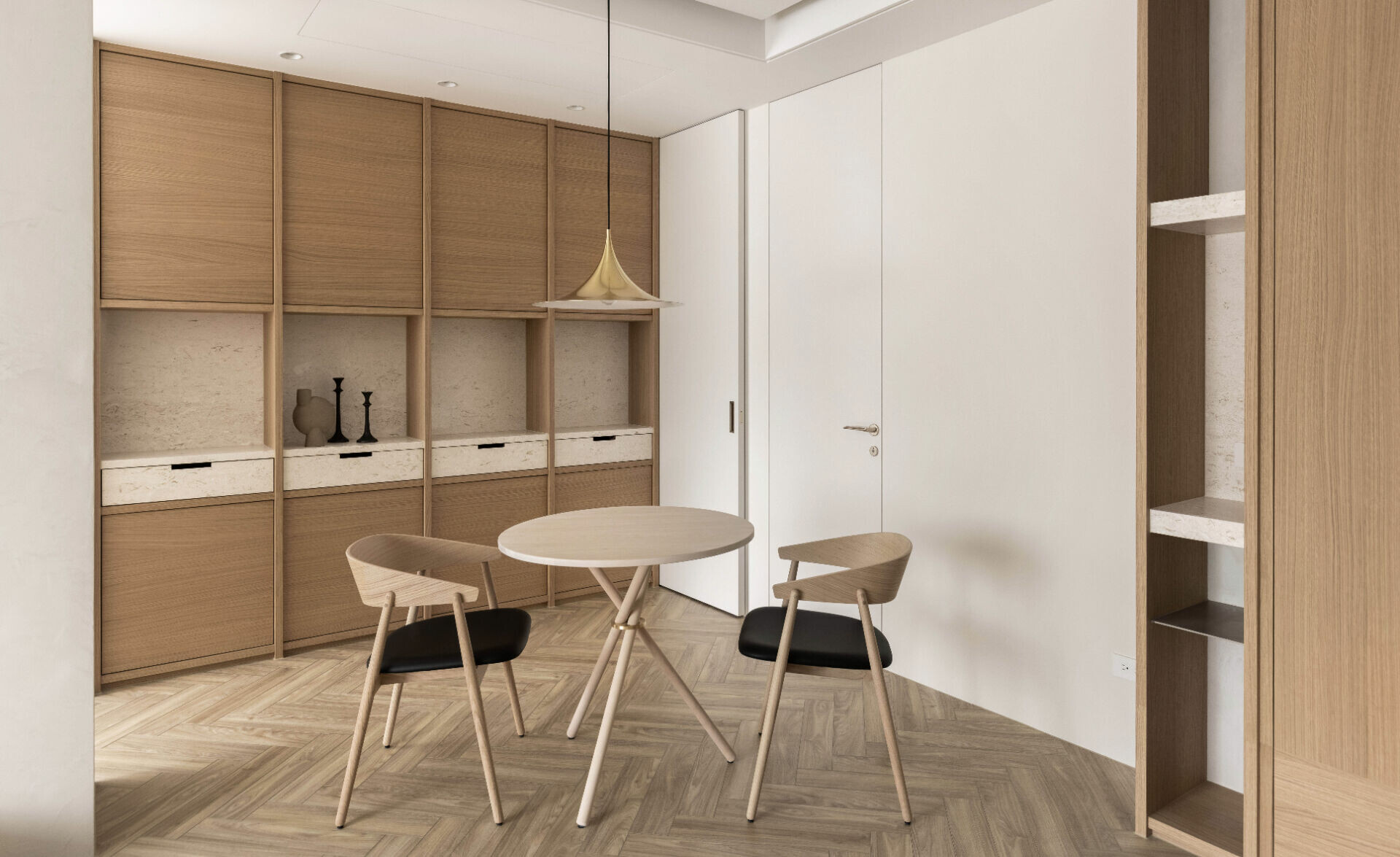
The wall delineating the secondary bedroom and living space is recessed to generate a framed spatial threshold—acting as both partition and perspective device. Linear grooves trace its edges, articulating shadow lines that accentuate depth. Within the adjacent living area, a carefully curated selection of objects—a monolithic stone coffee table, sculptural armchair, and ambient lighting—anchors the space in quiet elegance. These gestures distill the essence of French romanticism and Nordic restraint, echoing the refined sensibility of the client.
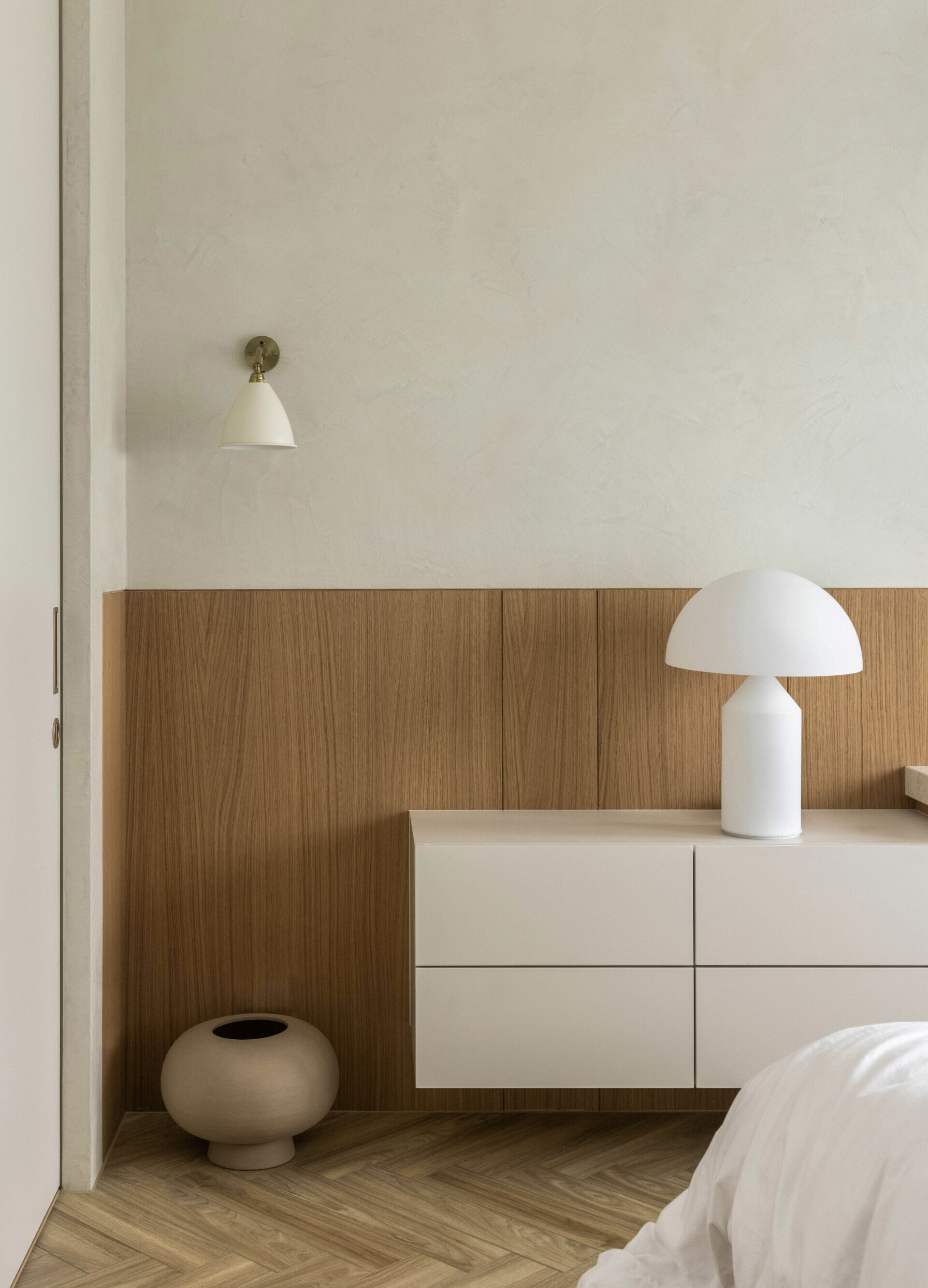
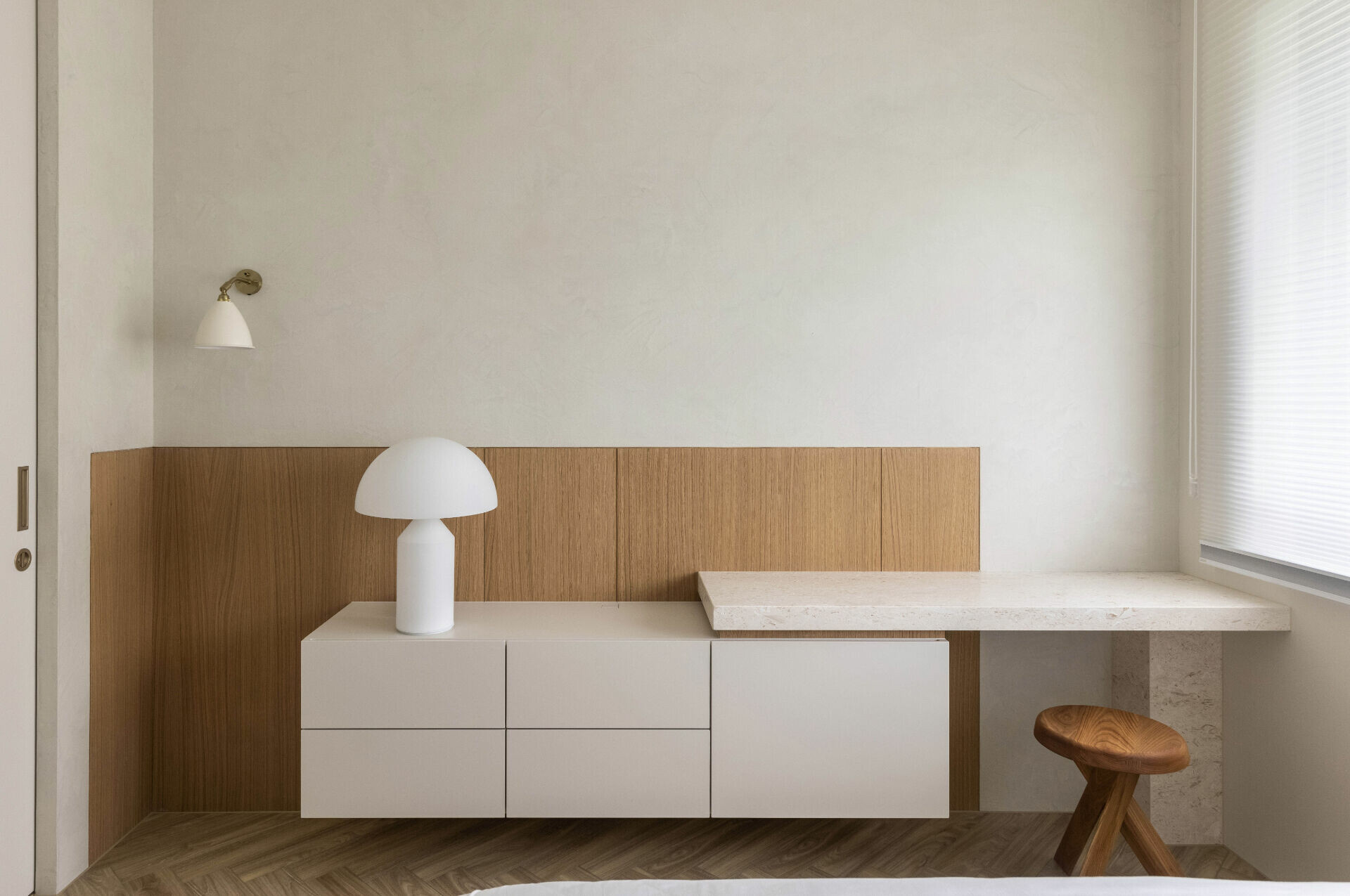
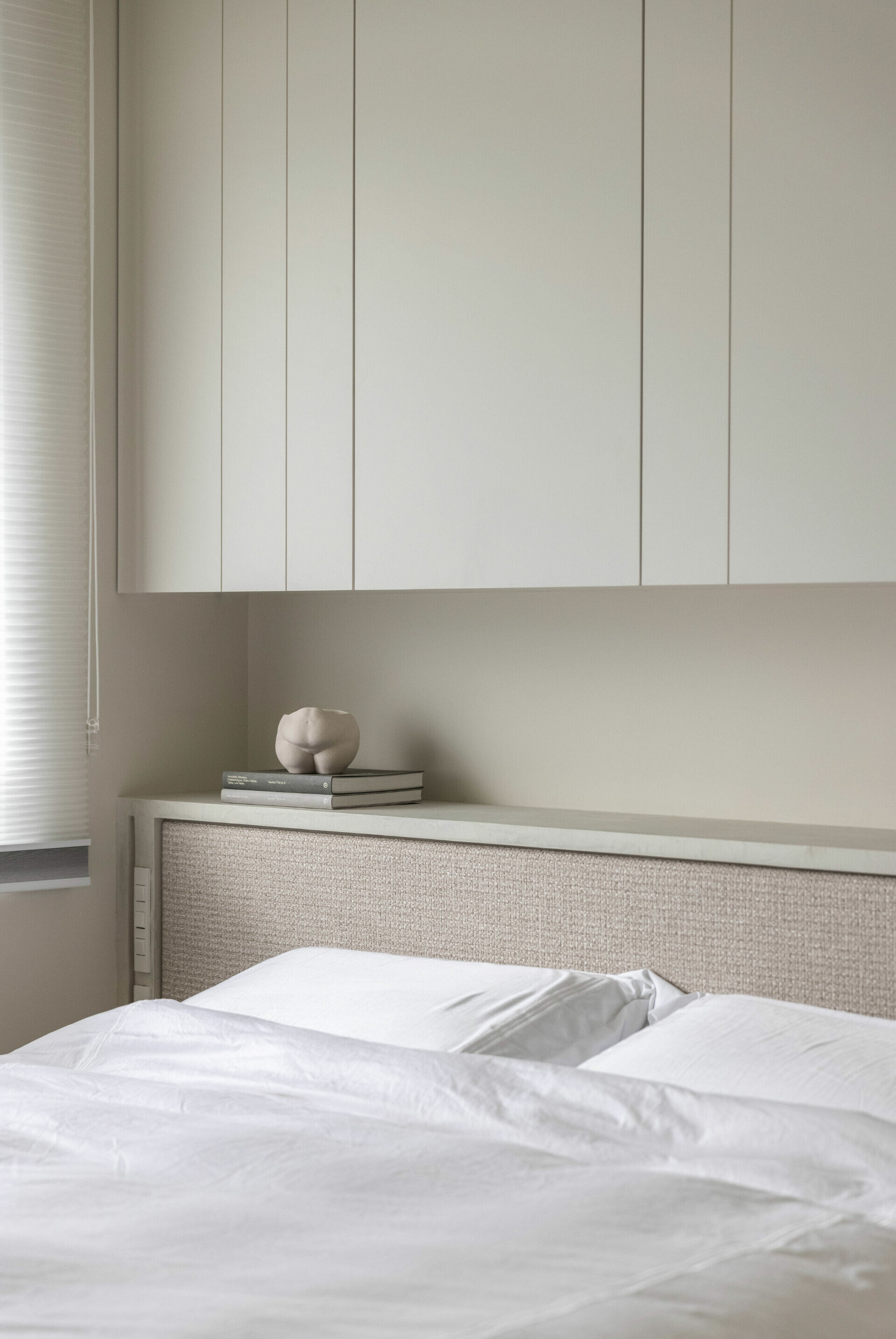
In the primary bedroom, the spatial language evolves toward greater clarity and functional precision. Above, storage elements are resolved in a rhythm of narrow vertical recesses, balancing openness and density. An adjacent wall deploys a layered interplay of materials—timber veneer, specialty paint, and stone—subtly overlapping to create depth within a single planar field. Here again, Tseng’s attention to material interface transforms surface into composition. In the late afternoon, sunlight grazes across the walls, catching grooves and textured edges as if framing a photographic still. These are not decorative effects, but spatial expressions of time and atmosphere. The home, as conceived by the homeowner, captures a domestic poetics rooted in discipline, subtlety, and the quiet resonance of everyday life.