WABISABI
  • Projects
    • Worldwide
    • Interiors
    • Features
  • Contemporary
    • Exhibitions
  • Record
  • Lifestyle
  • City Explore
  • News
  • Issue
  • Account
  • Search
  • Language
Mobile nav


Reading Space: Beginning with the Horizon

Perhaps our earliest sense of space began with a distant horizon. There, earth and sky met along a single line, and the world slowly came into focus with the rising sun. Where things vanished from sight, the notion of a boundary took shape. Yet what we see is never the whole. As the Earth turns and our viewpoint shifts, a line that appears fixed becomes part of a plane that continues to unfold. Mountain ridges stretch into broad plains, shaping an undulating landscape; in the tidal waters where a river meets the sea, every drop can be traced back to the smallest trickle upstream. Curiosity about what lies beyond a boundary leads us to consider what else might be possible. Materials change in character over time; taken together, settlements across regions can still form a shared record of how people live. Boundaries exist not only in time and space, but also in the disconnect between modern cities and nature. As the spaces we build become ever more constrained, interior flooring can offer a surface through which the language of nature continues indoors. With its tactile warmth and mineral pores that seem to breathe, the material can hold memories of everyday life within a fine, seamless surface that appears to flow freely, recalling that first gaze across the open breadth of earth and sky.
➤ TCC DAKA’s Graffiti Hall
The Floor as an Extension of Spatial Perception


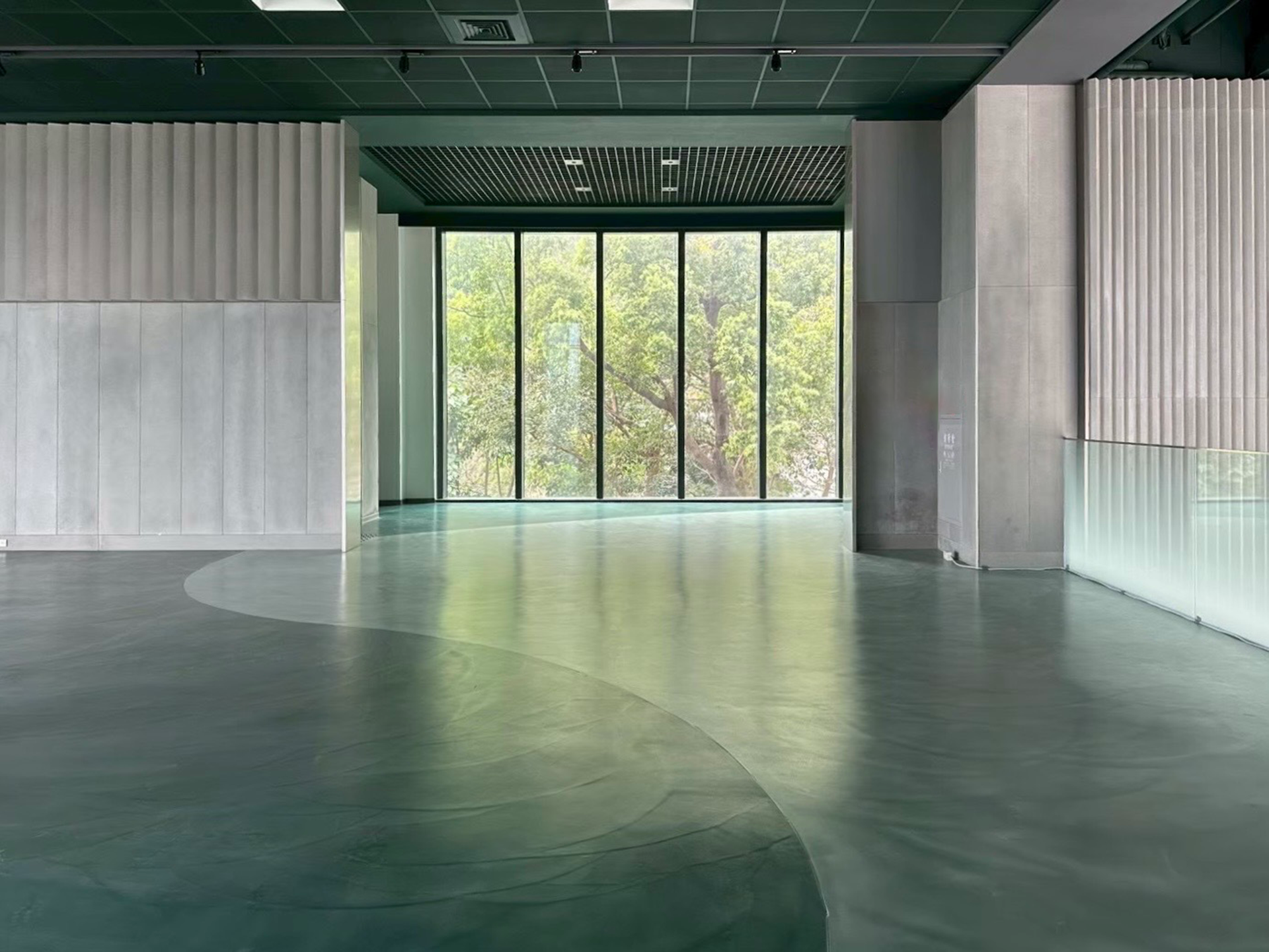
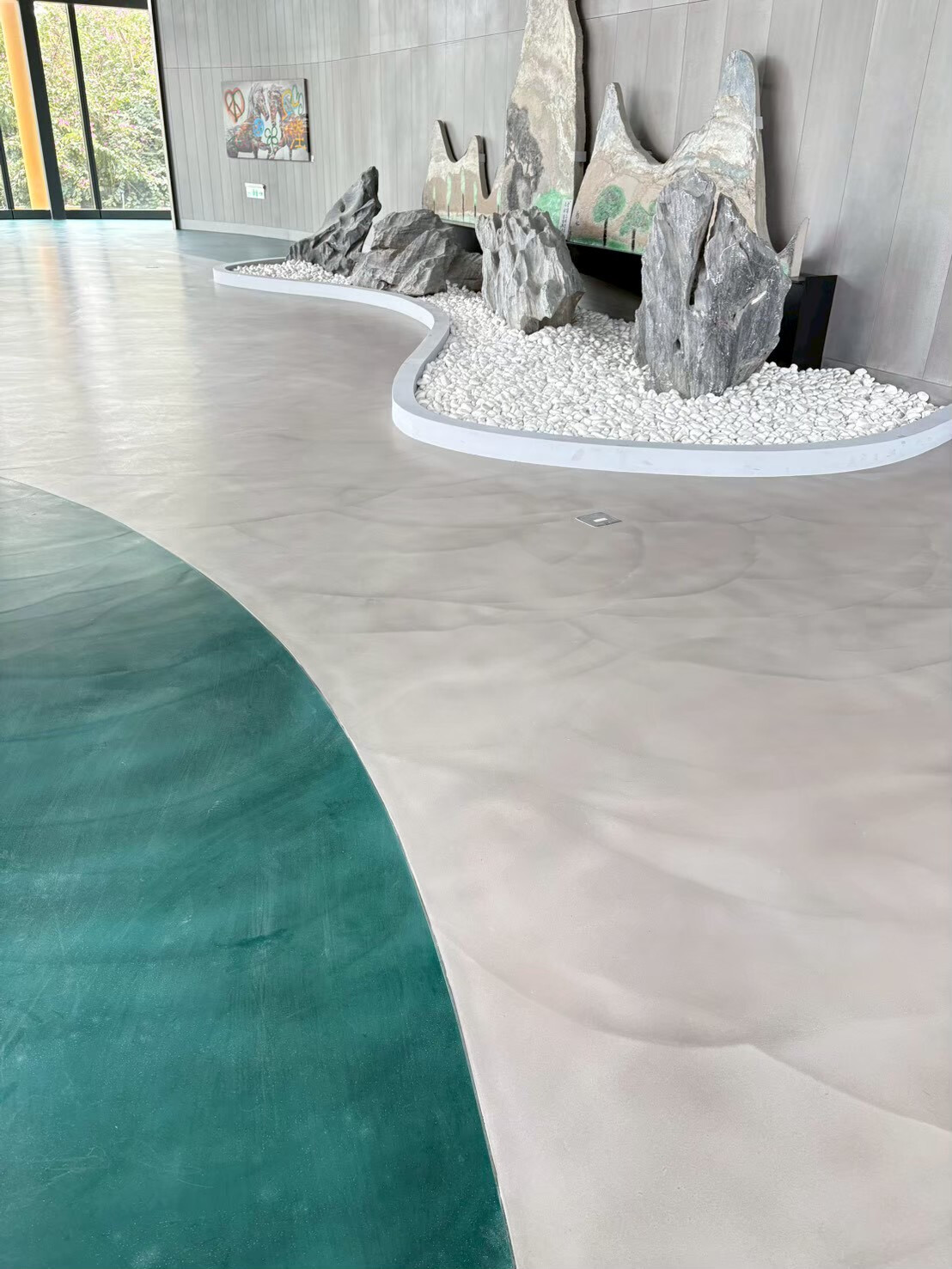
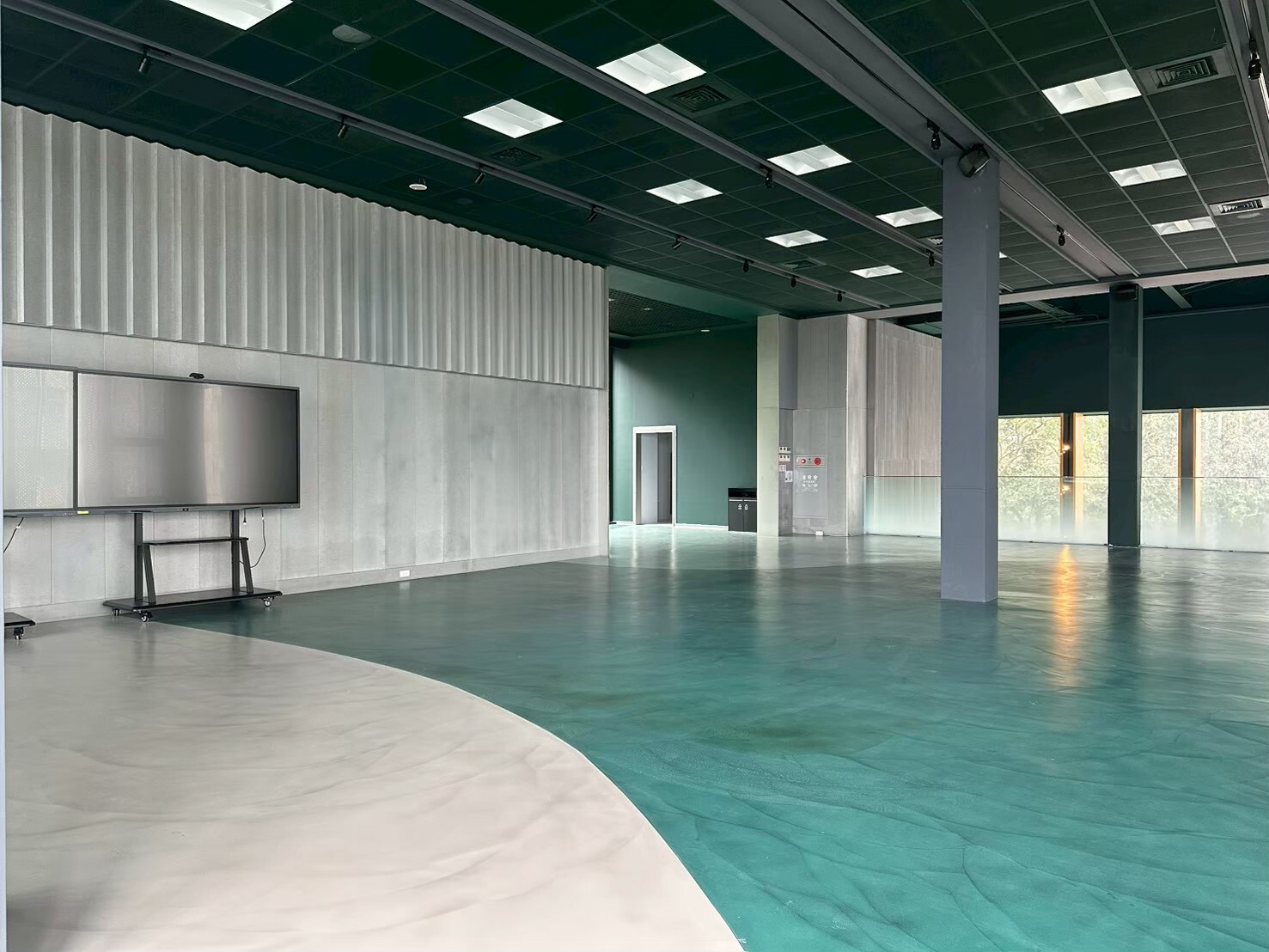
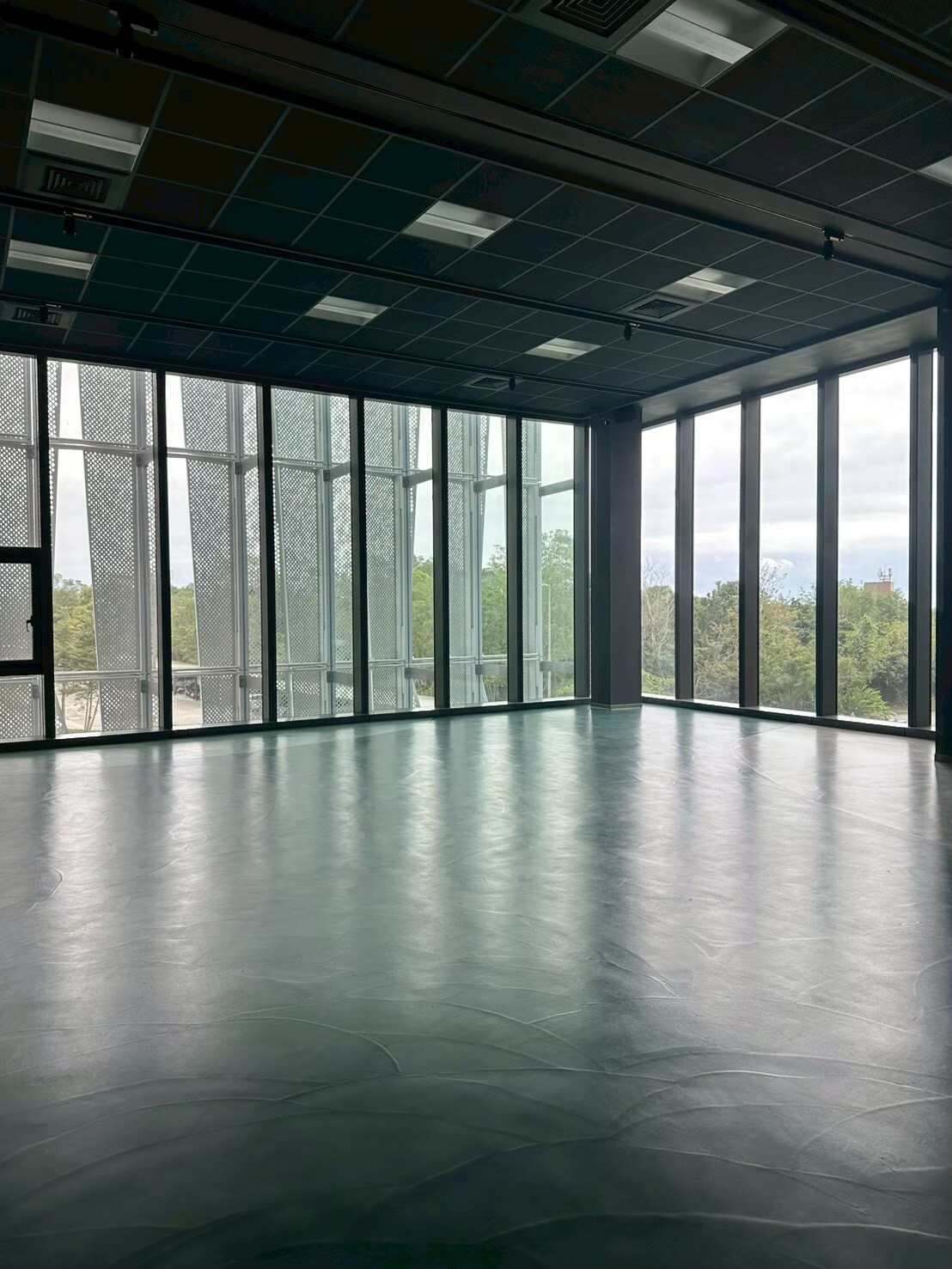
The palette of TCC DAKA’s Graffiti Hall seems drawn from the surrounding landscape: a touch of verdant green from Taiwan’s Central Mountain Range, a blue-green tone drawn from the waters of Hoping Industrial Port beneath a clear sky, and a cement grey reminiscent of exposed rock. Underfoot, the three colours blend into layered tonal washes. Hand-trowelled strokes trace winding, wave-like patterns across the surface, carrying the cool green of the trees outside into the hall. The eye follows irregular fields of colour, where ripples appear and fade as sunlight shifts and footsteps pass. The interior no longer feels confined by its ceiling and four walls. The mineral finish ties the space to the site’s geology, while the palette echoes the landscape beyond. With no seams to interrupt it, the floor extends the body’s sense of space, bringing an immediate feeling of openness before the mind gradually settles into the calm of Hualien’s mountain landscape and clear waters.


➤ TCC DAKA’s Graffiti Hall


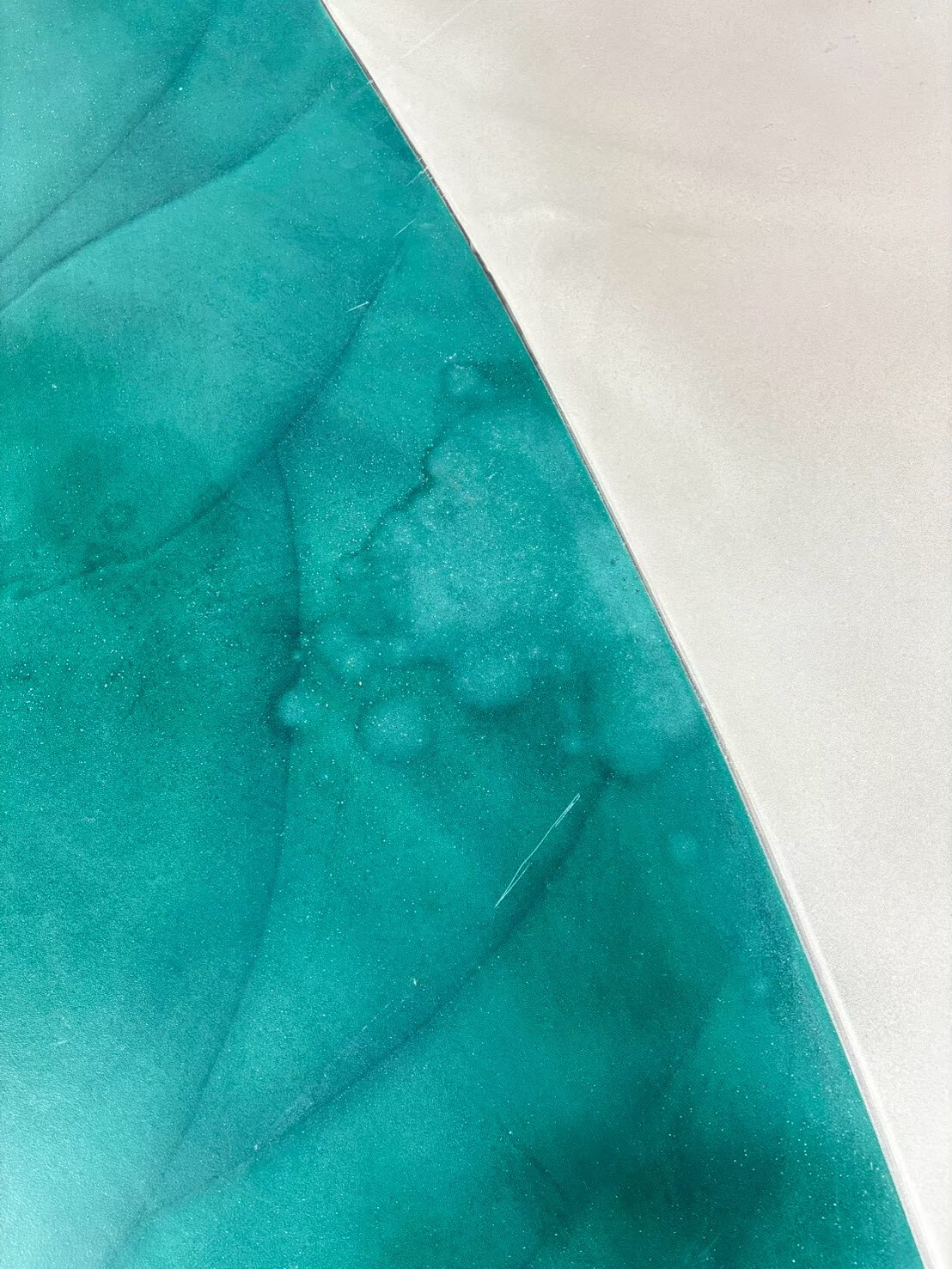
A result that feels this natural depends on exacting installation conditions. PANDOMO Loft is highly sensitive to substrate evenness and moisture content, as well as ambient humidity and temperature. Installers have only a narrow window in which to work the texture before the material sets, making the process a demanding test of timing and skill. Developed by German manufacturer ARDEX, it is a polymer-modified cementitious compound formulated to reduce the cracking associated with conventional trowel-finished concrete. It retains an understated mineral texture and a silky appearance while remaining strong and durable. Because the Graffiti Hall is open to the public and serves as a venue for corporate education and training, the higher-strength PANDOMO Loft K2 system was selected. Yet neither the design nor the material alone can determine the result. The quality of the finished floor ultimately depends on the installation team. As PANDOMO’s distributor in Taiwan, Hau Cheng brought more than two decades of practical experience to the project, exploring the limits of the technique to realise the designer’s intent.


➤ Loft-K2 
➤ Loft-K2 
An Architectural Skin That Takes Shape over Time


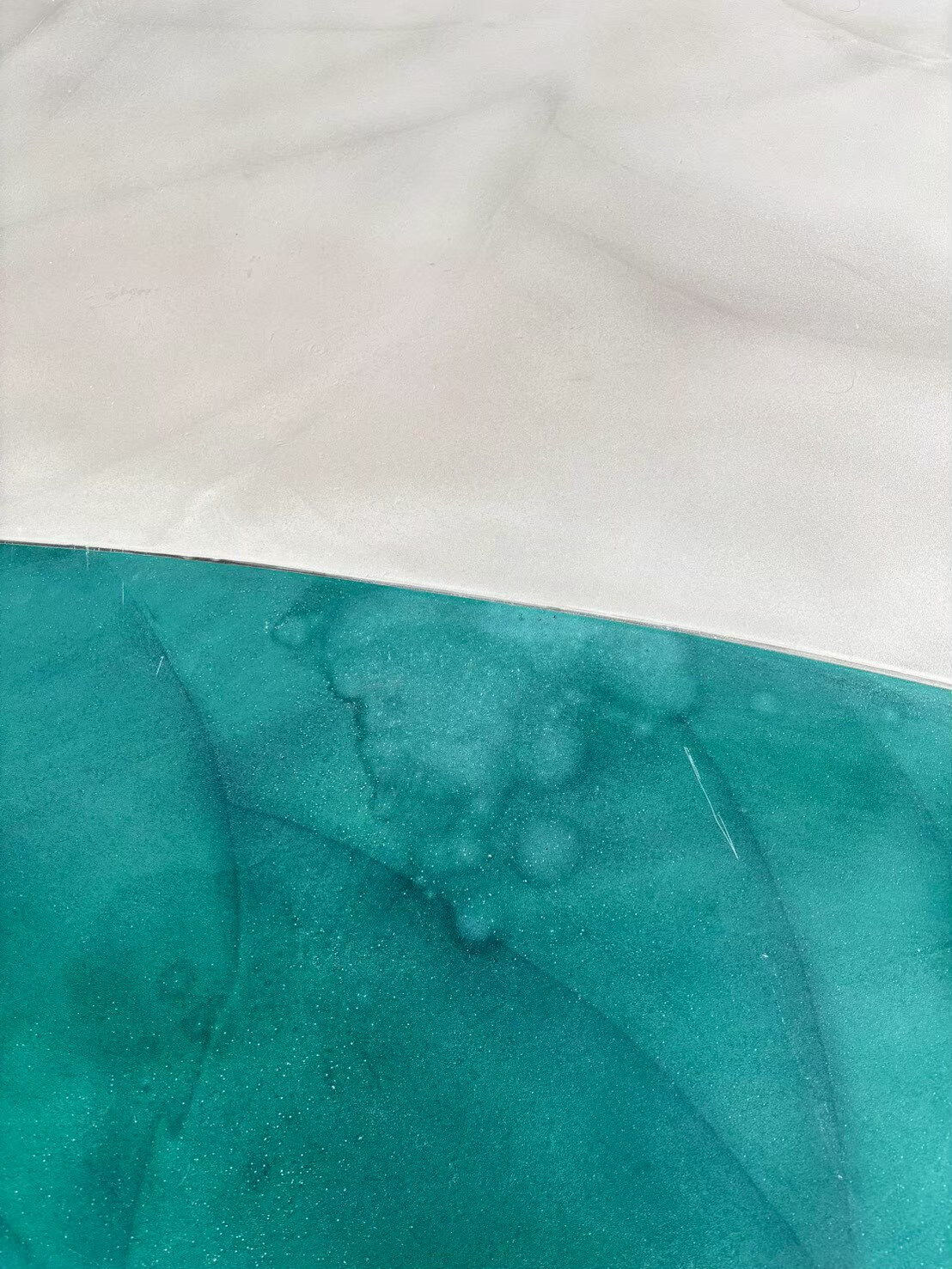
Even when the German manufacturer’s rigorous application protocols are followed, the final colour and texture of a PANDOMO floor still depend heavily on colour-matching expertise and the installer’s hand. The off-white base leaves little room for error, and the colour shift as the material cures must be anticipated from the outset. More than ten colour samples were prepared before installation, allowing the designer to fine-tune the final tone by eye. Given the scale of the hall, the team also produced a large-format mock-up to study the spacing and direction of the hand-trowelled marks. All preliminary testing took place at Hau Cheng’s own factory. For embossed finishes, the team must repeatedly test when to press the mould into the surface and how long to leave it in place. Remove it too soon and the impression is incomplete; leave it too long and the mould becomes difficult to release. Taiwan’s climate is considerably warmer and more humid than Europe’s, so many of the methods used today were developed through repeated trial and error. Crews may even bring ice to site to slow the material’s set. Such practical knowledge rarely appears in written application guidelines. Accumulated by craftspeople whose names seldom appear, it remains a quiet source of pride for Hau Cheng.


➤ TCC DAKA’s Graffiti Hall


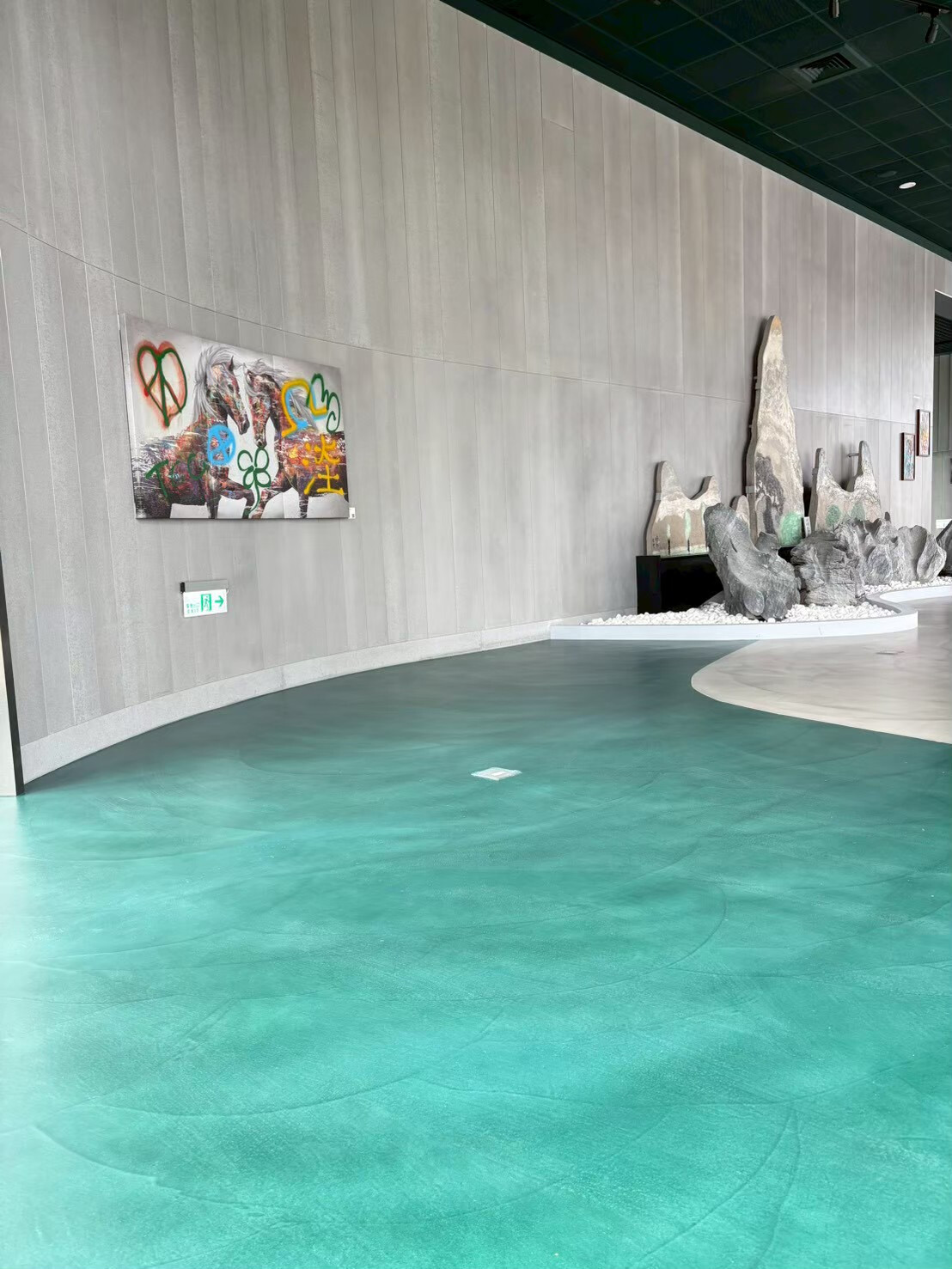
Few people realise that the floor, originally intended for the final stage of construction, had to be installed early because of the construction schedule. Once installed, it remained beneath protective covering for nearly a year and a half. When the covering was finally removed, water ingress and impacts from heavy objects had caused localised damage in several areas. Drawing on its repair expertise, the installation team restored the surface so skilfully that almost no trace of the damage remained. The quality of the repair later drew surprise and praise from the manufacturer. PANDOMO is not indestructible. Its mineral composition retains a natural porosity, allowing the surface to change with its surroundings like an organic architectural skin. “If these changes are not seen as flaws, they are simply the natural marks of use.” Imperfections made visible over time may come closer to the essence of beauty than an immaculate surface. Among seamless flooring systems, PANDOMO seeks to cross another kind of conceptual boundary: from monochrome surfaces to mixed-material compositions, and from horizontal floors to vertical planes. The freedom lies not only in where it can be applied, but also in what it allows designers to create. Beyond layers of preconception lies a broader space for imagination.
 
 
➤ TCC DAKA’s Graffiti Hall
Hau Cheng
The Inner Measure of Home — ARMANI/CASA
Prev

The Inner Measure of Home — ARMANI/CASA

The Kitchen, Shaped by Life
Next

The Kitchen, Shaped by Life

  • About
  • Privacy policy
  • Track Order
  • Customer
  • Contact
  • Join us
FACEBOOK
instagram
Language

Copyright © WABISABI ISSUE. 侘寂傳媒有限公司 統一編號:90451315

  • Projects
    • Worldwide
    • Interiors
    • Features
  • Contemporary
    • Exhibitions
  • Record
  • Lifestyle
  • City Explore
  • News
  • Issue
  • About
  • Privacy policy
  • Track Order
  • Customer
  • Contact
  • Join us
Language