➤ Schnepp Renou
Reciprocal House
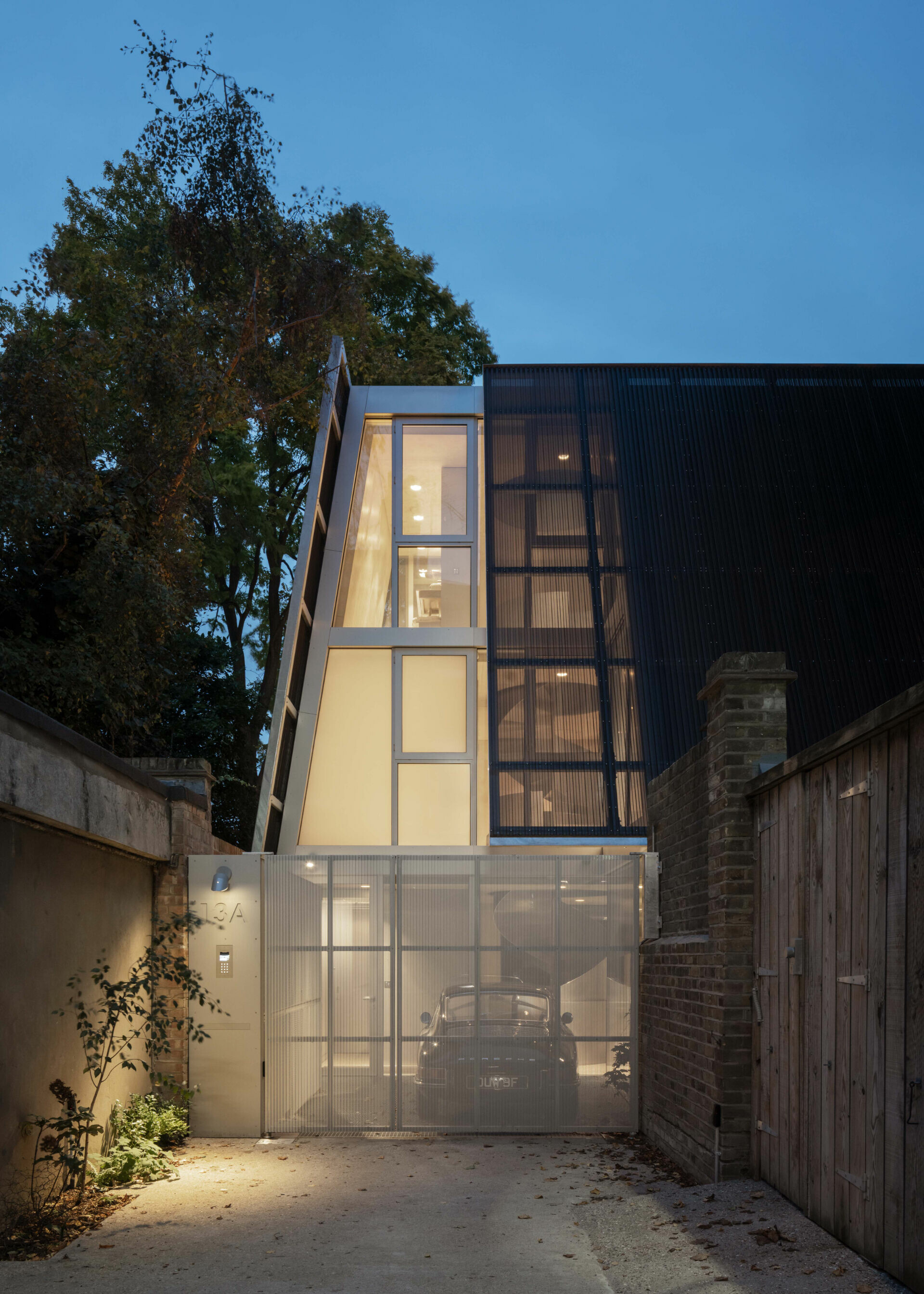
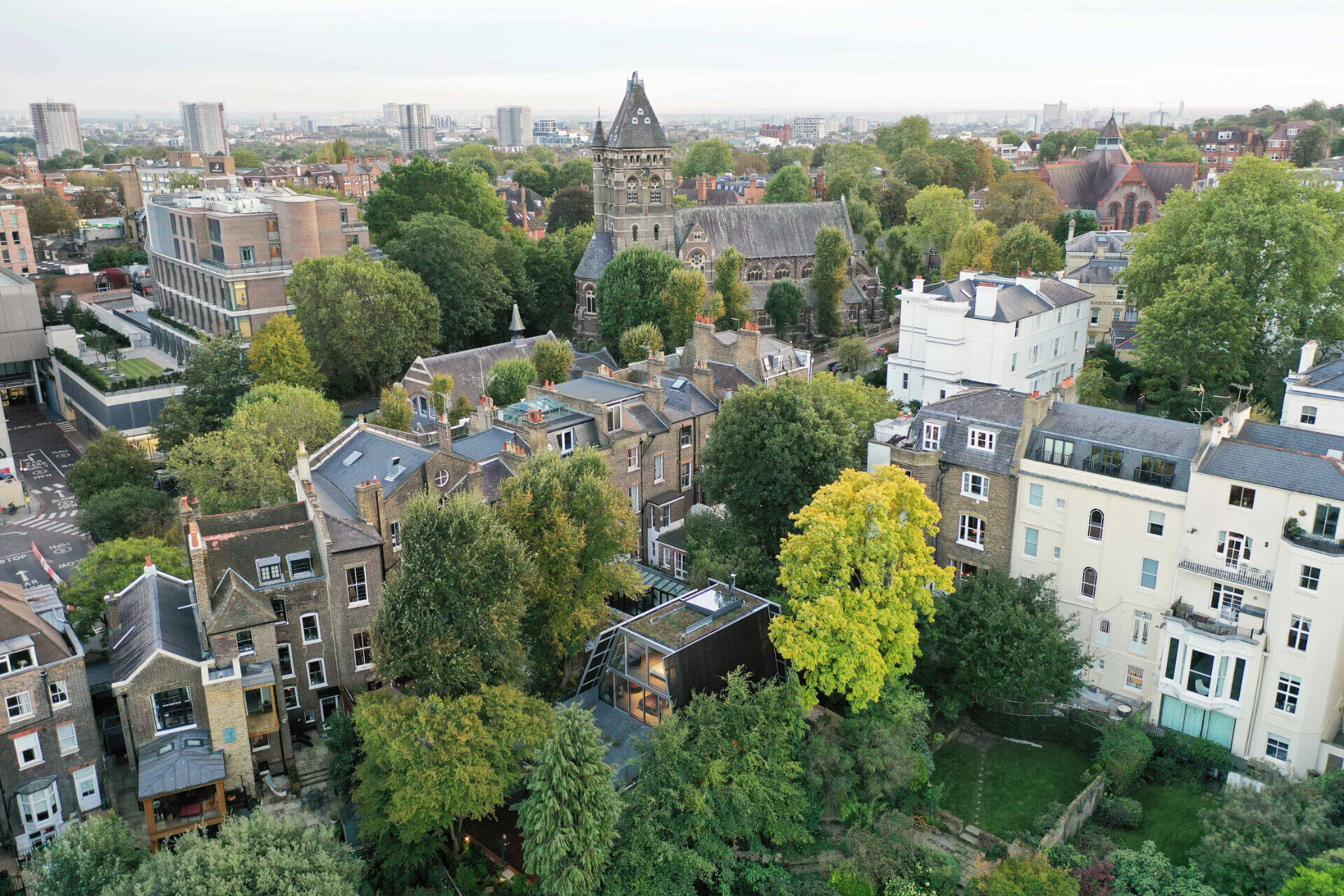
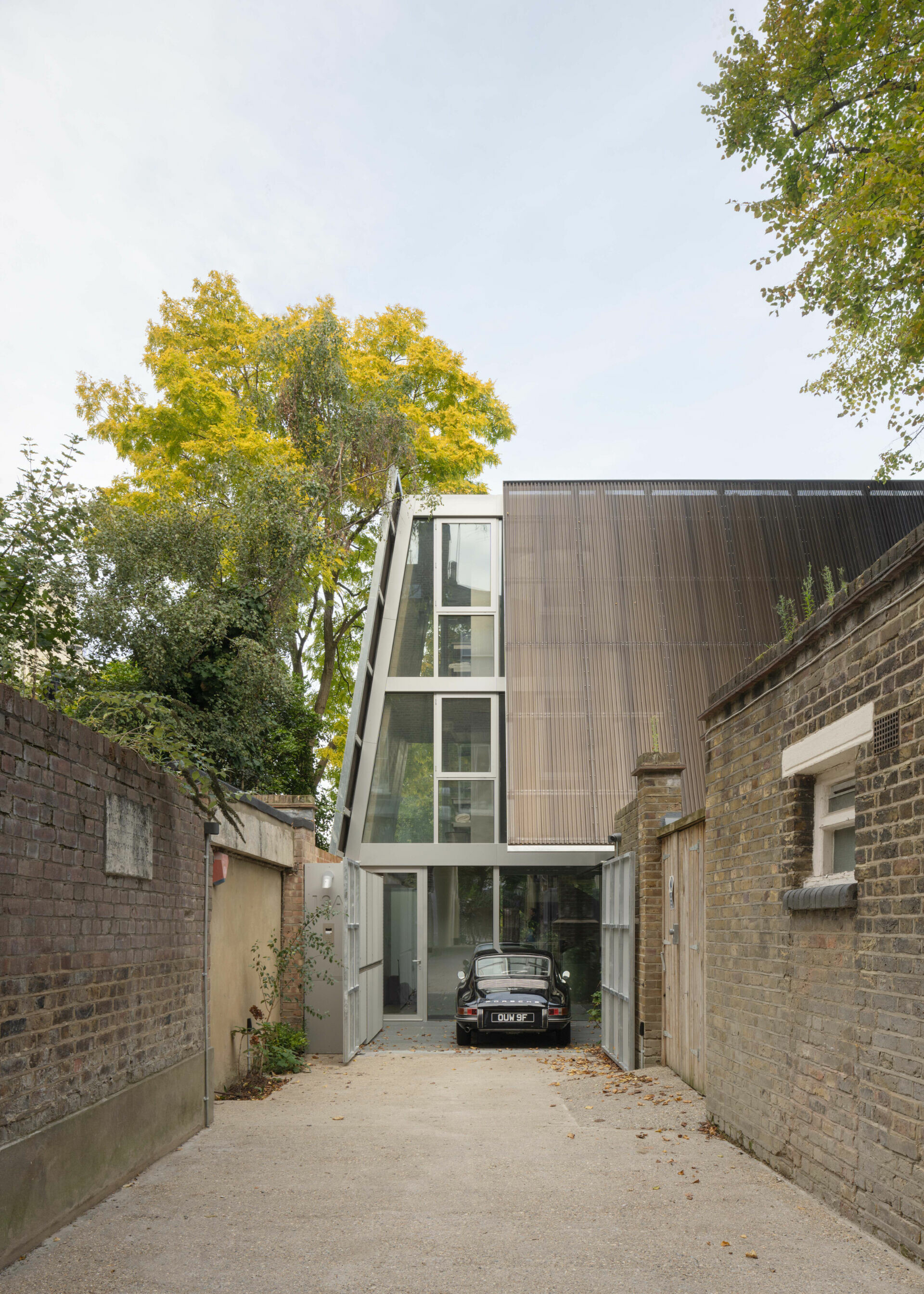
In the 18th and 19th centuries, mews were outbuildings serving aristocratic townhouses in the United Kingdom—typically modest structures, discreetly positioned behind stately facades. Over time, these utilitarian quarters have evolved into a distinctive urban housing typology. Reciprocal House, a four-storey residence including a subterranean level, captures this evolution in both spatial composition and architectural character. Reimagined by Gianni Botsford Architects, the home sits quietly at the end of a secluded lane in Hampstead, London, presenting a refined contemporary profile that subtly nods to the humble 1860s cottage that once occupied the site.
➤ James Eagle
➤ James Eagle

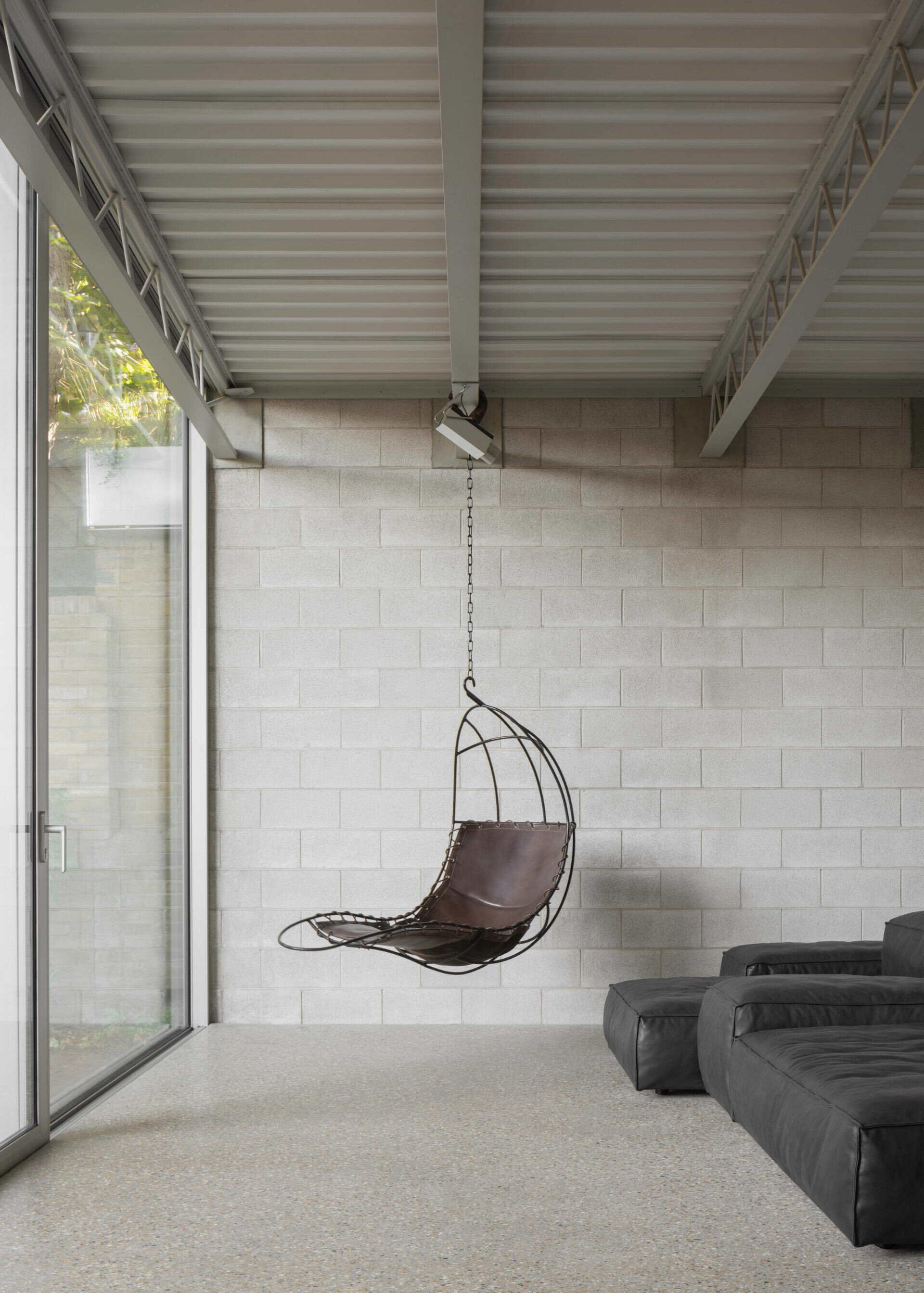
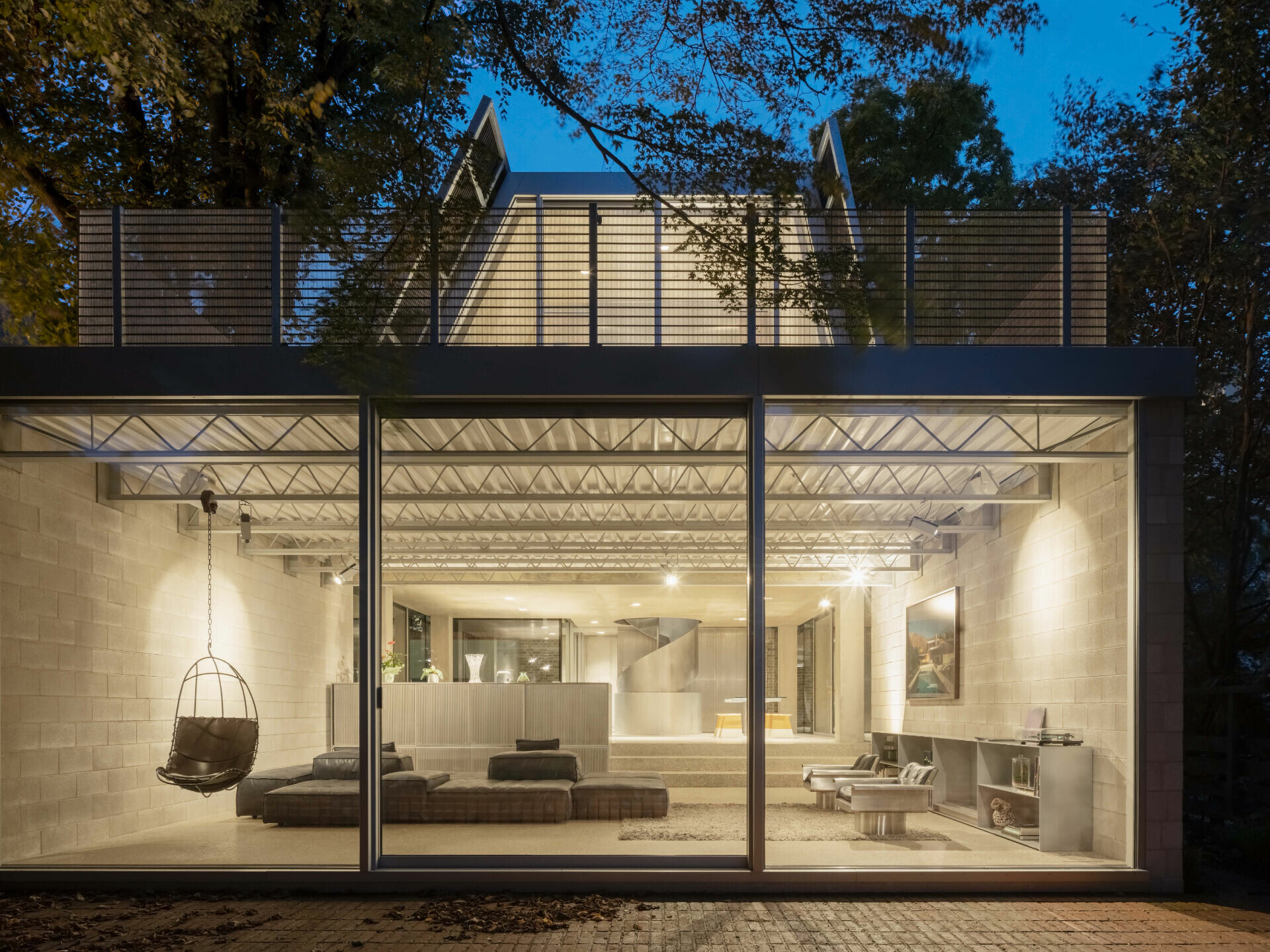
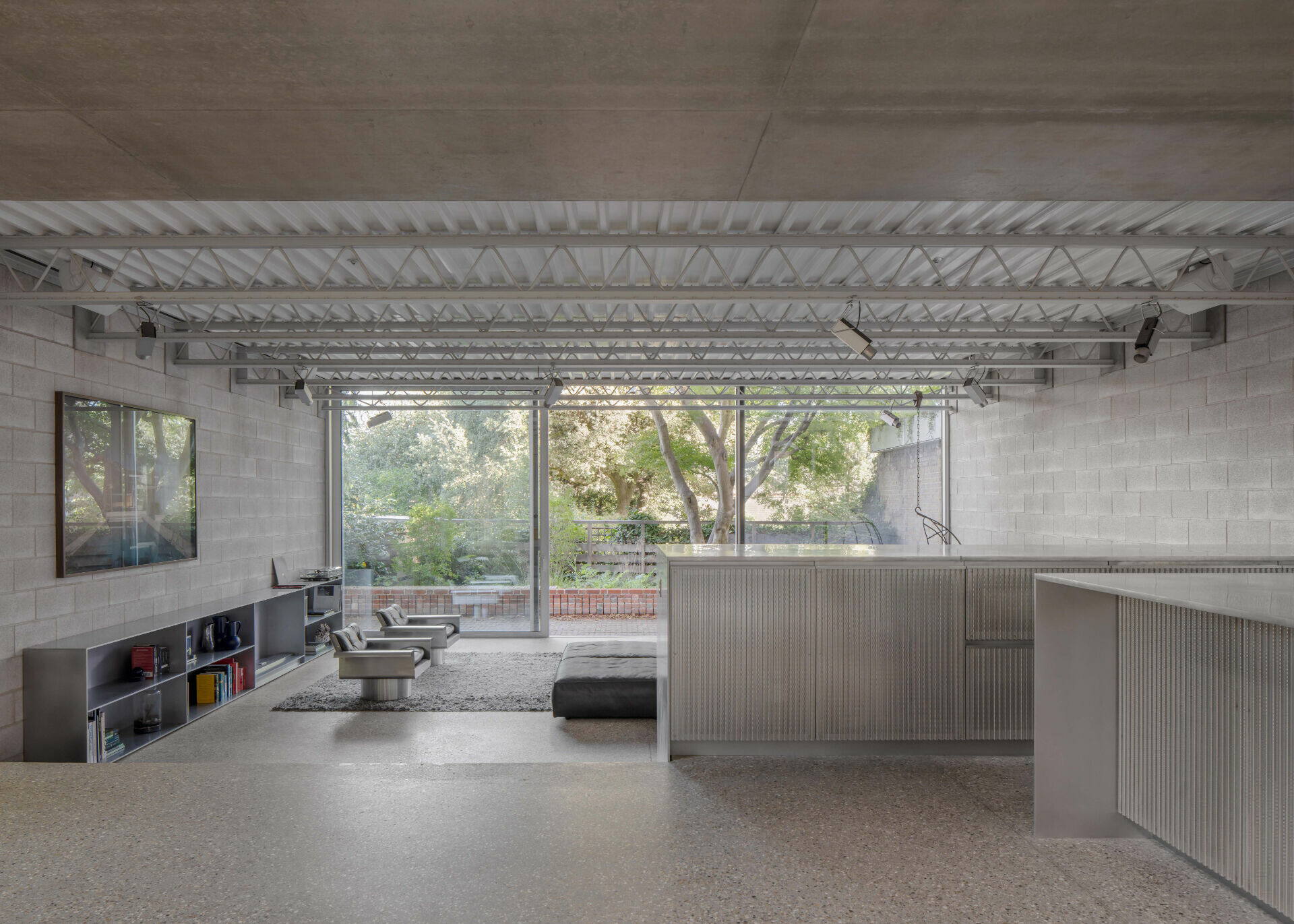
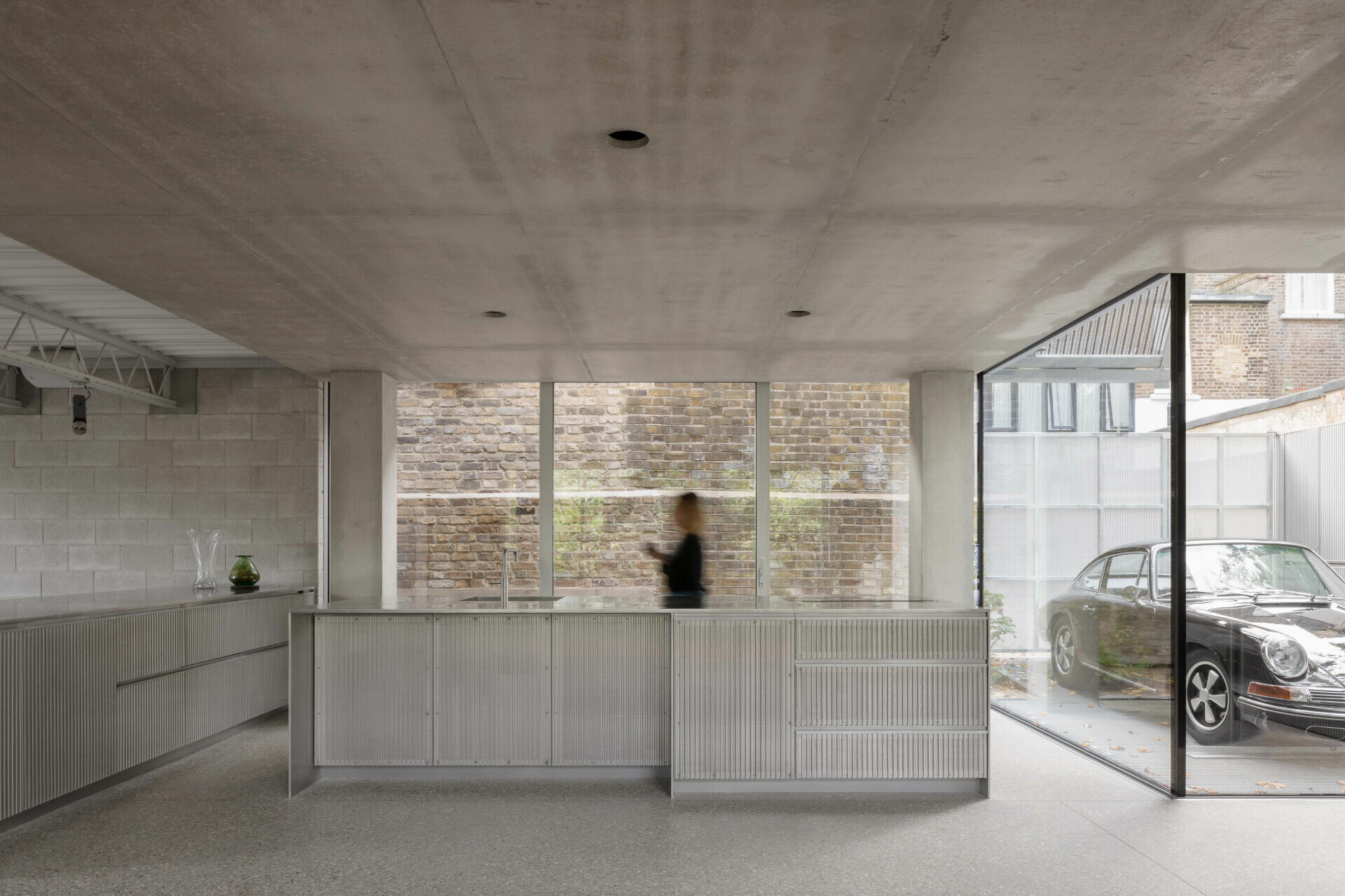
Immediately adjacent stands a single-storey modernist extension designed in 1969 by Foster Associates (now Foster + Partners)—a significant example of early British modernism. The renovation began with a core inquiry: how might the essence of this seminal structure be preserved while integrating a new architectural narrative? Botsford’s team responded by reinterpreting and extending foundational elements of the original—steel trusses, concrete blockwork, and wide-span aluminium-framed glazing—paying homage to Foster’s vocabulary while fostering an intergenerational spatial dialogue.
➤ Schnepp Renou
➤ Schnepp Renou
➤ Schnepp Renou
➤ Schnepp Renou
➤ Schnepp Renou
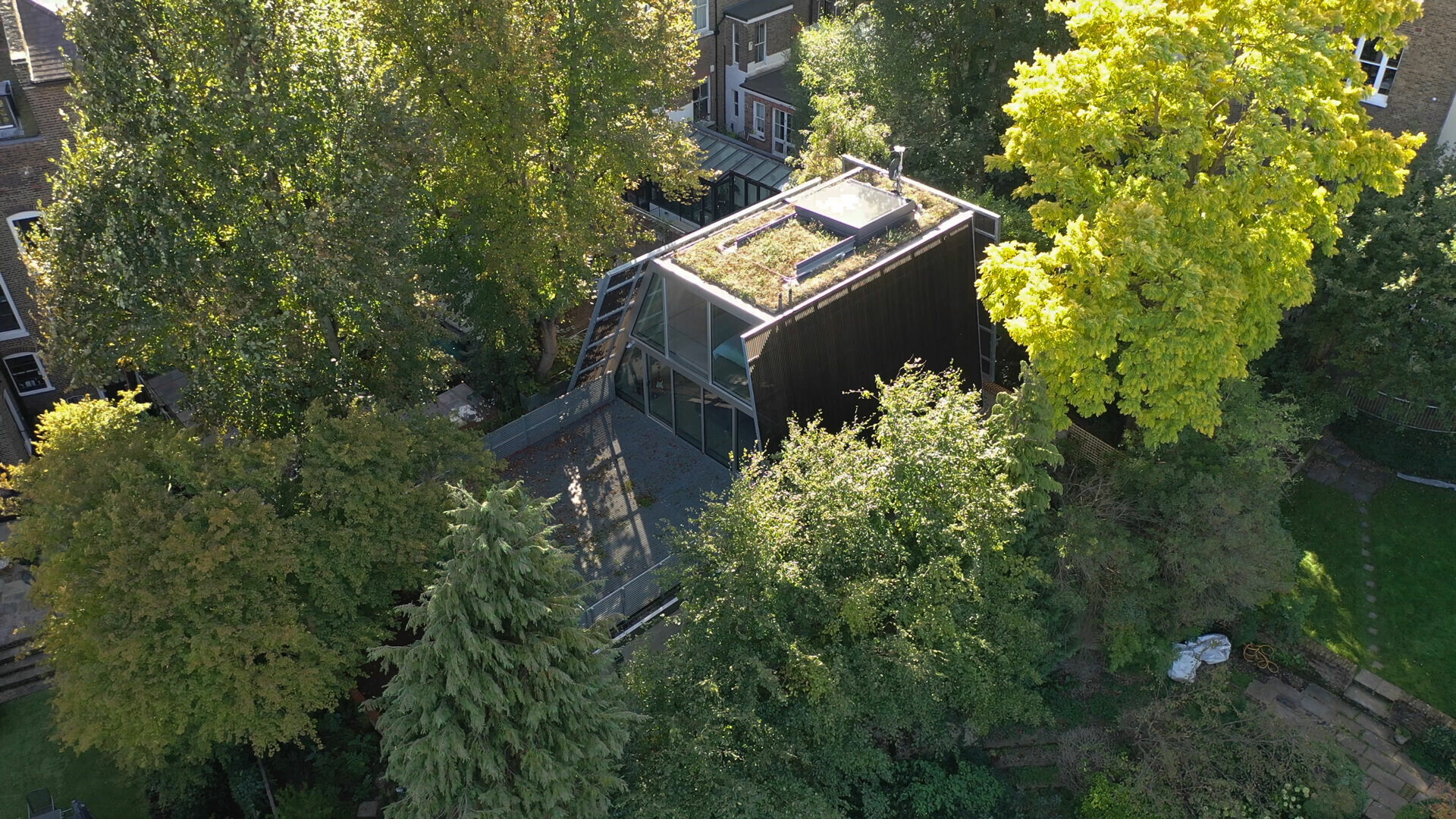
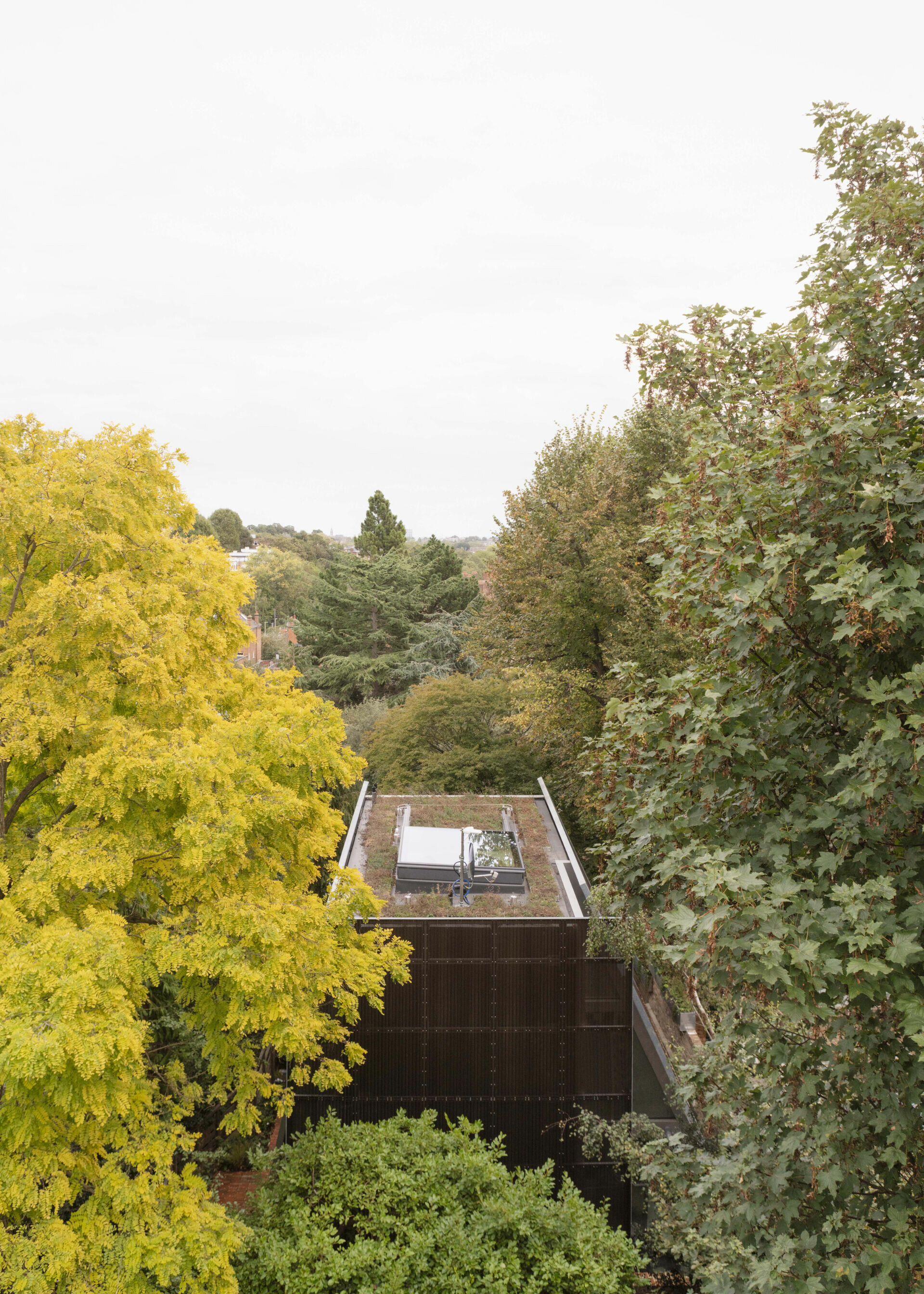
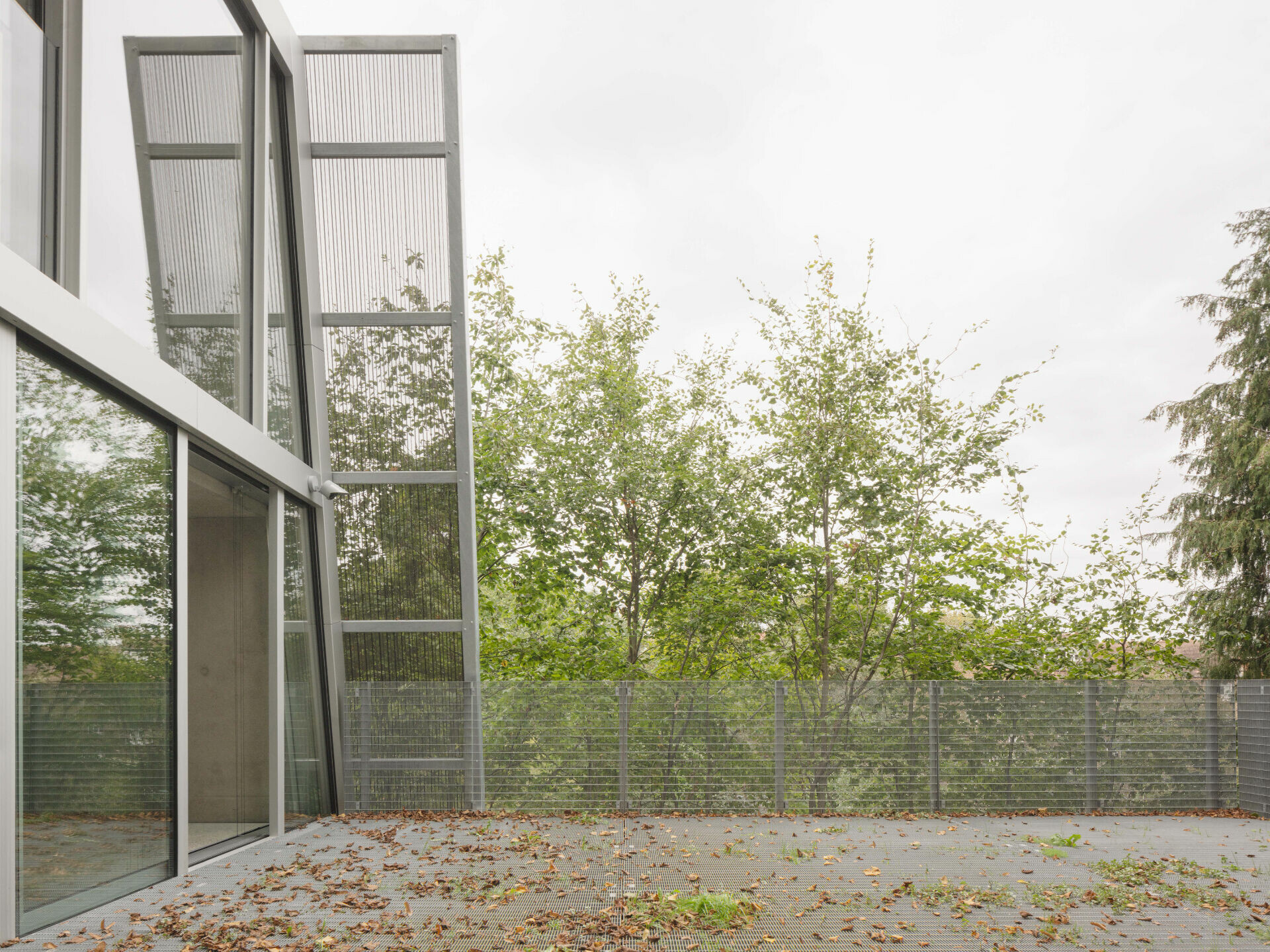
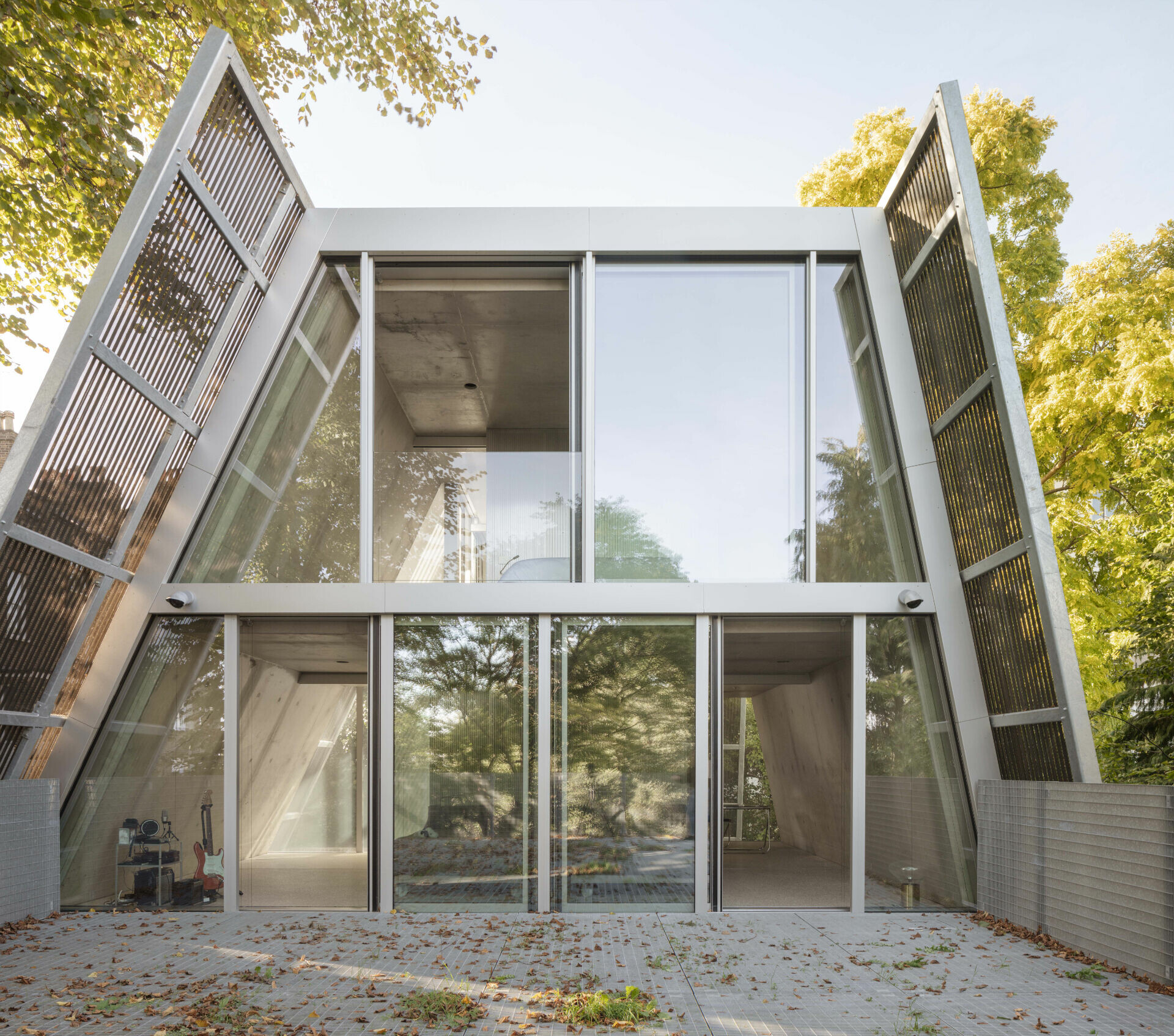
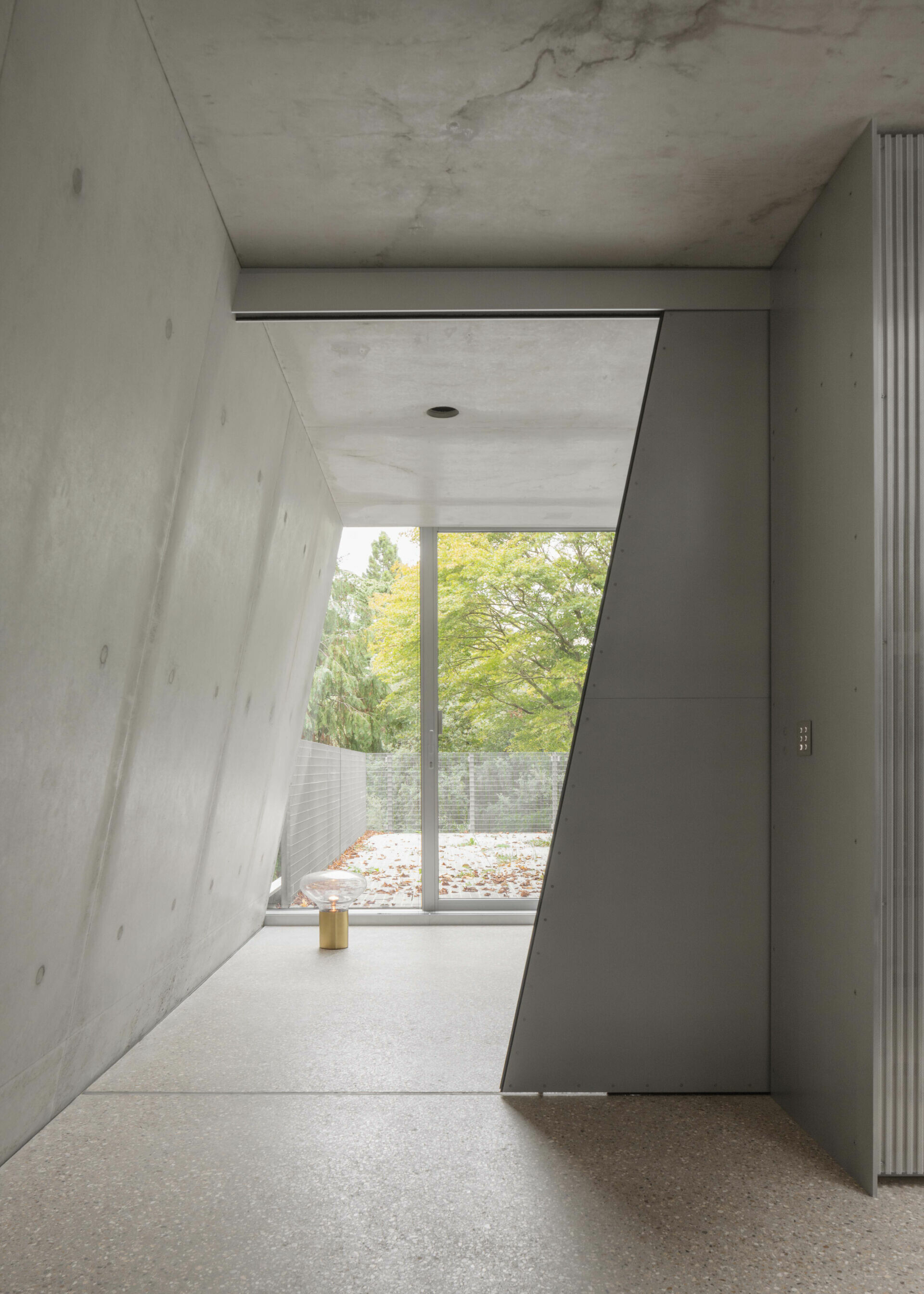
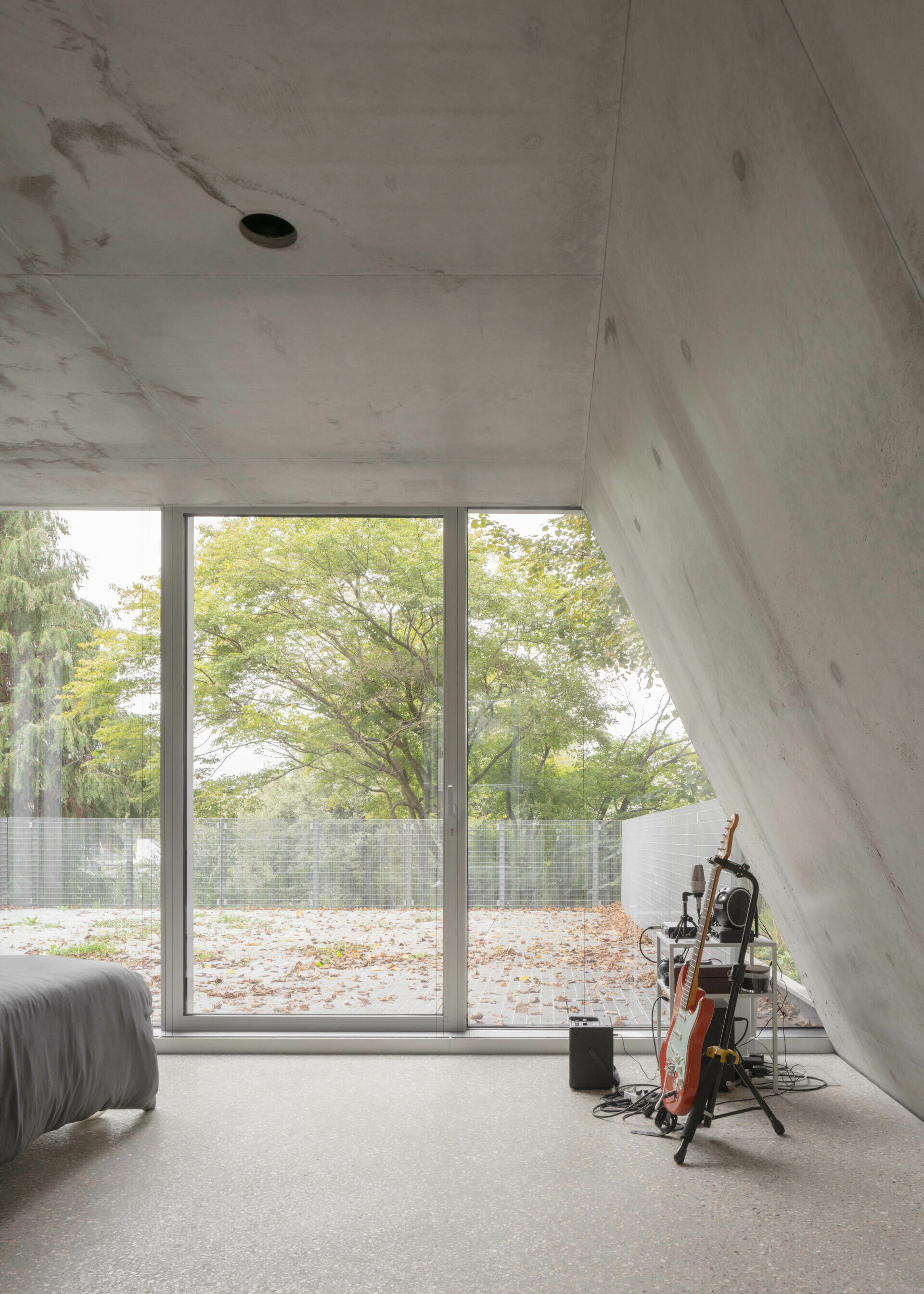
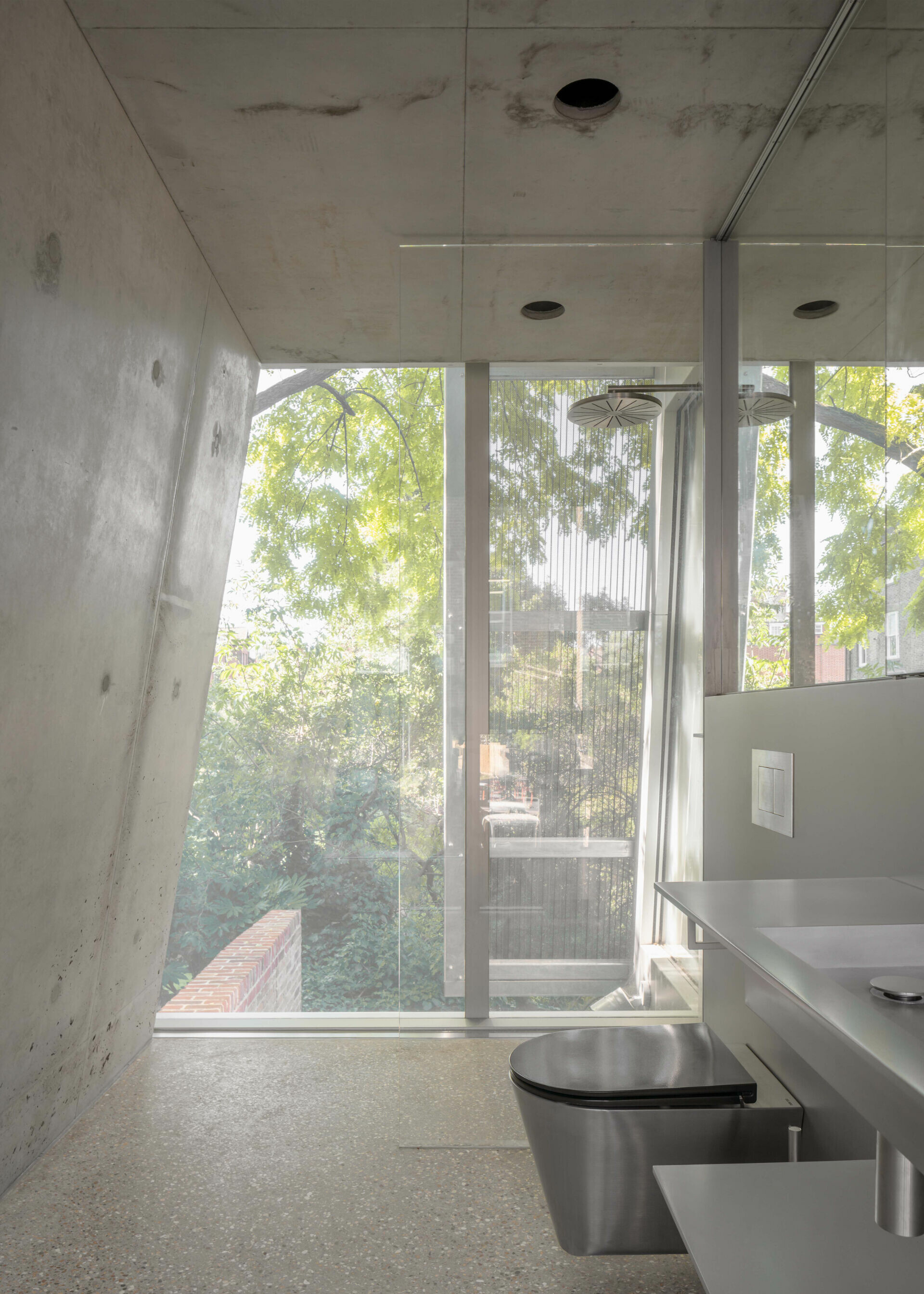
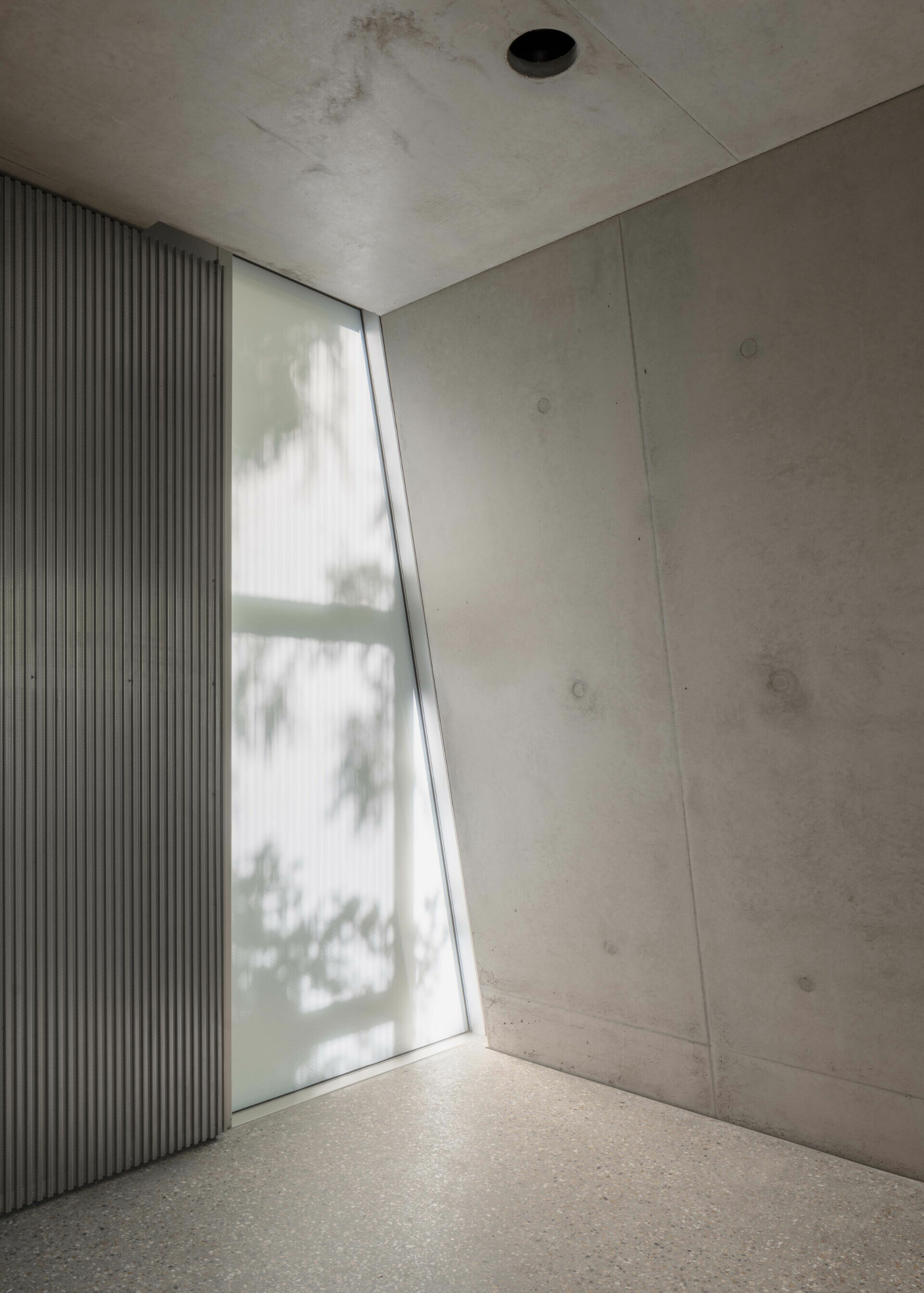
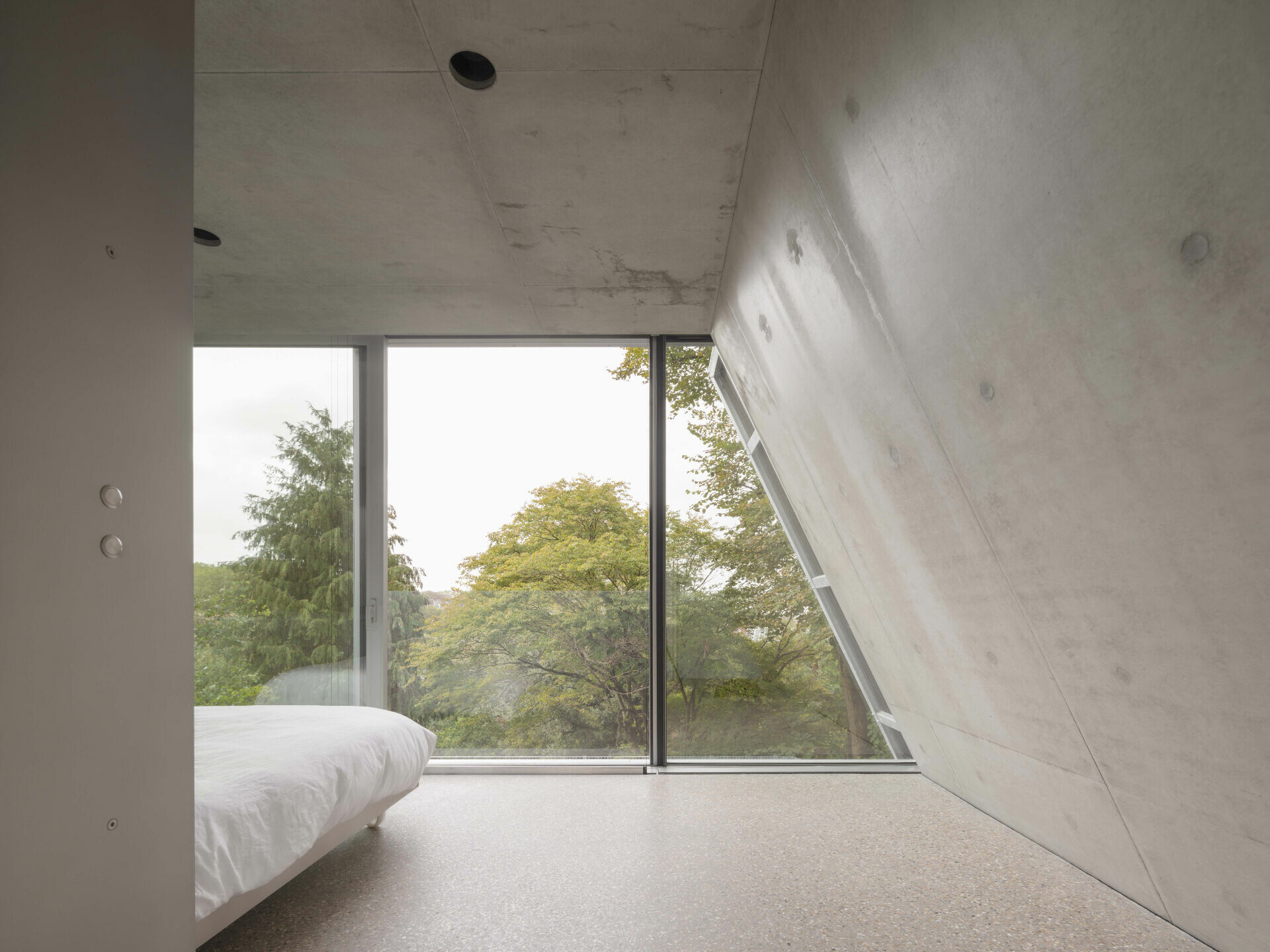
Informed by the site’s layered industrial past, the architects employed exposed in-situ concrete as the primary structural language, expressing material honesty and sculptural clarity. Bricks salvaged from the original structure were reused in the courtyard paving, forging a tangible continuity between past and present. The steeply pitched roof was reimagined as a sharply articulated geometric form, its surface clad in perforated aluminium panels rendered in a muted copper-bronze finish. These light-filtering screens provide privacy and shade while allowing the house to retreat into the leafy canopy of mature trees.
➤ Schnepp Renou
➤ Schnepp Renou
➤ Schnepp Renou
➤ Schnepp Renou
➤ Schnepp Renou
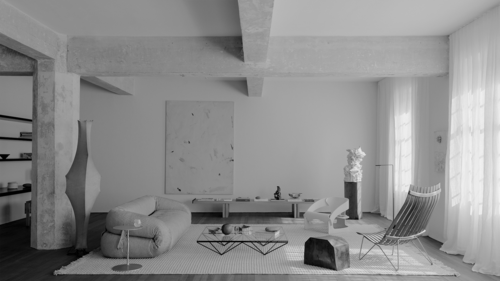
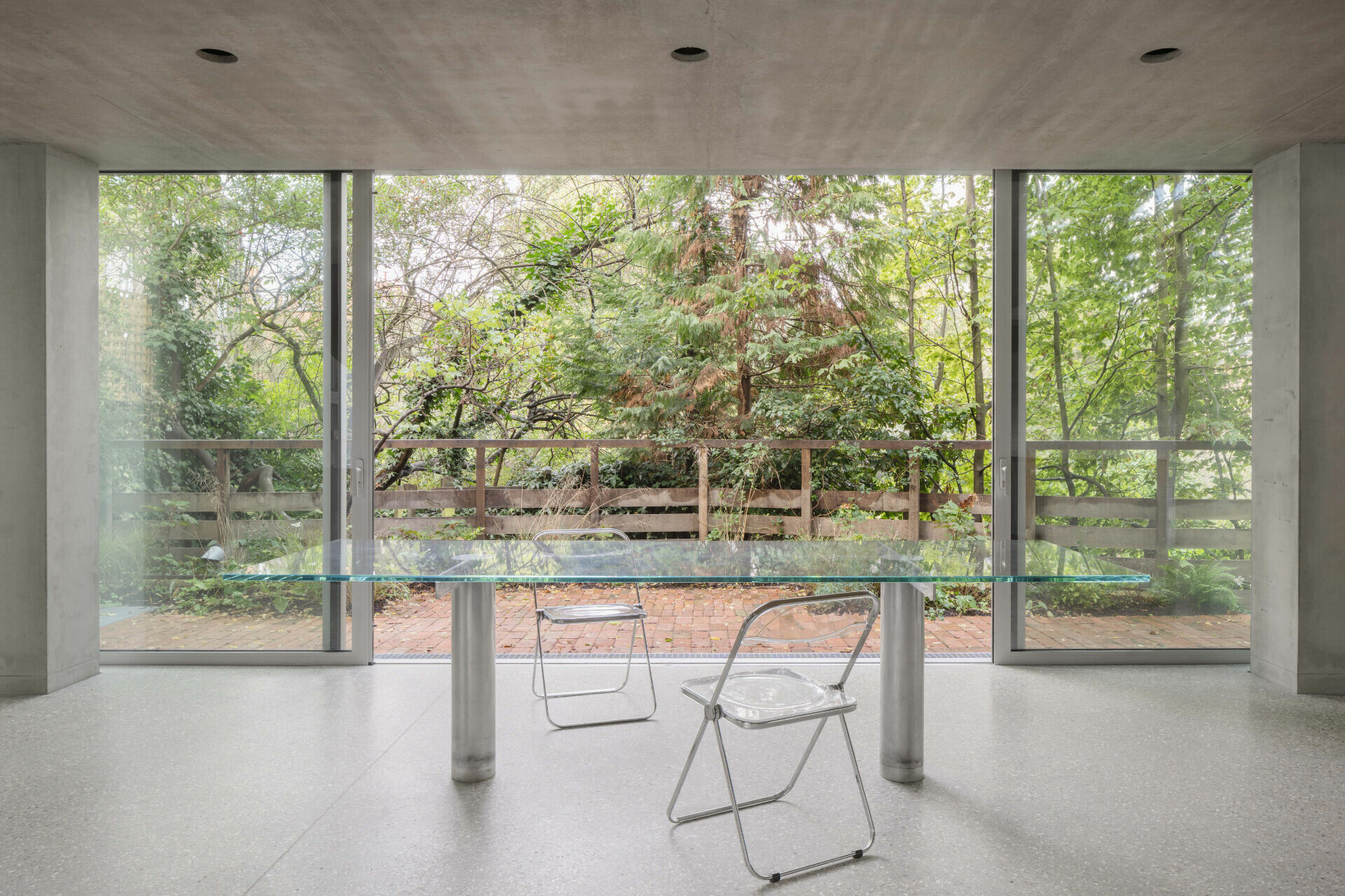
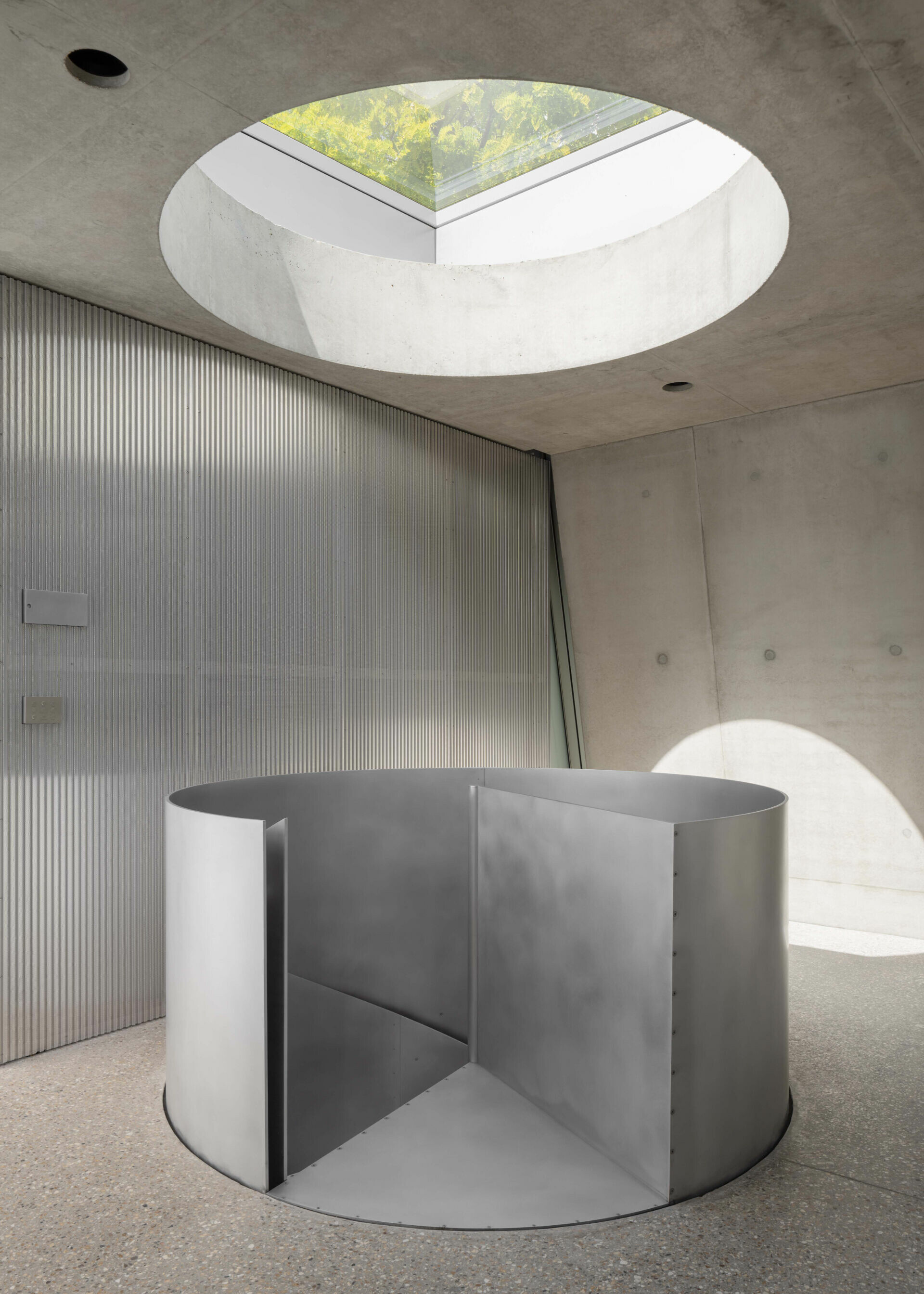
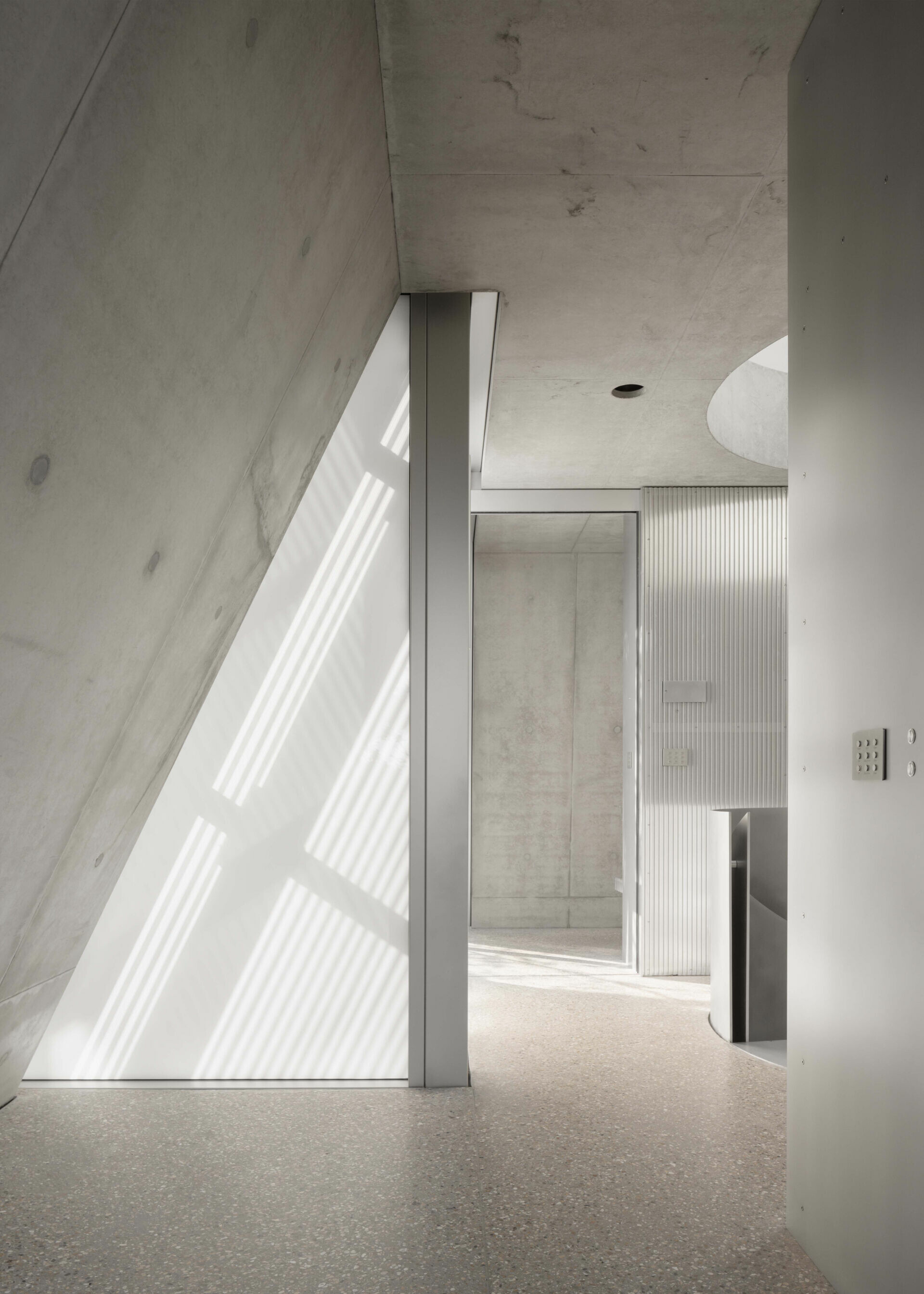
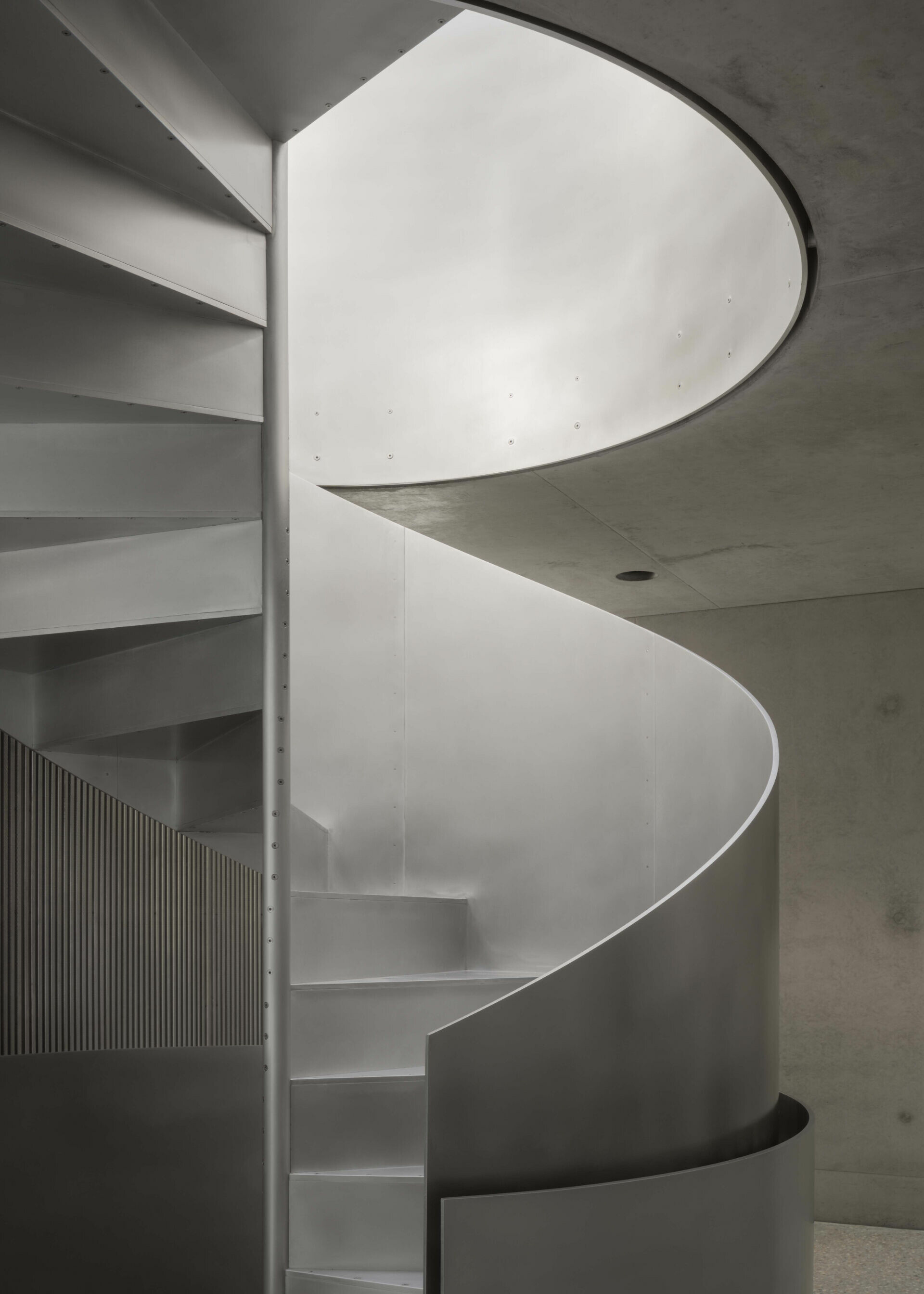
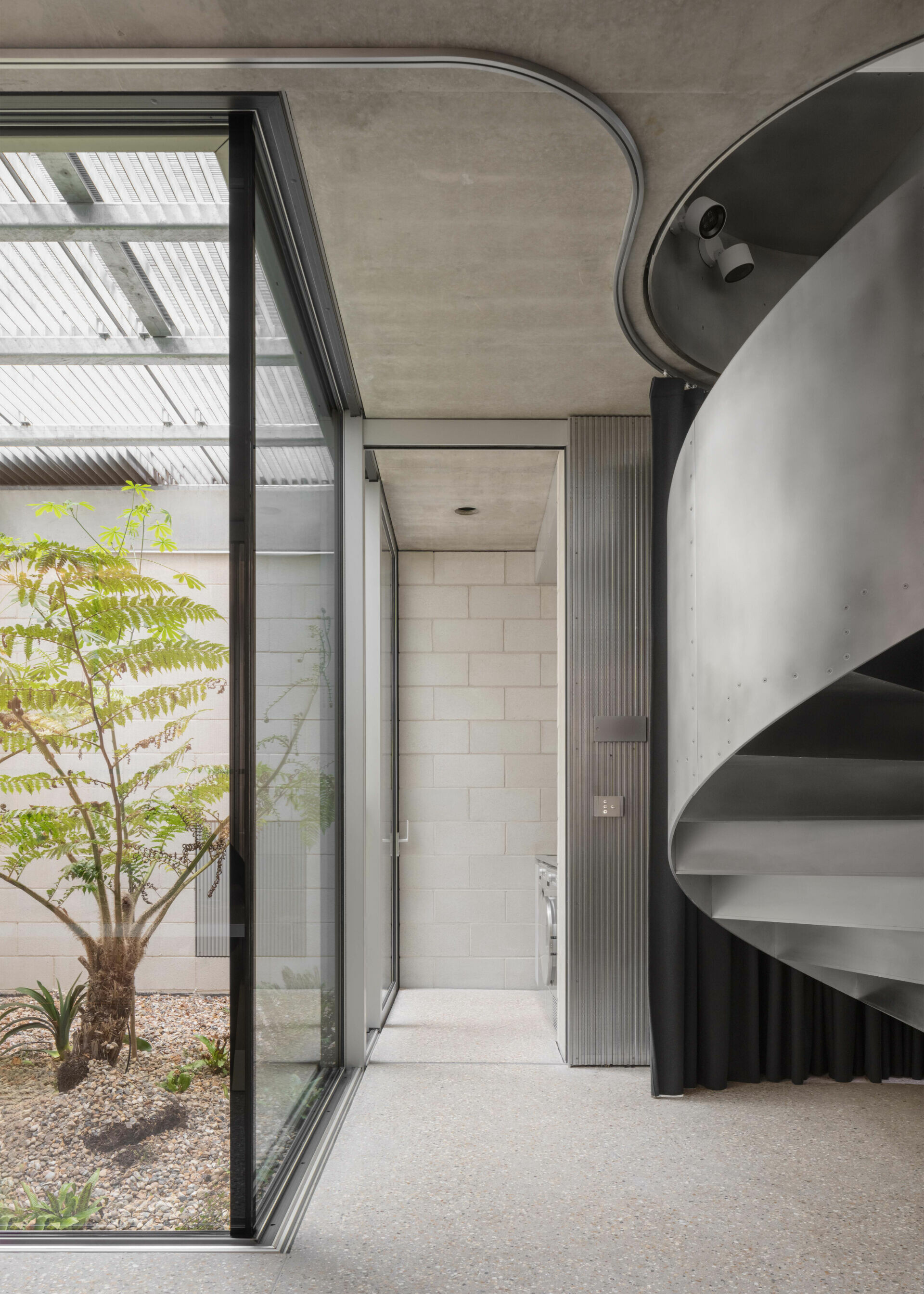
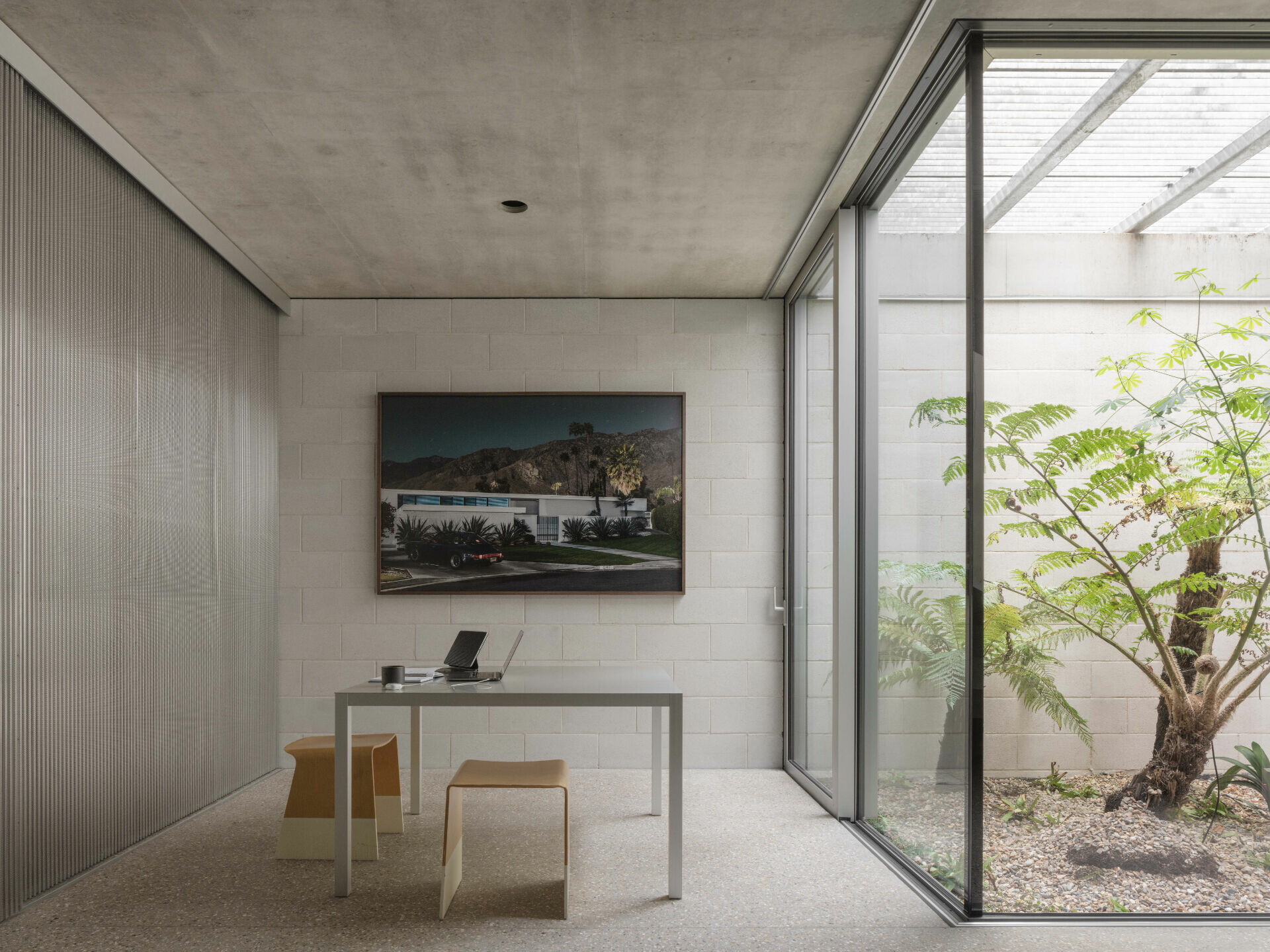
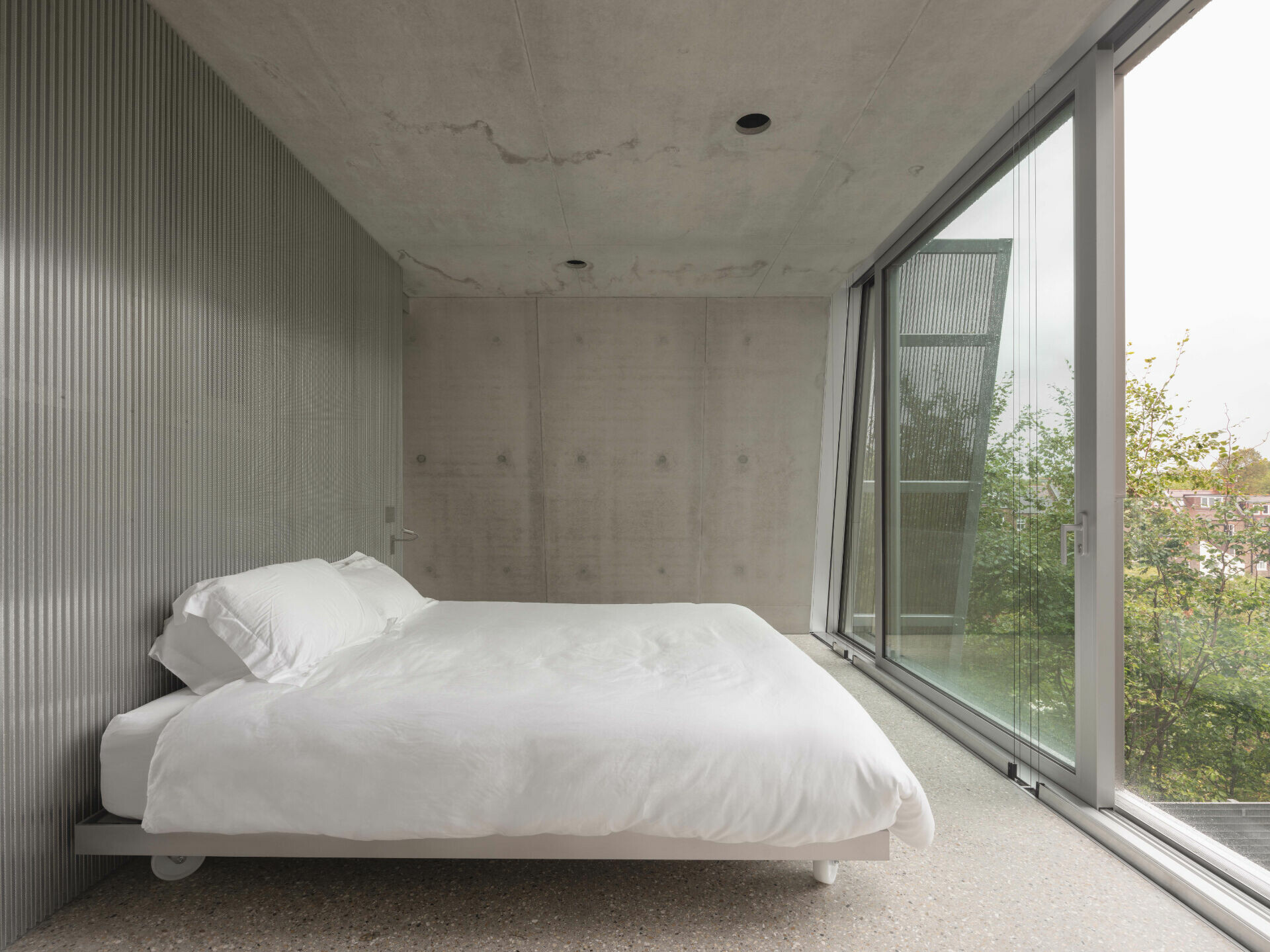
Inside, the ground level is configured as an open-plan environment, seamlessly integrating the living, dining, and kitchen areas and reinstating the convivial atmosphere once central to the home. A sculptural spiral staircase punctuates the plan, vertically connecting all four levels. The second and third floors accommodate three bedrooms: two open onto private terraces, and the top floor hosts a generous principal suite with expansive views into the surrounding foliage. A circular rooflight, approximately two metres in diameter, directs daylight through the stairwell, while a sunken courtyard draws fresh air and sunlight deep into the basement—transforming a space often perceived as dark into one that is bright and inhabitable.
➤ Schnepp Renou
➤ Schnepp Renou
➤ Schnepp Renou
➤ Schnepp Renou
➤ Schnepp Renou
Sustainable strategies were embedded from the project’s inception. Photovoltaic panels are integrated into the roof, and operable skylights, combined with passive ventilation, create a chimney effect to facilitate natural airflow. The house is further equipped with an air-source heat pump, underfloor heating, and airtight, thermally insulated glazing—minimising energy consumption while maintaining a comfortable interior climate year-round. In its totality, Reciprocal House transcends its role as a private home: it becomes a living, breathing structure—responsive to context, grounded in memory, and open to the future. Here, in the quiet folds of Hampstead, architectural continuity emerges through thoughtful reinvention.
➤ Schnepp Renou
➤ Schnepp Renou