Resilient Emotion, Rational Elegance : The Sublime Beauty of Aluminum Alloy — ALMOSA
How do you define beauty—by form, or by perception? In daily life, it often reveals itself not through spectacle, but through the quiet presence of things easily overlooked. Consider aluminum alloy: used in aircraft fuselages, bicycle frames, golf clubs, window frames, laptops, and mobile devices, this material—though often hidden in plain sight—demonstrates a remarkable capacity to adapt, endure, and perform. It does not demand attention, yet it embodies a poised and rational beauty. At ALMOSA, aluminum alloy is not merely a functional material—it is a narrative of transformation. Drawing on 35 years of precision manufacturing expertise, ALMOSA has quietly redefined the role of aluminum alloy in domestic life—elevating it from structural support to a visible, tactile protagonist in the kitchen. In ALMOSA’s hands, aluminum alloy becomes a quiet luminescence, integrating seamlessly into the home, embodying calm, restraint, and contemporary aesthetic depth.
Breaking Boundaries: A Cross-Disciplinary Path
When it comes to kitchens, most people default to materials like stainless steel or laminates. In this familiar landscape, aluminum alloy represents a quiet but radical shift. Taiwan’s aluminum industry is globally respected, yet ALMOSA's move from industrial manufacturing into holistic interior systems raised eyebrows. Stepping outside the boundaries of its origins, the brand faced challenges—but also embraced a process of transformation and legacy. Today, aluminum alloy sits at the core of ALMOSA’s kitchen systems, combining durability with aesthetic finesse. No longer hidden within structure, it emerges as a defining surface—expressing calm, control, and a uniquely restrained sense of beauty.
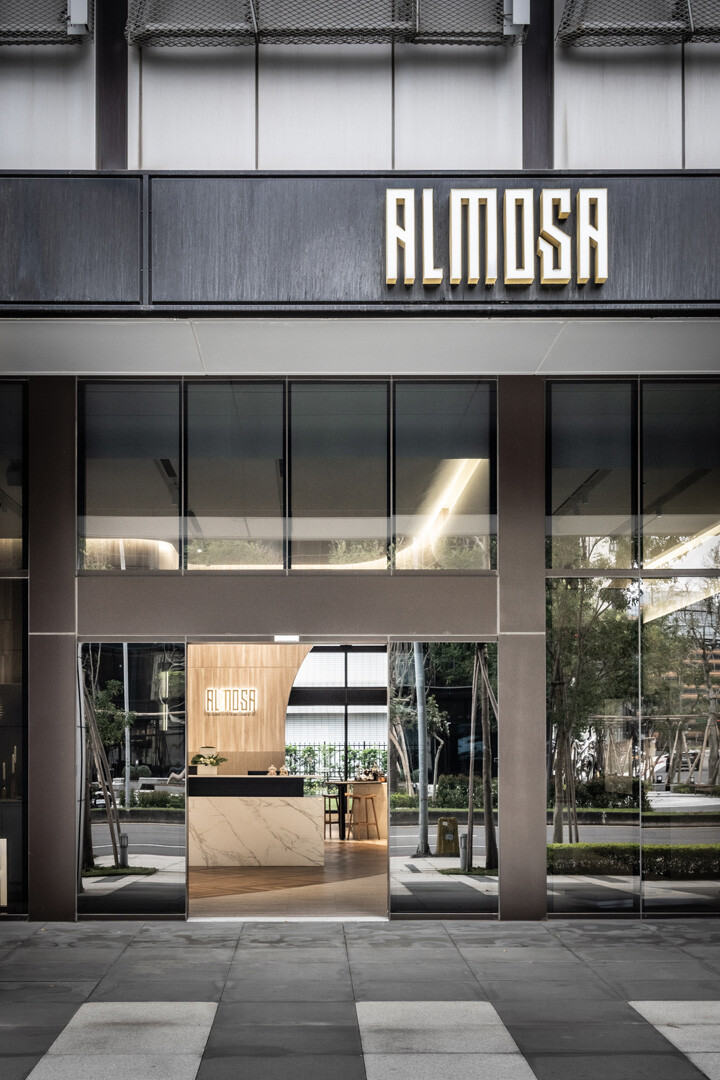
The brand name itself tells a story of reinvention. “AL” signifies aluminum, while “MOSA” references Formosa—Taiwan’s historical name—anchoring ALMOSA in both material expertise and cultural identity. Since its founding in 1996, the company has moved from traditional manufacturing to electronics, optoelectronics, and semiconductors. This evolutionary path has always been driven by a belief: “We take on what others avoid and solve what seems impossible.” That spirit continues today, not in the pursuit of scale, but of excellence—measured against global benchmarks, refined by critical thinking, and grounded in deep craftsmanship. At its core, ALMOSA asks: how can decades of surface treatment expertise reshape the way we experience space? Through this lens, aluminum alloy becomes not cold or distant—but tactile, intimate, and quietly expressive.
Precision as a Rarity: Building a Competitive Edge
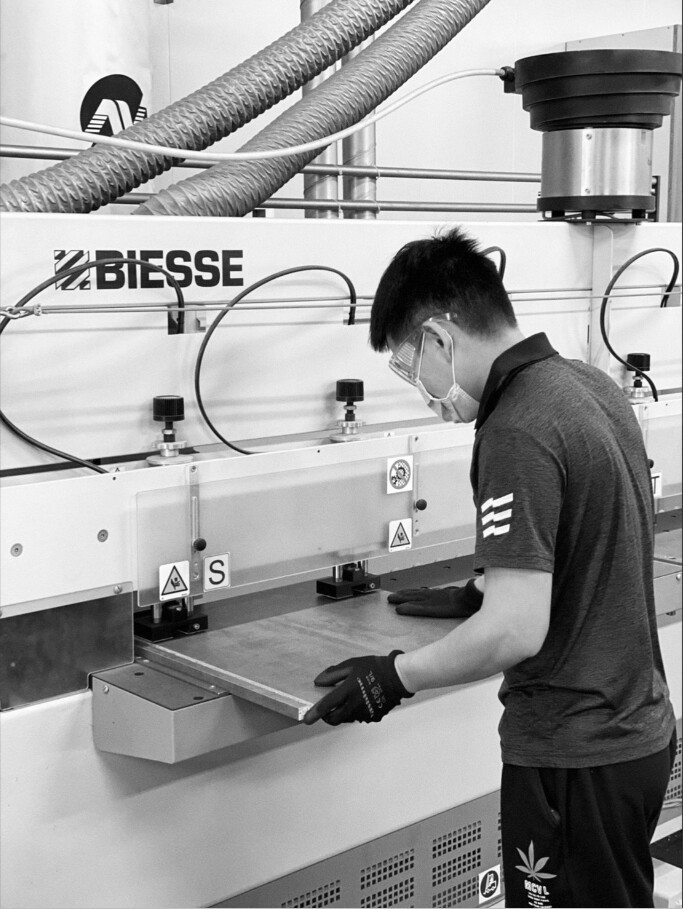
From the outset, ALMOSA recognized a hard truth: in a saturated market, true differentiation is essential. Without it, there is no longevity. Rather than mimic established kitchen brands, ALMOSA began with a question: What does the kitchen truly demand—not just functionally, but emotionally? Starting from the most complex zones within the kitchen, the team mapped out use cases and designed backward from real user needs. The result is a kitchen system where form, structure, and daily life converge—and where aluminum alloy becomes the enabler of a new design language. Its physical properties make aluminum ideal: resistant to swelling, water damage, discoloration, and warping, it eliminates many of the liabilities of traditional materials. Lightweight yet structurally sound, it allows for minimalist proportions without sacrificing strength. These rare traits become irreplaceable assets—distinctive not for their novelty, but for the silent functionality they deliver. Every system adheres to the ALMOSA triad: precision, sustainability, and uncompromising quality. This philosophy is not merely aesthetic—it is technical, environmental, and emotional.
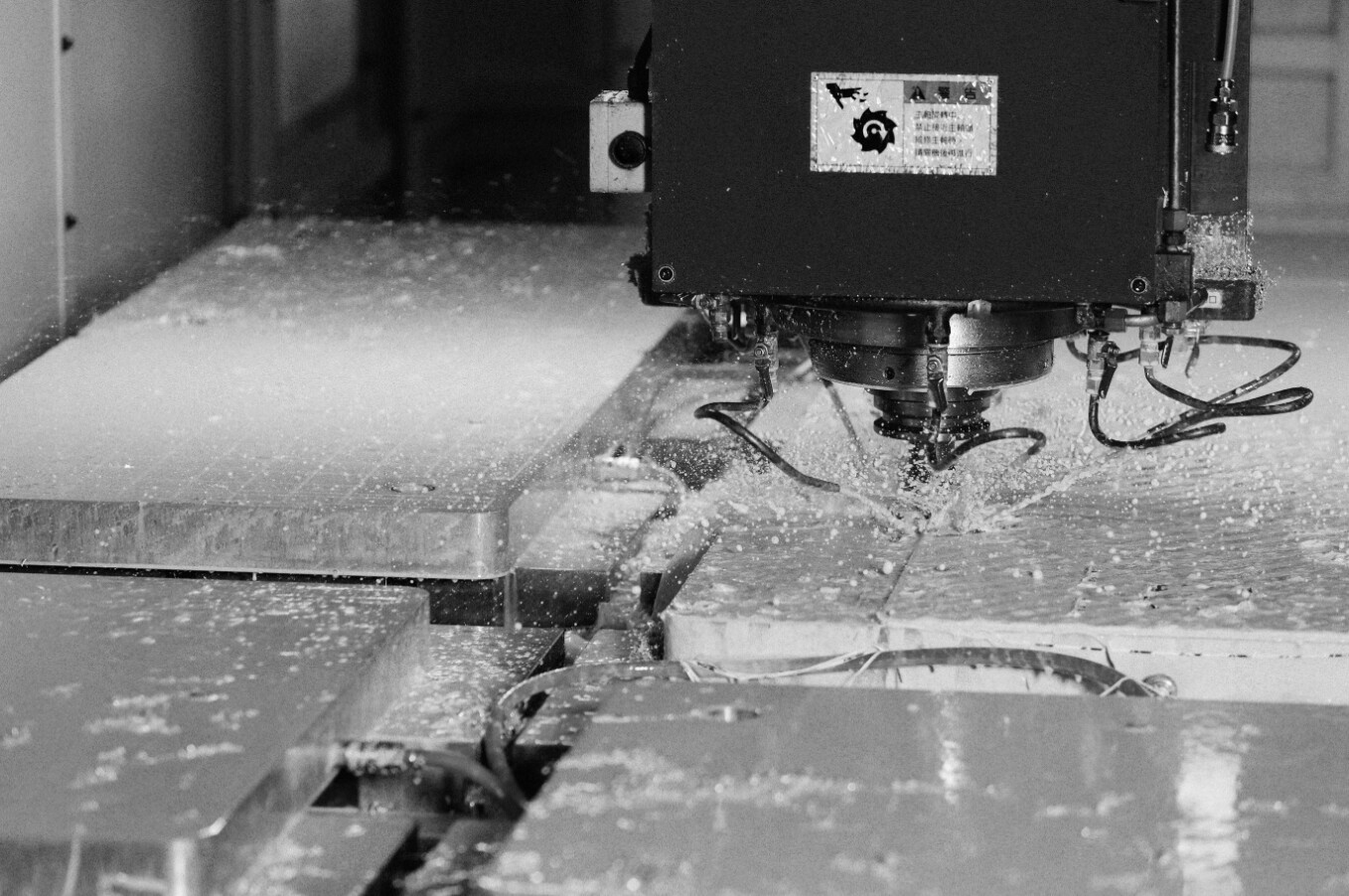
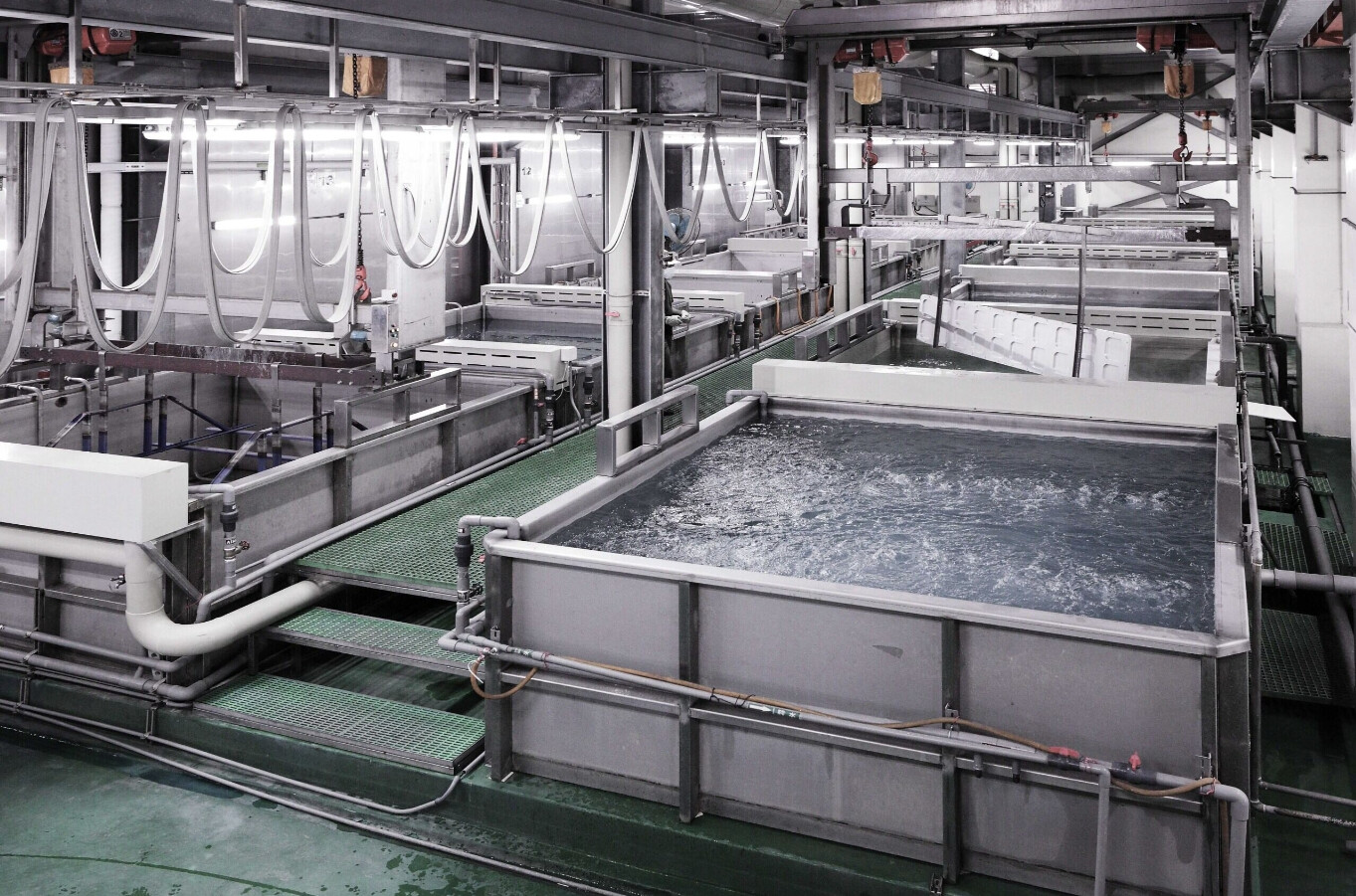
ALMOSA uses only high-purity aluminum, which is 100% recyclable, minimizing waste from one-time use materials. Its lightweight properties support highly precise fabrication and long-term structural integrity. Combined with CNC (Computer Numerical Control) machining, each component fits seamlessly, giving cabinetry a monolithic, fluid appearance that is soft to the touch. Through proprietary anodizing, surface hardness is elevated to Mohs 7, enhancing durability and corrosion resistance. Brushed and sandblasted finishes articulate a subdued elegance—revealing subtle shifts in texture and light. Originally developed for semiconductors and aerospace, these techniques are reinterpreted here to define lines, calibrate proportions, and articulate each joint with exactitude. Within this technical discipline lies a quiet design poetry—one that reveals itself through everyday gestures: a drawer opening, a cabinet closing, the light falling across a brushed panel.
Pushing Boundaries: Innovation as Irreplaceable Tension
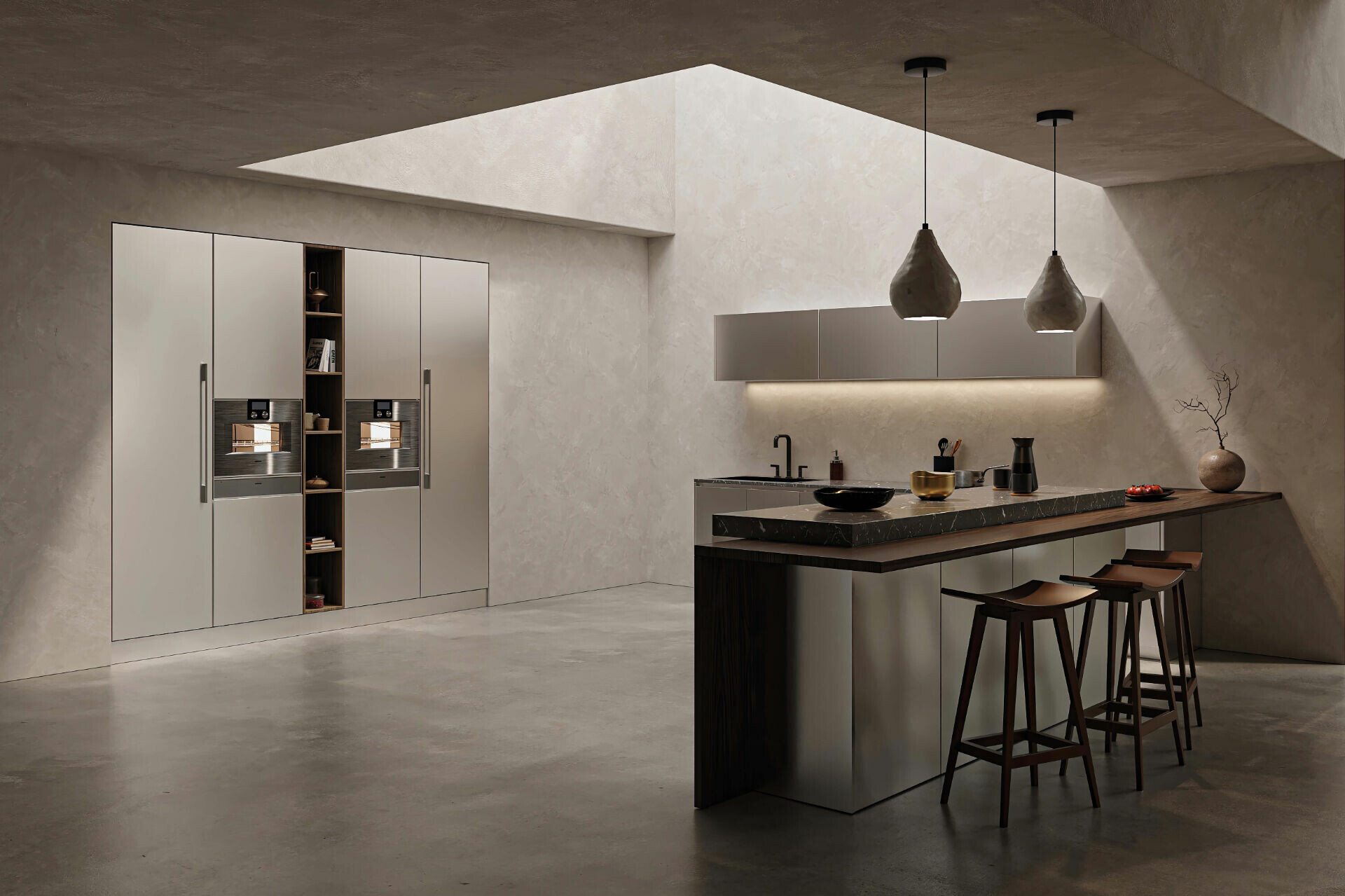
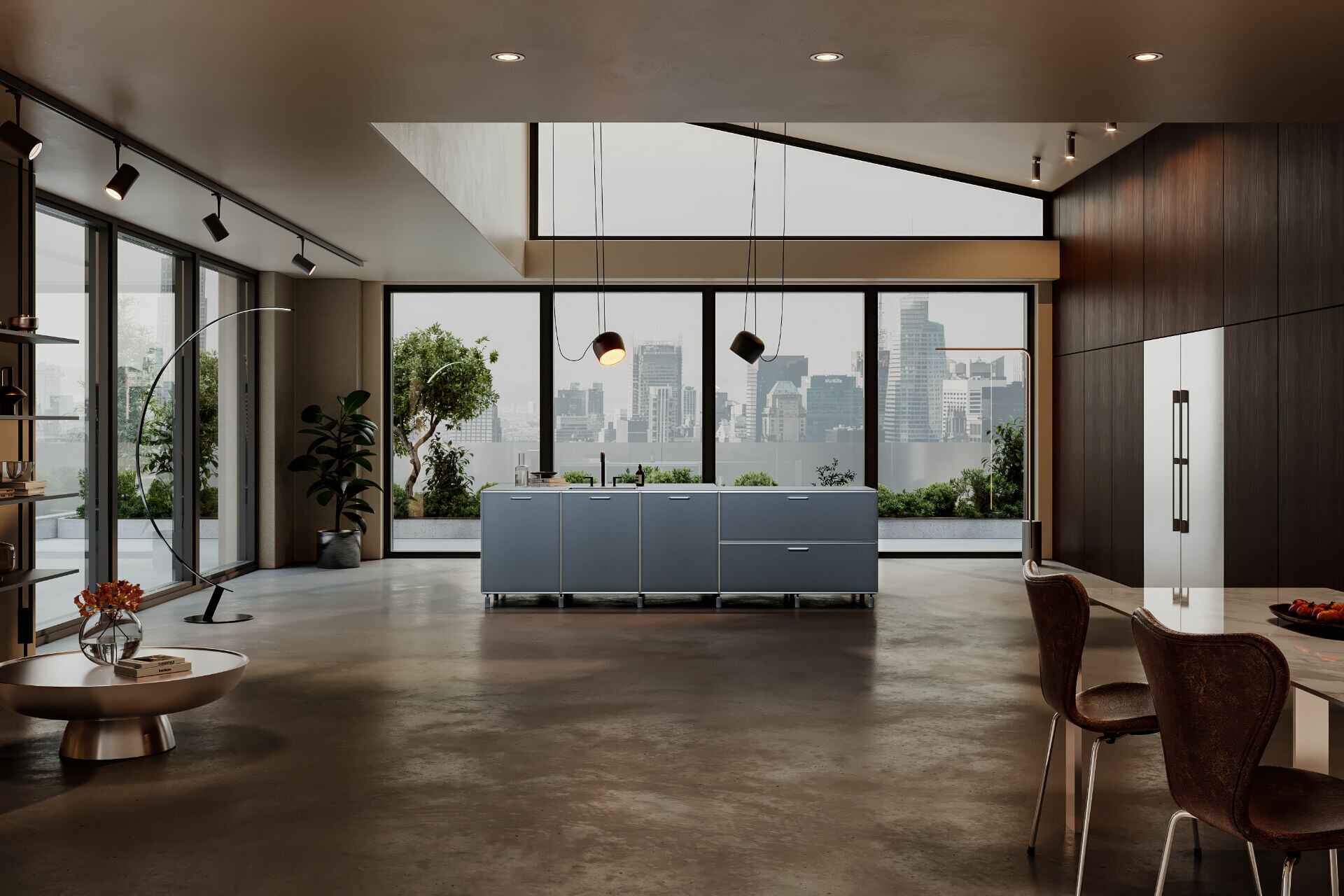
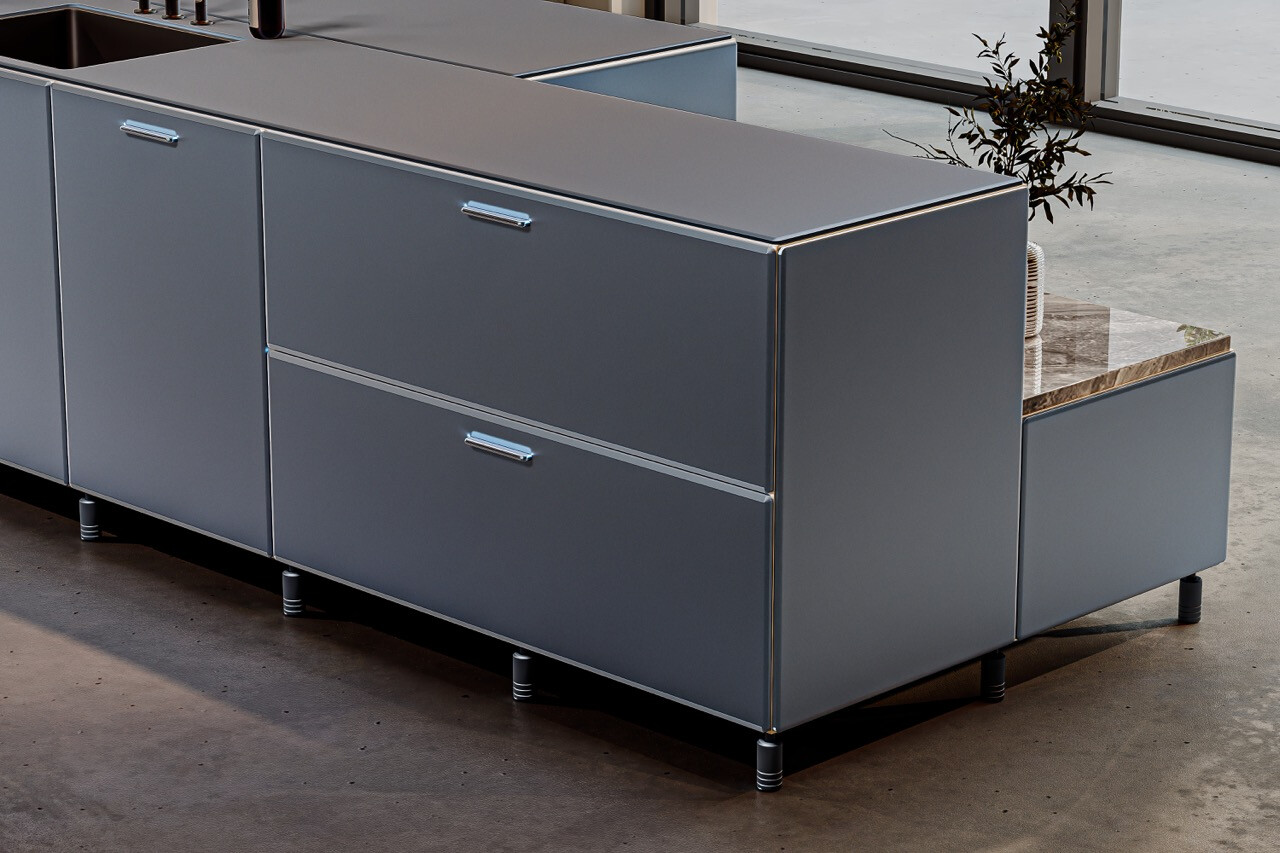
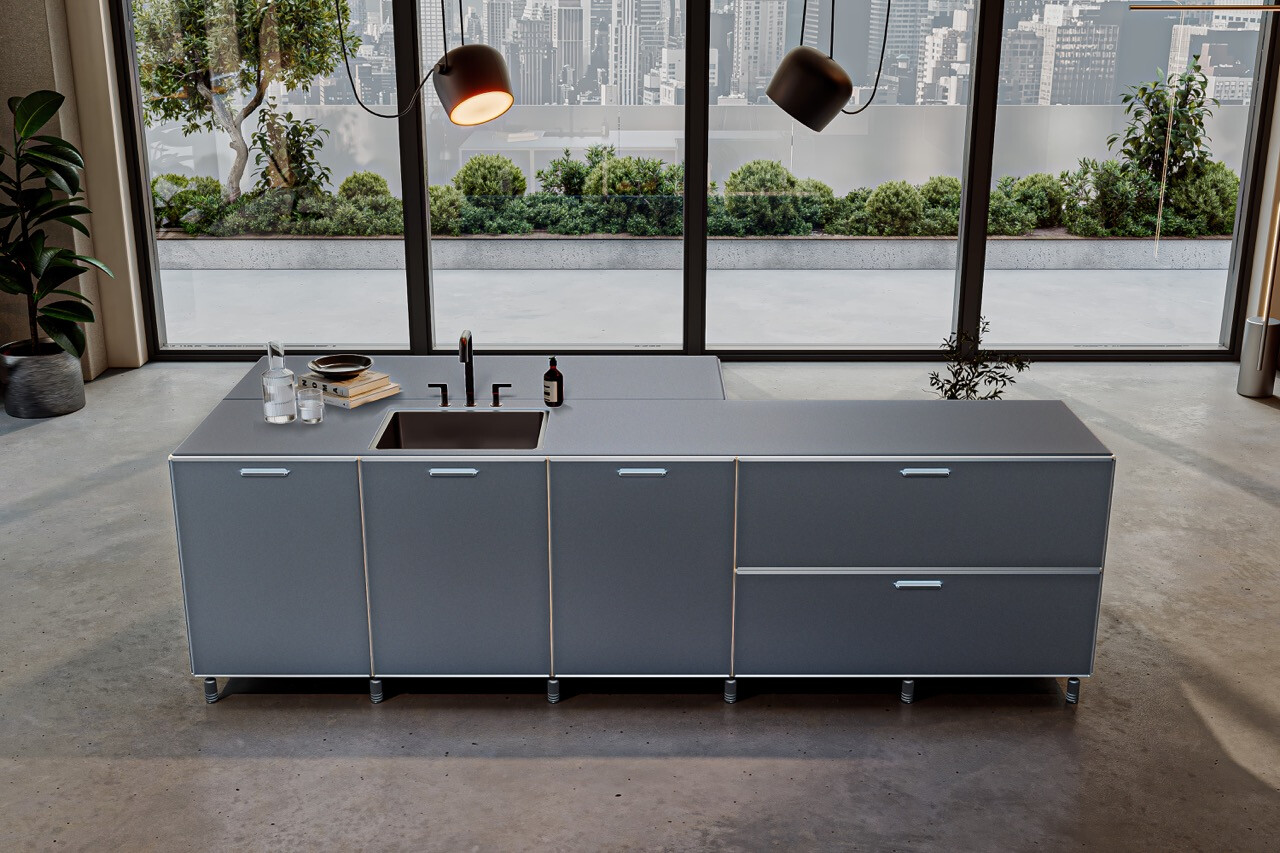
To ALMOSA, the kitchen is no longer a utilitarian workspace. It is a site of expression, intimacy, and ritual—a place that reflects its inhabitants’ aesthetics and rhythms. The kitchen can be relaxed, poetic, and deeply personal. In 2025, ALMOSA introduces a new series defined by its radical clarity: constructed entirely without wood or adhesives, the latest collection merges engineering purity with spatial restraint. Each cabinet system is fabricated entirely from aluminum. The doors are just 10 mm thin, with curved edges that refine proportion and invite gentle interaction. Handles are seamlessly integrated—designed for intuitive, everyday interaction. A soft matte grey finish is accented with subtle gold trim, and embedded sensor lighting shifts in response to ambient conditions. The result is not decorative flourish, but compositional balance—a choreography of strength and grace, stillness and tactility. In this space, innovation is not a spectacle—it is structural, sensory, and deeply lived.
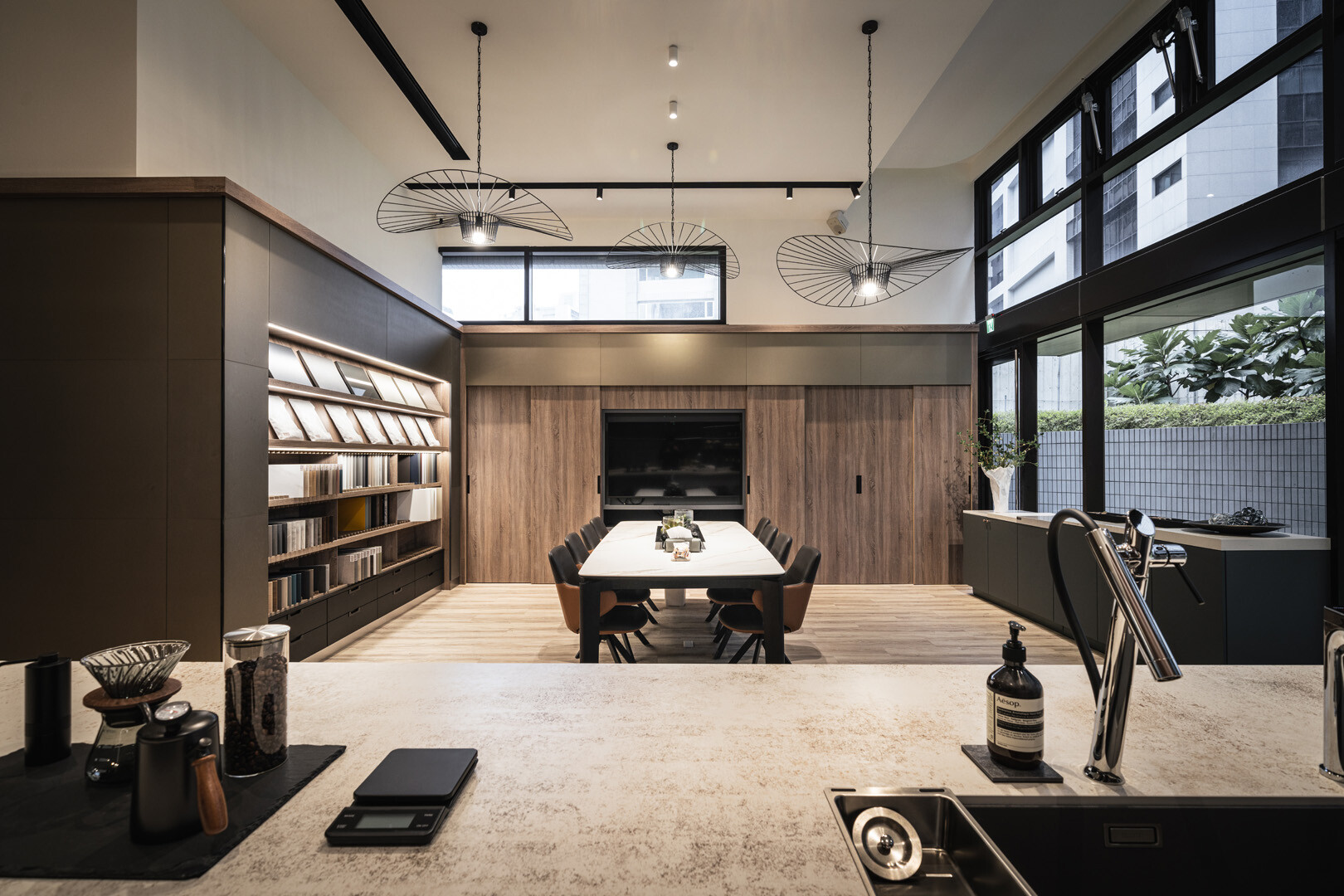
With every new collection, ALMOSA continues to ask: “What hasn’t yet been done?” From the award-winning Dawn series, which interpreted Eastern aesthetics through minimal form and earned a 2022 Red Dot Design Award, to the newest AXIRA series showcased internationally, the brand positions itself not just as a manufacturer of the world’s most durable aluminum kitchen systems, but as a symbol of irreplaceable craftsmanship grounded in Asian sensibility. ALMOSA’s ultimate ambition is not to follow global standards, but to quietly redefine them—integrating precision technology and cultural depth into a new vision of domestic life. In doing so, it invites the world to encounter aluminum alloy not just as a material, but as a modern expression of resilience, refinement, and design clarity.