Silence
Caught between work and family life, the days often unfold in noise and haste. For a young couple raising two small children, the designer adopted “Silence” as the core vocabulary—crafting a private space that shields them from external clutter and allows the inner self to settle. It is not only a refuge from disturbance, but also a gentle exploration of quieter, dimmer possibilities beyond the bright and active.
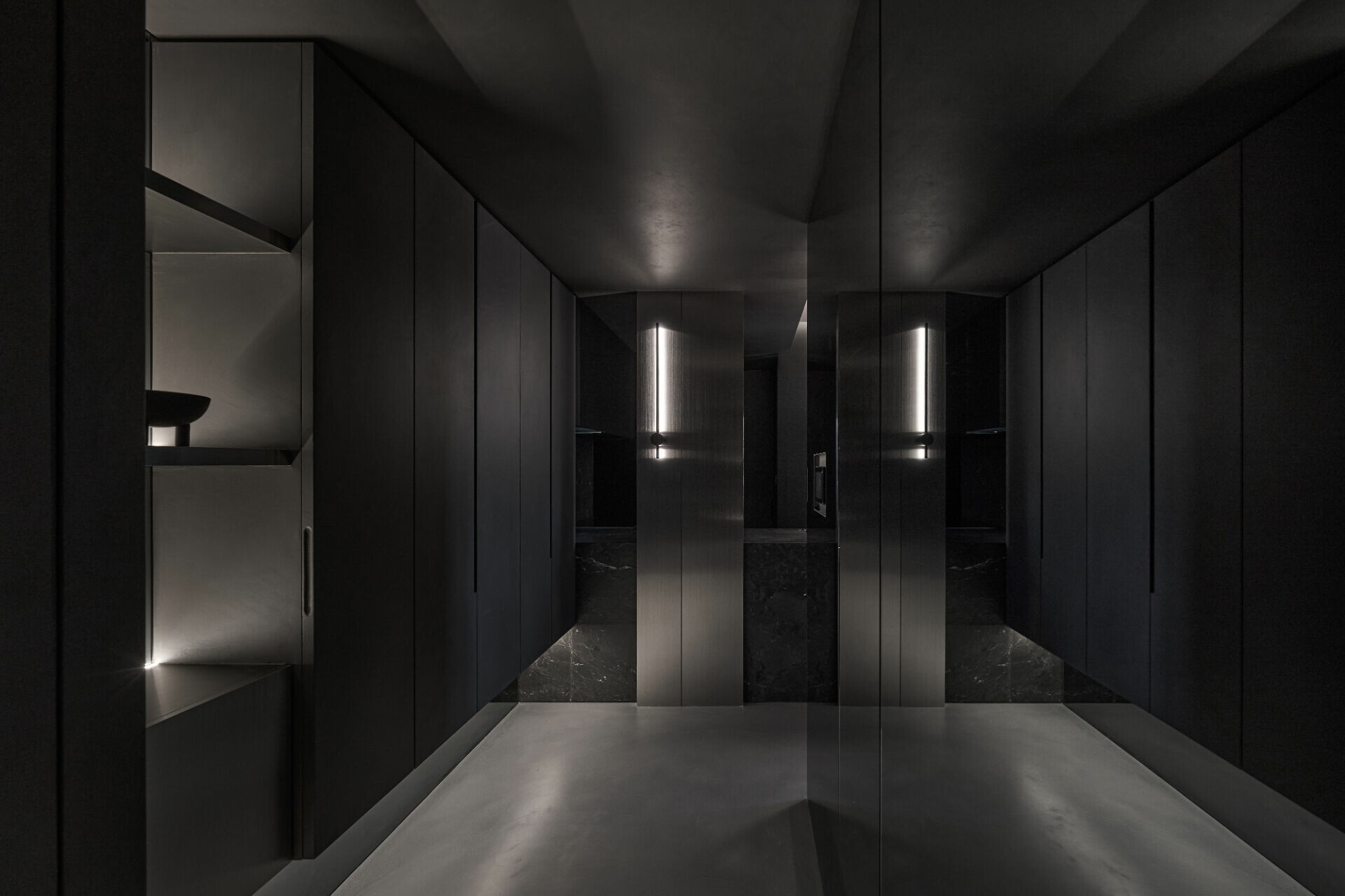
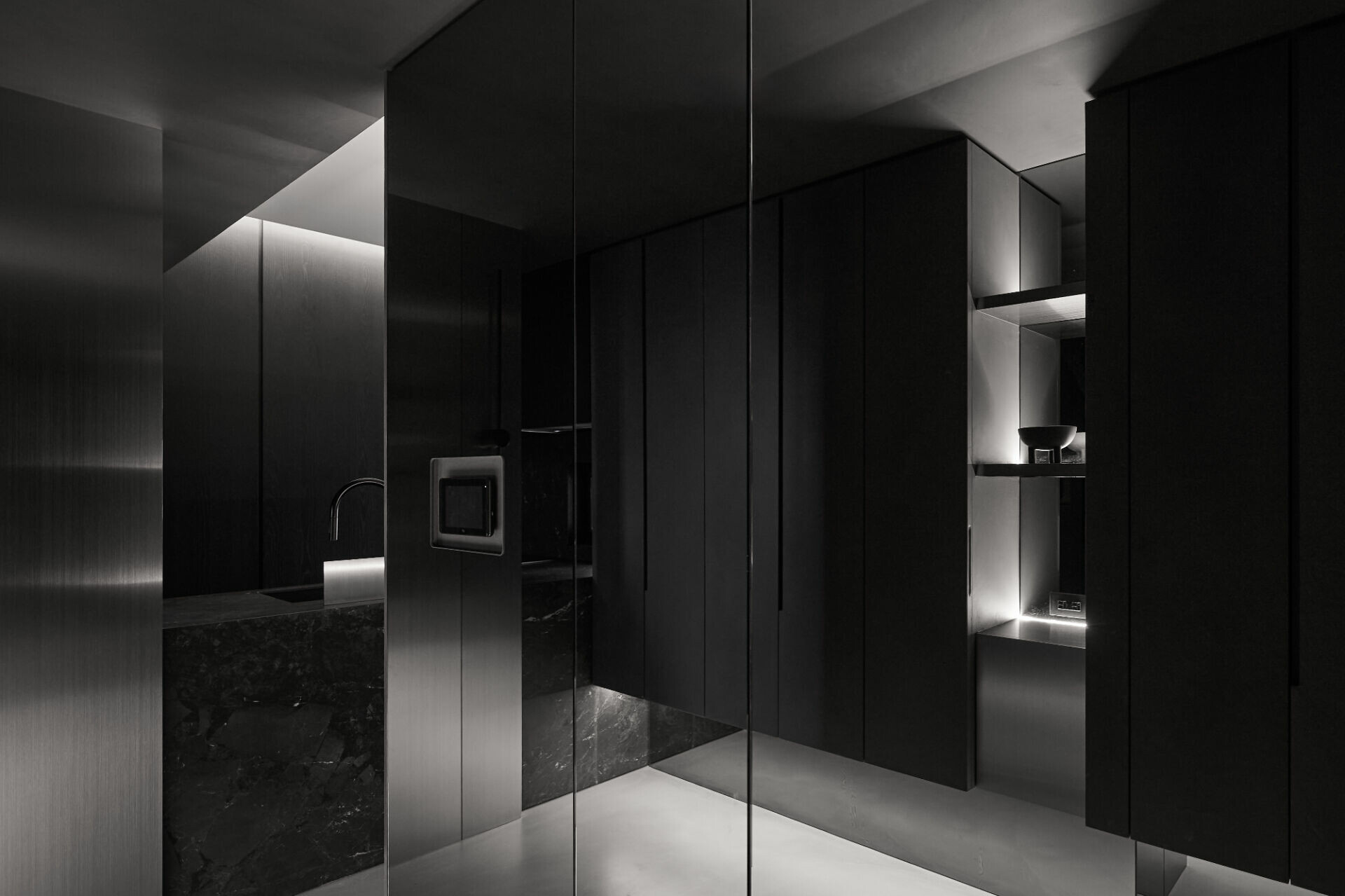
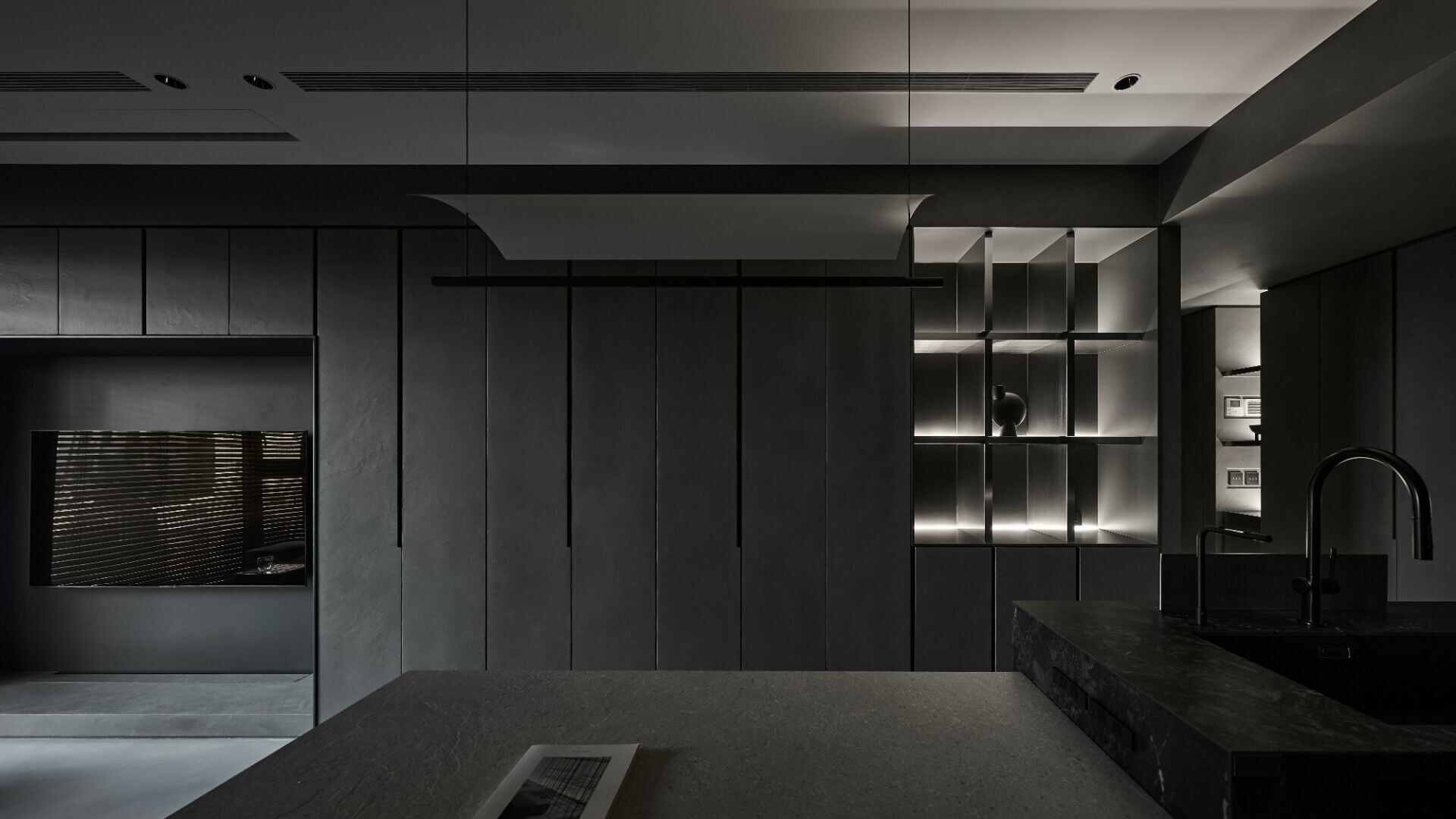
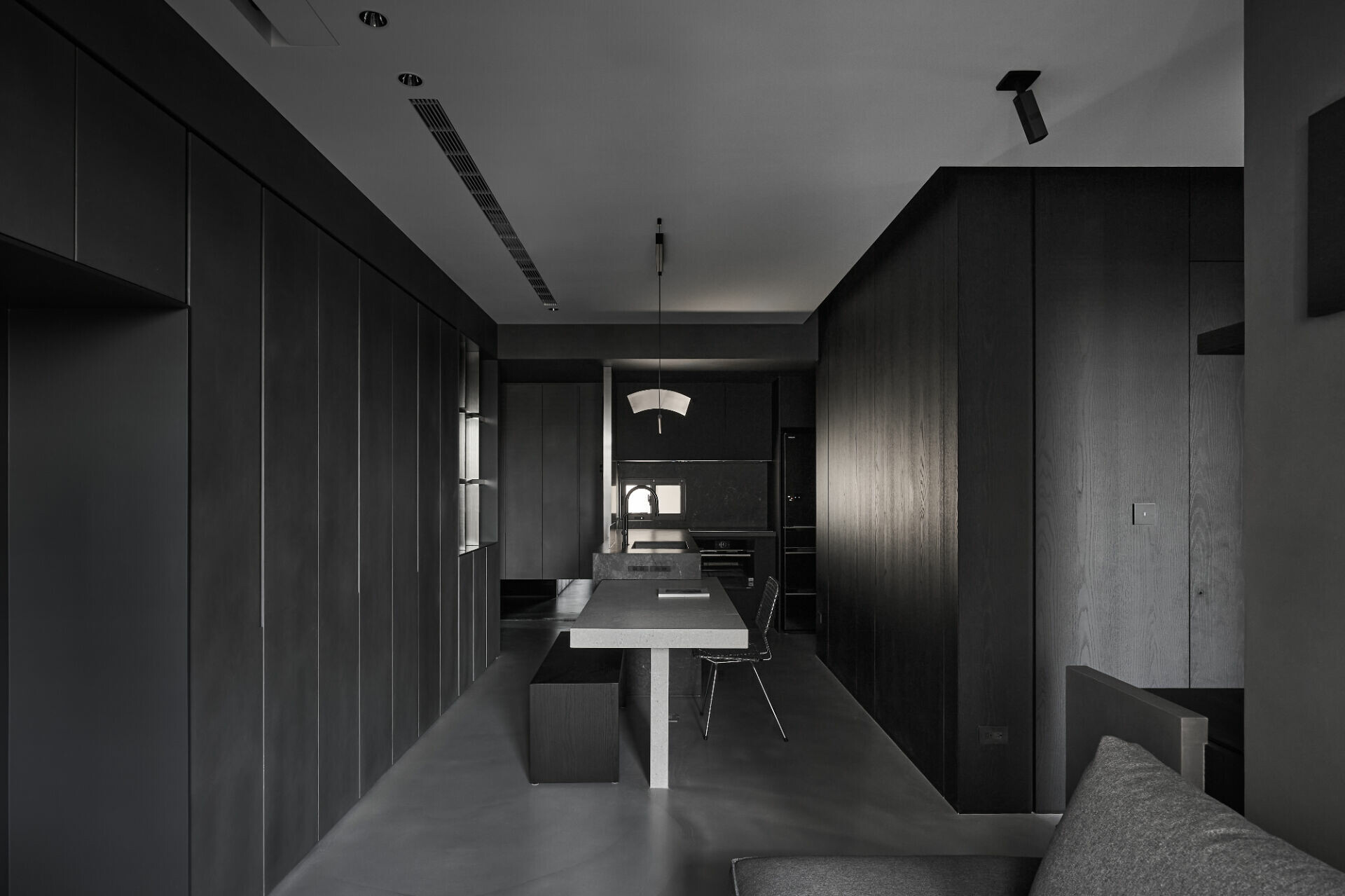
The design follows the residents’ way of living. As the original two-bedroom layout could not meet the needs of a family of four, the spatial plan was restructured to include an additional bedroom. Given the family’s light cooking habits, the enclosed kitchen was converted into an open island, connecting seamlessly with the living and dining areas to create a more flexible shared space. Sliding doors are used to flexibly define areas—creating individual corners for each child and accommodating a workspace for the father. These added functions integrate naturally with the original layout, responding to the varied routines of each family member.
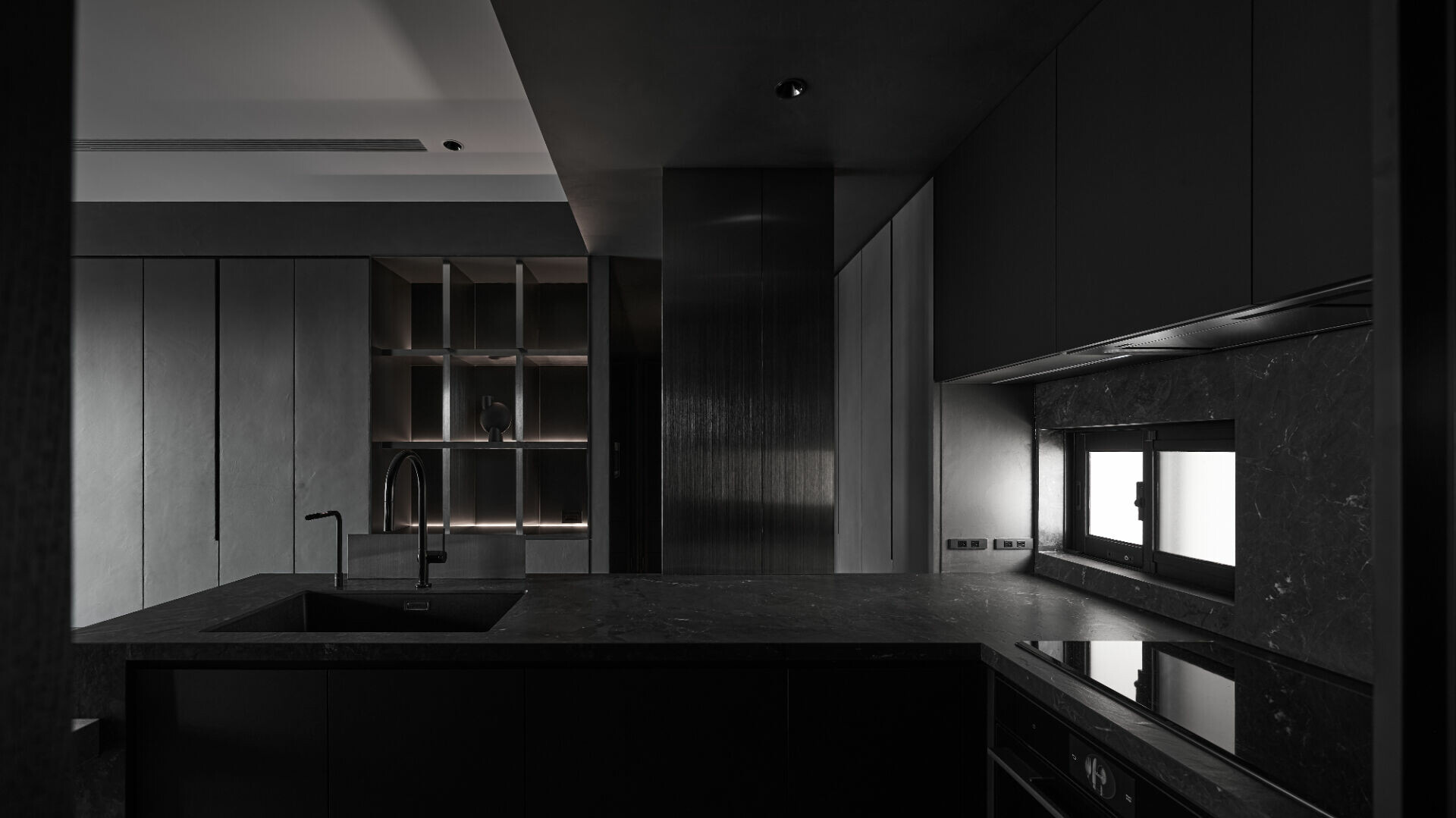
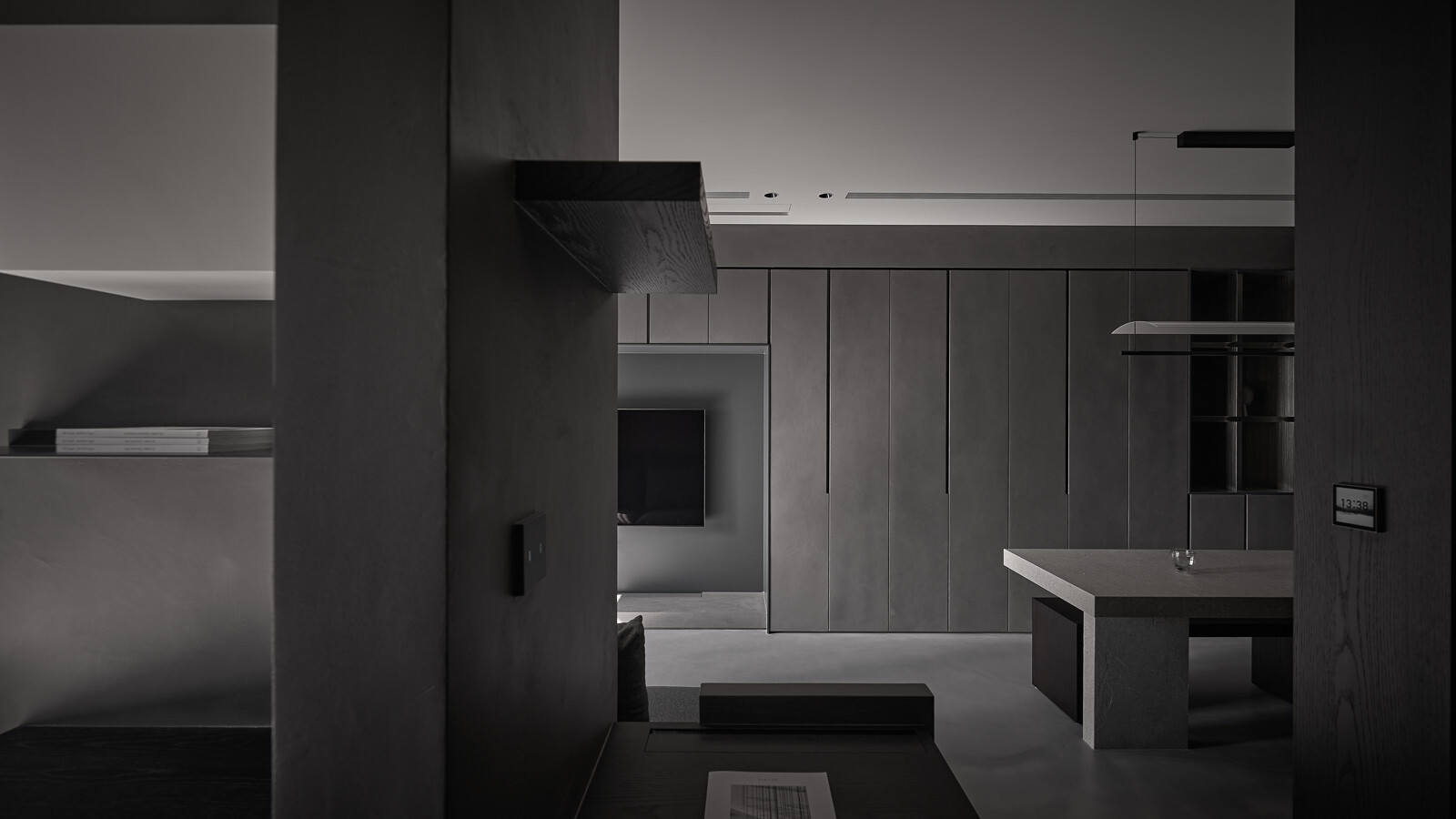
What might have felt enclosed and constrained becomes adaptable through these movable elements. Extending from the living and dining areas to the rear balcony, the sliding doors function not only as spatial dividers but also bring in light and airflow. Privacy and openness no longer stand in opposition, but find balance through adjustable layers—allowing the space to breathe, shift, and settle into a calm, comfortable rhythm of daily life.
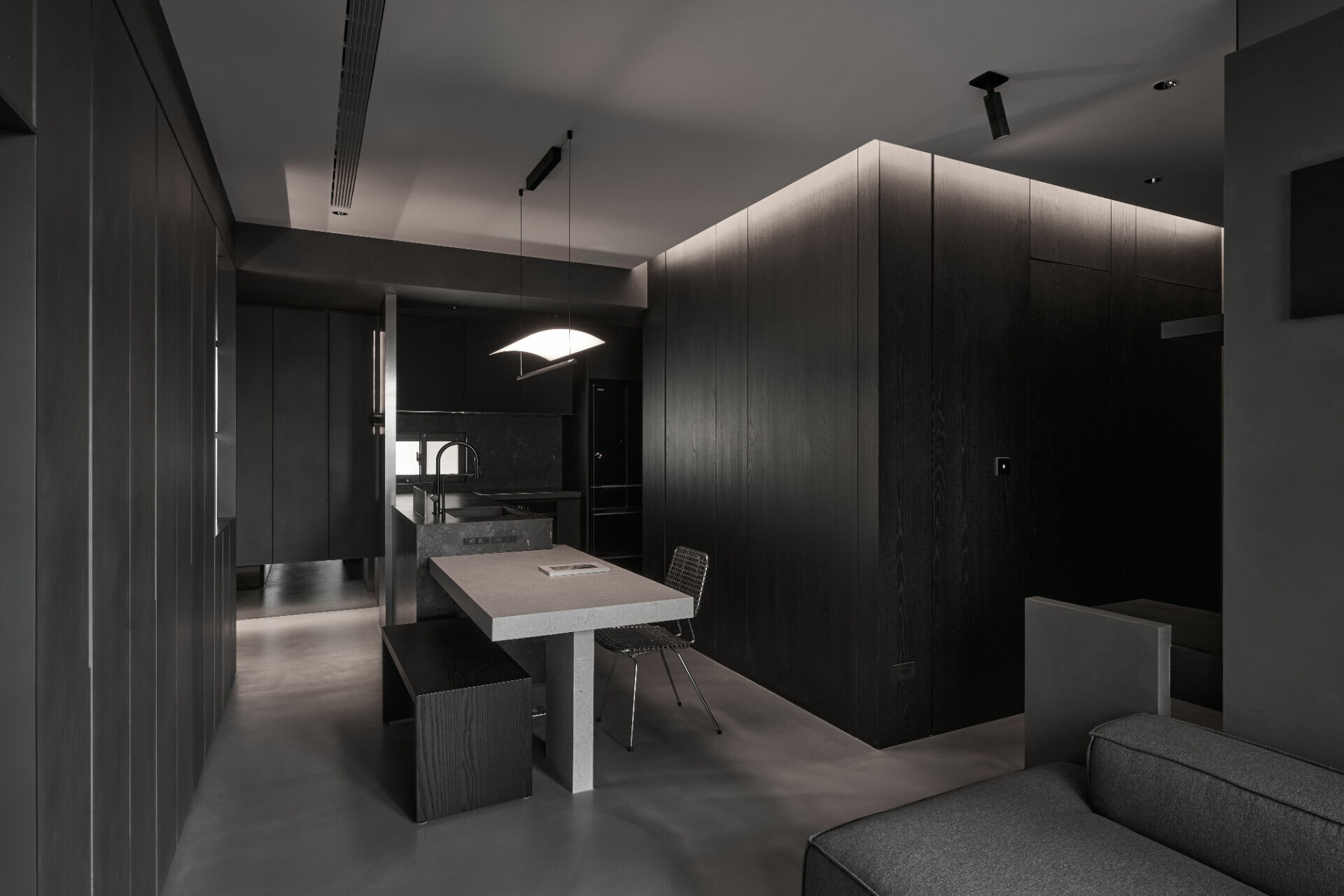
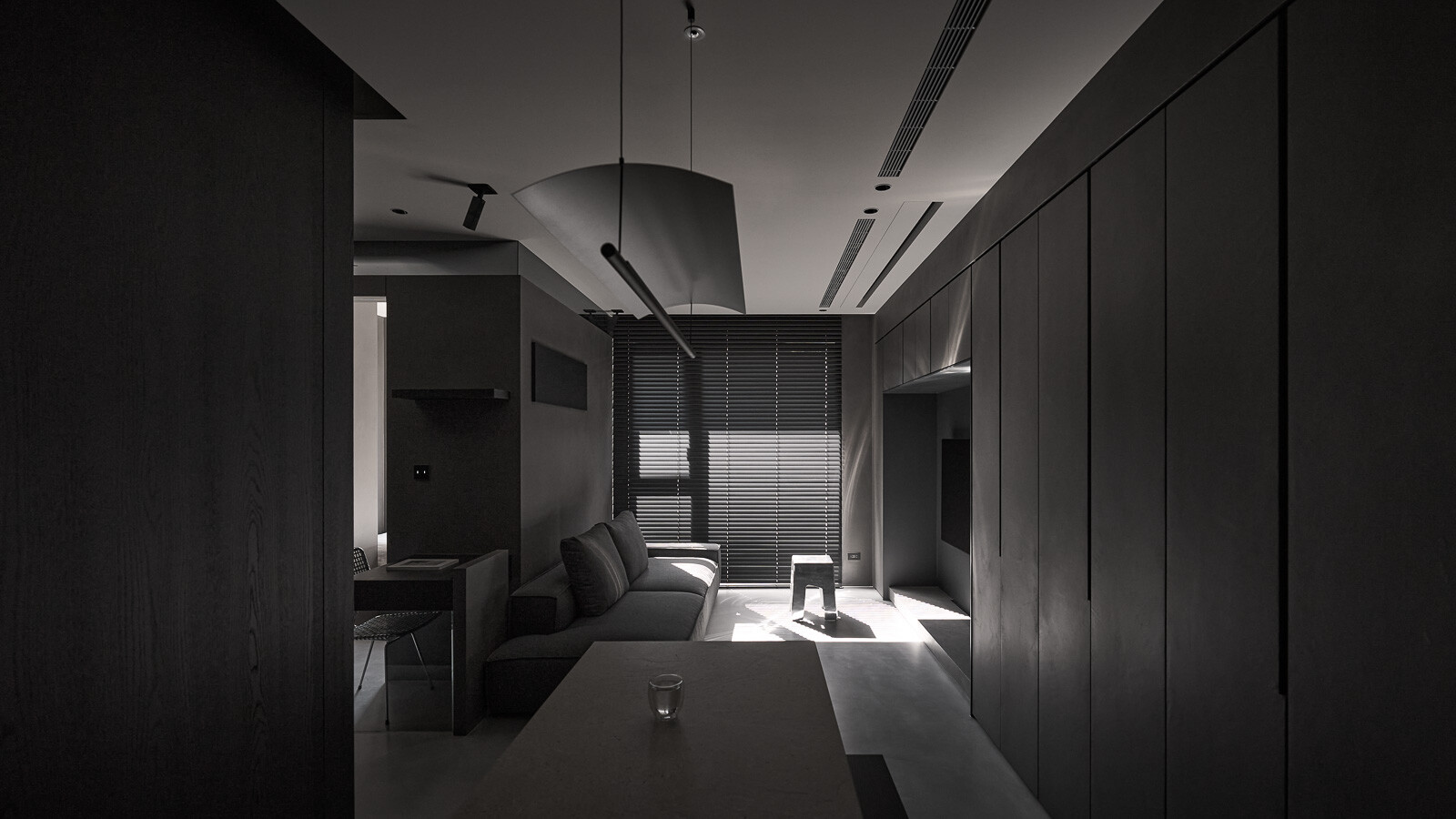
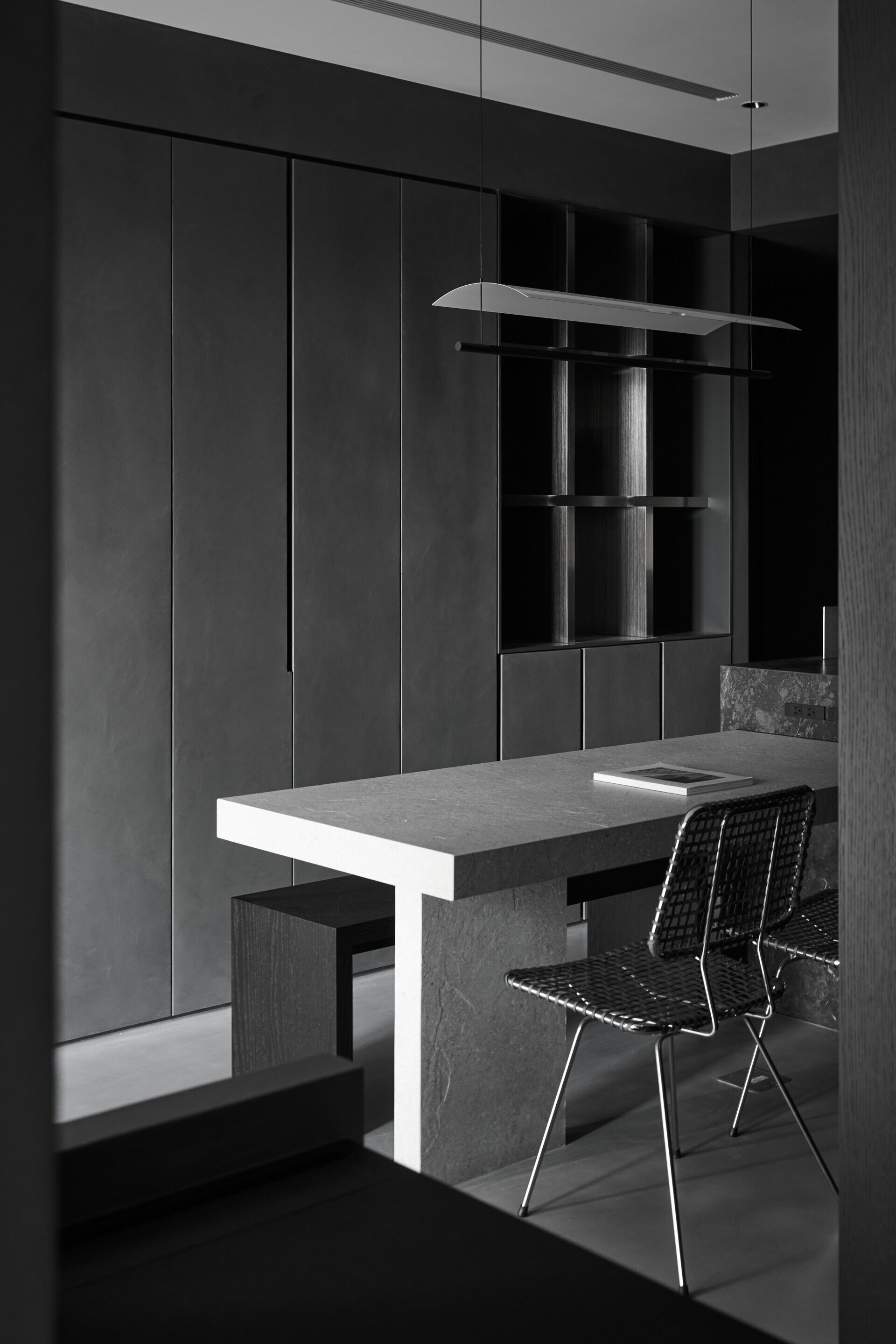
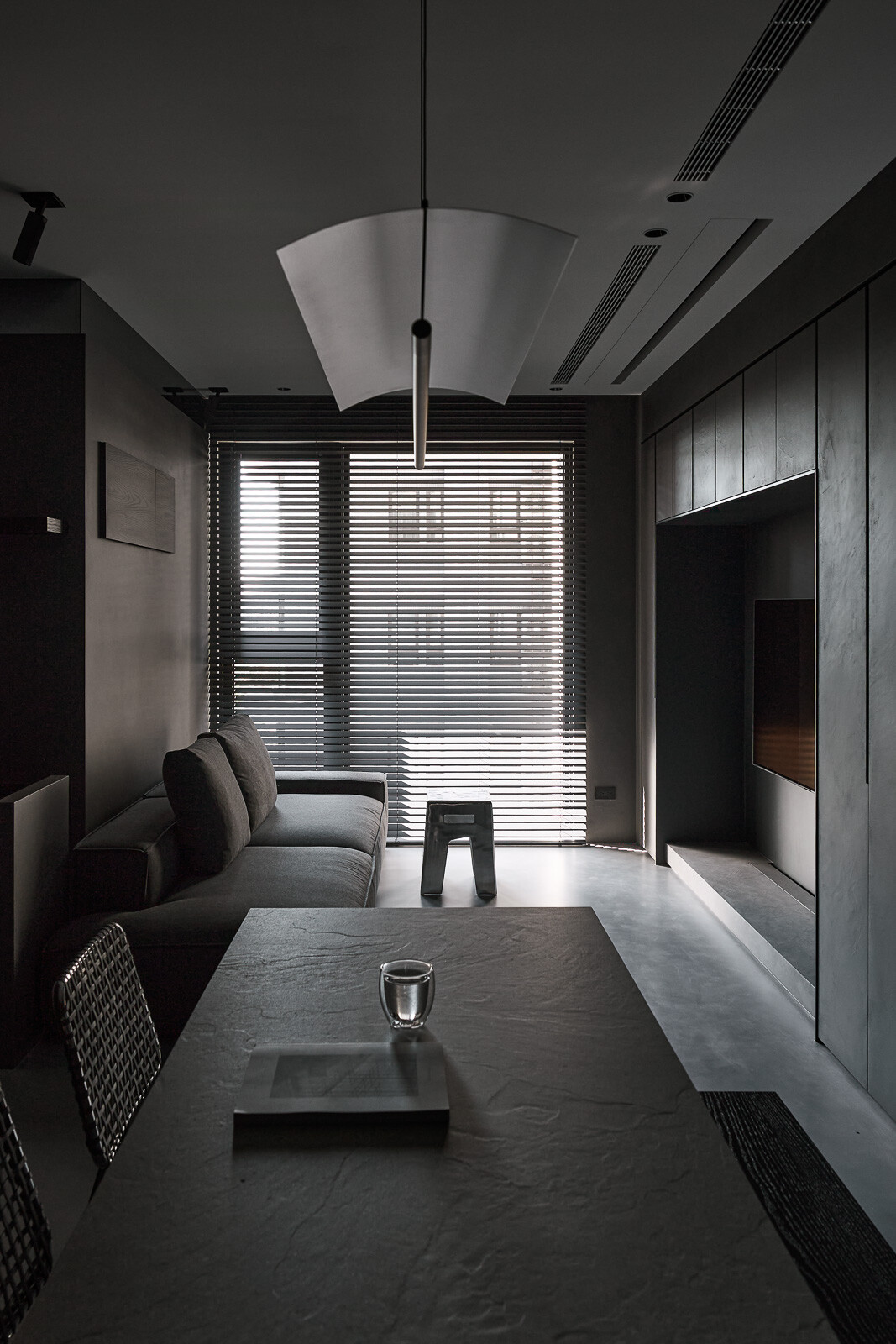
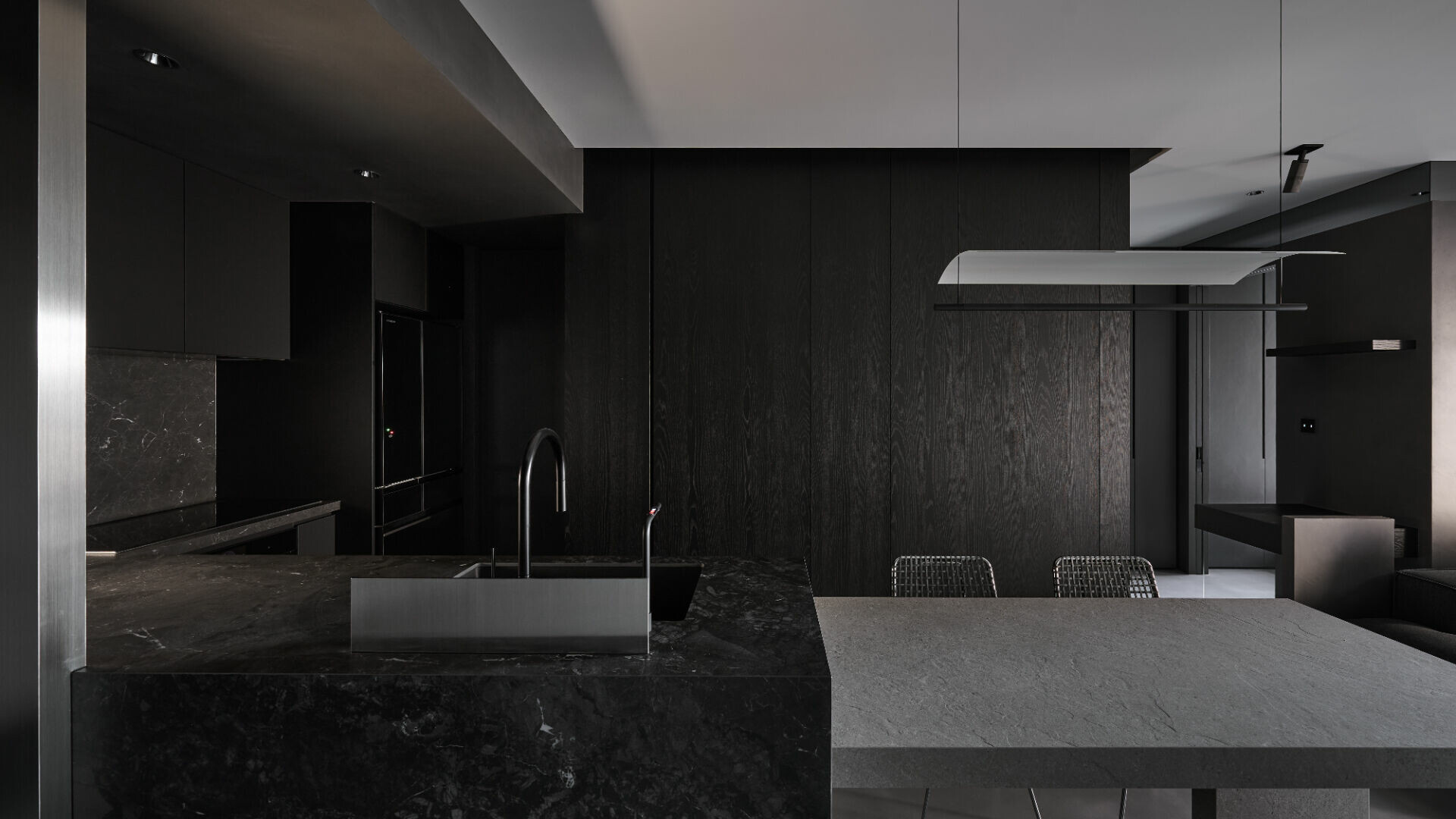
The public areas are defined by a pure palette of black and grey, forming a space where boundaries soften and dissolve. Within this subdued atmosphere, mirrored surfaces extend the visual field, expanding perception between reality and reflection. Compared to brightness, darkness more readily embraces the mind—and sharpens the senses.
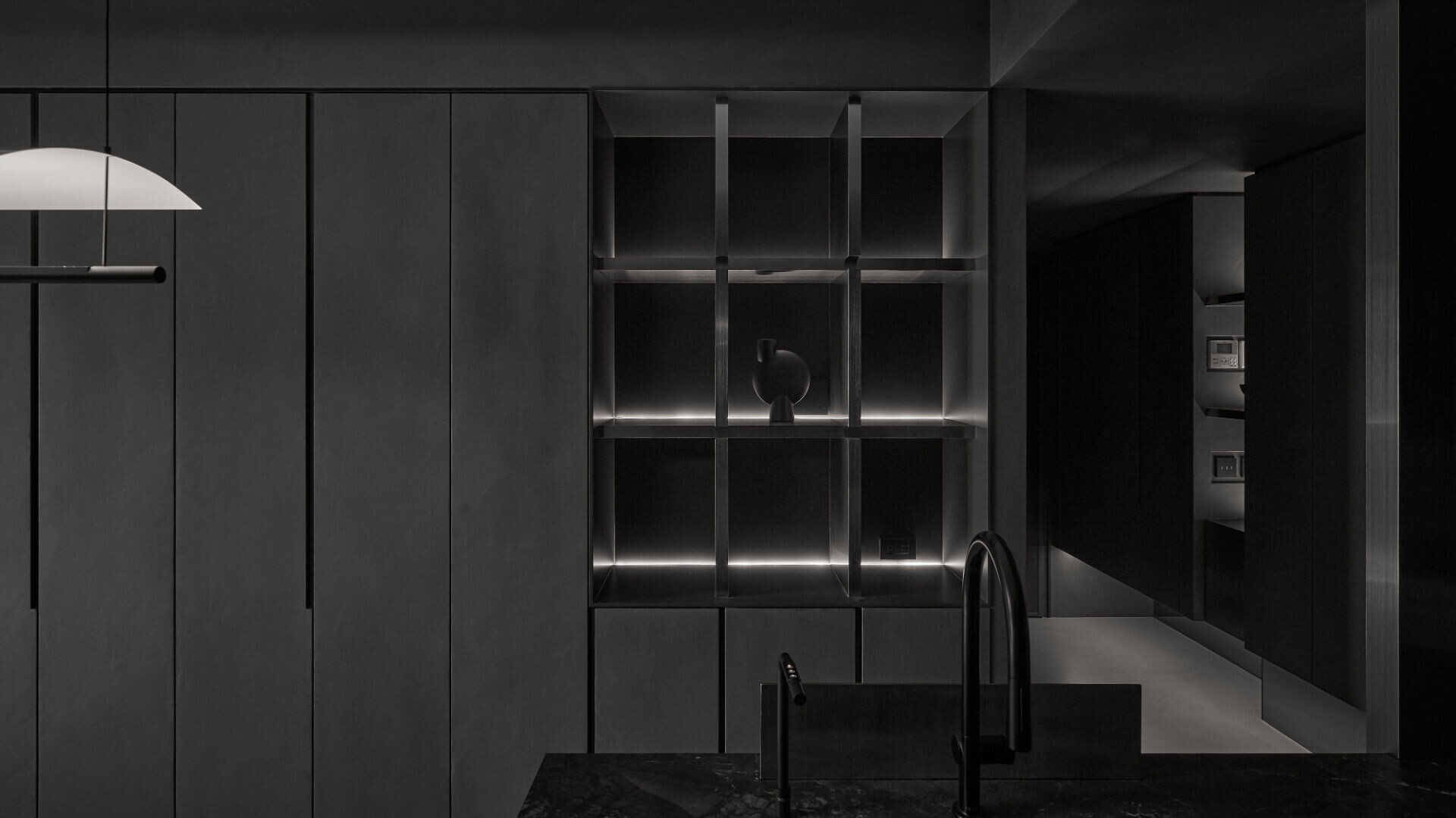
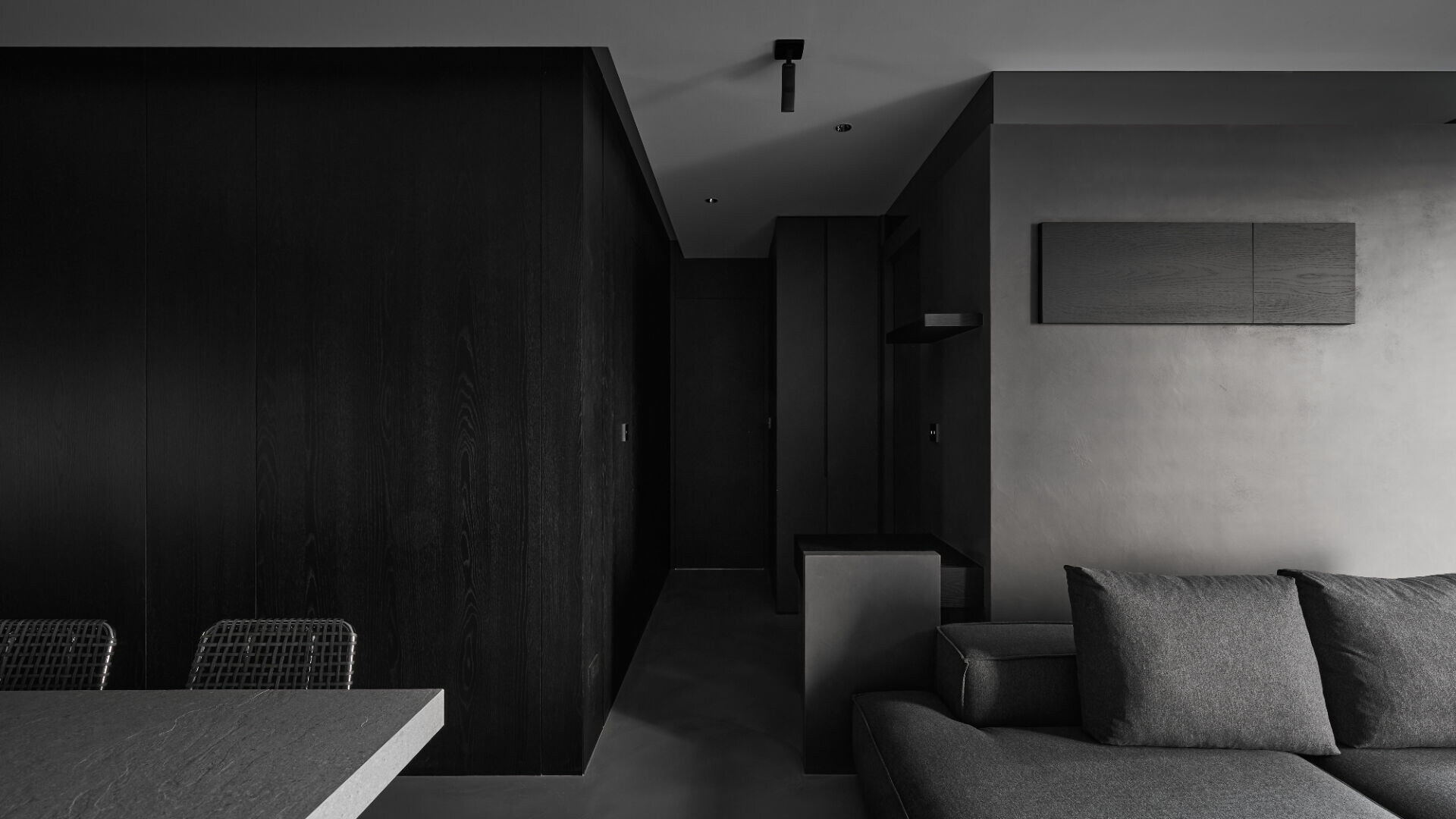
As Jun’ichirō Tanizaki noted in In Praise of Shadows, gradations of shade reveal the quiet depth of things. The grain of stone and wood, the subtle texture of hand-applied finishes—all speak of organic richness within the boundless dimness. Elements like stainless steel, grey mirrors, and perforated walls discreetly reflect the residents’ shifting presence as they move through the space.
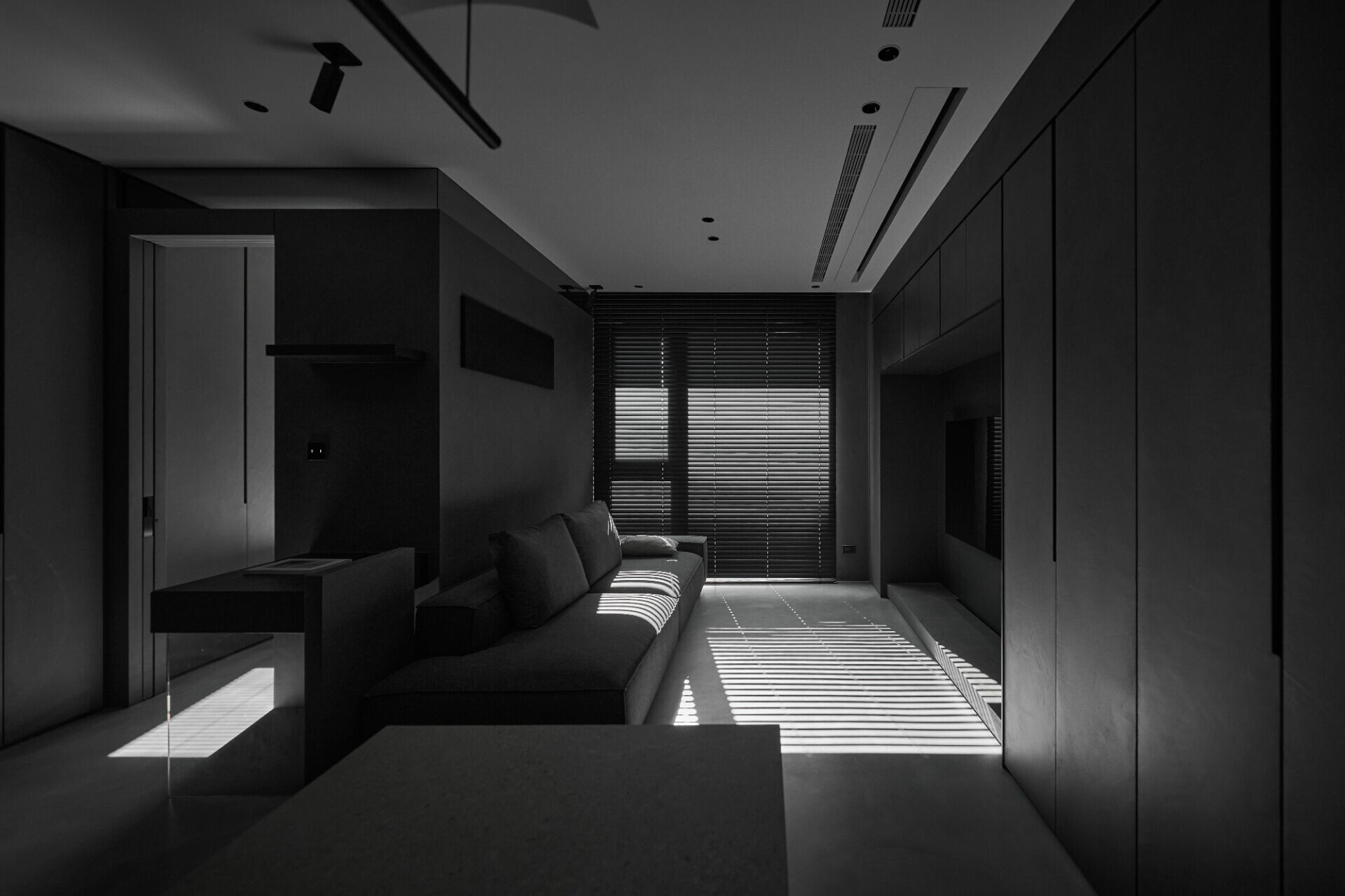
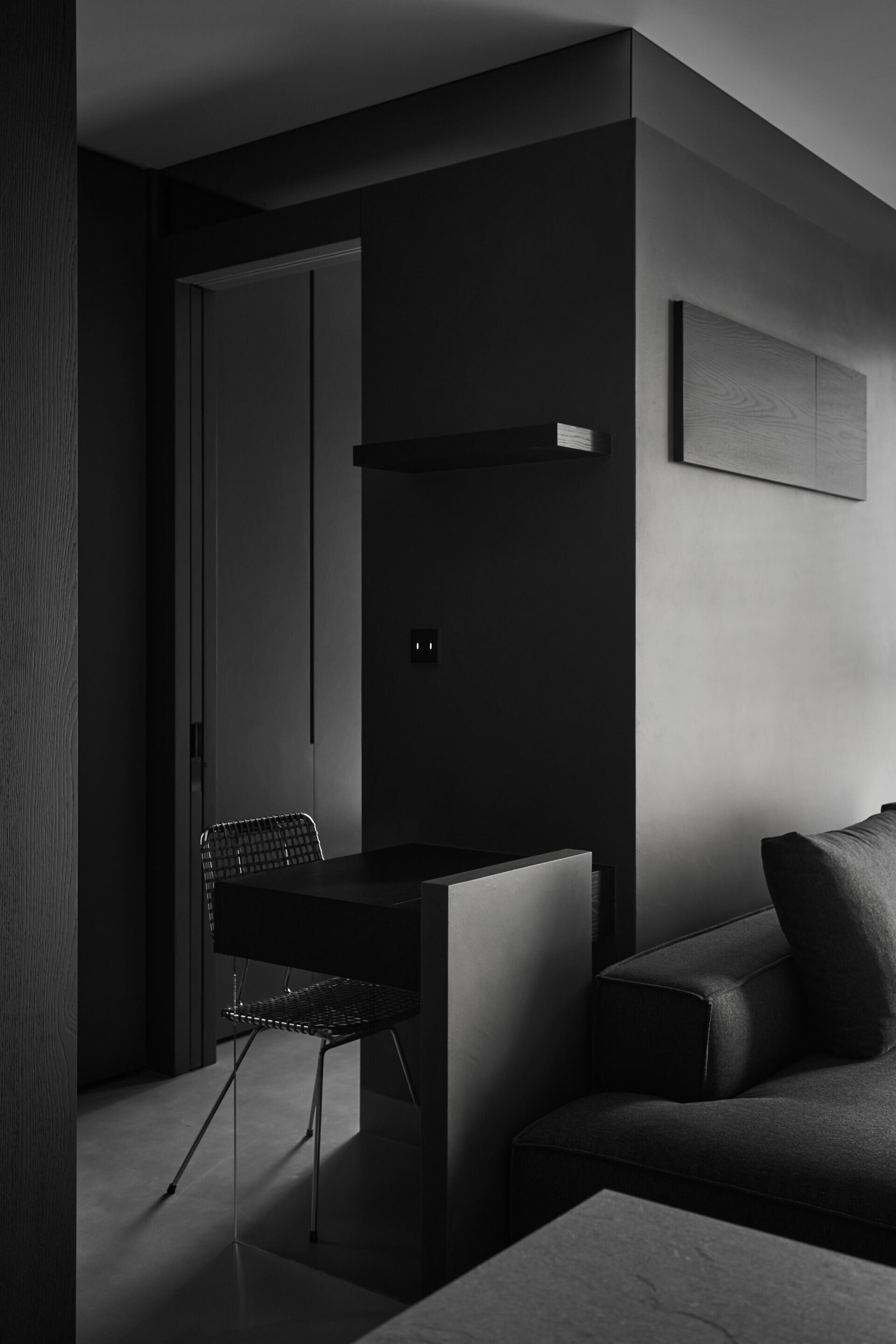
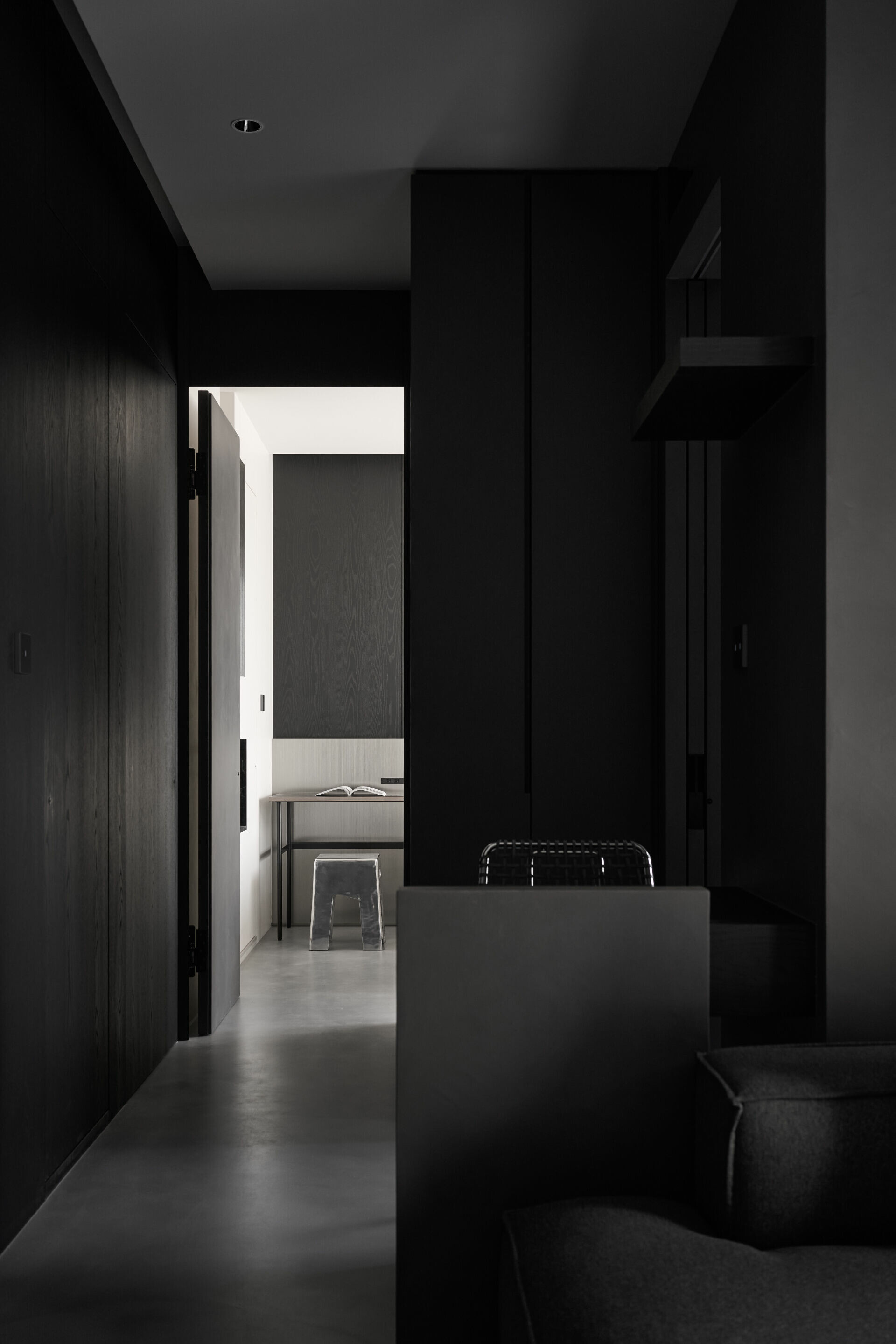
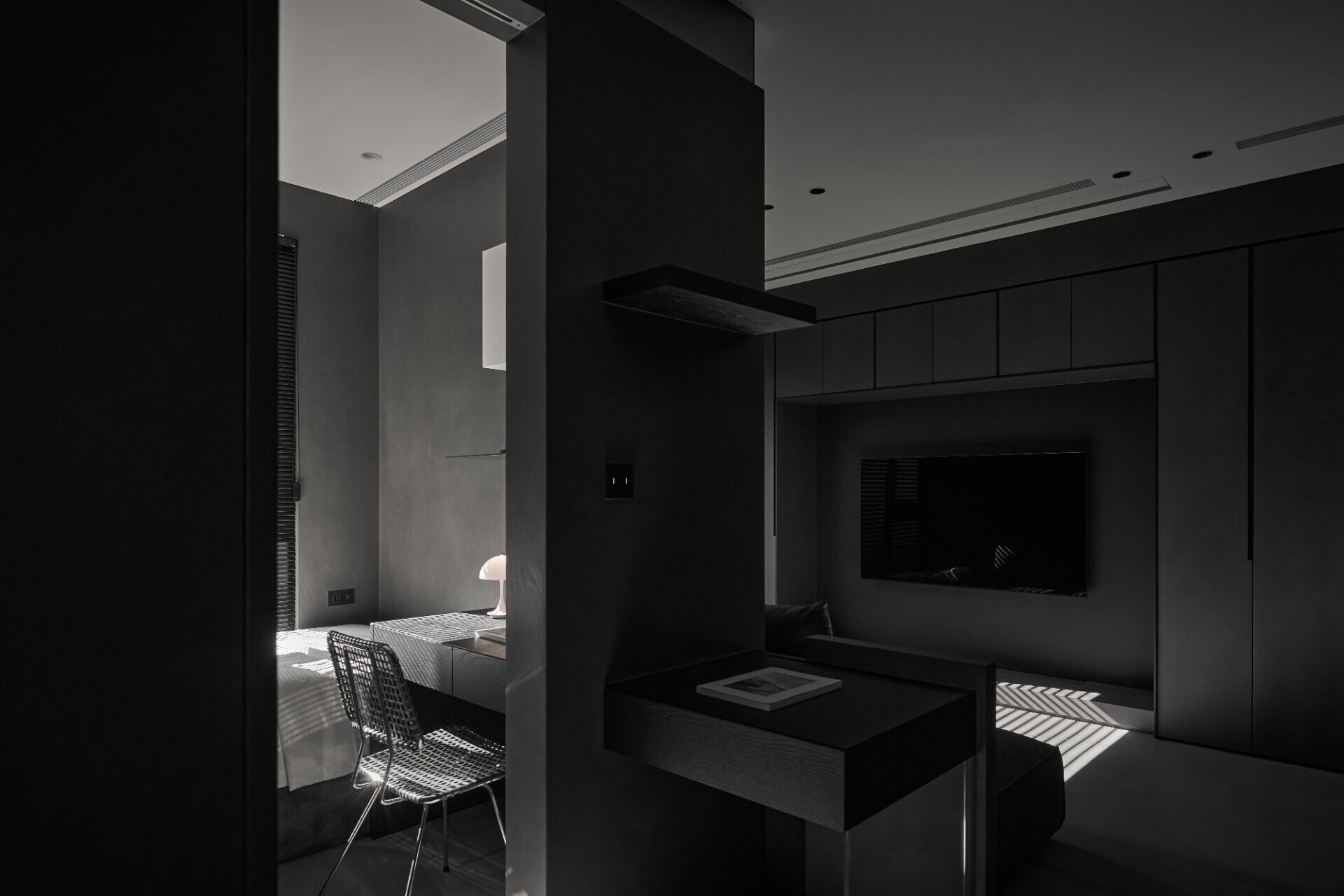
The shift in tones reflects the rhythm of daily life. In the shared areas, black and grey serve as the foundation, accented with touches of silver and white. In the private spaces, white becomes the primary tone, while darker shades recede into trim and shelving. This careful balance of color and material creates a visual and tactile harmony—like a quiet poem in motion.
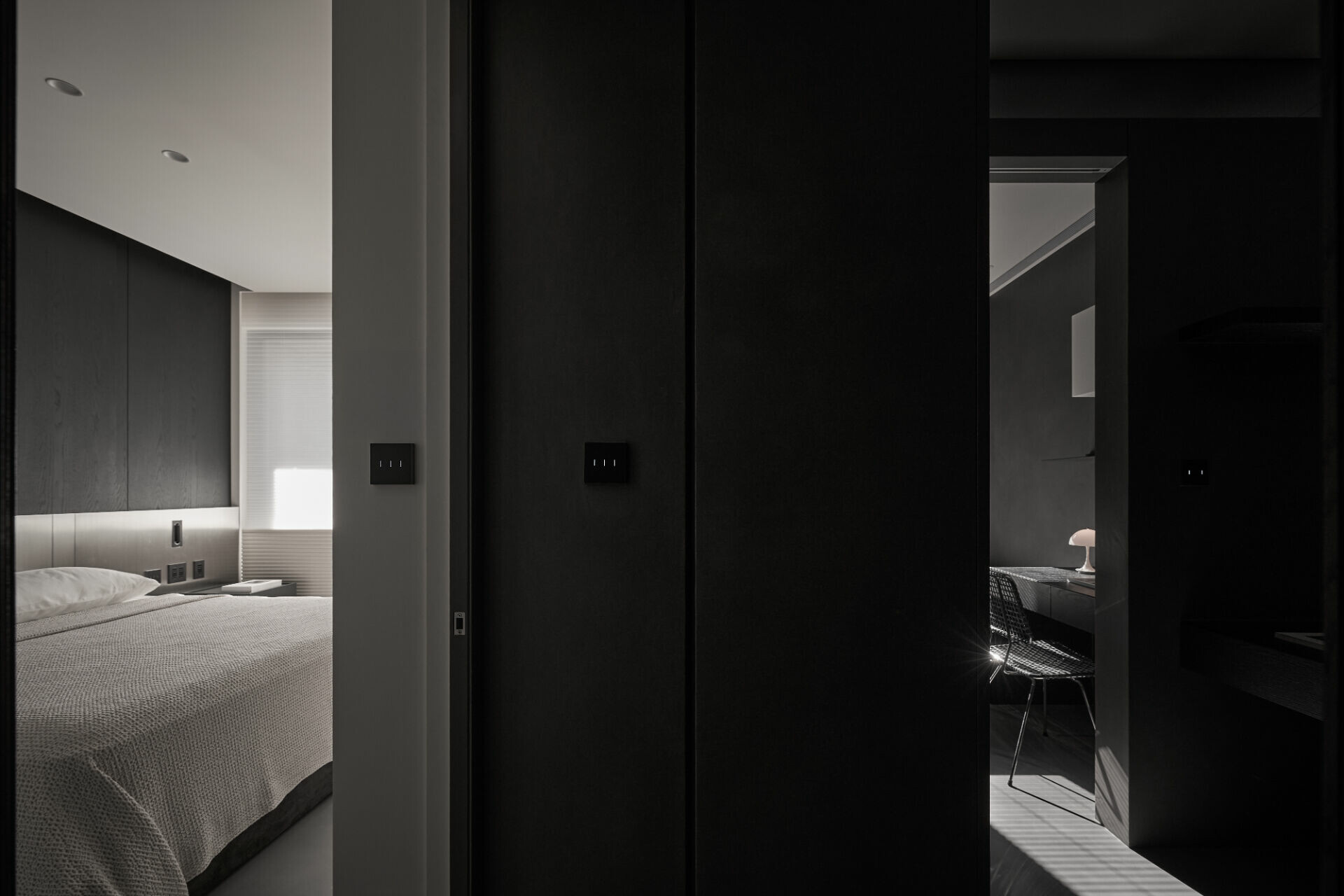
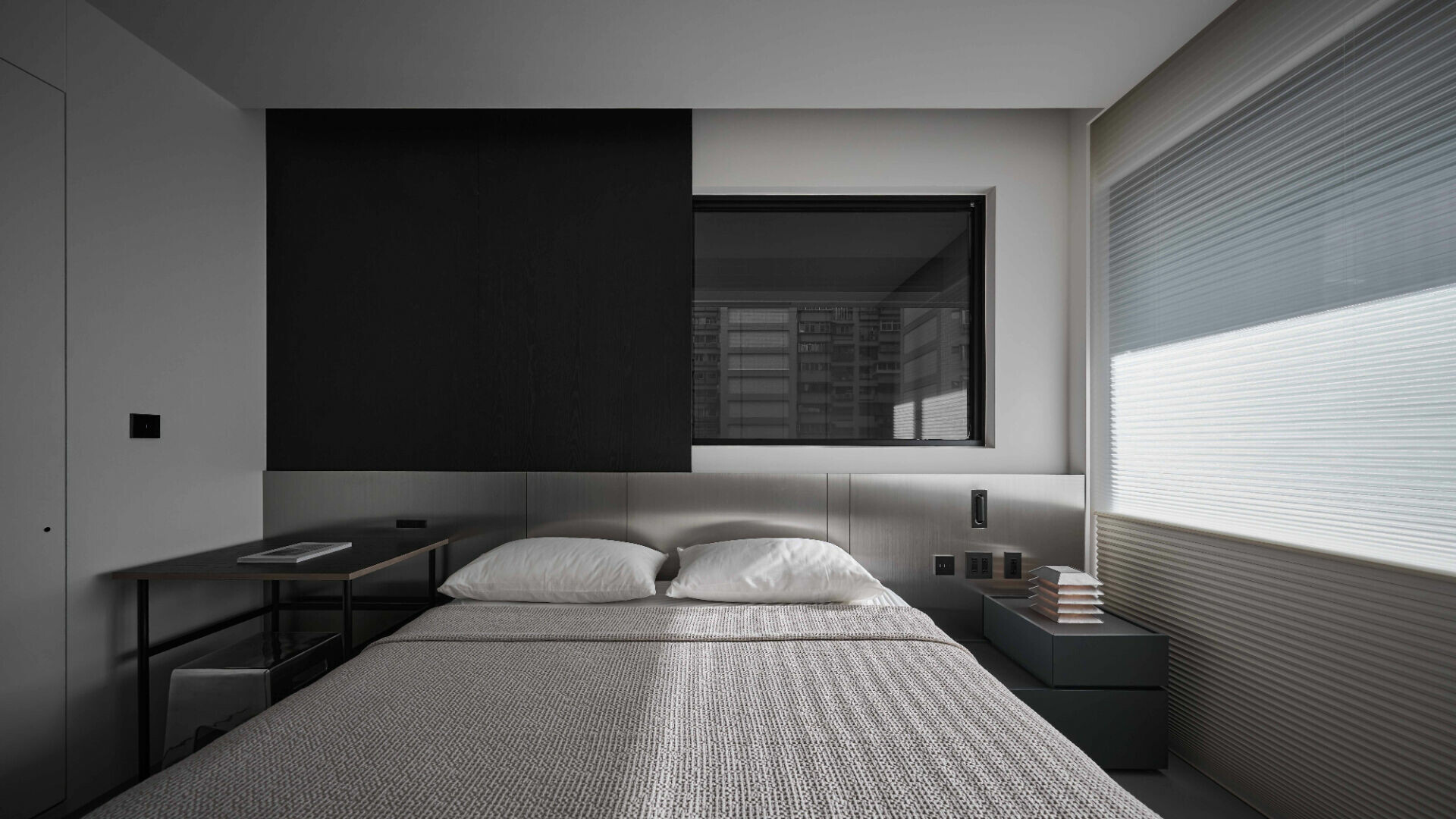
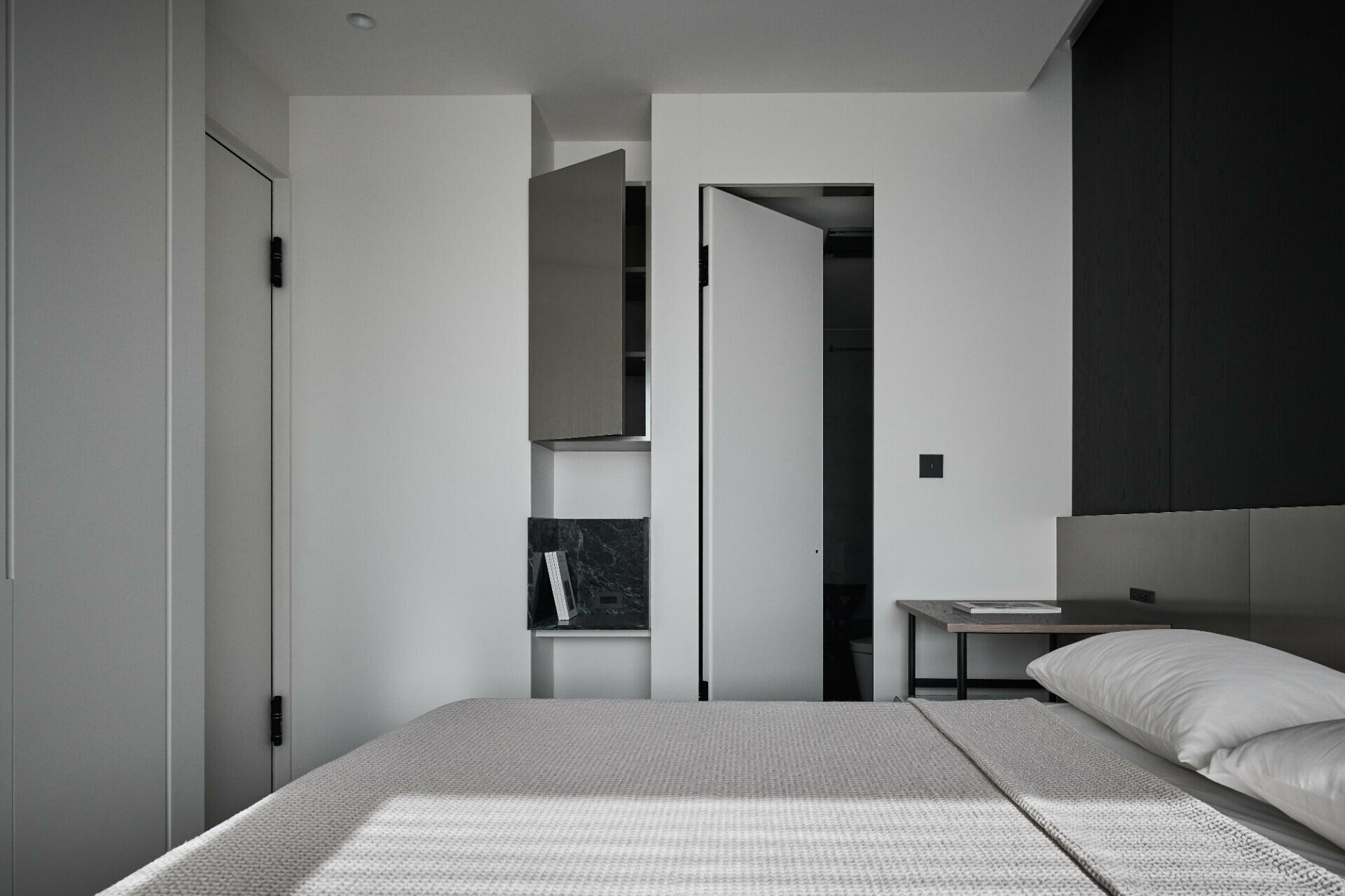
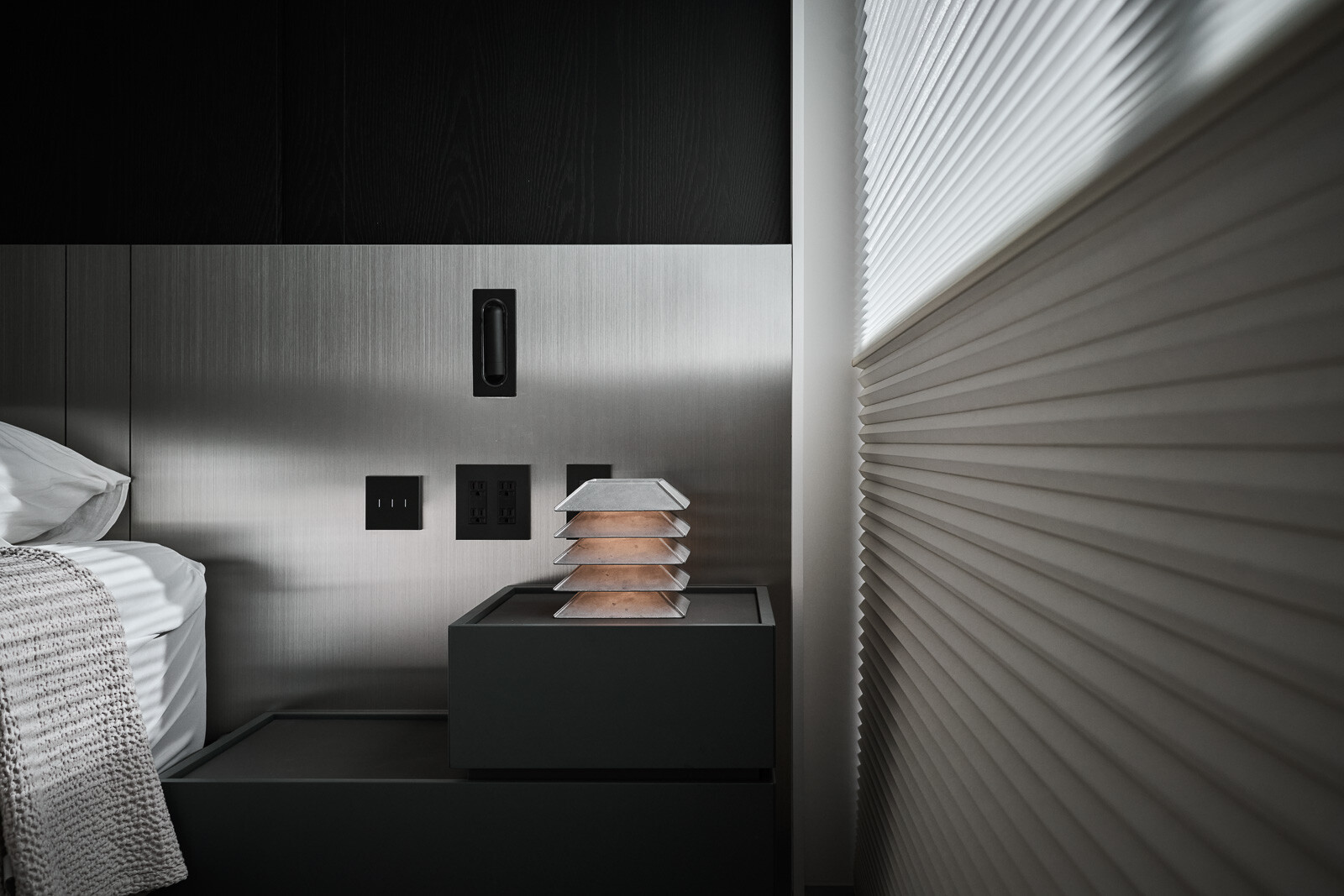
Soft daylight filters through the louvered blinds. From morning to dusk, shifting light moves across the surfaces like tree rings on wood, layering time onto each material and quietly narrating the day’s variations. Lighting here is more than illumination—it carries warmth and emotion. A pendant above the dining table, indirect lighting behind the sofa wall, and concealed lights within the shelving all cast a gentle upward glow, cradling the mood of the space and adding a lasting softness to these quiet days.