The Harmony of Sea and Peaks
“With mountains on the left and the sea on the right, I walk in grandeur with both by my side.” With this succinct yet evocative line, Taiwanese poet Rong Zi sketched the majestic character of the Lanyang Plain. Between mountain and sea—where rivers descend from the foothills and fan out across an expansive alluvial delta—a previously divided residence has been transformed into a unified living environment. Here, the designer merges private kitchen and home into a seamless, interwoven realm of daily life and hospitality.
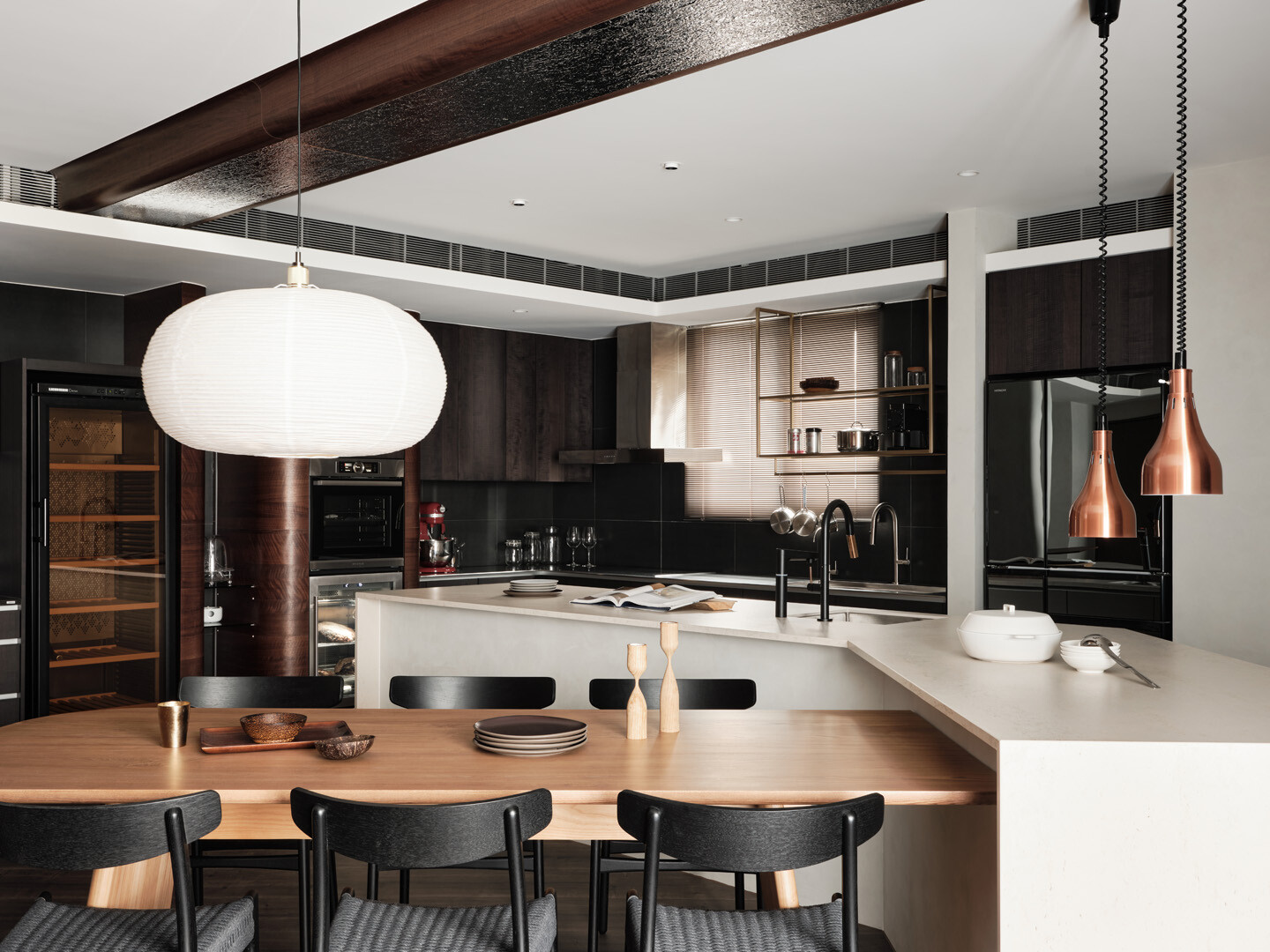
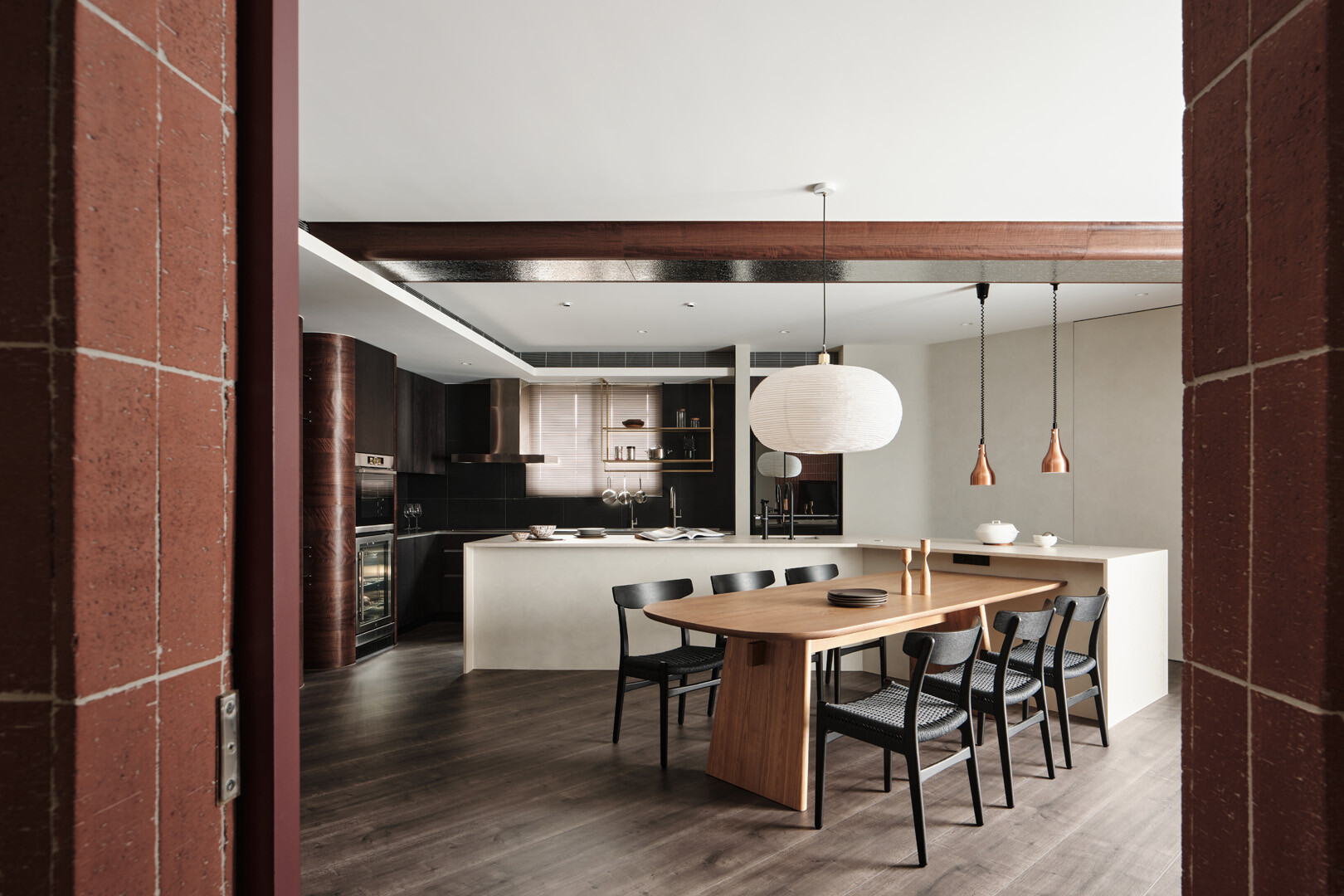
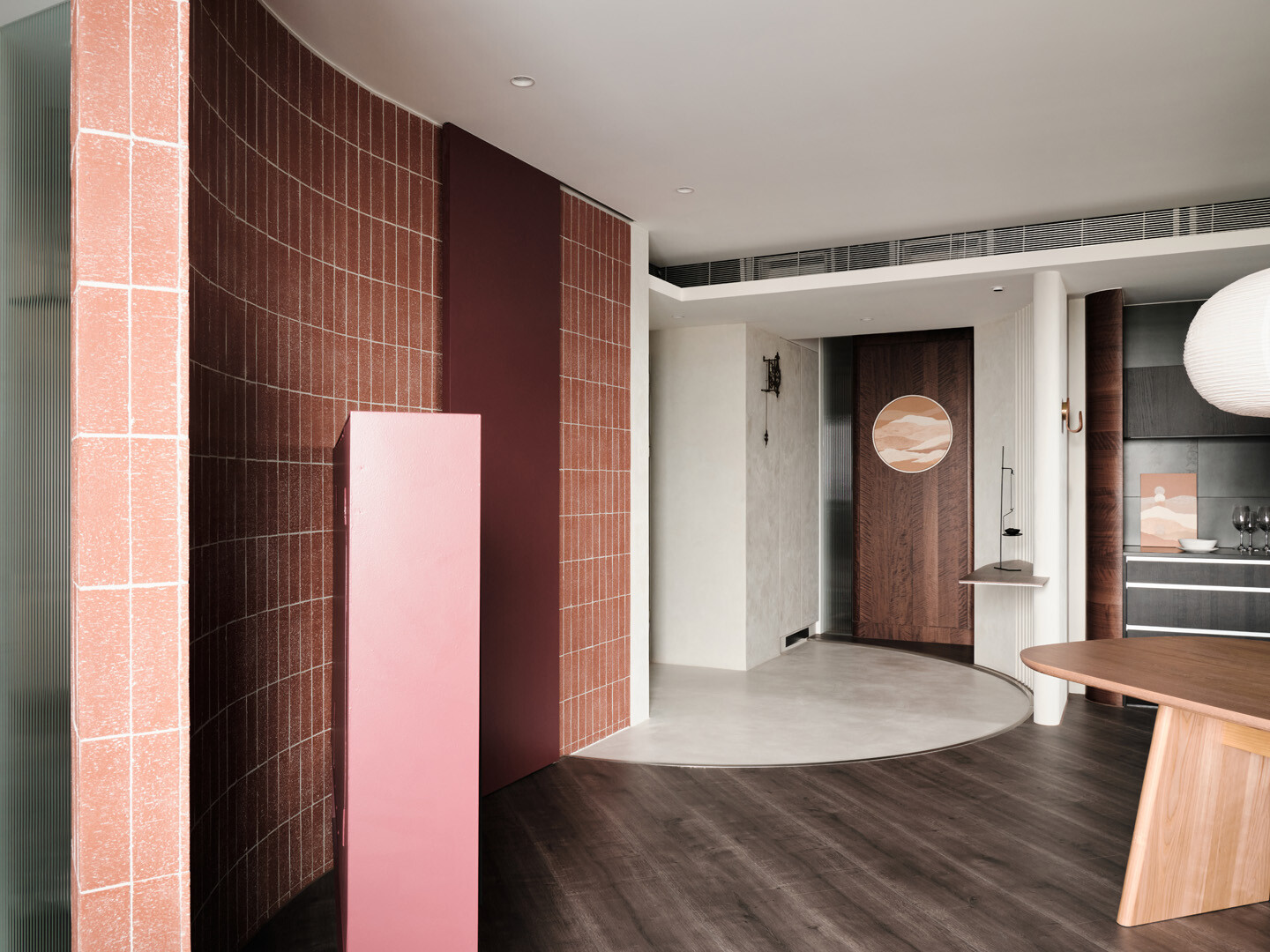
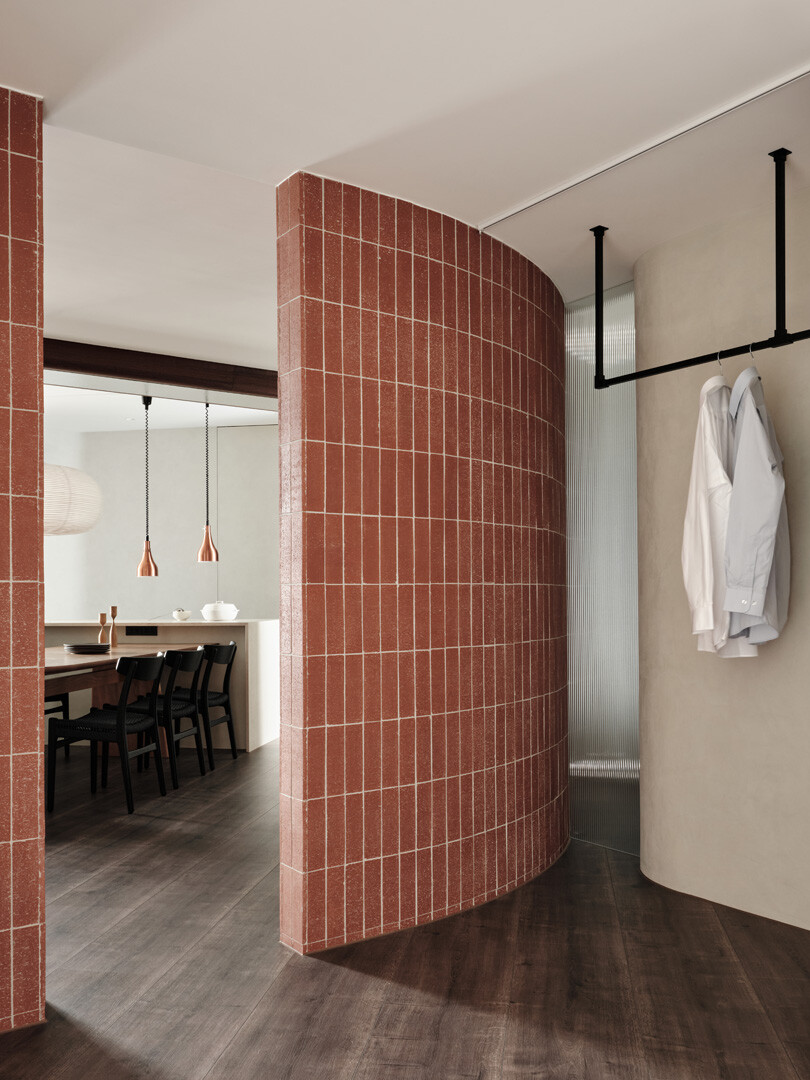
Echoing the private kitchen’s ethos of celebrating local ingredients, the design draws from the contours of Lanyang’s natural terrain—inviting the outdoors in. At the entrance, an arc inspired by the curvature of an alluvial fan defines the boundary between public and private space. From the swing of the main door, to the low partition wall at the threshold, and onward to the central brick feature wall, a sequence of gently cascading curves unfolds through the interior. This layered geometry not only guides guests intuitively toward the dining area, but also mirrors the slow, sedimented rhythm of the delta itself—where landscape and time shape one another in quiet accumulation.
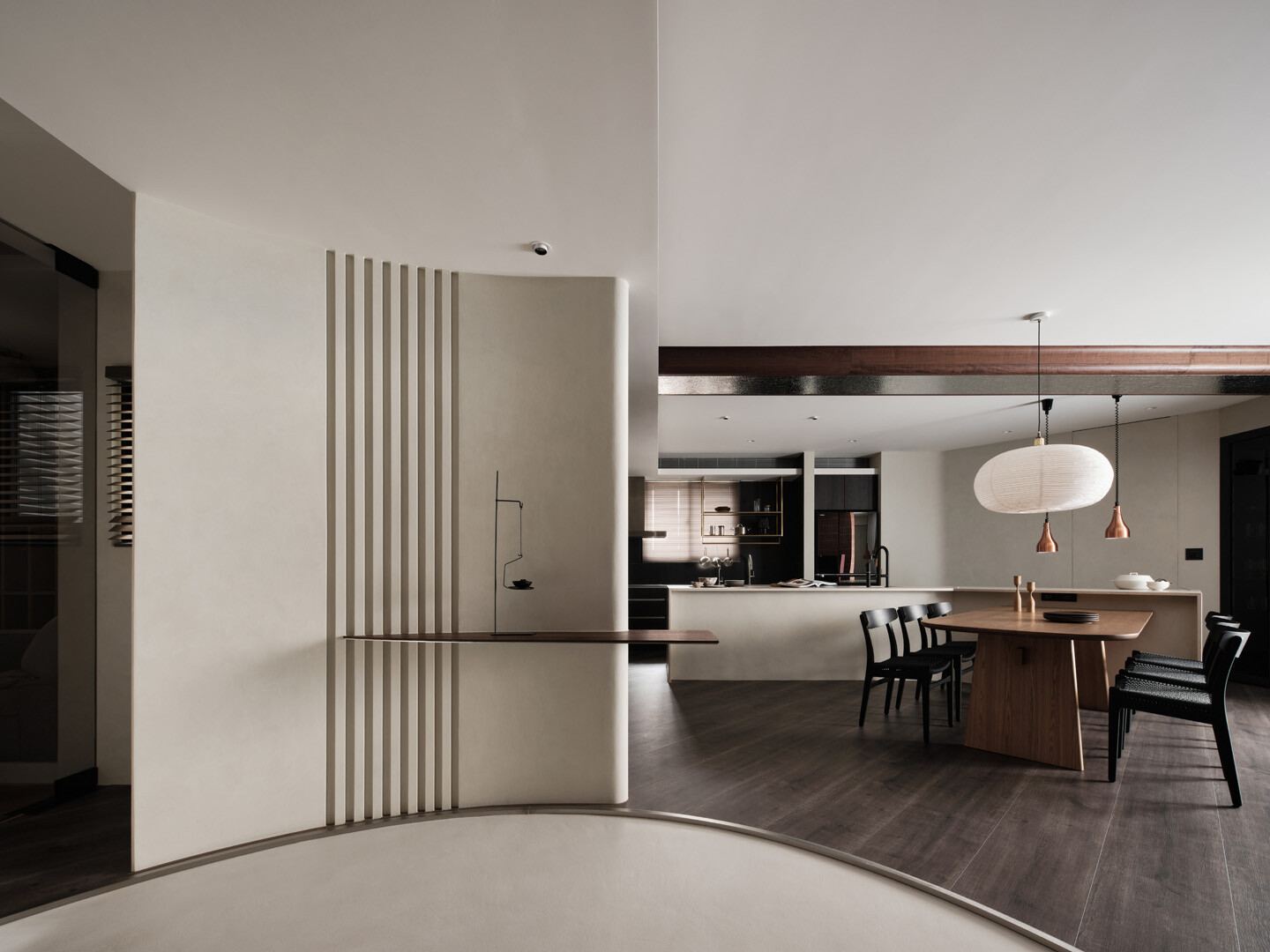
The feature wall is clad in porous, coarse-textured bricks, reminiscent of the red-brick vernacular houses scattered across Yilan’s rural landscape. Set against a subtly textured white mineral finish, this material contrast transforms echoes of past industrial glory into a reverent tribute to the region’s culinary culture. Between the acts of cooking and hosting, the angles and spacing between the island and structural walls are meticulously composed, allowing the chef-homeowner to move with ease—facilitating natural interaction and fostering an atmosphere of warmth, familiarity, and grace.
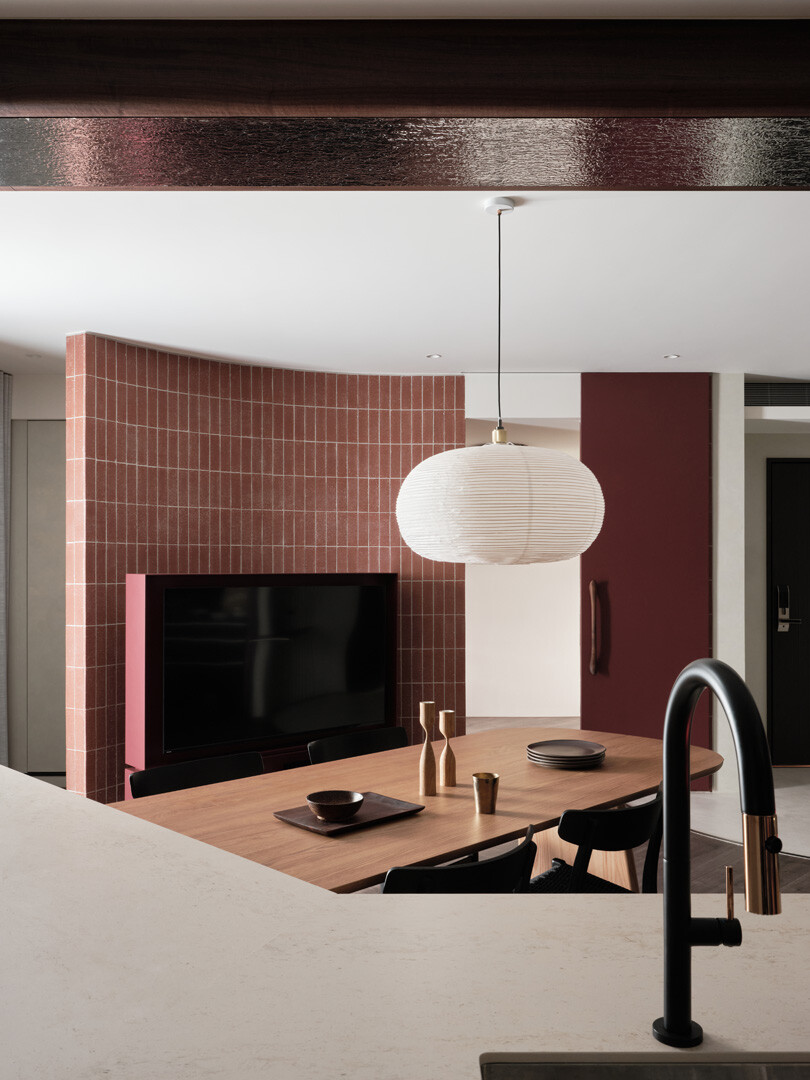
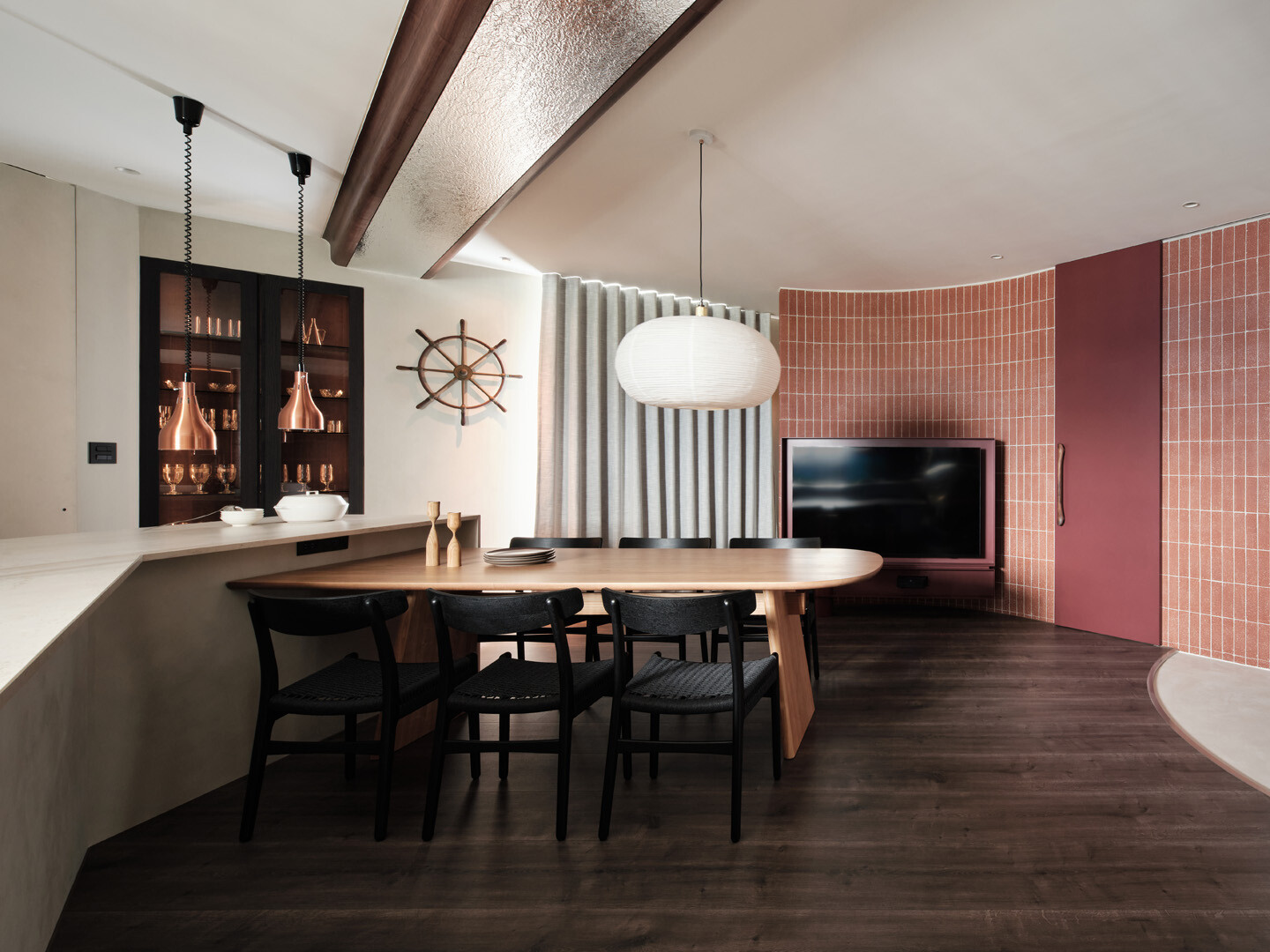
As guests gather around the light oak dining table to enjoy seasonal dishes, a rippling metal panel suspended from the ceiling captures glimmers of the landscape beyond the balcony—rice fields stirring gently in the breeze. Like a silver stream winding across the plain, it reflects shifting hues of green and gold, creating a subtle connection between the table and the land through flickers of light and shadow.
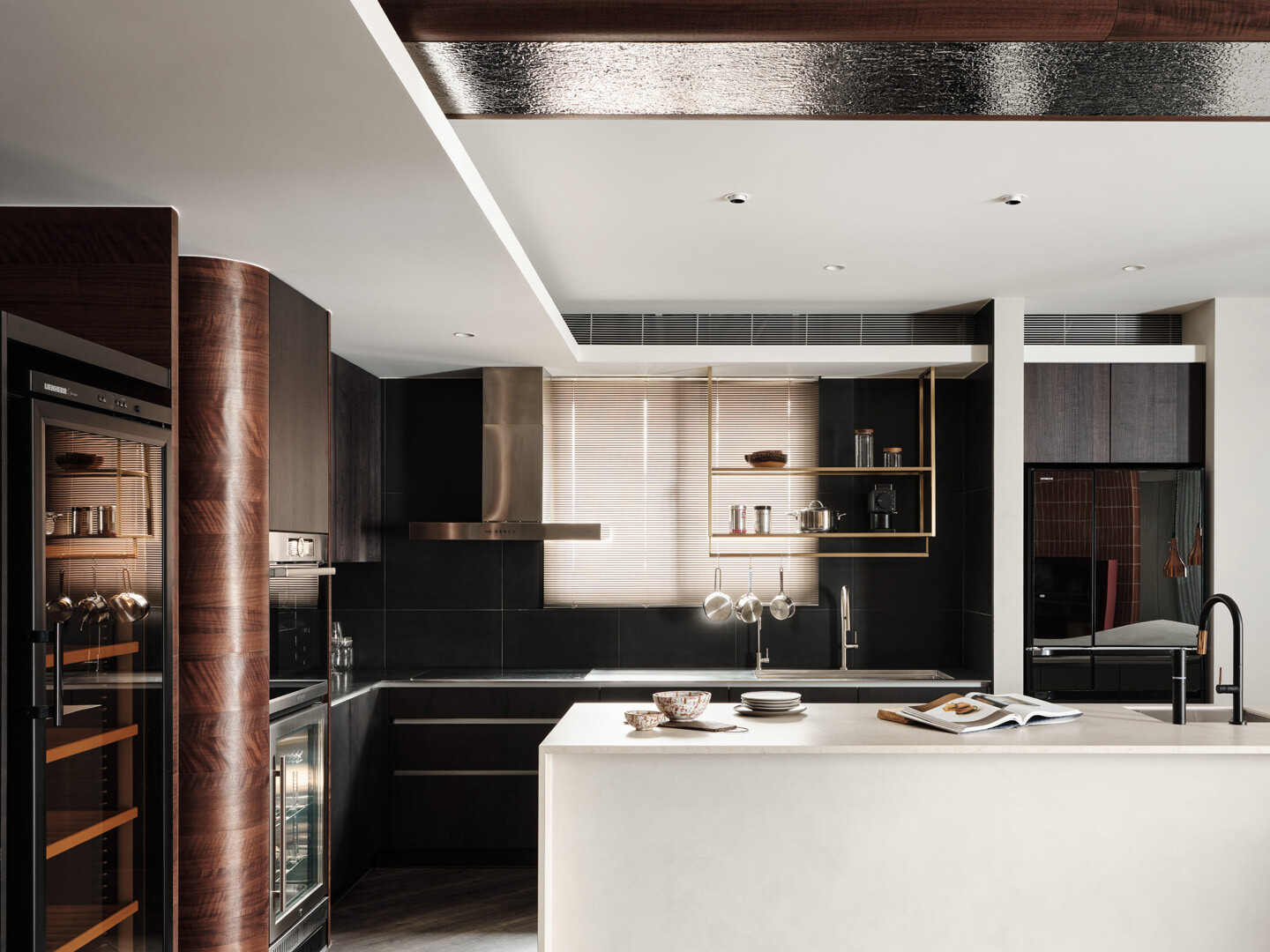
Beyond its rootedness in place, the space also embodies the homeowner’s cross-cultural culinary journey through Japan and Europe. Walnut cabinetry, with its refined grain, sets off the precision of high-end Western appliances. Dark timber tones and glass shelving showcase artisanal tools—from Japanese rolling pins to Italian pasta cutters—each expressing its own tactile and cultural language. Wooden handles and helm-like accents lend the space a quiet multiculturalism, subtly directing the gaze outward from the arc of the kitchen—toward the sea.
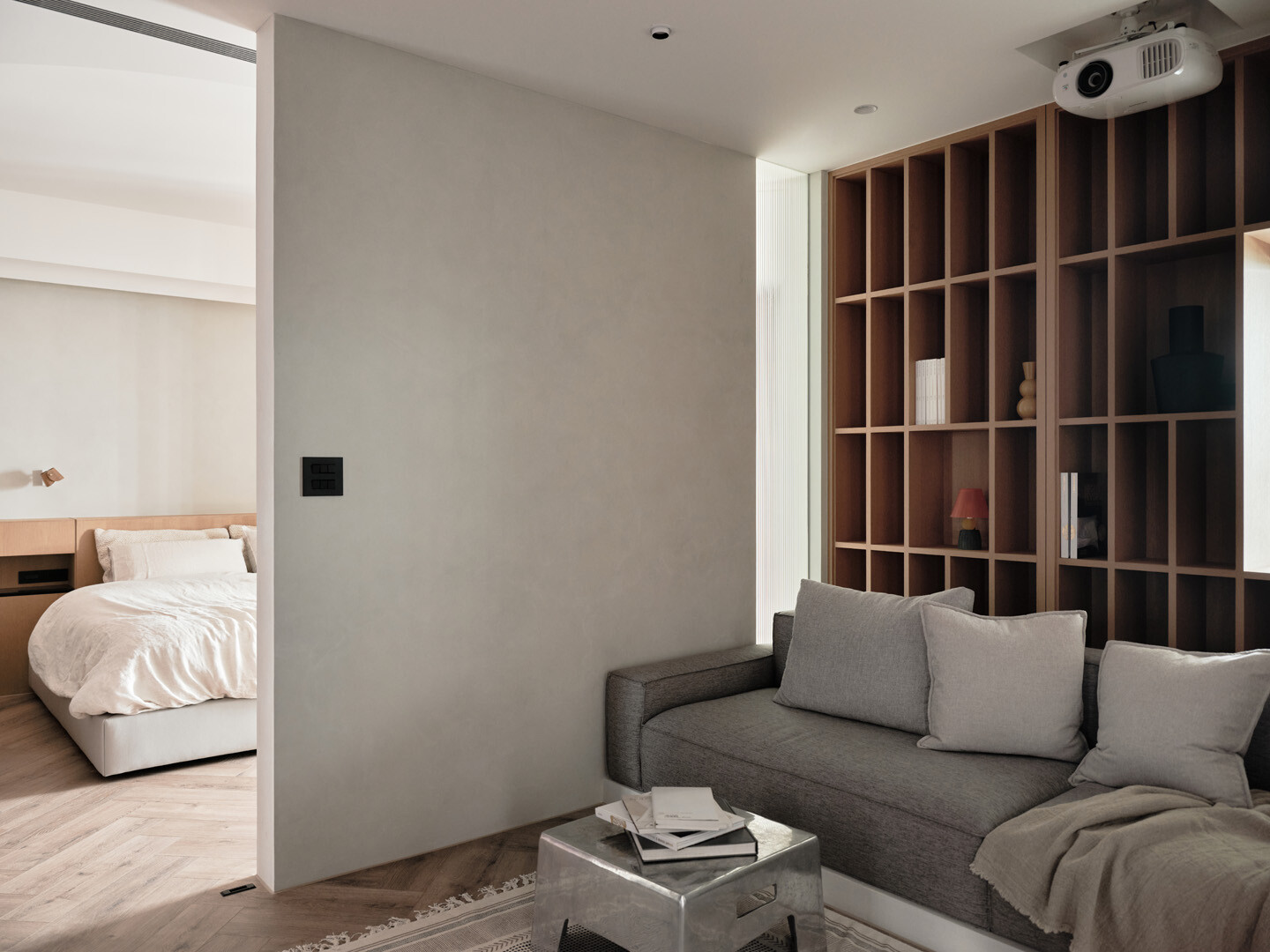
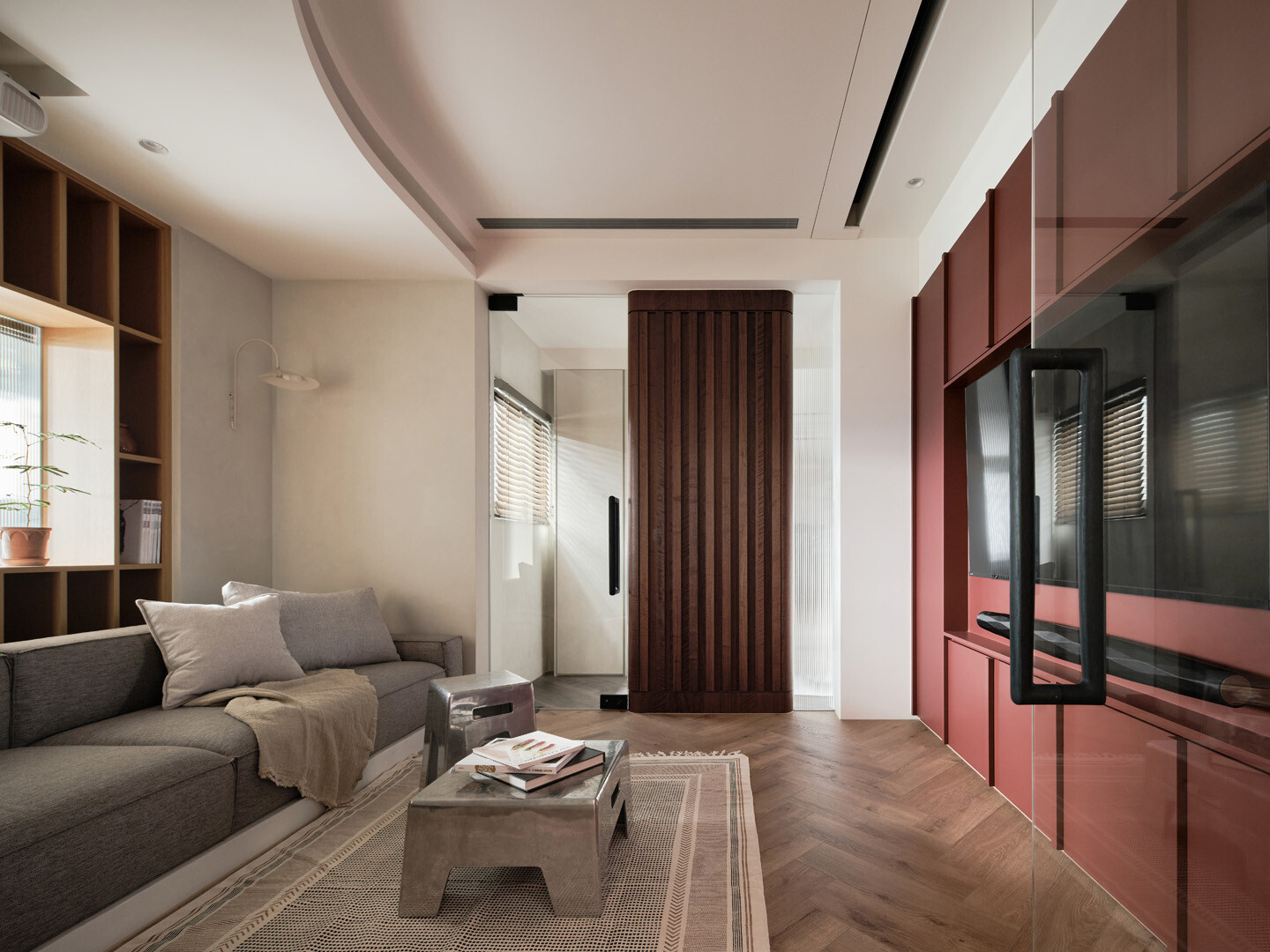
In contrast to the openness of the public zone, the private quarters are composed and introspective. A low wall at the entrance shields the interior from direct view, while the spatial relationship between the living room and the primary bedroom creates a sheltered, composed domestic realm. To enhance this quietude, the designer introduces a staggered rhythm of solid and glazed surfaces, allowing natural light to filter in, soften transitions, and extend visual depth.
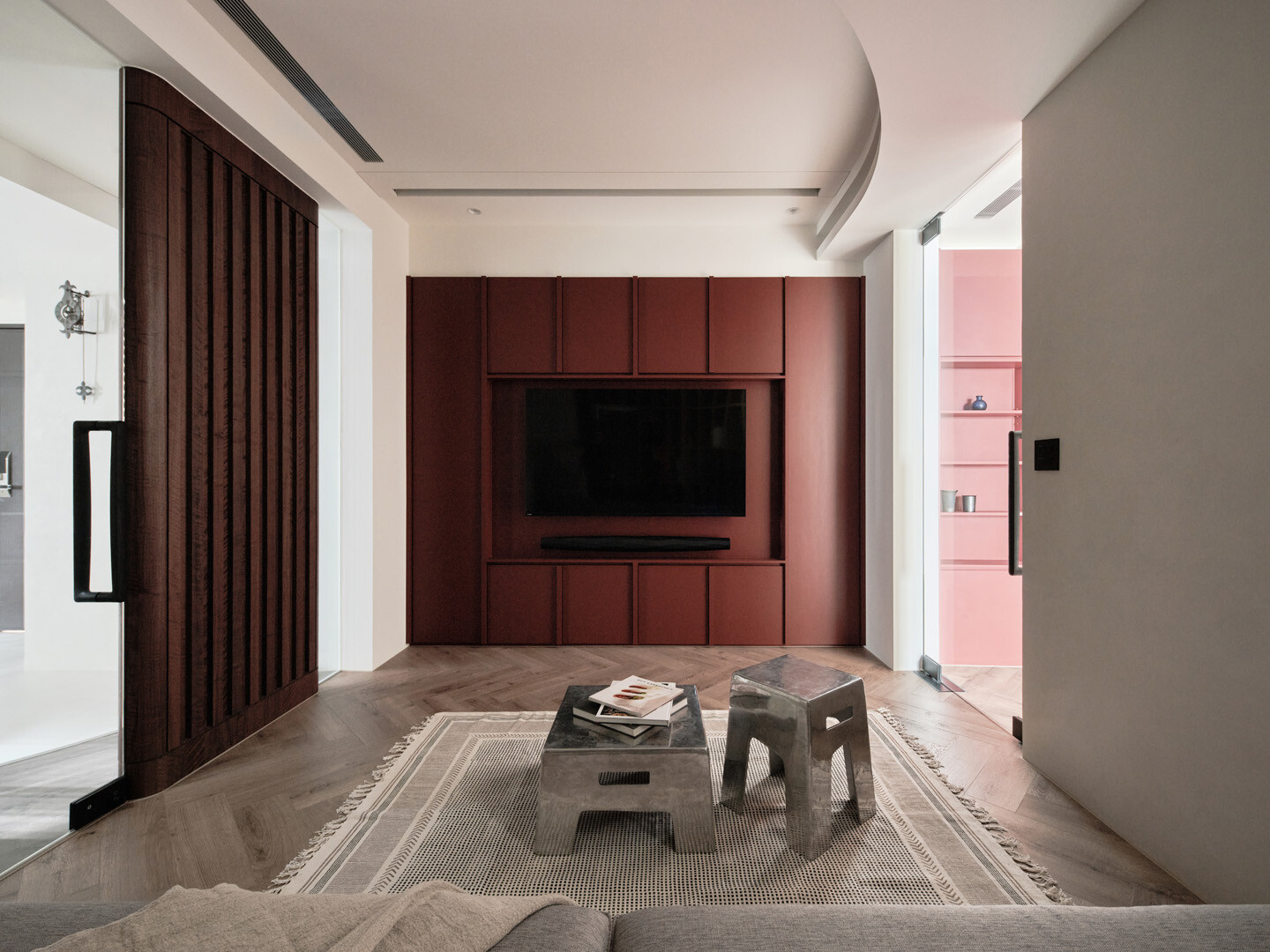
The architectural vocabulary of the Lanyang Plain—curving lines and brick textures—reappears here in more subdued forms, integrated into the ceiling and built-in storage, offering a quiet dialogue with the adjacent kitchen. As the homeowner follows the direction of the herringbone wood flooring deeper inside, the proportions open generously, offering both security and spatial generosity—inviting solitude, without enclosure.
Drawing energy from the local land and vitality from the owner’s creativity, the home becomes a gentle choreography of work and life. Moving through the compressed threshold into the openness beyond, one recalls another of Rong Zi’s lines: “drifting through pine waves and ocean swells.” Between mountain and sea, the rhythms of everyday life unfold—measured, fluid, and free.