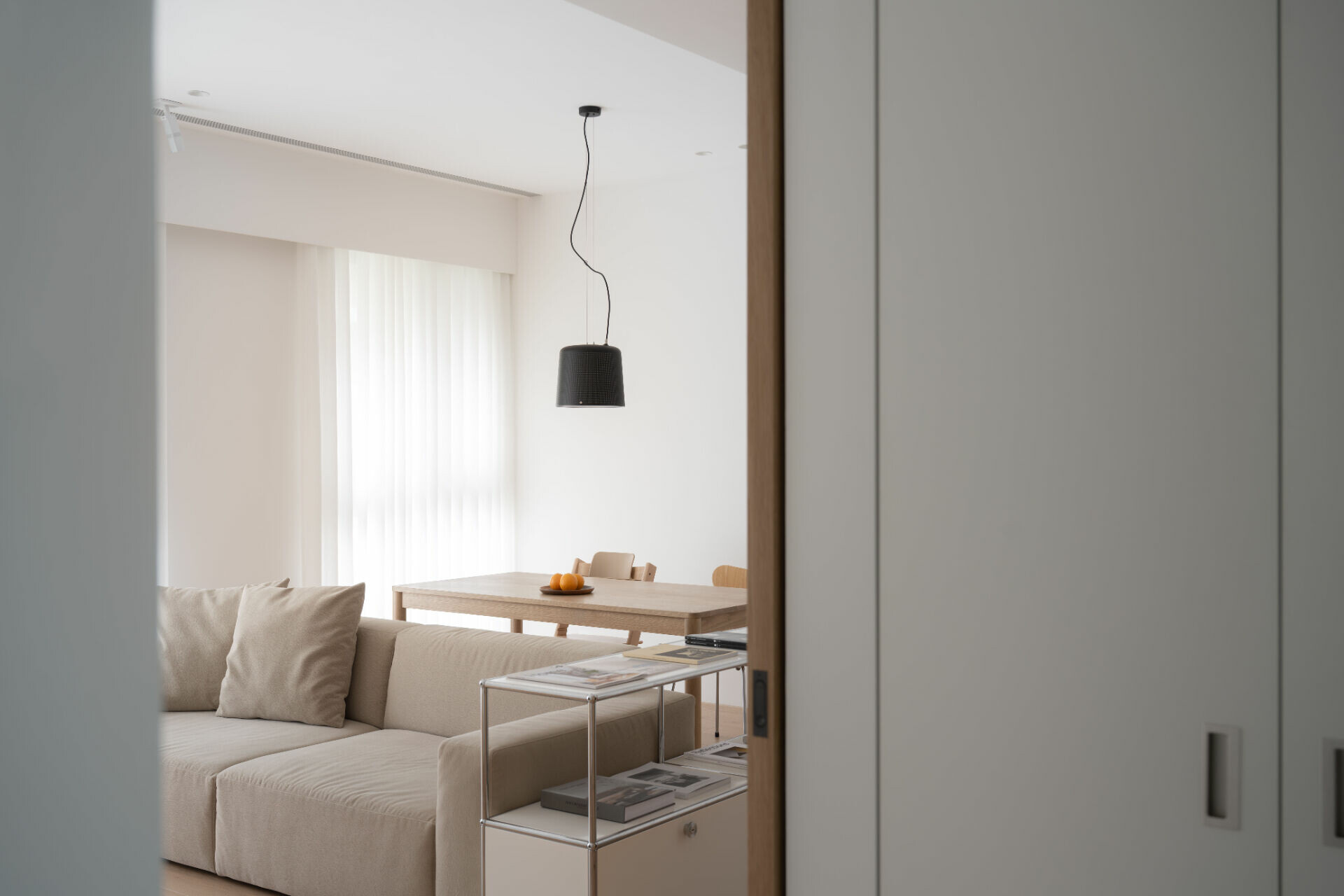
In Two-Way, CA Interior Design responds with three sliding doors that dissolve the constraints of an irregular layout. Together, they establish a fluid order that opens up a sense of spaciousness within limited square footage.
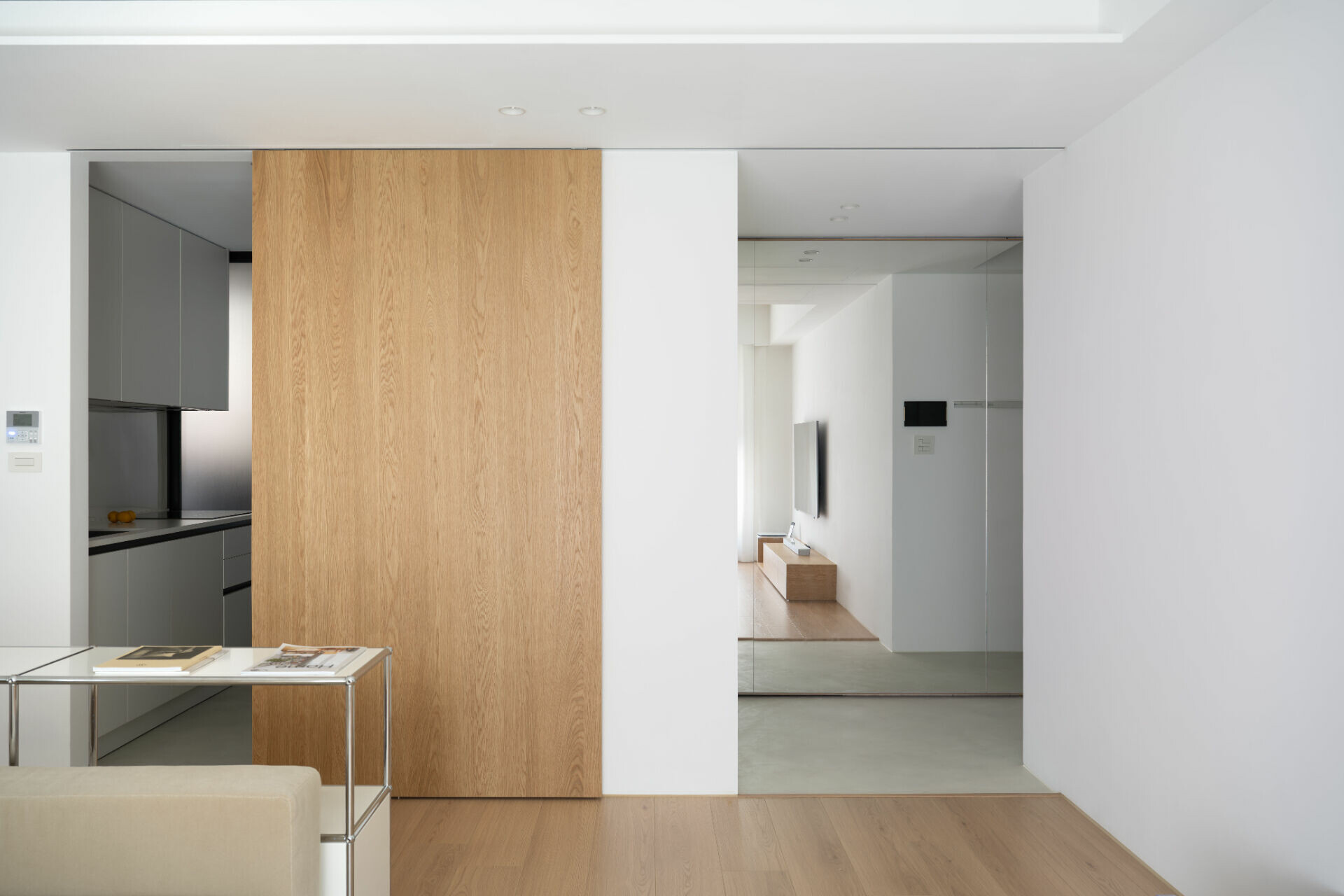
The first sliding door is positioned at the entryway. Formed of glass, it conceals storage while also doubling as a full-length mirror. Its reflections expand the perspective and refract daylight, gradually brightening what was once a dim corridor. Paired with the natural undertone of cement plaster, it does more than conceal and reflect. It creates a crisp, luminous first impression at the threshold and sets the stage for the spatial flow that follows.
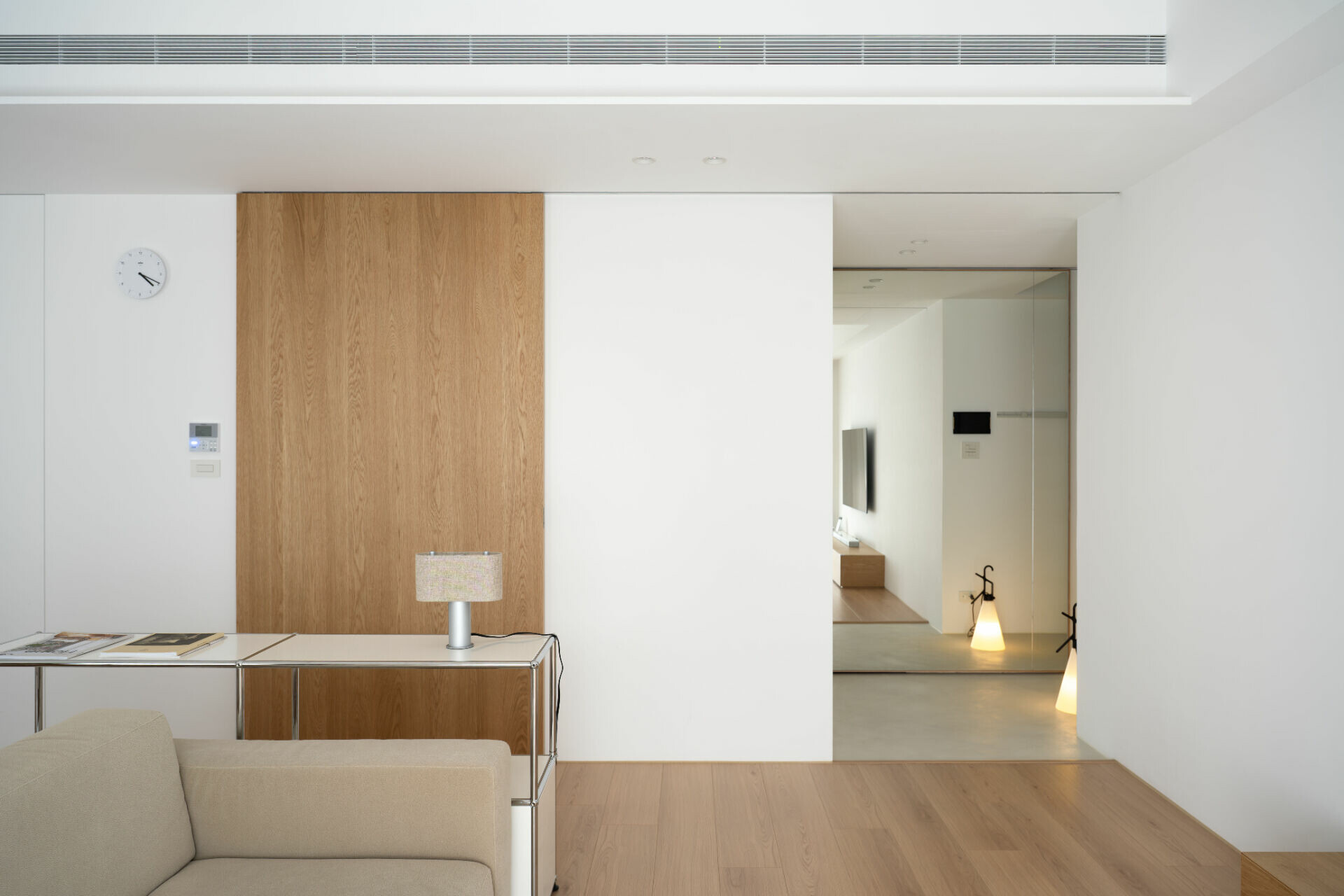
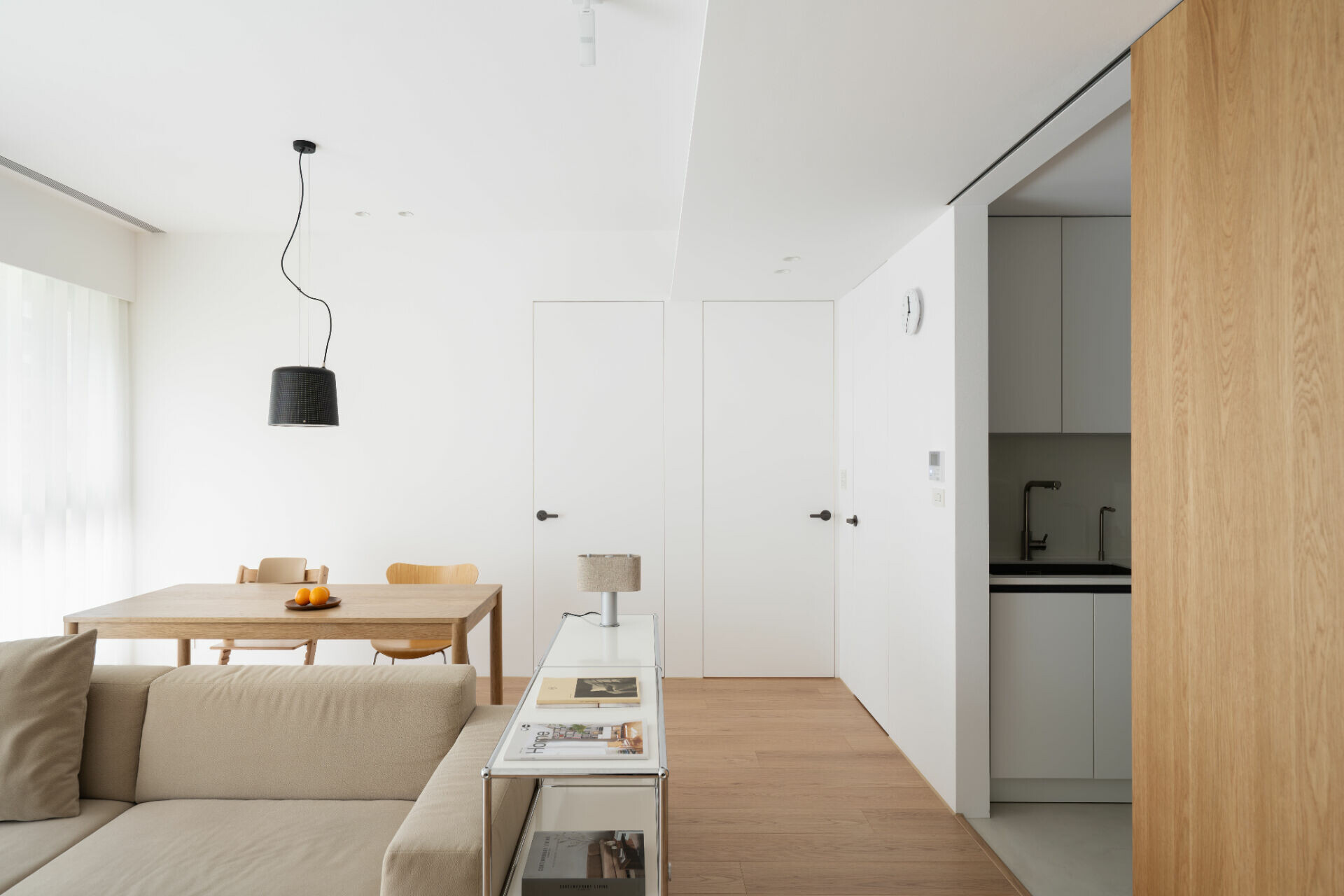
The second sliding door links the entryway and the kitchen. Its role shifts with circumstance: used as an entry door, it straightens the circulation and keeps young children safely within sight. Used as a kitchen door, it contains cooking fumes and preserves cleanliness. With no door swing or bulky frame, the sliding mechanism softens boundaries, separates without severing, and maintains transparency and continuity.
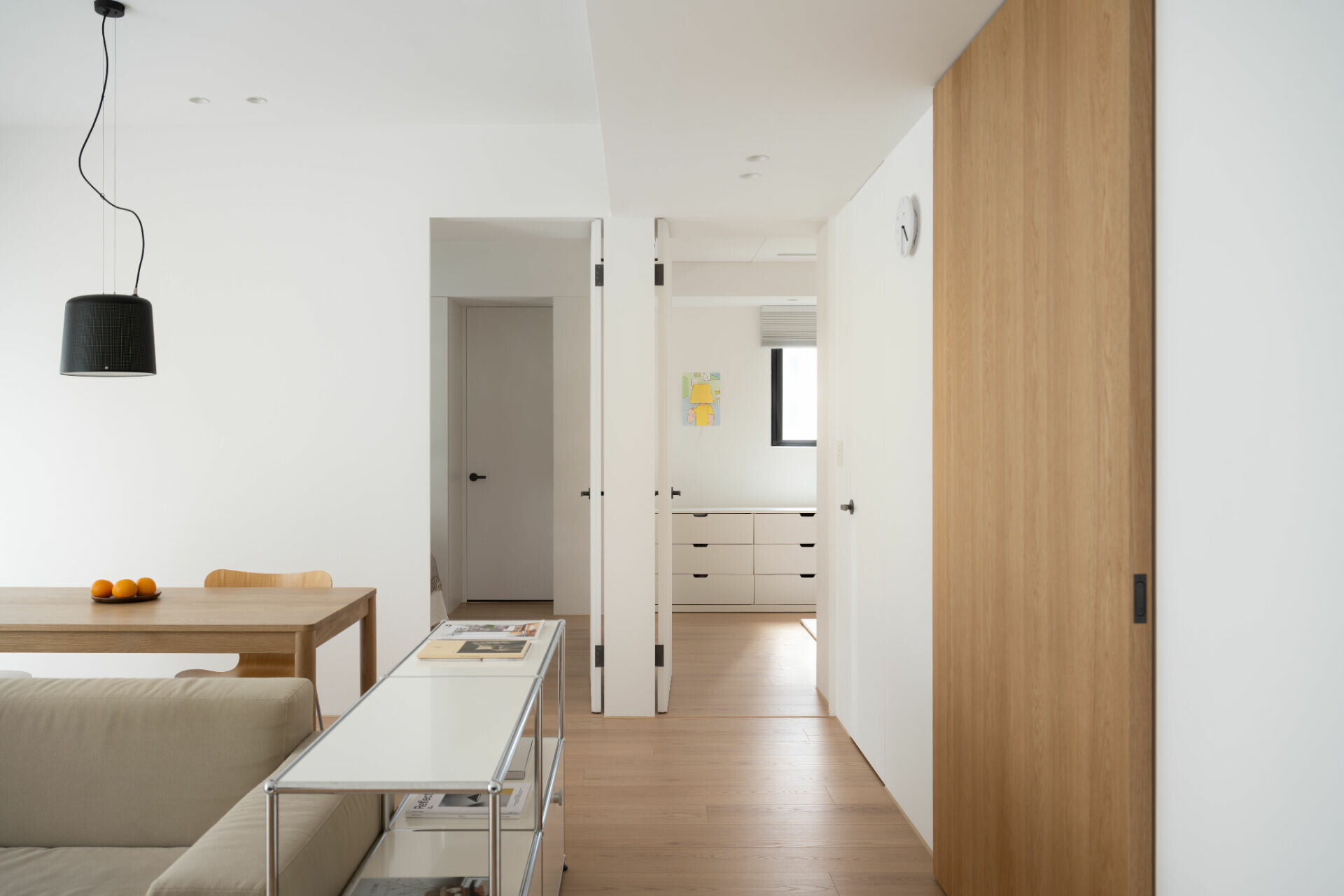
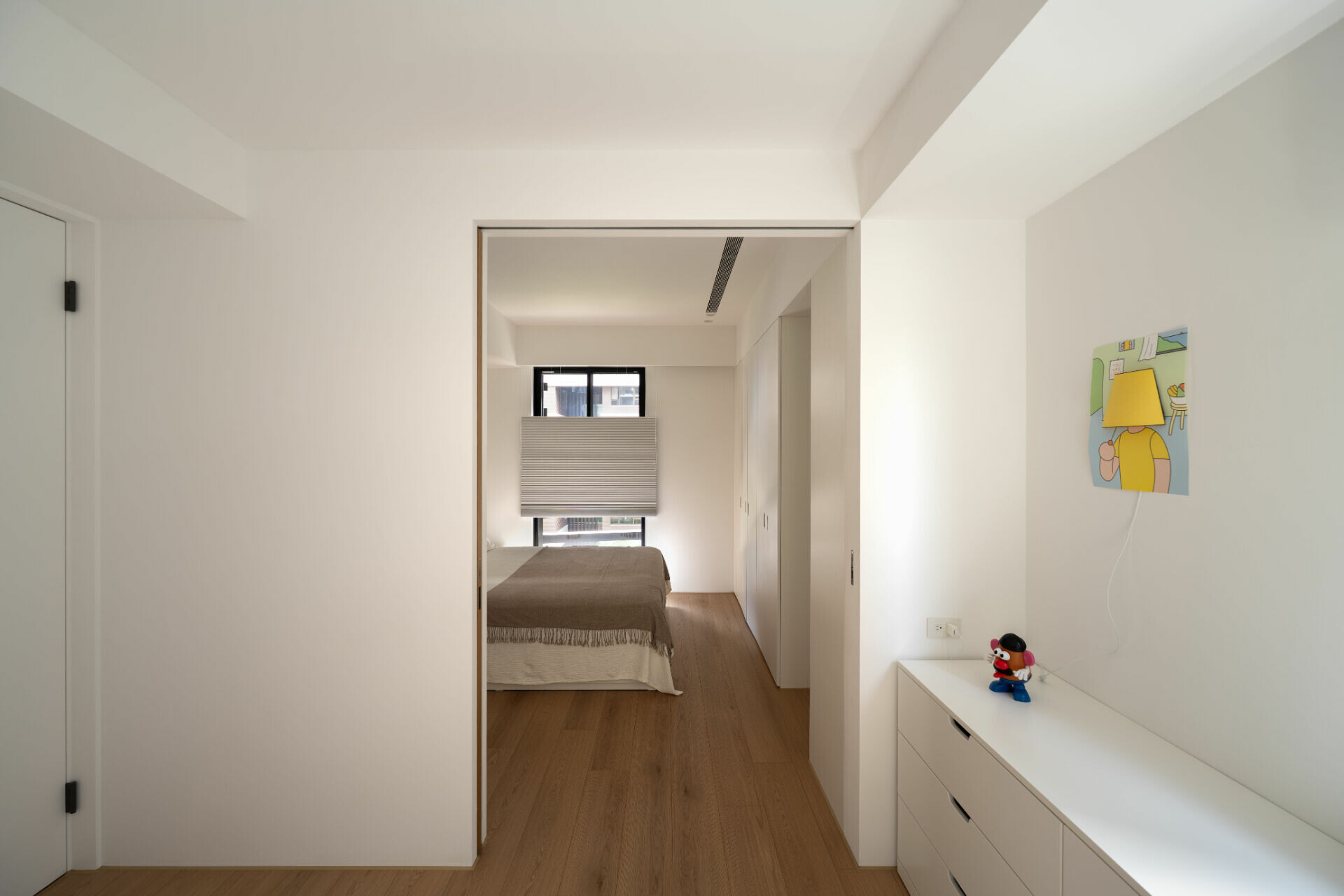
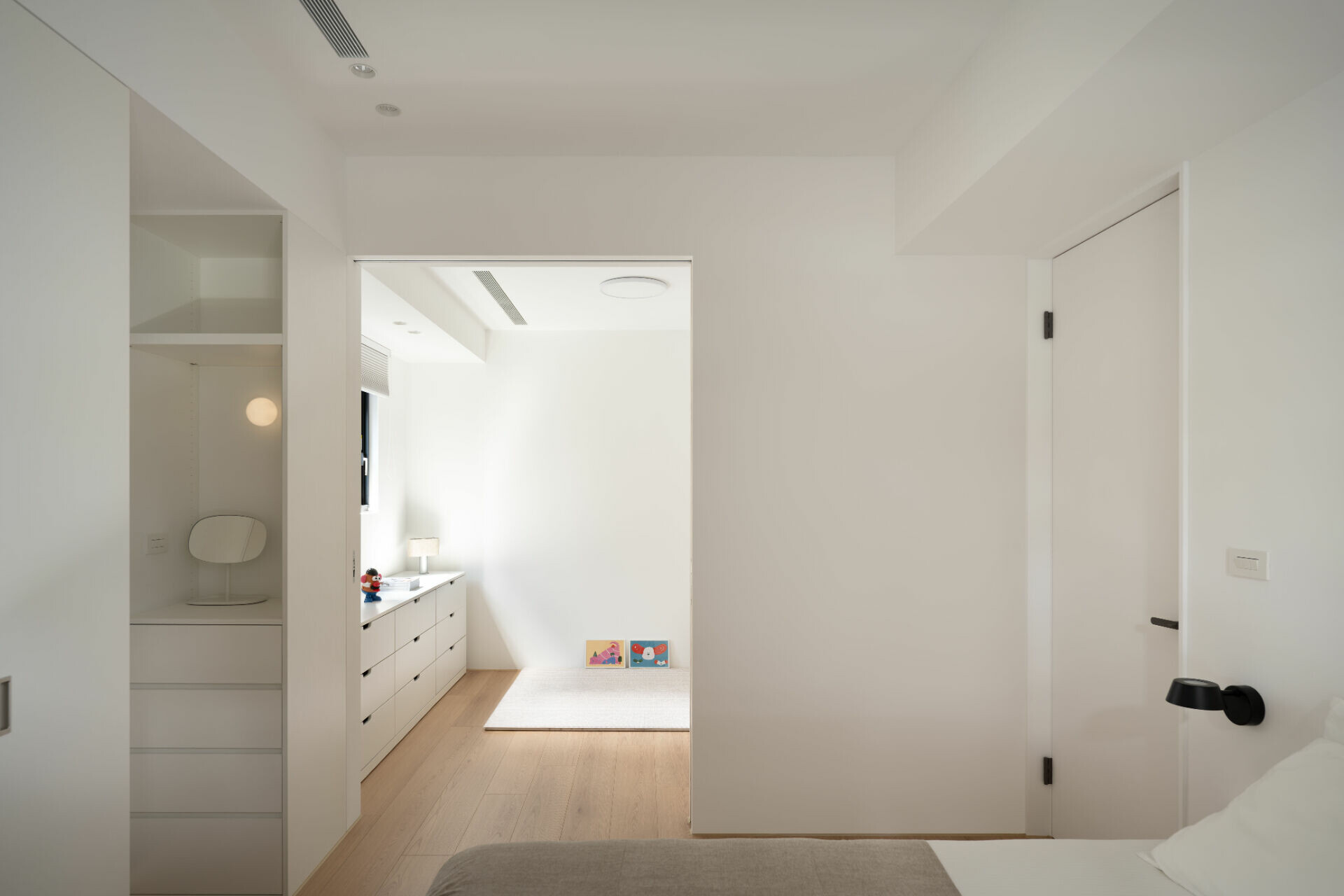
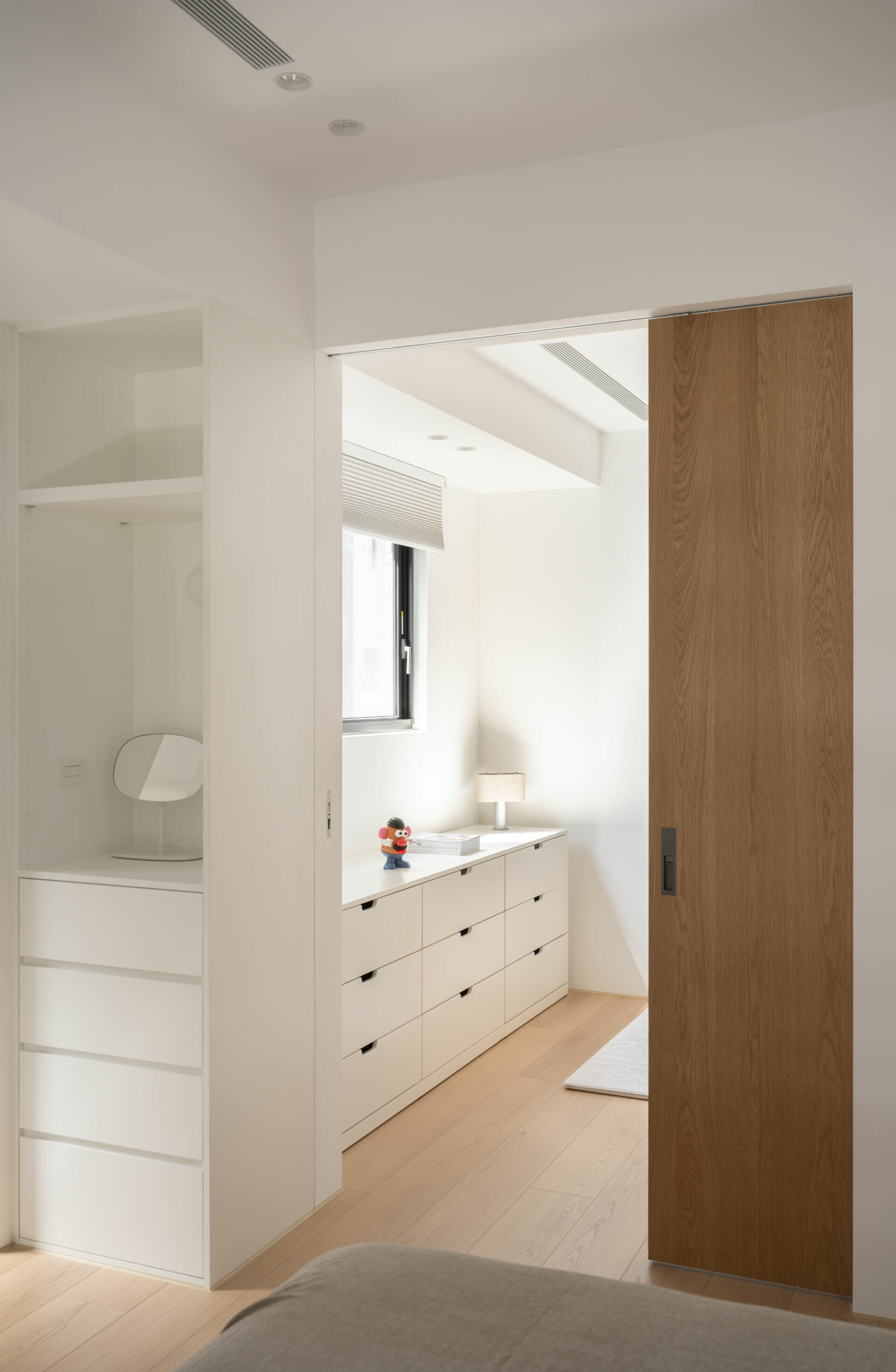
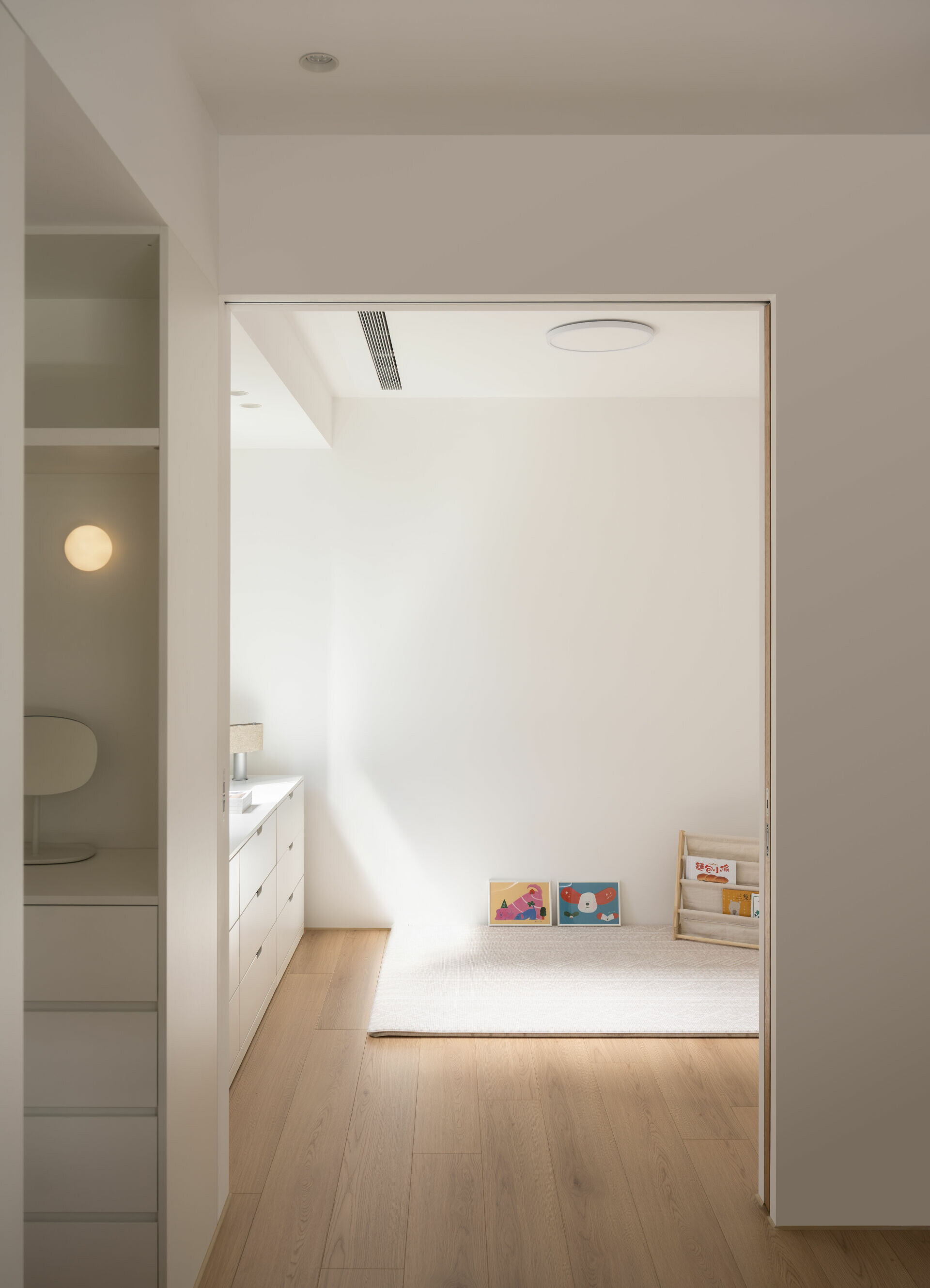
The third is tucked discreetly between a pair of bedrooms. As one room was converted from a study into a nursery, the designers merged the two spaces, using the sliding door as a gentle divider. It allows for close care of the child now while retaining the flexibility for independent rooms in the future. Within this private zone, natural light and air circulate from both directions, lending the rooms a fresh and breathable quality.
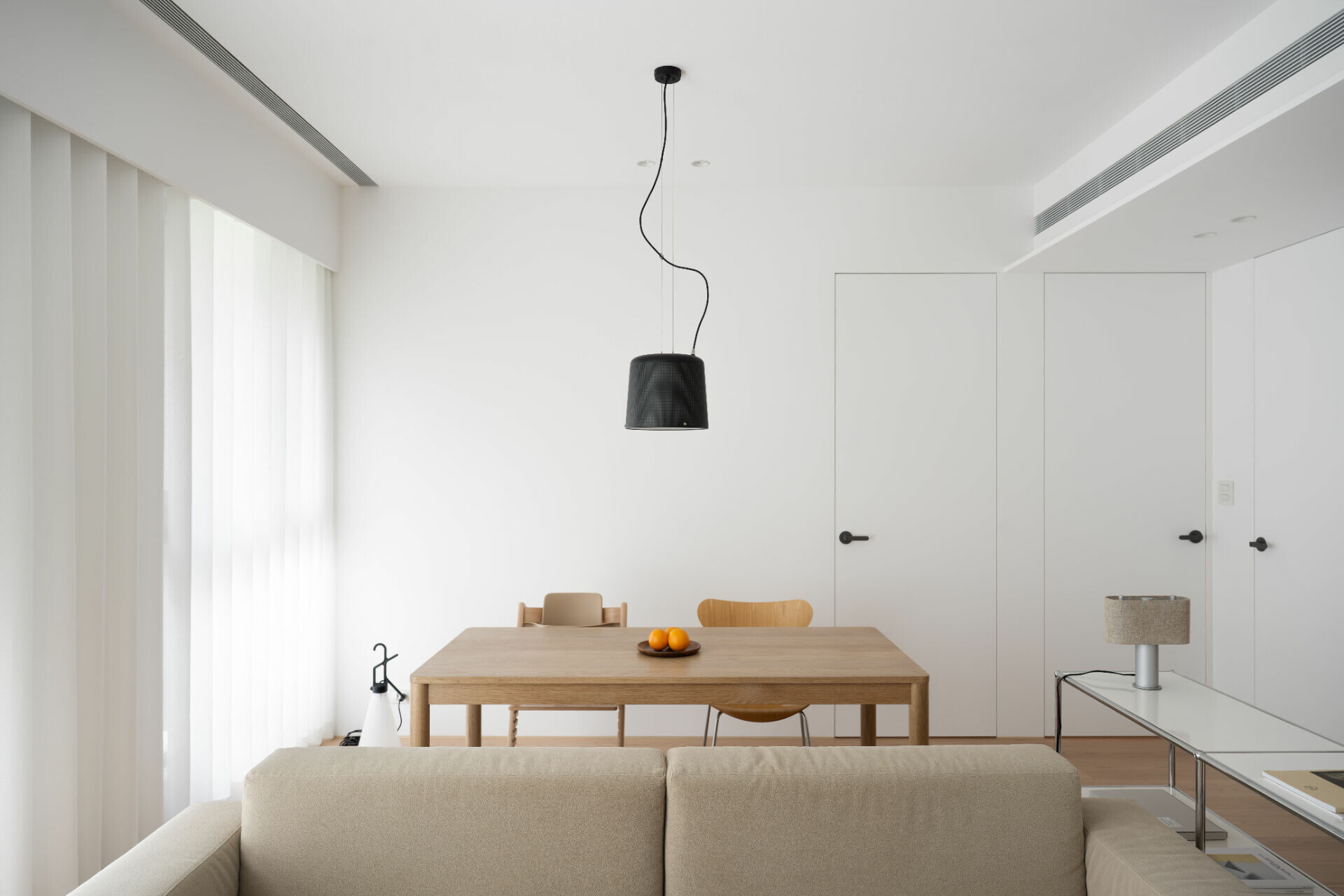
With these three sliding doors establishing the rhythm, the public zone opens as an open-plan layout. Freestanding furniture is gathered into an “island” at the center, around which circulation flows like a current, shaping a looped pathway through daily life. A low side cabinet doubles as both coffee table and sideboard, marking thresholds that guide without blocking. Public and private domains weave together, their layers rippling outward like concentric waves.
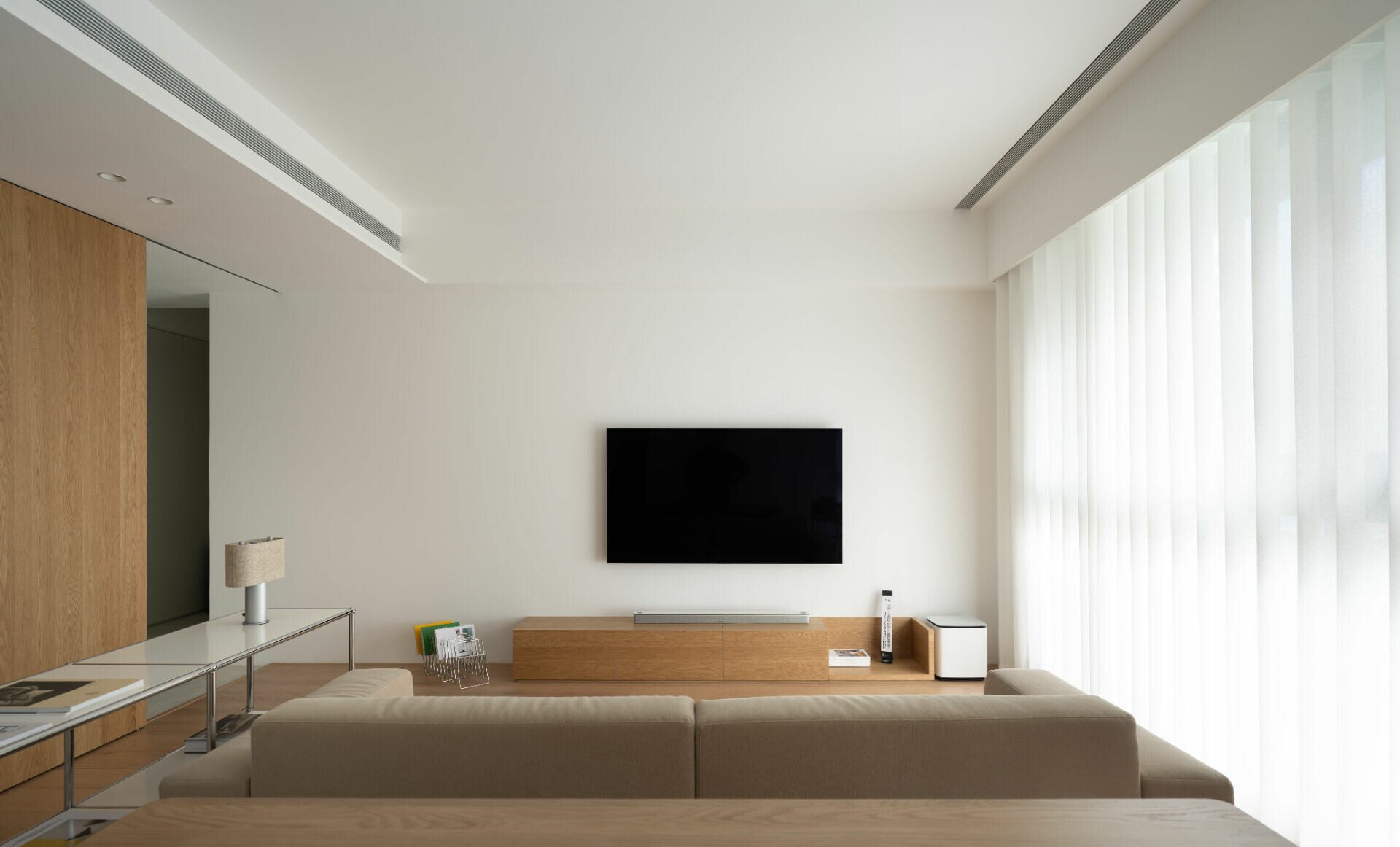
Designers Hao-Chien Cheng and Yu-An Chen describe their intention as creating a path that “never ends.” Along this playful route, one simply keeps moving forward without retracing steps, and in the process the sense of space subtly expands. This unbroken trajectory not only links everyday activities but also allows the home’s order to renew itself through movement.
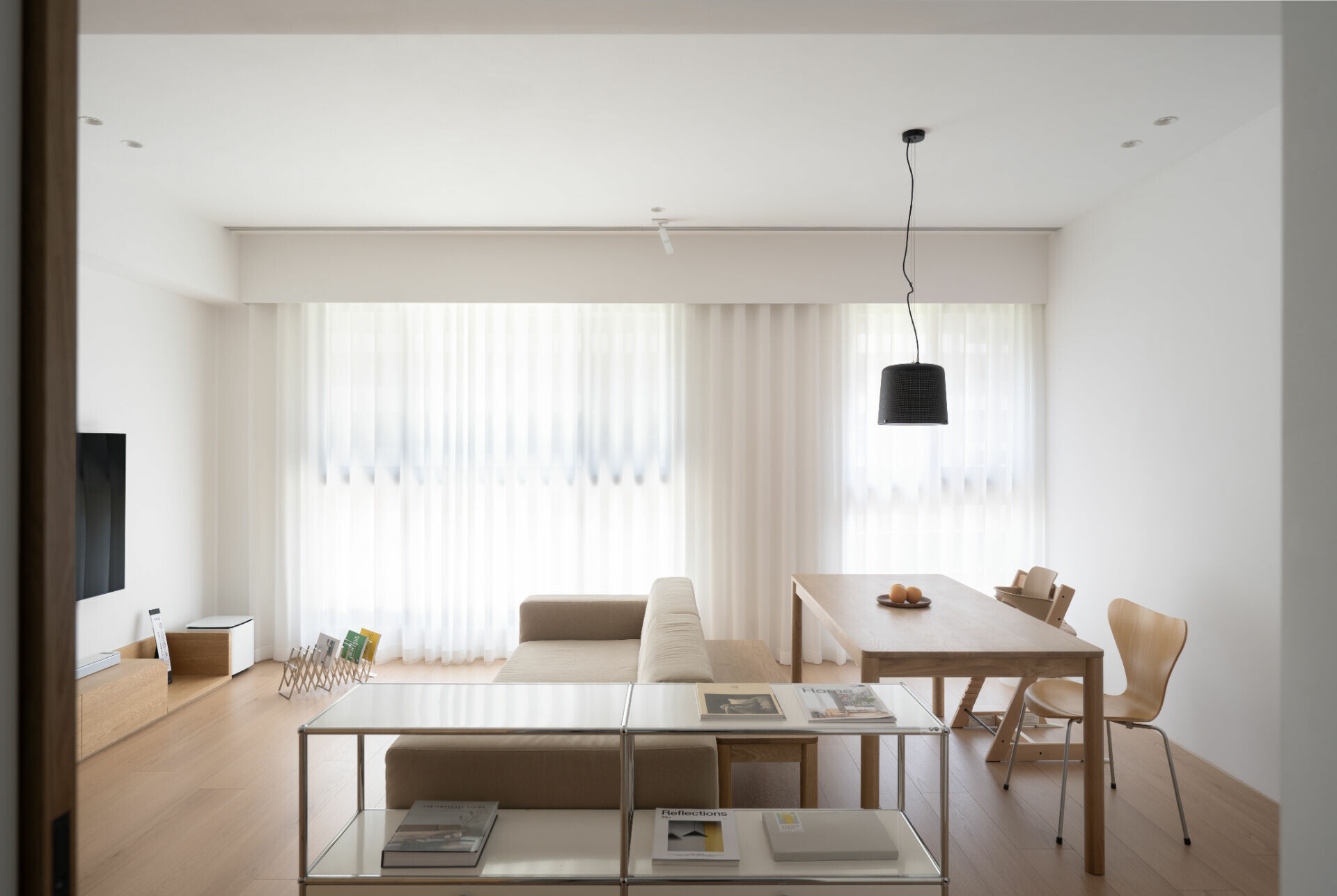
Within this continuity, color and material compose a quiet palette. Sheer white curtains diffuse light into soft ripples, while white, pale wood, beige, and cool cement gray interweave into a natural, calming backdrop. These gentle tones recede, allowing the home to serve as a vessel for family life rather than competing for attention.
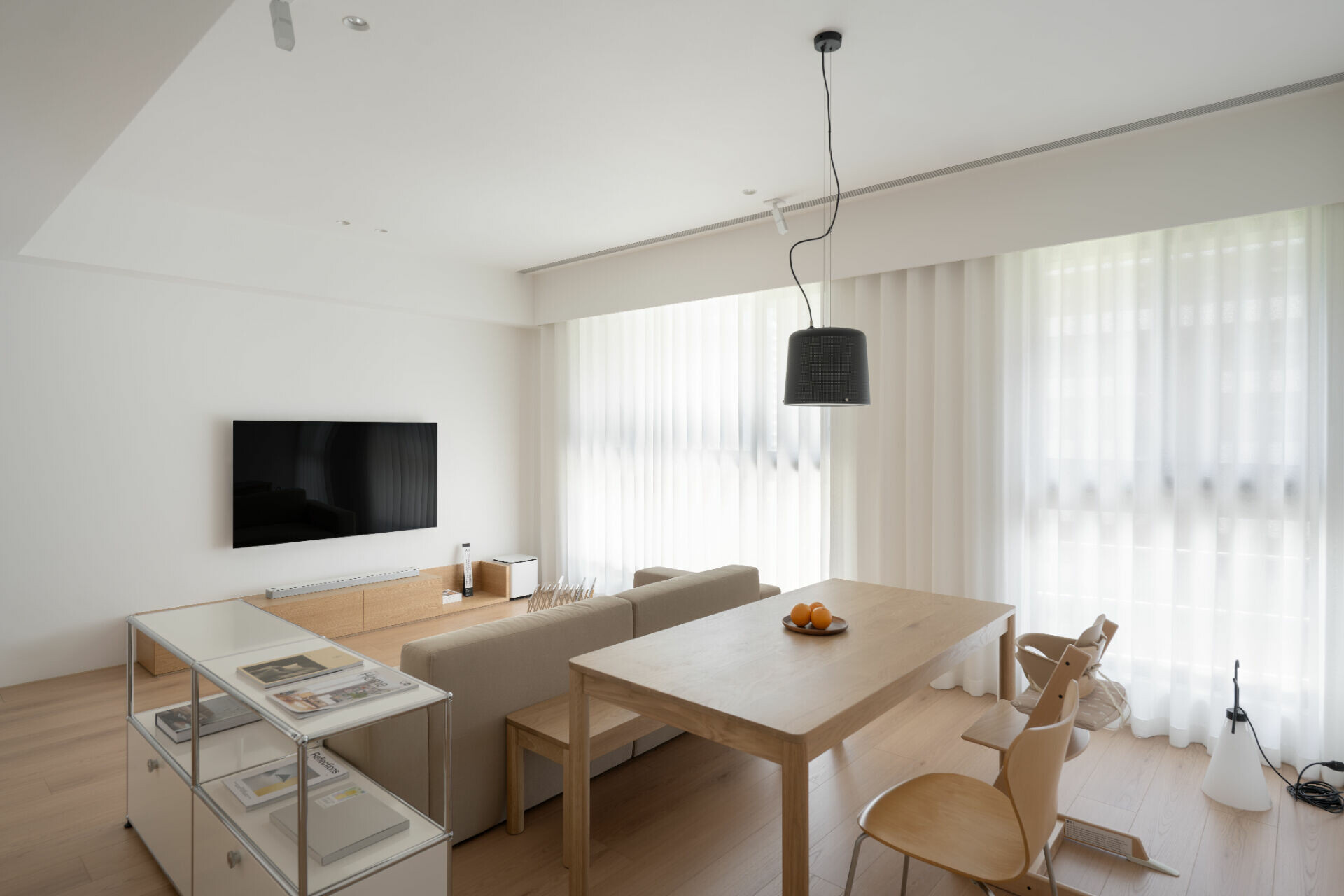
Yet the design is not entirely subdued. A black pendant light with organic contours hangs like an inky accent, injecting both gravity and vitality into the space. Against the muted foundation, its presence is clear but restrained. It reminds us that design need not vanish into the background; it can surface at the right moment to set rhythm and tension.
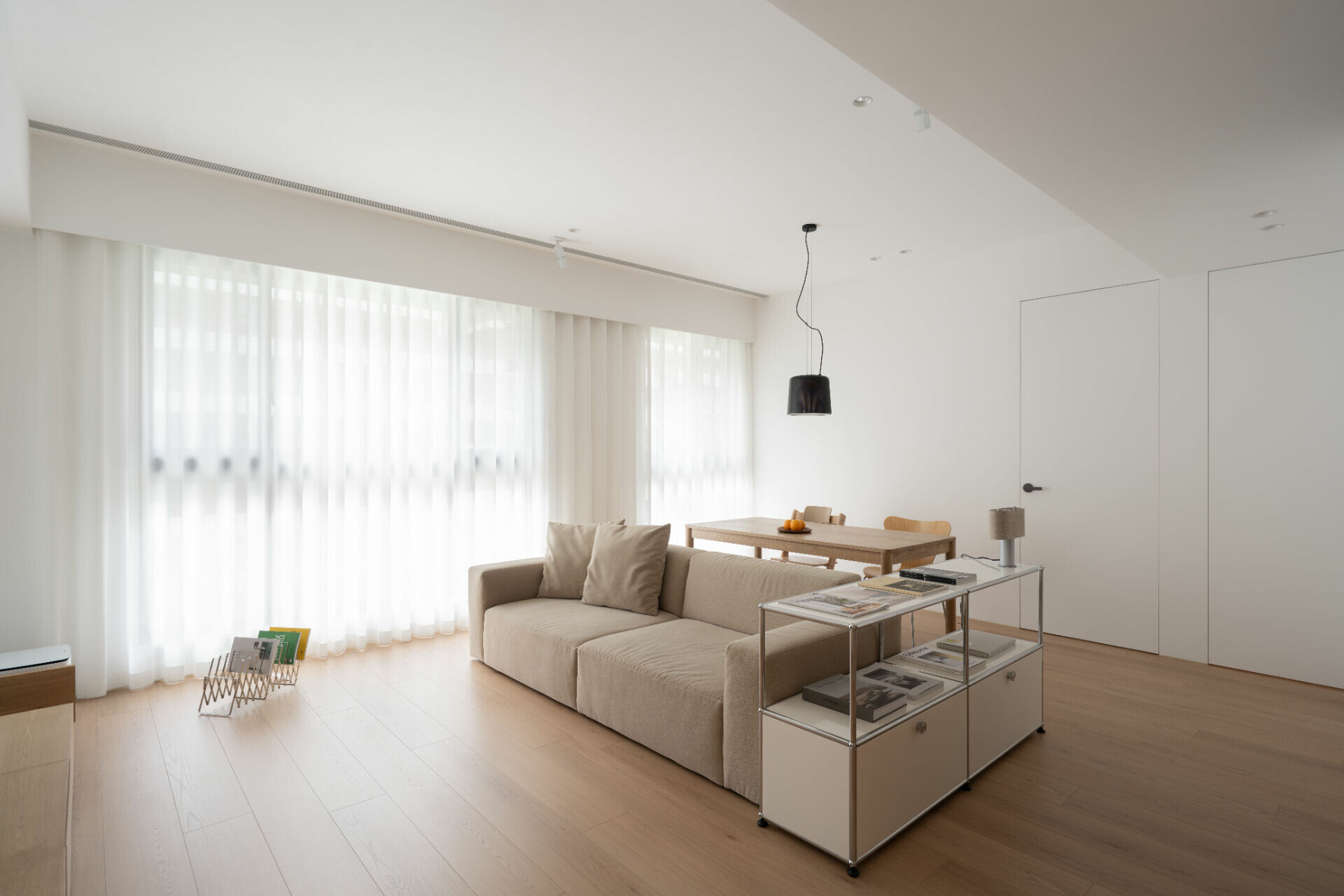
In this new home, one can almost see the young couple strolling hand in hand with their child, wandering unhurried along their unique everyday pathway. With each circuit, the house continues to grow into the shape of the family’s future.