An Everyday Landscape Taking Root in the Streetscape—— Fuglen Kyoto
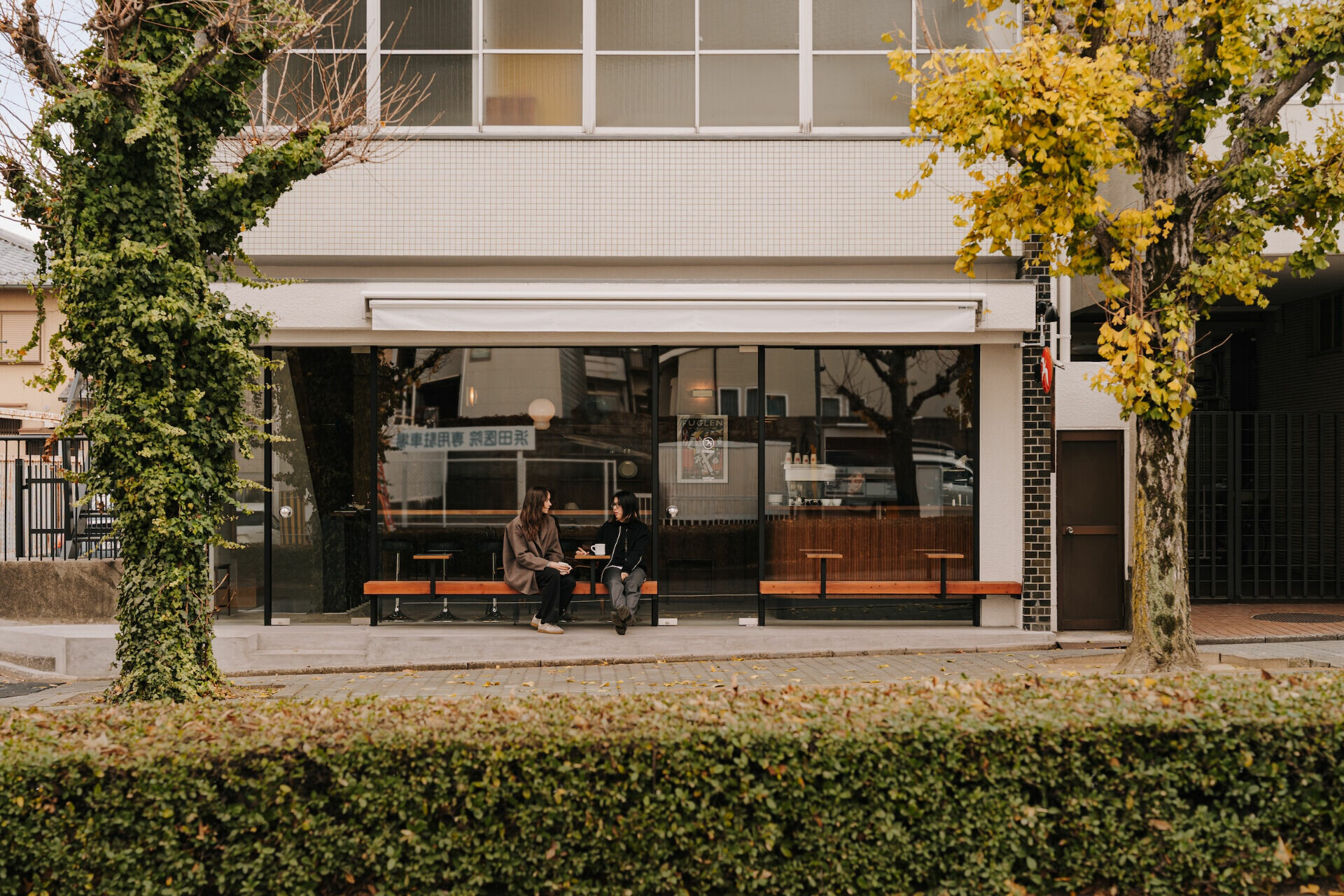
The fabric of a city carries the depth of its culture and the character of its people. Kyoto moves at a modern pace, yet its inner tempo remains calm and measured, as if different registers of time were unfolding in parallel. From the design-conscious stretch of Kitayama Dori towards Shichiku, a residential neighbourhood in Kita Ward, the city gives way to tree-lined streets, birdsong and the understated presence of a modest white building. More pause than destination, it sits within the neighbourhood’s daily life. A red sign bearing Fuglen’s white bird emblem hangs at one corner of the façade, discreet enough to leave the rhythm of the street intact. Once a local Japanese confectionery shop with a small workshop at the rear, the building has been reworked as a compact coffee stand organised around the counter. From time to time, the grinder begins to hum, like a small ritual setting the day in motion. The air fills with the scent of brewing coffee, and people slow down, breathe and settle. Coffee at Fuglen Kyoto marks the beginning of the street’s day, while offering a moment set apart from it.
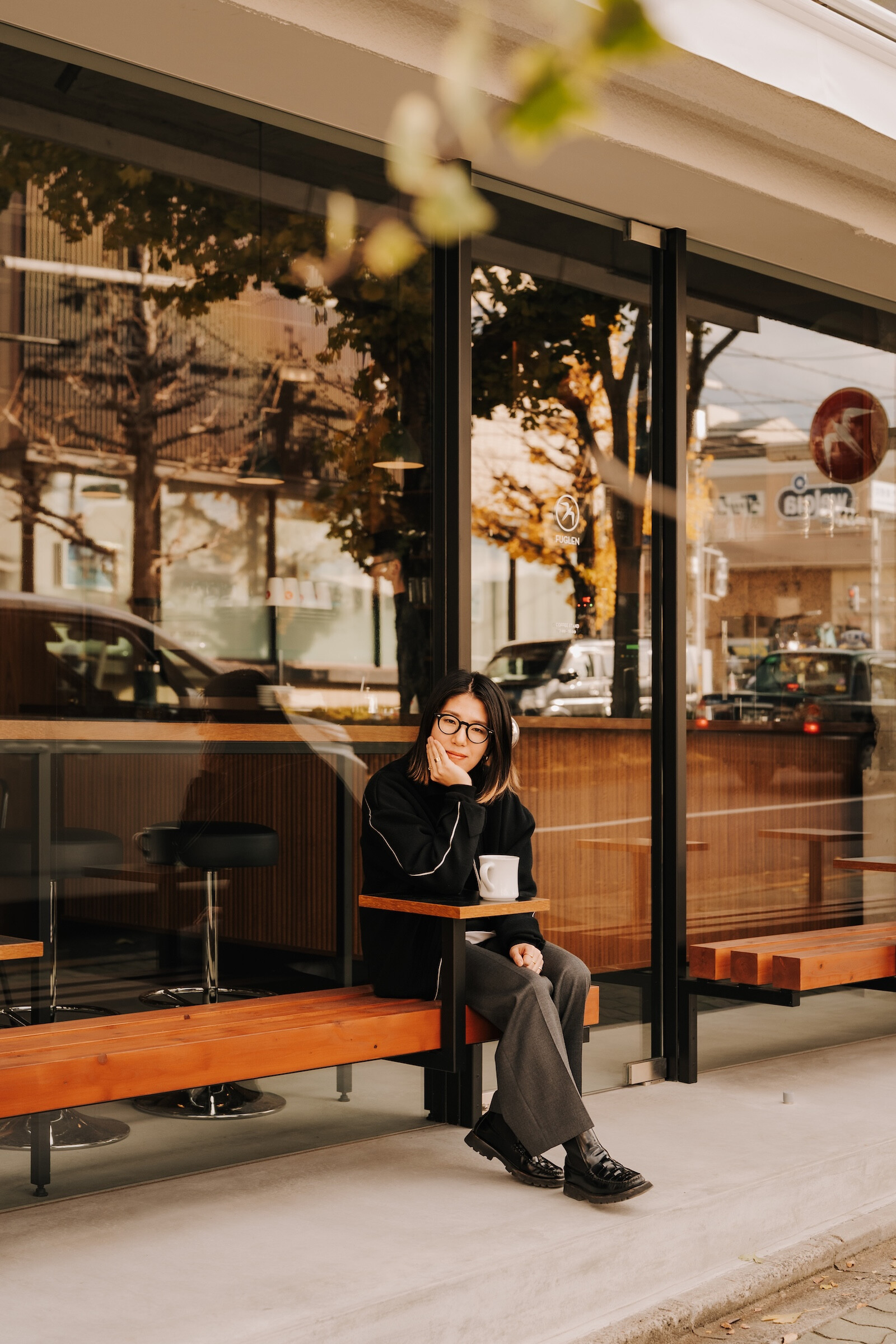
A Neighbourhood Coffee Stand Woven into the Urban Fabric
From the opening of Fuglen Tokyo in Tomigaya in 2012 to the arrival of Fuglen Kyoto in Shichiku, Kita Ward, in December 2025, it took thirteen years for the brand to extend its presence to the Kansai region. That measured pace gives Fuglen Kyoto a temperament closely attuned to the city itself: unhurried, attentive and assured. Keiya Takahashi, Director of Fuglen Japan, joined the team as a barista when the first Tokyo location opened. He has since worked across roasting, shop operations and store development, before taking on his current role in 2024. For Takahashi, those thirteen years were not a deliberate delay. They were a period of cultivation, through which Fuglen gradually developed its own local expression in Japan. Like a seed, the brand needed time, care and the right conditions before it could take hold. That sense of timing became clear only after the team spent time in Shichiku and met the Mononobe family, the building’s owners and local partners. It was then that the idea of establishing Fuglen’s coffee culture in this place began to feel natural.
When considering the atmosphere and operating model of the Kyoto shop, Takahashi did not approach the project as an exercise in reproducing a Nordic lifestyle. Instead, he paid attention to the everyday rhythms around the site: people commuting to work and school, the movement between nearby temples and residential streets, and the ordinary tempo of local life. The aim was less to import a finished concept than to understand how the space could respond to the scale of the street and the routines around it. For Takahashi, Fuglen is strongest when its core elements are allowed to surface gradually, in response to the time, setting and relationships of each place. For this reason, Fuglen Kyoto has not adopted the coffee by day, cocktails by night format found in some of the brand’s other locations. Far from weakening the brand identity, the decision reflects a more sensitive form of localisation, shaped by the character of a residential neighbourhood.
Introducing Fuglen’s light-roast coffee culture to Kyoto also revealed a natural affinity. The city has a deeply rooted sensory culture, shaped by tea and dashi. Here, flavour is not understood only through intensity or clarity, but through aroma, finish and the subtle changes that unfold over time. In this context, a light-roast coffee that reveals its layers gradually can be appreciated quite naturally. At Fuglen Kyoto, coffee is not framed as something entirely new. It becomes another expression of the city’s existing sensory culture. Takahashi hopes that people will return not for novelty, but because the place has begun to belong to their lives. For him, the value lies in the accumulation of small, ordinary moments that allow a coffee shop to become part of a community.
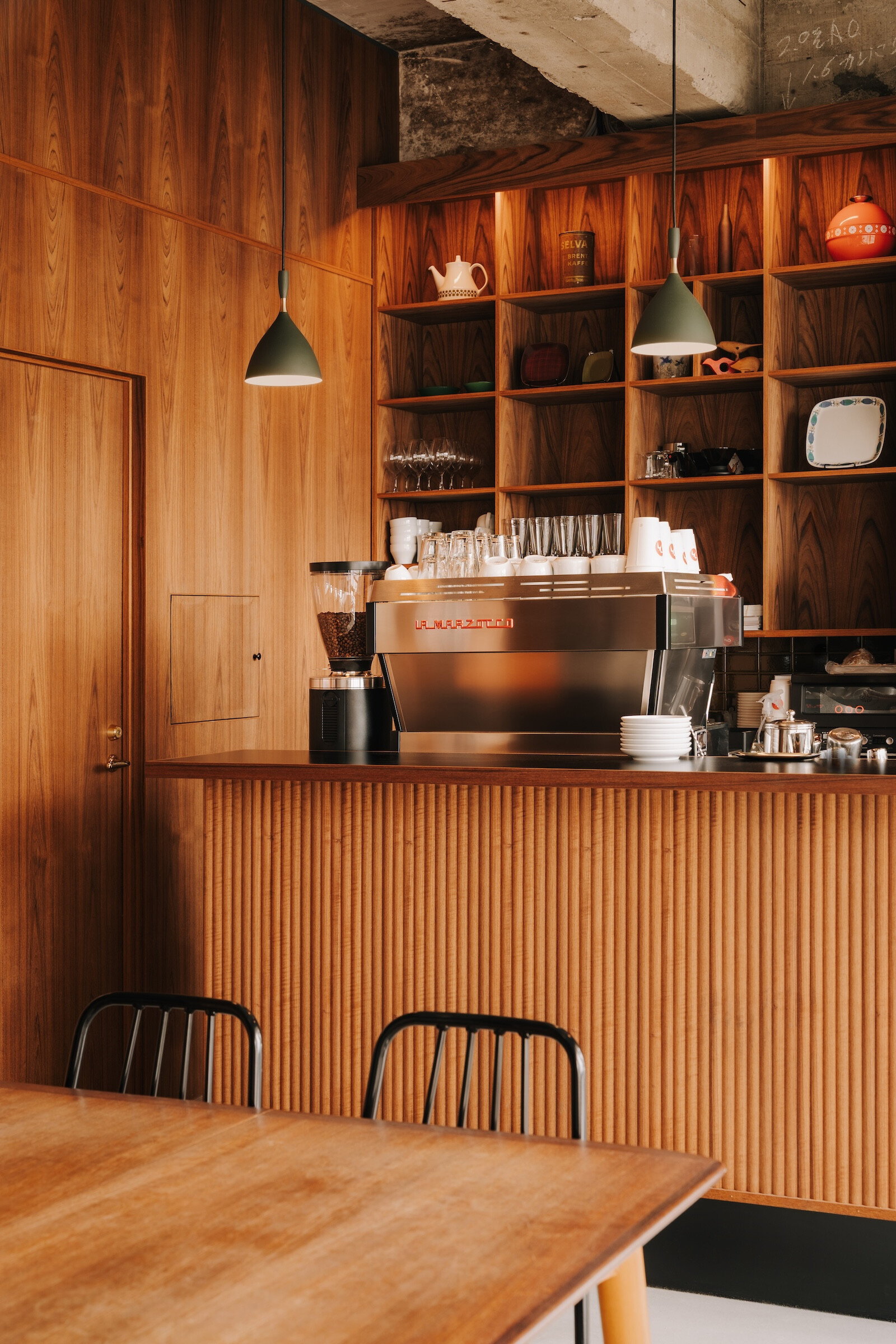
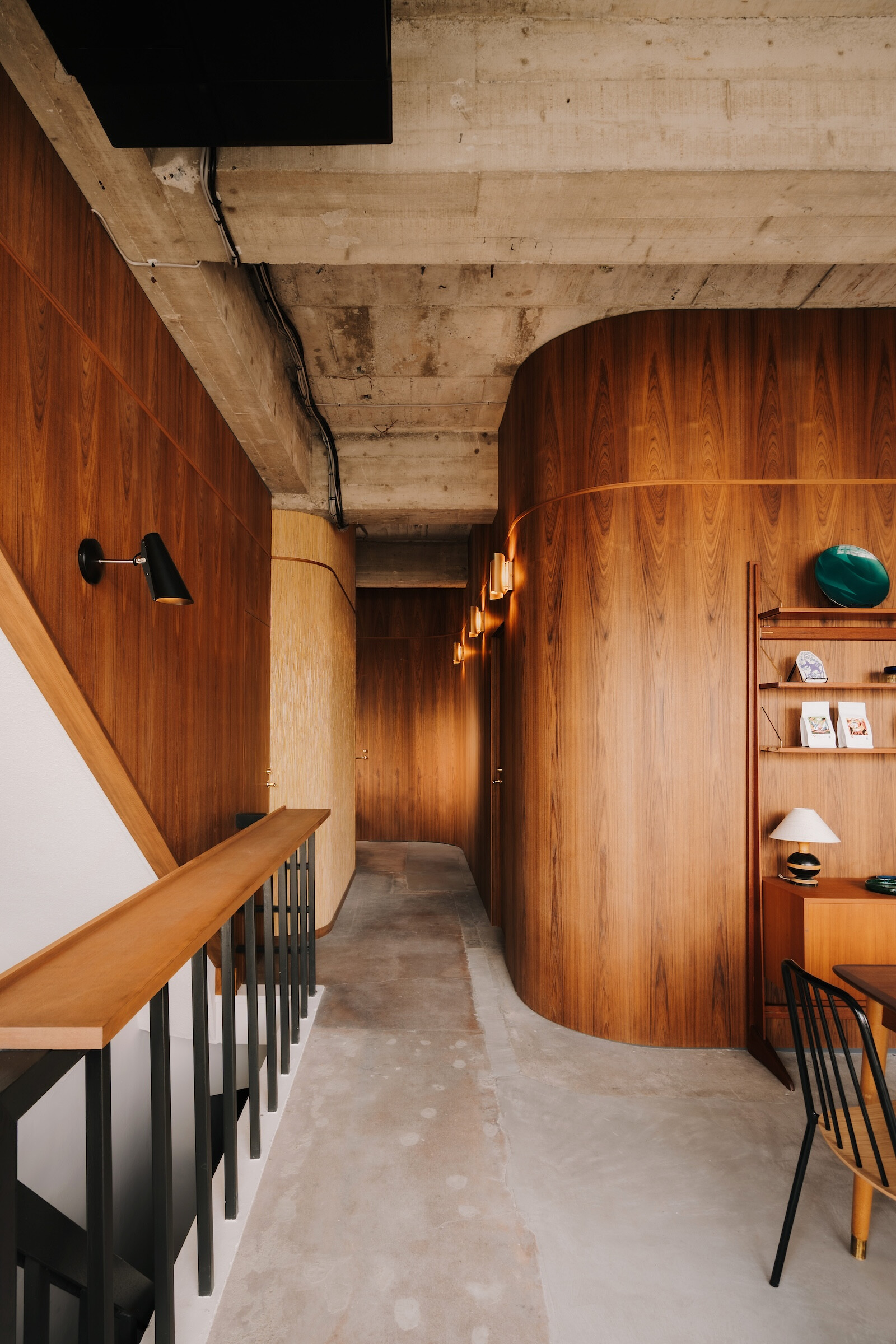
Nordic Design and the Aesthetics of Shadow
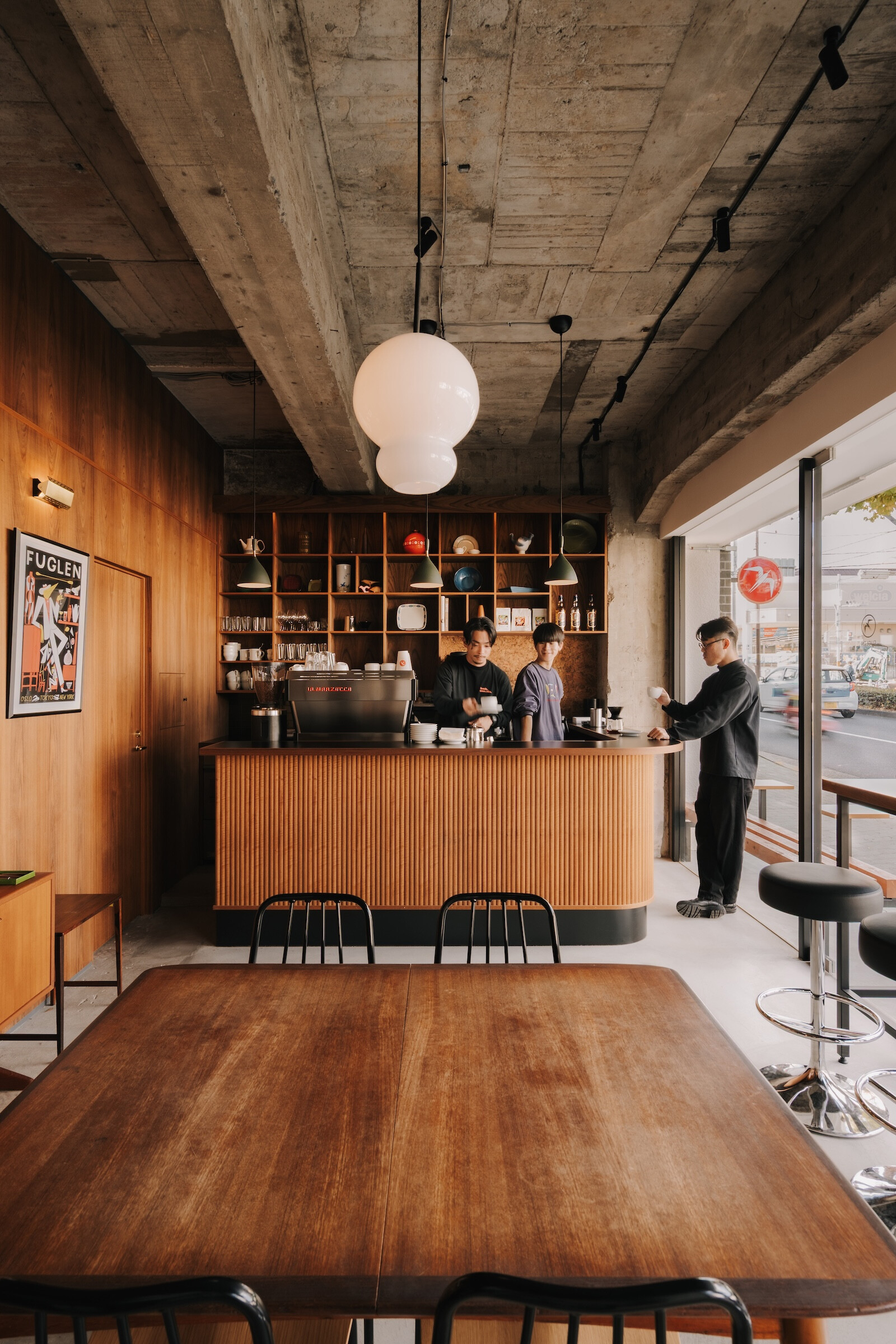
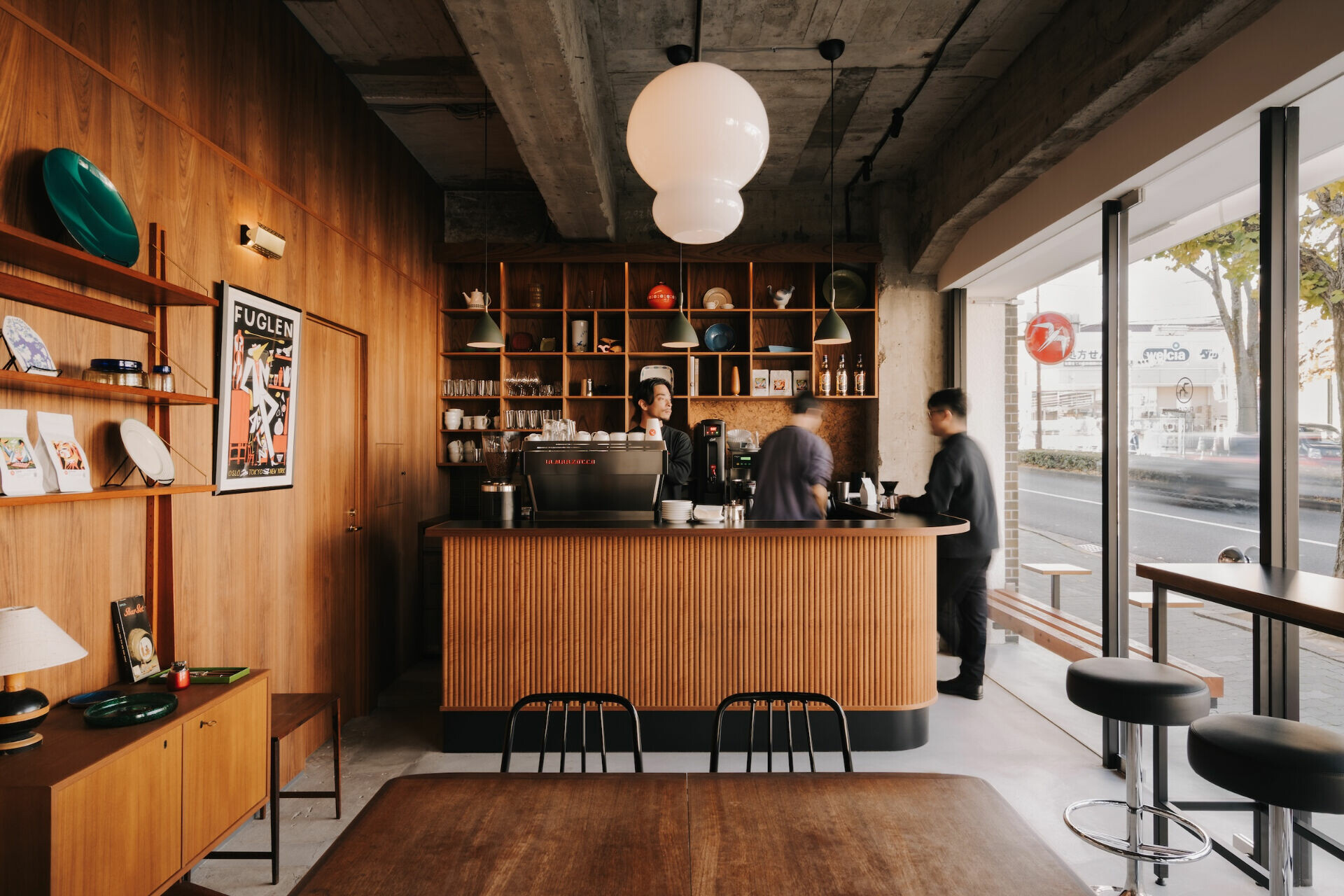
Designed by Studio Vandrer, with Wakiko Fukuda leading the project, the interior seeks a balance between the character of the existing building, the scale of the neighbourhood and Fuglen’s Norwegian mid-century design language. Rather than translating Kyoto into overtly Japanese motifs, Fukuda allows the space to find its own expression between local everyday life and Fuglen’s design sensibility. The space is not centred on a large seating area. Instead, it unfolds around a coffee counter, limited seating and outdoor benches. Seated beside the glazed frontage, guests can take in the seasons through the calm, open view of the street. Close to the counter, guests and baristas meet at close range, allowing conversation to happen with ease. At the entrance, the bench becomes more than a place to rest. It works as a small neighbourhood node, where people pause, greet one another and linger briefly. It draws the intimacy of the interior towards the street, creating a threshold space for small, unplanned encounters.
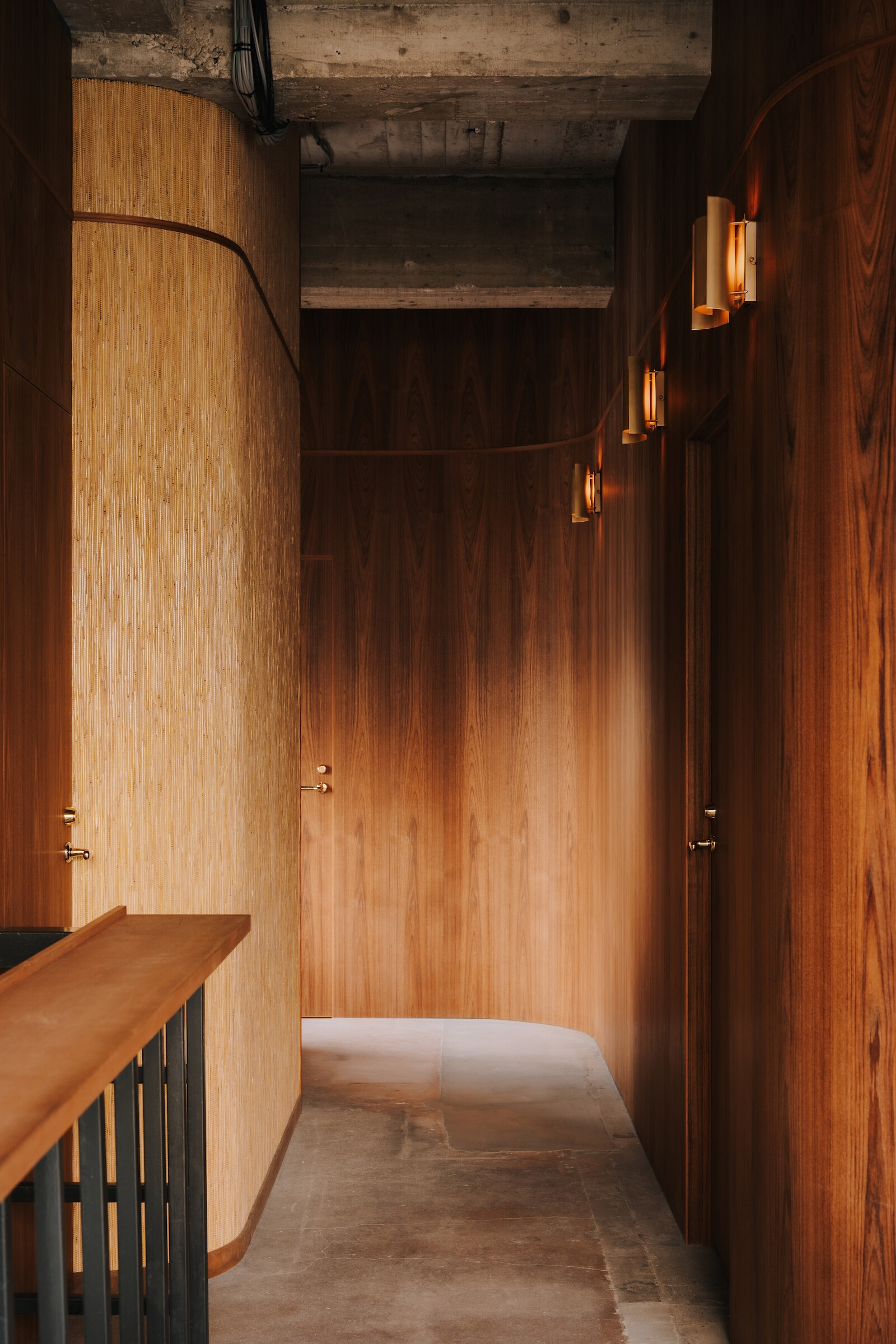
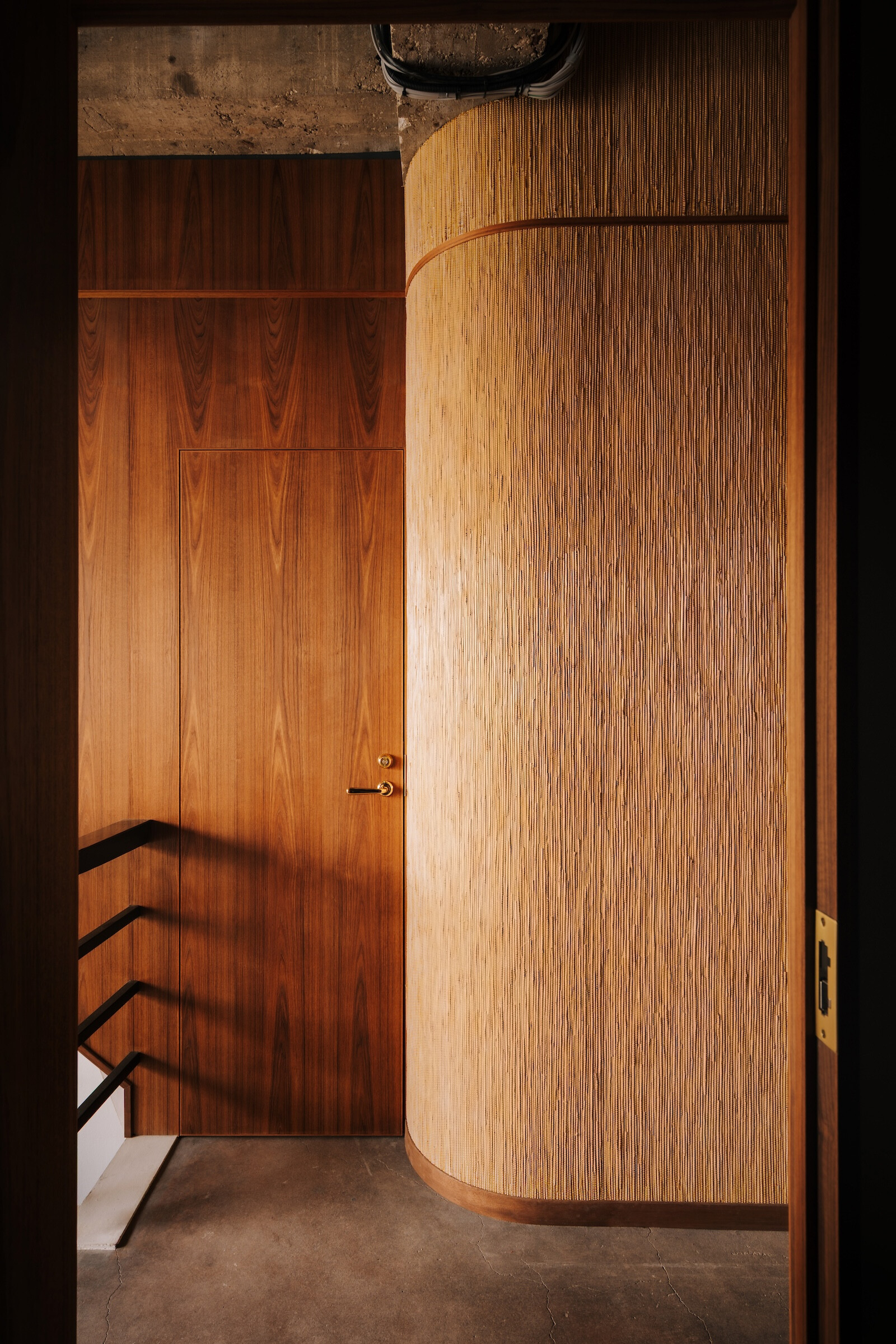
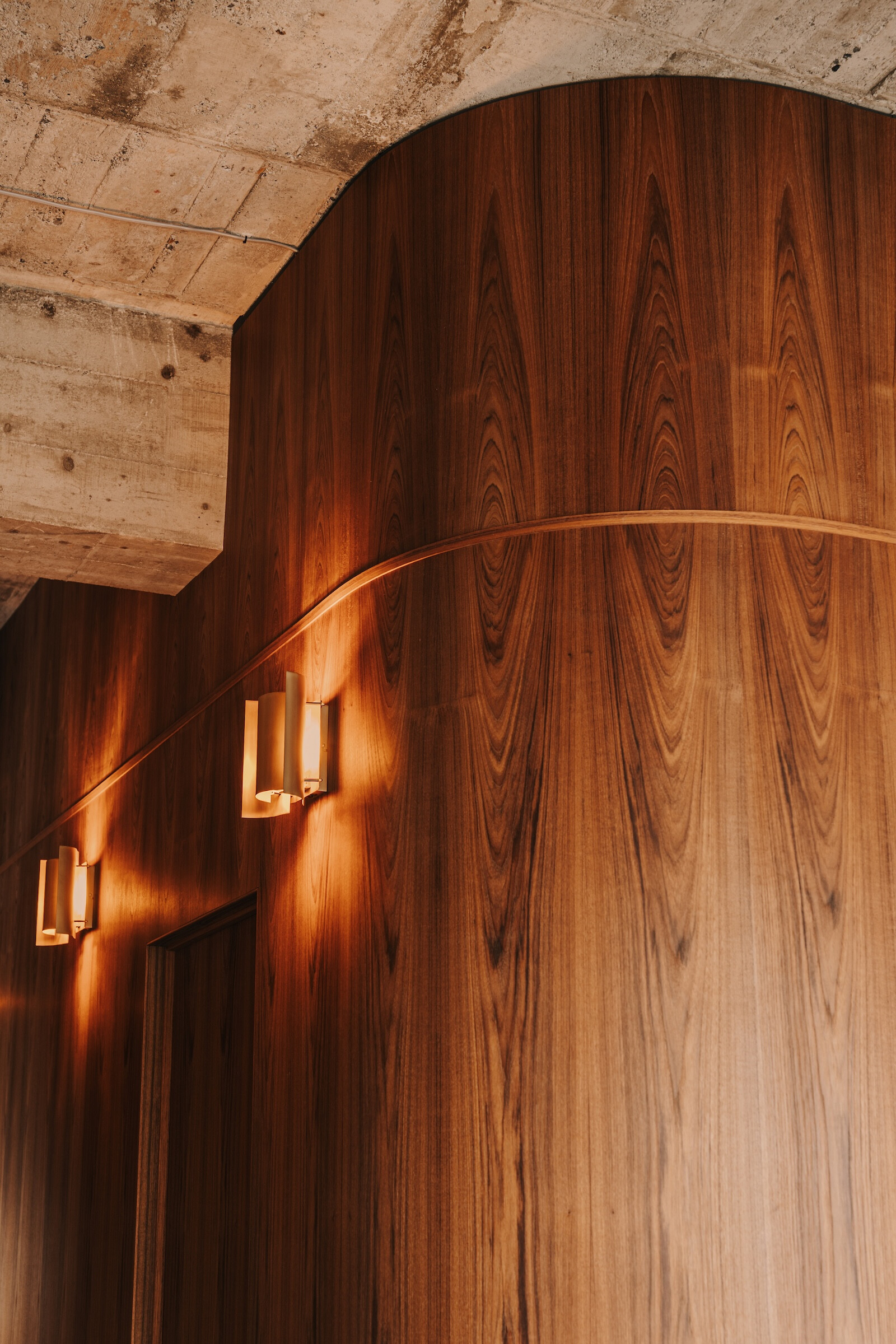
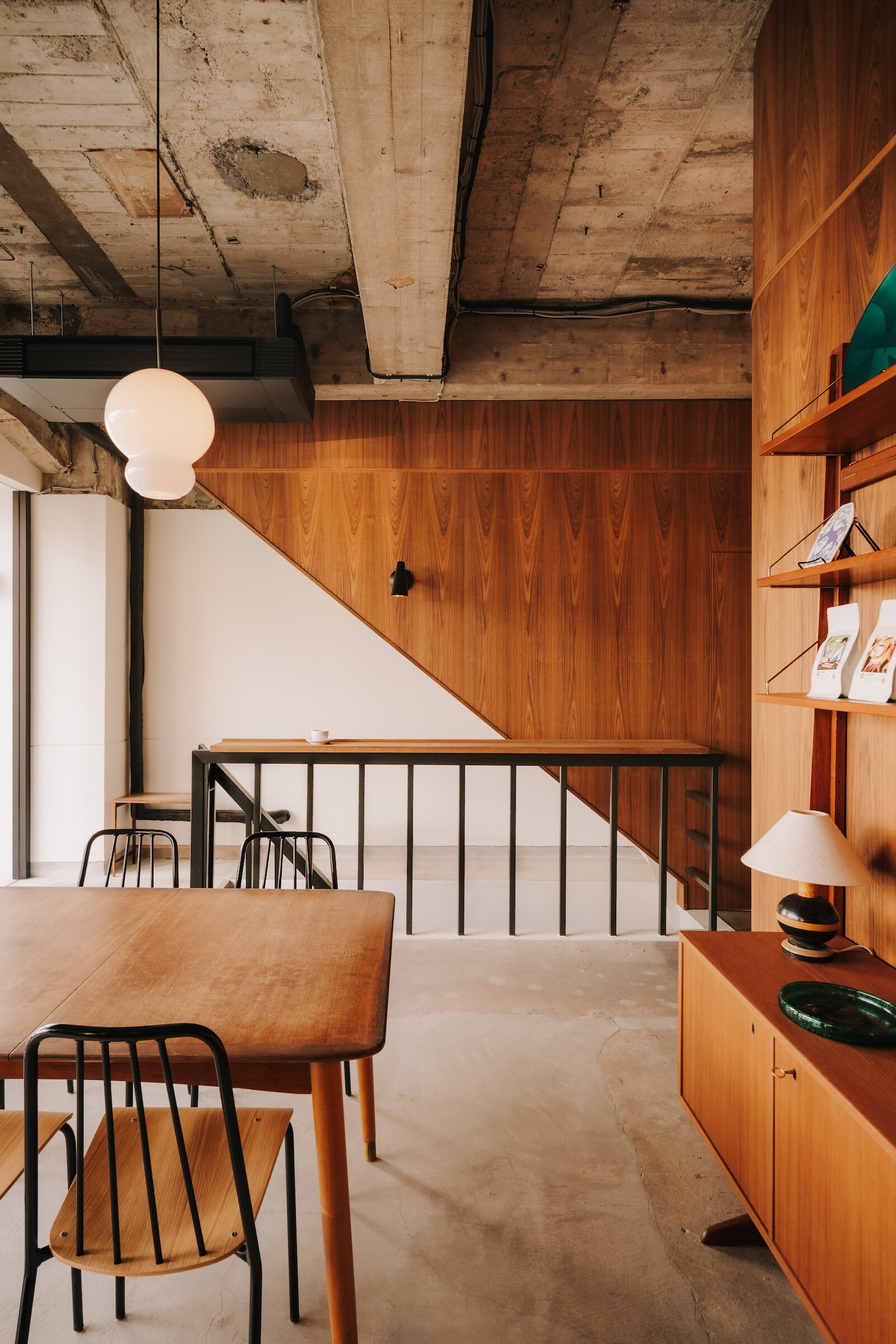
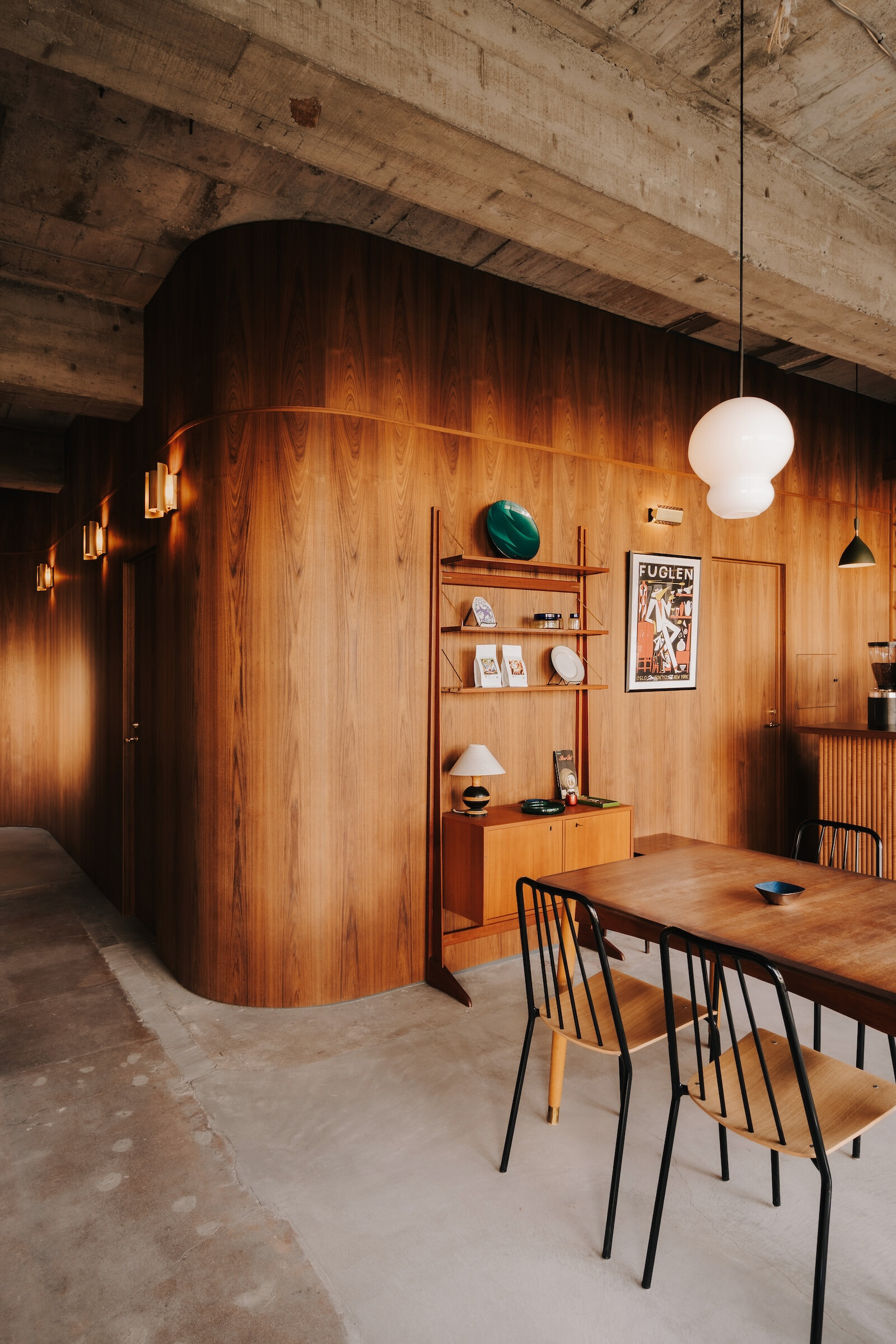
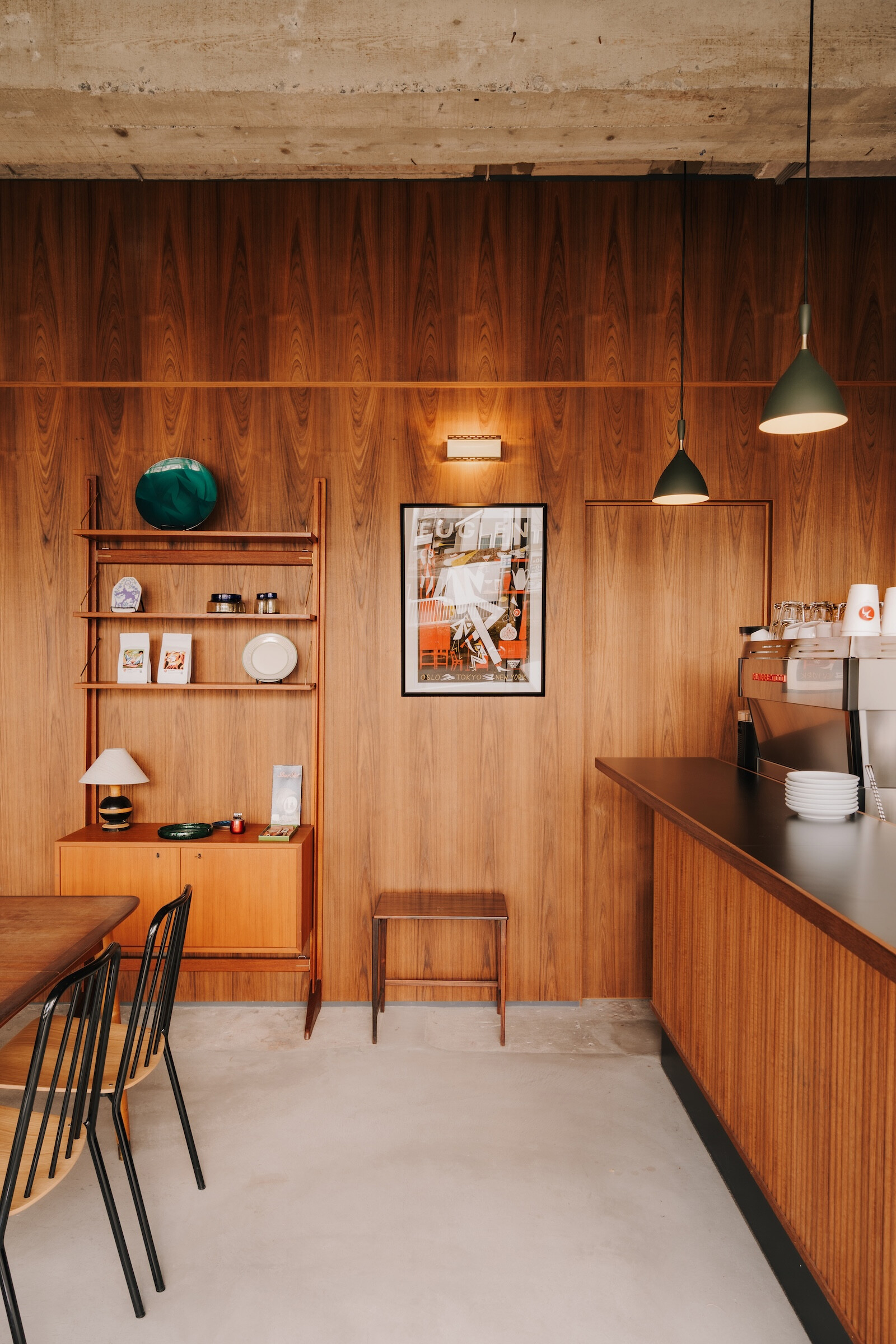
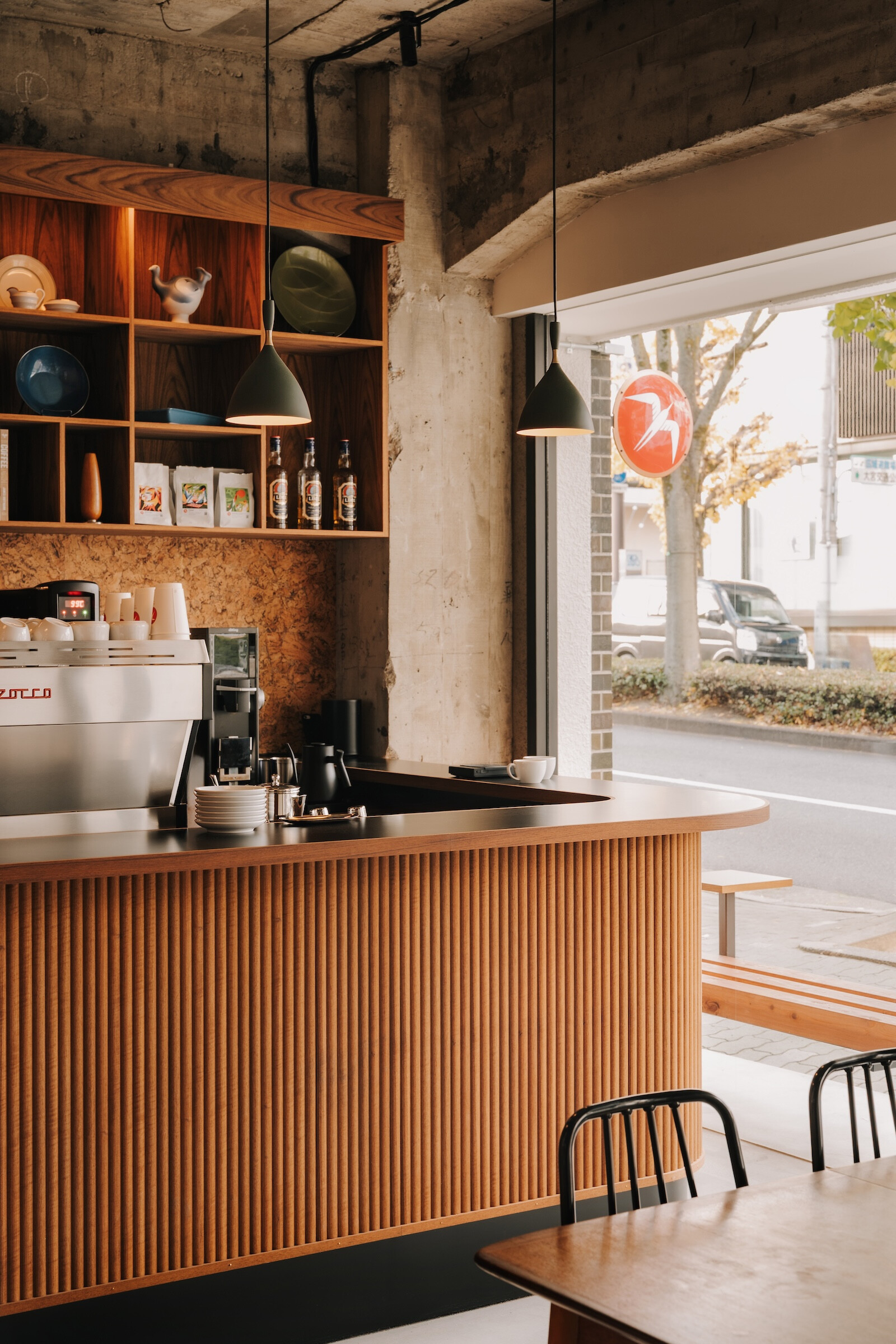
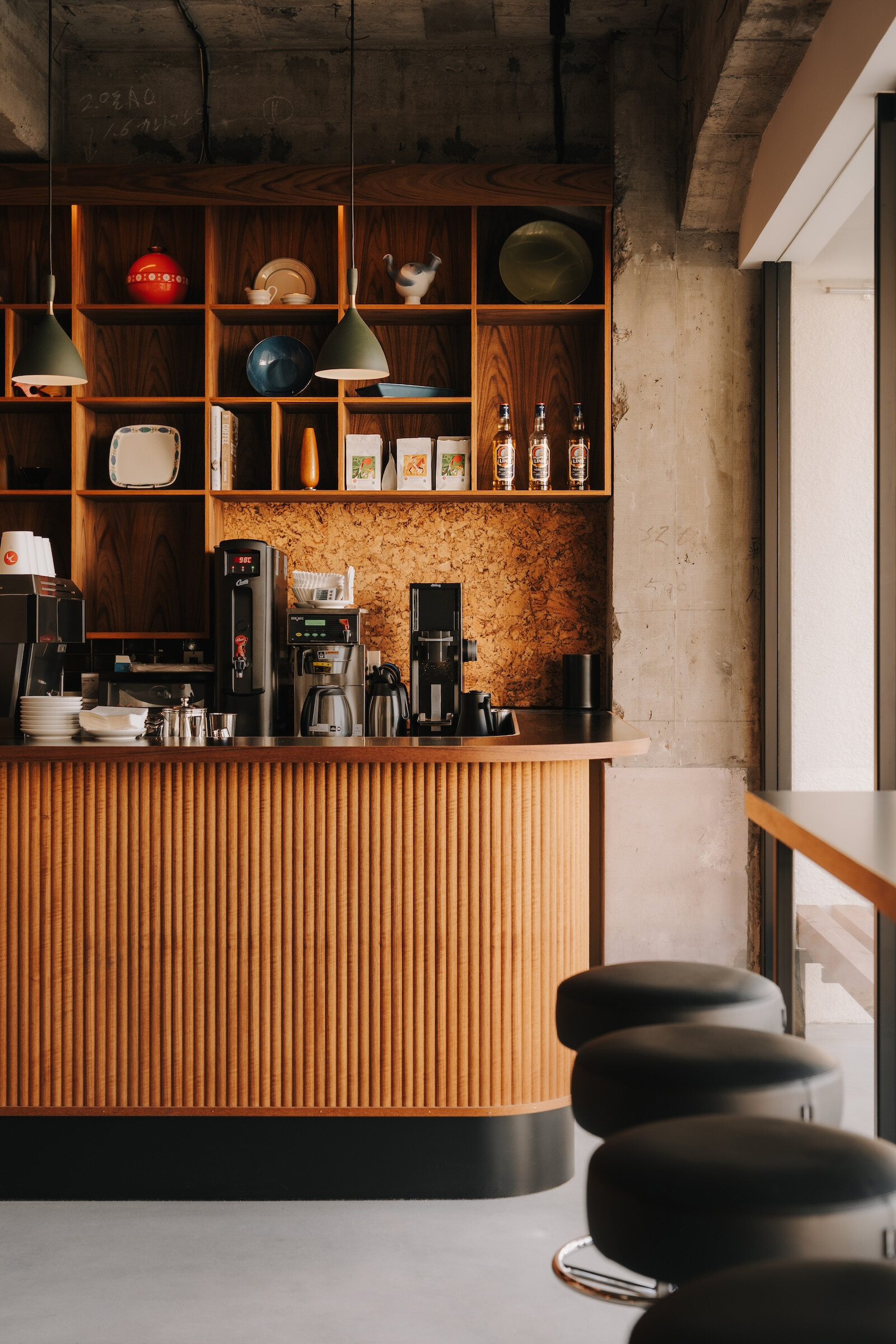
In Studio Vandrer’s design, the interior carries Fuglen’s signature palette of warm brown wood tones, giving the space a calm and composed atmosphere. The existing concrete structure has been deliberately retained, its raw texture set against refined teak surfaces. Old and new, rough and warm, are held together within the same compact interior, strengthening its sense of structure and time. Details such as flush door panels and concealed switches reveal the precision of local craftsmanship. They also resonate with the principles of mid-century modern design, particularly its emphasis on durability, material honesty and the traces left by use over time. Light is handled with similar restraint. Wall sconces guide visitors towards the dimmer passage leading further inside. This gradual shift from brightness to shadow allows the aesthetics of shadow to meet the muted atmosphere shaped by vintage design. Rather than staging a contrast between Nordic and Japanese sensibilities, the space lets them settle into a shared tone.
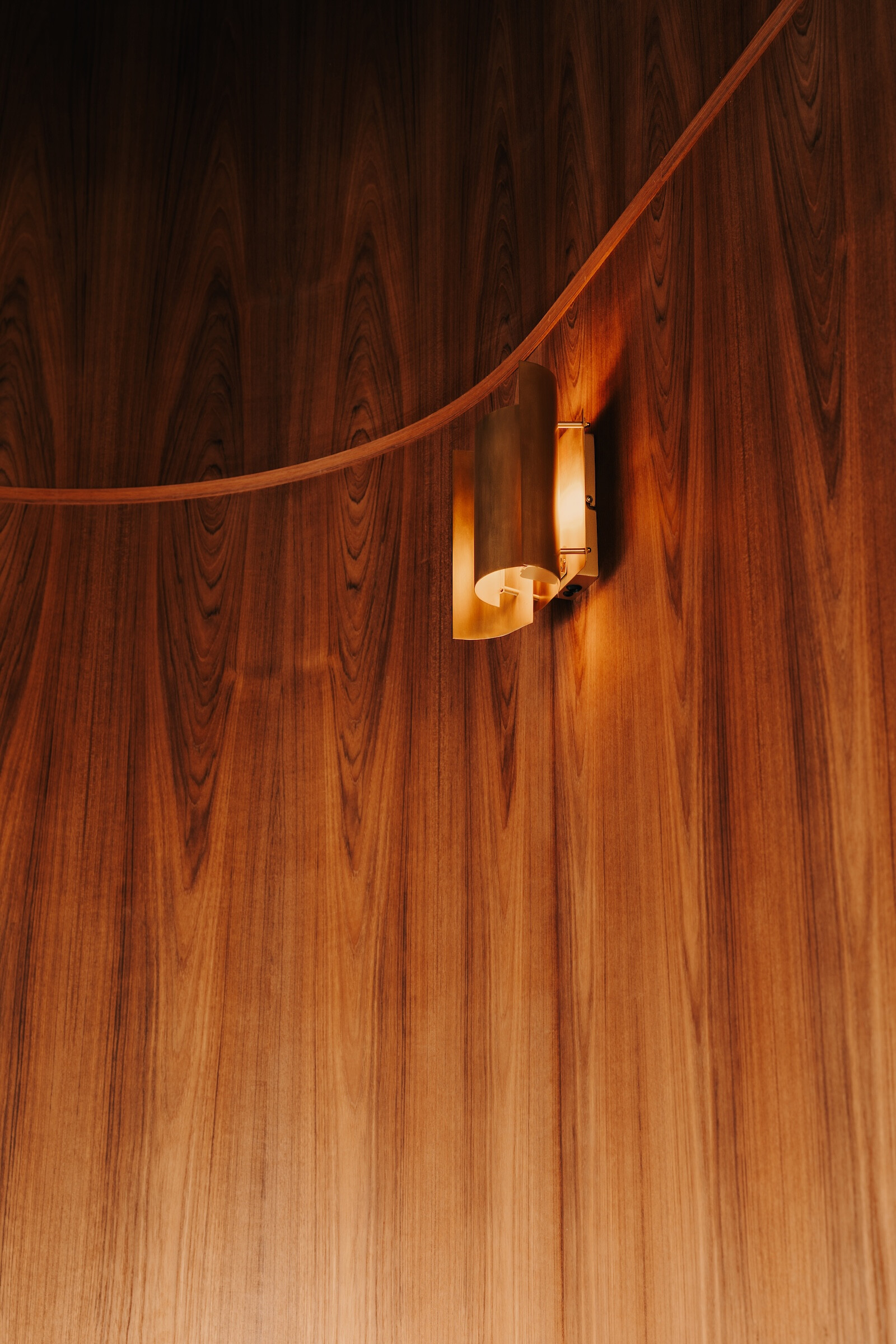
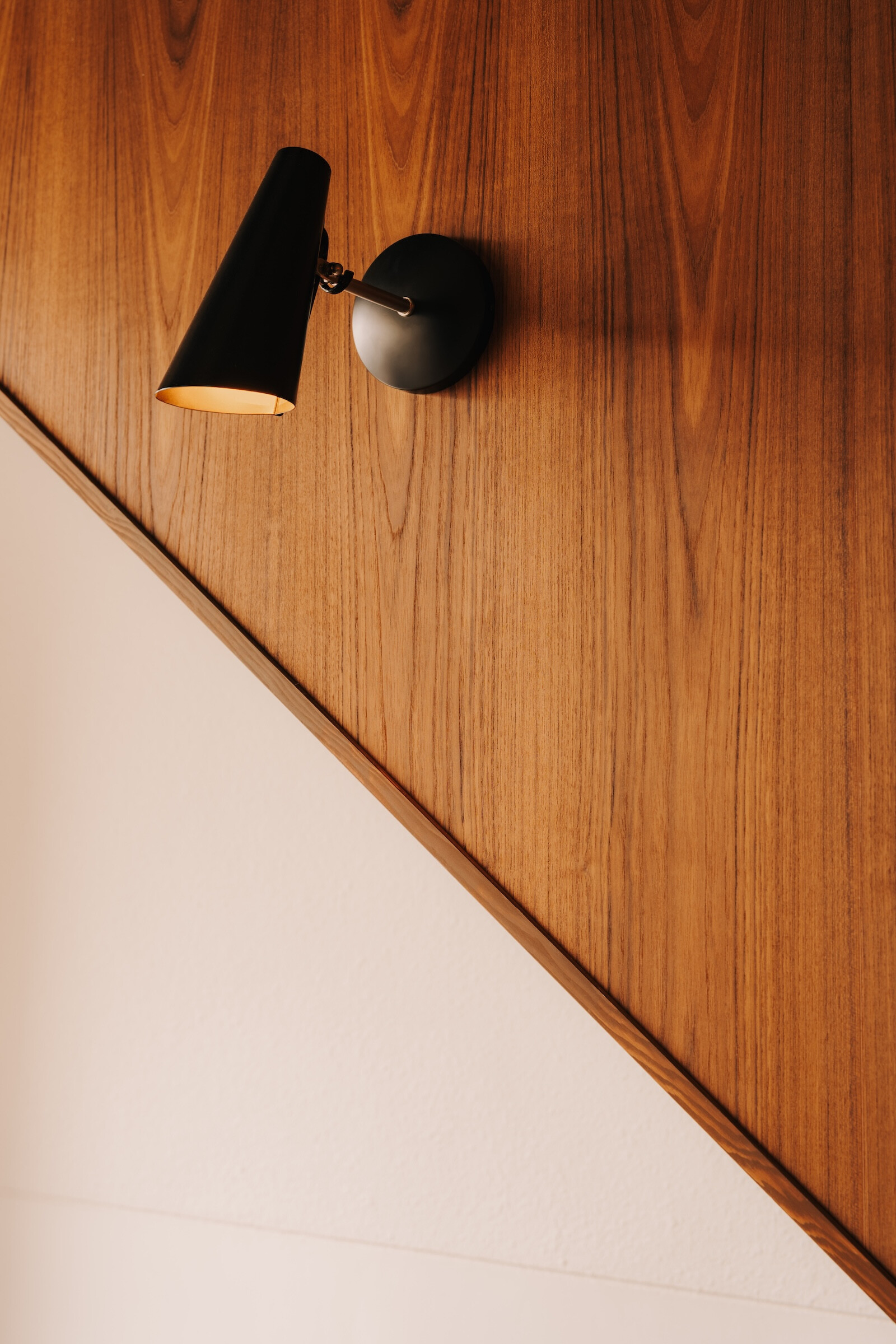
Holding a cup of coffee in both hands, one notices the honeyed glow of wood as it catches the light. There is a grounded comfort in this slowing of time, a tactile calm that feels reassuring. As Fuglen’s first location in Kyoto, Fuglen Kyoto does not attempt to interpret itself through conventional images of Japanese tradition. Instead, it seeks to build a relationship. Through the scent of coffee, the touch of wood and the changing light of the street, it draws people towards a lighter, more open sense of living, leaving a finish that carries something of Kyoto’s own lingering resonance.