A Sanctuary of Stillness in the Misty Mountain Town—Jiufen · INN HERITAGE
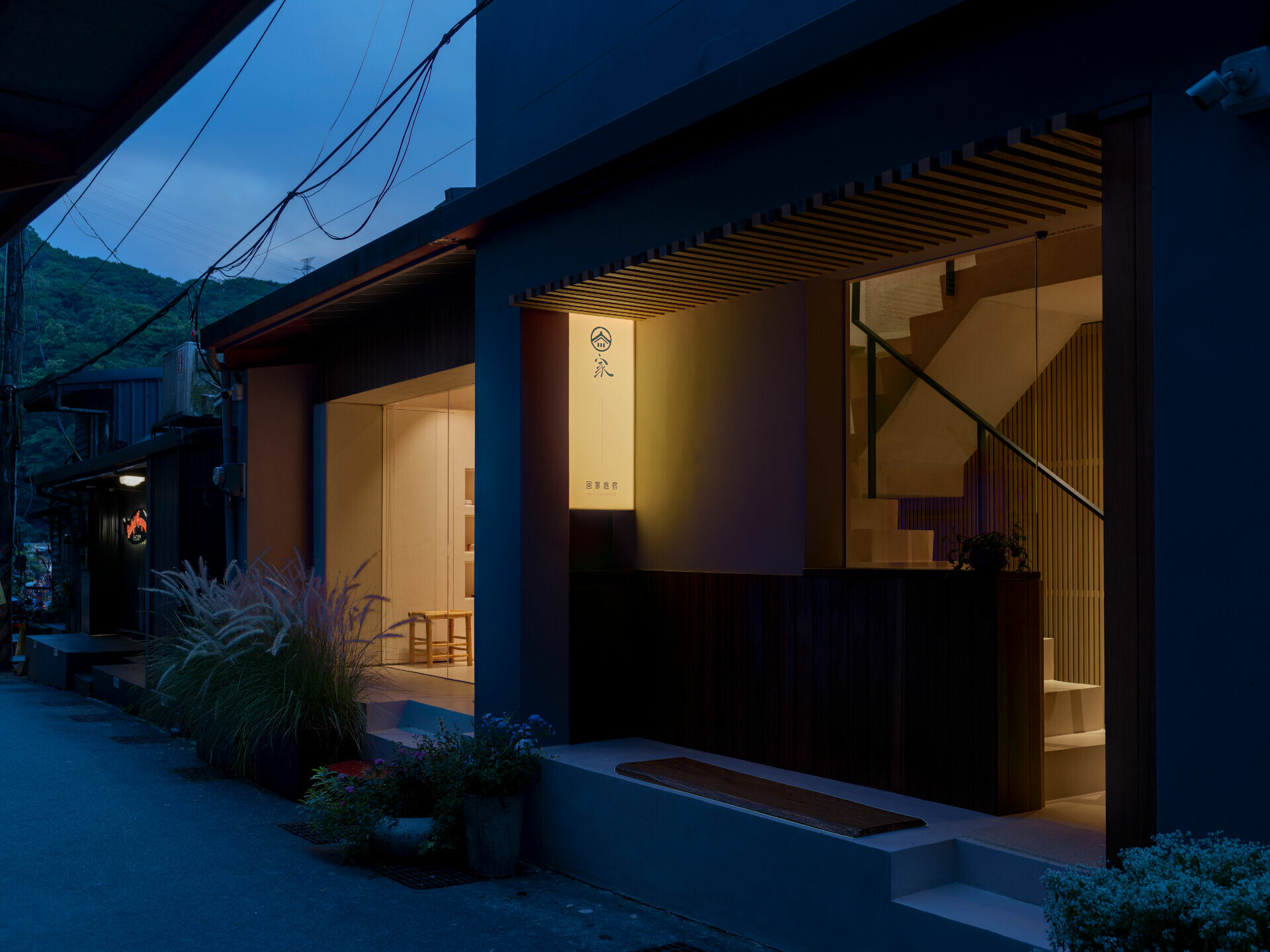
Jiufen, in my memory, is often under a thin layer of mist. It softens the edges of the mountain town, leaving behind a quiet, hard-to-name mood that still keeps anticipation close. That day, the drive from the city wasn’t as long as I’d expected. As the road began to run alongside the railway, the view felt like a small announcement that Ruifang Railway Station was near. Dampness hung in the air. After the mountain bends, I got out and continued on foot, following stone steps through corner after corner and into narrow lanes. The scenery kept changing—sea and mountains crossing and re-crossing the frame. Led by red lanterns, I climbed a long, narrow run of stairs with the flow of visitors and reached the far end of the Old Street. My steps stopped in front of a homestay that carried an unusual calm. Its façade paired warm timber with pale, restrained walls; next door, an exhibition space read as bright and transparent. The noise of the street thinned. Unable to hold back my curiosity, I stepped up and went in, drawn toward a pocket of peace that seemed to sit outside the world’s interruptions.
Retrieving memories of an era; picking up the thread between people and land
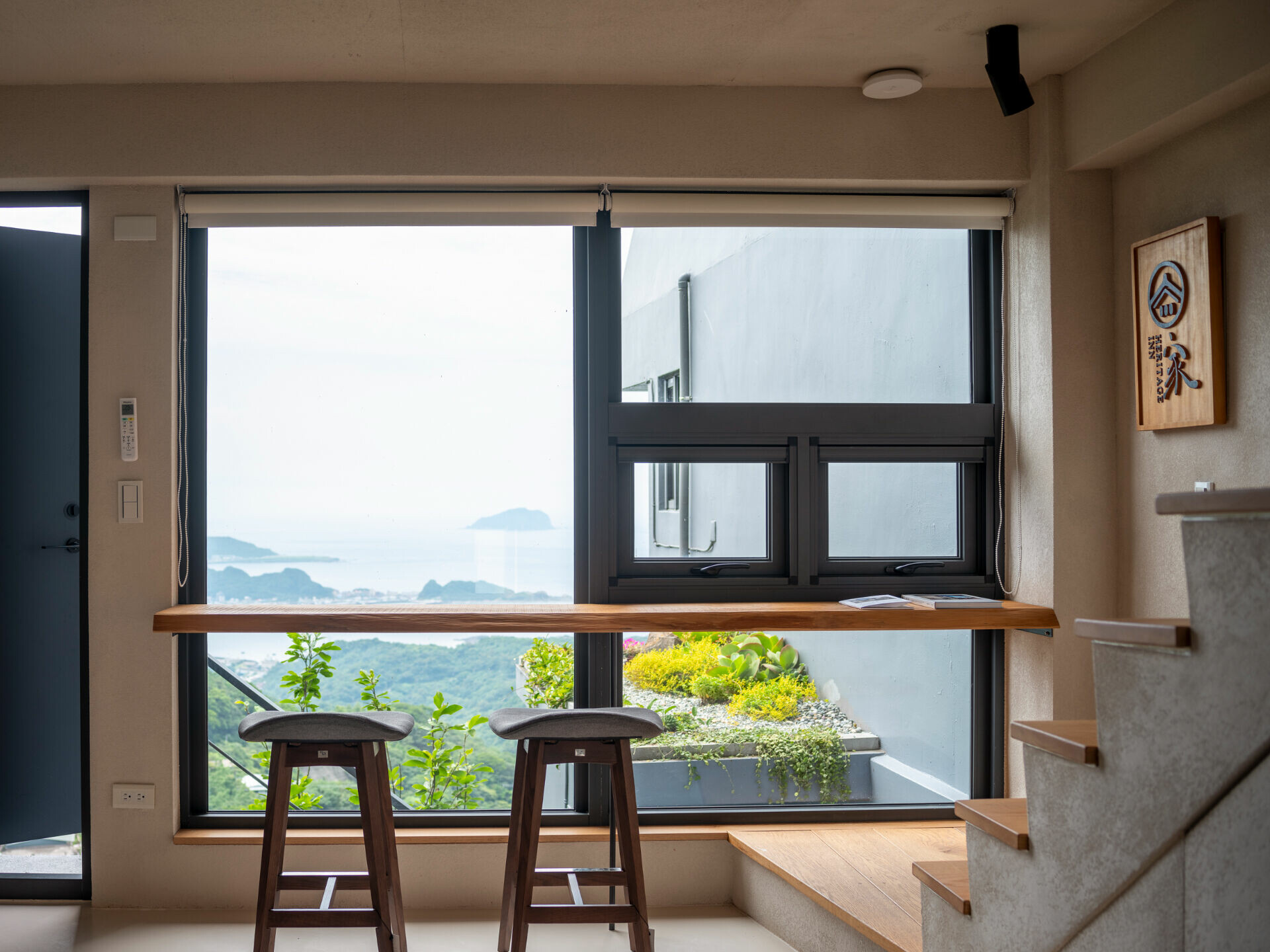
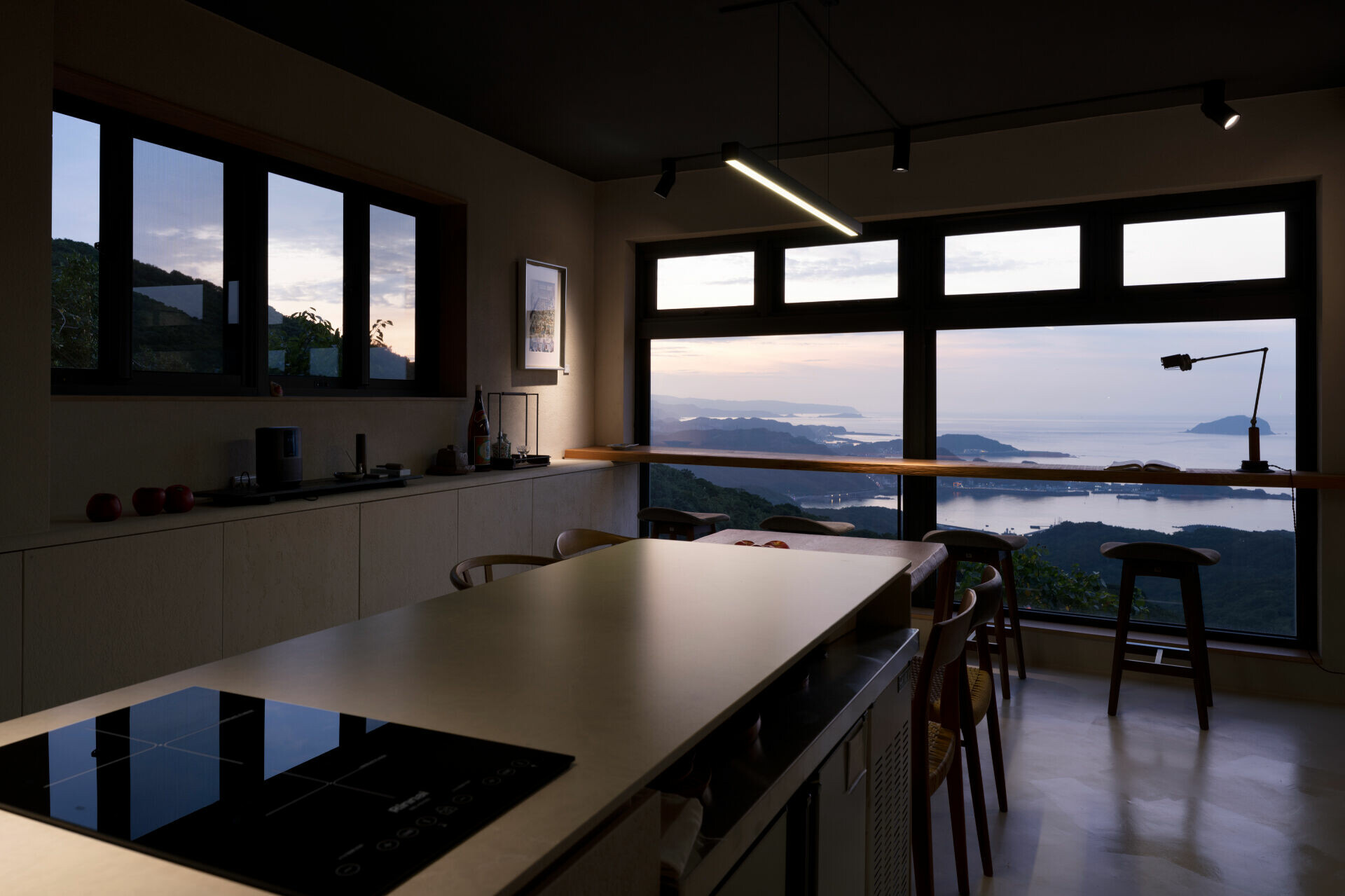
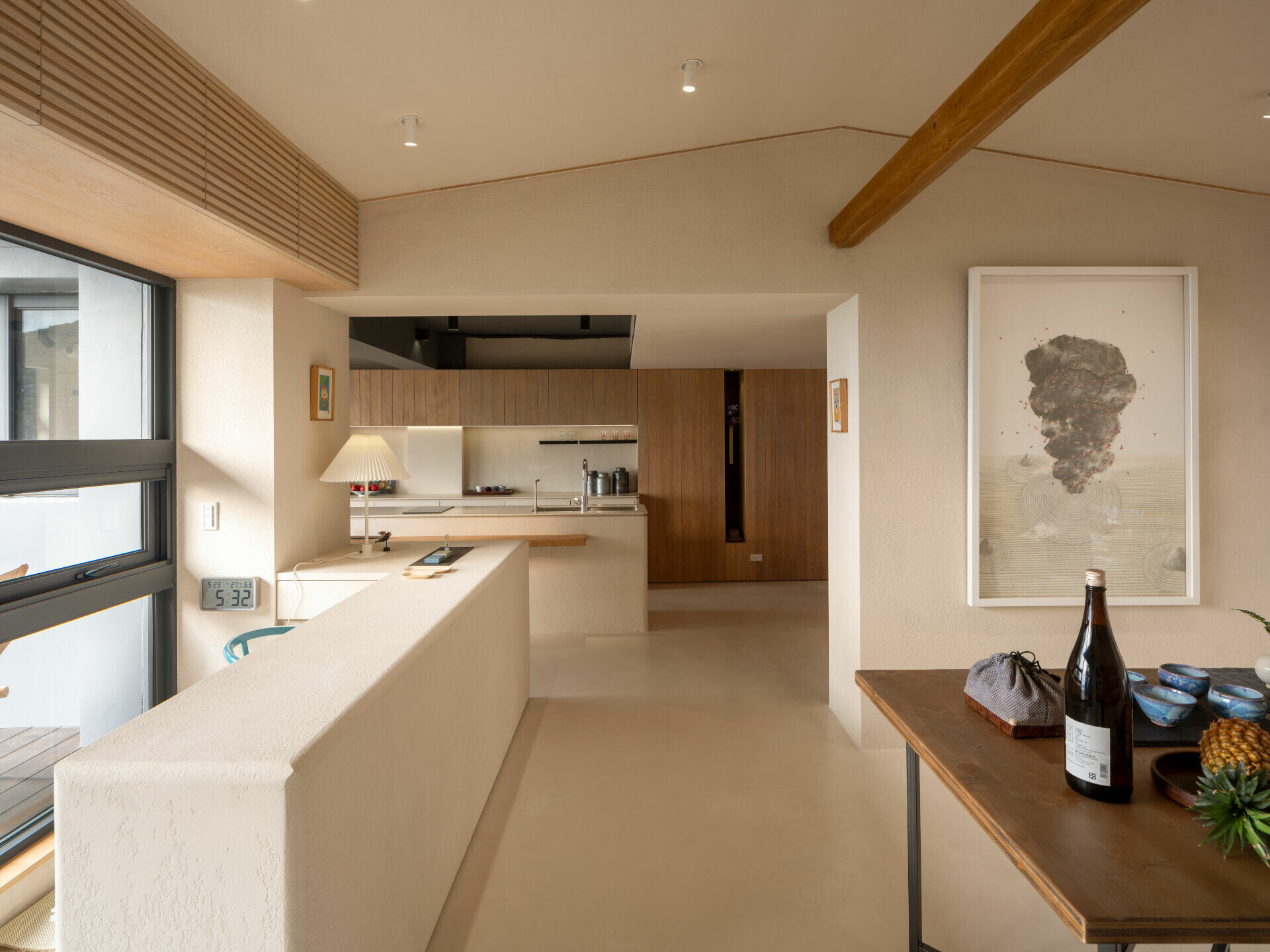
Inside, the air carried the rich scent of raw timber. If I paid closer attention, there was also a faint, woody incense—clean and dry—settling the mind. As a timber lattice screen was drawn back, the view opened into a clear, generous common area. In the light-meal corner ahead, large windows extended the scene outward to a headland of sea and a sweep of green hills. Frames on the wall, placed with an offhand ease, still caught the wandering eye. Welcomed warmly by Abraham Lee, the host of Jiufen · INN HERITAGE, I first toured the building level by level, then returned to a solid-wood table by a ground-floor window. With hot tea in hand, we spoke about how this house began, and the feelings it has come to carry.
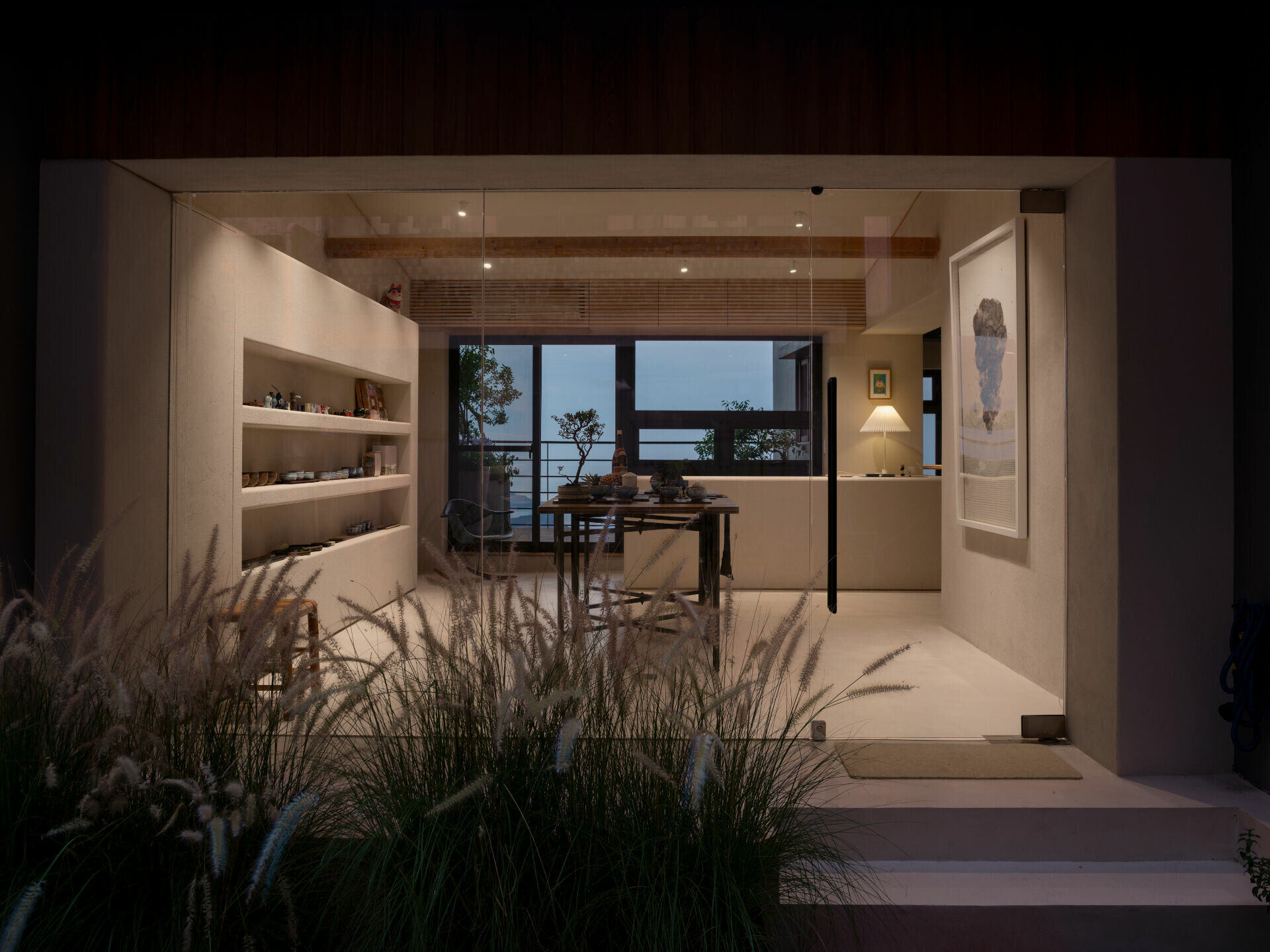
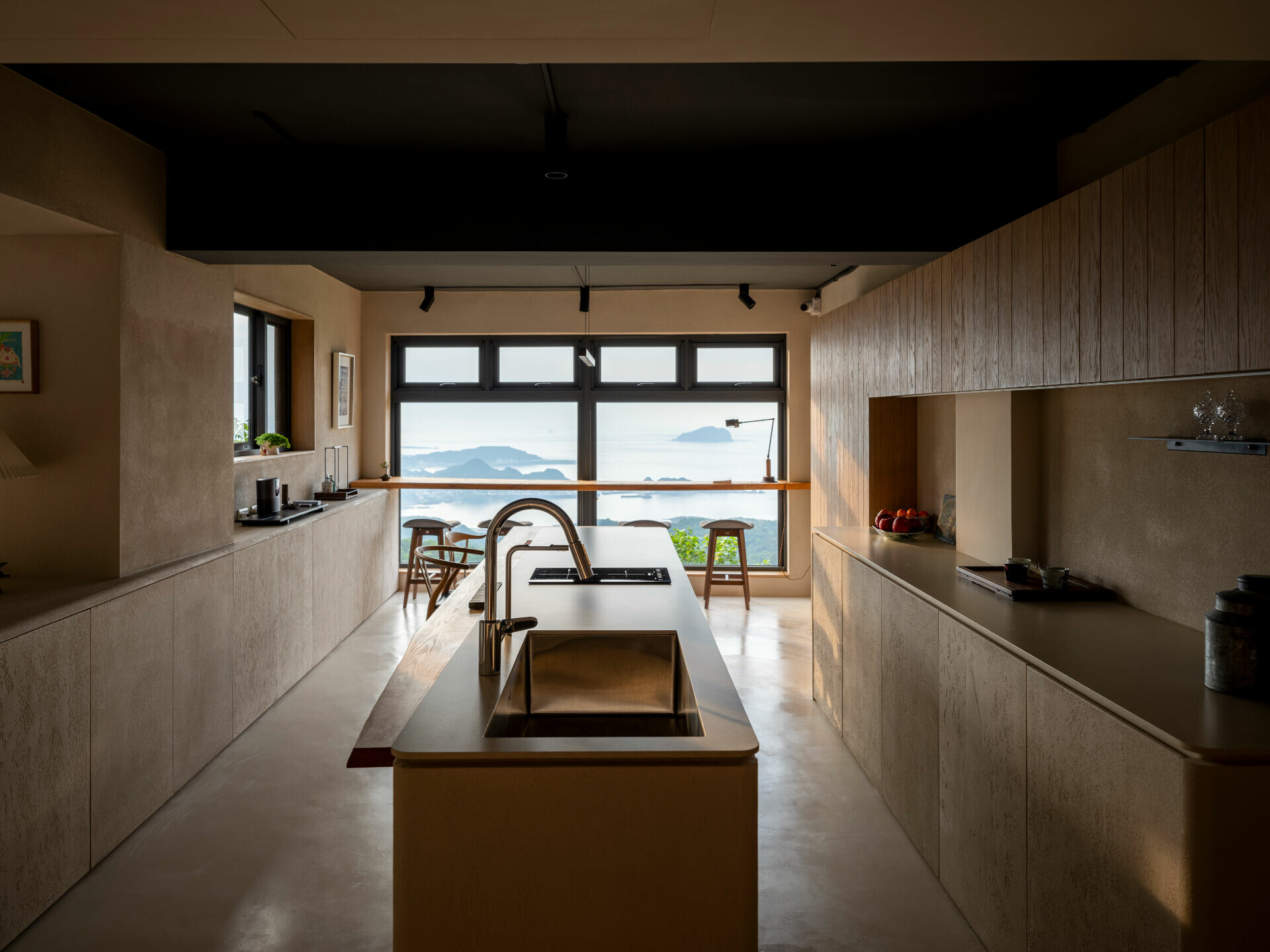
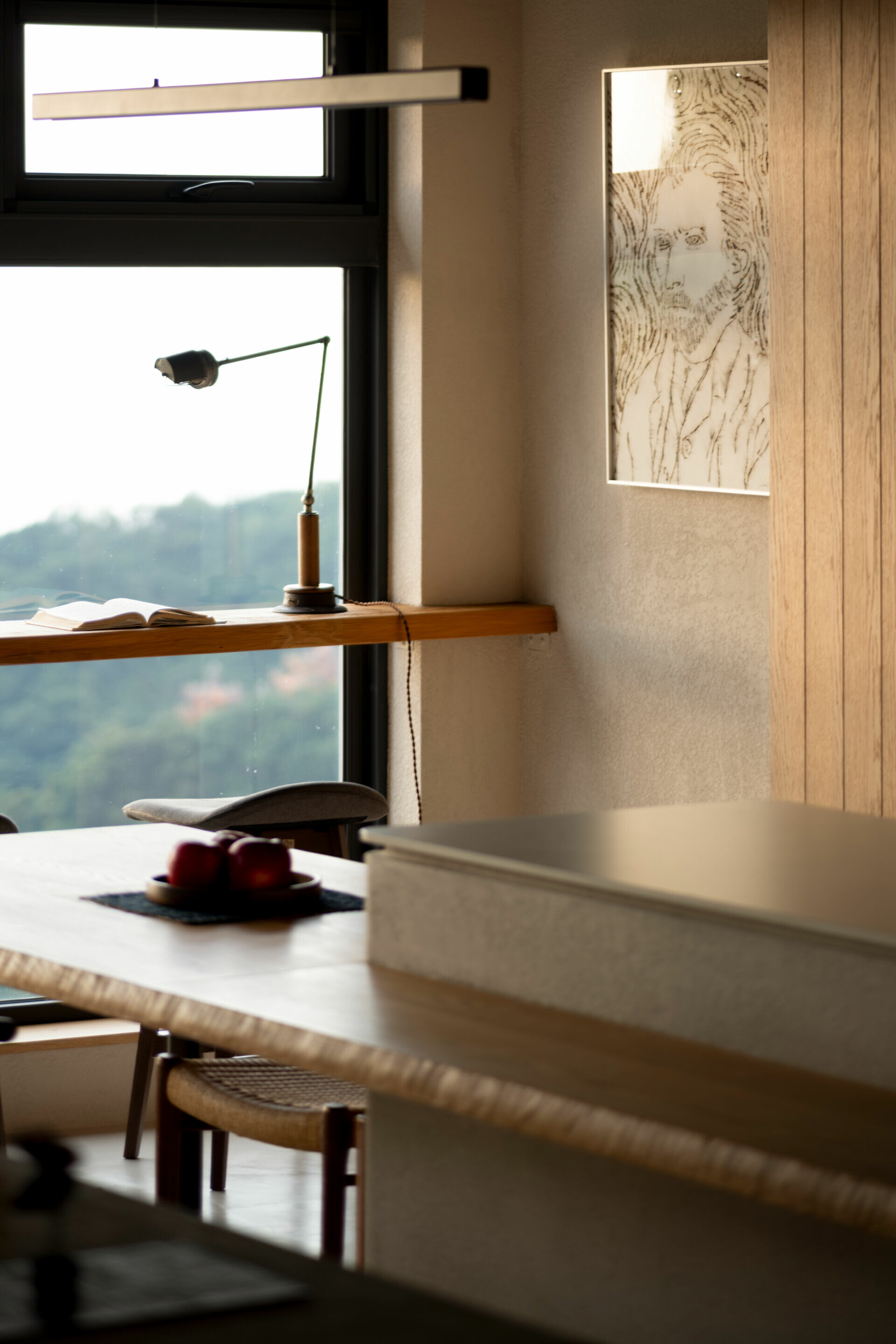
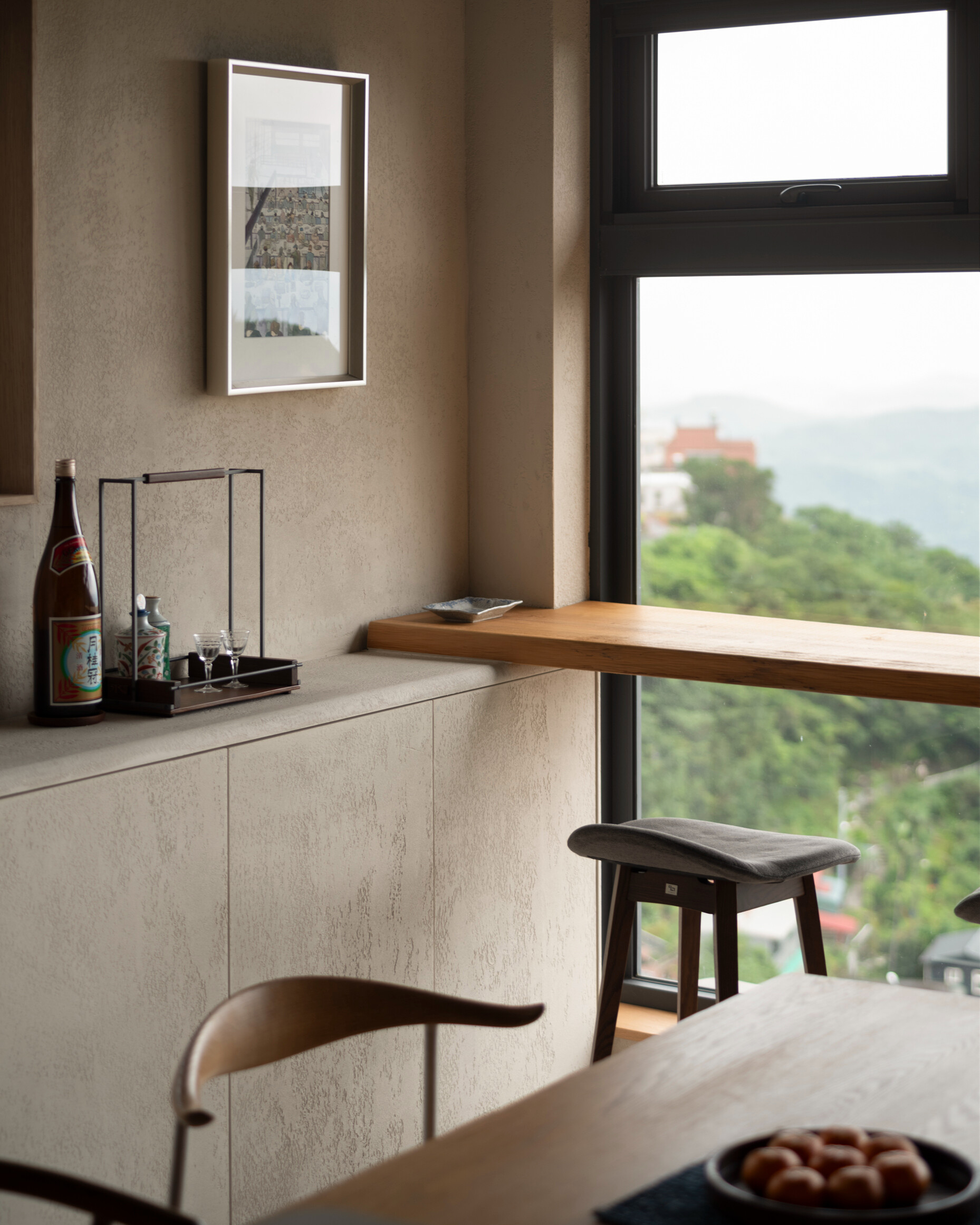

“When my wife and I were young, we loved riding up here on a motorbike,” Lee said, “chasing that feeling of freedom.” Recalling Jiufen twenty-five years ago, he spoke easily of the town’s former bustle. In those years, as Jiufen was shifting from a gold-mining settlement into a tourist destination, cinemas, drinking places, and tea rooms were part of the scene. Young people came not only to brew tea, play guitar, and look out over a mountain-and-sea view far from the city, but also to stop by the Jinguashi Crown Prince Chalet—built during Japanese rule for Hirohito, then the Crown Prince, later Emperor Shōwa—as well as the nearby ruins of the Jinguashi Shinto Shrine. Artists, carrying their own hopes, opened workshops in the lanes, and a distinctive mix of tea culture and artistic life slowly took shape. Later, commercial development arrived with greater force. The original character thinned, and the relationship between people and land loosened with it, taking away some of the place’s plain, unforced quality.
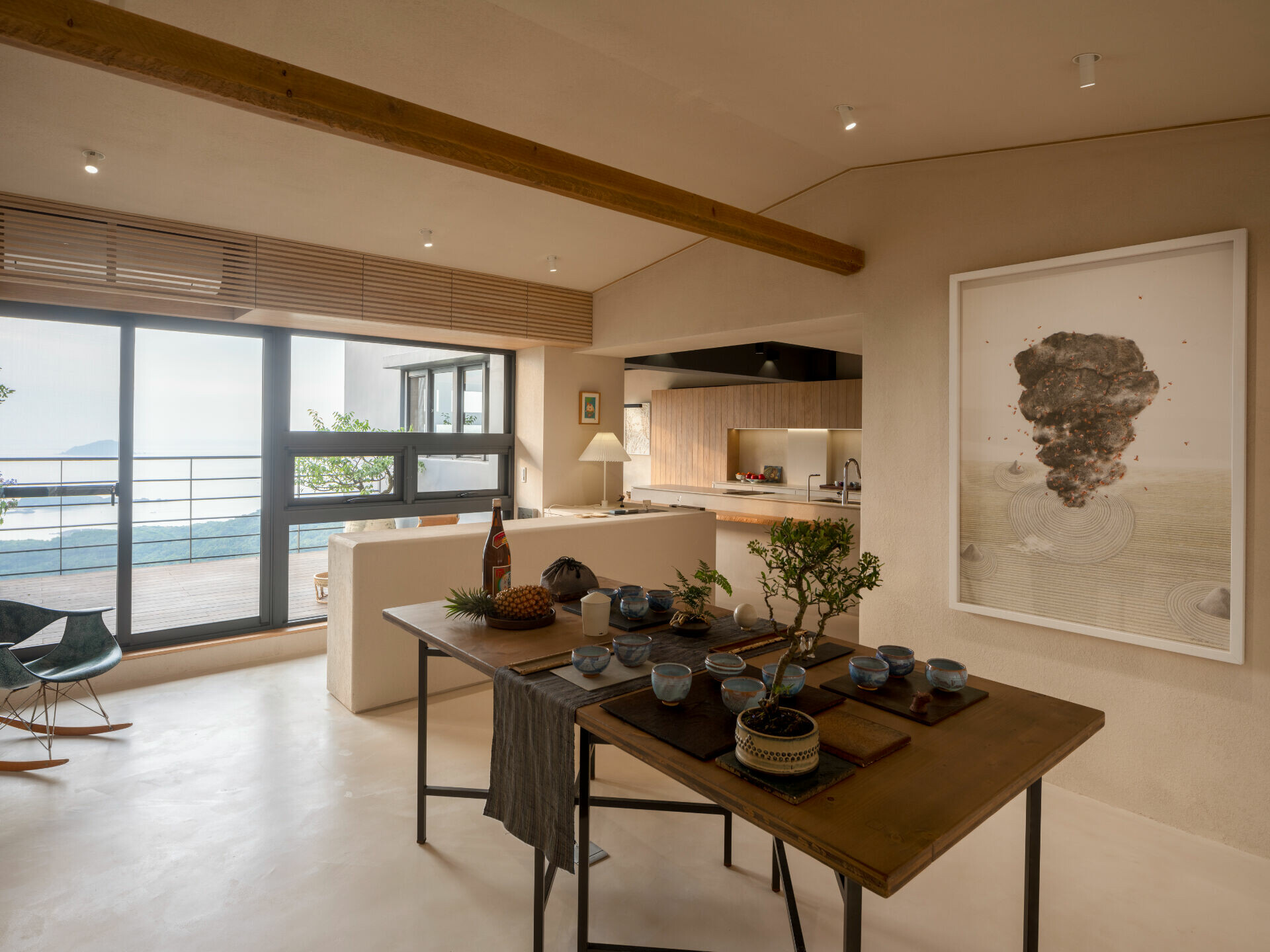
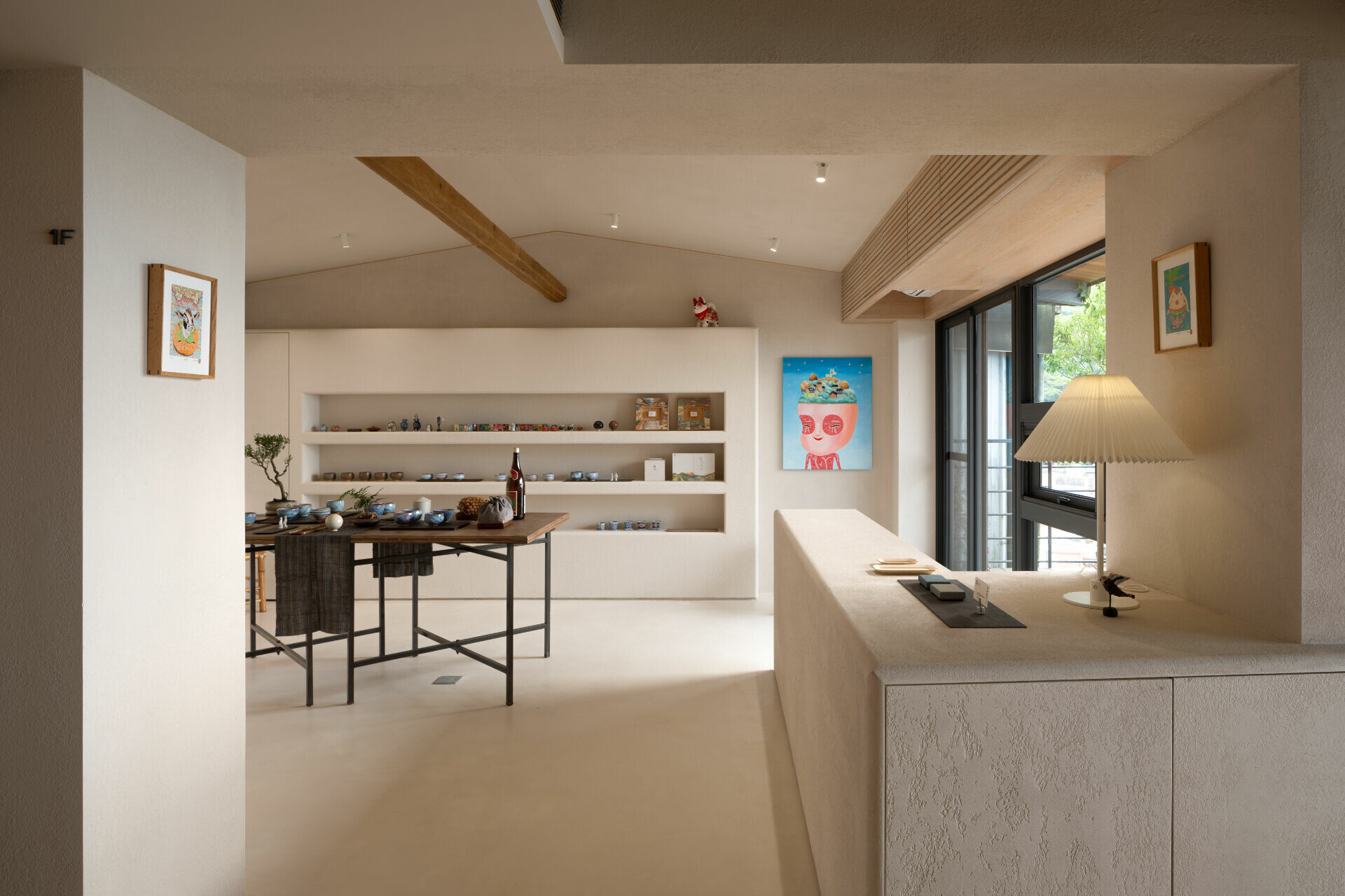
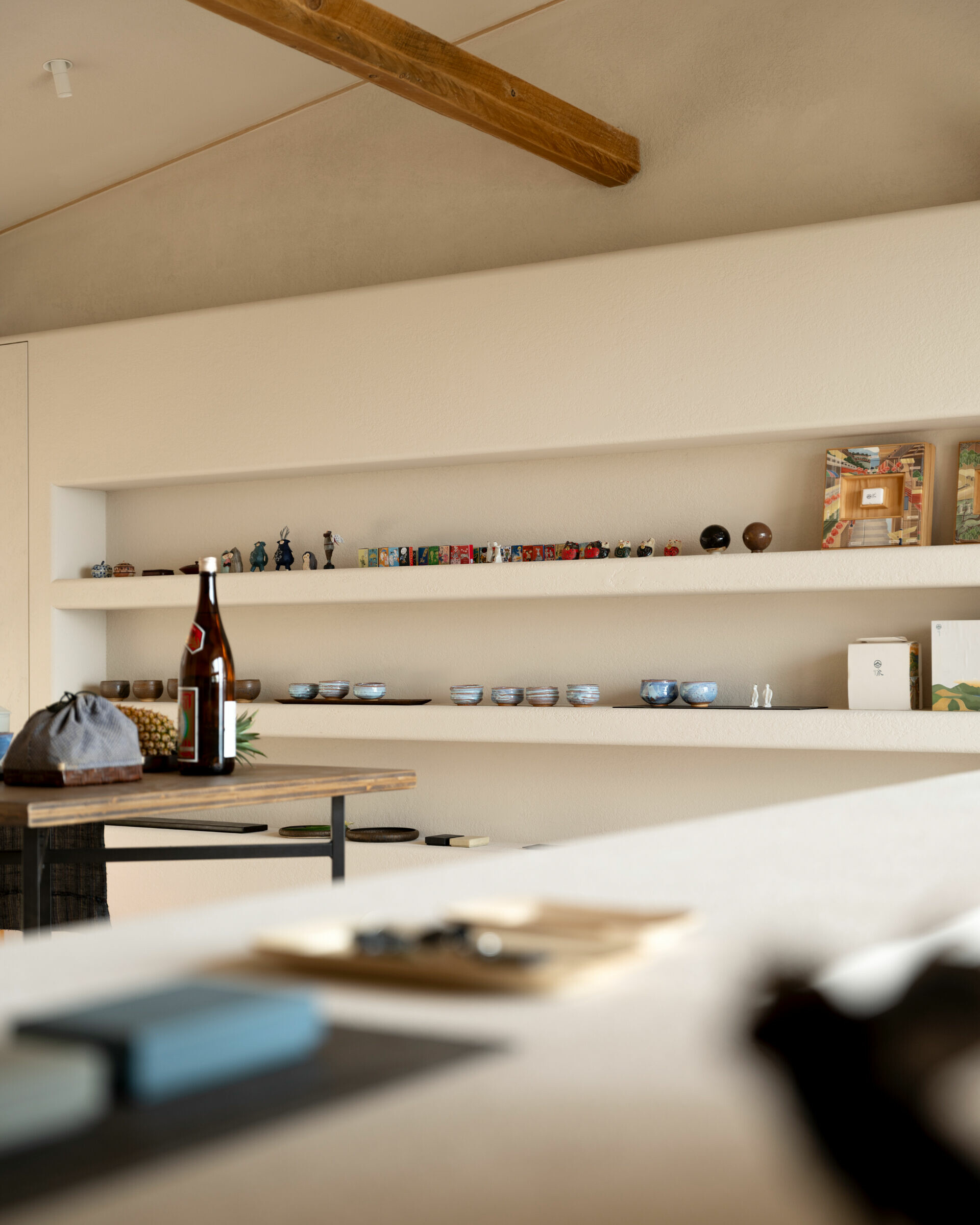
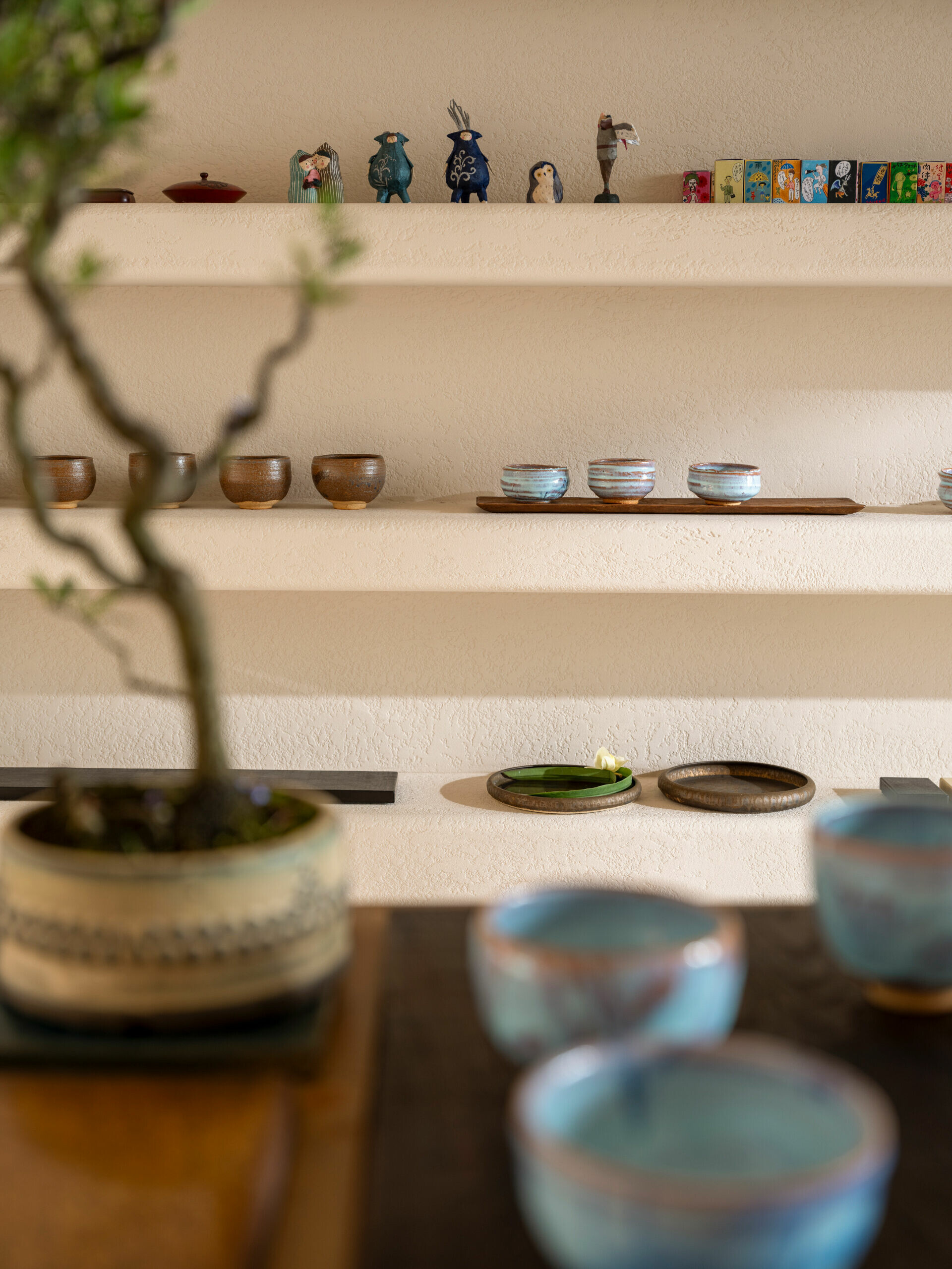
To retrieve the memories he once shared with his partner—and through a fortunate coincidence—Lee and his wife rented the entire old house from a local owner who had approached them. It took fifteen years to secure the qualifications required to operate a homestay. The building, once worn and neglected, was repaired in response to the slope and became a five-storey space extending vertically along the mountain. Half is reserved for accommodation; half is kept open. The shared areas are left without fixed functions. Locals and visitors can step in to view everyday ceramics in the exhibition zone, sit down for tea or coffee in the dining area, and experience a quiet distinct from the Old Street—then leave with a renewed sense of how their own life might connect to this place.
A platform made for living; sensing the hybrid aesthetic of a Taiwanese mountain town
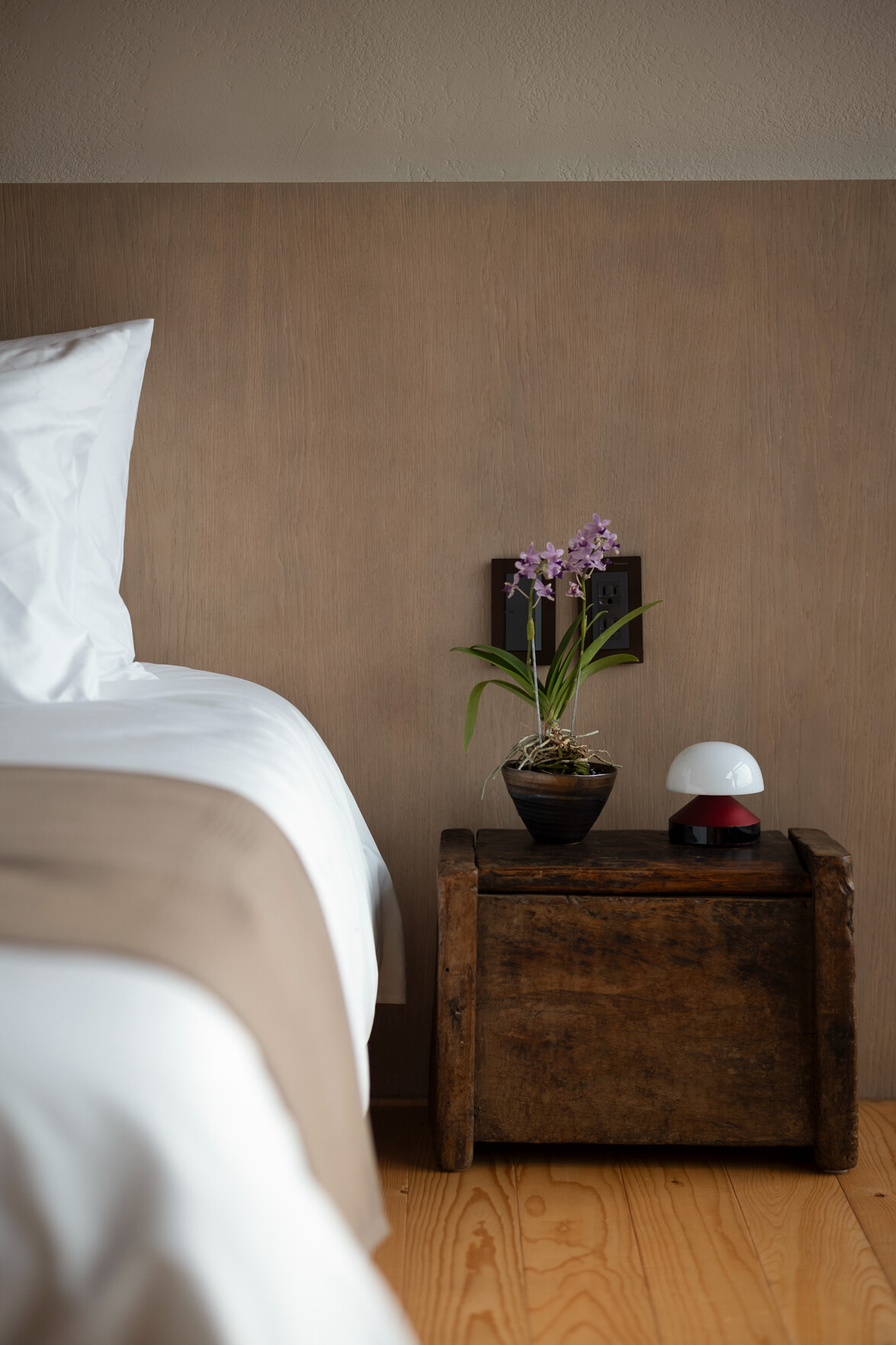
Continuing the human-scale lifestyle philosophy behind A. Heritage, and as the founder of Heritage Life, Lee sees a good life as something people make together. He has turned Jiufen · INN HERITAGE into a platform where anyone can participate in the writing of daily life, each through their own way of making. In every detail, there are small moments where this mountain town meets beauty, and the experience can feel as natural as returning home. For Lee, the essence of art lies in moving the viewer through the time and atmosphere of its making. That belief is visible throughout: not only in the ground-floor exhibition space, but across walls and inside each guest room. Paintings, pottery, and sculptures sit within everyday life and keep company with travellers, leaving room to imagine the story behind each piece.
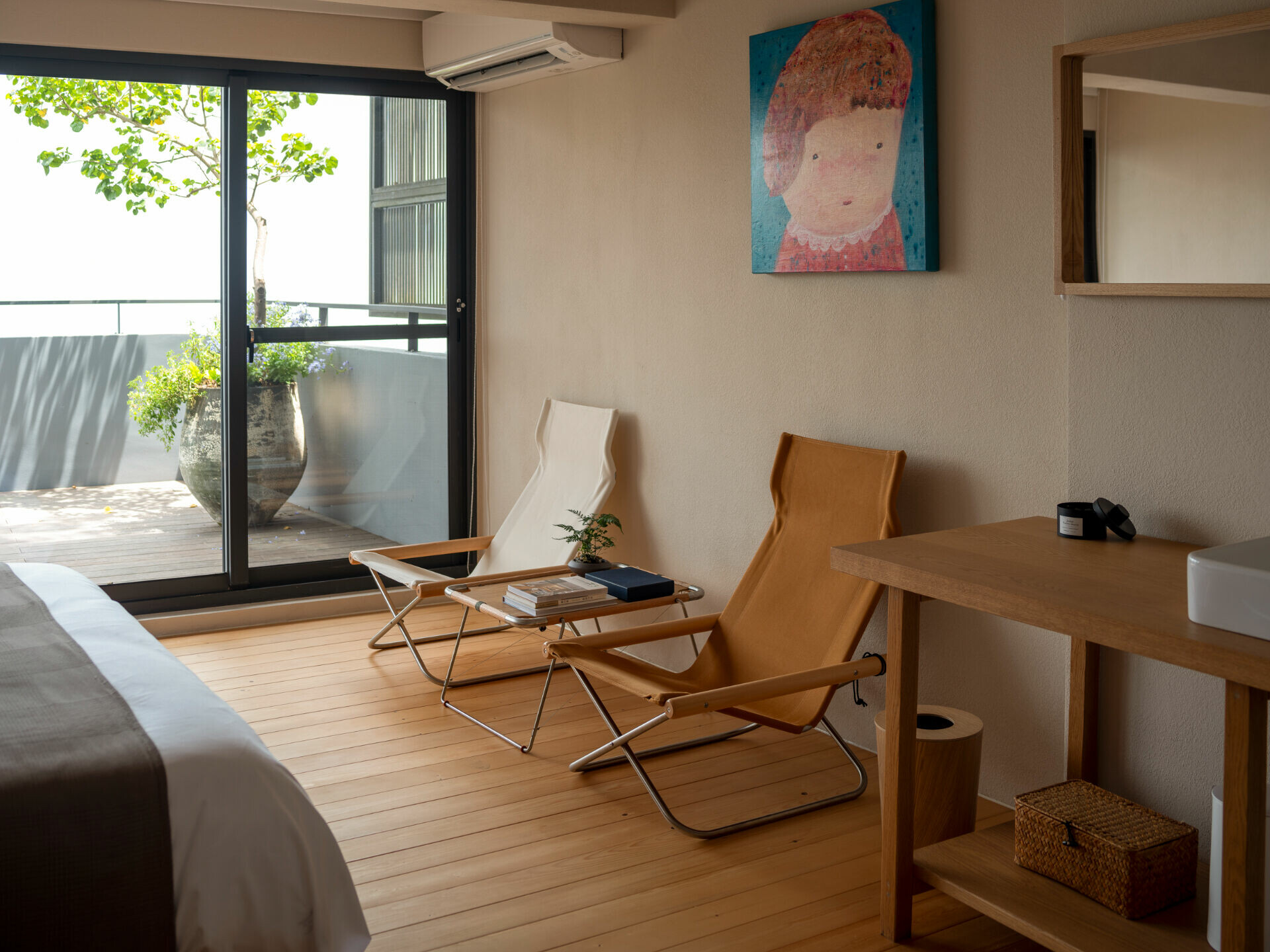
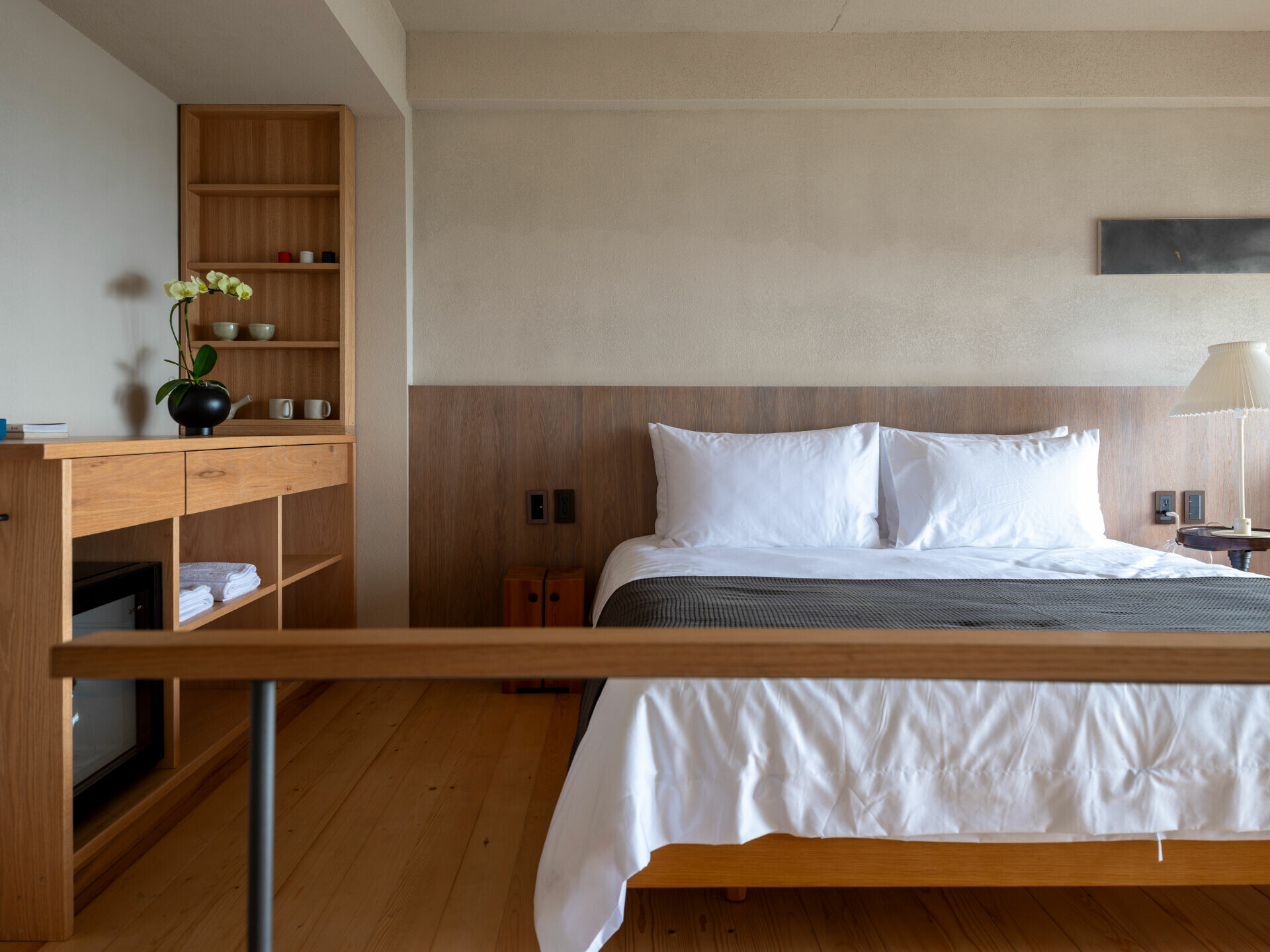
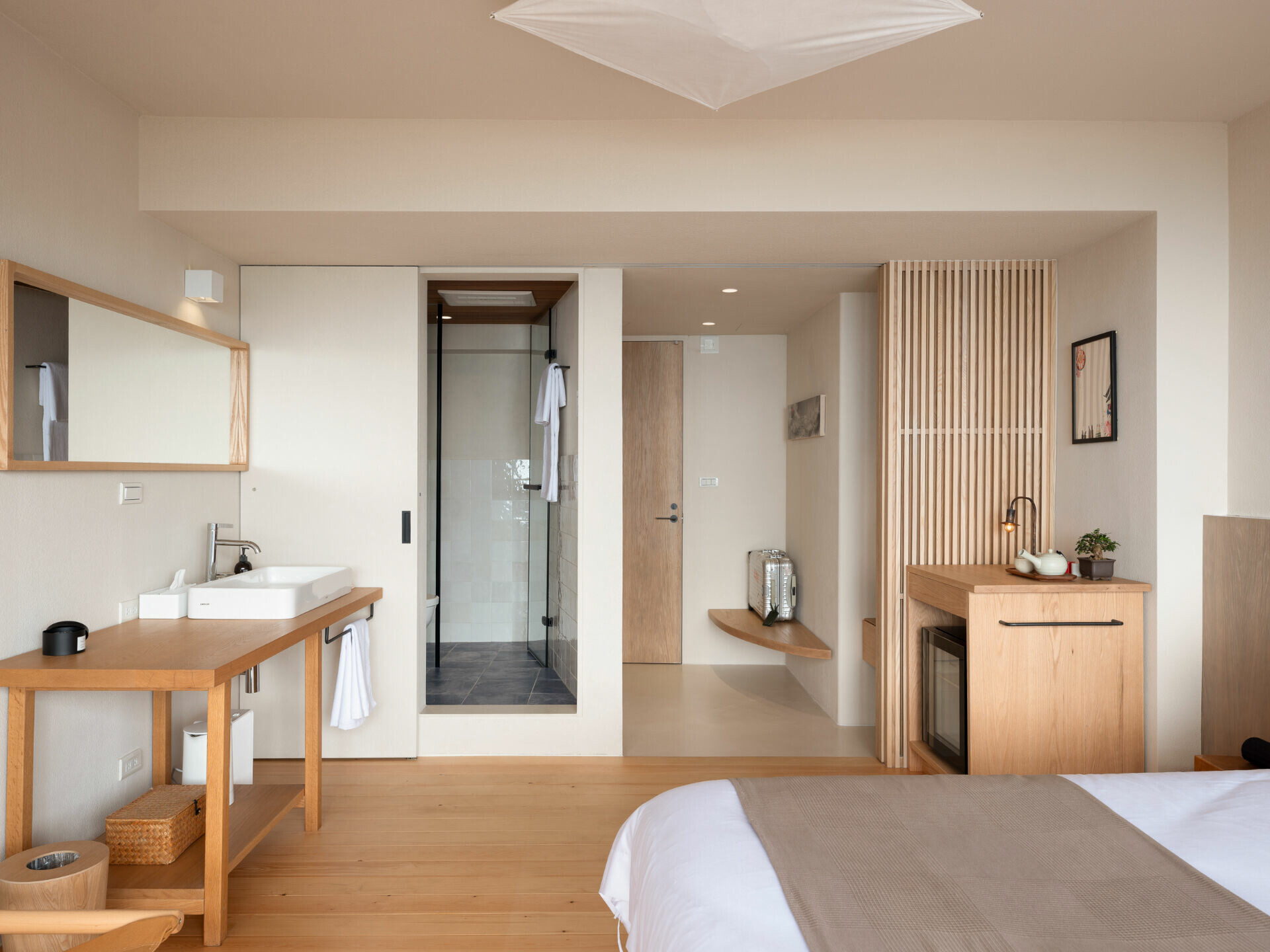
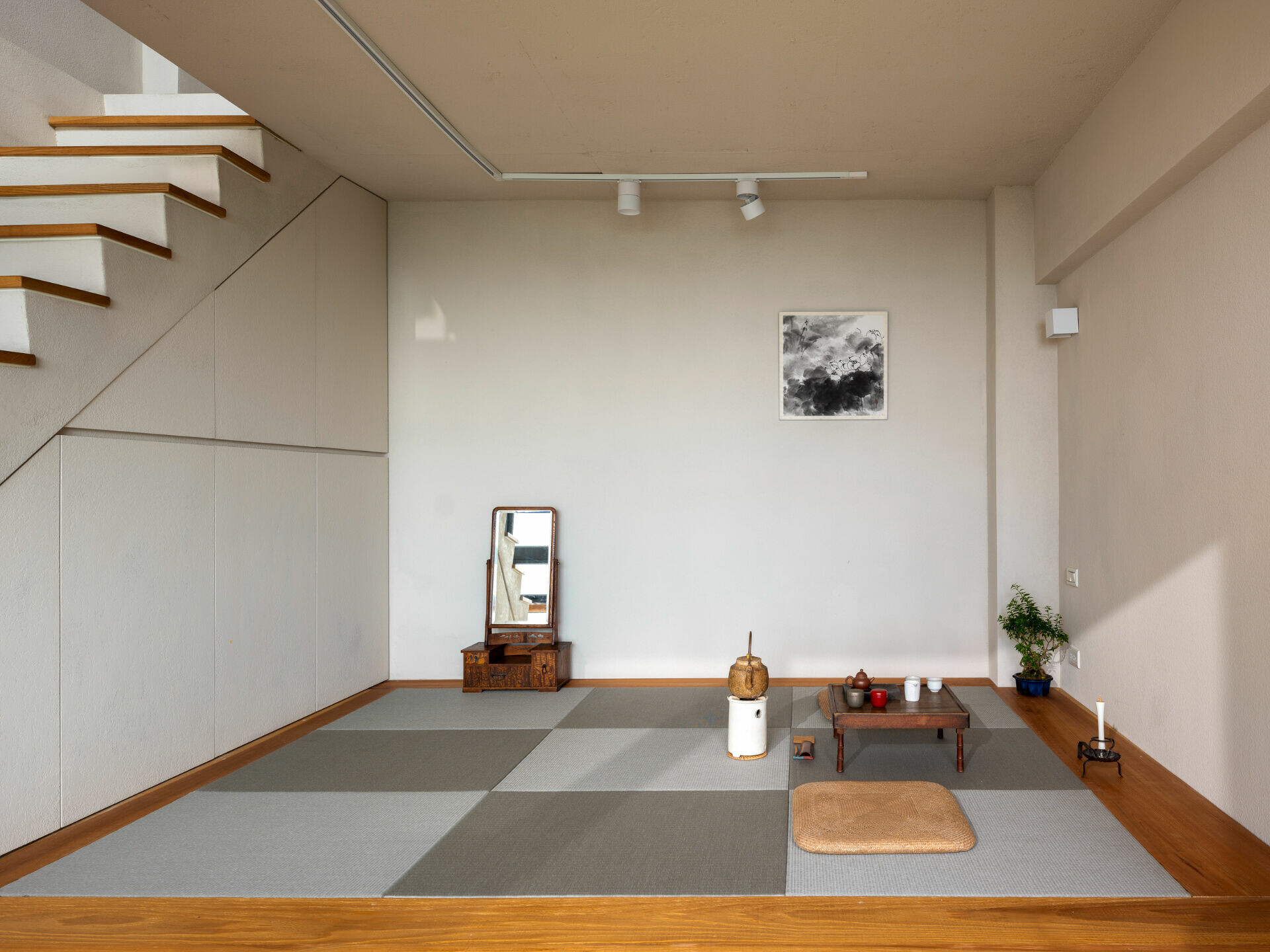
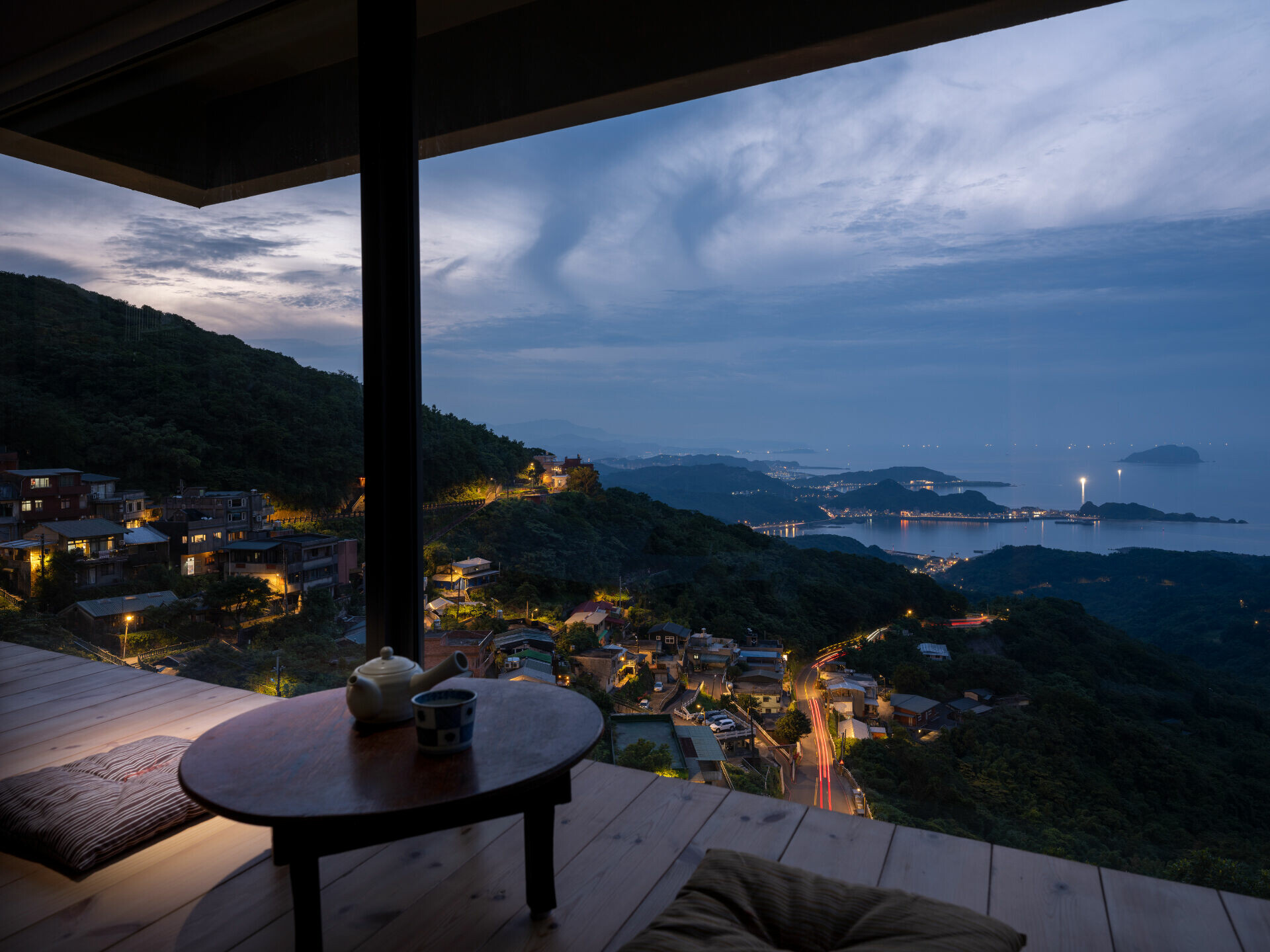
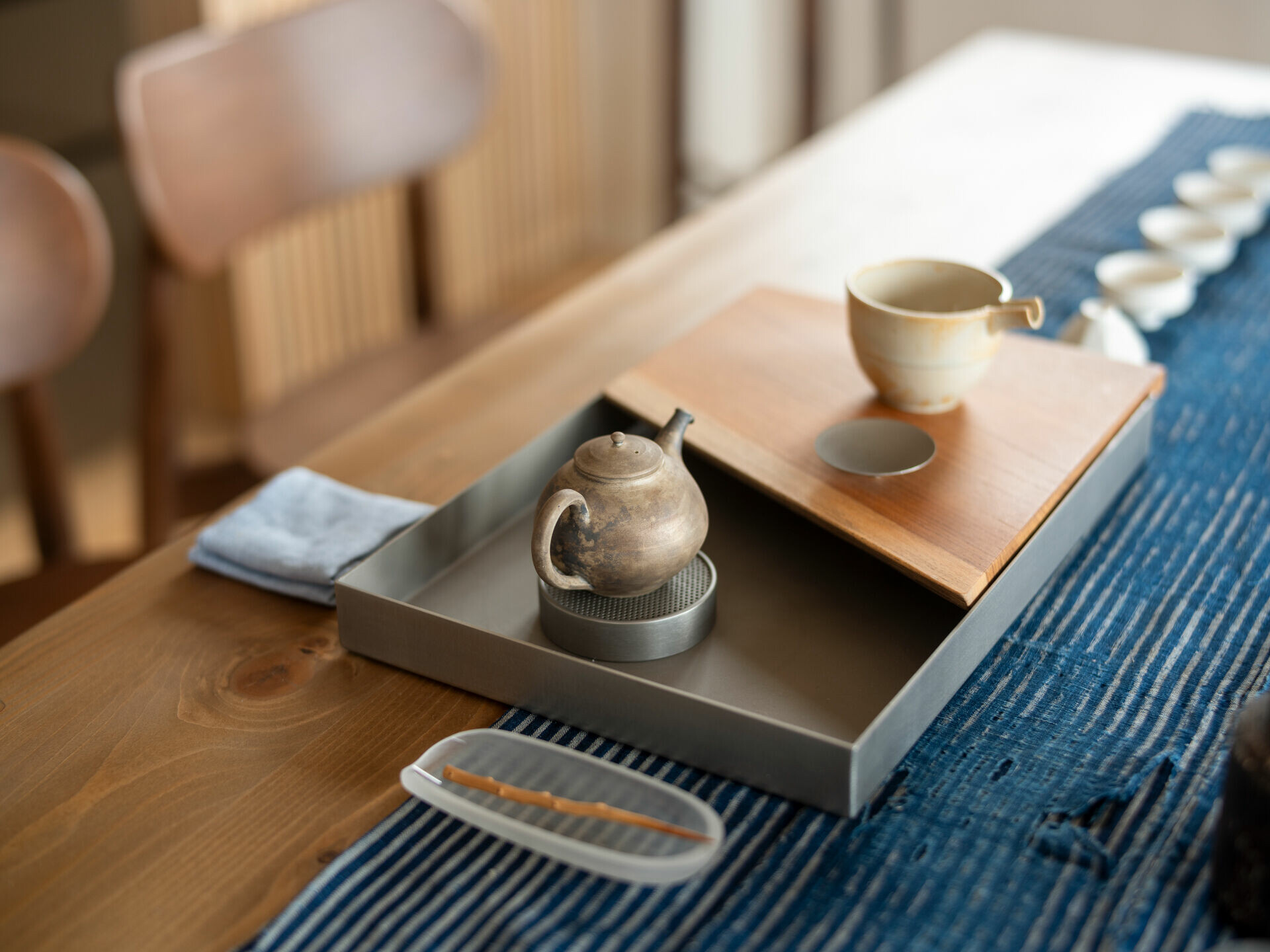
Ascending the stairs, the multipurpose room on the second floor holds solid-wood tables that can be folded and moved as needed, inviting guests to use the full tea set laid out on the tabletop. Brewing becomes a small act of concentration—on the aroma of leaves, on the warmth of the vessel. Even a plain, unadorned sip of tea can still open a path into the pull of Eastern culture. Lift your head and, through double terrace doors, the view extends toward Shuinandong Fishing Port. Tea sets also appear in the guest rooms, letting aesthetics arise as part of ordinary living. Further down, four guest rooms distributed vertically along the rock face are named Fragrant Spring, Crimson Summer, Golden Autumn, and Quiet Winter, echoing Jiufen’s distinct seasons. The layouts adapt to different needs and functions, yet certain things stay constant: the lingering scent of timber and the wide reach of the view. On summer nights, fishing lights in the bay glitter as the lamps of the mountain town answer back. Step outside from the lowest level and there are carefully tended flower beds; climb the exterior stairs and a small “Meditation Room” appears—dim, cave-like, pressed close to the rock—offering time alone and a sense of natural elements in motion.
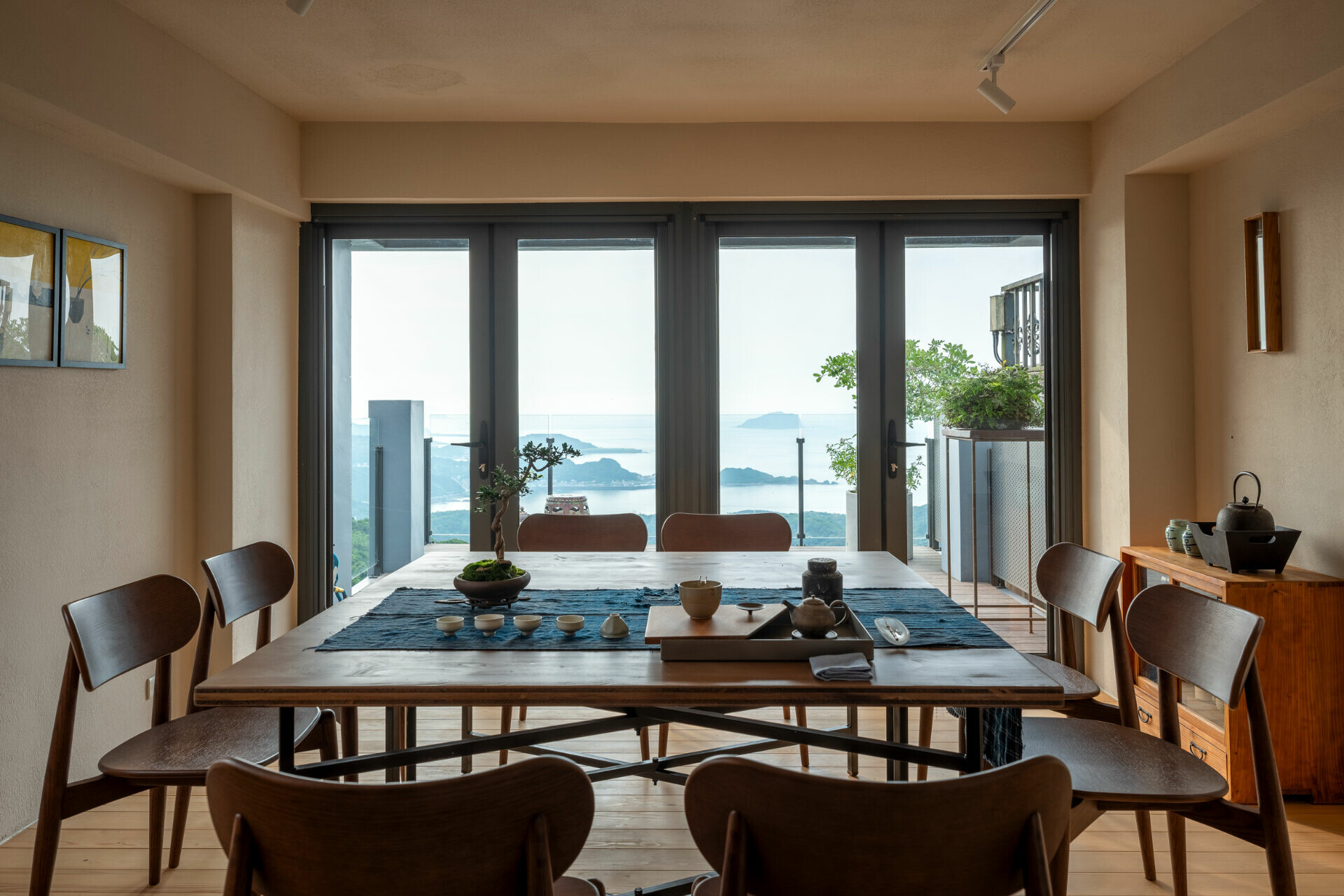
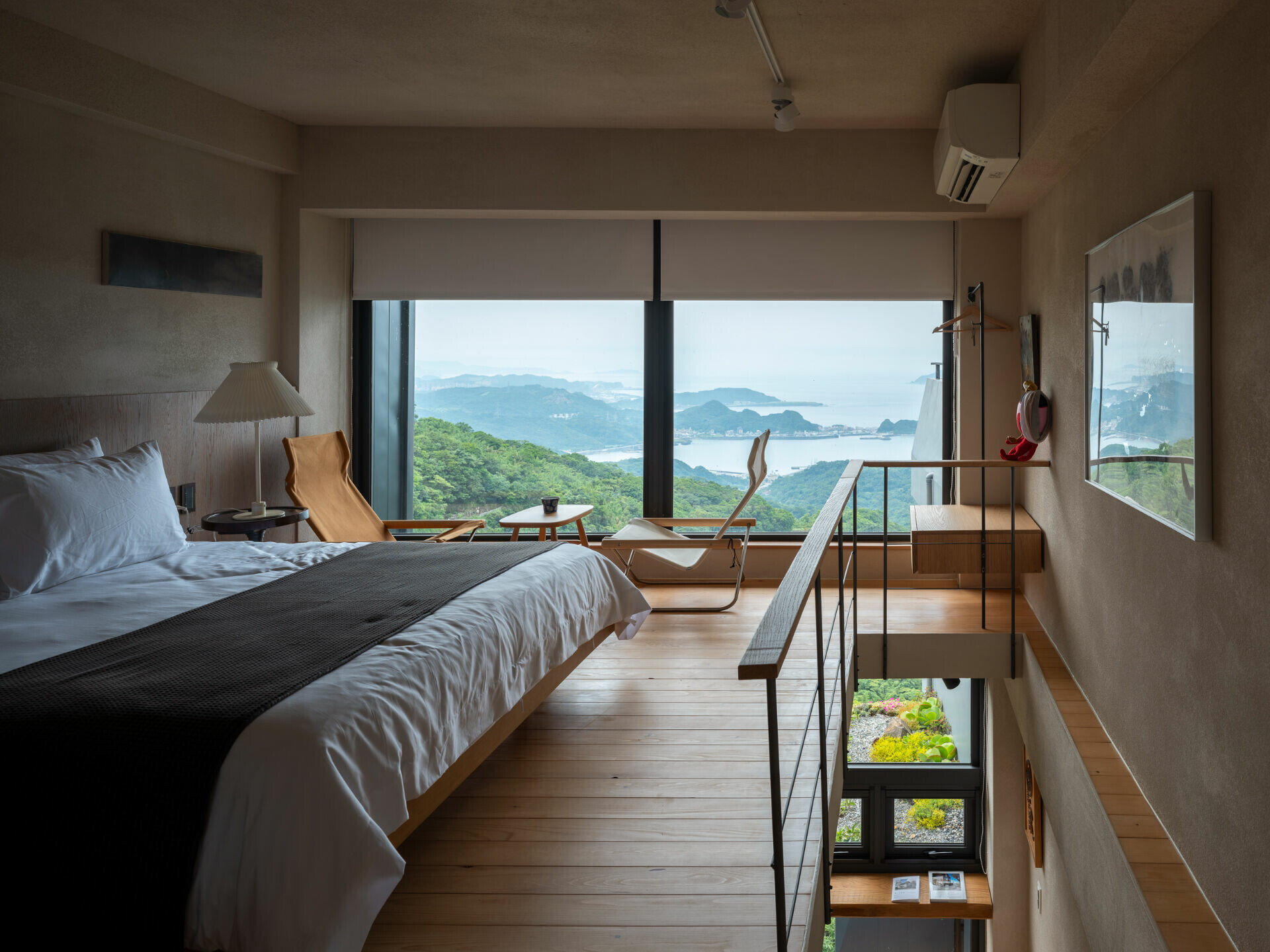
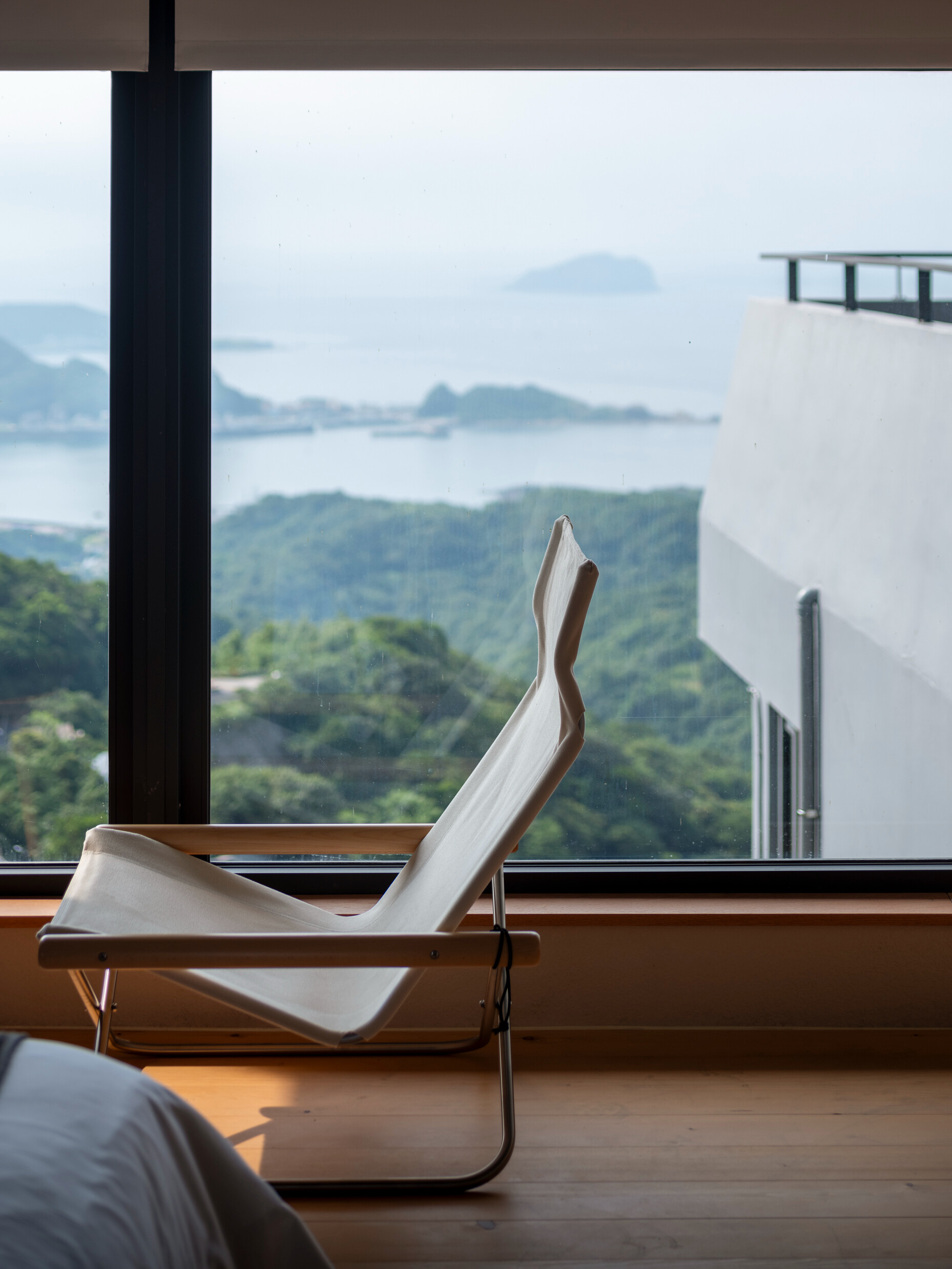
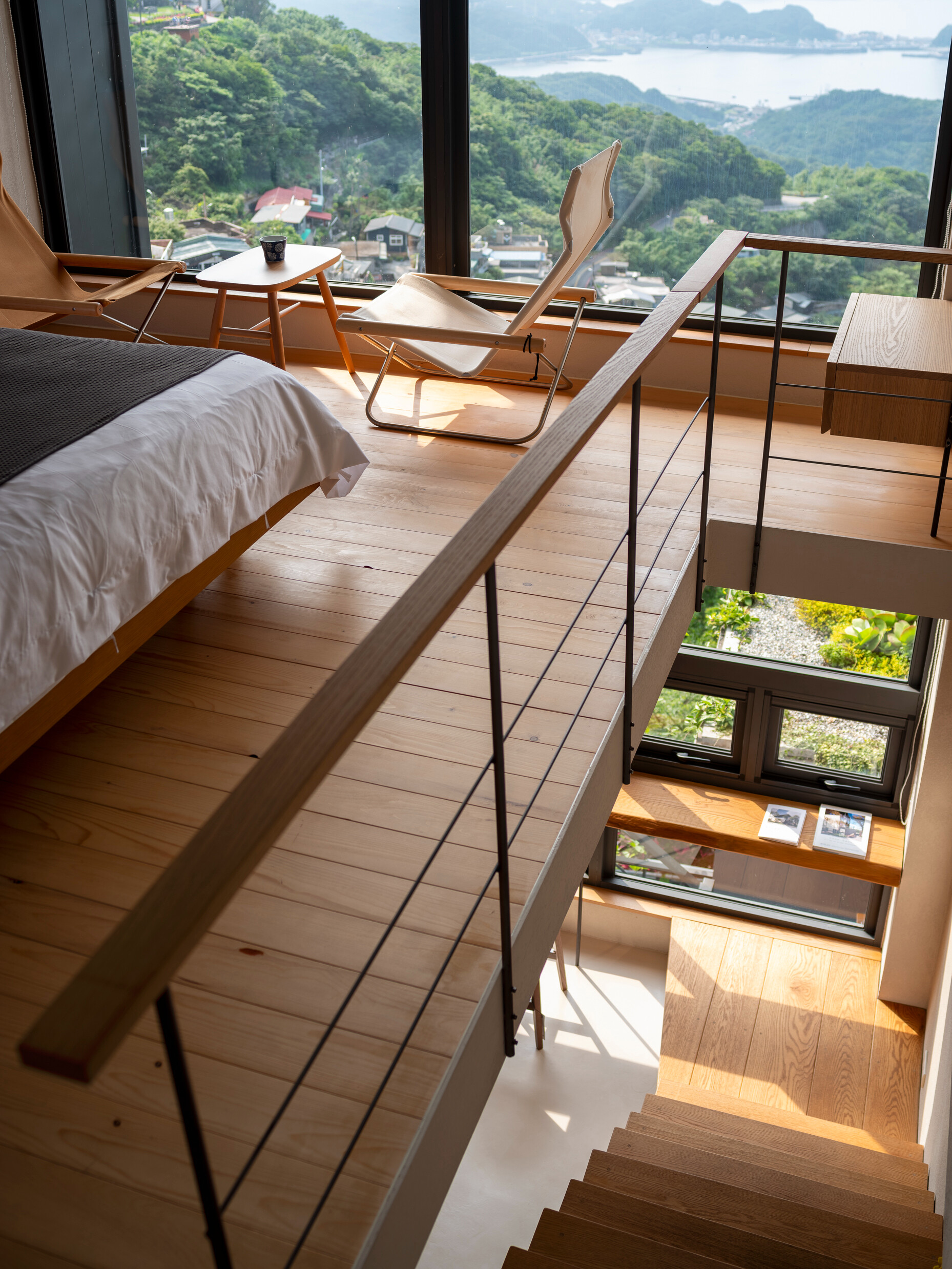
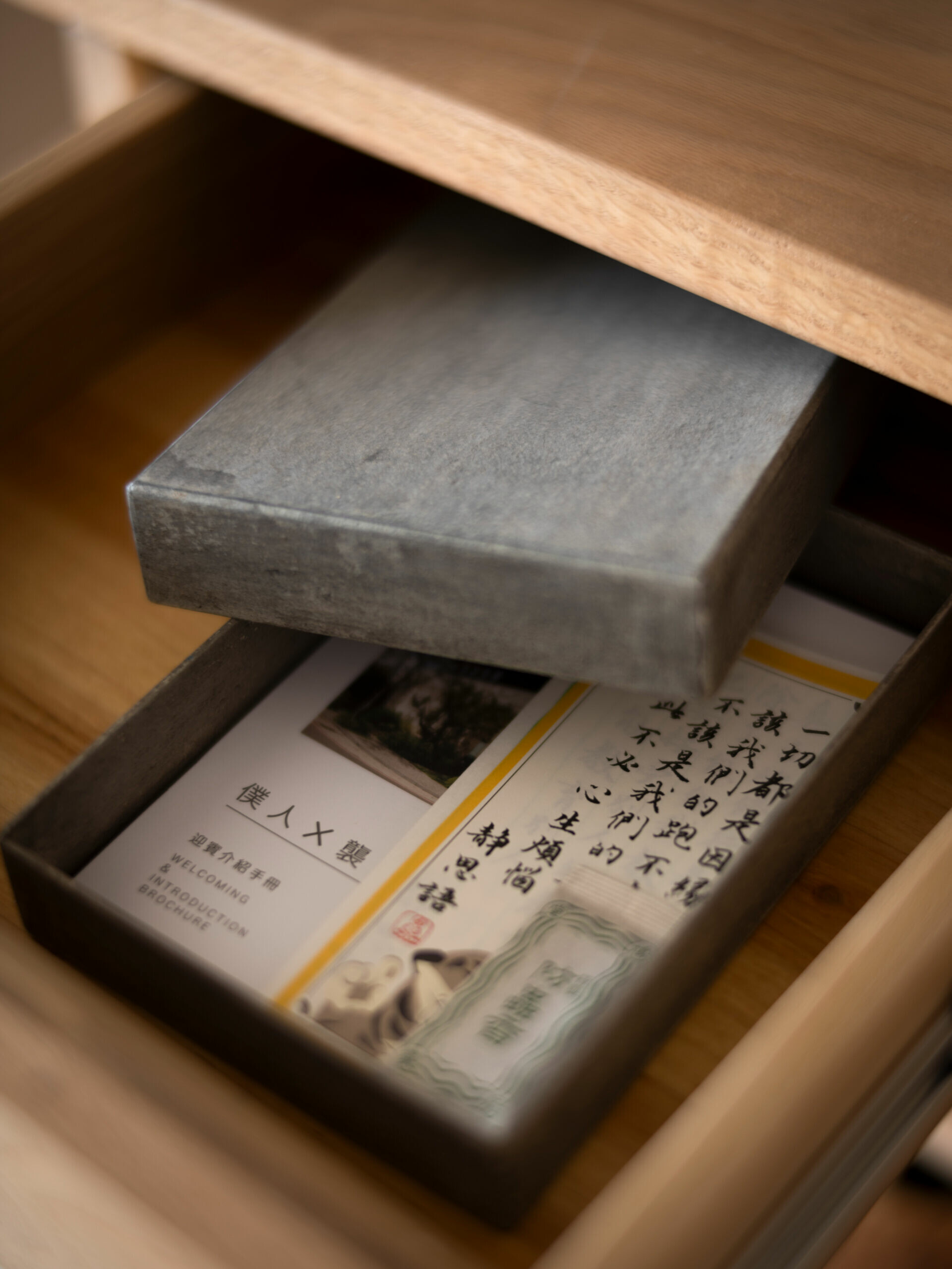
Here, artworks, furniture, building materials, planting, even scent gather like notes in a score, sounding out a harmony that is quiet and long-breathed. Although the project’s lineage runs from Kyoto’s Higashiyama to Jiufen, within Jiufen · INN HERITAGE you still sense what belongs specifically to a Taiwanese mountain town: humidity, a trace of wildness, a closeness to terrain. It reads as Lee’s interpretation of land attachment and humanistic care. A line from the opening of Jay Chou’s Peninsula Ironbox music video—“Excuse me, do you sell the Peninsula Ironbox?”—is used as an epigraph. The house invites travellers to explore their connection to place through lived experience. Before leaving, one might open a drawer, find a hand-copied aphorism tucked inside a black oak box, and keep it as a small memory from this Jiufen journey.