


➤ Item | LOGO · WINCHESTER, 2026
The Inner Measure of Home
Giorgio Armani is often quoted as saying, “Elegance is not about being noticed, but about being remembered.” In Armani’s design language, elegance never calls attention to itself. It begins with ease in the body and a disciplined sense of what to leave out. That conviction moved from fashion into the home, continually asking what was superfluous and what needed to remain. Forms that remain recognisable after years of refinement have become touchstones for the brand’s approach to materials and craft. The LOGO lamp, introduced in 1982, brought this thinking into the interior; Armani/Casa later gave it fuller expression throughout the home. More than four decades on, it remains one of the brand’s defining legacies. In 2026, the Milan flagship returned to that source with Origins. In the windows, Icons dating from 1982 to 2010 appeared, each in its original finish alongside a re-edited version. Looking back across nearly half a century, the exhibition asked what in those early designs still endures. At a time when design cycles are accelerating and new releases continually vie for attention, what allows a classic to remain part of everyday life without depending on passing trends?

➤ Images | Twin Oaks Casa
Icons: How a Classic Remains Recognisable
Materials and finishes may change, but the underlying logic remains. The pieces draw on different periods and cultures, yet their character and role within the home remain clear. Armani/Casa gives those references coherence through clean lines, precise proportions and a clear sense of function. Those decisions take physical form through craft: in the finish, the fall of light and the feel of the surface. Placed at the centre of a table, LOGO makes its purpose clear. Designed in 1982 as Giorgio Armani’s first object for interiors, the original stood taller than a conventional table lamp, allowing soft, even light to reach across a wider area. In the re-edited version, the triangular shade is rendered in greige-painted lamellar wood. Light filters between the horizontal layers, breaking the glow into finer bands and making shadow part of the lamp’s form. The room feels warmer for it. Decades on, LOGO still does the same quiet work.
A boundary need not close a room to give it depth. WINCHESTER reinterprets the traditional East Asian folding screen at a deliberately lower height. The eye can travel above it, while the body pauses at its edge. In the re-edited version, the Silver Drafted Stucco finish recalls stucco’s centuries-long presence in European architecture, from Renaissance churches to Baroque palaces. Built up in layers, the hand-worked surface carries subtle variations in depth. Contrasting hinge bands between the three panels form a checkerboard pattern, allowing light and shadow to move across the surface. When friends visit, it marks an unspoken boundary between host and guest. In quieter moments, it sets a reading corner or workspace slightly apart.

➤ Item | LOGO, 1982 · WINCHESTER, 2000

➤ Item | LOGO, 2026 · WINCHESTER, 2026
At the entrance, the staggered heights of the SEINE consoles hold a lamp and a treasured object. Together, they turn the first view on returning home into a quiet vignette. The threshold becomes more than a place for storage; it offers a brief pause between the city and private life. In the original finish, black grid engraving translates the interwoven texture of fabric into a hard surface. In the re-edited version, Mud Drafted Stucco gives the pure bridge form a hand-worked surface. As the light shifts, the form gains depth, while its pared-back volume keeps the entrance visually quiet.
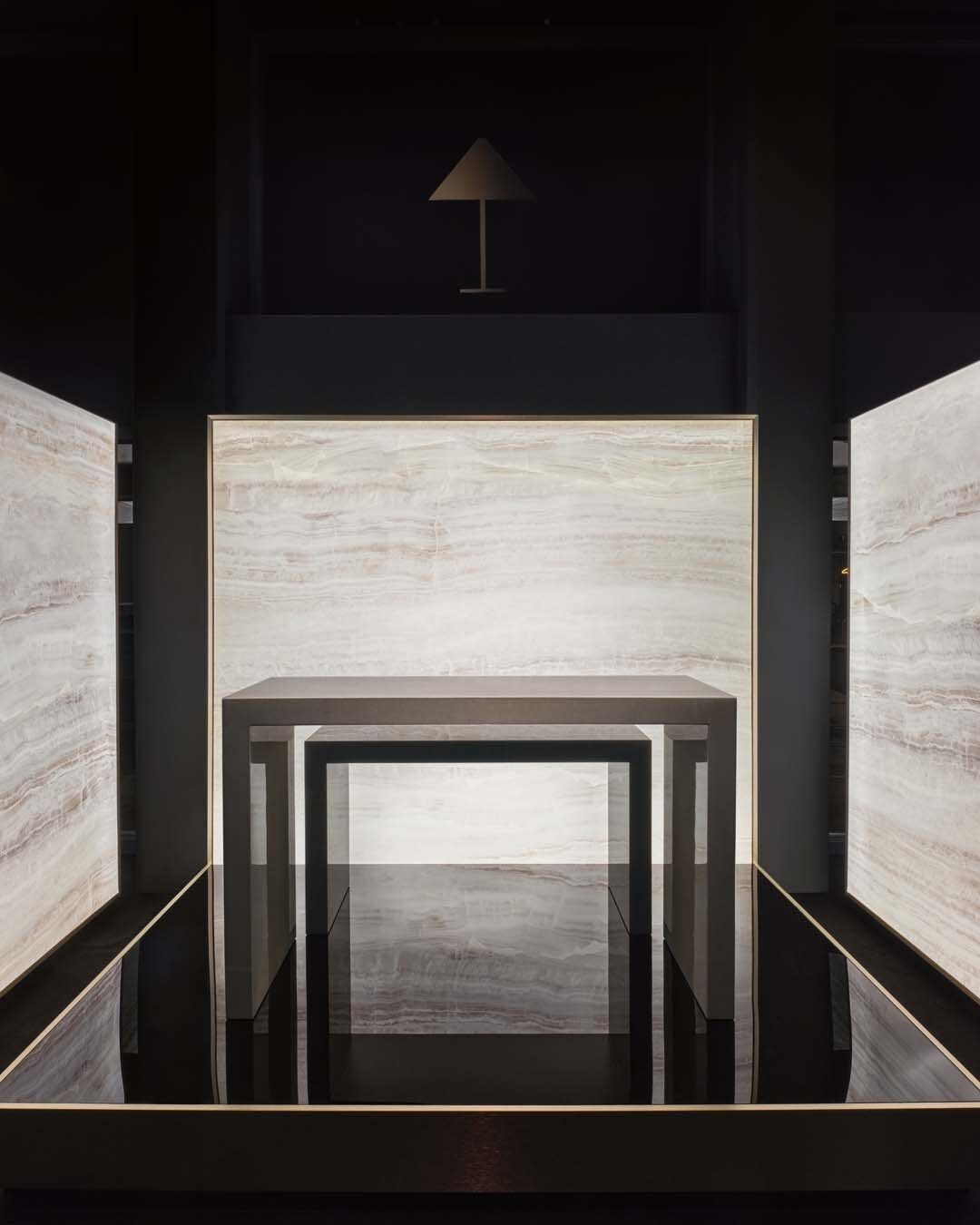
➤ Item | SEINE, 2000 · 2026
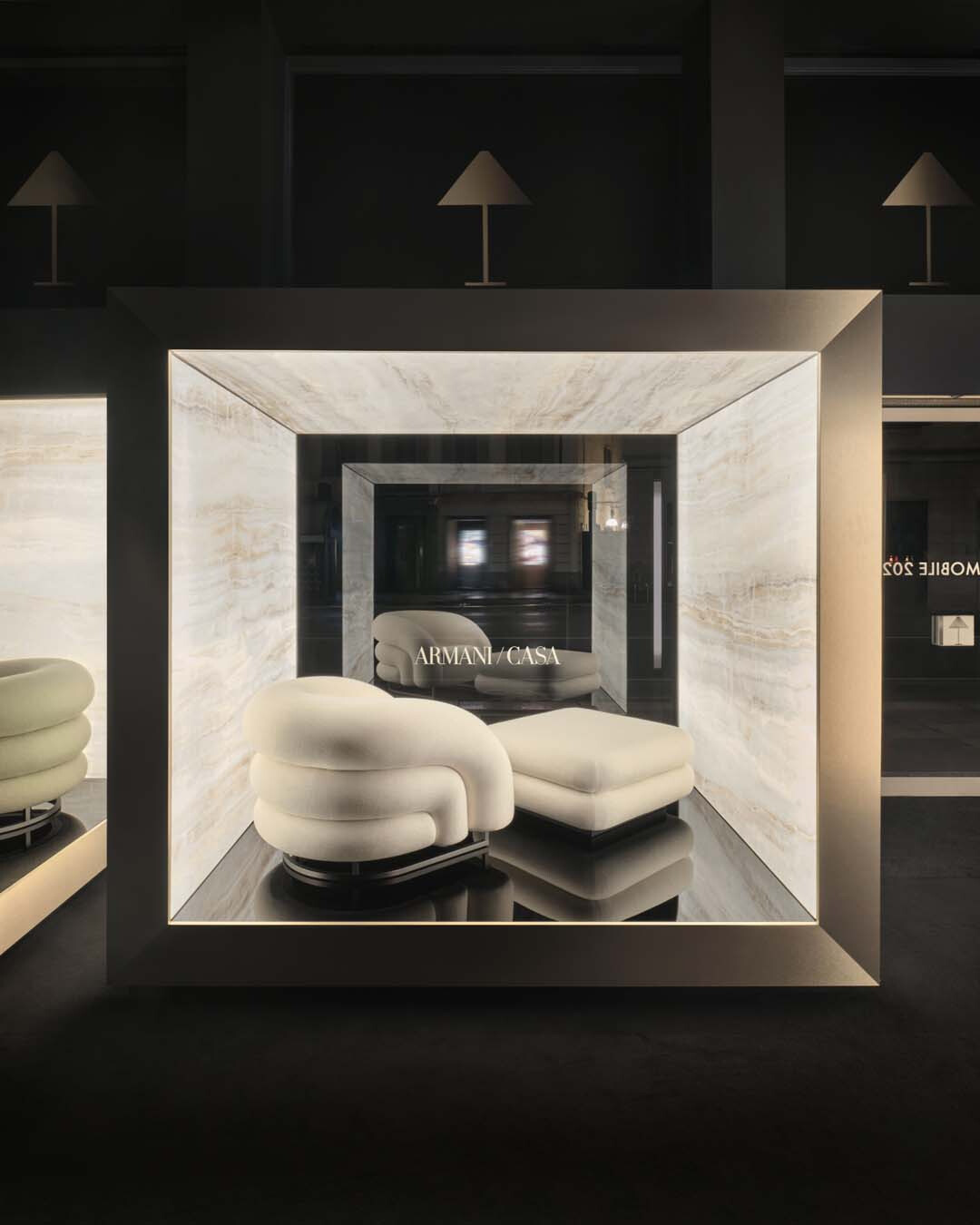
➤ Item | BALOON, 2008

➤ Item | BALOON, 2026
How Material Restraint Shapes Light and Shadow
In the living room, BALOON and TOKYO support the body in contrasting yet complementary ways. On an afternoon when no message needs answering, tea and an open book are enough. One settles into BALOON, feet resting on the soft footrest. Bergen fabric follows the chair’s generous curves; its fine texture holds the light and softens a room crowded with straight lines. The rounded back lets the shoulders relax, while the generous seat leaves room to bend the knees and draw the legs in. BALOON belongs to the slower moments of the day. TOKYO brings a different kind of composure. Daylight falls across the Basel velvet wrapped around its rectilinear form, and the pile shifts from light to dark as the viewing angle changes. The Art Déco geometry remains rigorous, while the velvet’s changing sheen softens its formality and recalls the European decorative arts’ sensitivity to light and shadow. Its defined frame gives the sitter a more upright bearing, lending poise to face-to-face conversation. BALOON lets the body loosen; TOKYO gives it a clearer frame.
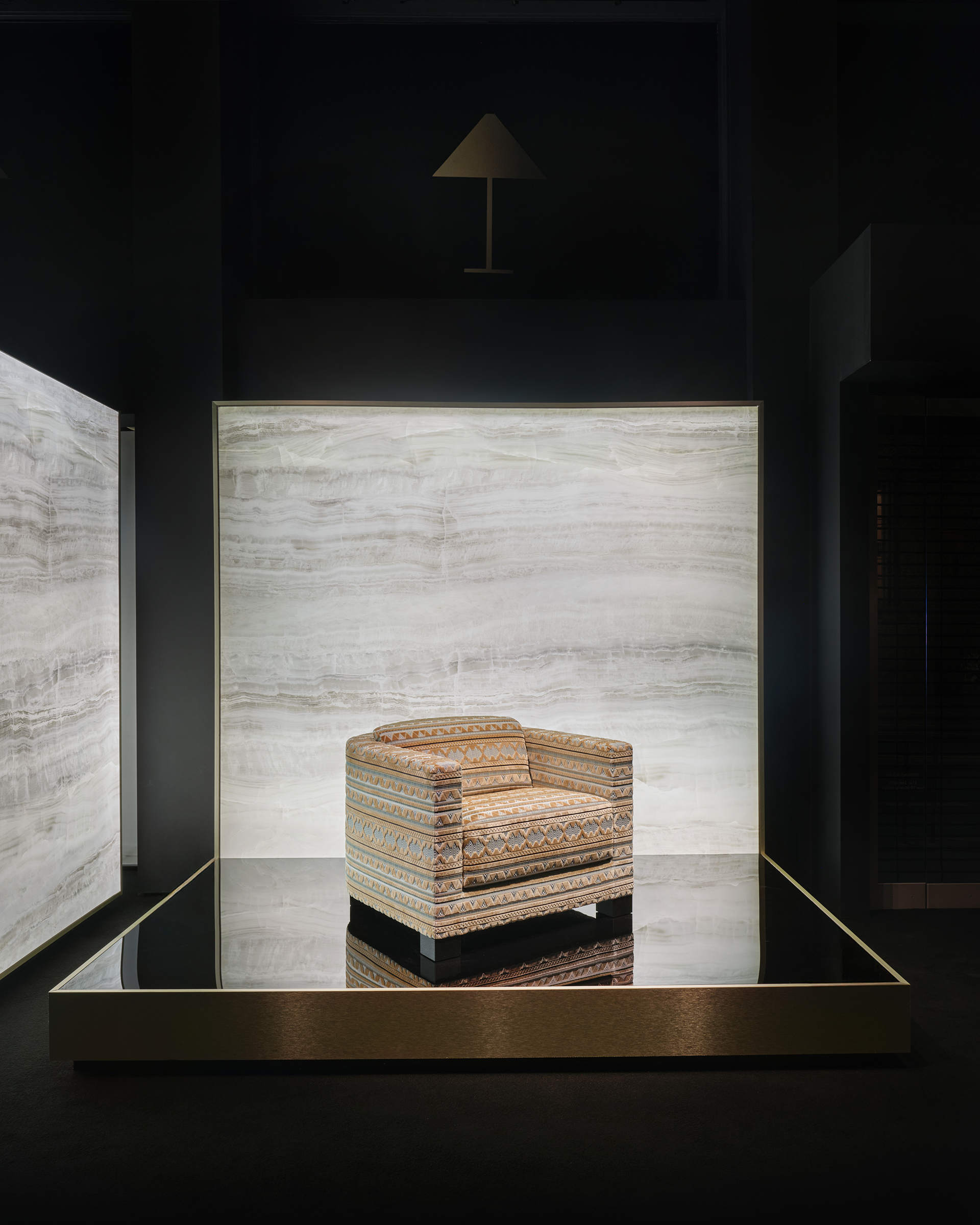
➤ Item | TOKYO, 2026
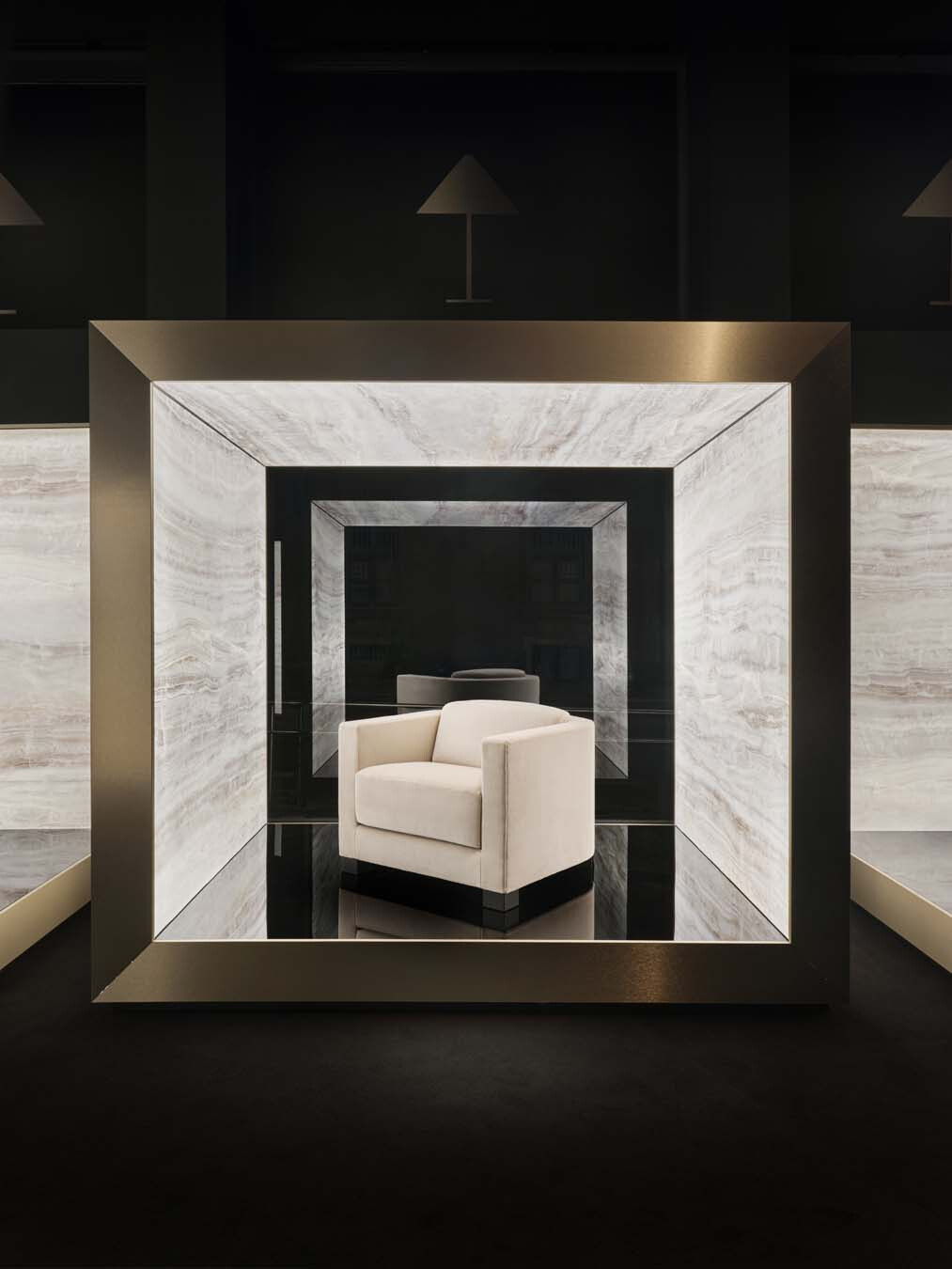
➤ Item | TOKYO, 2000
