Mushroom Pavilion
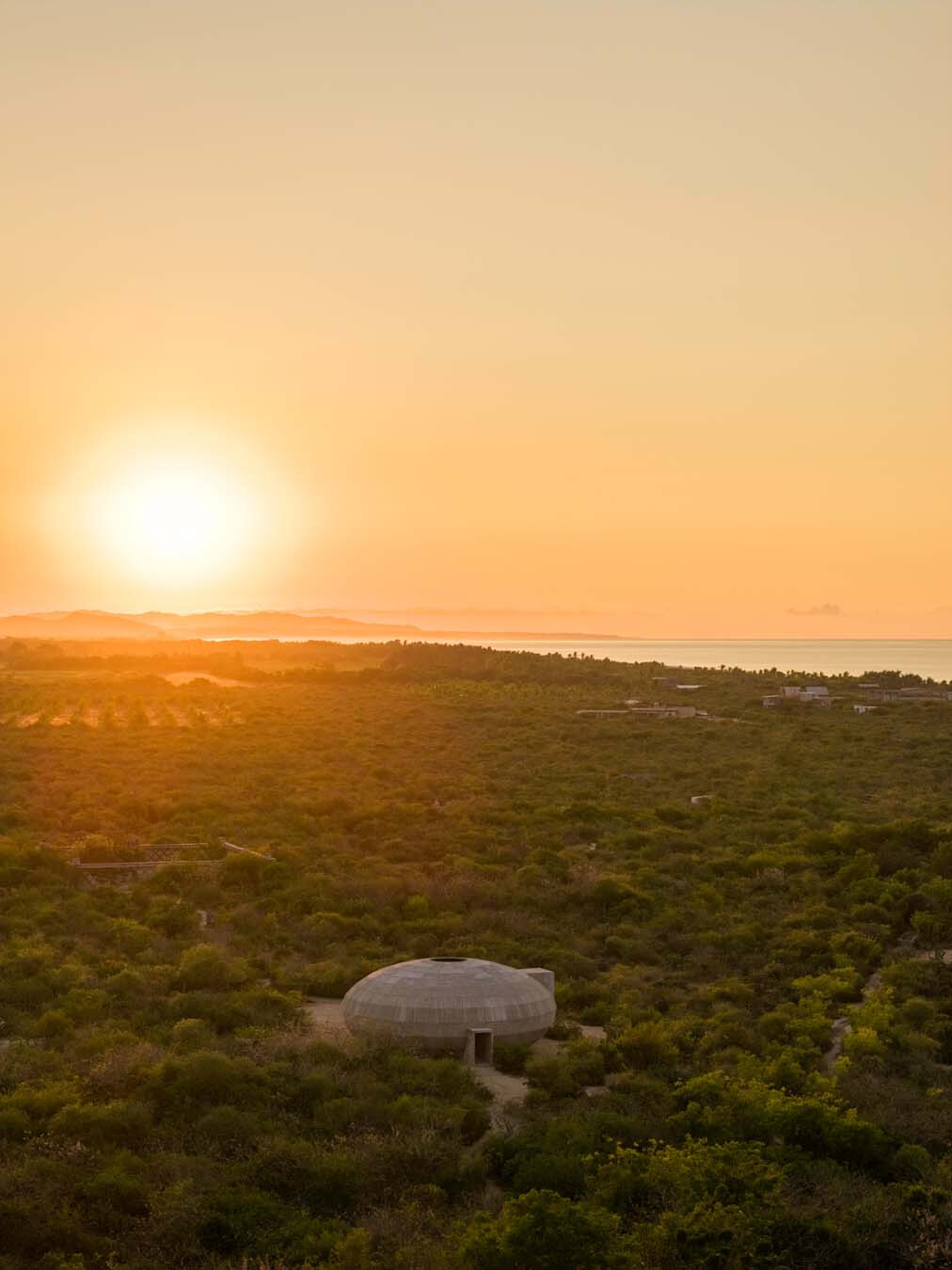
Near Puerto Escondido, on Oaxaca’s Pacific coast, coastal winds move through low scrub and across sandy ground. During the wet season, the air is dense with moisture, almost tangible. As wet and dry seasons alternate, vegetation passes through recurring cycles of growth and retreat, and exposed materials gradually record the marks of time. Casa Wabi, founded by Bosco Sodi and Lucía Corredor, feels like a gift to the Mexican coast and a landscape installation still in the making. Contributions from architects, artists, craftspeople and local communities continue to add new spatial layers to the campus.
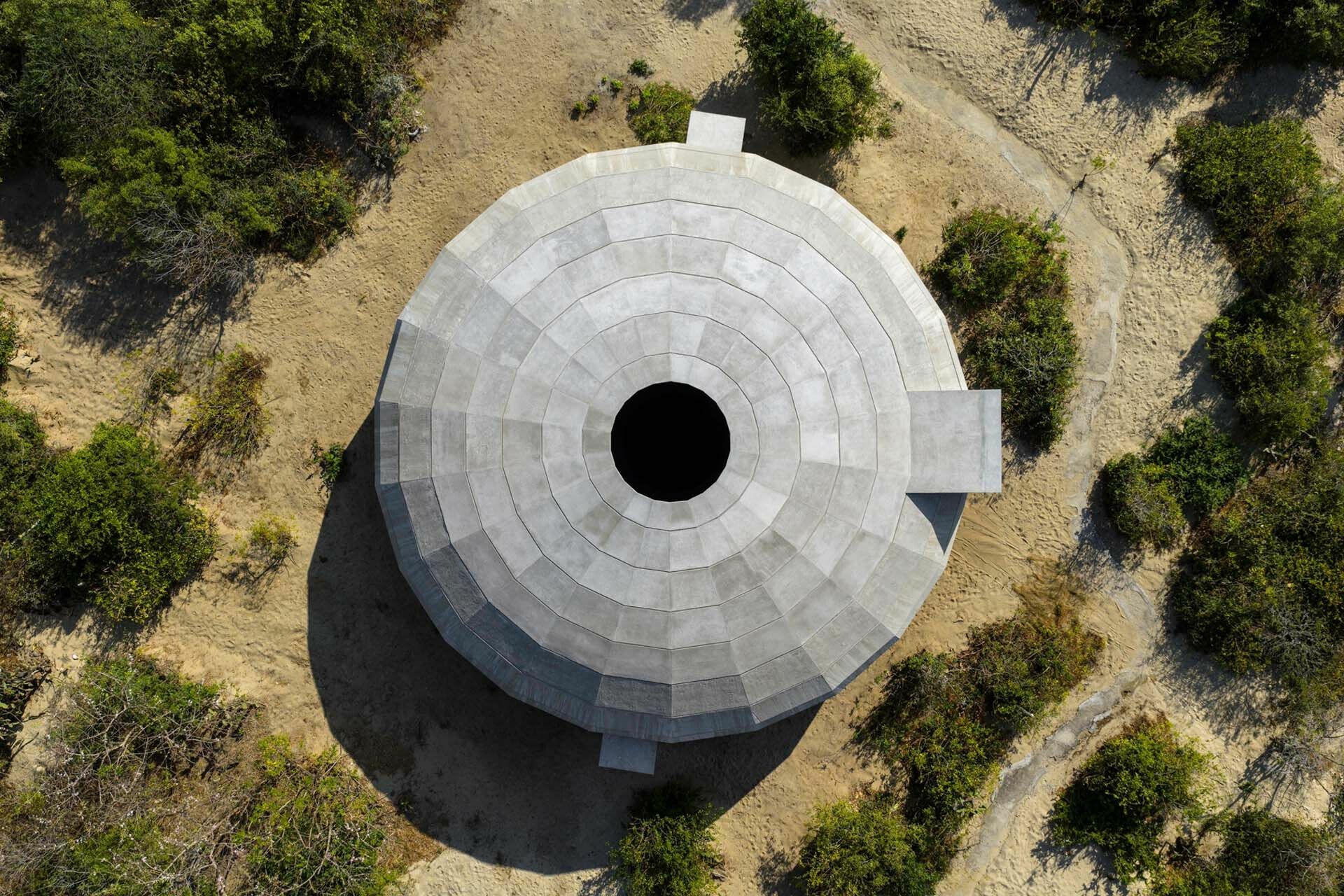
The setting gives architectural form to a concern that has long shaped Sodi’s practice: how do materials change of their own accord, and how does a work take on life as earth cracks and pigment settles? If the land has agency, what kind of architecture might grow from it? When OMA partner Shohei Shigematsu was invited to design a building centred on mushroom cultivation and public use, the project developed outward from the spatial organisation and workflow required by cultivation. Within a self-supporting ellipsoid, the incubation, fruiting and storage chambers surround a central space for observation and gathering.
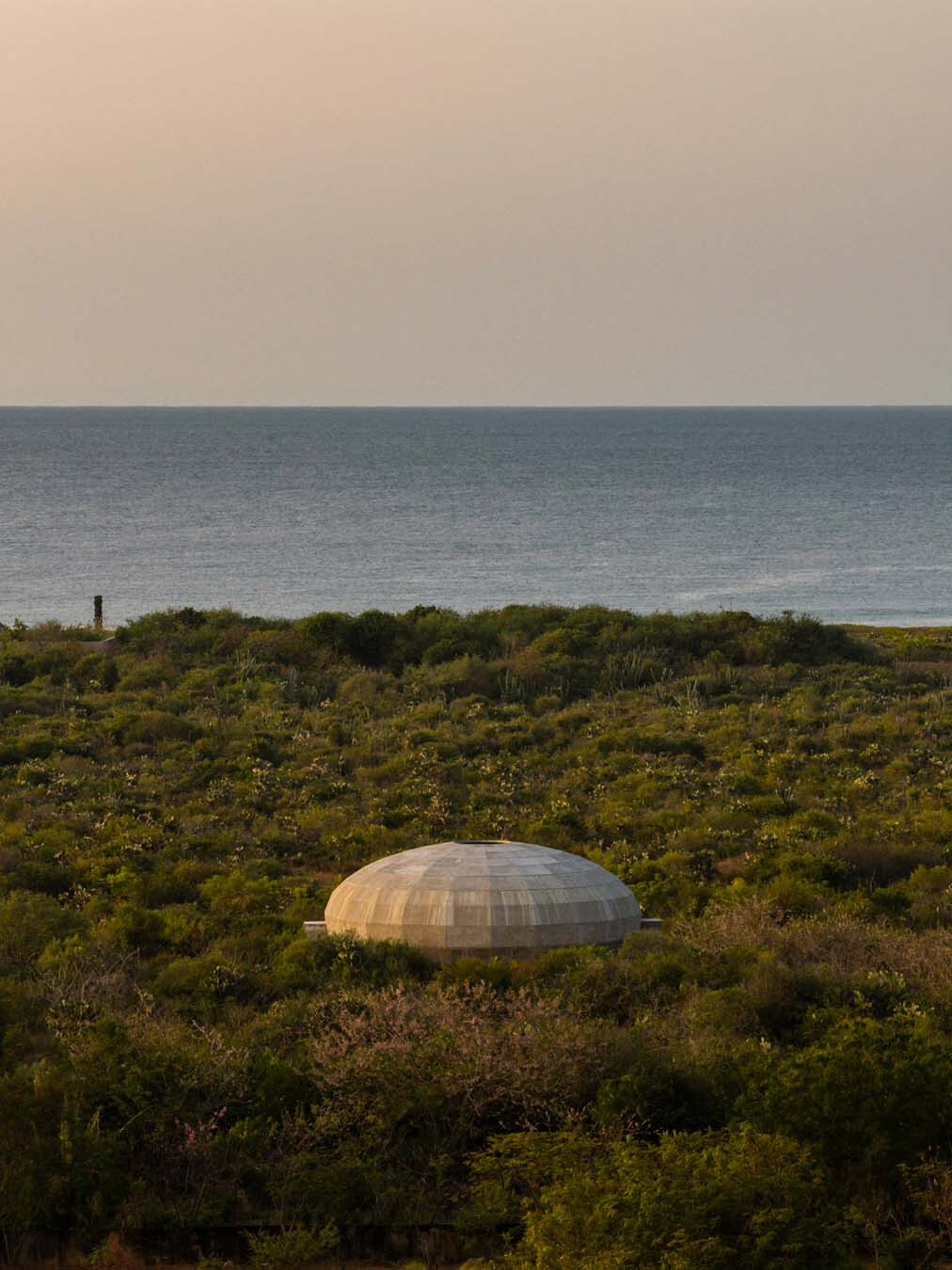
OMA likens the Mushroom Pavilion to an incubating egg. Mycelium develops out of sight, and fruiting bodies emerge when temperature, humidity and airflow are favourable. The fungal life cycle offers a way to read the building. It describes not the literal form of a mushroom, but the inside-out logic of growth. Cultivation and its environmental requirements become visible, and the usually hidden work of tending enters a public setting for education, gathering and exchange.
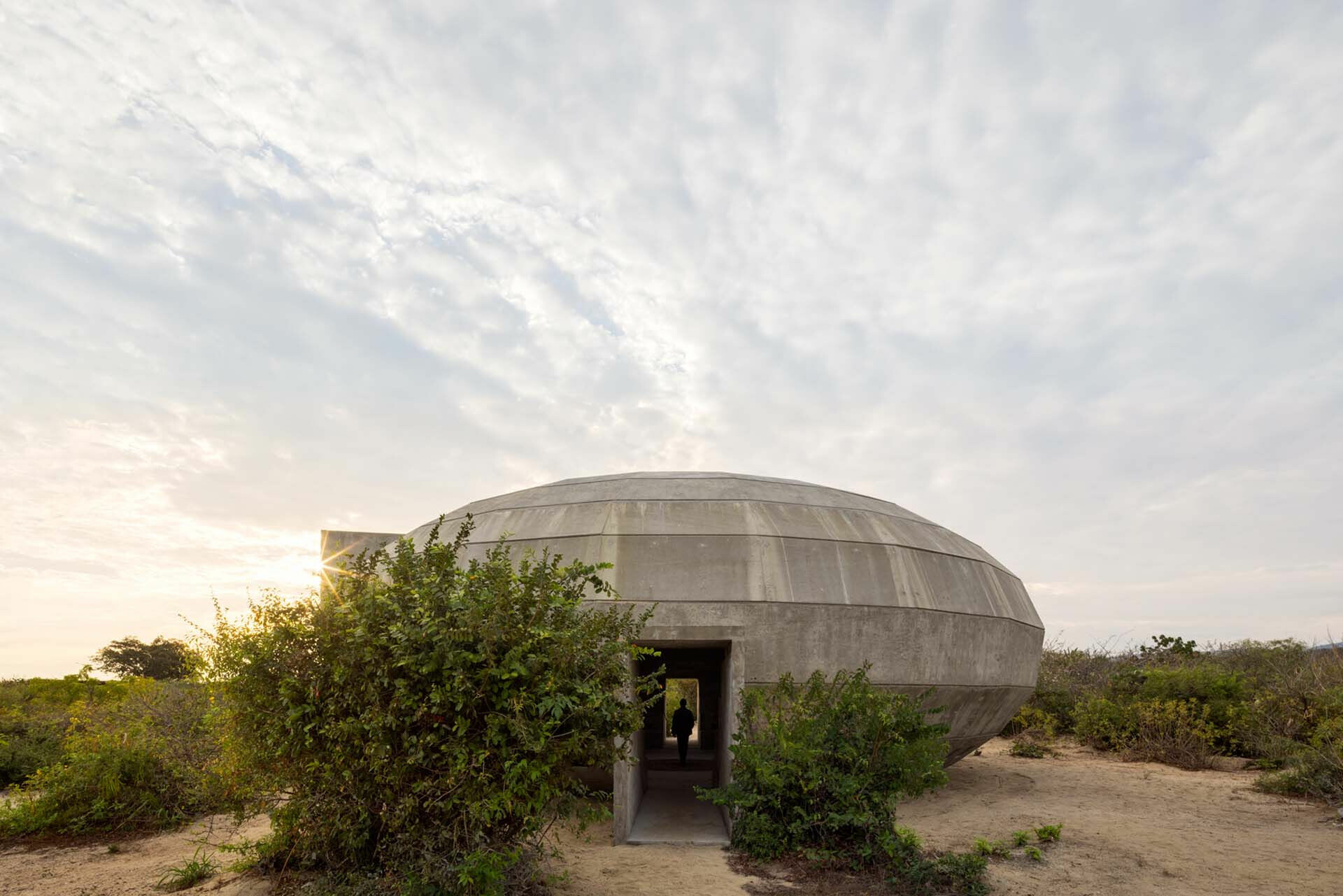
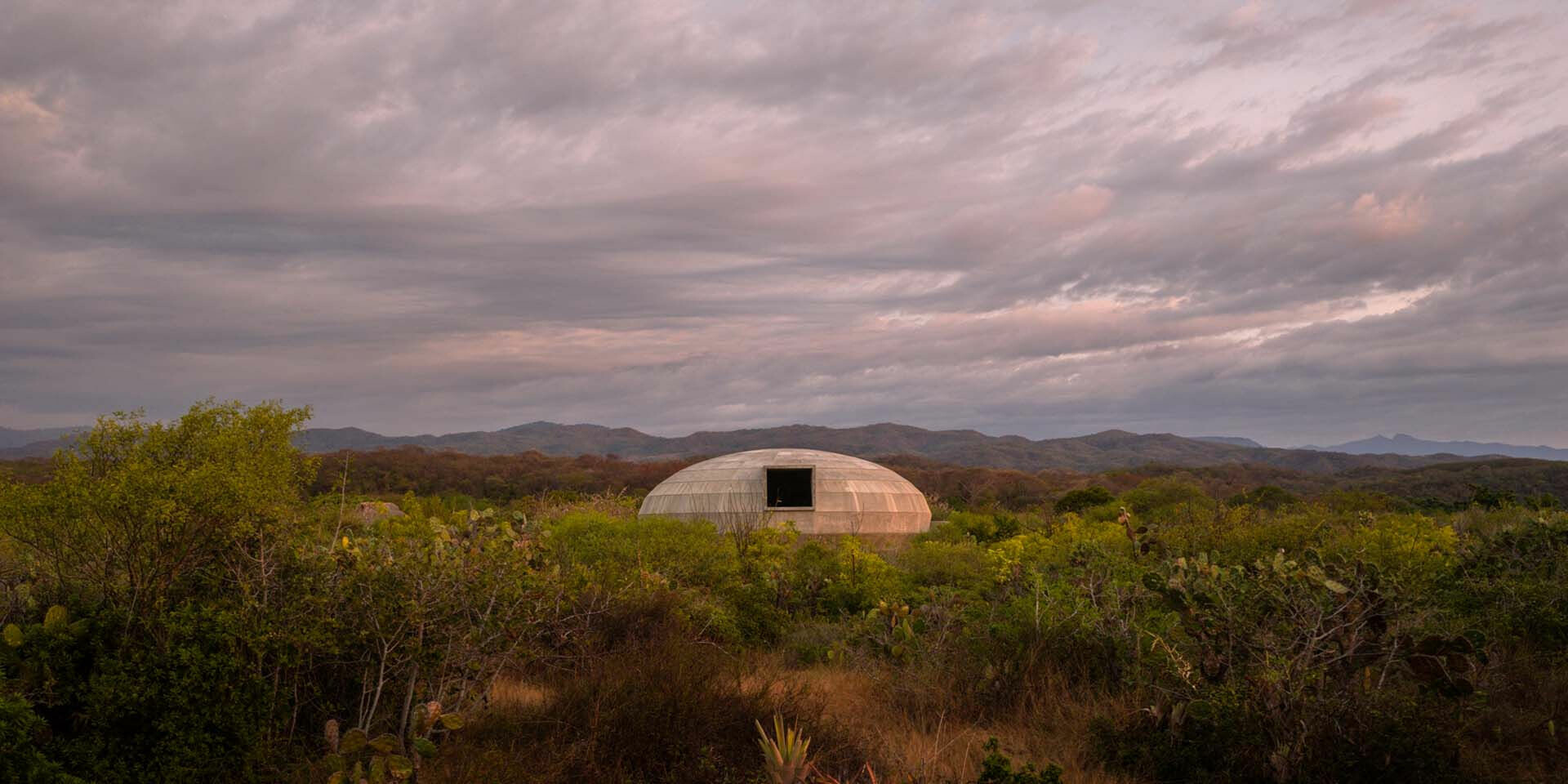
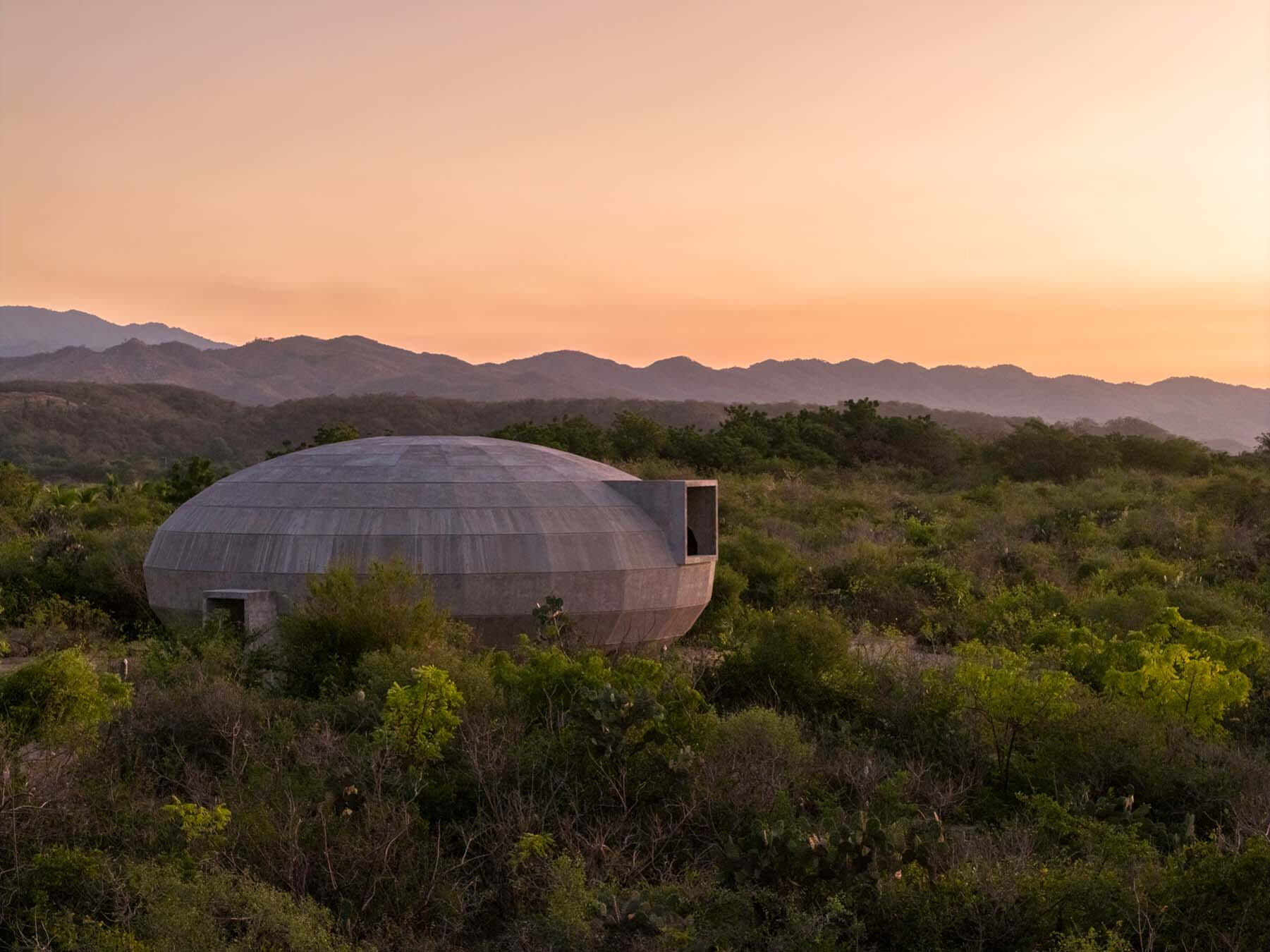
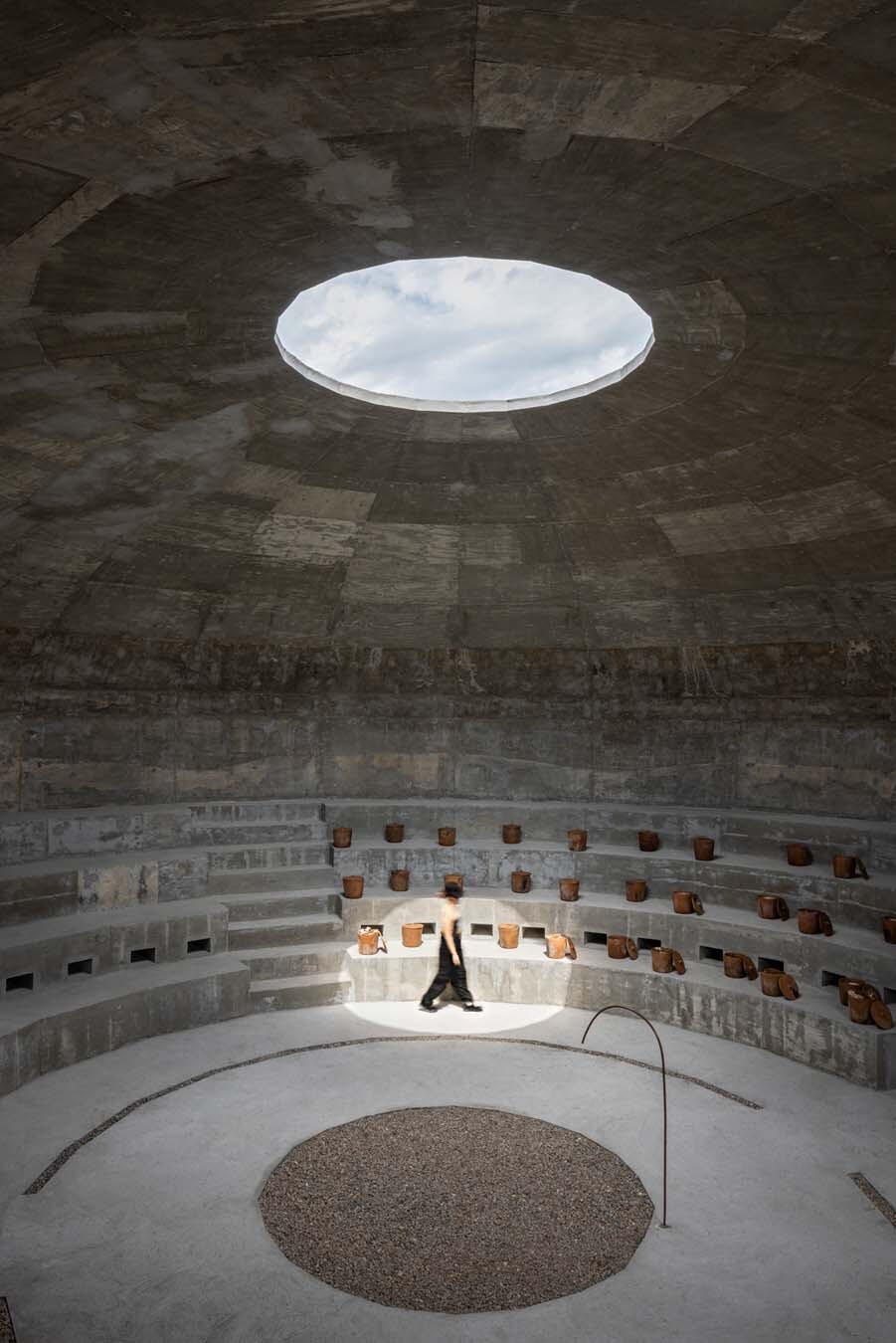
The cast-in-place concrete shell sits low among the coastal scrub. At ground level, the volume curves inward, minimising contact with the soil and limiting disturbance to native vegetation, a quiet concession to the landscape. Entrances and openings around the lower perimeter support natural ventilation while preserving the pavilion’s inward character. Inside, the shell has the enveloping quality of a cave. An oculus at the crown admits daylight and frames the sky. Shifting light records the passage of time. Cultivation requirements, lines of sight and site conditions shape the form.
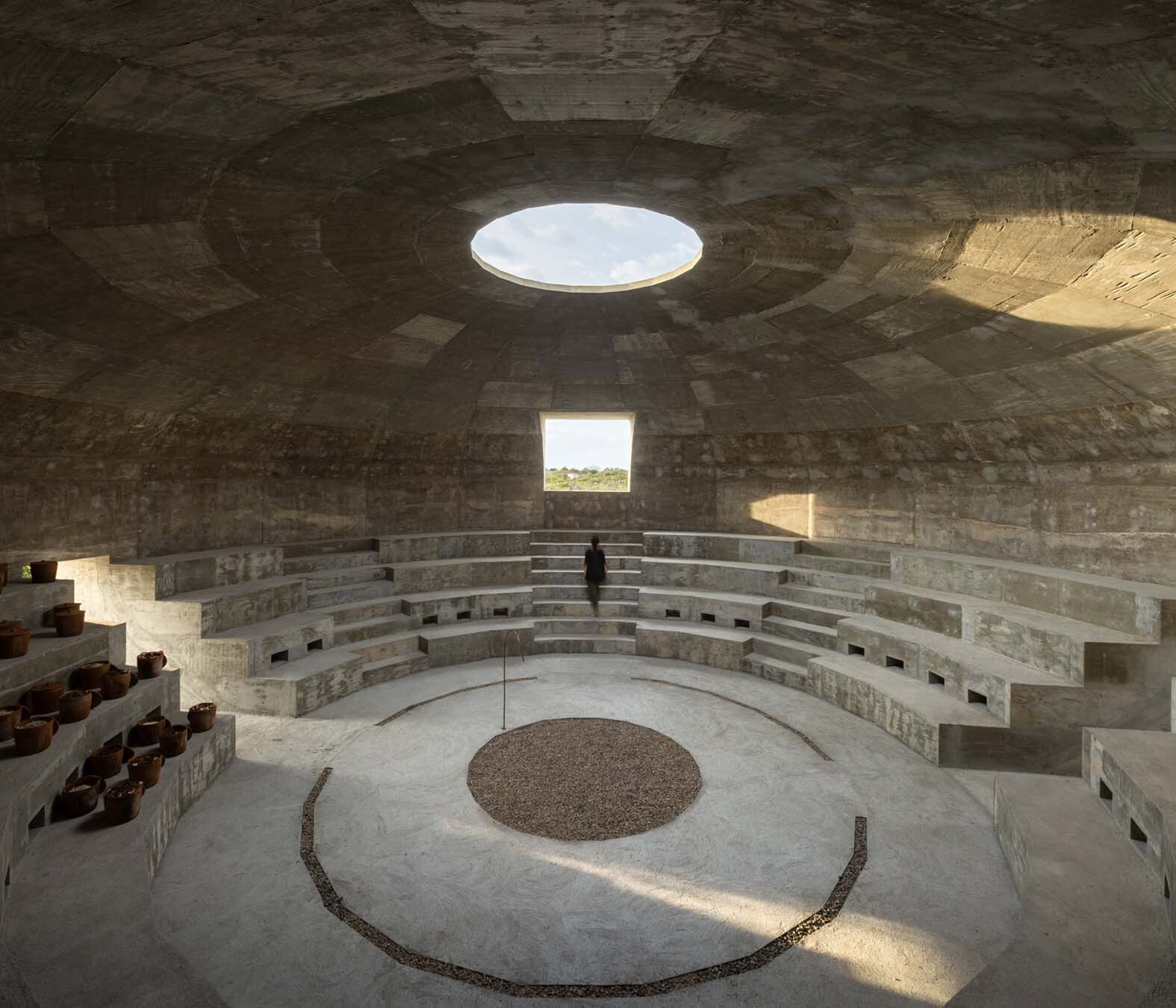
Stepped tiers line the lower half of the ellipsoid, forming circular seating and shelves for terracotta mushroom-growing pots made by local craftspeople. The incubation, fruiting and storage chambers are organised around the central gathering space according to the temperature, humidity and airflow required at each stage of growth. From the centre, the entire cultivation sequence can be read at a glance. The arrangement brings production, education and communal use into a single interior.
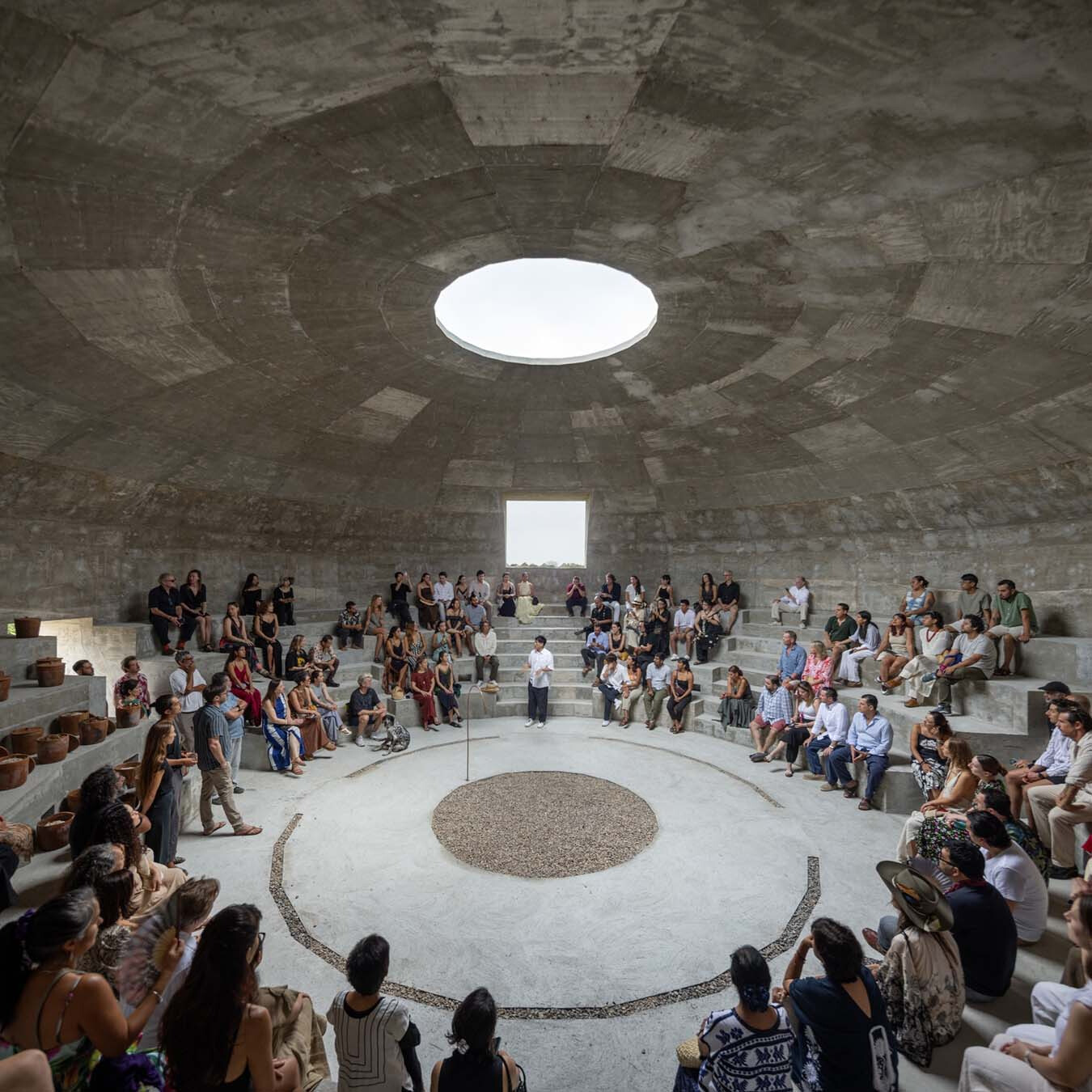
Over time, the rough, burlap-stamped concrete exterior will retain iron-rich water from the site and develop mottled rust-coloured staining. The pavilion serves mushroom cultivation and will also become part of the educational and communal life of the campus, creating new occasions for exchange. Mushroom cultivation, OMA’s architecture and Sodi’s art differ in form, but all three share an understanding of making in which completion remains provisional. Weather, use and time continue the work.