WABISABI
  • Projects
    • Worldwide
    • Interiors
    • Features
  • Contemporary
    • Exhibitions
  • Record
  • Lifestyle
  • City Explore
  • News
  • Issue
  • Account
  • Search
  • Language
Mobile nav


A JAPANESE PENTHOUSE      


A realm of the senses

When we interior designers close our eyes and think of Japan, impressions of a very special aesthetic come to mind. Images of noble reduction. Of delicate materials such as silk or even tissue paper. Of artistic woodwork or ikebana.Such impressions always remind me with fascination of the unbelievably high esteem in which the Japanese treat their homes. It is unthinkable not to take off one‘s shoes in a Japanese home or to disturb the peaceful magic of the sublime emptiness through disre-spect or loudness. And yet, of course, Japan is much more than that. Such thoughts correspond only to the most obvious impulses of a group of islands 9000 kilometers away, about which we rarely know more than that life there is based on harmony and ancient traditions.
 
 
Our client, on the other hand, had the great fortune to spend some time of her life in that land of the rising sun and to experience the pulse of this fascinating world at first hand. Years that strongly influenced her sensitivity and her spirit for beauty and were ultimately decisive for her request to transform the penthouse she had just acquired above the roofs of Berlin‘s Spittelmarkt into a 120 square meter Japanese gem.


When I first listened to their ideas and desires, they described for me an island of well-being. A place of peace of mind. Similar to what the cocoon must mean to the Japanese silkworm. For us as a team, the Japanese Penthouse project was an unusual and wonderful challenge, especially since our client did not impose any restrictions on our creativity.
 
But before we could start working on the first ideas and designs, we had to get to the bottom of the true attributes of classic Japan. What could such a place look like, where time-honored traditions, craftsmanship and artistic pathos melt into a distillation of Japanese culture?
 
First and foremost, Japan is a land of contemplation, of meditation. One of the most important components of Japanese daily life is harmony with the natural habitats of our earth. Many Japanese derive this harmony from Shirin Yoku, regular forest bathing, a ritual that has been proven to have a healing effect on our exhausted minds. So what symbol could welcome a guest or visitor more sensually than a forest?
 
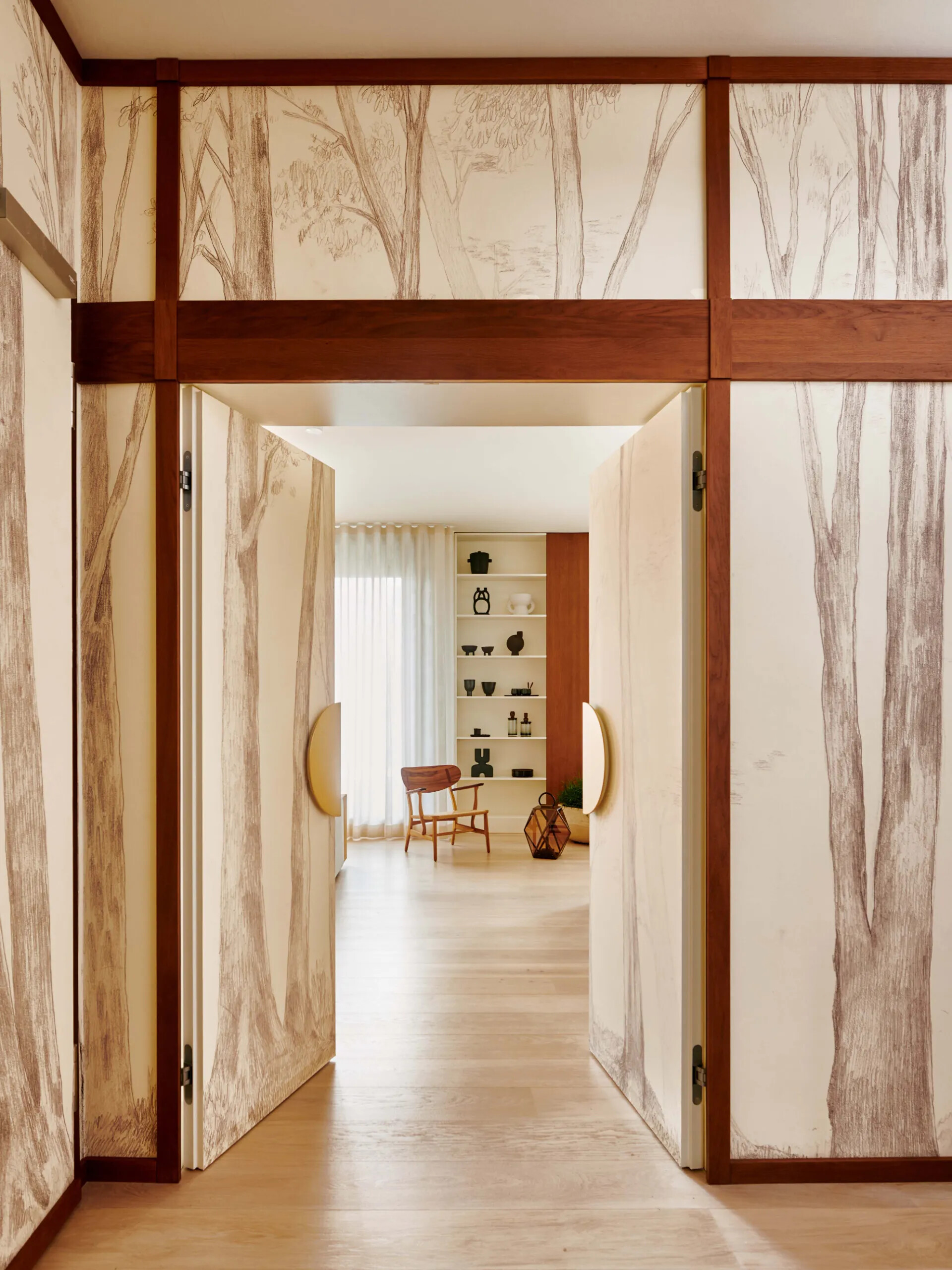
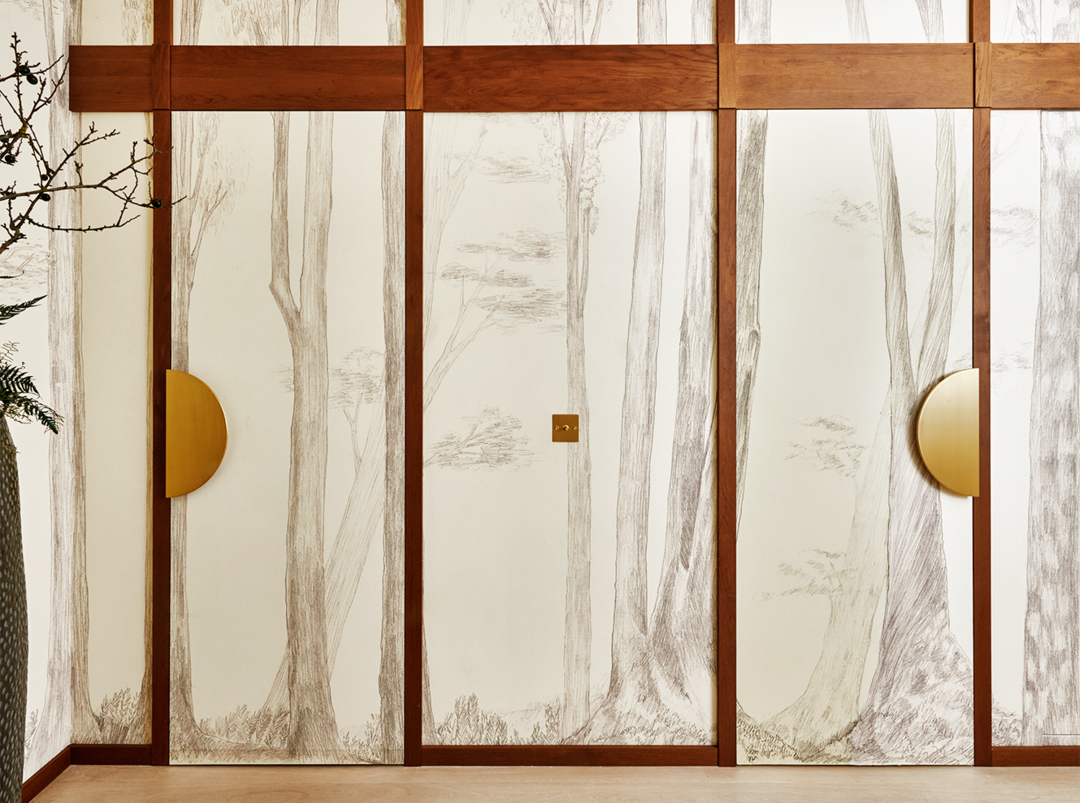
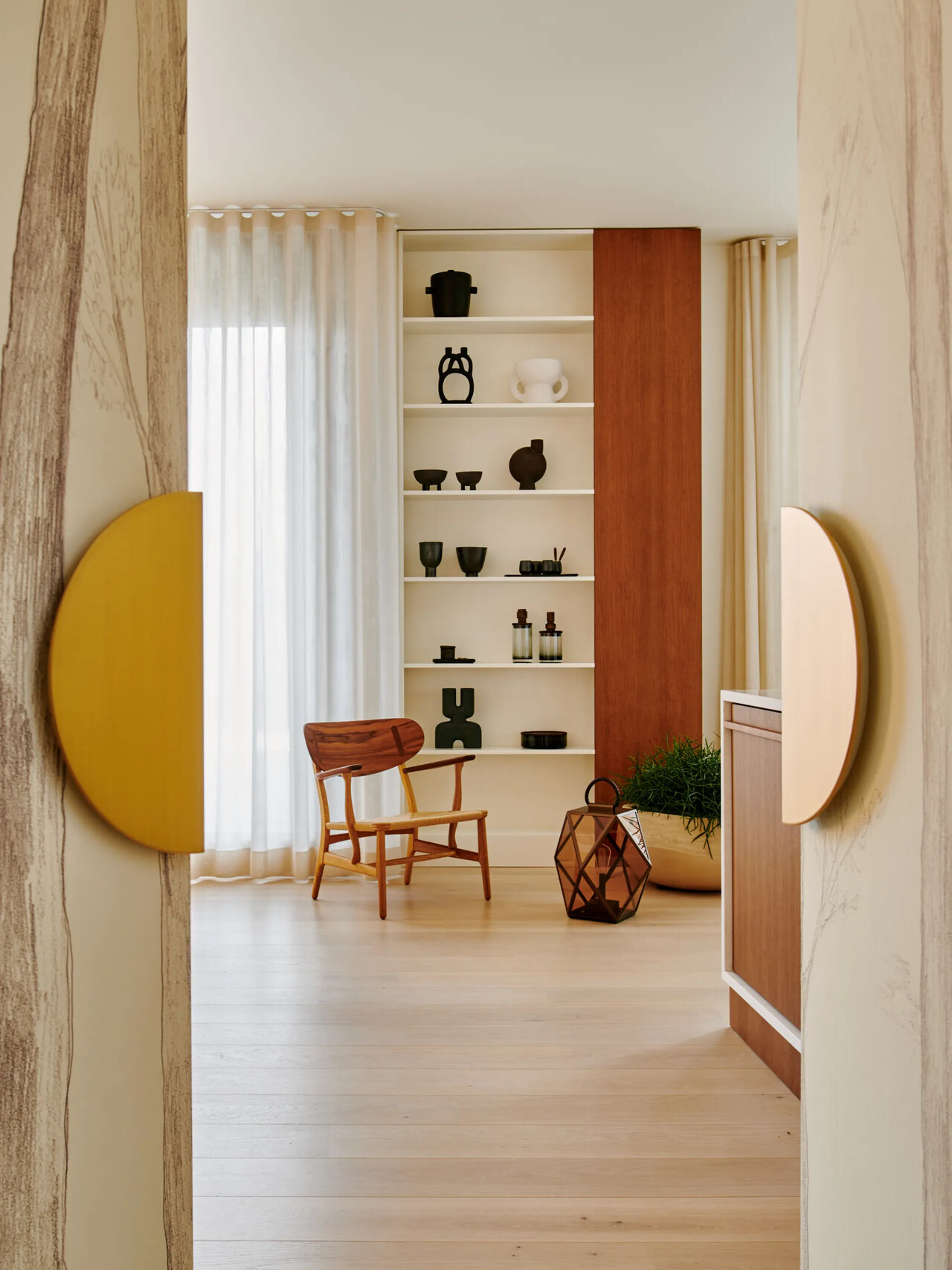
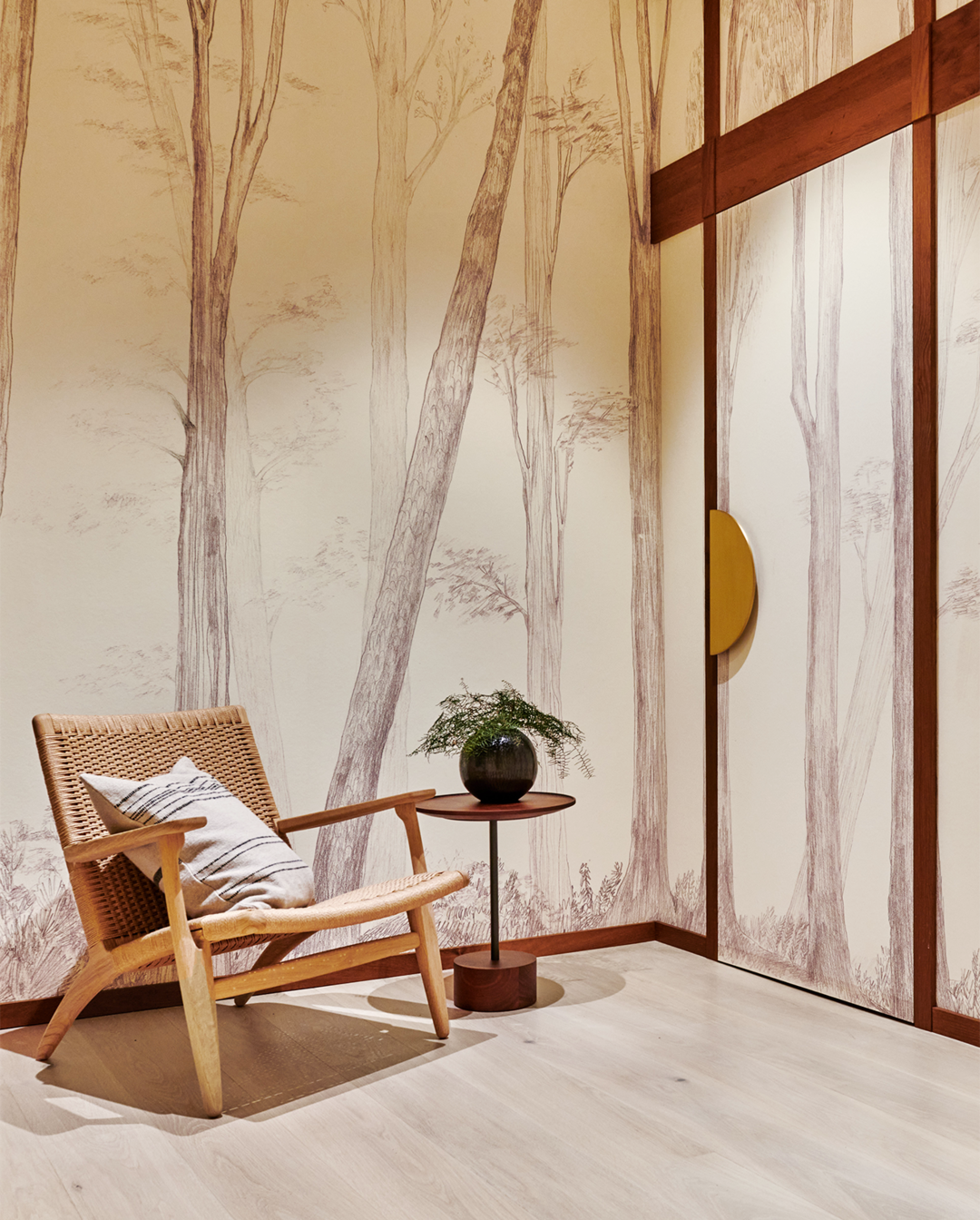
And so we decided to cover the entire entrance area with a hand-painted forest wallpaper, which would transform this central area of the apartment into a world of peace and harmony. To interpret the magic of such a Far Eastern forest with the necessary sensitivity through painting, I commissioned the artist Anna Talens, who in the many years of our collaboration has always amazed me with how much our sense of the beautiful and extraordinary coincides.
 
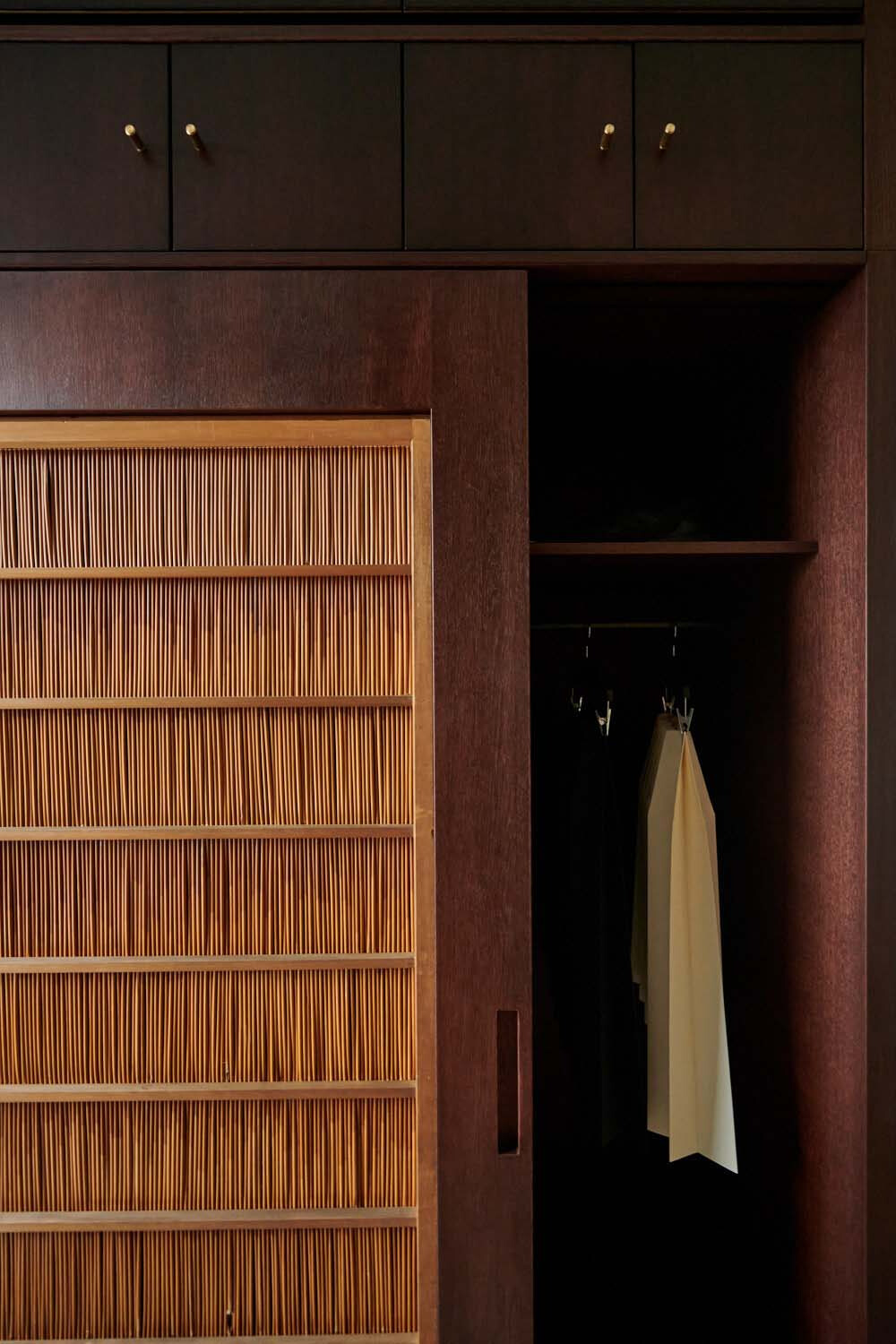
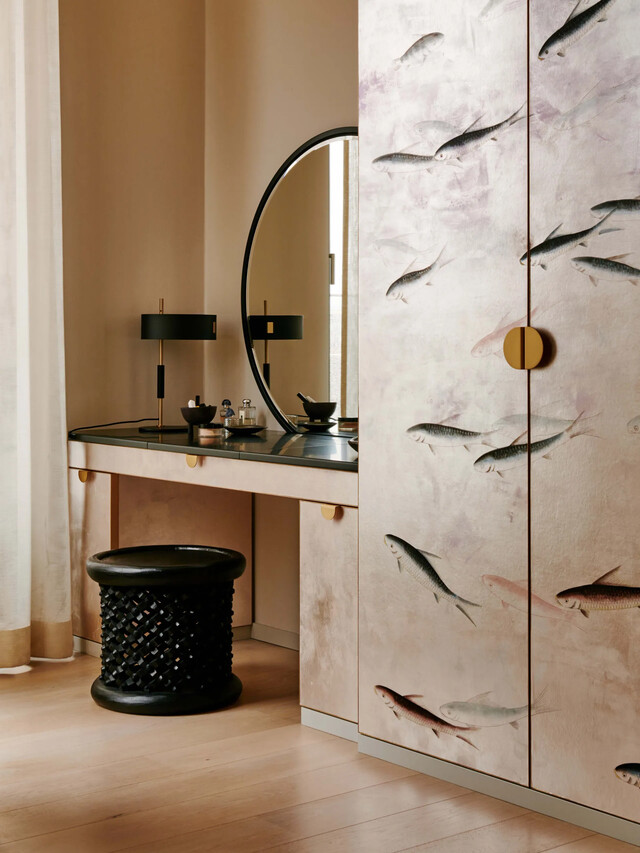
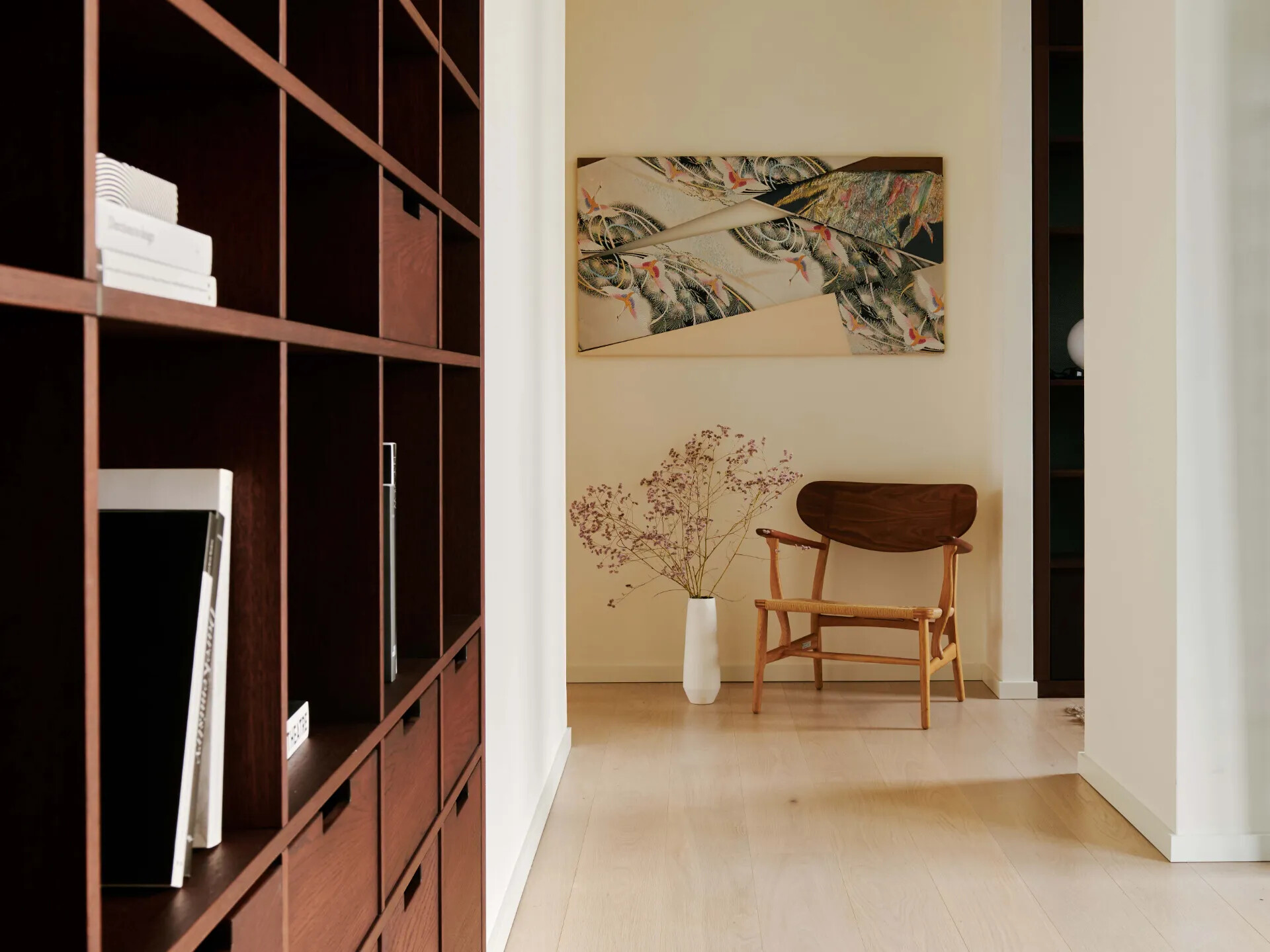
Almost hidden among the trees, the visitor glimpses the contours of five doors that lead into the various areas of life. Turning to the right, one first enters a small realm of tan green that houses the dressing room. There, it is mainly the antique Japanese summer doors that catch the eye, framed in the two sliding elements of a generous built-in wardrobe. From here, the part of the apartment where the owner reads or receives her guests adjoins: the library. An imposing wall of books made of reddish-stained walnut houses old folios and exquisite accessories, which are accessed via a stepladder joined by ornate Japanese wooden joints.


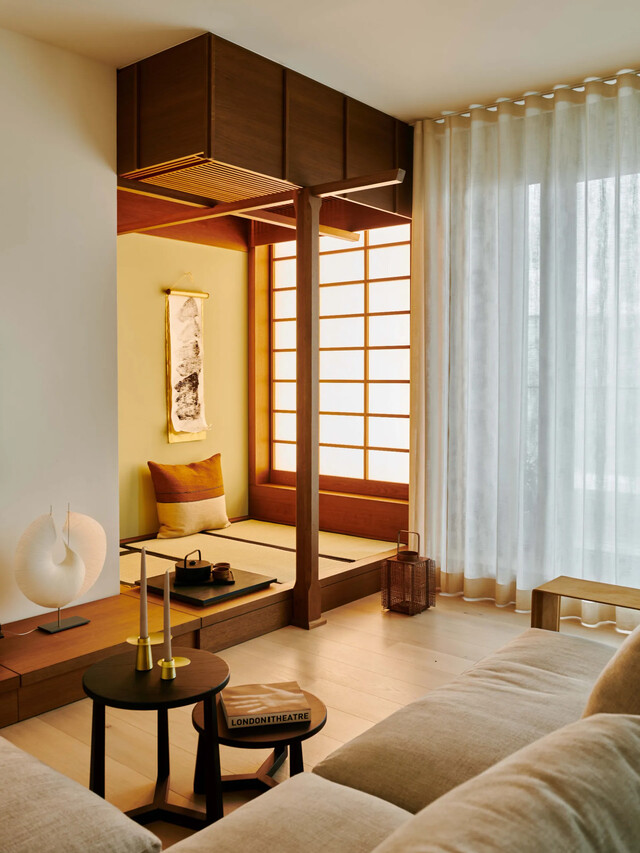
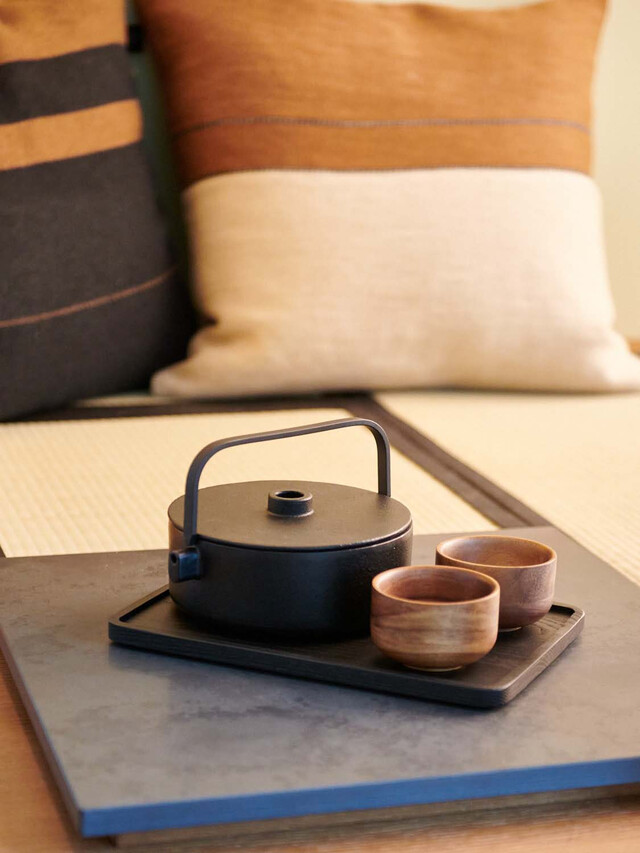
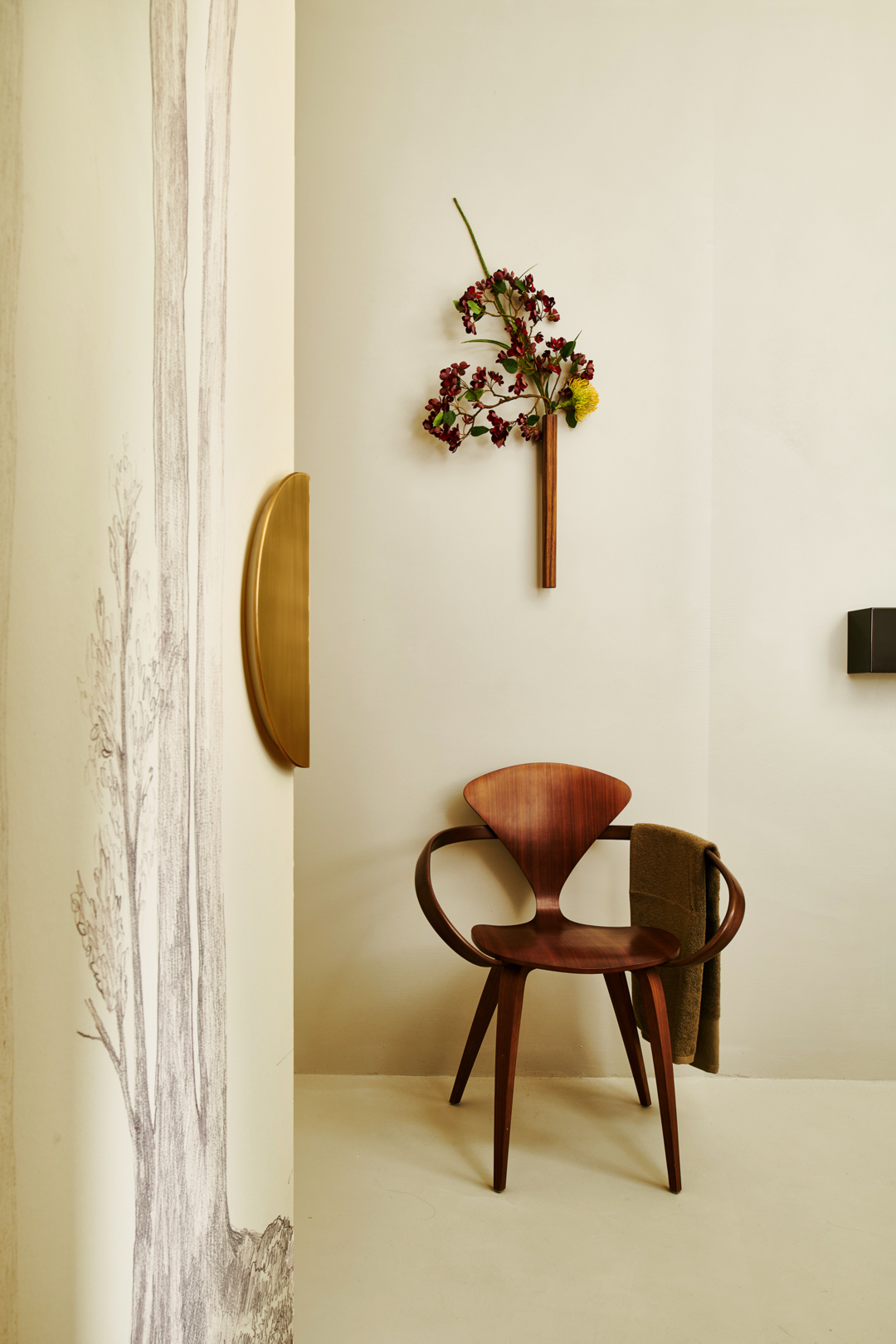
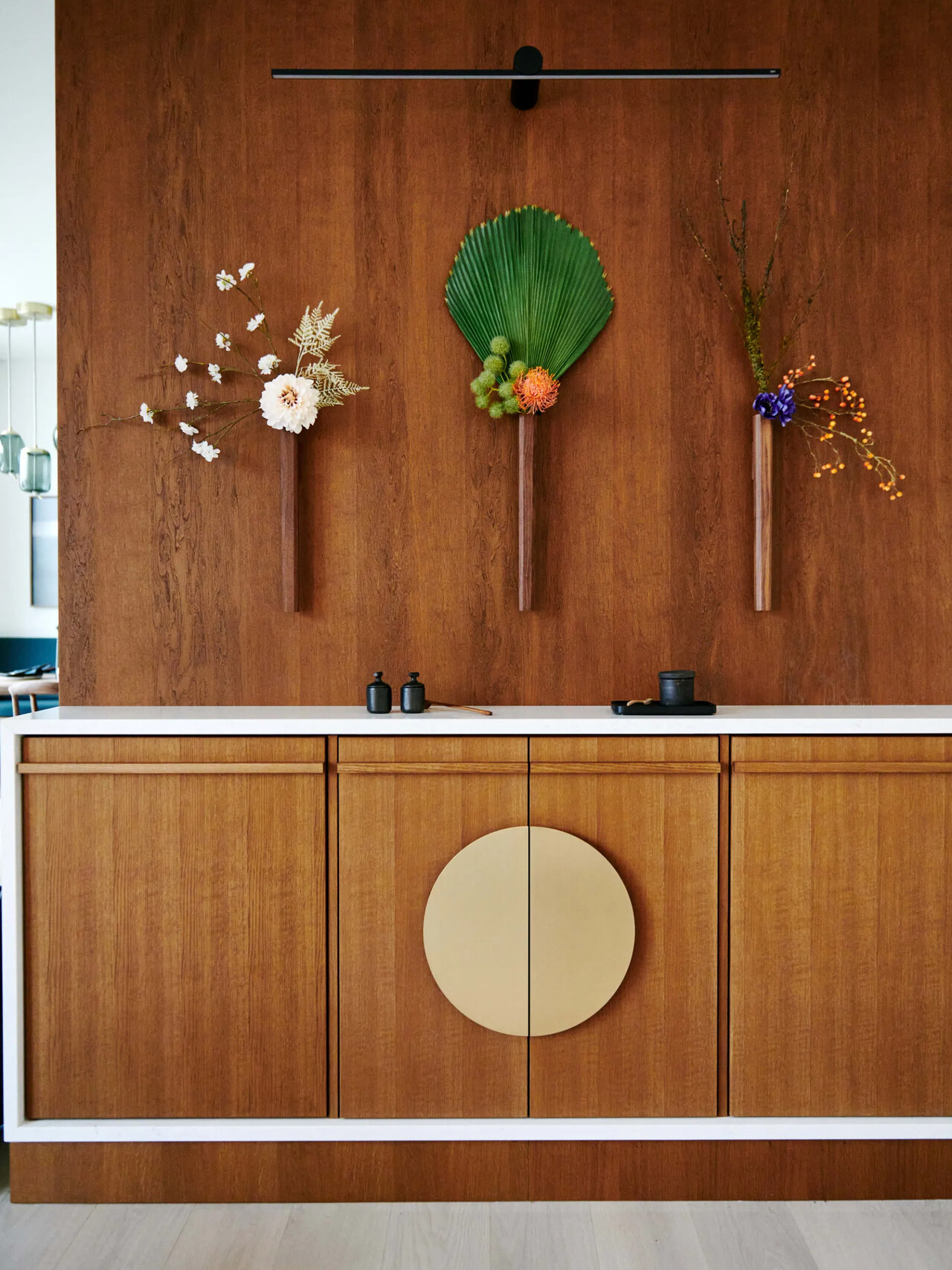
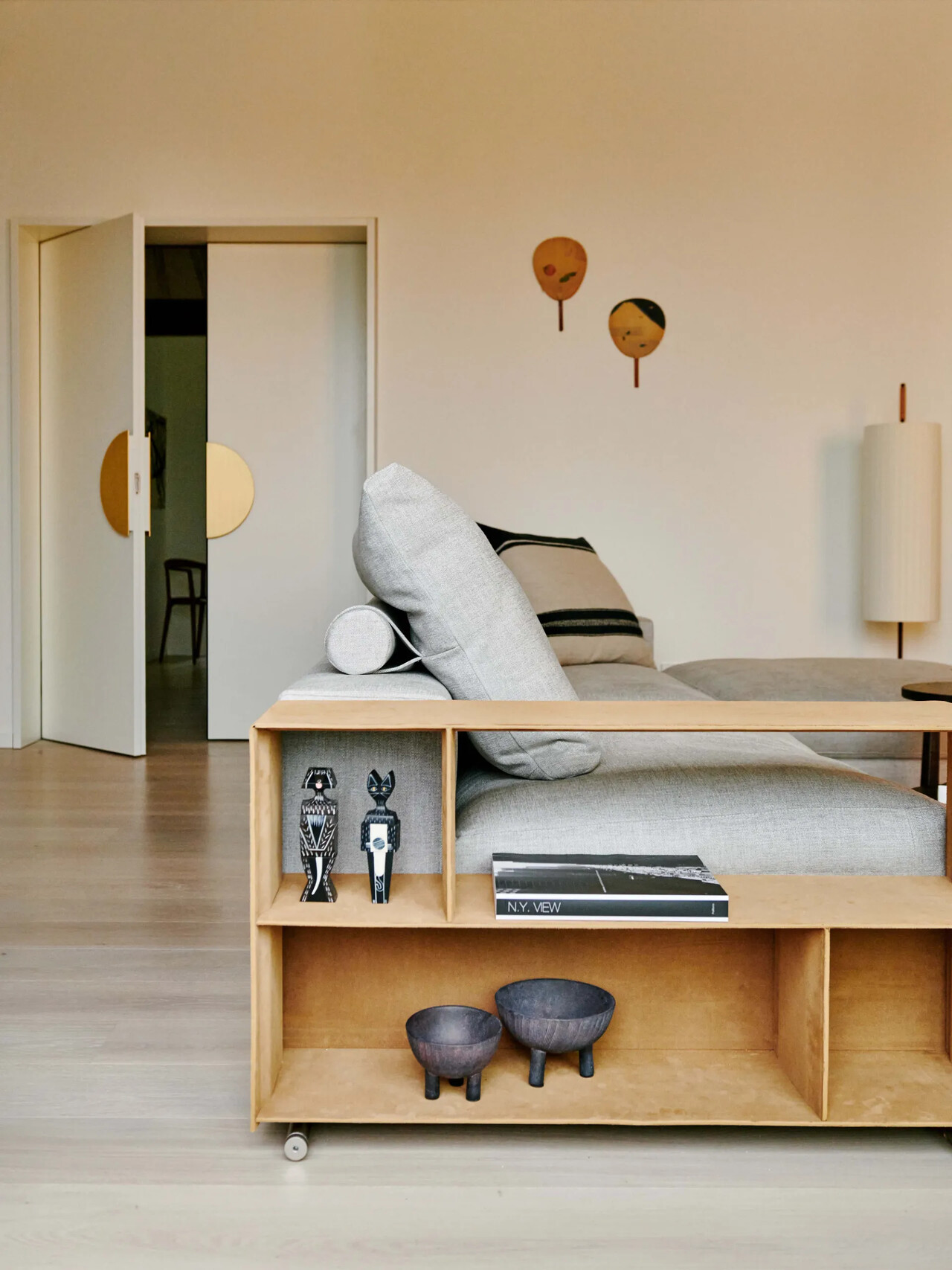
In almost all areas of the penthouse, works of art, objects and ikebanas complete the sensual aesthetic harmony of the furnishings. For example, if you turn your attention from the library towards the chashitsu, the tea corner of the living area, you will touch one of the owner‘s favorite pieces on the way there: the artfully folded belt of a traditional geisha robe. In Japanese, the term Chashitsu refers to a space where aesthetic and intellectual fulfillment take place. Traditionally, this is an area lined with Tatamis, where tea and meditation come together in a ritual of inner peace. In the Chashitsu of the Japanese Penthouse, one opens oneself to the beautiful and spiritual immersed in a fantastic play of light created by the reflections of the sun on a wall finished with gold leaf.
 
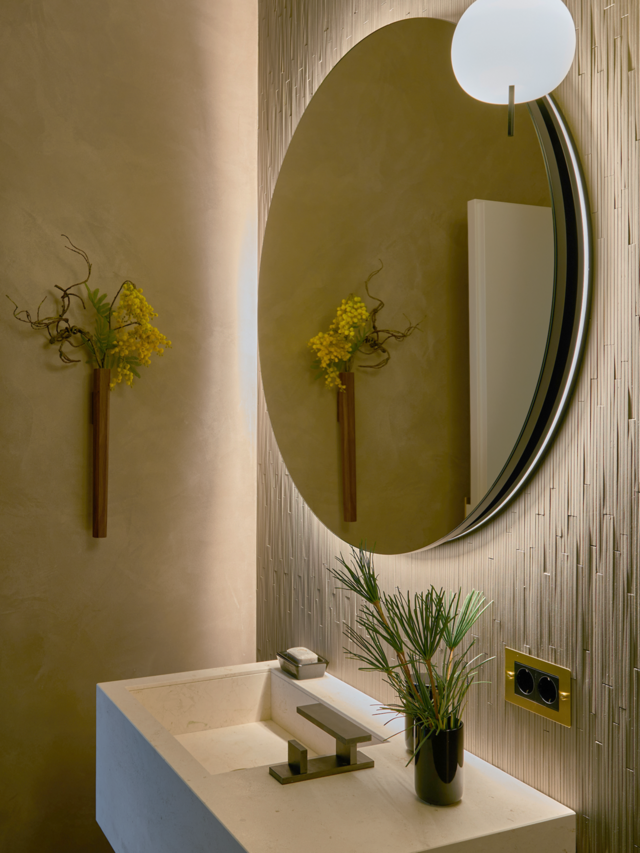
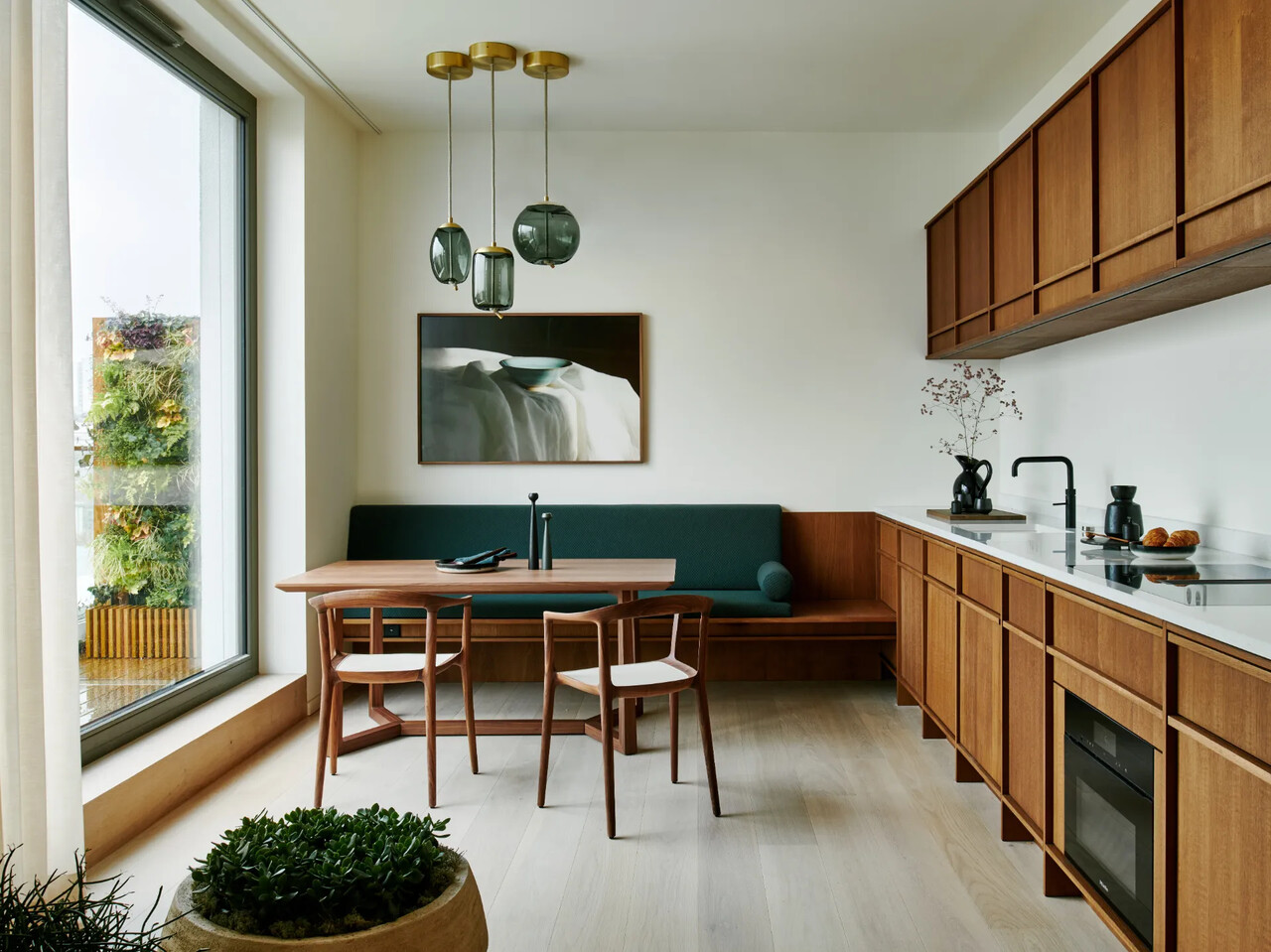
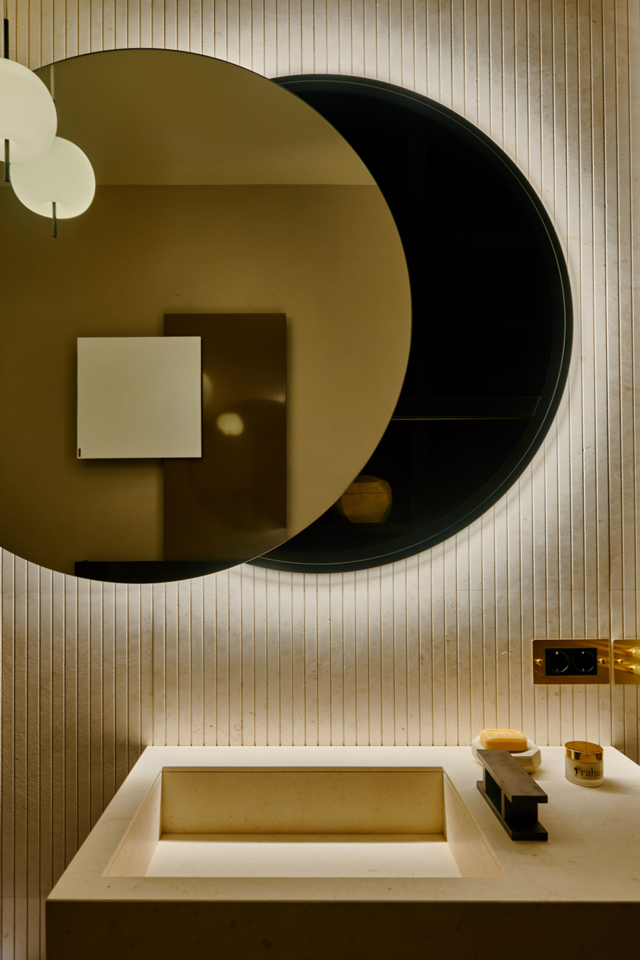
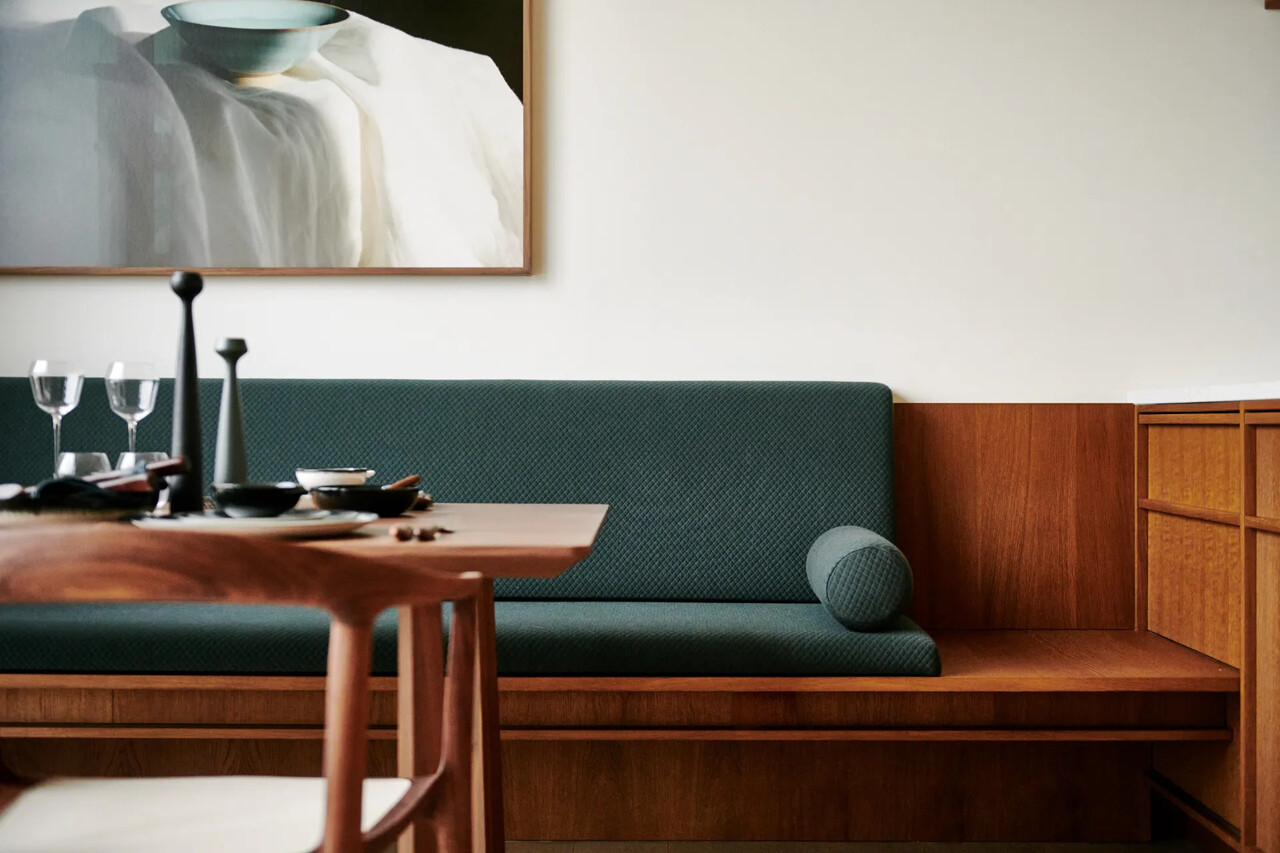
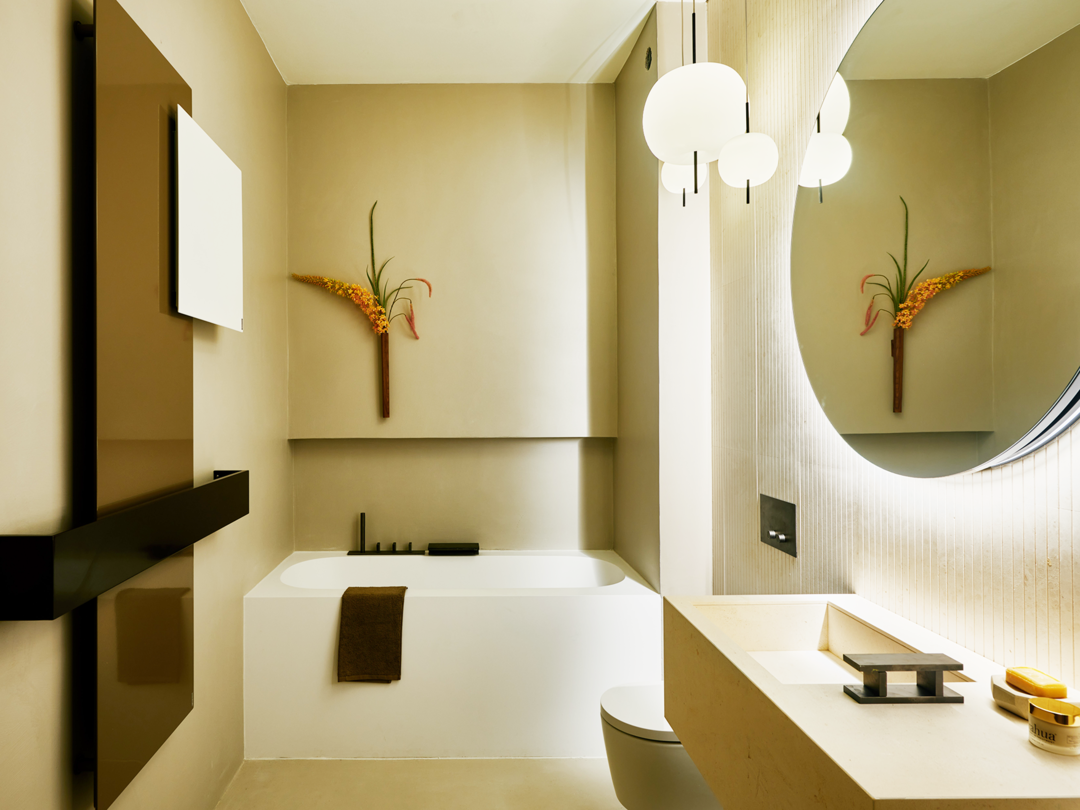
On the opposite side of the living room is the place that the owner calls her “special place“. The dining table and chairs from the Japanese furniture manufacturer Miyazaki form the centerpiece of the kitchen area and impress not only with their special woods, but also with their high-quality workmanship. Passing the two bathrooms with Japanese toilets and Boffi fittings by Korean designer Paik Sun Kim, one reaches what is literally the most dazzling area of the Japanese Penthouse: The Bedroom.
 
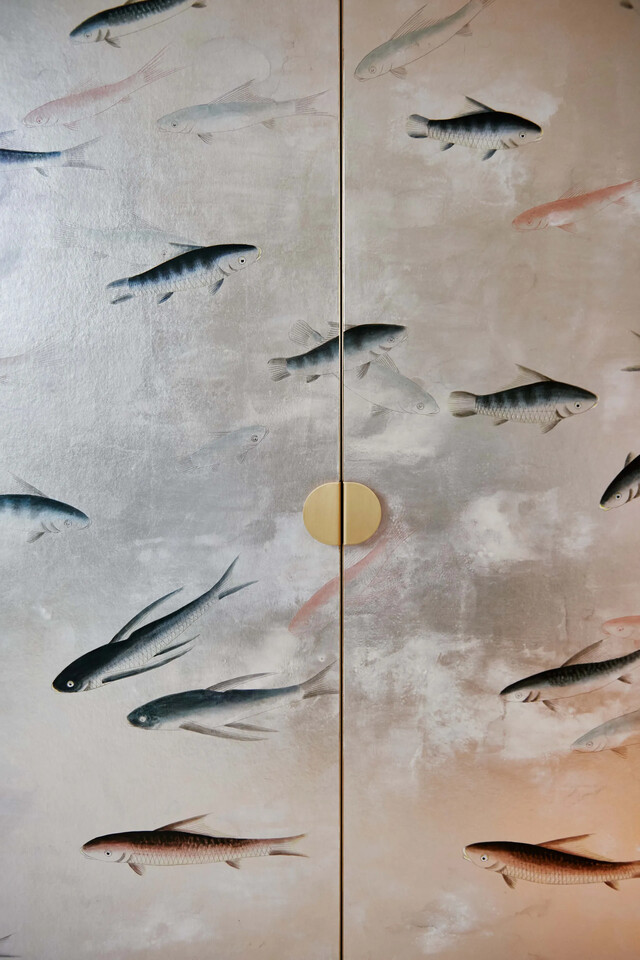
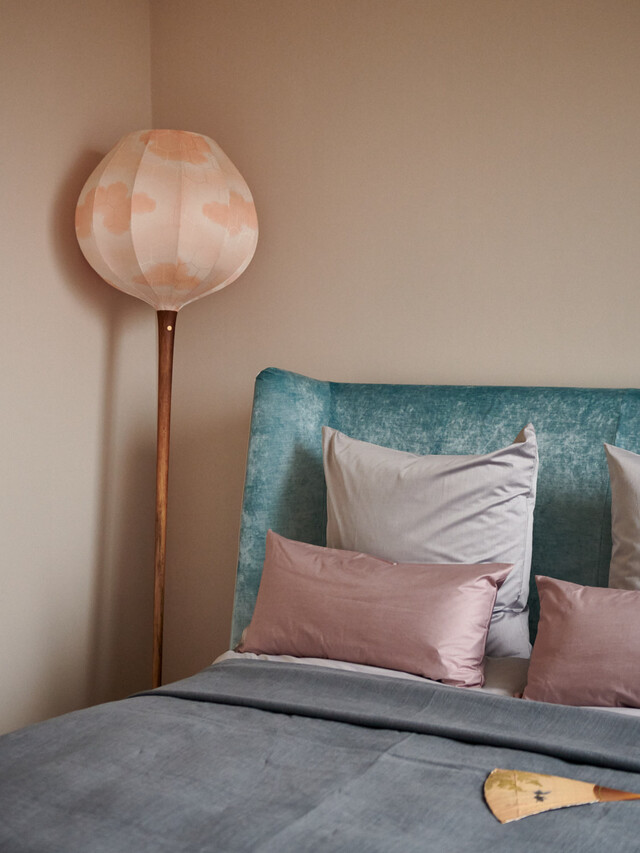
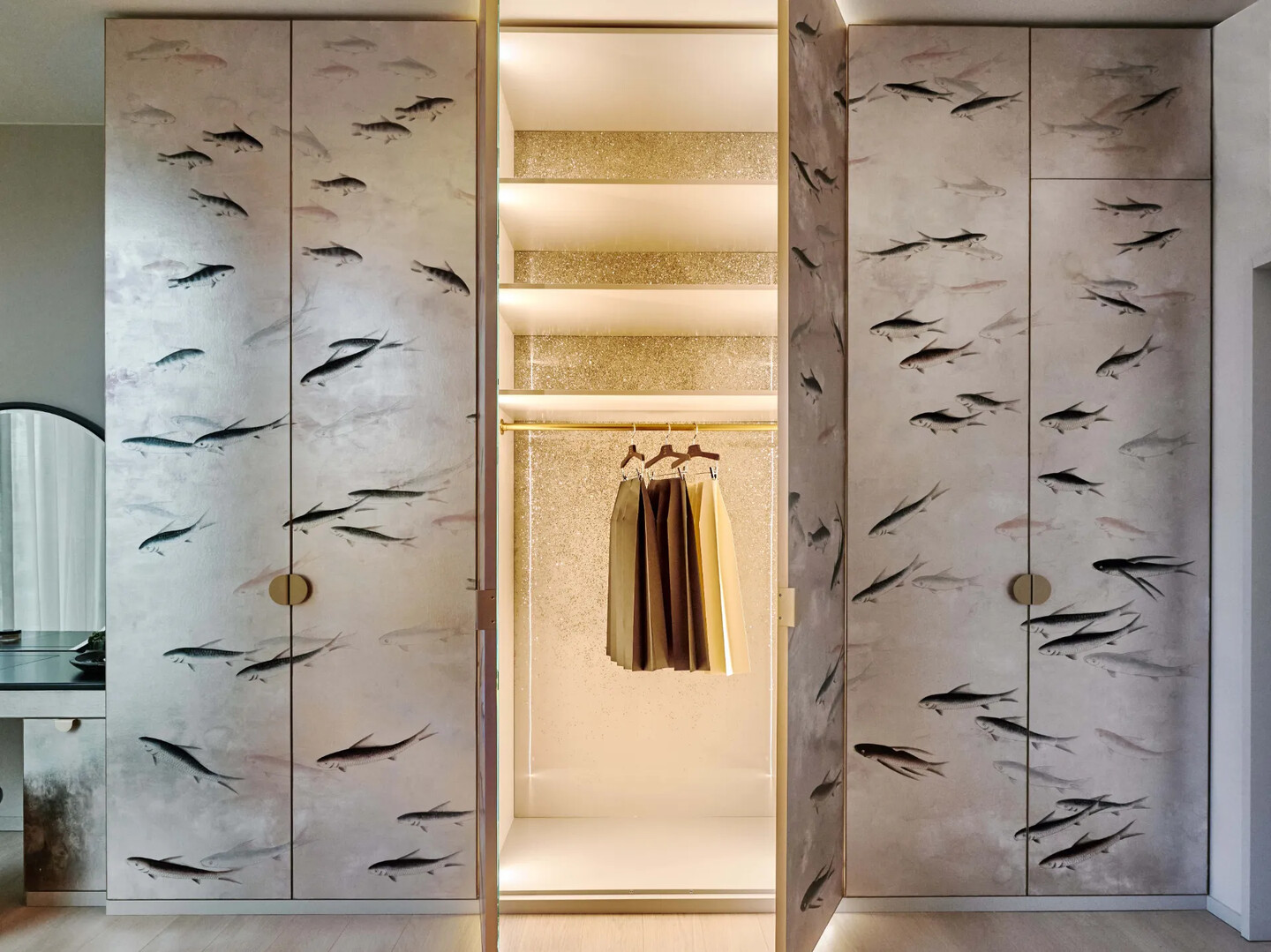
Bathed in light by a light fixture covered in traditional Kimono fabric by architect and object artist Tom Kühne, the mother-of-pearl look of the closet shimmers at the visitor. Its surface is covered with a wallpaper by the English manufacturer de Gournay, through whose iridescent play of light the doors of the wardr creativity.


感官的領域


身為設計師的我們閉上眼睛,想像日本,浮現腦海的是特殊的美學氣息。高貴簡約的形象,如絲、薄如蟬翼的紙張,柔韌質地等精緻元素呈現,亦或花道藝術、木雕藝術。這些印象讓我憶起日本人那對待自己家園崇高尊重的態度。在日本家中不脫鞋,而不尊重或大聲喧嘩,破壞寧靜氛圍更是不可思議的。然而,日本不僅僅是這些。上述想法僅對應距離我們9000公里島群最直接的印象,我們對這島嶼的了解不多,只知道那裡的生活是建立在傳統和諧的基礎上。


而這次我們的業主有幸在那個象徵旭日東昇的國度生活了一段時光,體驗這個迷人世界的脈動。這些年深深地影響她對於美的敏銳度與鑑賞力,最後決定要將她在柏林Spittelmarkt剛購得的頂層,轉化爲一個120平方米的日本寶石。


當我第一次聽到構想及期望時,她們描繪了一個幸福之島,是個讓人心靈平靜的地方。如同在日本蠶蟲對繭的意義。對團隊來說,頂層日本風格的項目是個非凡且美妙的挑戰,特別是客戶對我們的創意發揮沒有任何限制。


在我們開始著手這個設計概念前,必須深入了解日本真正的經典特質。想像將古老的傳統、工藝和藝術情懷融入日本文化精髓的地方會是什麼樣子?


首先,日本是一個沉思、冥想的國度,而日常生活中最重要組成部分,即是與地球上自然棲息地和諧共處。許多日本人從定期森林浴(Shirin Yoku)中獲得這樣的和諧,這種儀式已被證明對我們疲憊的心靈有治癒作用。 那麼,還有什麼象徵比森林更能感性地歡迎道訪者呢?


因此,我們決定以手繪森林壁紙覆蓋整個入口區域,將公寓核心區域轉化爲一個寧靜和諧的世界。為了能生動的以繪畫詮釋這個森林的魔法,我委託了藝術家 Anna Talens。在我們多年的合作中,她總是能栩栩如生地傳遞我們對於美和非凡的感知,而讓我感到無比驚豔。
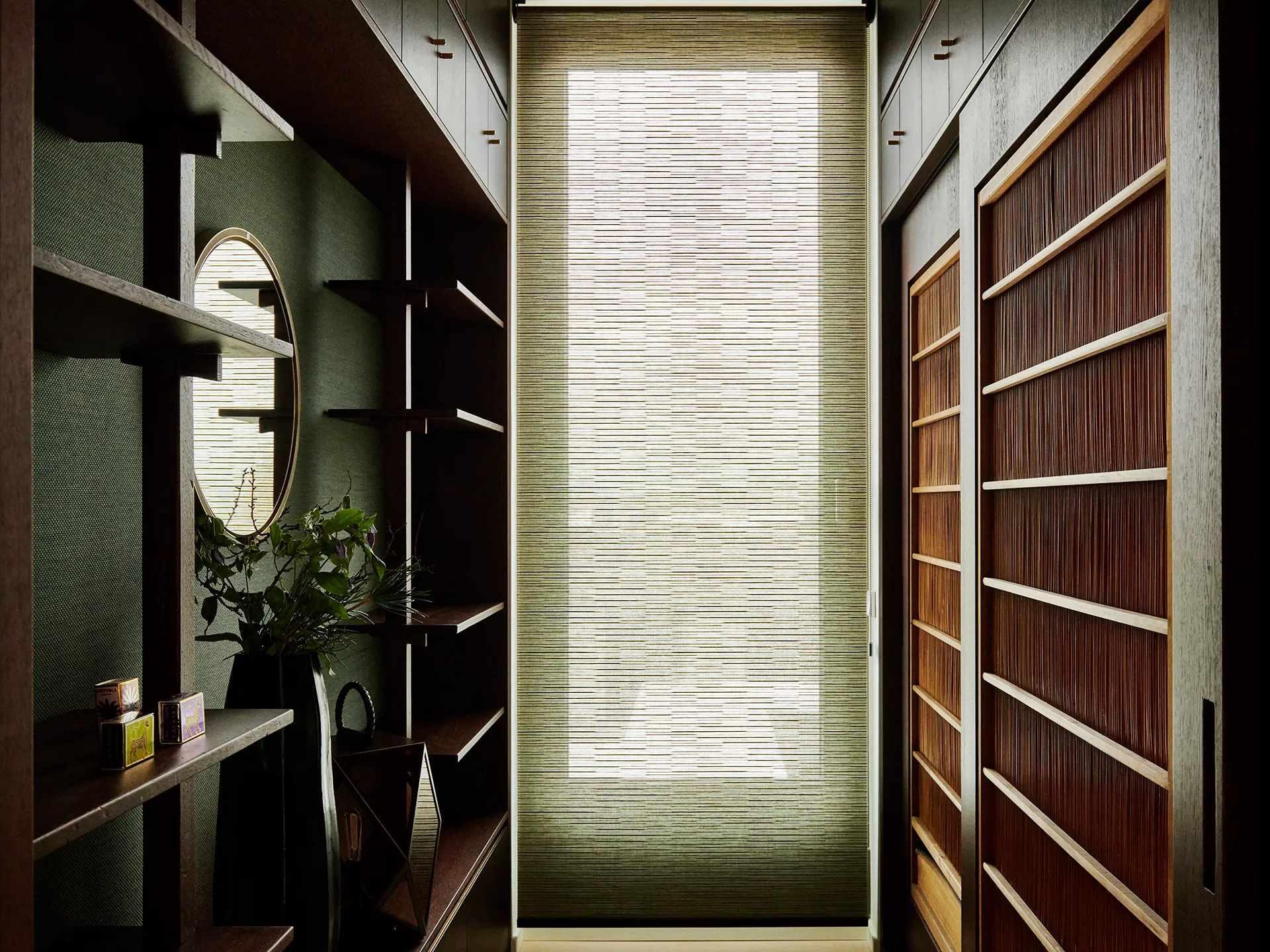
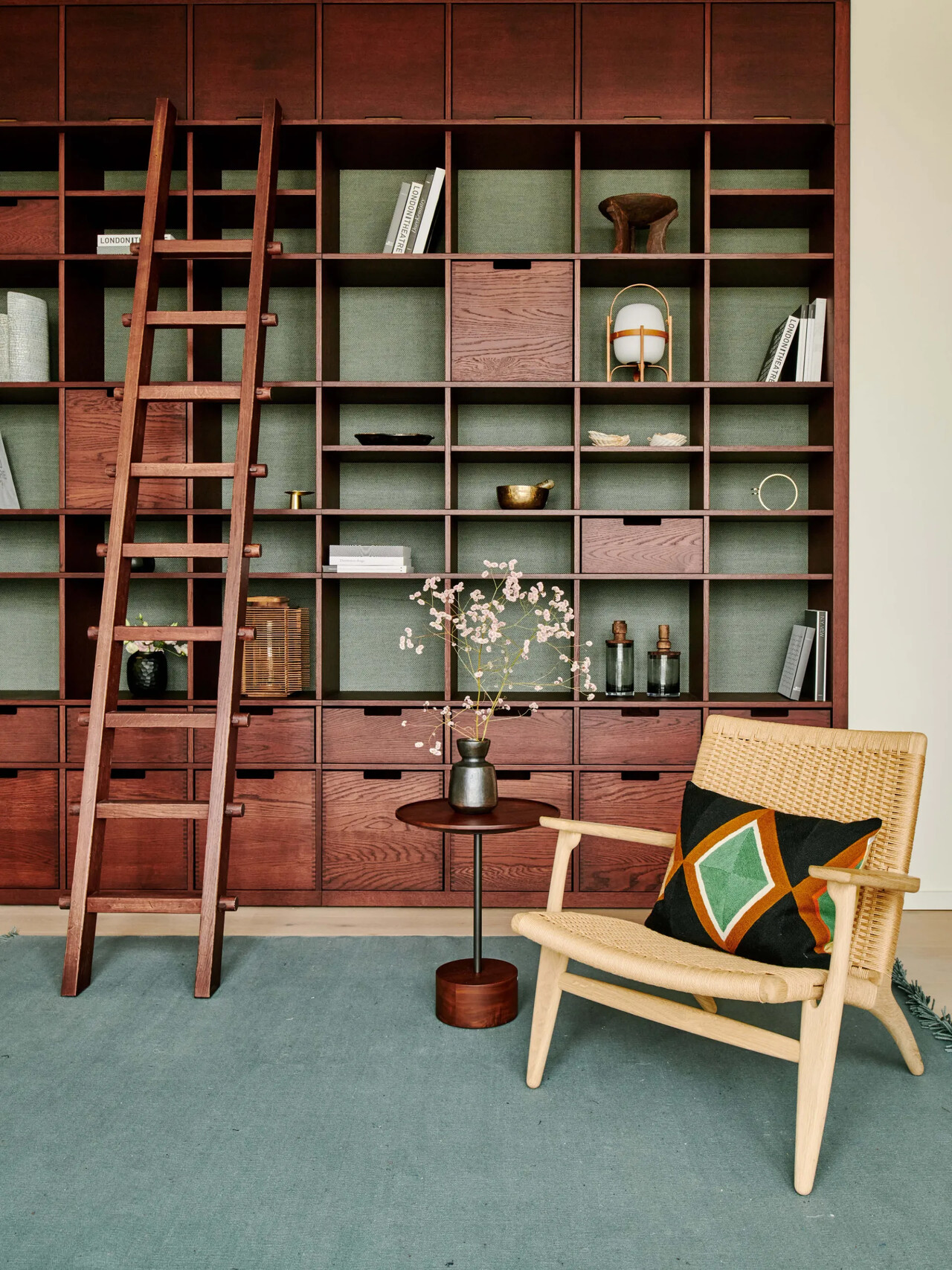


訪客可以瞥見幾乎隱藏在樹木間五扇門的輪廓,它們分別通往各個生活領域。首先,右轉進入一個以淡綠色為主的衣帽間,這裡的焦點是古董日本夏季門,被鑲嵌在寬敞內衣櫃的兩側滑動門上,與此接鄰著屋主閱讀或接待訪客區域:閱讀室。一面紅棕染色的胡桃木製成壯觀的書牆,收藏著古老的大型書籍及精緻的配件,它們可以藉由精緻的日本木接梯來取得。


藝術品、收藏品和花道(ikebana)點綴家具的感性美學增添和諧,佈及空間各處。從閱讀室轉向茶室(chashitsu)時,能夠看見與屋主最喜愛的作品之一:傳統藝伎長袍上精巧摺疊的腰帶。在日語中,"Chashitsu”意指審美與智慧充實的空間,品茶與冥想內心平靜的儀式結合,承襲傳統精神將空間以塌塌米鋪置。頂樓的茶室,當陽光反射在金箔牆面時,創造美妙的光影,沉浸與感受在美的精神當中。
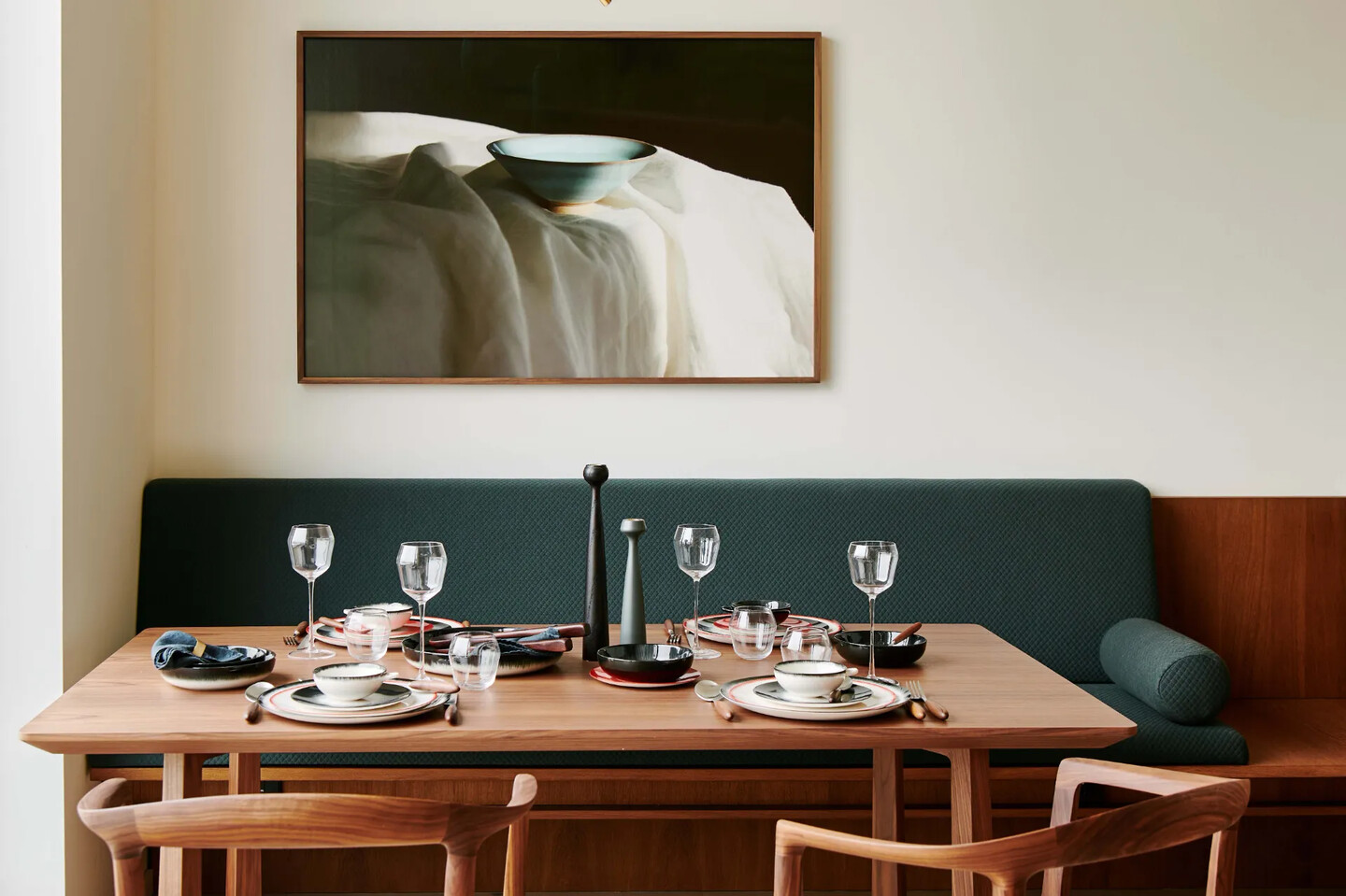
業主起名她的“特別地方”位在客廳另一側。以日本品牌Miyazaki的餐桌椅作為廚房區域的核心,此品牌不僅以特殊木材吸引人,更展現高品質的工藝。穿越兩間配置日本馬桶及韓國設計師Paik Sun Kim設計的Boffi配件的浴室後,將來空間中到最耀眼區域:主臥室。
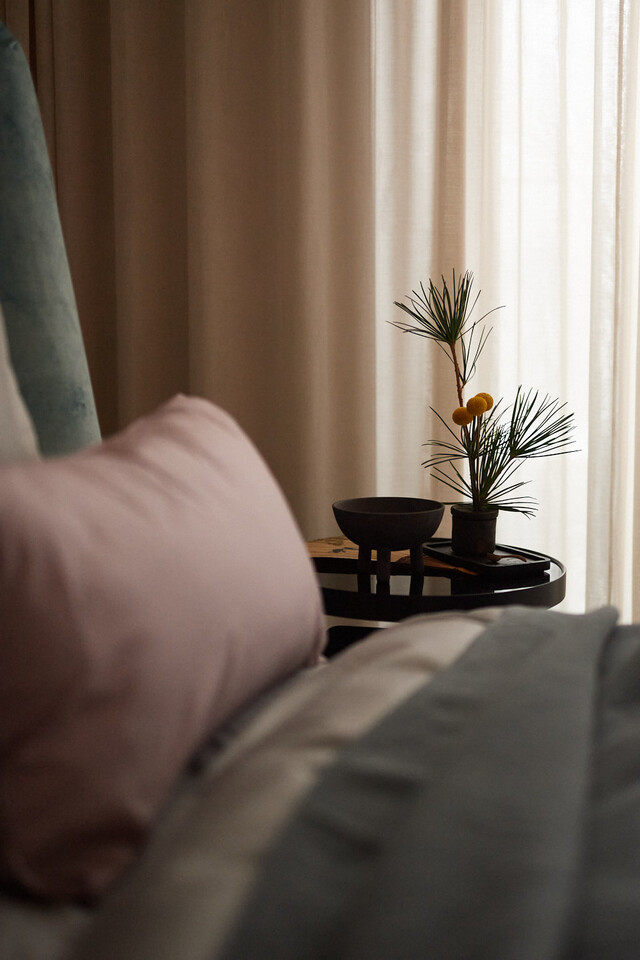


選用建築師兼藝術家Tom Kühne所設計的燈飾,以和服布料包覆的燈具照亮空間,光線照射在衣櫥外觀的珍珠貝上,其柔光色彩閃爍,呈現在訪客面前,表面覆蓋著英製de Gournay壁紙,結合光影遊戲,勾勒衣櫥門上手繪的魚, 神秘又生動的帶入生活中。


對於CARLO來說,此項目的委託使我們能夠展現實力。沒有什麼能比得到客戶充分的信任感受還要棒,業主的放心交託,使我們得以充分發揮創意來詮釋他的期望。


Architectural and Interior Design |  CARLO BERLIN   @carlo.designstudio
  • About
  • Privacy policy
  • Track Order
  • Customer
  • Contact
  • Join us
FACEBOOK
instagram
Language

Copyright © WABISABI ISSUE. 侘寂傳媒有限公司 統一編號:90451315

  • Projects
    • Worldwide
    • Interiors
    • Features
  • Contemporary
    • Exhibitions
  • Record
  • Lifestyle
  • City Explore
  • News
  • Issue
  • About
  • Privacy policy
  • Track Order
  • Customer
  • Contact
  • Join us
Language