A Relaxing Residence with Garden of Light
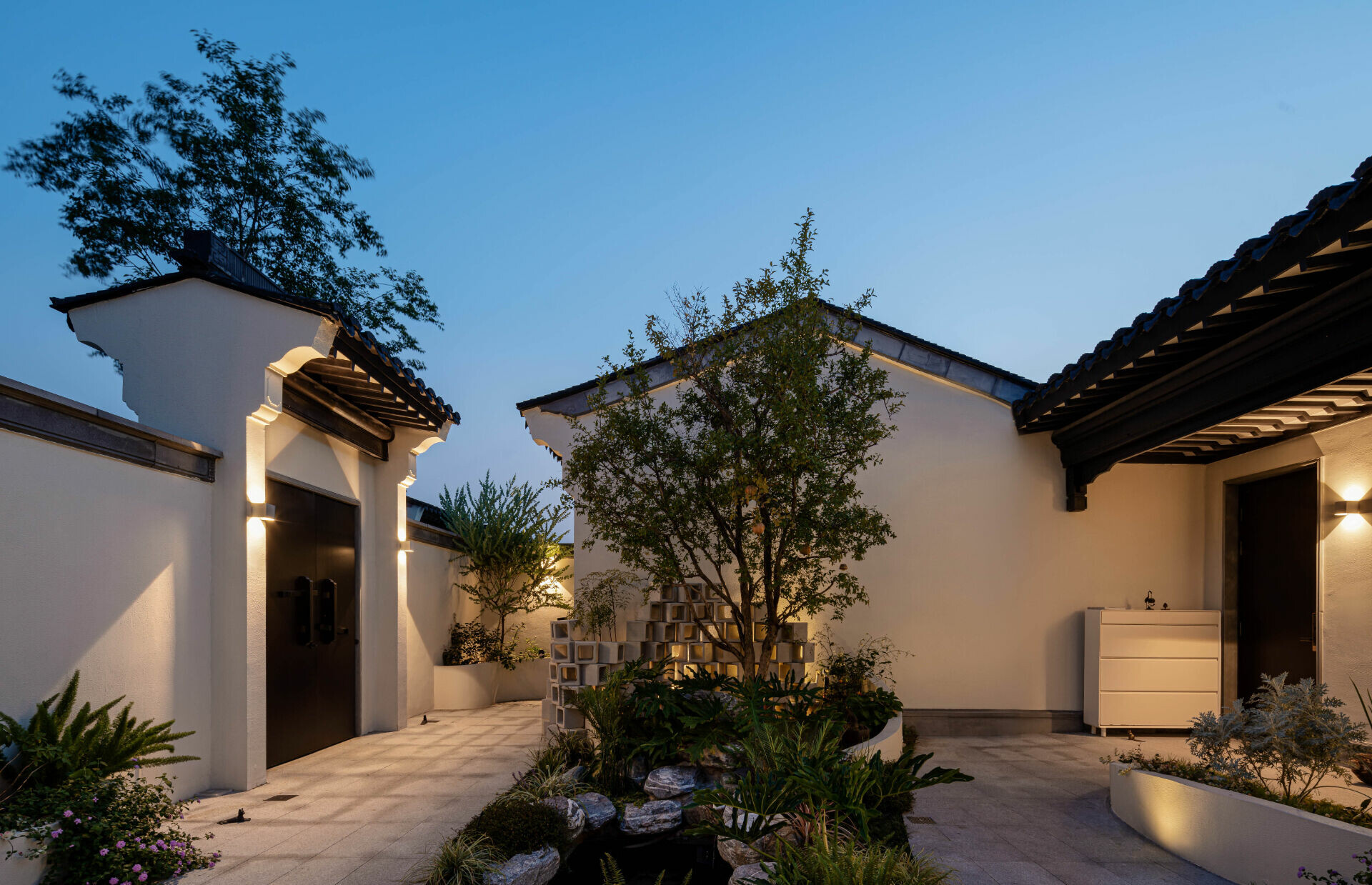
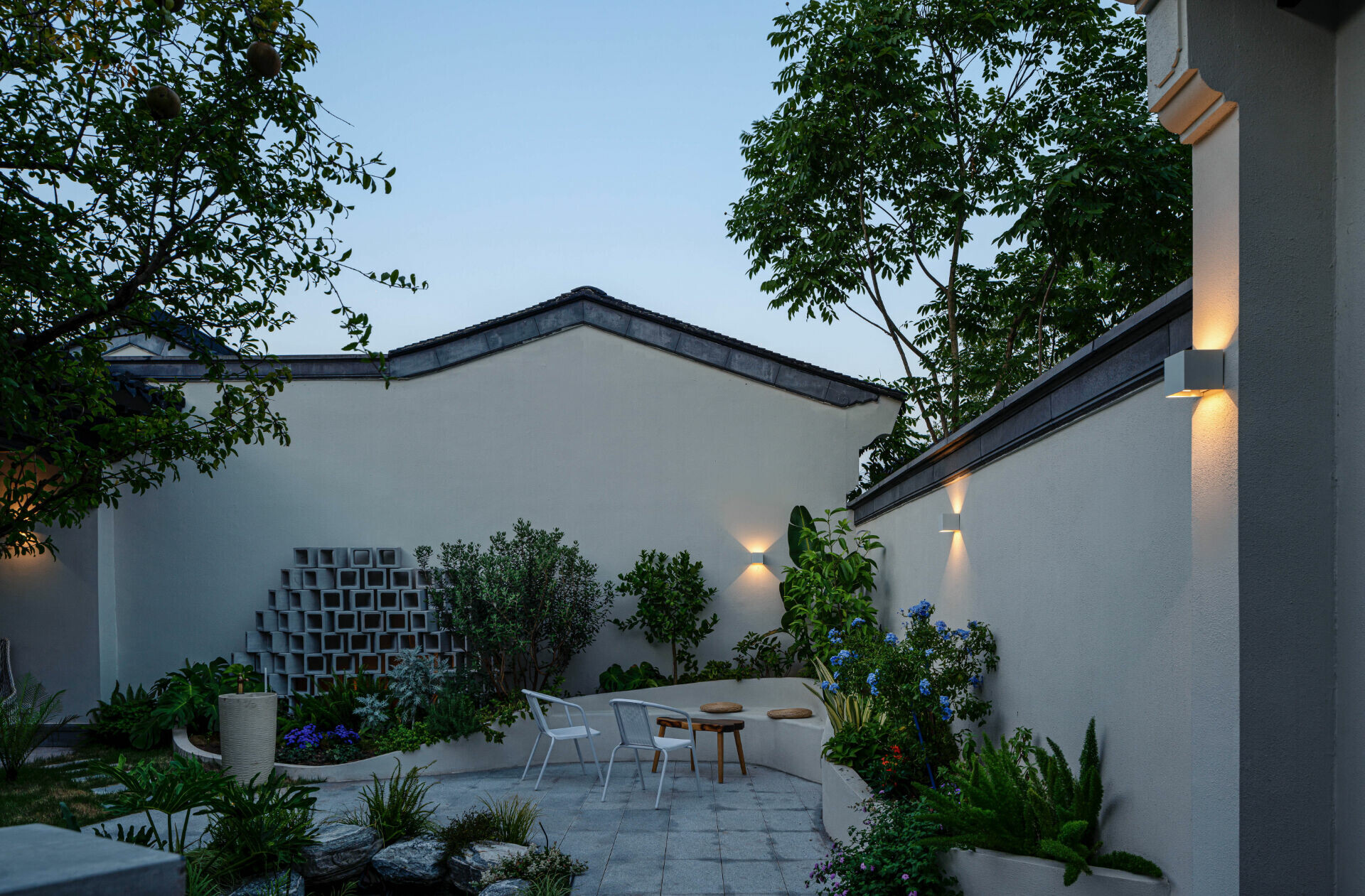
The story begins with light, which connects architecture and garden. Walking through the scenery, the overall layout emphasizes winding paths leading to seclusion, built around water, with an entrance that opens to a gentle and winding path and a deeply profound scenery. Buildings are hidden in the landscape.
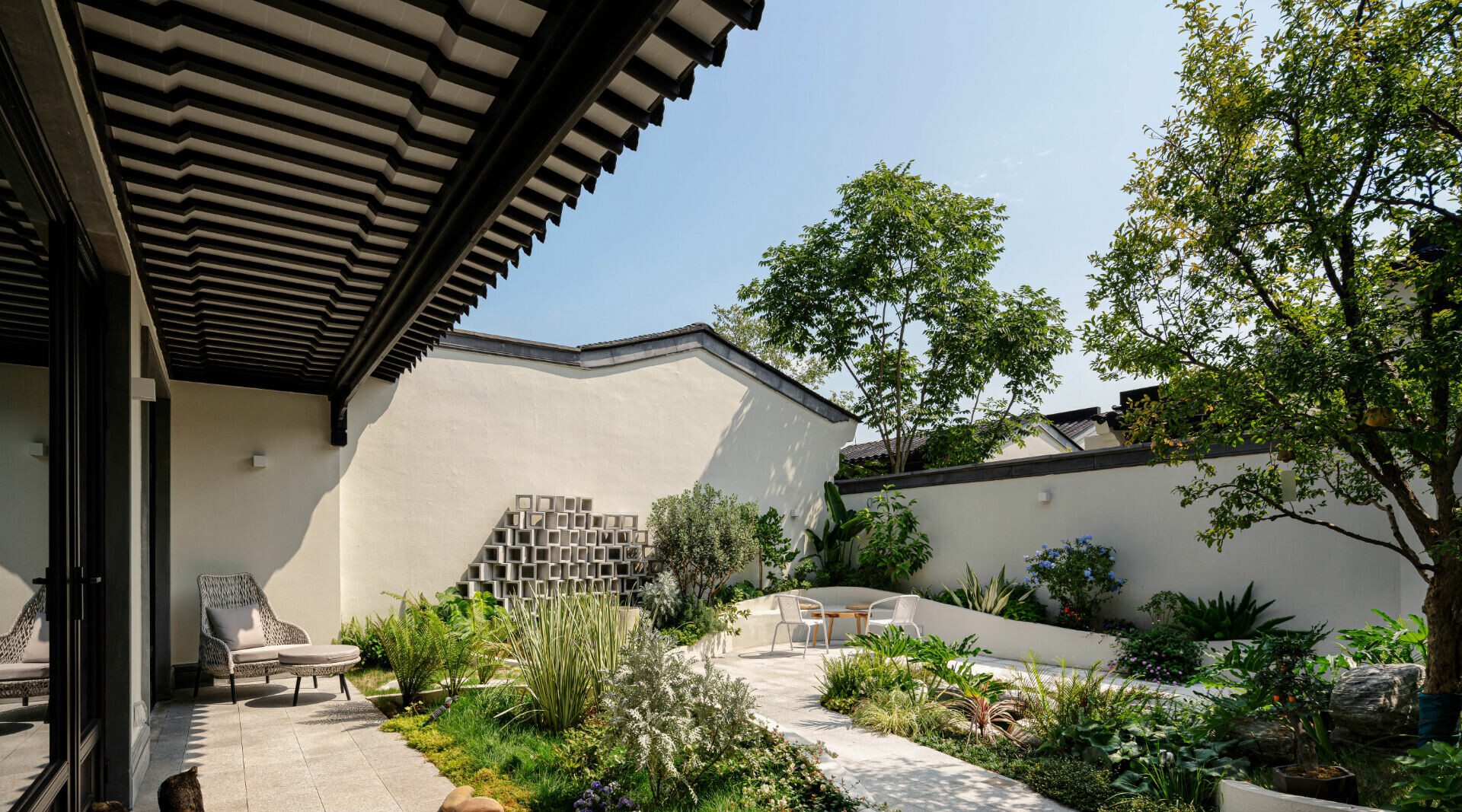
The center of the courtyard features a natural cascading waterfall, which serves as the main entrance feature, integrated with plants and unique rocks. This breaks through the limited internal space of the courtyard, while enriching its layers and organizing its scenic views within the visible range. Through limited views, the garden expresses the endless poetry of natural landscapes. Meanwhile, the design team uses innovative techniques to create "landscapes on walls using stones" with digitally programmed modular hollow bricks, bringing the naturalistic style of the traditional era into the modern world. By setting up leisure seats at multiple angles and levels, utilizing the surrounding landscape of mountains and plants to create different visual effects from every angle, the design blurs the boundaries between the scenery and the frame, merging the "garden" and the "villa" to create a complete picture——a self-contained world.
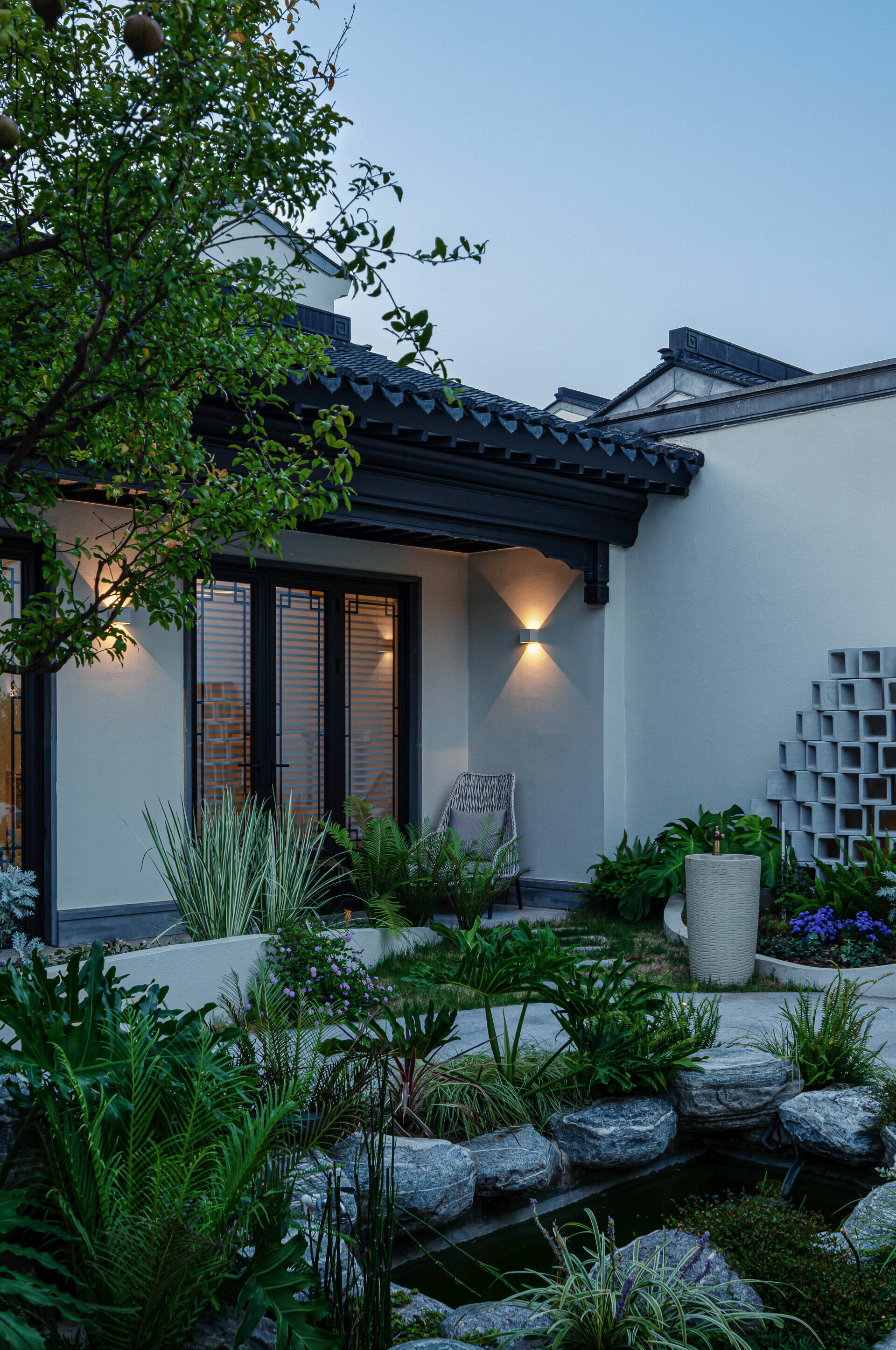
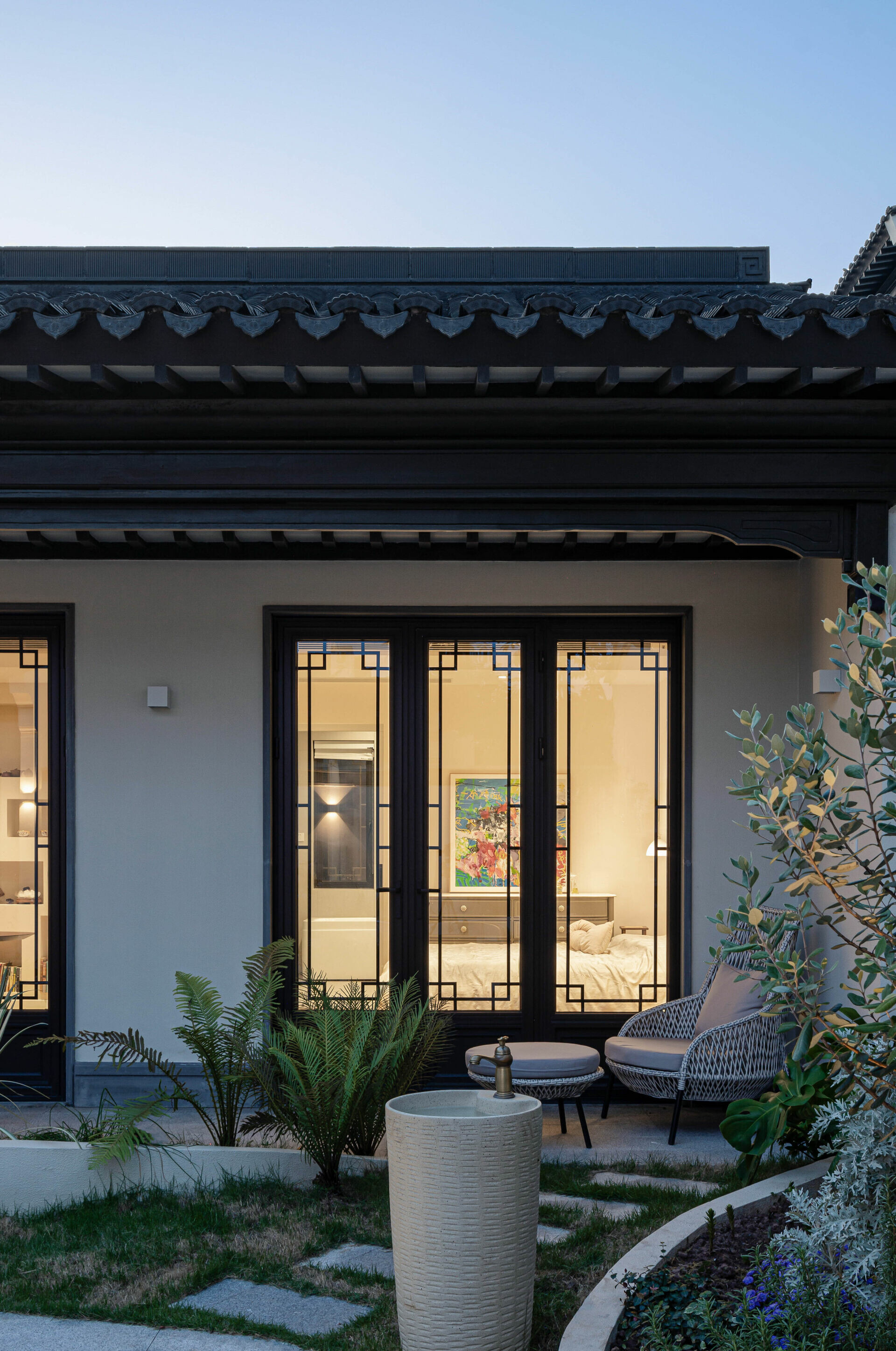
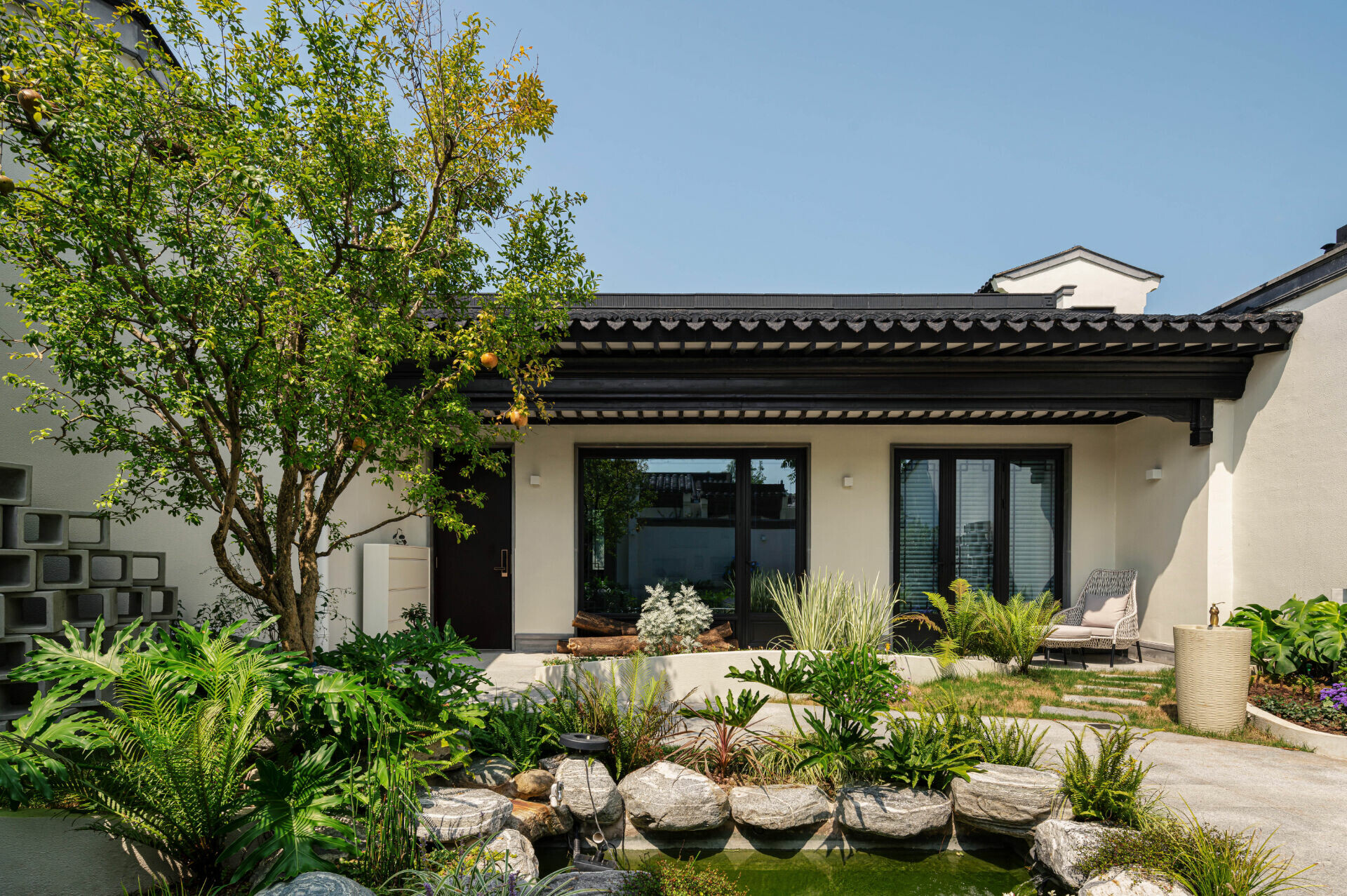
Walking along the winding path, one comes to the end where a building stands. The facade continues the style of Chinese architecture. However, a large glass floor-to-ceiling window tells the story of contemporary life.
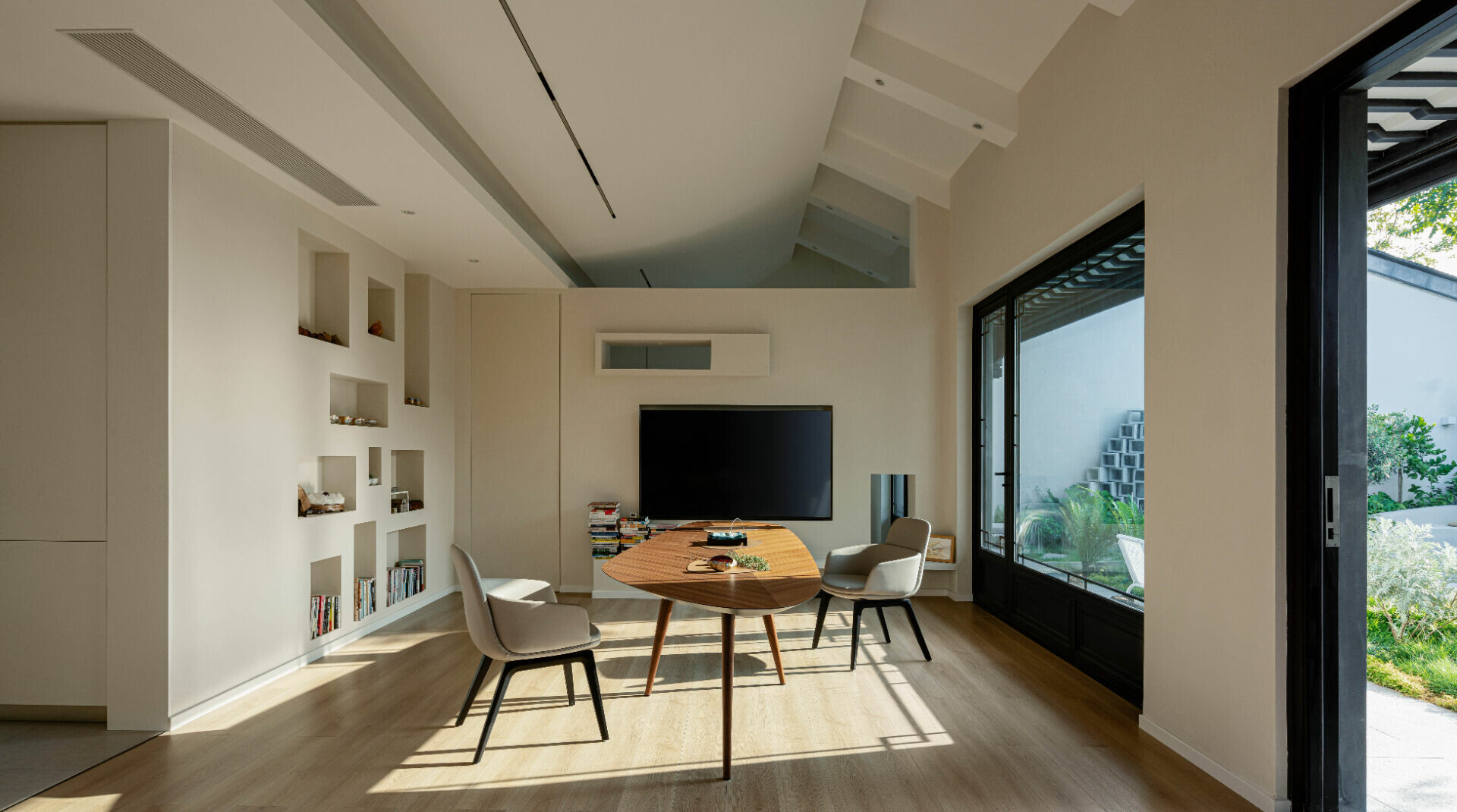
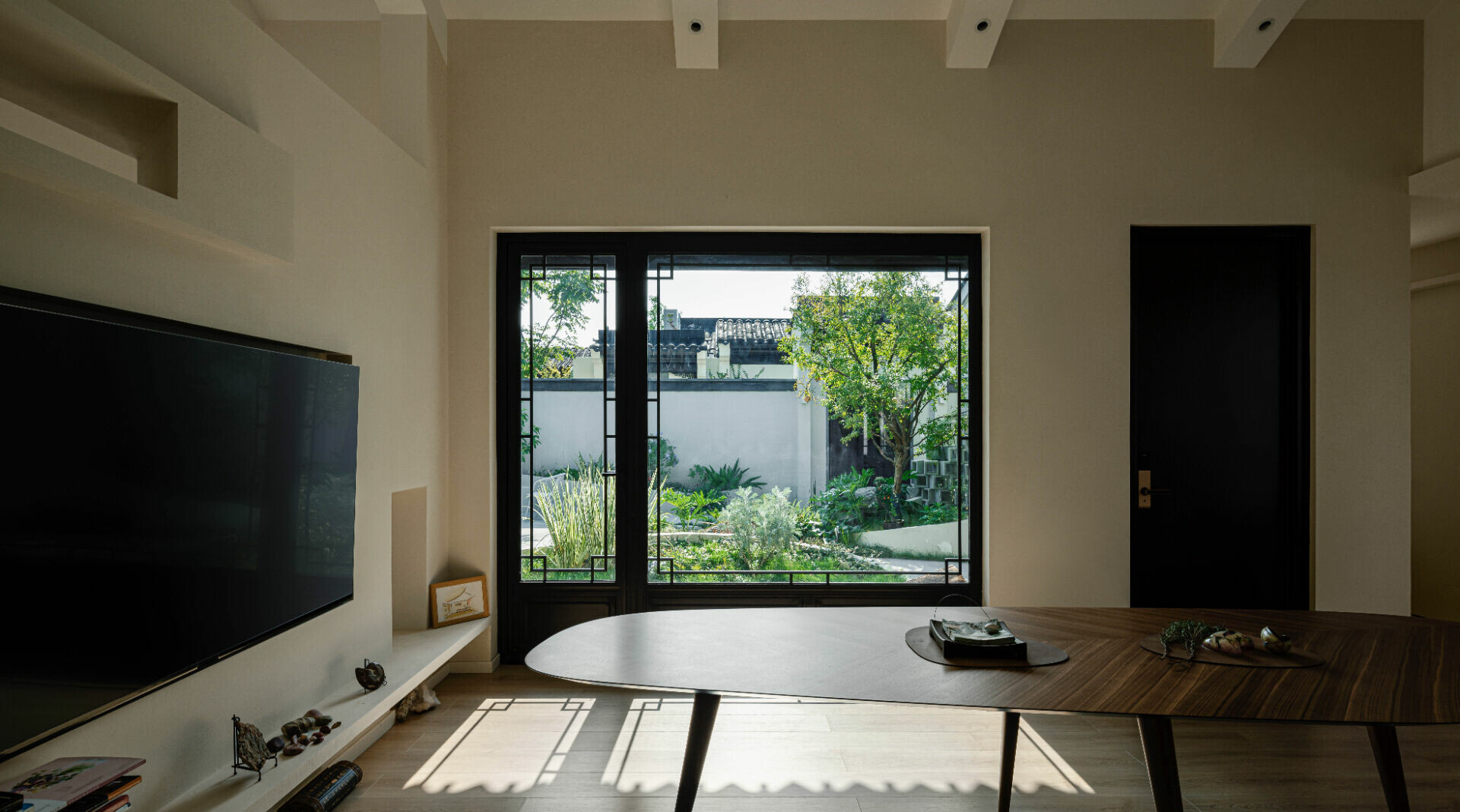
Following the spatial principles of Chinese garden design, which aim to maintain a sense of openness while maintaining boundaries, the design focuses on the outdoors, borrowing the surrounding landscape to expand spatial horizons. Indoor and outdoor spaces seamlessly blend together, seamlessly connecting them to the larger landscape. Inspired by Le Corbusier’s masterpiece Chapelle Notre-Dame du Haut in Ronchamp, the design reinterprets the essence of traditional Chinese architecture through a modernist lens.
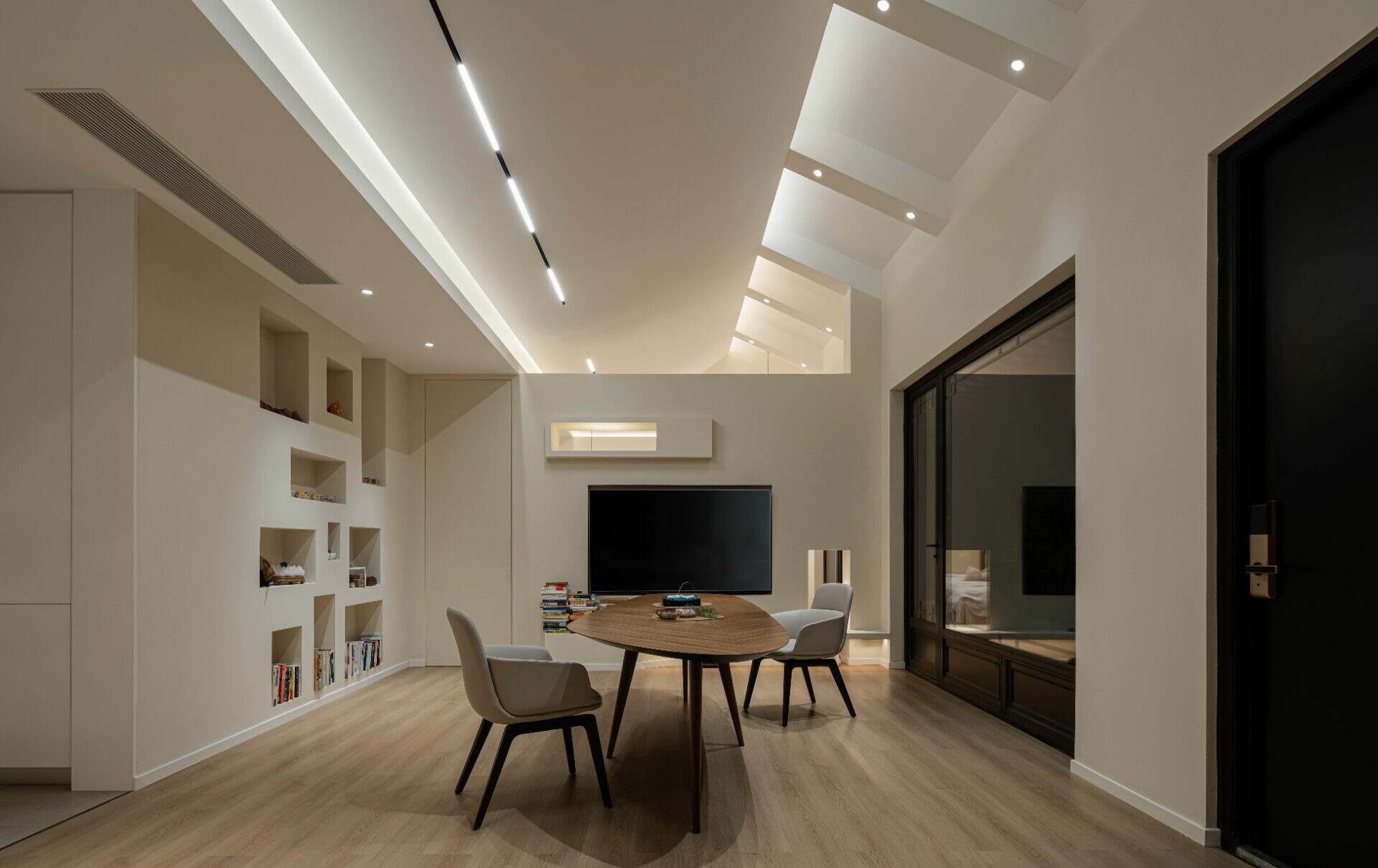
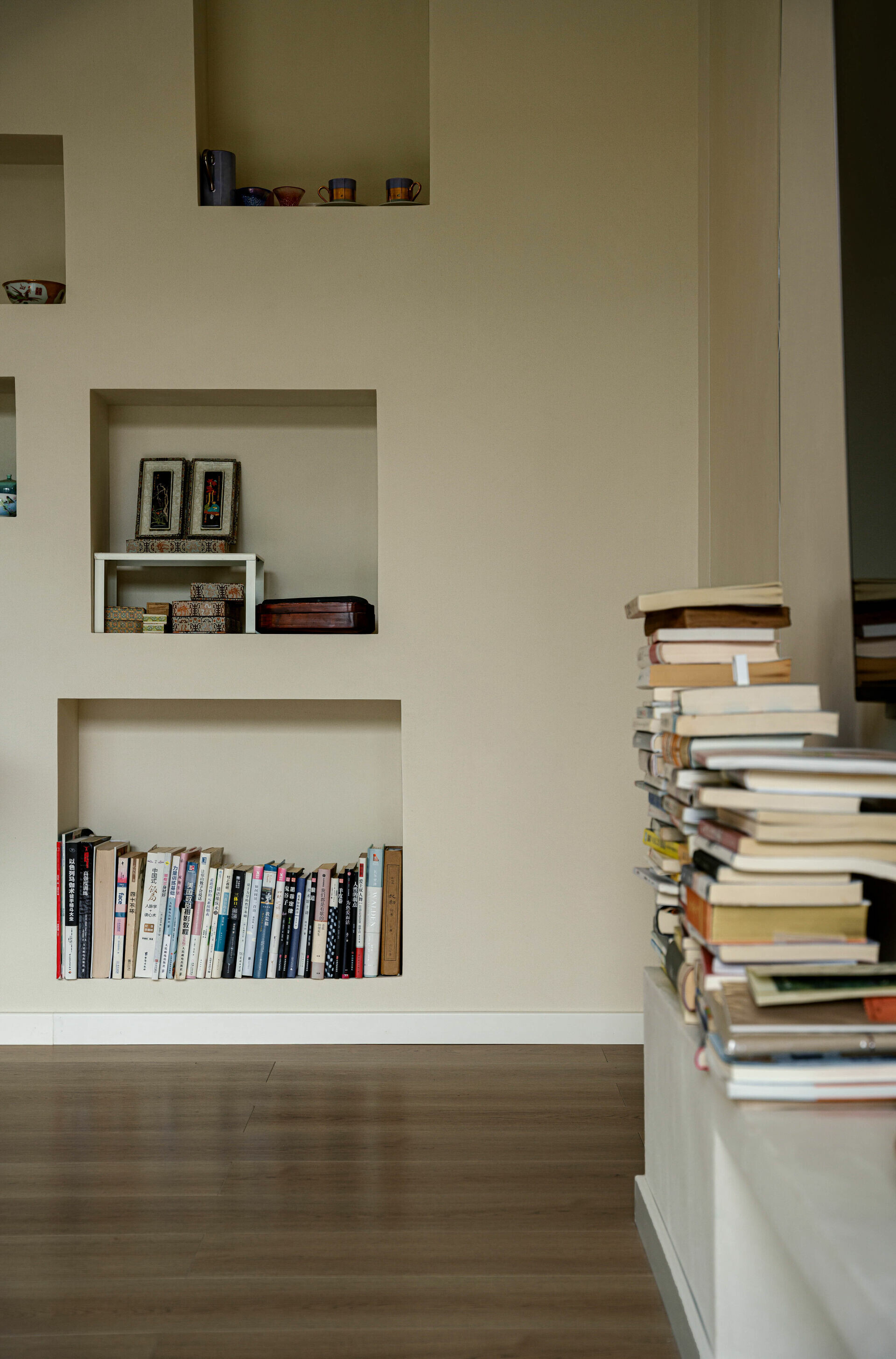
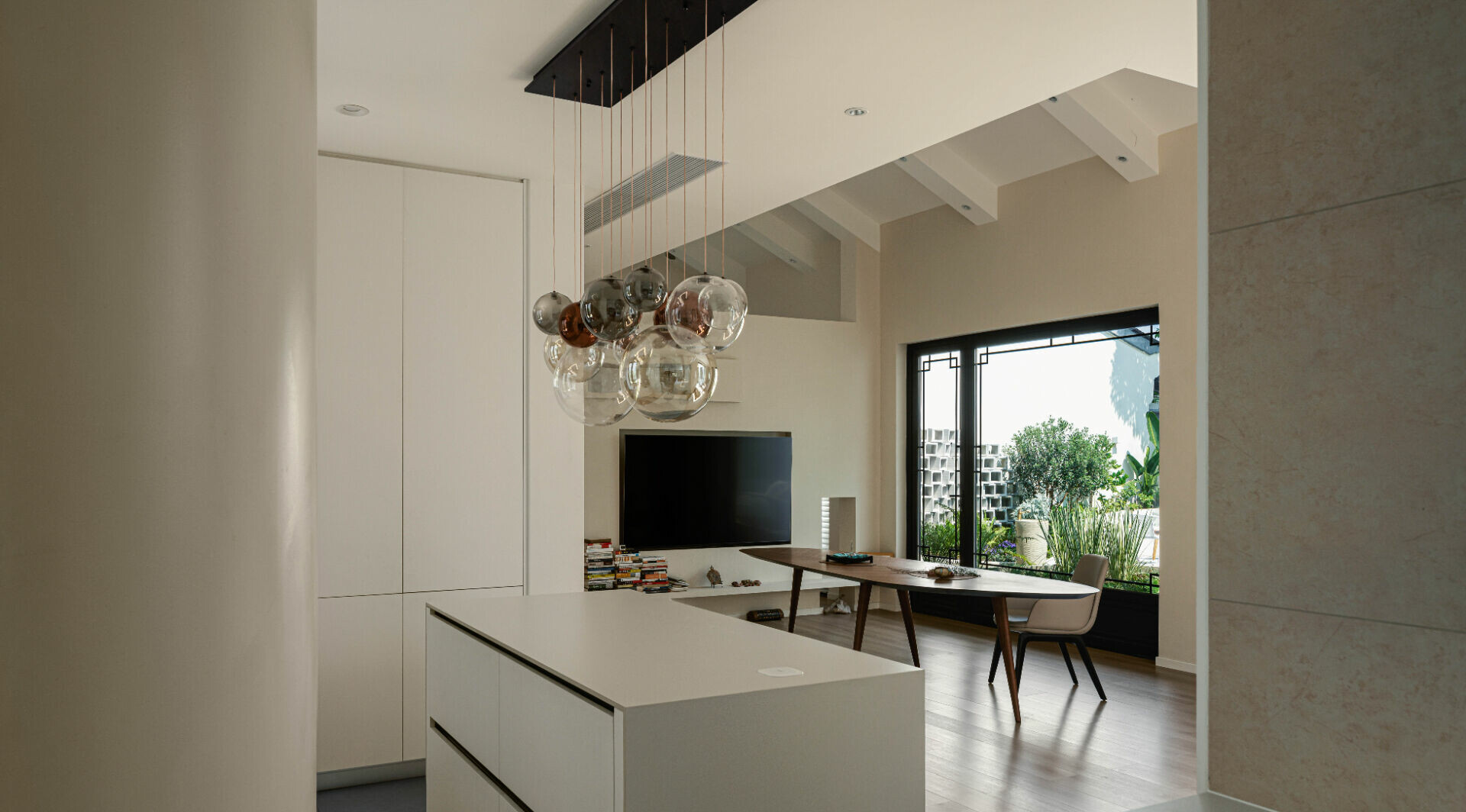
The ceiling design welcomes the arrival of light, guiding the gaze towards its direction. The asymmetrical roof expresses that the boundary of space is not defined by glass partition, but by the courtyard beyond. By seeking a connection with nature, one embraces life with warmth, and finds every sight within reach filled with light. The pure white walls and warm wooden floor add a psychological purity to the living room. Simple geometric shapes were arranged and combined into a wall that is both decorative and practical.
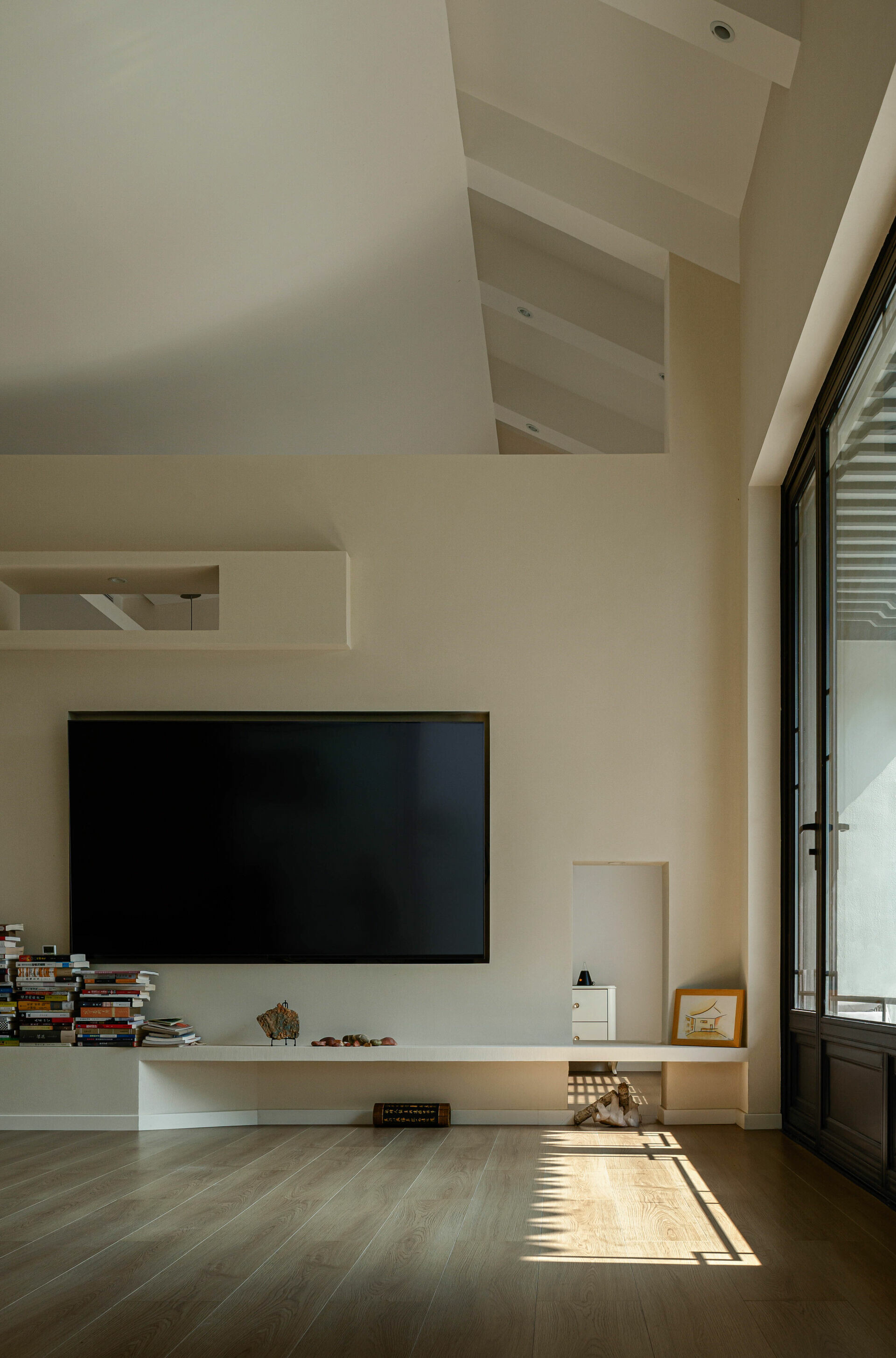
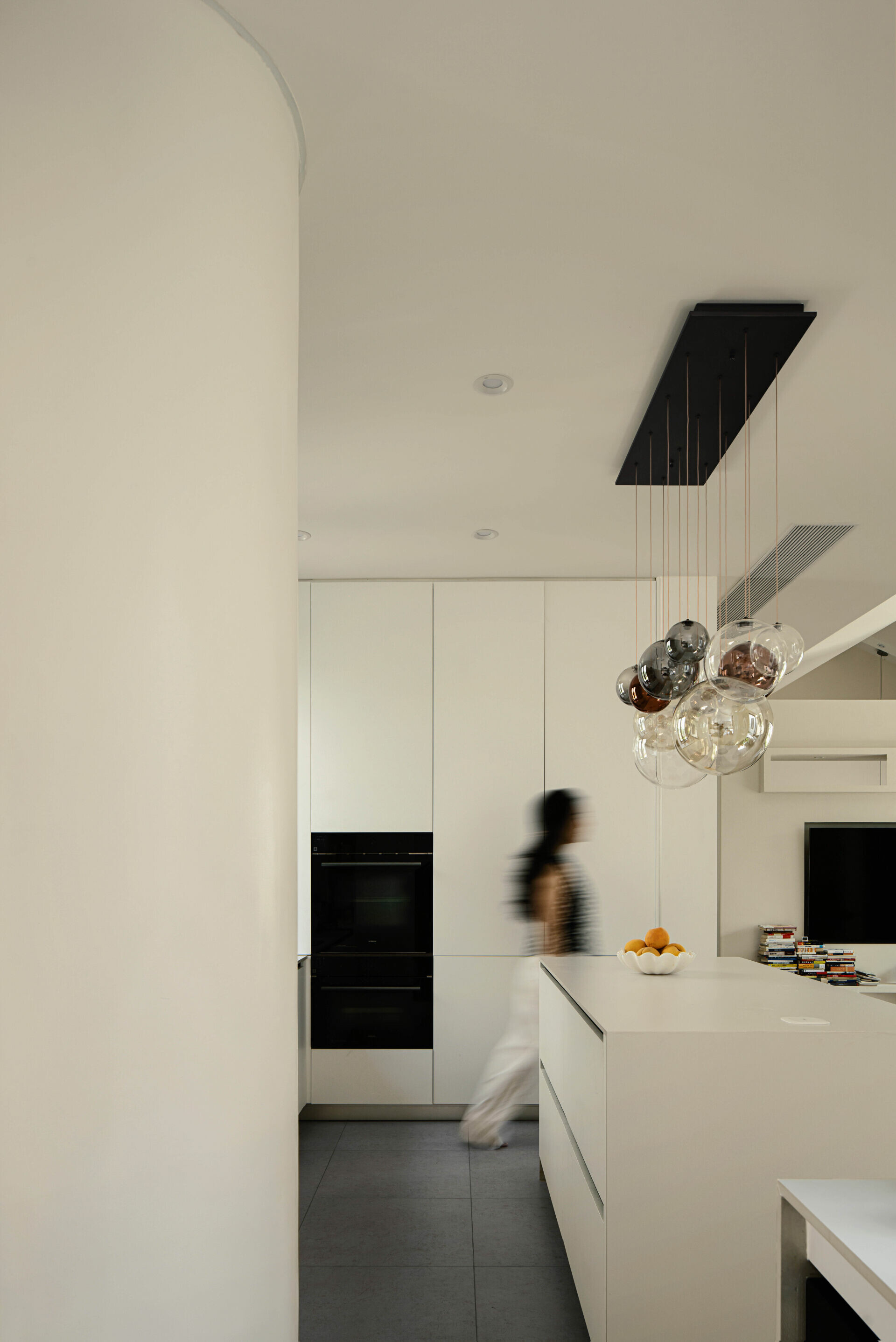
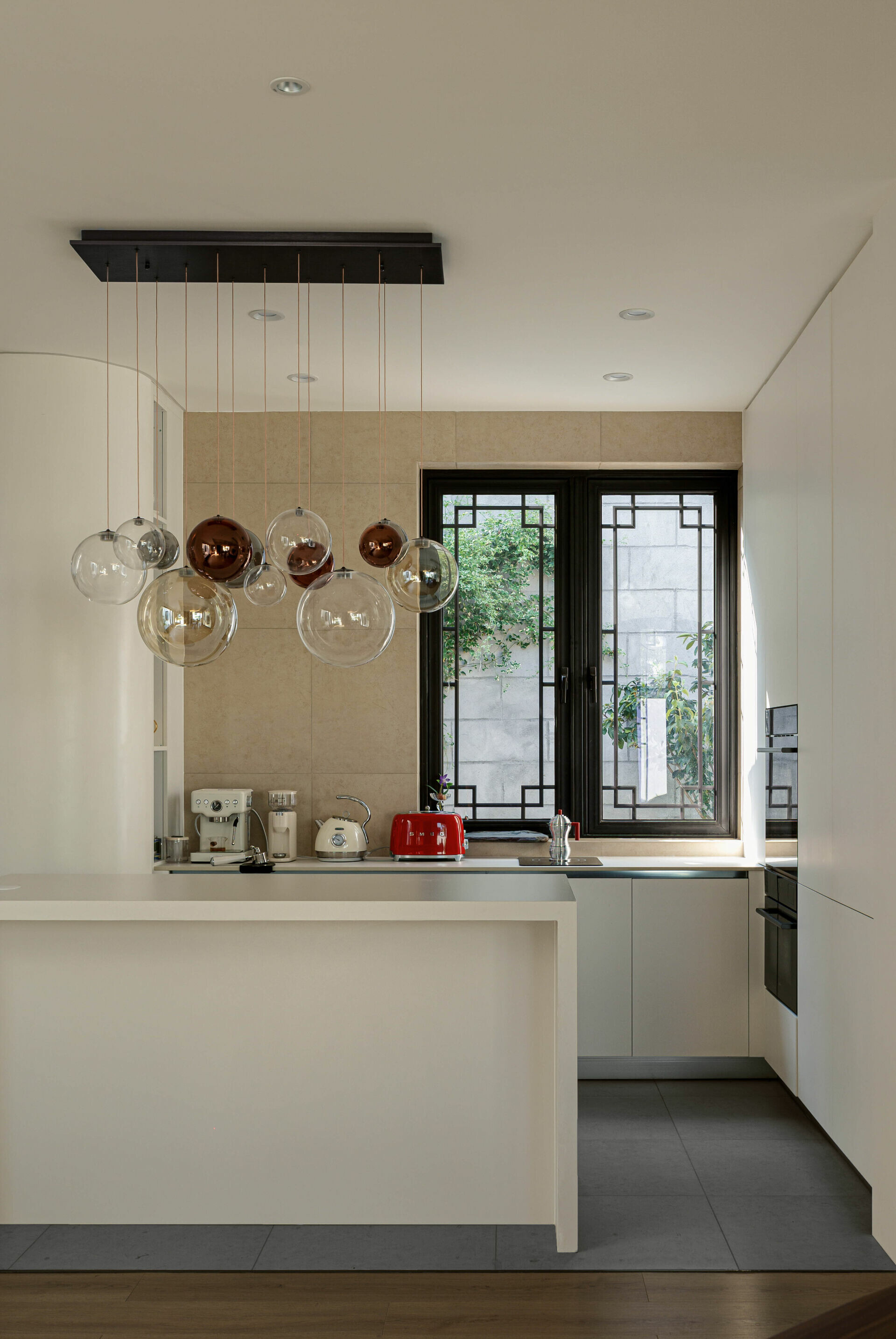
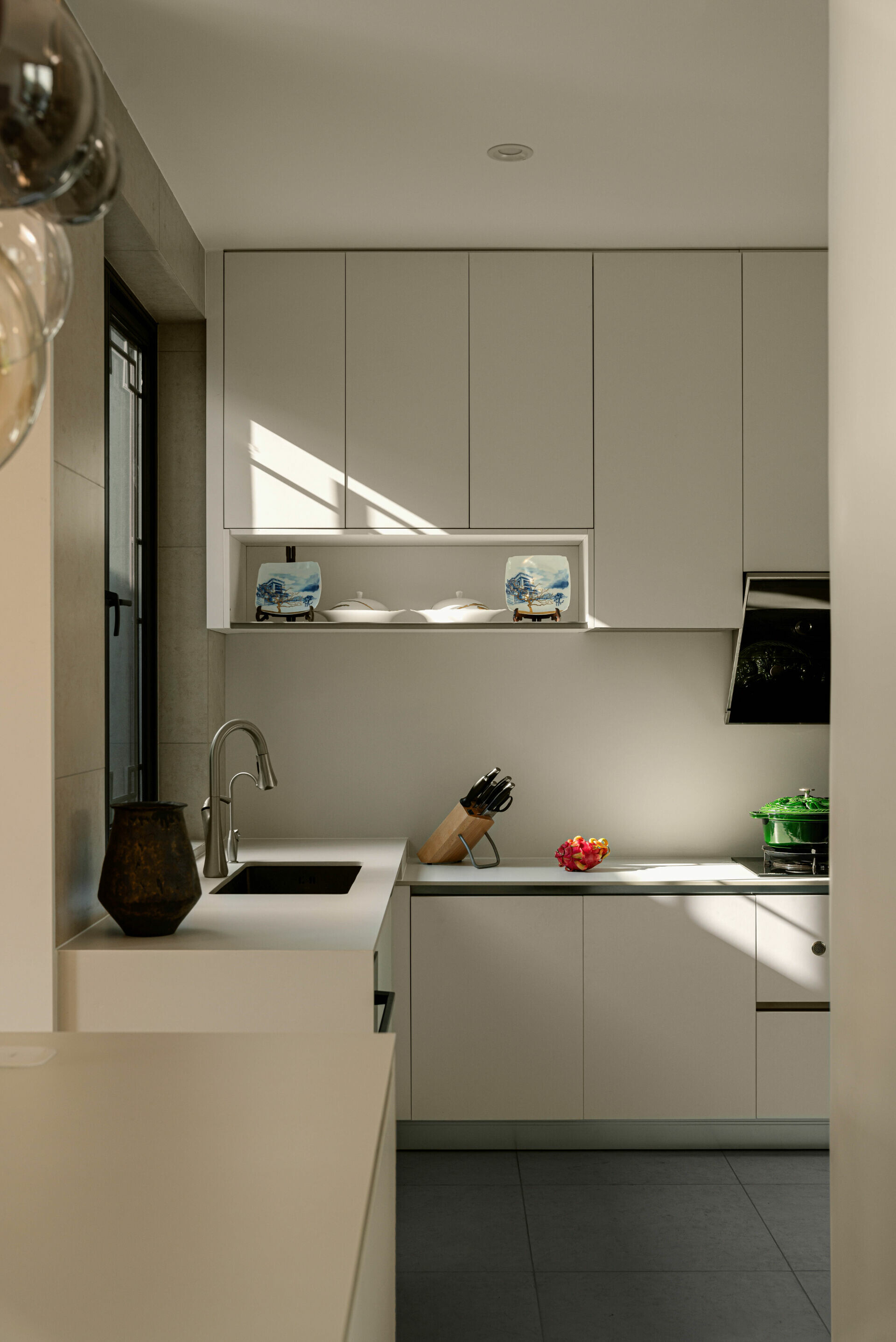
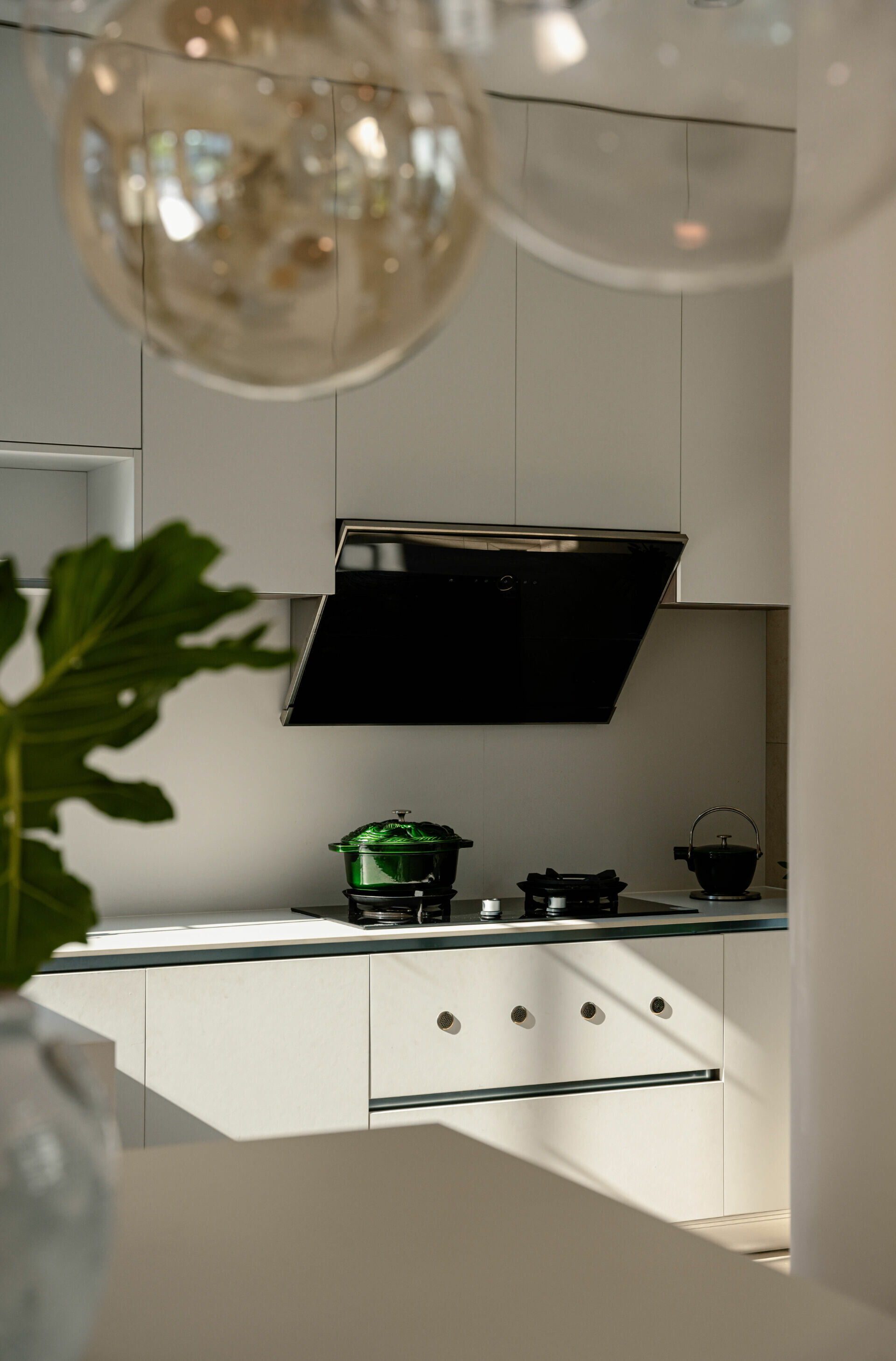
Defined by sharp, concise lines that balance function and aesthetics, the open kitchen connects the living and dining areas, allowing the entire space to flow naturally like light, remaining open and bright.
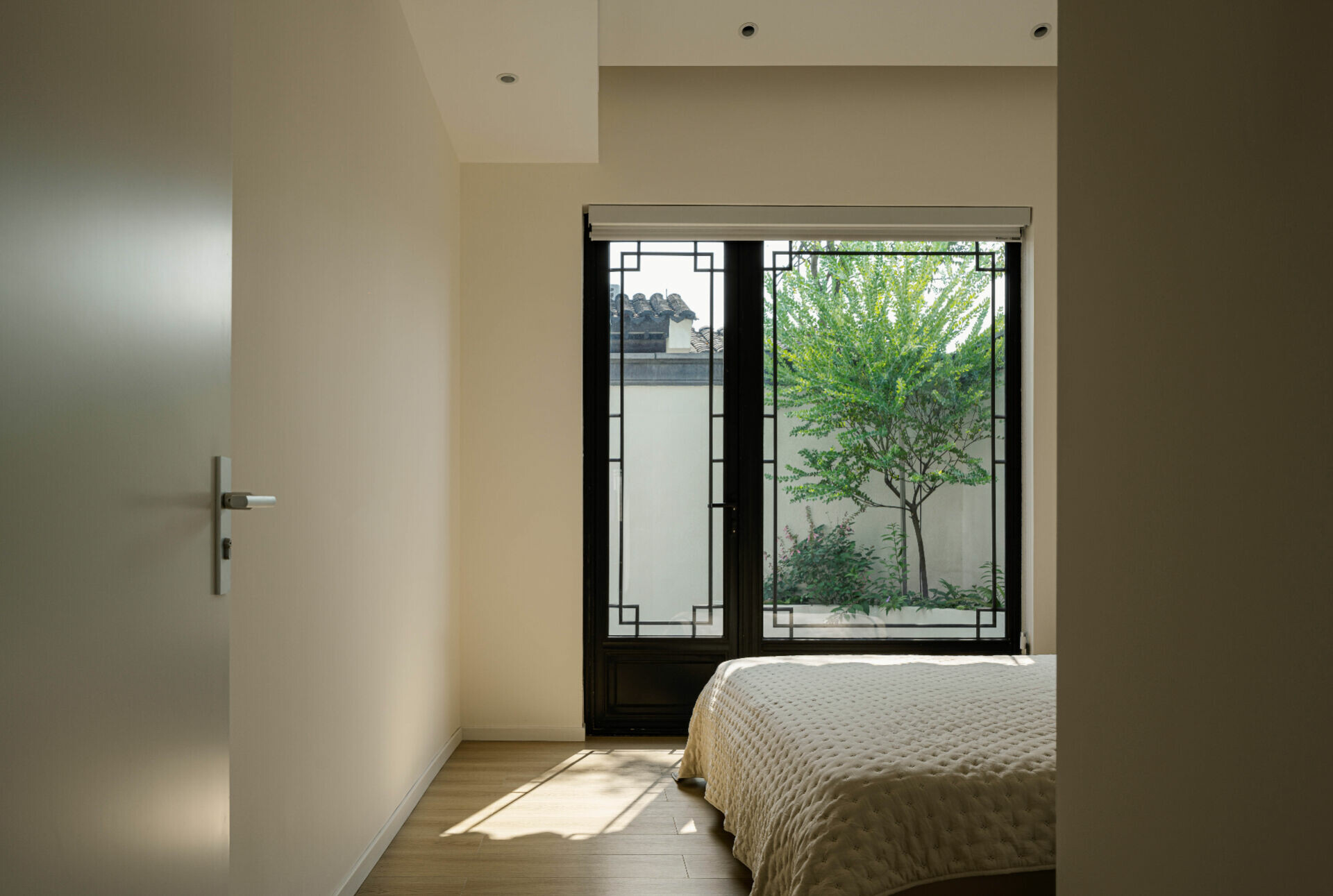
The inspiration from Le Corbusier's design of the windows and internal-external duality in Ronchamp's Notre-Dame du Haut Church reveals a captivating connection to the internal-external relationships of Chinese garden windows and doorways.The wall expresses the connection and changes of the opening in two spatial dimensions, with light extending from the living room through a series of wall holes to the next space. This way, the boundaries between the bedroom and living room are blurred, creating an inter-permeable spatial structure that makes the space more transparent, flexible, and cozy.
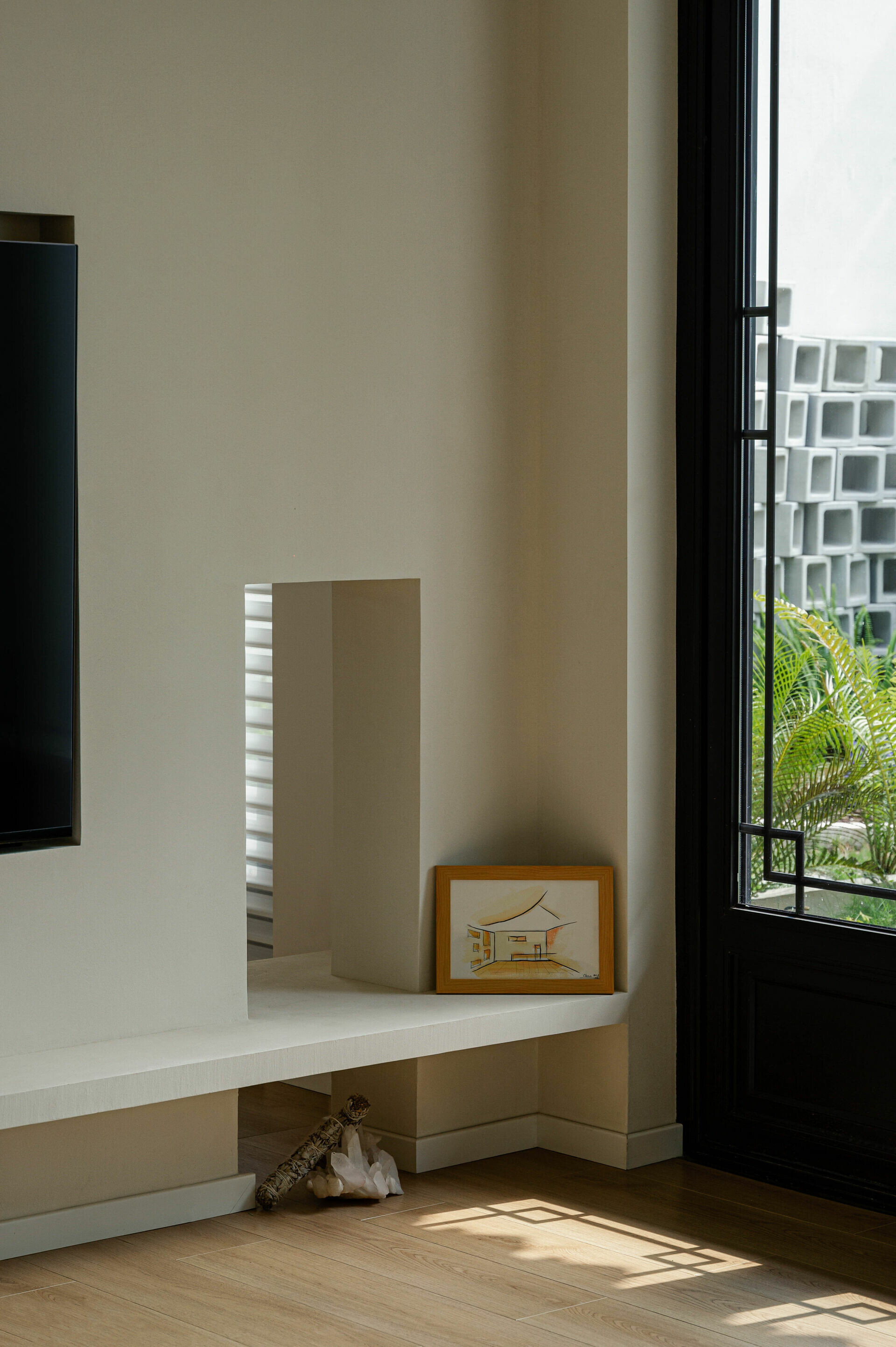
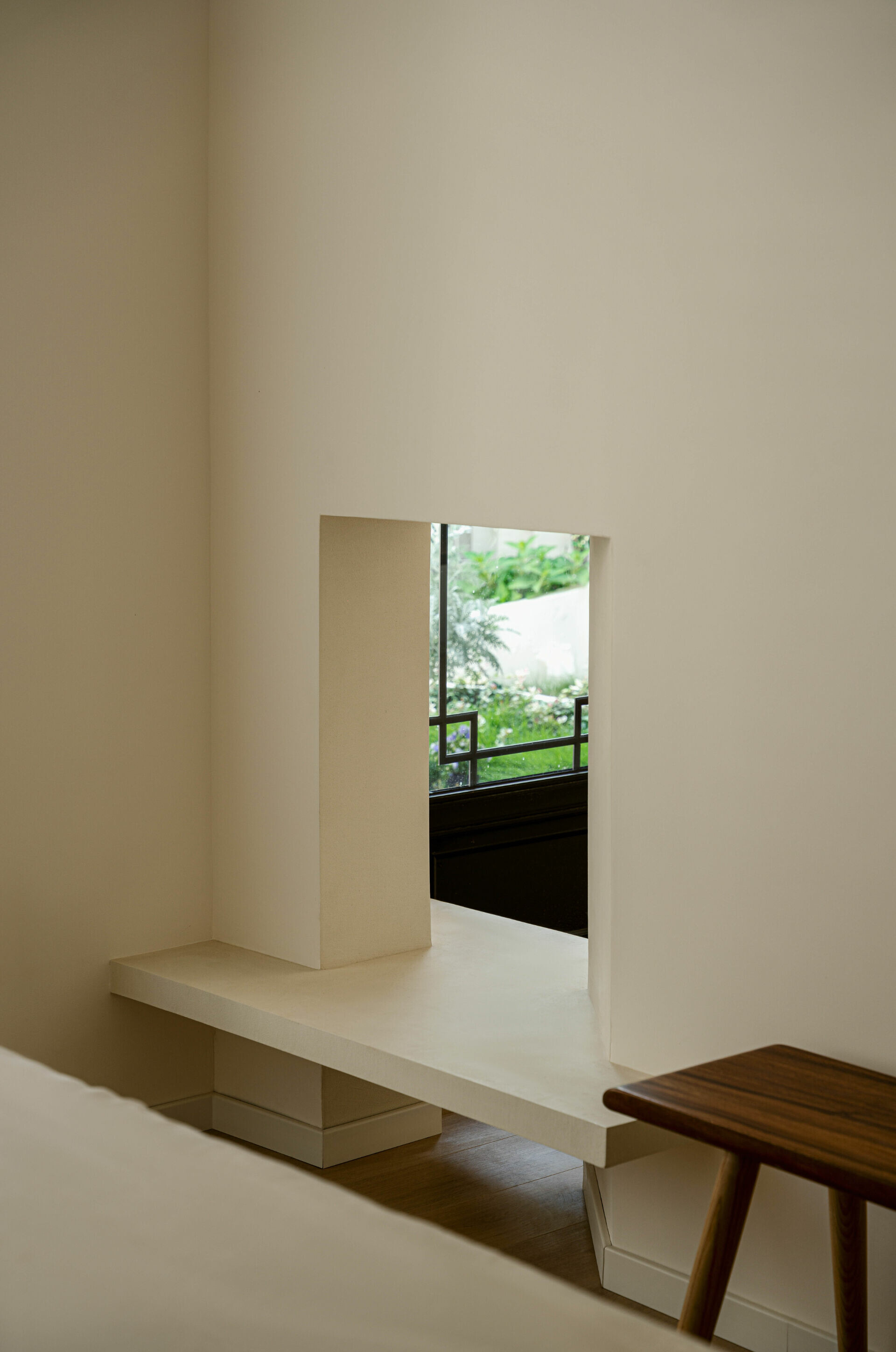
Each external view is carefully designed, using simple lines to outline the original intention of the house and framing it like a painting—a gift to the owner, symbolizing a wish for a tranquil life and natural ease.
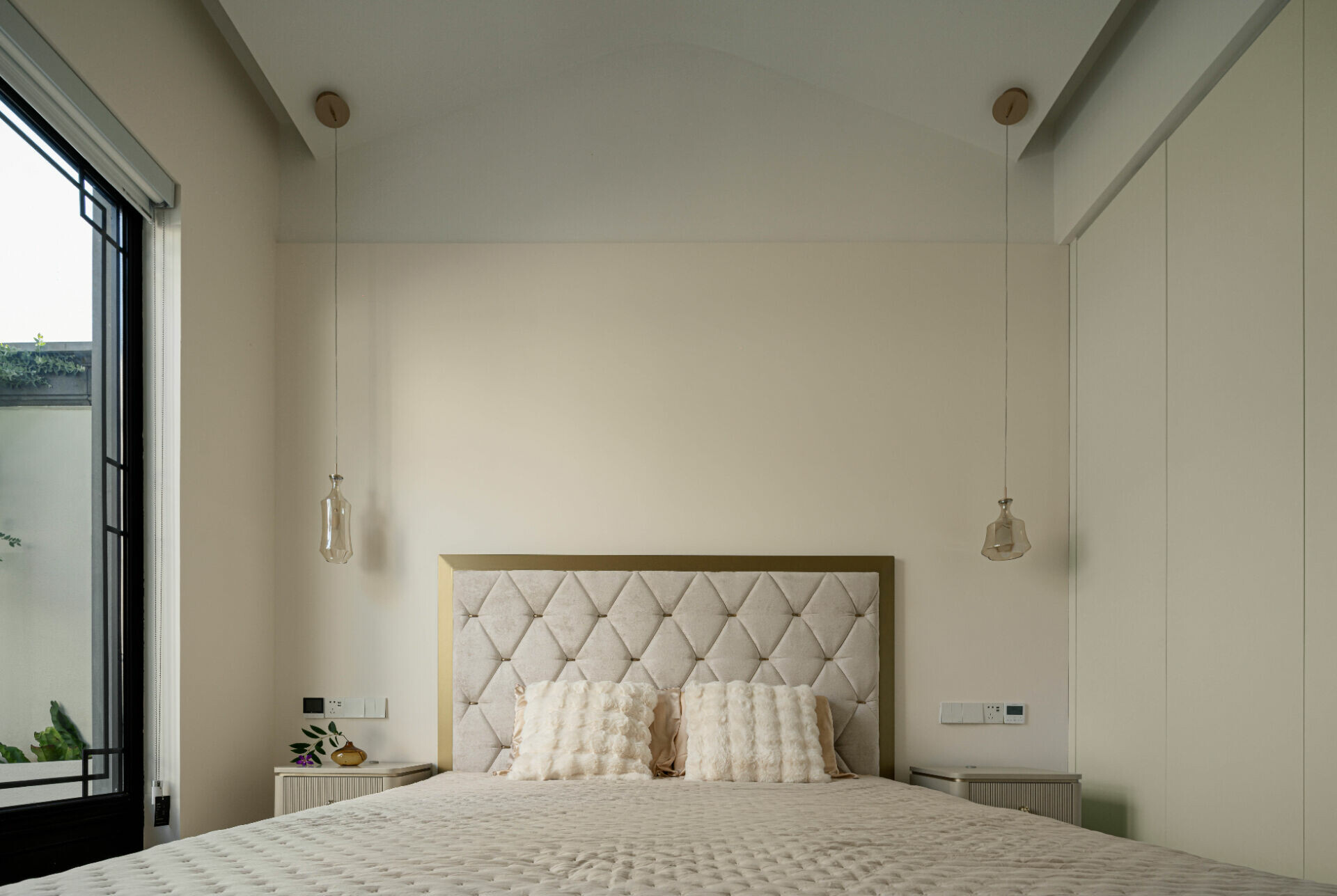
This is a bold attempt to integrate contemporary culture with traditional gardening techniques. By using modern and pure techniques, the design allows the sunlight pouring into the courtyard today to echo with the Eastern spirit carried by the building itself for thousands of years, and respond to the deep-rooted ideal of residing in nature and residing within a painting.
Principal Designers | Guo Yu, Ye Qingmin
Participate | Tan Lei, Liu Yunrui, Kang Wanping
Character of Space | Residence
Gross Floor Area | 240㎡
Materials | Wood Flooring, Texture Paint, Composite Stone Slab
Location | Chongqing, China