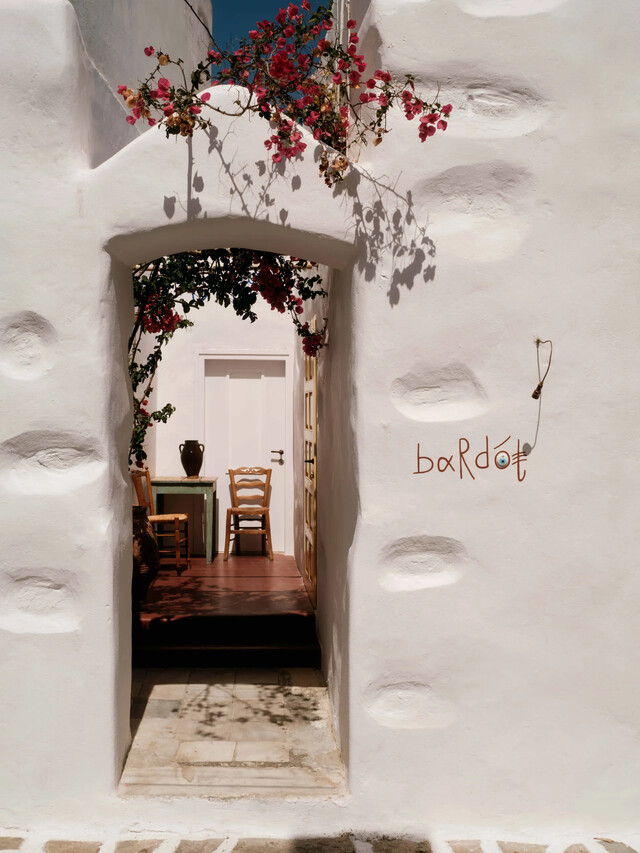
位於基克拉迪群島安提帕羅斯島 Bardót 是當地造船家族的故居改造成新的酒吧和餐廳。 到達這裡的唯一方法是乘坐工業船,因其獨特的形狀而被當地人親切地稱為“人字拖”。 它從帕羅斯島主島上的一個小型二級港口出發,帕羅斯島的極地相對位置使其得名安提帕羅斯島。 抵達後,安提帕羅斯島並不會立即被令人驚嘆的風景或矗立在懸崖上的風景如畫的村莊所吸引。 然而,它已成為湯姆漢克斯、歐巴馬夫婦等全球名人的避難所,也是希臘老牌船運世家和當地居民的聚集地。 安提帕羅斯島的微妙吸引力在於其平坦而乾旱的地形,這裡是跨越希臘歷史多個時代的各種文化的熔爐。 古代、拜占庭、希臘鄉村、70 年代的波希米亞精神和當代希臘都共存,就像一幅活生生的重寫本。 與其他希臘島嶼不同,安提帕羅斯島的時間並沒有被凍結。 相反,每個時代都以腳踏實地、低調的方式慢慢展現自己。 島上的多層結構給人留下了一種後天習得的、習慣性的味道。
Antiparos is the antithesis of the conventional Cycladic island. The only way to reach it is by an industrial boat affectionately dubbed the “flip flop” by locals for its distinctive shape. It departs from a small secondary port on the main island of Paros, whose polar-opposite position lends its name to Antiparos. Upon arrival, Antiparos doesn’t immediately dazzle with awe-inspiring landscapes or a picturesque village perched dramatically on a bluff. Yet it has become a refuge for global celebrities like Tom Hanks, the Obamas, and a blend of old- money Greek shipping families and local residents. The subtle appeal of Antiparos lies in its flat and arid terrain, which hosts a melting pot of various cultures spanning multiple eras of Greek history. Antiquity, Byzantium, rural Greece, the bohemian spirit of the 70s, and contemporary Greece all coexist as a living, breathing palimpsest. Unlike other Greek isles, Antiparos is not frozen in time; instead, each era slowly reveals itself in a down-to-earth and understated manner. The many layers of the island leave an acquired but habit-forming taste.
建築設計既擁抱傳統工藝,又不沉迷於懷舊,又融入當代影響,但又不抹去過去。 技術、時代、風格和文化的無縫融合——手工和工程、歷史和現代、簡約和裝飾、外國和國內。 正如它的名字一樣,Bardot 散發著一種曖昧的神秘感。 這座復興的建築取消了先前一系列的翻修工程,留下了殘破的建築殘骸。
The architectural design embraces both traditional craft without indulging in nostalgia and contemporary influences without erasing the past. The result is a seamless convergence of techniques, eras, styles, and cultures – artisanal and engineered, historic and modern, minimalist and ornamental, foreign and domestic. True to its namesake, Bardot exudes an ambiguous mystique. The revived building nixes a series of prior renovations that left behind a mangled architectural carcass. The front door is returned to its original position, restoring the entry sequence through an open forecourt. The façade – composed of hay, clay, and limestone stucco – also recovers its former dignity, exposing richly-textured stones embedded in the walls for structural strength. This traditional masonry work was surgically revealed using archaeological tools.
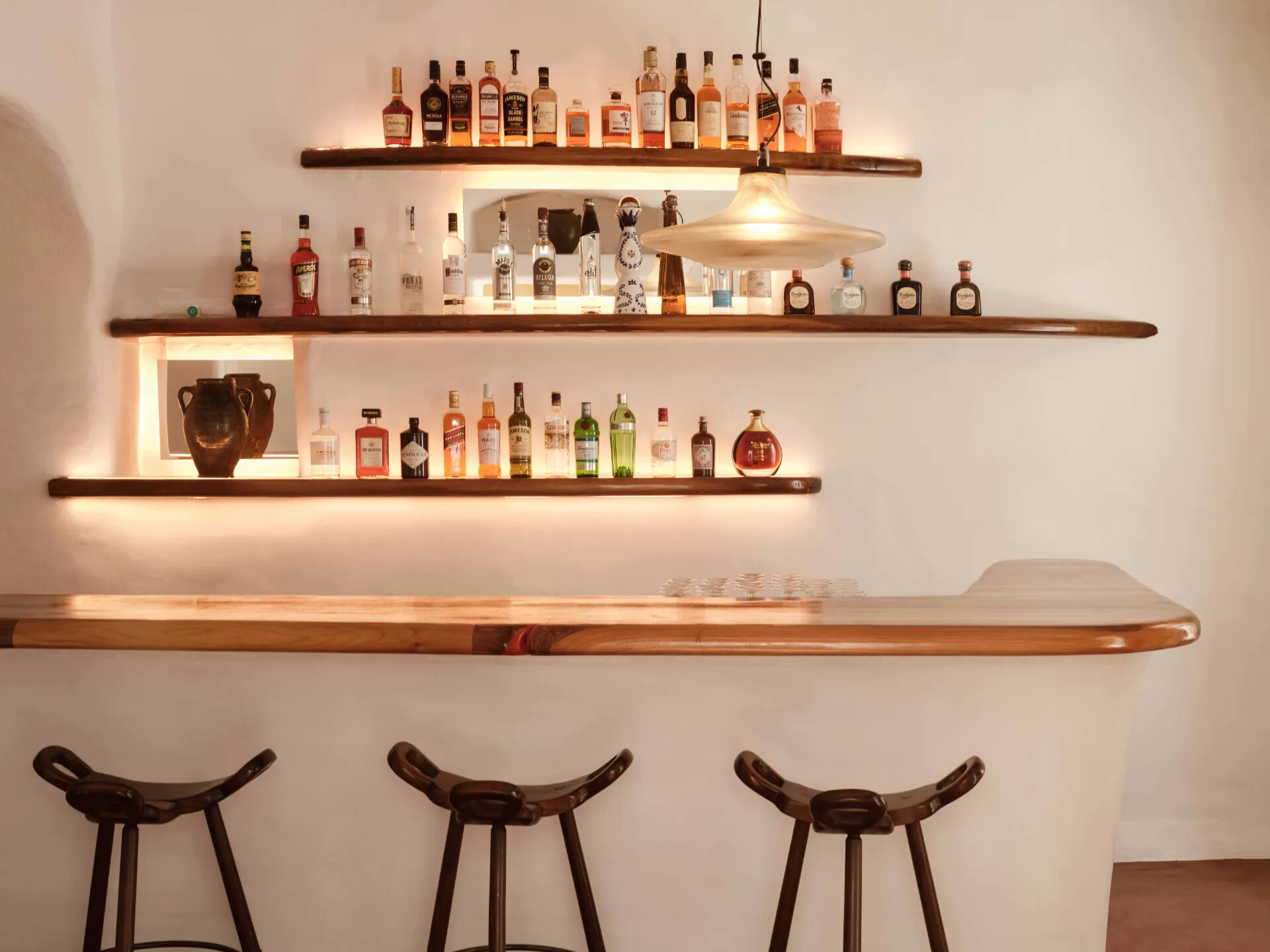
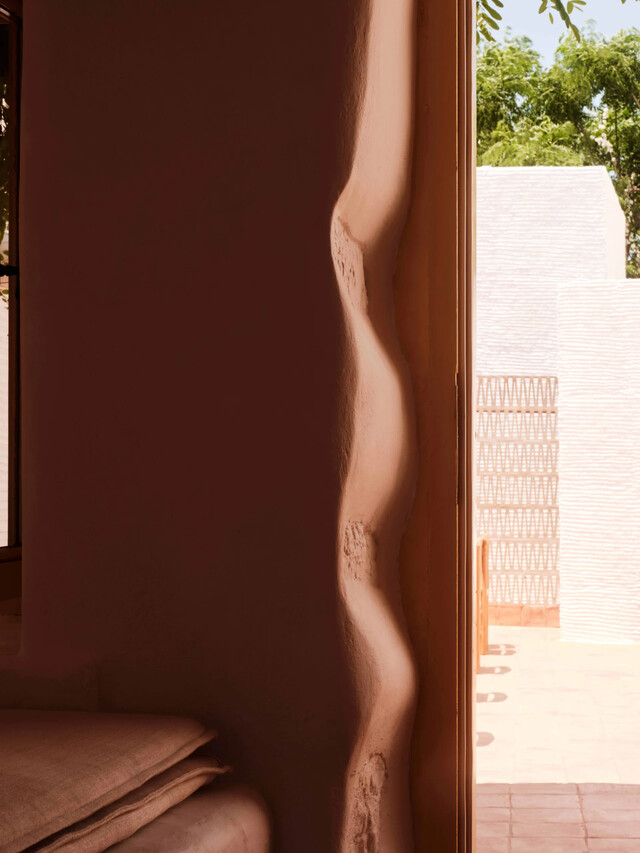
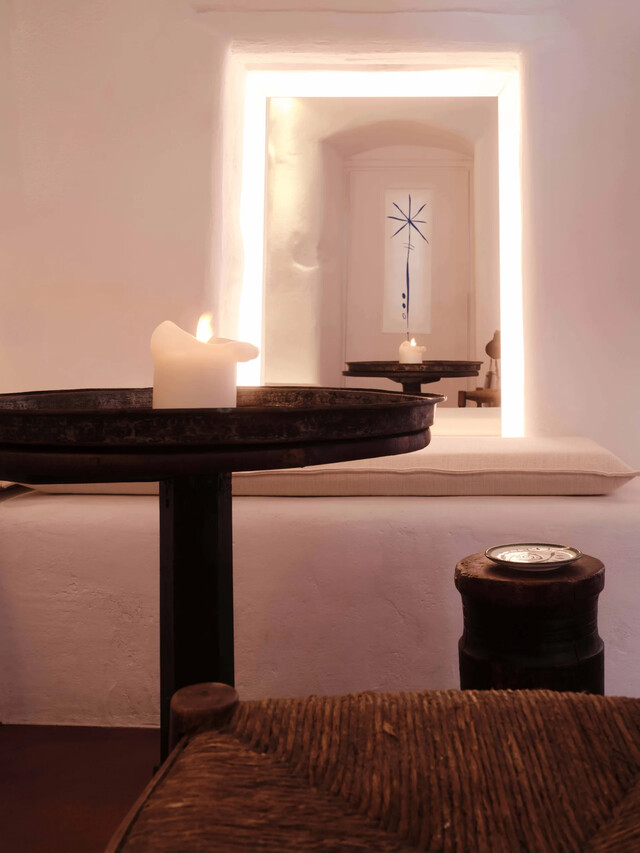
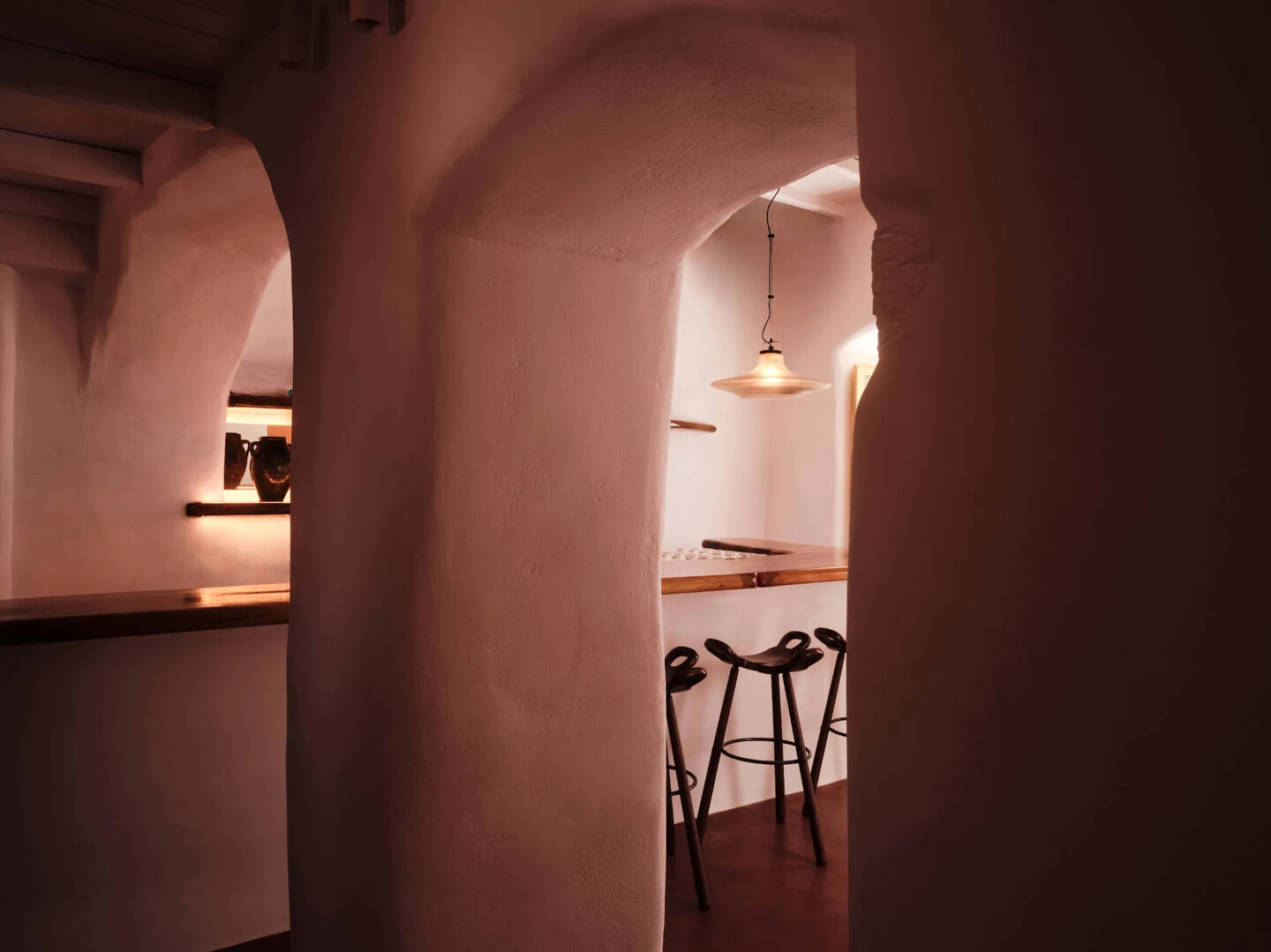
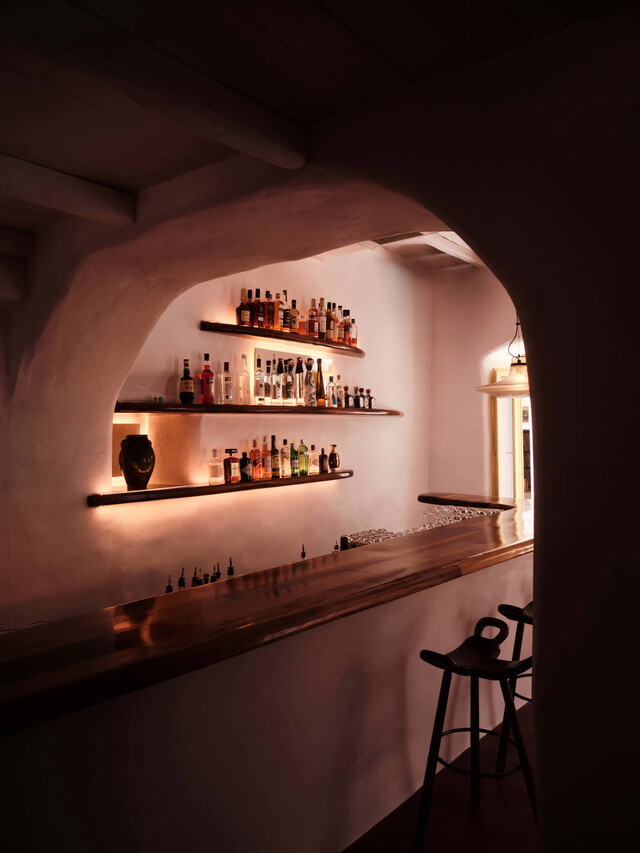
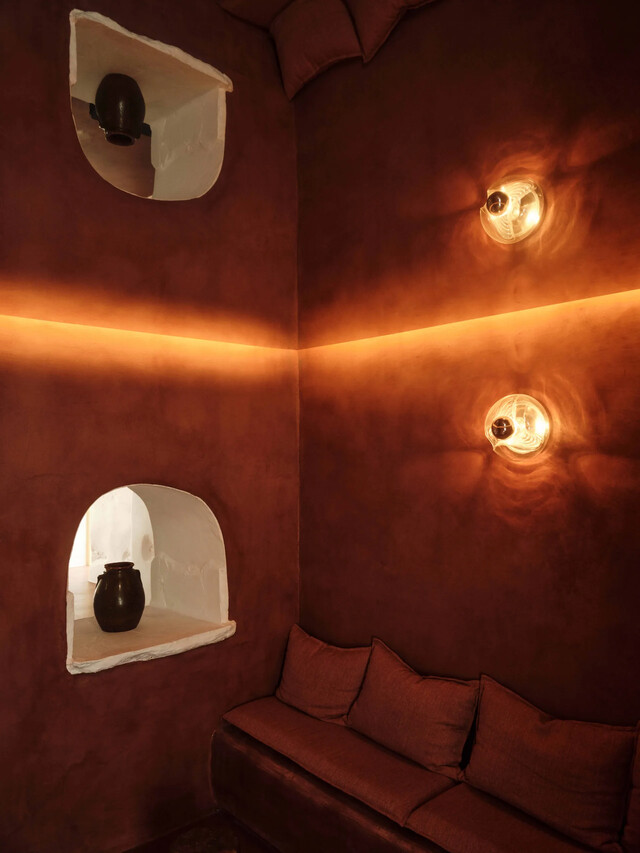
前門返回原來的位置,恢復了通過開放前院的進入順序。 由乾草、粘土和石灰石灰泥組成的立面也恢復了以前的尊嚴,暴露了嵌入牆壁中的紋理豐富的石頭以提高結構強度。 這種傳統的磚石工程是使用考古工具透過手術揭示的。 裡面有一系列類似洞穴的空間,上面覆蓋著希臘群島常見的白色石灰石。 酒吧坐落在雙曲粘土表面上,模仿周圍牆壁的輪廓。 厚實的圓形檯面由實心胡桃木製成,表面塗有光澤的海洋級漆面,看起來懸浮在半空中。 私密的客房與這家高檔雞尾酒吧相連,提供家庭式的規模和氛圍。 內置座椅從牆壁中伸出,包括一個古董壁爐,可以變成一張舒適的沙發床。 巧妙地將鏡子放置在縫隙中,產生錯視效果。
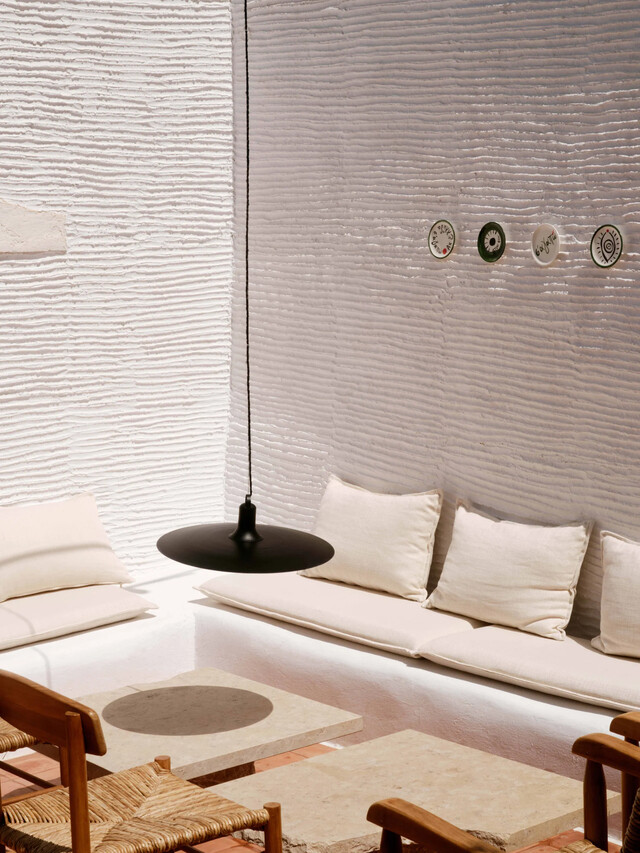
Inside, a series of grotto-like spaces are coated in a white limestone wash common throughout the Greek Isles. The bar is perched on a double-curved clay surface that mimics the contours of the surrounding walls. Crafted from solid walnut wood with a lustrous marine-grade lacquered finish, the thick, rounded mass of the countertop appears suspended in mid-air. Intimate rooms conjoin this upscale cocktail bar, offering domestic scales and atmospheres. Built-in seating emerges from the walls, including an antique fireplace that morphs into a cozy daybed. Mirrors strategically placed in crevices produce a trompe l’oeil effect.
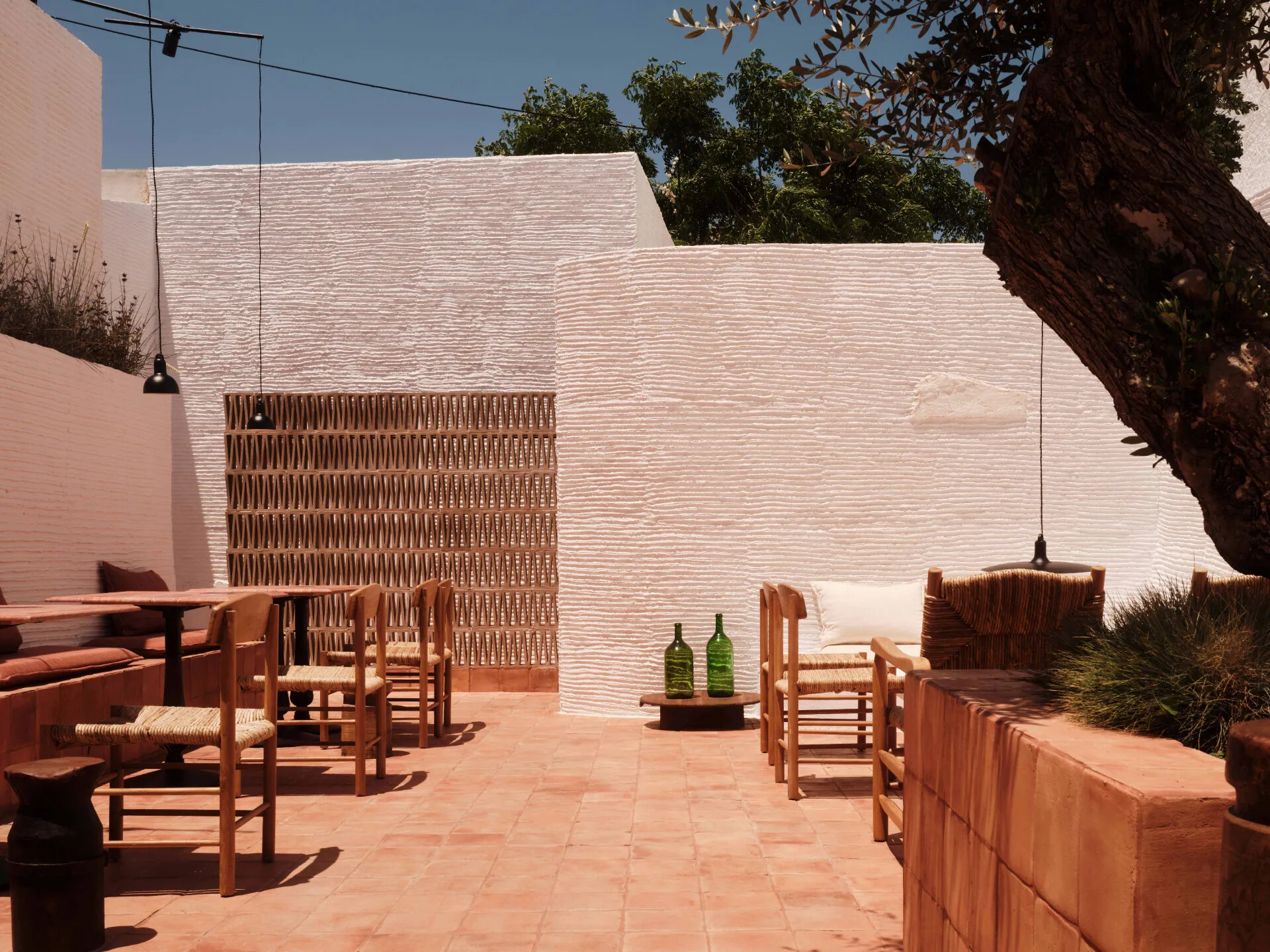
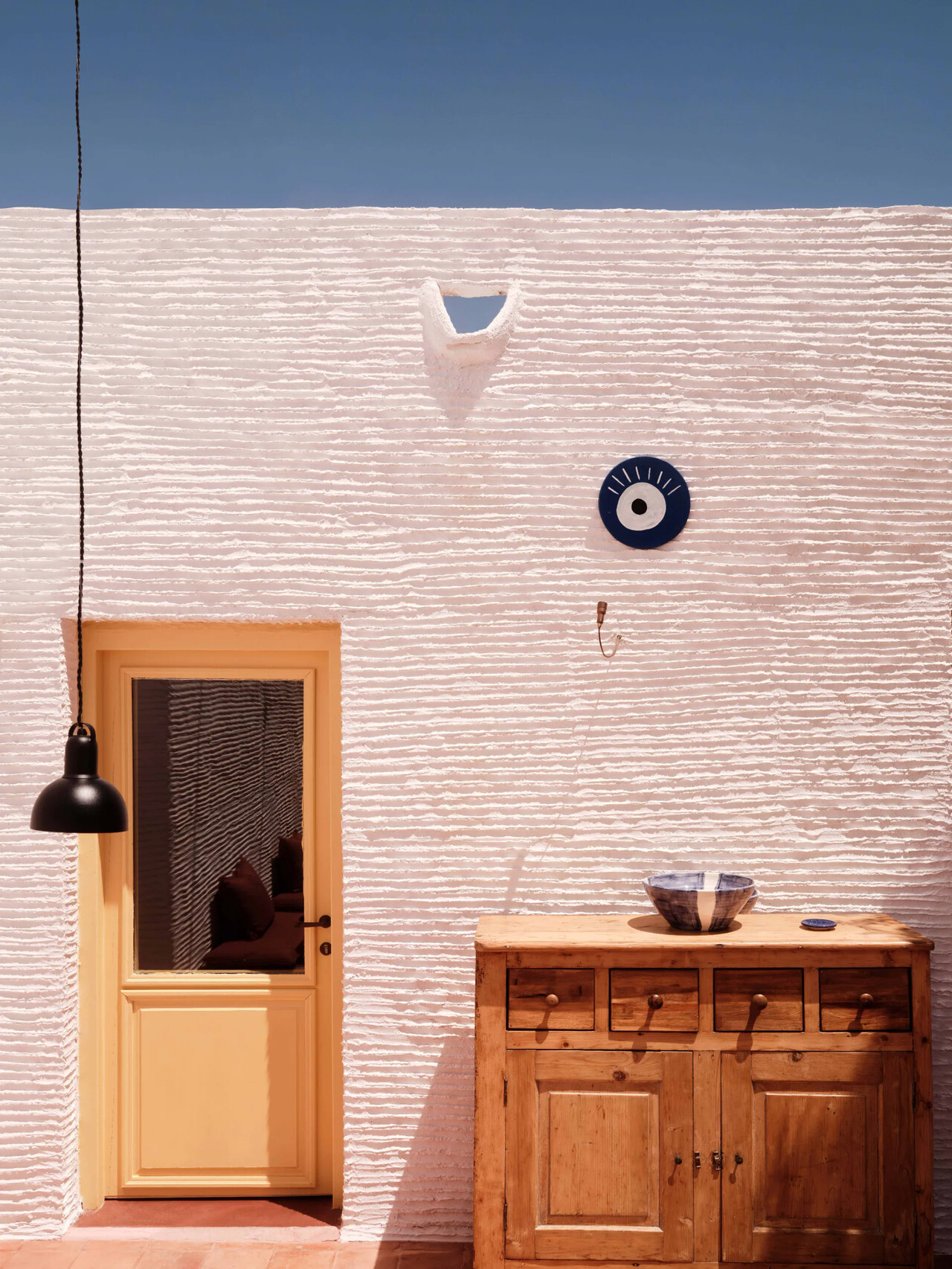
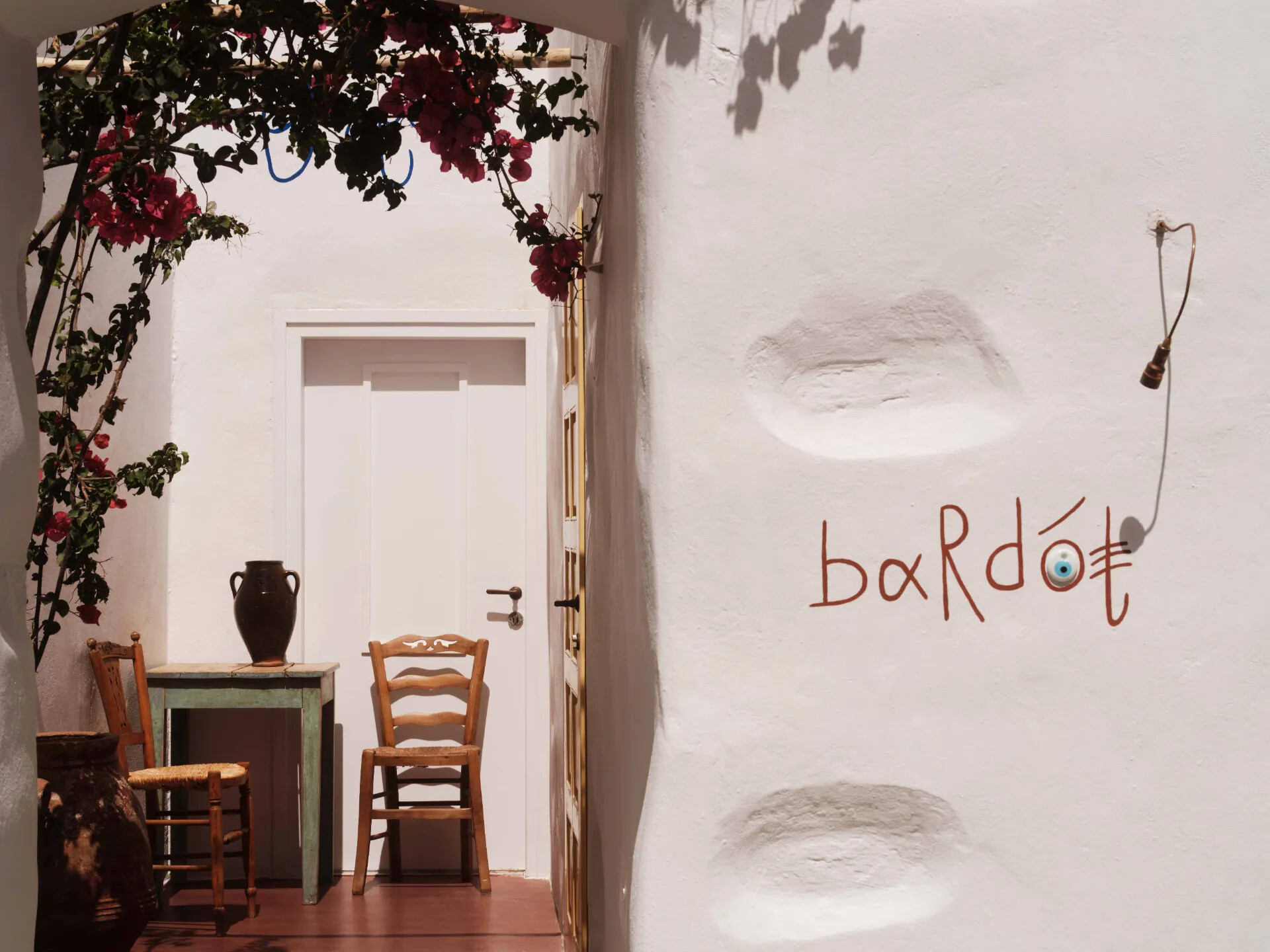
巴多特並沒有試圖美化鄰近建築物的空白立面,而是透過增加庭院牆壁的高度來加倍考慮場地條件。 這些抽象的峽谷與內部石窟地質相得益彰——透過在新鮮的灰泥上拖曳勺子狀的工具來形成山脊——讓人想起極簡主義藝術家羅伯特·雷曼的紋理表面。 封閉的庭院勾勒出天空的輪廓,並提供急需的保護以抵禦愛琴海的刺眼陽光。
Rather than attempting to embellish the blank façades of neighboring buildings, Bardot doubles down on this site condition by increasing the height of the courtyard walls. Complementing the interior grotto geology, these abstracted canyons – ridged by dragging a spoon-like tool across fresh stucco – are reminiscent of minimalist artist Robert Rayman’s textured surfaces. The hemmed-in courtyard frames the sky and provides much-needed protection against the harsh Aegean sun.
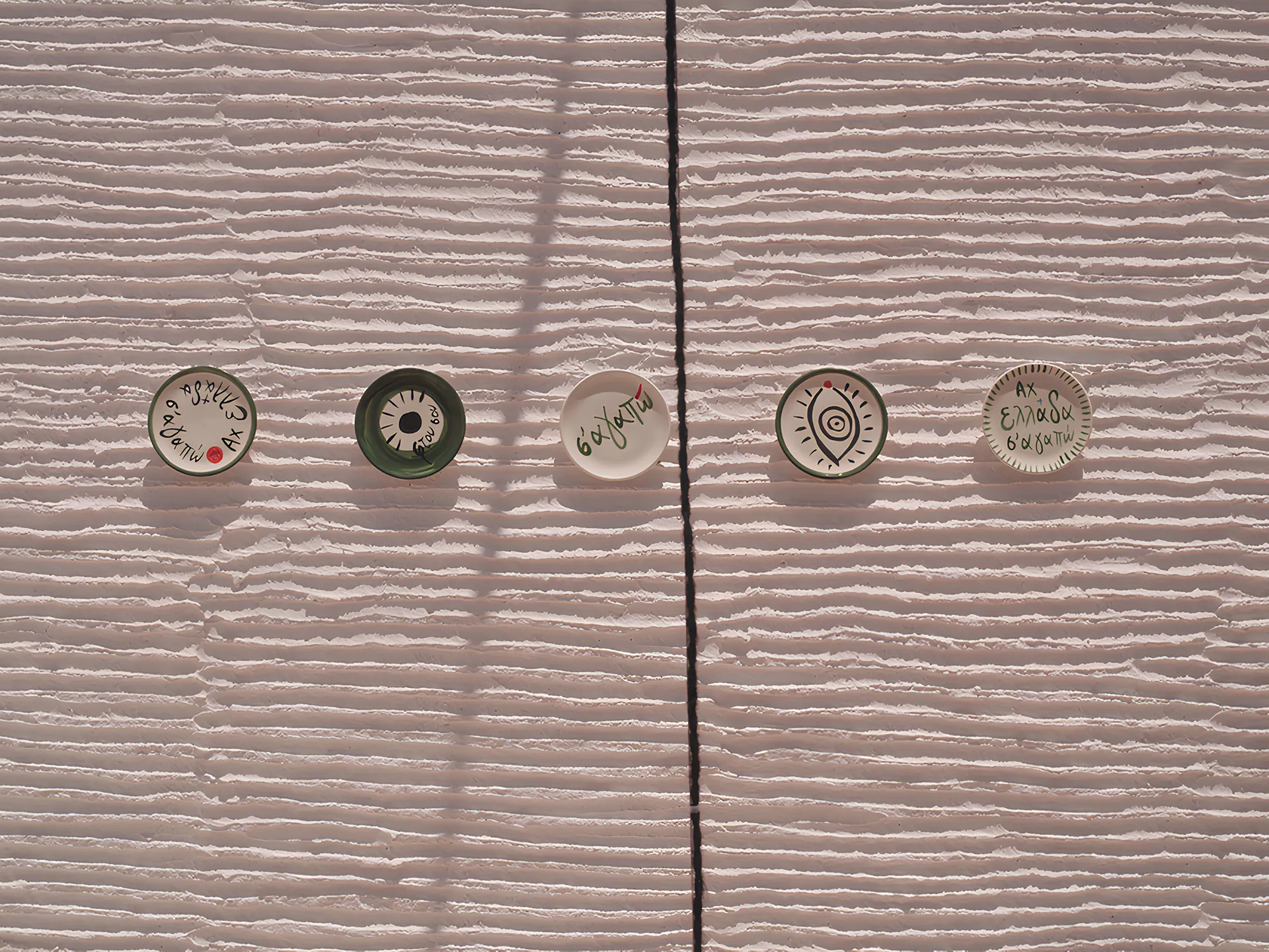
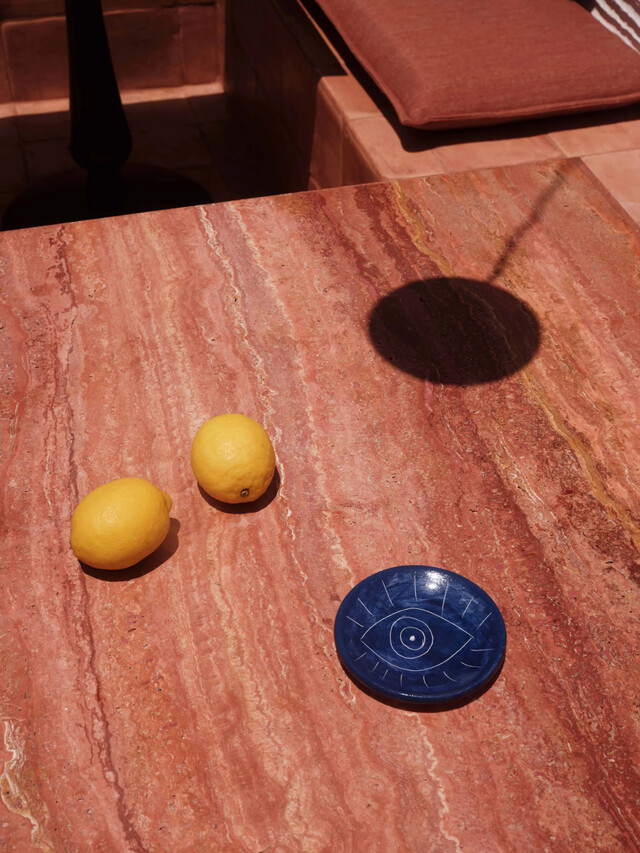
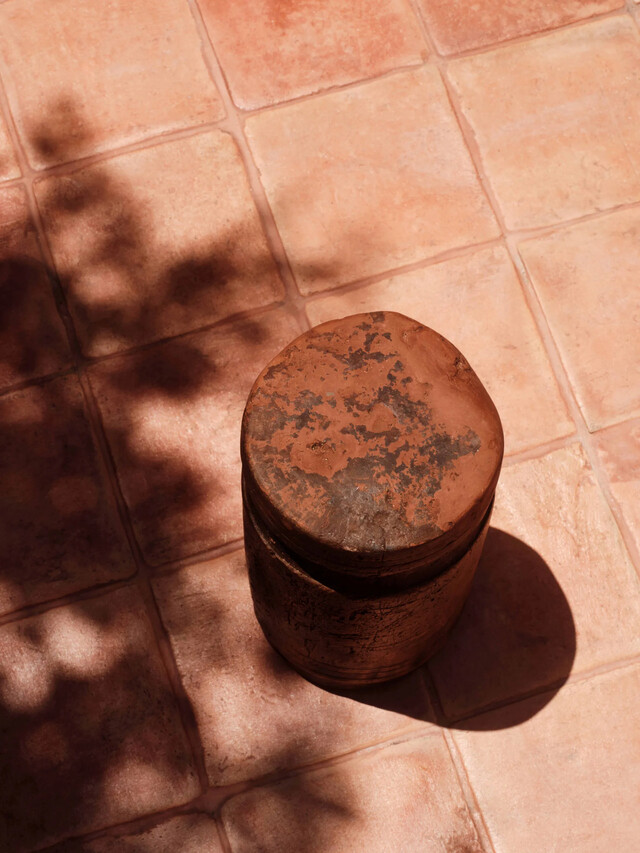
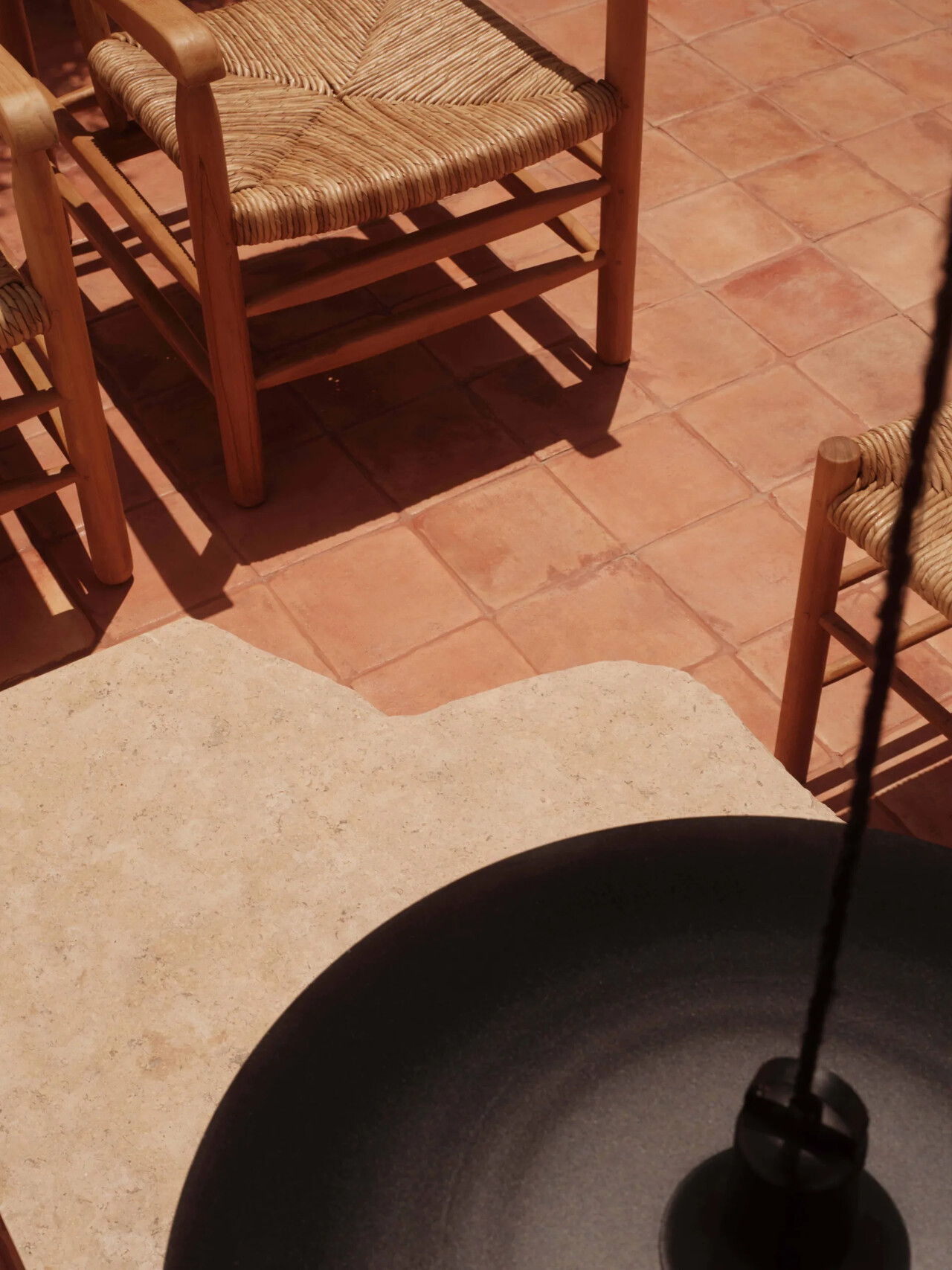
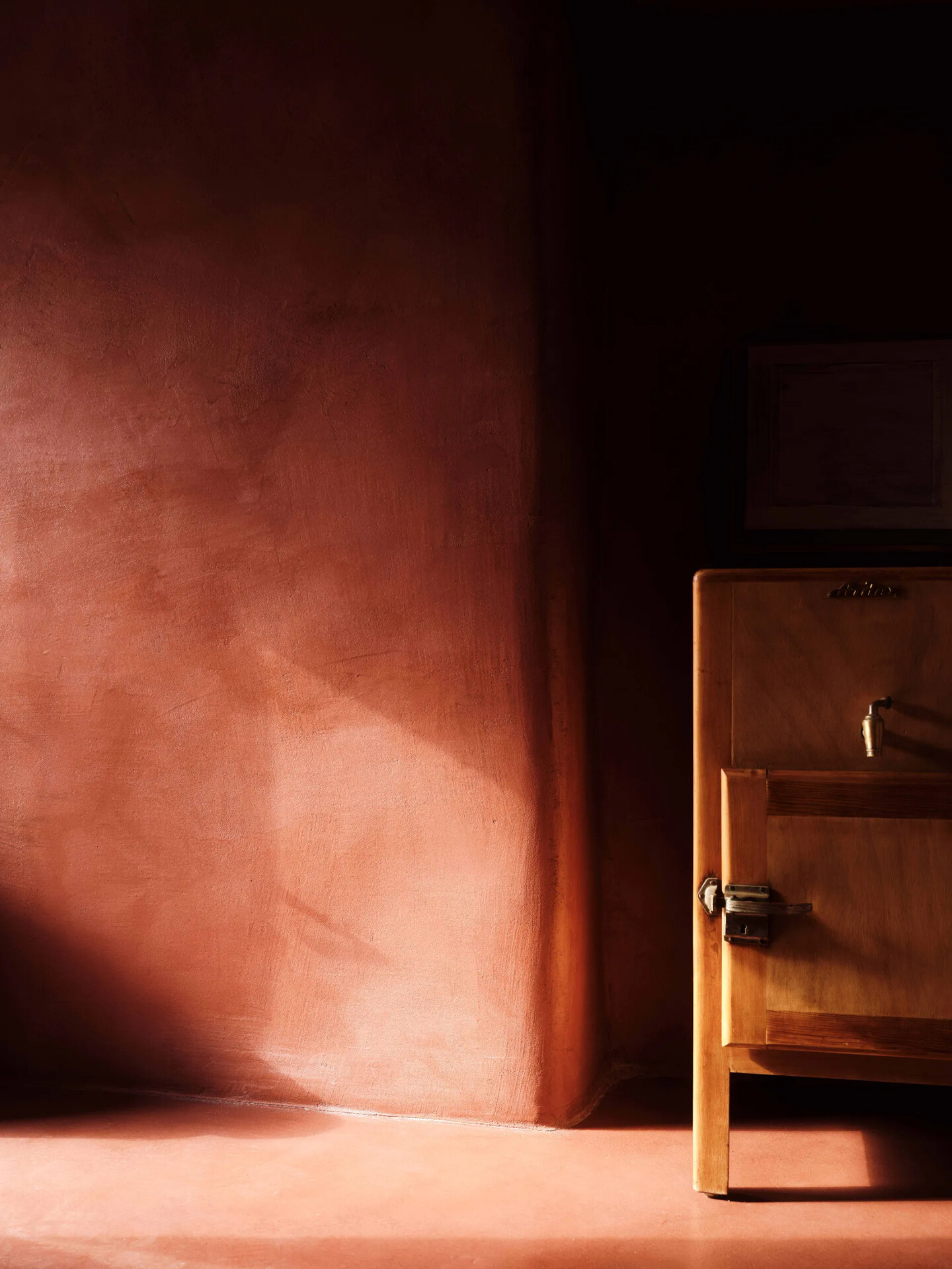
該設計將內部和外部地板與米爾托斯結合在一起,米爾托斯是一種銅色礦物,被古希臘人尊為超級物質,很可能是該建築的前駐地造船廠所使用的材料。 在內部,傳統上用於地板的紅赭石、石灰石和沙子混合物產生了光滑而感性的表面。 外面,露台由手工製作的注入紅赭石的粘土磚組成,垂直和水平折疊形成層、長椅和一個新的花盆,種植一棵耐寒的橄欖樹——這是之前翻修的倖存者,也是長壽的象徵。 這些家具是現代和中世紀作品的集合,還有古董和植根於地中海歷史的物品。 曾經用來製作奶油的木製攪拌器現在被用作凳子,而古老的油罐則裝飾在牆壁和窗戶上的開口處。 藝術家 Christianna Economou 的彩繪壁畫和陶瓷盤為希臘和基克拉迪文化增添了俏皮的色彩。 這些新舊元素結合在一起,重新構想了清新的愛琴海氛圍。
The design unifies the interior and exterior floors with Miltos, a copper-toned mineral revered by the ancient Greeks as a super-substance and one likely employed by the building’s ex-resident shipbuilders. Inside, a red ochre, limestone, and sand mixture traditionally used in flooring produces a smooth and sensuous surface. Outside, handcrafted clay tiles infused with red ochre form the patio, folding vertically and horizontally to create tiers, banquettes, and a new planter for a hardy olive tree – a survivor of previous renovations and a symbol of longevity. The furniture is a collection of modern and mid-century pieces alongside antiques and found objects rooted in Mediterranean history. A wooden churn once used to make butter now serves as a stool, while ancient oil jars adorn openings on the wall and windows. Painted murals and ceramic plates by artist Christianna Economou lend a playful twist on Greek and Cycladic culture. Taken together, these old and new elements reimagine the fresh Aegean ambiance.