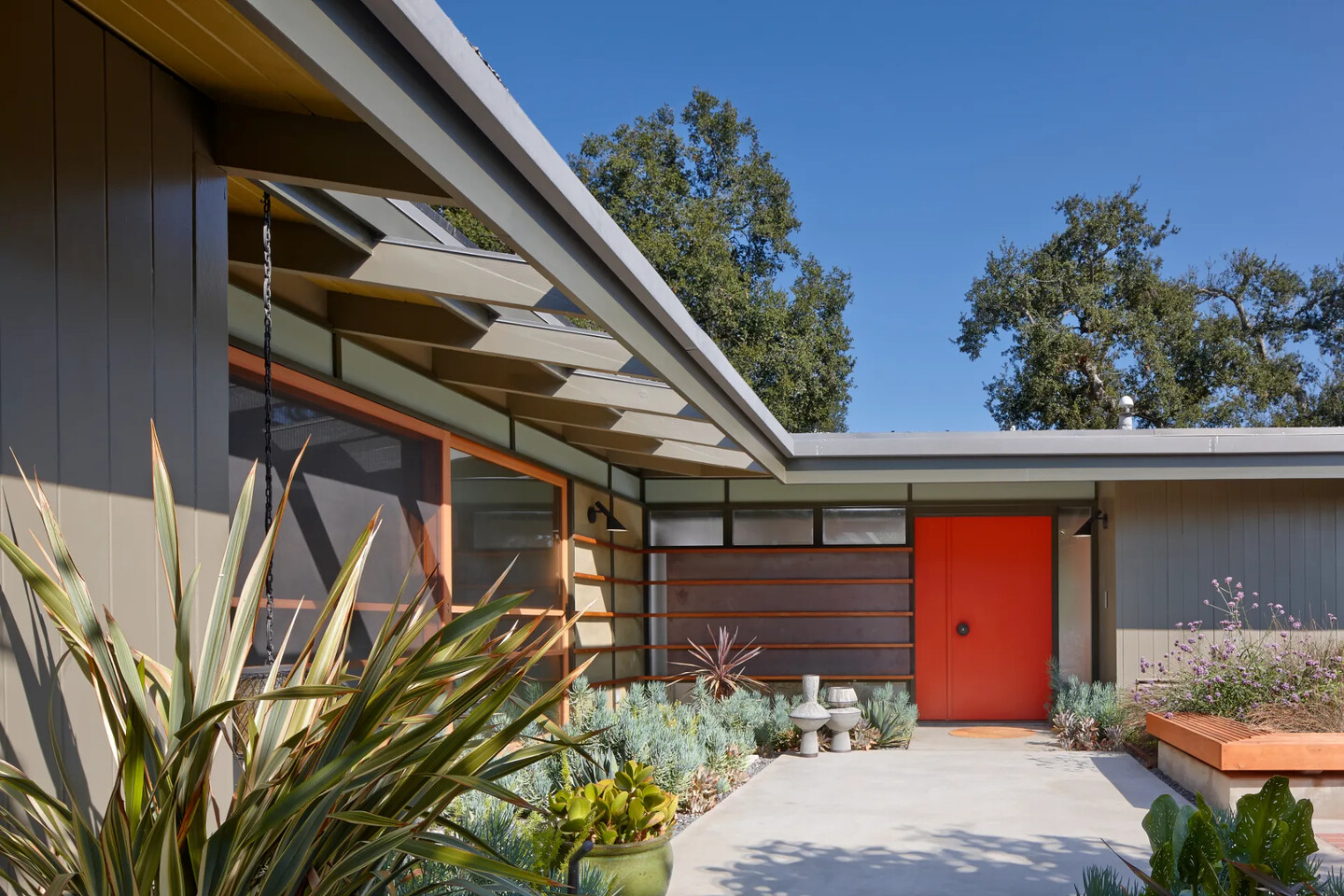
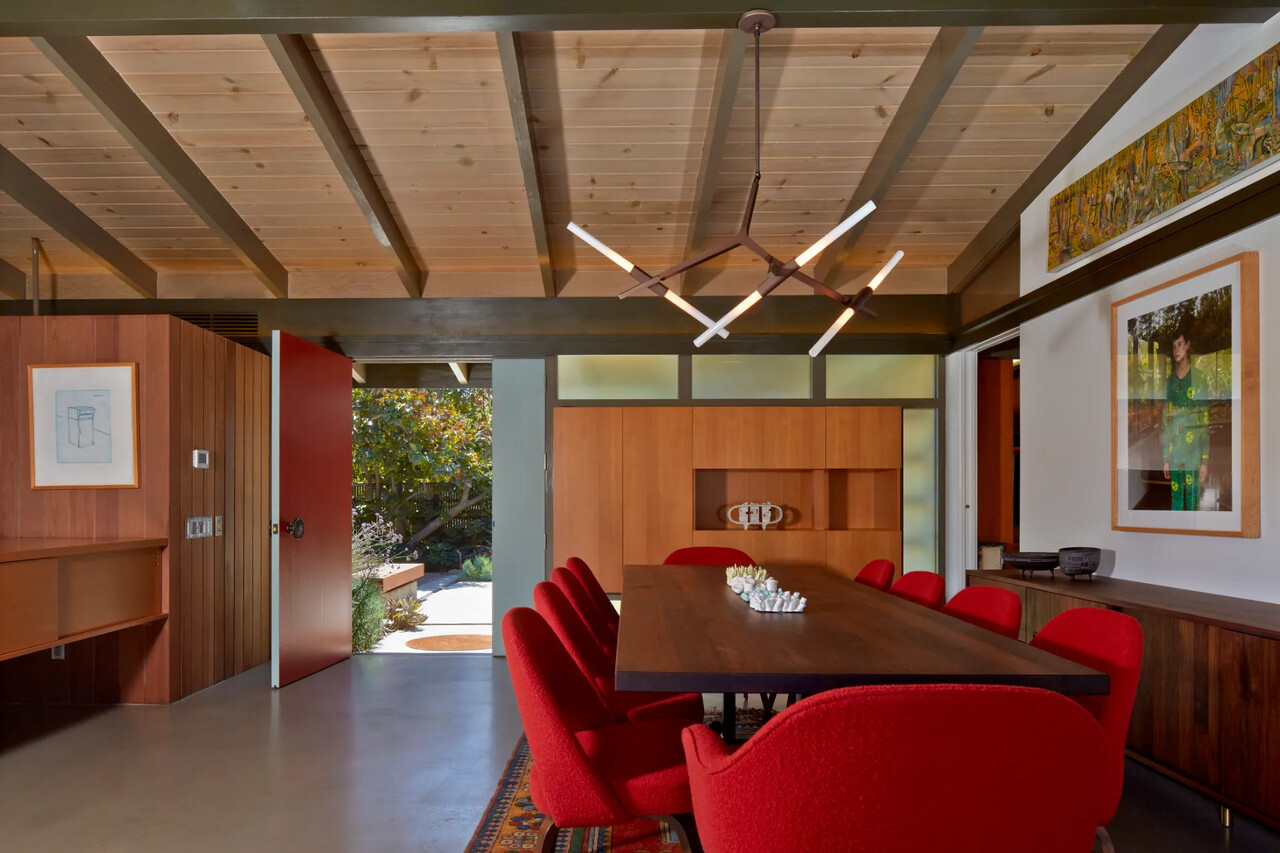
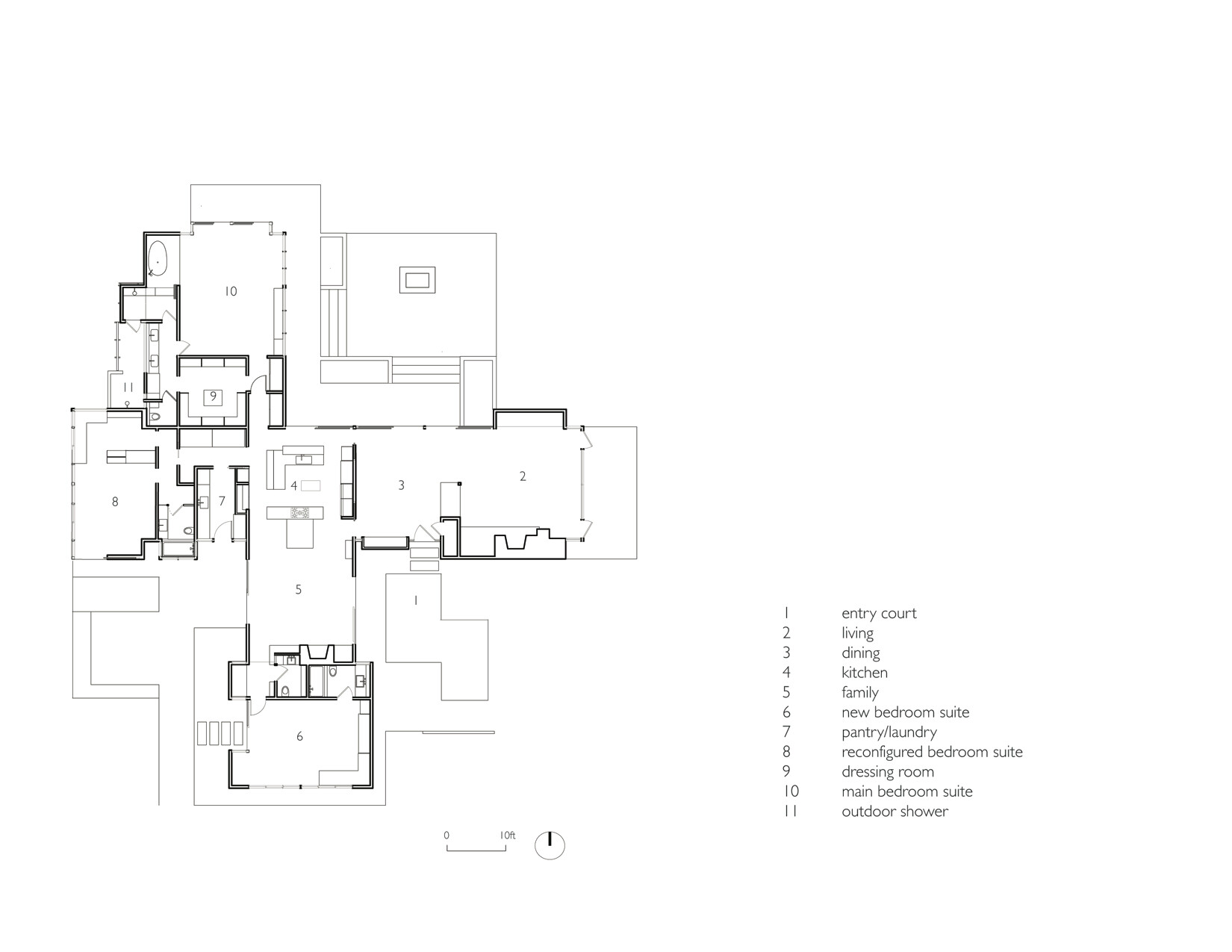
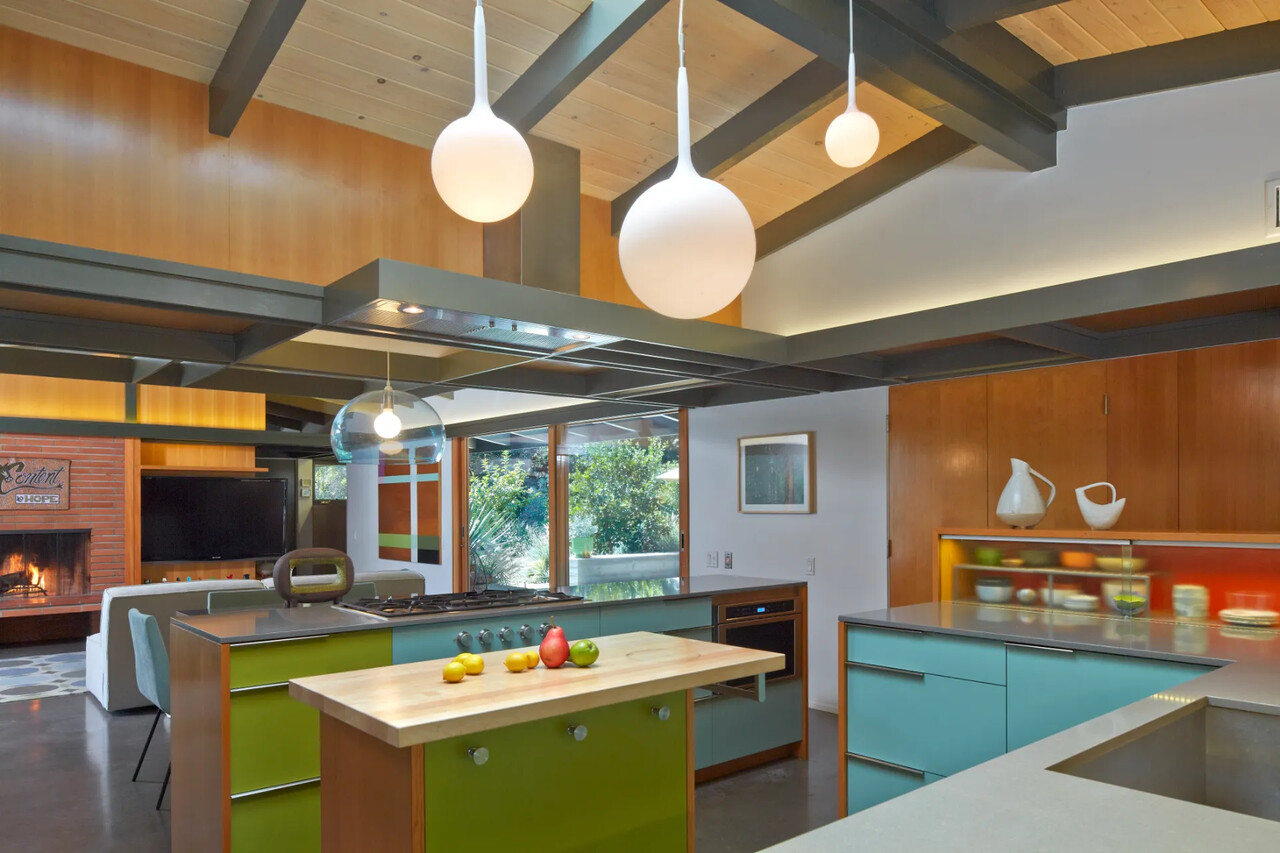
Located on the slope of shallow oak-studded valley, the secluded one-acre was once part of a grand estate. A pergola and tennis court remained from that time. In 1954, a house was built near the highest elevation of the site. Set apart from and overlooking the landscape, the original house, designed by Calvin Straub, in 1954 consists of four distinct wings that converged at a closed-in kitchen.
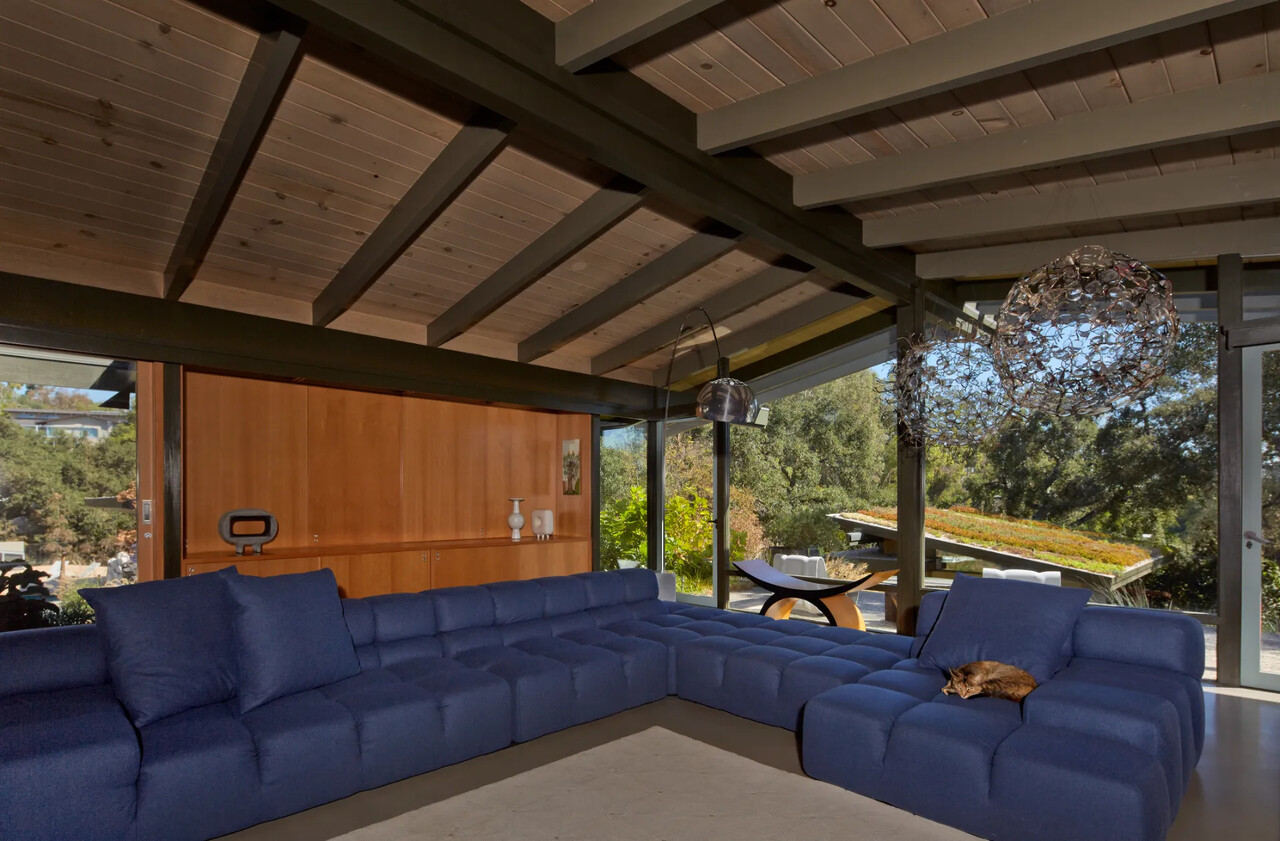
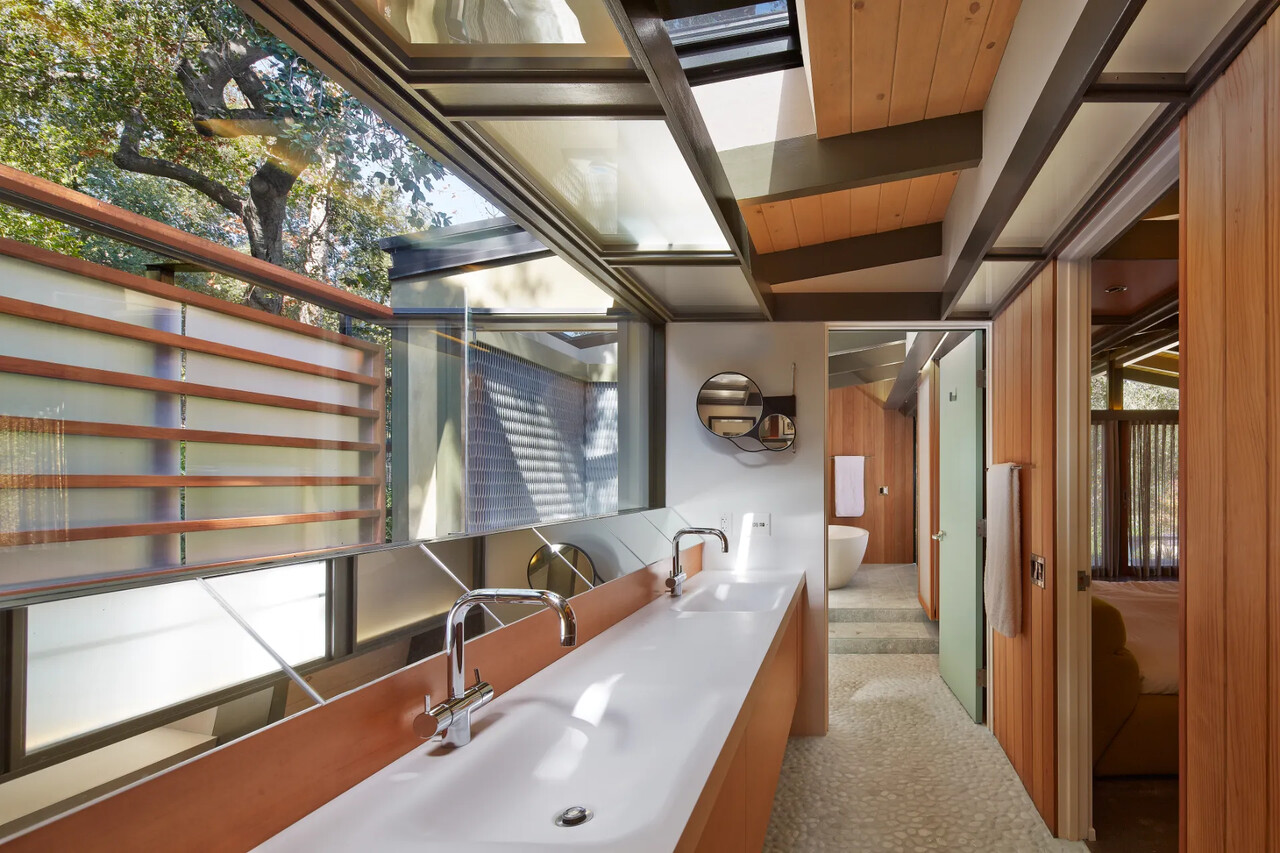
Below the shallow gable roofs, the house subscribes to a rigorous set of rules concerning structure, material and detail. Working off this matrix, the current update sets out to introduce a connectivity that was lacking and to weave in a set of new experiences. The sense of place that the house and the native landscape represented led the Owners to decide to sensitively extend the house and to build a series of satellite pavilions to provide for their needs. The collection of pavilions are sited in the clearings of mature oaks. In the desire minimize their perceived footprints, the project is an exercise in blurring figure and ground; building and landscape.
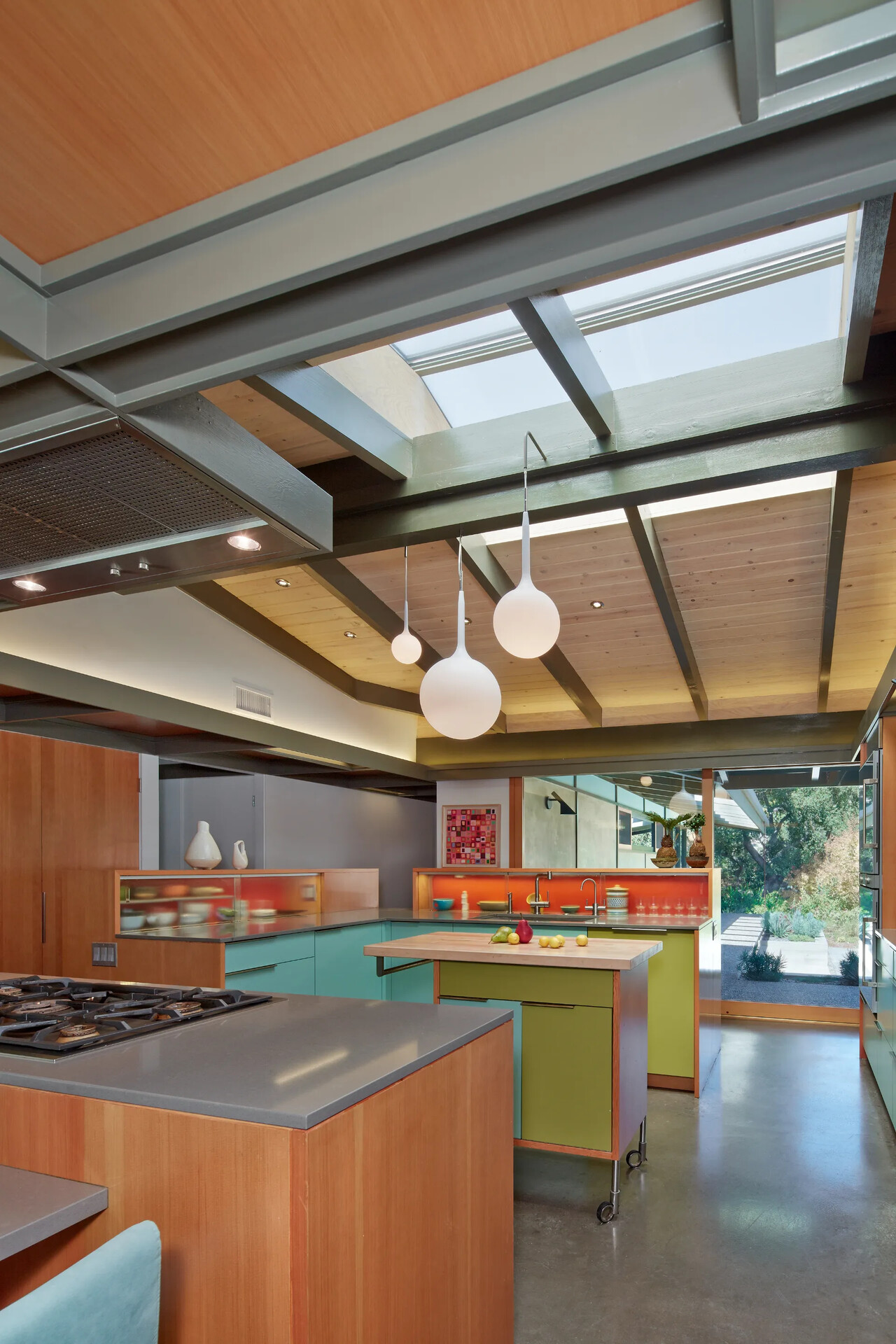
Main House
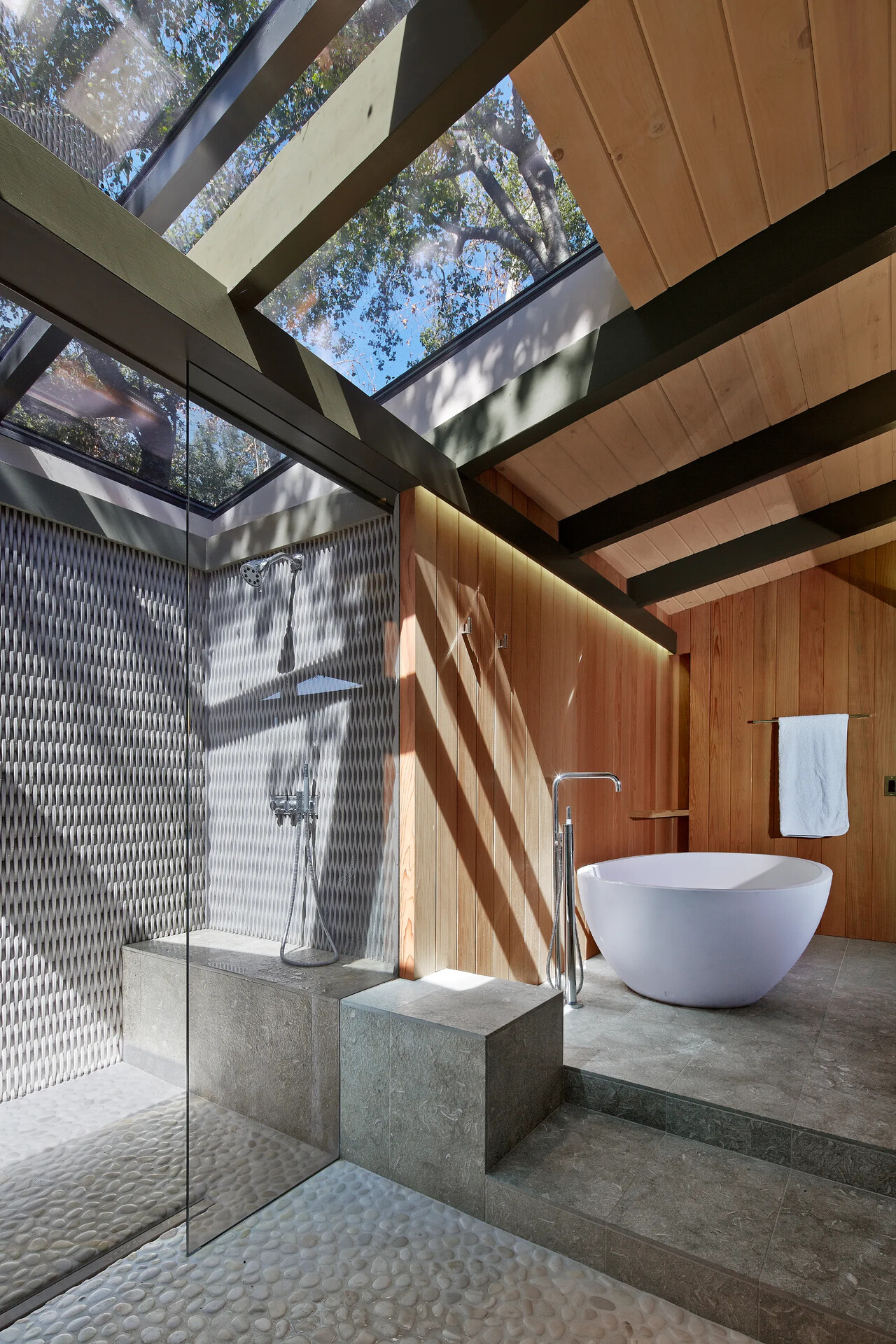
Navigating the tension between an imposed geometry and the natural topography, each pavilion evolves its form as they move across the site, from the cardinal order of the original house to the shifting geometry of the land. Each establishes a distinct relationship to main house; and each, opens up to and melds its built-form into the natural landscape. Roofs become ground planes, inside becomes outside; each structure supporting a relationship or a pursuit that matters deeply to the Owners.
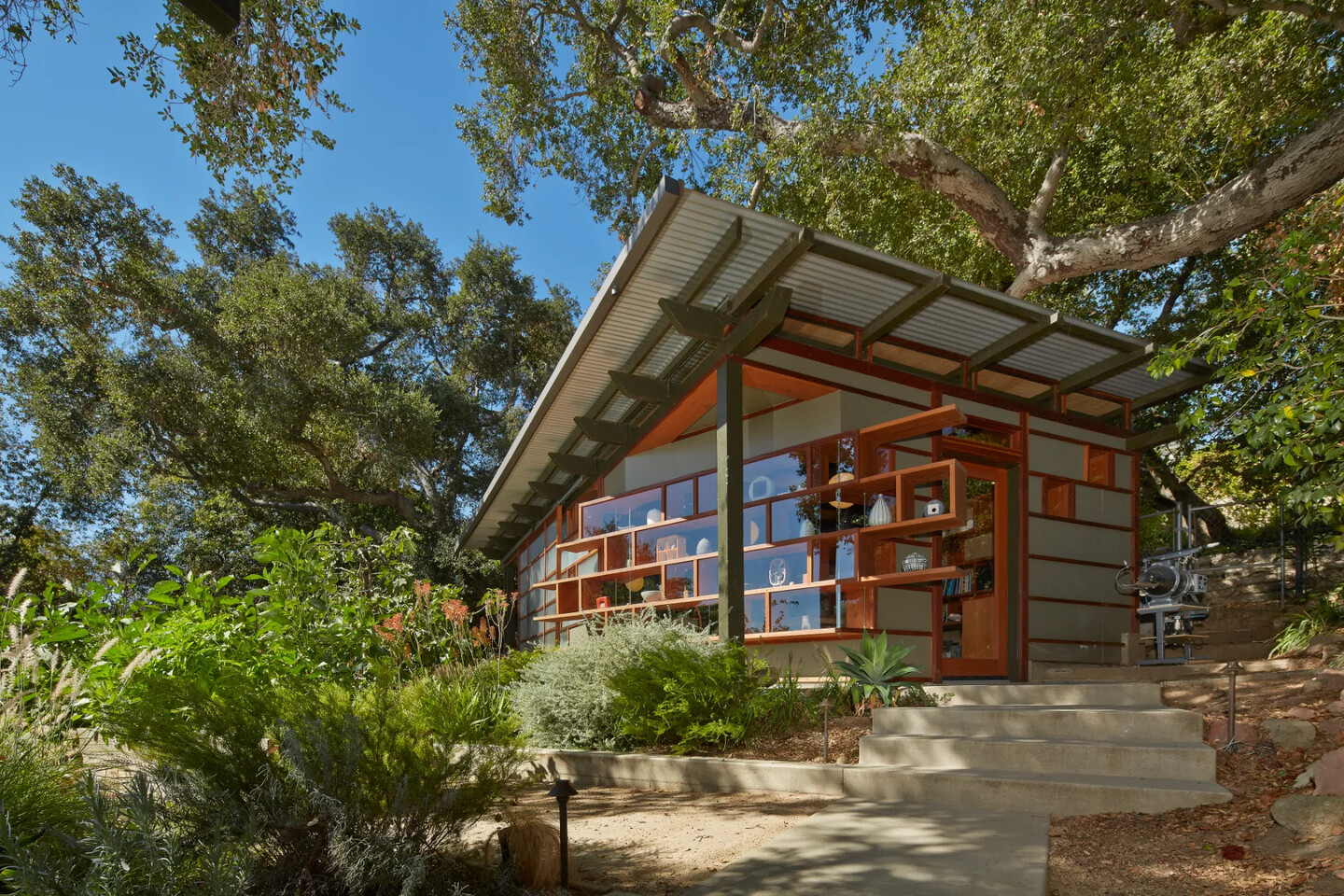
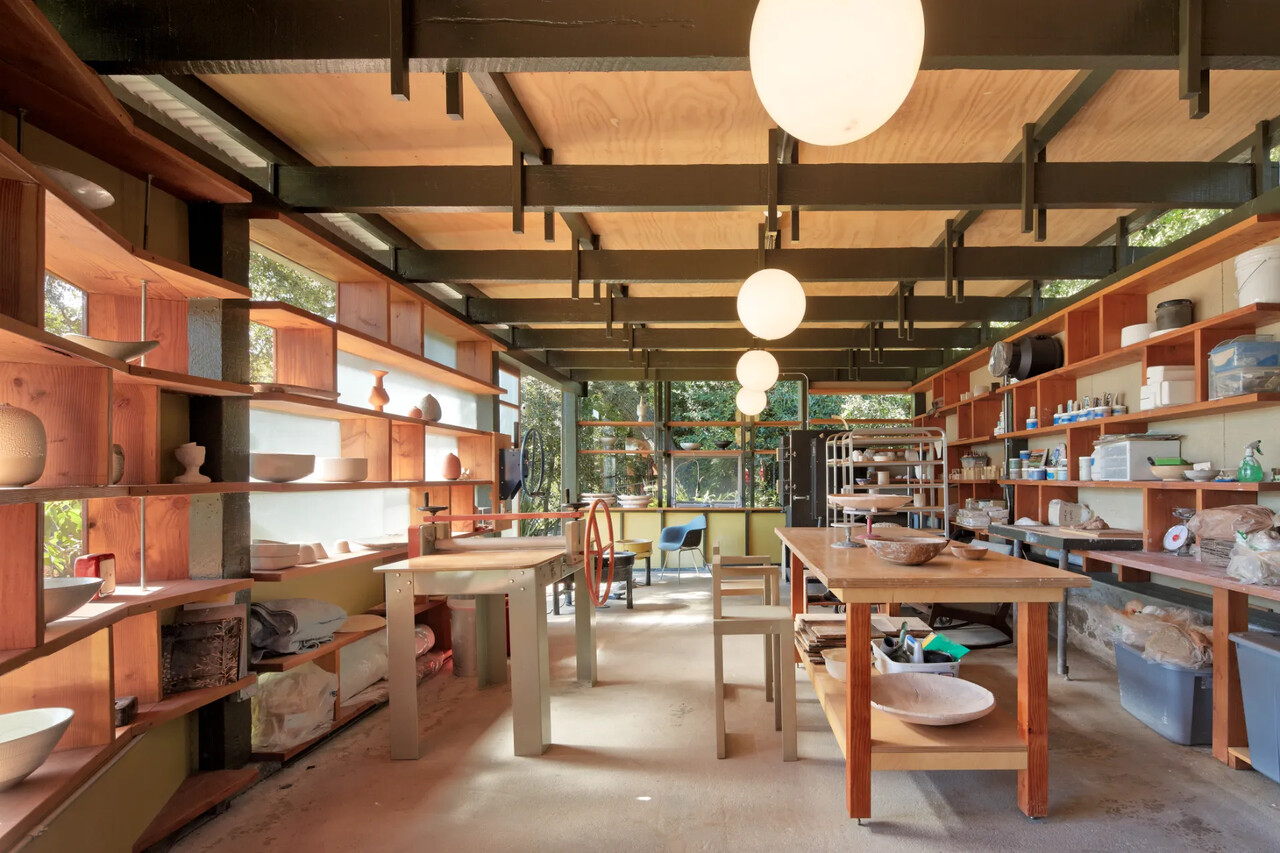
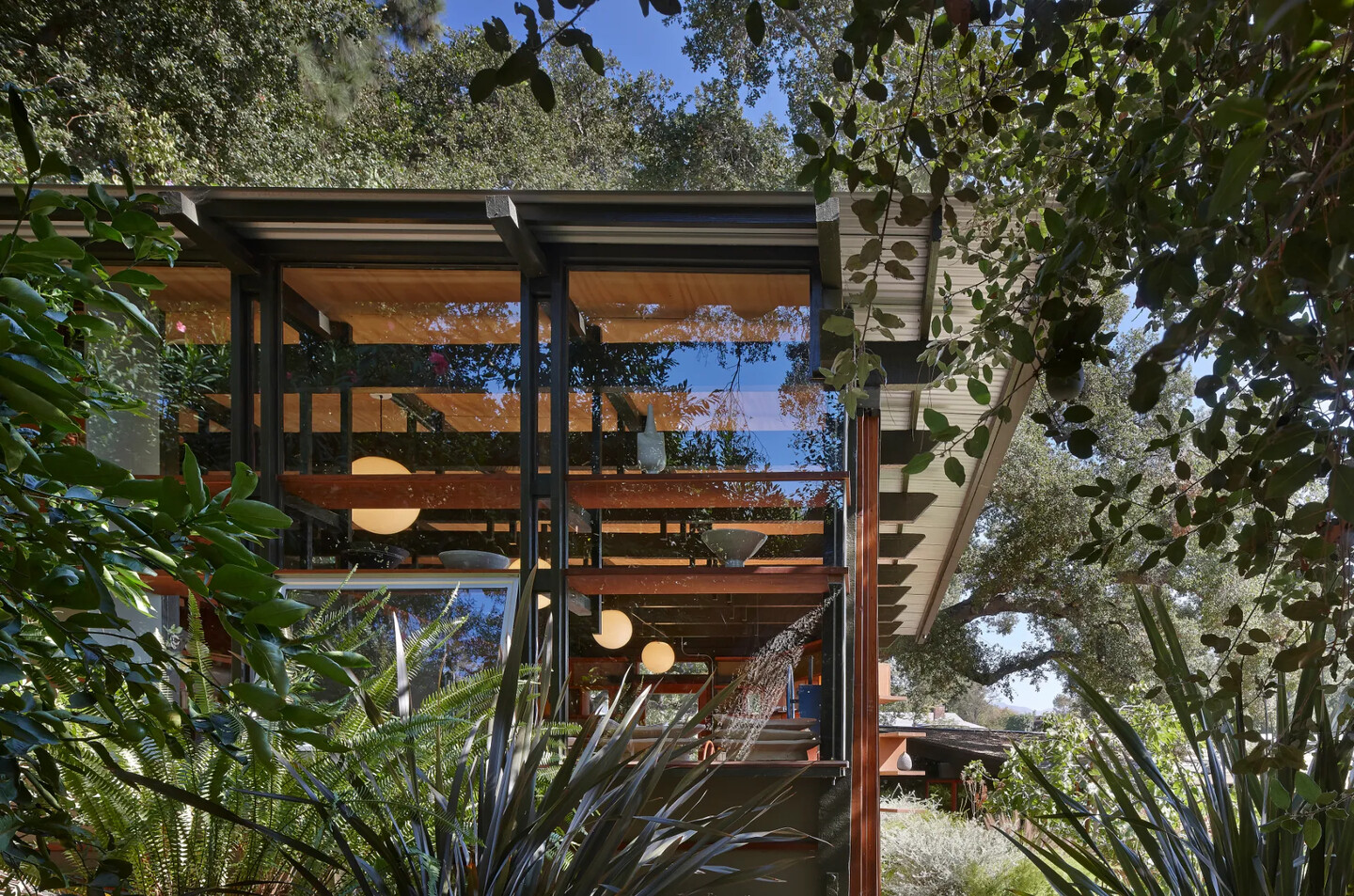
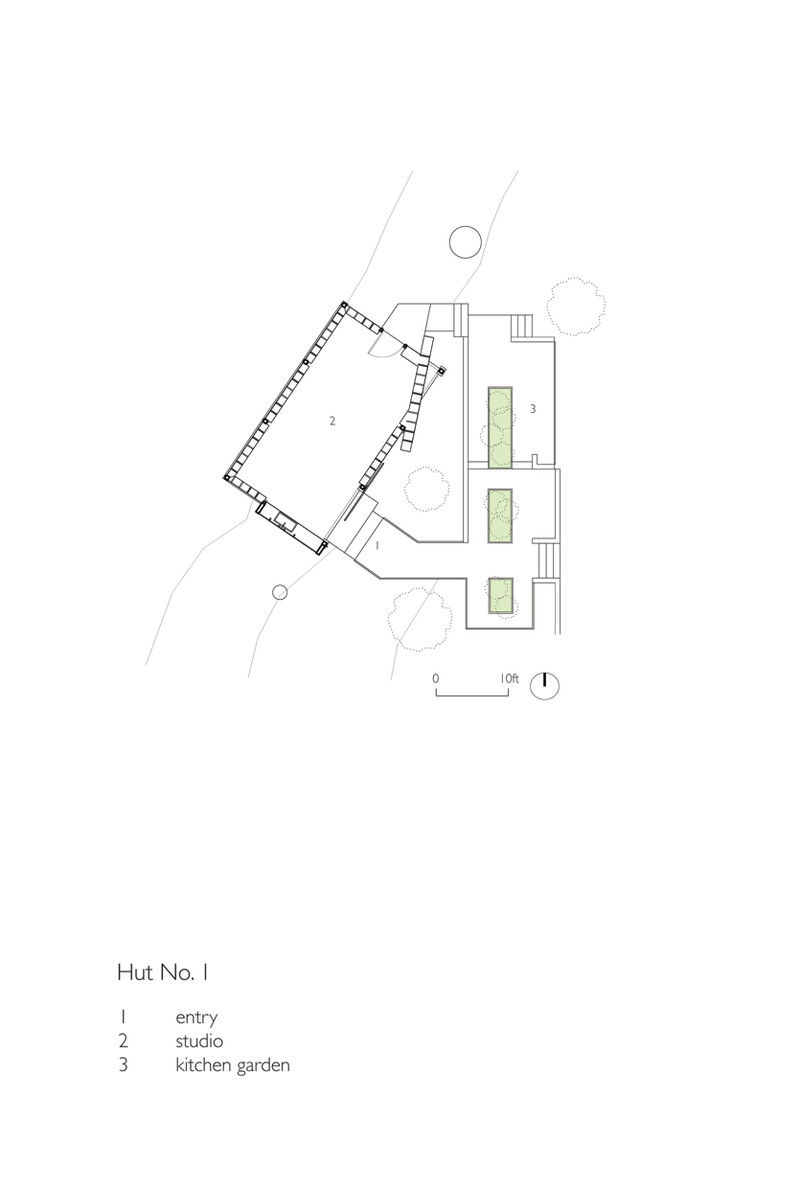
Built on a skeleton of posts and beams, ceramics studio's enclosure consists of glazing applied directly to shelves that are suspended between the original columns. This system provides ample storage and filtered light by day, and transforms into a glowing vitrine of pots and artifacts by night. A bank of shelves breaks free of the rectilinear volume to respond to the geometry of the main house and defines a kitchen garden court for outdoor living.
Blodgett-Calvin
住宅與陶瓷工作室
坐落於隱蔽的山谷中,這塊約一英畝的土地曾為宏偉莊園的一部份,周圍有著淺色橡樹點綴,當時的涼亭與網球場仍被完整保留。這座原始住宅位於可俯瞰美景的高處,由Calvin Straub於1954年設計,由四個獨特的翼狀結構組成,以封閉式廚房為核心,將房屋與景觀區隔。
人字型屋頂下的房屋建造遵從著一套嚴謹的結構、材料與細節規範,基於這個框架,此次的改造旨在加入缺乏的聯繫性,並融入一系列新的體驗。房屋與自然空間的原生景觀讓業主進行擴建時謹慎行事,建造了許多如同衛星般的小型館舍,集中於這片橡樹空地並環繞著主屋,以滿足使用需求。為了最大限度地減少對大自然的打擾,此建案是個模糊圖像背景、建築和景觀之間關係的實踐過程。
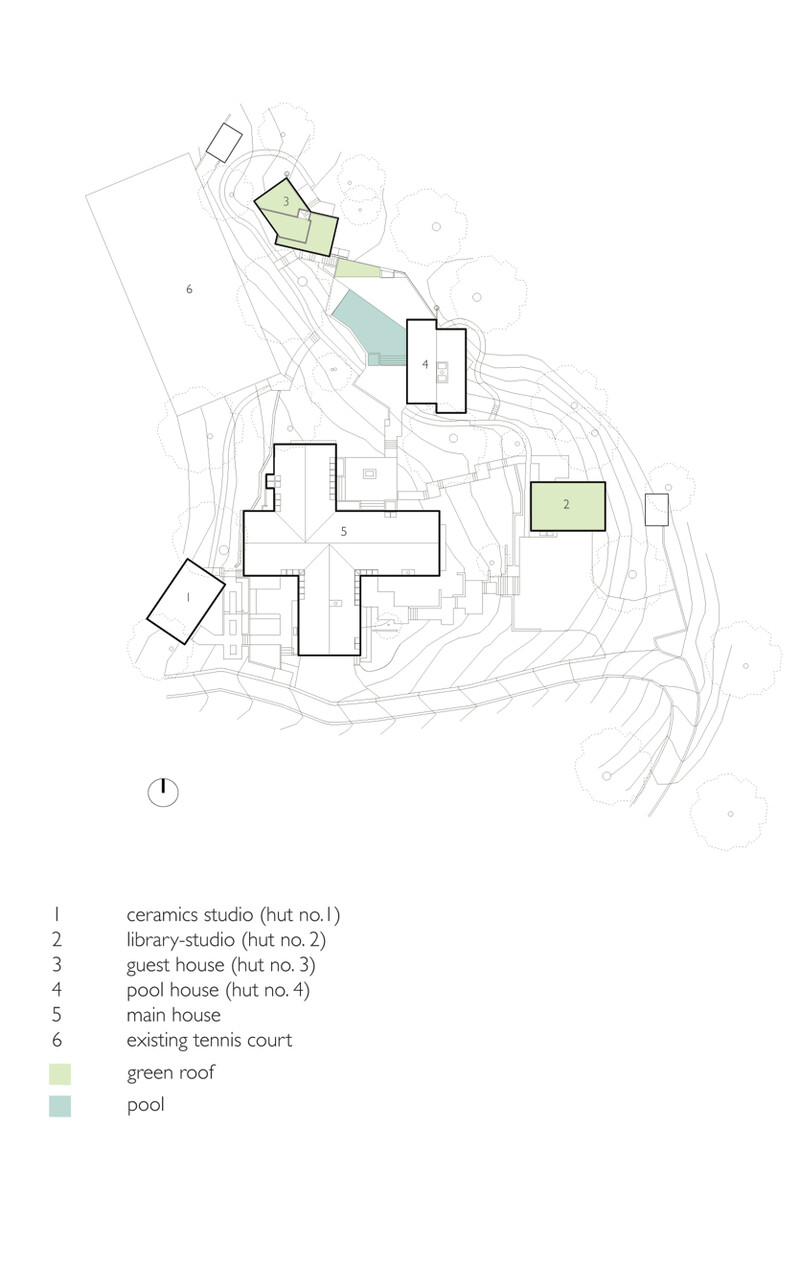
在人造的幾何建築物與自然地形的張力中,每個館捨隨著場域的不同衍伸出多變的視覺型態,從館捨的基本結構到土地地形的變化,每一棟館捨都與主要住宅建立了獨特關係,同時也融入於自然景觀之中。屋頂變成了地面,室內與室外交融,所有結構設計都呈現建築與自然平衡又變化的關係,這對業主來說意義深遠。
其中一座館捨為陶瓷工作室,以柱子和梁架為基礎骨幹,將玻璃牆幕與柱體結構相結合,圍合出此空間。除了能提供足夠的收納量,也能篩濾白天的進光量,在夜晚時則變身為璀璨的展示空間,秀出工作室中的陶罐與藝術品。此外,一排排的層板延伸並穿透矩形的建築,呼應一旁主屋的幾何形設計,同時也利用兩者棟距,定義出主屋廚房的花園腹地,供屋主享受戶外生活。