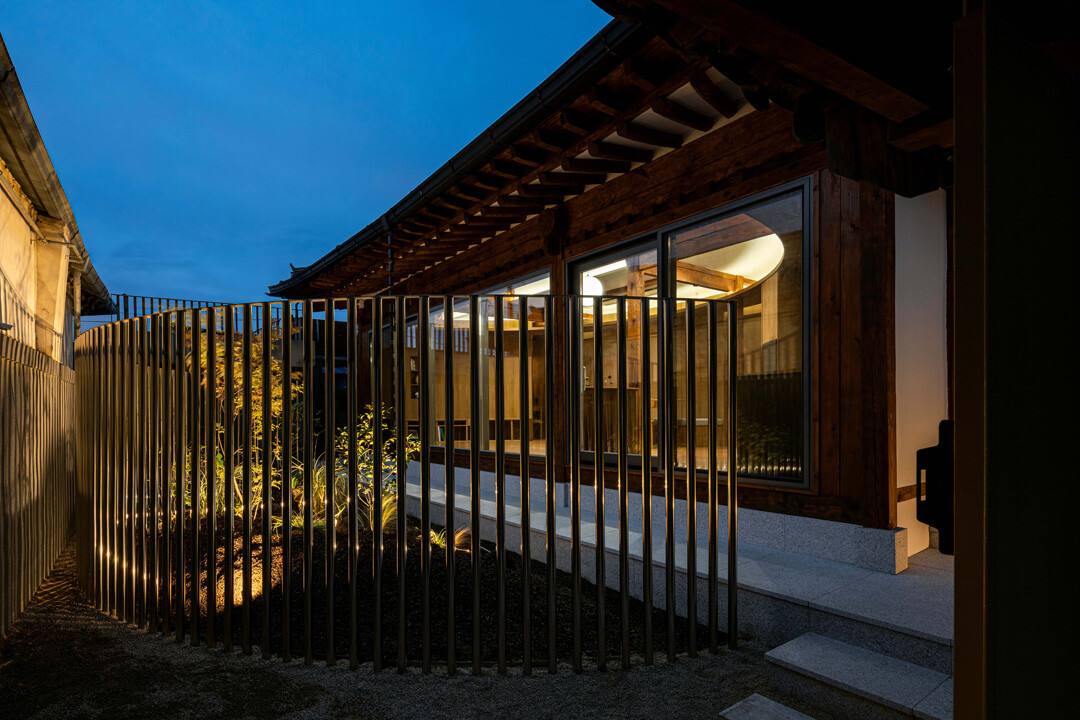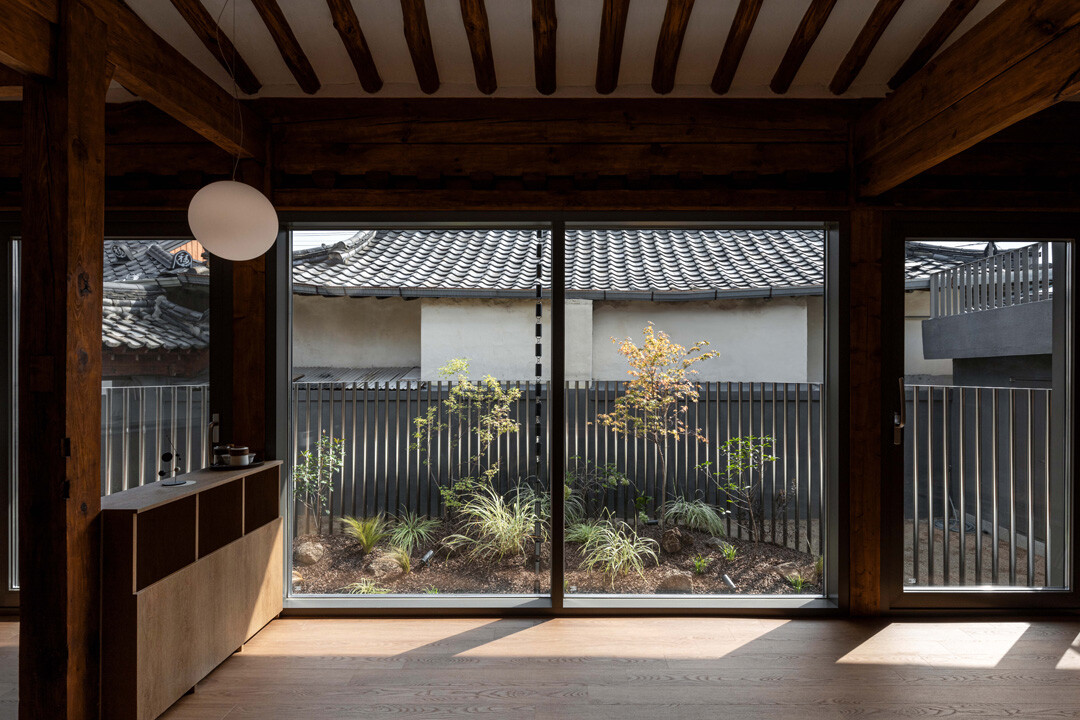
Boundary
Is space defined by boundaries? By posing this question, the architects were already challenging conventional notions of enclosure. Rooted in a deep reflection on the traditional hanok, the project sought to expand expectations of domestic space beyond the fulfillment of basic living needs. The ambition was to create a place where the day could begin with the first shaft of sunlight filtering beneath the eaves, aligning life’s rhythms with those of nature, and allowing tranquility to open into vitality. From this perspective, the design team pursued the dissolution of interior and exterior limits, exploring how architectural language might quietly express the rhythm of daily life rather than stand as a rigid structure.
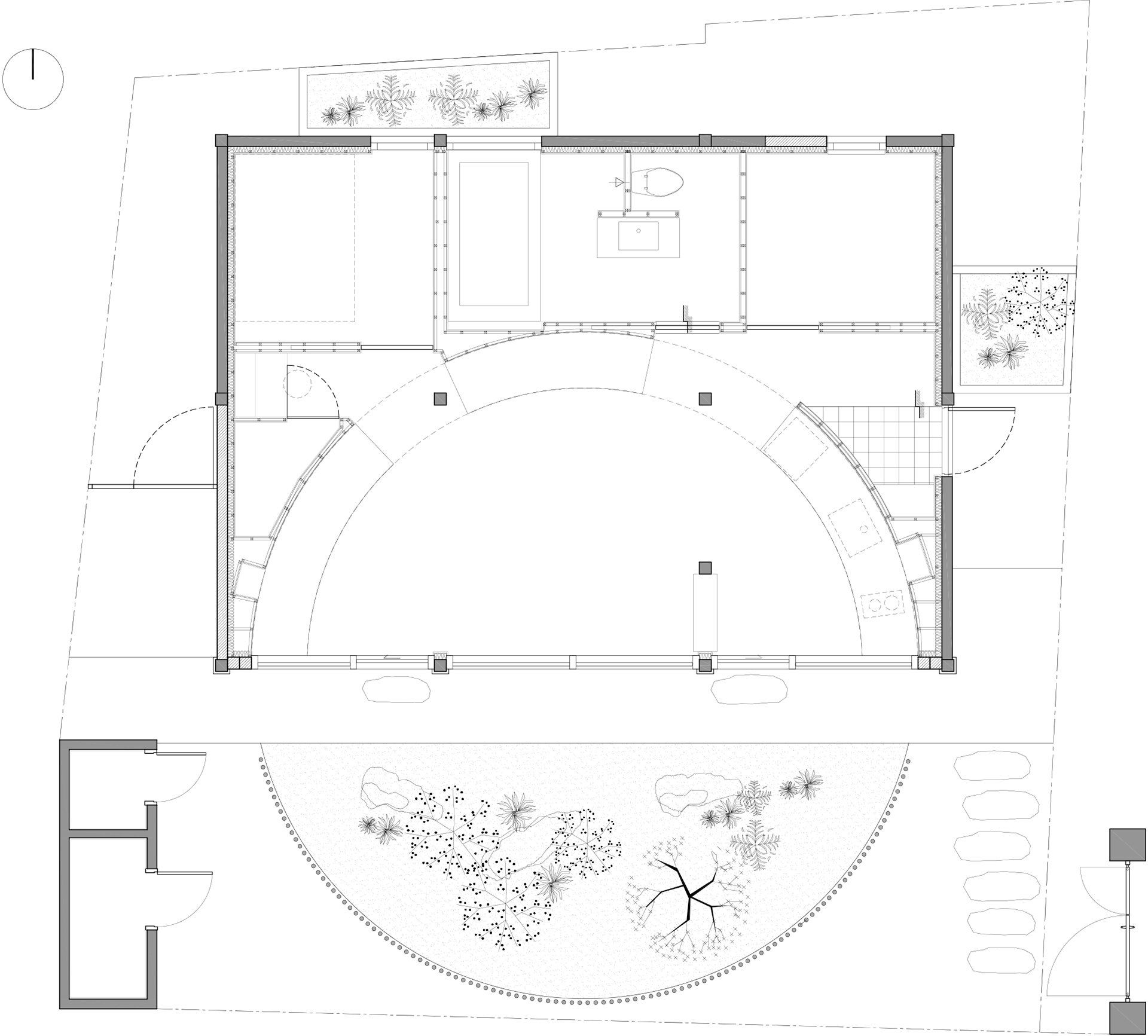
FLOOR PLAN
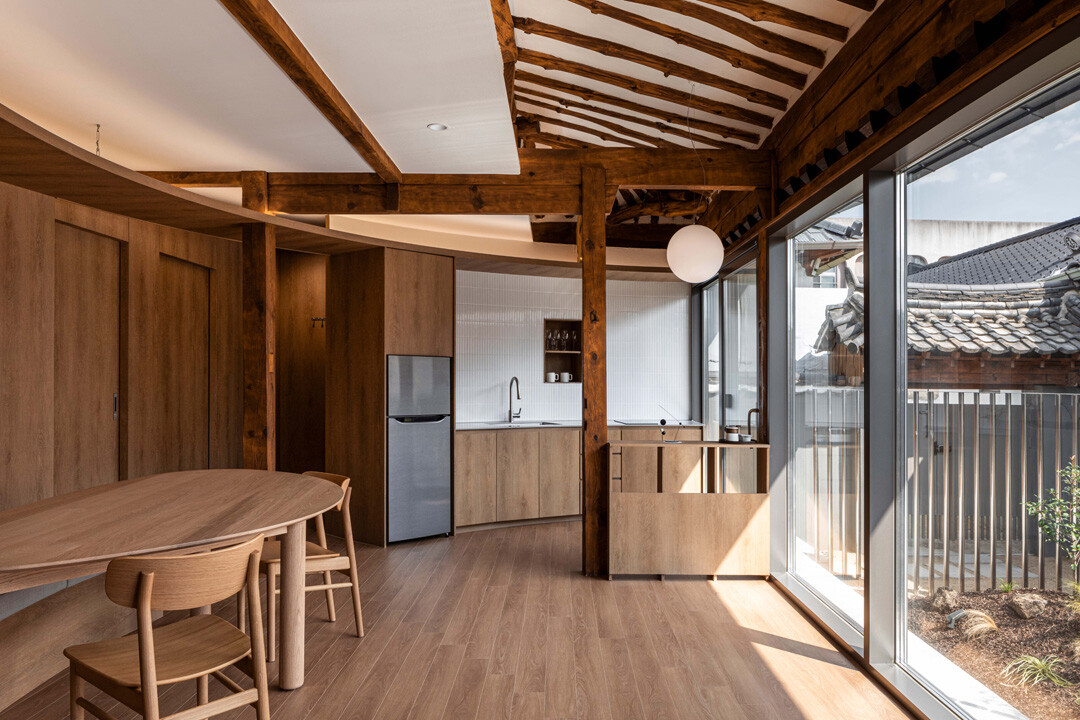
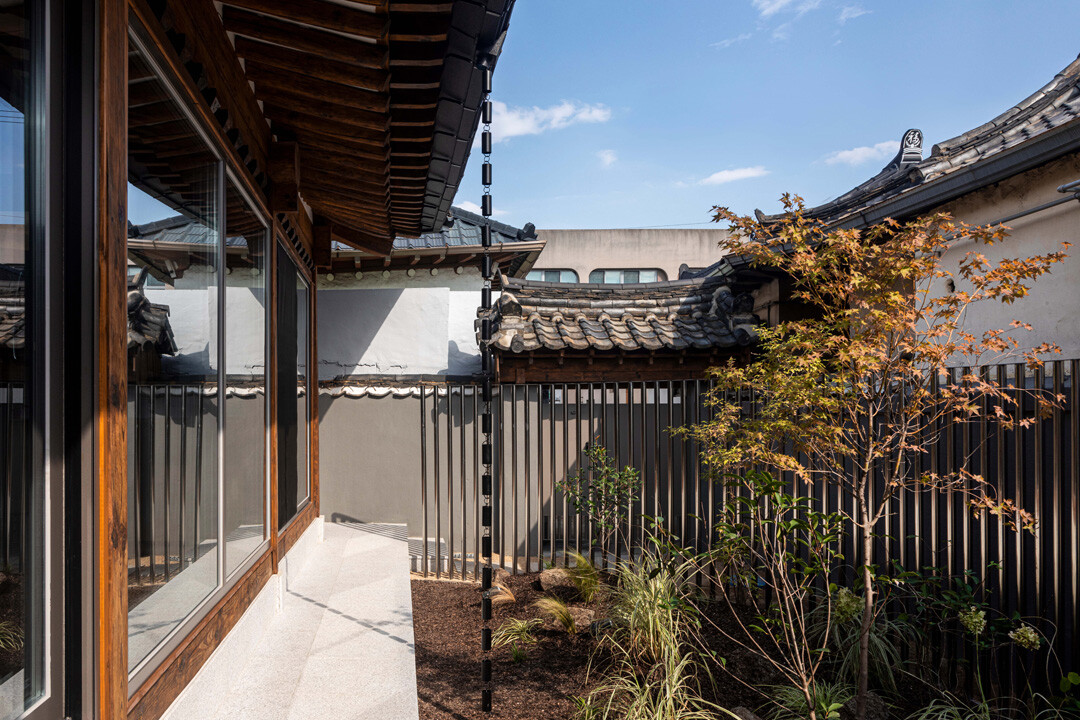
cmm Architects sought to shape a gradual spatial experience through the use of varied materials. Upon entering the house, one does not sense a rupture between inside and out. Instead, the transition is mediated by the texture of the ground underfoot, the rhythm of exposed timber beams and columns above, and the tiled roof that guides the gaze inward. Step by step, the impressions of the outdoors are drawn into the interior. These carefully orchestrated tactile and visual cues allow spaces to unfold in sequence, so that every moment appears like a framed landscape—an ever-present scene inviting pause and contemplation.
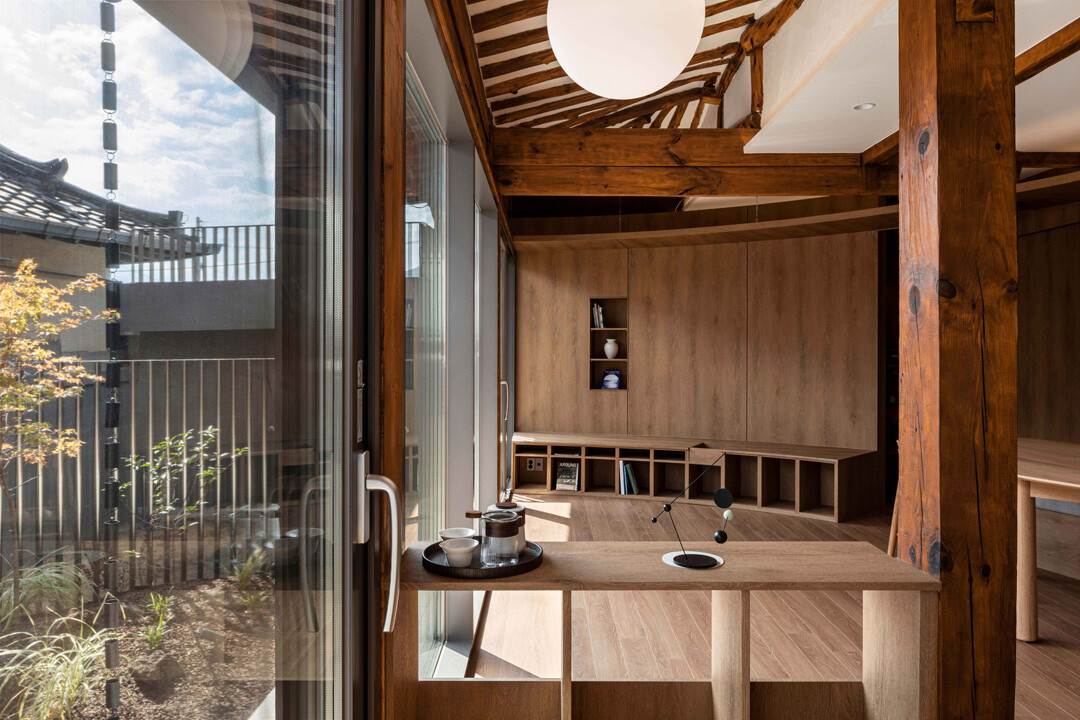
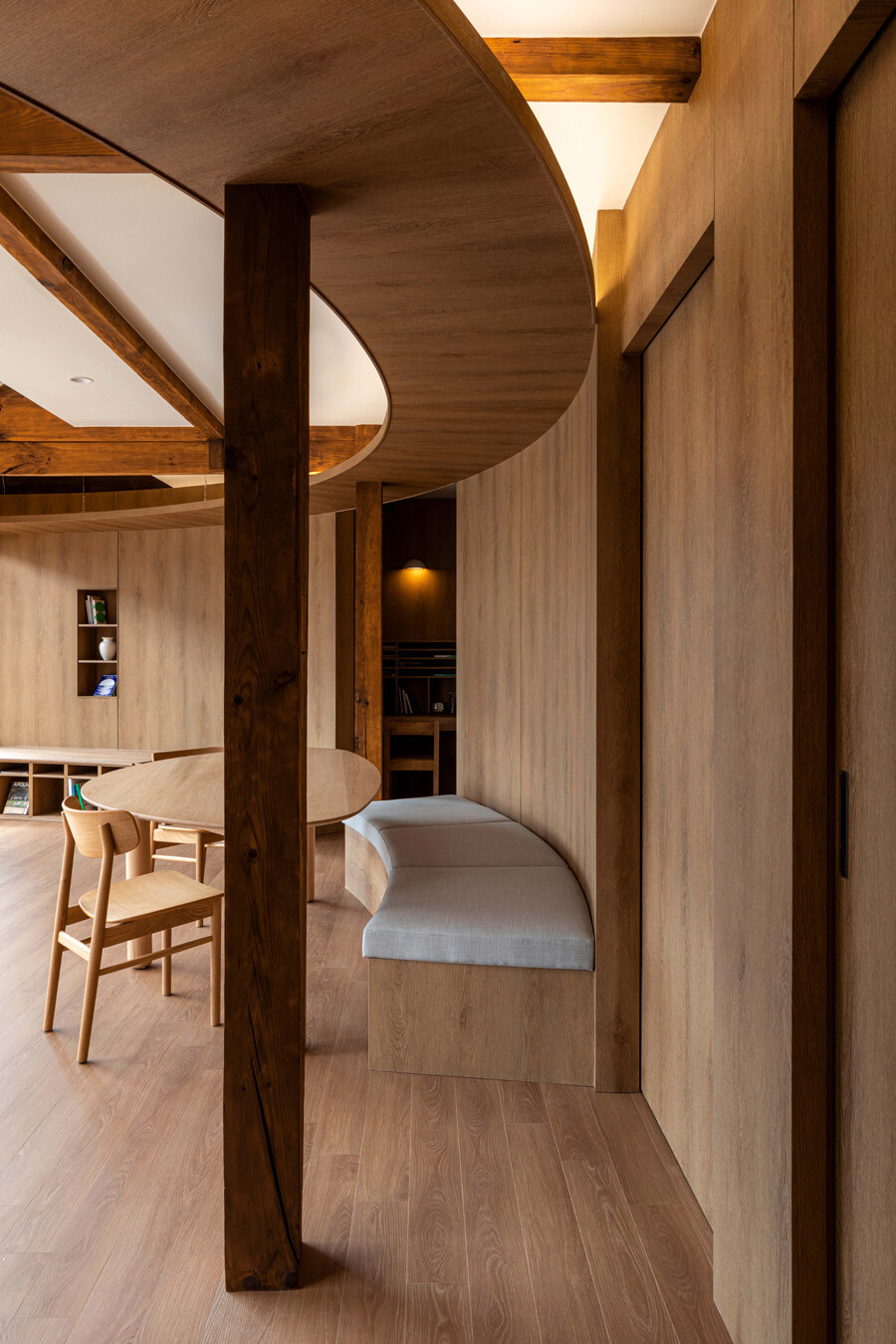
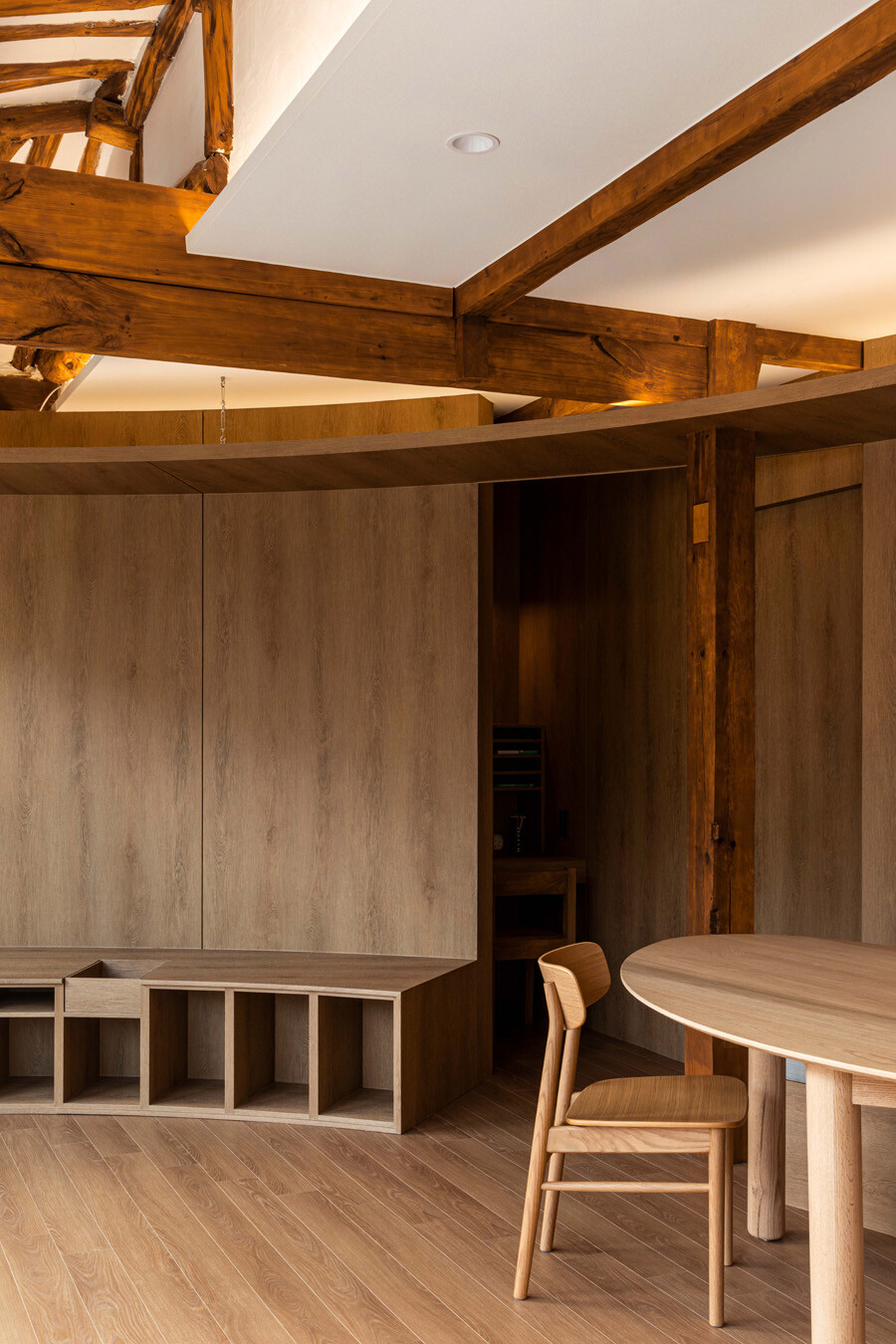
At the heart of the design lies a spatial softness shaped through curvature. Rather than a literal circle, a sense of rounded continuity emerges as the garden and interior form a reciprocal whole. The curved lines temper the building’s stance, producing an enclosure whose circle seems without beginning, yet whole in itself. Even when juxtaposed with the angular geometry of the hanok, this rounded gesture appears seamless. The courtyard seems to grow in tandem with the architecture, establishing a dialogue between interior and exterior, between the tangible and the intangible—bringing coherence to the view while reinterpreting the very notion of “boundary.”
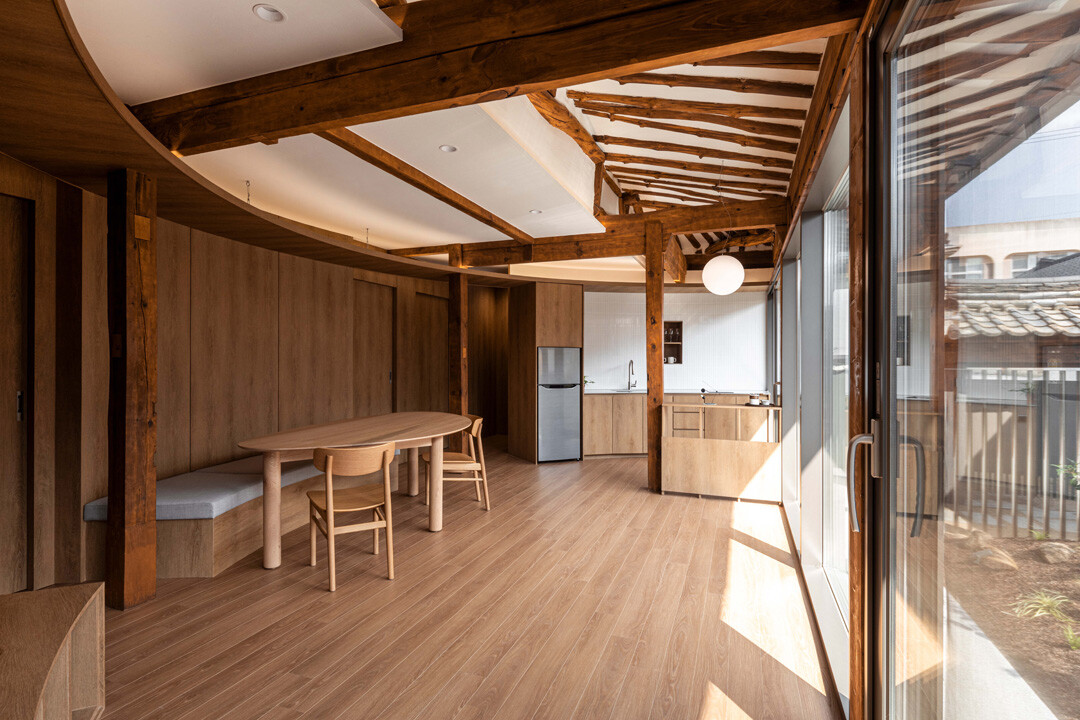
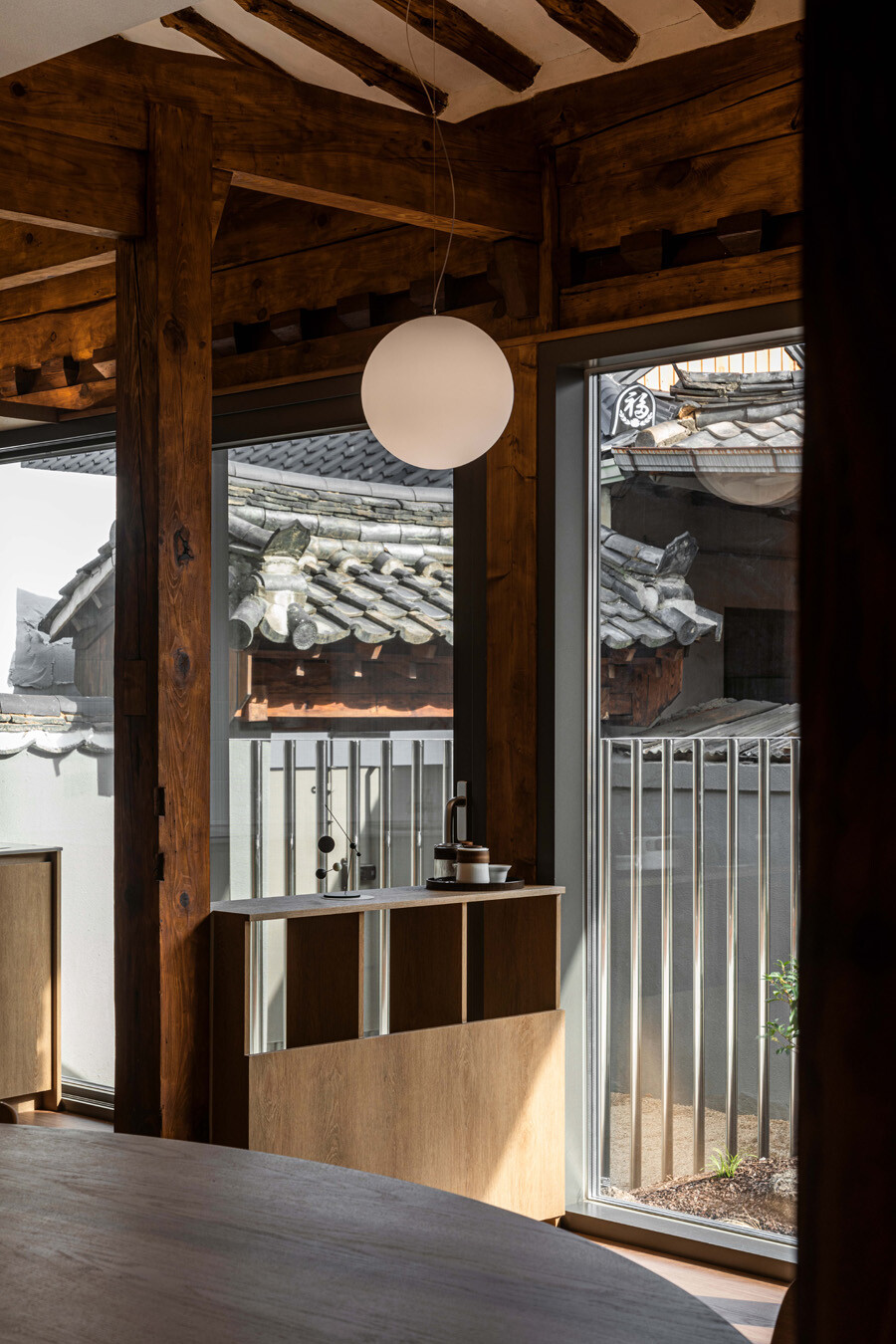
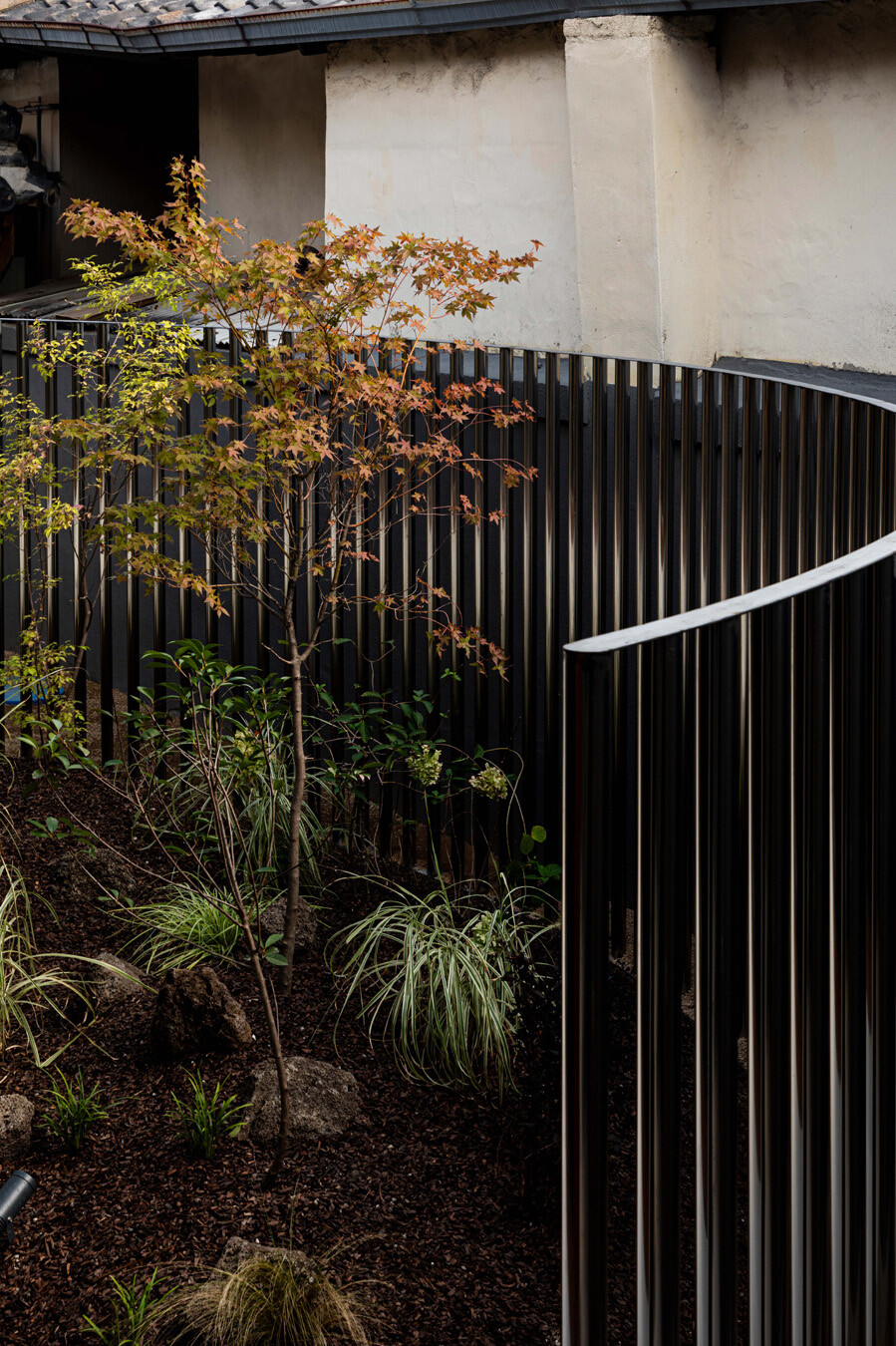
Through this project, the architects convey an ethos of coexistence between architecture and nature. By crafting a continuous experience, sunlight and timber flooring form one half of a circle, while landscape plantings and masonry walls complete the other. As the building quietly steps back, ceding the stage, it is nature, light, and material that come to the fore. In this deliberate emptiness lies fullness, as the dwelling becomes whole precisely through its embrace of incompleteness.
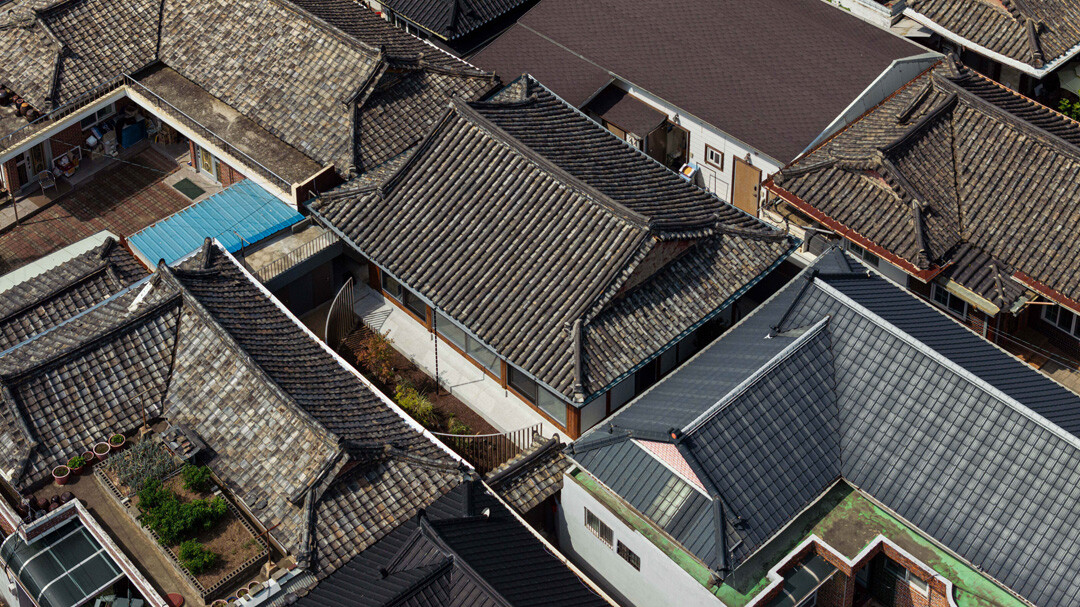
Principal Designers | Eom Taegyu / Bang Giae
Character of Space | Residence
Gross Floor Area | 61 ㎡
Structure | Wooden Structure
Materials | Exterior Oil Stain / Cement Mortar Finish / Terraco Granule Finish / Flamed Pocheon Granite
Location | Gyeongju, South Korea