九間廊橋
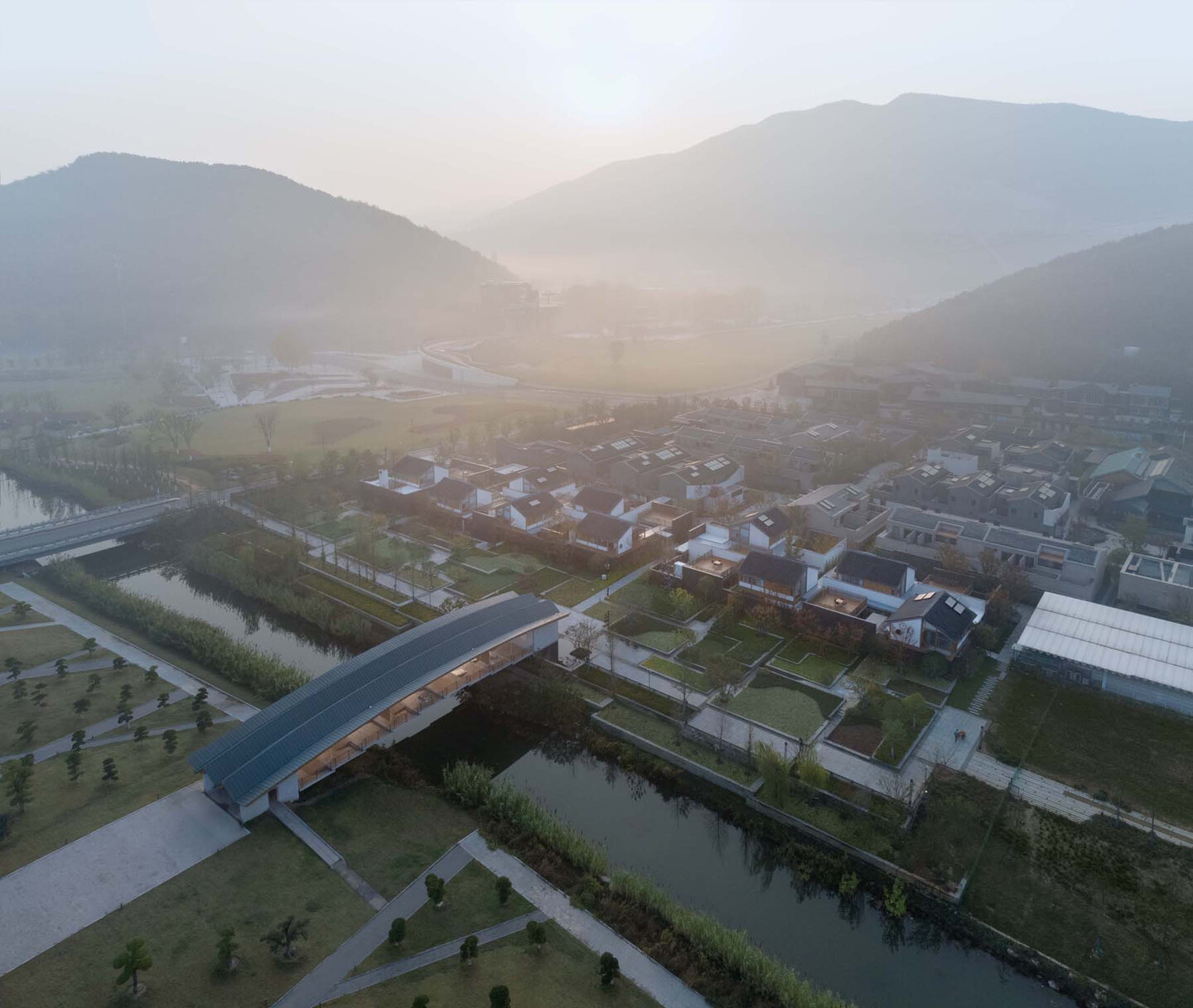
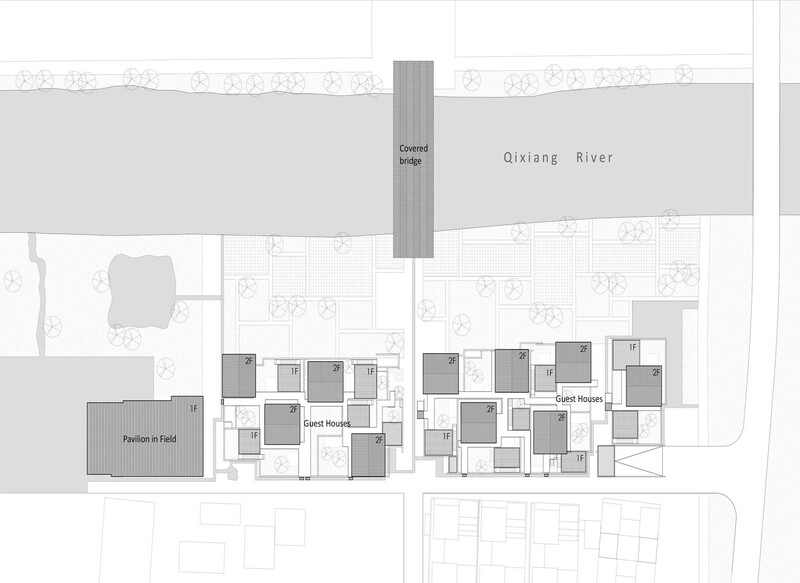
園博村在南京園博園北區的線山之陰,地勢南高北低,山水秀在這裡設計了VOCO民宿酒店的北區客房、西北角的瓜田小棚和村北的步行廊橋。這一段七鄉河沿線山北麓流淌,東西兩面可順著山谷遠眺寶華山、鐘山方向,景色頗佳。步行橋將村子和北面的珍寶館聯繫起來,方便客人來往。從北向南過河,這座橋是進村的步行通道,村後的線山、連山、陽山礦坑在眼前展開。在此處造一座步行橋,除了滿足通行之外,我們還希望它是一處休憩之所,一個村北的地標,讓人望橋而有“歸家”在即的感受。
The Horticultural Expo Village is located at the northern slope of the Xian Mountain, which is in the northern part of the 11th Horticultural Expo Park, Nanjing. The terrain is high in the south and low in the north, where Scenic Architecture Office designed the Northern Inn of VOCO B&B Hotel, a small shed in the northwest corner of the melon field and a covered pedestrian bridge to the north of the village. This stretch of the Qixiang River flows along the northern foot of the Xian Mountain, and the east and west sides offer a great view of the valley in the direction of Baohua Mountain and Zhong Mountain. The pedestrian bridge connects The Horticultural Expo Village and the Jumbo Museum to the north of it, making it easy for guests to come and go. Crossing the river from the north to the south, the Bridge of Nine Terraces is a walking pathway into The village, with the Xian Mountain, Lian Mountain, and Yangshan Mine Pit unfolding in front of you behind the village. In addition to meeting the circulation needs, we hope to build a pedestrian bridge here as a resting place and a landmark to the north of the village, so that seeing the bridge gives people a feeling of "going home".
在過往的橋梁類型中,廊橋是一種“慢”橋,橋上的覆蓋結構能夠提供觀景、休息甚至集市活動的空間。廊橋的案例遍及世界,中國南方、歐洲、北美均廣有分布,結構體系大都依托下部結構支撐上部的廊亭,比如泰順的互承木桿拱廊橋、威尼斯的Ponte di Rialto 石拱橋、盧塞恩用連續橋墩支撐的 Chapel Bridge,也有結構與空間結合的,比如麥迪遜縣的類桁架廊橋。在南京園博村,我們嘗試從環境風貌和人的體驗出發,為這座廊橋探索恰當的結構形制。
Among the existing types of bridges, covered bridge is a kind of "slow" bridge, with a covered structure that provides space for viewing, resting and even market activities. There are many examples of covered bridges all over the world, in southern China, Europe and North America. Most of them rely on substructures to support the upper pavilions, such as the inter-bearing wooden pole arch bridge in Taishun, the Ponte di Rialto stone arch bridge in Venice, the Chapel Bridge supported by continuous piers in Lucerne, there are also bridges that combines of structure and space, such as the truss-like corridor bridge in Madison County. In Nanjing Horticultural Expo Village, we tried to explore the appropriate structural form for this bridge in terms of surrounding landscape and visitors’ experience.
七鄉河的駁岸是自然放坡,由於豐水期和枯水期水位相差較大,河寬的變化在18米到30米之間。這一方面使結構跨度達到37.8米,另一方面,橋面標高需要一直維持在高水位再加通船的安全高度之上。如果采用傳統的拱橋形式,至少3米的起拱高度將使上下橋變難,也無法解決無障礙的需求;如果采用單跨普通箱梁,底部結構厚度將近2米,同樣對步行體驗不友好,在枯水期更會削弱橋上觀水的親切尺度;如果采用細桿拱或桁架結構,高大的結構構件會有很強的工業感,很難與村莊風貌協調——在幾種常用的結構形式碰壁之後,我們再次從雙坡屋頂這一傳統民居形制中找到了方向。
The barge of the Qixiang River is naturally sloped, and the width of the river varies between 18 and 30 meters due to the large difference in water level between the abundant and dry periods. This makes the structure span up to 37.8 meters on one hand, and on the other hand, the bridge deck elevation needs to be maintained above the high water level plus the safe height for boat traffic all the time. If the traditional arch bridge form is used, an arch height of at least 3 meters will make it difficult to get on and off the bridge, and will not solve the accessibility needs; if the single-span ordinary box girder is used, the bottom structure thickness would reach nearly 2 meters, which is also not friendly to the walking experience, and will weaken the intimate scale of water viewing on the bridge during the dry period; if the thin rod arch or truss structure is used, the tall structural members will have a strong industrial feel, which will be hard to coordinate with The village’s landscape –After several common structural forms proved to be unsuitable, we once again found our way to the traditional dwelling form of the double-pitched roof.
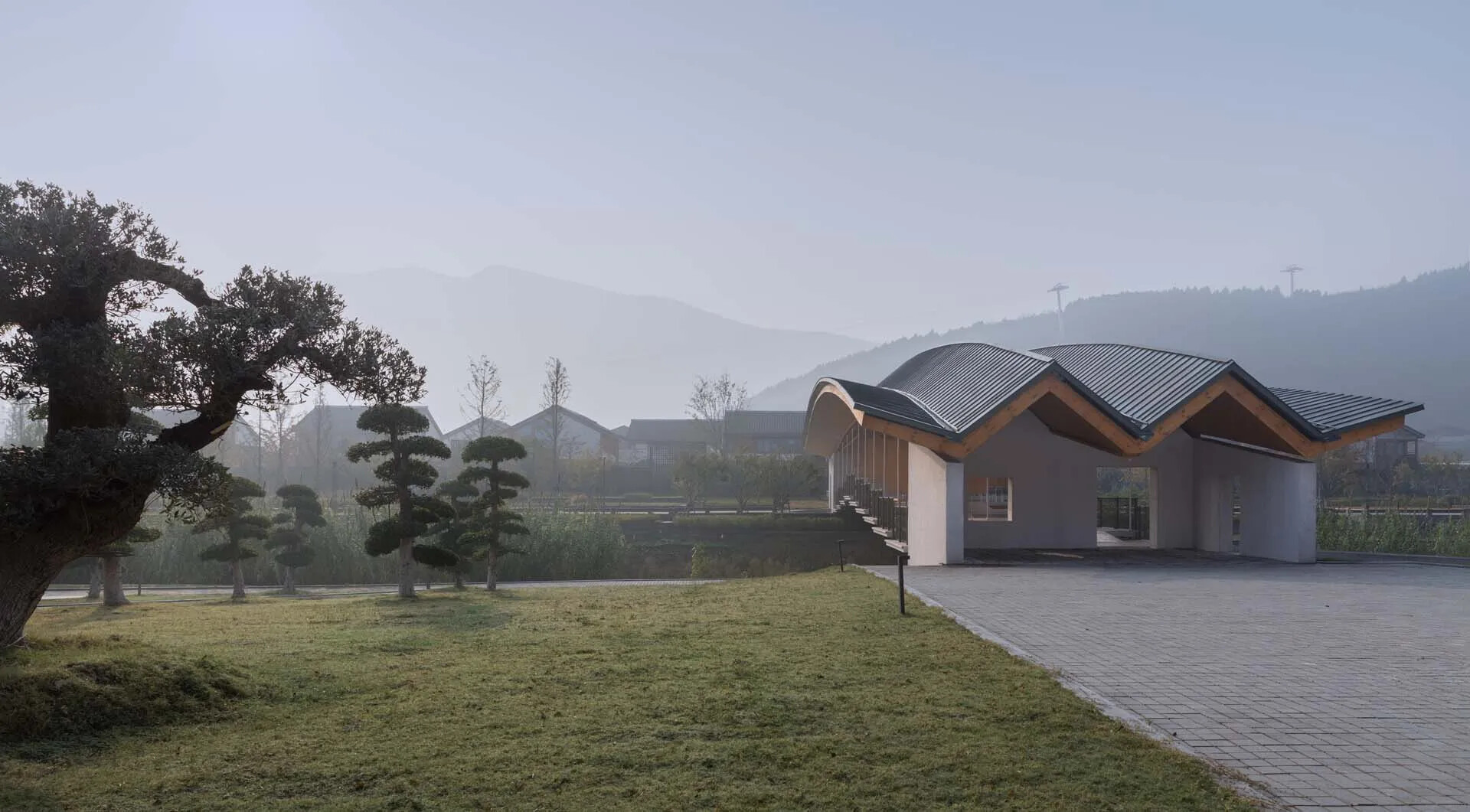
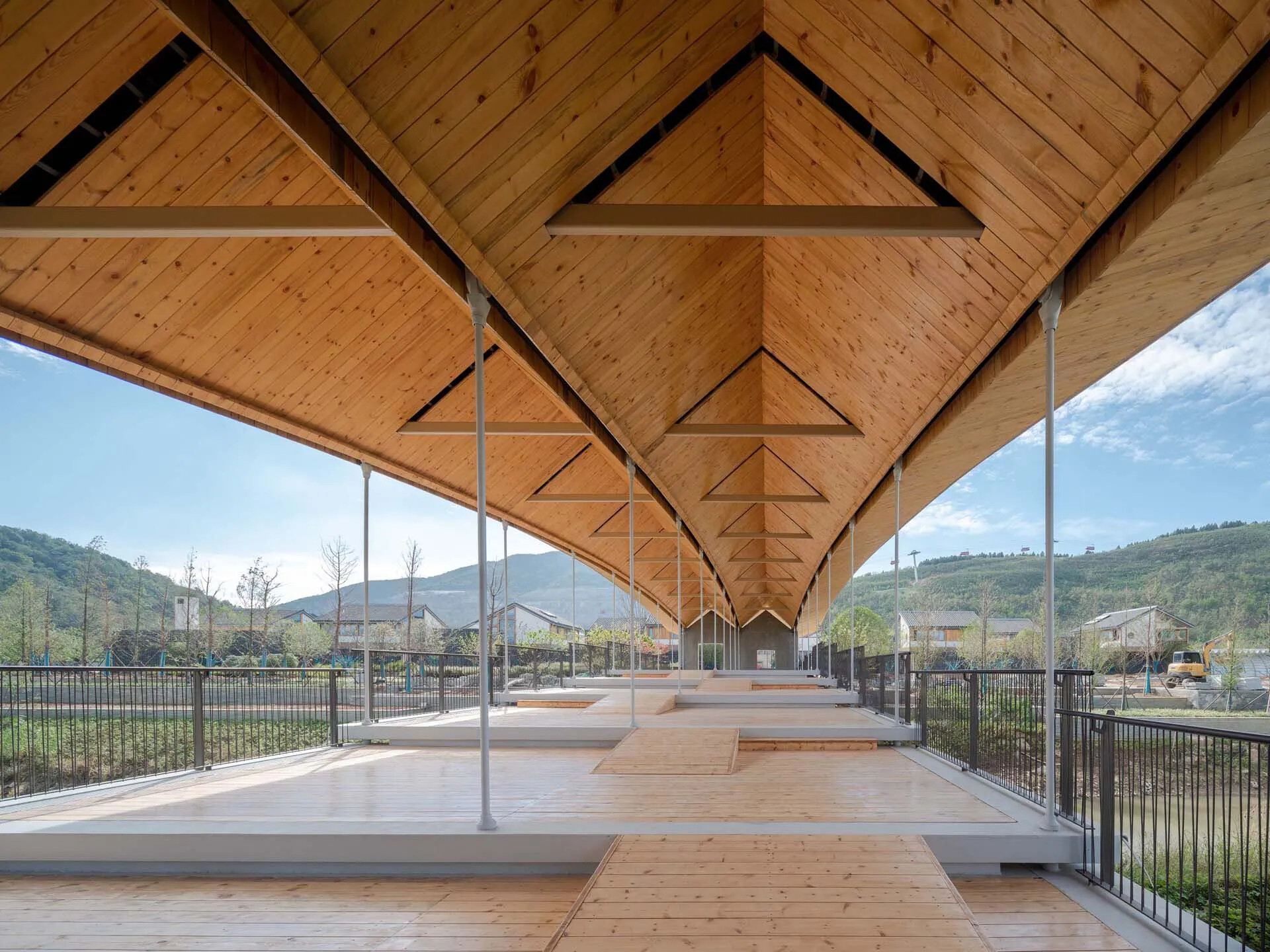
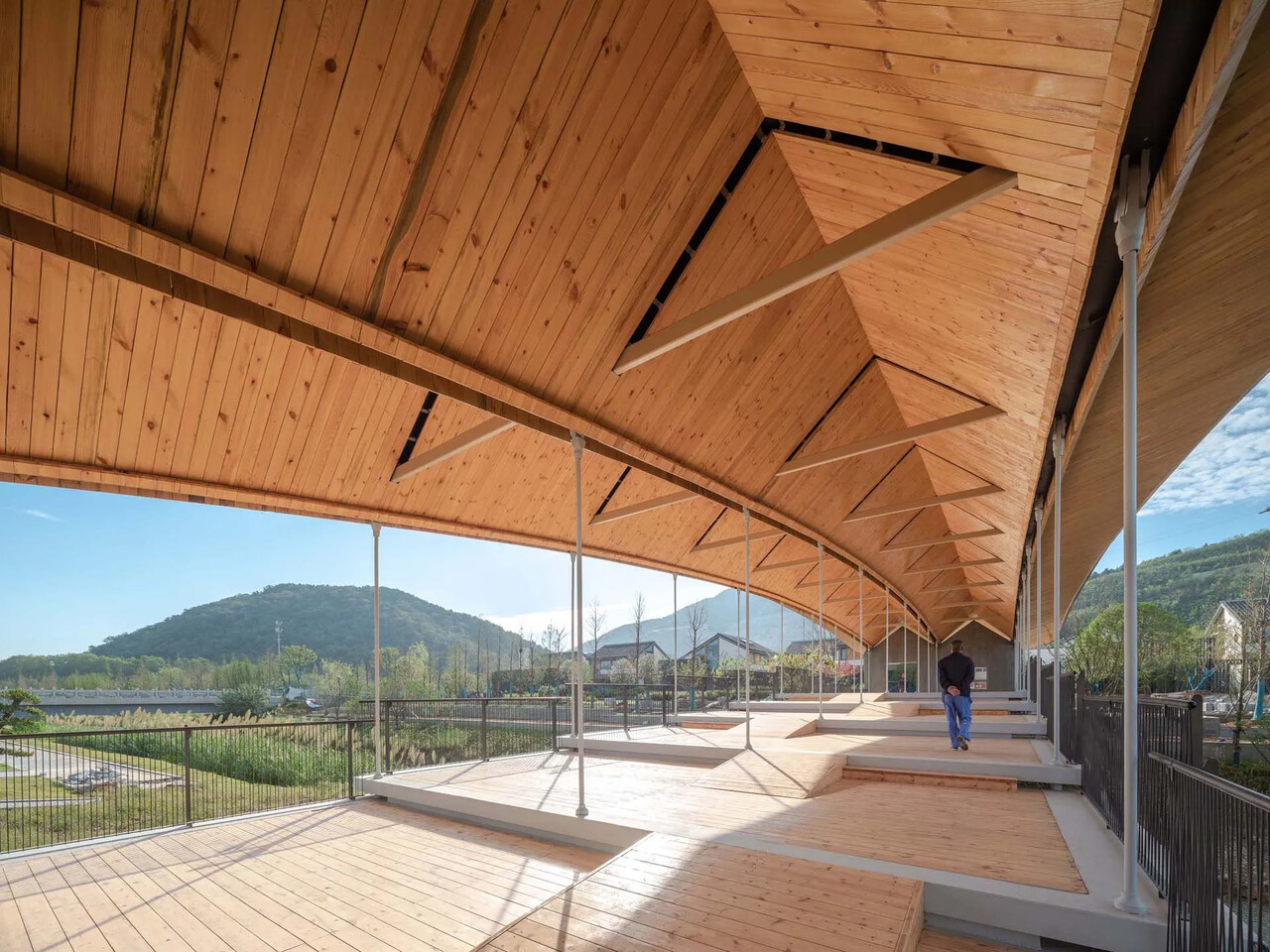
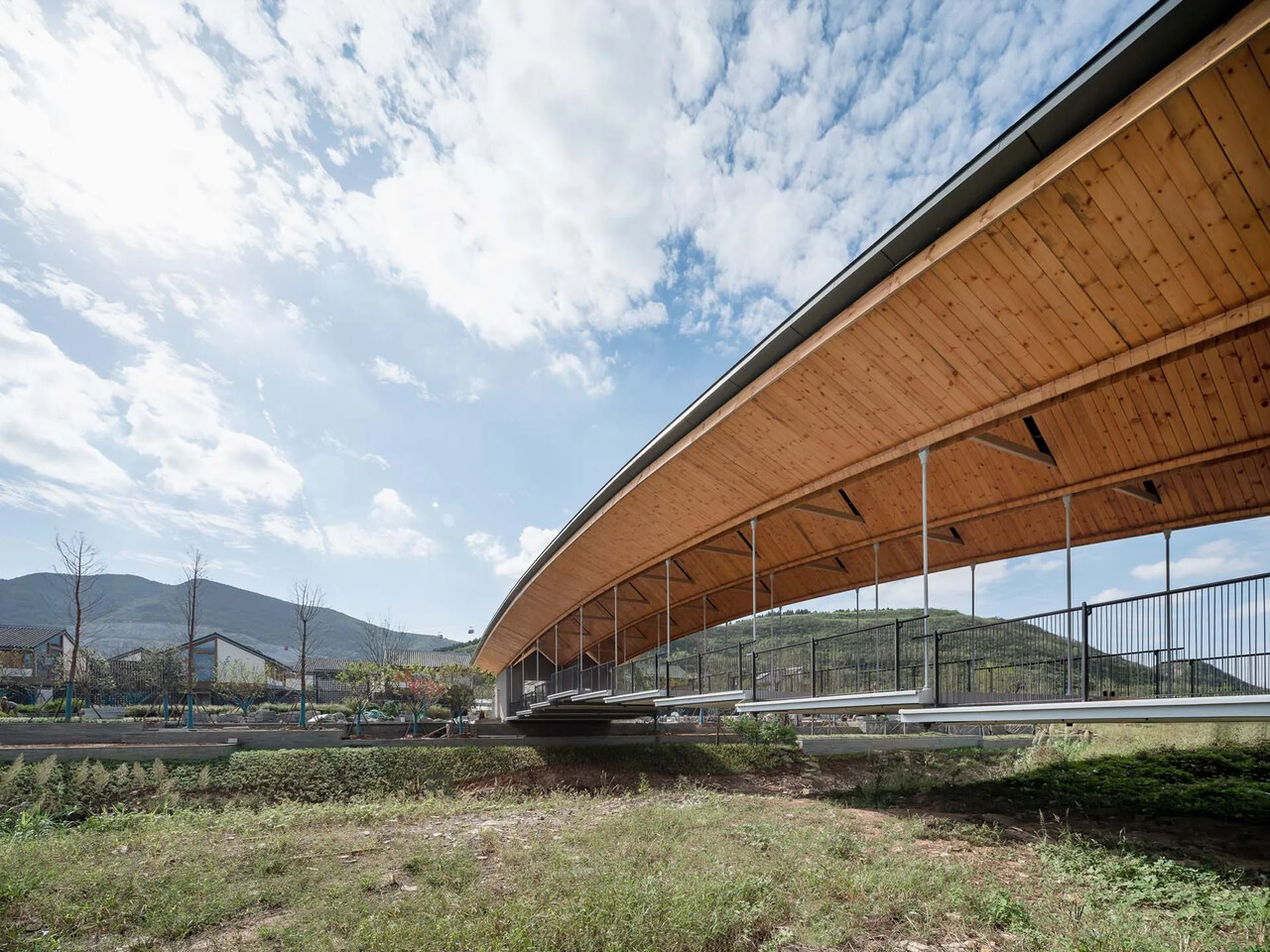
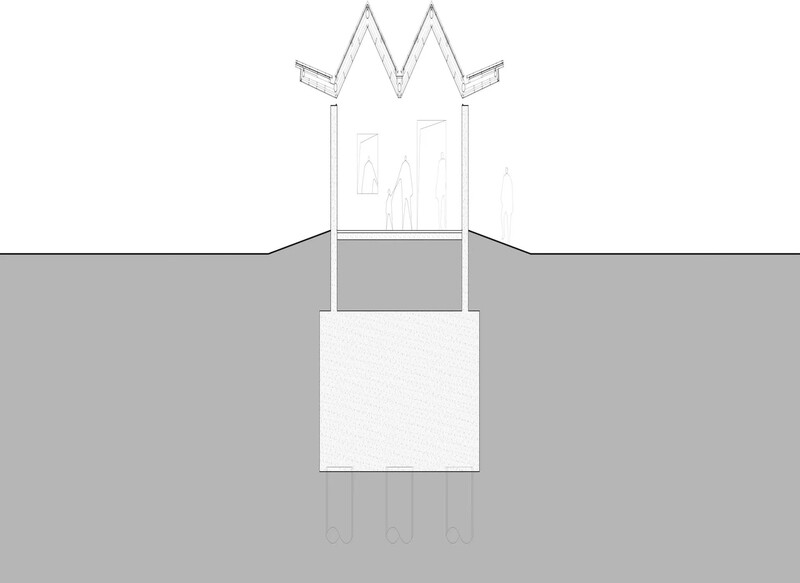
在山水秀之前的作品中,折板作為一種屋頂結構,既可以滿足較大的空間跨度,也可以與江南傳統民居獲得空間尺度和形式上的關聯。這一回,我們嘗試賦予折板結構更多的能量,在覆蓋空間的同時,作為橋梁的主體結構懸掛下部的步行橋面。這次的折板為兩折雙坡,包含四片傾斜的鋼桁架,由直徑500mm的上下弦鋼管、斜腹桿和底部的水平撐桿合成兩個三角形斷面的空間桁架,中部緩緩起拱構成組合式桁架折板拱,兩側再由桁架板出挑成檐口,為折板提供翻邊強度,也為下部空間遮陽避雨。整個折板拱由上表面的鈦鋅板和下表面的木條板包覆。兩個尋常坡頂構成的形態在剖面上十分小巧,與村舍建築的屋頂取得了風貌協調,但隱藏在其中的折板拱則十分強大,以1.6米的矢高完成了37.8米的跨度,並有足夠力量懸掛下方的橋面。
This time, the folded plate is two double-sloped roof structure, consisting of four inclined steel trusses, consisting of 500mm diameter upper and lower chord steel pipes, inclined webs and horizontal braces at the bottom to form two triangular section spatial trusses. The central part gently arching to form a whole folded plate truss arch, and the two sides are then suspended by the truss to form eaves, which provides flanging strength for the folded plate and also shades the lower space from the sun and rain. The entire arch is clad with titanium zinc panels on the upper surface and wood slats on the lower surface. The form composed of two common pitched roofs are small in section and harmonize with the roof of the houses in the village, but the hidden folded plate arch is strong, completing a 37.8m span with a 1.6m sagittal height and enough strength to suspend the bridge terraces below.
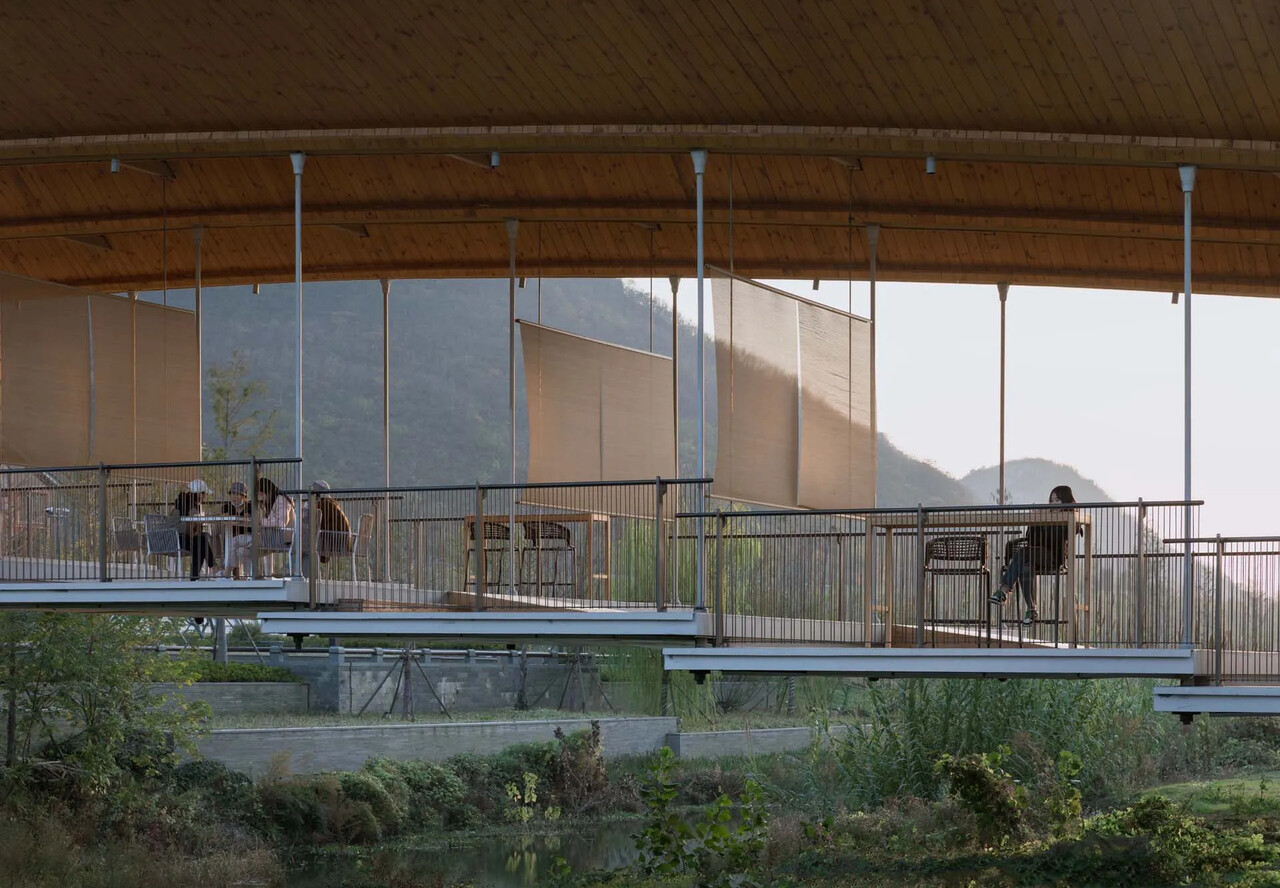
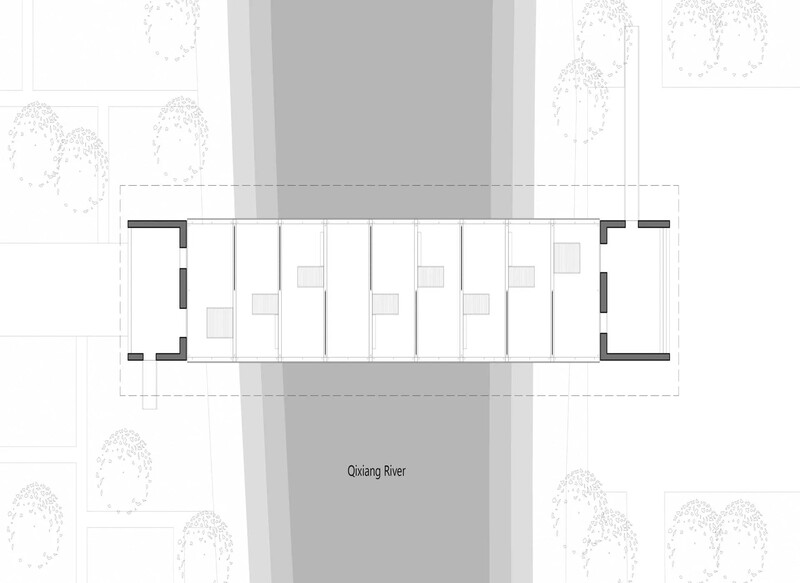
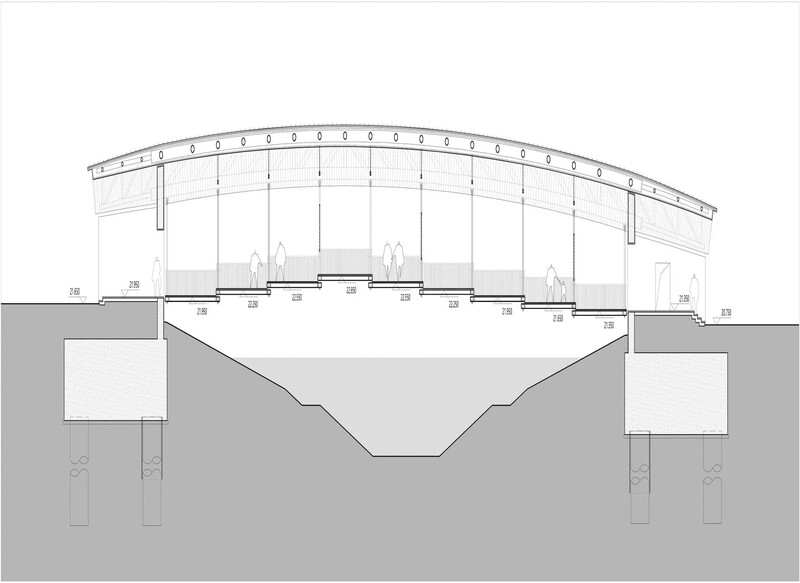
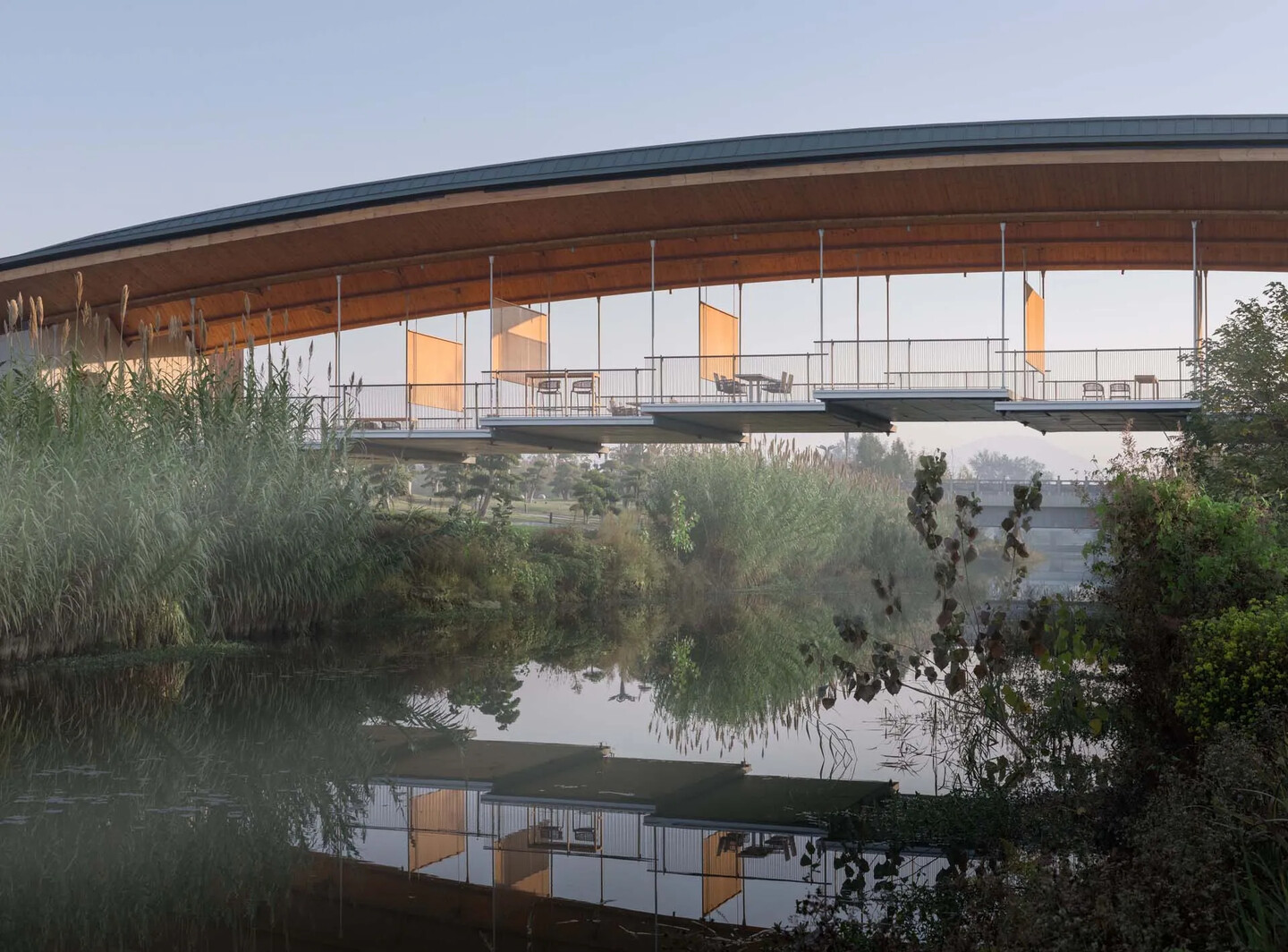
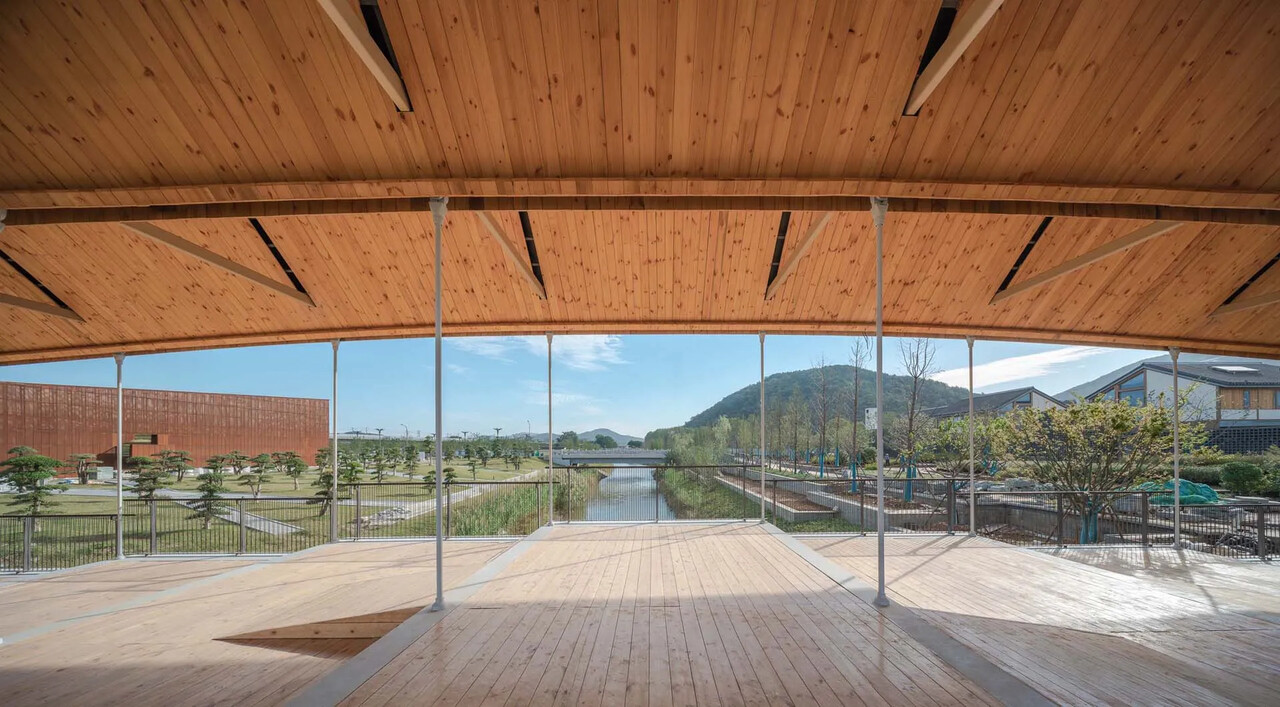
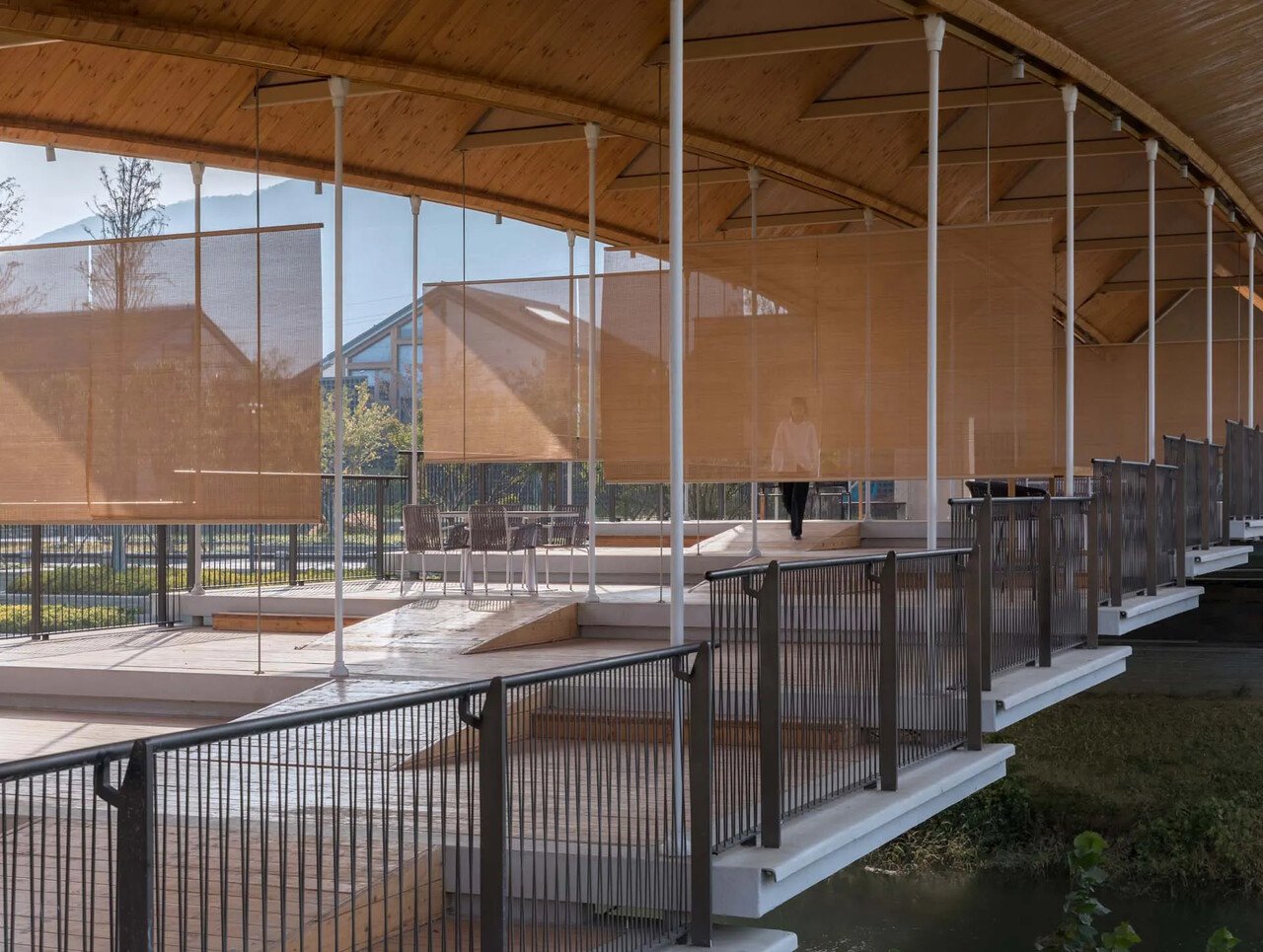
橋面空間的構思仍然來自小尺度的村舍,我們將8米寬、36米長的橋面分成九塊8m X 4.2m的平台,像九個連接在一起的小亭。九塊平台三升五降,用非對稱的方式銜接南高北低的駁岸標高。平台兩兩之間只有300mm的高差,在疊合部用直徑50mm的吊桿懸掛在桁架折板拱的底部。疊合解決了平台的穩定性,並使每個平台都擁有6個掛點,掛點間距只有4米,平台也因此獲得了190mm薄的結構厚度,最大限度減少了橋面和水面的距離。我們在平台之間鋪設無障礙坡道,在吊桿之間懸掛竹簾,將橋下空間營造成連續錯落、模糊隔斷的九間通透小屋。平台中央通行,兩側布置桌椅,供休憩觀景和橋上市集使用,廊橋的“慢性”特質在這里被放大和詮釋。在平台邊緣,欄桿在平面上微微錯位偏轉,以避開高低扶手相撞,並在東西兩側的風景面前引導了身體和視線的方向。
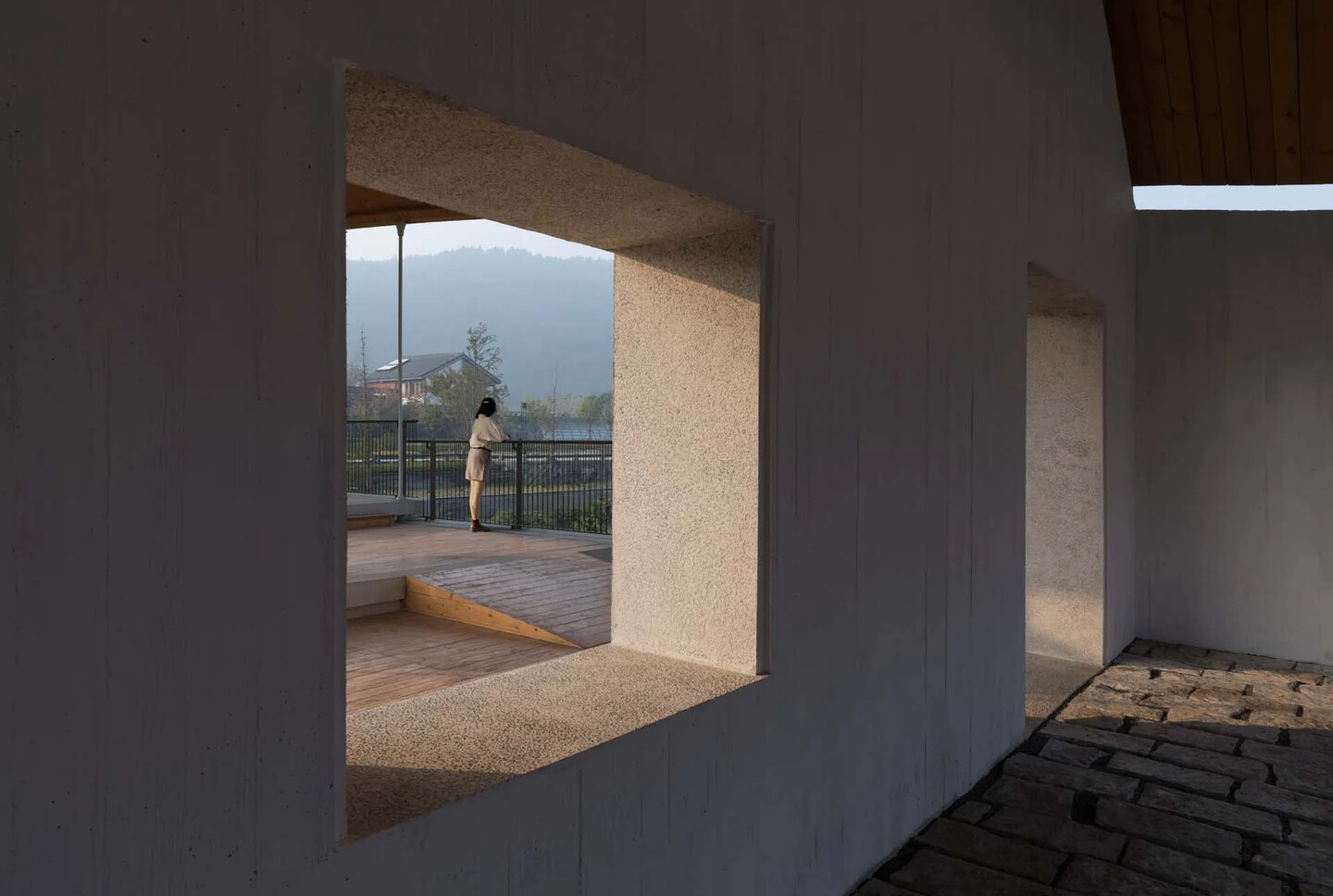
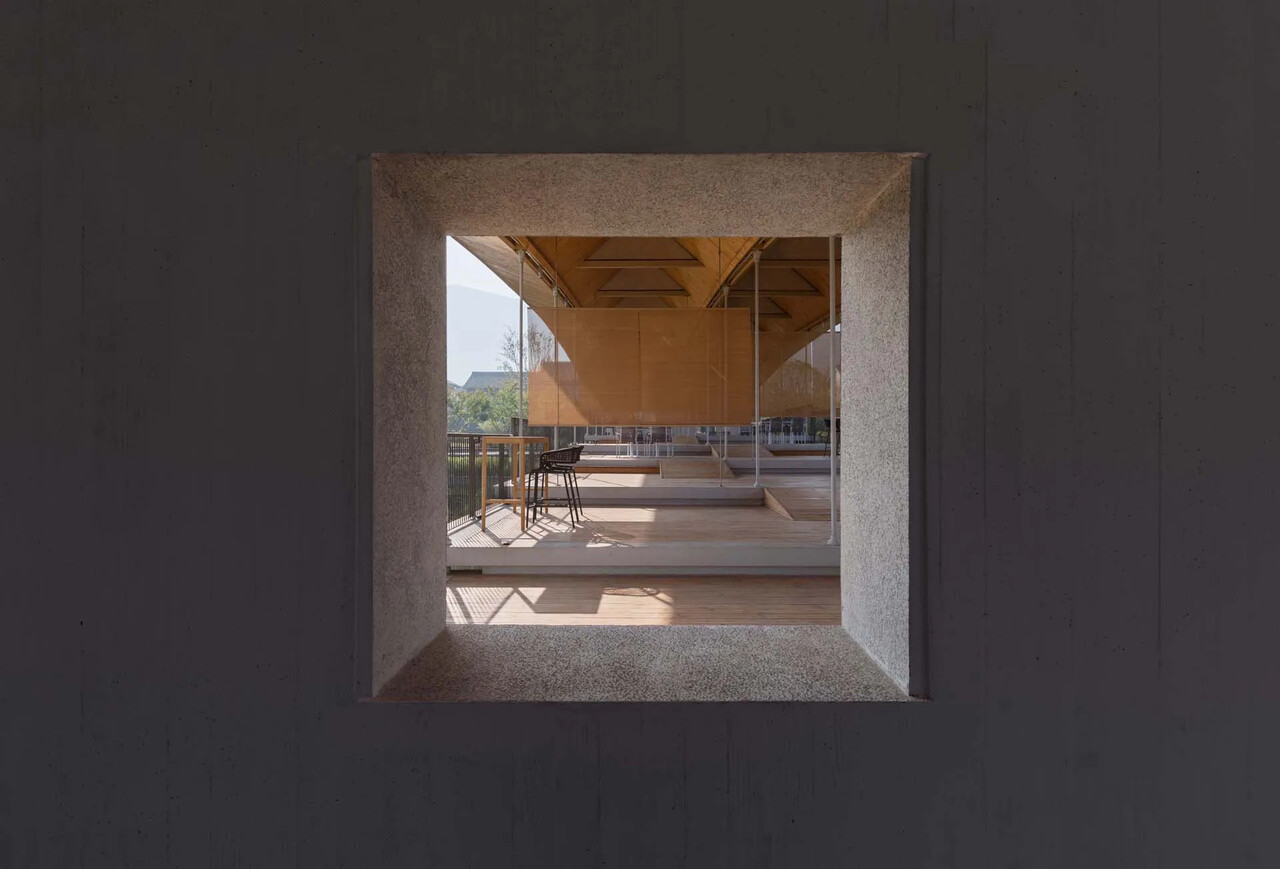
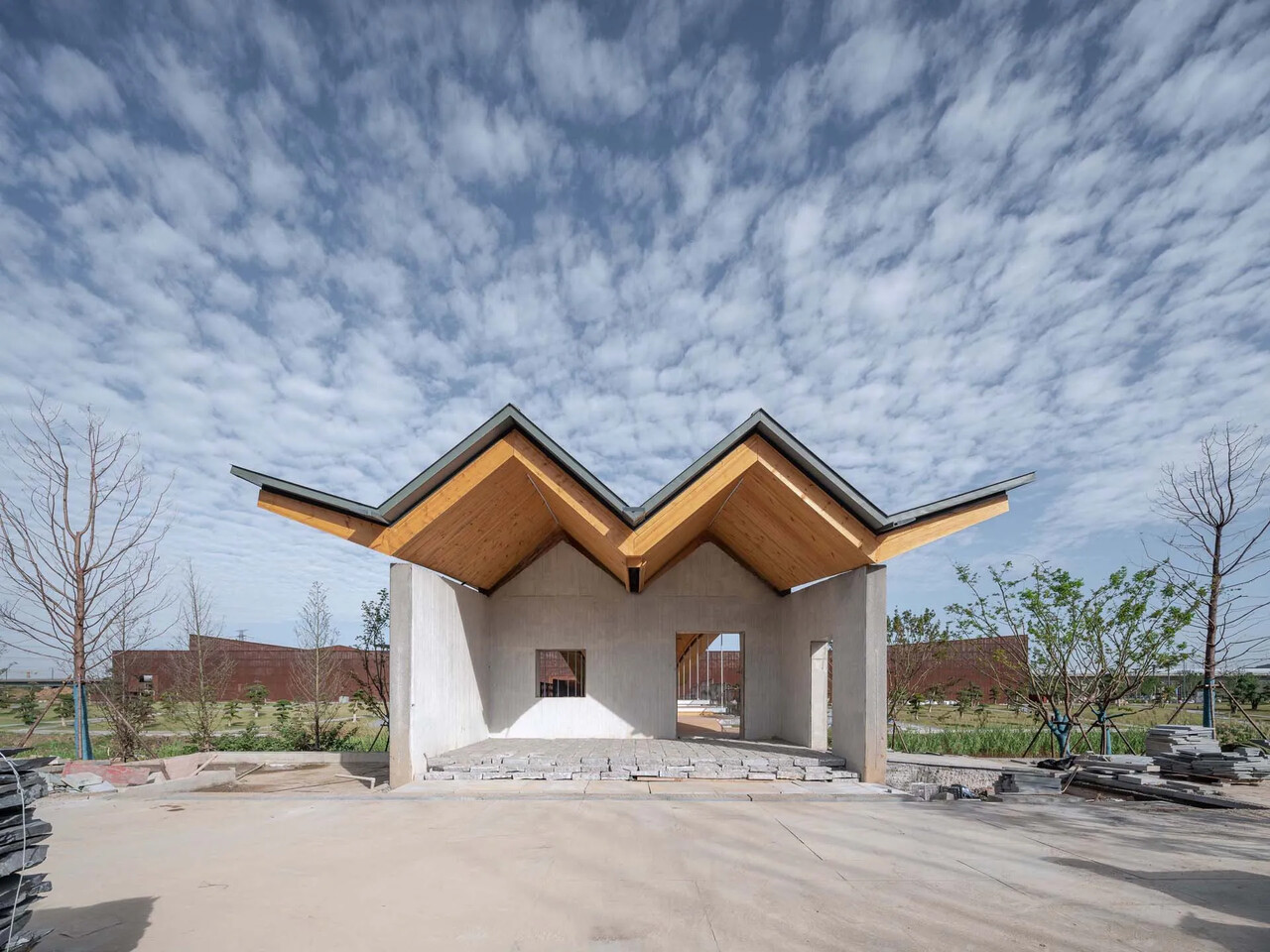
懸掛平台的垂直荷載經過桁架折板拱,轉化為拱方向的內力向兩側傳遞,在兩端的支座點通過橋頭堡把重力和側推力傳給駁岸上的基礎。橋頭堡由U形的混凝土剪力墻構成,平面尺寸與輕盈的橋台近似。加入粗顆粒卵石骨料的現澆混凝土墻面和家常尺寸的門窗洞口,使橋頭堡呈現出厚重質樸的味道。我們將廊橋的雙折屋頂從支座處延伸出來,懸蓋在橋頭堡上方,一方面以自身壓重幫助平衡主體結構的起拱受力,另一方面和混凝土剪力墻共同形成了兩間橋頭“半屋”。看見半屋,穿過屋里的小門洞,就能走上屋後的廊橋。在橋上小坐,木檐遮陰,竹簾濾光,兩岸的山林田園沿七鄉河向遠處延伸。籍由橋頭半屋對進出家門的隱喻和懸掛橋台上閒適的身心體驗,我們通過形制與技術的結合,賦予這座廊橋歸家和遊觀的意象。
The vertical load of the suspended terrace is transformed into internal forces in the direction of the arch through the folded plate truss arch to two ends, and the gravity and lateral thrust are transmitted to the foundation on the barge through the bridgehead at the support points at each end. The bridgehead consists of a U-shaped concrete shear wall with an similar planer dimensions with each terrace. The cast-in-place concrete walls with coarse-grained pebble aggregate in it and the home-sized window and door openings give the bridgehead a thick and rustic feeling. We extended the double-pitched roof of the bridge from the supporting bridgehead and overhung it, helping to balance the arching forces of the main structure with its own weight on the one hand, and forming two bridgehead "half-houses" together with the concrete shear walls on the other. See the half house, go through the small doorway in the house, one can then walk up to the covered bridge behind it. Sitting on the bridge, the wooden eaves shade sunshine, bamboo curtains filter light, and the mountains and fields on both sides of the river extend into the distance along the Qixiang River. Through the metaphor of the half house at the bridgehead and the physically and mentally leisure experience of the hanging terraces, we give this bridge the imagery of homecoming and sightseeing by combining form and technology.