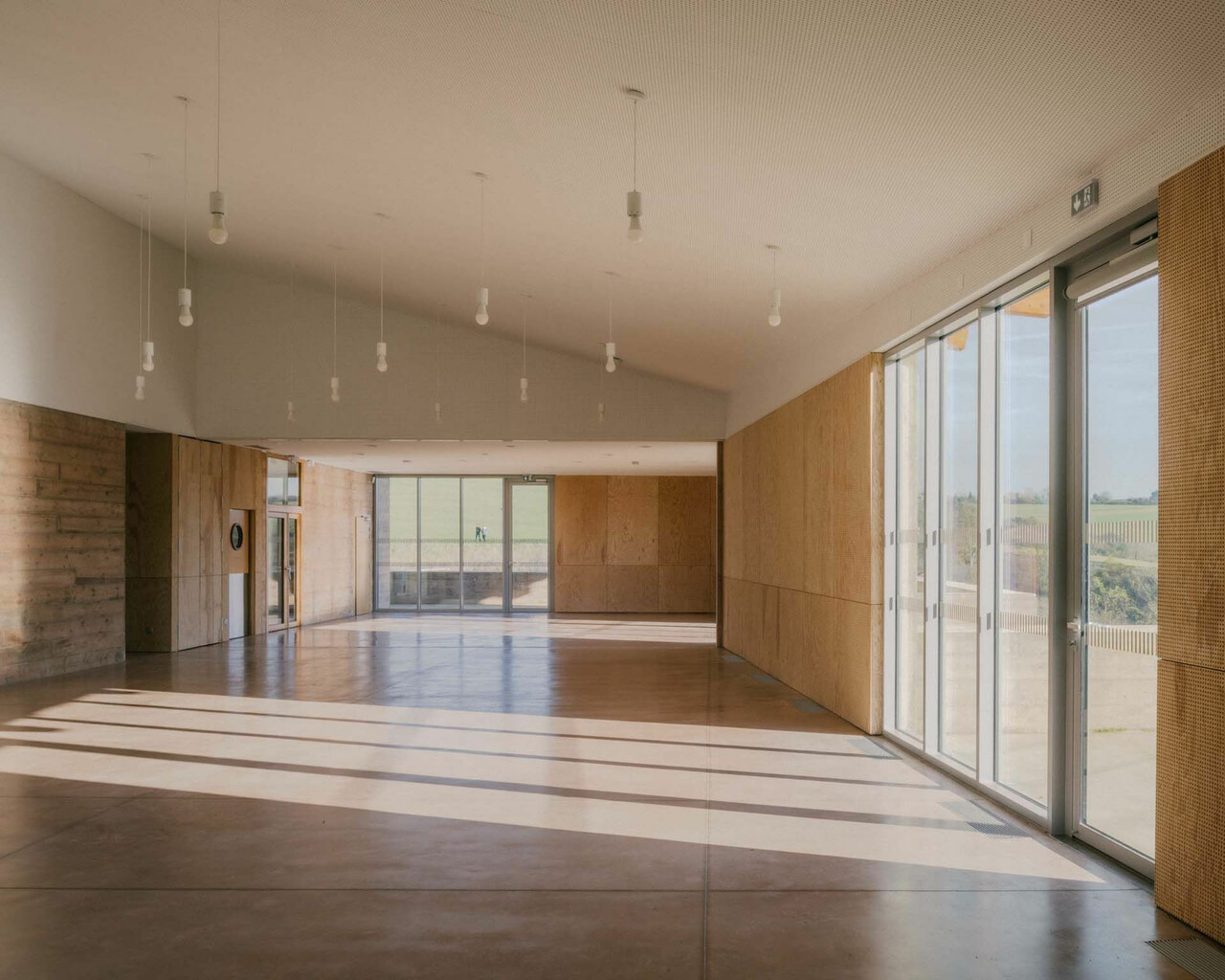
As part of the Mauldre Valley in France, Beynes is a charming village composed of an old town. At the entrance of the town, a new community hall stands alone on a slope, situated in the vast wilderness, far from any urban development. This hall serves to connect various rural areas while providing a distinctive public facility for local residents, thereby fostering a sense of belonging among the community members to this dispersed territory.
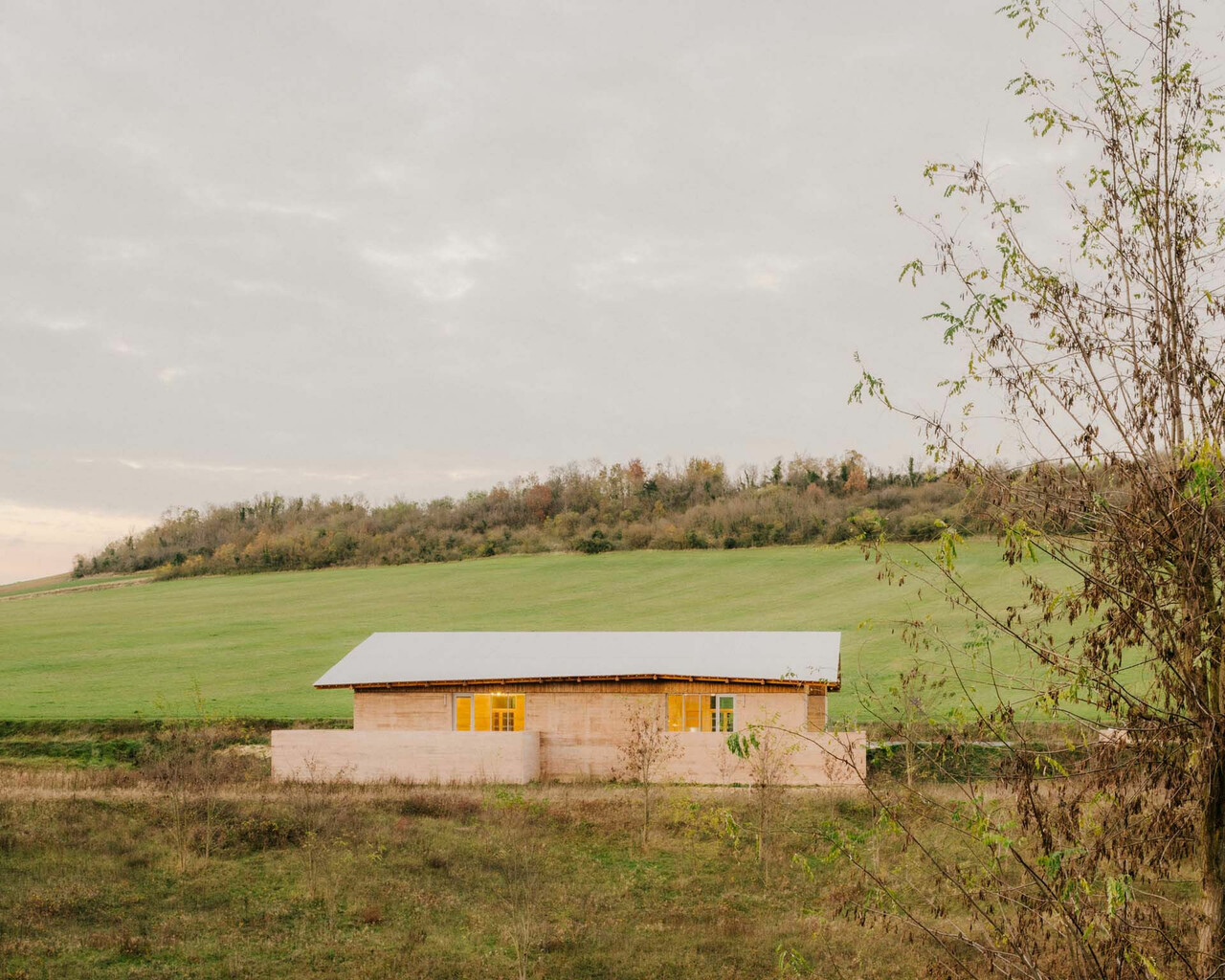
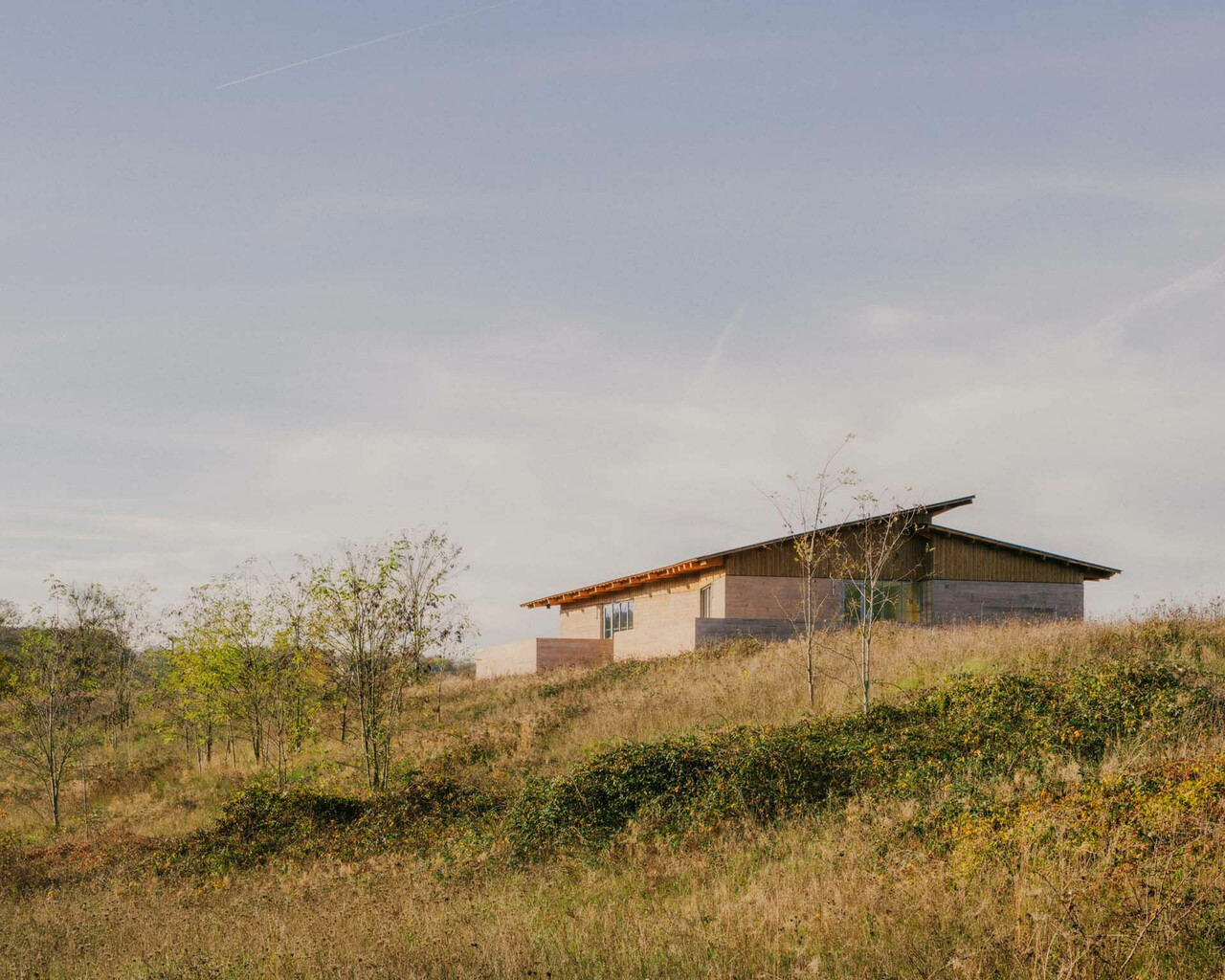
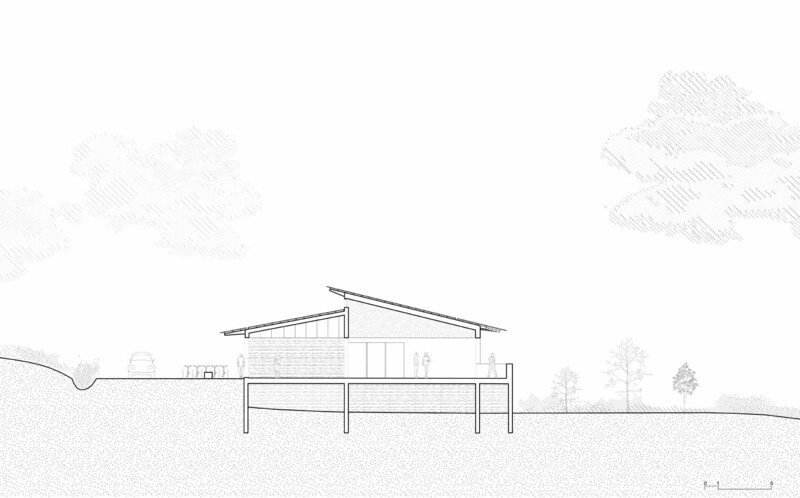
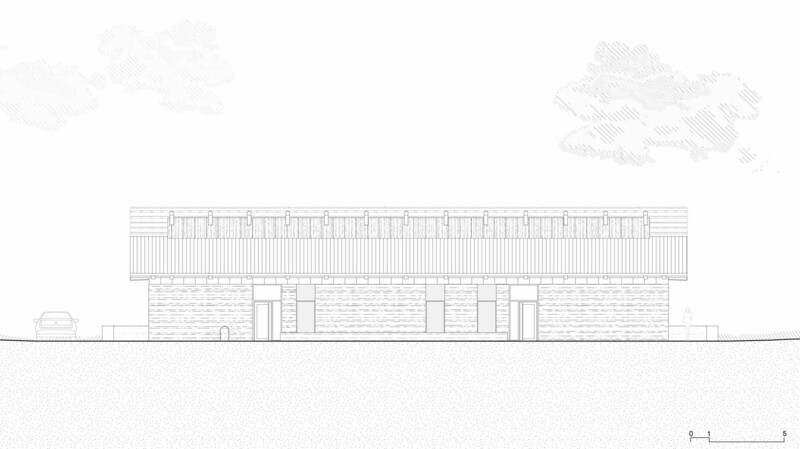
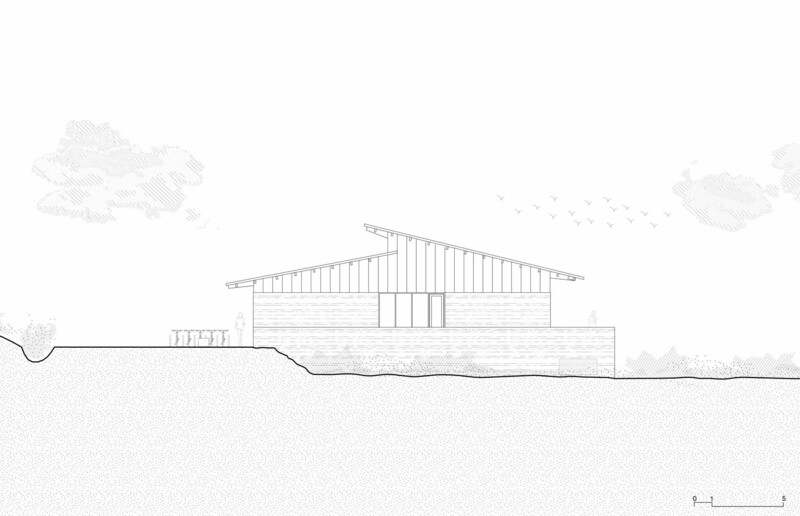
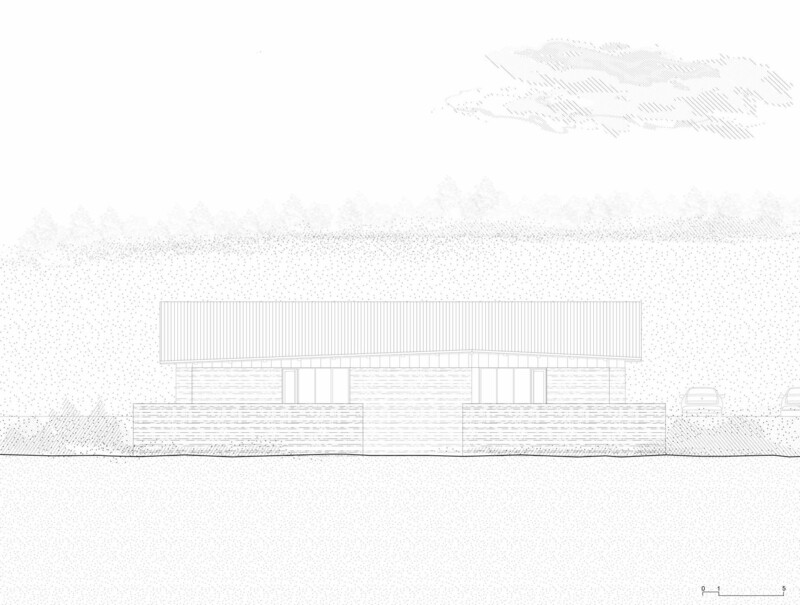
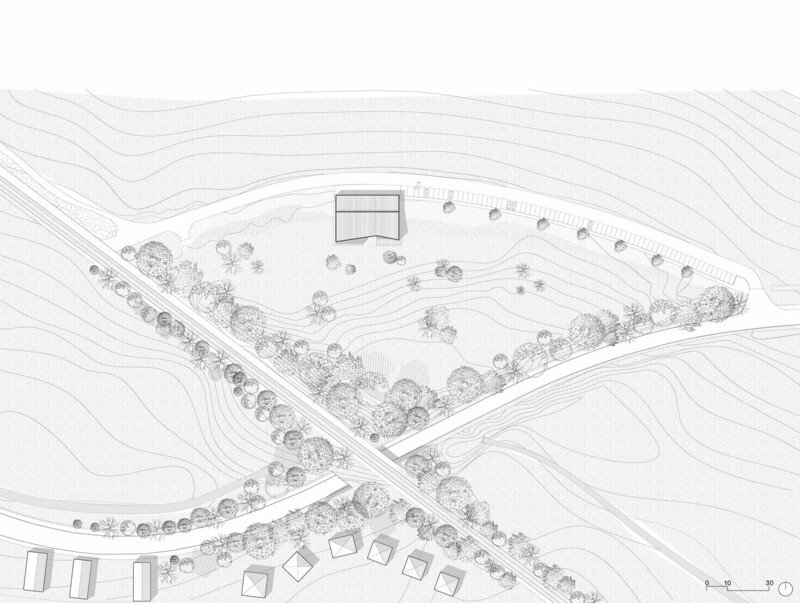
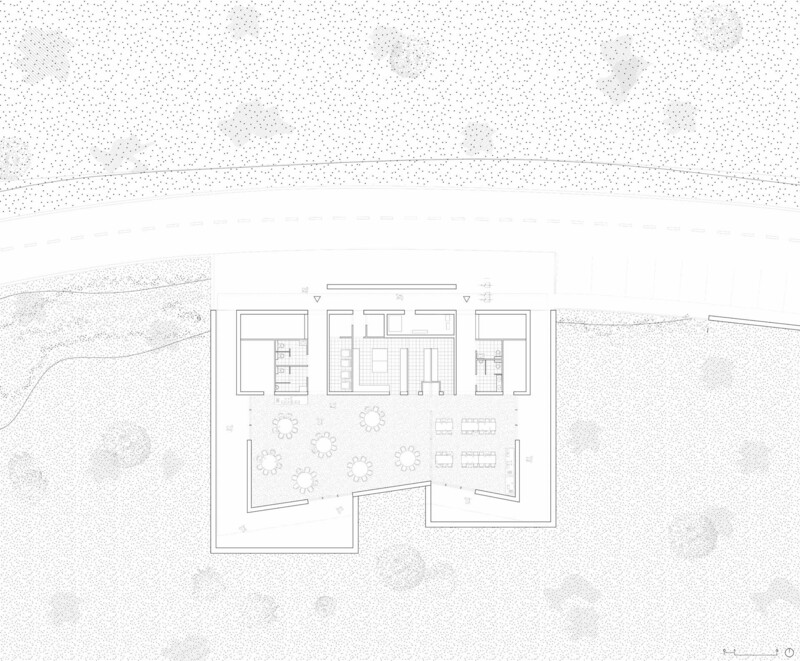
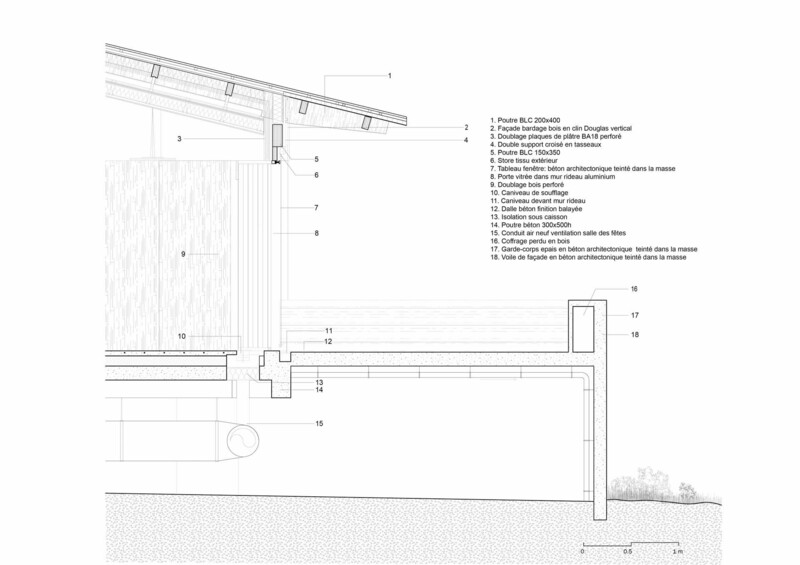
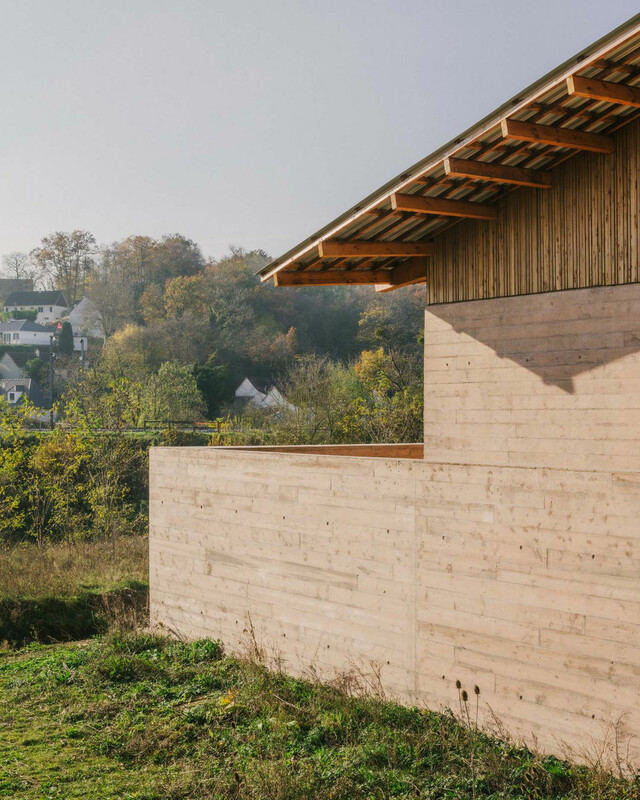
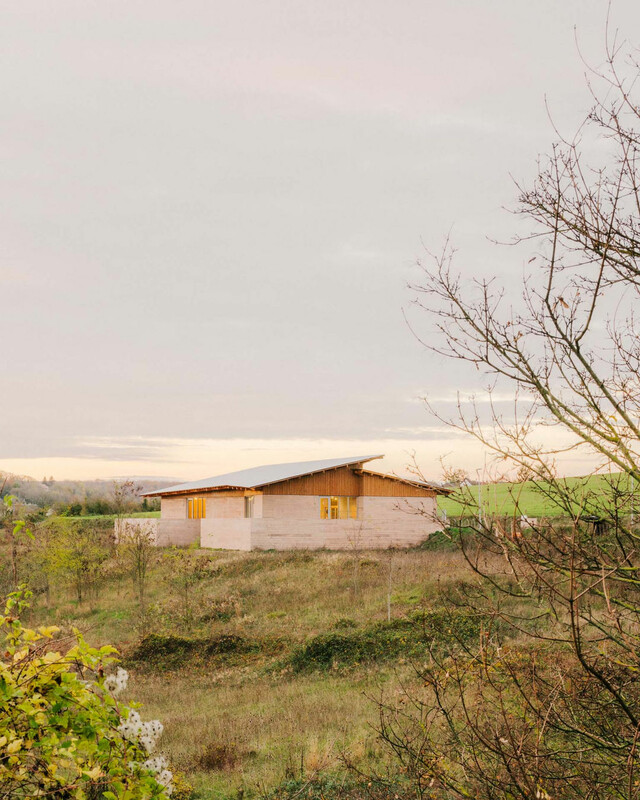
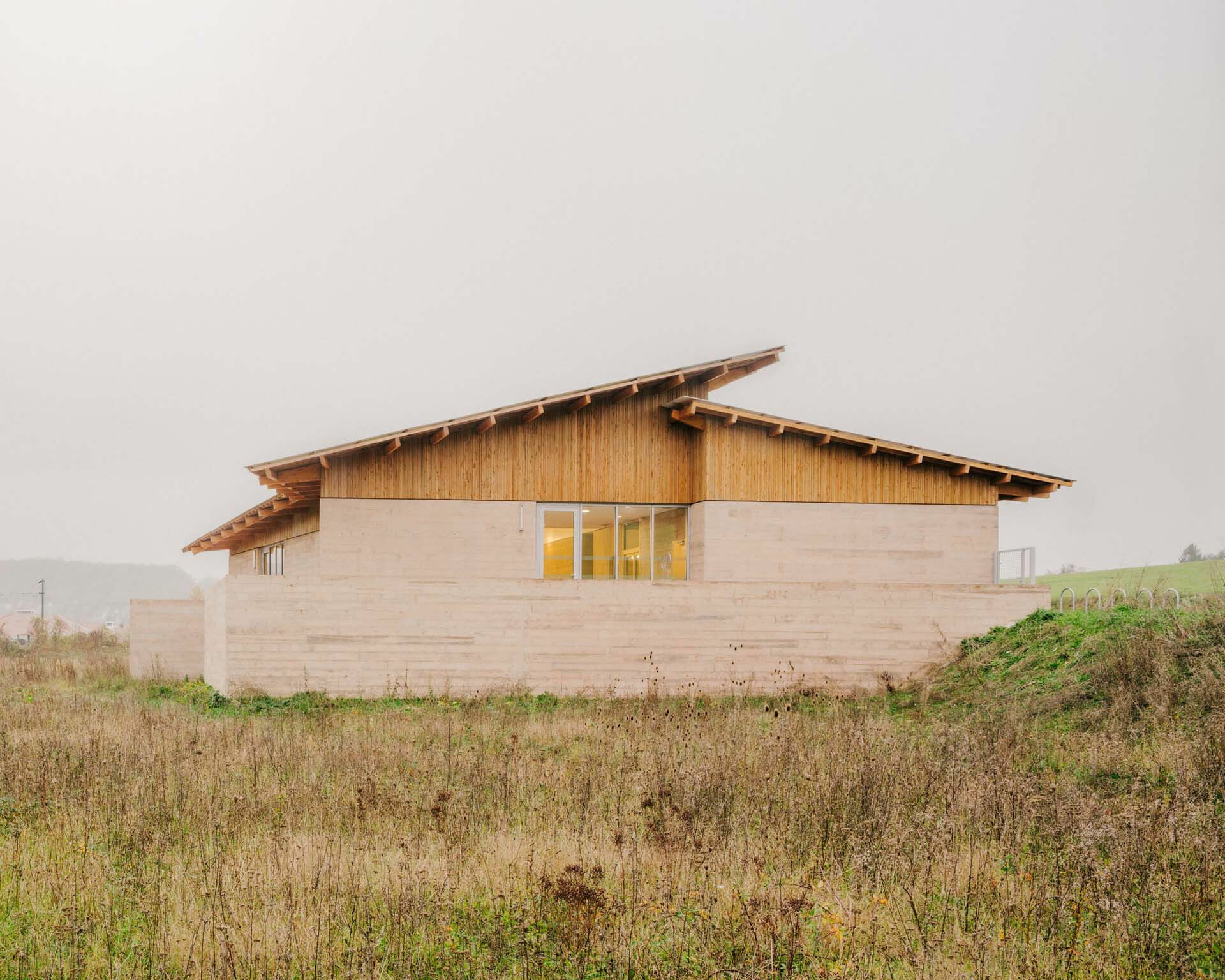
French designer Graal redefined the concept of regionalism in agricultural barns by designing an iconic "roadside" building along the highway. This structure overlooks an agricultural wasteland formed in the past, emerging from the soft grass as a mineral mass covered by a slender gabled roof, standing out amidst the green landscape. The community hall is composed of three architectural elements, with their functions and forms made particularly clear through changes in materiality. A large, dyed concrete base firmly anchors the building to the site, not only protecting its substantial volume but also extending into a terrace that allows for views of the slope and expansive landscape. Above this base, a wooden roof framework is placed, defining the connection between the mass and the sky, with wooden panels serving as a transitional element between the exterior and interior. Finally, the metal roof, unfolding into two independent sections, completes the building. This emphasizes its interaction with the landscape through the prominent overhanging roof, with its slope, lightness, and materiality becoming decisive elements in the dialogue between the landscape and the building's function.
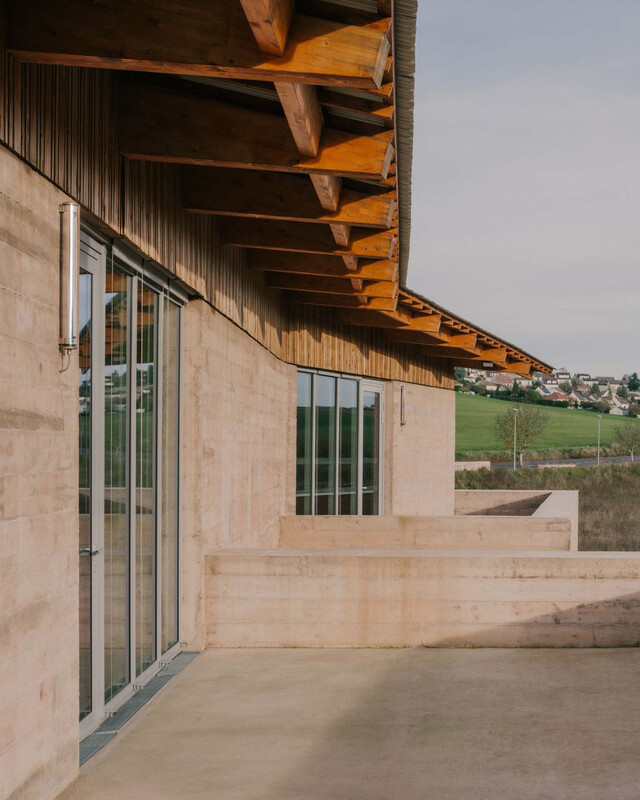
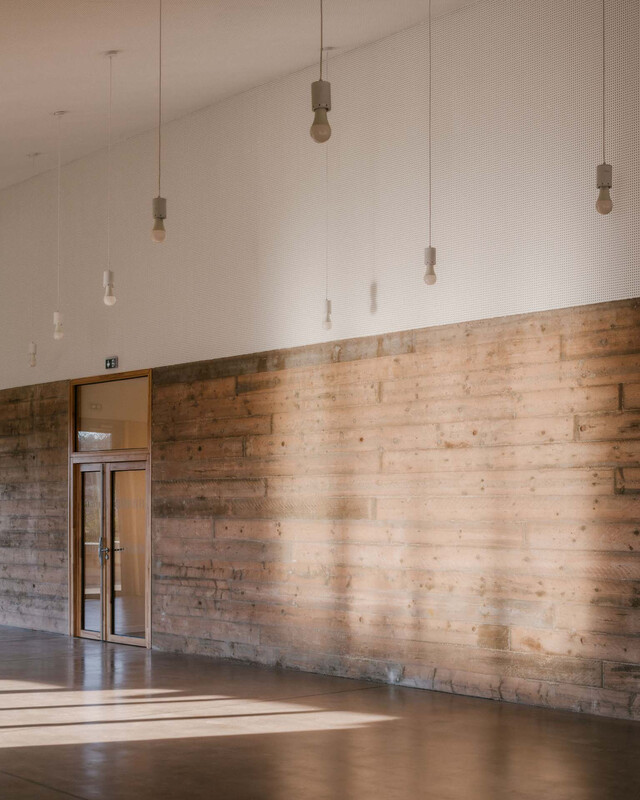
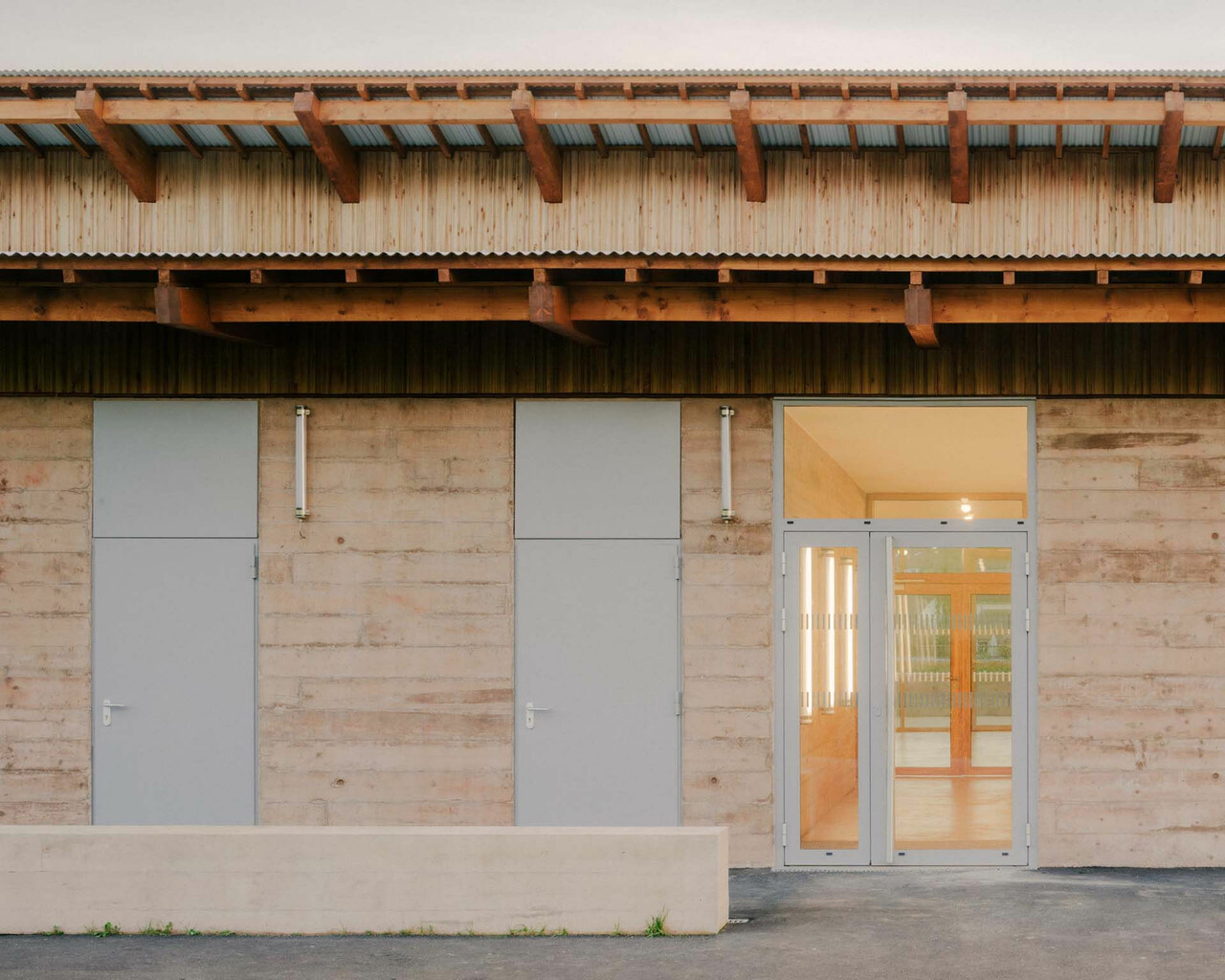
The dual context of the village hall requires understanding its composition in two stages: first, through elements that are immediately visible within the landscape, and then by focusing on the material textures and assembly details. Designer Graal aimed to minimize disruption to the existing flora and fauna, opting for a simple road widening. This approach allowed for the creation of a building that coexists harmoniously with the landscape without occupying large areas.
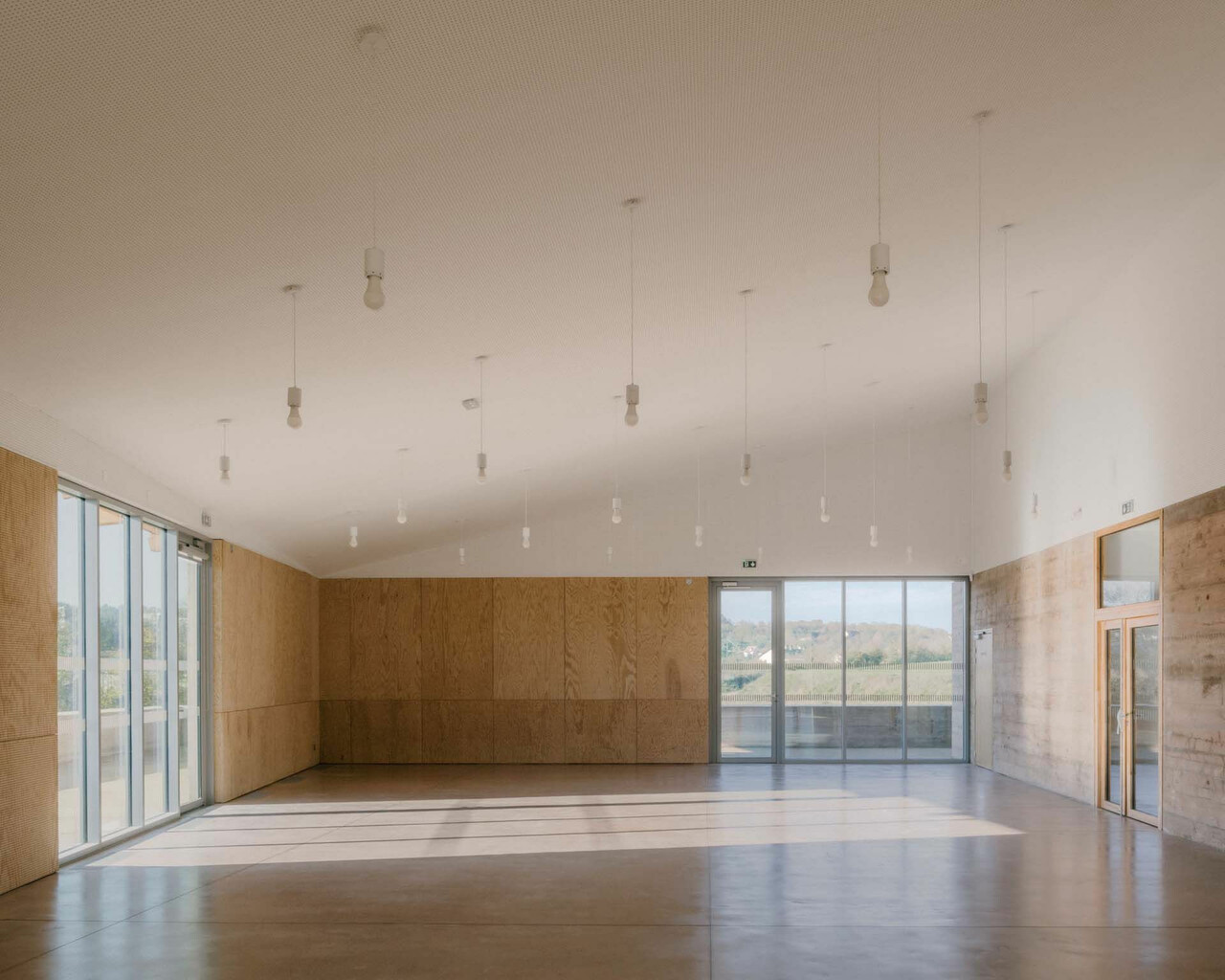
Lead Architects | Graal
Character of Space | Community Activity Center
Gross Built Area | 400m2
Location | Beynes, France