From Roman Thermae to Michelangelo’s David: Carrara Marble
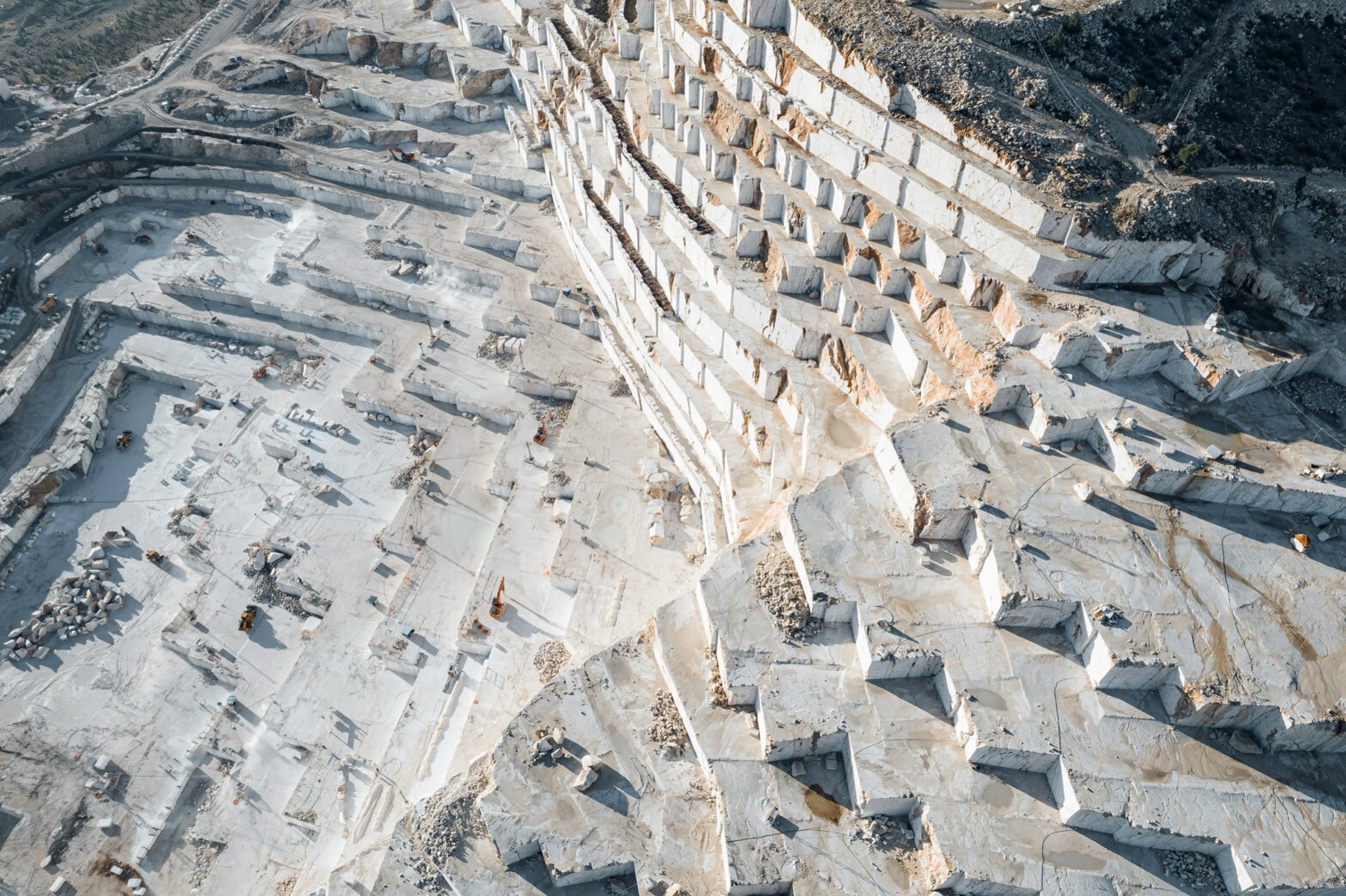
Carrara, a compact city on the north-western flank of Tuscany’s Apuan Alps, has quarried marble throughout documented history. Across geological ages the range nurtured stone of immaculate whiteness and fine grain. Repeated tectonic pressure compressed and recrystallised the calcite into dense, readily workable crystals; white seams now braid the serrated slopes, shaping a landscape at once raw and sublime. Chronicled for centuries in architecture and sculpture, Carrara marble—named for its birthplace—is woven into the fabric of history, culture and industry. Blocks extracted here have carried artistic intent for two millennia and remain the benchmark of purity in Europe’s built and sculptural heritage.
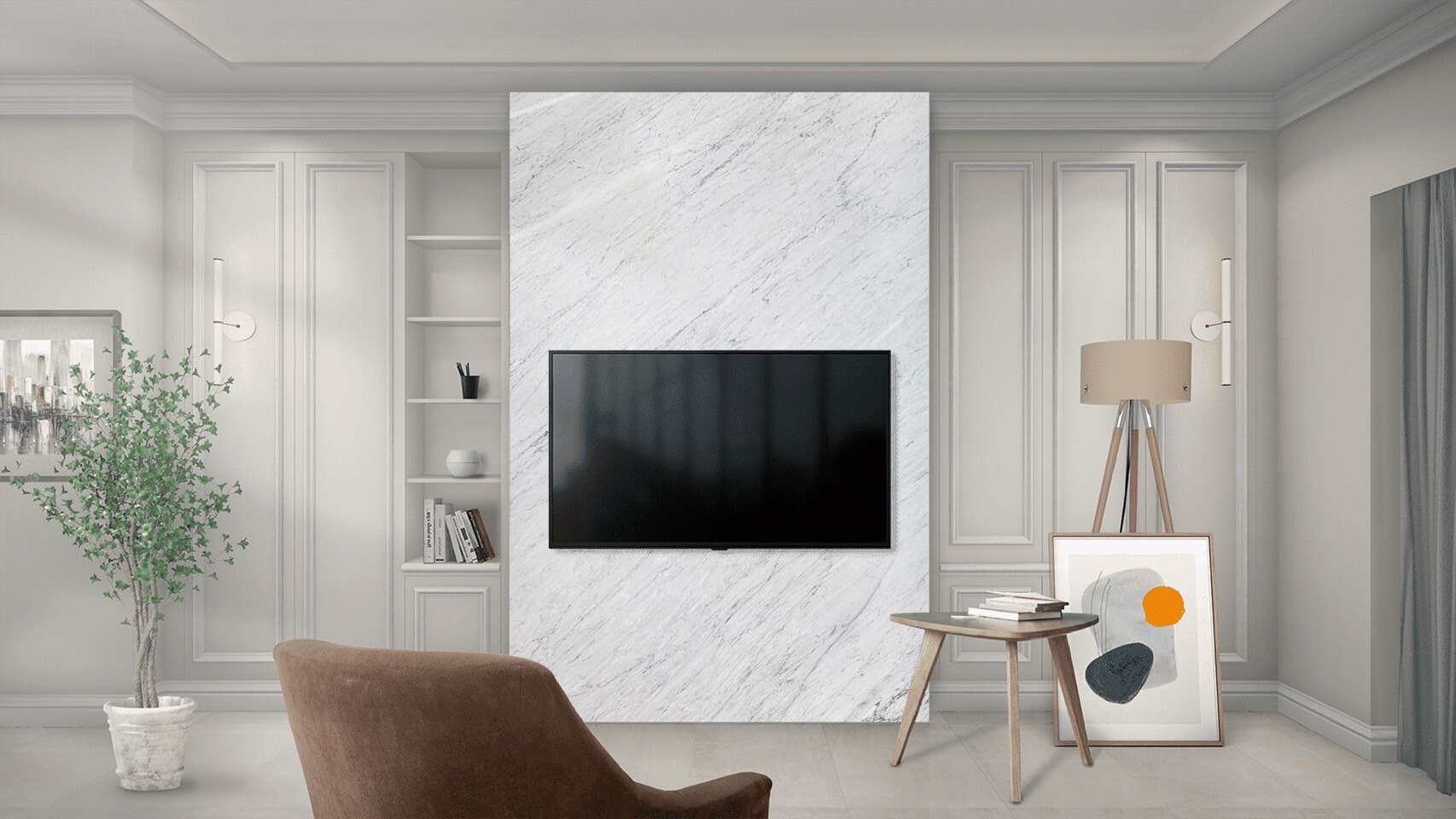
Bianco Carrara
Bianco Carrara lays down a subdued grey-white field, traced by cloud-like veining. The stone’s restrained elegance favours broad expanses—open-plan floors or continuous façade panels—where quiet longevity imparts understated distinction.
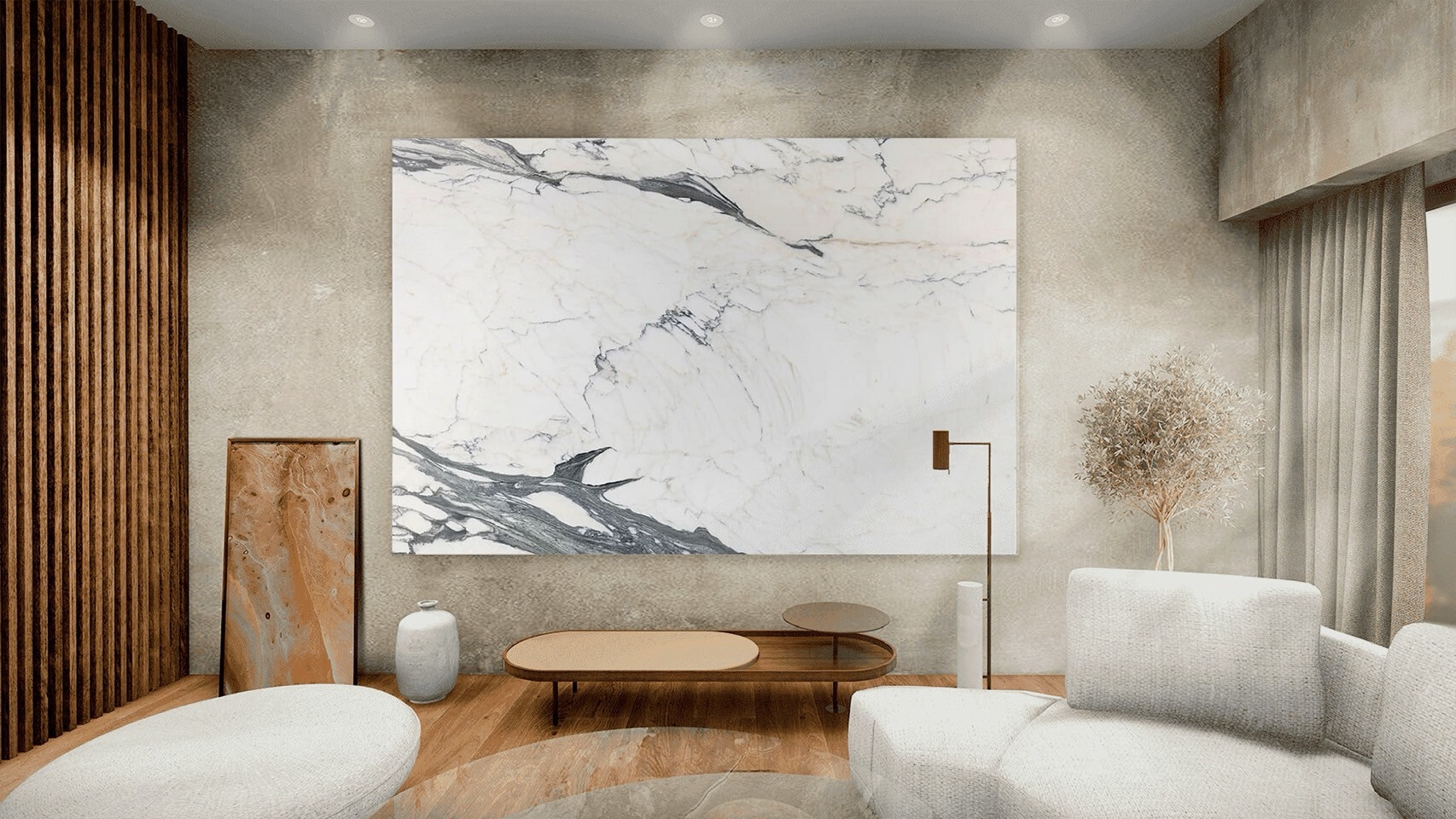
Calacatta
Calacatta asserts its presence: an opalescent matrix shot through with emphatic gold-grey bands. Applied to entrance walls, living-room focal planes or fireplace surrounds, it reads as an abstract composition. Paired with velvet or dark-toned metal, the stone balances visual drama with sculptural poise.
Statuario
Nearly snow-white Statuario is placed with intent—display recesses, study desktops, master-bathroom vanities. Fine grey filaments, like geological script, confer balance and repose; under controlled light the marble releases a calm, harmonious stillness.
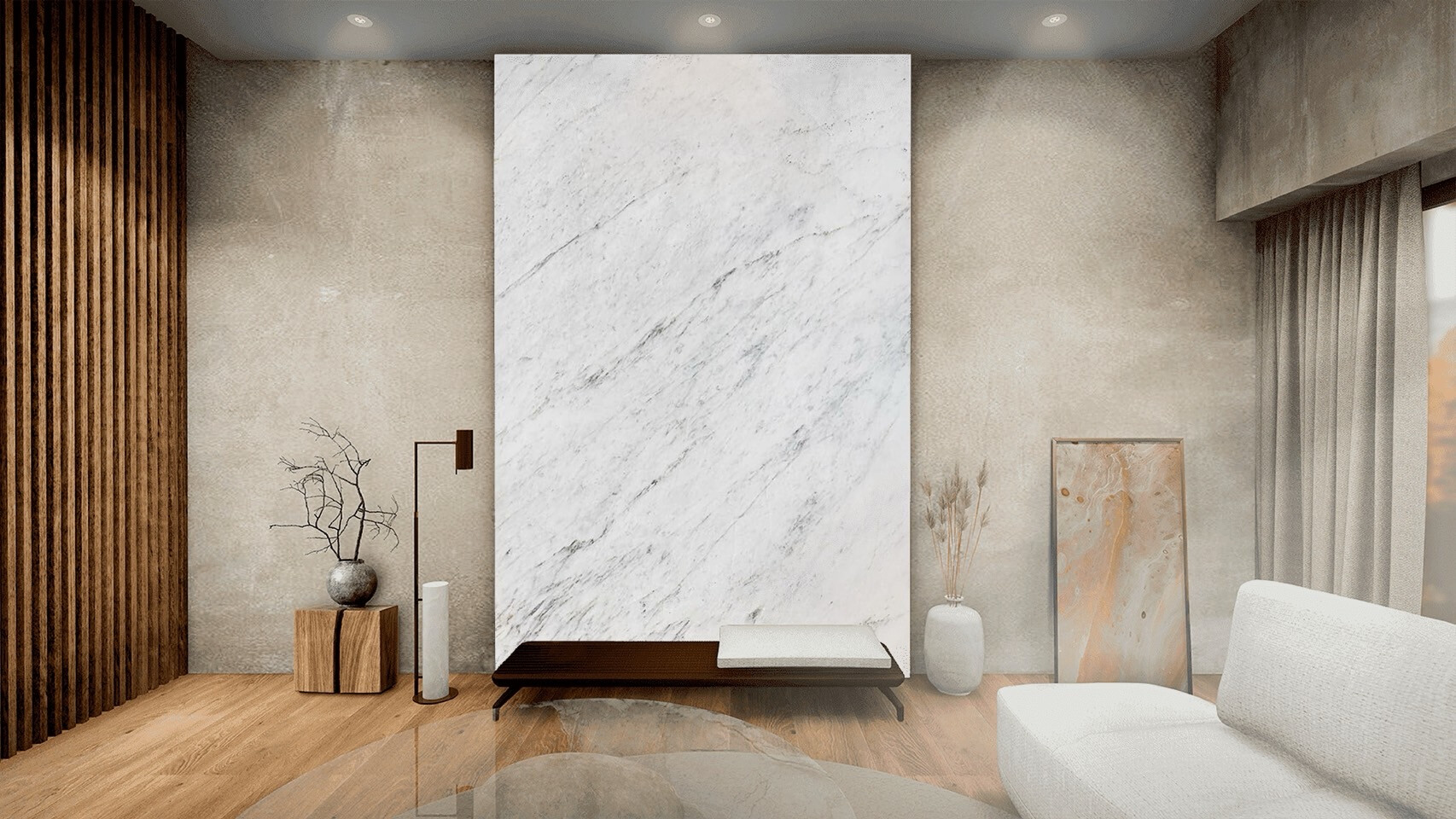
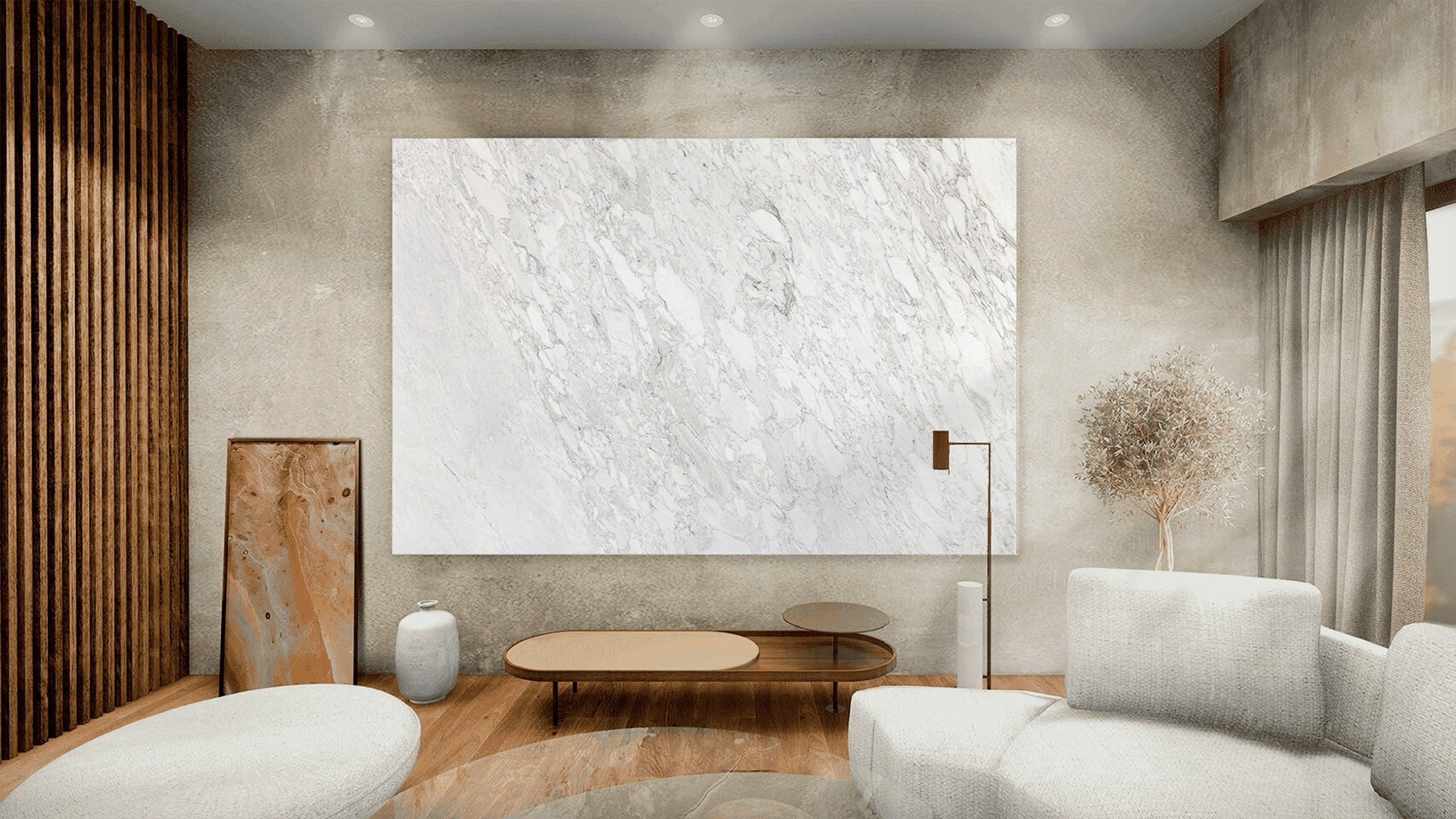
Arabescato
Arabescato mediates grey and white in calibrated layers, recalling an ink-wash landscape. Neither dominant nor recessive, it converses with furnishings, artefacts and void, stitching space together in measured cadence.