DH Palencia
On the northern edge of Palencia in Spain, a symbolic and quietly powerful silhouette asserts its presence. Designed by FRPO Rodríguez & Oriol, this thermal power plant defies the utilitarian language of conventional industrial architecture. Through a refined articulation of geometry and materials, the project transcends its functional role—serving not only as a facility for heat production but also as a visual and cultural landmark of environmental transition. With its striking formal presence, the building gives architectural expression to DH Ecoenergías’ mission, conveying a new cultural awareness around sustainable energy.
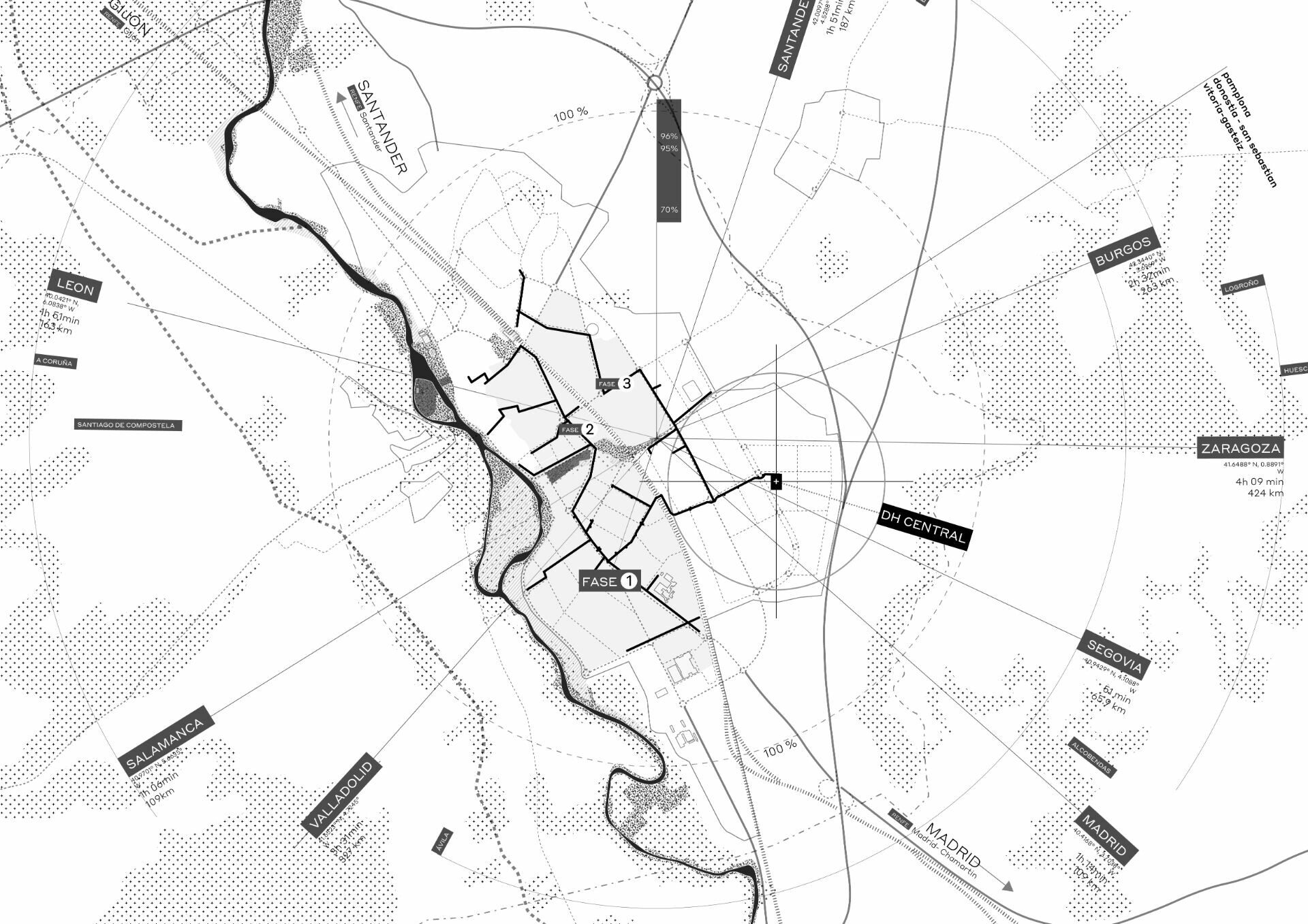
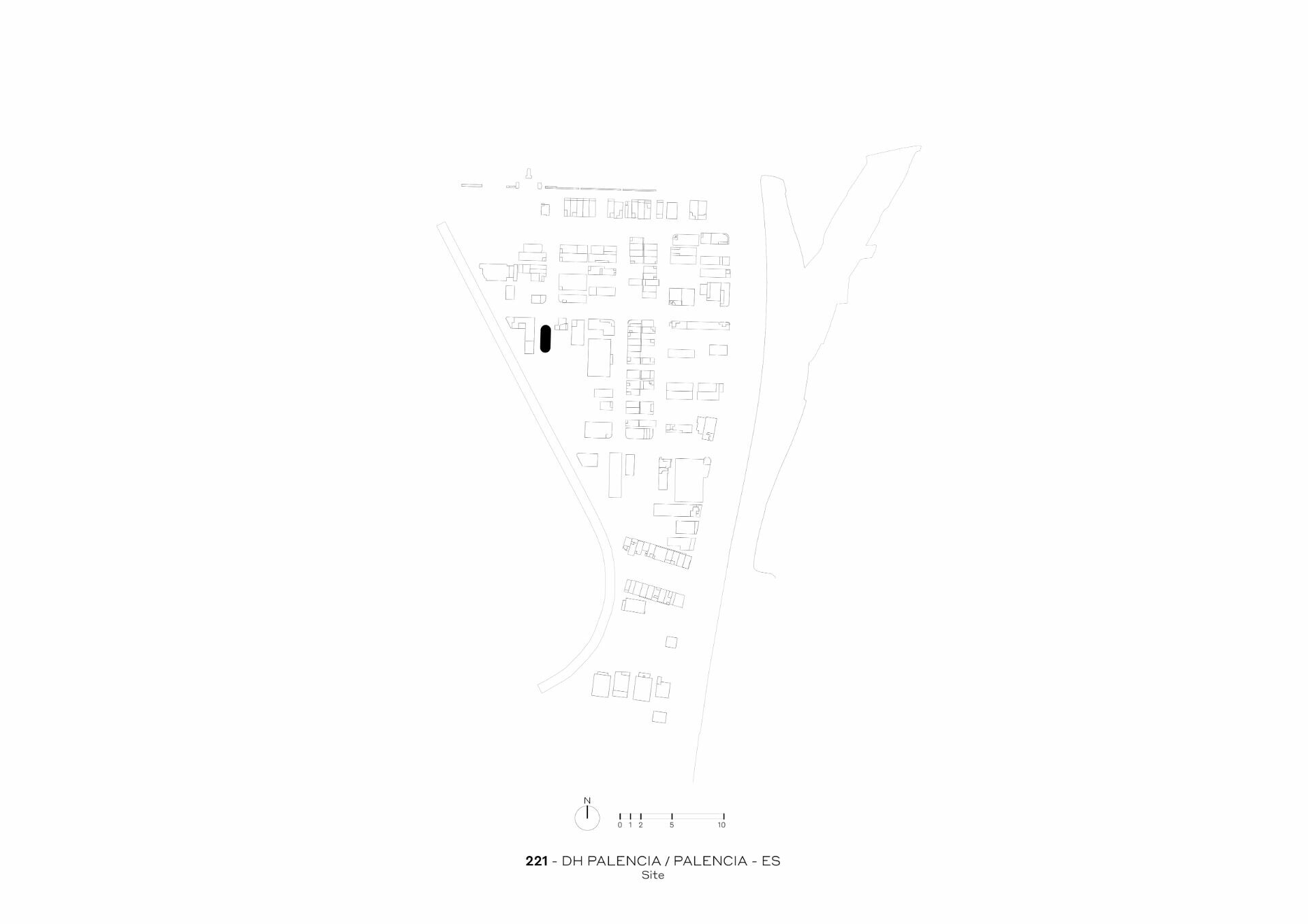
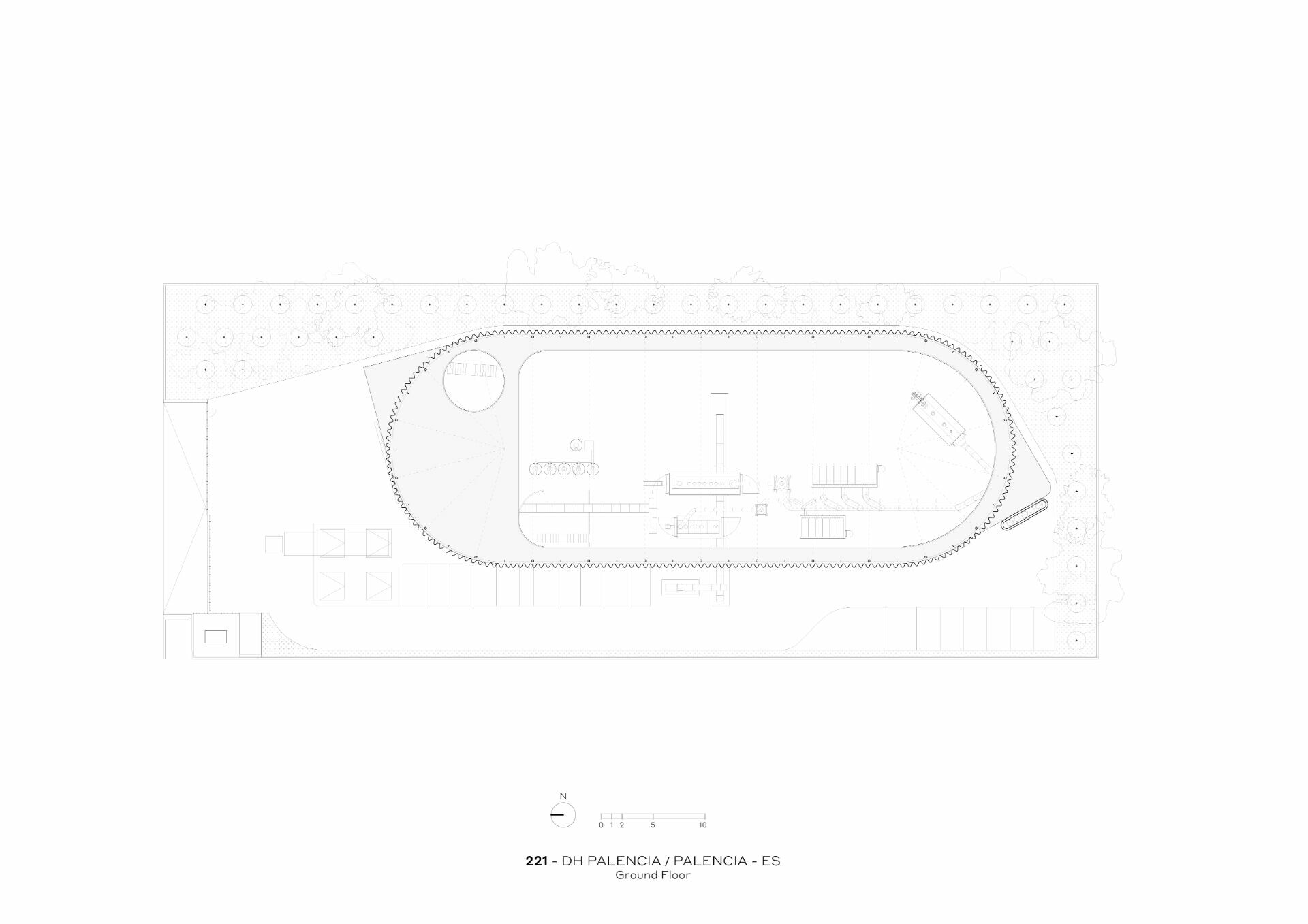
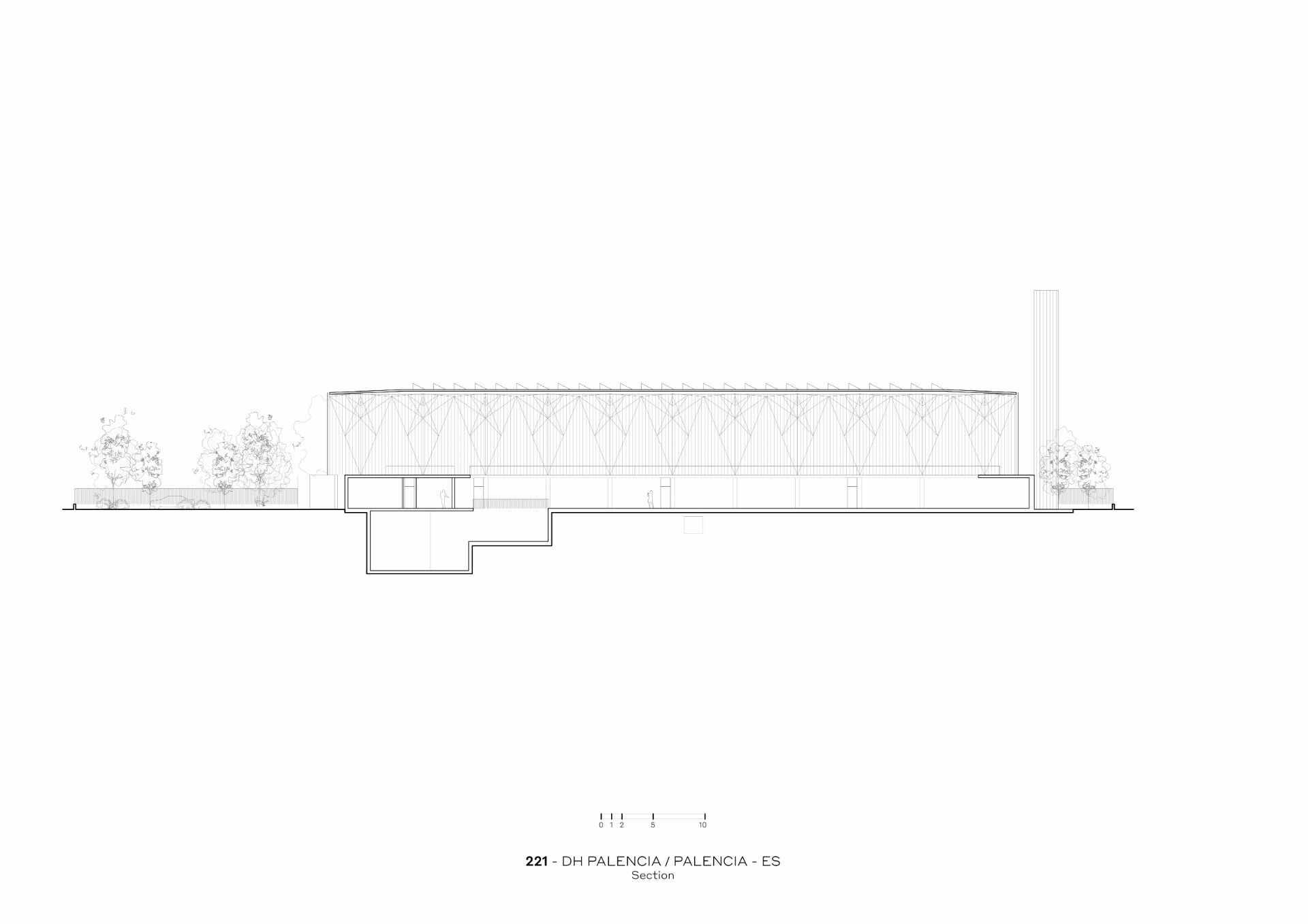
DH Ecoenergías, a pioneer in Spain’s renewable energy transformation, has implemented a district heating system powered primarily by forest biomass. This system converts organic matter into hot water through combustion, gasification, and pyrolysis, distributing it across the city via an underground pipeline network. Replacing traditional heating systems fueled by diesel or natural gas, this low-carbon alternative marks a crucial step toward urban decarbonization. Crucially, the process is made visible through architectural form—transforming an otherwise hidden system into a comprehensible and public-facing narrative.
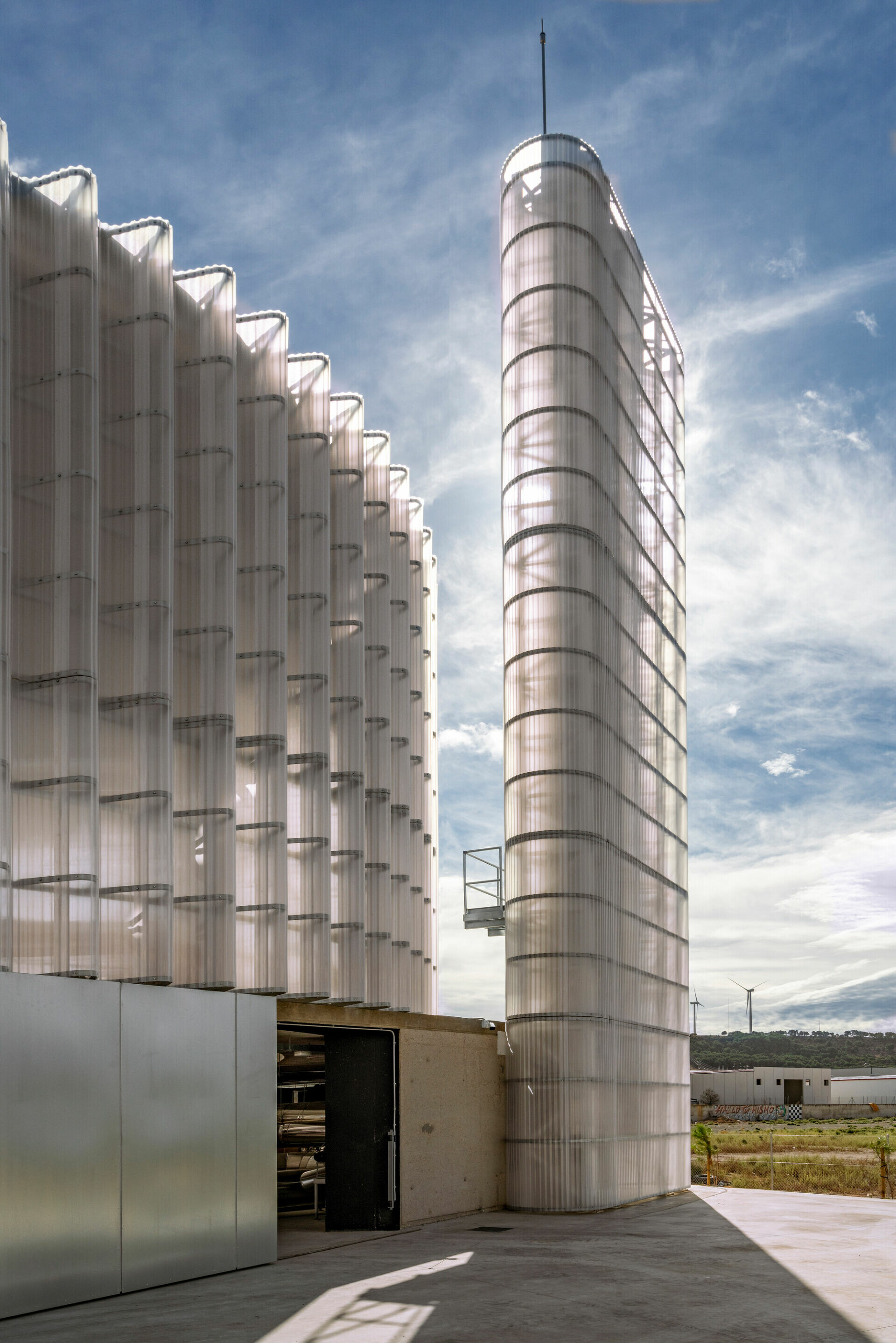
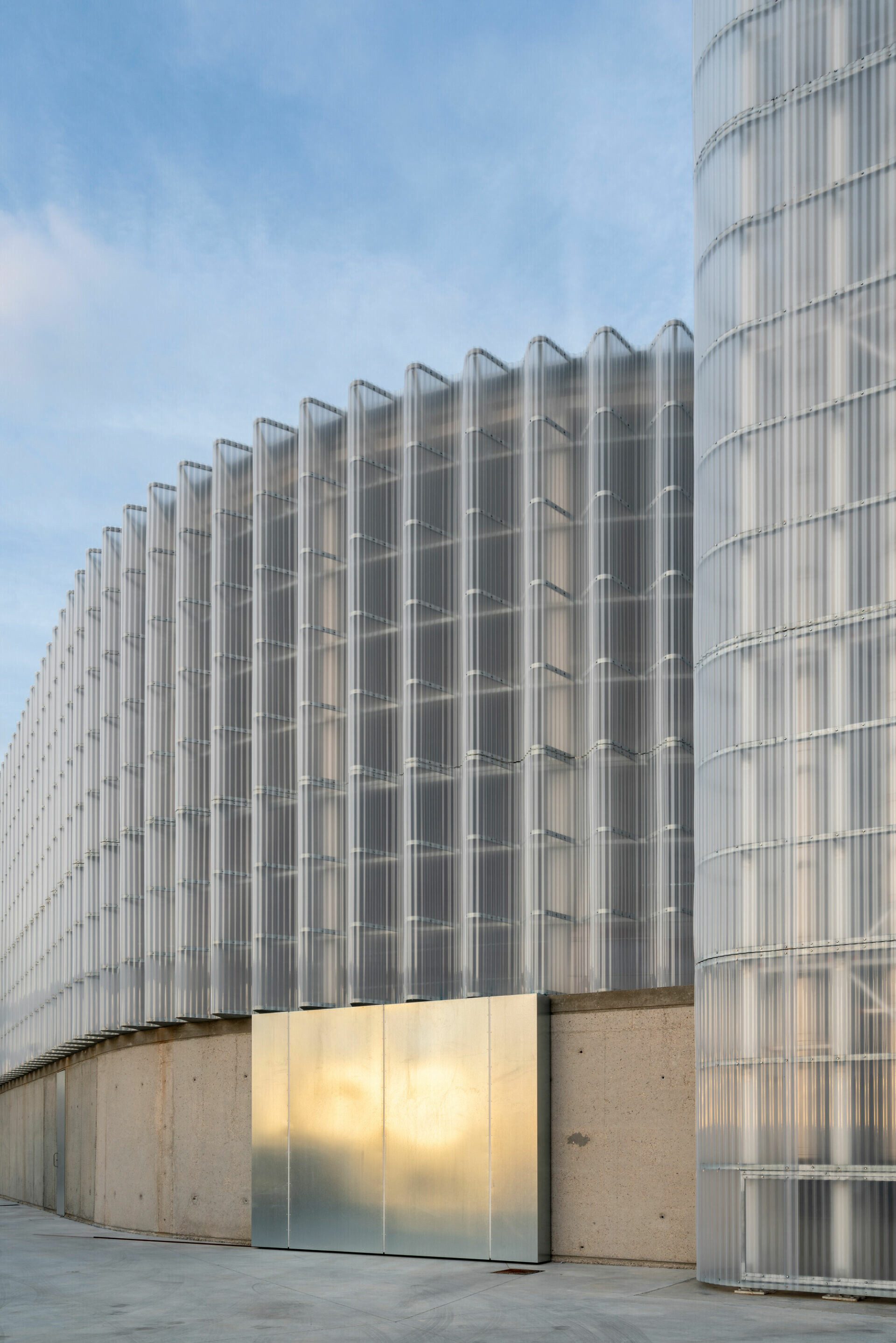
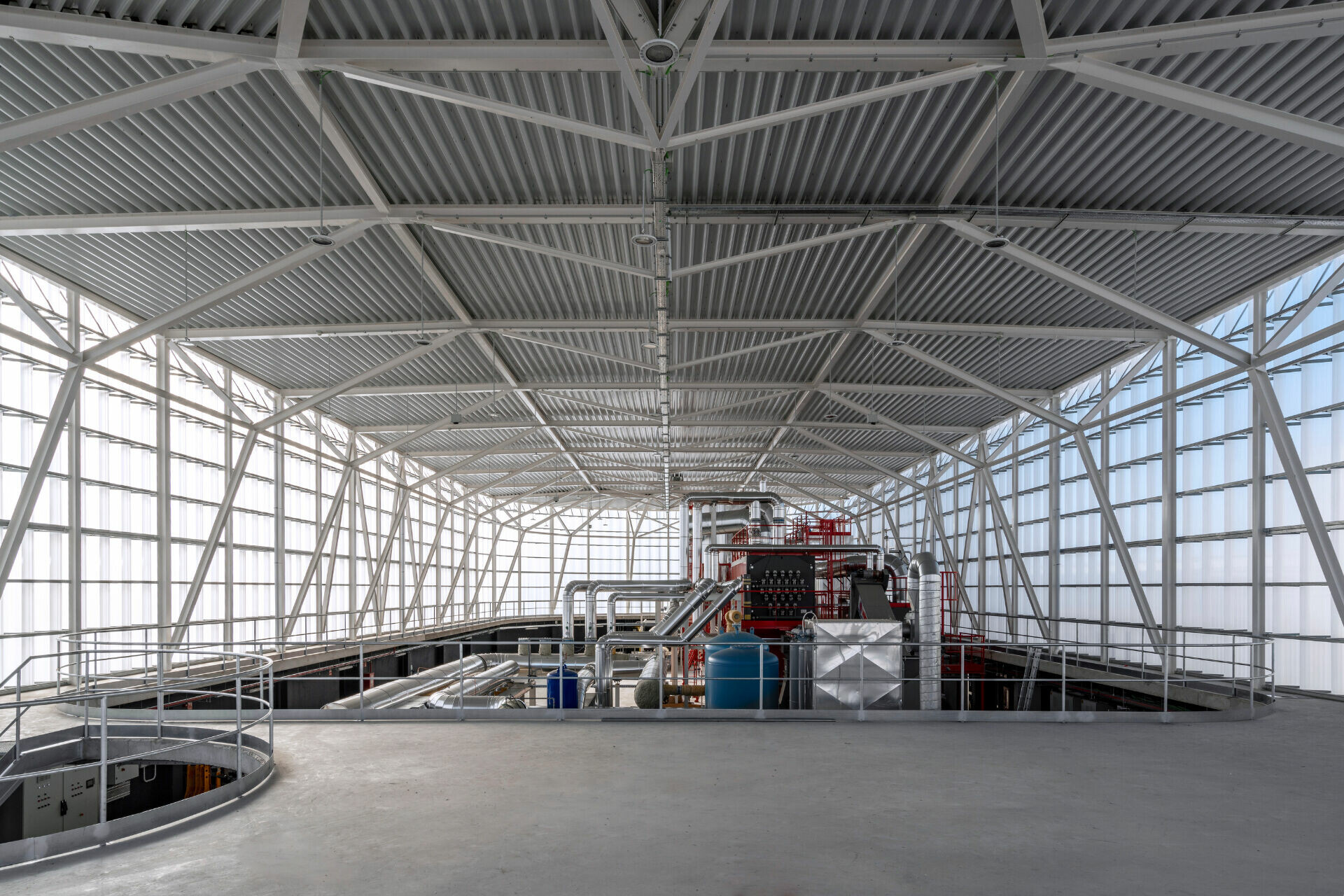
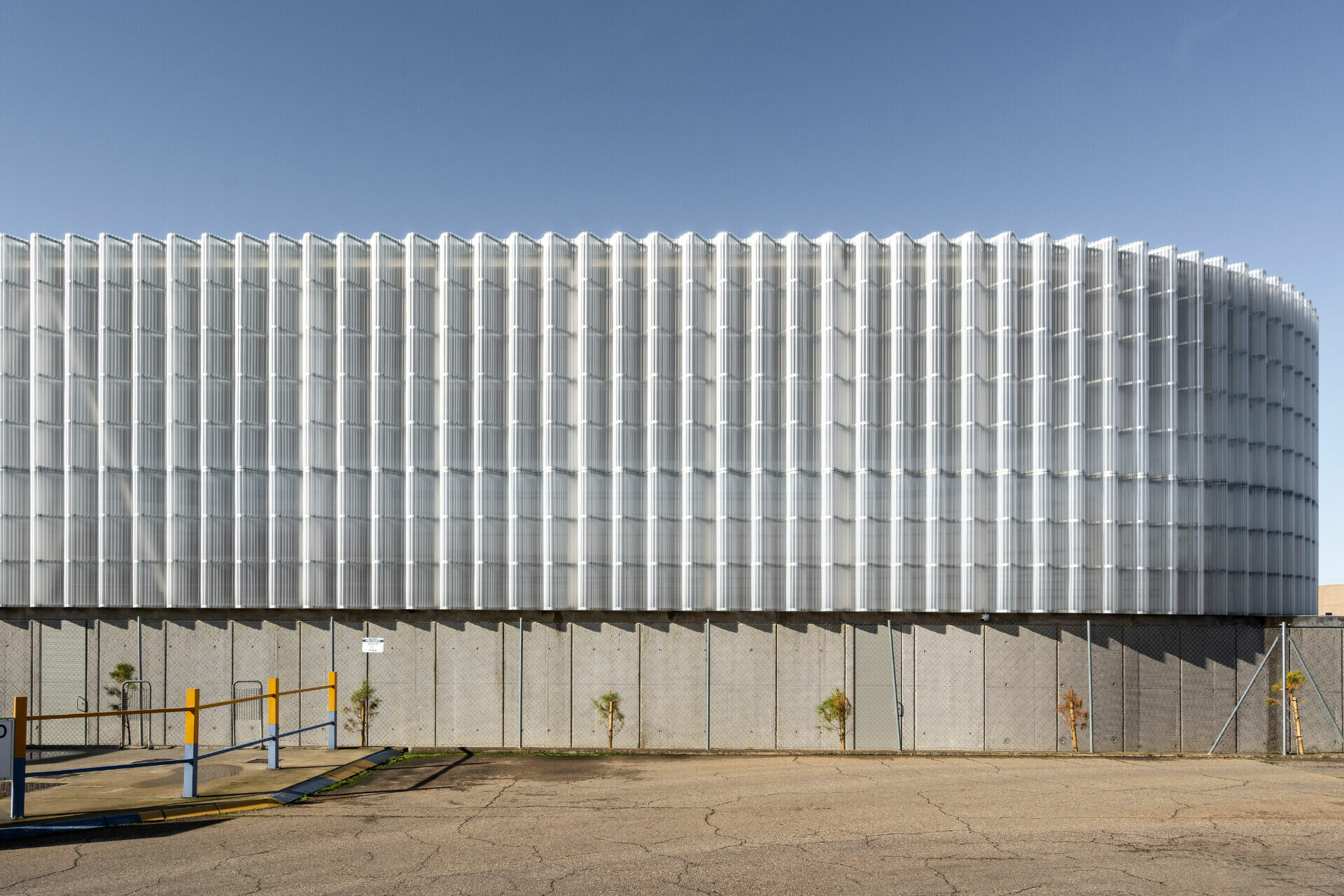
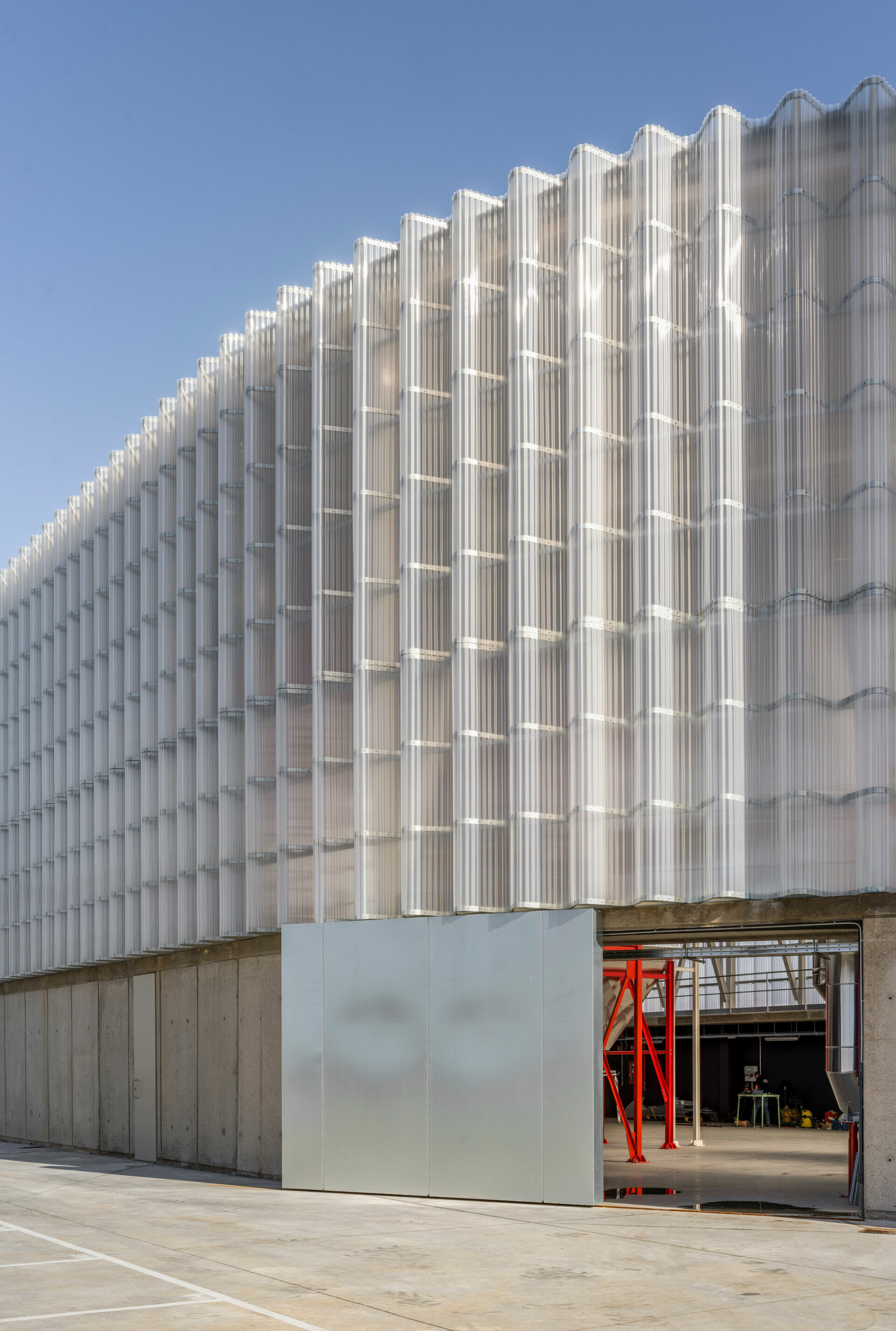
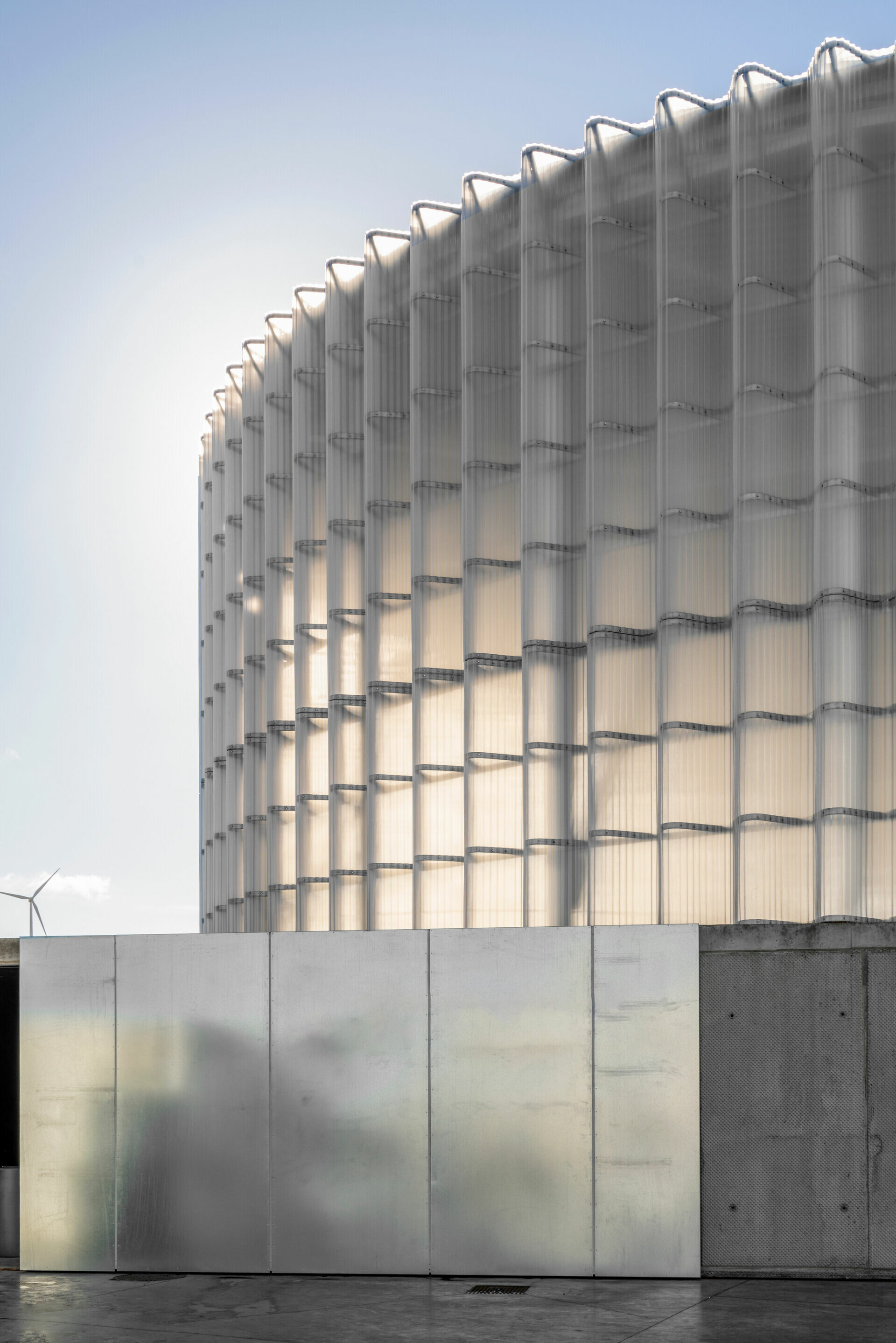
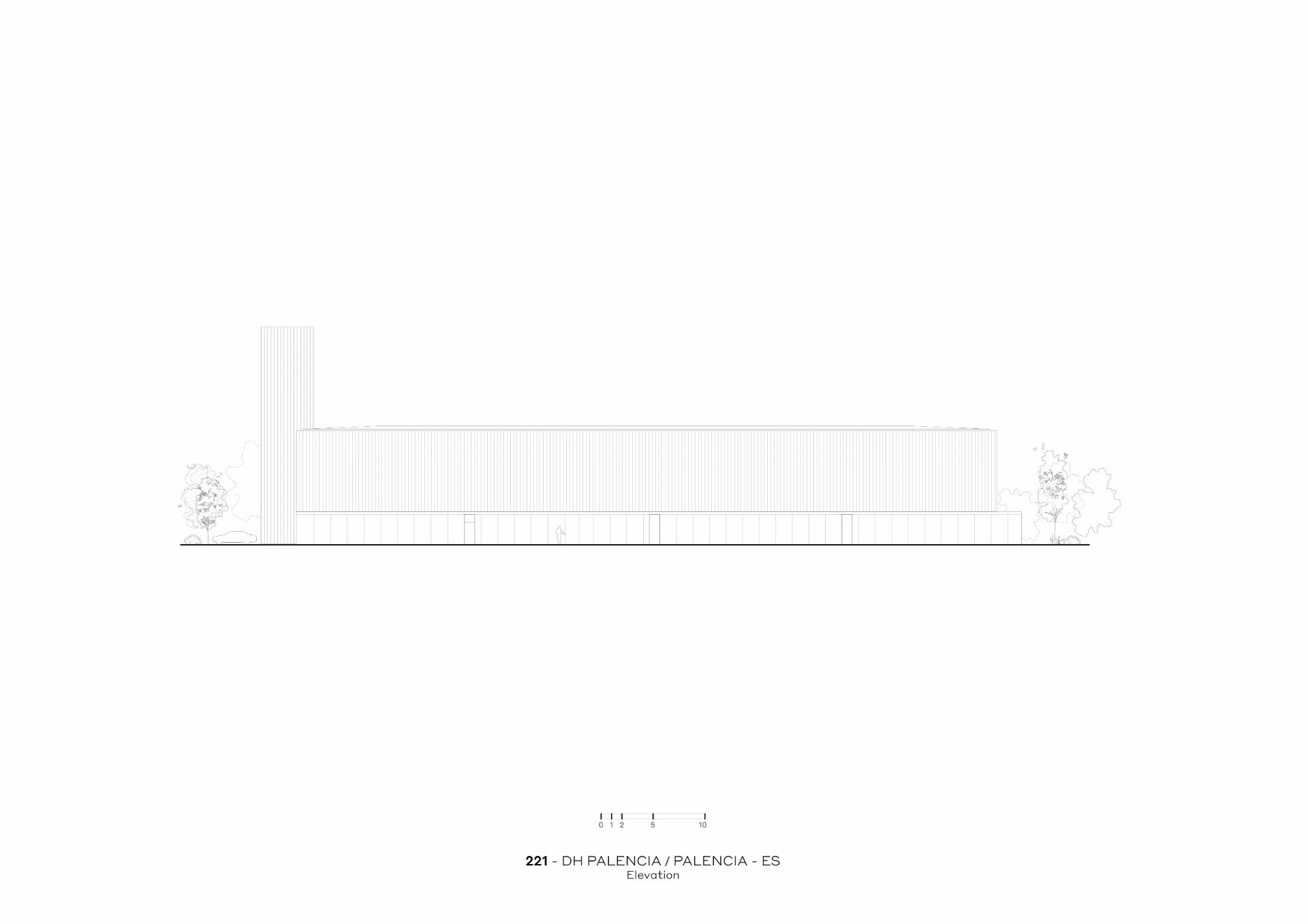
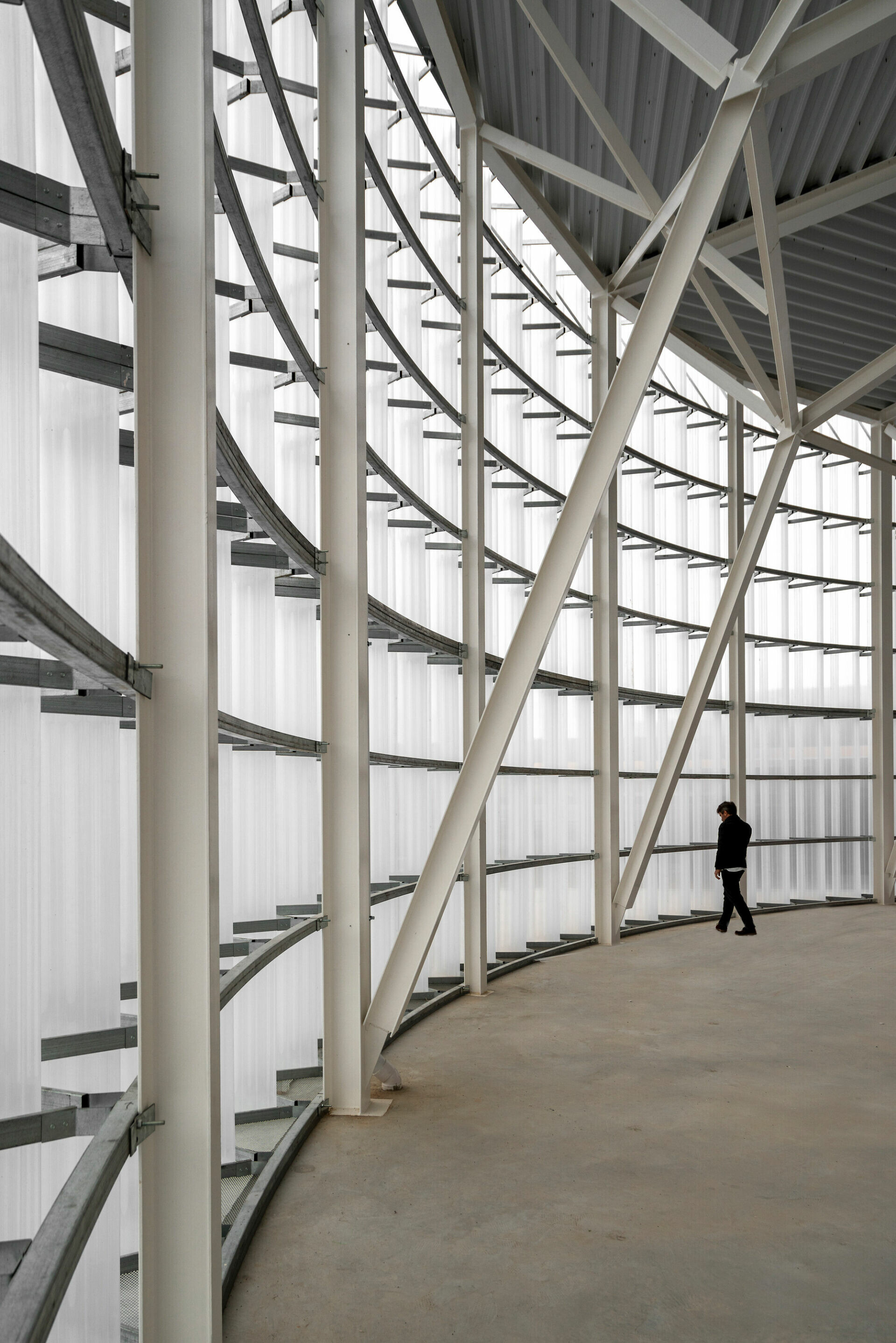
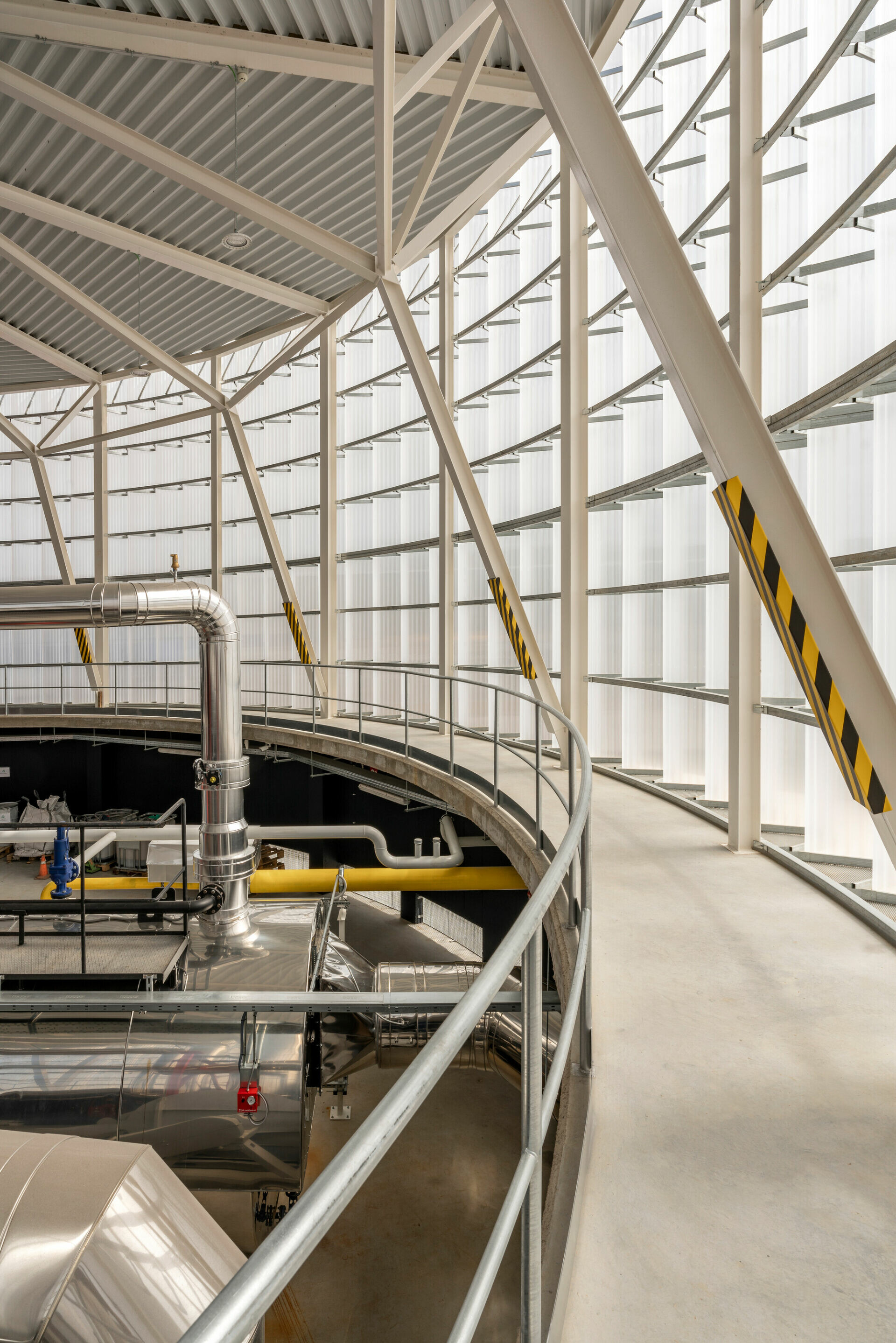
FRPO approached the project as a piece of “readable architecture,” in which the flow of energy is spatially and symbolically embedded in the building’s form. A cast-in-place concrete base anchors the structure, its raw, unmolded surface revealing the materiality of construction. Above it, a galvanized steel frame supports corrugated polycarbonate panels patterned in three distinct wave scales, forming a translucent outer skin that conveys a veil-like delicacy. The serrated silhouette metaphorically echoes the cyclical nature of energy. Two galvanized steel doors, strategically aligned with service paths, articulate a visual language of technical precision and infrastructural logic.
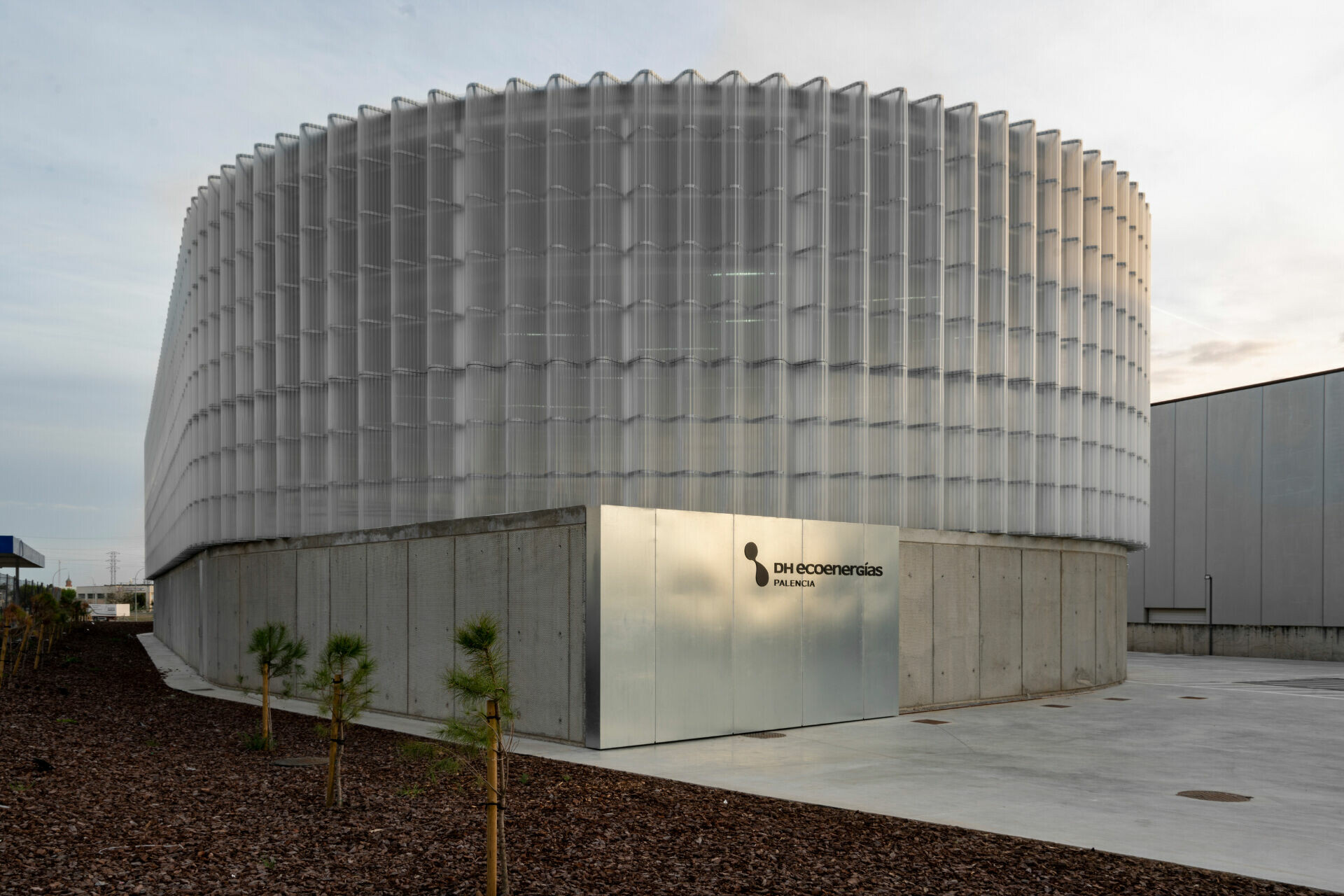
Viewed from above, the building glows softly in shifting daylight and, at night, becomes a luminous “energy capsule”—its diffused light suggesting the continuous movement of thermal energy. Inside, the elliptical floor plan houses all key operational systems, including subterranean biomass silos. Visitors can follow a ring-shaped corridor that wraps around the machinery, transforming the abstract process of heat generation into an embodied spatial experience. On one side, a translucent flue tower, clad in the same recyclable polycarbonate panels, maintains material continuity across the ensemble. Its verticality enhances the stack effect and natural airflow, efficiently venting filtered steam and preventing vapor buildup inside the structure.
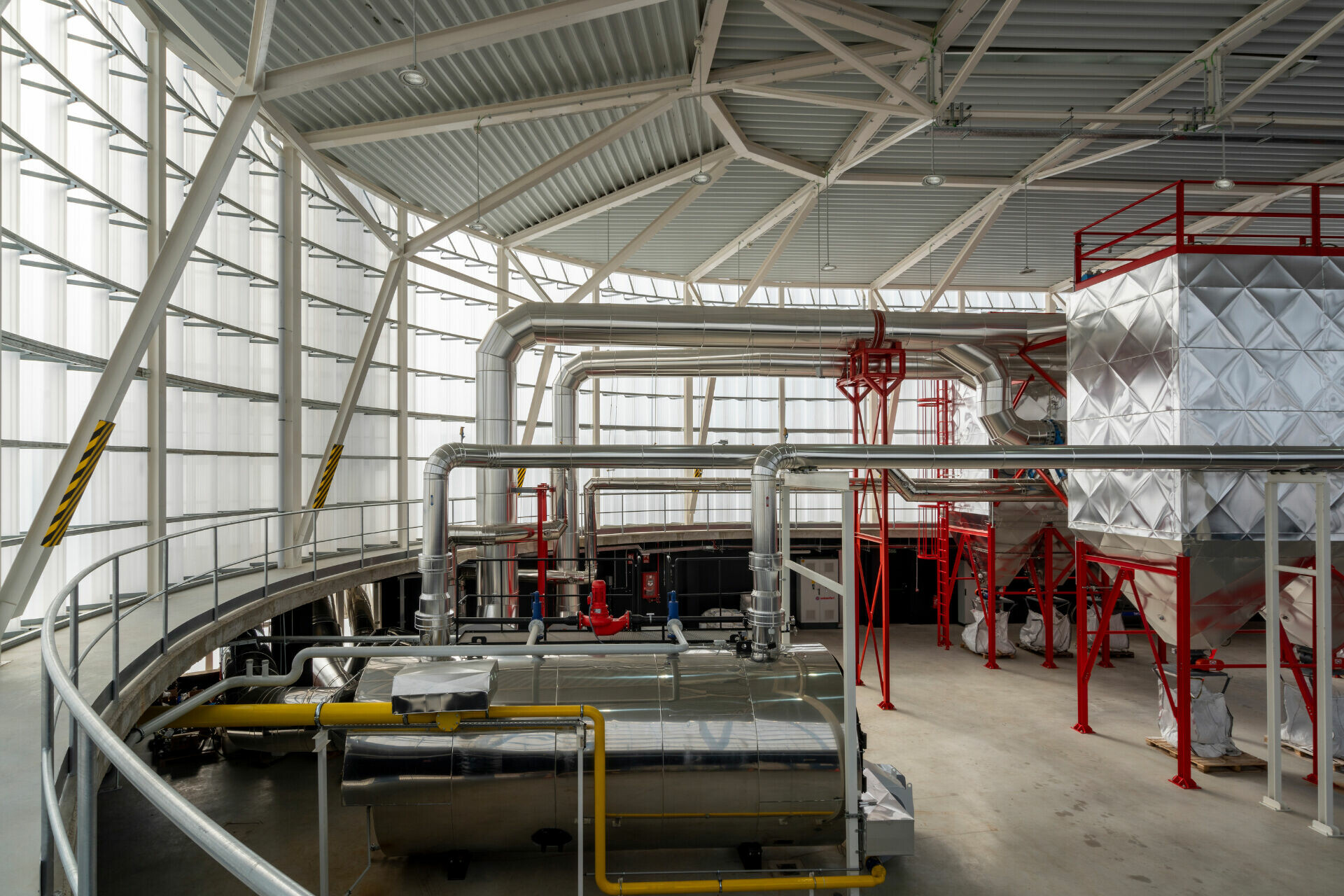
Rather than concealing energy infrastructure underground or behind opaque walls, FRPO has reimagined the DH Palencia plant as a luminous civic beacon—a contemporary lantern that challenges conventional notions of utility architecture. In doing so, the project calls for a cultural reevaluation: energy systems must not remain silent or hidden, but instead be made visible, accessible, and open to public reflection. More than a technical facility, the building serves as pedagogical architecture—a structure designed to educate and inspire. Through spatial clarity and formal expression, it invites deeper reflection on the intertwined values of environment, technology, and the future of shared urban life.
Architects | Fernando Rodríguez, Pablo Oriol
Type | Thermal Power Plant / Energy Infrastructure
Project Year | 2019
Completion Year | 2023
Plot Size | 4000 m²
Gross Floor Area | 1960 m²
Usable Floor Area | 1833 m²
Building Footprint | 760 m²
Materials | In-situ Concrete / Galvanized Steel Structure / Corrugated Polycarbonate Sheets (Three-scale Texture) / Steel Wire Framework
Location | Palencia, Spain