WABISABI
  • Projects
    • Worldwide
    • Interiors
    • Features
  • Contemporary
    • Exhibitions
  • Record
  • Lifestyle
  • City Explore
  • News
  • Issue
  • Account
  • Search
  • Language
Mobile nav


安徽潛山痘姆龍窯及非遺客廳設計


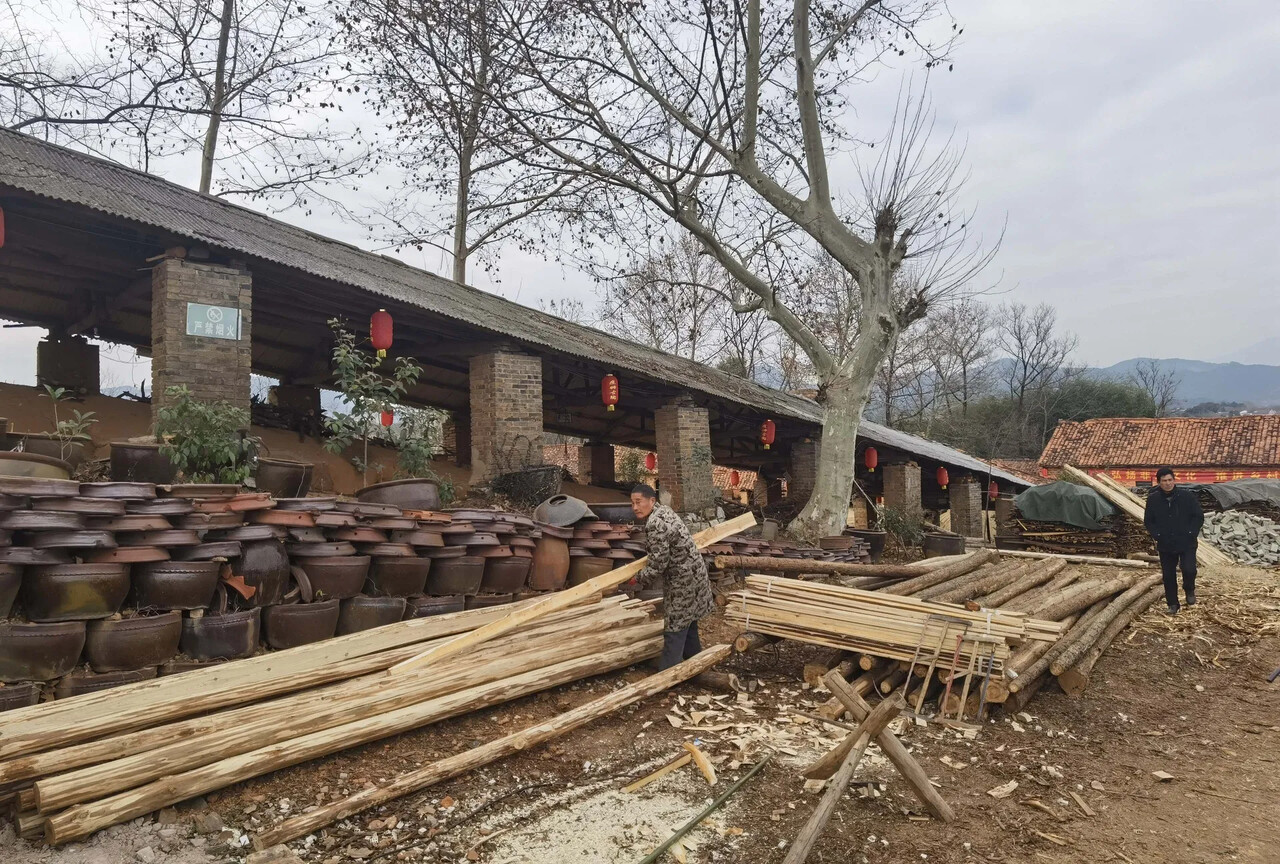
➤ 龍窯屋架原始樣貌

➤ Arimitive appearance


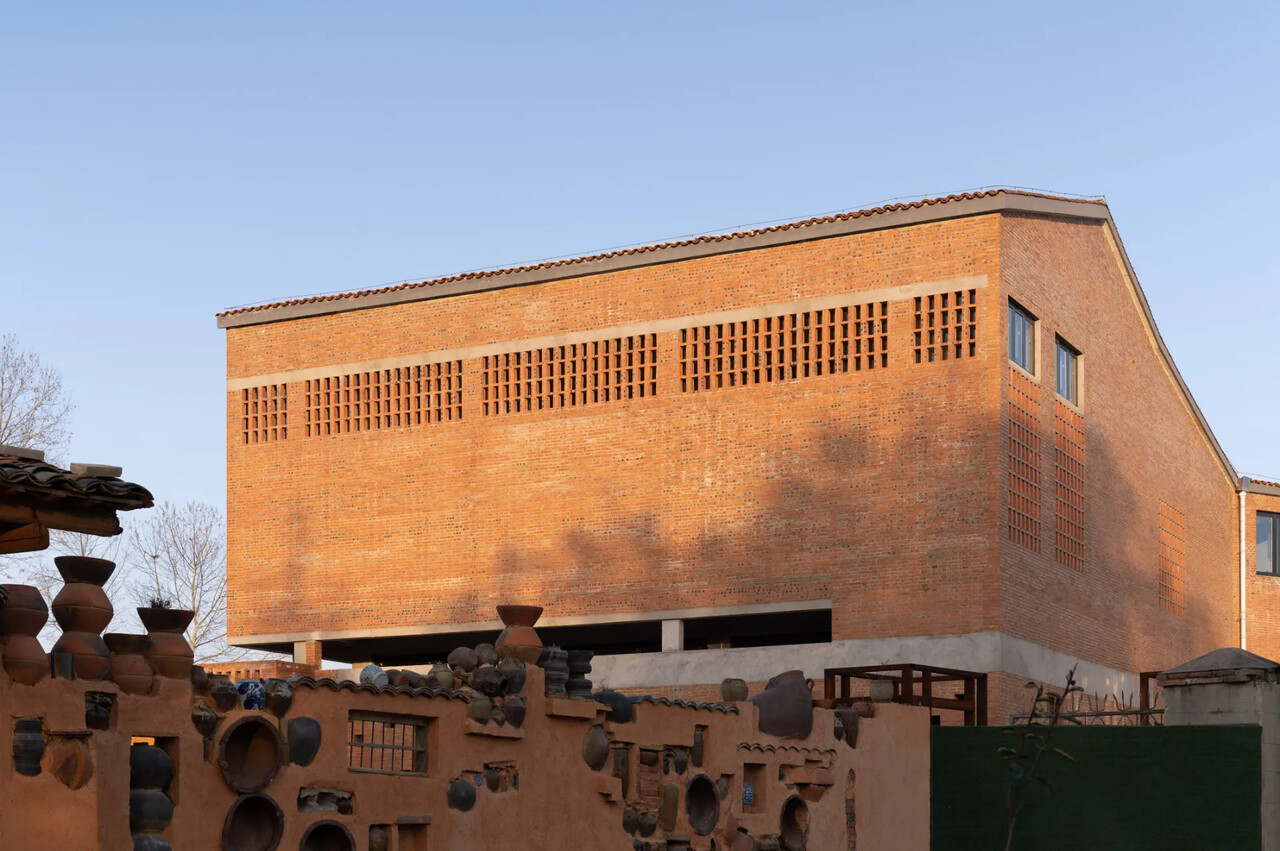
陶廠中的兩組建築——龍窯屋架及非遺客廳


在2021年底景德鎮三寶國際陶藝村創始人、景德鎮陶瓷大學特聘教授李見深教授作為項目總策劃邀請建築師來痘姆陶廠現場踏勘時,陶廠內正在進行全方位的升級建設。我們領到的設計任務包括其中兩座建築的新建和改造——其一非遺客廳建築已經開挖地基,因此建築外輪廓及結構位置已確定;其二覆蓋石棉瓦屋頂的龍窯則亟待更新,以滿足窯篷建築的堅固性和美觀性要求,並適應其新功能。


痘姆制陶的歷史可追溯到6000年前的薛家崗文化並綿延至今,其陶瓷燒制的技藝在當下也已被列入國家級非物質文化遺產代表性項目名錄。如何保留傳統的記憶並展示非遺的技藝,窯廠內的非遺客廳方案調整以及龍窯窯篷更新的設計任務,分別為建築師提供了不同的挑戰。


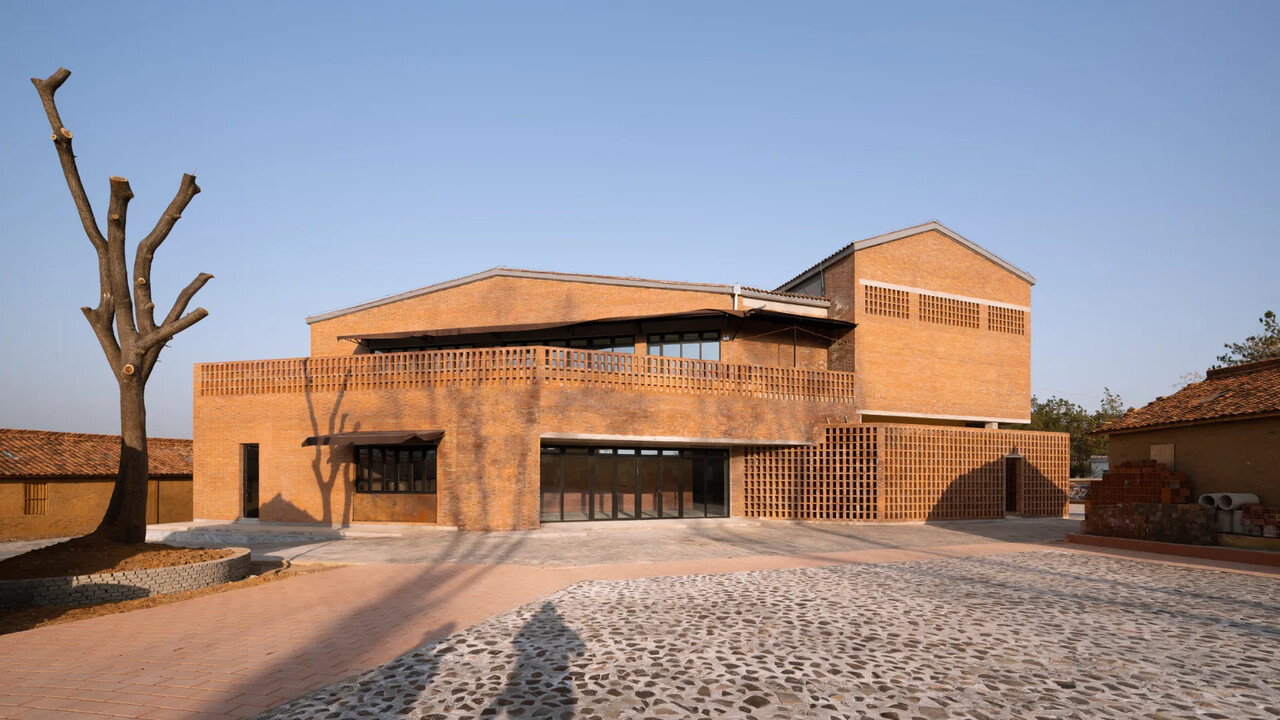
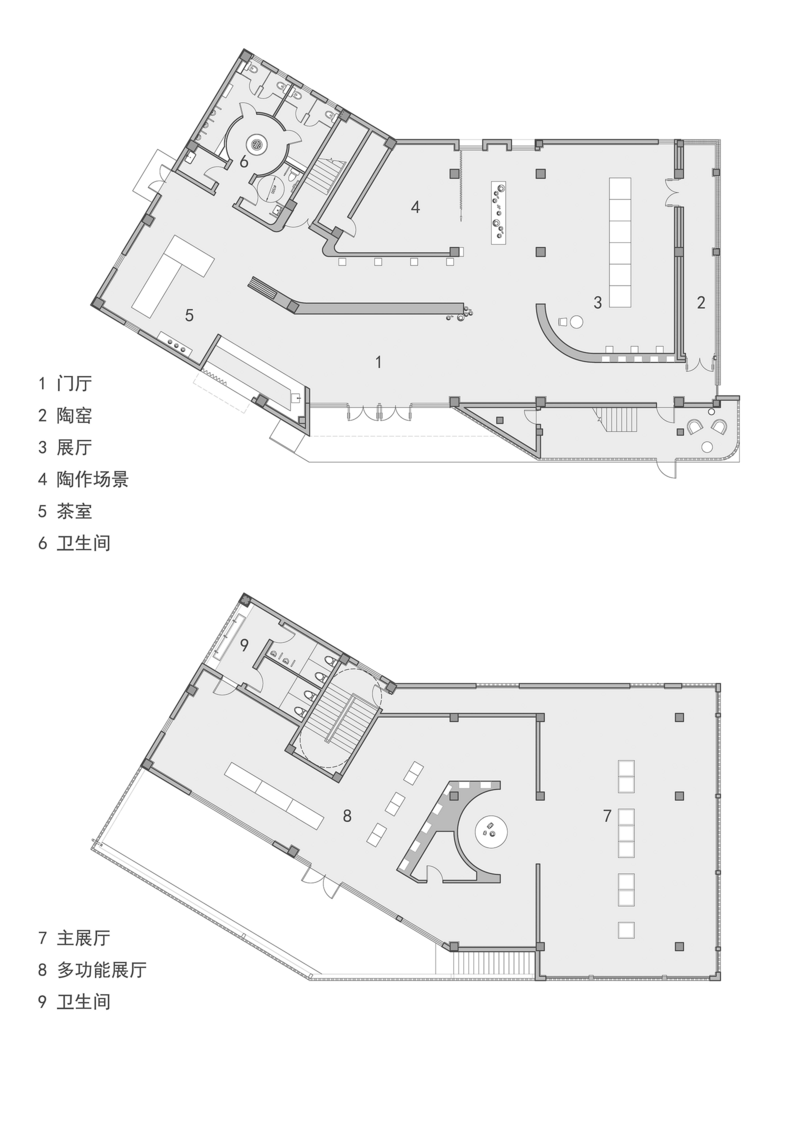
在保證原設計主體建築輪廓不變的前提下,建築師對非遺客廳的建築體塊關係進行了調整,形成更豐富的底層空間界面及更親人的尺度。建築內部則通過流線梳理,形成一條完整的室內外結合的參觀路徑。


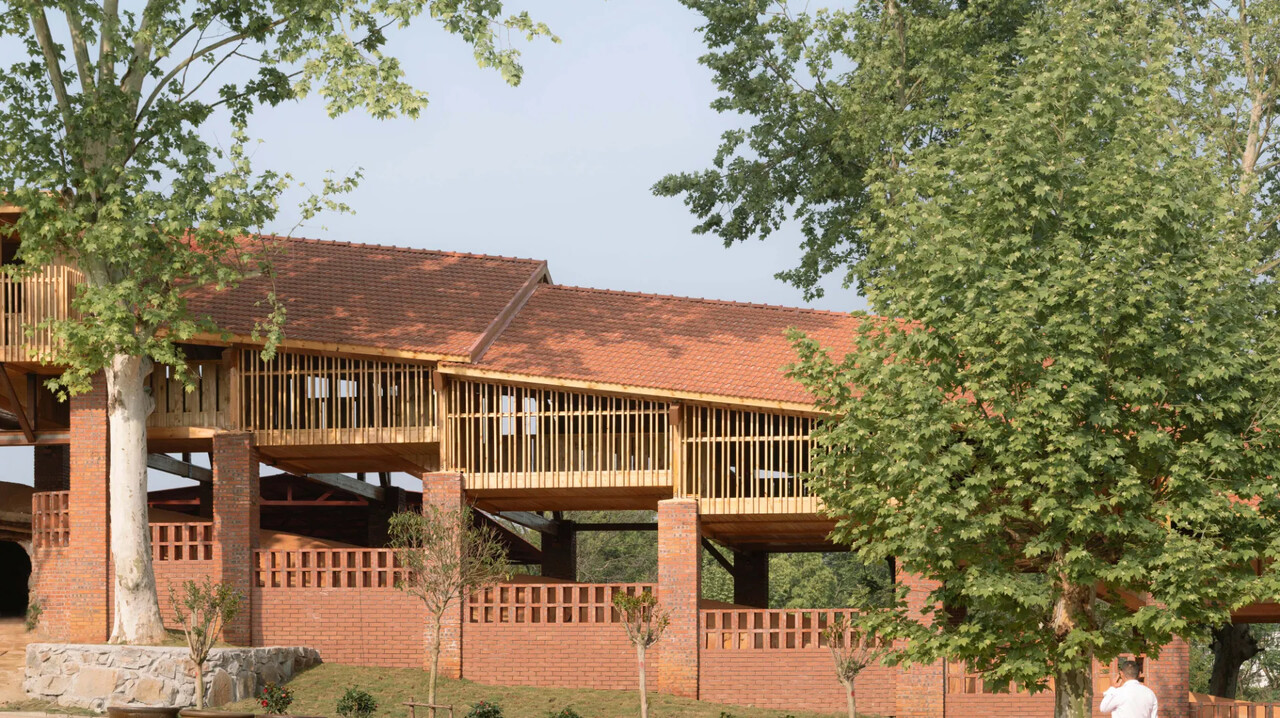
龍窯窯篷設計則是在現有龍窯基礎上,重新設計一個能遮風擋雨,滿足下方燒窯需求的窯篷,同時在不影響燒窯作業的高處增加一條參觀路徑,形成一組全新的觀察龍窯燒窯的視角。


Doumu Dragon Kiln and ICH Lounge in Qianshan, Anhui
 
Two Buildings in the Pottery Factory: Roof Structure of the Dragon Kiln and ICH Lounge
At the end of 2021, when the architect was invited by the chief planner of the project, the founder of Sanbao International Ceramics Art Village, the Distinguished Professor of Jingdezhen Ceramic University, ceramicist LI Jianshen, to visit the site of Doumu Pottery, the factory has been undergoing a comprehensive upgrade. The design brief we have received consisted of the construction and renovation of two buildings: the ICH Lounge for which the foundation had already been excavated and therefore the location of the building outline and its structures had been determined; and the asbestos tile roofed dragon kiln, in urgent need of renewal to satisfy the requirements of soundness and aesthetics for a roof structure and to accommodate new functions as well.
 
The history of pottery making at Doumu dates back to the Xuejiagang culture 6,000 years ago and continues to this day. Its artistry of firing ceramics has now been listed as national intangible cultural heritage. The adaptation of ICH Lounge in the kiln factory and the renovation of the dragon kiln roof structure, have respectively provided the architect with different challenges, in the way of preserving the traditional memory as well as showcasing the technique of the intangible cultural heritage.
 
With the main building outline of the original design unchanged, the architect has adjusted the relationship of building massing for ICH Lounge, to create a richer spatial interface on the ground floor, in a more approachable scale. The interior of the building has been streamlined to form a complete indoor-outdoor visiting path.
 
The design of the dragon kiln roof structure reconstructed a canopy on the foundation of the existing kiln, to protect it against wind and rain as well as to meet the firing needs below. Meanwhile, a visiting path was to be paved at a higher level that would not interfere with the firing operation, allowing a brand new set of viewpoints to observe the firing of the dragon kiln.

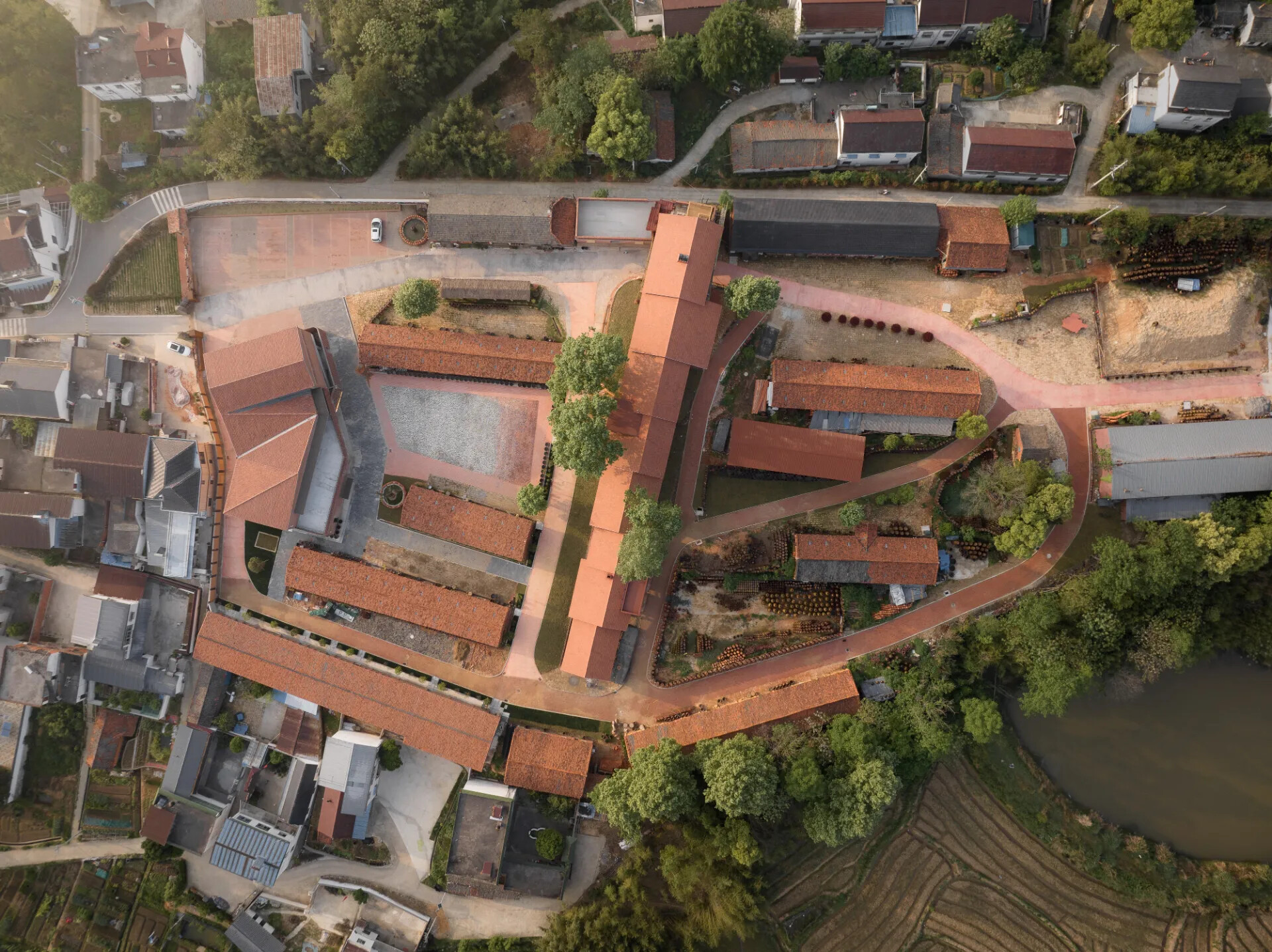
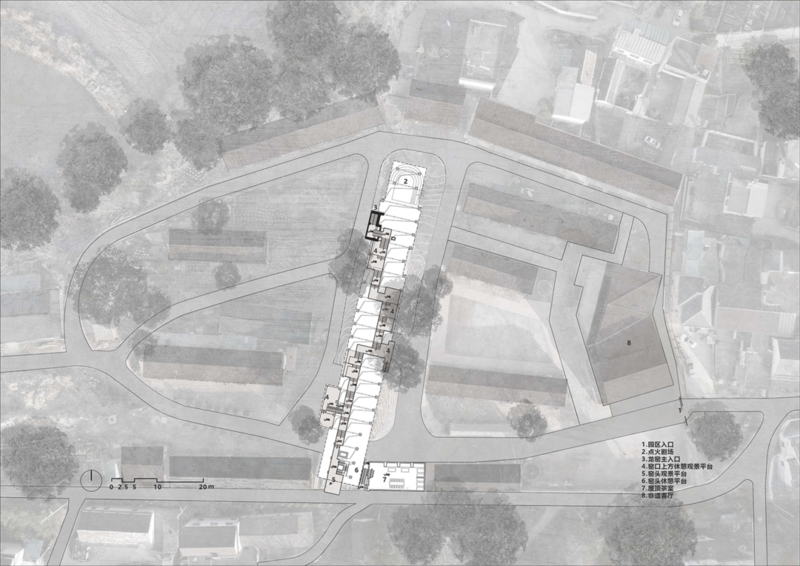
龍窯環境平面

Environmental layout plan of the Dragon Kiln
MORE

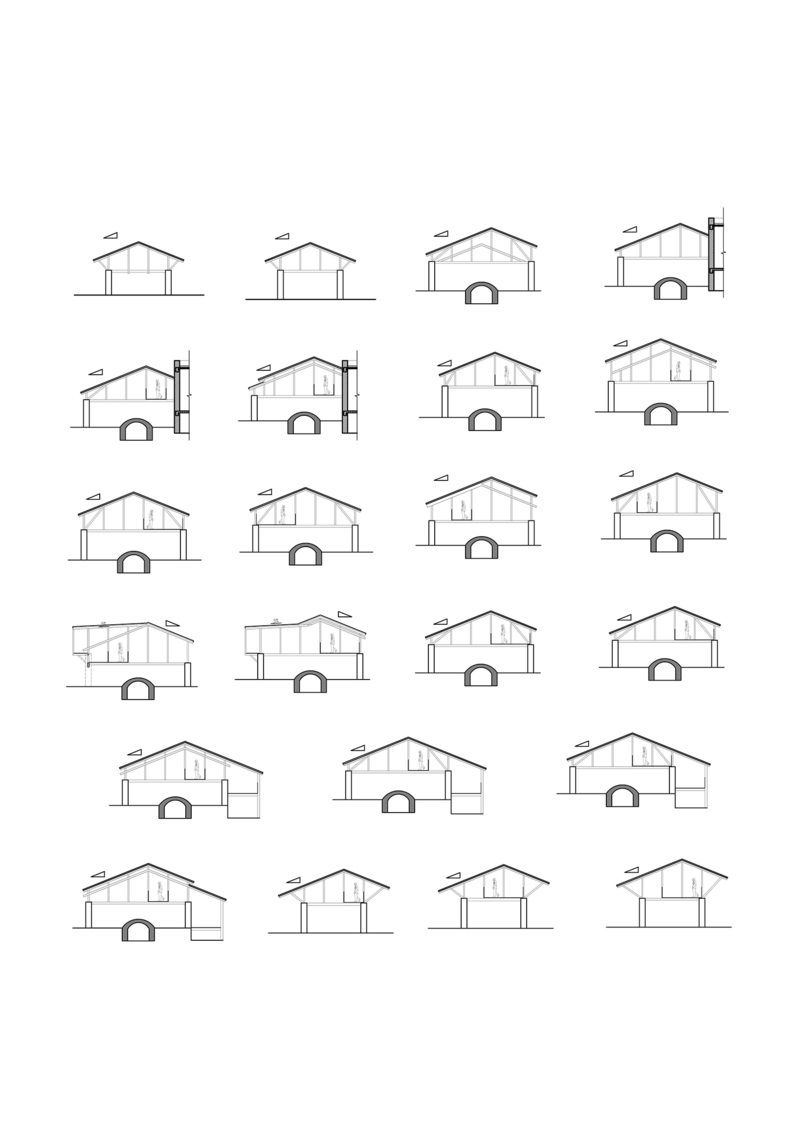
屋架標準跨距示意

Illustration of a Standard Span of the Dragon Kiln Roof Structure
MORE

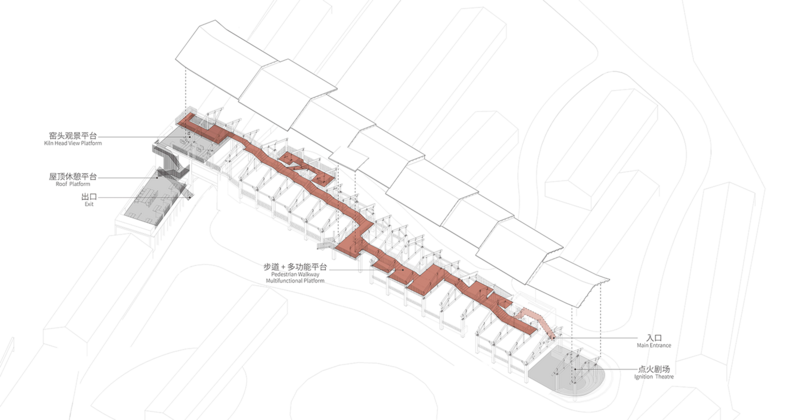
龍窯屋架步道展廊示意

Illustration of the Roof Walkway Gallery of the Dragon Kiln
MORE


參觀路徑——在窯背上東張西望 


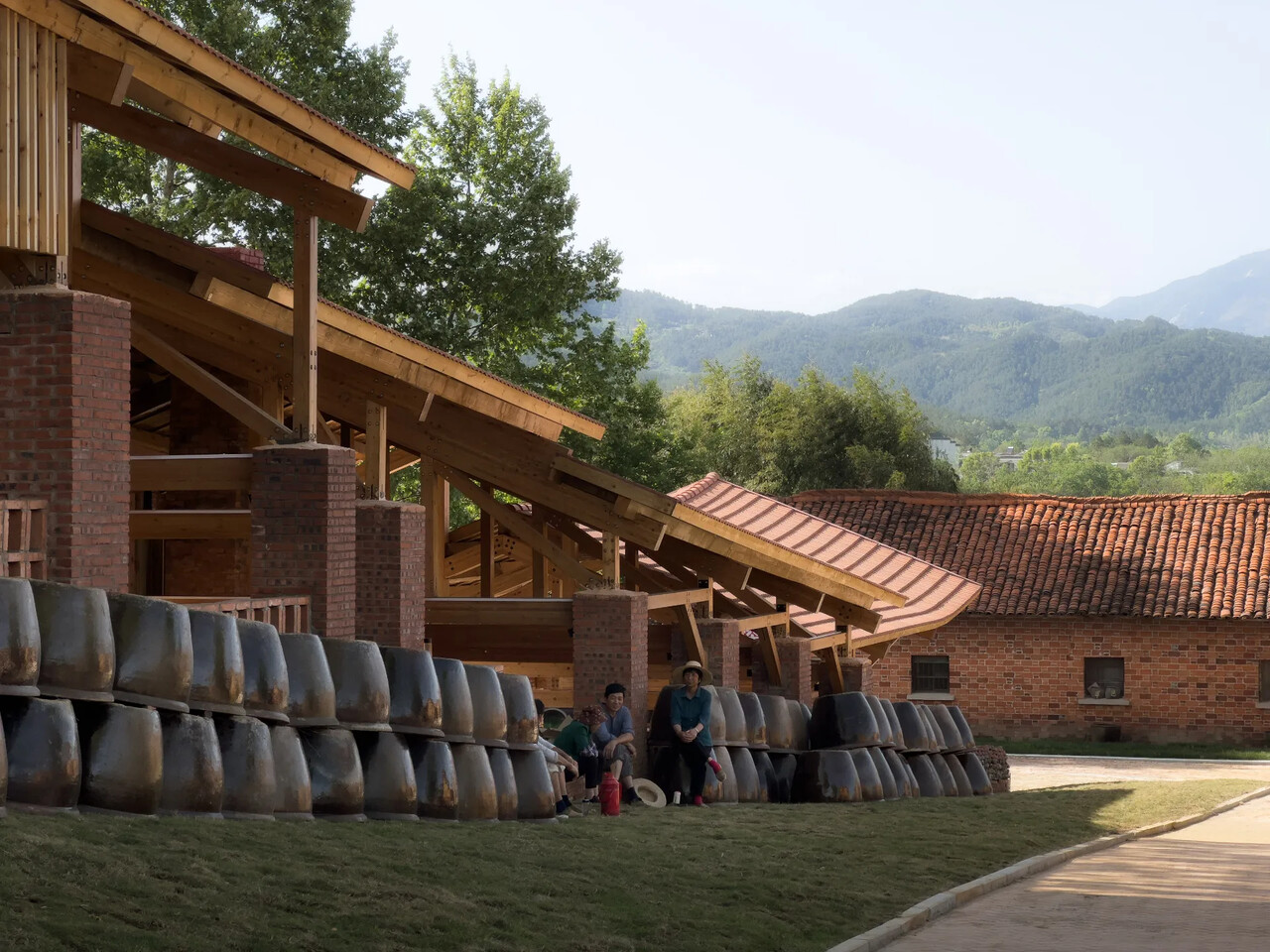
現存龍窯建造的歷史可追溯至清朝,在漫長的歷史歲月中,其經歷過多次火災燒毀及修復的過程。改造前的窯篷採用輕質耐燒的石棉瓦也是出於方便修復及防火的原因。支撐棚架的磚垛間距則是根據窯工添柴、放置陶坯的作業方式,綜合考慮避讓窯門、煙囪的位置,而最終確定其模數。因此新的設計基本保留原有的磚垛間距和結構形式,以保證傳統燒窯方式不被干擾。


龍窯屋架的既有形式是當地最普通的人字形松木木構屋架,每一榀三角形的構架均由下方的兩組磚垛支撐。


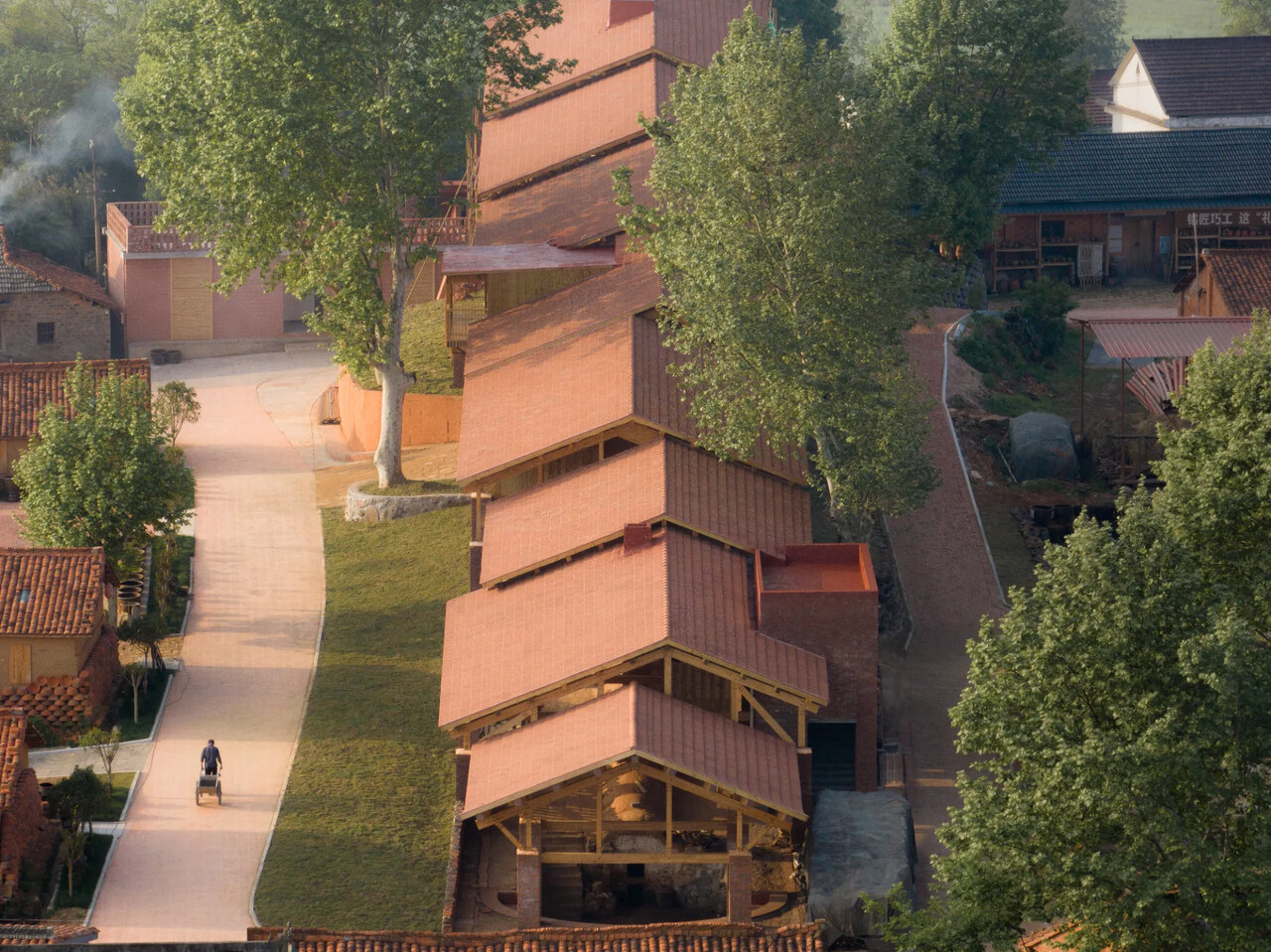
如何維持原有屋架的基本構型,再置入一組參觀流線,便是龍窯改造所需解決的關鍵問題。建築師在新建屋架的設計中嘗試了不同的標準跨構建形式,最終被選定的方案在保留了原有屋架的構型的前提下,增加了一條蜿蜒於龍窯之上的參觀路徑,同時最大限度地控制了新屋架的高度,使其僅在原有屋架的基礎上增加了1.8公尺。


從廠區其他關鍵視點向龍窯看去,新建屋架和原有屋架在天際線起伏趨勢與窯篷高度上沒有過於明顯的差異。在陶廠內,龍窯仍然是控制天際線最重要的元素,但被控制過高度的新建屋架並沒有讓天際線產生過於突兀的感覺。
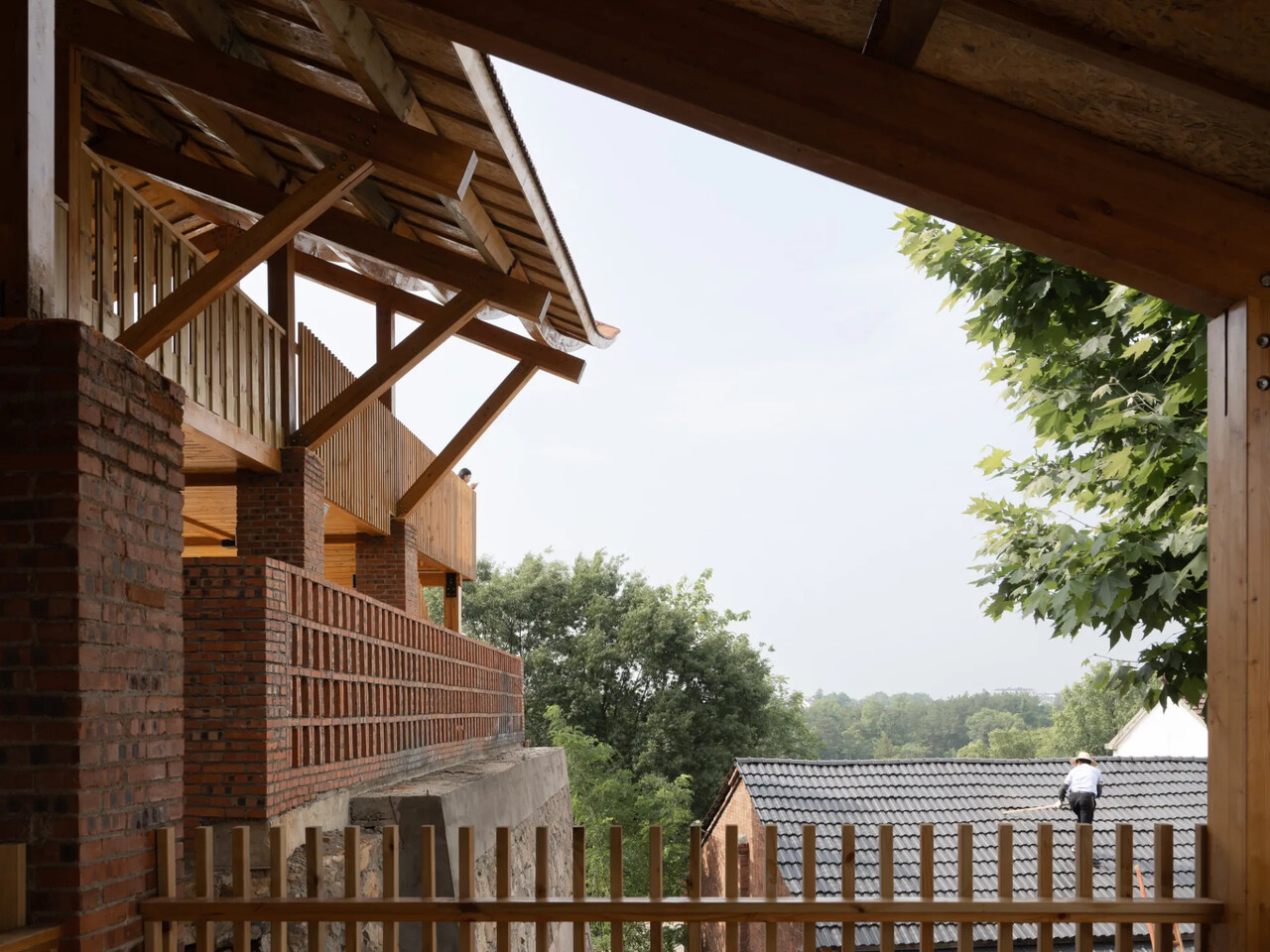
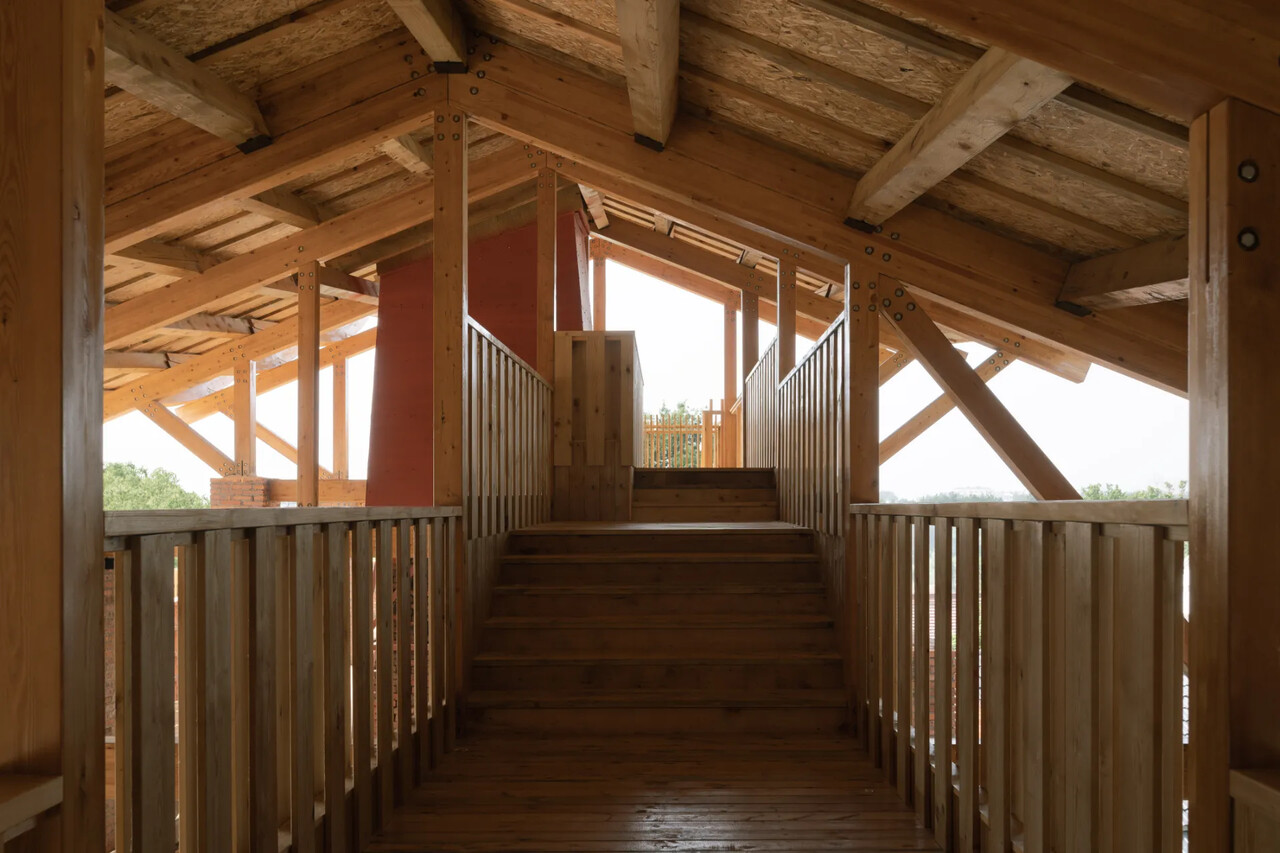
 

Visiting Path | Looking around on the Back of the Kiln
 
The existing dragon kiln was first built at the time of the Qing dynasty and has undergone many fires and restorations over the course of its long history. Lightweight and fireproof asbestos tile was adopted for the original roof out of its fire-resistance and ease of restoration. The module of spacing between the brick pillars that support the roof was finally determined according to the way the kiln workers adding firewood and placing greenware, taking into account the location of the kiln door and chimney. Thus the new design mainly retains the original spacing and structure of the brick pillars to ensure the traditional firing method is not disturbed.
 
The roof frame of the dragon kiln is in the existing form of herringbone pine timber frame, most commonly found in the area, with each triangle-shaped frame supported by two brick pillars below.
 
The key issue to be addressed in the renovation of the dragon kiln was to incorporate a visiting path while maintaining the basic configuration of the original roof frame. The architect has experimented with different forms of a standard span for the new roof frame, and the final chosen solution has added a visiting path winding upon the kiln, in the premise of retaining the shape of the original roof, while minimizing the height increase of the new frame, adding only 1.8m on the original.
 
When viewed from other key viewpoints of the factory towards the dragon kiln, there is no overly significant difference between the new and original roof frame, in terms of the undulation pattern of its skyline and the height of the roof. In the pottery factory, the kiln remains the most important element in controlling the skyline, but the newly built roof frame, in the controlled height, does not overpower the skyline.
 

非遺客廳平面

Plan of ICH Lounge
MORE

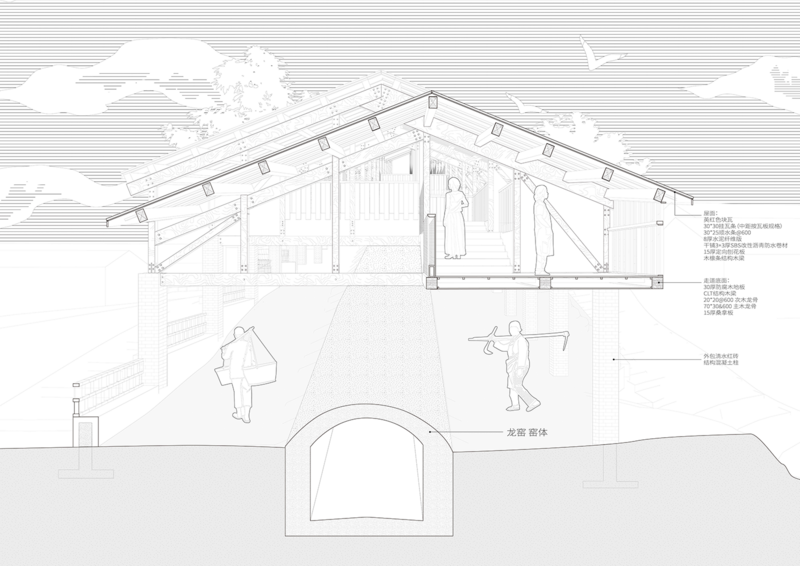
龍窯屋架剖面

Section of the Dragon Kiln
MORE


場景敘事——並置、觀察、對話


在龍窯窯背及內部工作的窯工與在屋架上穿行的遊客,借新的屋架形式形成兩組在空間中並行的流線。二者在視線上有多處交叉互看的位置,因安全生產的需要,二者之間未設計有相互連接的平台。


參觀者從窯尾的小劇場旁的磚砌小屋內拾級而上,經過兩道轉折後,東張西望地穿行於窯背上方。或東或西的參觀流線位置是綜合考慮外部建築高度以及內部視線關係而確定的。


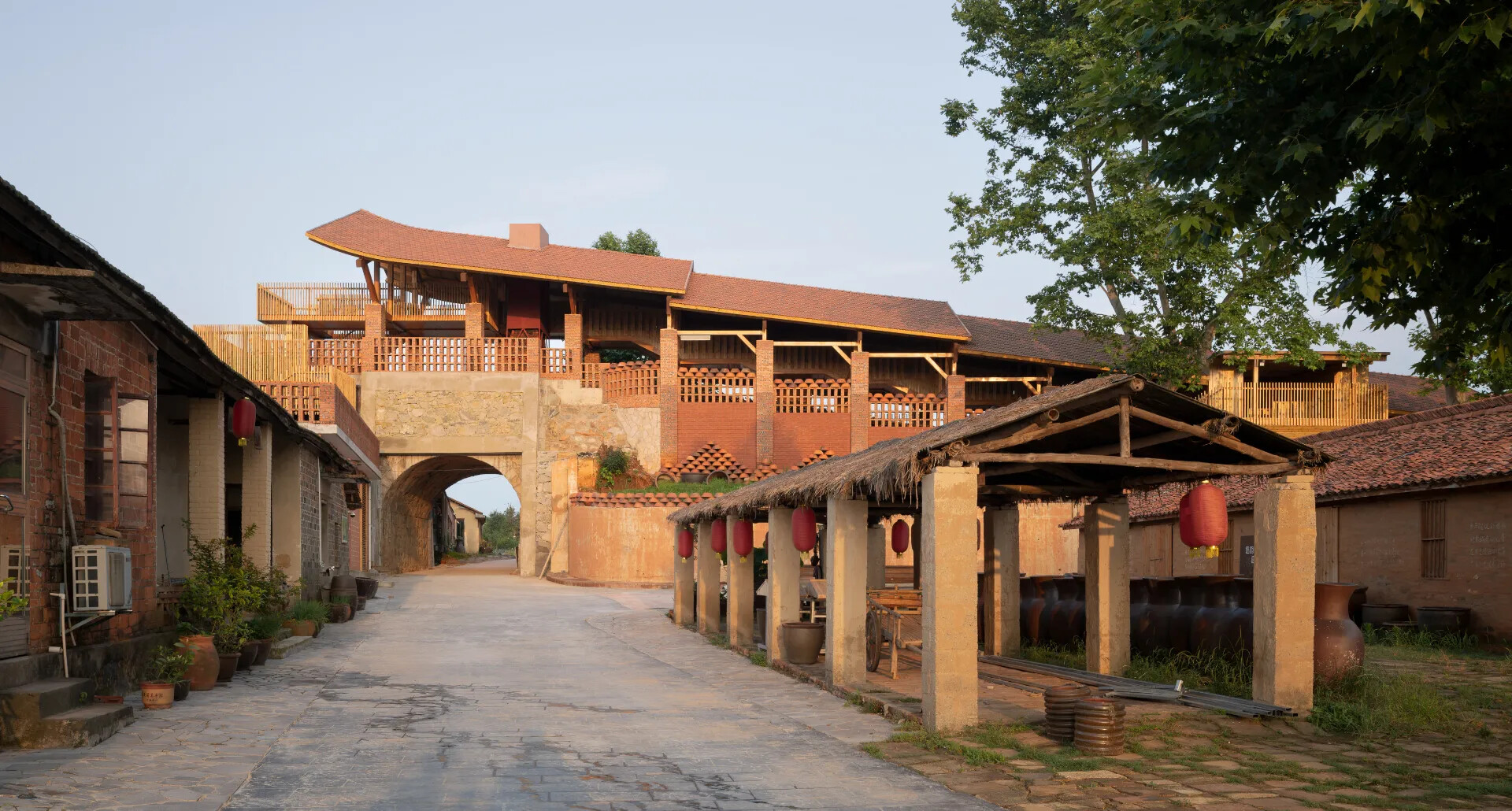
每一處流線的轉折和空間節點處的放大均是以龍窯午門位置作為參照而確定的。在中段的大午門處設置了可以俯瞰廣場及遠眺天柱山的平台節點,靠近龍頭的小午門處則是設置了三段連續的平台以獲得更完整的觀看視角。龍頭流線終點處設置的戶外茶室提供了觀看園區和天柱山的另一處視角。


目前完工的通道僅展現了參觀人群通行、遊覽及觀看燒窯的場景,未來將有更多的內容——諸如陶器展廊、長桌宴、時尚秀場等被置入於此。
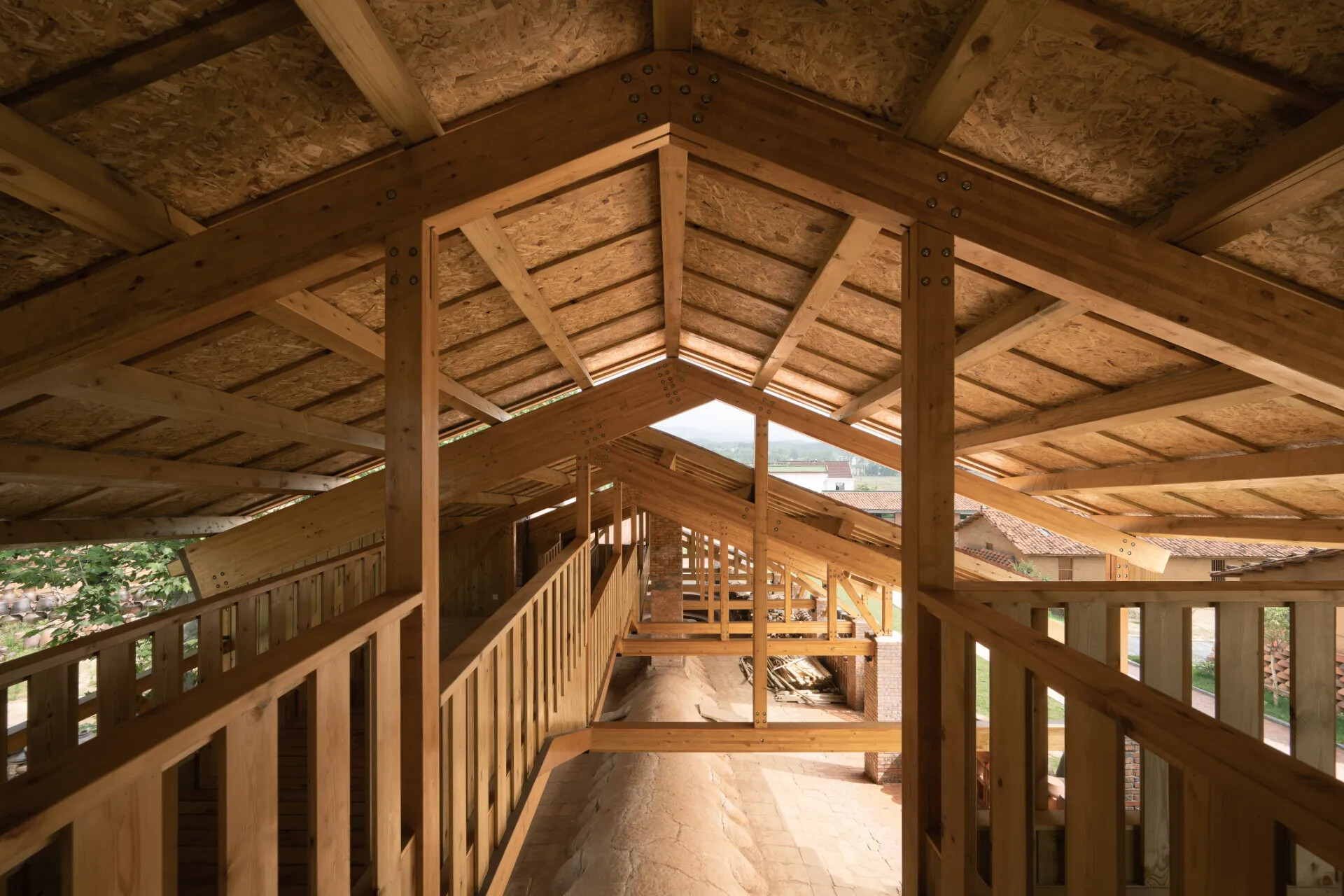


Scene Narrative | Juxtaposition, Observation, Dialogue
 
The kiln workers working on the back of and inside the kiln, together with the visitors walking on the roof walkway, form two parallel flows in the space on account of the new roof form. There are multiple cross-viewing points between the two, but for safety reasons no interconnecting platform has been designed between them.
 
Visitors may walk up the stairs in the brick hut next to the small theatre at the kiln tail, through two turns, then looking around while walking through upon the back of the kiln. The position of the visiting path, on either east or west, is decided after comprehensive consideration of external building height and internal sight relationship.
 
Every turn in the flow and the enlargement of the spatial nodes are determined in refer to the locations of the noon gates of the dragon kiln. A platform overlooking the plaza and Tianzhu Mountain is set up at the large noon gate in the middle, while at the small noon gate near the dragon head provide three successive platforms, achieving a more complete view. An outdoor tea room at the end of the flow at the dragon head offers an alternative view of the factory and Tianzhu Mountain.
 
The currently completed walkway only showcases scenes of visitors passing through, sightseeing and appreciating the firing, while more activities are to be presented in the future, such as pottery exhibitions, long table banquet and fashion show.


記憶再現——材料形式的表達


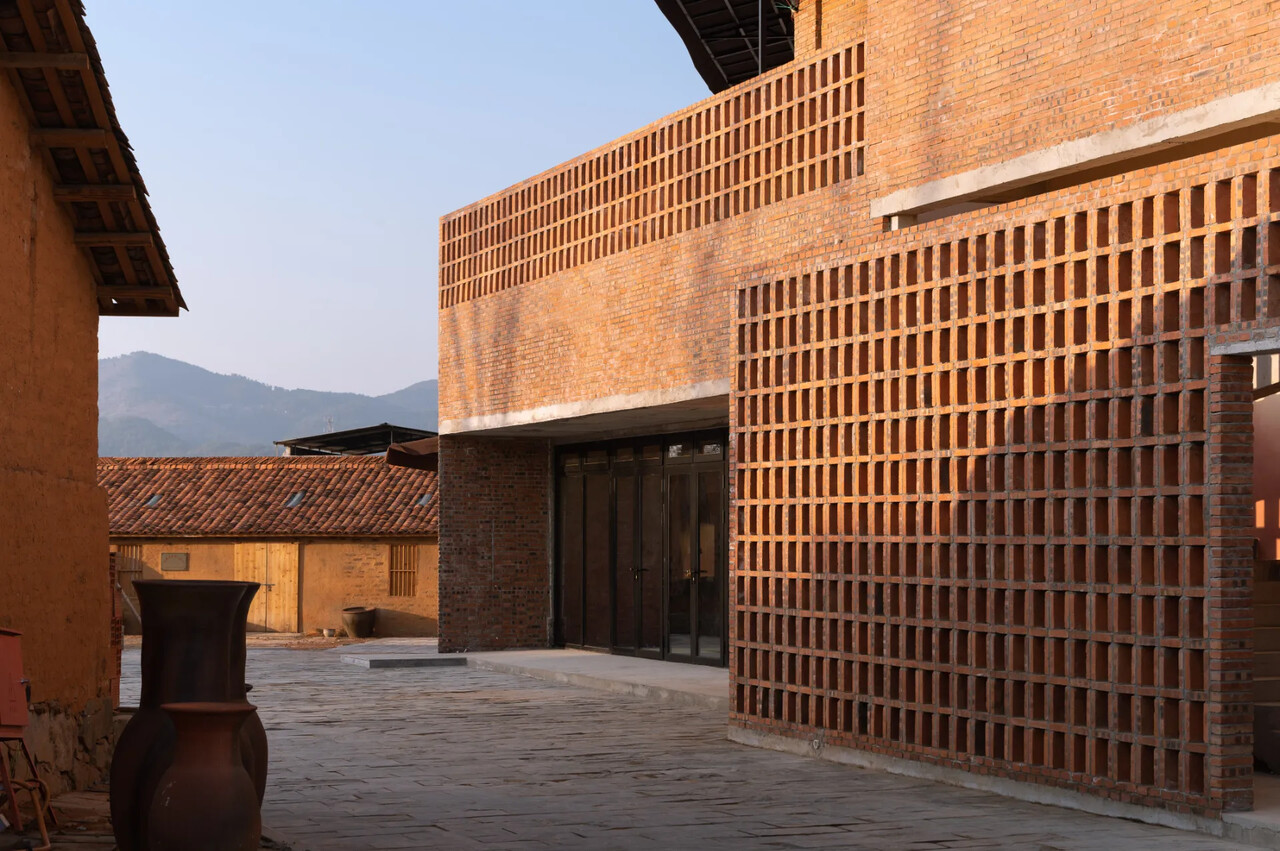
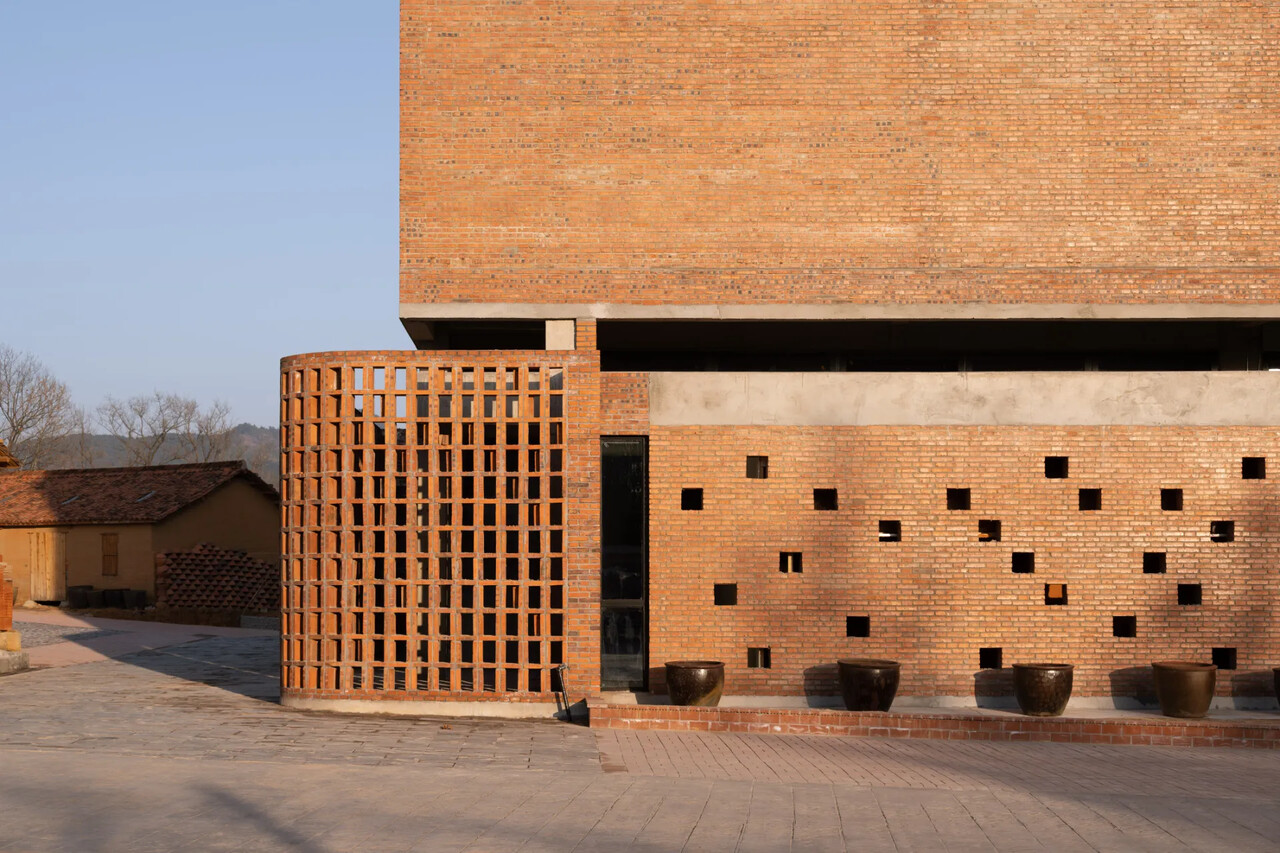
窯廠內隨處可見的陶罐的堆砌方式、窯磚的表面肌理、龍窯內部的拱頂和分隔牆的砌築方式均為設計師提供了豐富的素材與靈感,如何將其轉譯成為建築語言並以當代的方式呈現,成為本項目的一項重要工作。


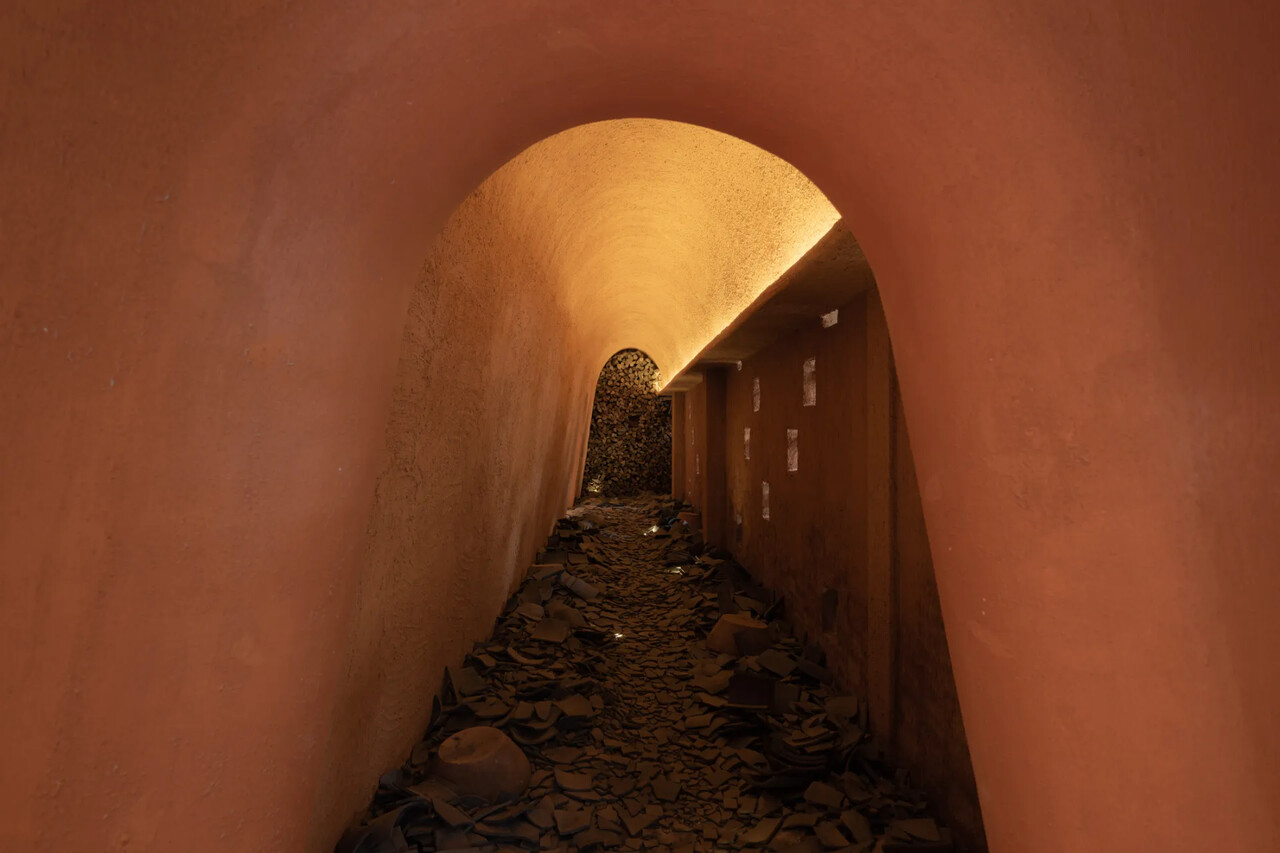
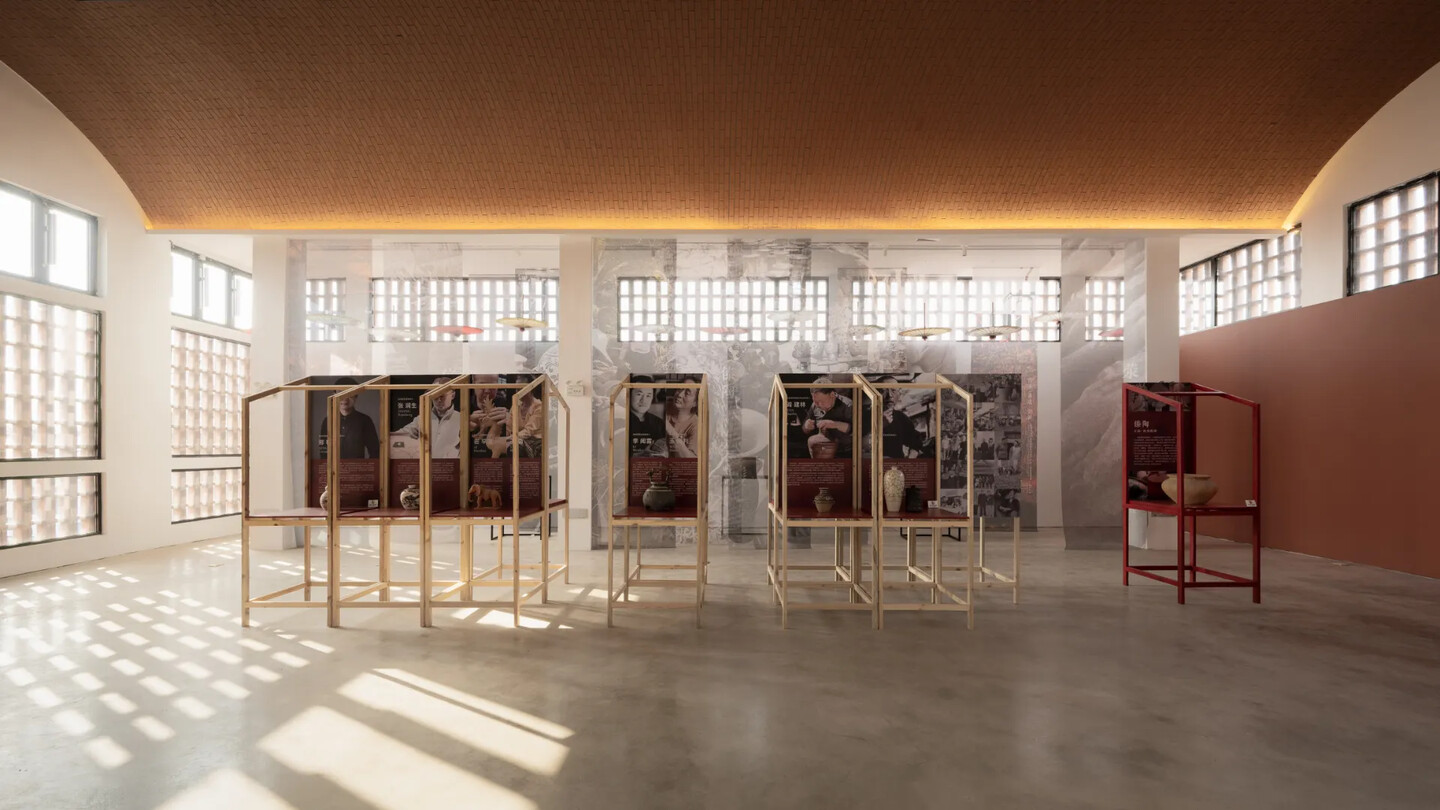
非遺客廳與龍窯建築功能與空間相互呼應,設計師在其中植入了幾組「窯」主題的空間,如位於參觀路徑上的「窯之路」,國際展過廳的拱形空間,以及穹頂下的衛生間。這些空間與龍窯屋架一起完善了整個陶廠的參觀路徑。


在本項目中,建築師嘗試用適度的,能與場地較好融合的建築形式和材料語言,以保護好非物質文化遺產和活著的千年龍窯為前提,為其融入當代的生活環境,承載更多的公共展示功能,接待更多的遊客等提供更多的使用場景。
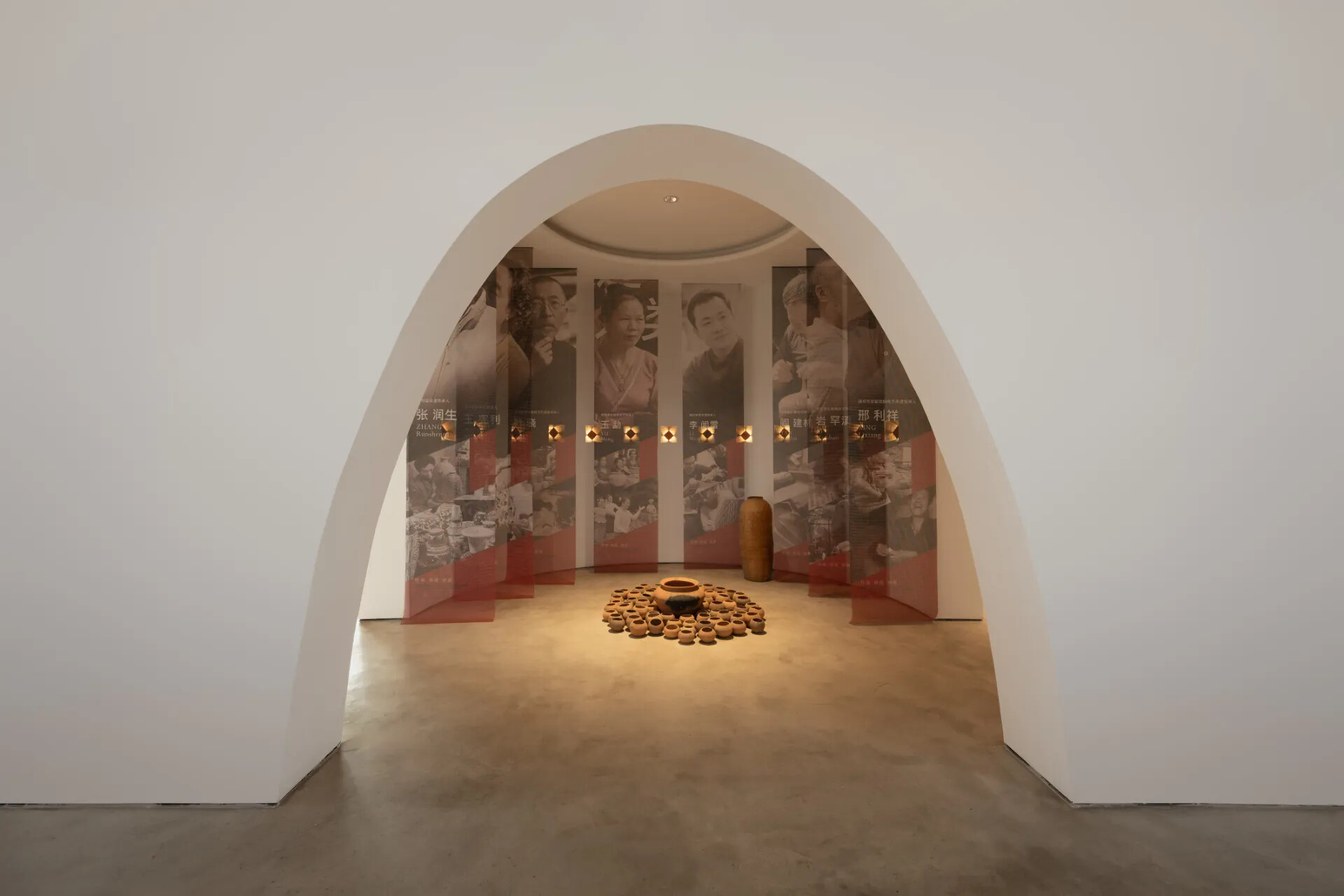


Memory Recreated | Expression of Material Form
 
The way clay pots are piled up, the surface texture of the kiln bricks, the vault inside the kiln and the masonry of the partition walls seen everywhere in the factory all provide a wealth of material and inspiration for the designer, and it is an important task of the project to translate them into an architectural language and to present in a contemporary way.
 
ICH Lounge echoes the function and space of the dragon kiln, where the designer has placed several 'kiln'-themed spaces, such as the ‘Road of Kiln’ on the visiting path, the vaulted space in the hallway of the international exhibition, and the toilet under the dome. Together with the dragon kiln roof structure, these spaces complete the visiting experience of the entire pottery factory.
 
In this project, with the premises of preserving the intangible cultural heritage and the living millennial dragon kiln, the architect has attempted to use a modest architectural form and material language that are well adapted to the site, to provide more scenarios for its integration into the contemporary living environment, carrying more public display functions and accommodating more visitors.
 
Design Studio |  Greyspace Architects @greyspace.architect
Photography |  Jianbo Ke . Jianshen Li . Sen Yan . Greyspace Architects
  • About
  • Privacy policy
  • Track Order
  • Customer
  • Contact
  • Join us
FACEBOOK
instagram
Language

Copyright © WABISABI ISSUE. 侘寂傳媒有限公司 統一編號:90451315

  • Projects
    • Worldwide
    • Interiors
    • Features
  • Contemporary
    • Exhibitions
  • Record
  • Lifestyle
  • City Explore
  • News
  • Issue
  • About
  • Privacy policy
  • Track Order
  • Customer
  • Contact
  • Join us
Language