Down in the Clouds
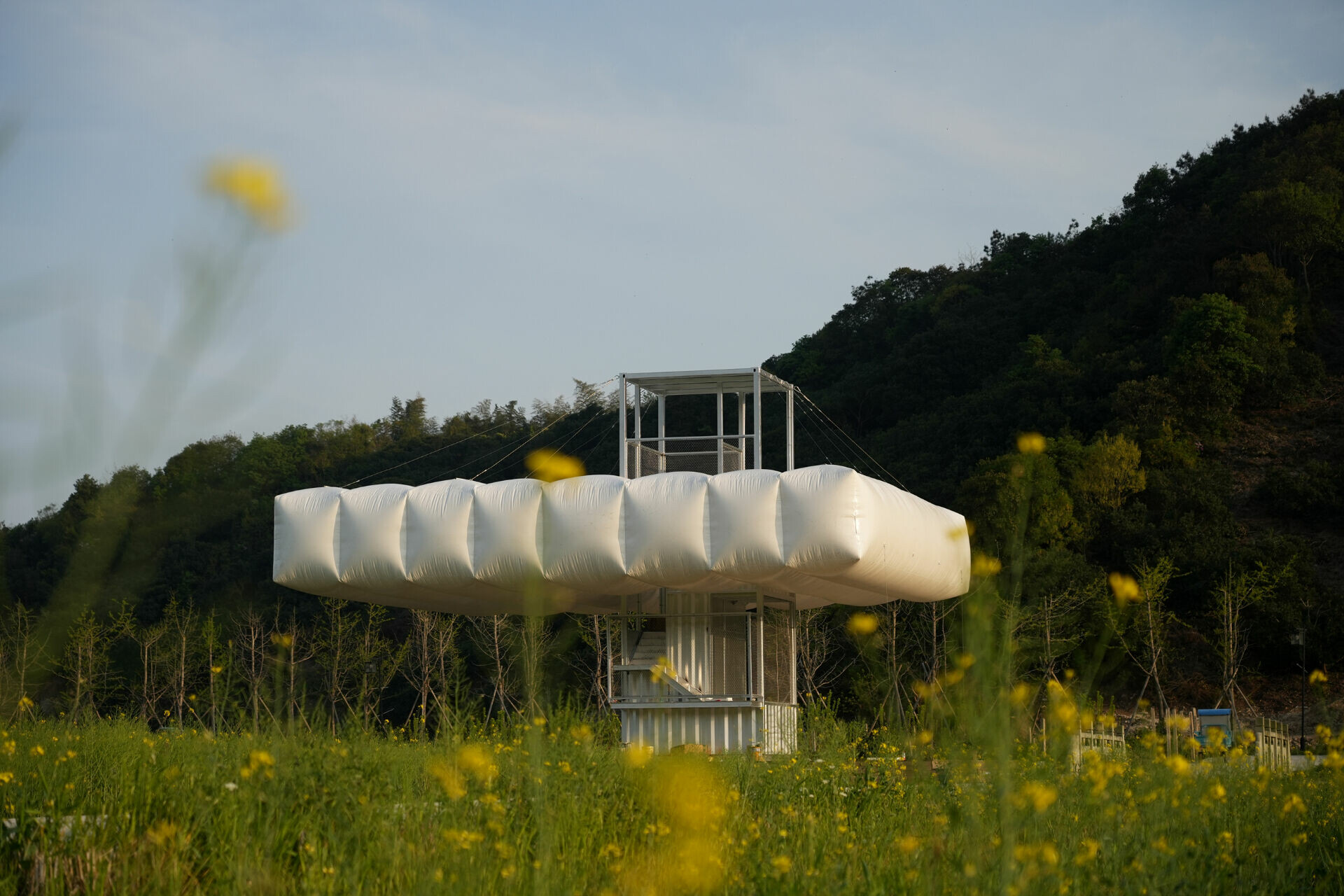
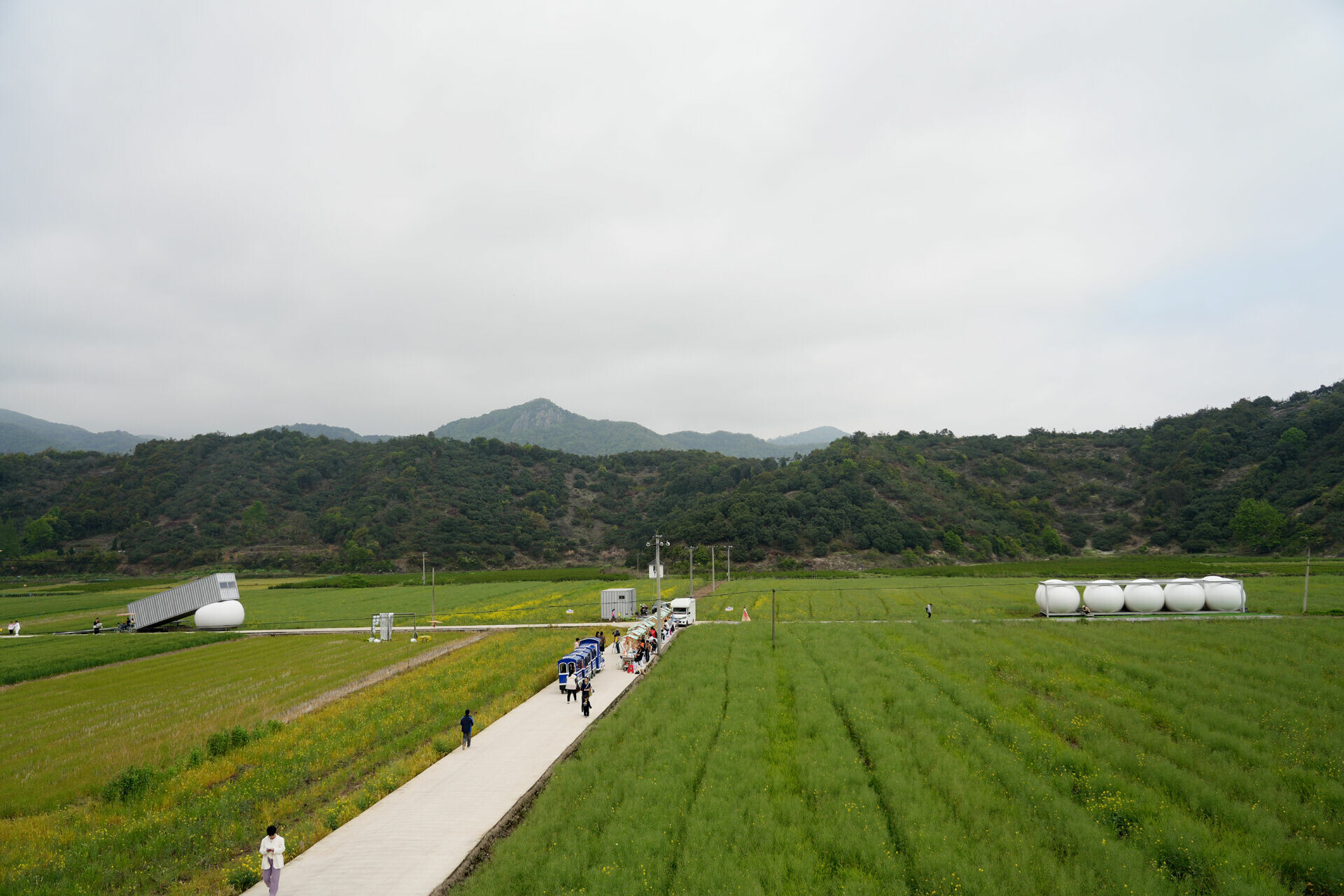
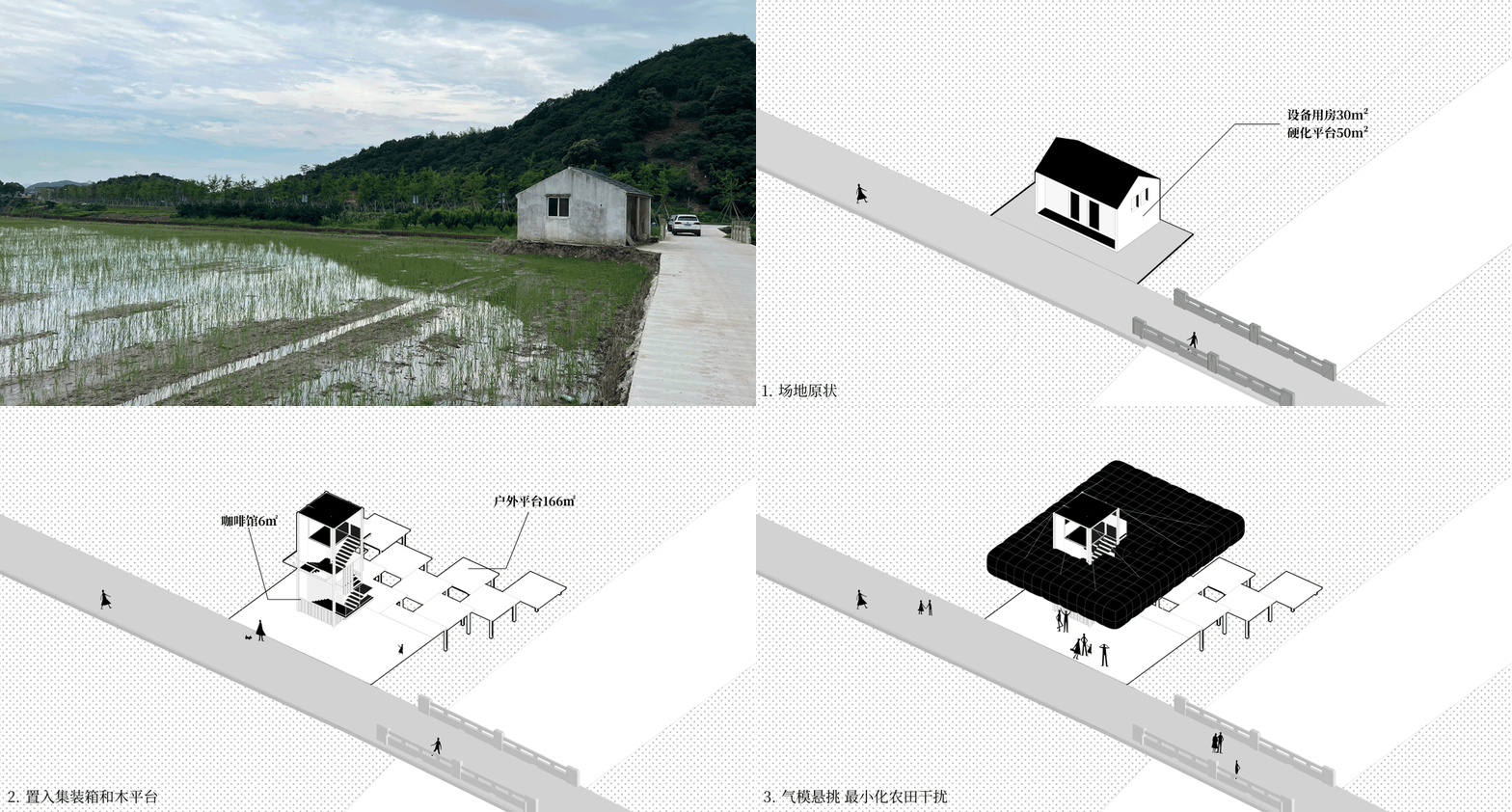
This is no ordinary rural scene. In Dun’ao Village, nestled among the hills and coastal winds of Ningbo Xiangshan, a plump, white cloud floats silently above the rice fields, inviting passersby to offer a warm embrace. The term “嶴 (ào)” refers to a small valley enclosed by mountains—a definition that perfectly sketches the architecture team’s first impression of this land. This agricultural and cultural tourism project seeks to revitalize abandoned utility buildings and concrete platforms into installations that enhance the travel experience and provide a fresh visual focus.
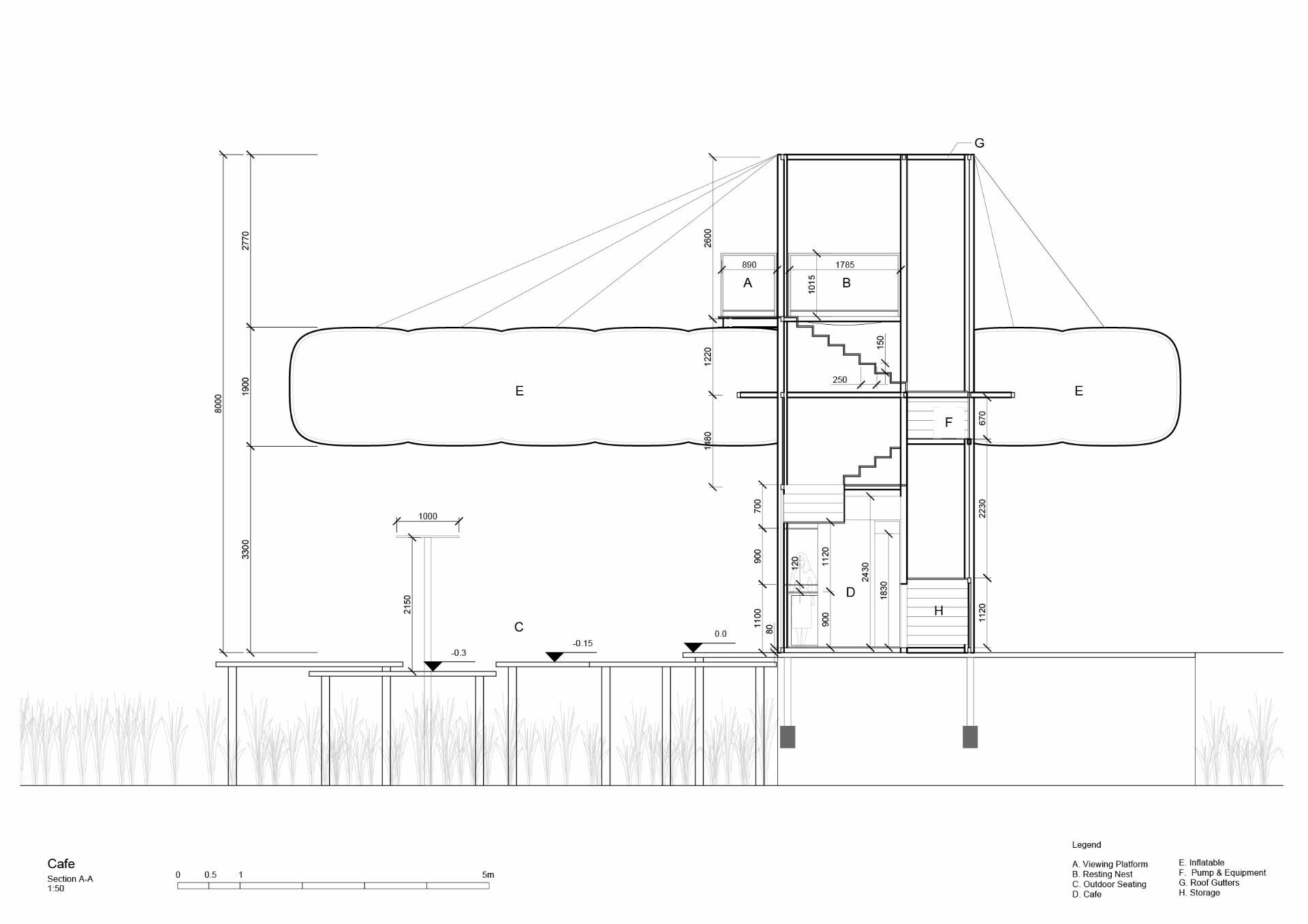
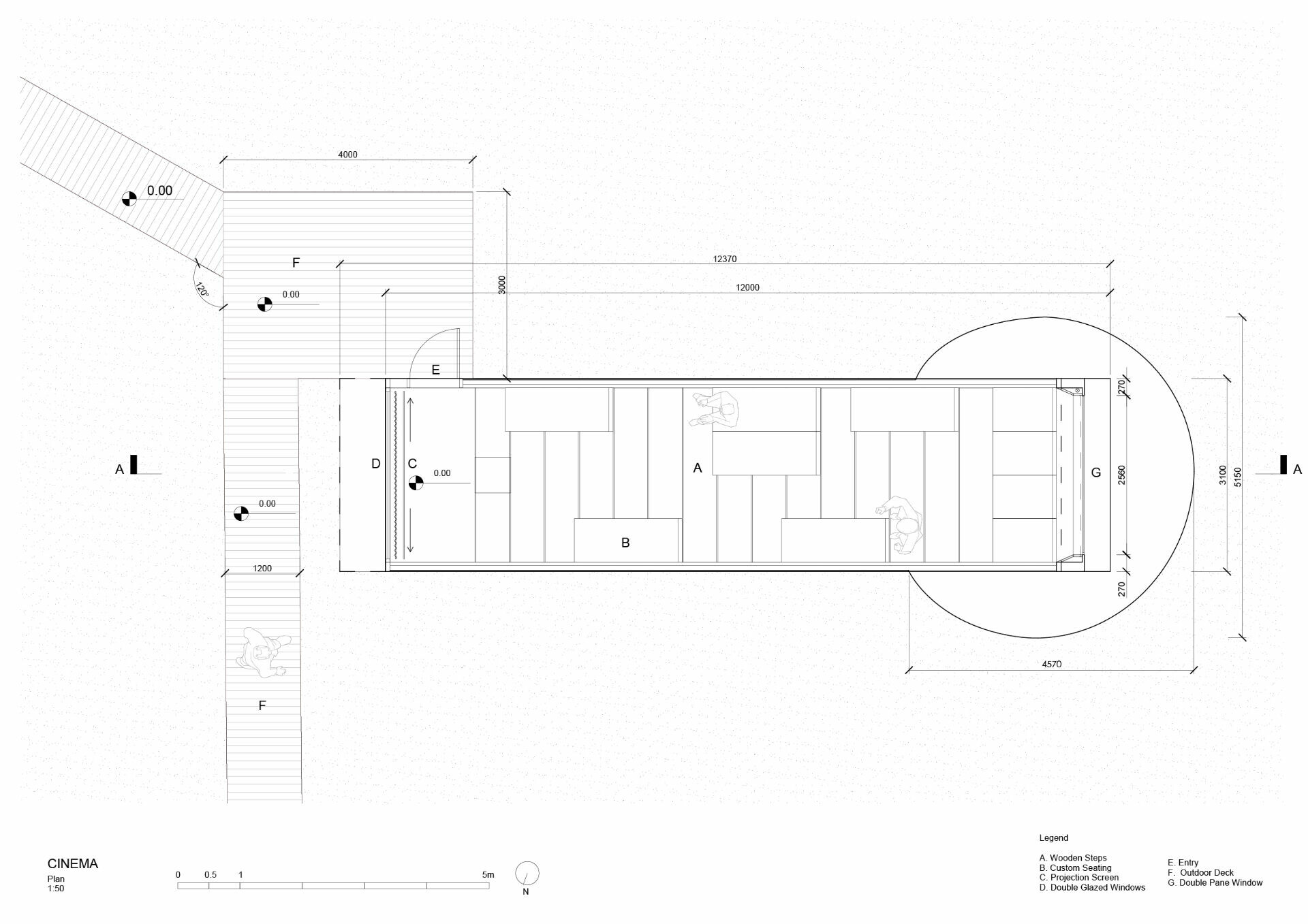
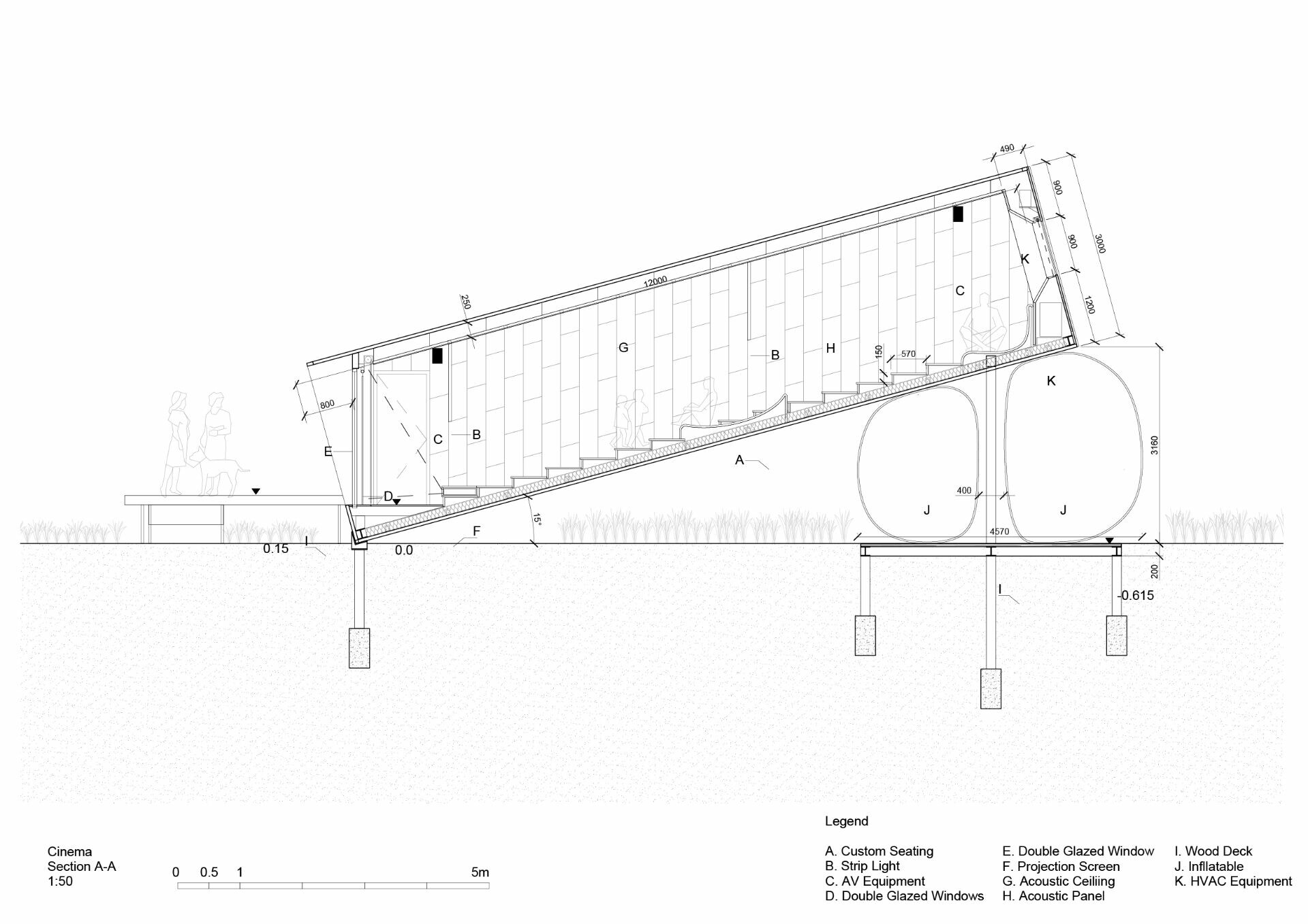
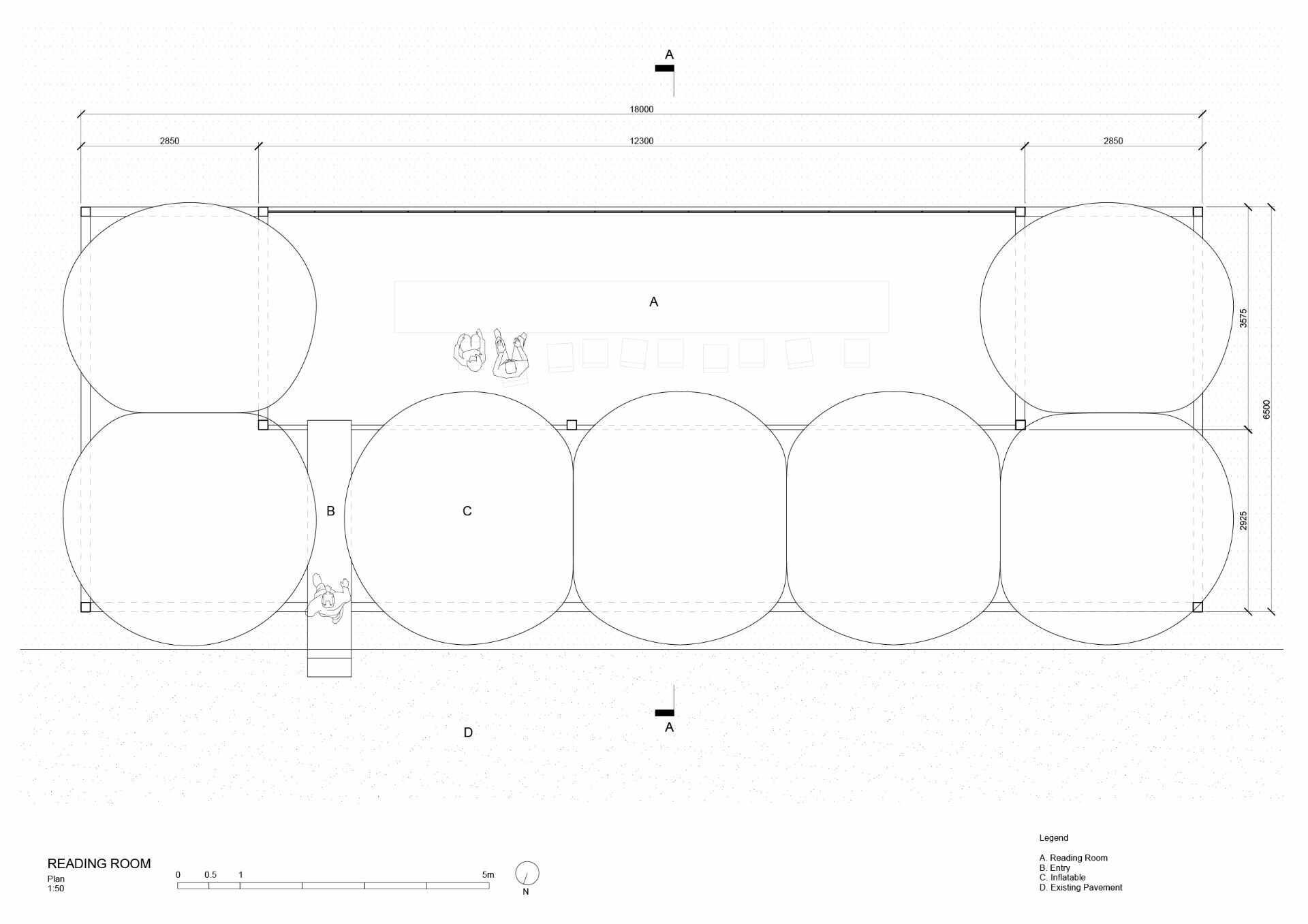
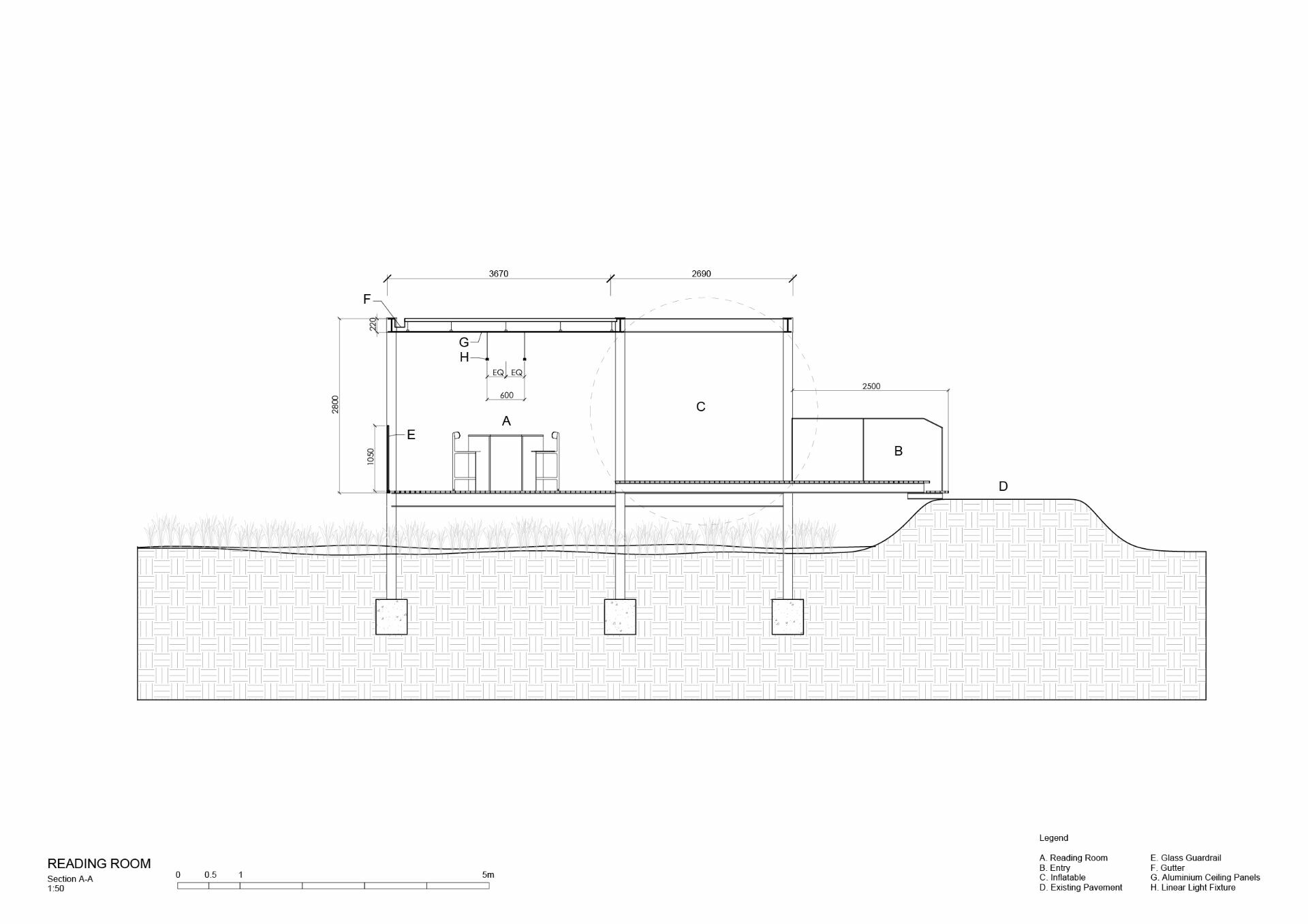
Given the need for rapid construction and ease of maintenance, the client initially proposed using "steel containers" as the primary structure. However, to avoid the trend of mass-produced homogenization, the team introduced a novel creative approach: integrating inflatables (inflatable membrane structures), typically seen in temporary installations, as a permanent part of the architecture. This fresh combination was communicated from the start through short poems and illustrations, ensuring that the lighthearted and playful spirit became the central theme for these three field installations.
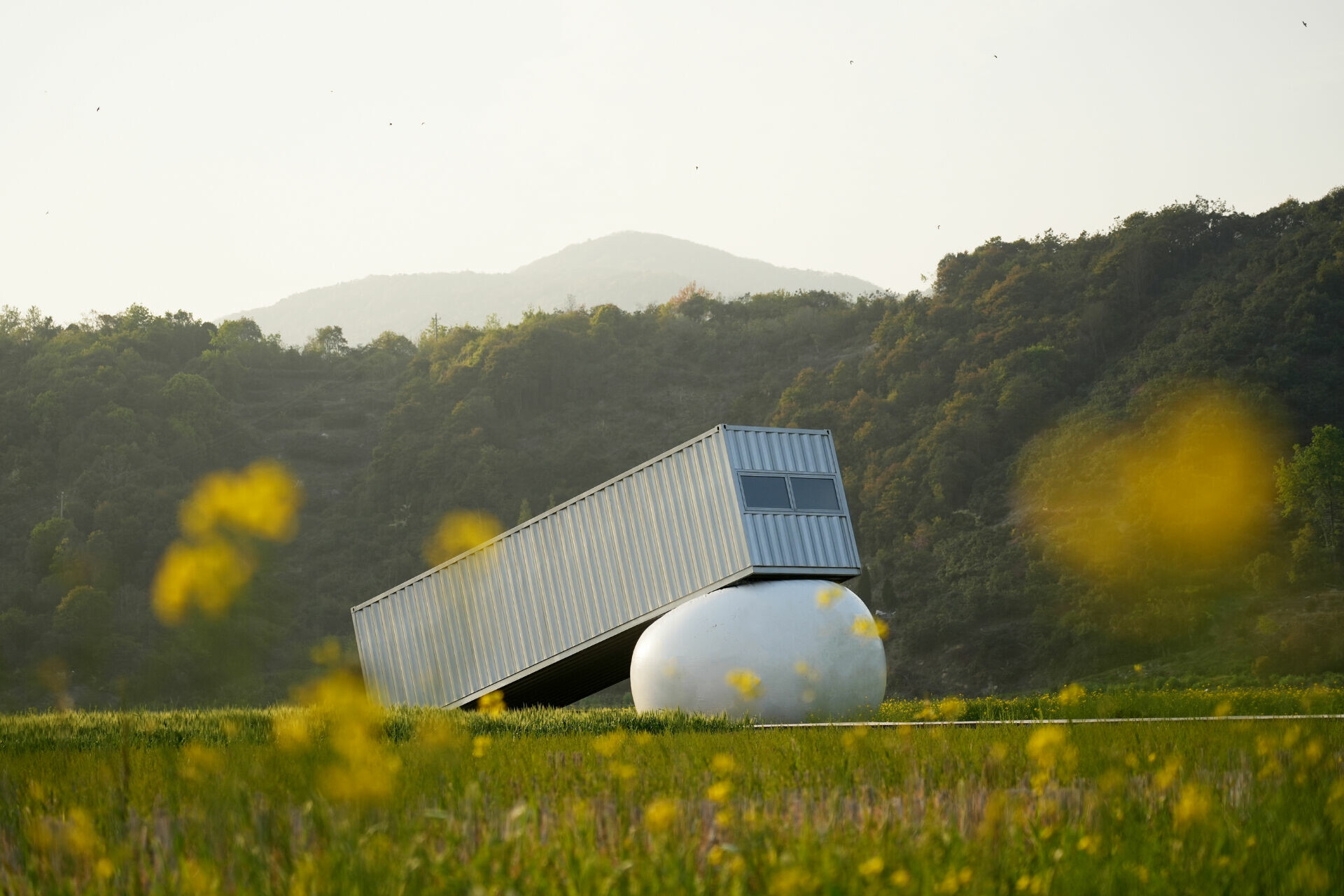
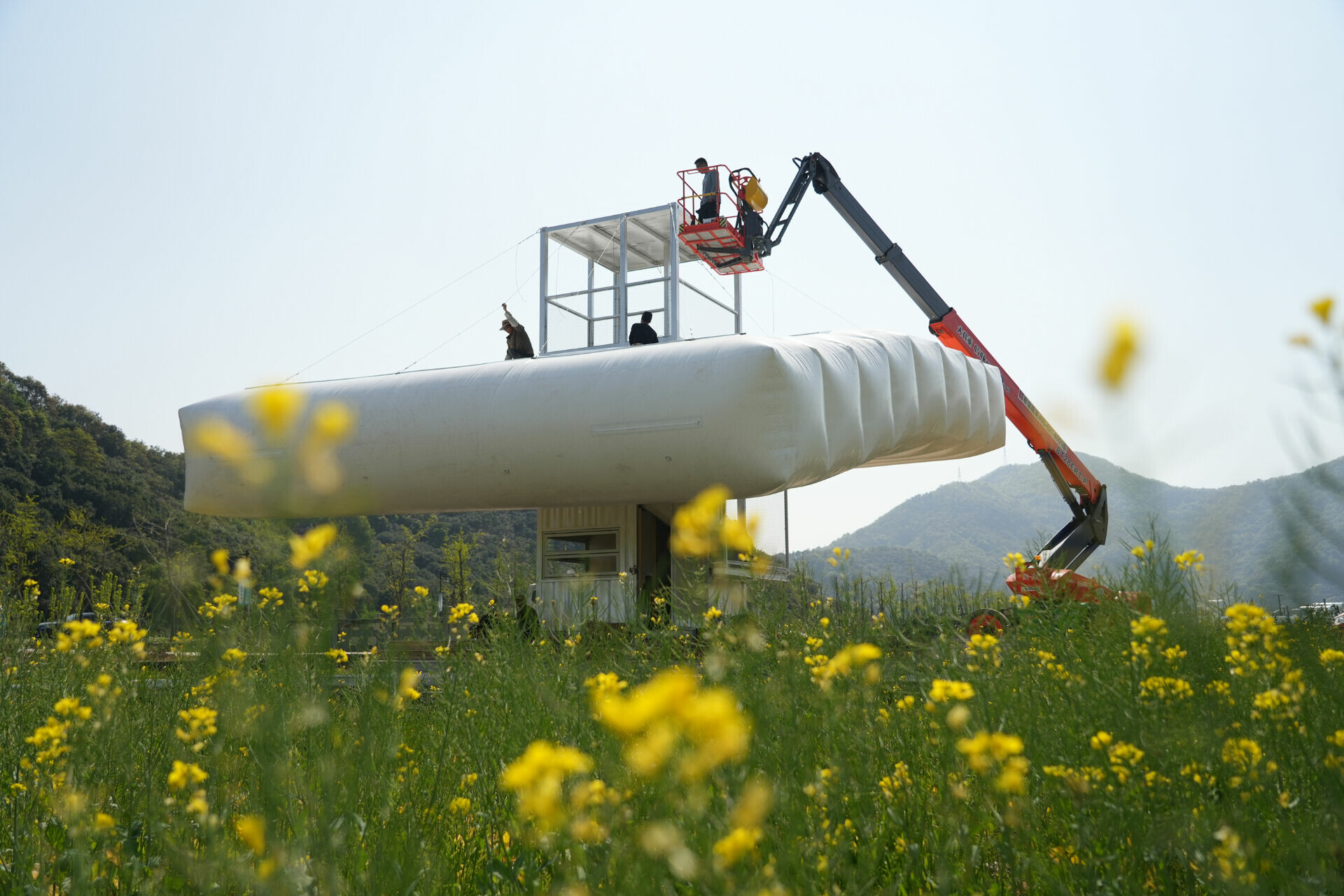
Step into The Cloud Cafe
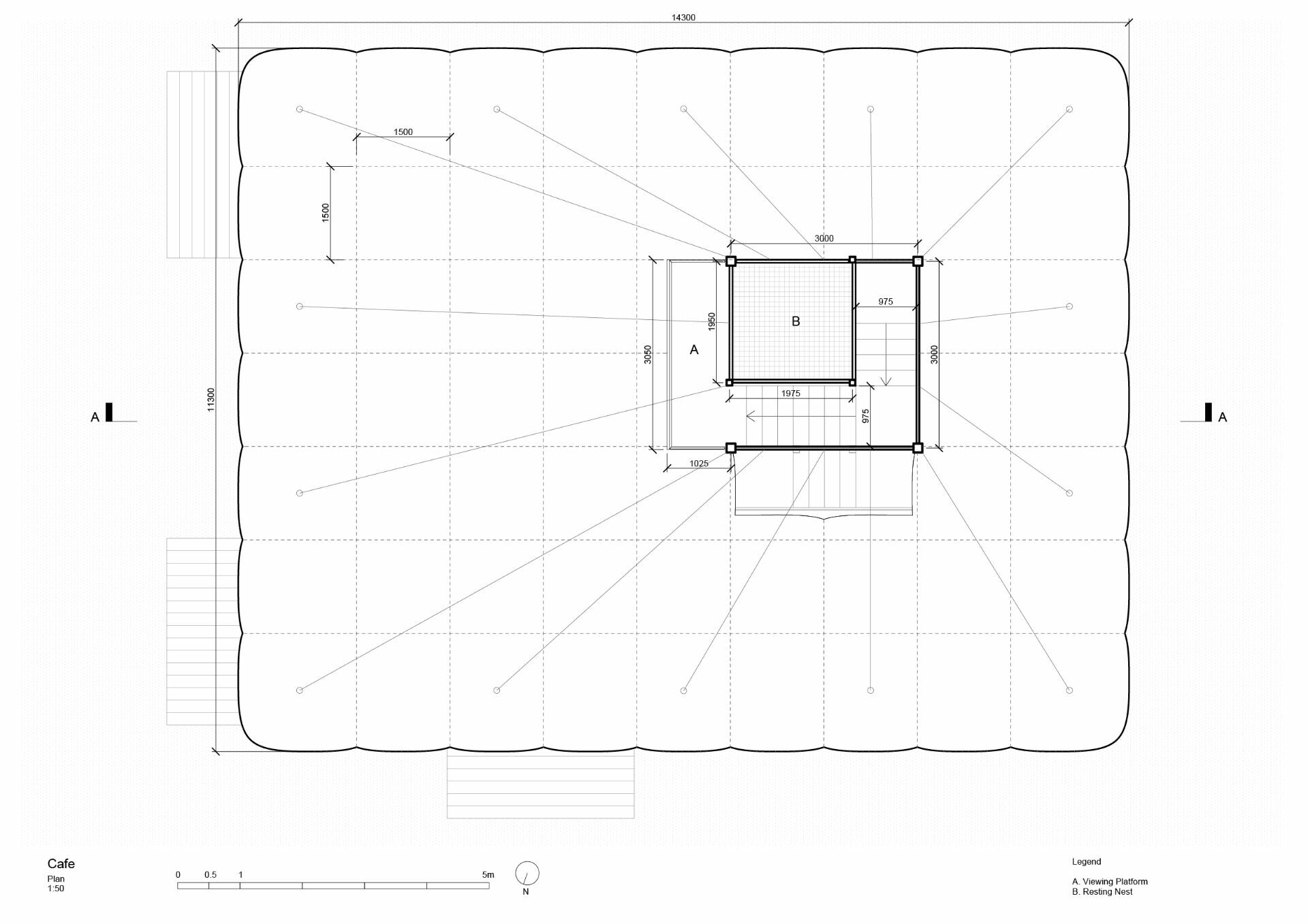
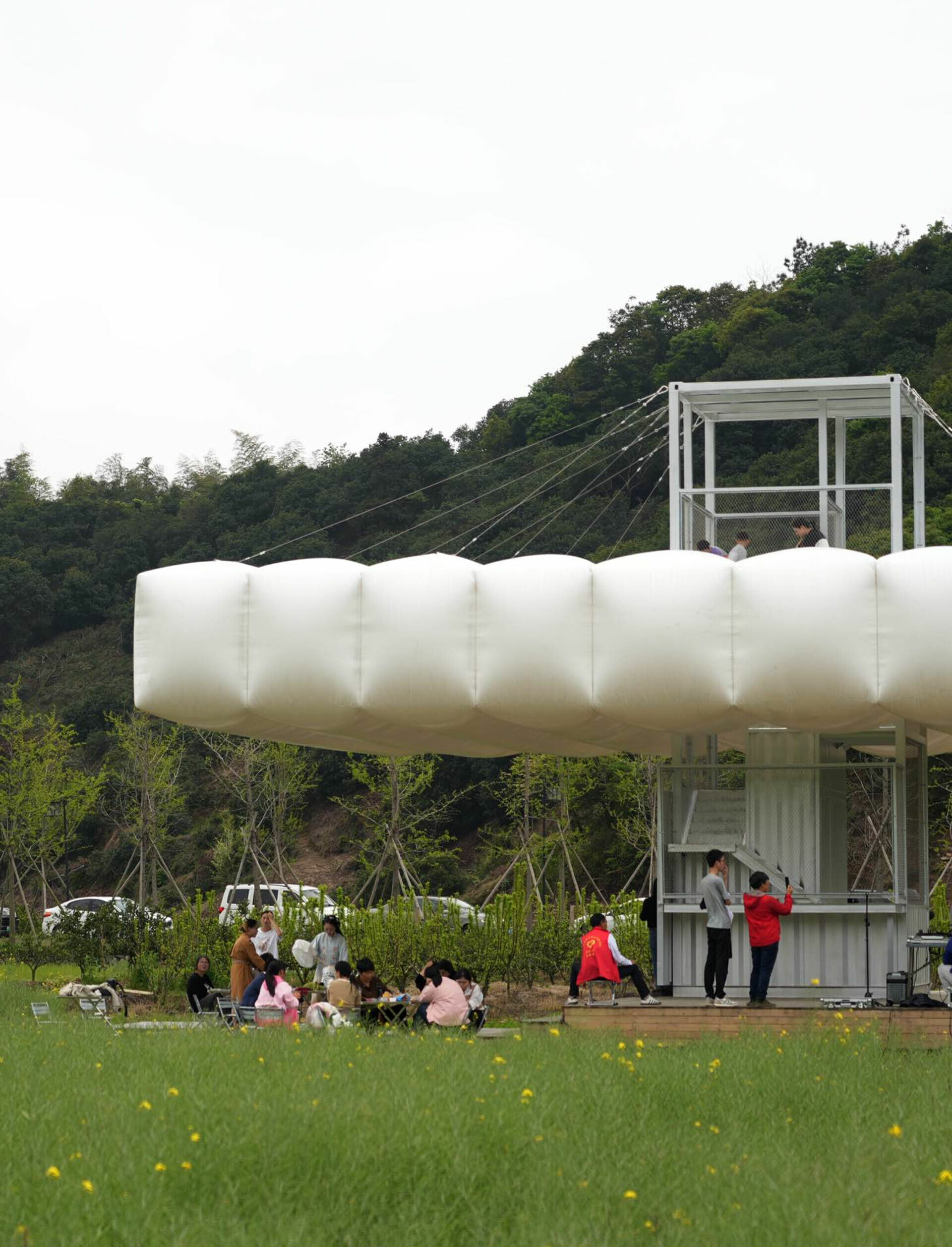
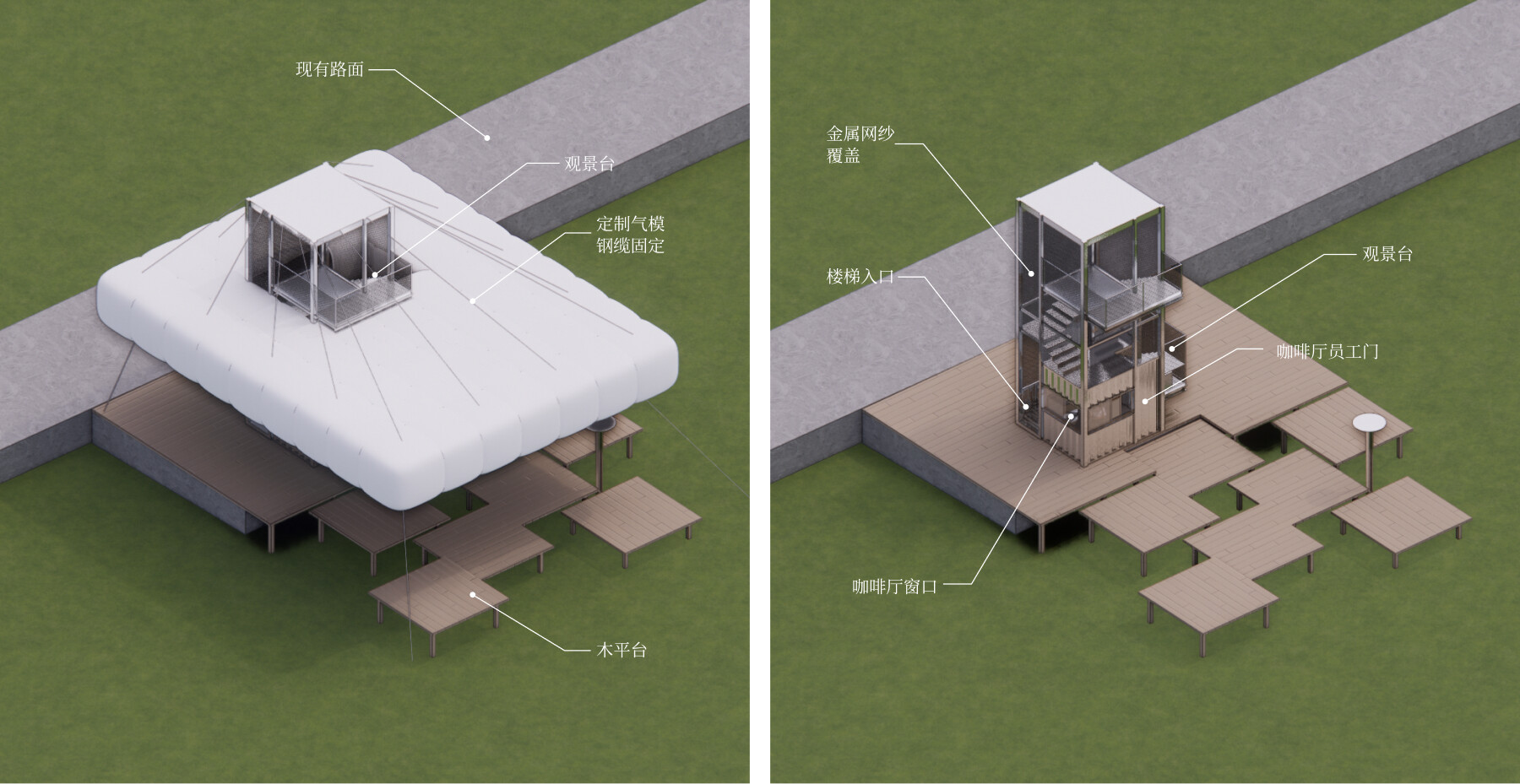
Formerly an abandoned utility building at the entrance to the farmland, this site was the ideal location for an outpost landmark to welcome guests. The design team utilized the advantage of "height," embedding a square inflatable cloud into the tower-like structure and maximizing the cantilevered space beneath it. As visitors order coffee, they can lean back under the cloud’s shade and enjoy the gentle breeze. Passing through the "cloud" leads to a viewing deck atop the tower, offering a panoramic view of the mountains and rice fields—a transition from a near to a distant perspective that expands the soul.
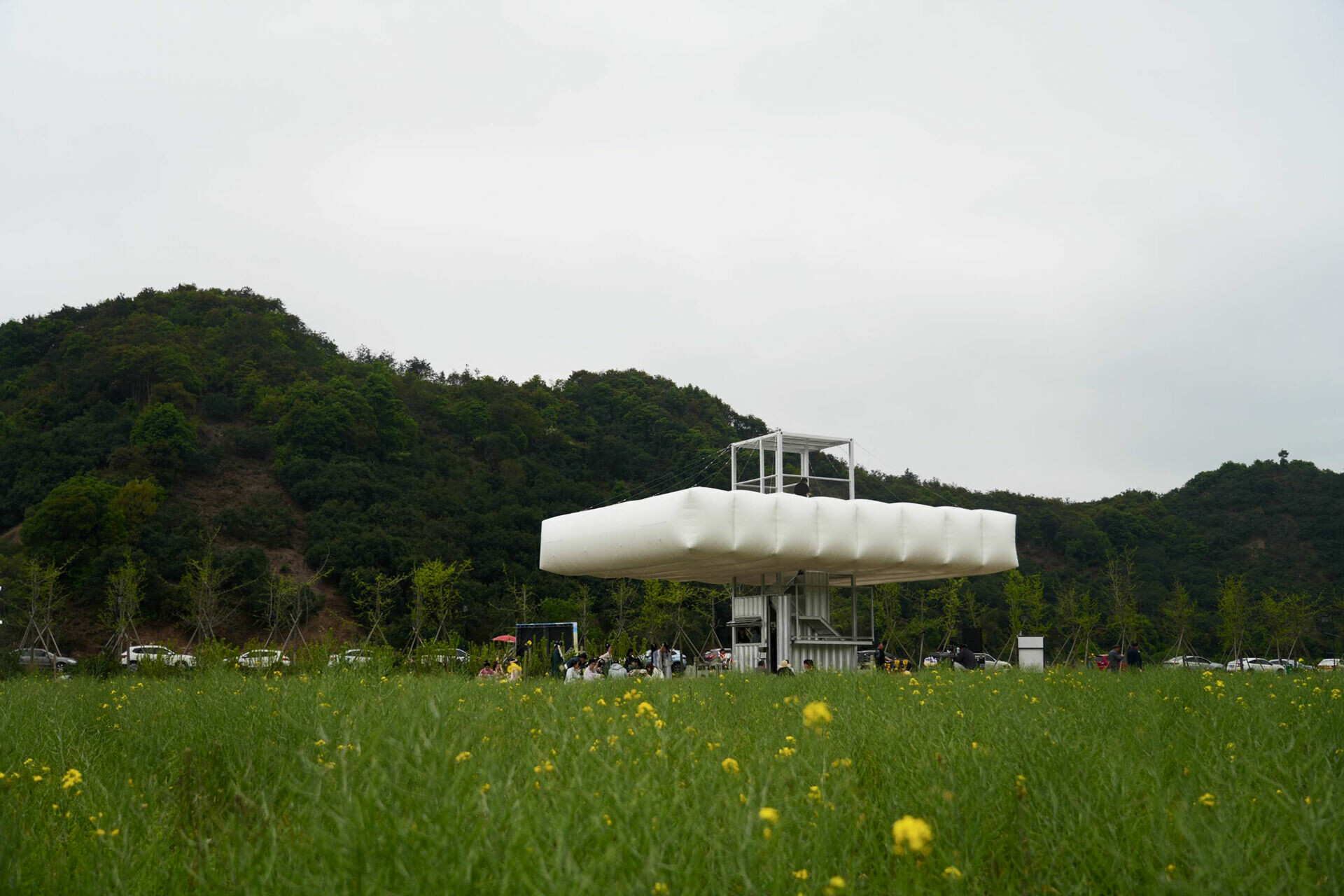
Push through to The Secret Reading Room
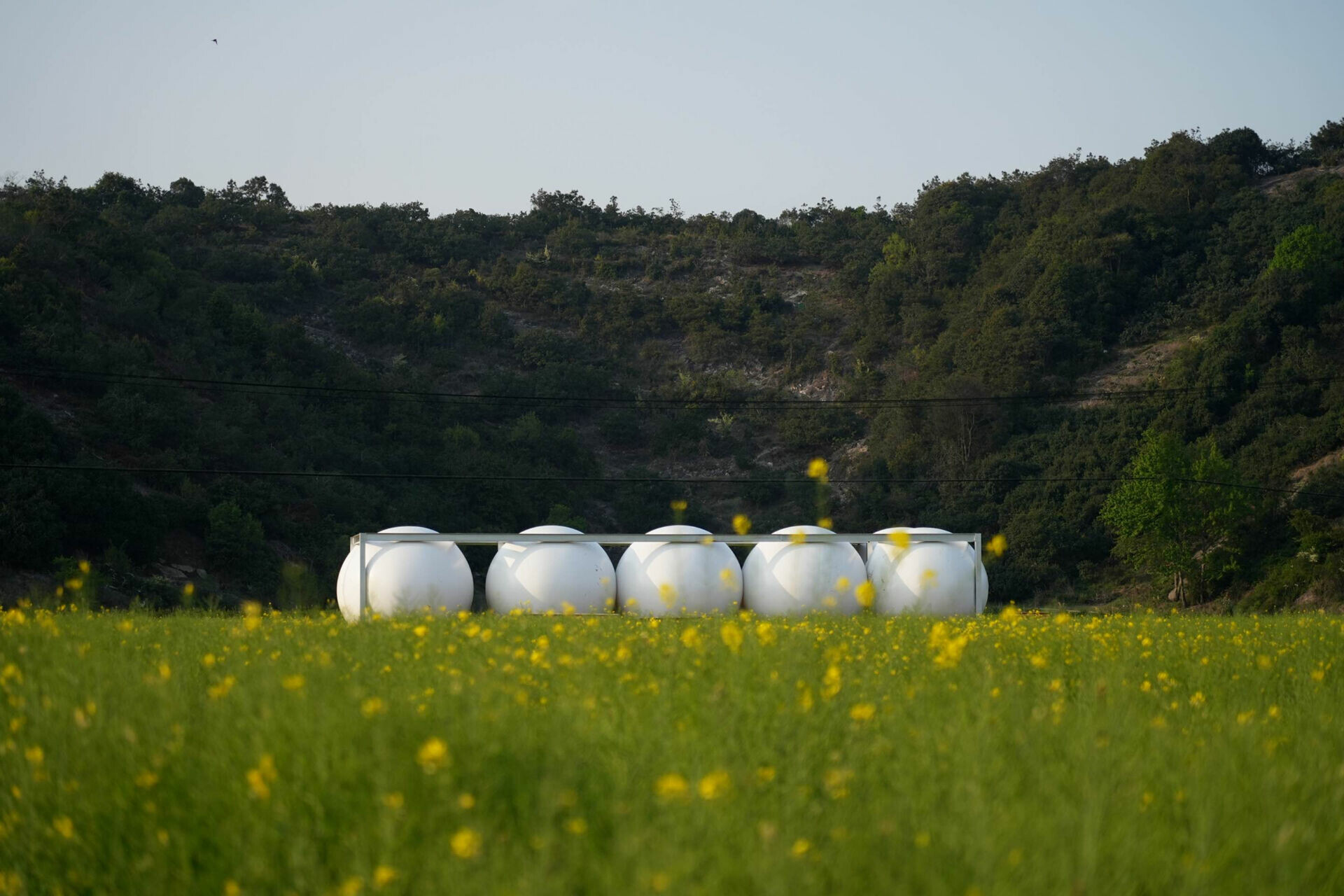
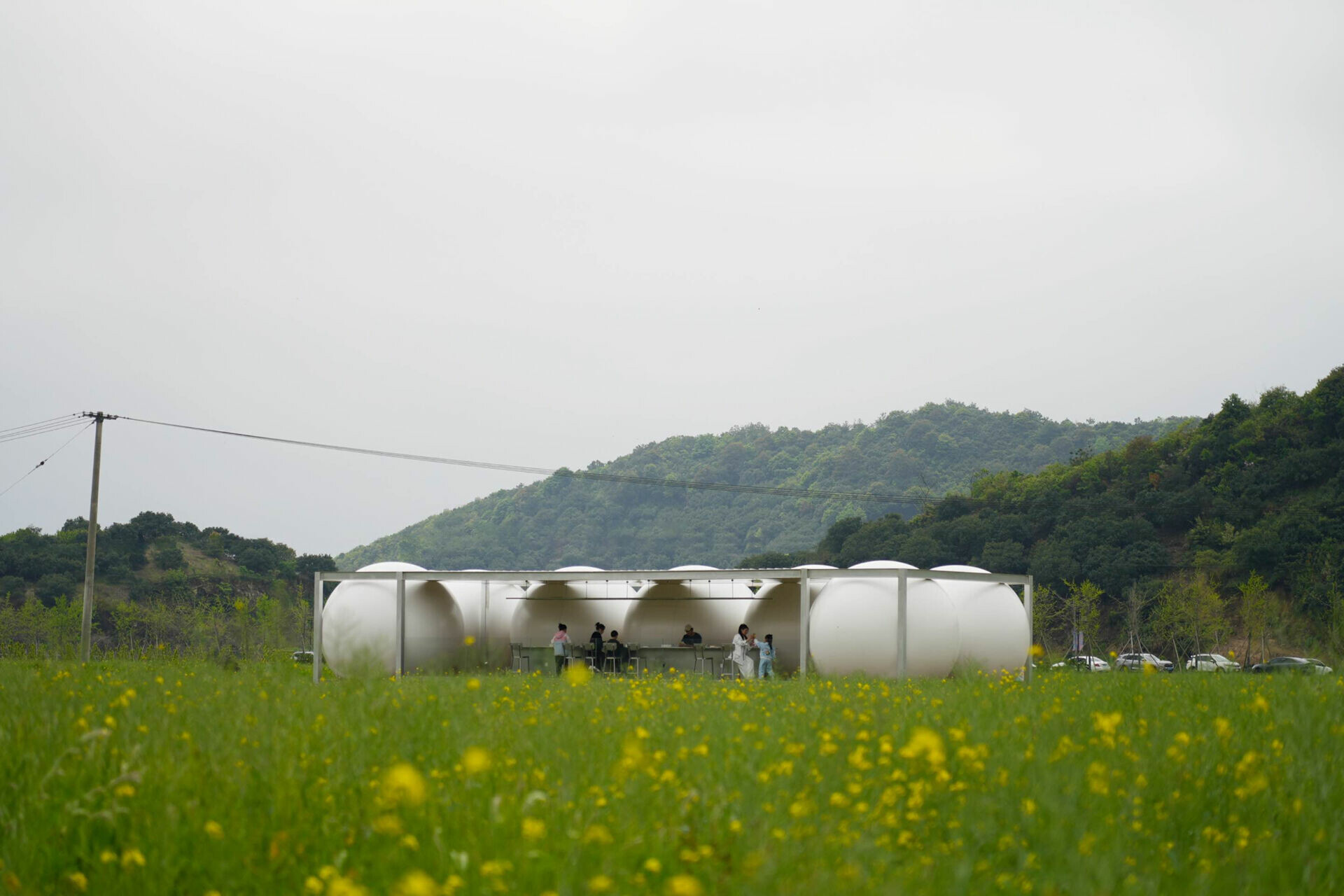
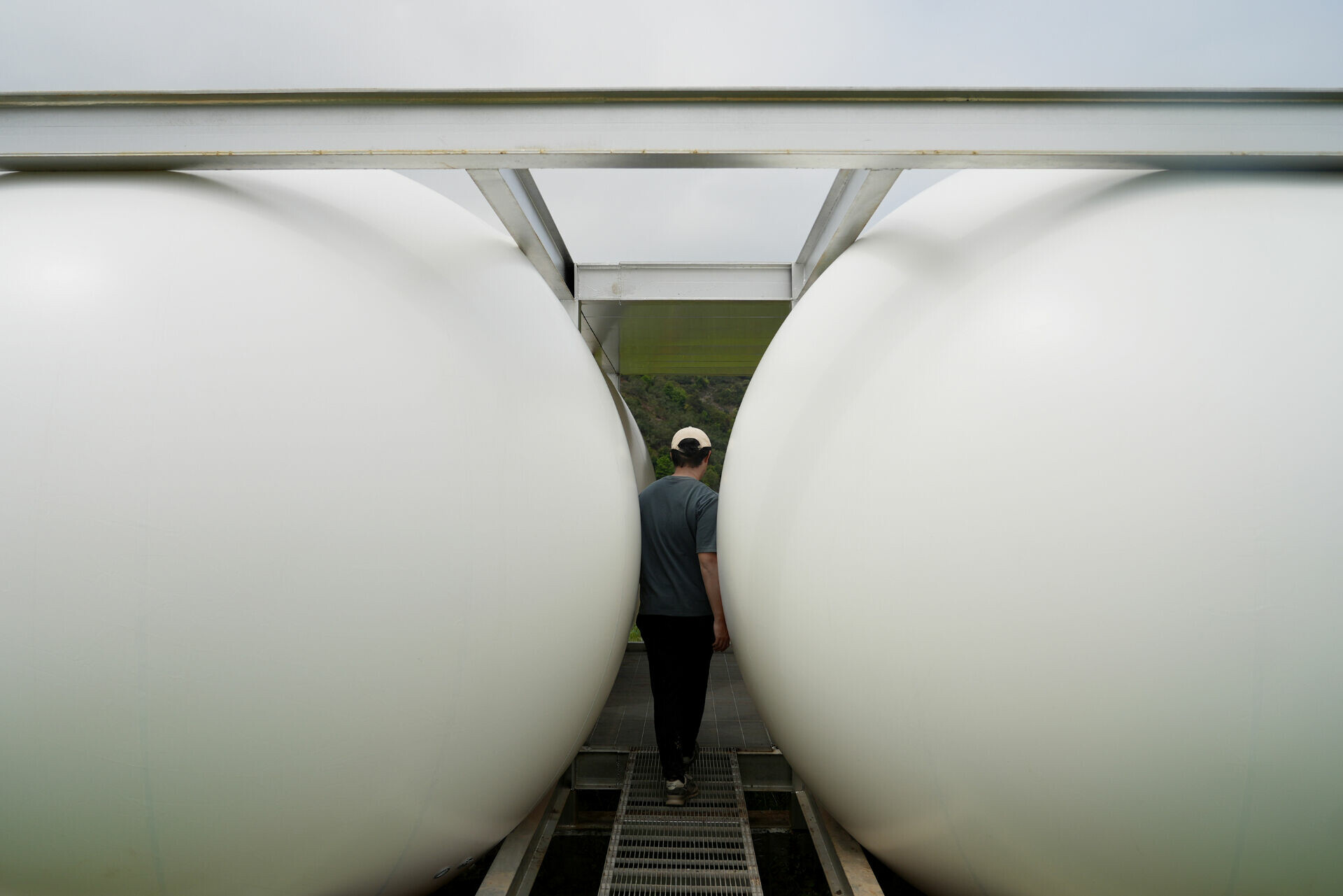
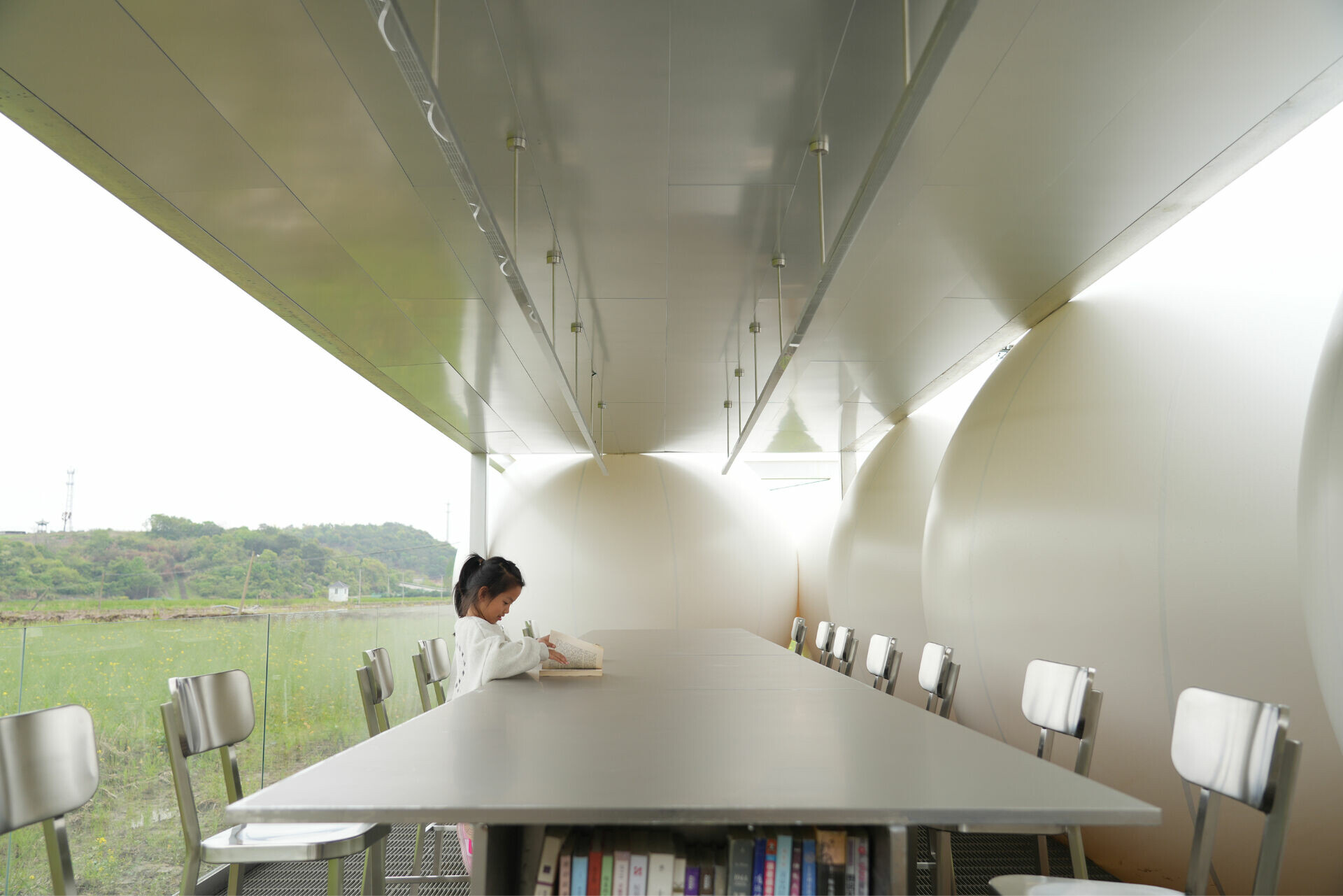
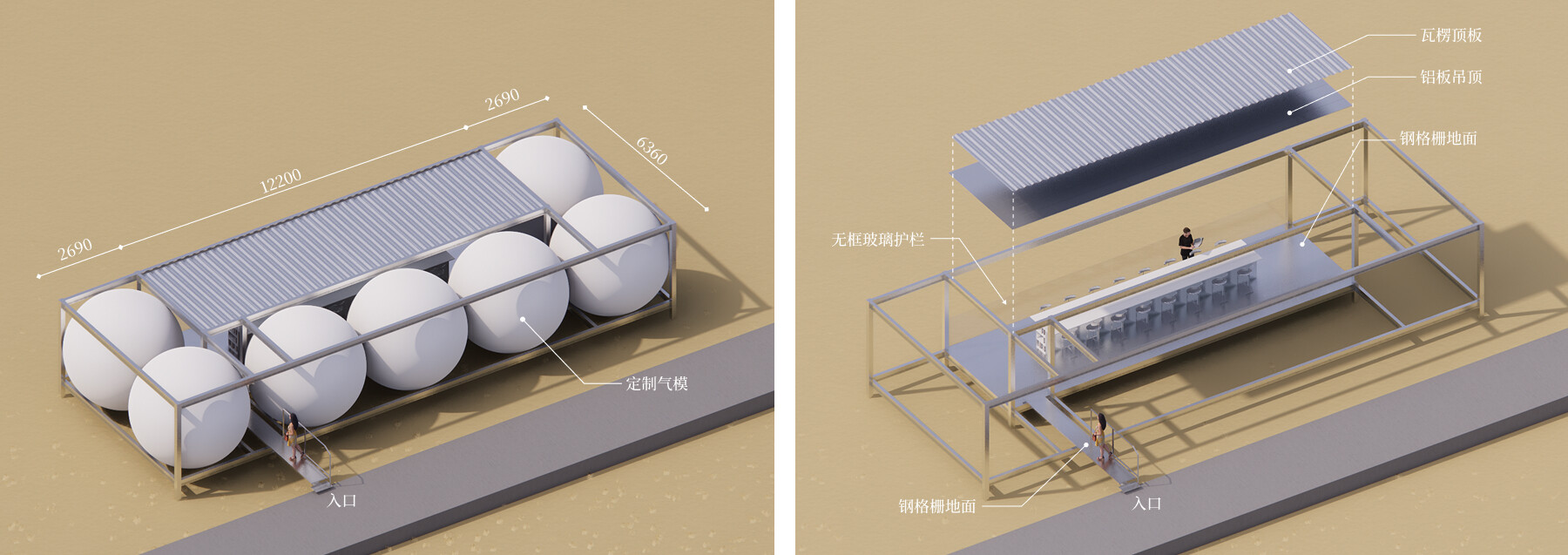
While scouting the next location, the team discovered a quiet spot at the foot of the hills with an open view, perfect for people to sit in stillness and read the land. Continuing the concept of connecting inflatables with containers, the team filled an elevated steel frame with seven spherical inflatables. Replacing traditional "walls" and "doors," visitors must physically part the soft spheres to enter, creating a fresh tactile interaction with the architecture. This compact reading room features anodized aluminum panel ceilings, stainless steel desks, and gridded floor panels. These metallic elements contrast strikingly with the soft, "plump" texture of the spheres. In the semi-outdoor space, the spheres filter the bright southern sunlight, working with the semi-reflective ceiling to create unique shadow effects that adapt beautifully to the local climate.
Lie Down in The Leaning Cinema
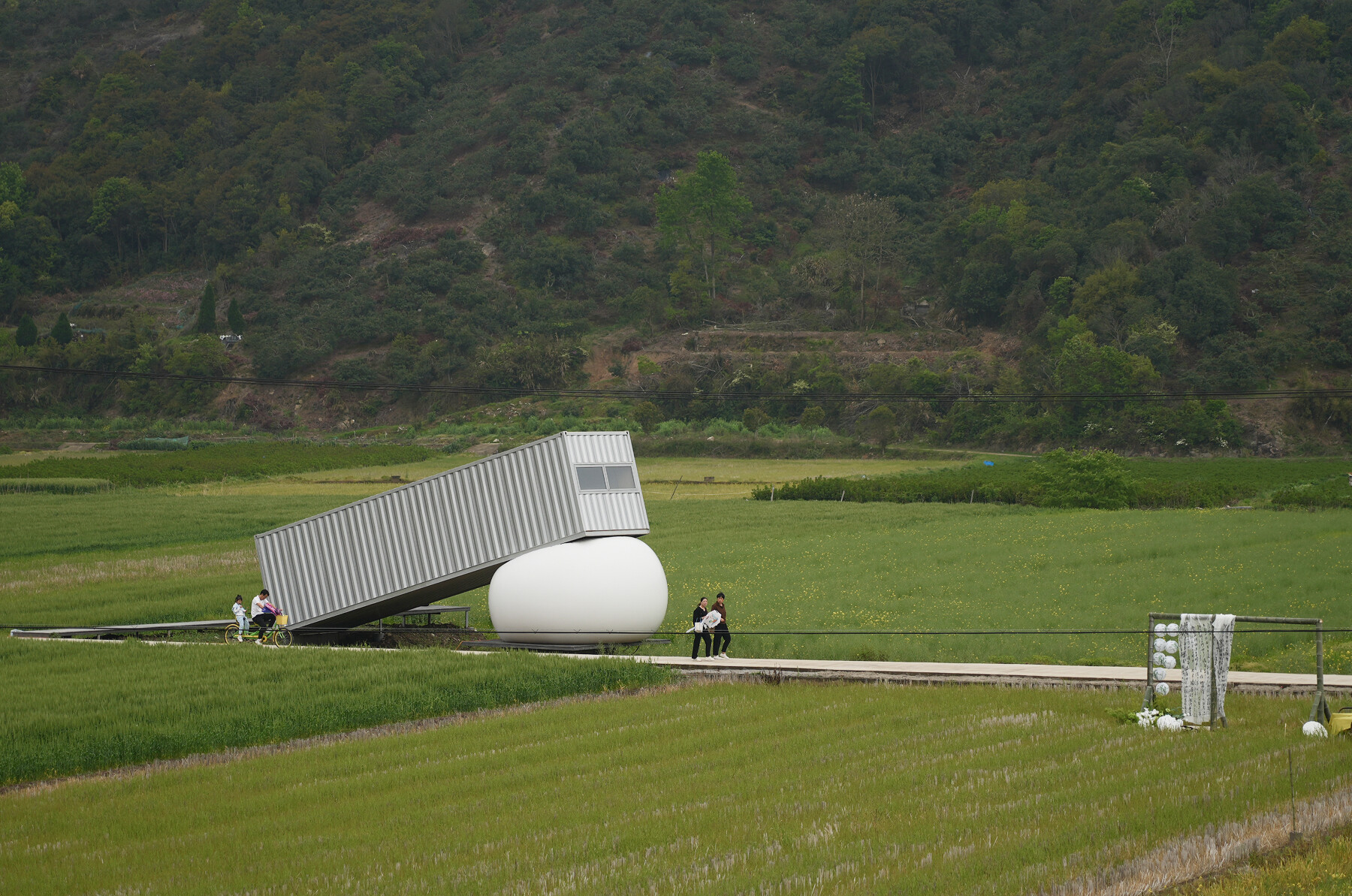
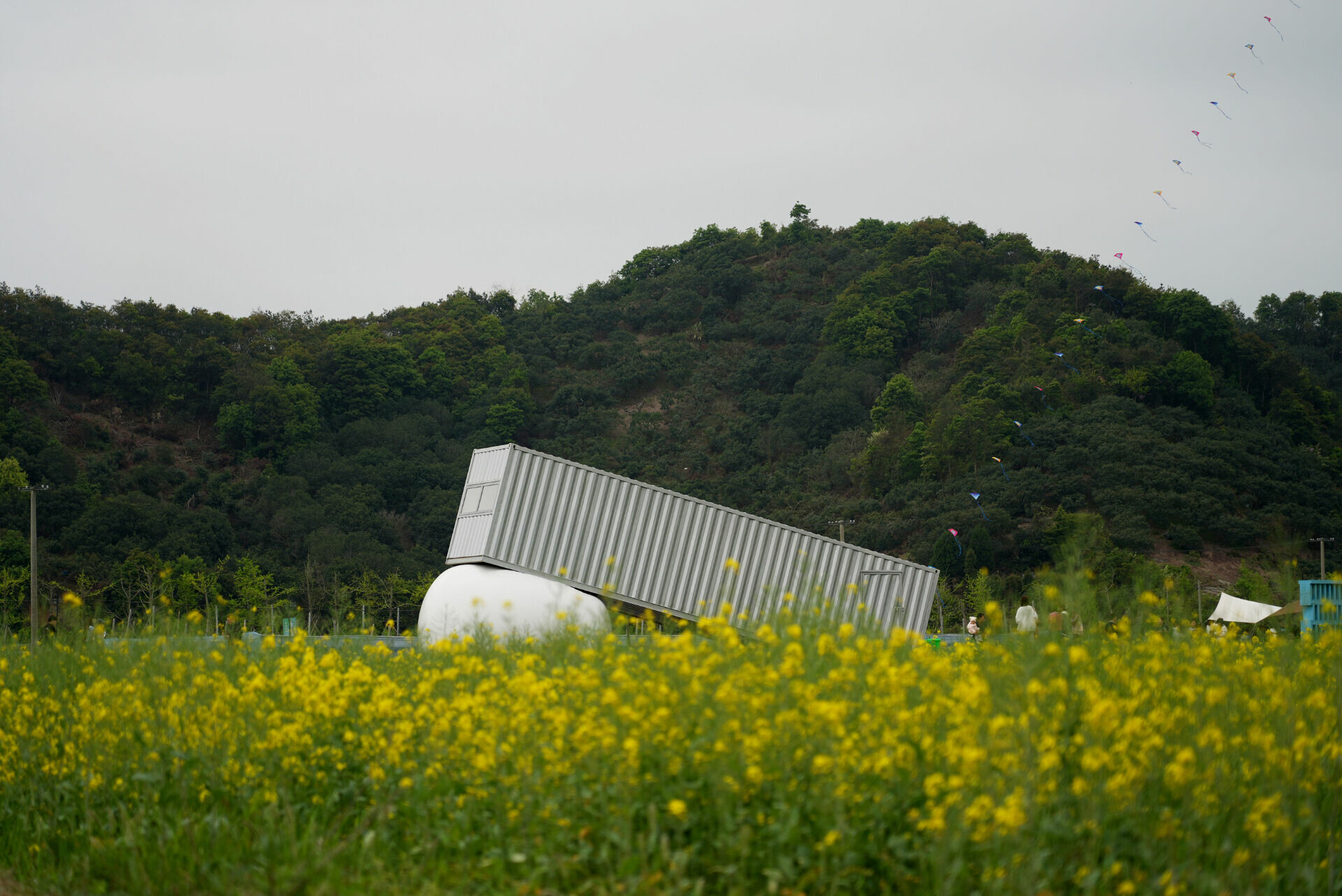
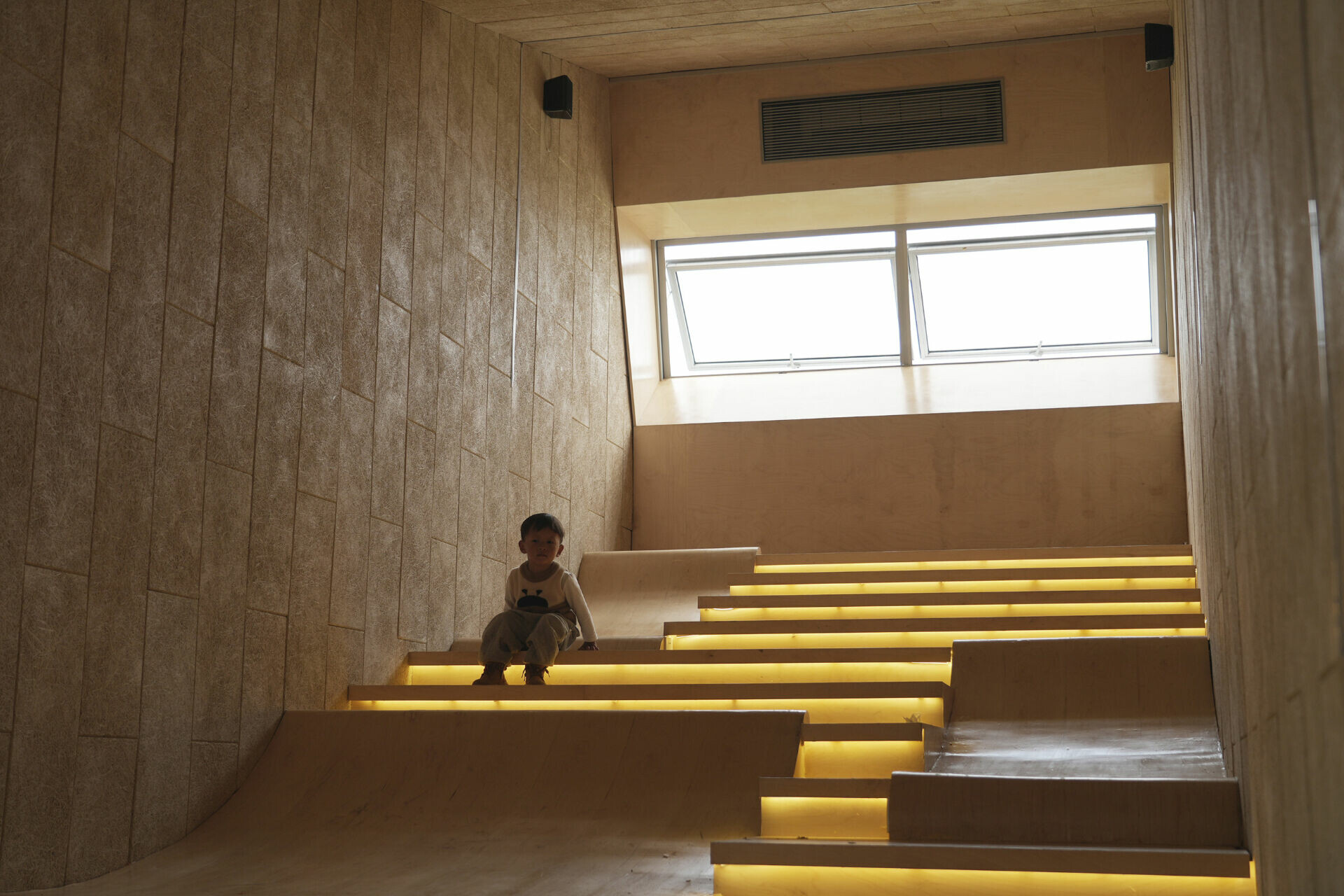
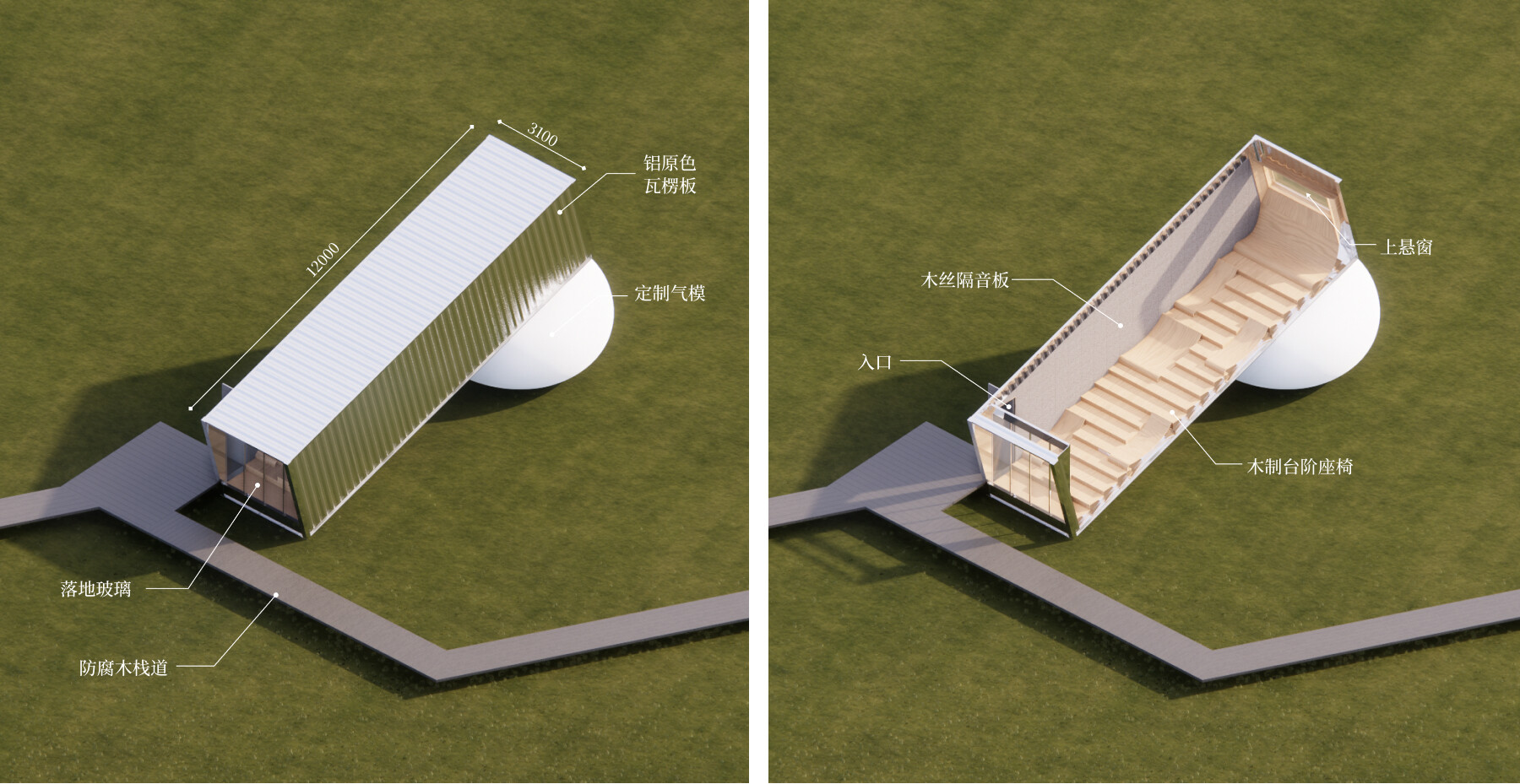
Further into the fields stands a container tilted like a springboard. The team used two structural support points to tilt the container at a 15-degree angle, creating natural tiered seating for a screening room. Custom inflatable rings wrap around the supporting columns and AC access points, adding a sense of lighthearted whimsy to the exterior. Though the interior is only about 30 square meters, it is fully equipped with a screen, projector, audio system, and air conditioning. Wood wool panels, known for their acoustic and thermal insulation, cover the walls and ceiling to ensure comfort across all seasons. Beyond the standard wooden steps, ergonomically curved backrests allow visitors to truly "lie back" and enjoy an immersive screening experience.
As a procurement-based project, "Down in the Clouds" saw the team move beyond conventional methods to challenge the durability, maintenance, and formal expression of inflatable membrane structures, conducting extensive research and prototyping before execution. Due to its large volume and the need to be retracted during adverse weather, "The Cloud" adopted a continuously inflated PVC mesh system per the manufacturer's suggestion. With air vents along its 2m-high sides and 100㎡ base, air pressure is continuously supplied; this ensures the structure remains inflated even if accidentally punctured, while reducing the material weight by half compared to sealed methods. The other two installations utilized a sealed, thickened PVC material, achieving smooth and rounded surfaces through a seamless welding process.
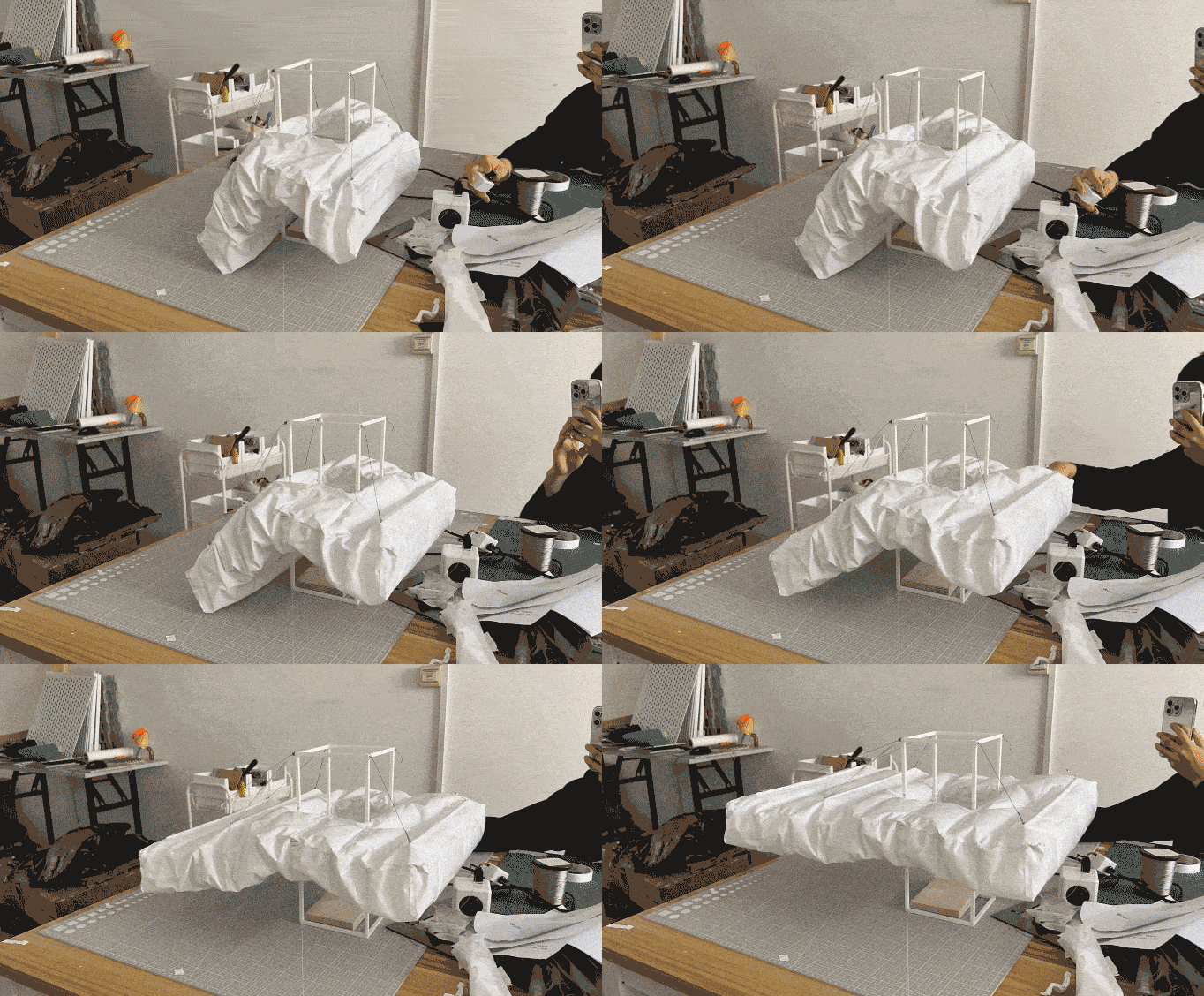
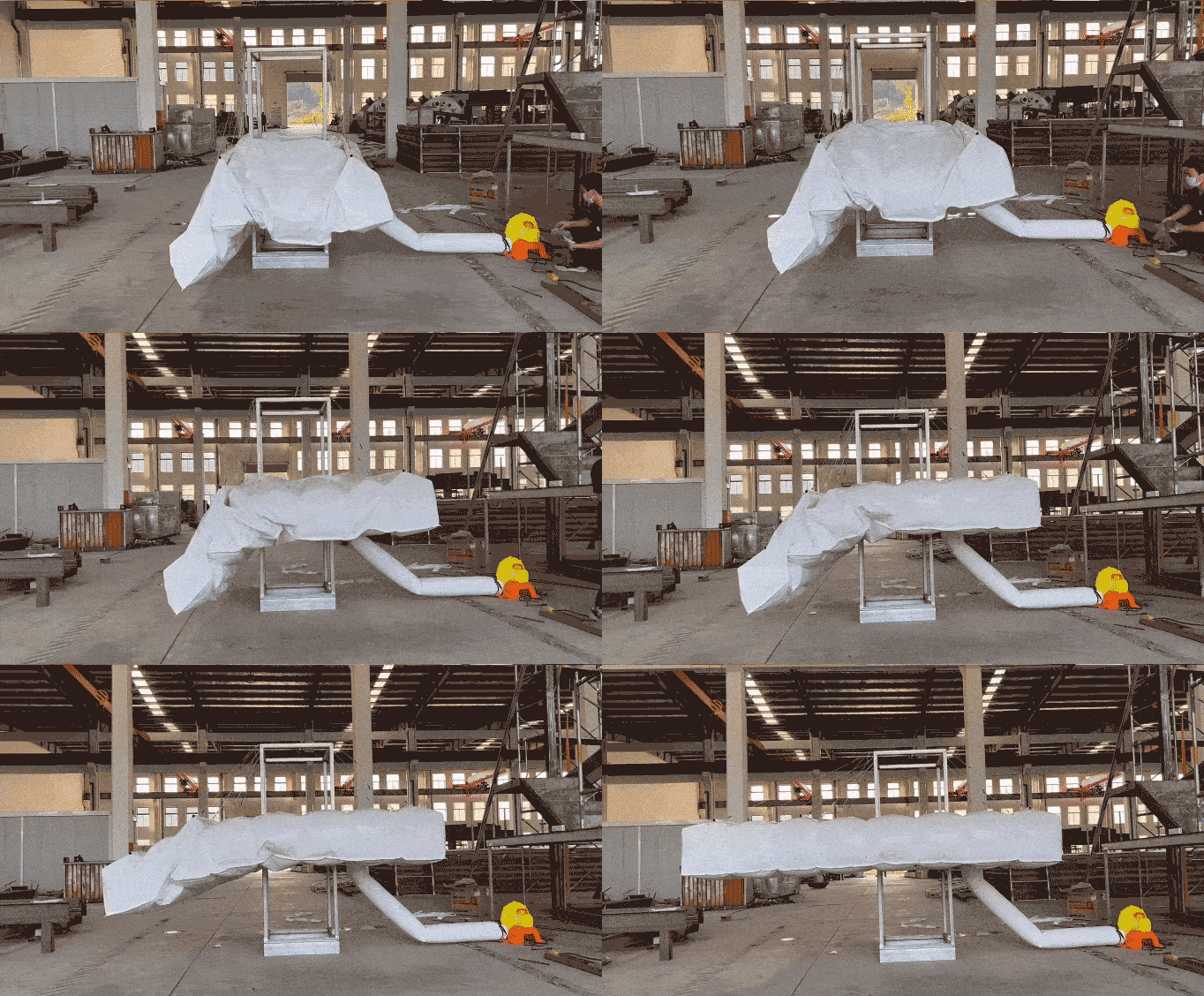
Although the main structures and inflatables were prefabricated and transported to the site, some construction details required repeated communication due to the local team’s unfamiliarity with the new methods. From planning to design, and nearly a month of on-site adjustments, this project represents more than just a series of creative architectural installations. It is an exploration and breakthrough in rural cultural tourism models—like clouds lingering on and nourishing the earth, the project aims to attract more people to the countryside through interactive and harmonious design, enriching the life of urban and rural residents with meaningful exchanges.
Principal Designers | Wu Haotian / Wang Yun / Lü Yancheng (Practice on Earth) / Hu Liang / Naomi Ng (Increments Studio)
Client | Dun’ao Village Collective Economic Cooperative
Operator | Ningbo Xiangwang Cultural Tourism Co., Ltd.
Inflatable Manufacturer | Shanghai Congxi Equipment
Local Construction Team | Huang Lunyü / Wang Haihua / Master Song and others
Container Fabrication | Ye Zhongdong’s Team
Character of Space | Renovation / Installation
Building Area | 290m²
Site Area | 150m²
Location | Ningbo, Zhejiang, China