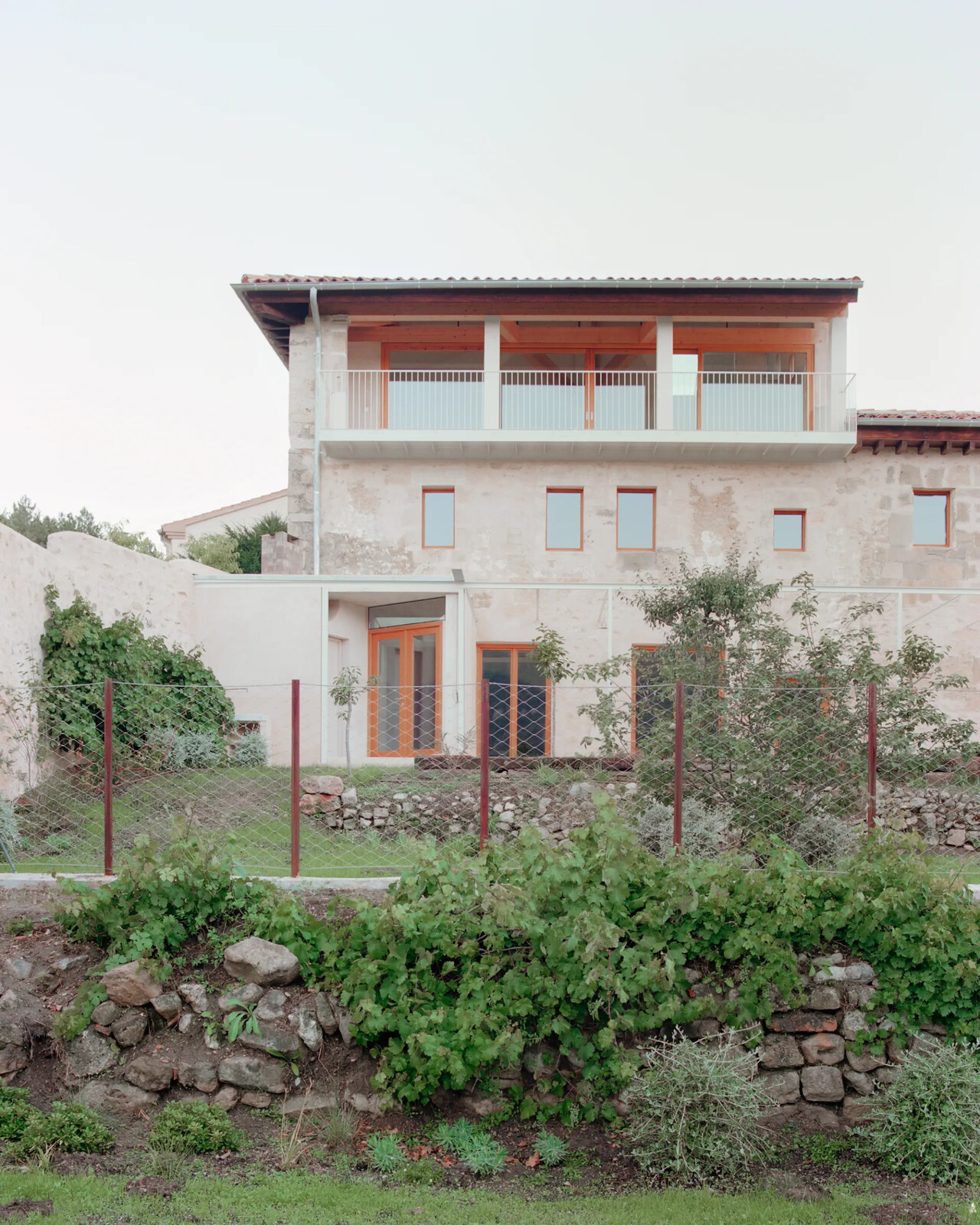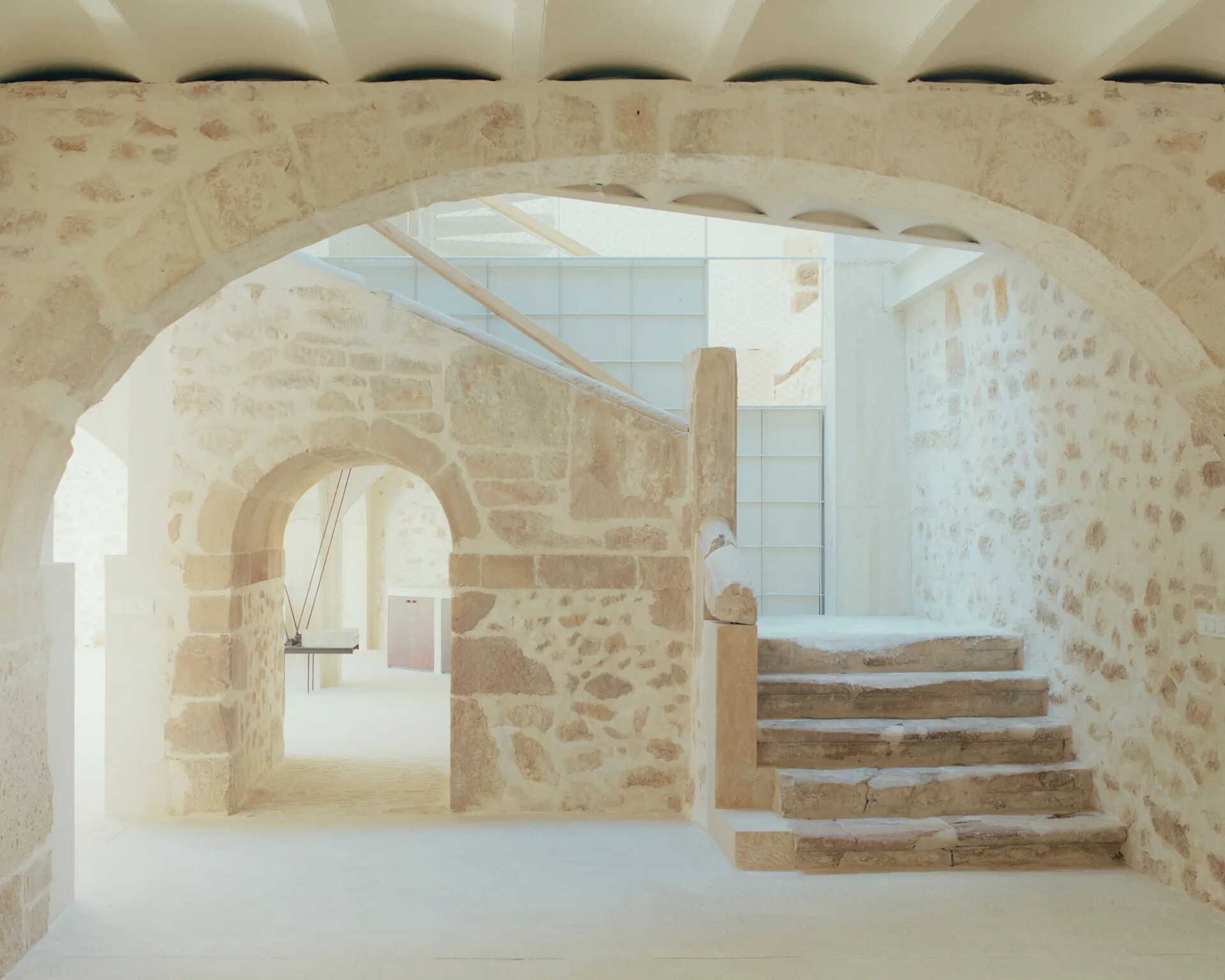
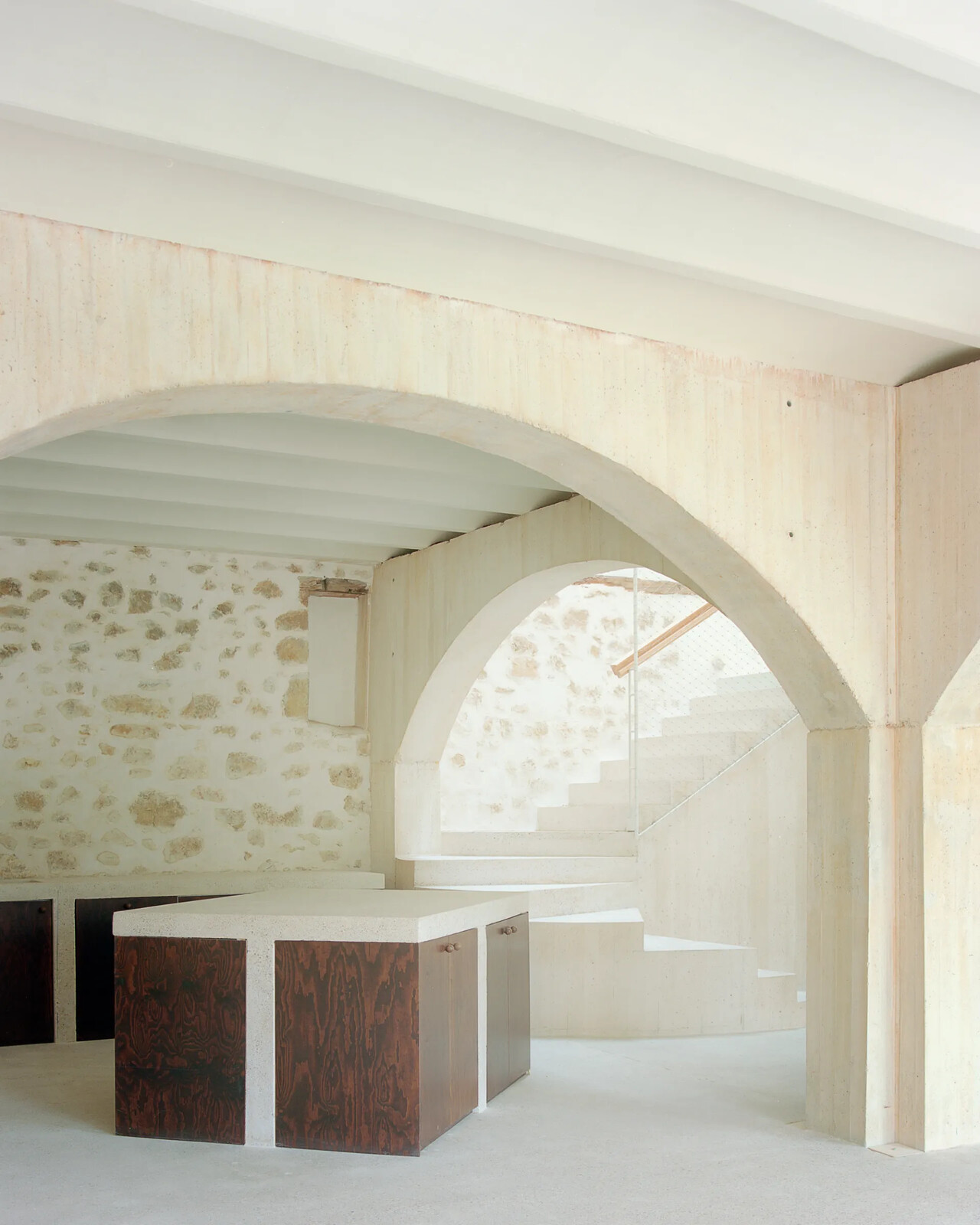
Destroyed in a fire that only spared its stone walls, a large house in the Castilian region has been refurbished through the insertion of a structure that replicates and completes the original. Between new arches of white concrete, skylights seek to bring brightness deep into the lower spaces of the building through a second stairwell, which skilled workers of the comarca placed right beside the old one.
這個位於卡斯提利亞地區的洋樓在一場火災中被摧毀,只有石牆得以倖免。經由貫入新的結構來複製原始建築物,該建物因而得到修復。在新建的白色混凝土拱門之間,天窗橫跨了兩個樓梯間,將光線帶入建築物的底層,當地技術成熟的工人們,將這座新的樓梯間建在舊有樓梯間旁。
1.Context
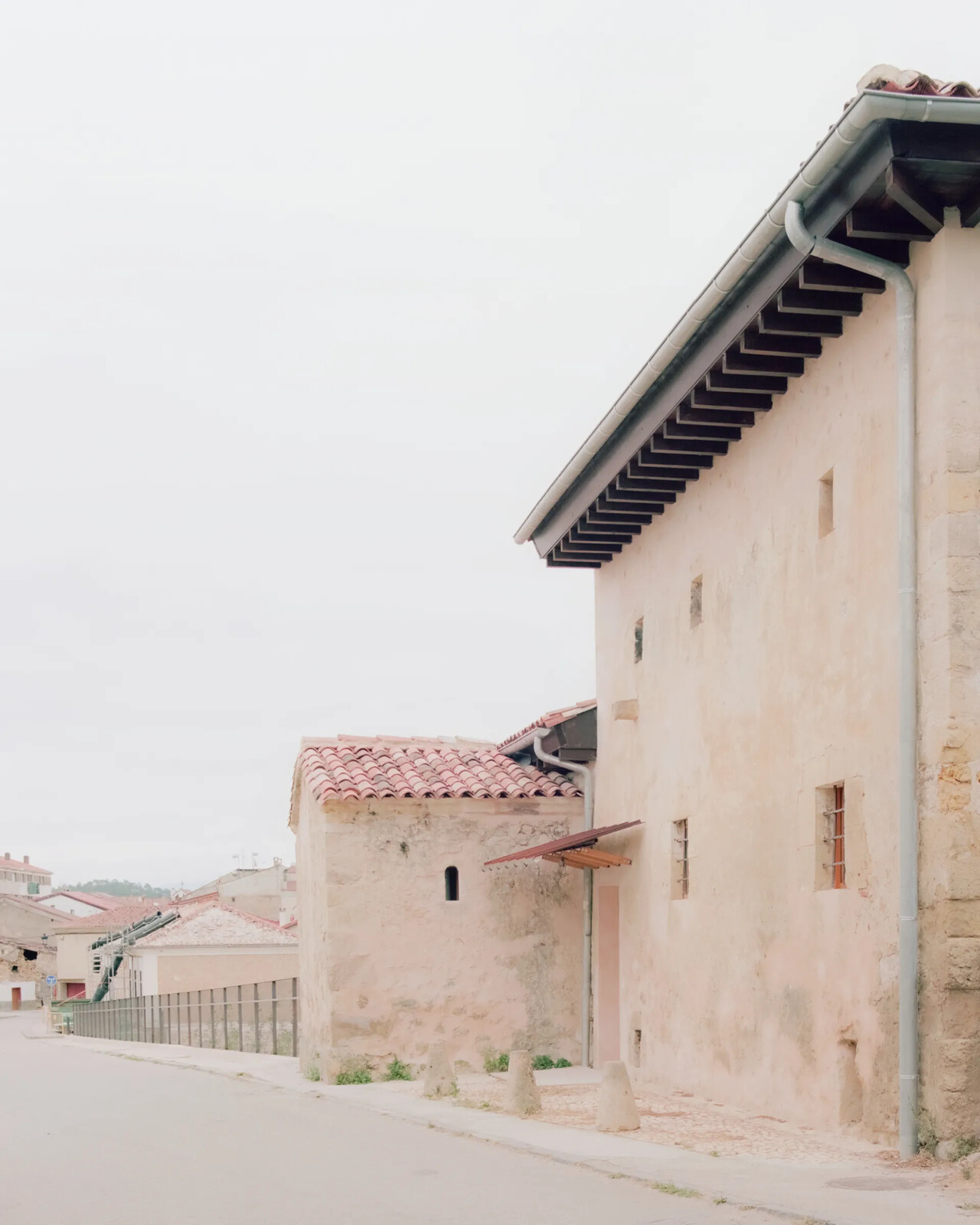
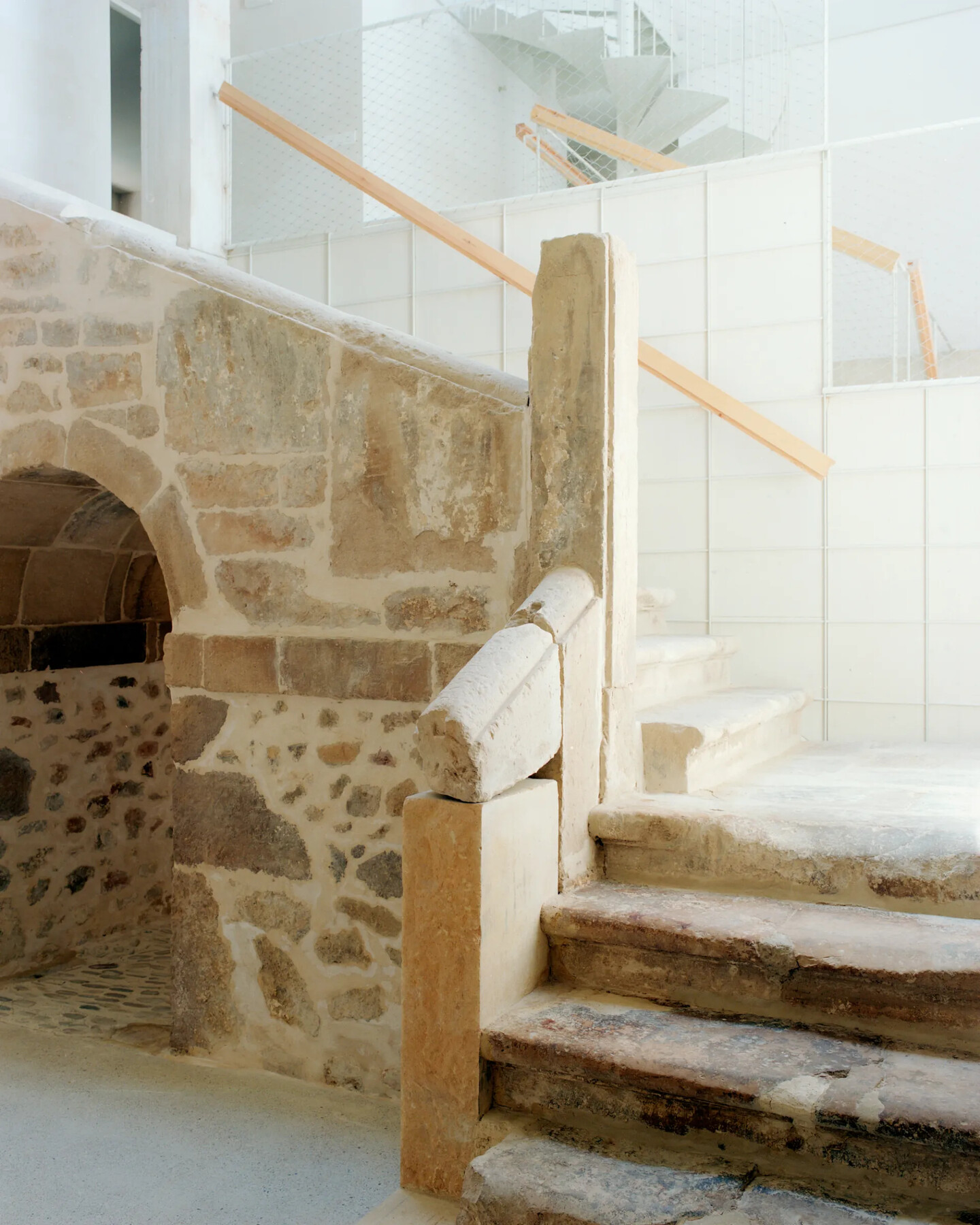
The project consists of the rehabilitation of a Castilian mansion from the s. XVI that had burned in a fire in 2011. Only the stone walls, the staircase with a vault and the voussoirs of the collapsed arches remained. The building had formerly been used as the residence of the prior of the Monastery of Oña.
2.Light as material
The north façade is buried by the unevenness of Calle Mayor, the ground floor was uninhabitable, without natural light or direct contact with the orchard on the south face.
1.背景
該項目是對於一棟16世紀的洋樓進行修復,這個建築物座落西班牙卡斯提利亞地區,在2011年的一場火災中被燒毀。只有石牆、帶有拱頂的樓梯和坍塌拱門的梁磚留存下來。此建築曾作為奧尼亞修道院院長的住所。
2.以光作為素材
北立面被Calle Mayor的高低不平遮蔽以及無法直接與南立面的果園接觸,缺乏自然光線,底層無法居住。
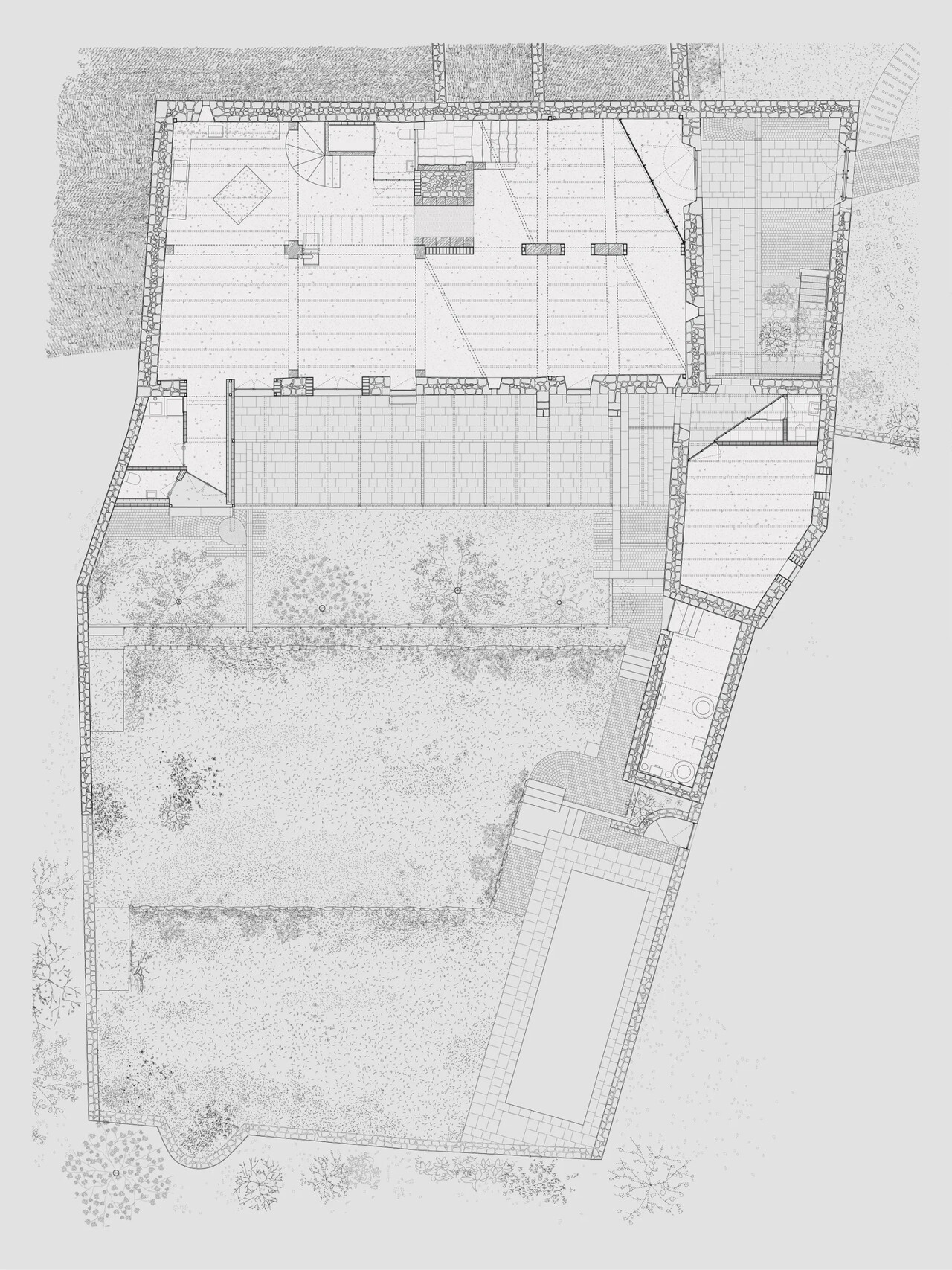
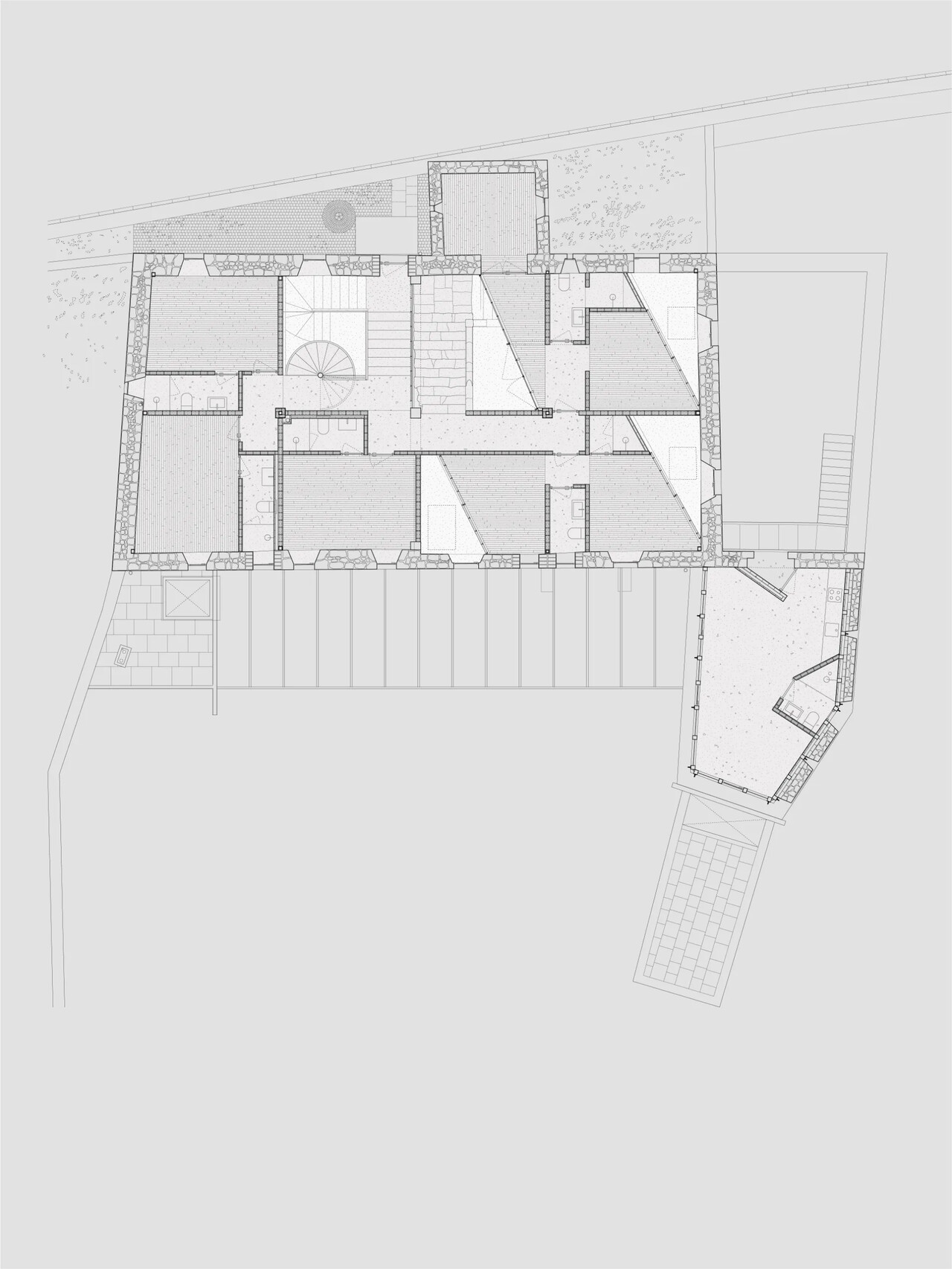
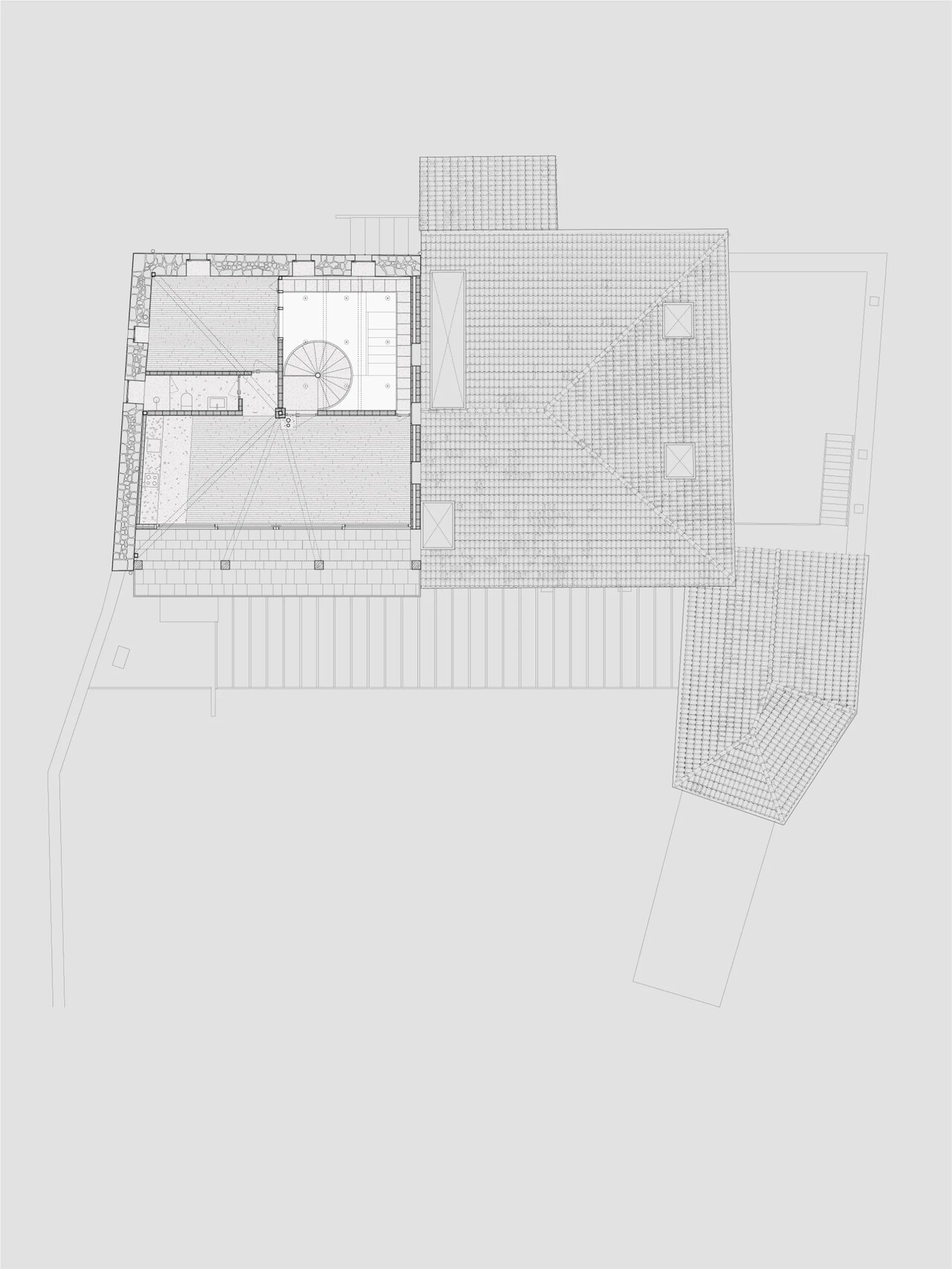
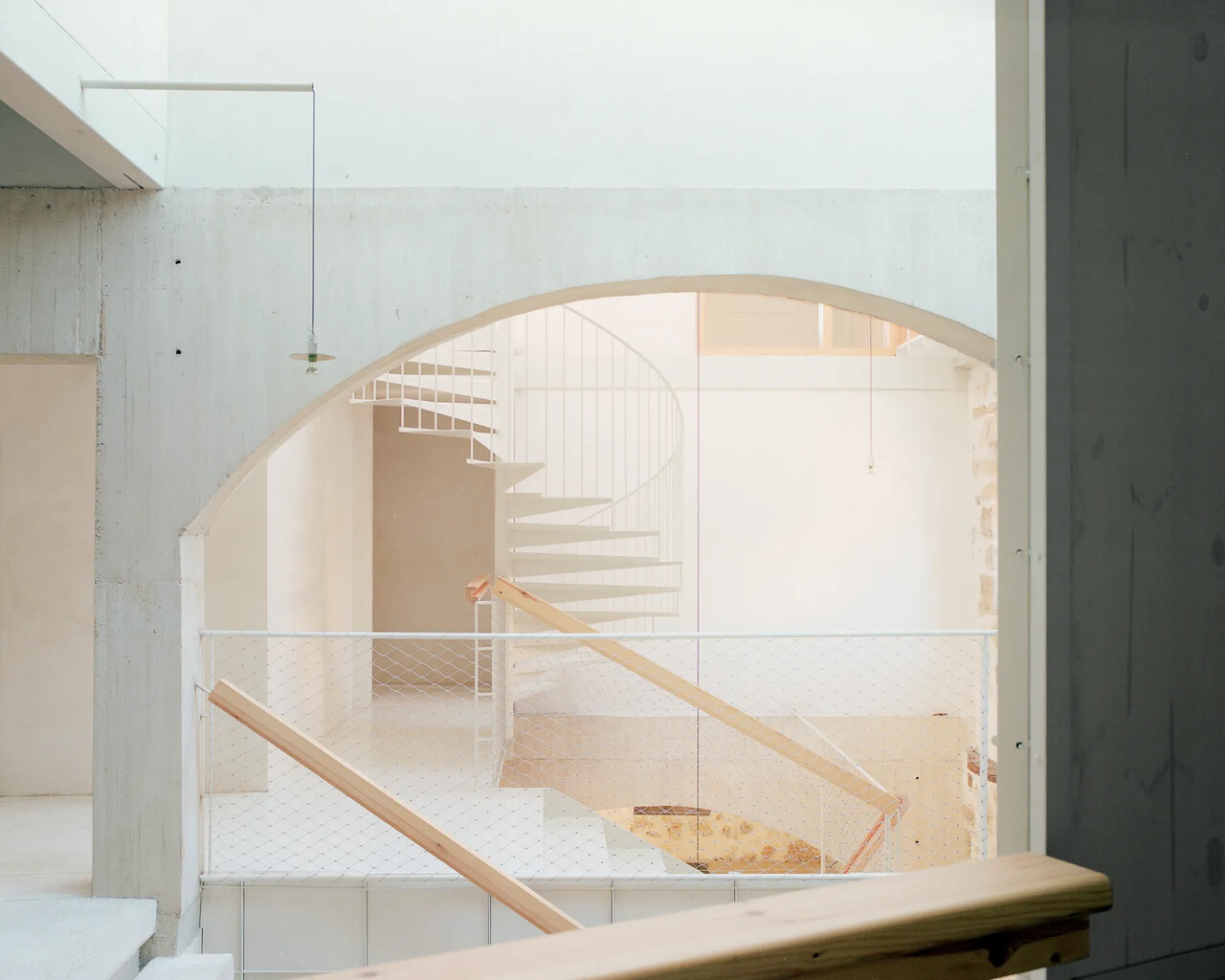
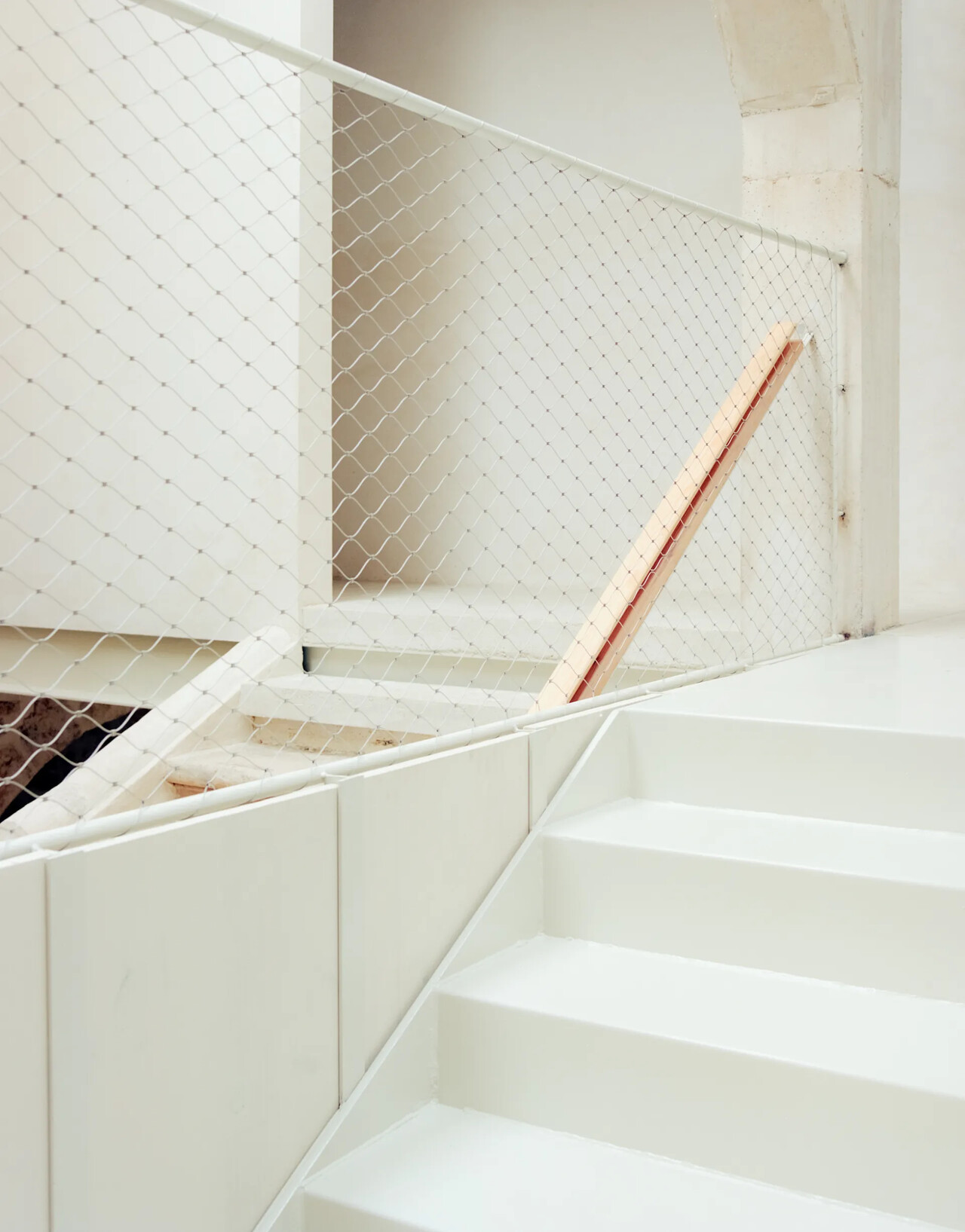
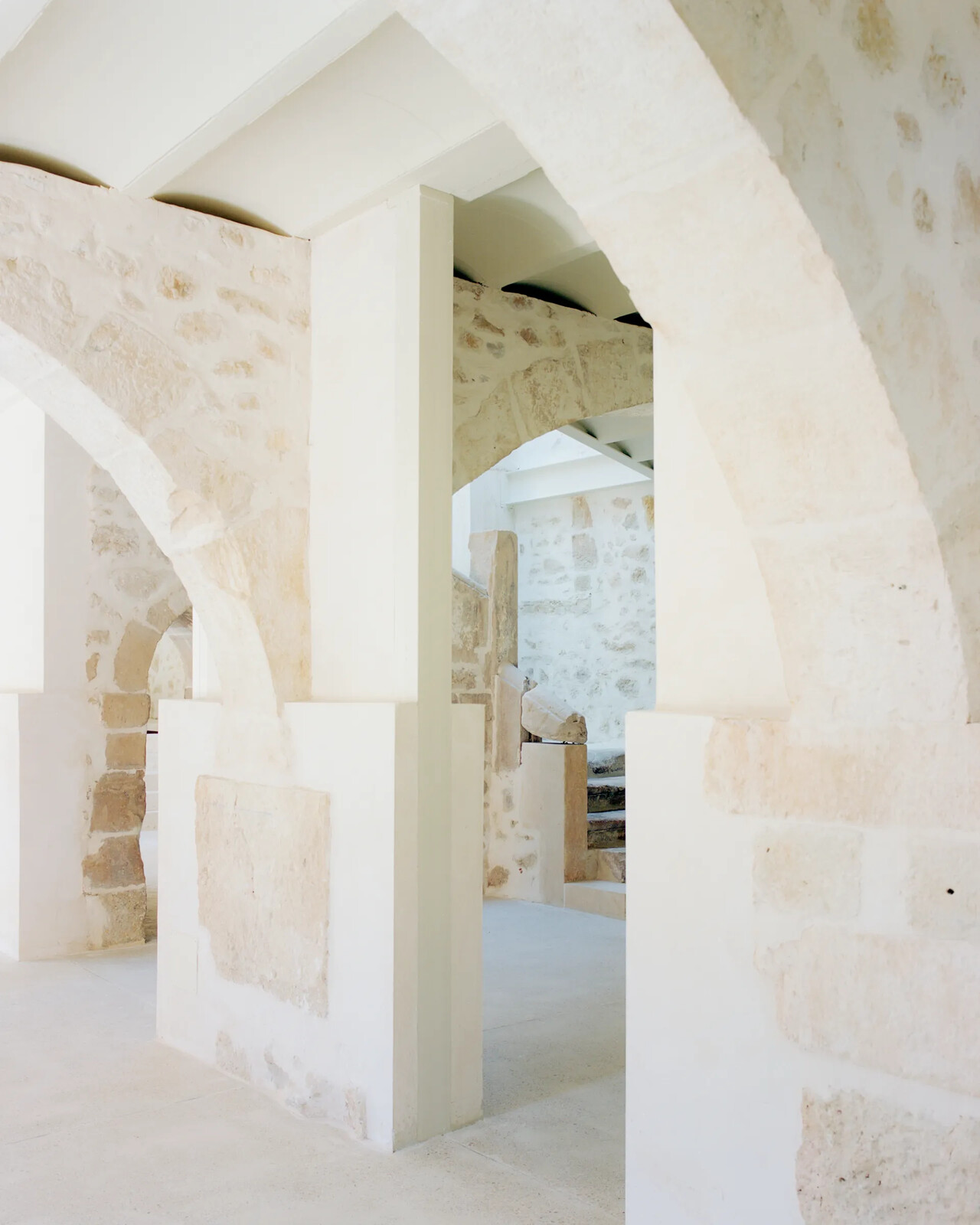
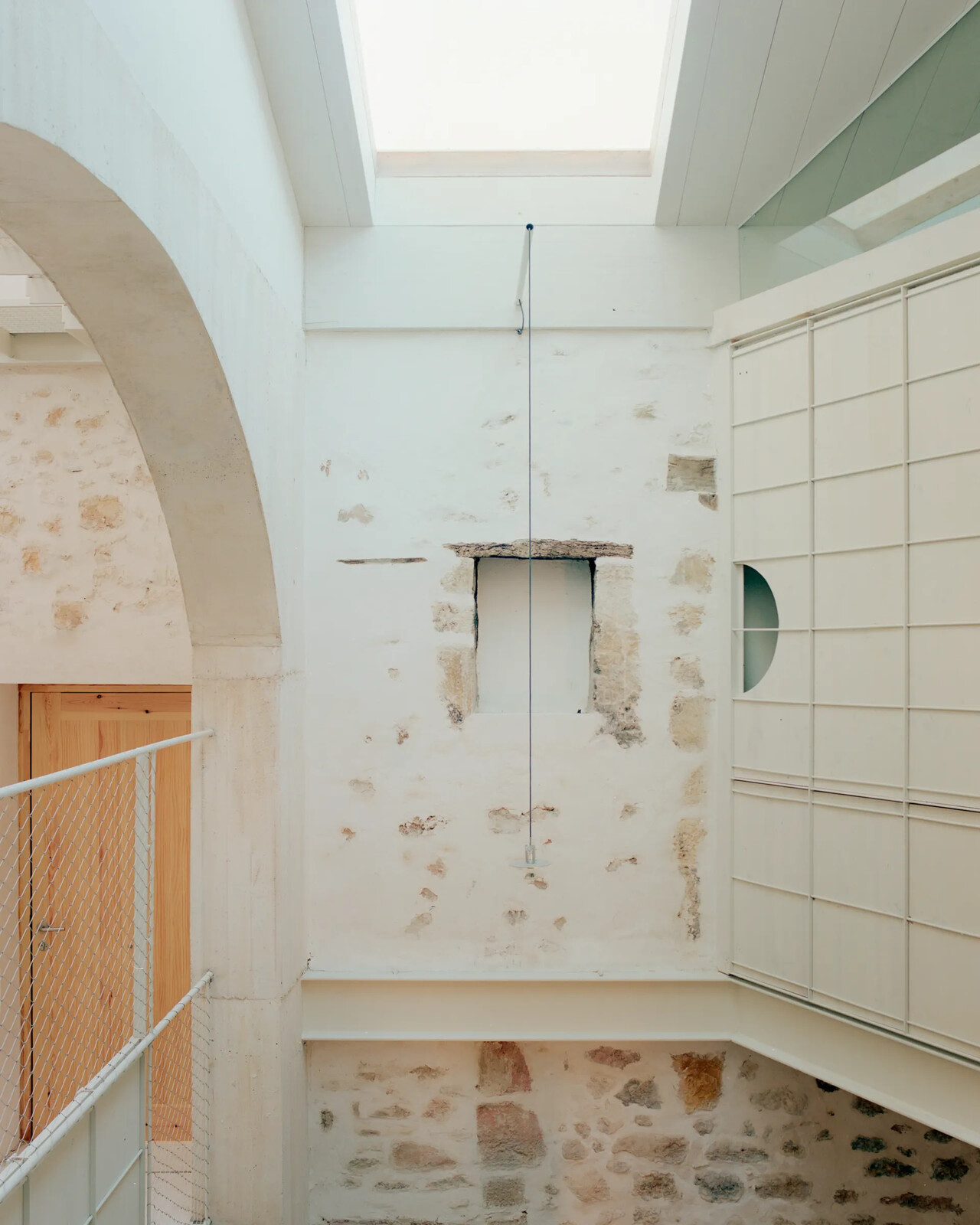
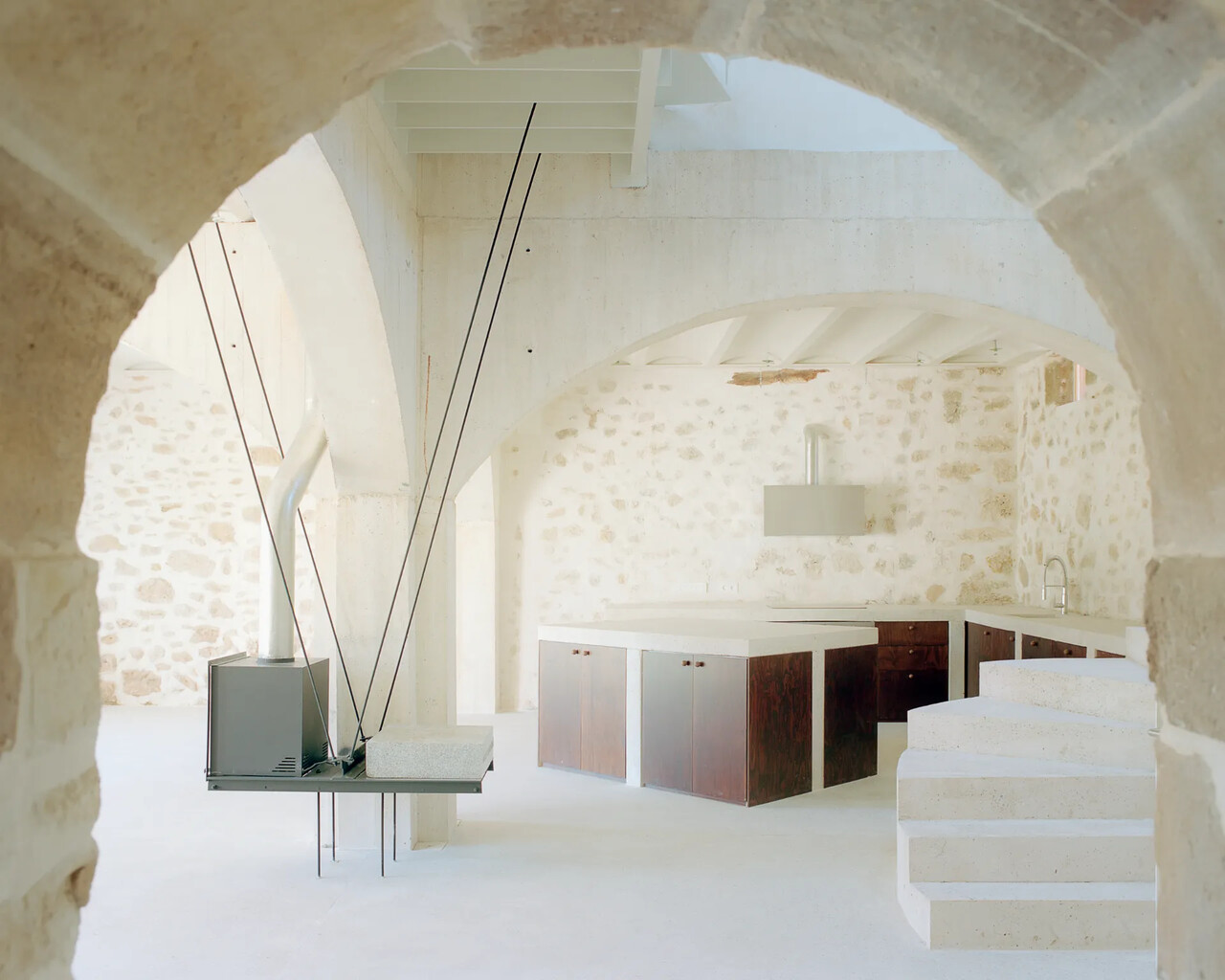
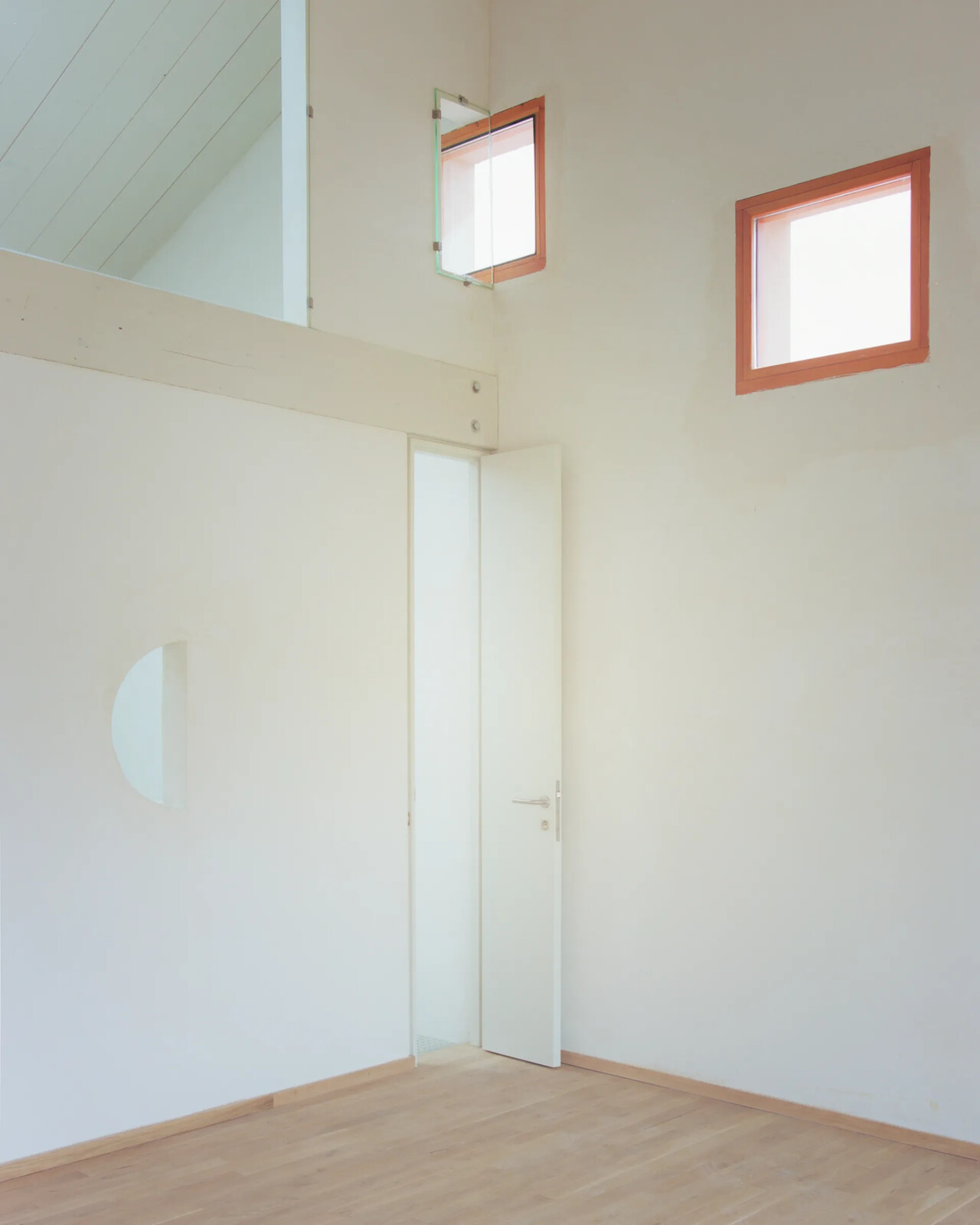
The first intention of the project was to introduce this natural light that was lacking without disturbing the historic stone facades too much. It seemed to us that the best way to do this was through five skylights that cross the intermediate floors to the common areas on the ground floor. These skylights open onto two large atriums from where parallel stairs run; the original stone and a new steel and concrete one of the same width. This allows configuring a sequence of spaces on different levels, illuminated from above and framed by stone and concrete arches.
該項目的首要目標是引入缺乏的自然光線,同時盡量不影響歷史悠久的石牆立面。我們認為最好的方式是藉由五個天窗,跨越中間樓層通向底層的公共區域。這些天窗涵蓋兩個大型中庭,並與平行的樓梯相接;其中一個是原來的石牆樓梯,另一個新材質為鋼筋混凝土,尺寸寬度皆與舊有相同。這樣可以在不同層次上配置一系列由上方而來的自然光照明,並透過石牆和混凝土拱門框出不同的空間感。
3.Dualities
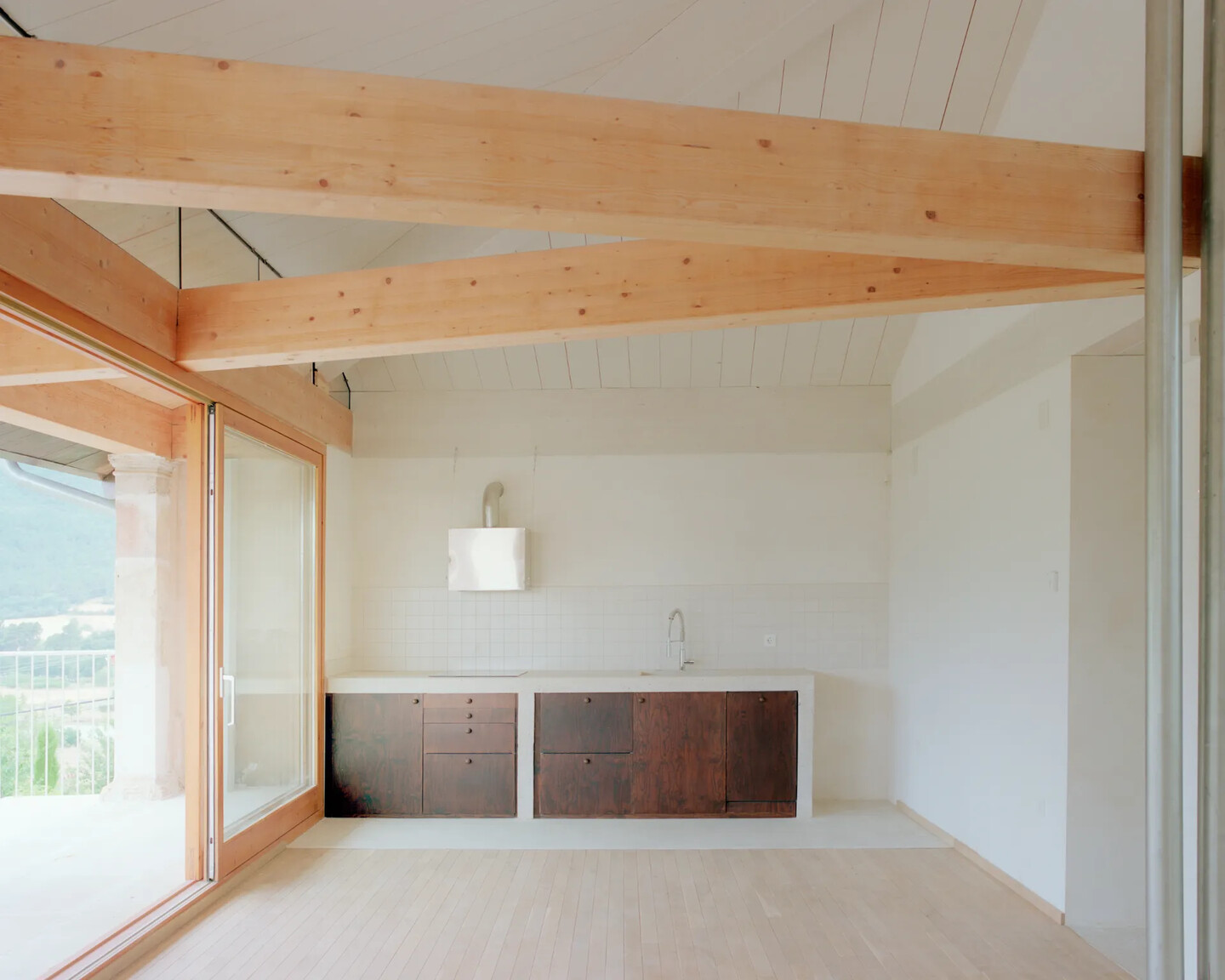
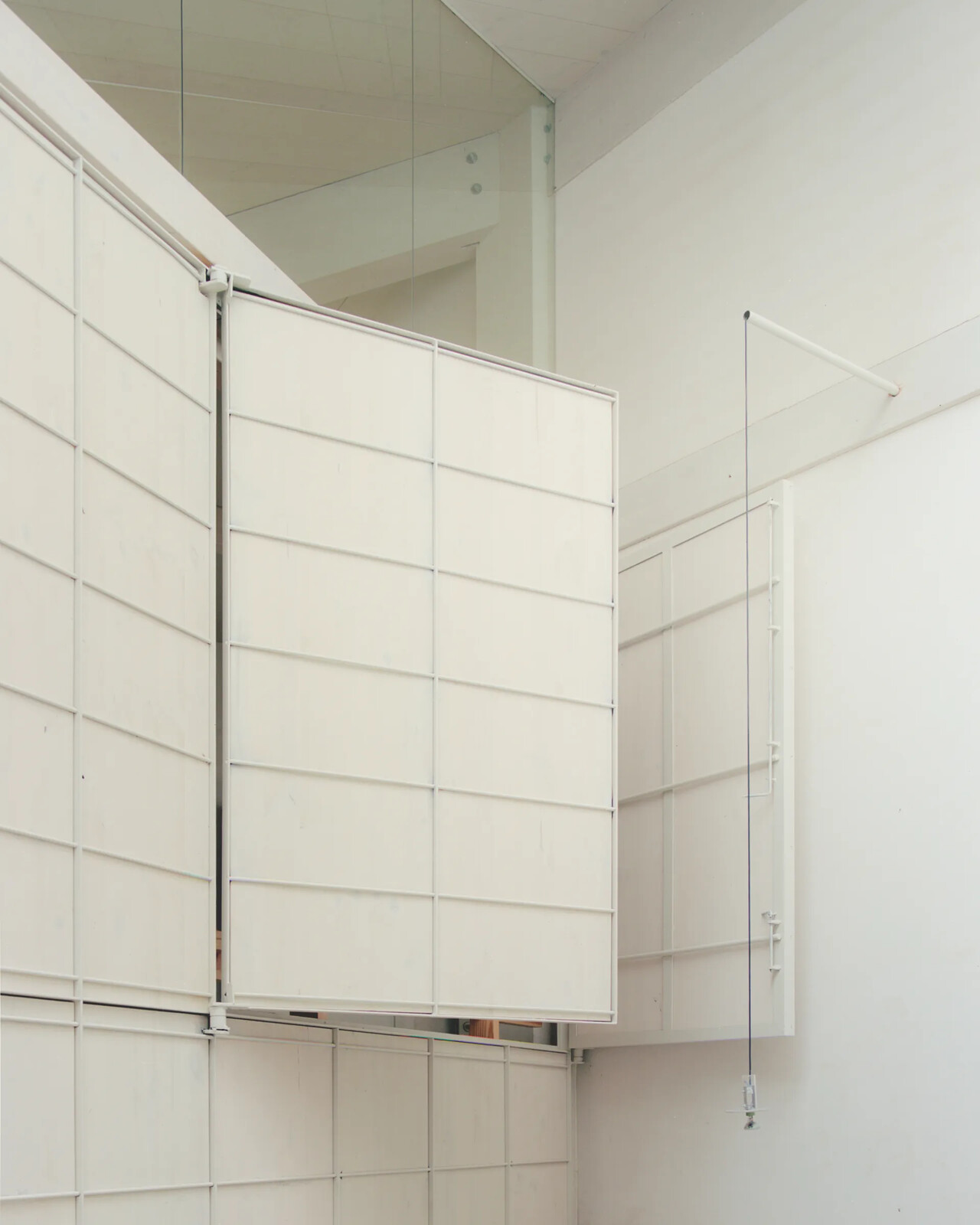
The next intention was to form a project based on structural, material and spatial systems similar to the ruin that we had found, to generate that continuity with the pre-existing but clearly marking the subsequent interventions. The new elements that do not contain analogies with the originals are treated as light pieces of steel and wood, with systems that combine traction and compression as structural balance games. The constructive solutions have been raised following the maxim of Adolf Loos of the architect as a mason who knows Latin, in a constant dialogue with the workers of the region.
3.對應性
下一個目標是建立一個與原始建築結構、材料和空間系統相同的元素,與原始建築達到連貫性,同時明確地表現新元素的特點。其特點即輕型的鋼材和木材,將牽引力和壓縮結合在一起的系統作為結構平衡遊戲。提出這個建設性的解決方案,是遵循了阿道夫·路斯(Adolf Loos)的格言,即作為一個建築師是懂拉丁語的石匠,應與當地的工人持續且不間斷的對話與合作。
4.The phenomenological house
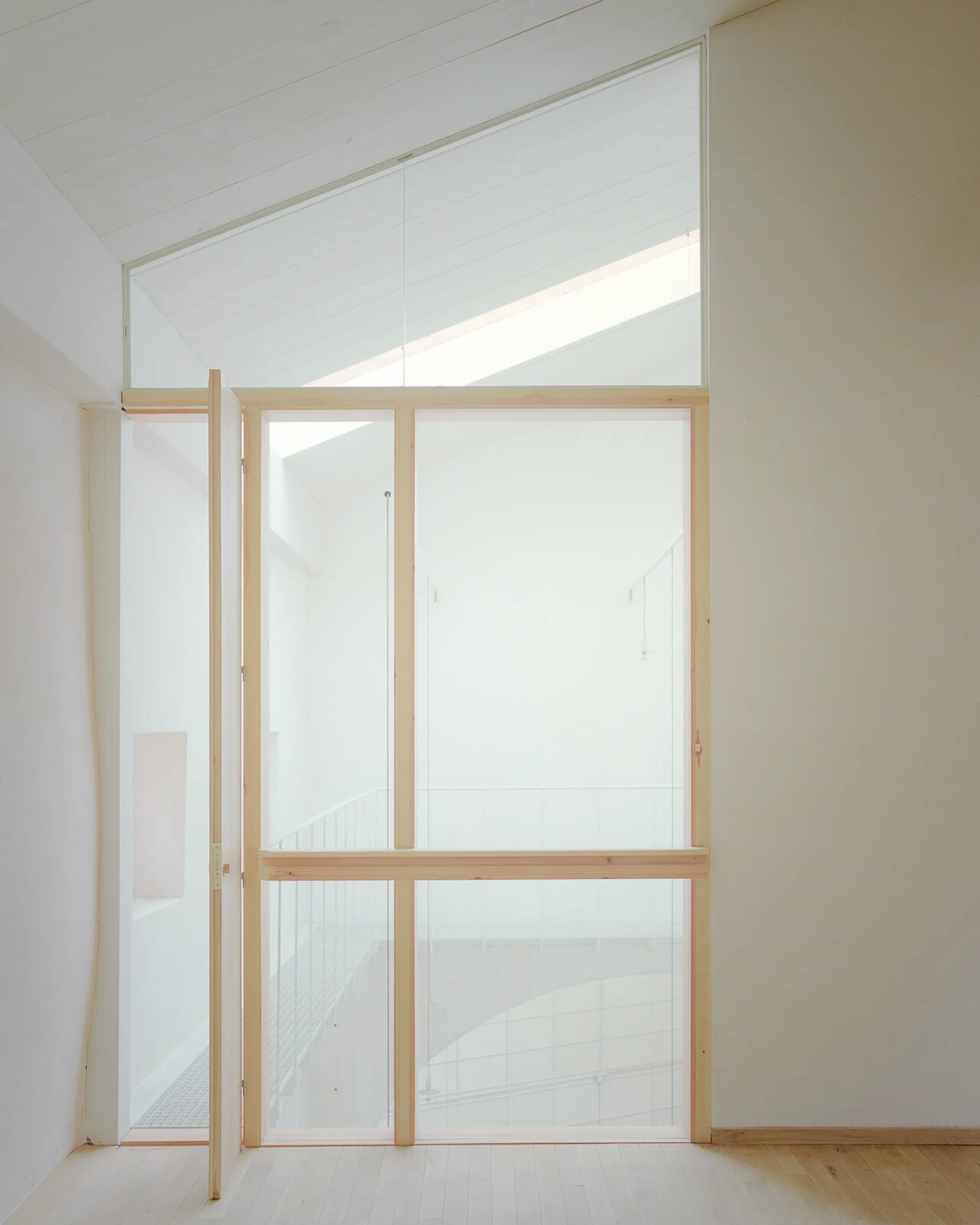
It is a house that multiplies the routes, enhances cross views and exploration, fosters a playful and hedonistic experience of space. Space with multiple qualities that allows it to be constantly reappropriated without being tied to a specific and closed function.
4.現象學之屋
這是一棟能夠激發人們感官體驗和充滿探索性的房子,鼓勵人們對這個空間進行有趣而豐富的體驗。這個空間具有多元風格,使其能夠不斷重新被重新使用,而不受特定既有功能的約束。