Hiyoshi Pavilion
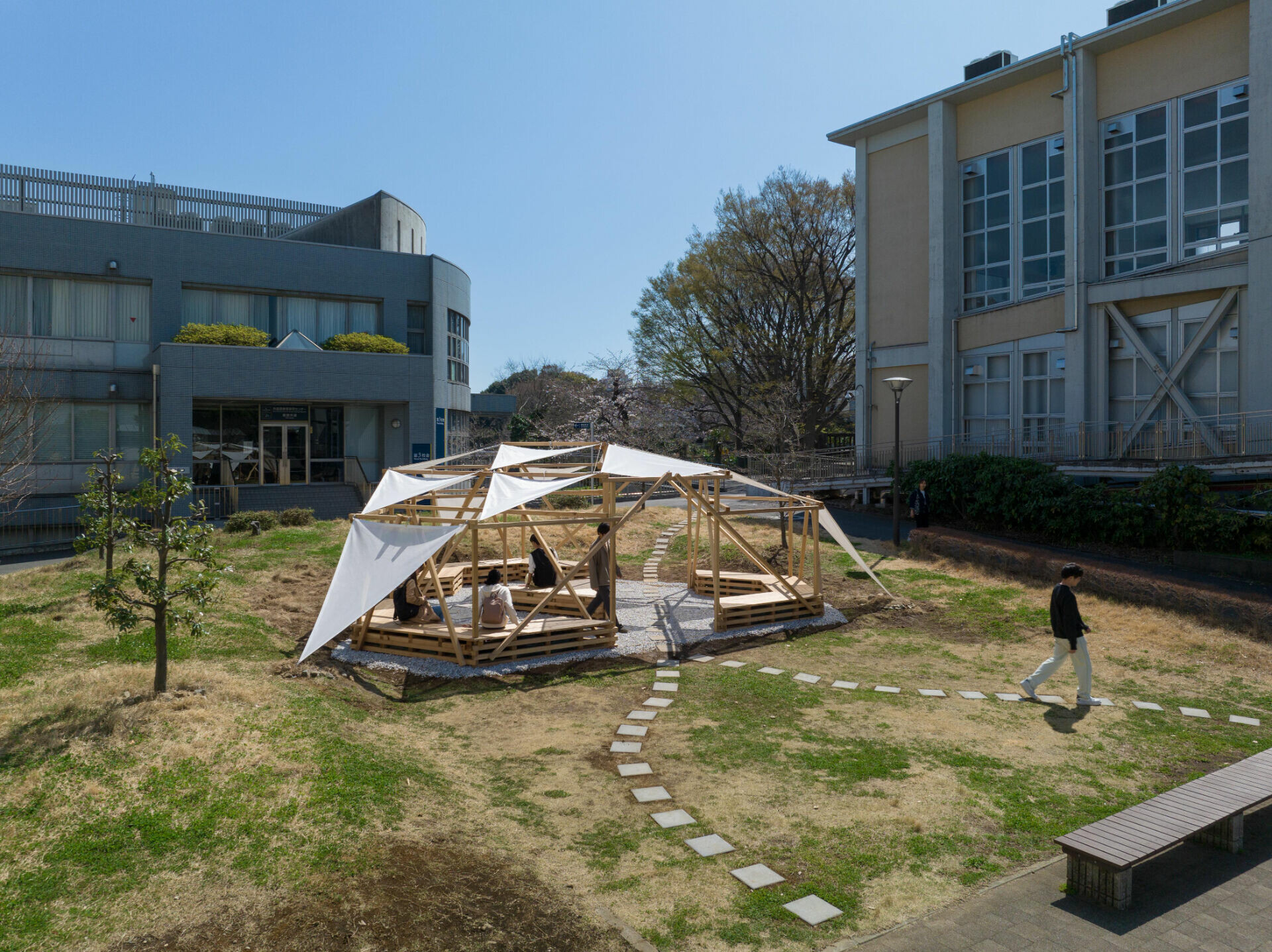
If recyclable temporary structures were strategically introduced into underused urban sites, vacant land might no longer be limited to monotonous uses such as parking lots or car washes, nor left to grow wild and desolate. Hiyoshi Pavilion embodies this potential. The lightweight timber pavilion, built on campus in the aftermath of the pandemic, is modest in scale yet unexpectedly successful in stitching together moments of student interaction. Its agility shows how a small intervention can enliven forgotten edges of the campus and inject them with new energy.
During the pandemic, the fast-paced world came to a standstill. From 2019 to 2022, face-to-face encounters dwindled dramatically, severely affecting students’ motivation, academic performance and mental health. As in-person classes resumed in the spring of 2022, the design team launched a series of initiatives to create spaces for exchange beyond the classroom, restoring community ties and their positive effects.
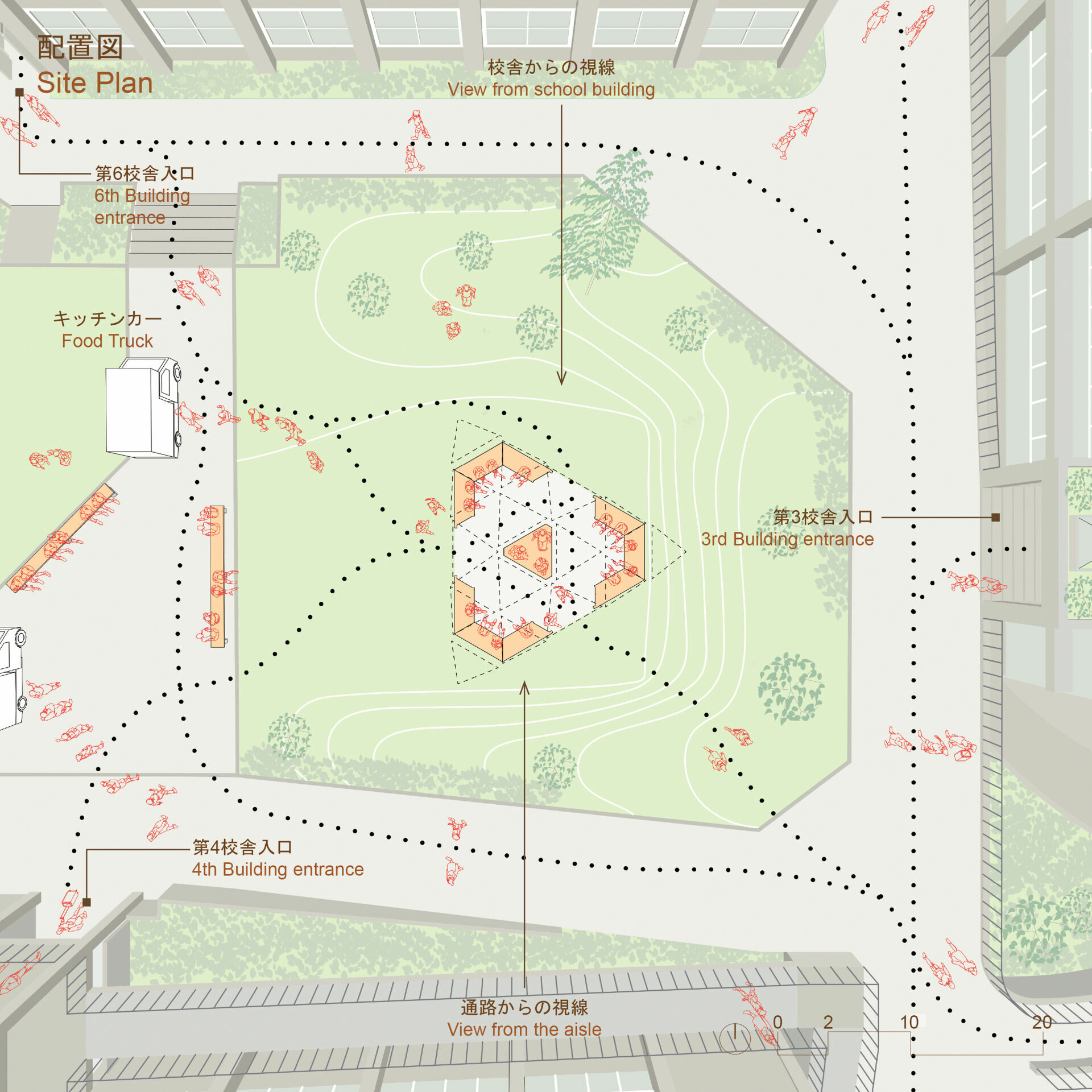
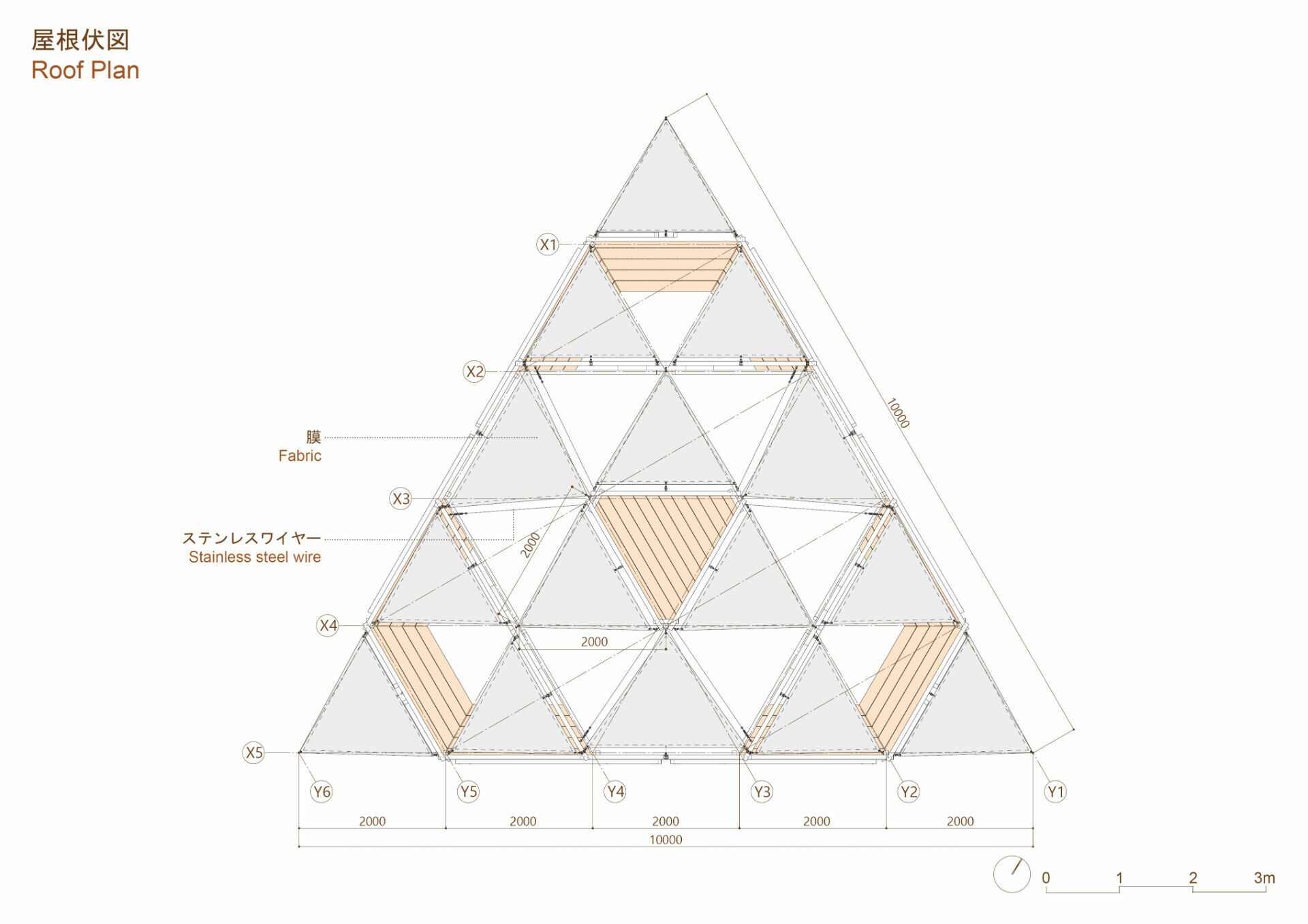
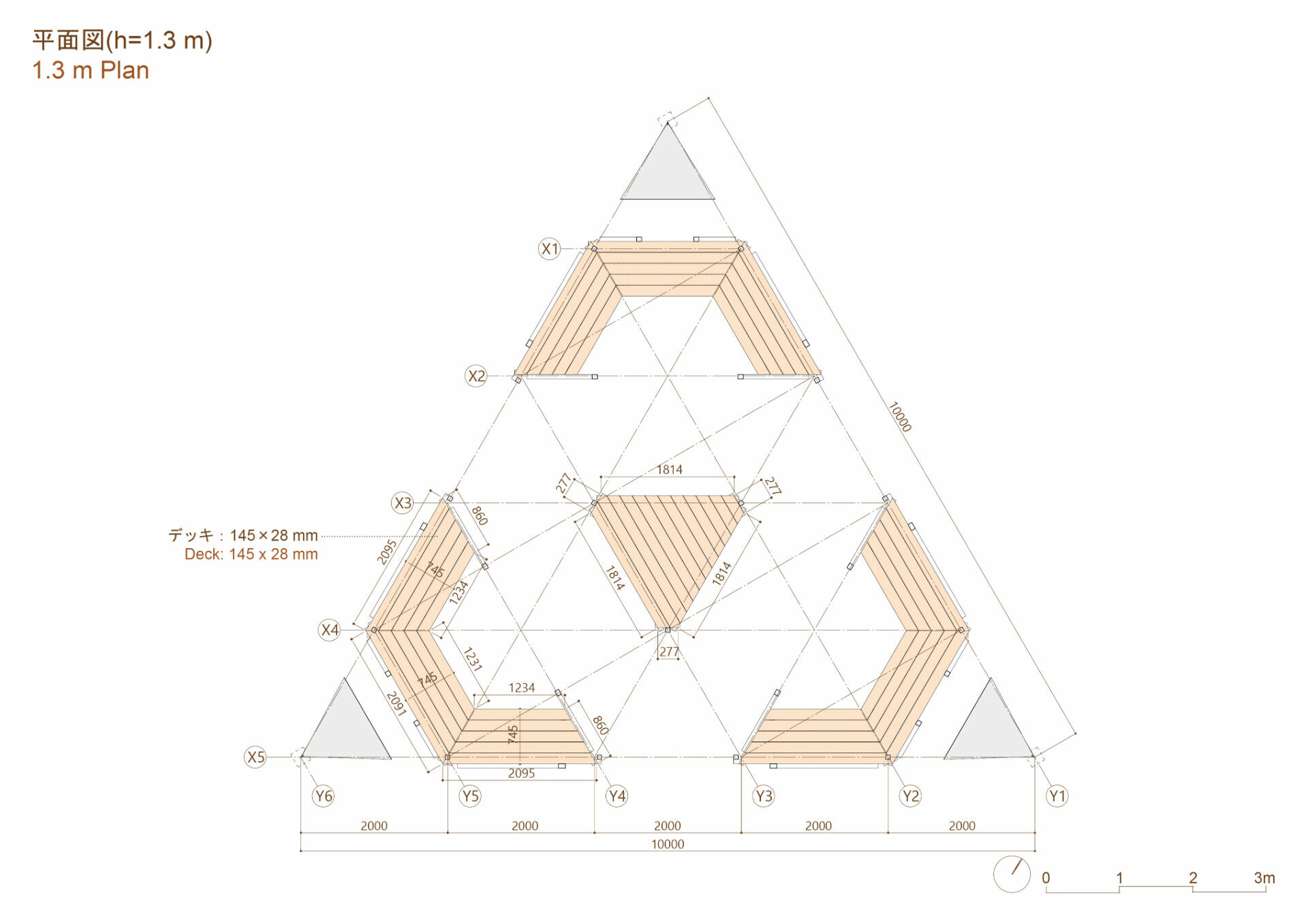
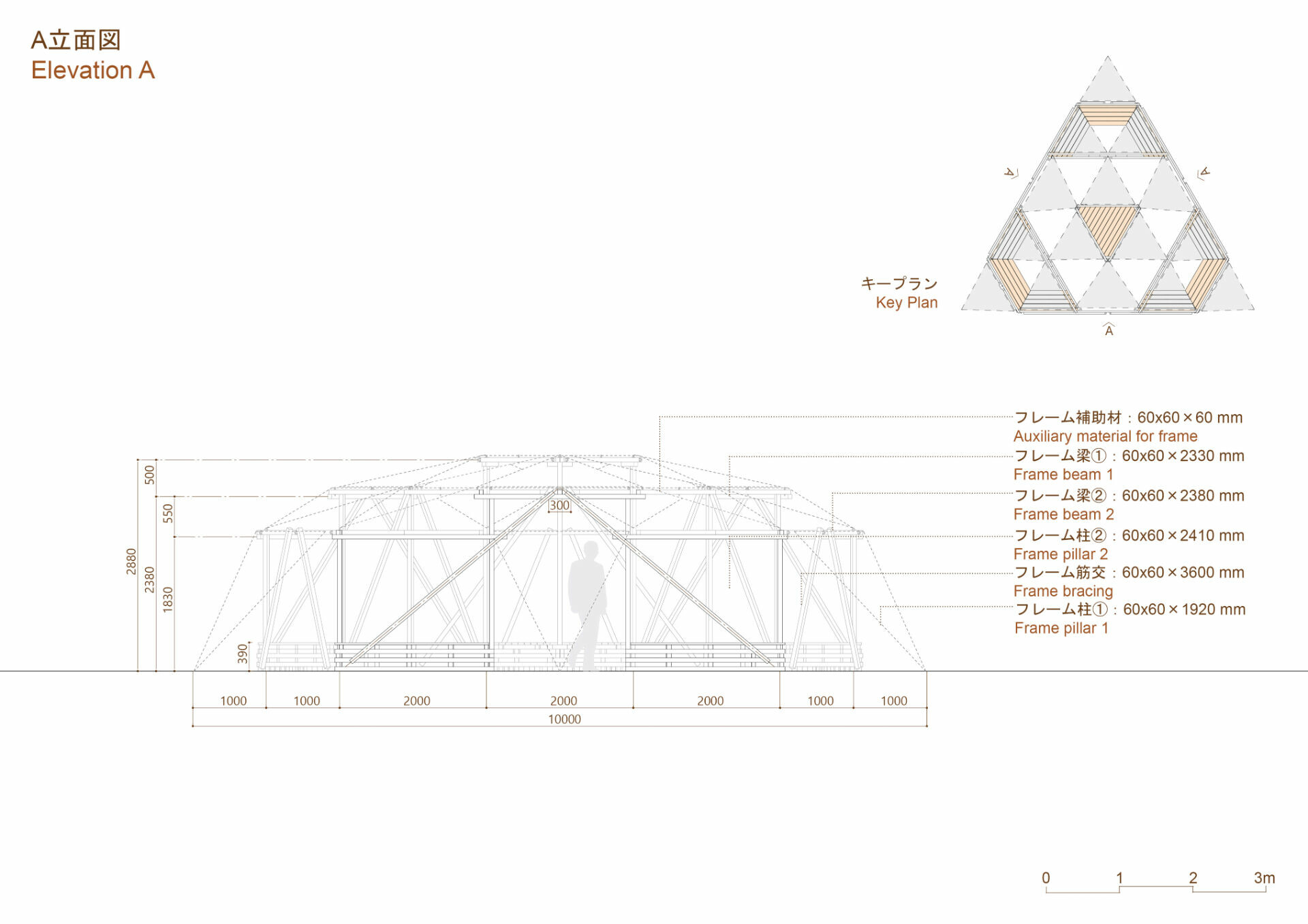
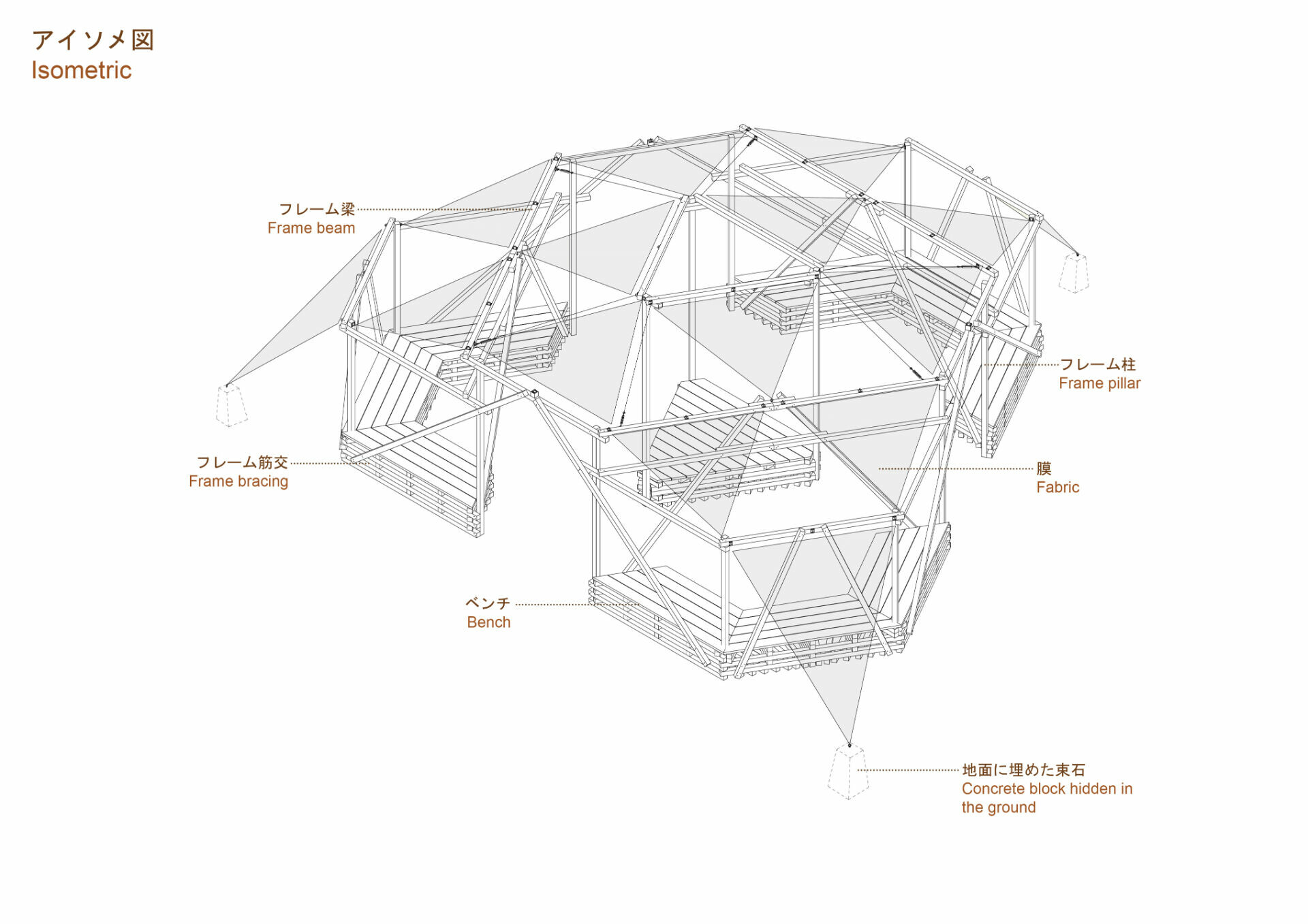
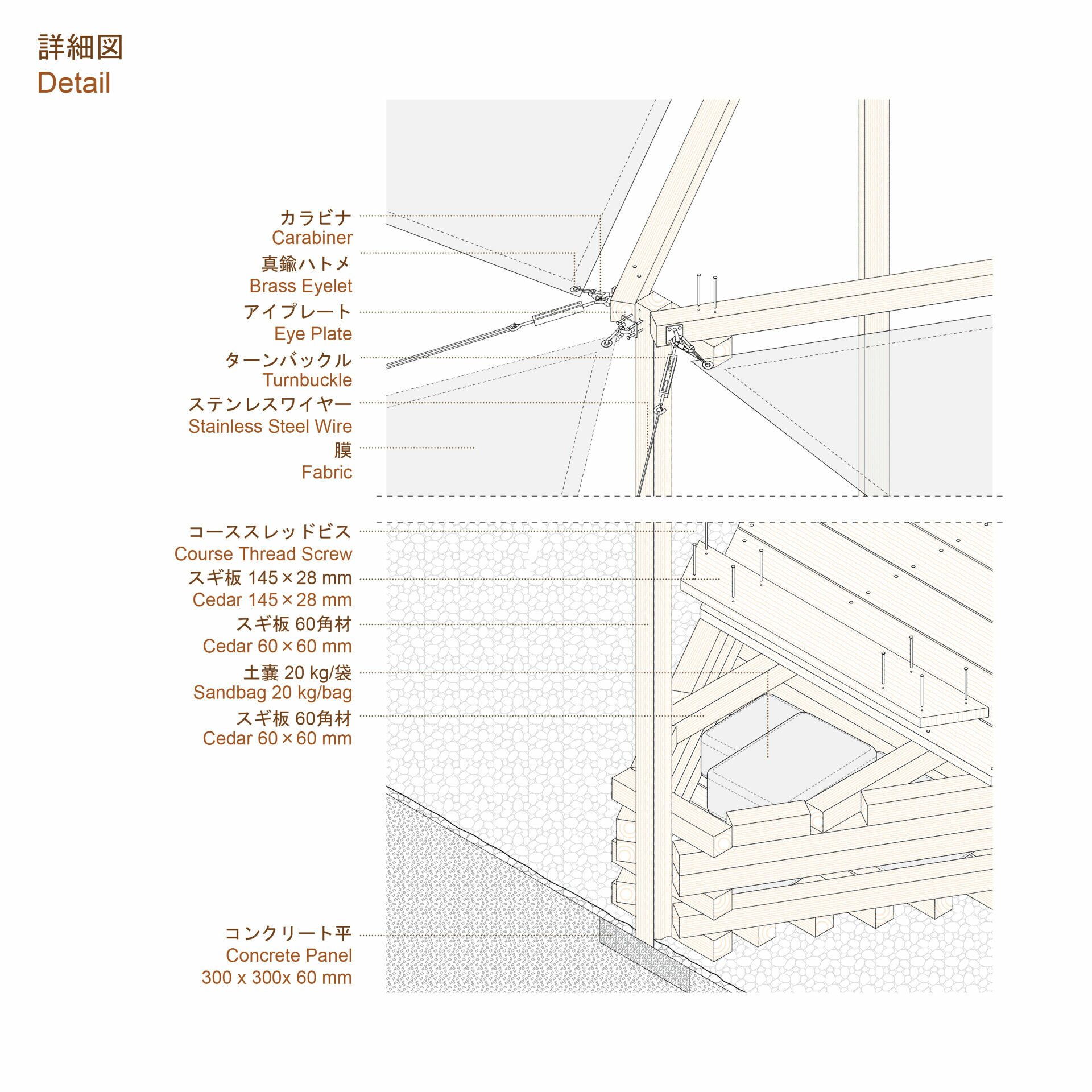
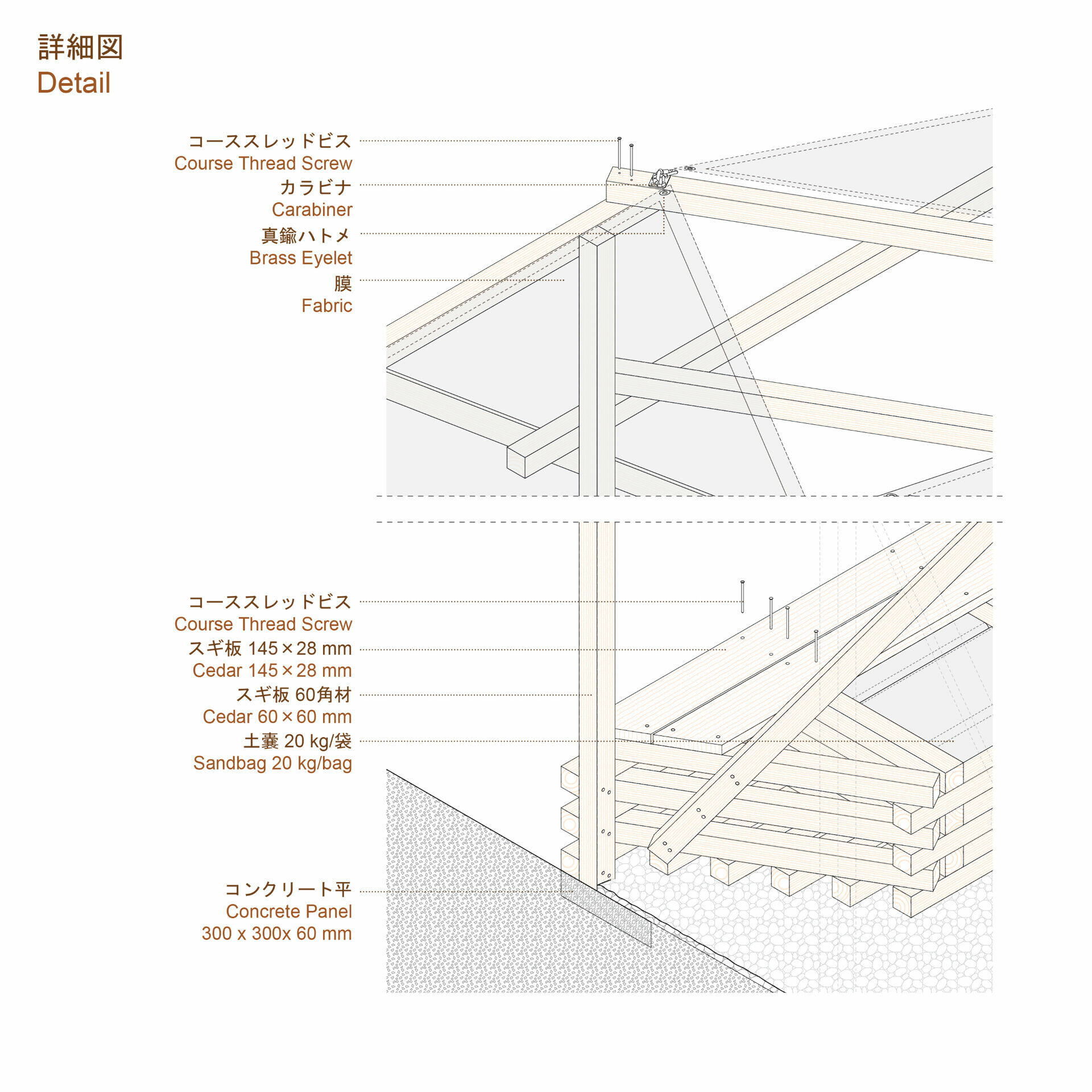
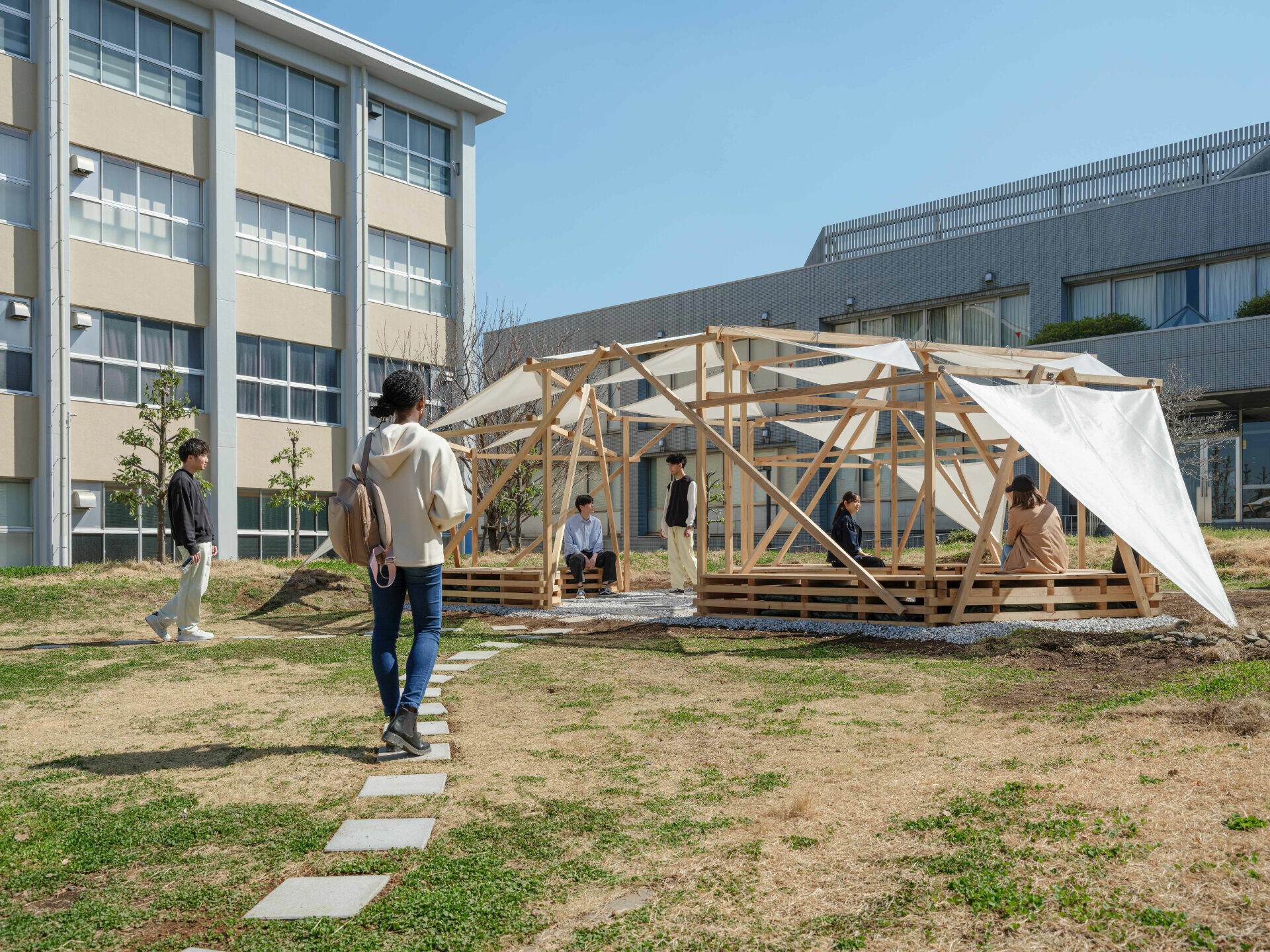
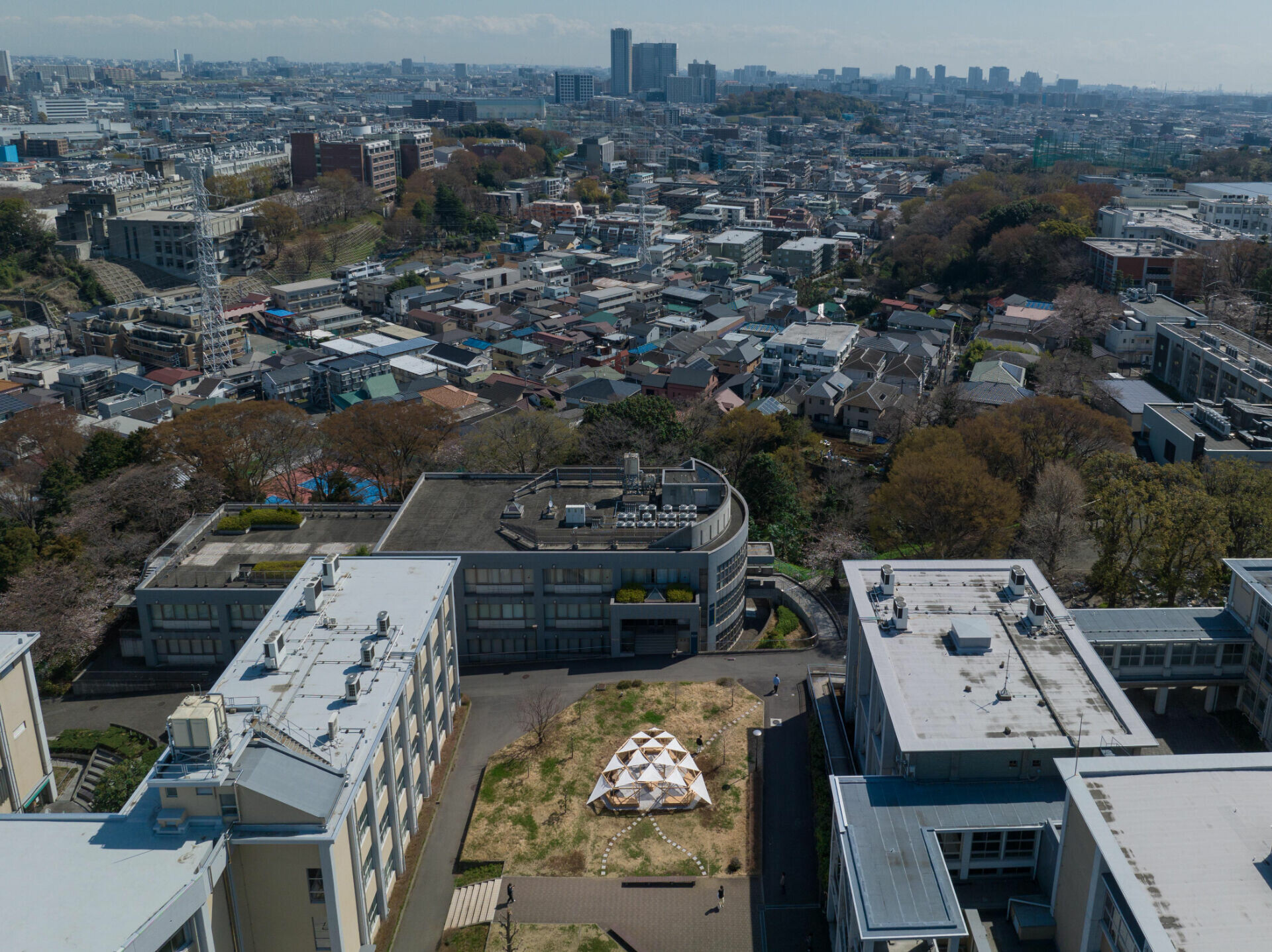
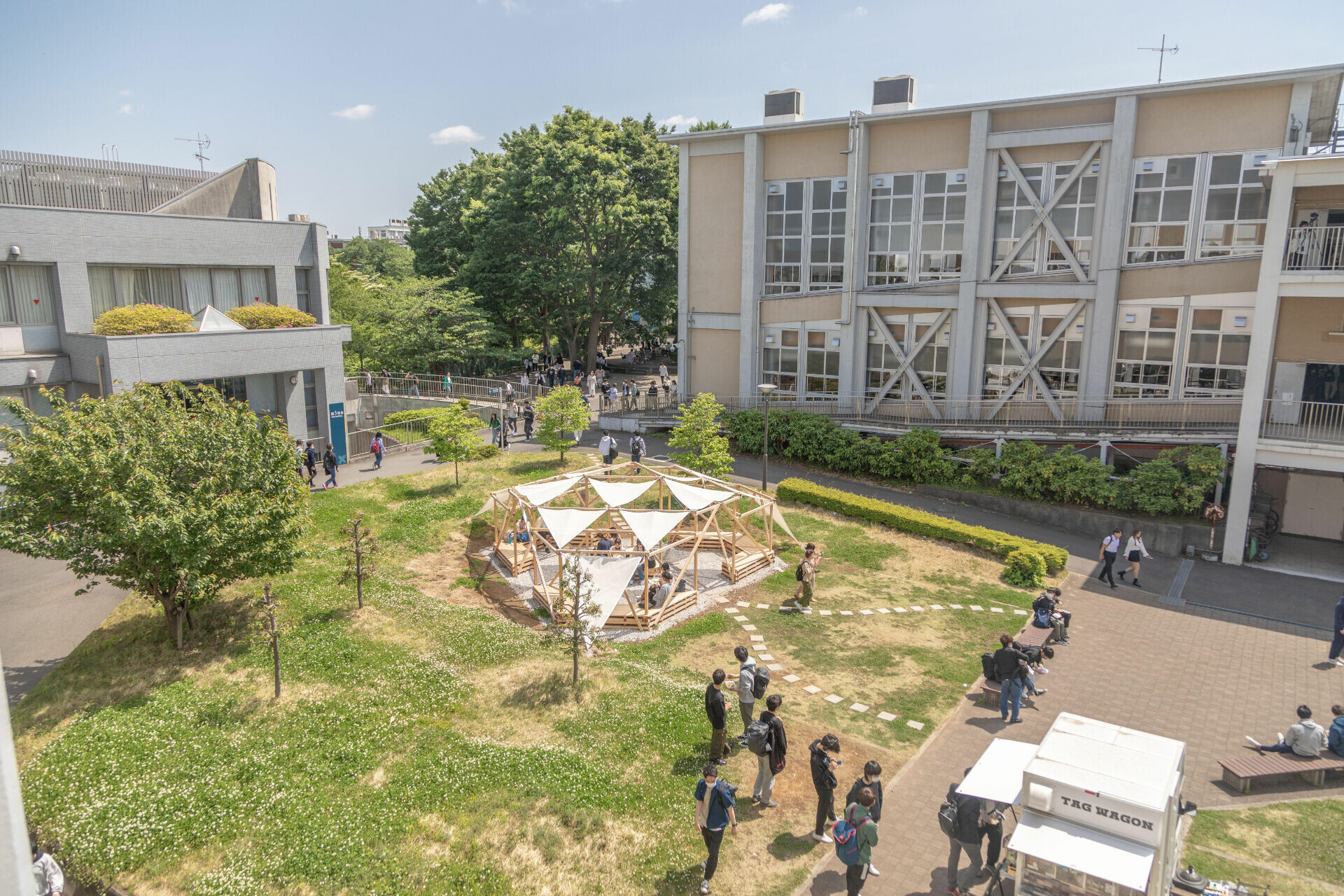
The pavilion was placed on a long-neglected site at Keio University’s Hiyoshi Campus in Yokohama. Formerly the location of the Fifth Building, demolished in 2011, the plot had remained largely underused despite sporadic landscaping. Although it sits along a busy student pathway and attracts food trucks at lunchtime, the area lacked a genuine focal point for gathering. Seeing its latent social potential, the team proposed an economical, recyclable temporary structure to reactivate the site as a node for post-pandemic campus life.
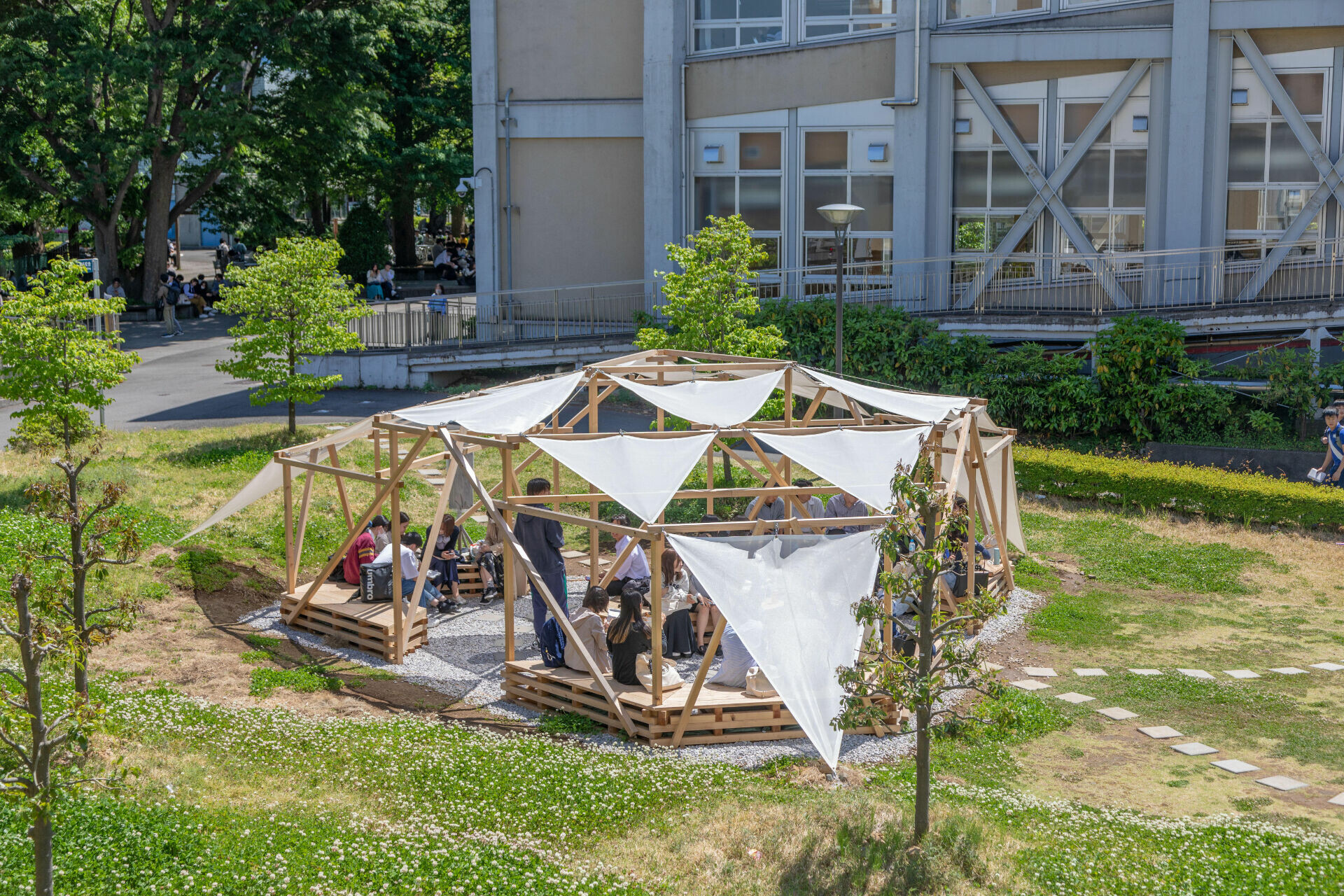
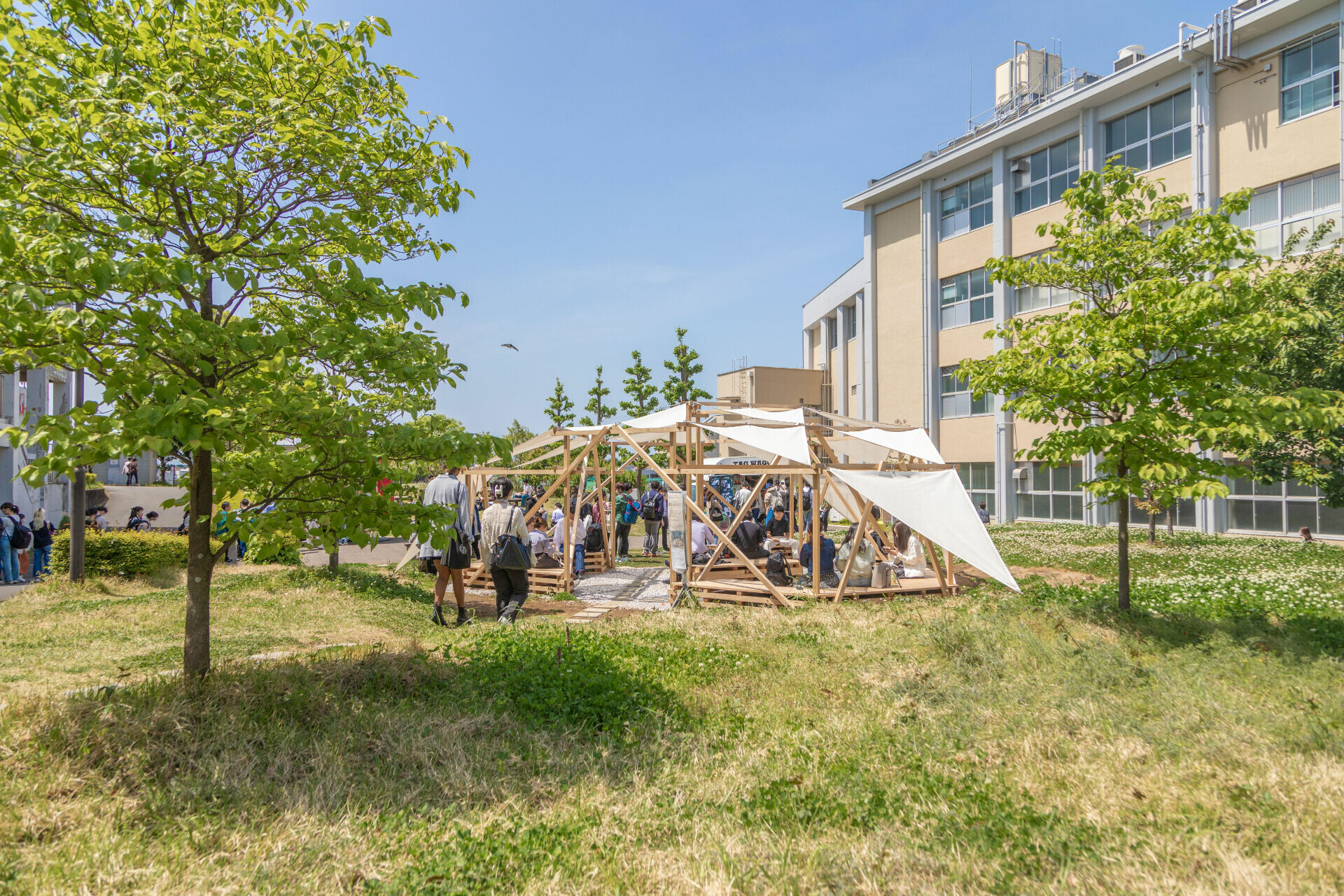
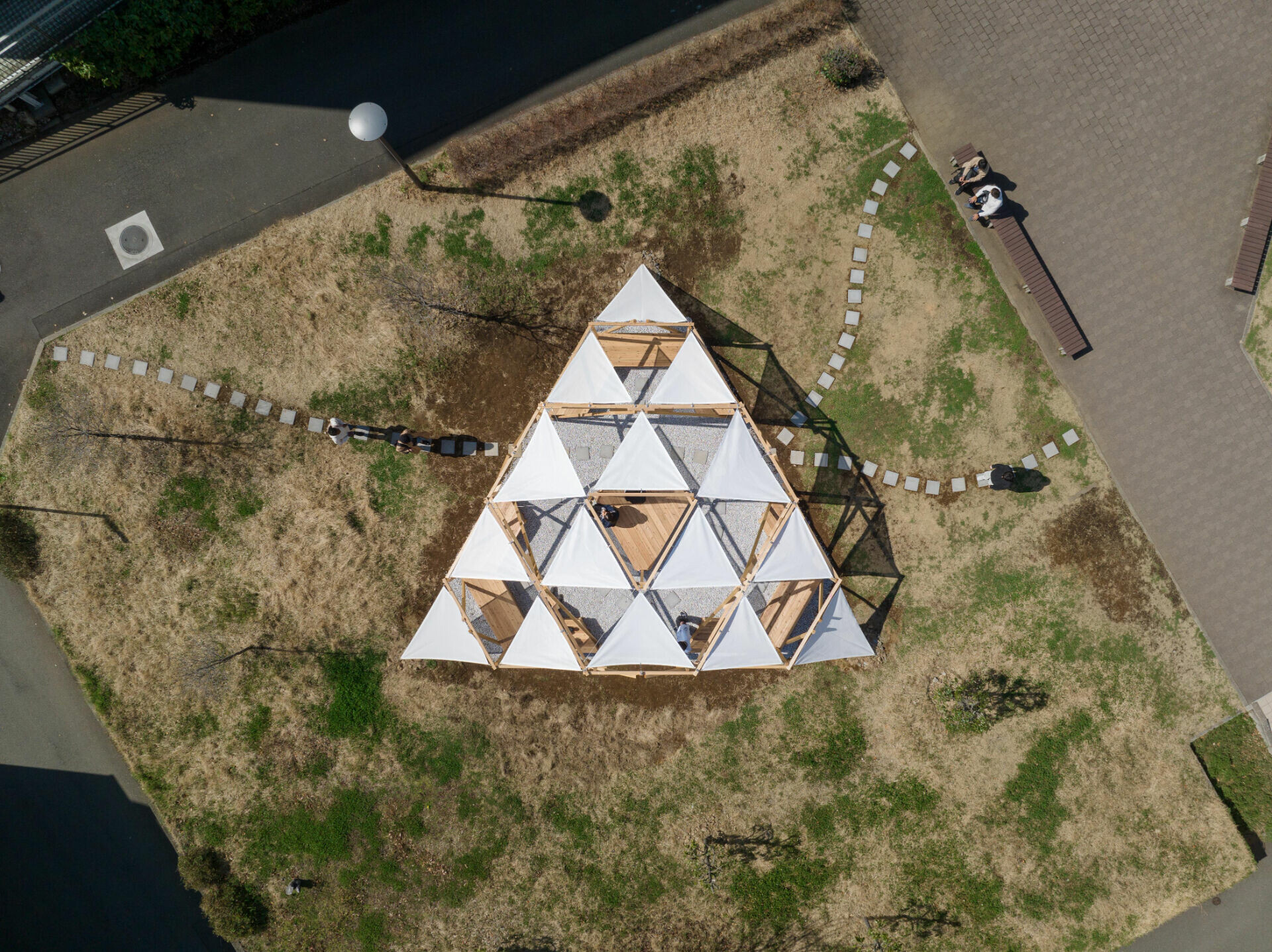
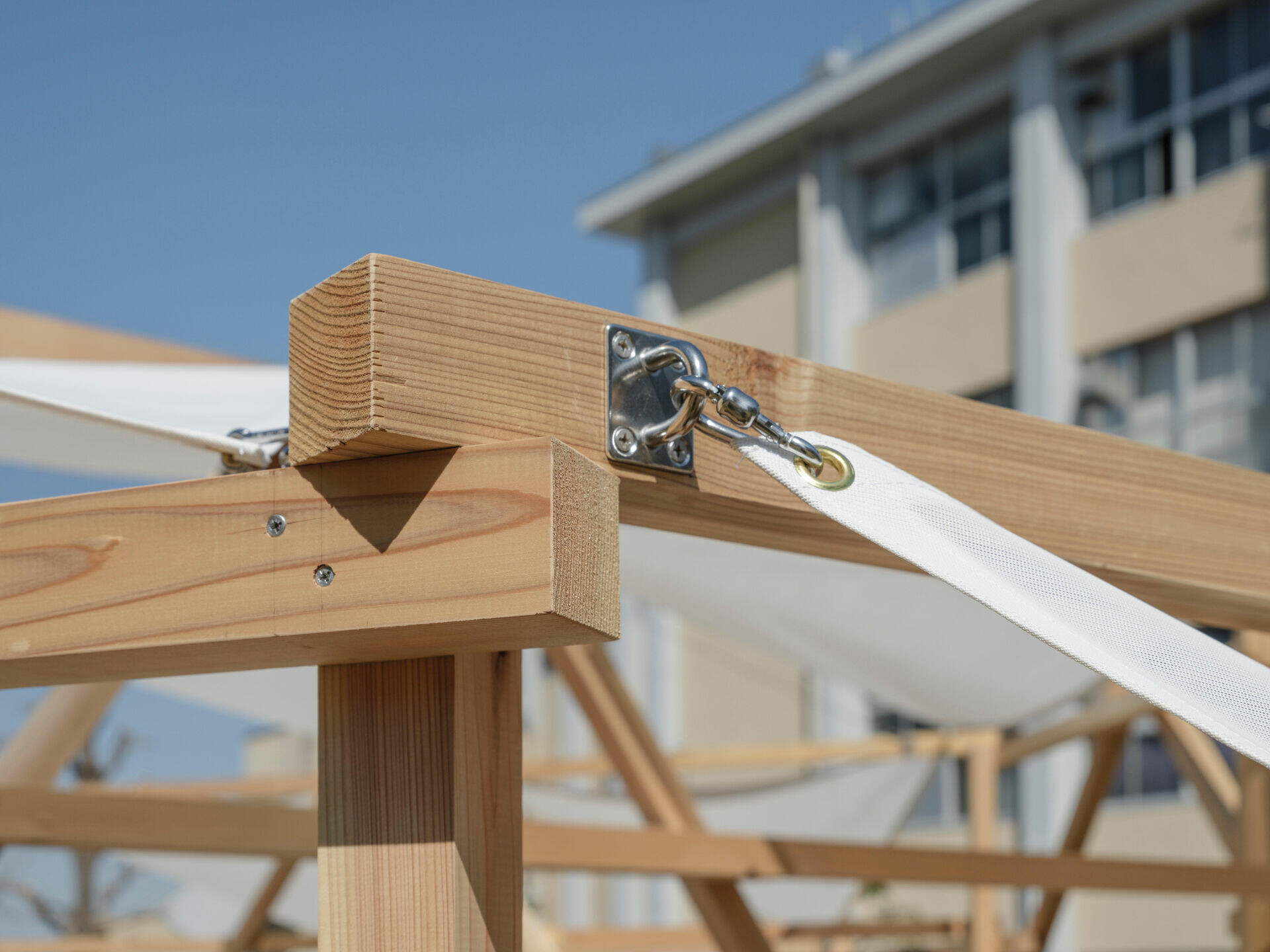
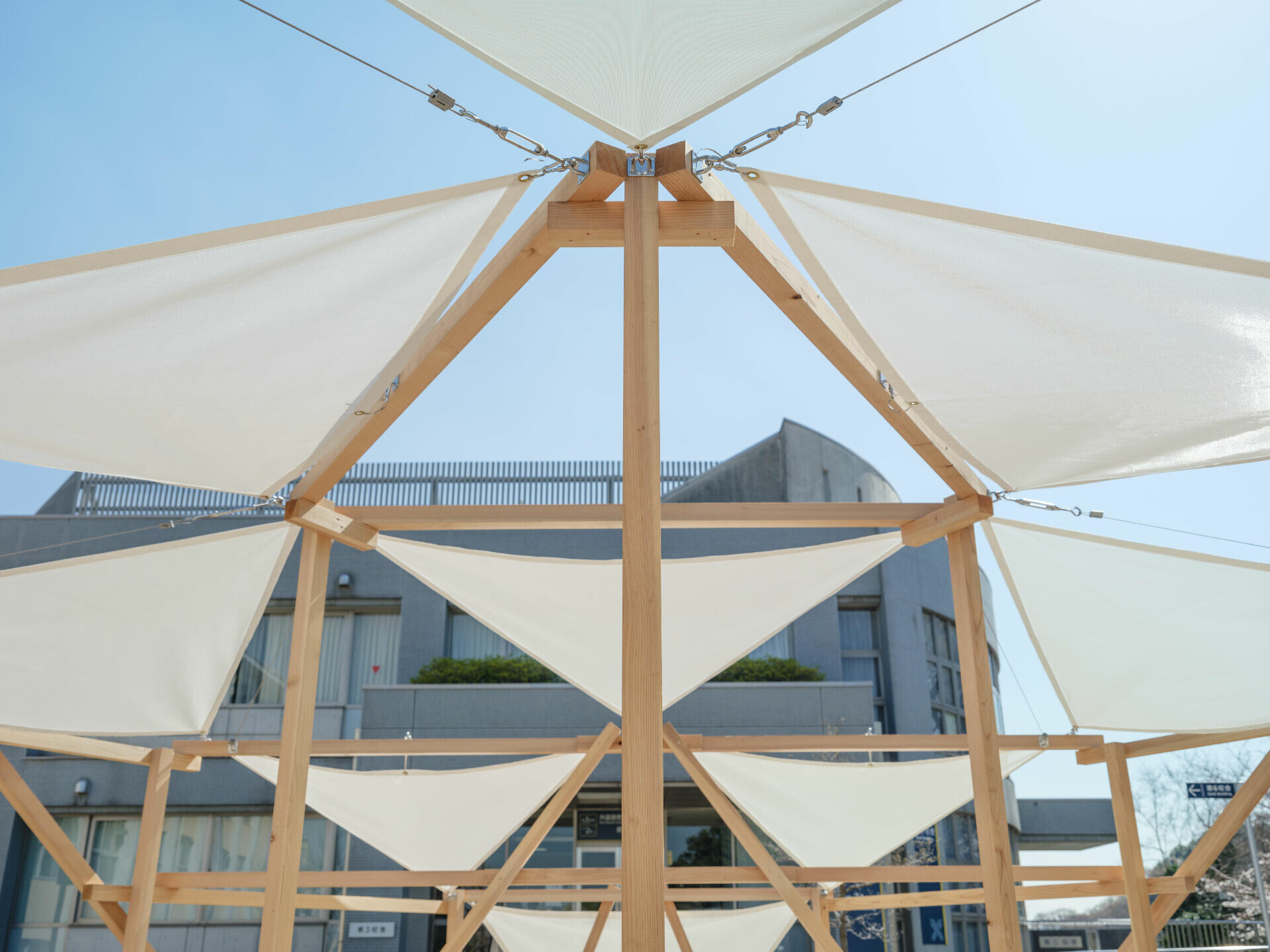
The structure is built from Japanese cedar members with 60 × 60 millimetre square sections and lengths up to 3.6 metres. All demountable connections are designed for reuse. Four benches arranged in a circular formation establish the base, symbolising openness and encouraging dialogue. Above, timber frames support a lattice of triangular mesh fabric that filters sunlight, allows airflow and mitigates wind pressure. Stability was the primary challenge for a lightweight, temporary structure in Japan’s typhoon-prone climate. To address this, pebble-filled ballast bags were concealed beneath the benches to anchor the frame securely—avoiding costly foundations and ensuring the pavilion can be dismantled with ease.
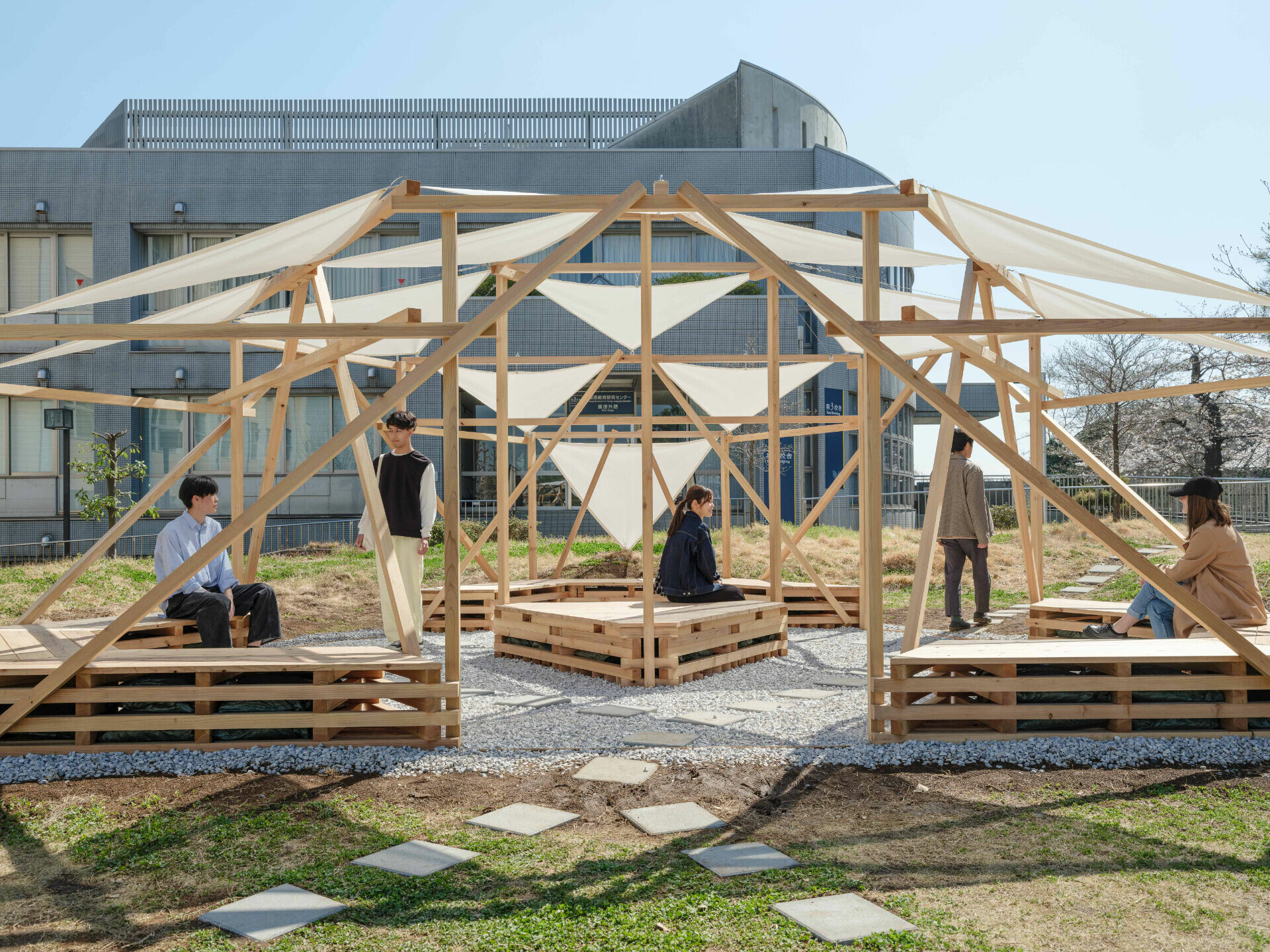
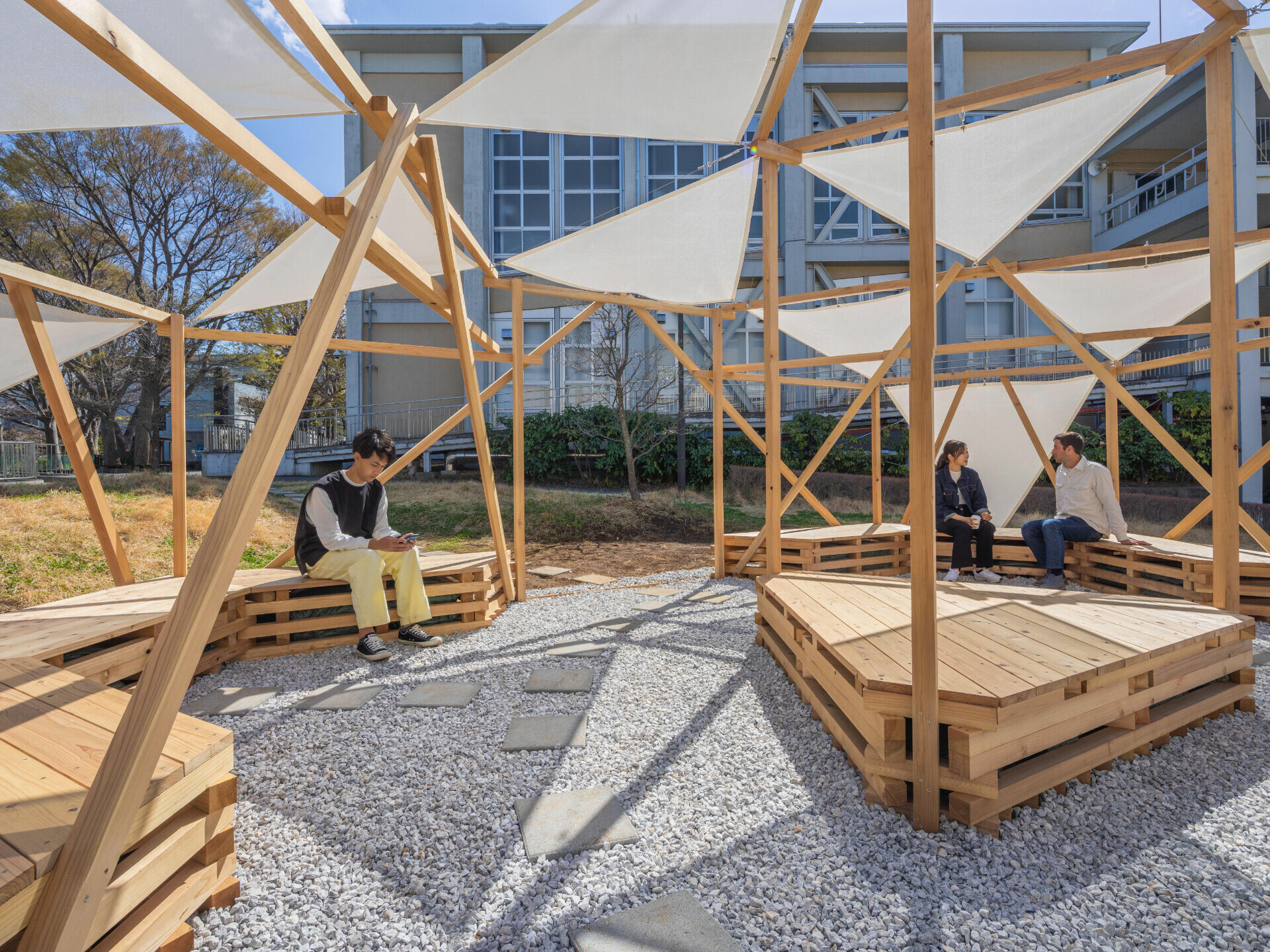
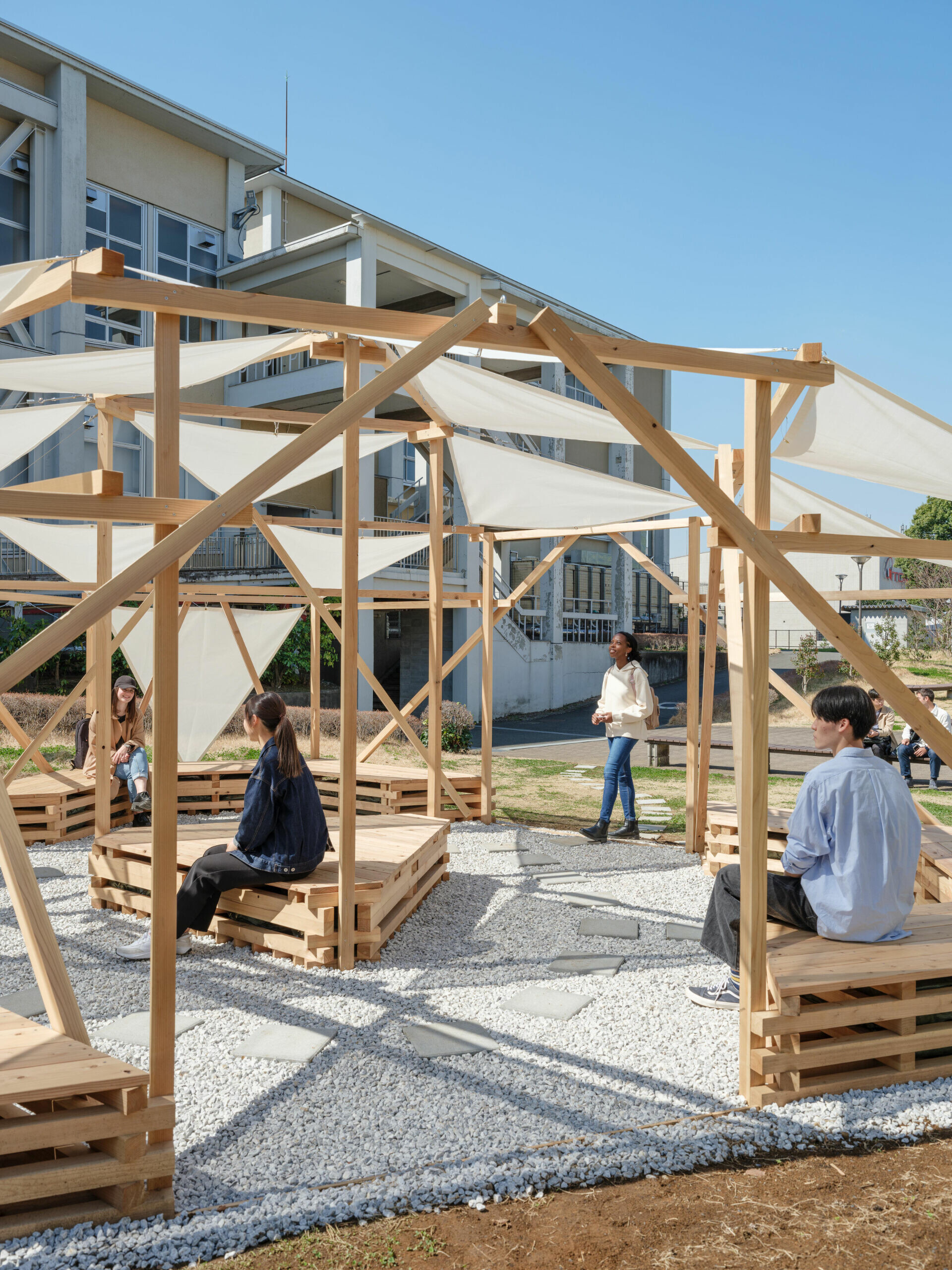
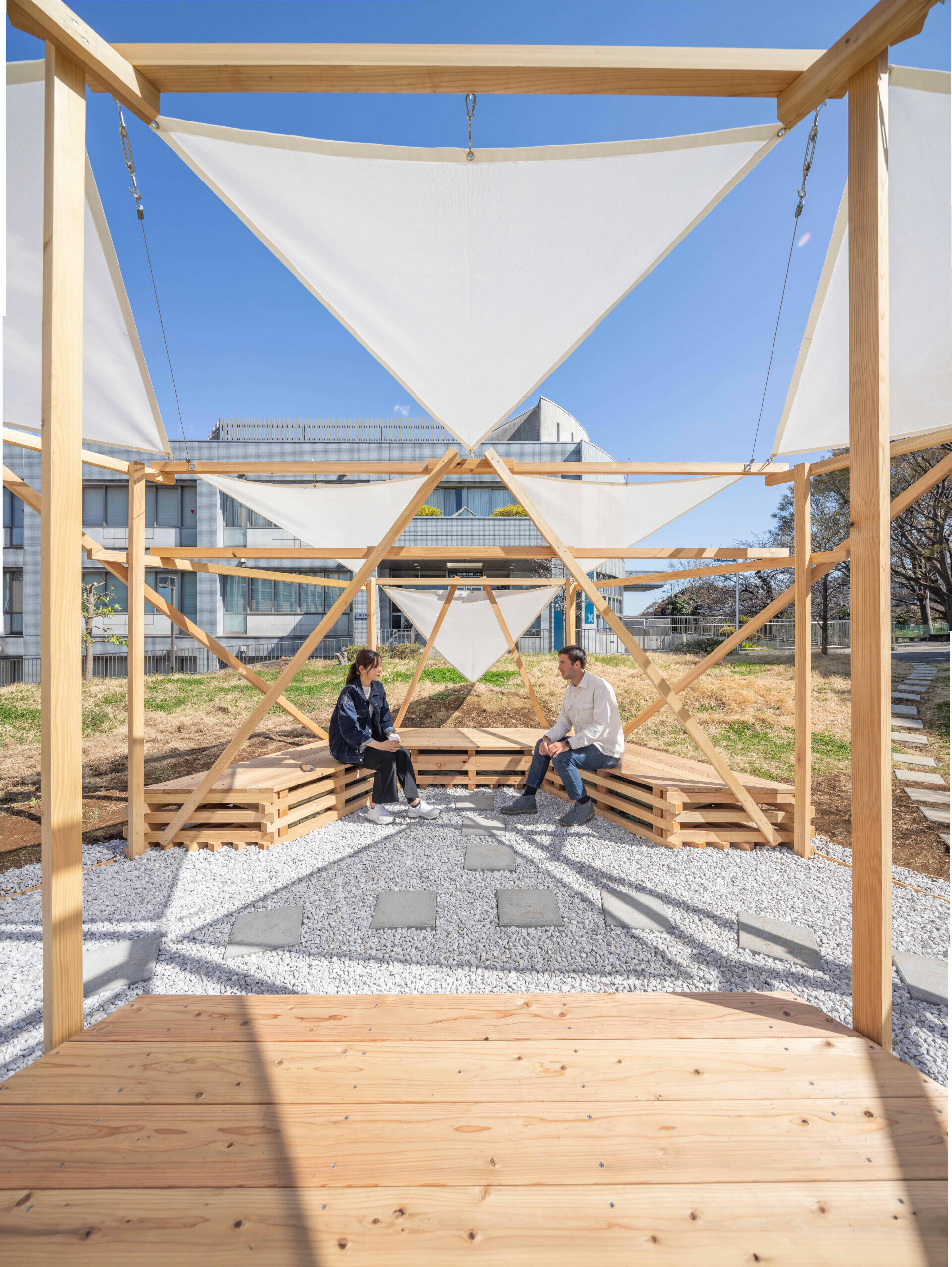
Equally significant is the process of construction. From concept and prototyping to final assembly, Hiyoshi Pavilion was built entirely by students. Over twelve days, fifteen participants worked in small groups under professional supervision. With no heavy machinery, the structure was assembled manually with basic power tools. Its triangulated frame allowed each joint to be fastened with just two screws, making the process straightforward even for those with no prior building experience. This stripped-back method kept construction efficient while turning the act of building into a shared exercise in learning and collaboration.
Principal Designer(s) | Jorge Almazán, Shunsuke Shimizu, Amata Tanahashi, Fumika Okuno
Collaborating Designers | Enshu Structural Consultants, Keio Studiolab Students
Character of Space | Resting Space (Temporary Campus Pavilion)
Materials | Japanese Cedar (Sugi, 60×60 mm square section, max length 3.6 m), Triangular Mesh Fabrics, Recyclable Metal Joints, Pebble Bags (Foundation Weights)
Location | Keio University Hiyoshi Campus, Yokohama, Japan
Gross Floor Area | 43.40 m²
Completion Year | 2023