House in Seichodai 2
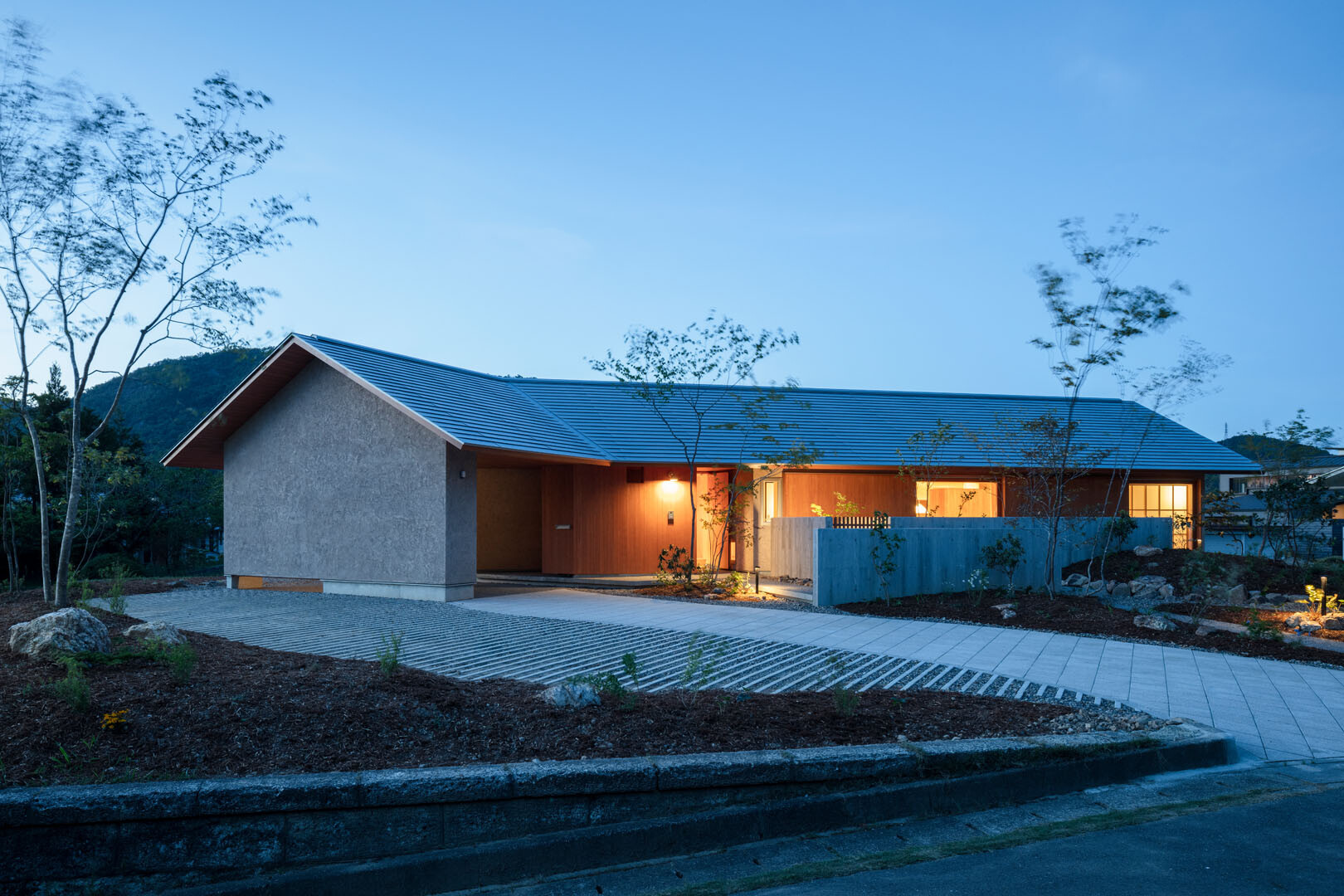
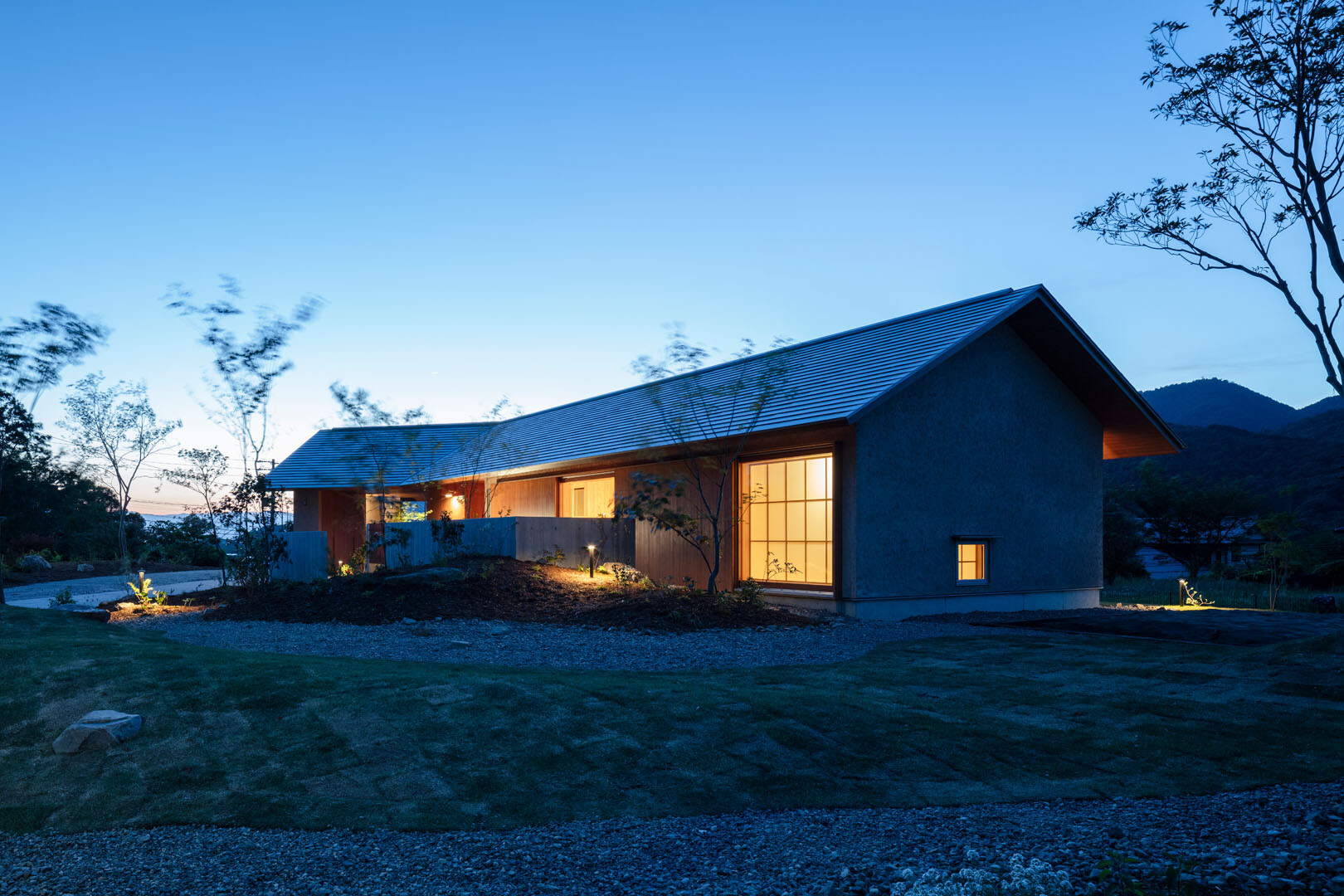
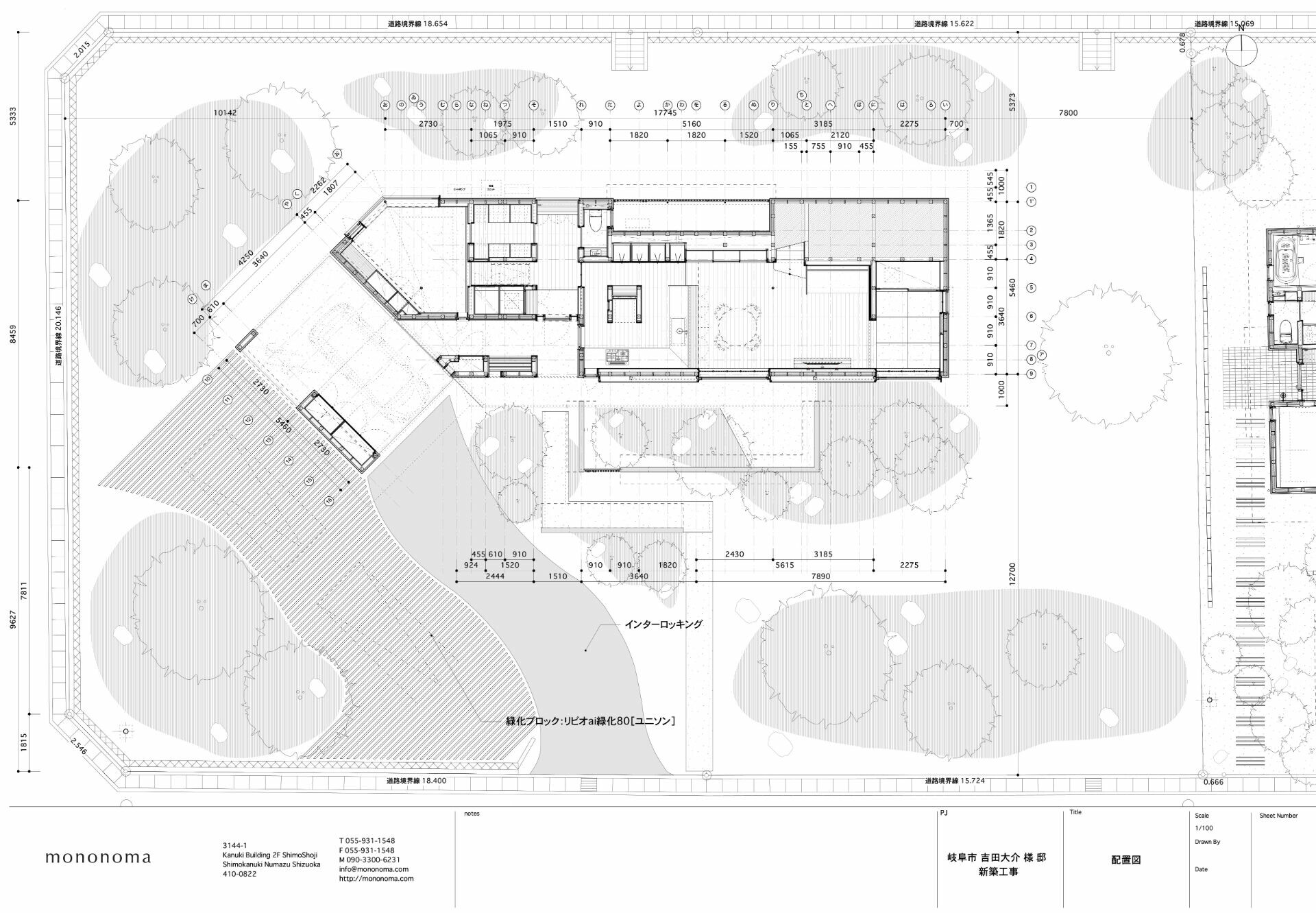
House in Seichodai 2 is an embodiment of a philosophy rooted in time and nature—where life unfolds slowly, where the passage of light reveals itself gently across space, and where architecture becomes an extension of inner calm. Rather than asserting a sculptural presence, the house follows the contours of the ridgeline, unfolding in a quiet, L-shaped formation—like the course of a mountain stream or the delicate outlines of drifting clouds. It lies gently between sky and earth, a place where time seems to slow.
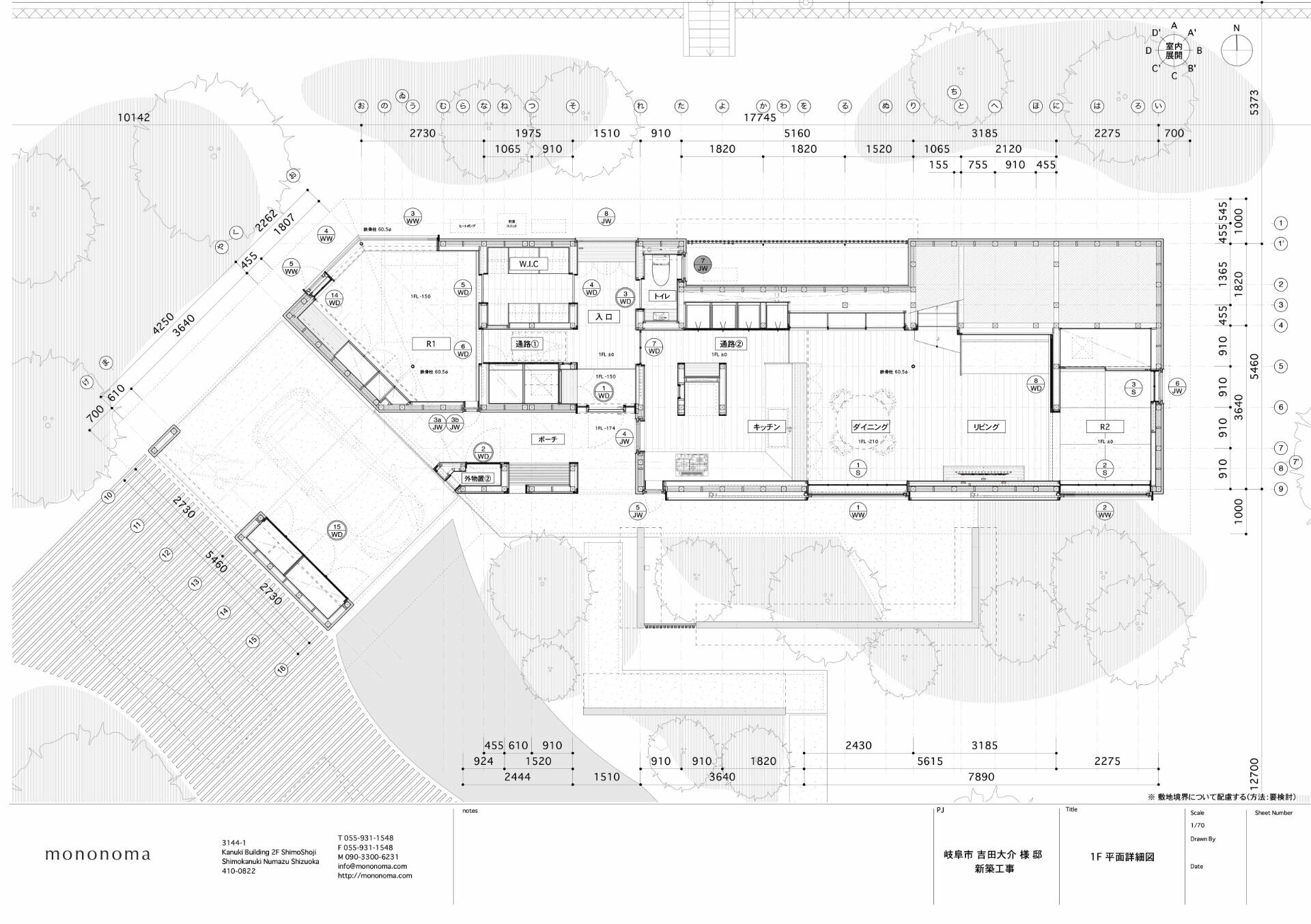
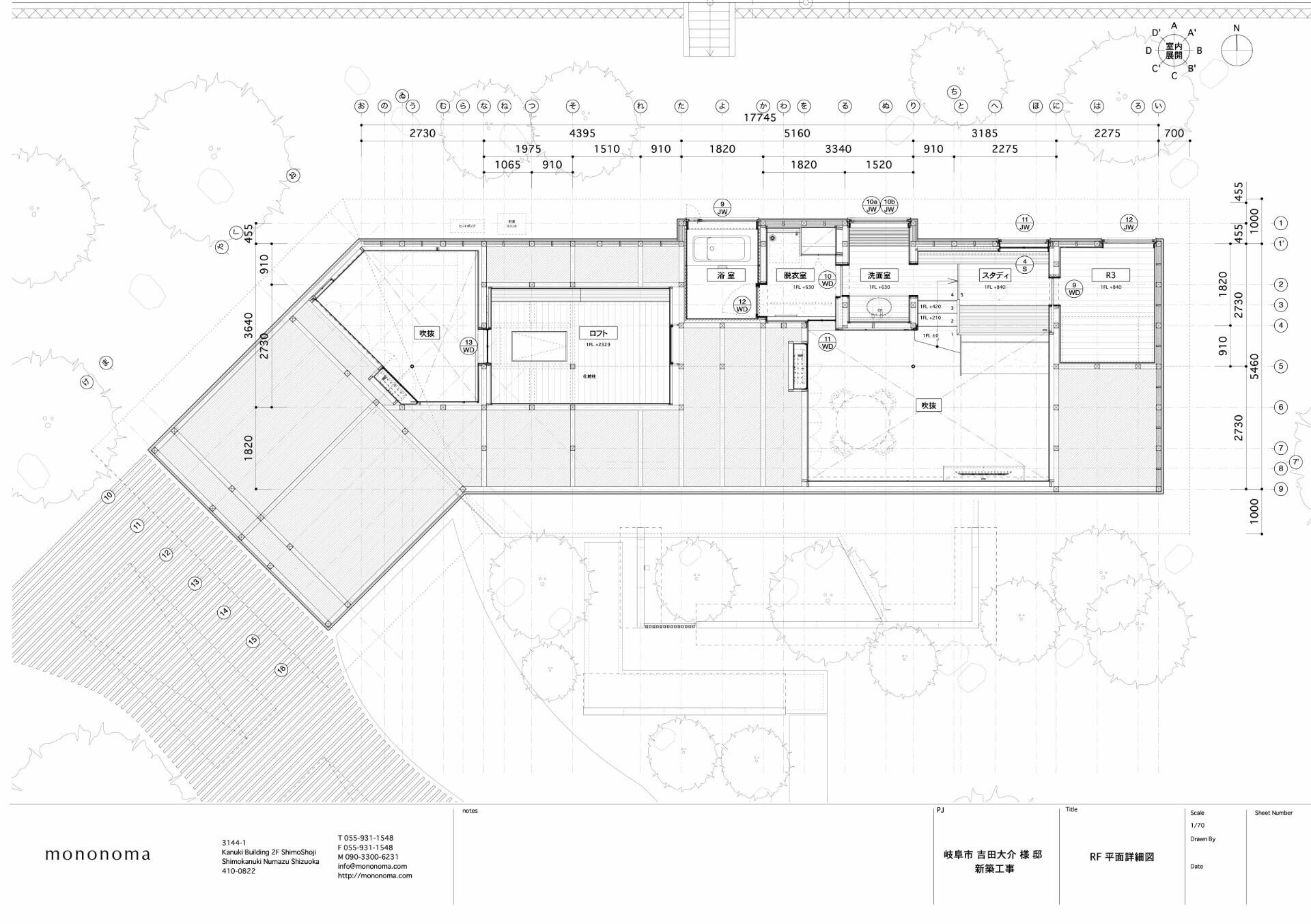
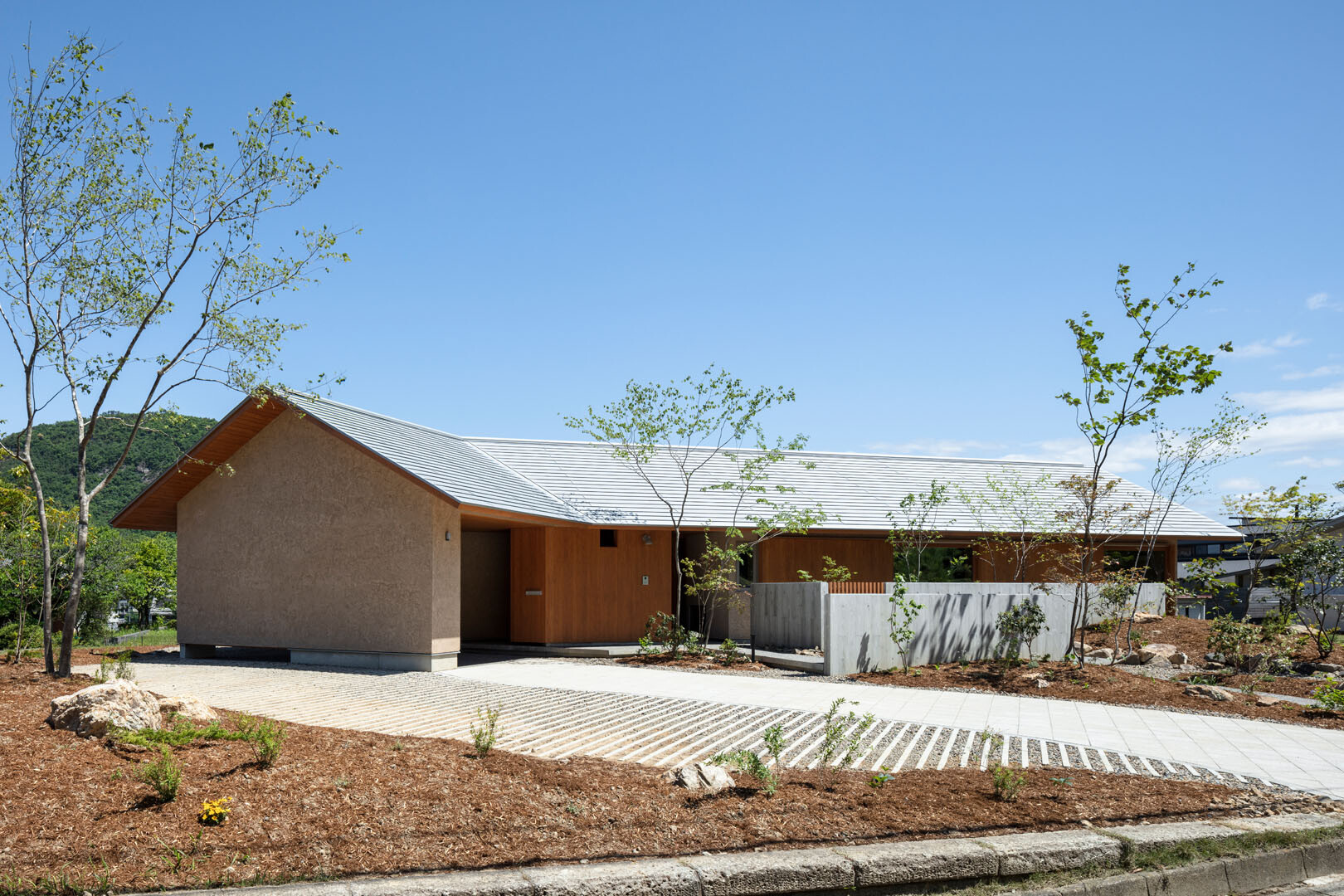
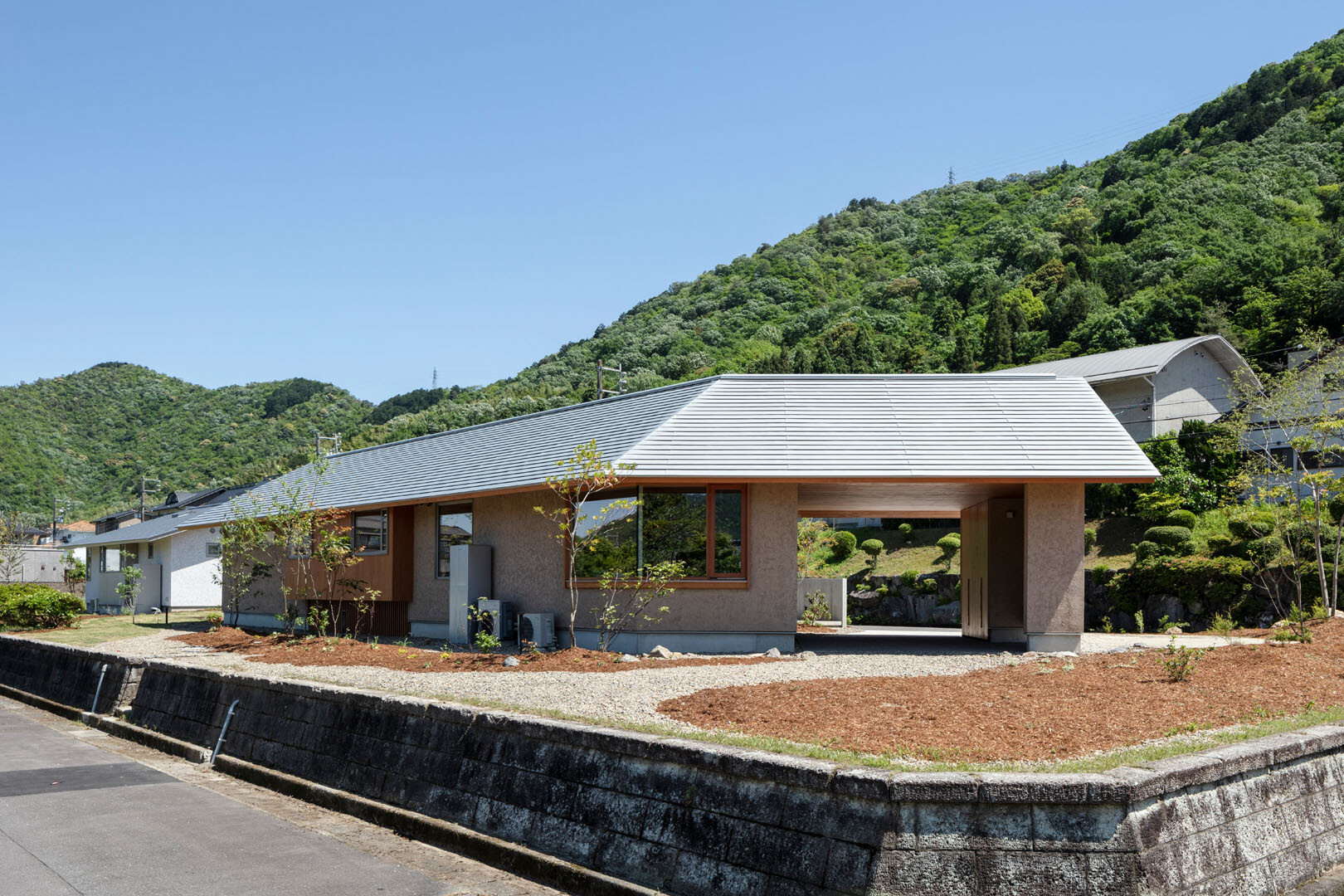
Situated on a broad hillside plot in Gifu City, Gifu Prefecture, the site was formed through mountain excavation some forty years ago. From this elevated ground, one can gaze out across the Nagara River and its surrounding ranges. In response to the natural environment, the architects envisioned a residence that is at once open and private, modern yet quietly traditional. Rather than imposing a structure onto the 838-square-meter site, the house appears to grow from it, as if organically rooted in place. Its low-profile gabled roof extends horizontally, embracing the surrounding stillness while allowing light and shadow to animate the interiors throughout the day. The boundaries of the site are left intentionally indistinct, merging softly with the neighboring property. A shared garden and cohesive planting strategy blur the line between house and landscape, allowing the adjacent home to read as part of the scenery. Together, they help shape a streetscape that feels less like a suburban subdivision and more like a quiet, forest-fringed village.
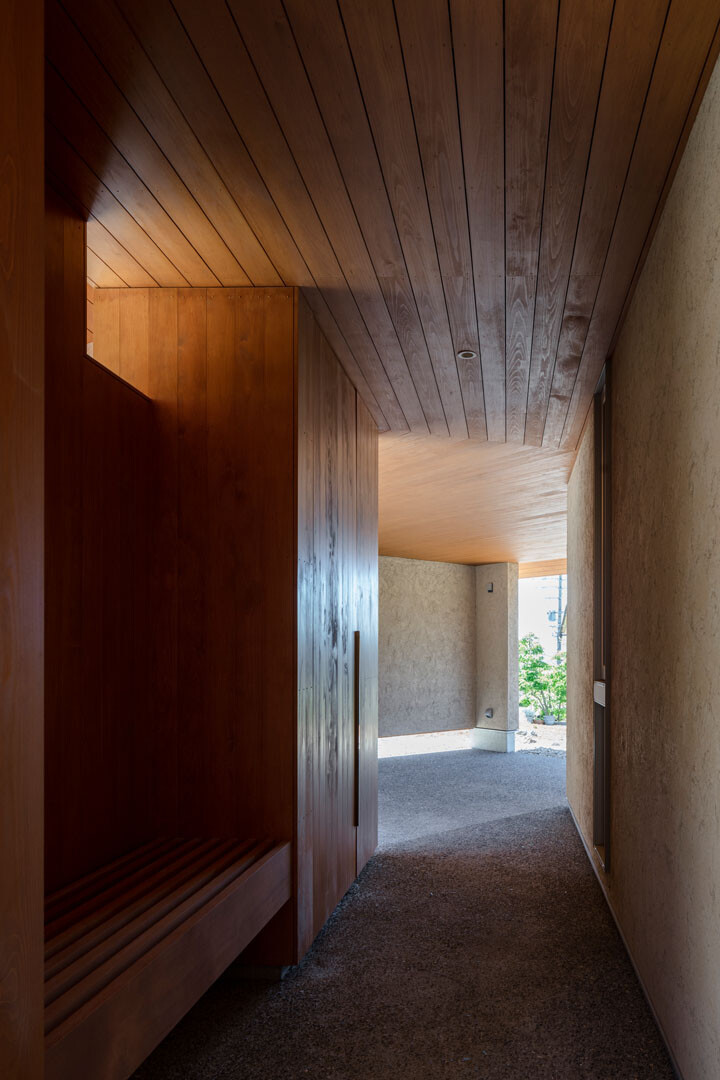
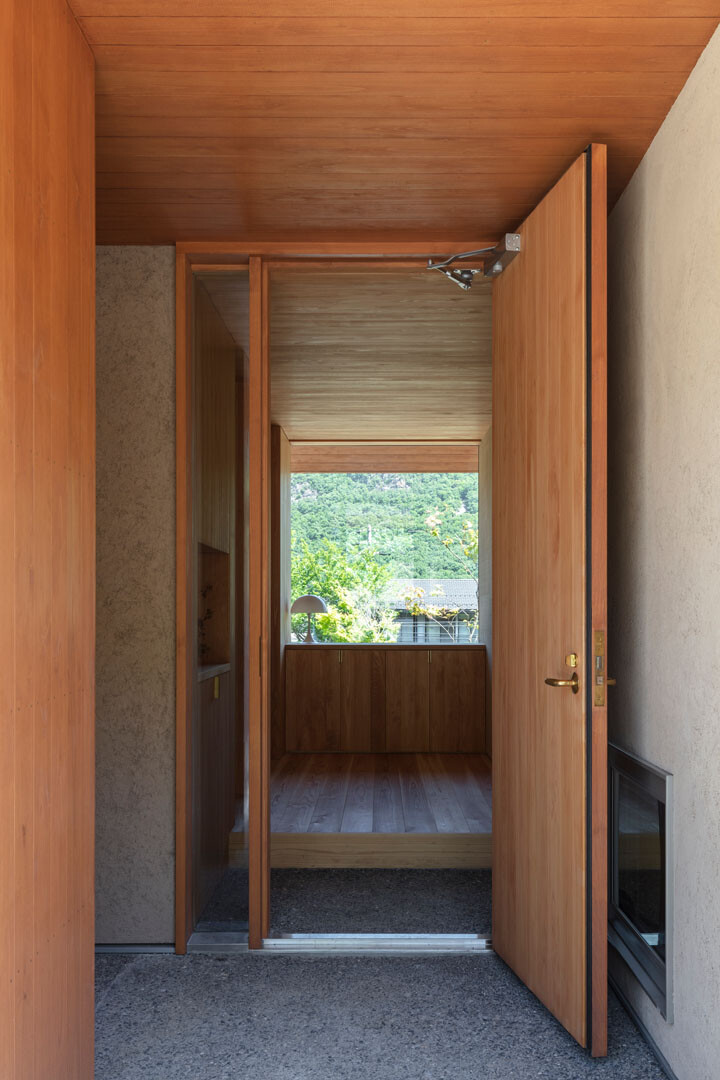
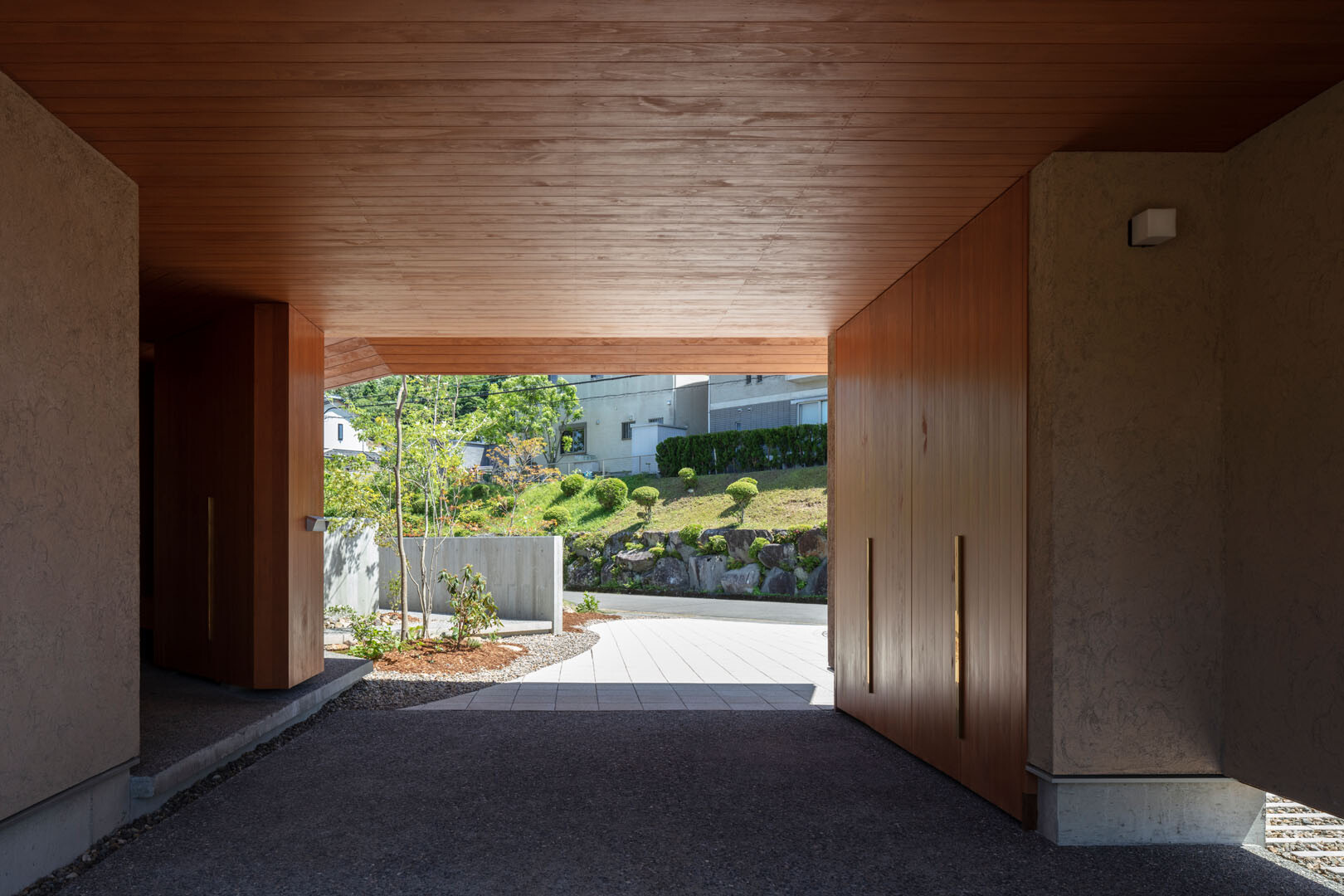
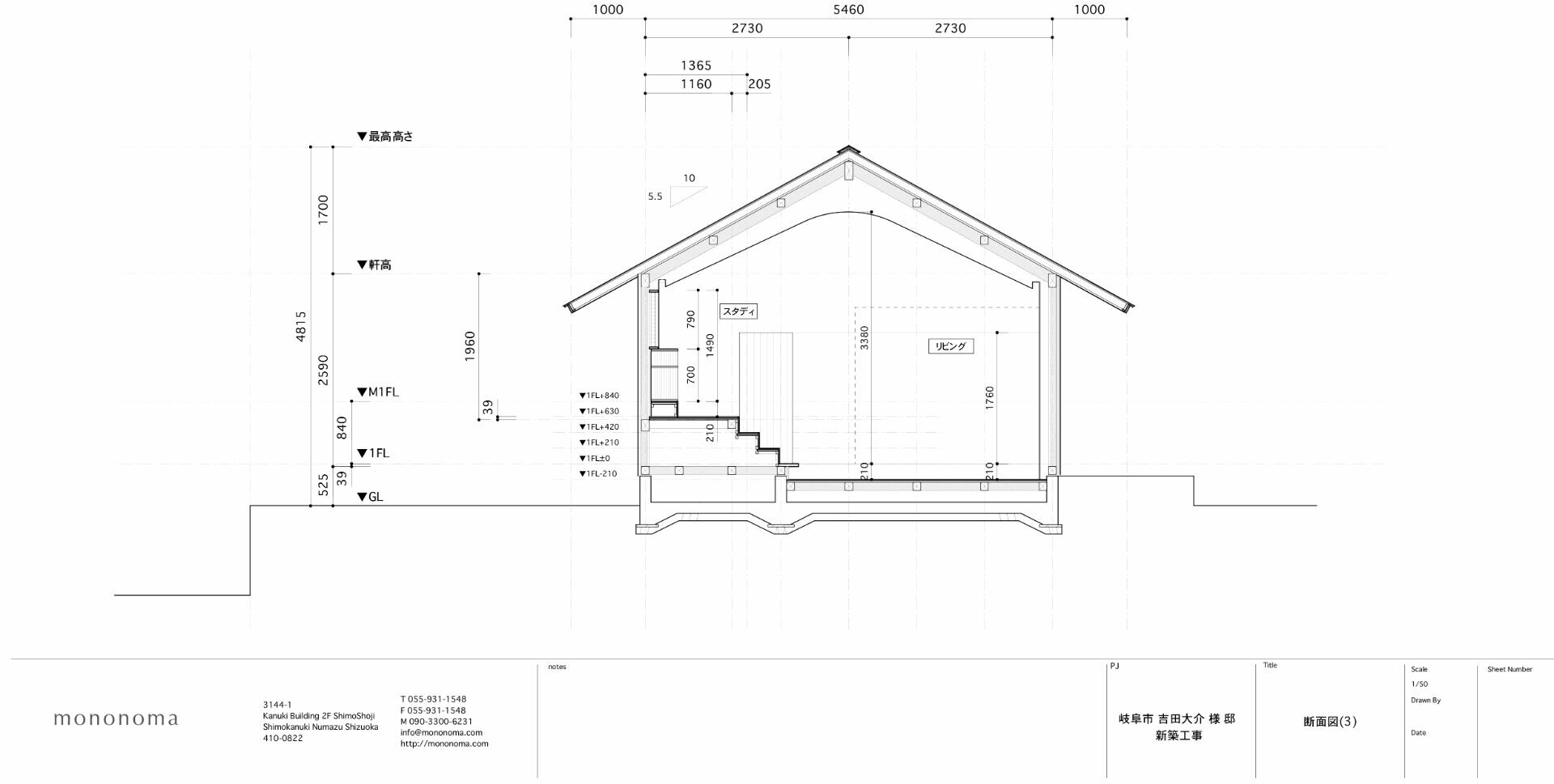
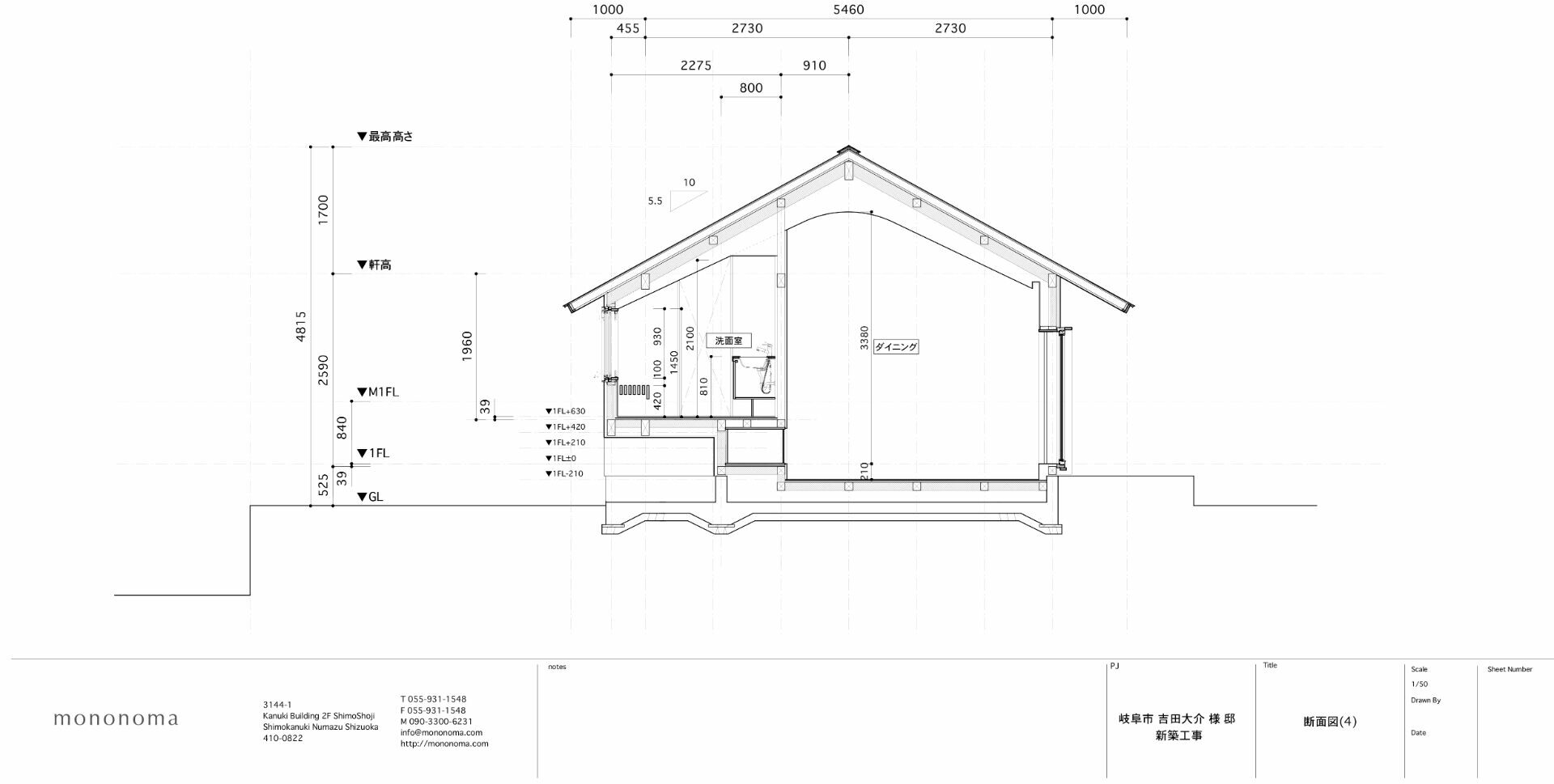
Though single-storey and bordered by roads on three sides, the house avoids monotony through subtle changes in elevation. The living and dining areas are sunken to create a sense of retreat and seclusion, while a raised open-plan bathroom—elevated by half a level—offers expansive views of the surroundings while shielding itself from view. These strategic shifts introduce gentle spatial rhythms, not only managing sightlines but also guiding movement within. The dogleg-shaped floor plan creates loosely defined zones, including a pentagonal bedroom framed by large-format windows that draw the outside landscape inward, enhancing the sense of openness.
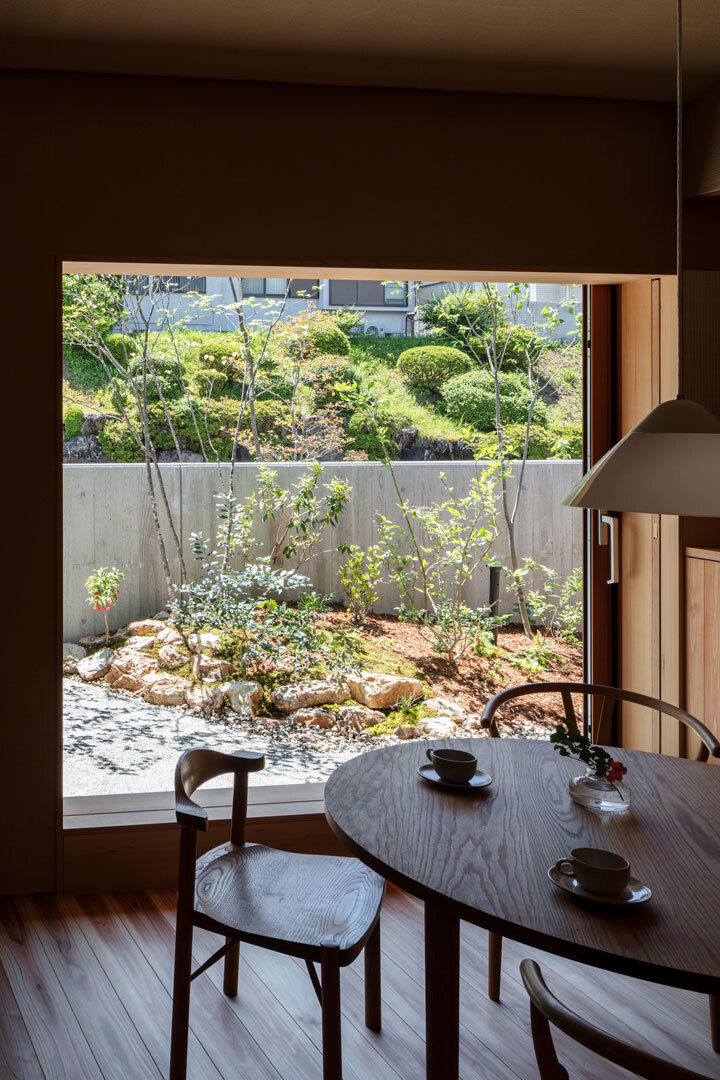
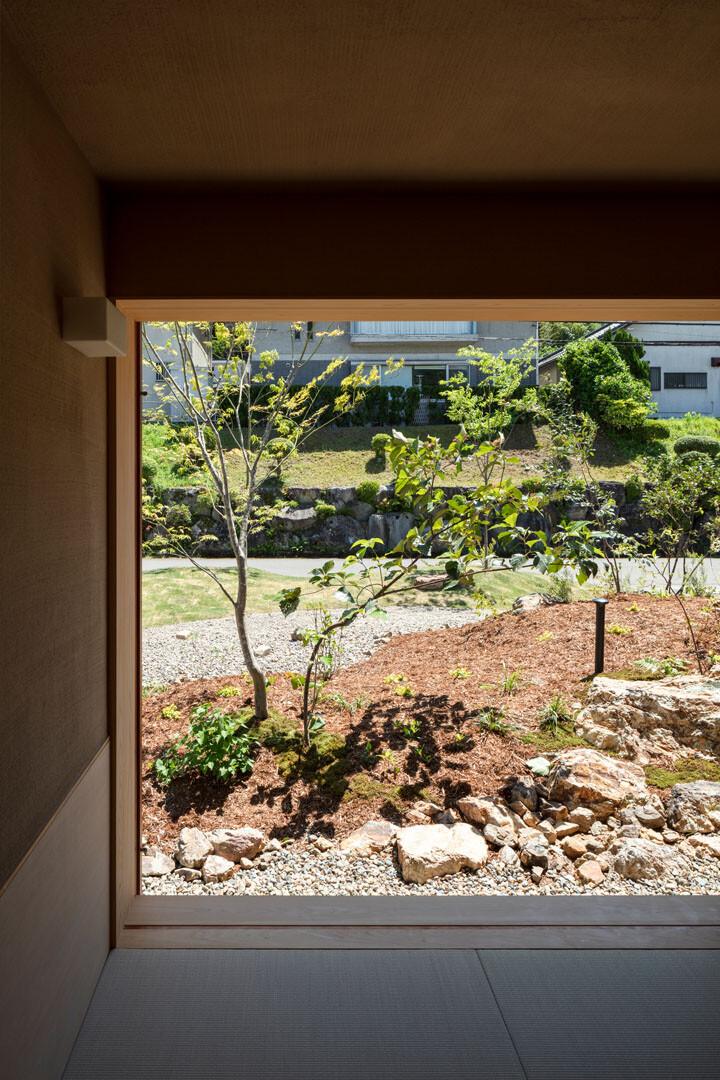
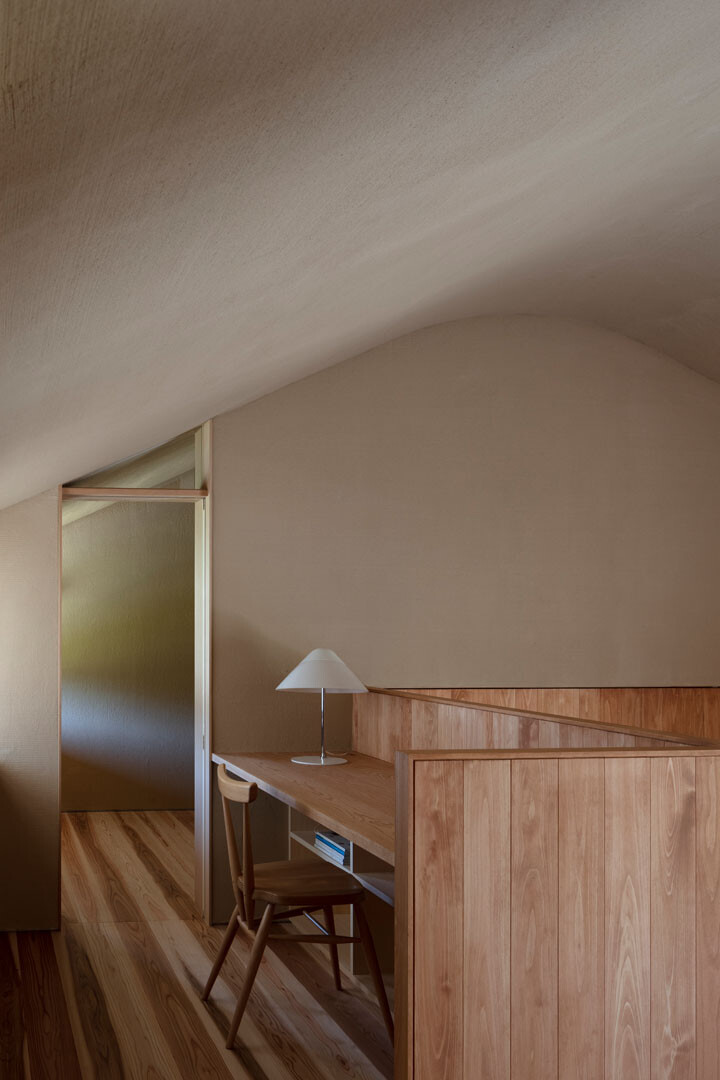
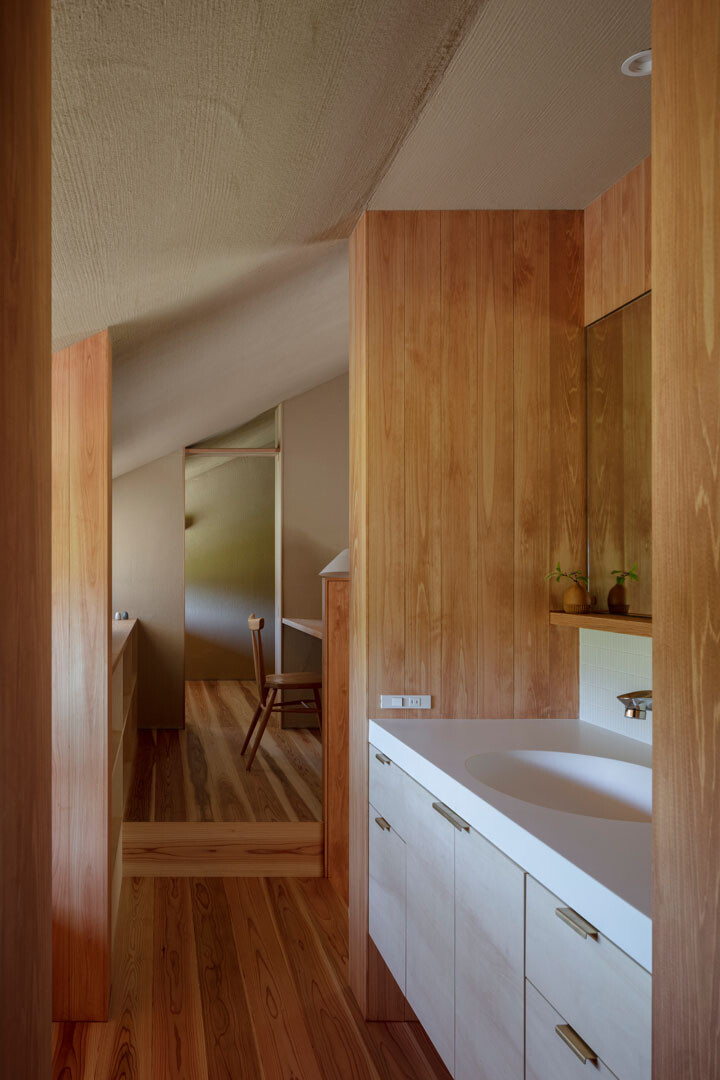
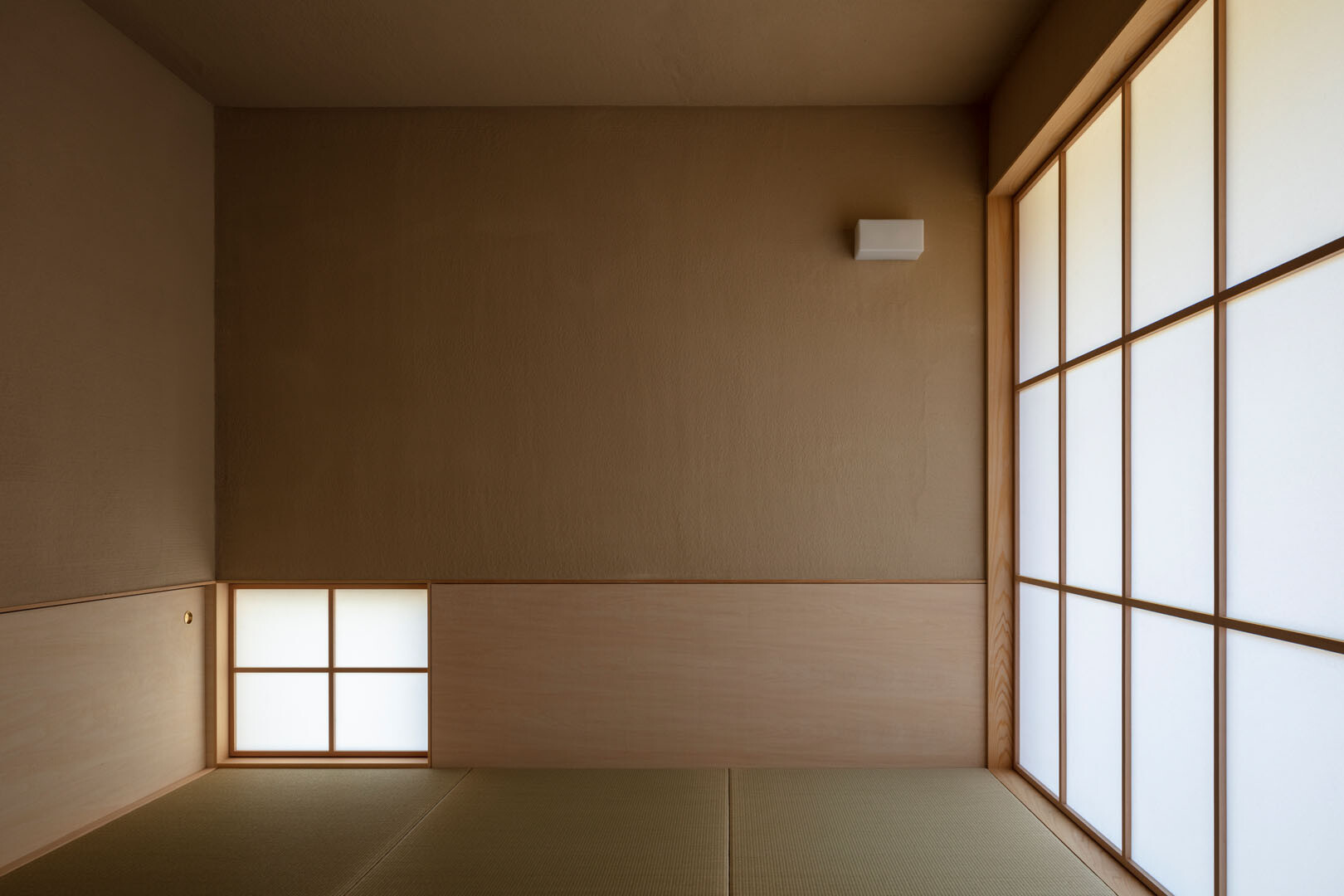
For the interior walls, the design employs a mineral-based plaster made with volcanic ash, chosen for its warm texture and excellent humidity control. Its soft, low-saturation tone acts as a subtle buffer between the interior and the natural surroundings, fostering a comfortable living environment. The quiet angularity of House in Seichodai 2 reflects a sensitivity toward both form and feeling. It rejects superficial display in favor of inner clarity—allowing space to speak through restraint. As the house ages and seasons change, it absorbs the traces of life and weather, evolving not as an object, but as a companion to those who dwell within.
Principal Designers | Kyohei Honda, Shuji Honda
Participant | NomuraKensetsu.inc
Character of Space | Residence
Building Area | 122.43 m²
Site Area | 838.44 m²
Structure | Wooden
Materials | Wood, Concrete
Location | Gifu, Japan