WABISABI
  • Projects
    • Worldwide
    • Interiors
    • Features
  • Contemporary
    • Exhibitions
  • Record
  • Lifestyle
  • City Explore
  • News
  • Issue
  • Account
  • Search
  • Language
Mobile nav

House in Shikenbaru


志堅原的家
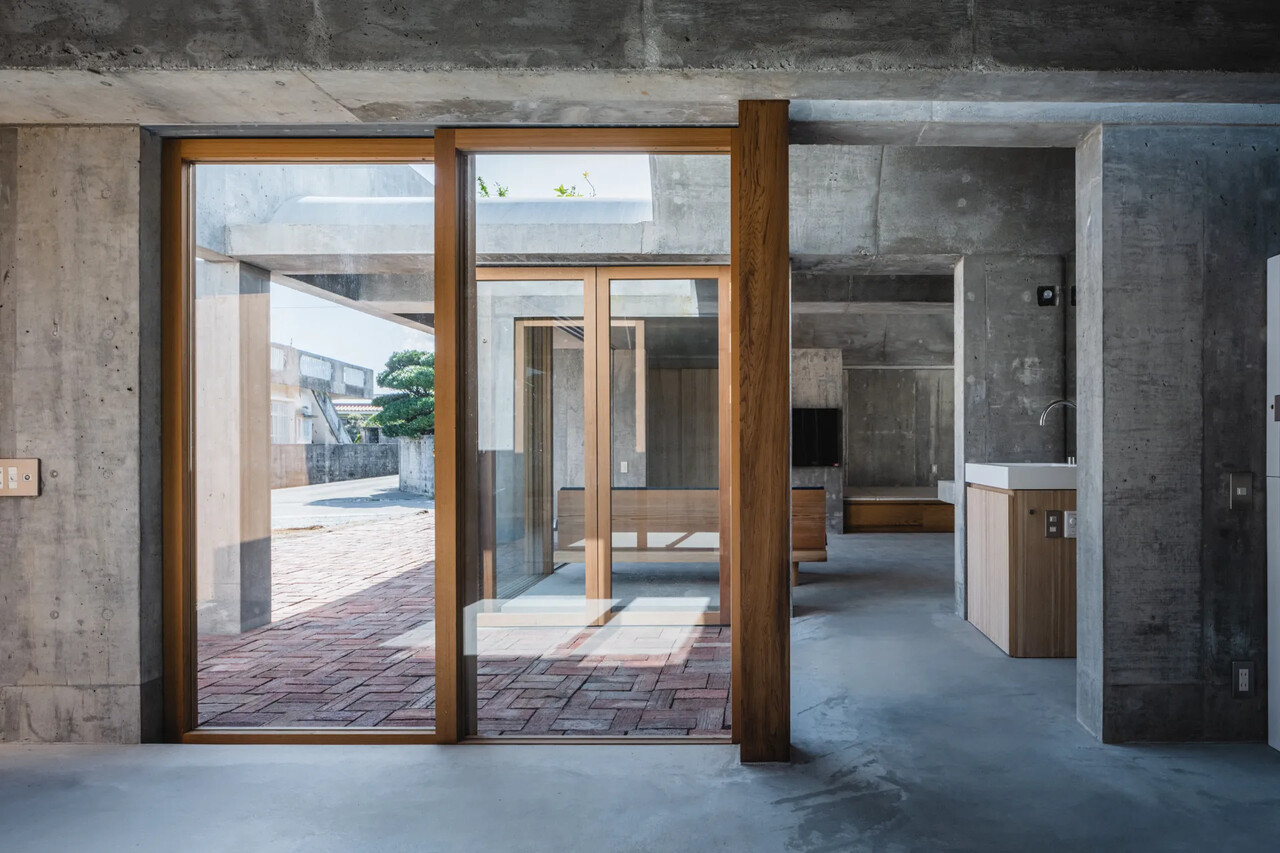
The house is a residence for a couple and their four children, built in a village near the sea in southern Okinawa. Outside the village are fields, and in Okinawa, where there is no snow or frost, vegetables that would be grown in spring or summer in Honshu can be harvested throughout the year. The owner of the house runs a farm here, producing okra, green beans, papaya, and other vegetables. His work is done from before sunrise until around 10:00 a.m., harvesting and working outside. During the daytime when the sun is strong, he selects what he has harvested in the shaded work area, and in the evening when the sun goes down, he works outside again, thus adapting to the environment.


這棟房子是一對夫婦與四個孩子所居住的空間,位於冲繩南部靠海的村莊。村莊外是一片農田,在冲繩這個沒有雪也沒有霜的地方,春季或夏季種植的蔬菜可以全年收成。屋主在此經營農場,種植秋葵、豆類、木瓜以及其他蔬菜。他的工作從日出前開始直到上午約10點,主要是在室外進行收割事務。白天陽光強烈的時候,他會到有遮蔽的工作區揀選收割的耕作物,日落會再次回到室外工作,這樣的工作時程安排因而適應了環境。
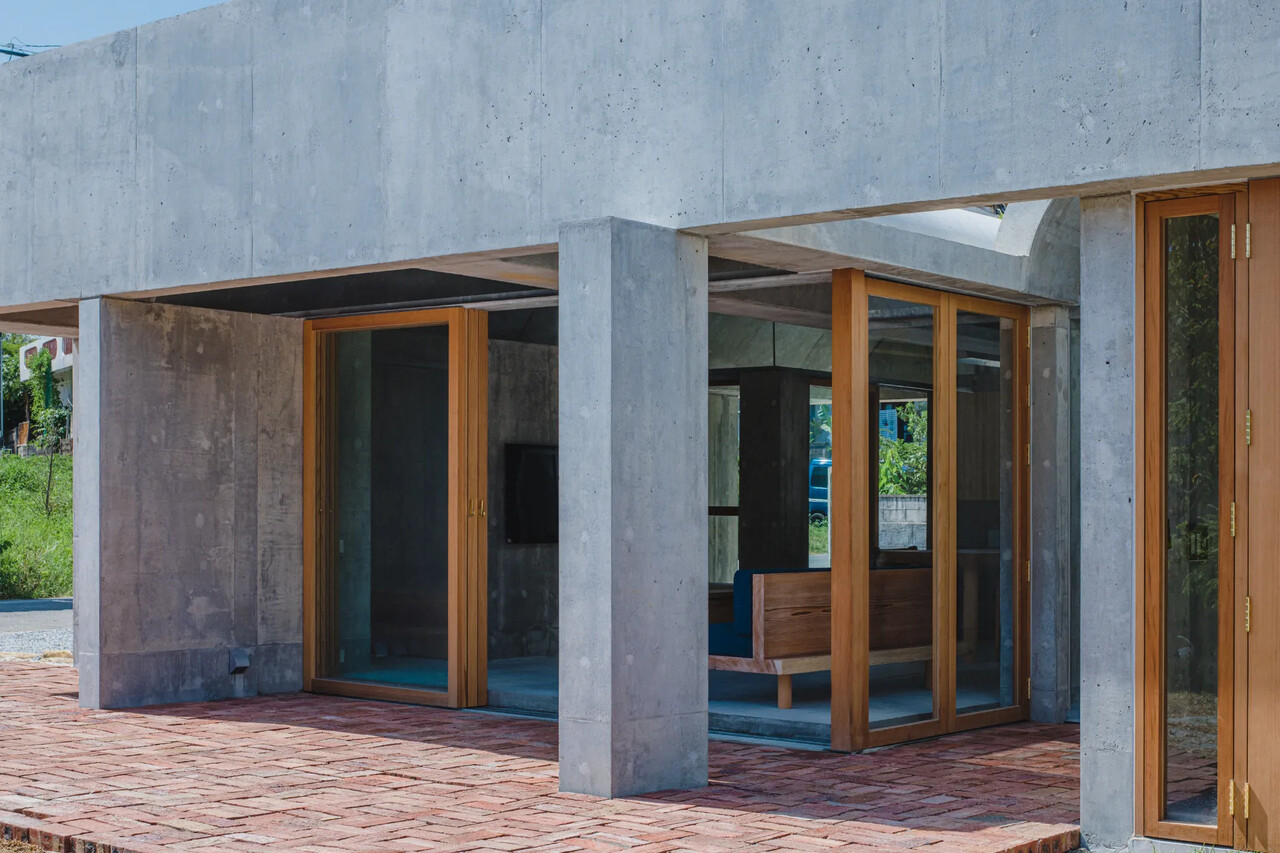
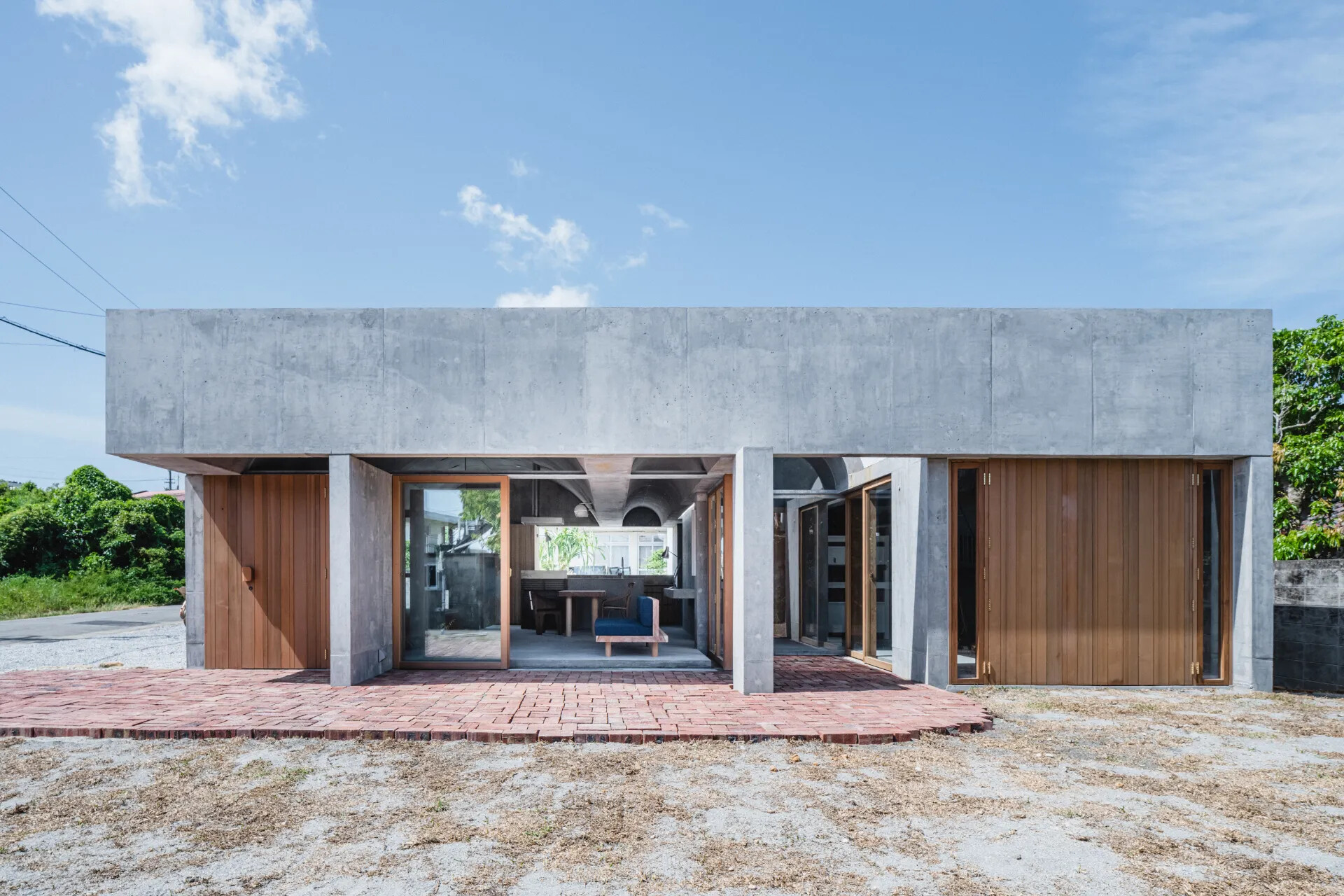


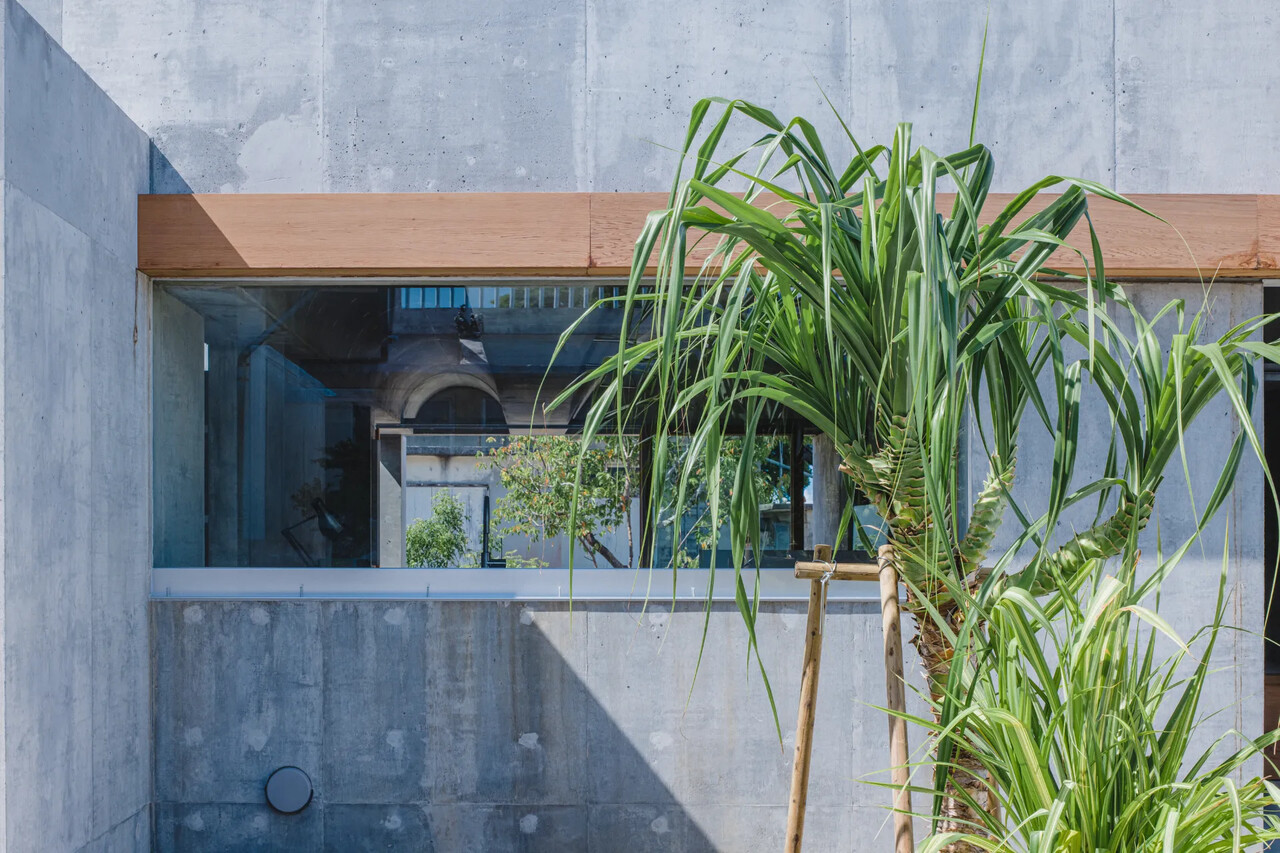
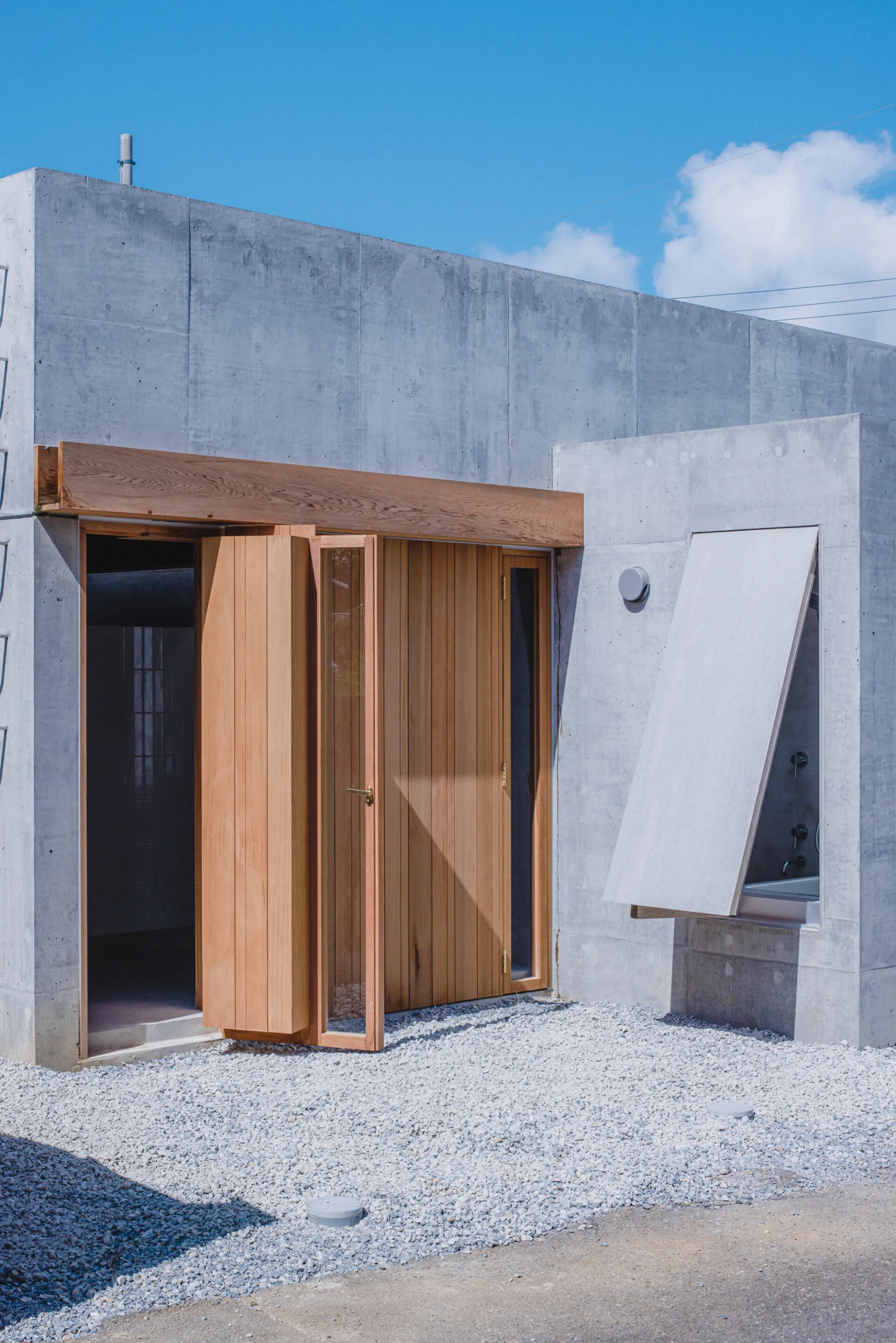
This house also needed to be a place for farm work, and to be in harmony with the local activities and the Okinawan environment. The layout and volume were decided based on the surrounding environment and the direction of the wind in the area, and since there was plenty of room on the site, it was decided to build a one-story house. The site was originally surrounded by a block wall, but this was removed so that tractors and cultivators could easily enter the site from any direction, and a vacant lot was created around the building to provide a place to store tools necessary for farming and to allow for continuity with indoor work.


這棟房子兼具農場工作的功能,並且與當地活動及冲繩的環境和諧共存。該建築及平面佈局是建立在周圍環境和當地風向而定的,由於基地寬敞,因此決定建造一層樓的房子。最初這個基地的四周被圍牆圍繞,但為了讓拖拉機具及耕耘機能夠便利進出,因此拆除了圍牆,並在房子一旁規劃了一塊空地,成為存放農業相關工具的場所,同時便利了室內的工作,使得內外作業更有連貫性的進行。
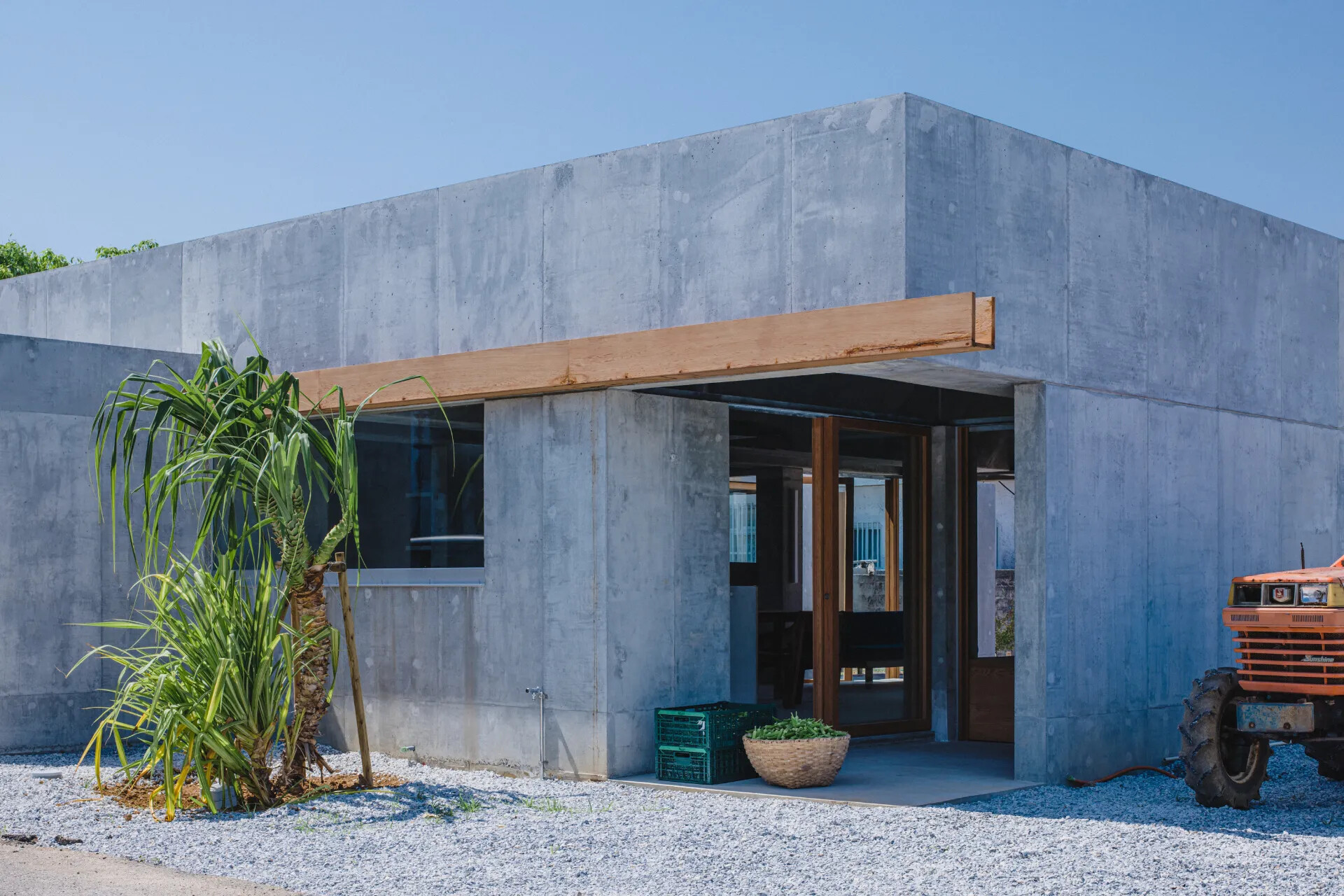
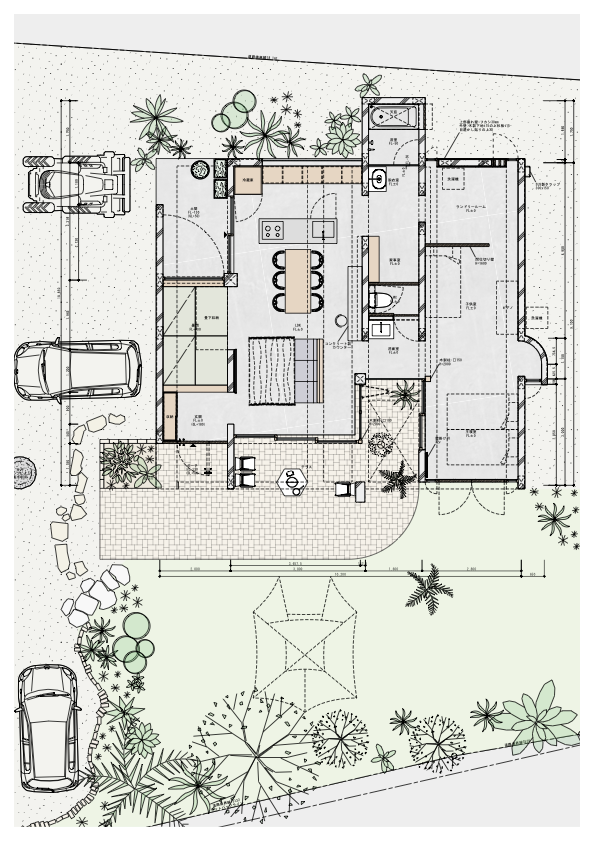
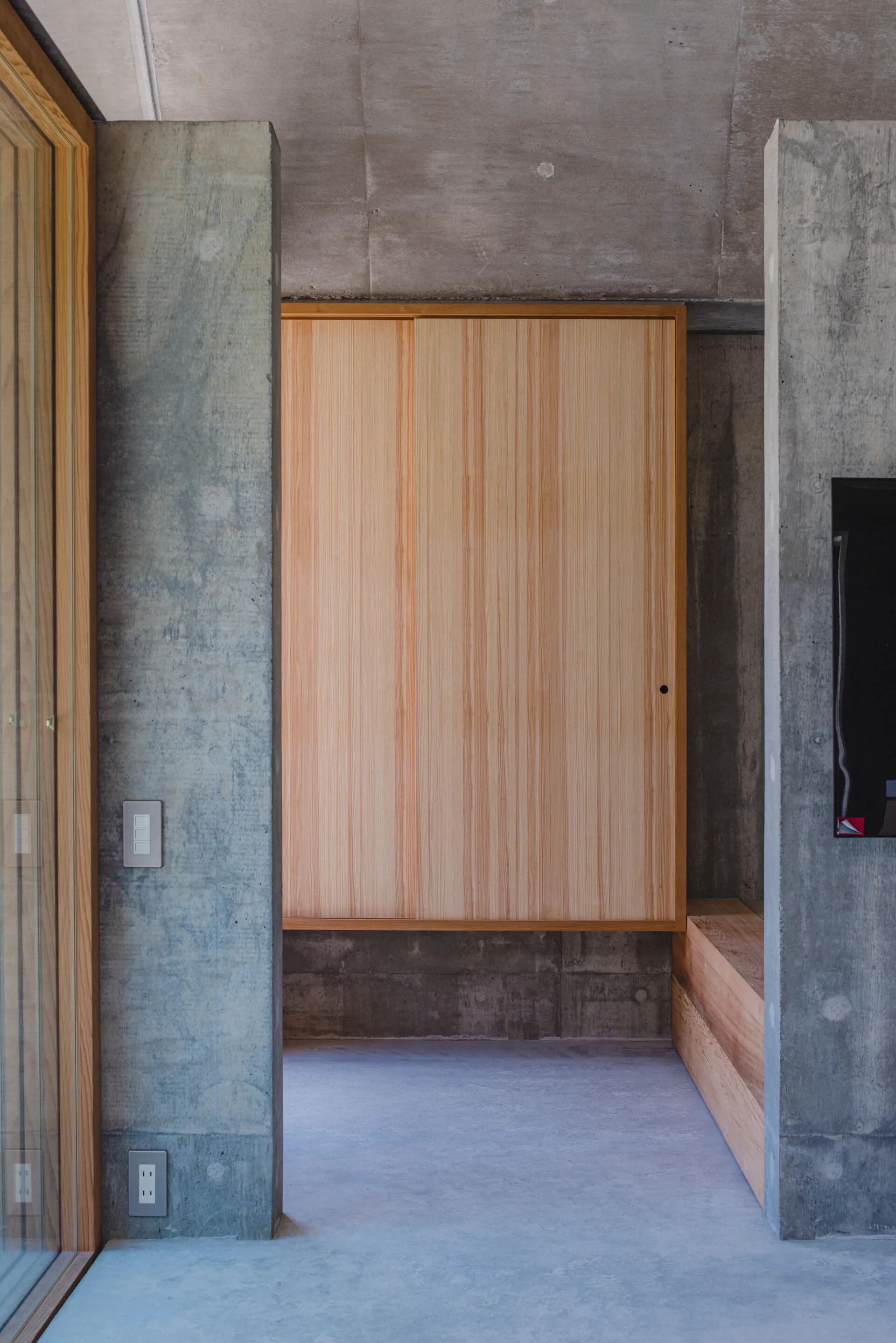
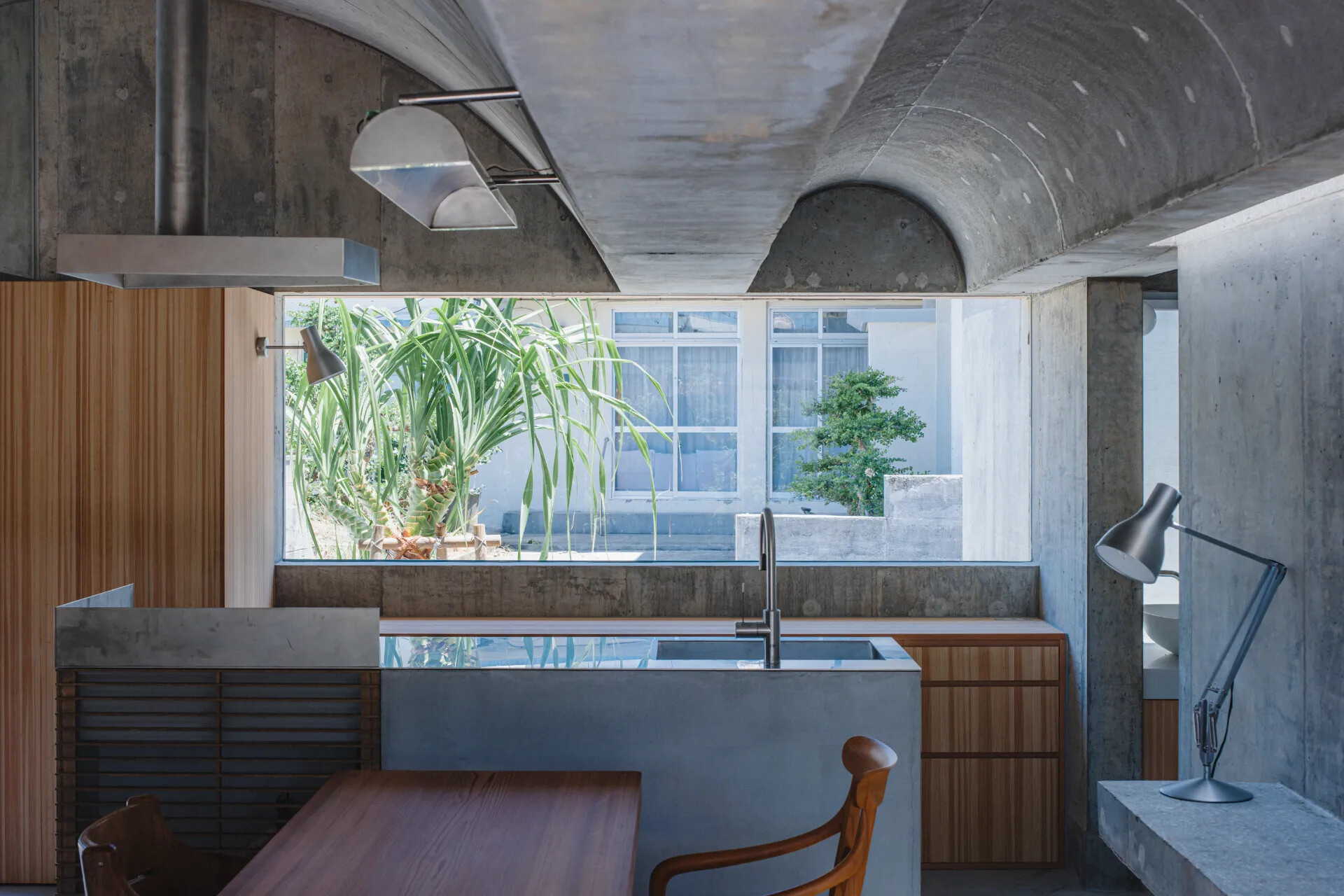
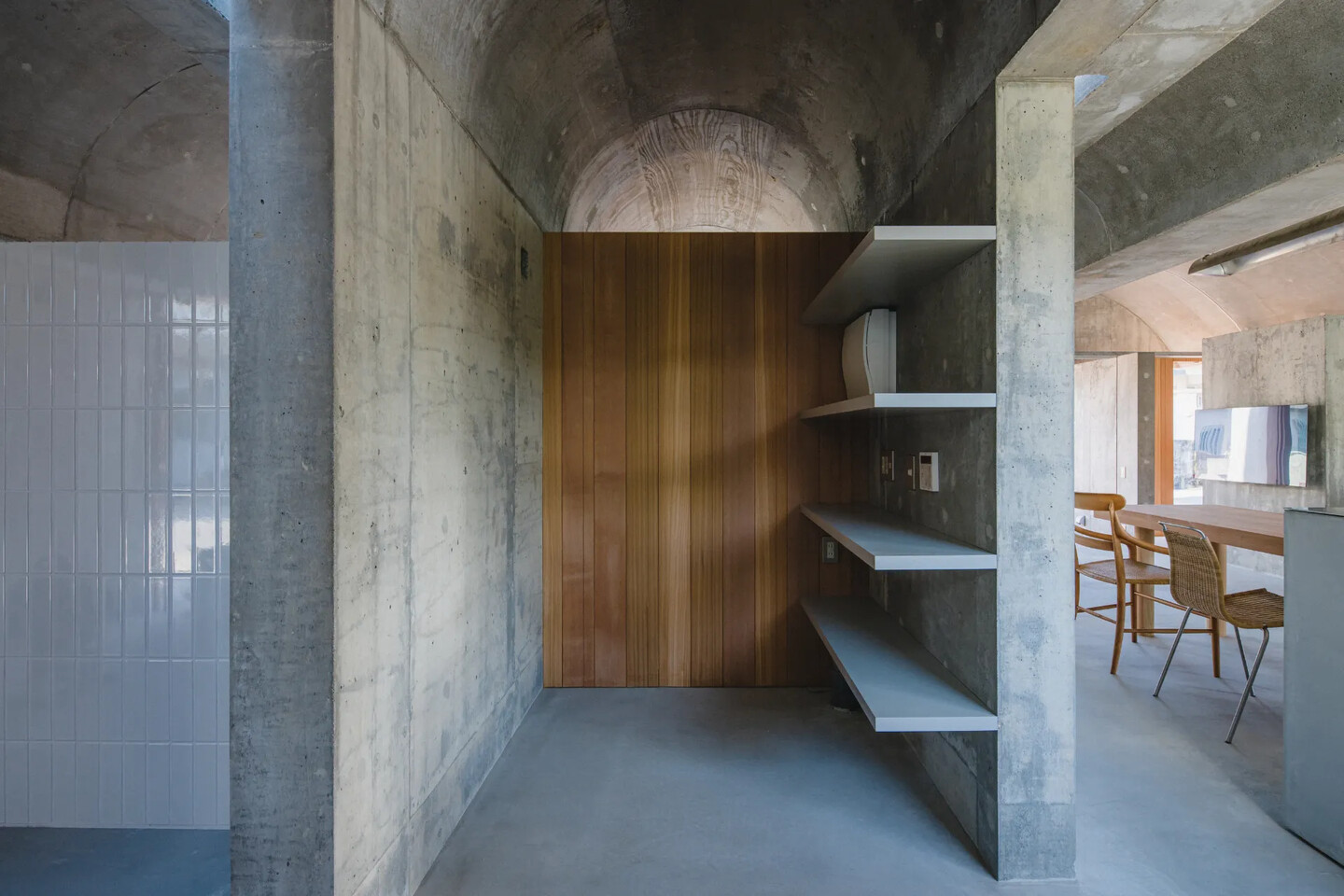
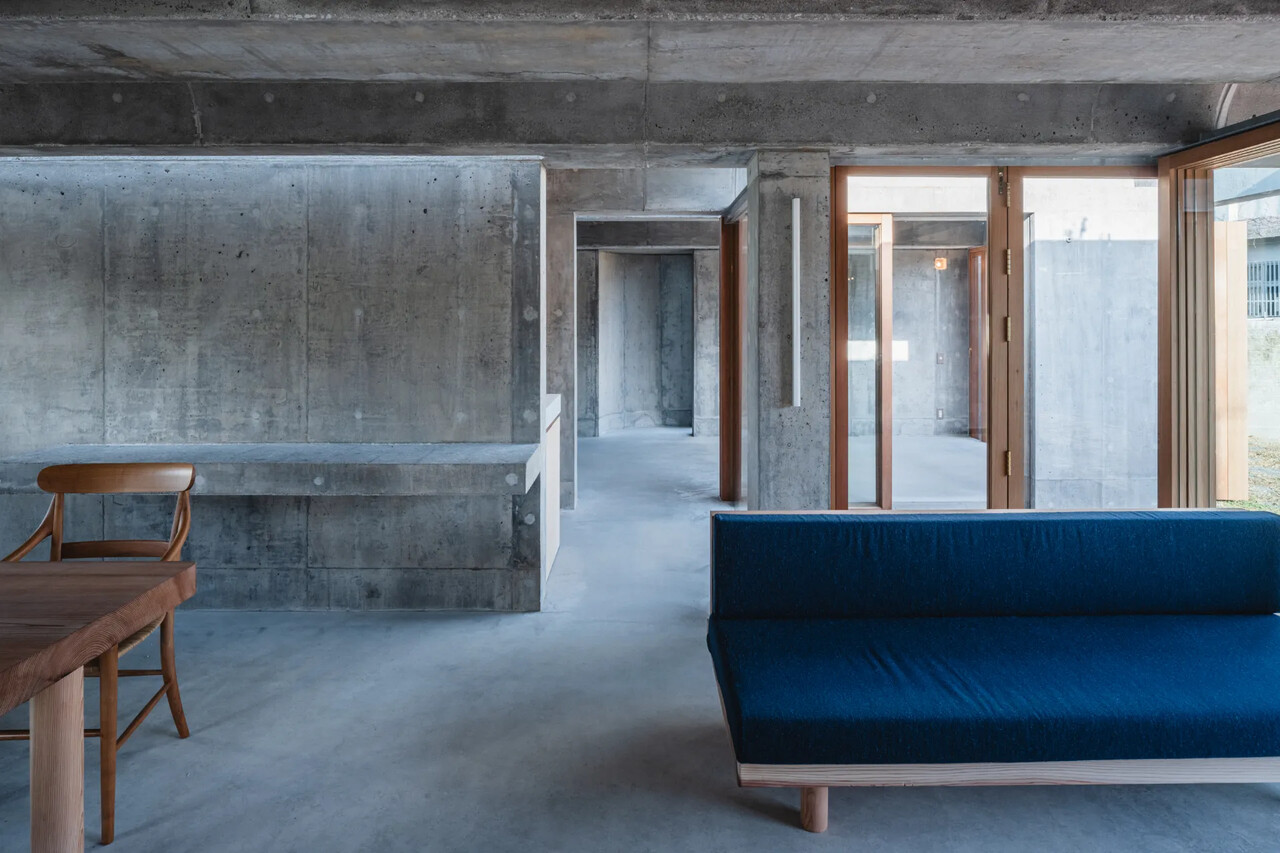
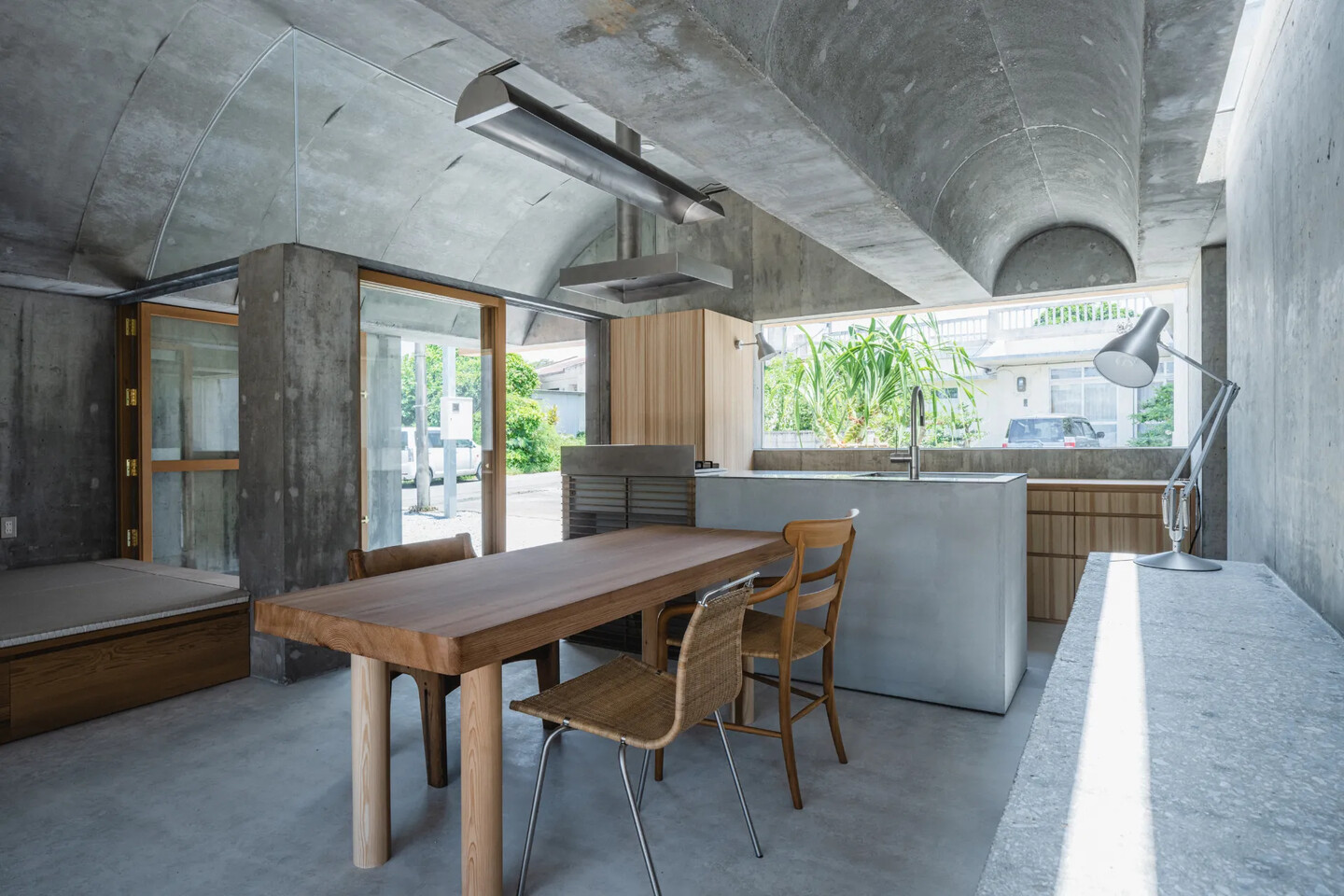
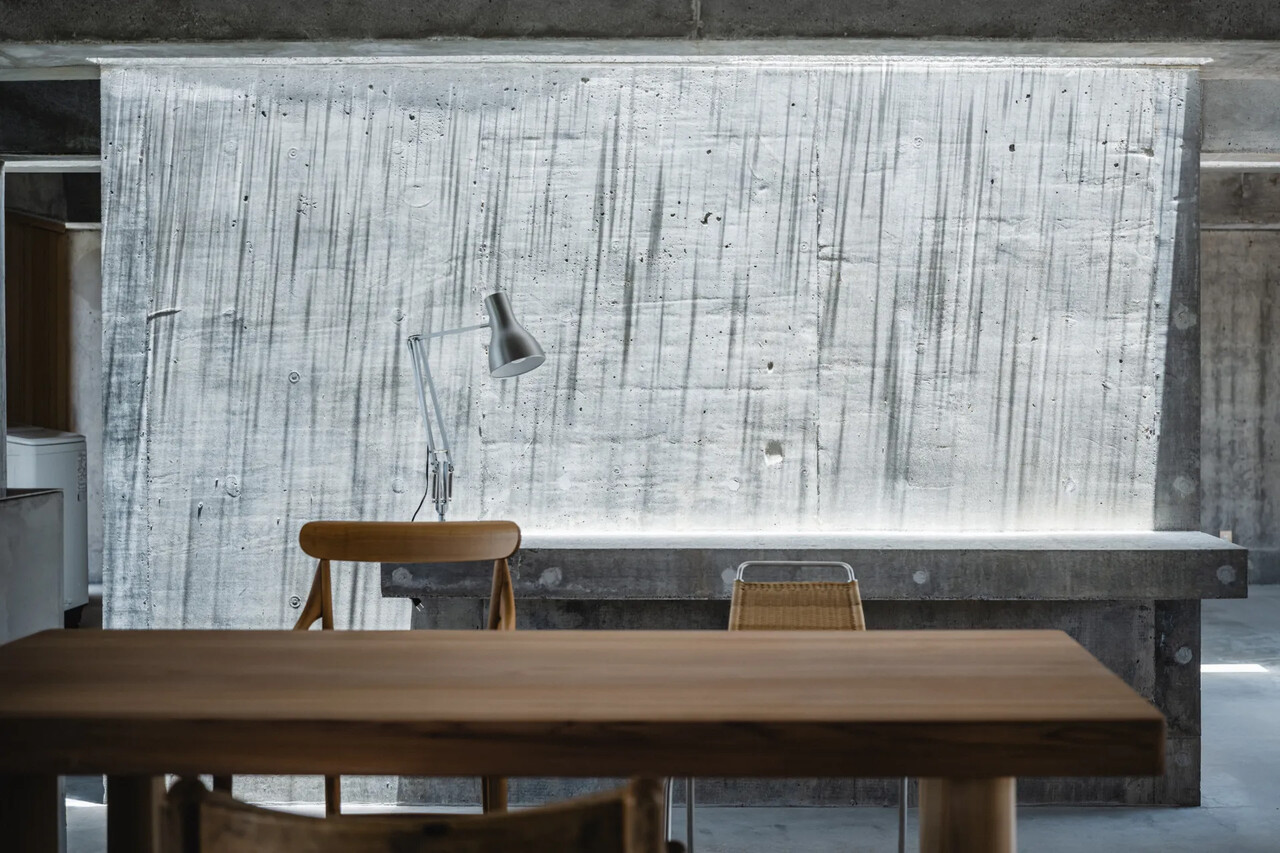
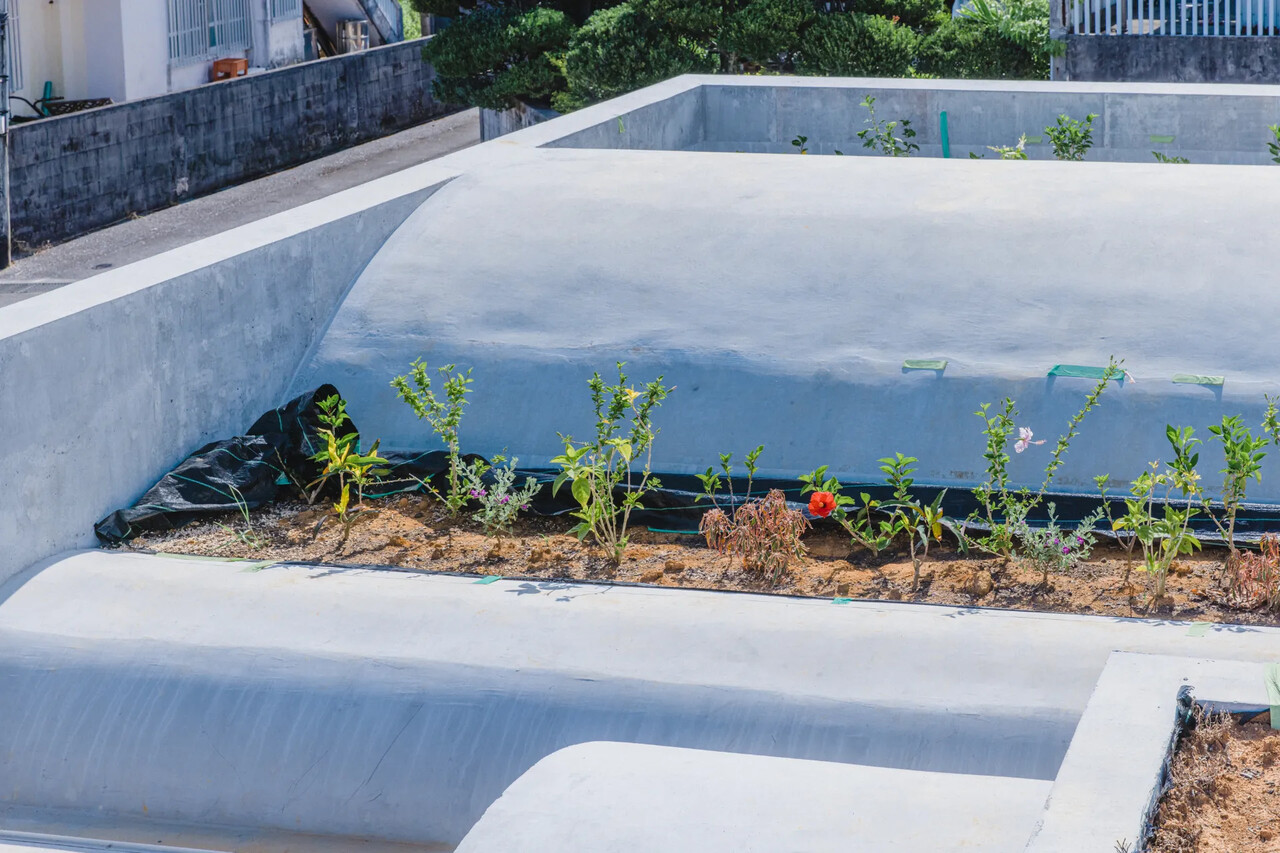
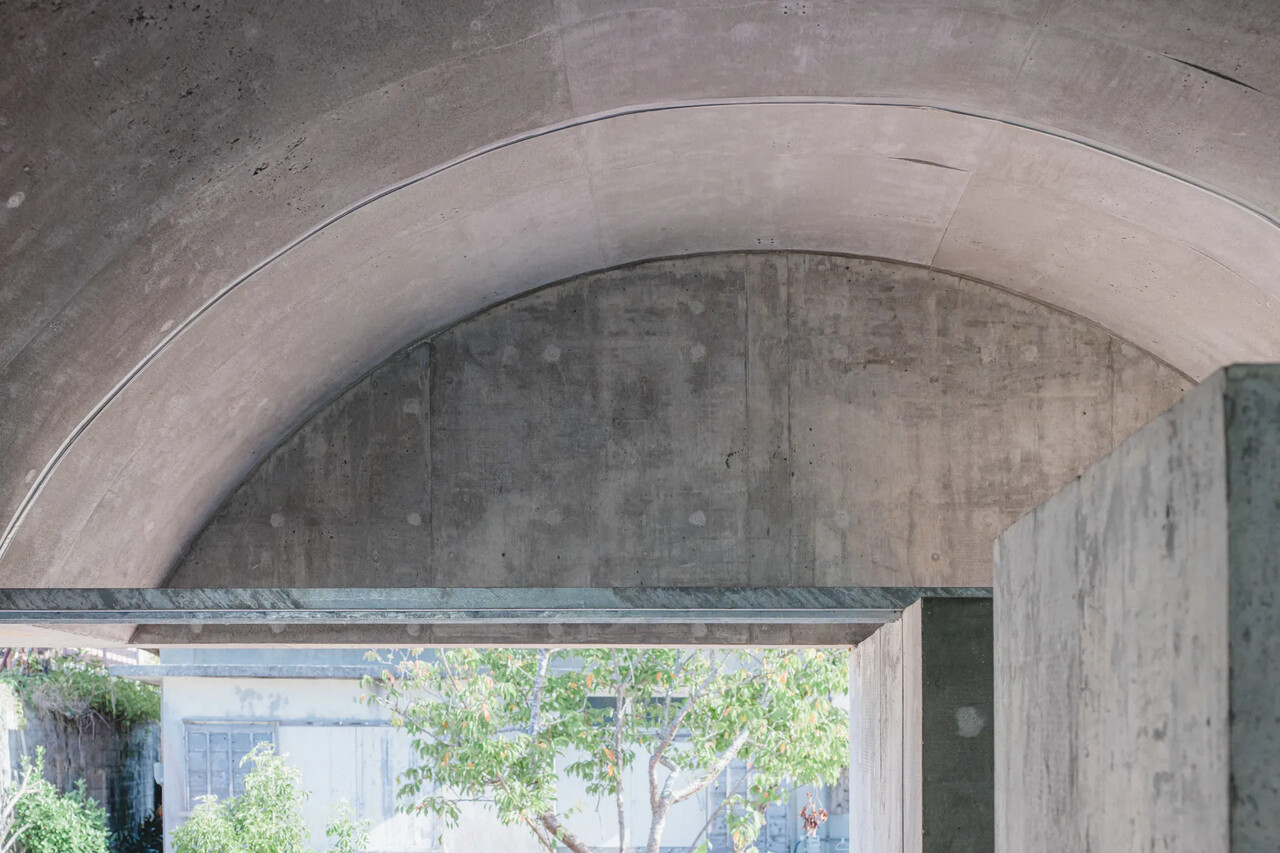
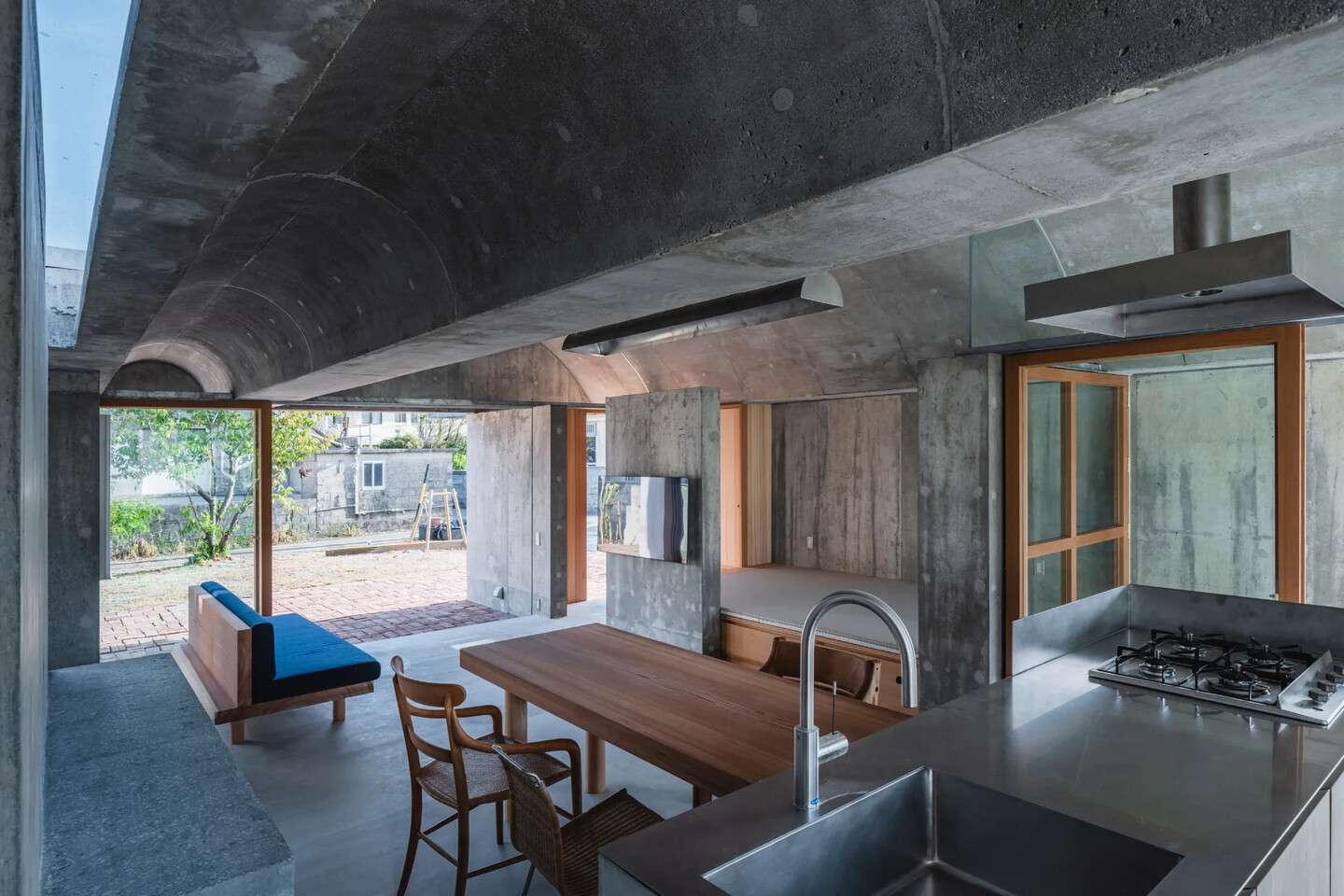
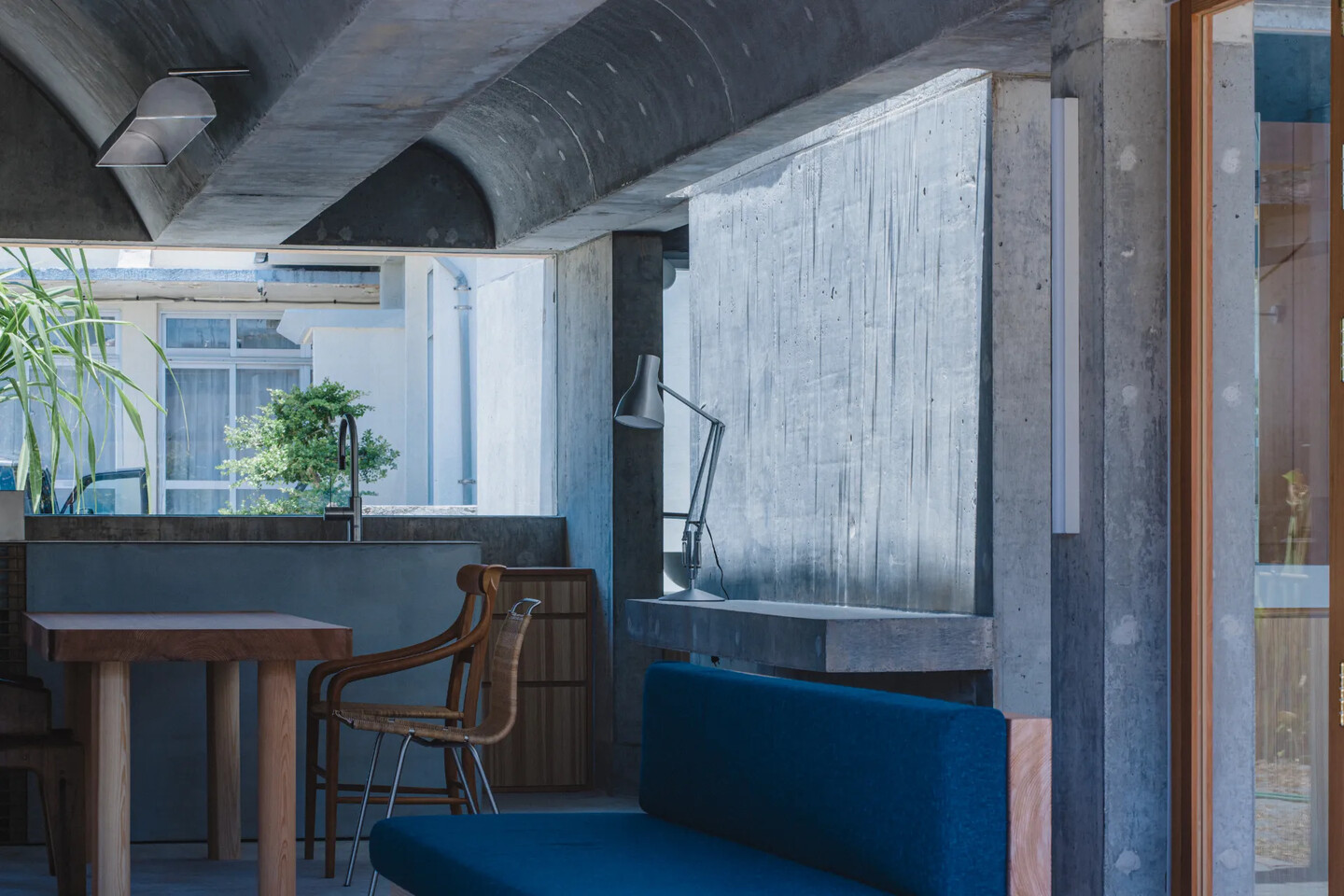
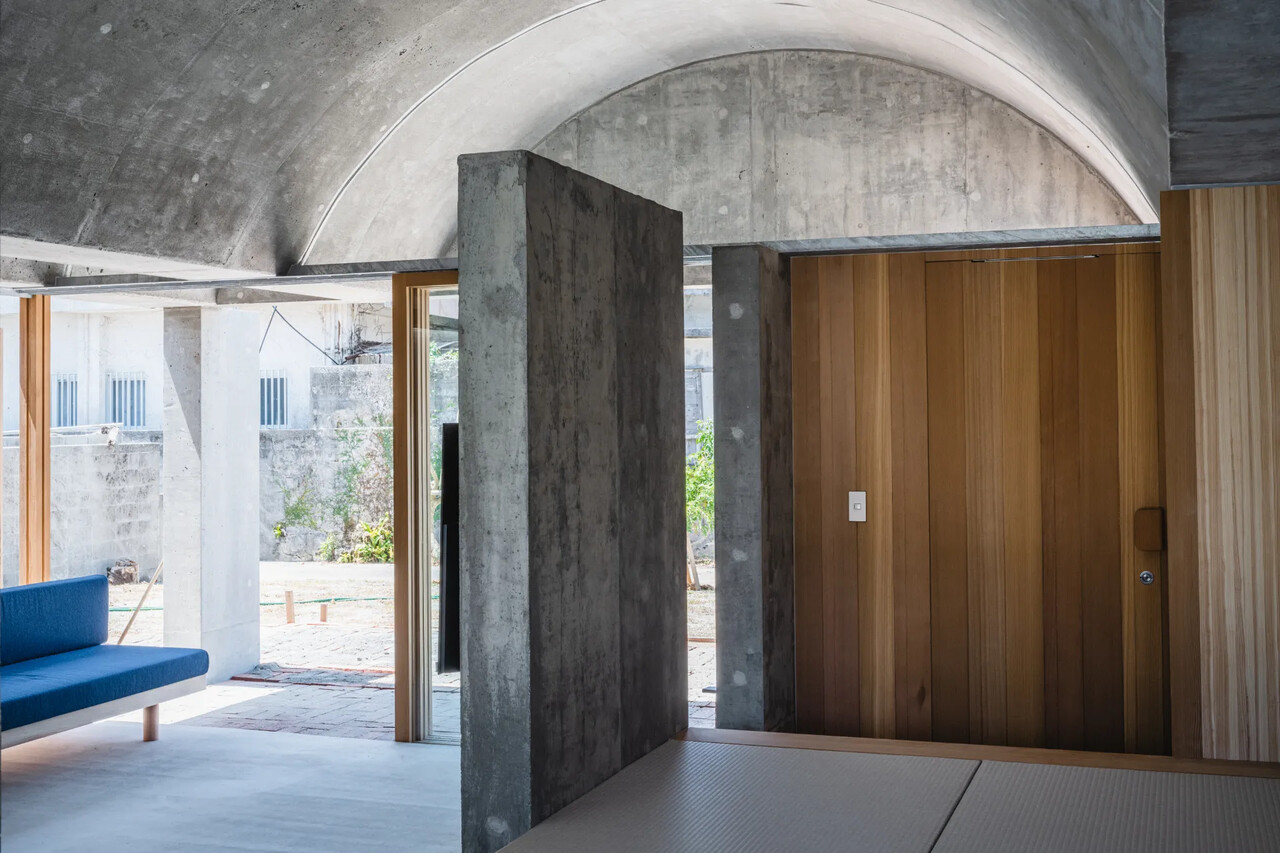
The building is simply constructed with a continuous vaulted ceiling of different heights over a continuous earthen floor inside and out. The vault stretches from north to south, crossing the interior and exterior, and the deep eaves serve as a semi-outdoor intermediate area between the interior and the garden, as well as a hall for daytime farming. The continuous east-west vaulted ceiling gives rhythm to the entire space of the simple plan, and the natural light entering through the gaps between the roof and walls creates a gradation. The valley at the top of the vault is filled with soil, which acts as an insulator against the strong Okinawan sun, and ivy plants such as passion fruit and bougainvillea cover the entire surface of the vaulted roof. In addition, the owner, who is a farmer, is growing fruits and vegetables according to the different depths of soil in each section, and is looking forward to seeing what vegetables will be harvested from the roof this summer, one year after the completion of construction.


該建築的結構單純,內外部均採連續弧形的拱形天花板以及平面地板。拱形頂板從北到南延伸,跨越室內和室外,屋簷成為室內與花園之間的半戶外空間,同時也是白天農作的工作區。拱形天花板的東西向為簡單的平面賦予了節奏感,而透過屋頂和牆壁間隙進入的自然光線創造出漸層效果。穹頂填滿土壤,成為對抗冲繩強烈陽光的隔熱層,而熱情果和九重葛等常春藤植物覆蓋整個拱形屋頂的表面。此外,身為農夫的屋主根據每個土壤區域的不同深度種植水果和蔬菜,他期待著在建築完工一年後的夏天,能從屋頂上收成各種蔬菜。
Design Studio|Studio Cochi Architects
Photography|OOki Jingu • Toshiyuki Igarashi
  • About
  • Privacy policy
  • Track Order
  • Customer
  • Contact
  • Join us
FACEBOOK
instagram
Language

Copyright © WABISABI ISSUE. 侘寂傳媒有限公司 統一編號:90451315

  • Projects
    • Worldwide
    • Interiors
    • Features
  • Contemporary
    • Exhibitions
  • Record
  • Lifestyle
  • City Explore
  • News
  • Issue
  • About
  • Privacy policy
  • Track Order
  • Customer
  • Contact
  • Join us
Language