House Oskar
If architecture is a living work of art, then House Oskar is a manifestation of that very idea. Located in the South Bohemian village of Kamenná Lhota—part of the Tábor District in the Czech Republic—this quiet rural settlement earned the moniker “the stone village” due to its late 19th-century granite quarries, which supplied essential materials for homes, boundary walls, and rural infrastructure.
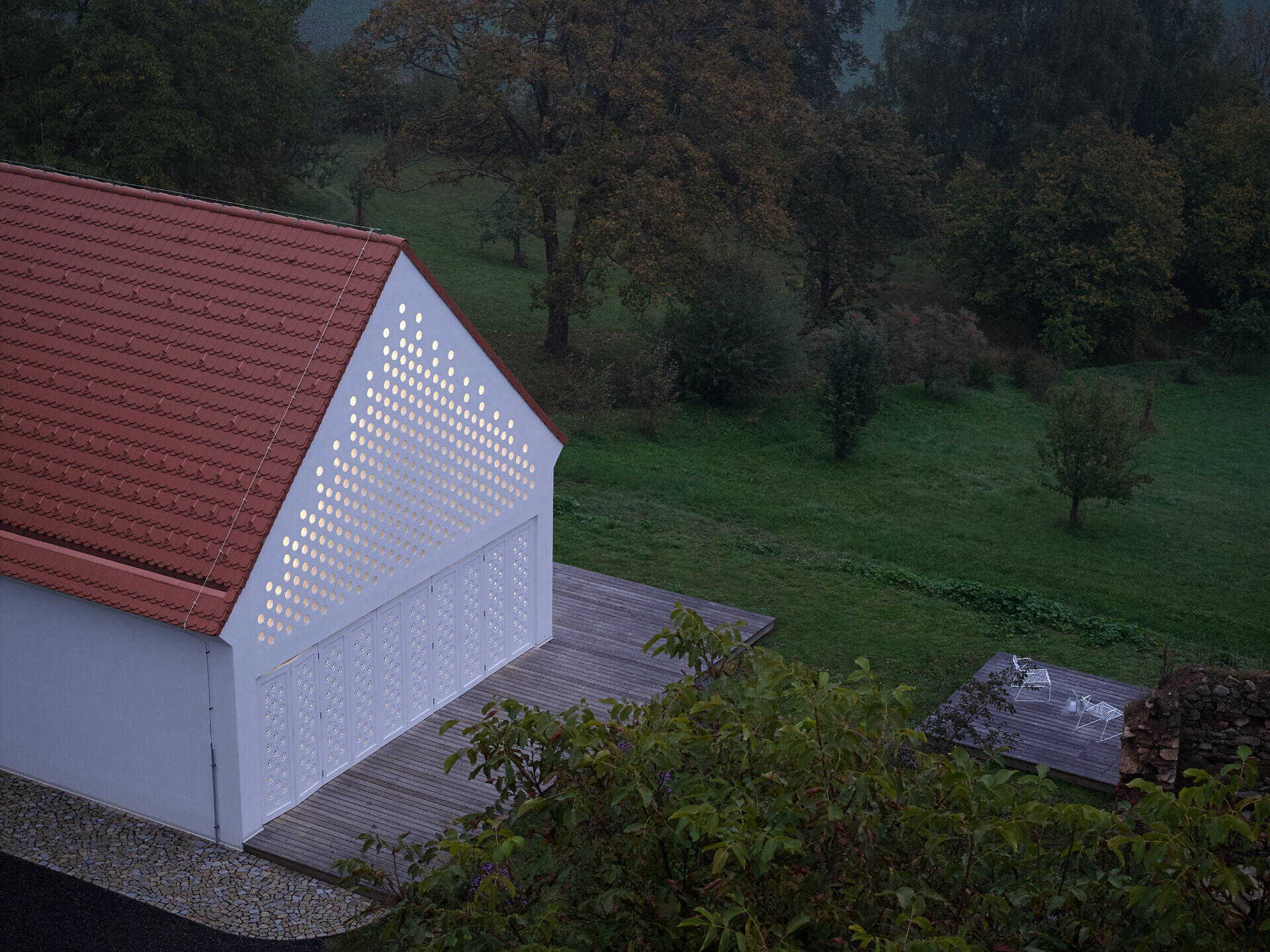
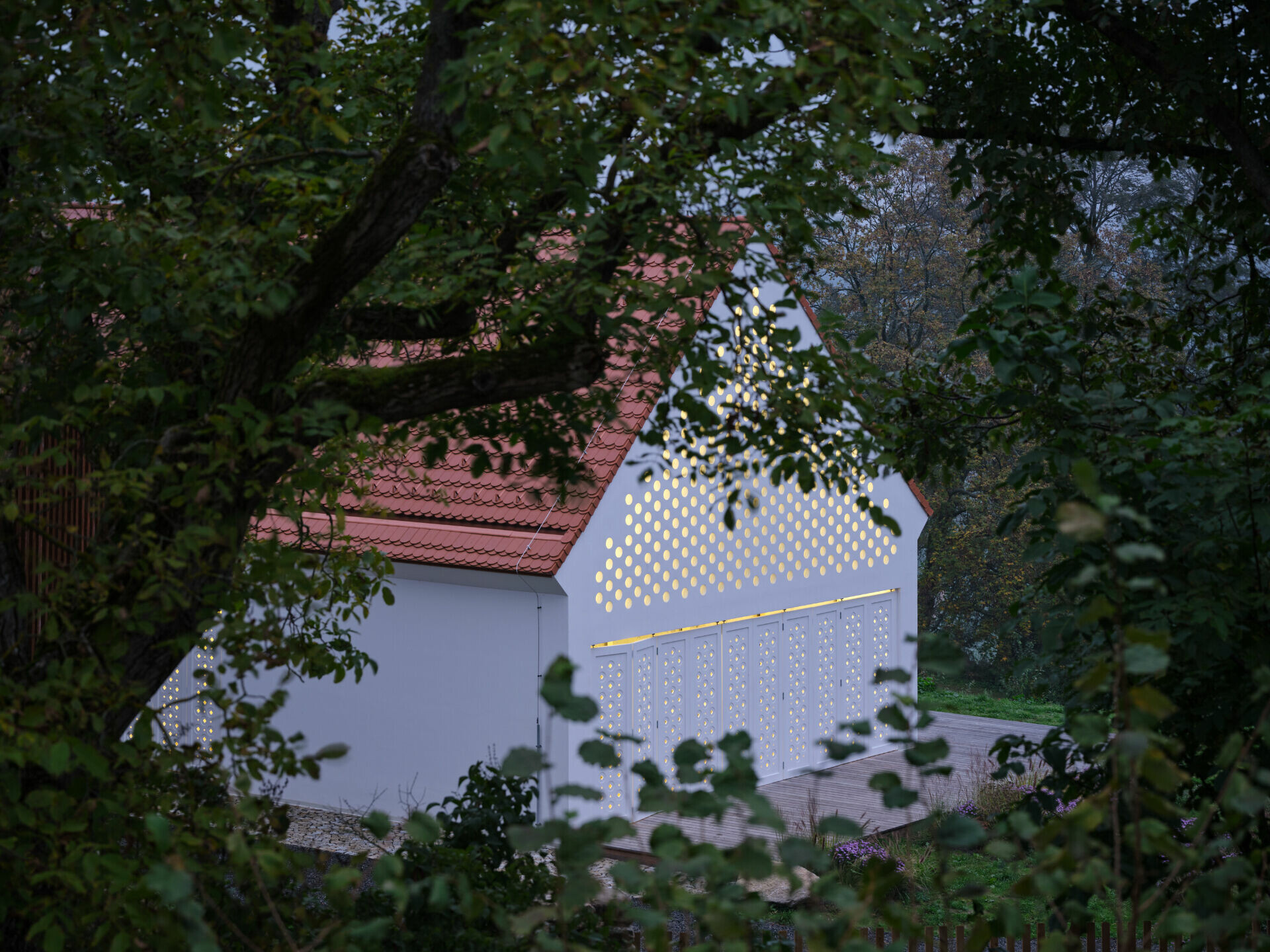
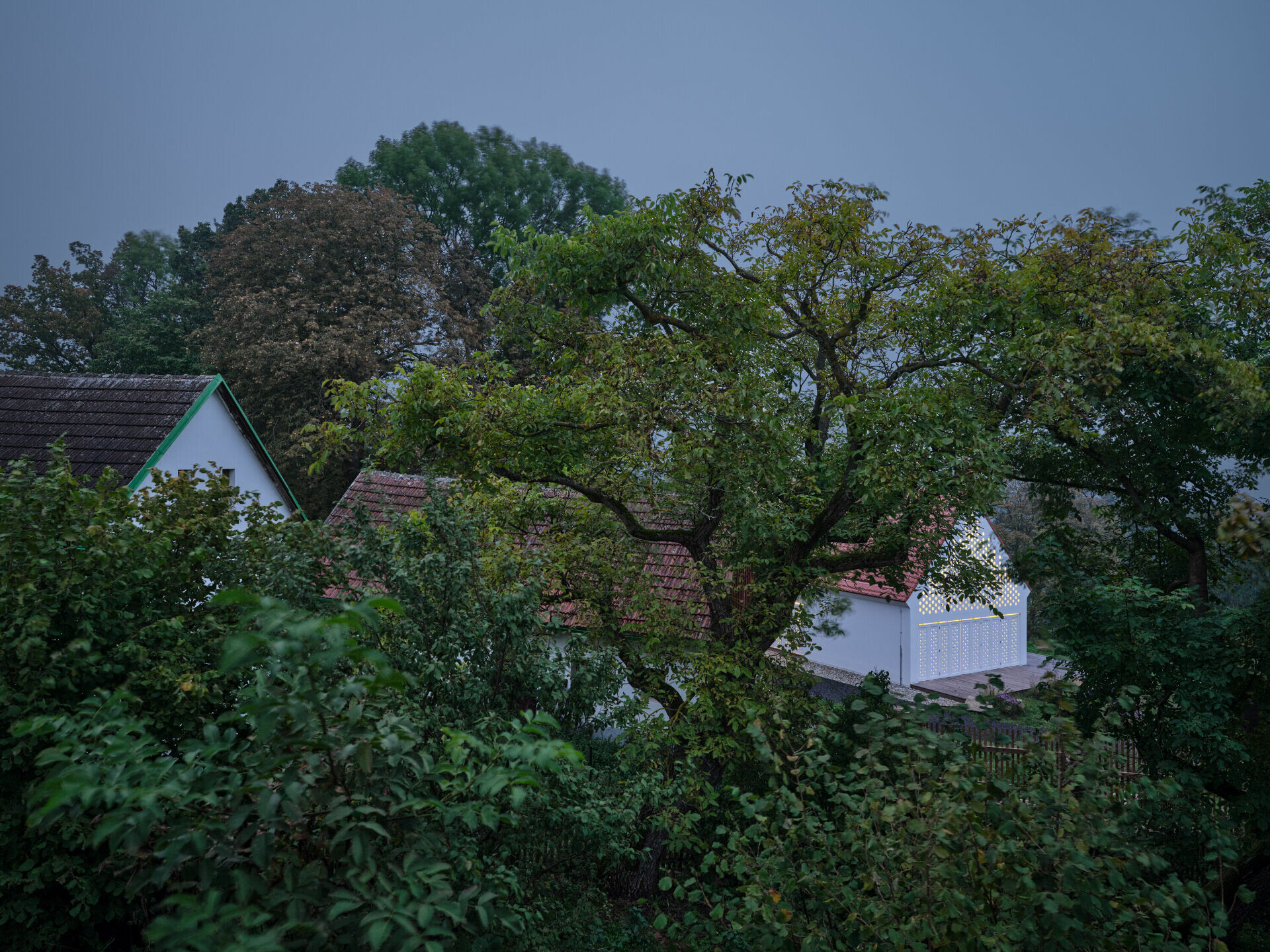
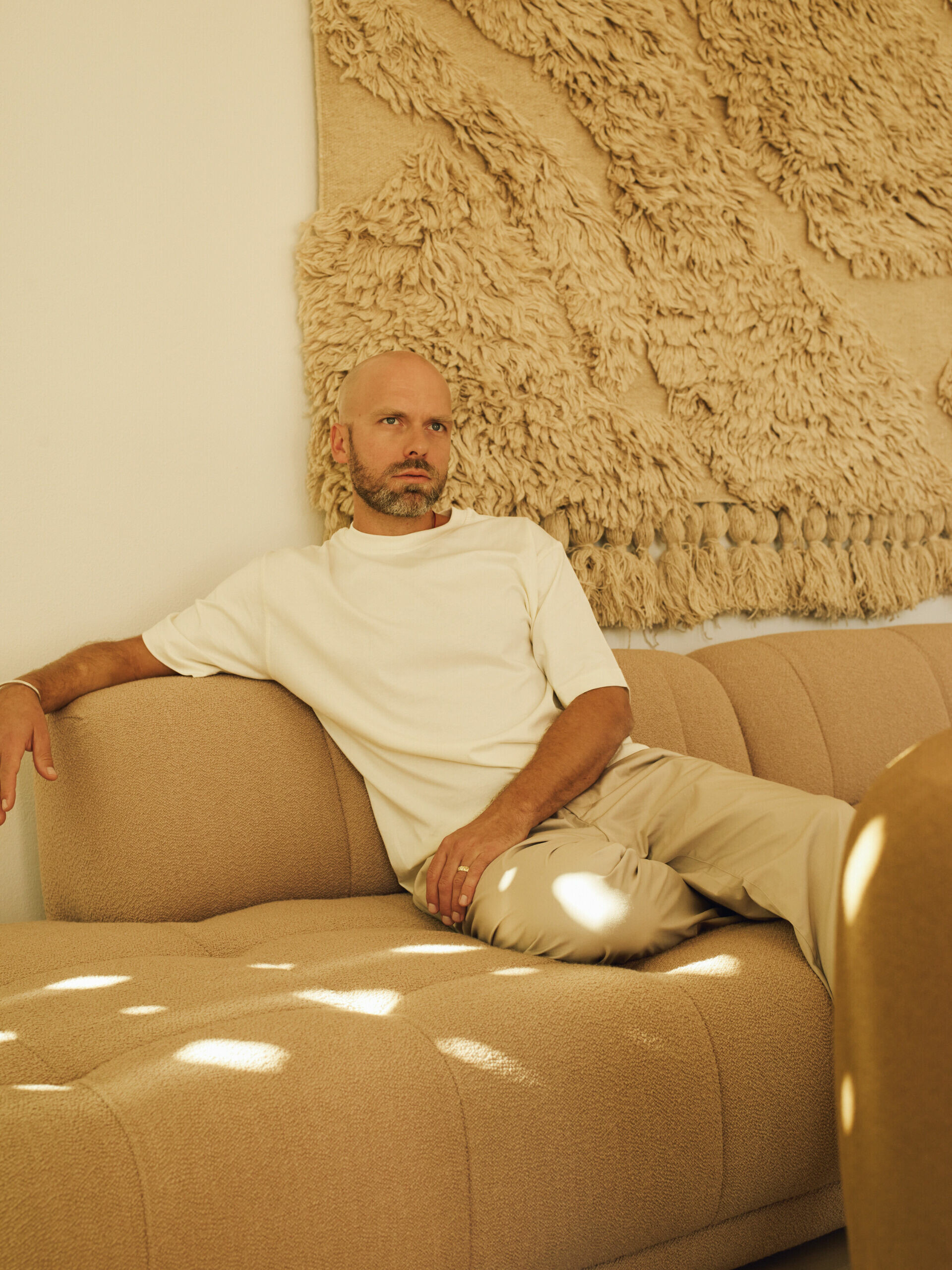
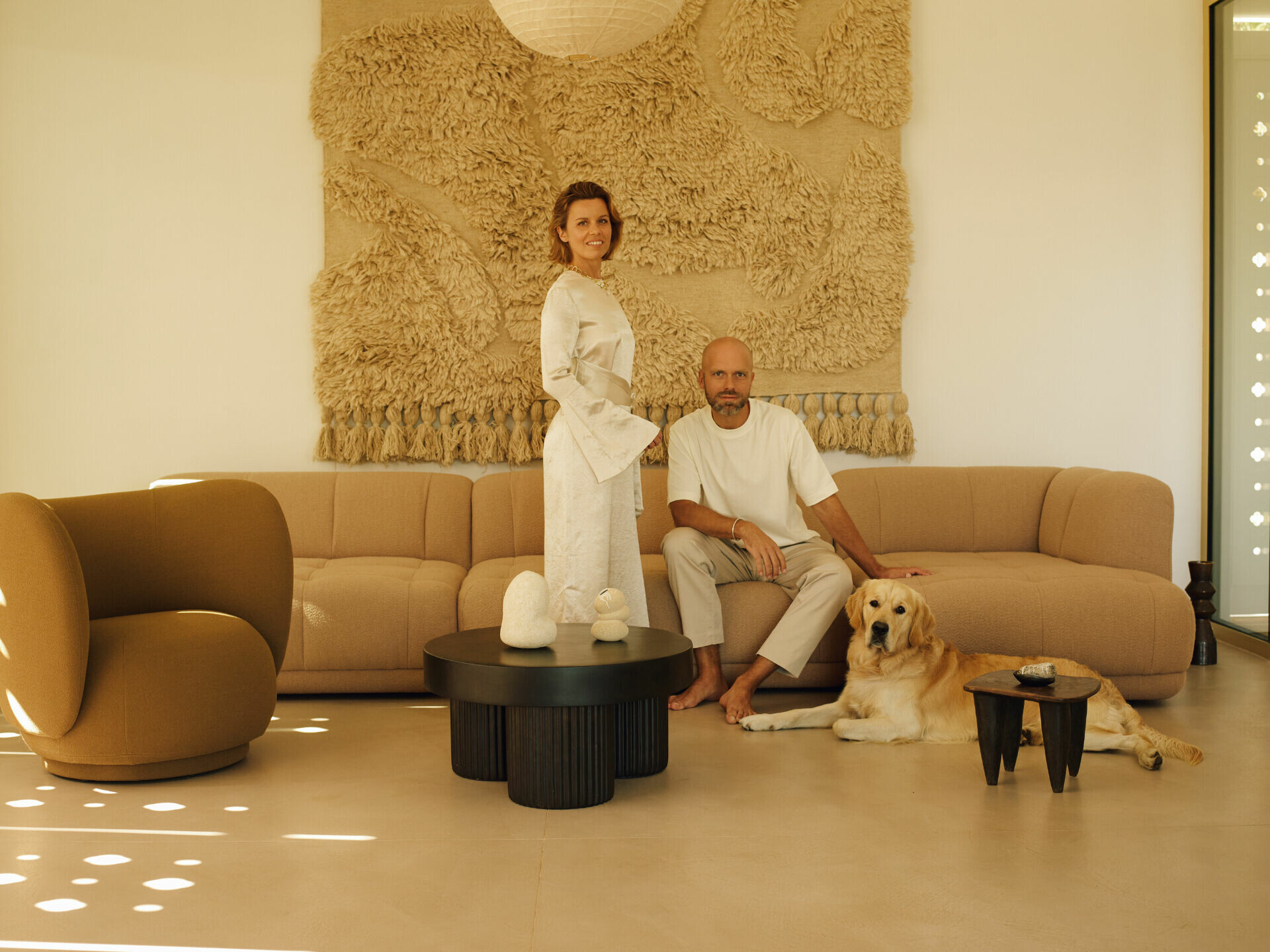
Designed by architect Jan Žaloudek for himself and his wife, the art historian and writer Jolanta Trojak, House Oskar is conceived as a private microcosm—an introspective world rooted in history and built for contemporary life. Set within the remains of a Baroque barn, embraced by century-old trees and stone walls, the house occupies the former garden of a nearby château. The site’s inherent genius loci—the spirit of place—is both honored and reinterpreted through architectural gestures that engage in dialogue with the landscape and its cultural memory.
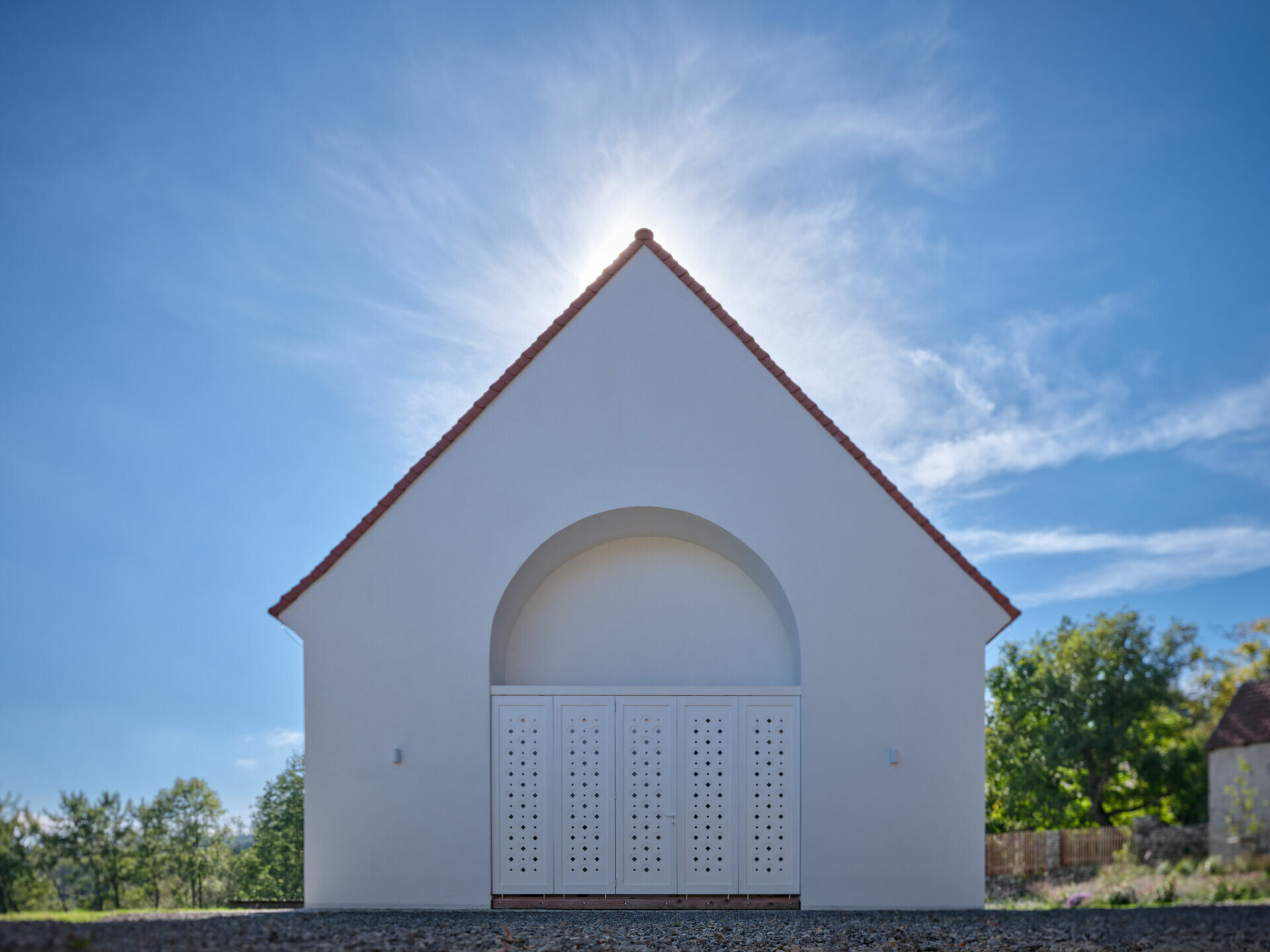
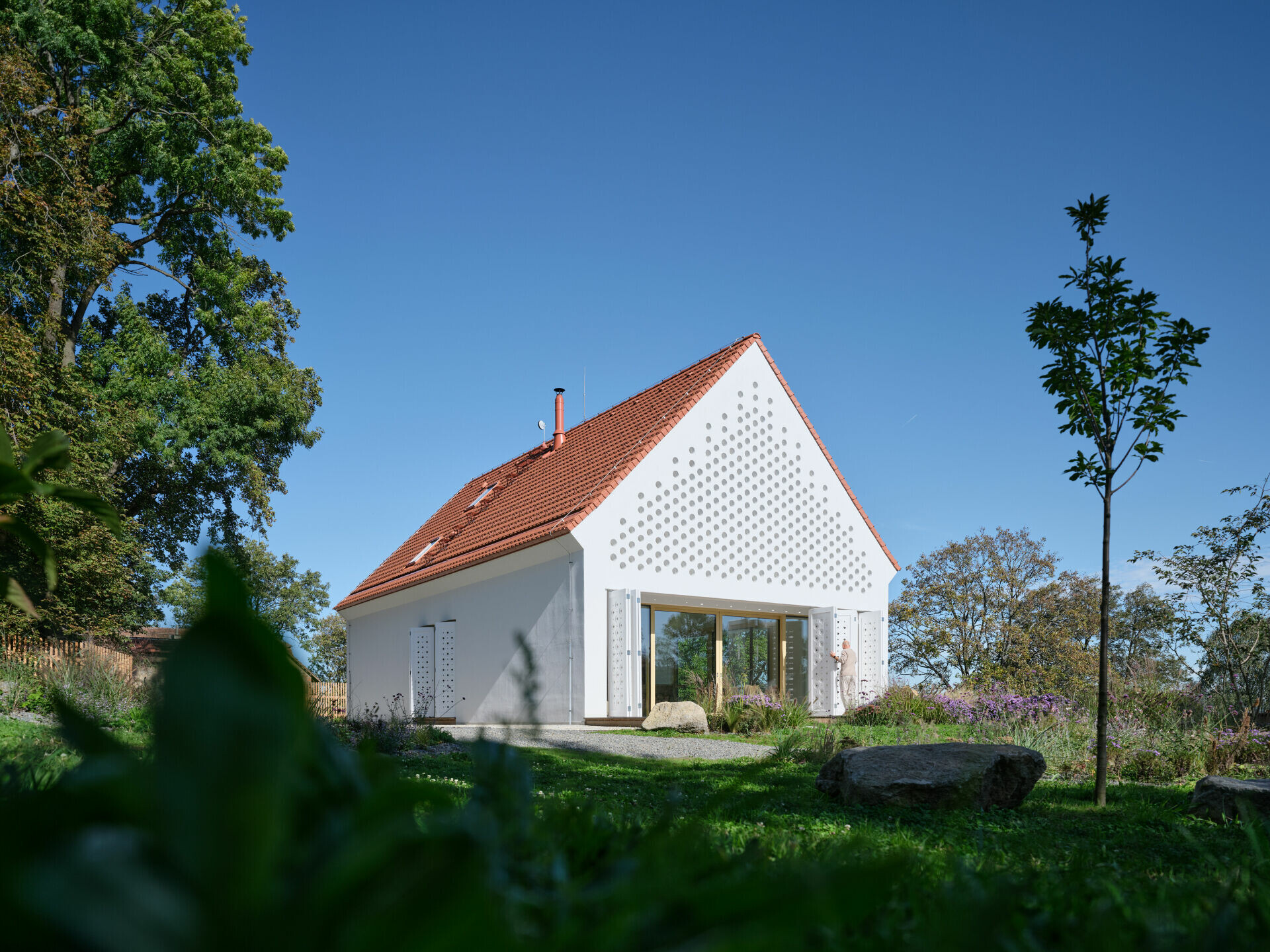
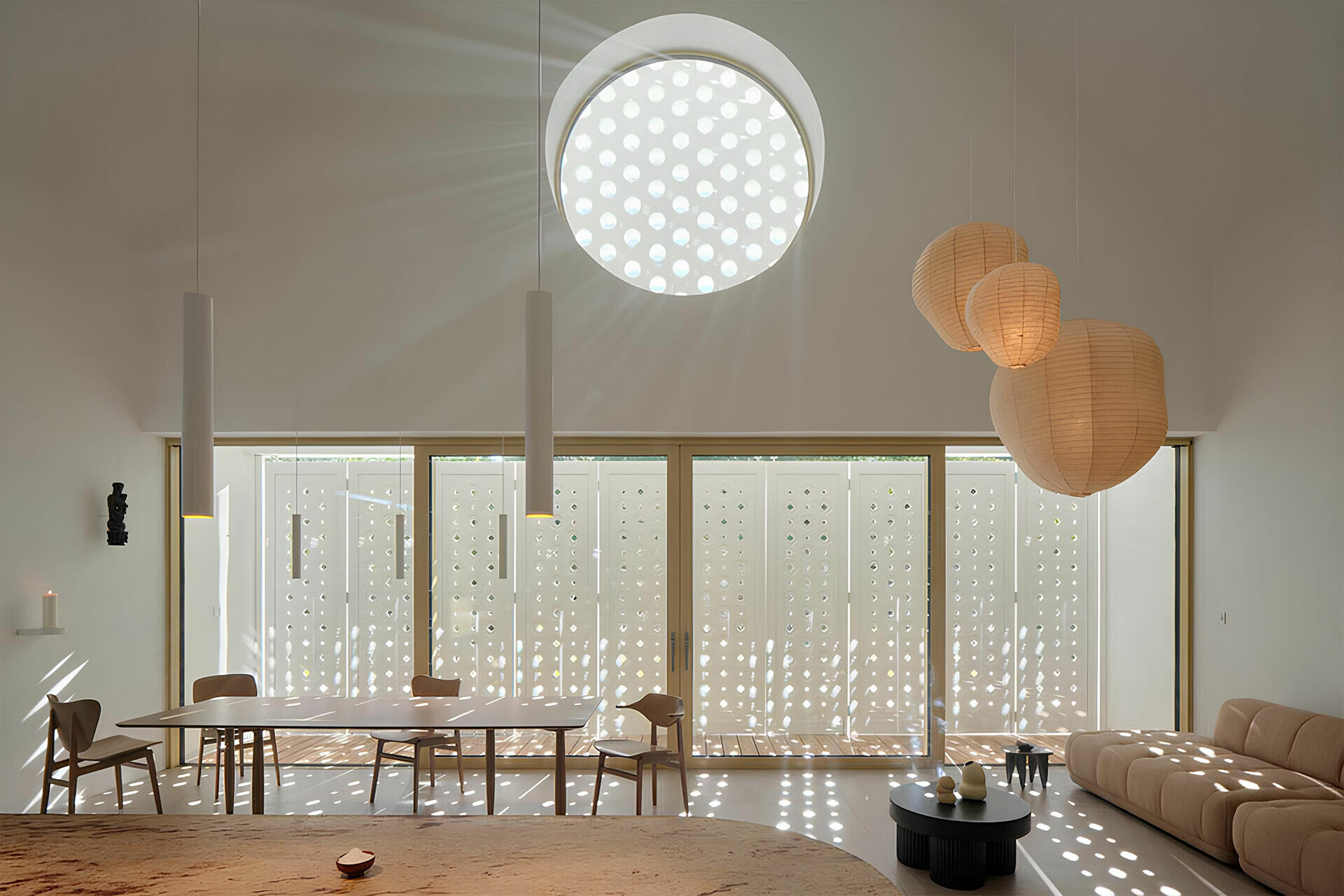
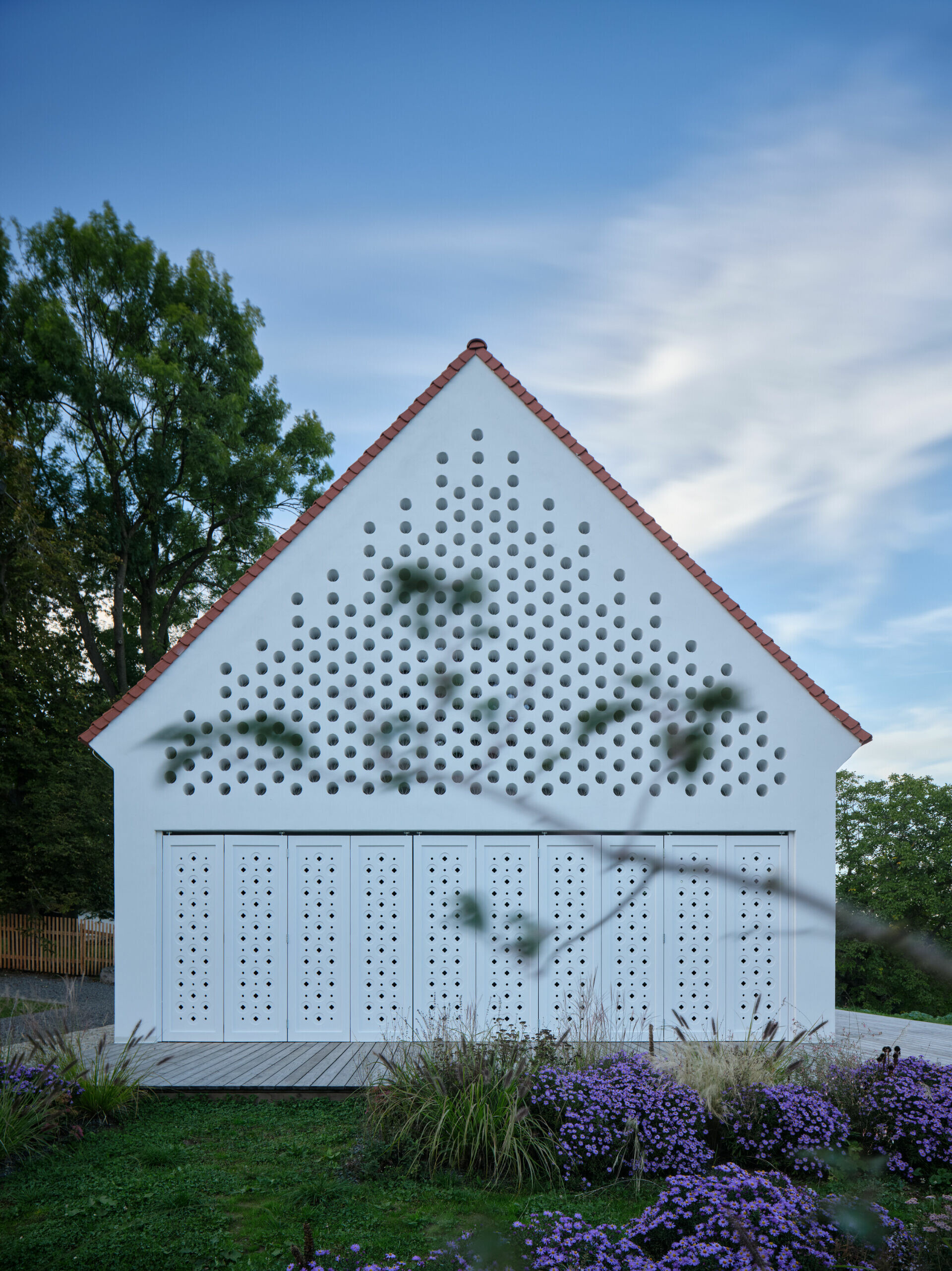
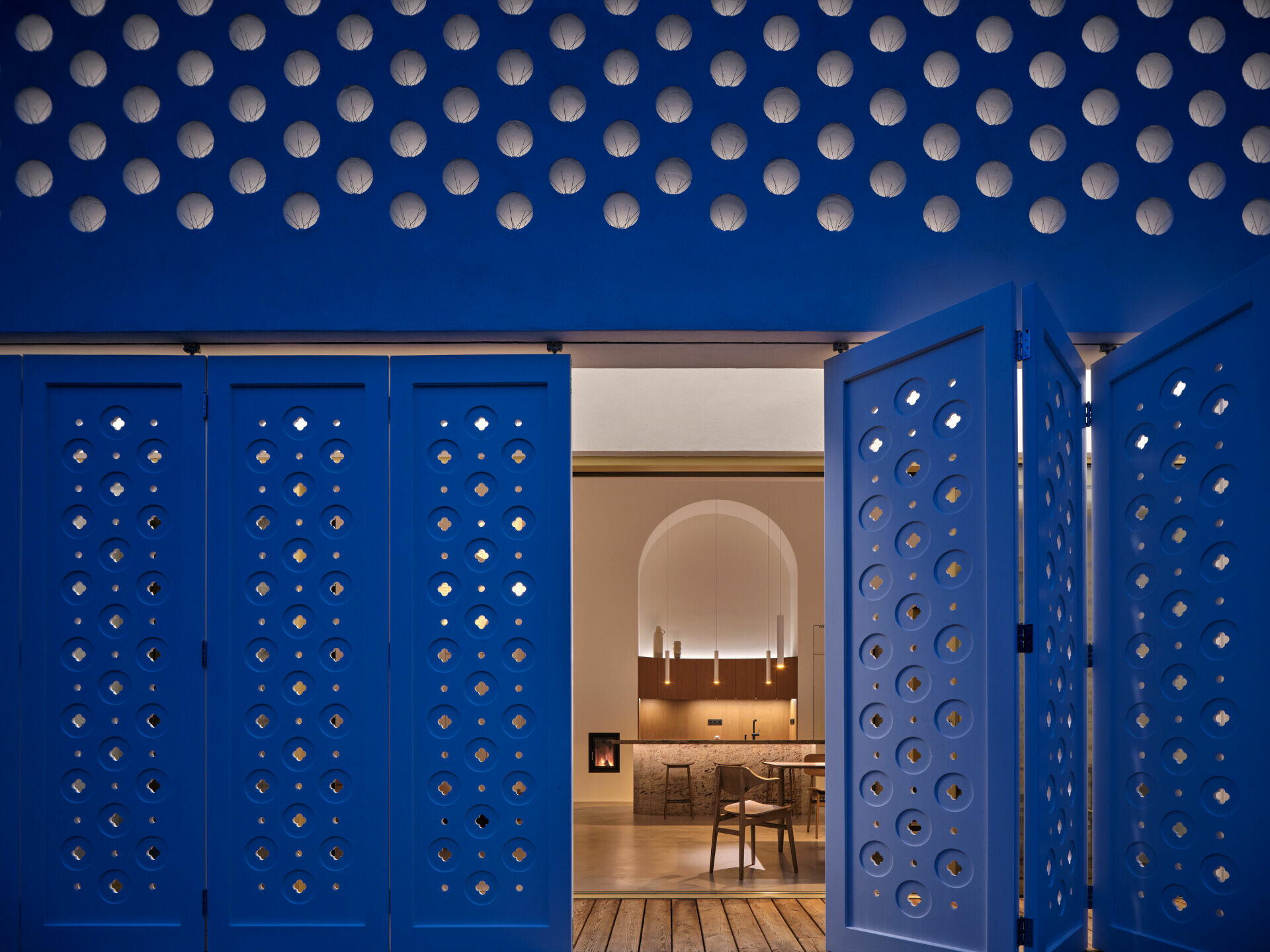
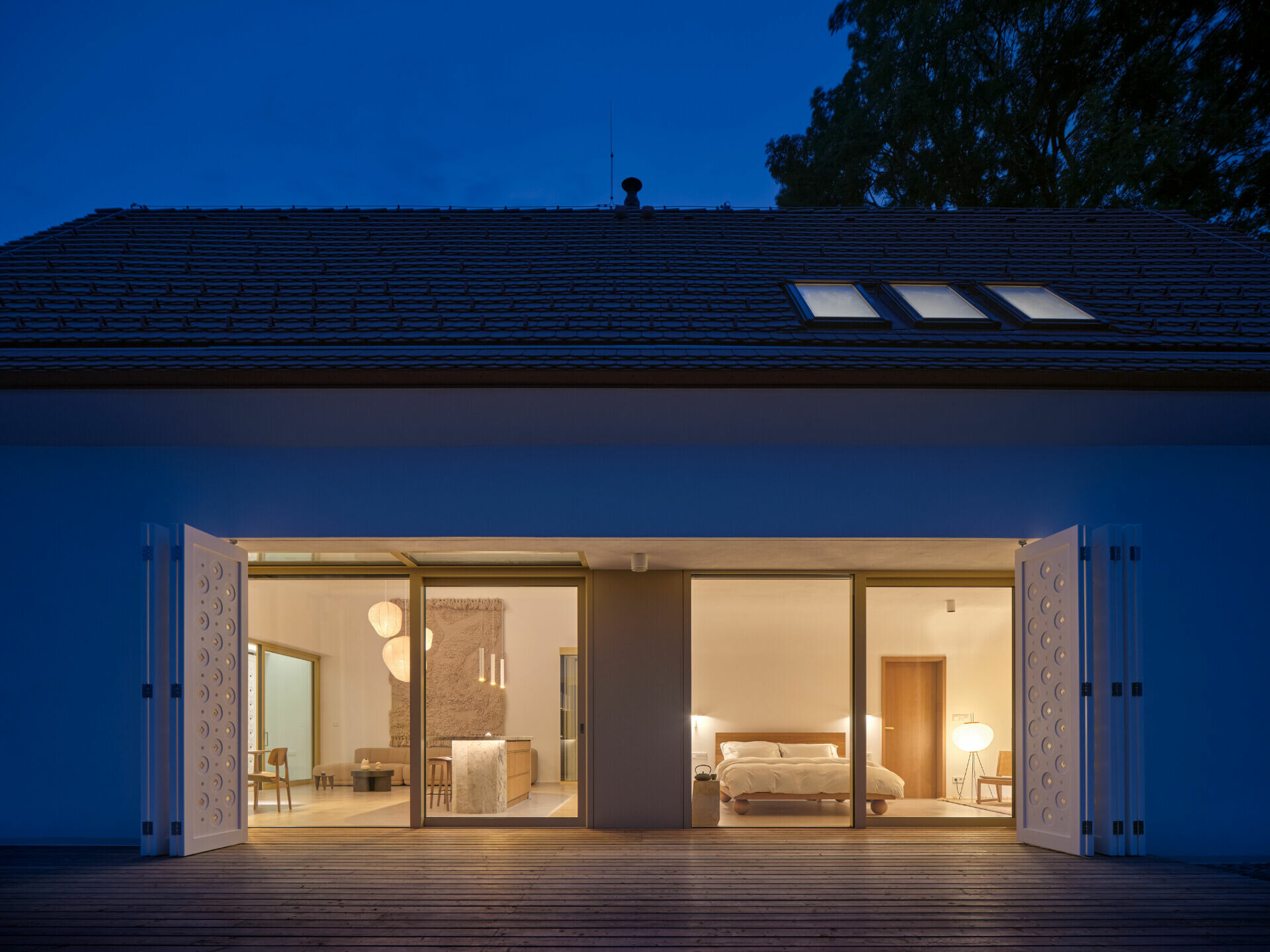
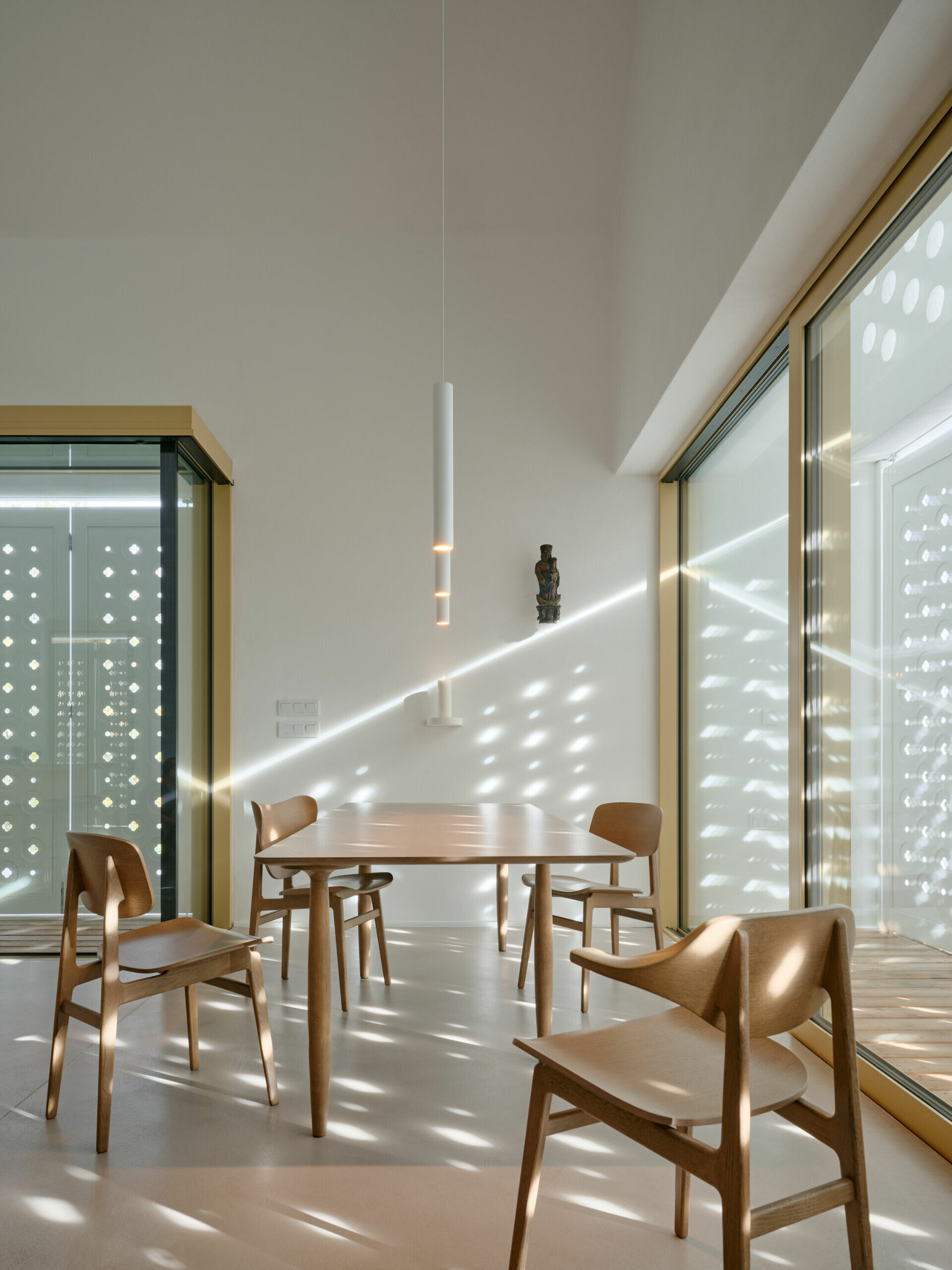
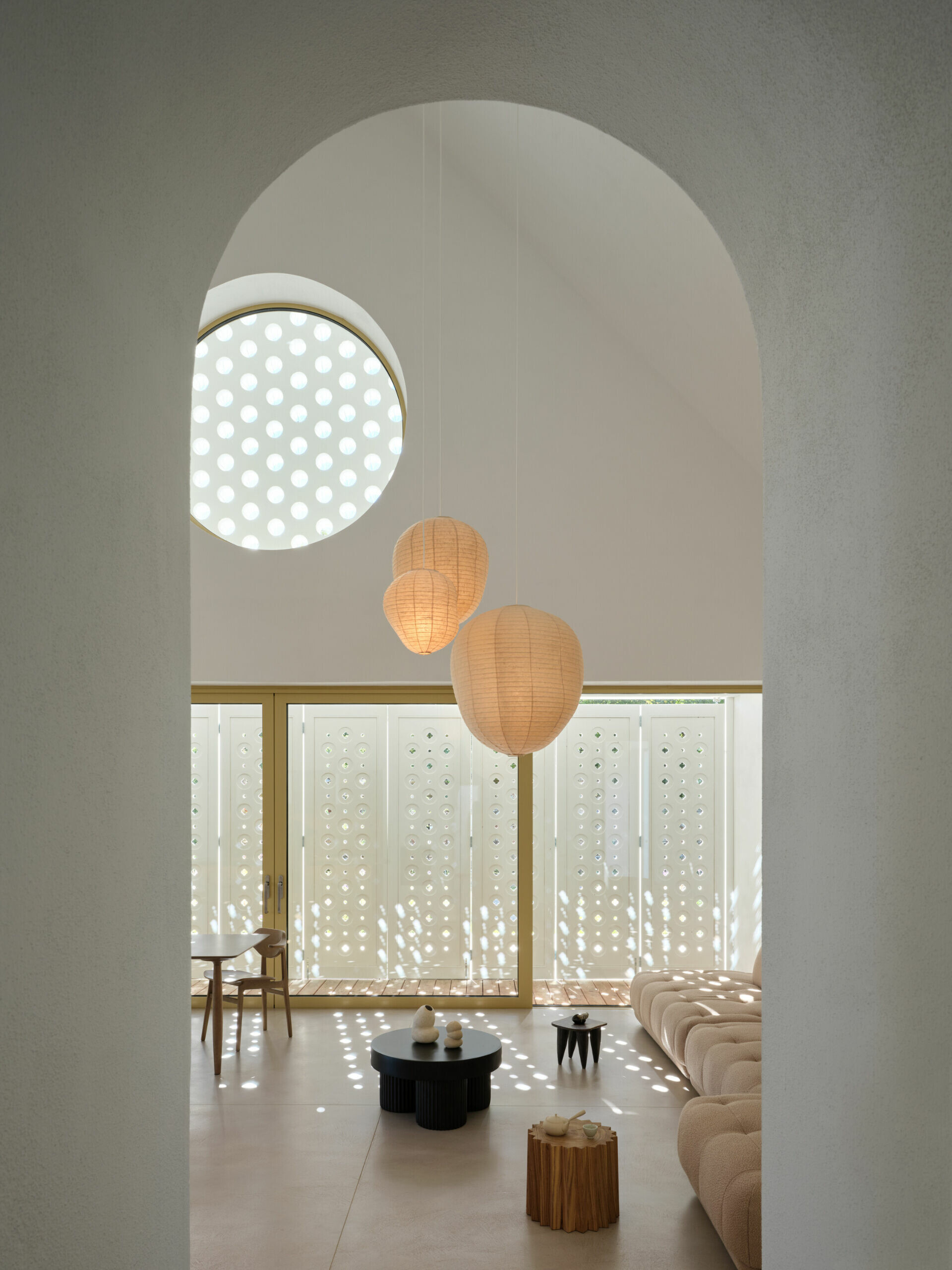
The architecture references the elongated gabled forms typical of local agrarian structures, integrating perforated masonry and timber shutters that provide passive ventilation and solar control while echoing the materials and rhythms of neighboring heritage buildings. Its structural core combines ceramic blocks with reinforced concrete; the white lime plastered façade and terracotta roof tiles offer a subdued contrast to the surrounding greenery, allowing the building to settle into the terrain rather than dominate it. A key design principle is the fluid negotiation between interior and exterior. The residence can fully open to the landscape or retreat into itself, responding to both the needs of daily rituals and moments of solitude. Circular windows and carved niches animate the façades, guiding daylight through the space and framing views of the southern courtyard and the adjacent barn ruins.
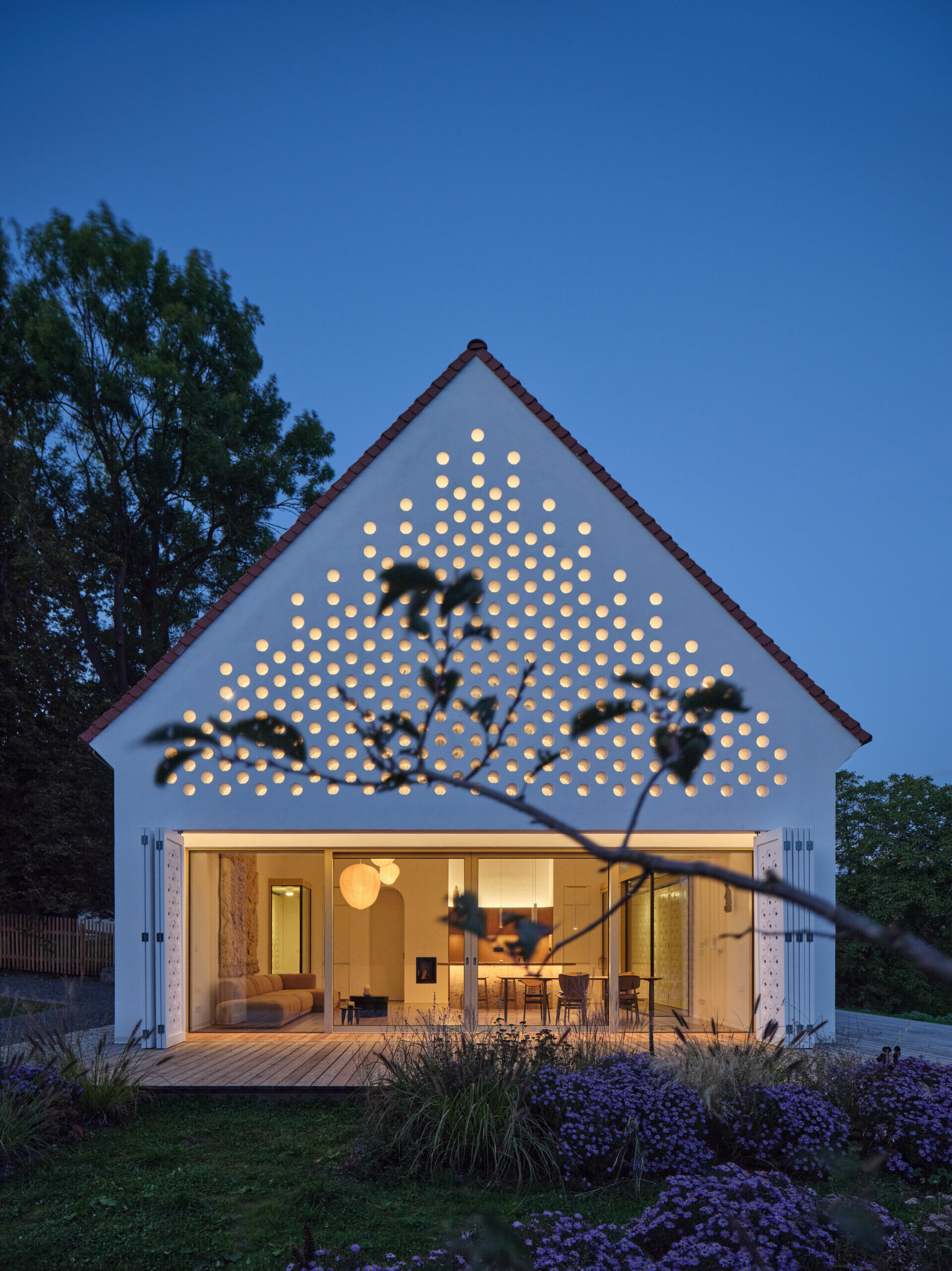
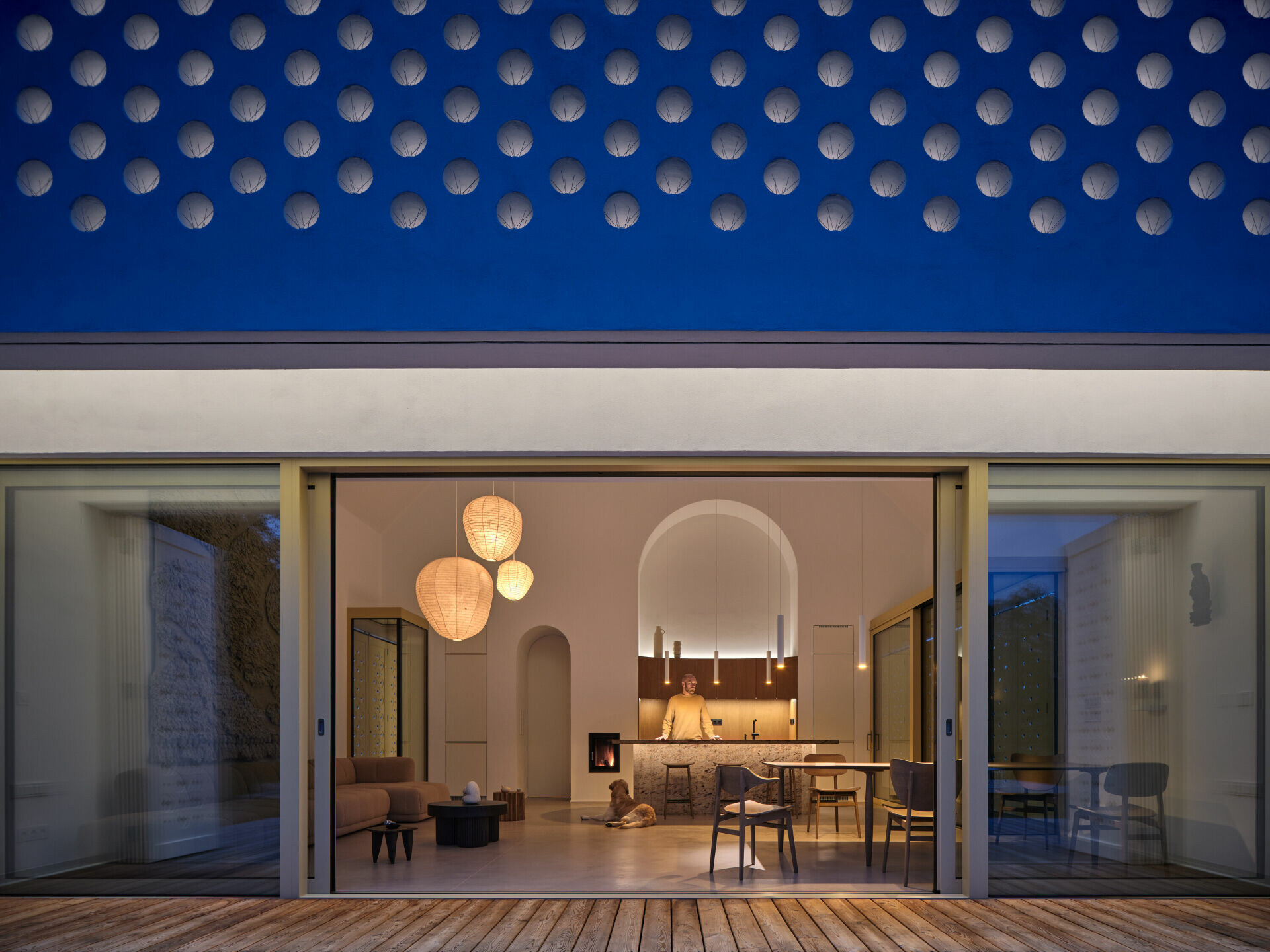
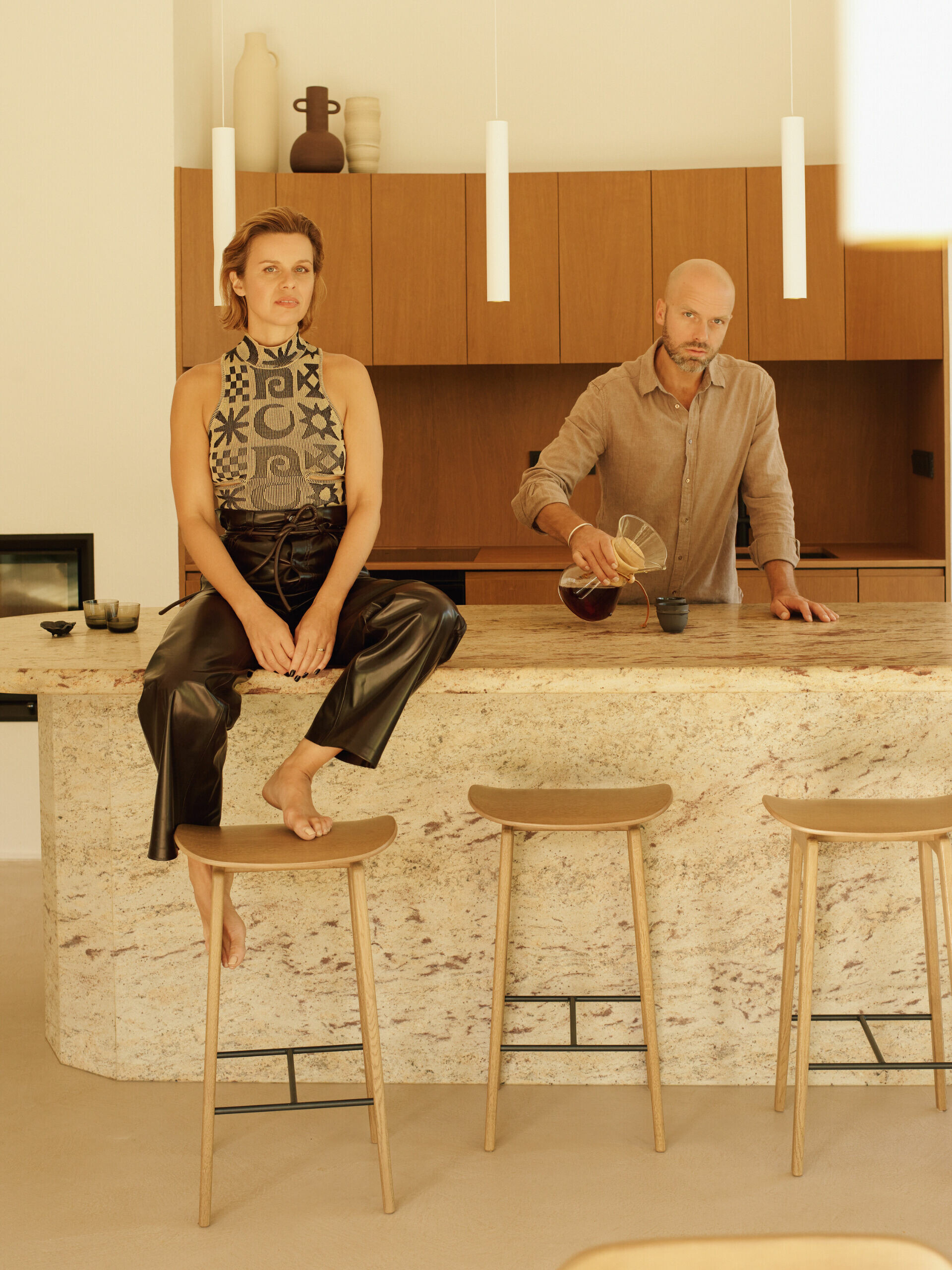
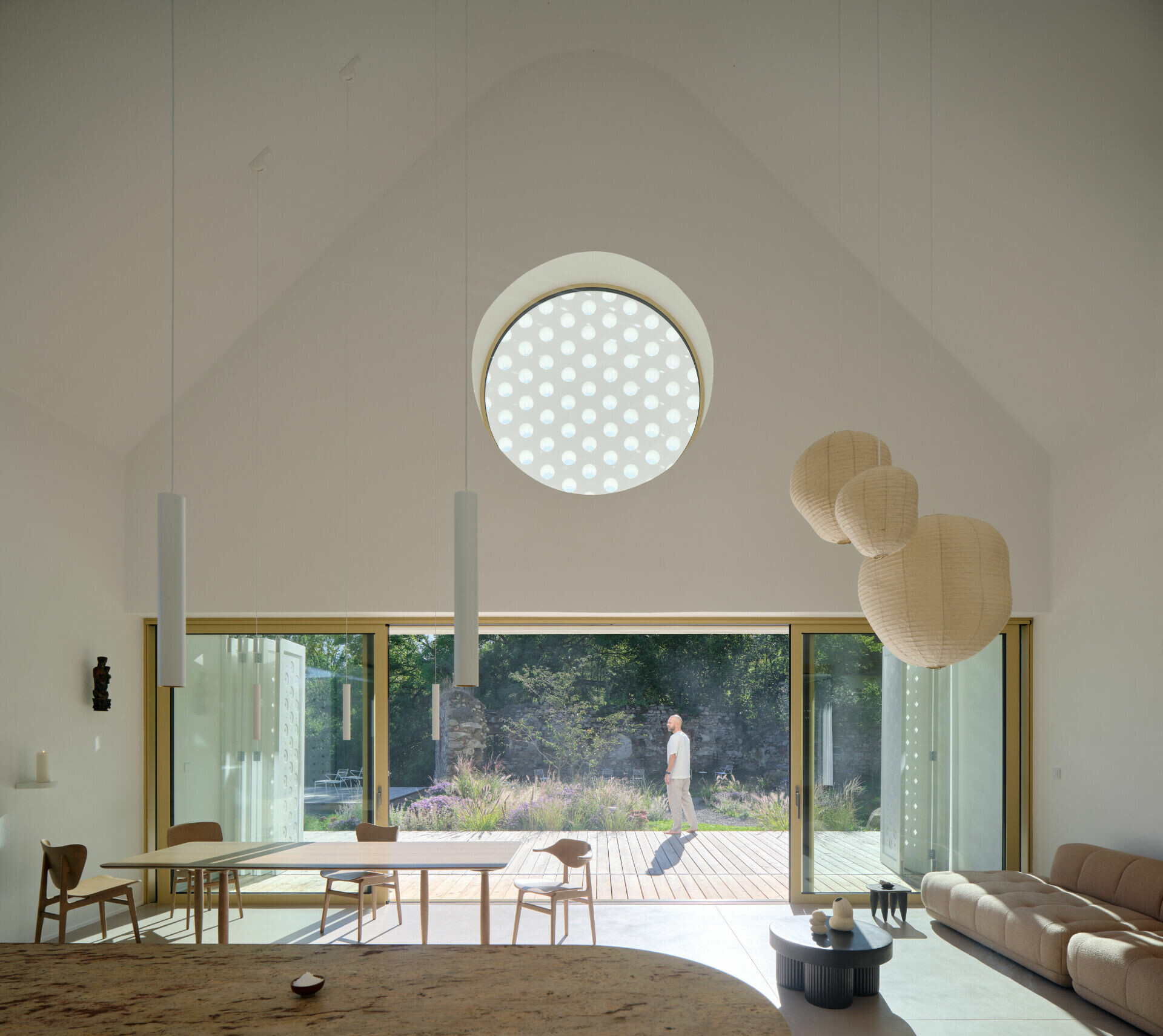
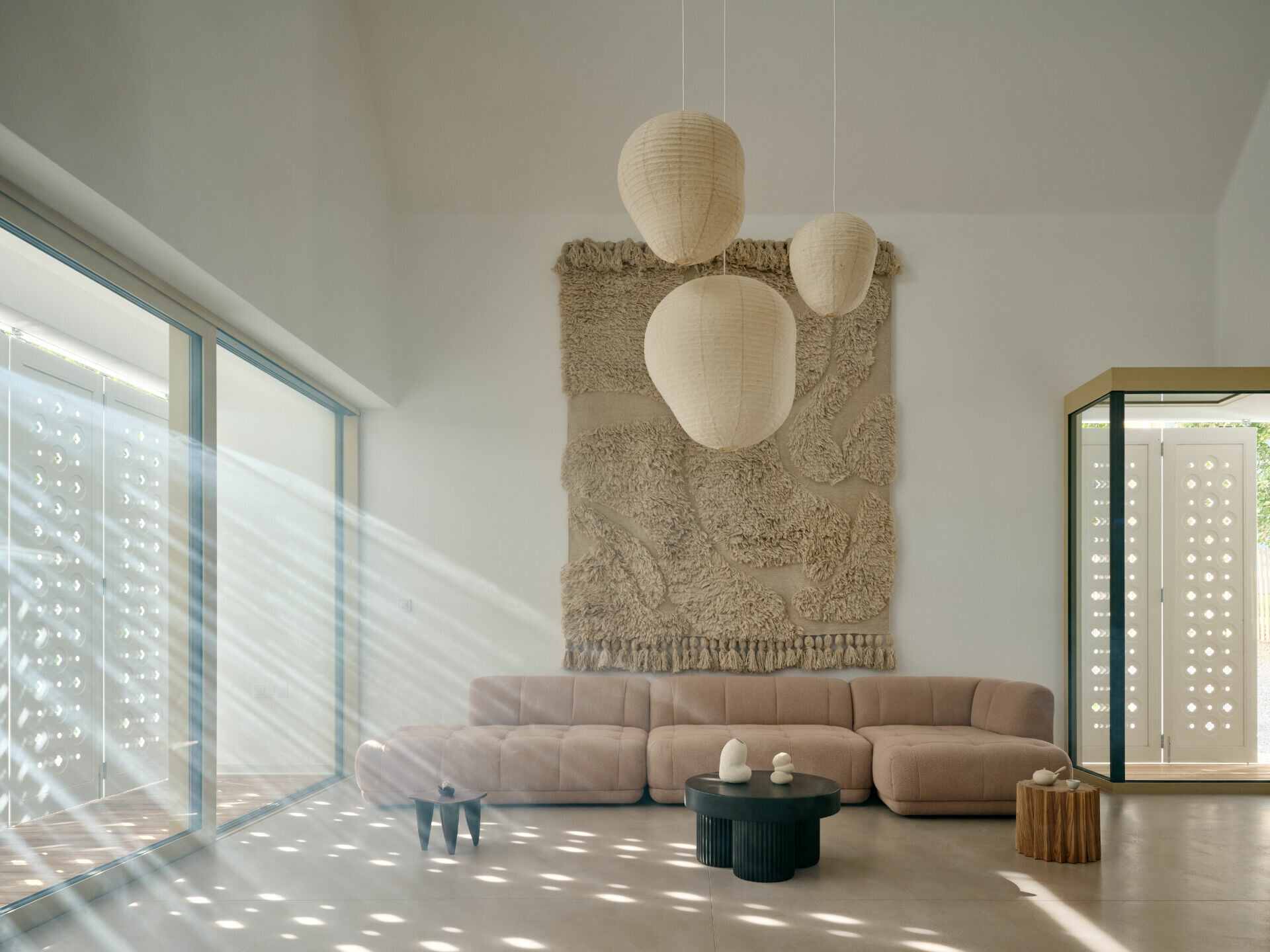
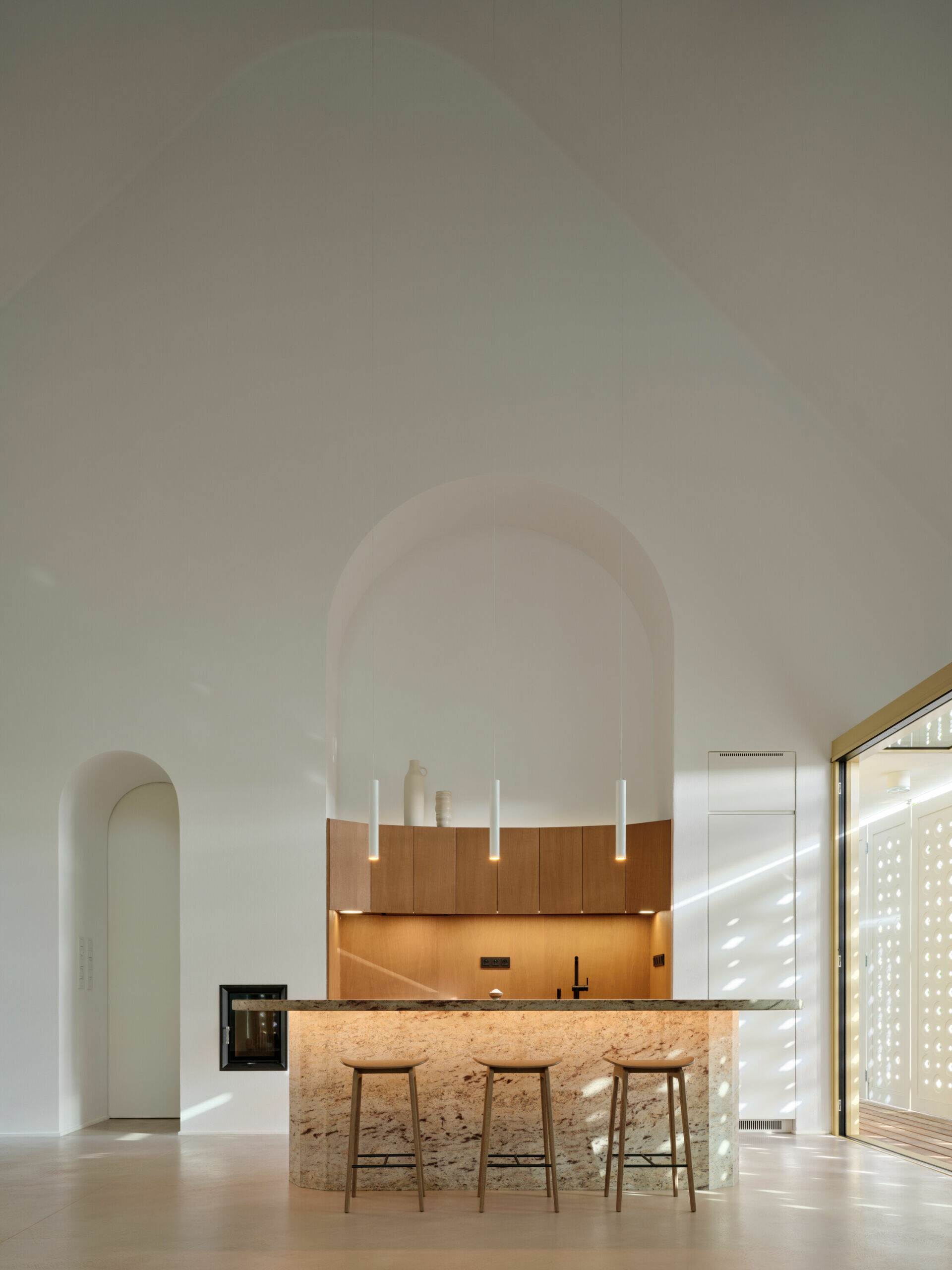
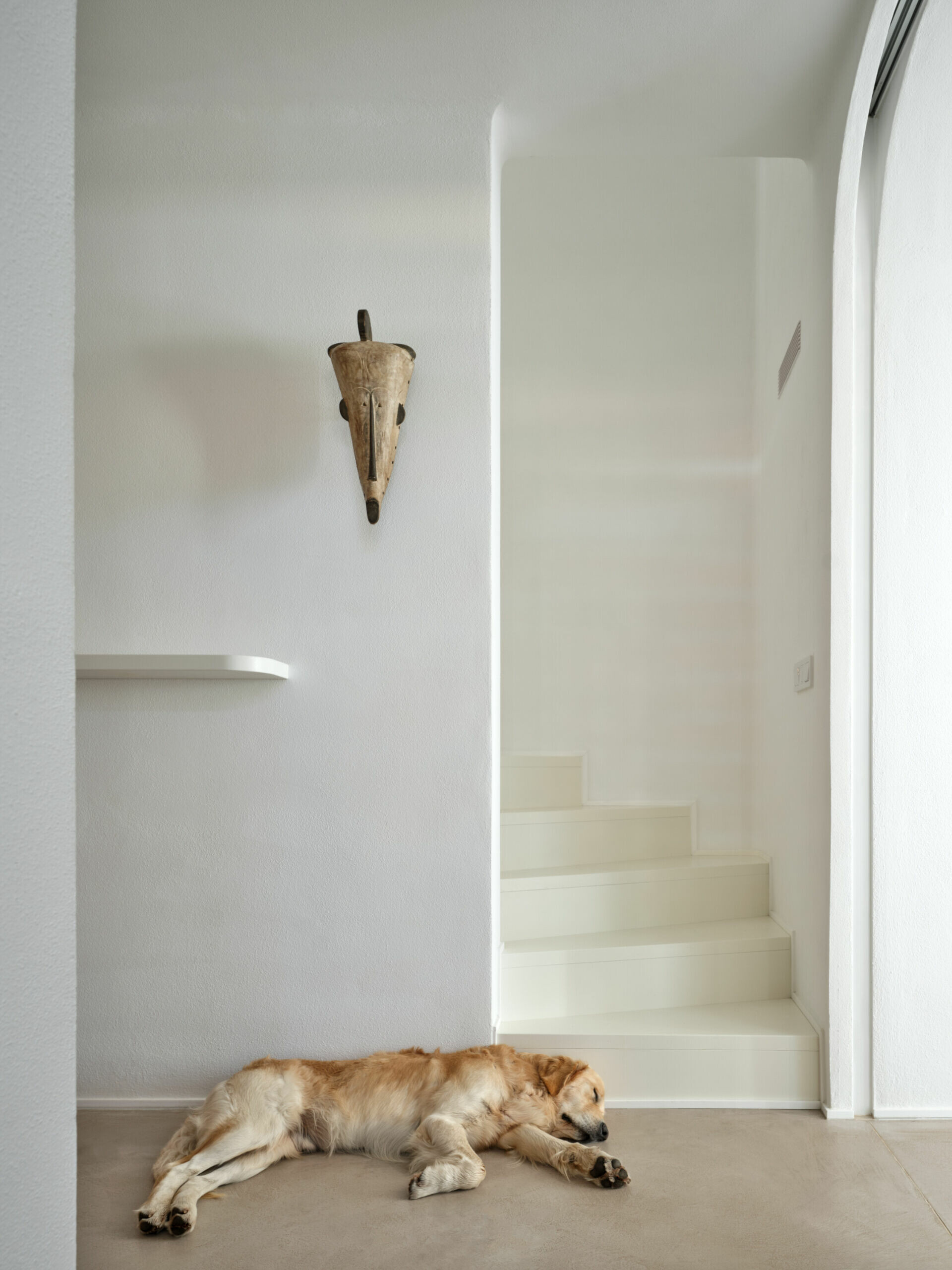
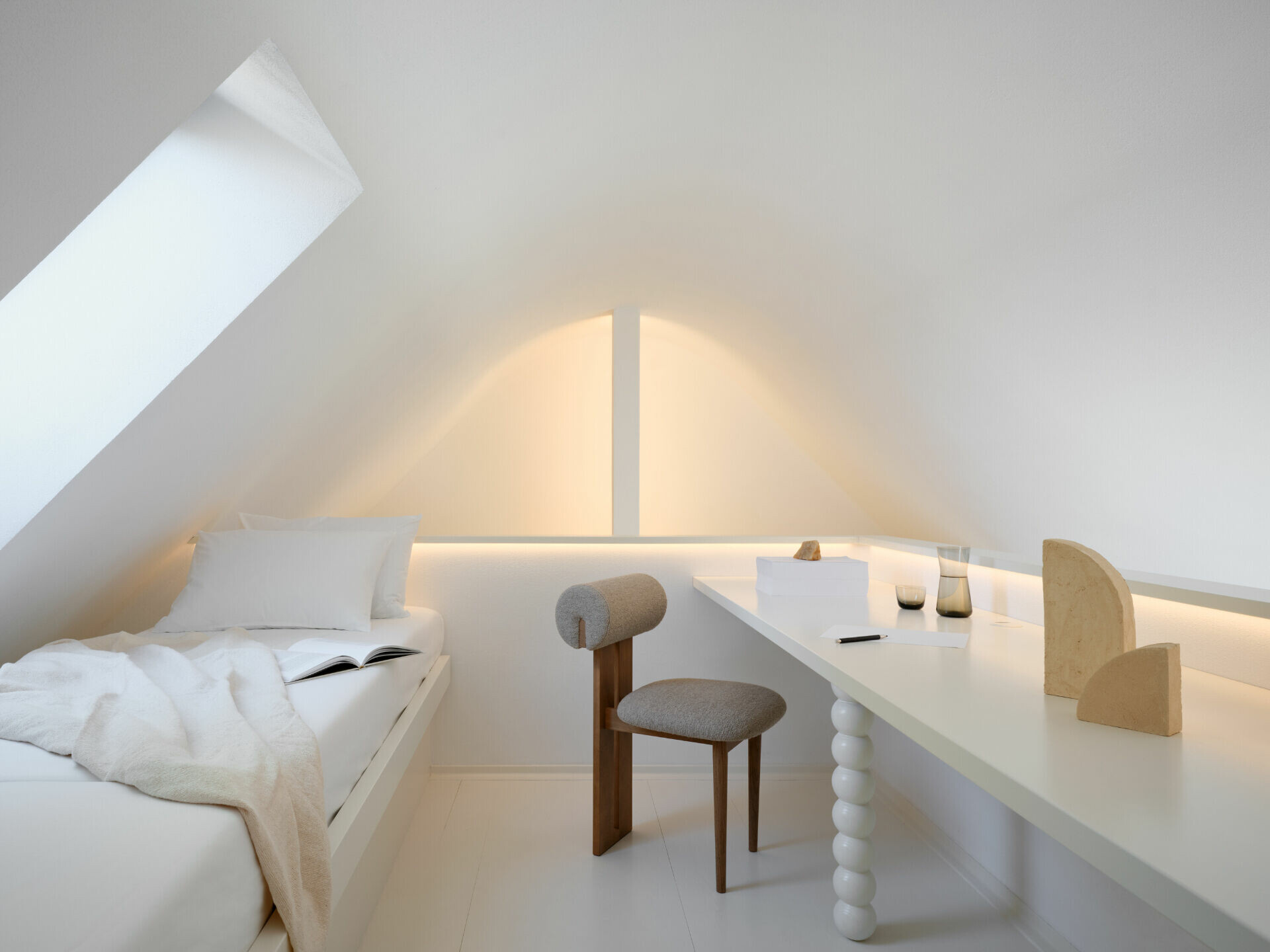
Inside, the architectural language continues seamlessly. A seven-meter vaulted ceiling and whitewashed walls amplify light and volume, while a circular window creates an ecclesiastical focal point. At the center, a sculptural kitchen island carved from Shivakashi granite evokes the solemnity of an altar, anchoring the daily life of the home. From the living room to the dining area and reading corner, every element reflects a commitment to elevating the everyday into art. The interiors are populated with bespoke furniture and carefully selected artworks, including sculptures by Michal Janiga, paintings by Antonie Stanová, and Akari lanterns by Isamu Noguchi. These pieces are not mere decoration, but active participants in the home’s Gesamtkunstwerk—a total work of art in which architecture, object, light, and ritual coalesce.
More than a private residence, House Oskar serves as a platform for creativity. It hosts artist residencies, workshops, and cultural gatherings, fostering a shared space of reflection and expression. In doing so, the house not only reflects Žaloudek’s deep respect for site-specific design but also demonstrates how architecture can be a living vessel for contemplation, imagination, and poetic habitation—a place where domestic life and cultural continuity coexist in quiet harmony.
Architect | Jan Žaloudek
Type | Single-Family House
Built-up Area | 180 m²
Gross Floor Area | 171 m²
Usable Floor Area | 154 m²
Plot Size | 8,504 m²
Materials | Ceramic Blocks / Reinforced Concrete / Lime Plaster / Fired Ceramic Tiles / Czech Fir and Spruce / Shivakashi Granite / Mist Black Granite / Aluminium Windows
Location | Kamenná Lhota, Borotín, South Bohemian Region, Czech Republic
Portraits | Hana Knížová