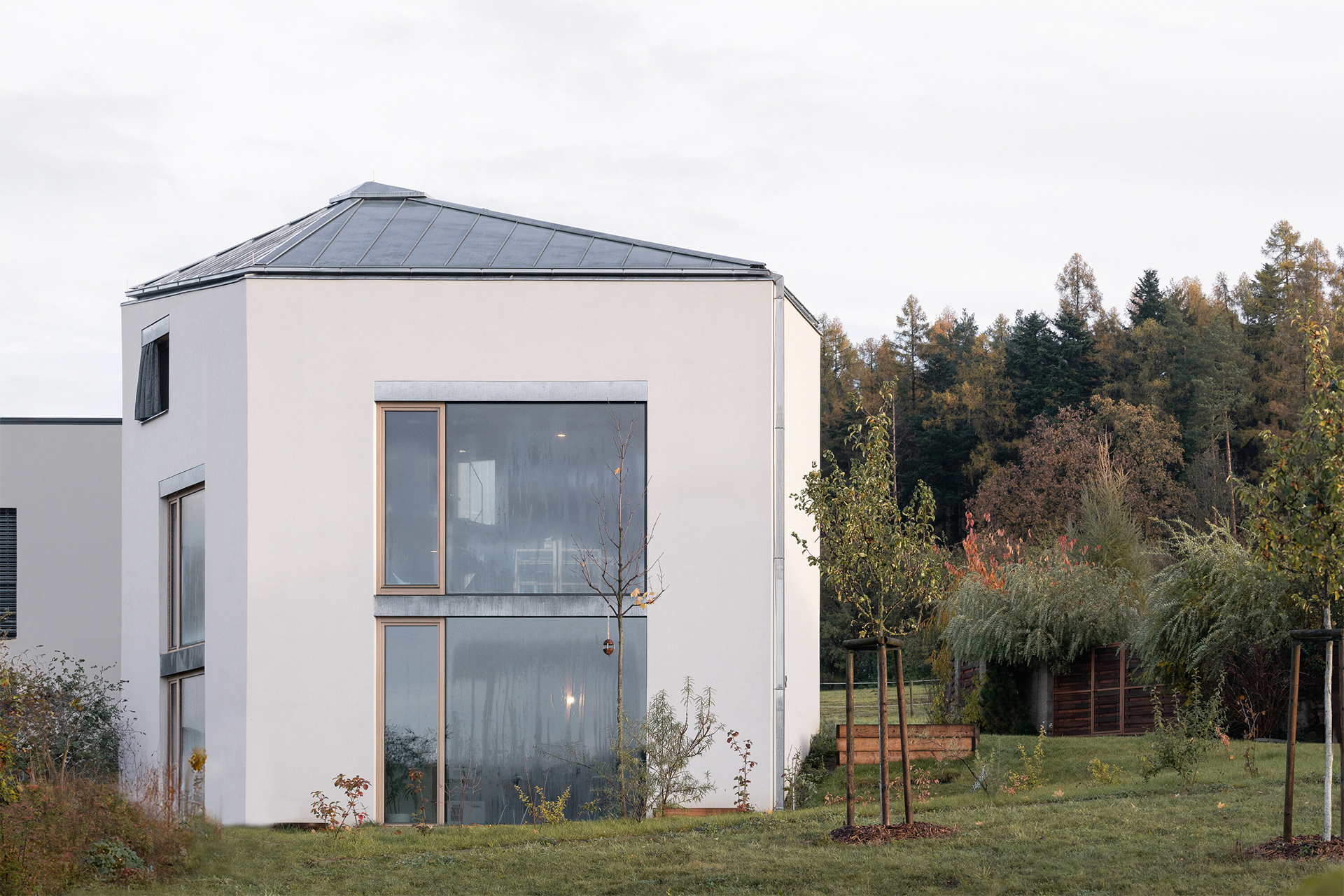
House with Seven Floors
Returning to the fundamental spirit of architecture, this modern residence designed by Malý Chmel for a family of four presents a distinctive reinterpretation of spatial living. Situated on a sloped suburban plot in the Czech Republic, the “House with Seven Floors” adopts a vertical spatial strategy in response to a highly constrained footprint of just 63 square meters. Instead of expanding horizontally, the architects layered living spaces vertically, creating a dynamic and multifunctional dwelling that meets the full spectrum of family needs within a compact site.
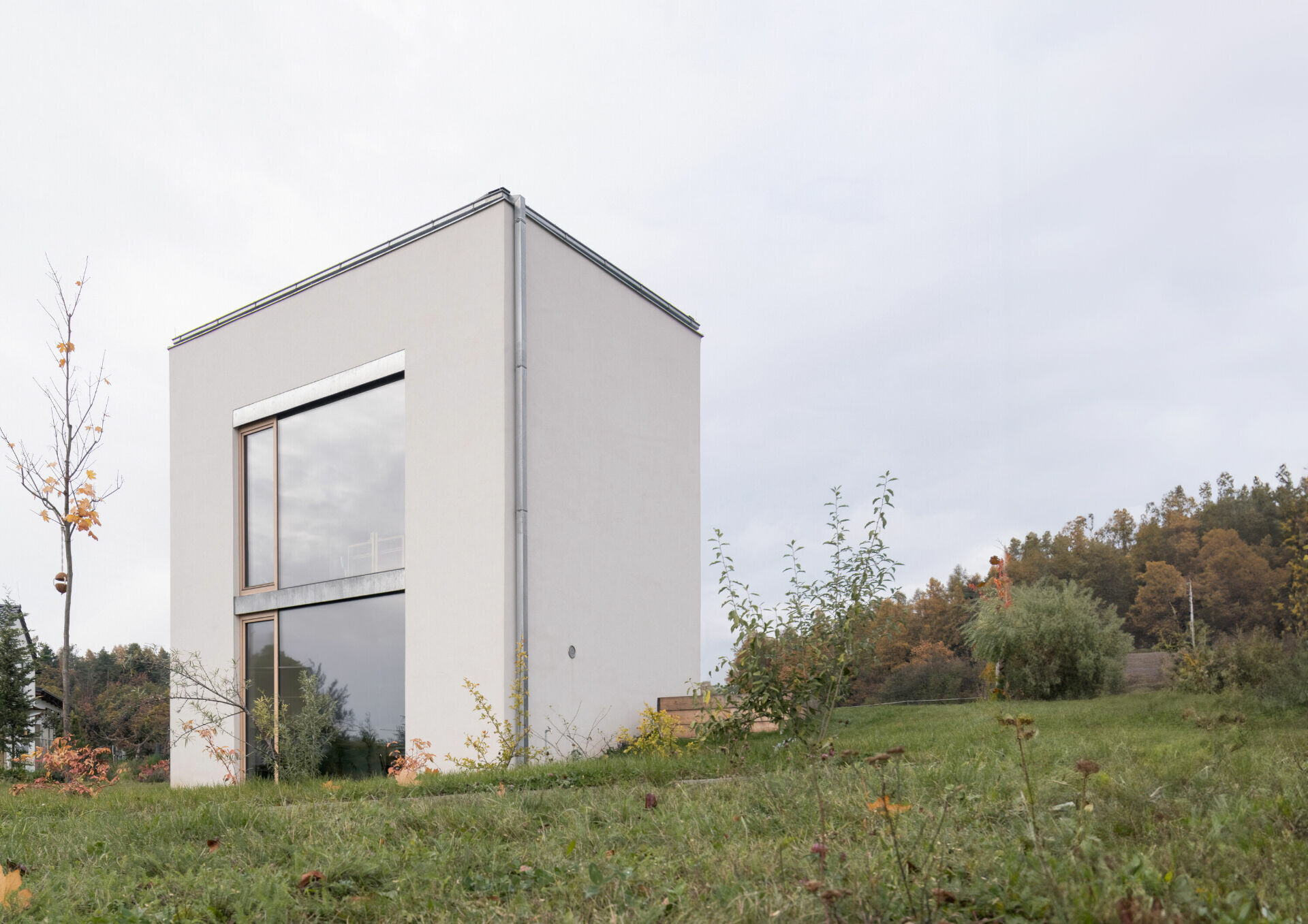
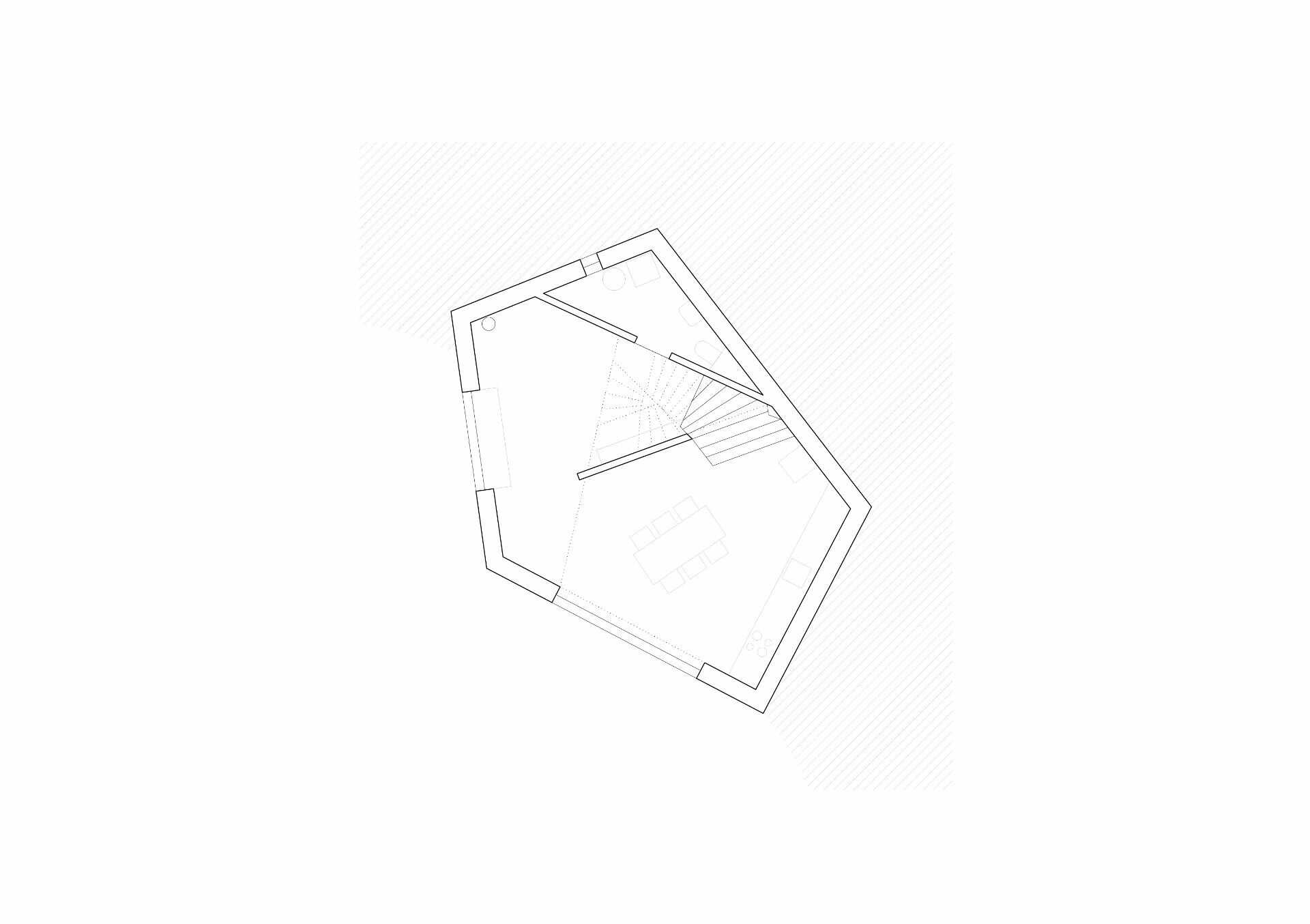
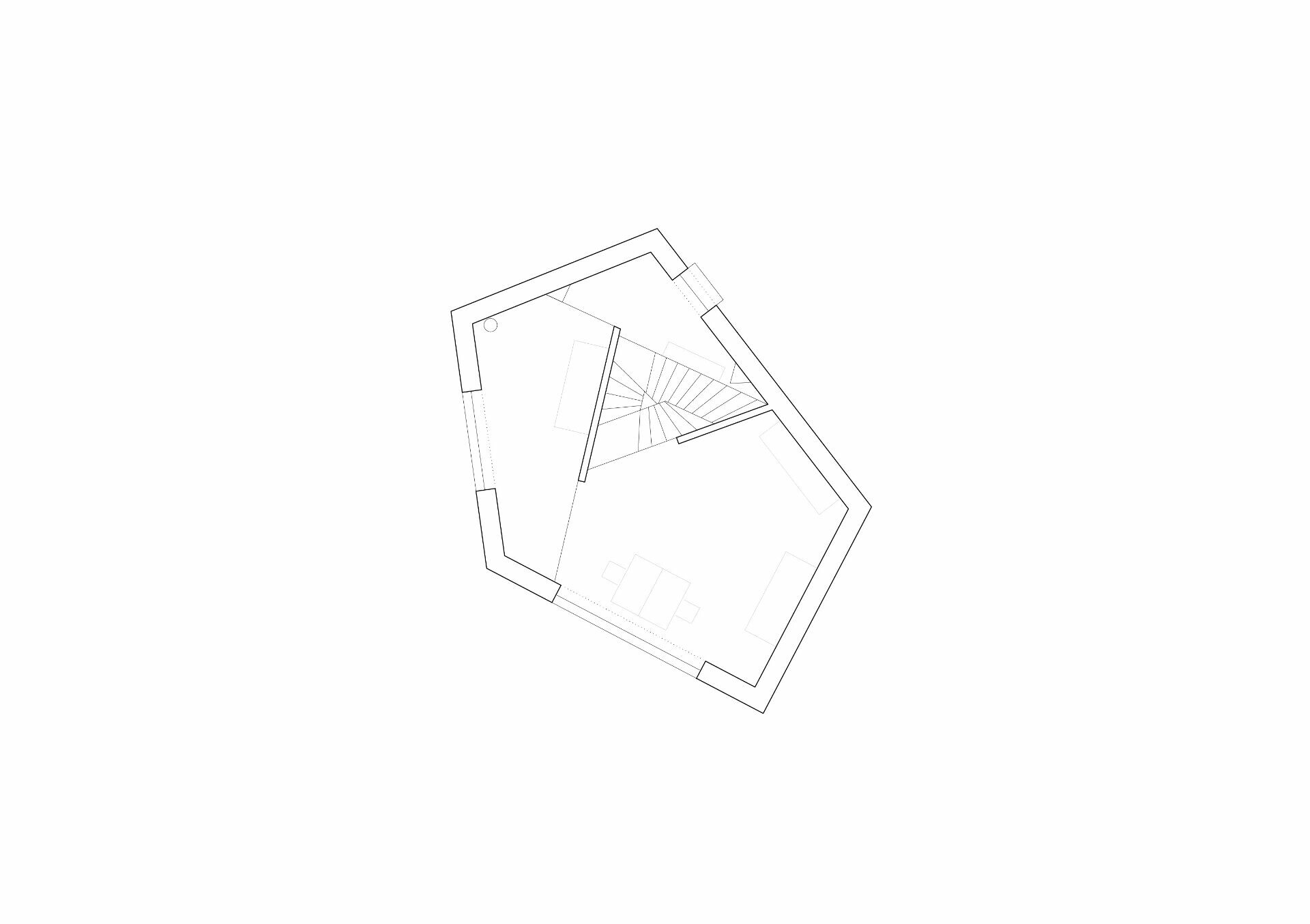
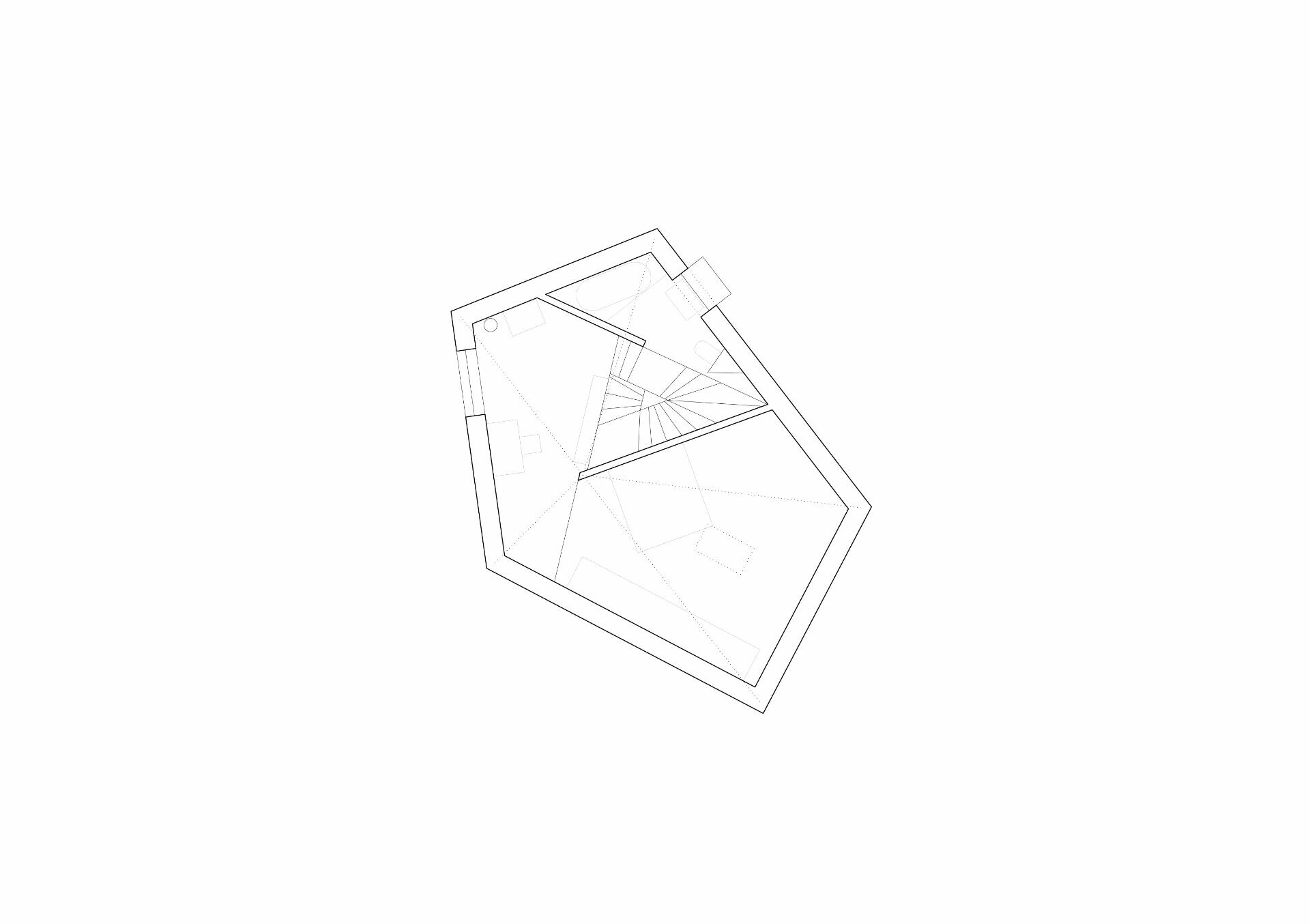
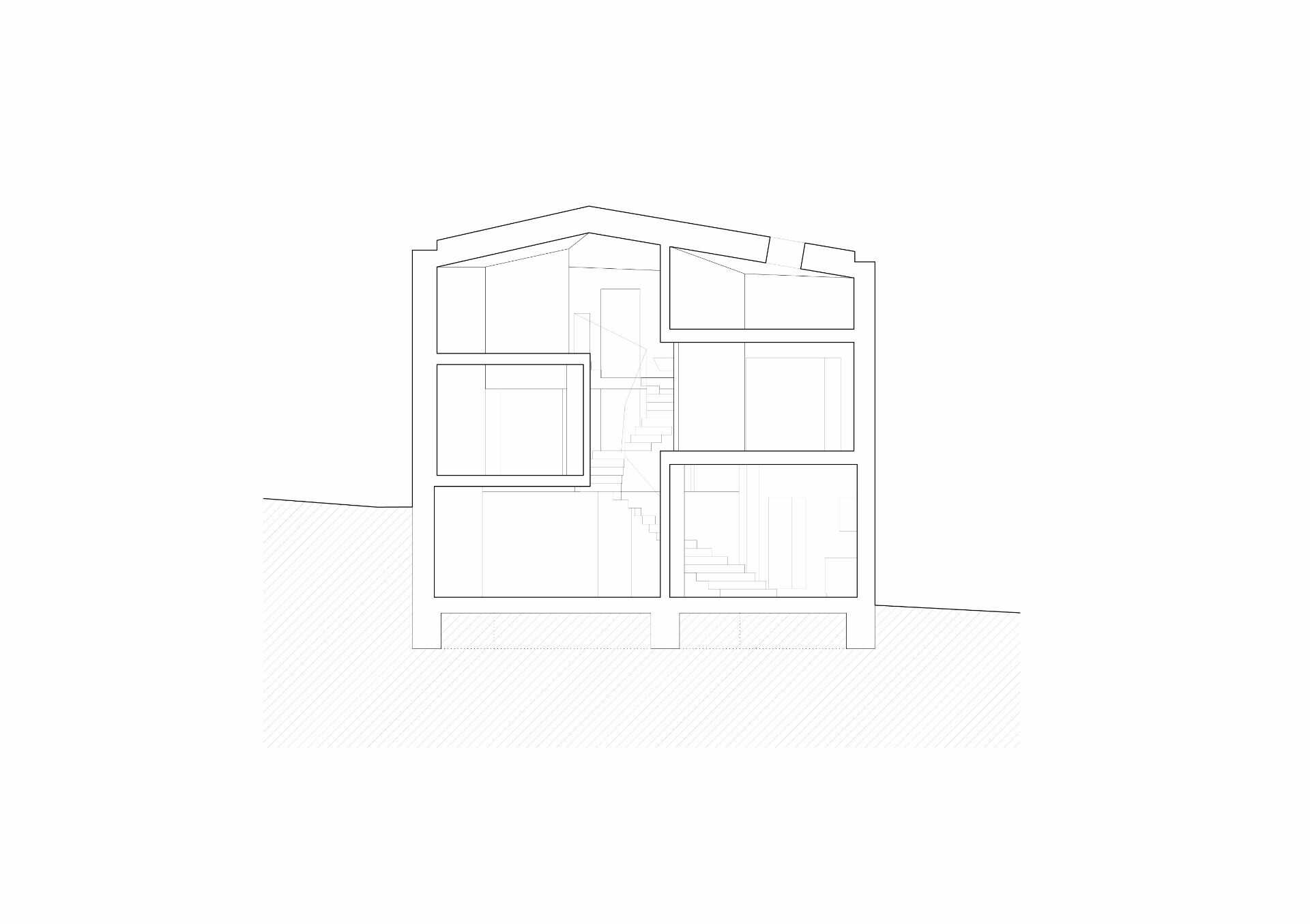
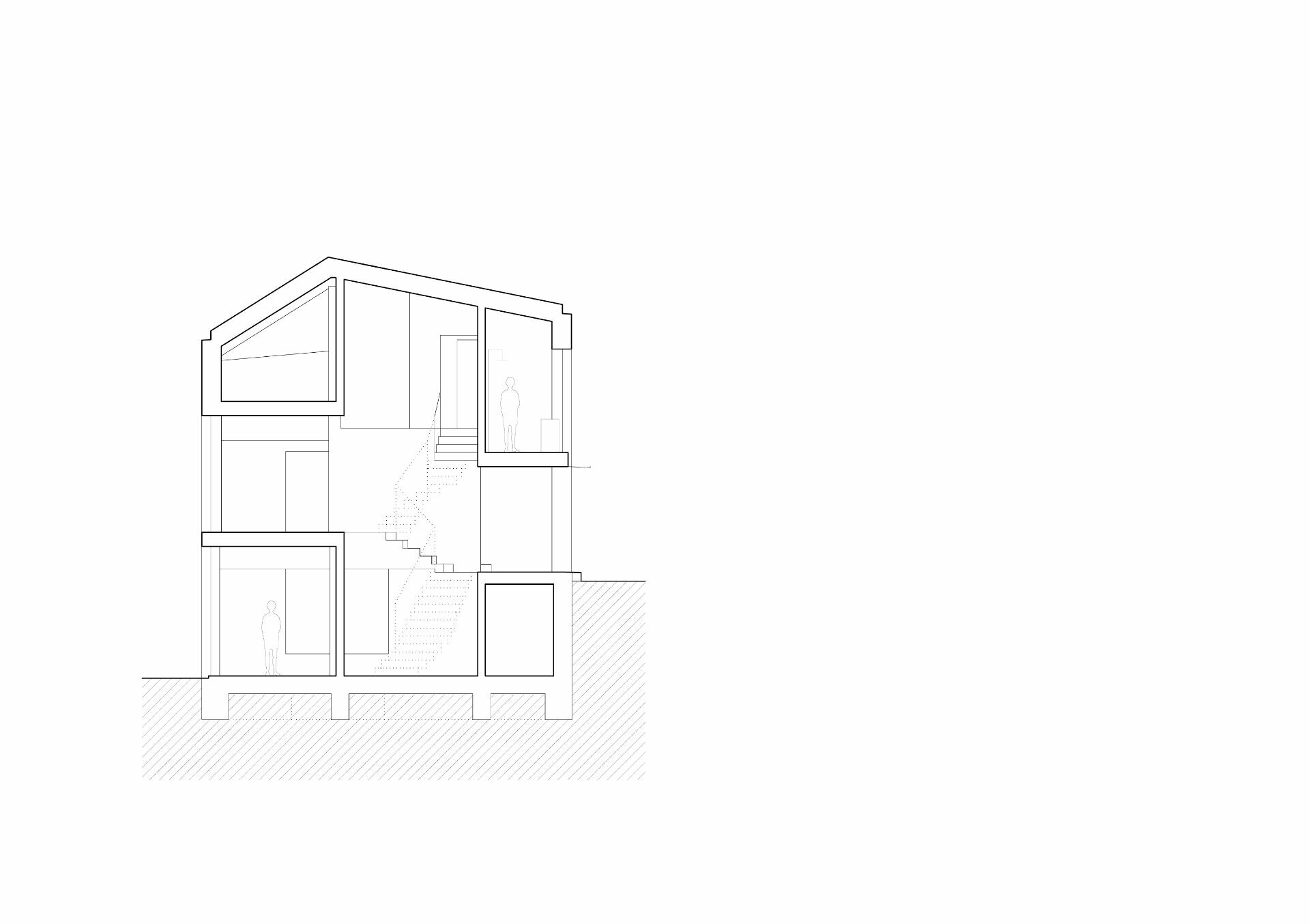
Rather than referencing the form of a cave in a literal sense, the design draws on its deeper architectural metaphor—a primordial, inward-oriented space of belonging and sensory engagement. The architects conceived the house as a “cave of light,” where seven staggered levels dissolve traditional program boundaries and wrap the interior in a continuous, enclosing volume. The resulting composition is both intimate and fluid, encouraging inhabitants to move, pause, and rediscover shifting views and light as they ascend through the vertically stacked structure.
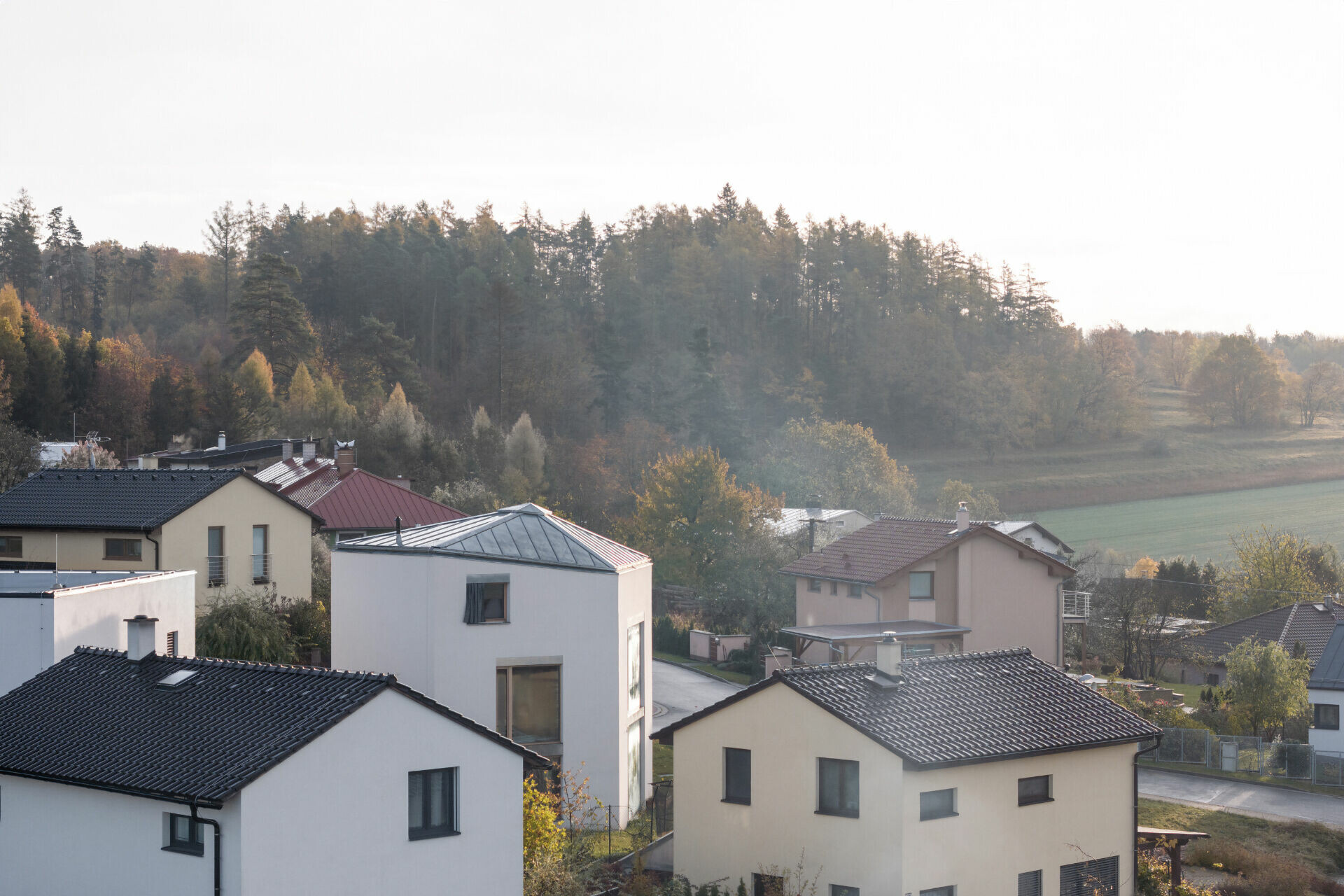
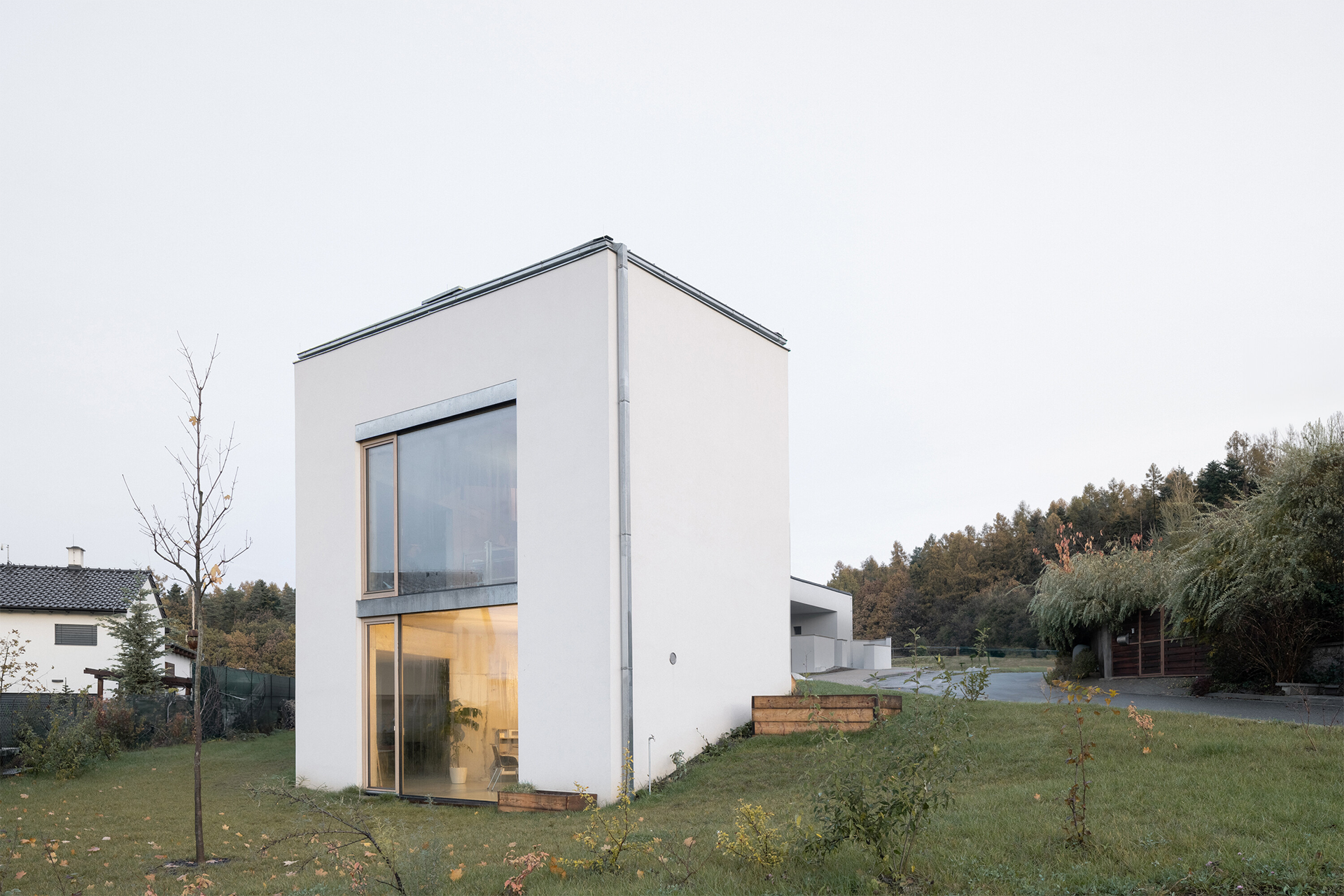
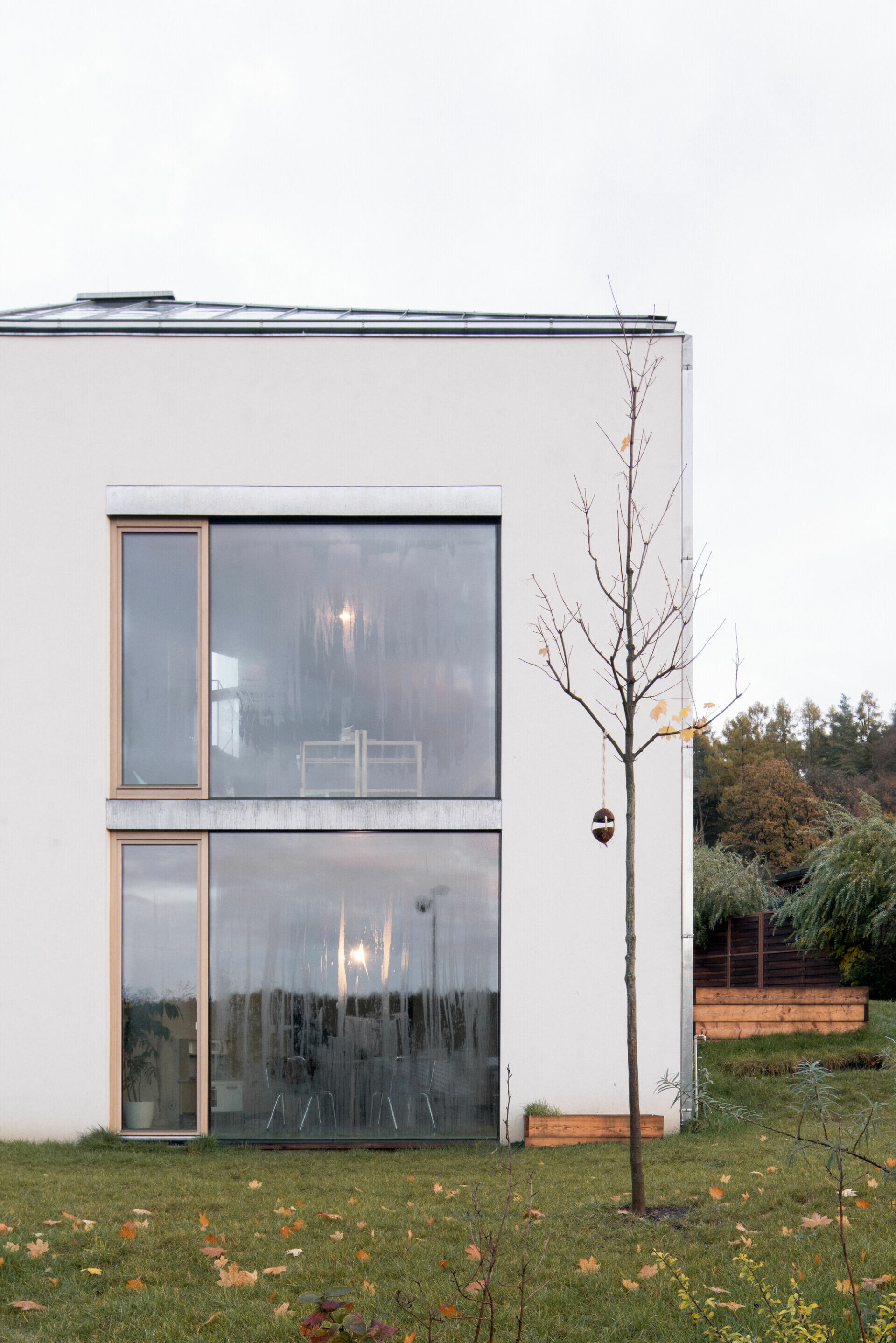
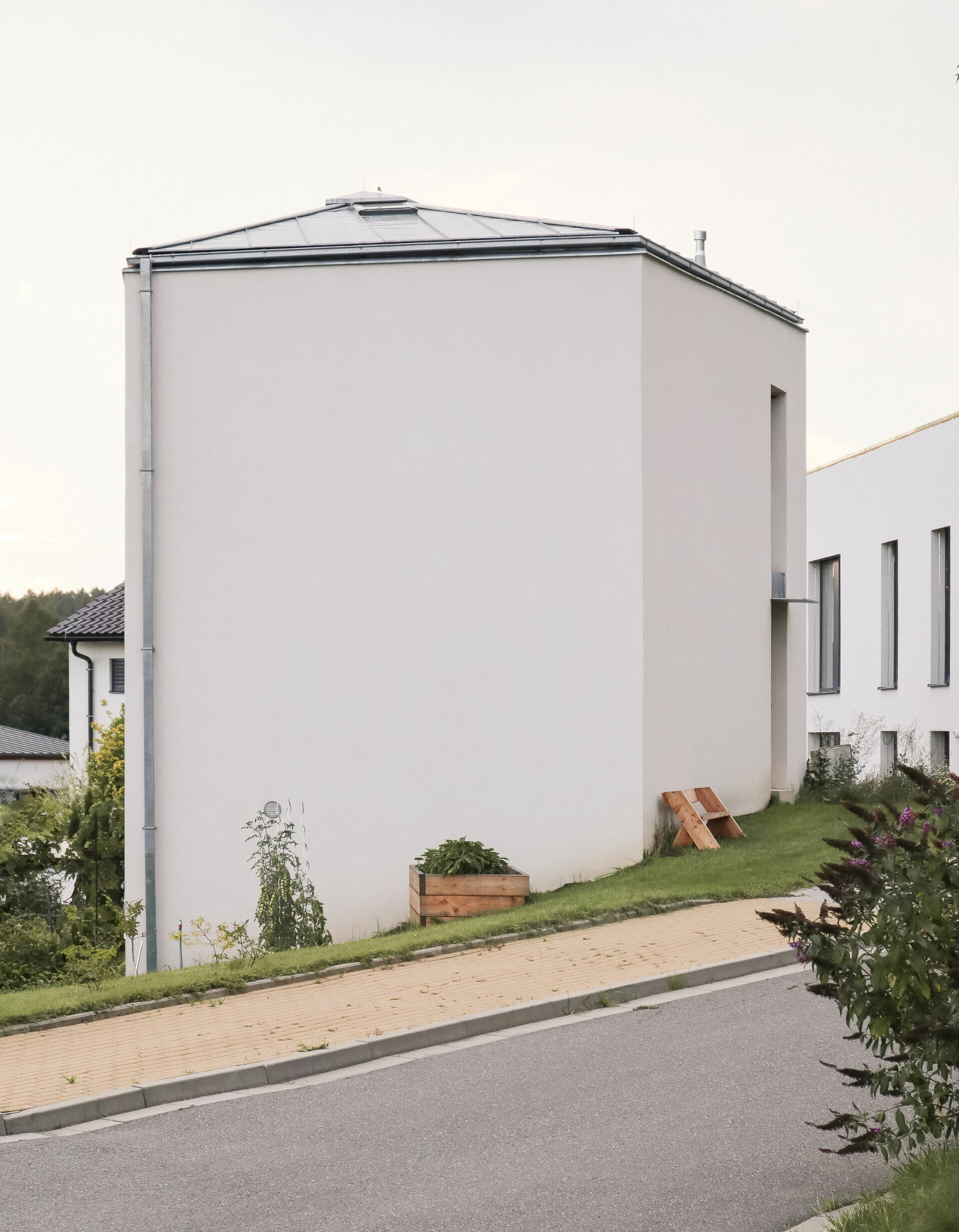
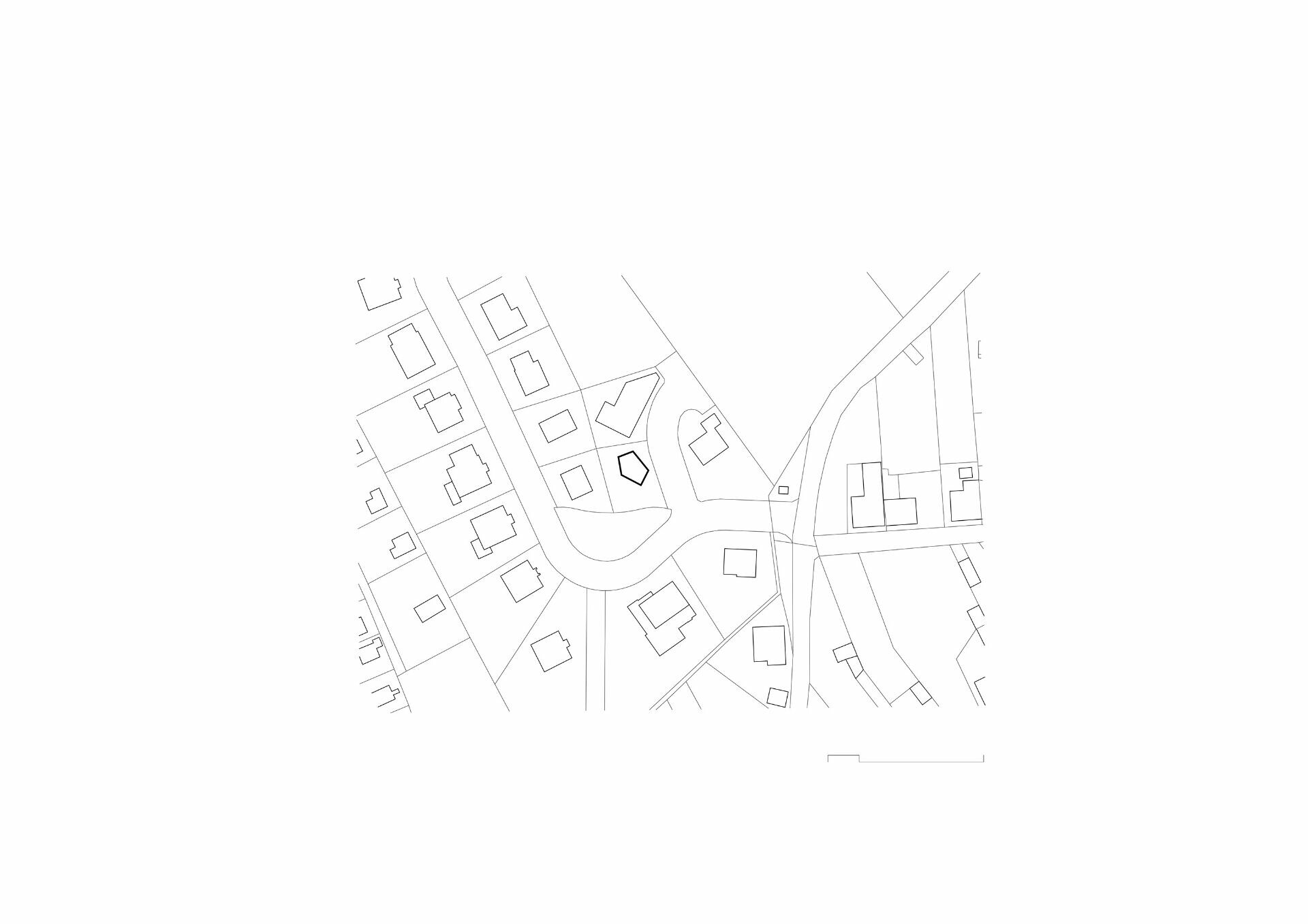
To balance spatial and recreational needs, the architects positioned the building mass along one edge of the 363-square-meter site, preserving the remainder as an open outdoor space for family life. The irregular pentagonal plan produces a faceted façade, where windows on each level are carefully calibrated to capture varying intensities and orientations of natural light. This interplay of solid and void not only enlivens the exposed concrete surface but also opens visual connections to the exterior, shaping a richly layered domestic environment.
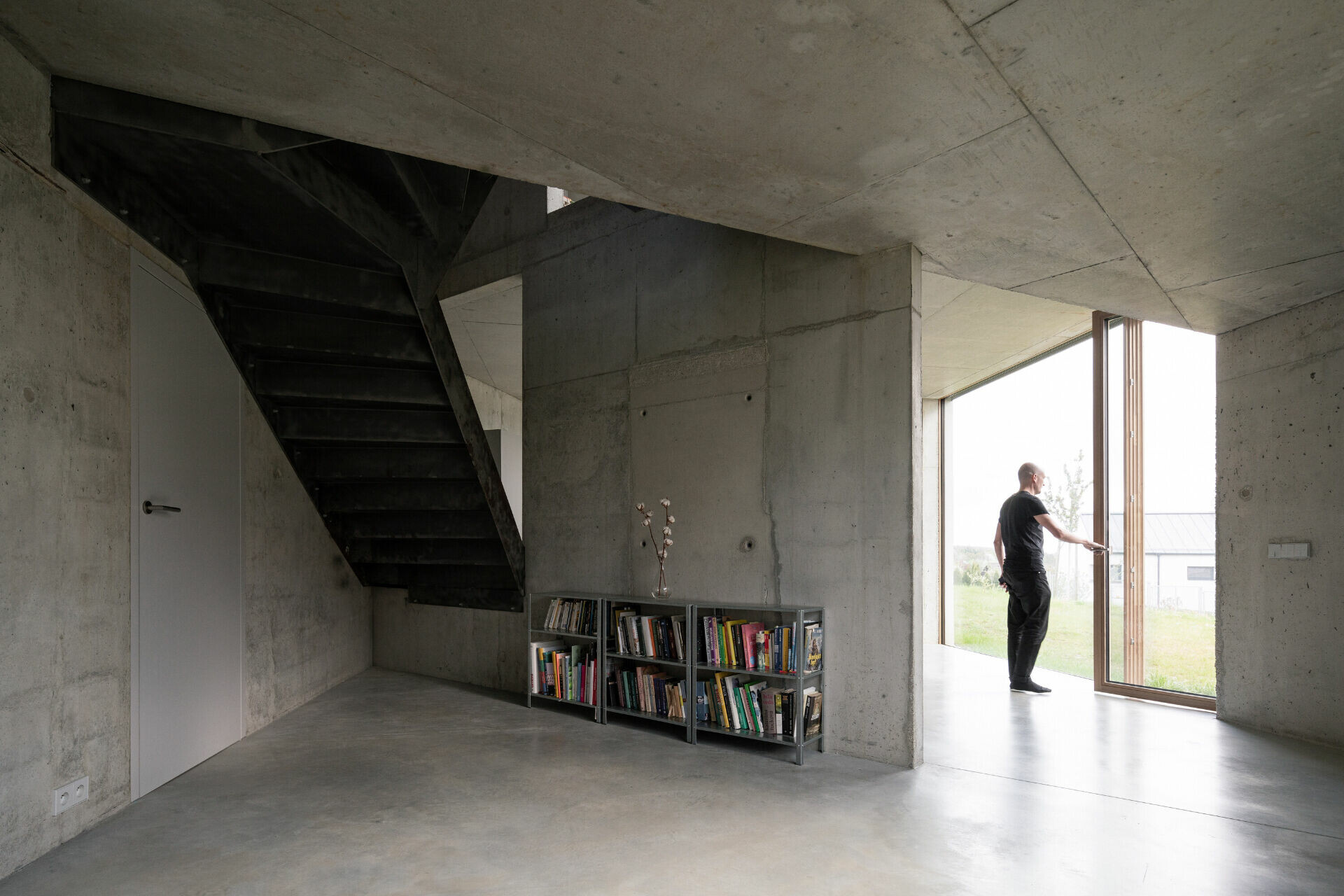
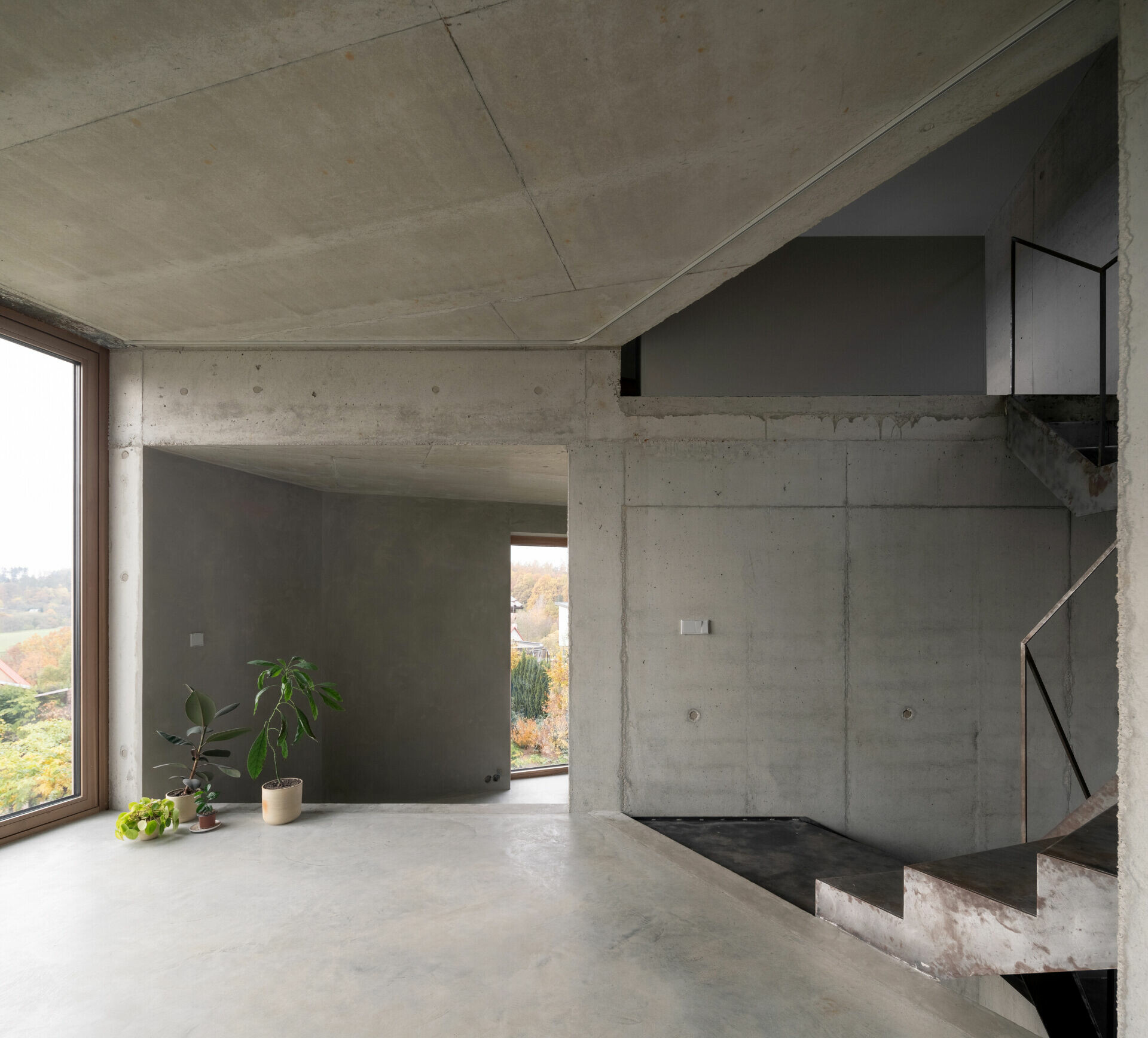
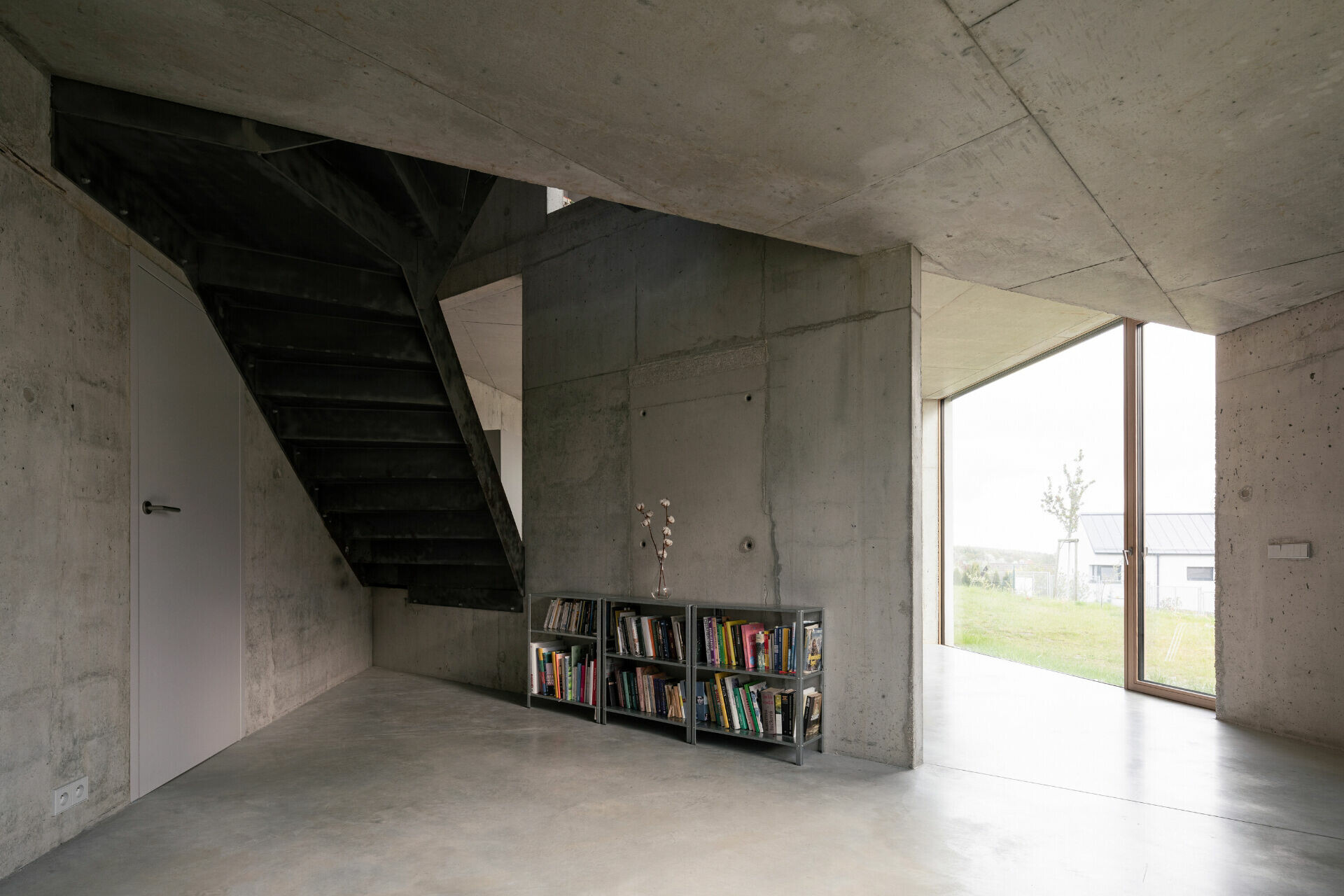
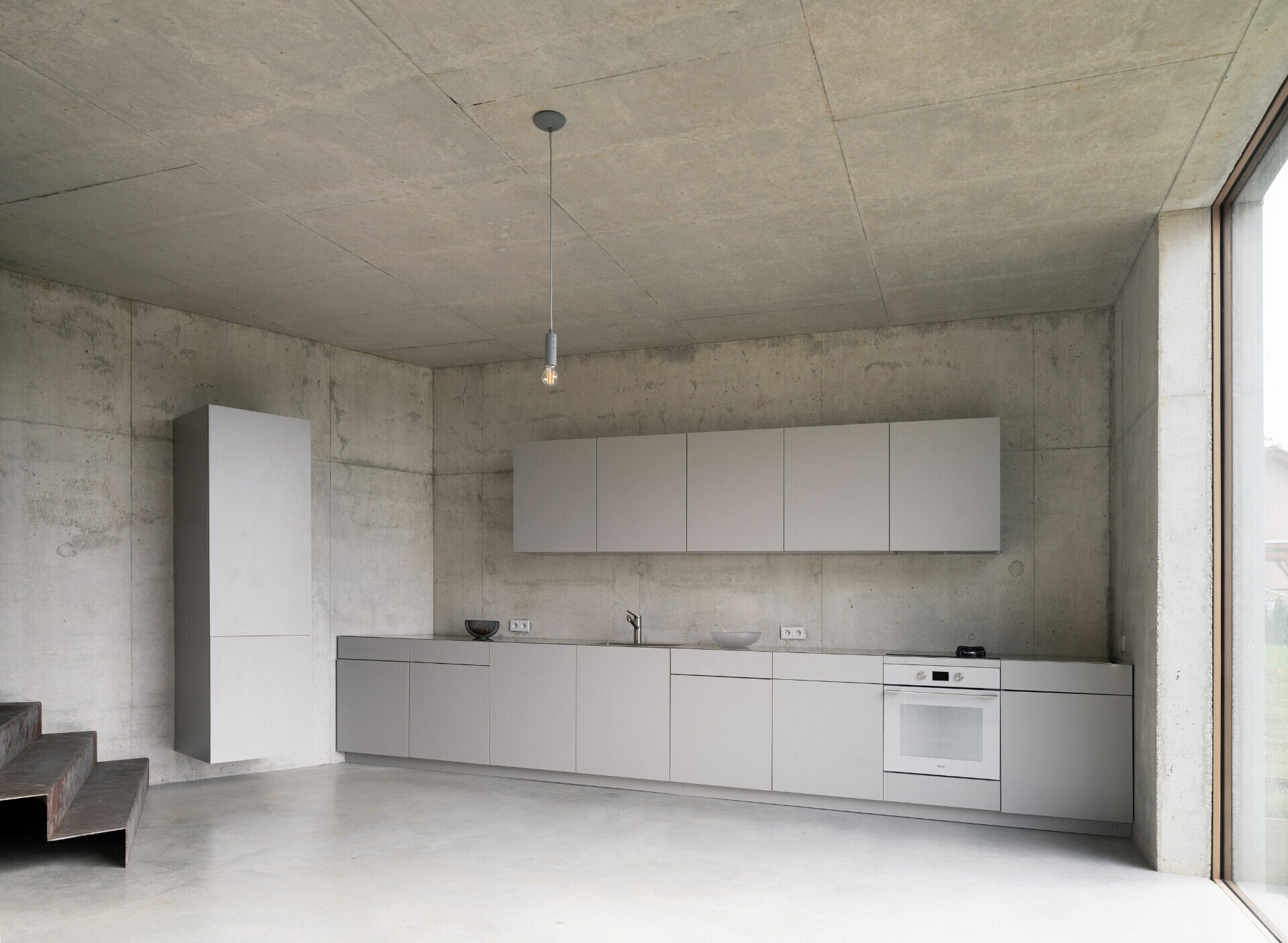
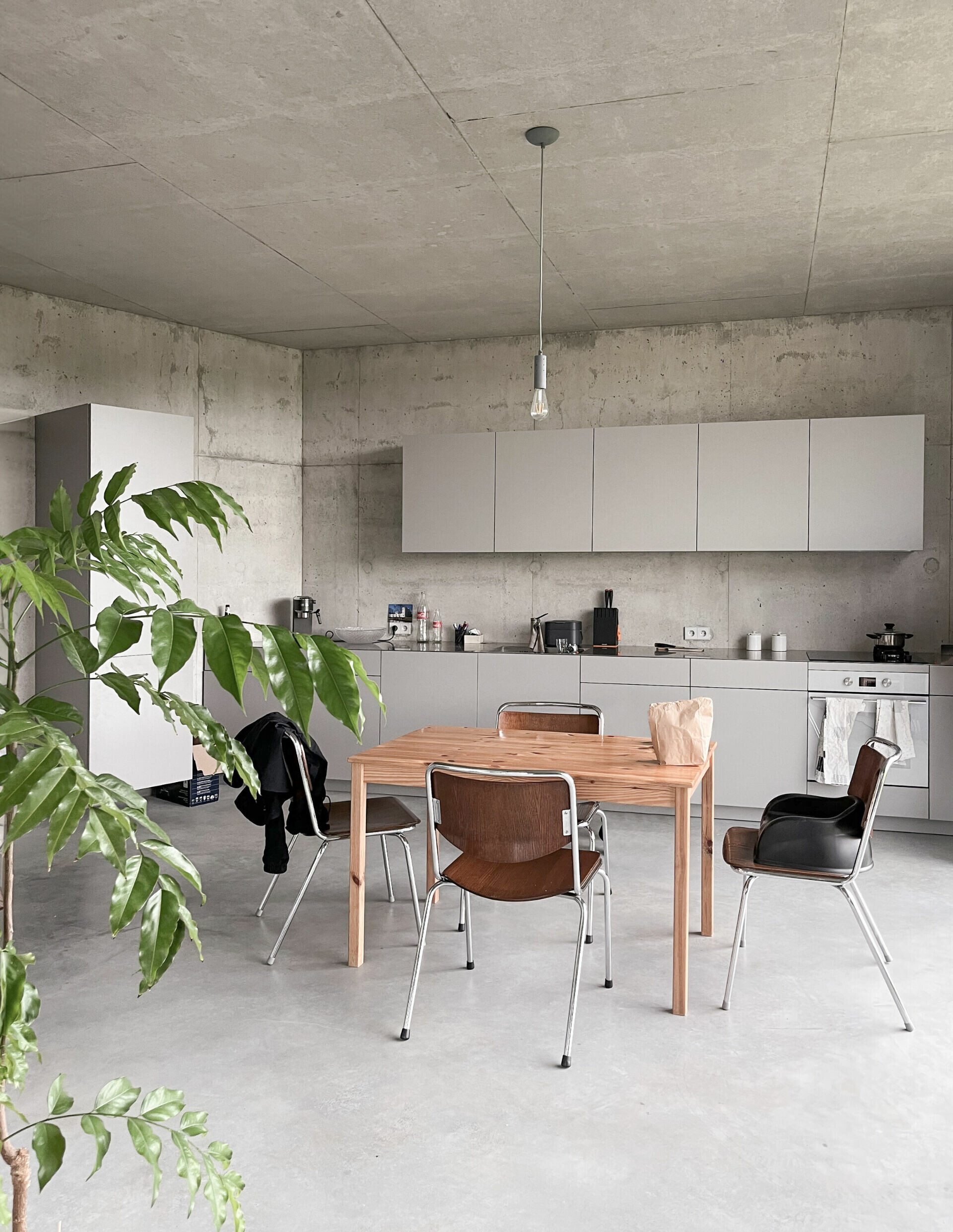
Constructed from exposed reinforced concrete, the house engages with light through its shifting grey surfaces, complemented by a sculptural steel staircase that spirals through all seven levels. Replacing conventional hallways, the staircase acts as the central vertical spine of the home. The first floor functions as the heart of family life, with the kitchen, dining, and living areas; the second floor, aligned with ground level, serves as the primary entrance. The third and fourth levels house the children’s bedrooms and play areas, followed by a bathroom on the fifth, a study and workspace on the sixth, and, at the summit, a primary bedroom offering maximum privacy and expansive views.
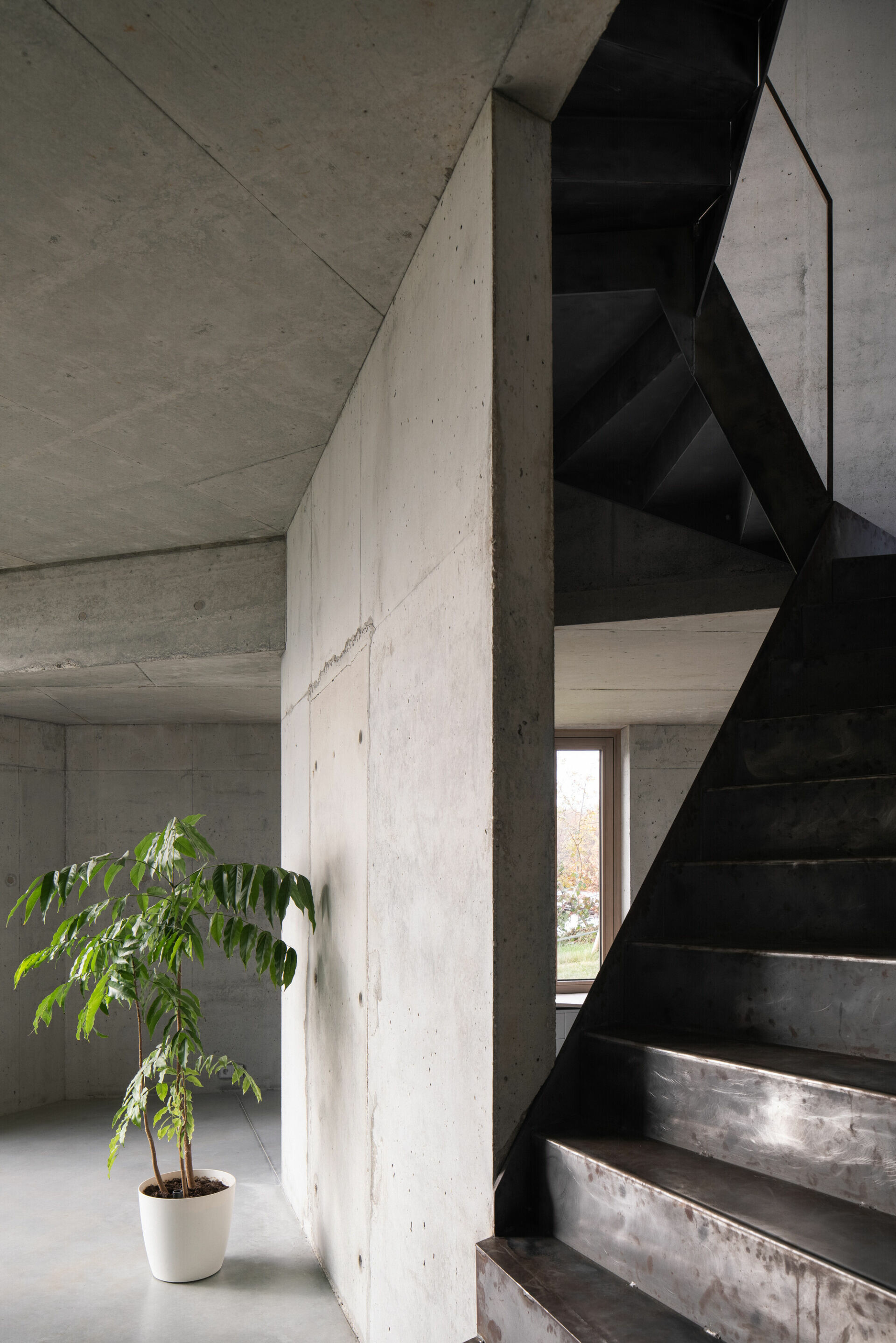
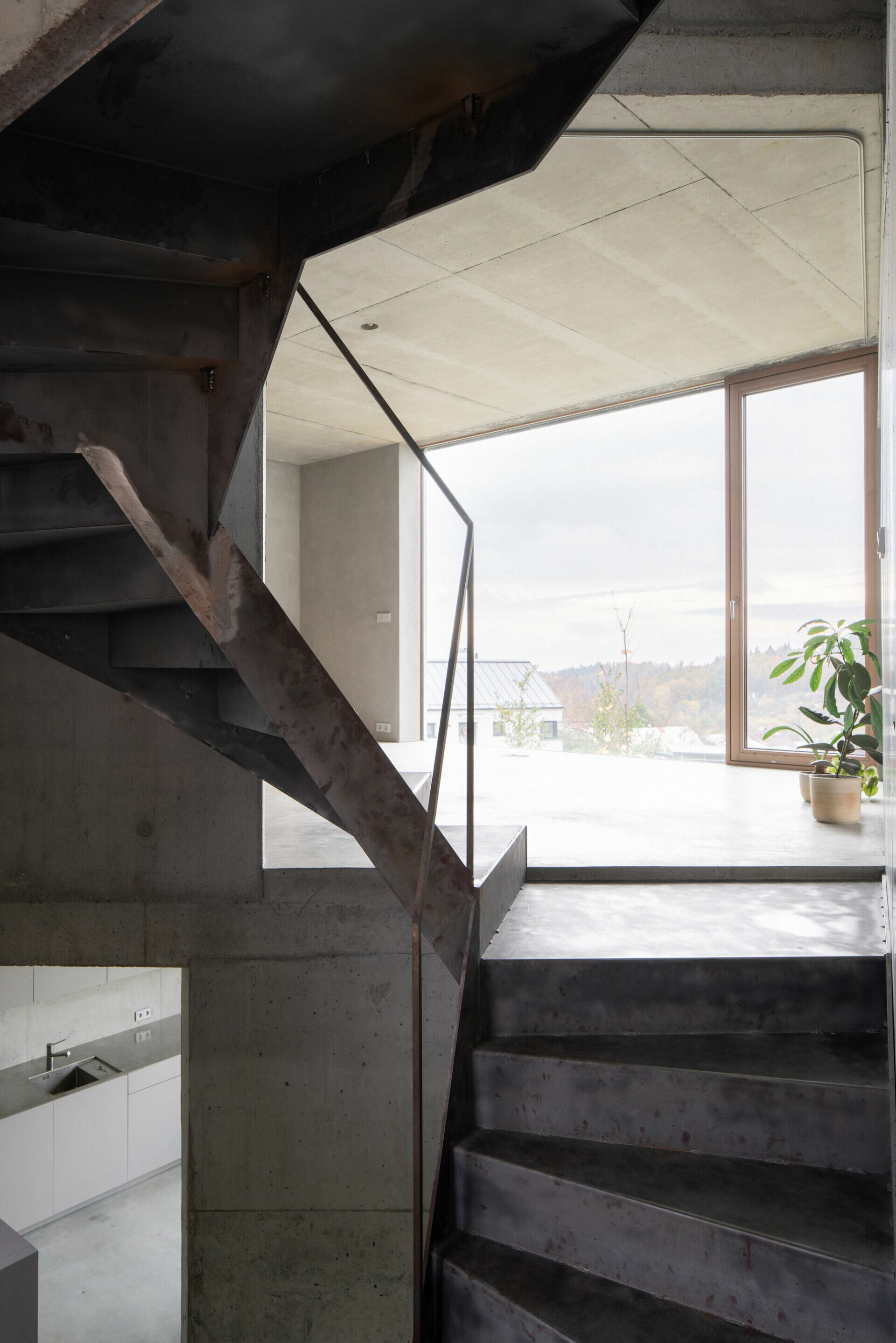
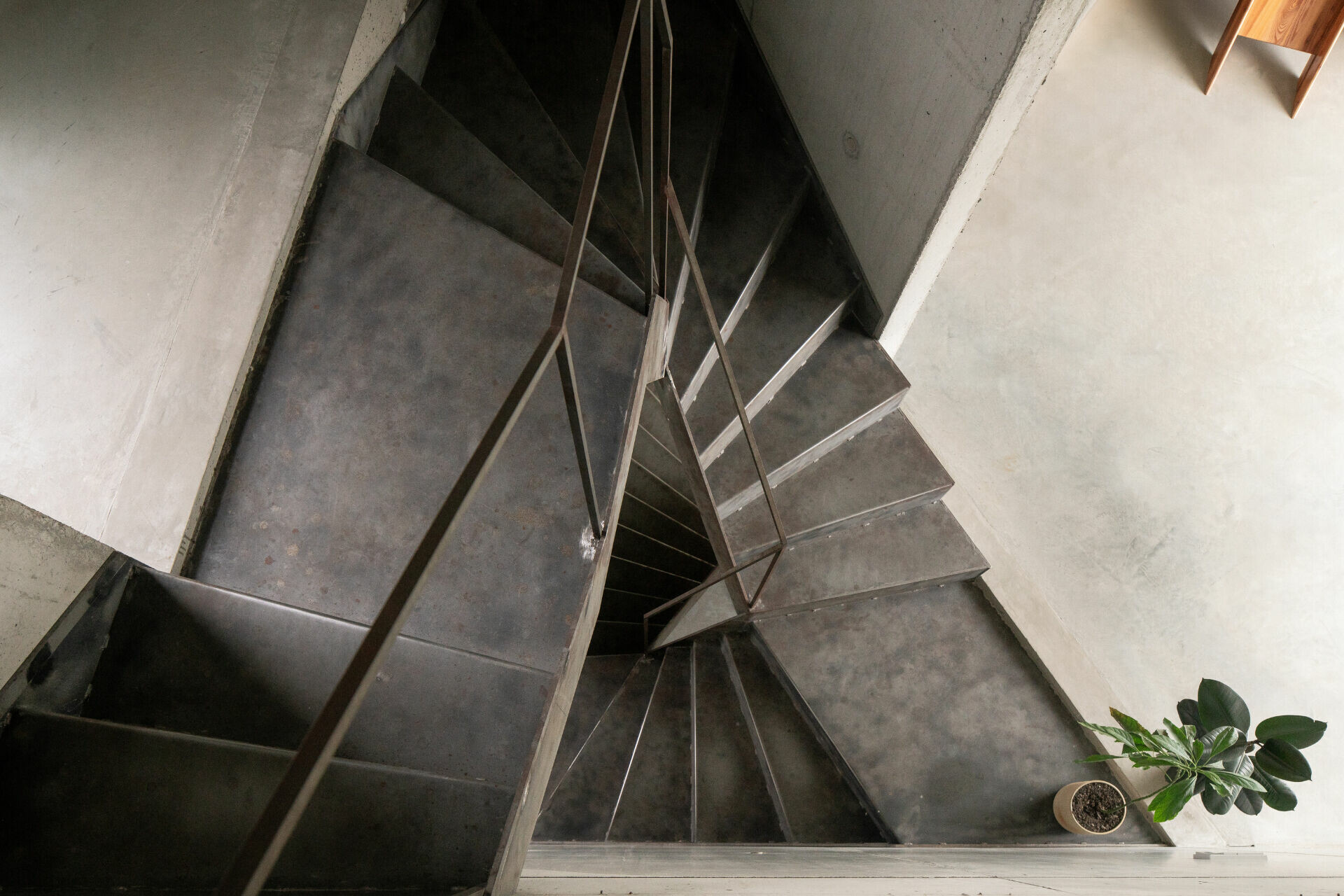
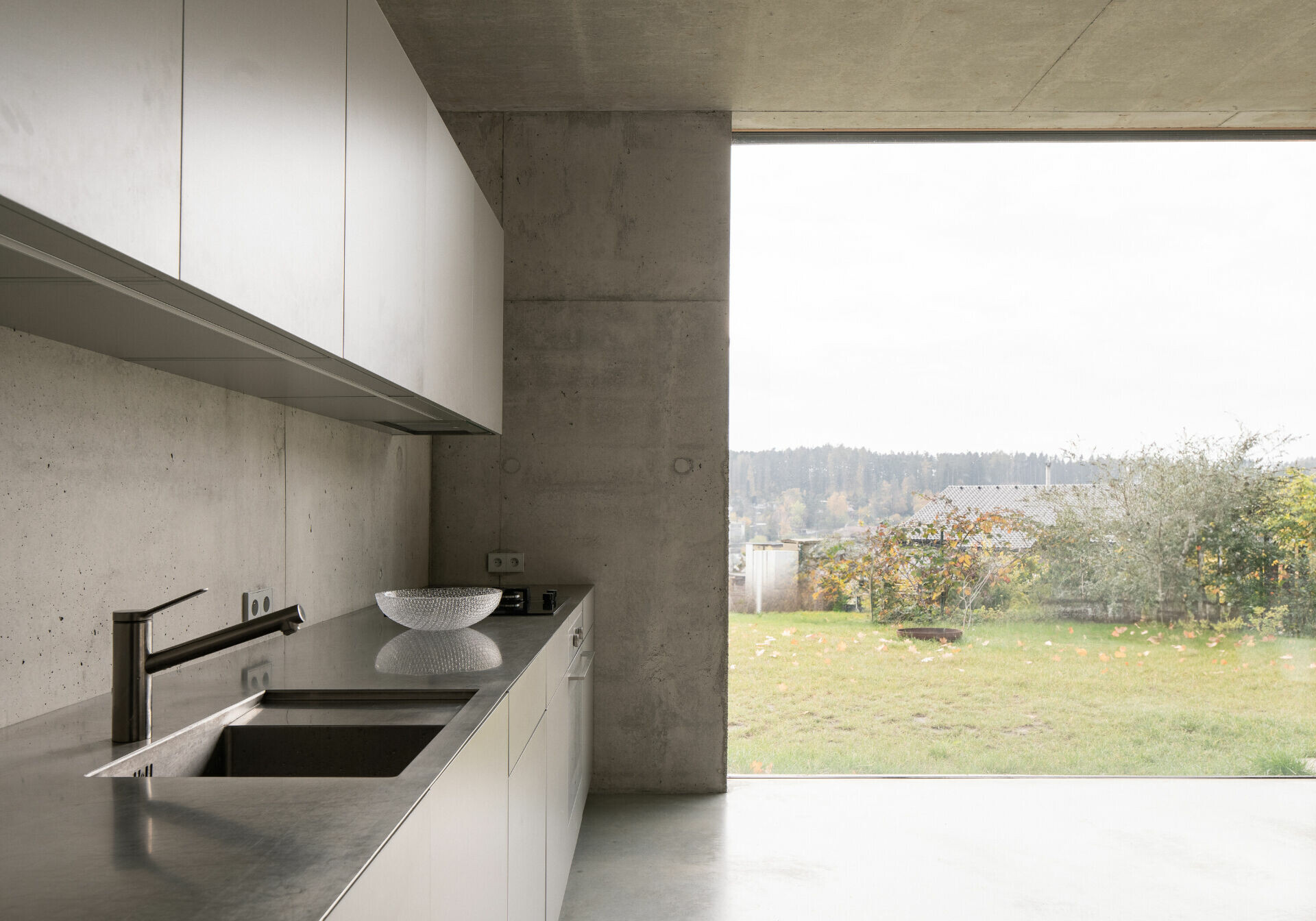
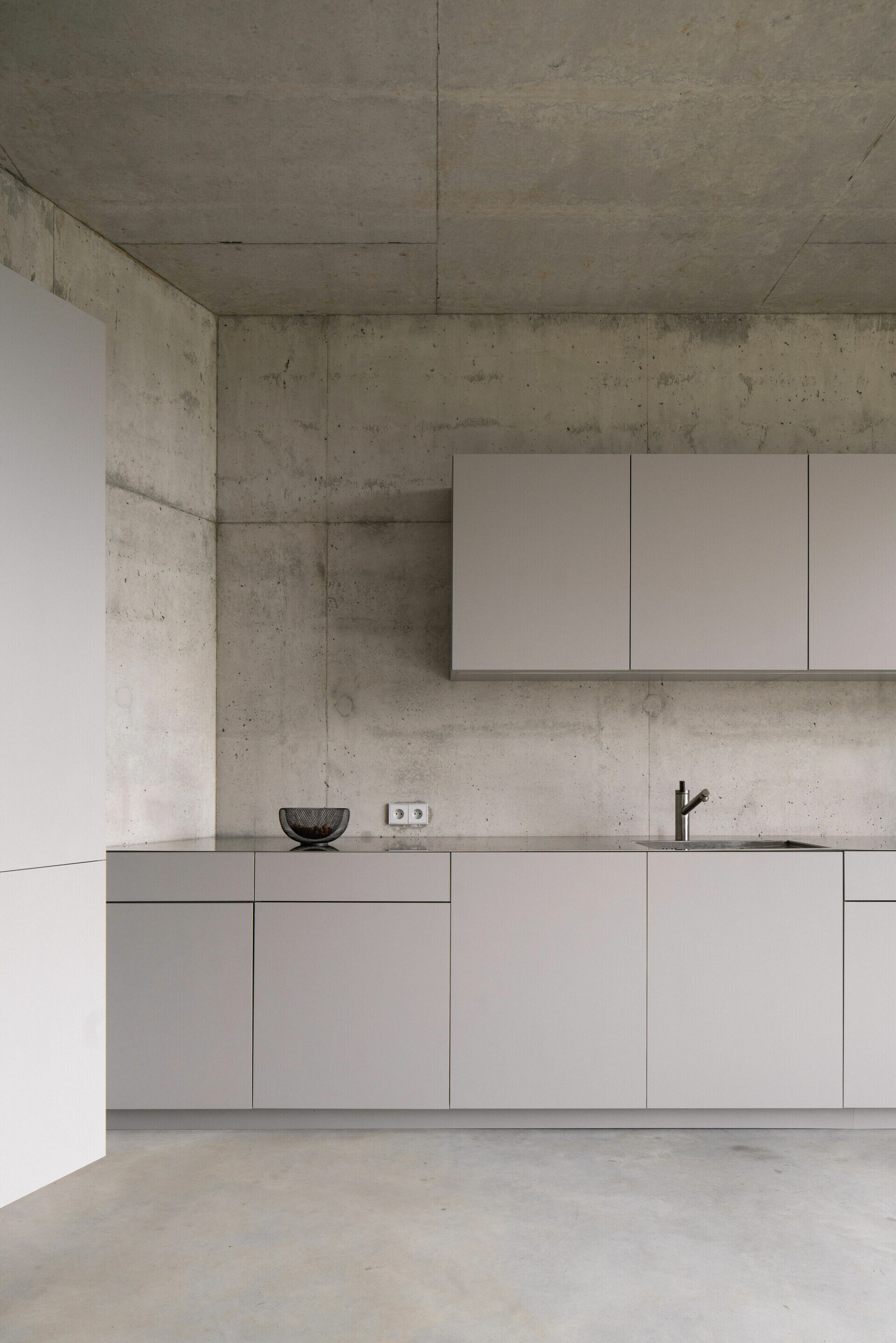
Beyond spatial ingenuity, the project prioritizes energy efficiency and environmental responsibility. The thermal mass of the concrete structure regulates interior temperatures, absorbing solar heat during the winter and facilitating cross-ventilation in the summer through operable, multi-directional windows. These openings also maximize daylight penetration, reducing reliance on artificial lighting and mechanical cooling. The material palette—ranging from the steel staircase and larch-framed windows to stainless steel kitchen surfaces and compact laminate furniture in tonal greys—is modest yet rich in tactile expression. Every element is chosen for durability and ecological performance, underscoring a design ethos that pairs high living standards with sustainable principles.