Janošík Headquarters and Showroom
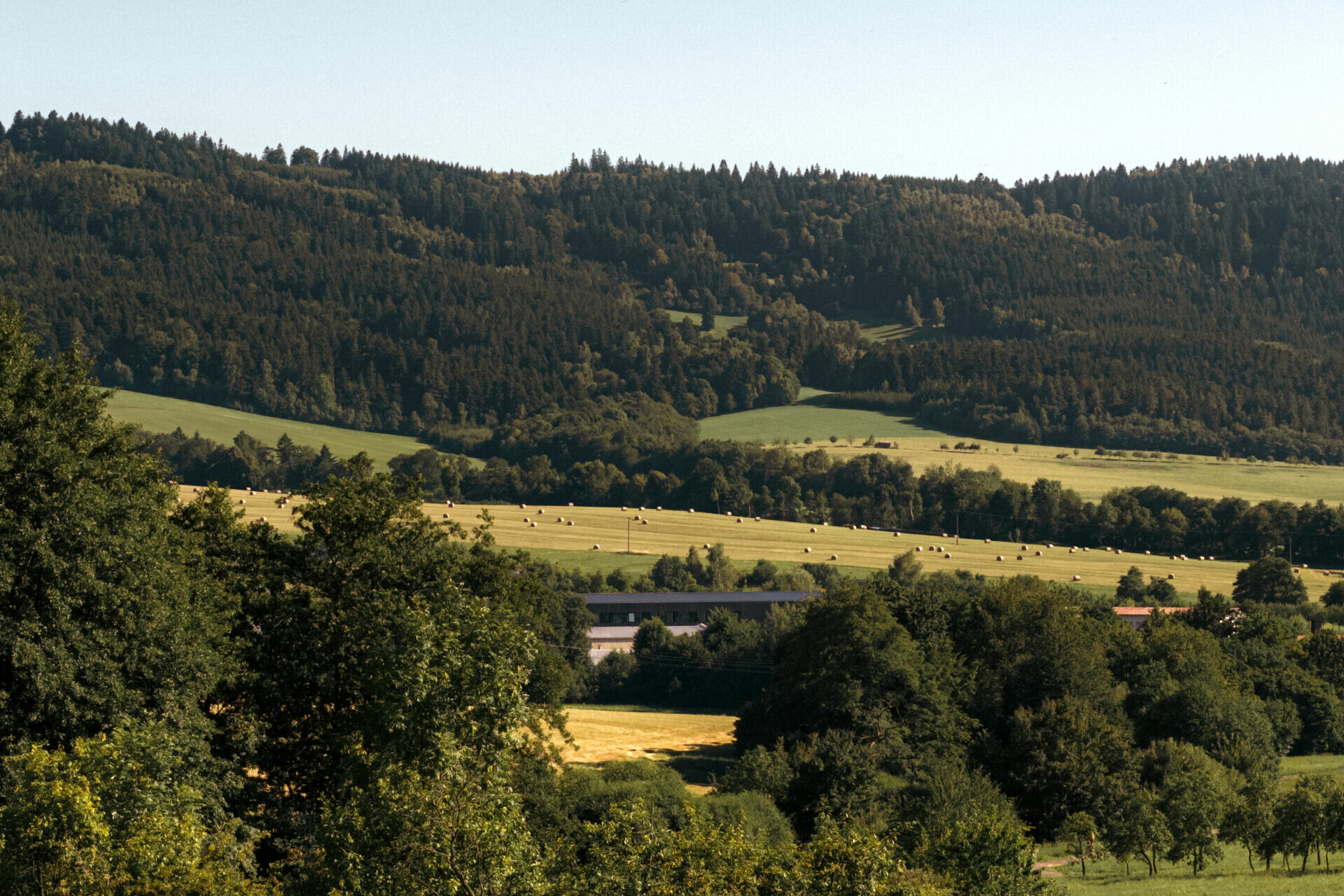
Beneath the ridge of the White Carpathians, where forest turns into meadow, stands the new headquarters and showroom of Janošík, a company producing windows and doors for contemporary architecture.
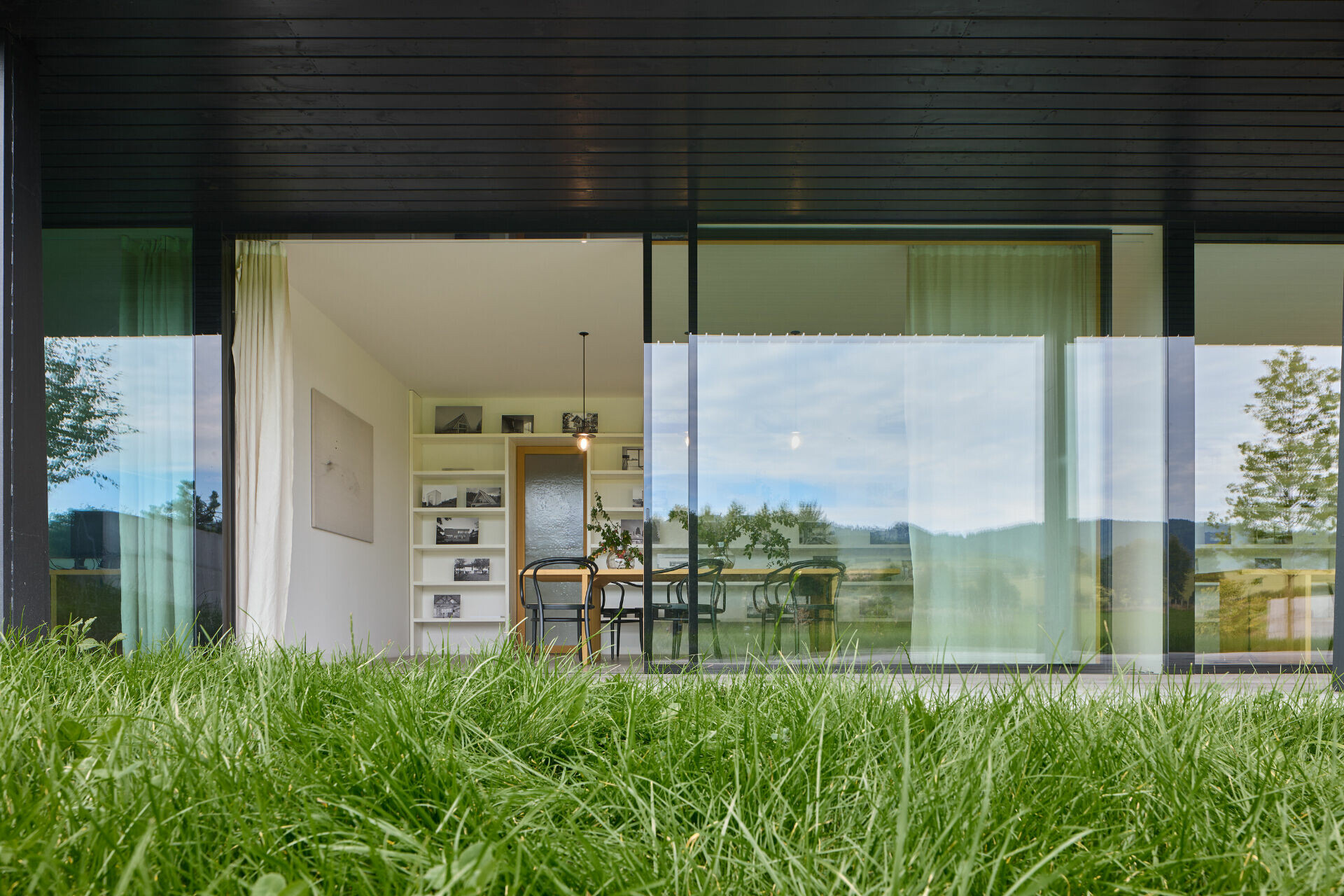
The architecture arose from reflections on quality windows and their ability to shape space and atmosphere through connection with the surrounding landscape. The building was reborn through the reconstruction of a 1950s cooperative hall, originally used as a grain warehouse. What was once a closed structure has been opened both symbolically and physically. A barrier has been transformed into a link between the building, the meadow, and the distant views—so that the very essence of windows could be revealed. The building is called Spoj—The Link.
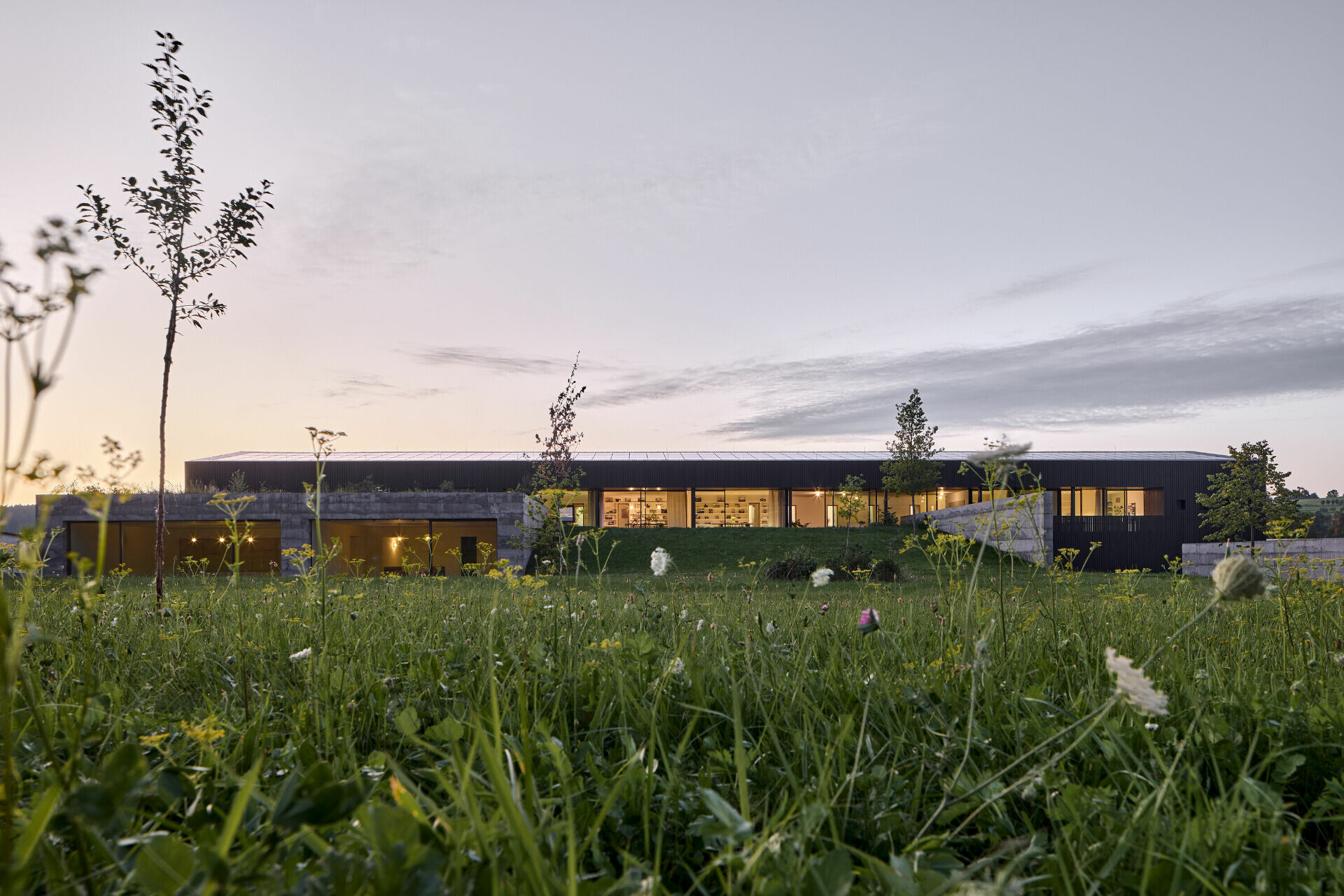
The architecture was designed by Jakub Janošík, who shapes the design and artistic direction of his family company: “We wanted to create a pleasant space for work. Also a place where we can present our products—windows, doors, sliding walls—where people can not only see them but also experience them. The surrounding nature and hills have probably influenced our perception of architecture in close relation with the landscape. It is something we are reminded of here every day.” The building is interwoven with a variety of window and door solutions, both as a showcase of possibilities and as an experiment in form and function. It also presents unconventional designs: sliding windows that float on an electromagnetic field, allowing even unusually large sizes to be moved aside; pivot doors; a seating window where the glass retracts so you find yourself directly in the garden; a window levitating in the middle of a glass pane; windows and doors clad in brass or corten.
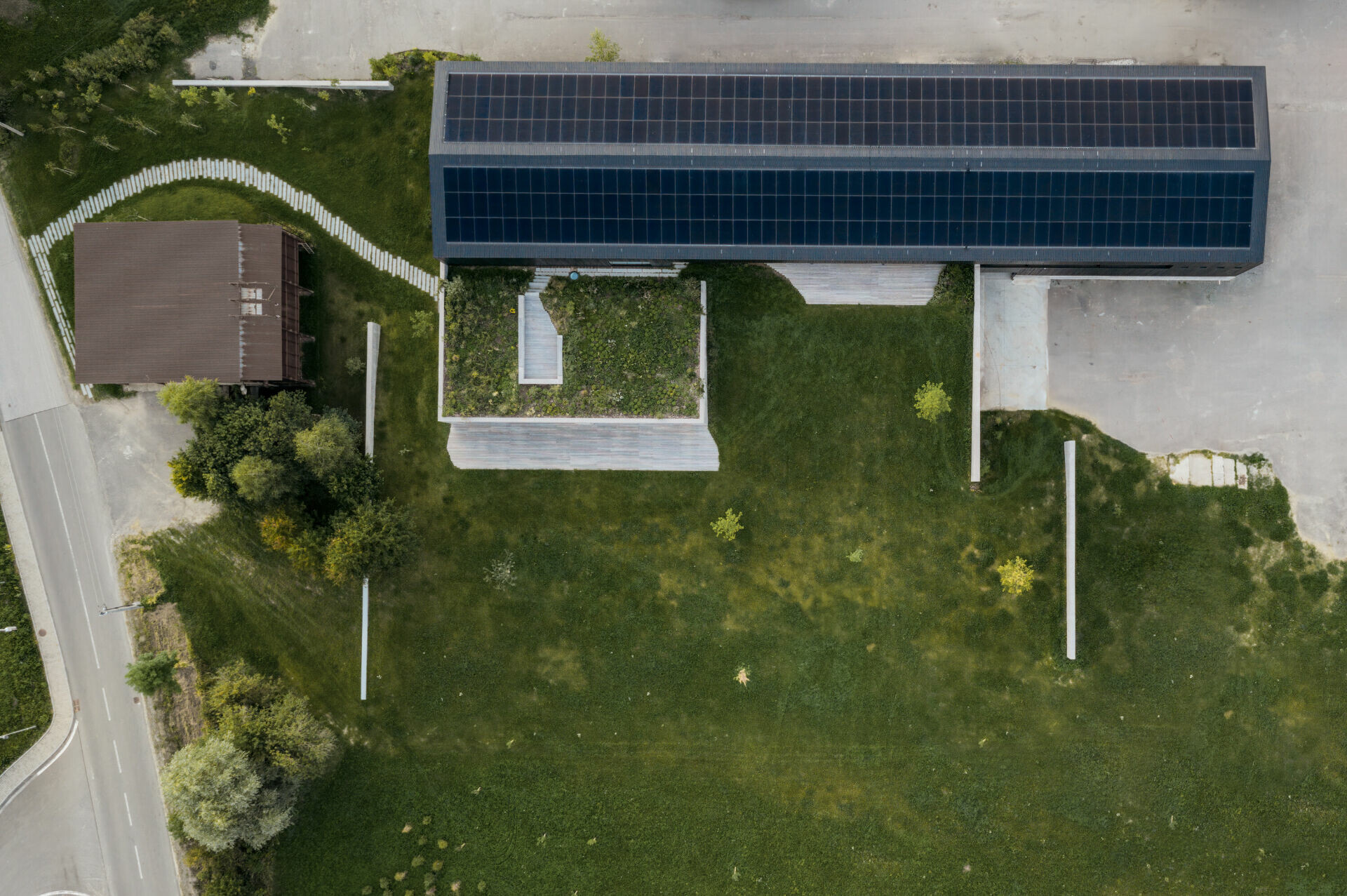
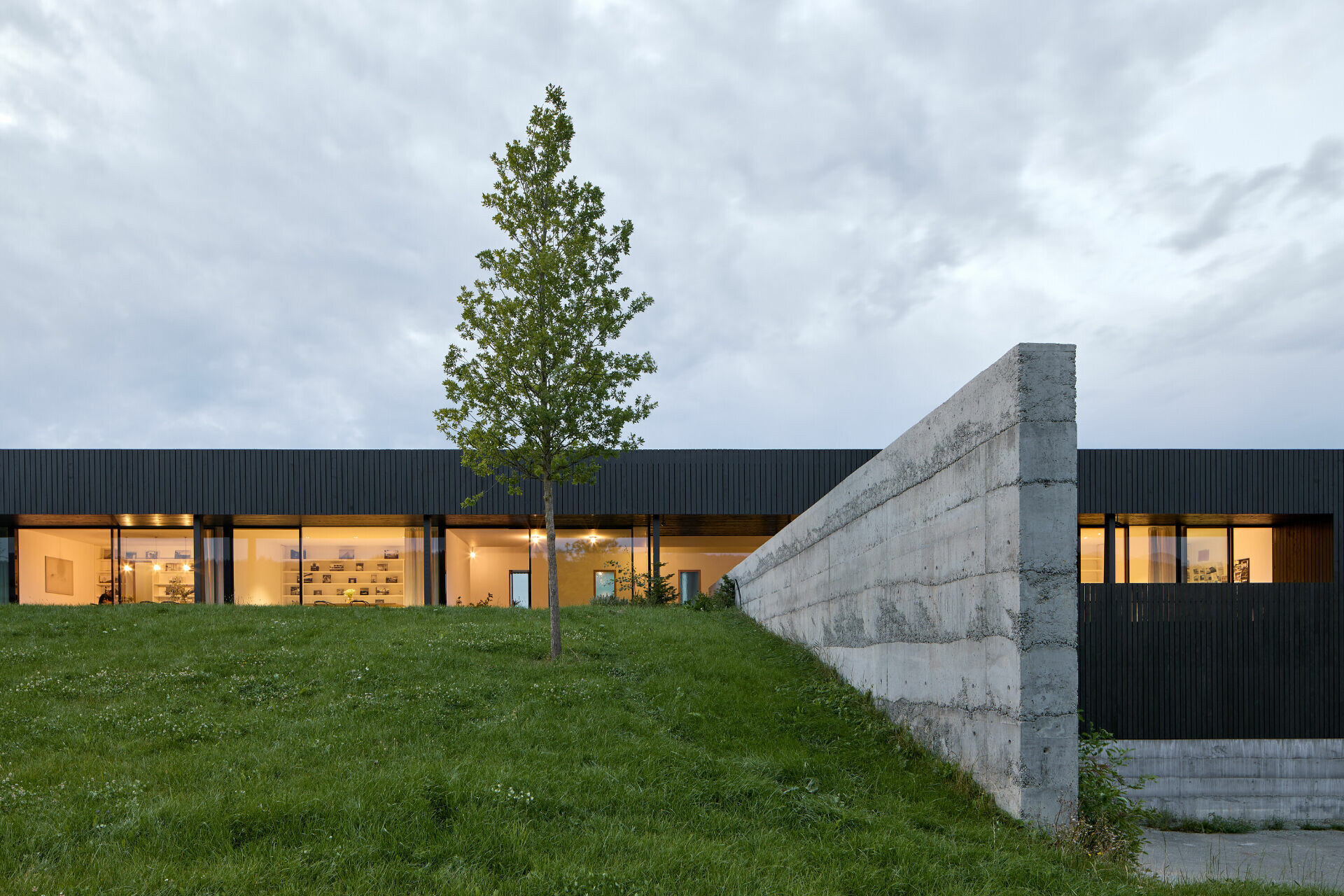
The architectural mass intertwines two volumes: the original hall with its traditional gabled form, and a new concrete “embrace” opening the building to the landscape. This draws the meadow right up to the building, and from the offices five metres above ground one steps directly onto it. Originally, the hall was separated from the meadow by a road and a fence, enclosed by walls.
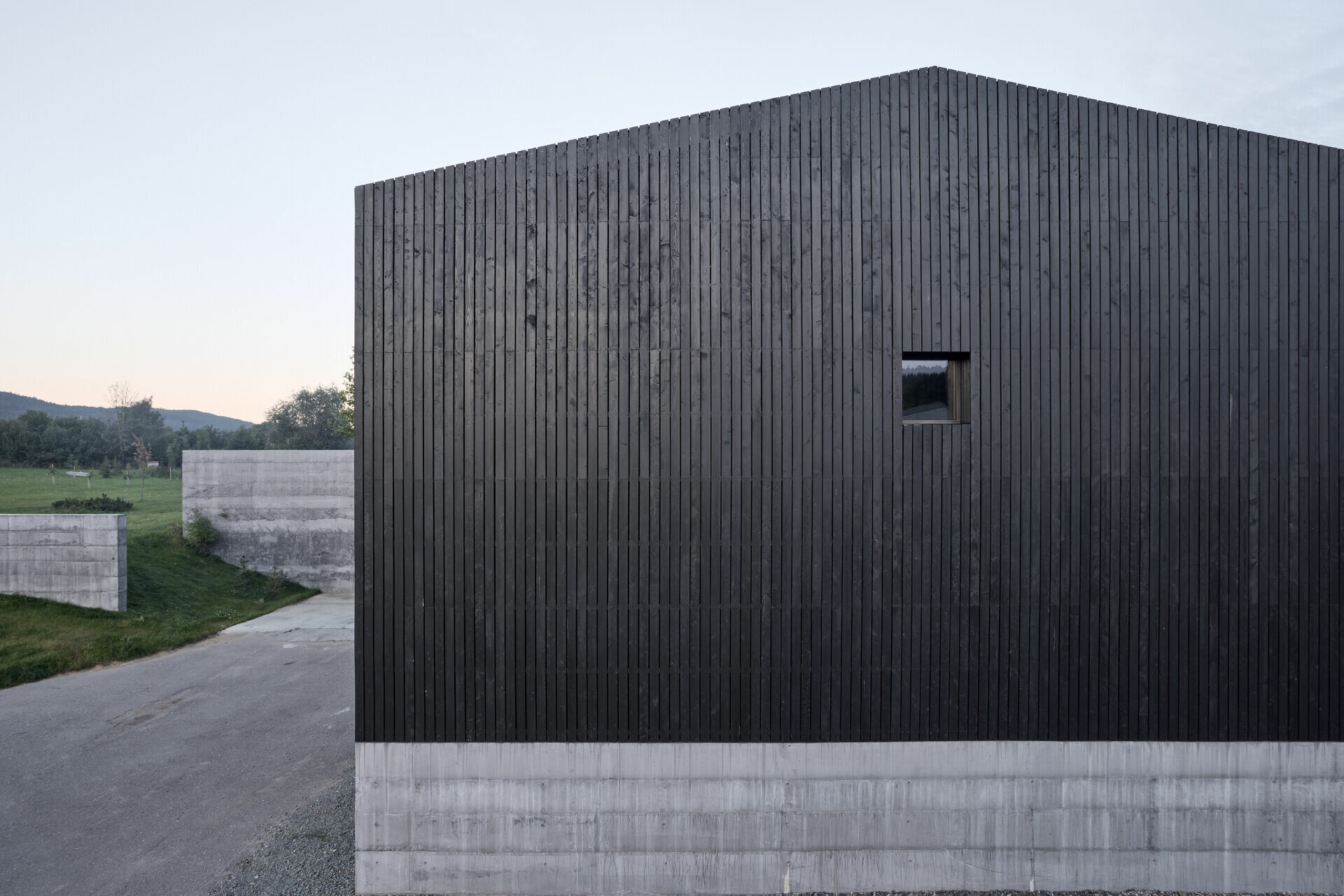
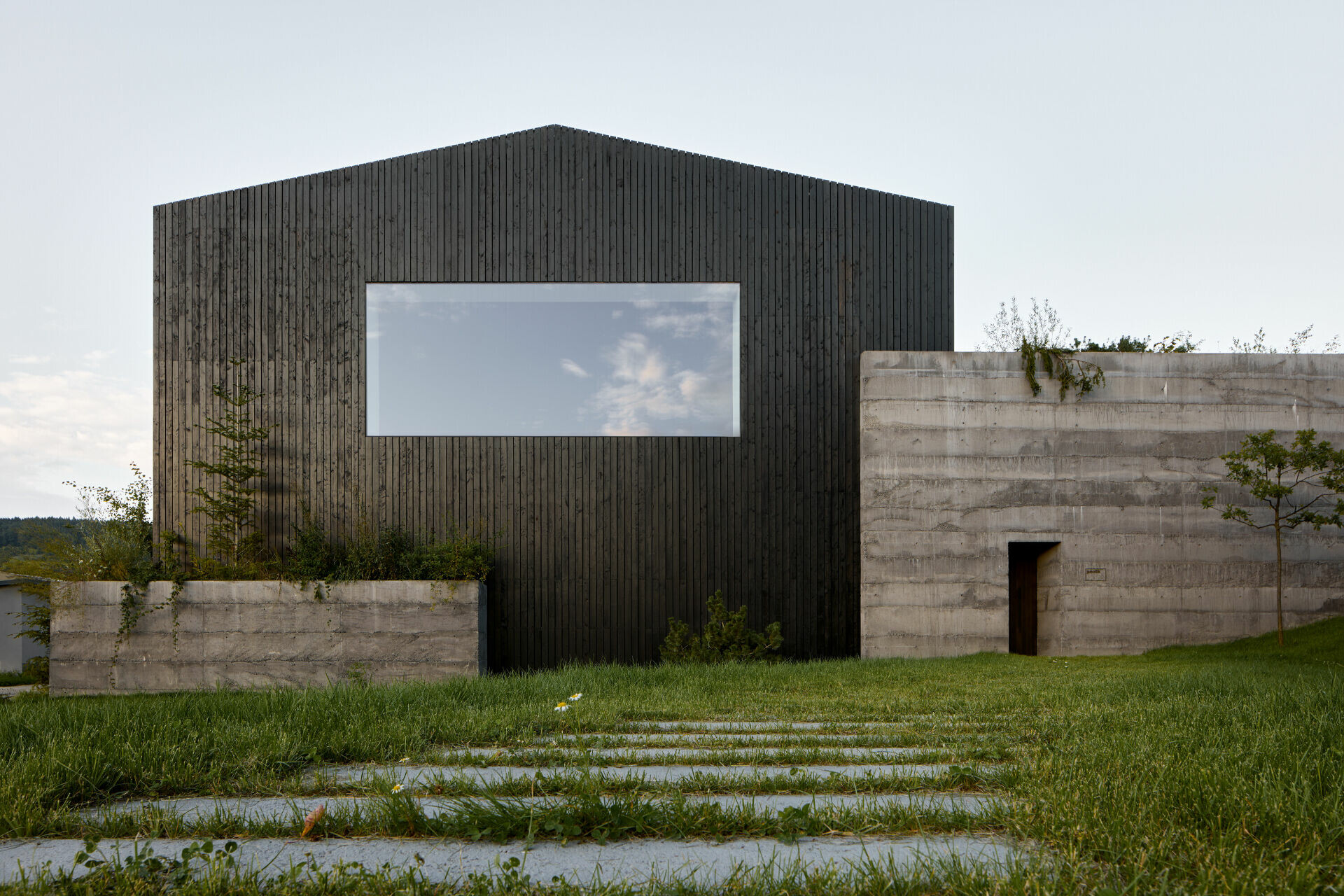
The form of the original hall has been reduced to its most essential lines, highlighting the dialogue of the two volumes. From three sides the building appears as a monument; towards the landscape, softened and pushed into the terrain, it becomes a light horizontal line. To highlight the steel structure inside, the hall was insulated from the outside and clad in black-painted timber. Four cut-outs were carved into this wooden volume. A single large window is on each gable end. The largest—measuring 9 × 3.2 metres—is on the main façade, revealing what happens inside and serving as a clear sign for visitors. On the opposite side, by contrast, appears the smallest picturesque window.
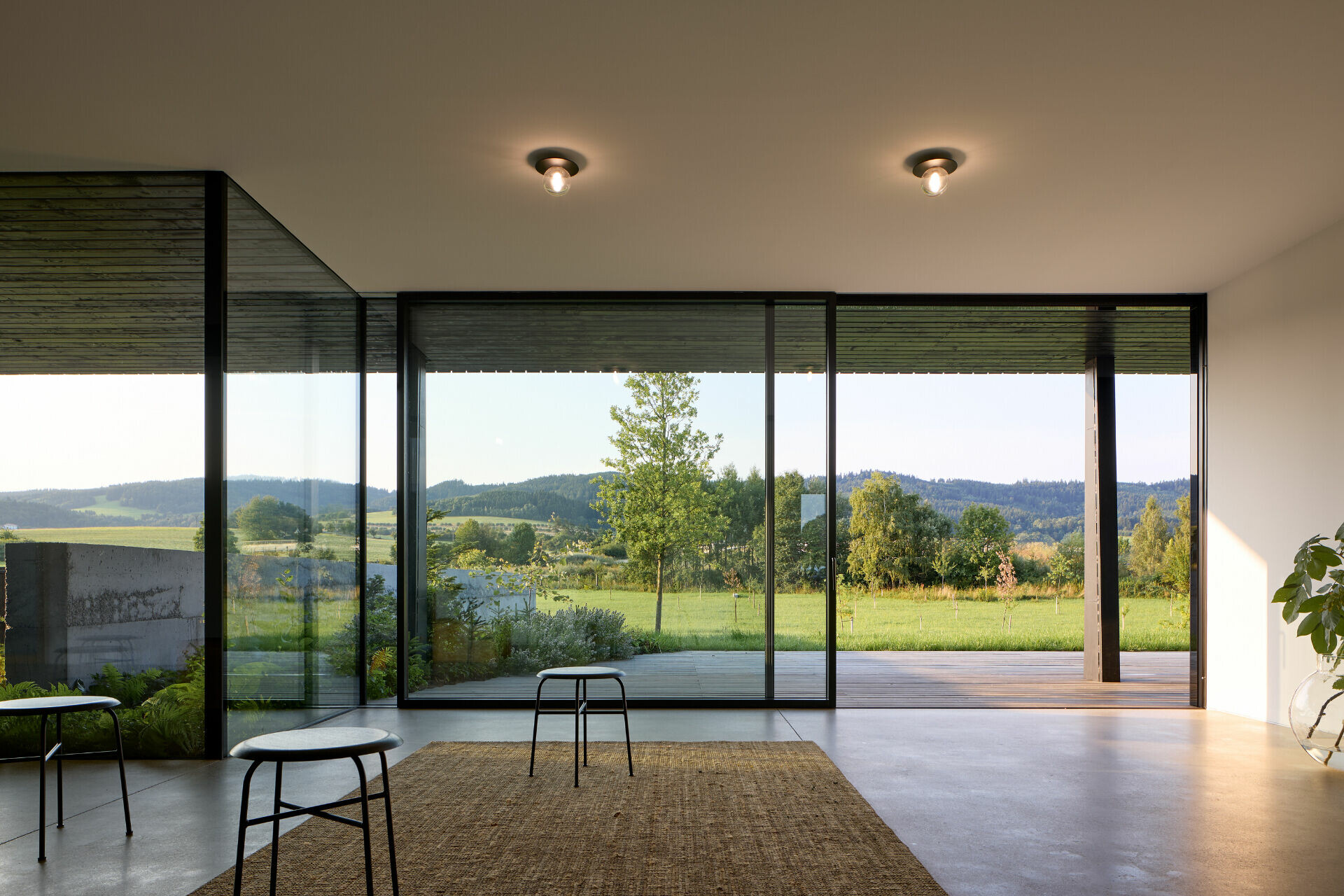
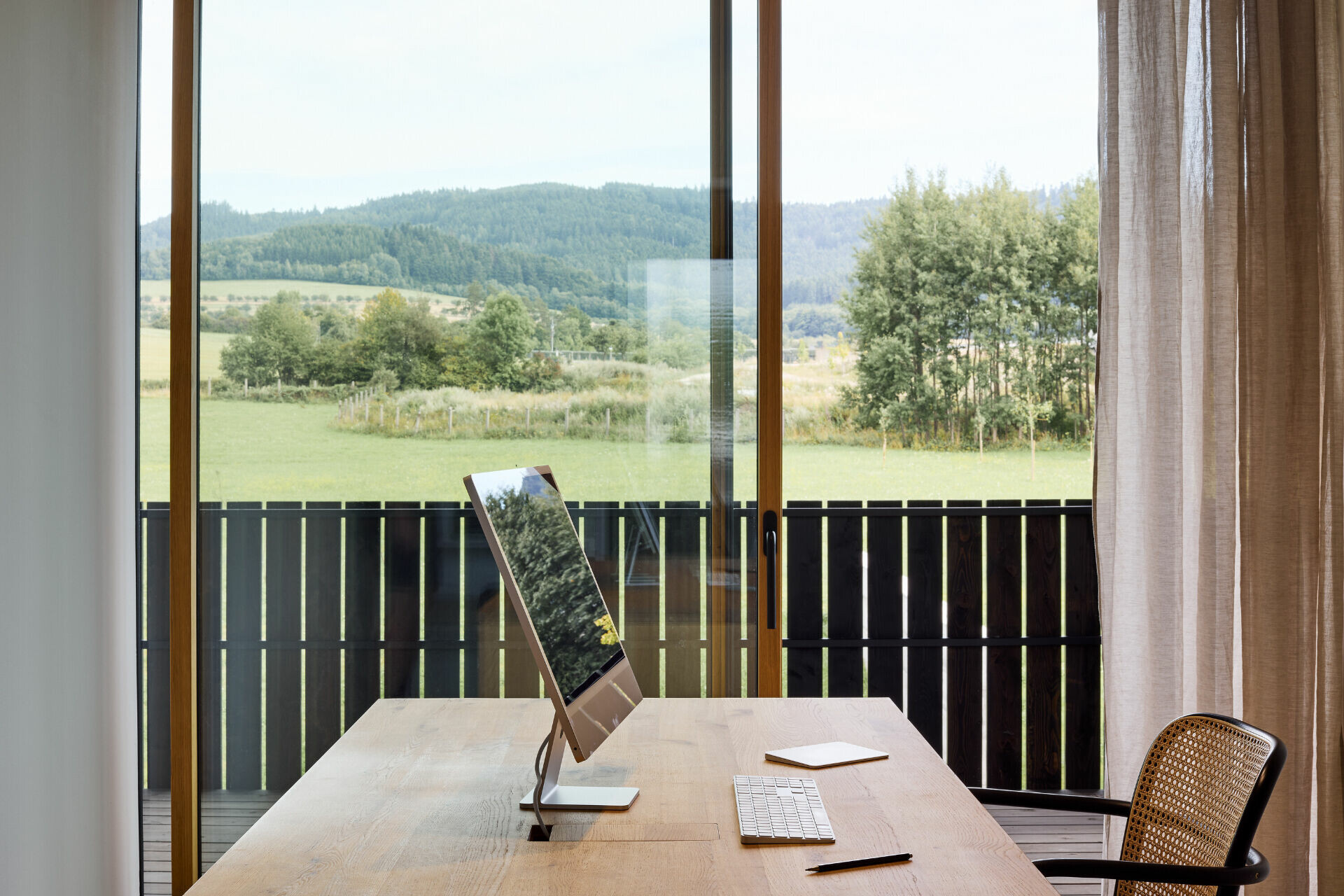
Loggias are recessed into the sides of the building, enabling direct access from individual offices; on the southern side, they extend into a terrace and garden. They also act as shading, protecting the interior from overheating in summer and allowing low sun to enter in winter.
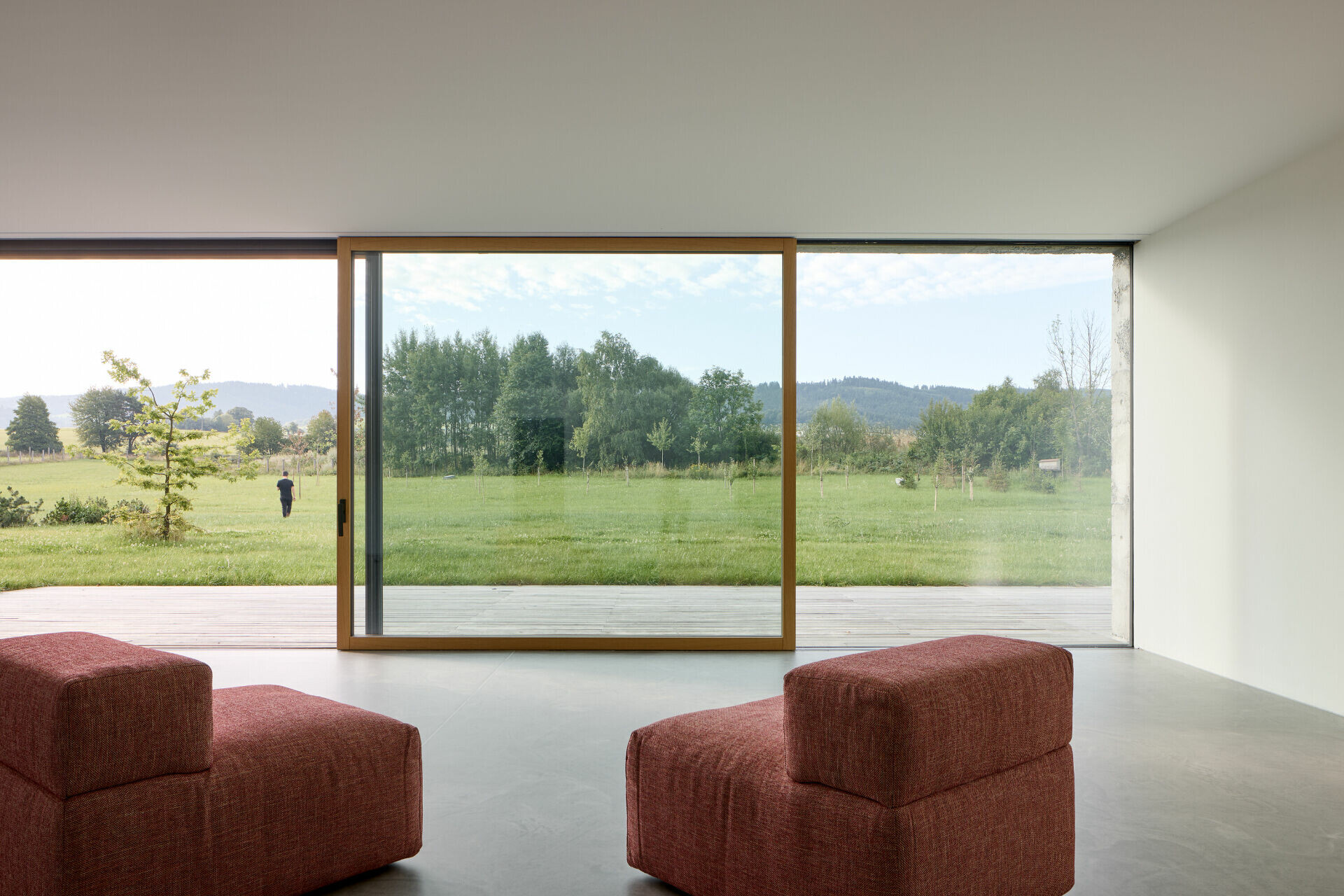
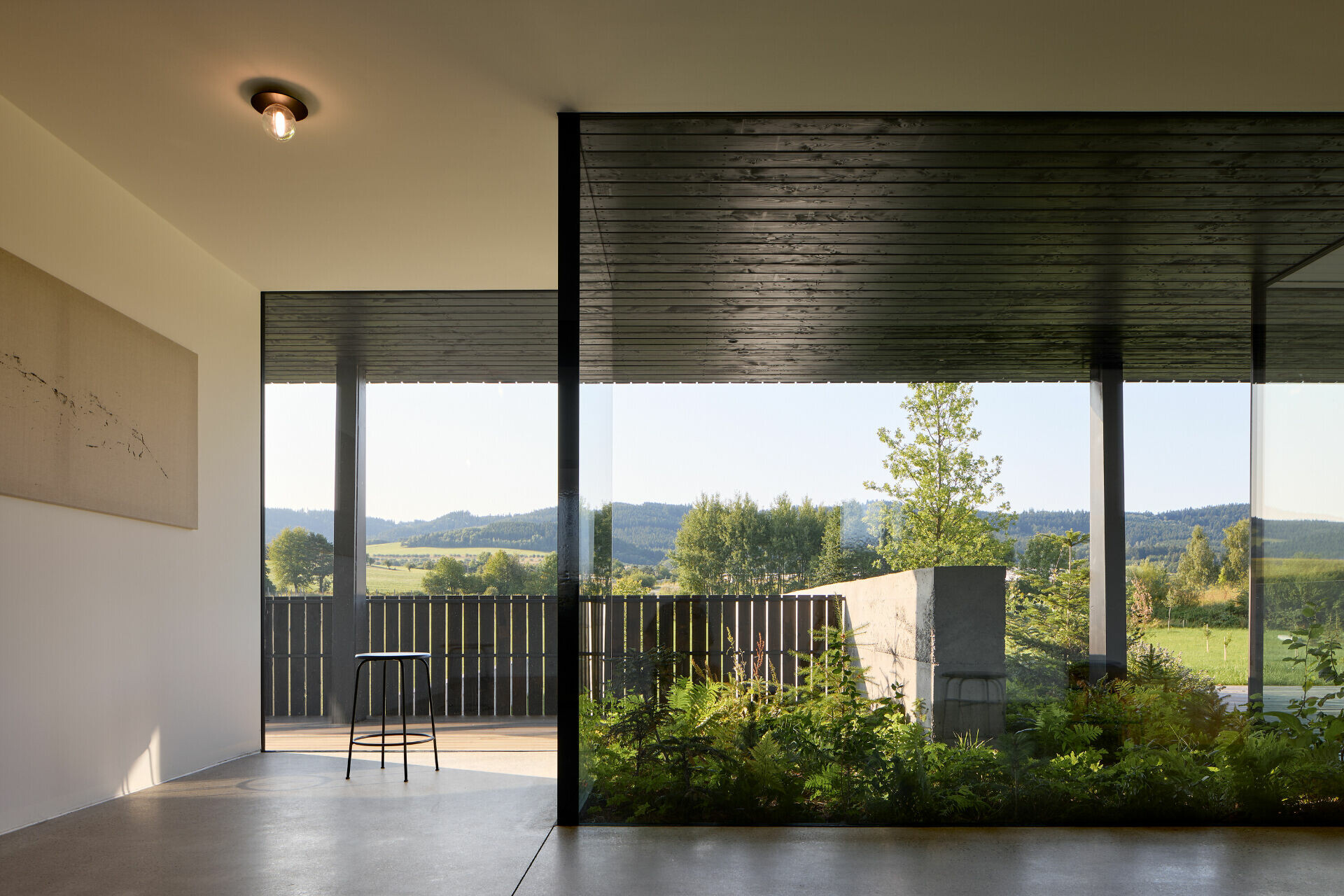
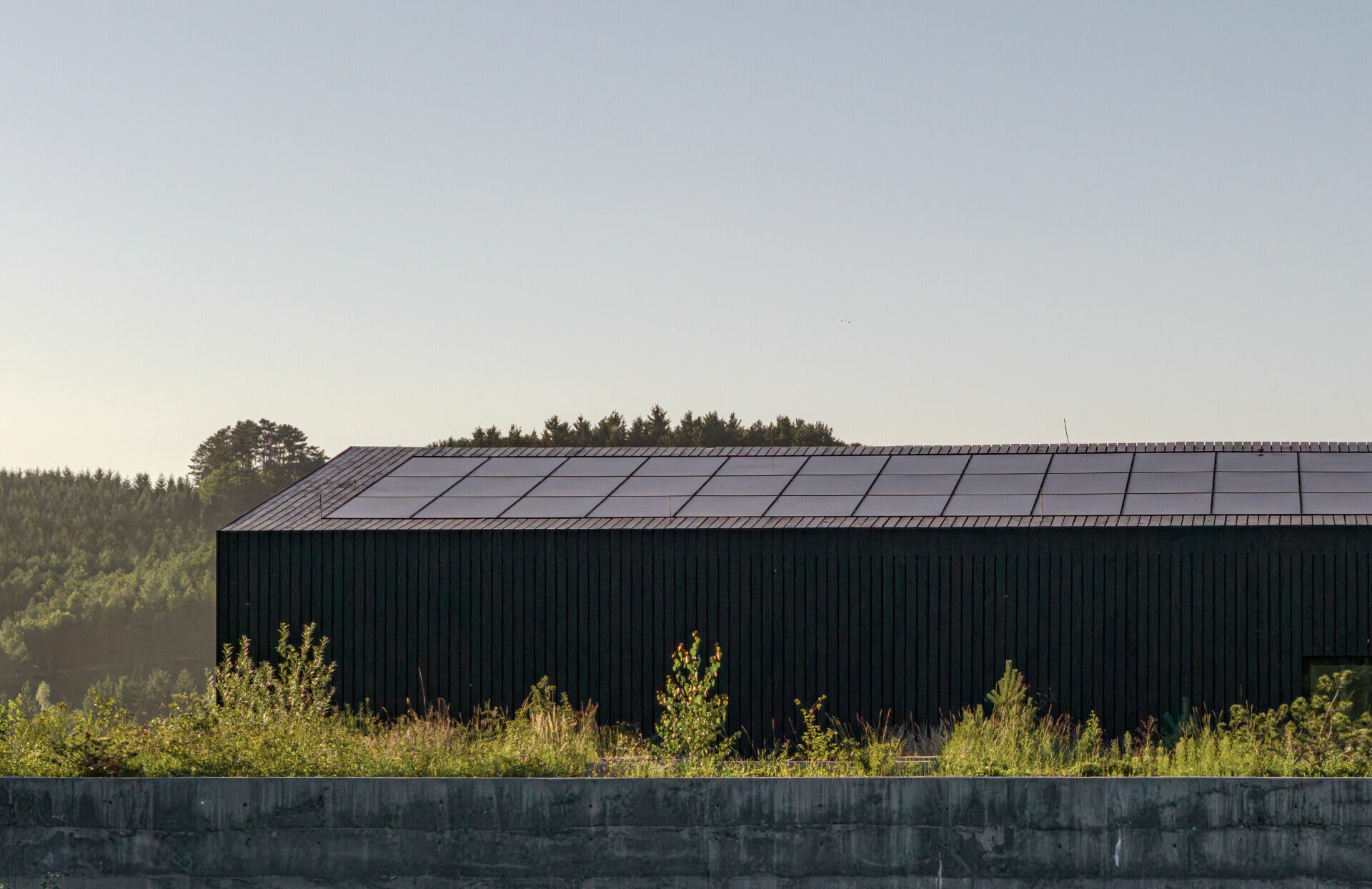
Material and colour choices were defined by ideas of restraint, to let the forces of nature resonate inside and merge with the landscape outside. The façade is clad with black-painted larch showing the natural wood grain. Concrete is tinted in a sandstone shade and poured in layers to appear geological rather than technical. The interior is white—a gallery for images of the landscape—enriched with bleached spruce, natural oak, dark grey concrete, and linen. Its expression follows the traditional Wallachian architecture.
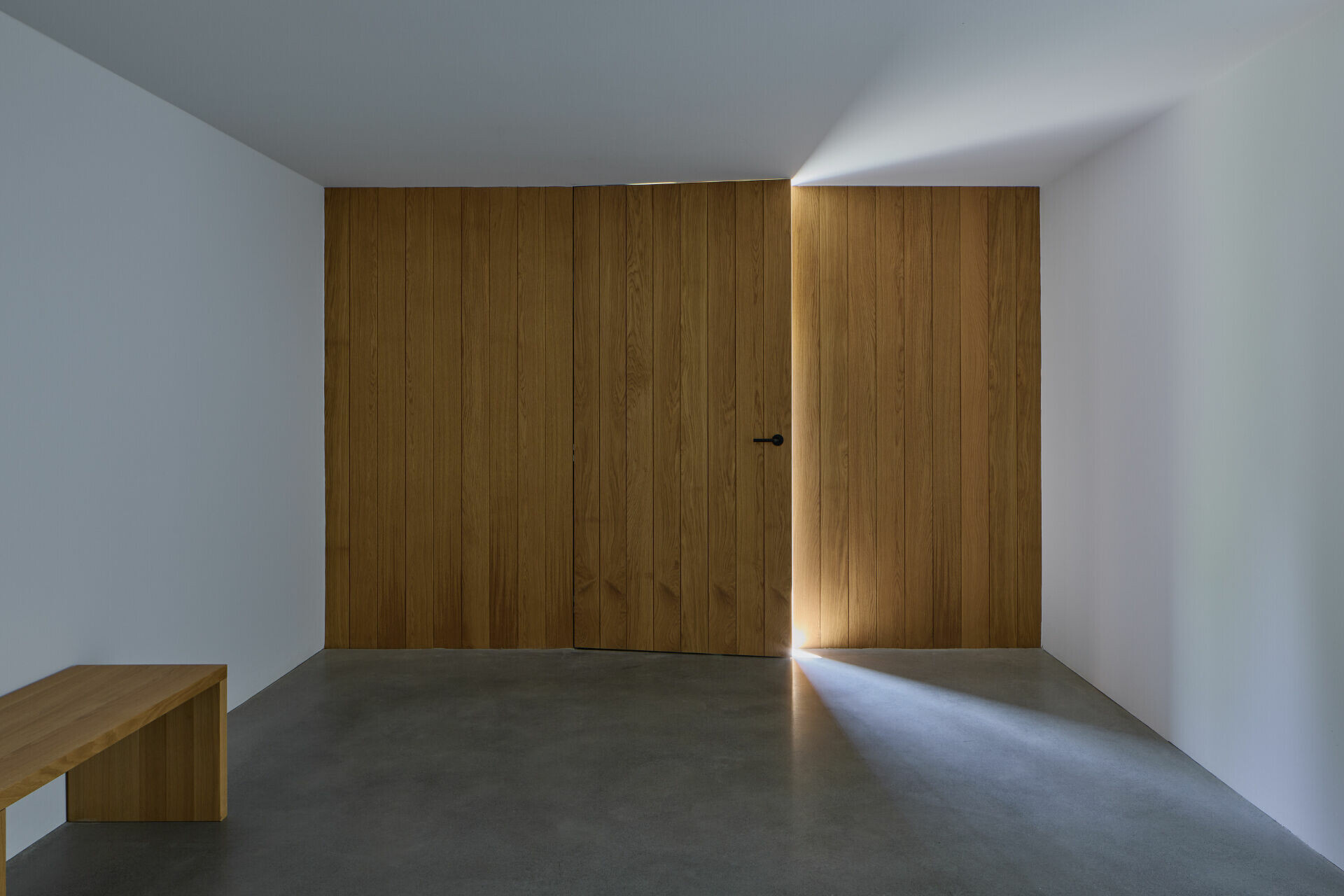
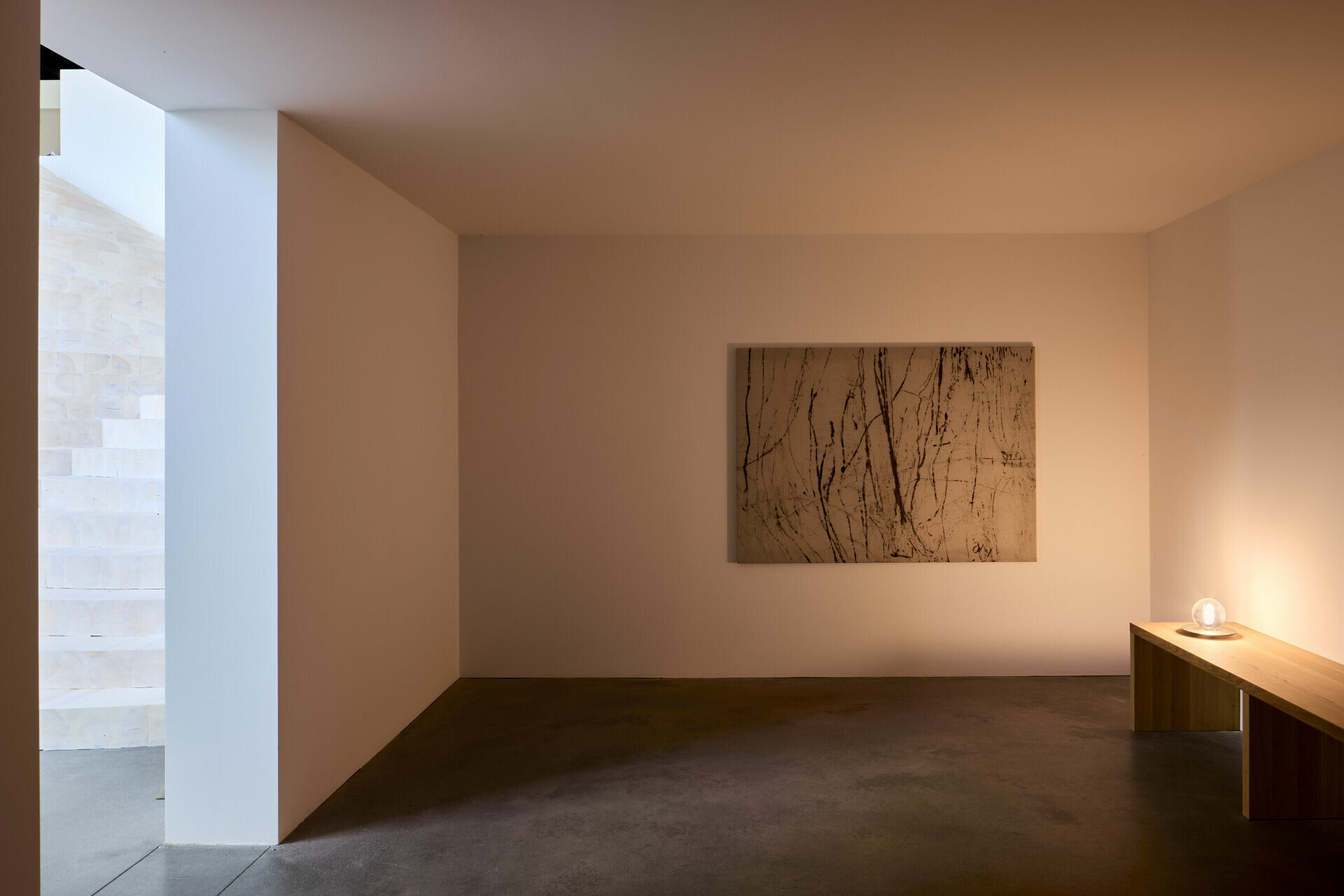
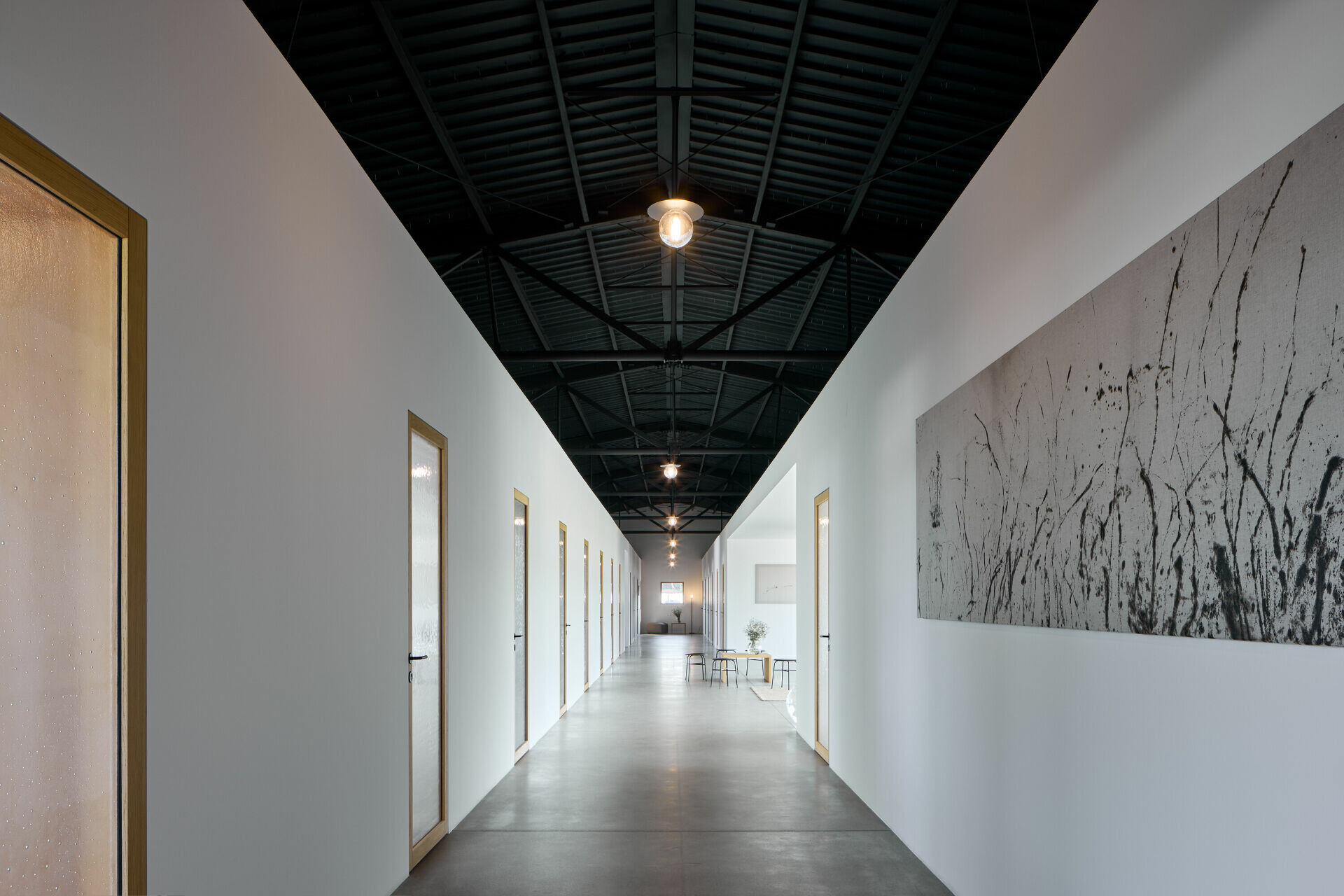
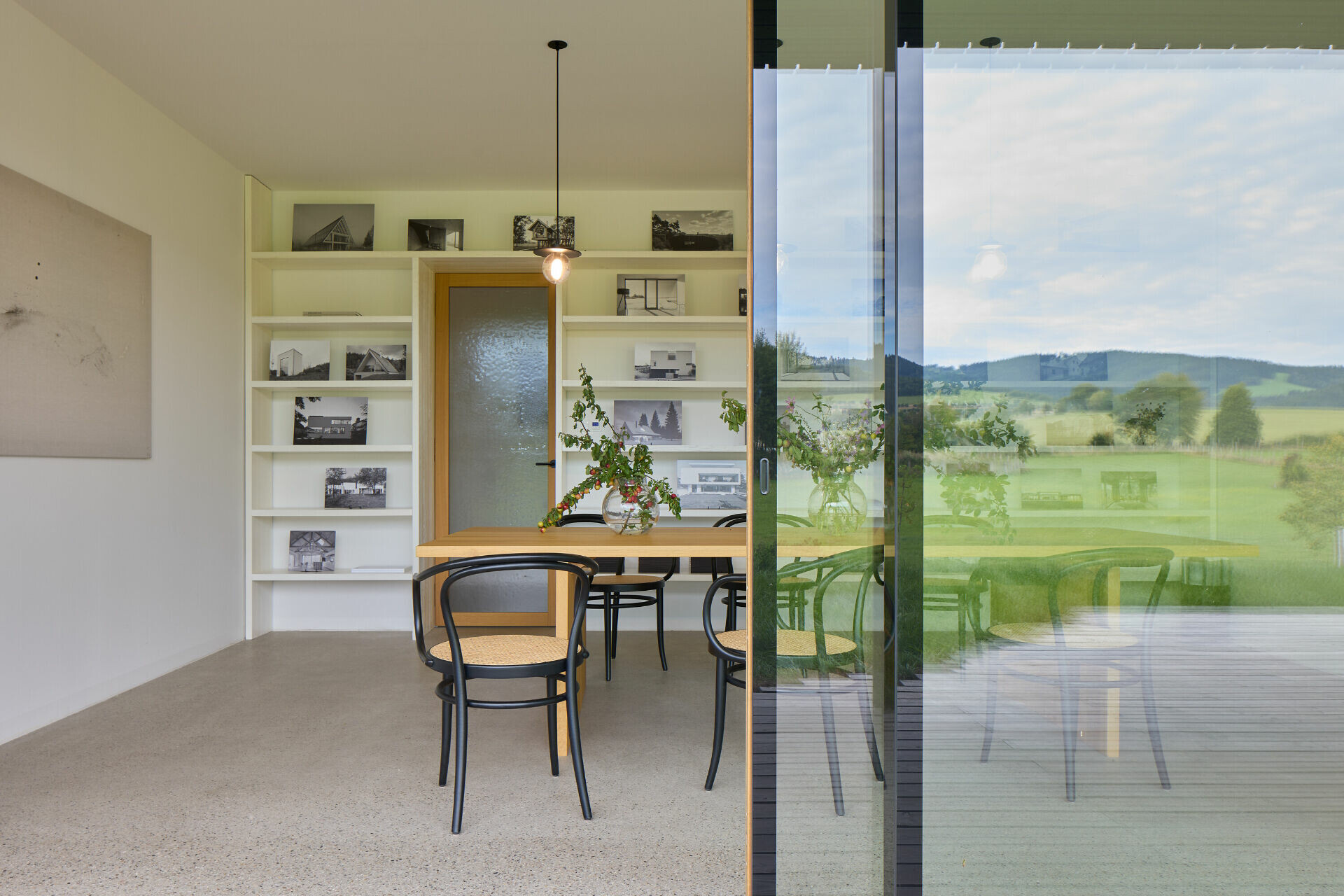
The interior space is shaped by recessed loggias, the open roof, and a central corridor crossing the building. Offices and meeting rooms are placed along the sides, enclosed for undisturbed work. The central area is open like a communal square, connecting to the garden and meadow through a sliding glass wall.
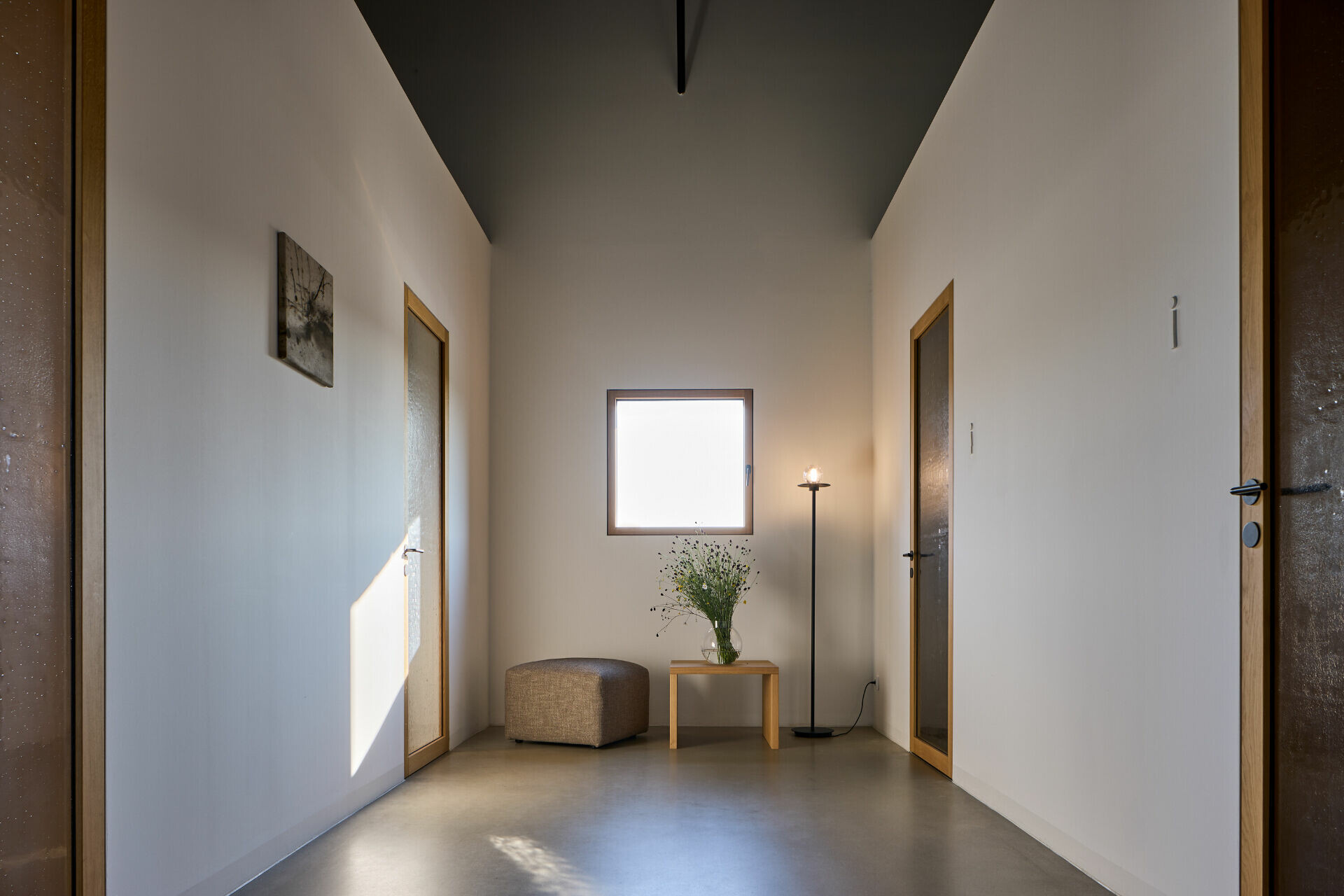
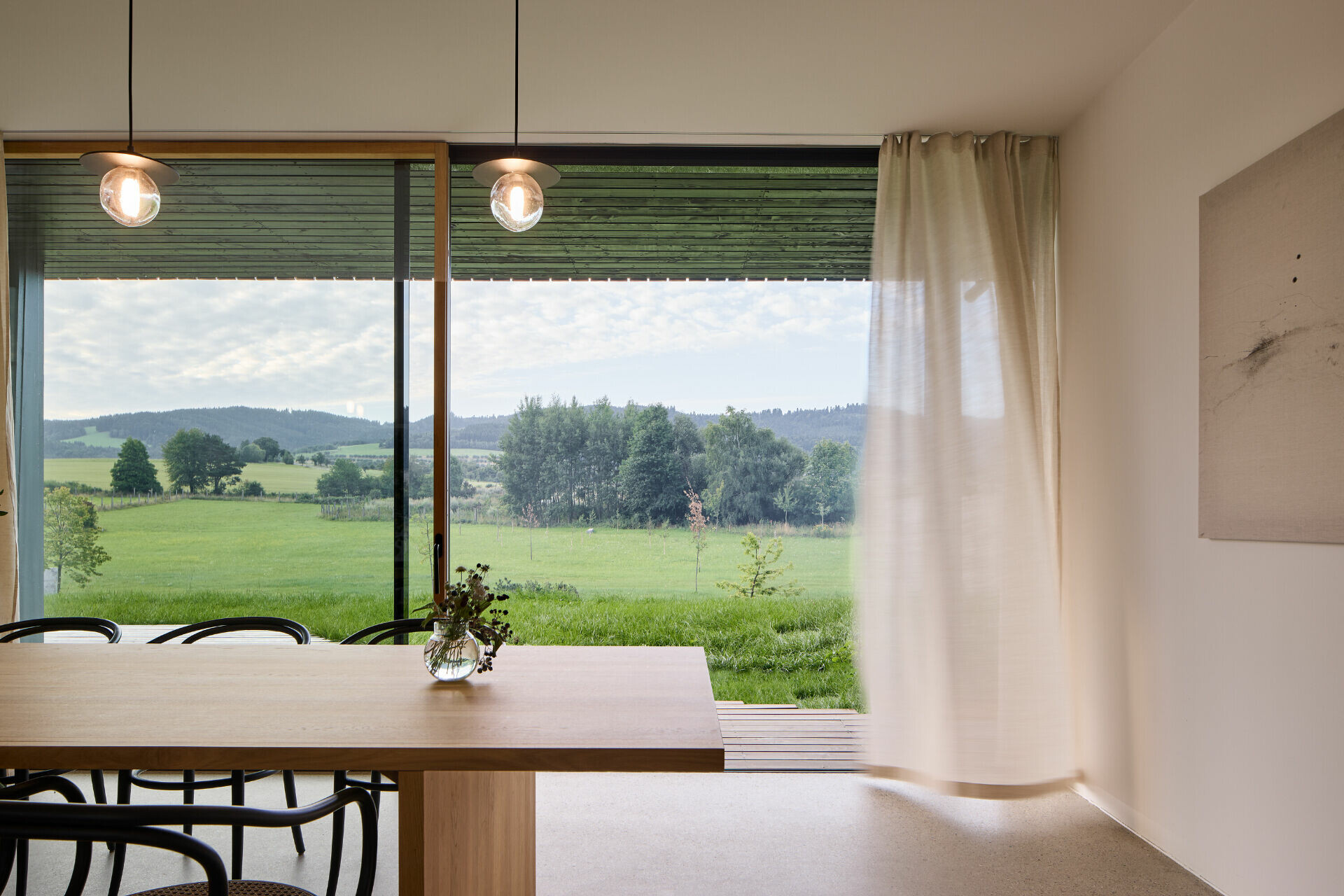
The furniture design does not draw attention, decoration is almost absent. The space is instead filled with ever-present views of the landscape and the natural forces flowing inward, shaping moments of space: structure, light, darkness, proportion, height, rhythm, transitions between open and closed, and surprise.
Principal Designers | Jakub Janošík
Character of Space | Office & Showroom
Gross Floor Area | 2100㎡
Materials | Wood /Concrete / Linen / Steel / Brass
Location | Valašské Příkazy, Czech Republic