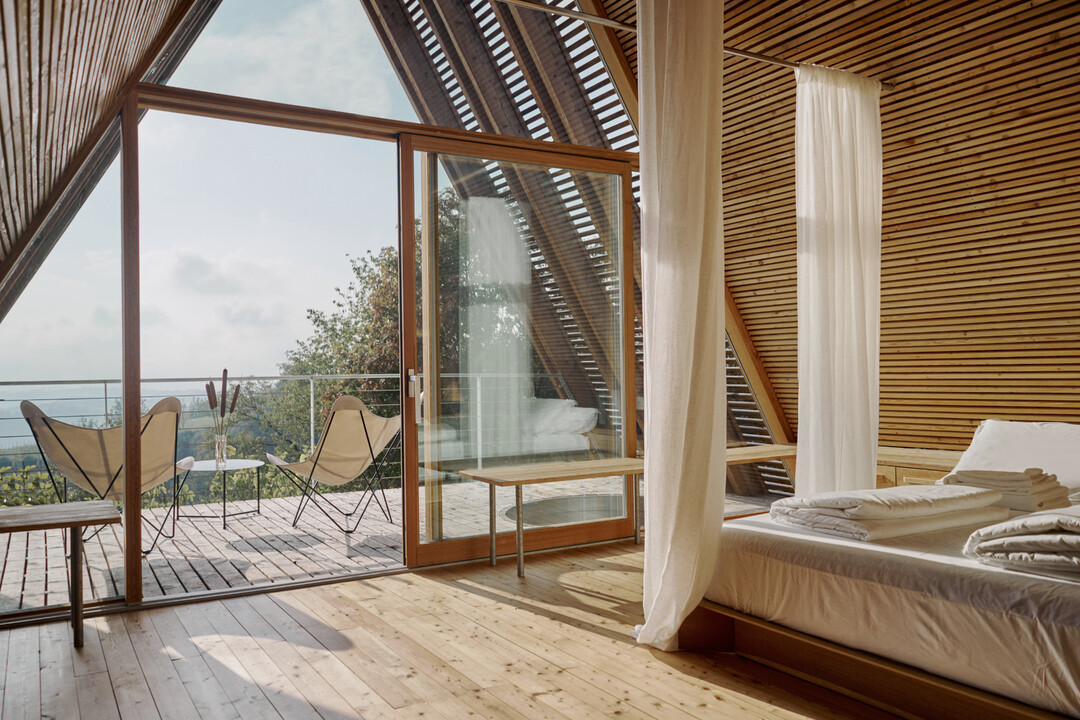
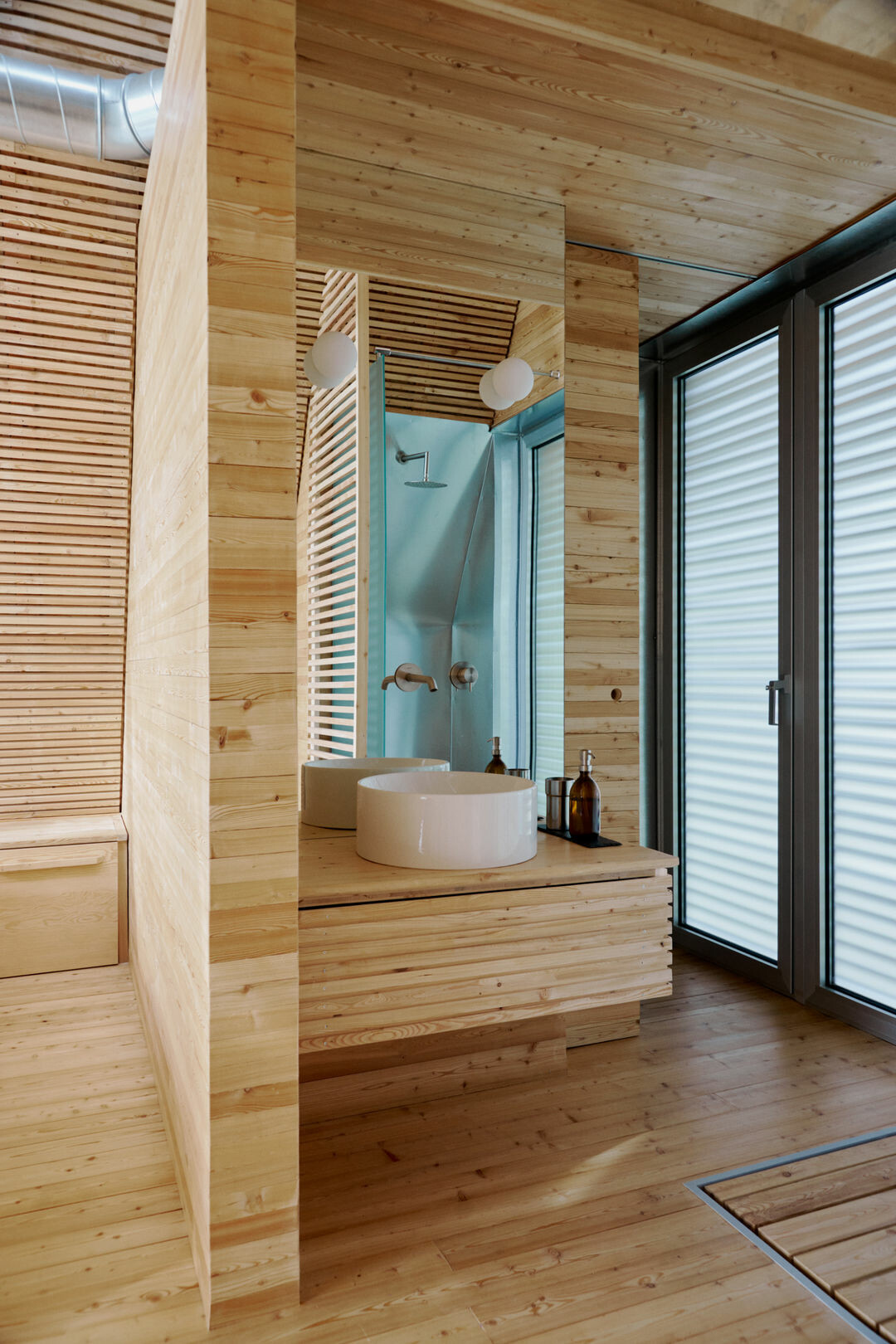
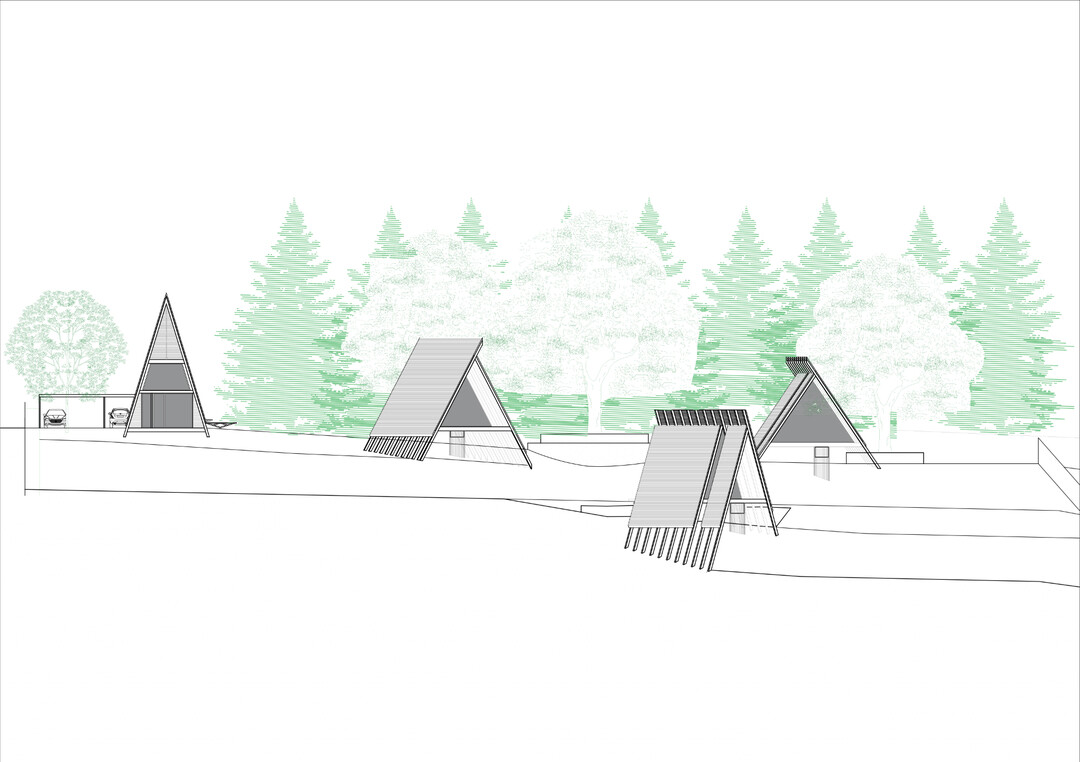
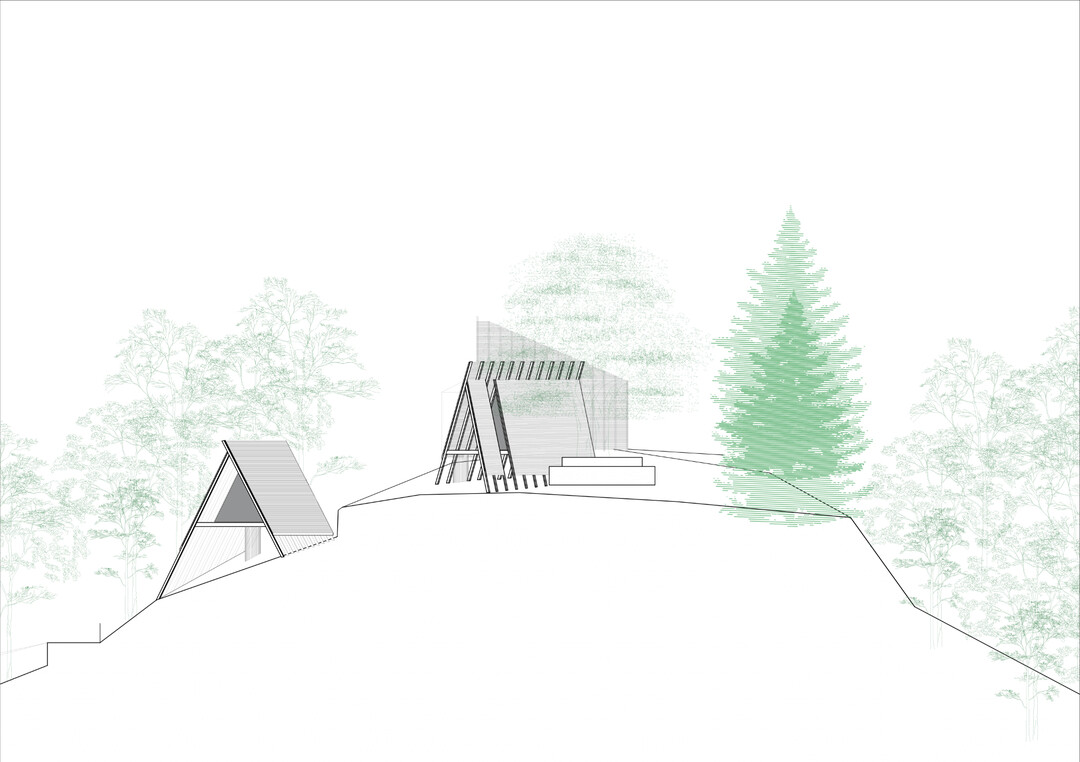
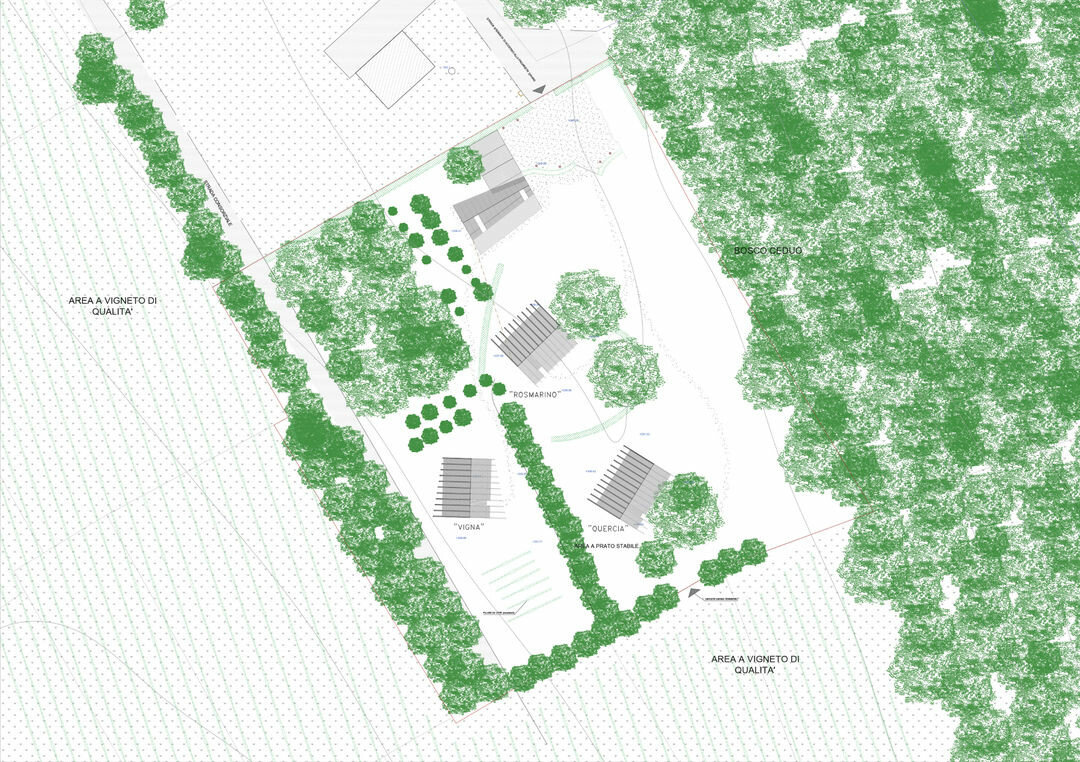
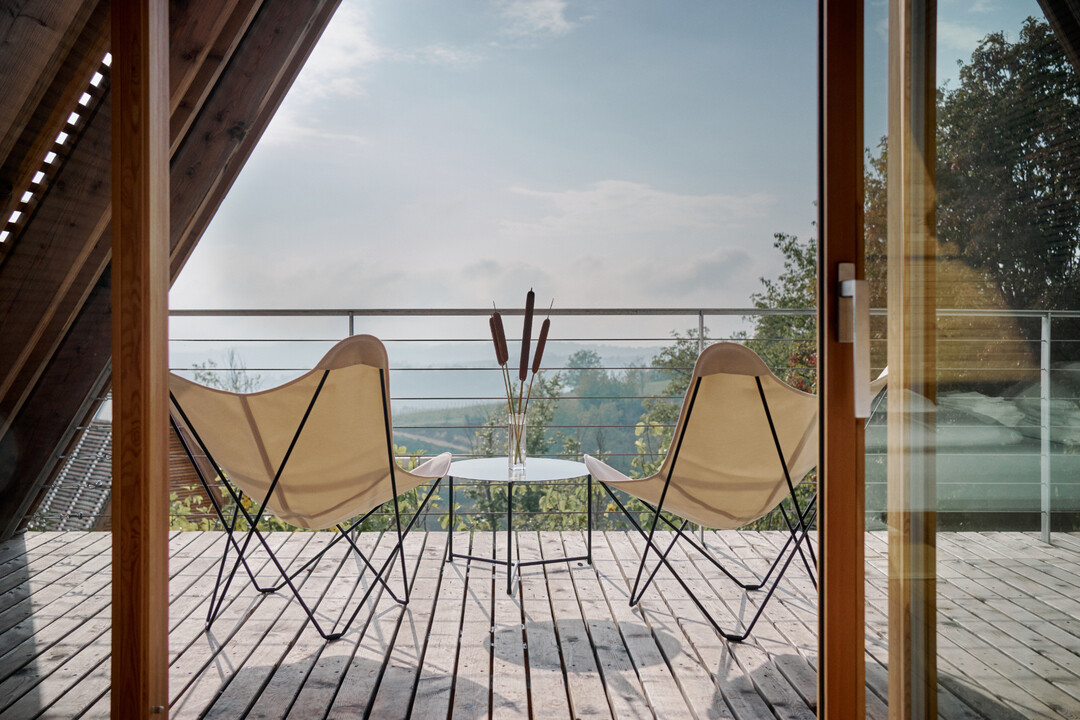
Set in landscape of vineyards and wooded areas, in the heart of Monferrato, the eco-hotel comprises a village of four independent wood and glass cabins whose design was inspired by the image of traditional haystacks. Three of them house the suites, while the fourth is a common space. The interior of the three suites is organized as a continuum, with the breakfast nook near the deck leading to the sleeping area, which leads to the bathroom at the opposite end. The result is a refuge that ensures privacy, while also offering the option of entertaining other guests. The last cabin comprises a generous outdoor space and a large kitchen. It was conceived more as a meeting place than a reception area, and includes a large table where guests can sit together.
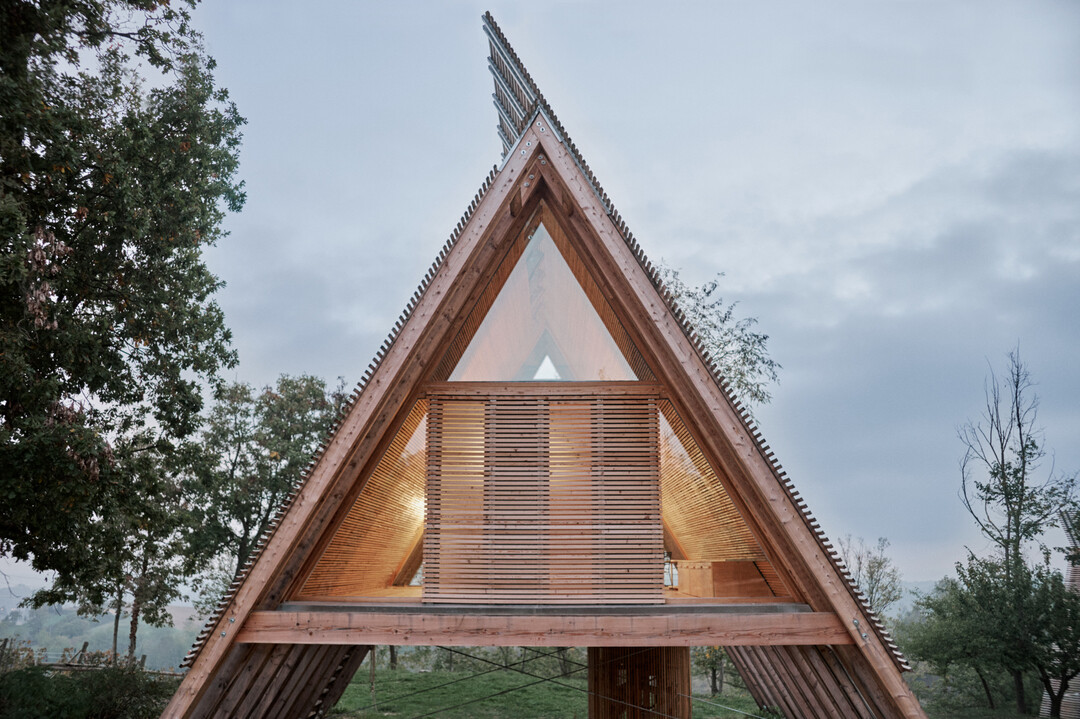
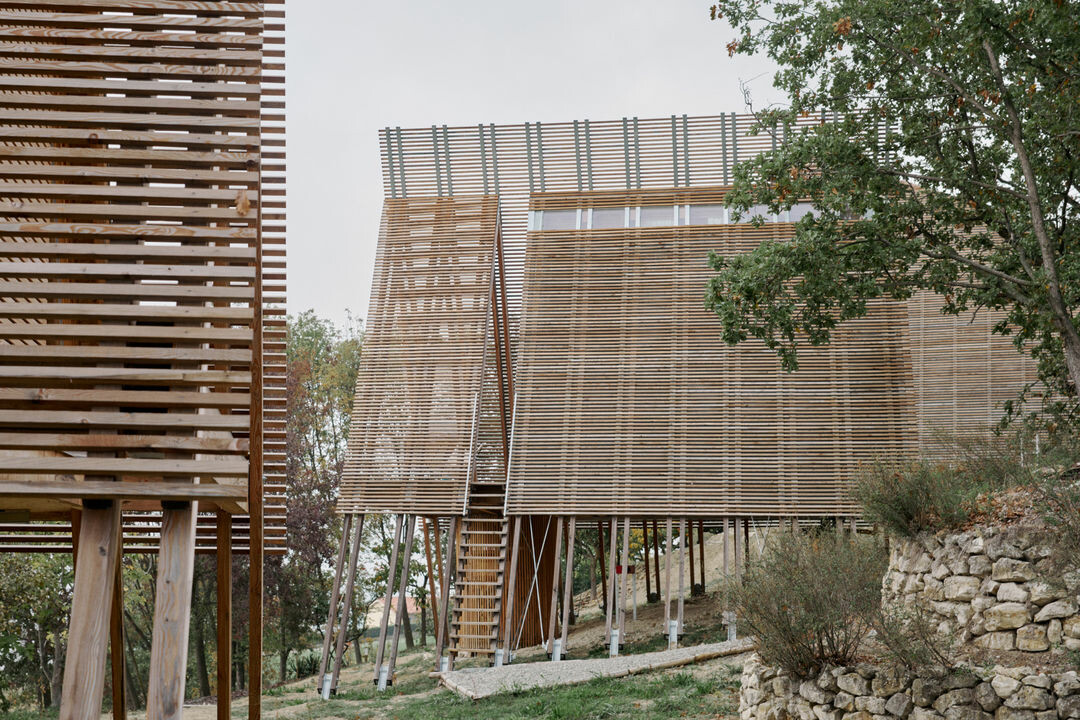
Designed with an eye on sustainability and energy efficiency using natural and eco-compatible materials, the cabins are raised off the ground, a construction approach that responds to the sloping land of the site. We took up the challenge of using prefabricated elements but without resorting to standardization. These factors are reflected in the roof, an A-shape with two fully glazed triangular elevations, which also acts as a wall and a load-bearing structure. The lodges weren’t designed as closed volumes from which the openings were subtracted, but as a space created by three inclined surfaces, following the Japanese logic of working on layers.
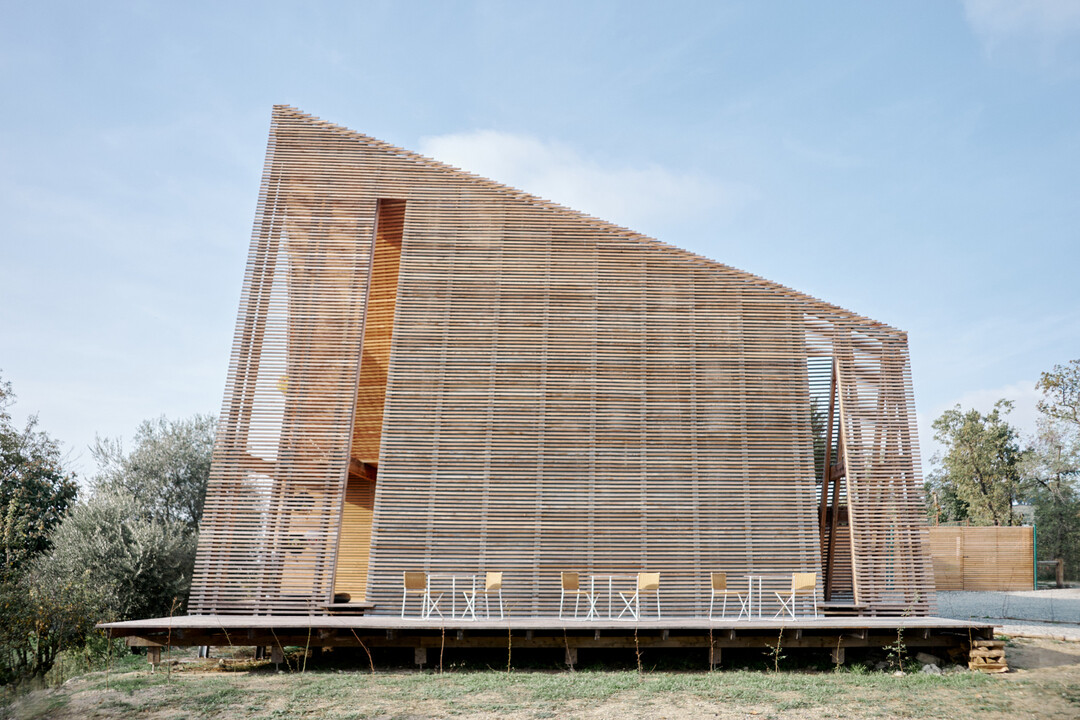
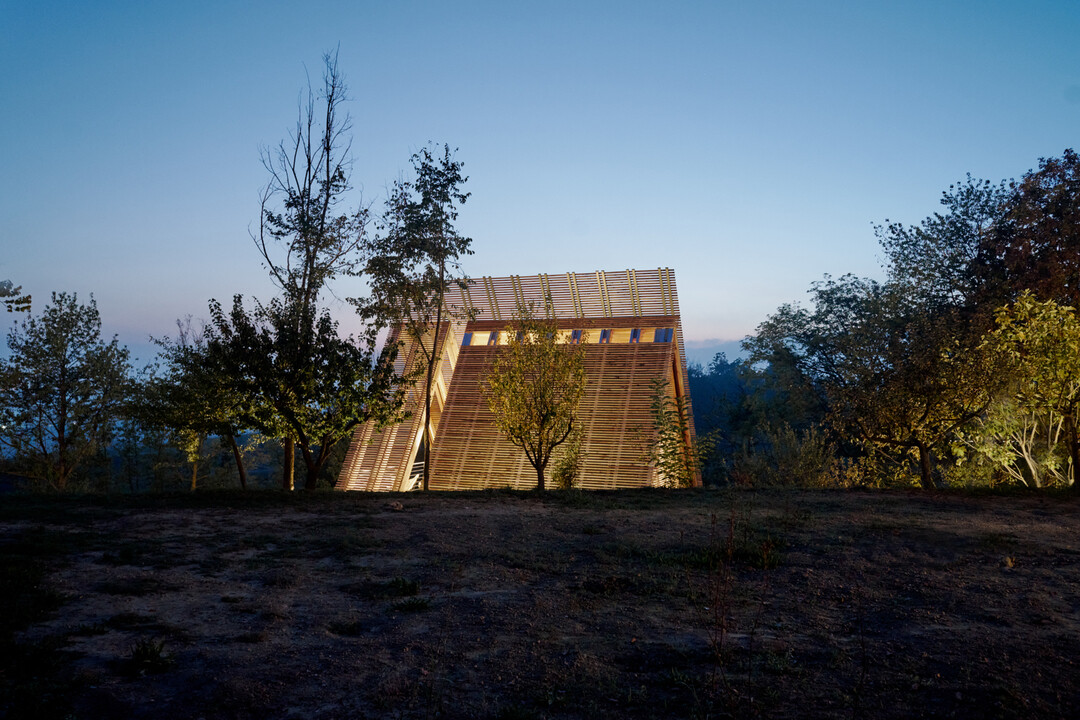
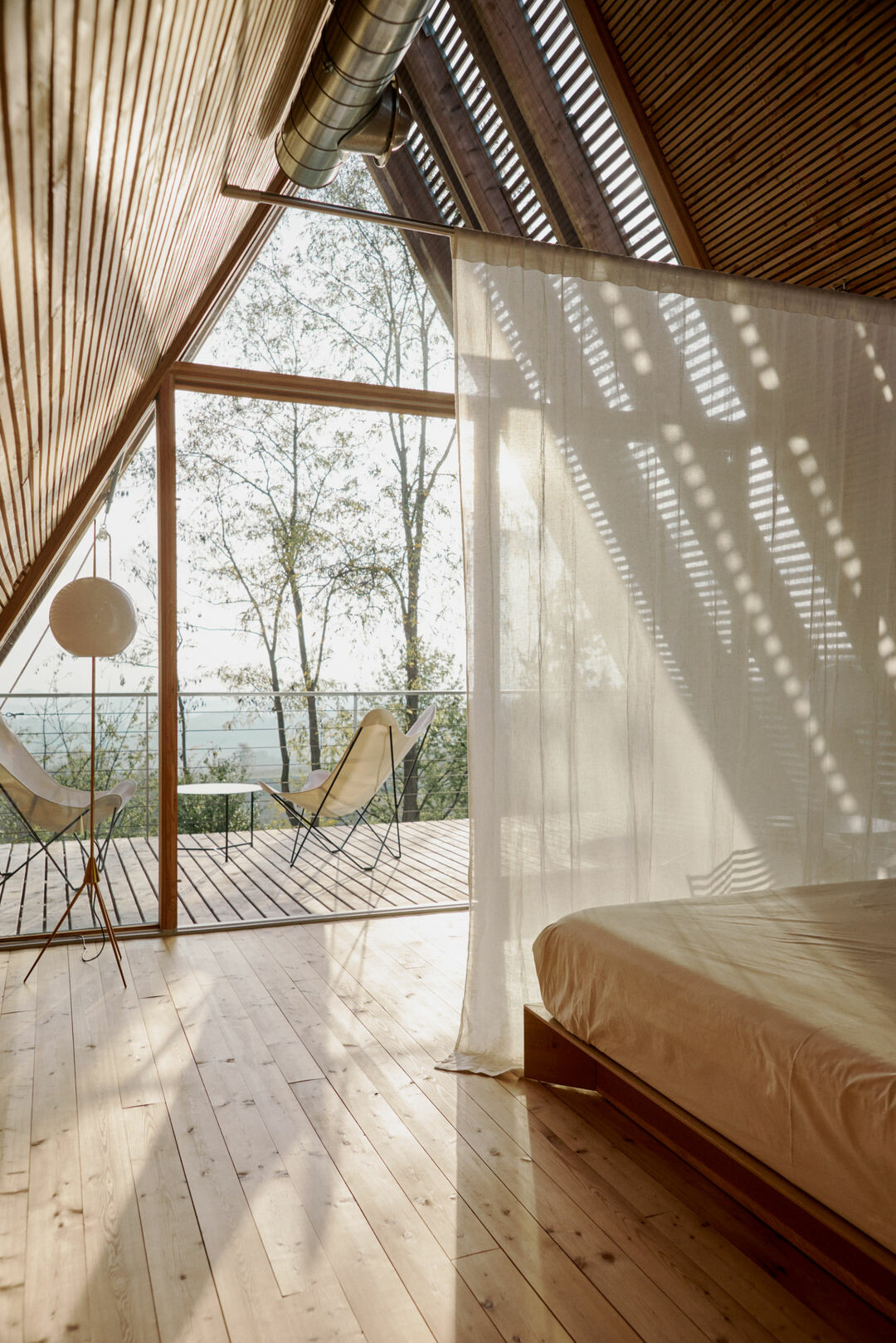
With a rectangular plan measuring 6 x 9m and a ceiling height of 5.5 m, these little lodges are made of larch treated only with oil, a natural element that’s absorbed into the wood, enriching and nourishing it as it ages. Wood is also featured in the furnishings as well as the wall and floor finishes. The cabins therefore blend perfectly with their natural setting, almost as if they were camouflaged. In the Lilelo project, windows play a fundamental role from both the functional and aesthetic perspectives, bringing light as well as the landscape into the cabins. Thin windows were chosen to fit seamlessly into the wooden structure, encouraging a harmonious, almost symbiotic relationship between inside and out, which is the underlying aim of the entire project.
小型休閒屋
這座位於蒙費拉托核心地帶的葡萄園森林裡的生態酒店,由四個獨立的木製和玻璃小屋組成,其設計靈感來自於傳統乾草堆的形狀,其中三間是套房,第四間是公共空間。三間套房的室內是串連的,早餐用餐區位於甲板上,甲板通往臥室,臥室的另一端是唯一有門的浴室,再來是一個具有隱私同時也是提供招待其他客人的空間。最後一個小屋擁有寬敞的室外空間及一個大廚房,包括一張大桌子,客人可以一起坐在那裡,當初的設定更像是一個交流會面的地方,而不是接待區。
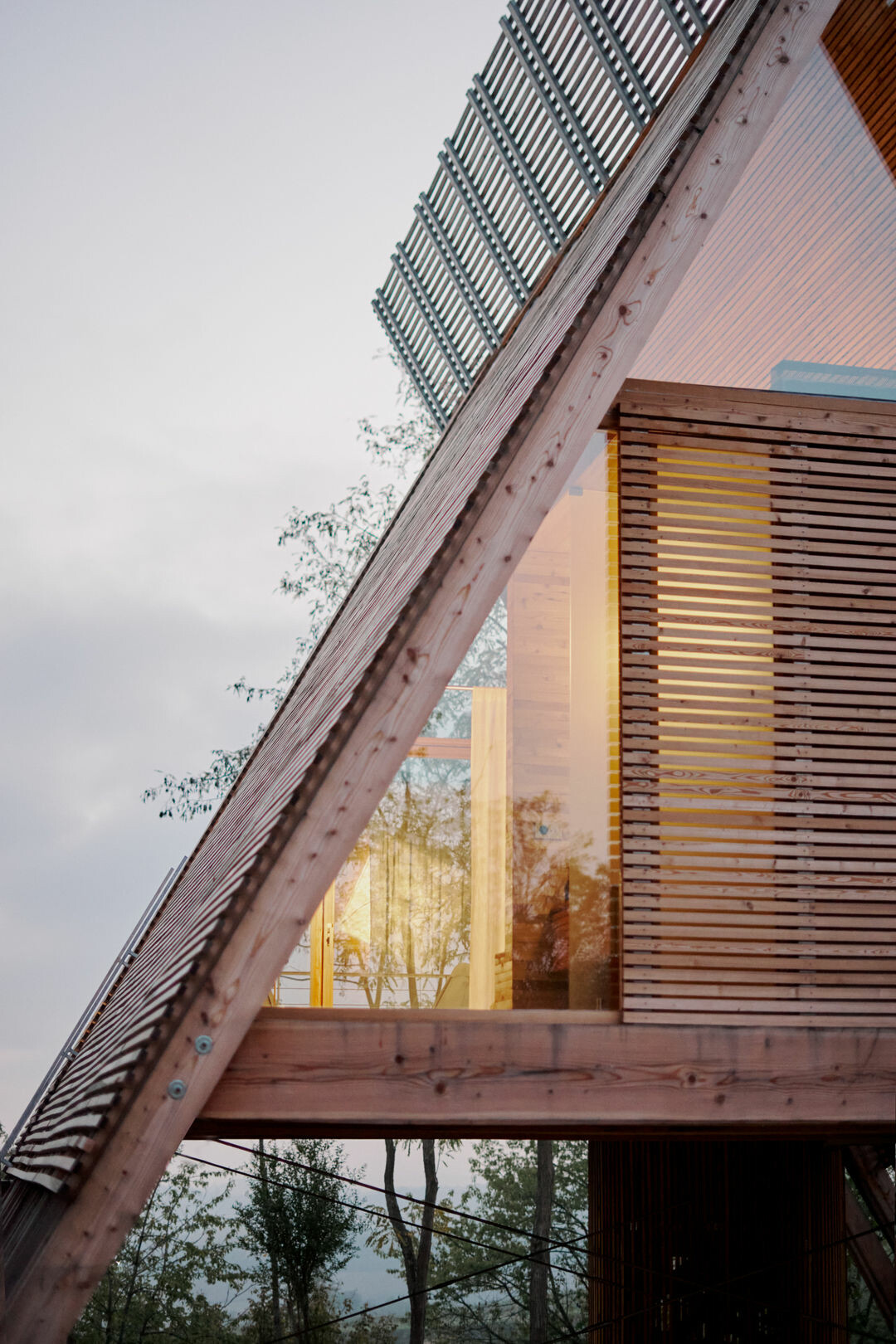
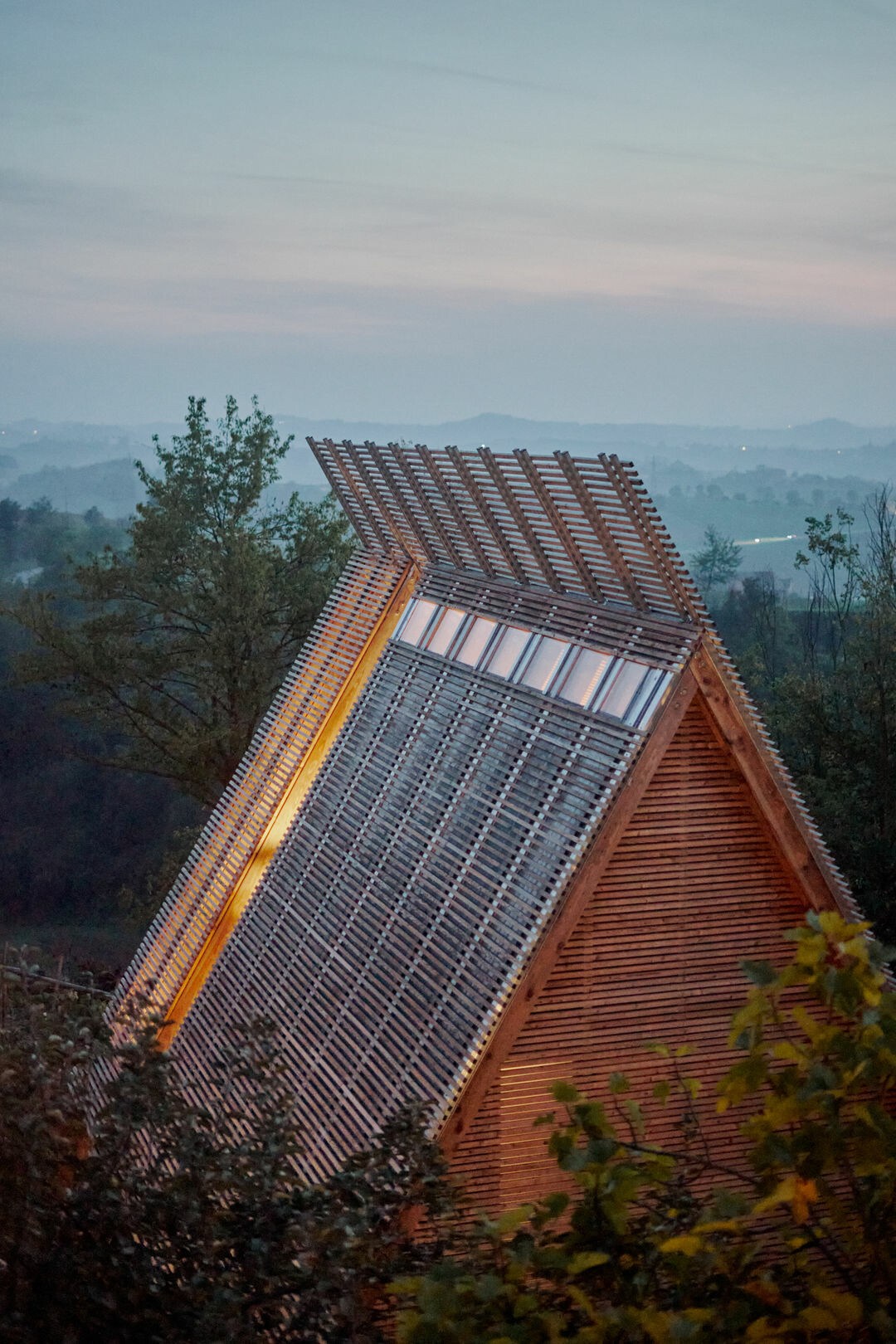
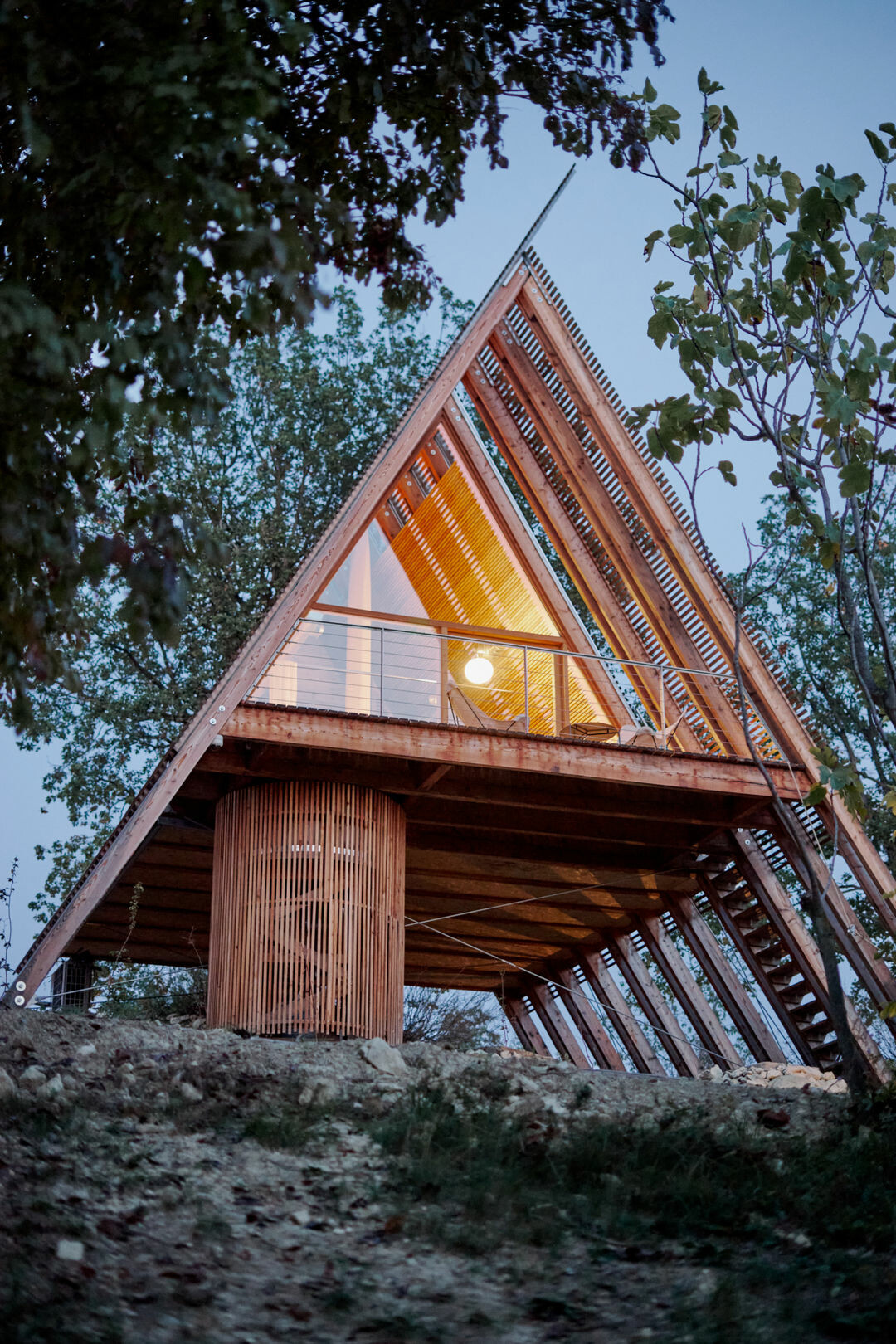
小屋採用自然和環保材質設計,並具有可續性及能源效率,而小屋底部高於地面,這種結構方式可以應對傾斜的地形。在使用預製元件的挑戰中,設計師們採用了非標準化的方法,這些方法運用在屋頂上,它是由兩個A字形玻璃三角立面建造而成的,同時是牆壁也是承重結構。小屋在規劃時,並非設計為封閉型量體再做開口,而是由三個傾斜表面所創造的空間,這是按照日本的分層邏輯進行的設計。
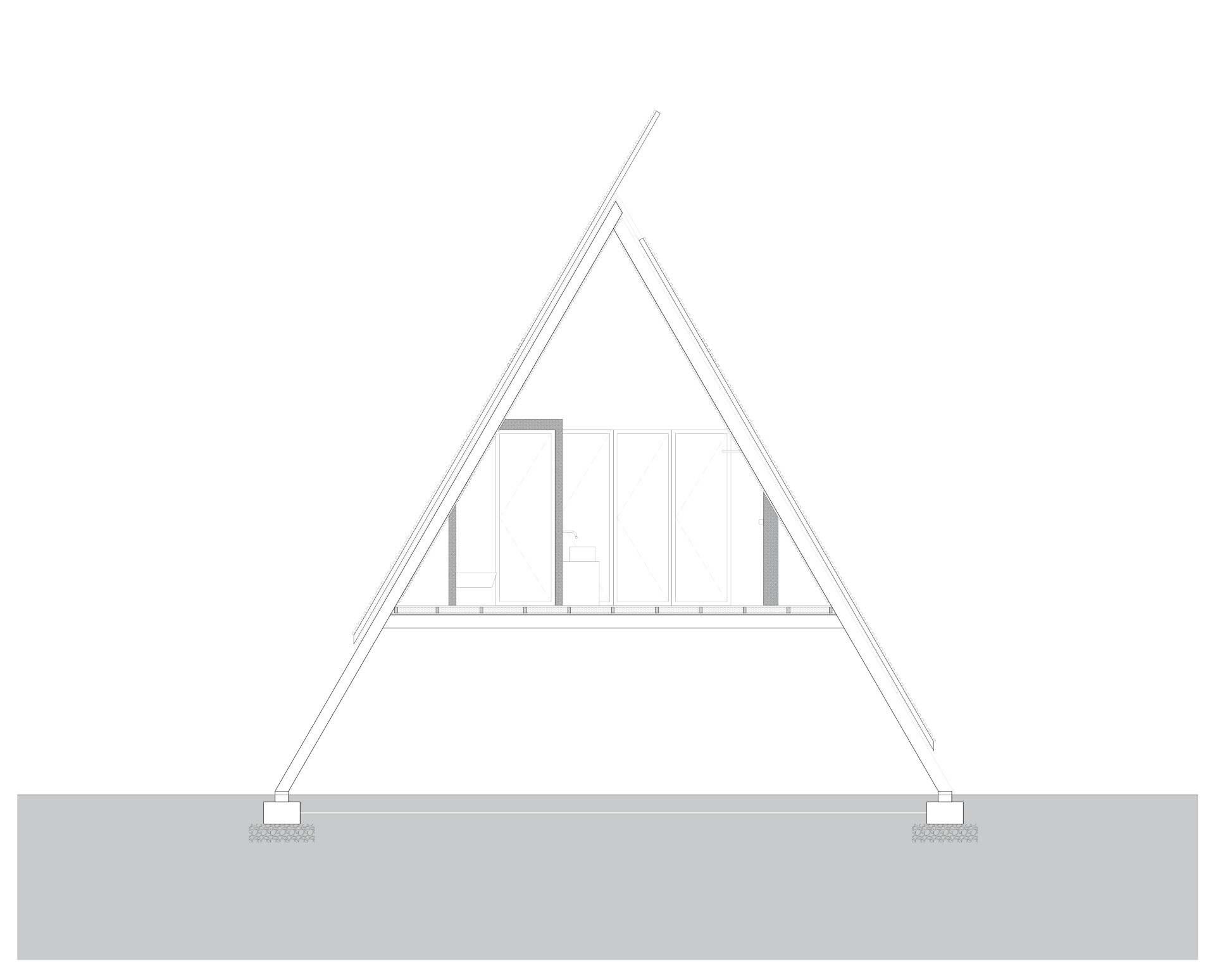
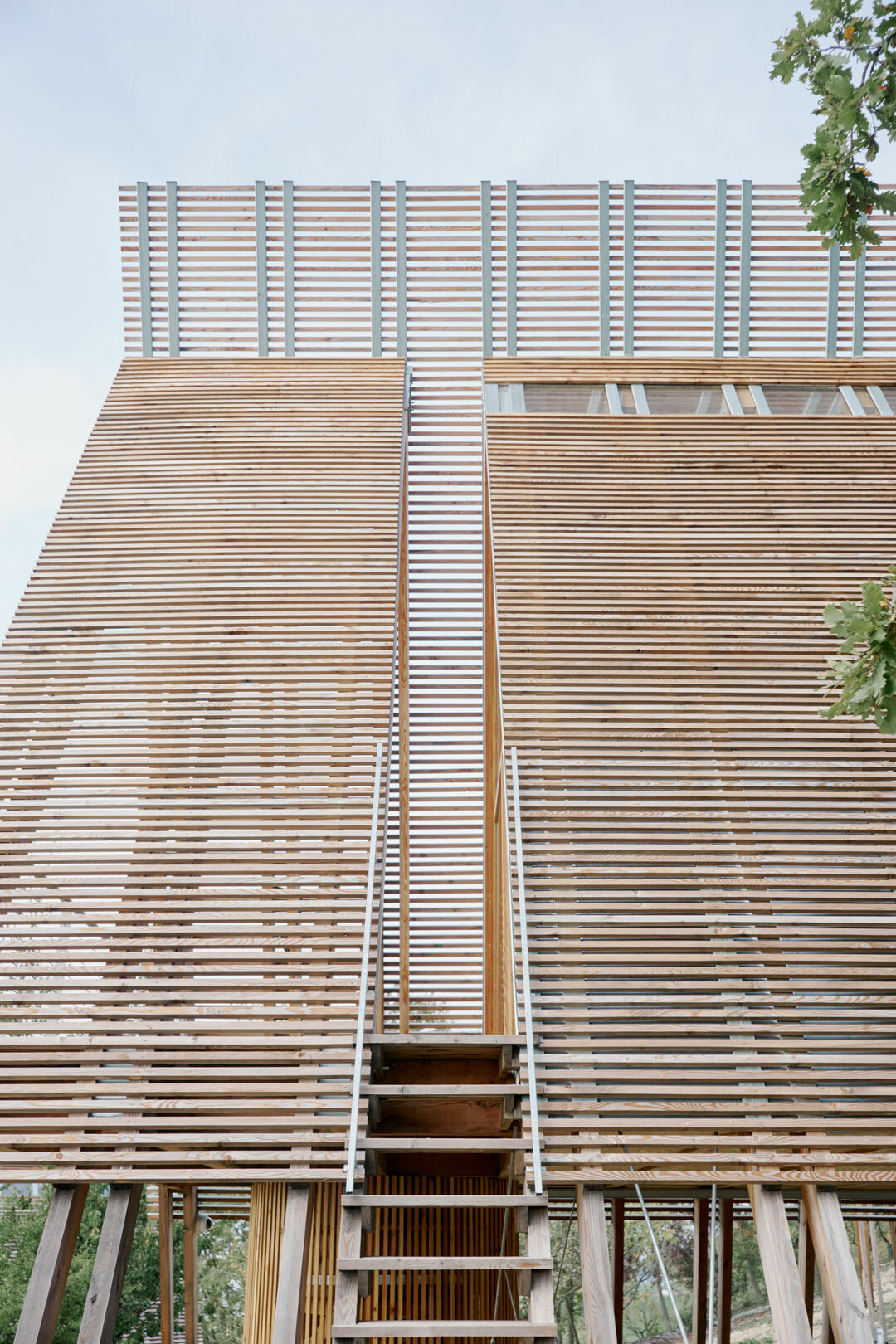
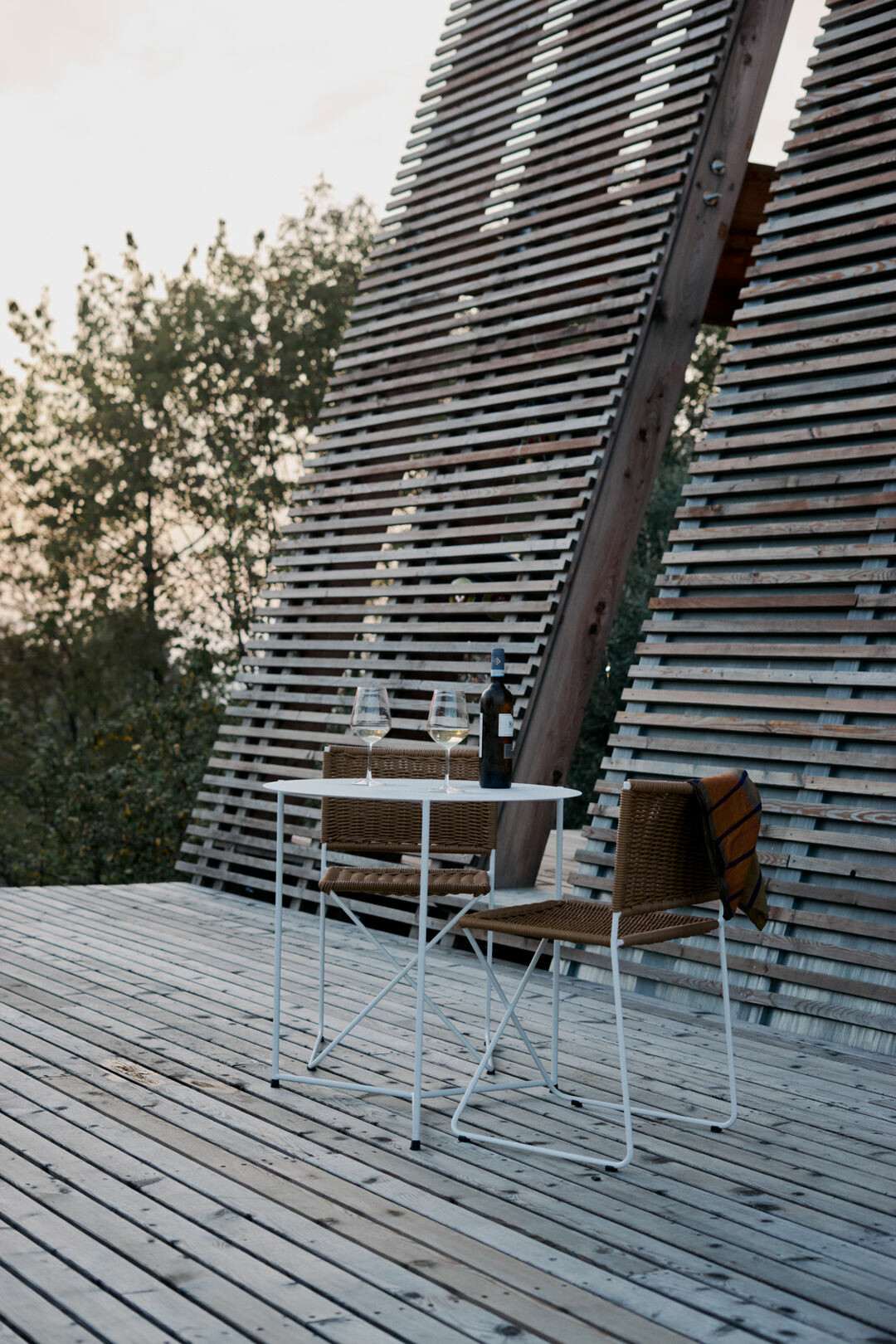
這些小屋採用6 x 9公尺的矩形平面和5.5公尺的天花板高度,以油做過保護處理落葉松製成,油本身是一種自然元素,會被木材所吸收,能隨著木材老化有豐富變化且滋潤它。這些木材還被用於家具、牆面和地板,因此,小屋幾乎像是偽裝在自然環境中,與它完美的融合。在這次的項目中,窗戶從功能和美學的角度都扮演著重要角色,將光和風景帶進小屋中。選擇了薄窗戶無縫融入木造結構中,讓內與外之間達到和諧、共存的關係,這是此次的目標。