Mollie Aspen Hotel
In Aspen, Colorado—a town surrounded by mountains and steeped in cultural depth—a quiet building stands across from Paepcke Park. It does not call attention to itself, yet it cannot be ignored. MOLLIE Aspen embodies the spirit of Bauhaus, grounding its architecture in the essential unity of form and function. Rather than imposing itself on its surroundings, the hotel appears to have emerged from the layers of local history and the natural terrain.
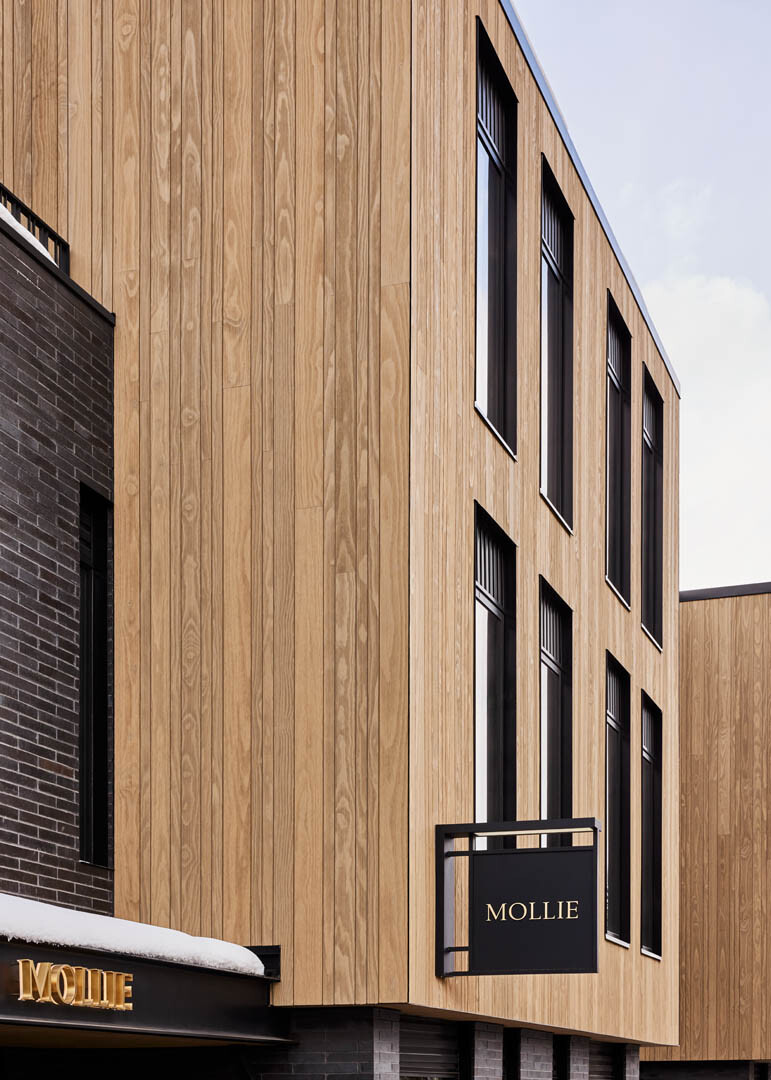
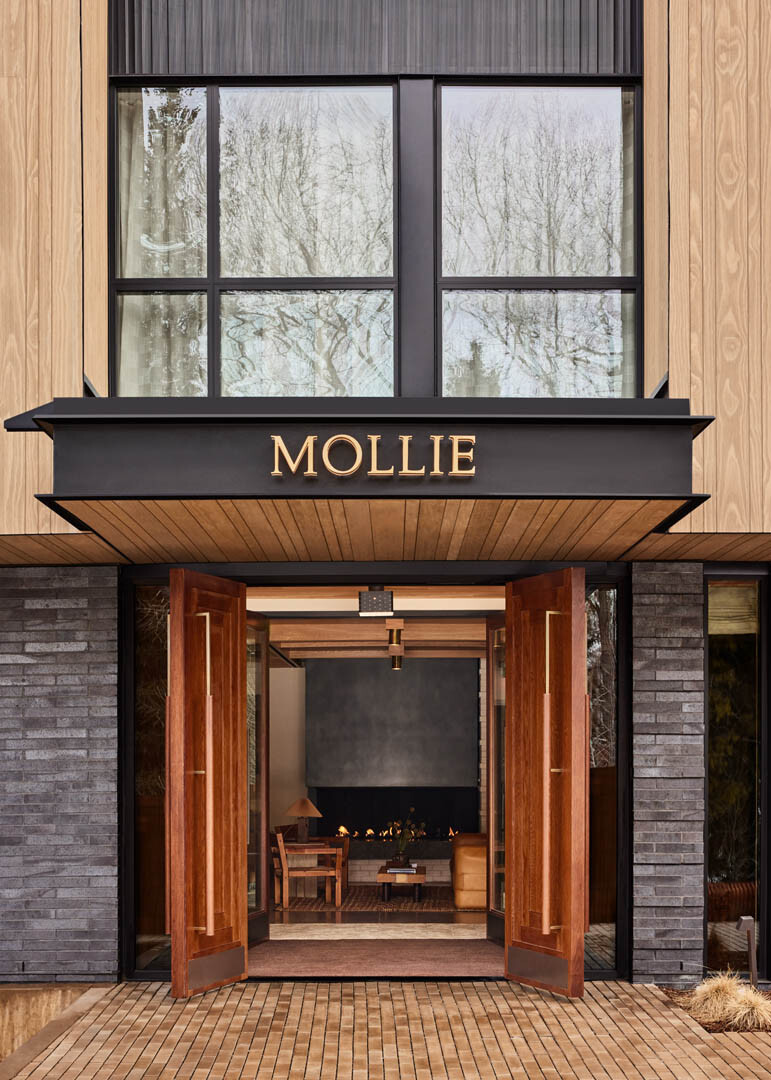
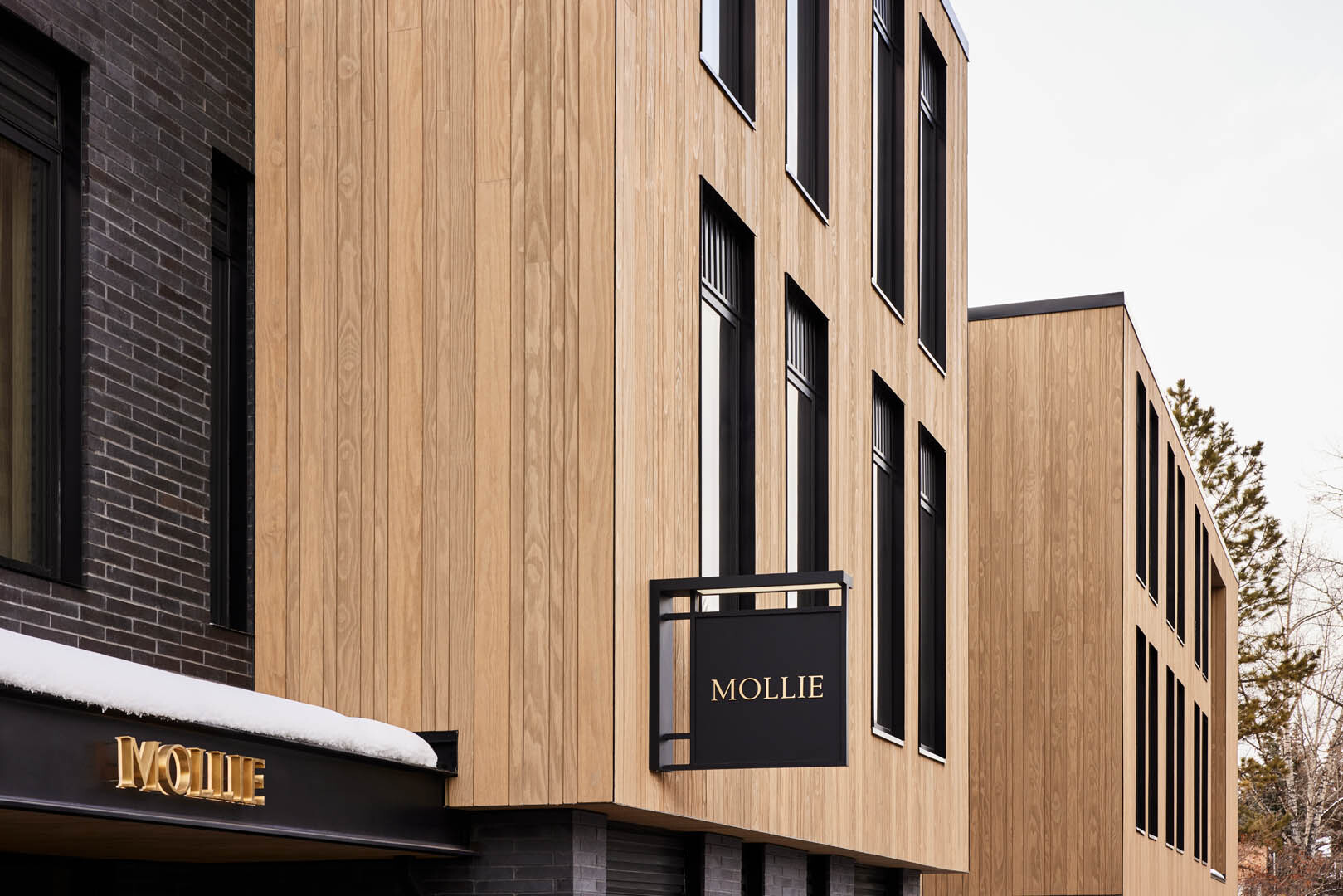
The hotel’s architectural expression along Main Street draws from the rhythm of historic lot lines dating back to Aspen’s silver-mining era. Rectilinear volumes extend along a north–south axis with measured regularity. On the western edge, the massing gently reduces to meet the neighboring Victorian homes—shifting from a two-story timber façade to a single-story volume that acknowledges the surrounding scale. The base is clad in dark brick, tinged with purplish red, echoing the oxidized rock of the nearby Elk Mountains. Above it, vertical boards of Radiata pine, laid in random widths, establish a rhythmic verticality that recalls the slender patterns of an aspen grove.
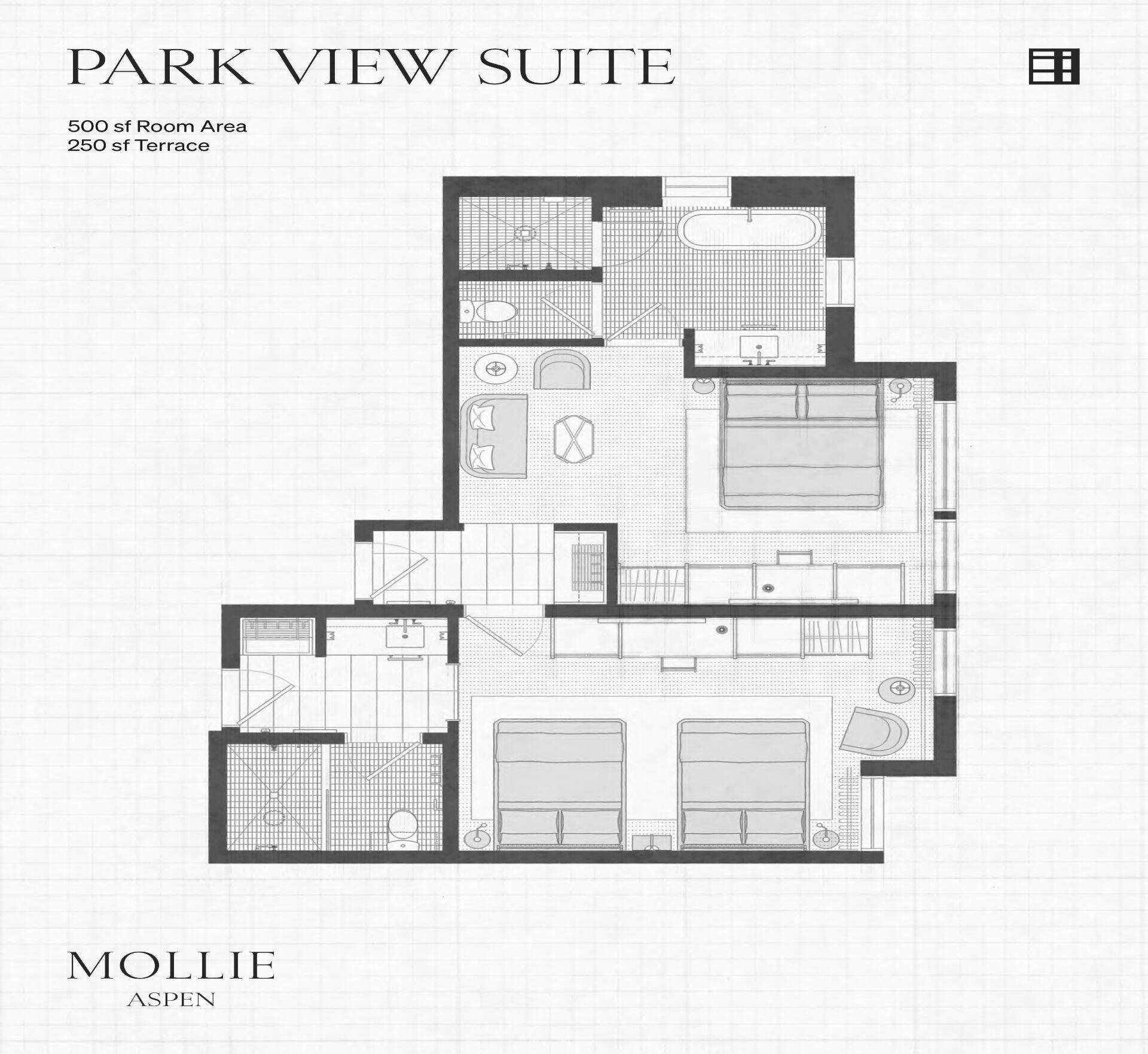
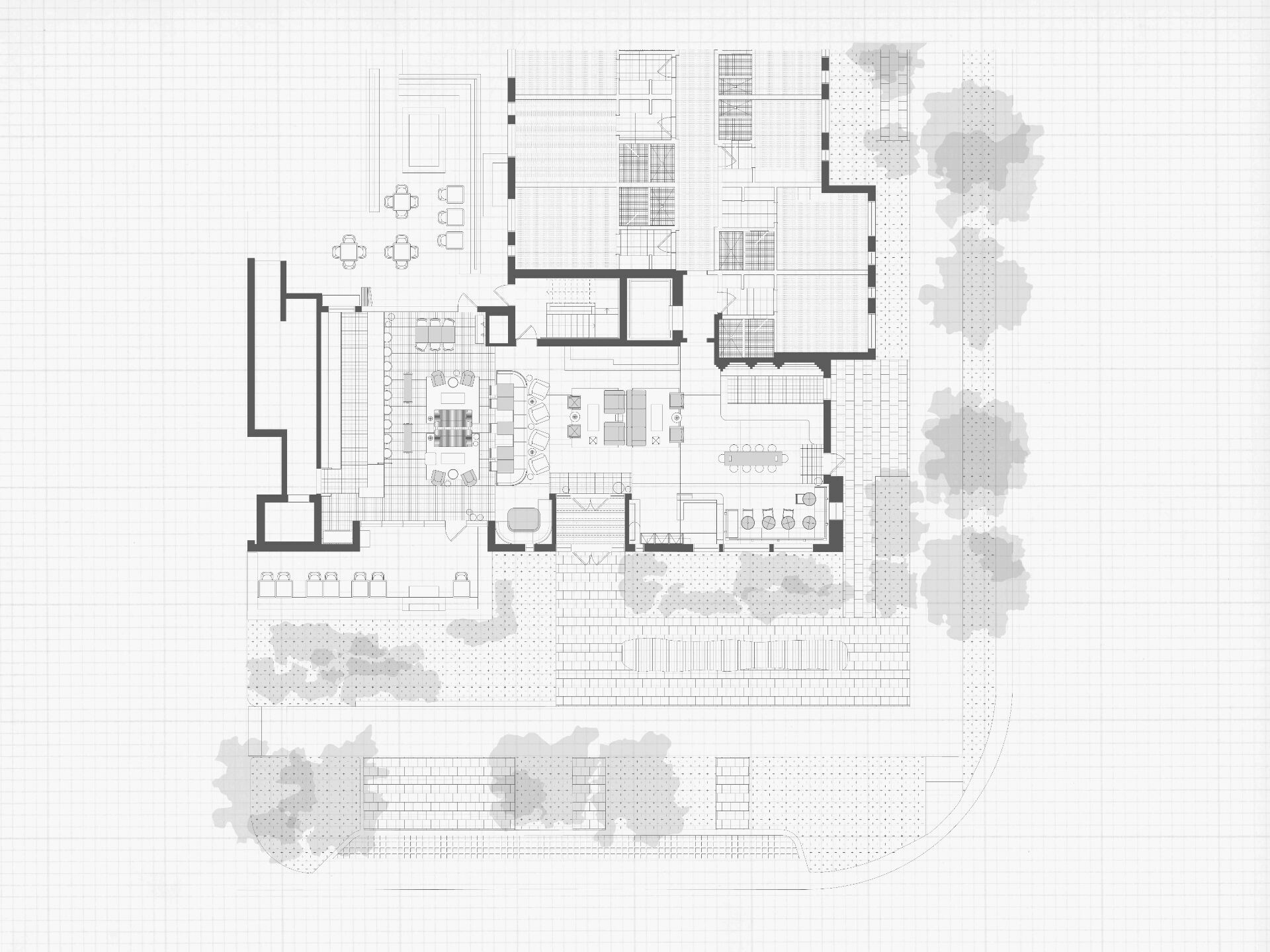
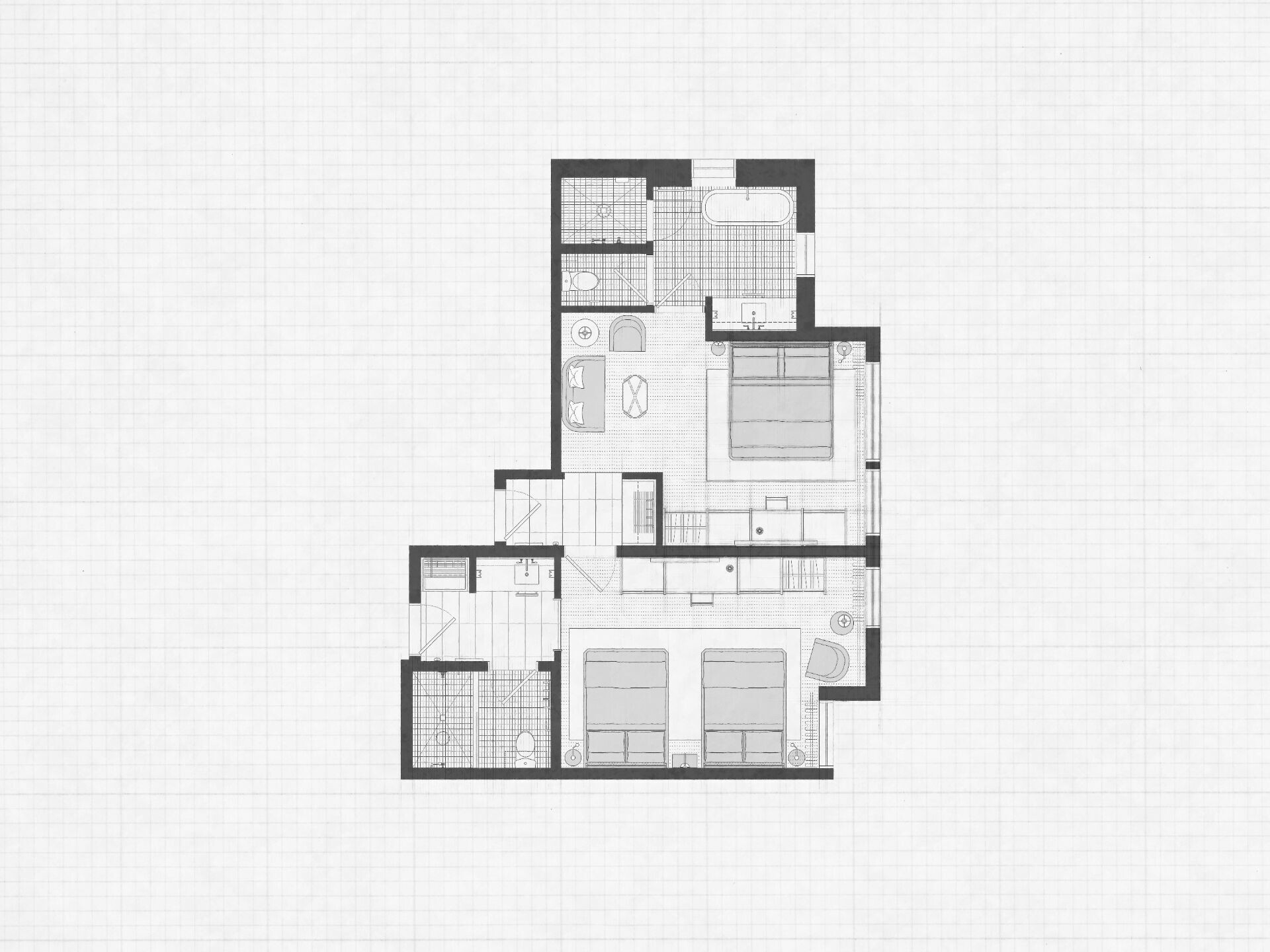
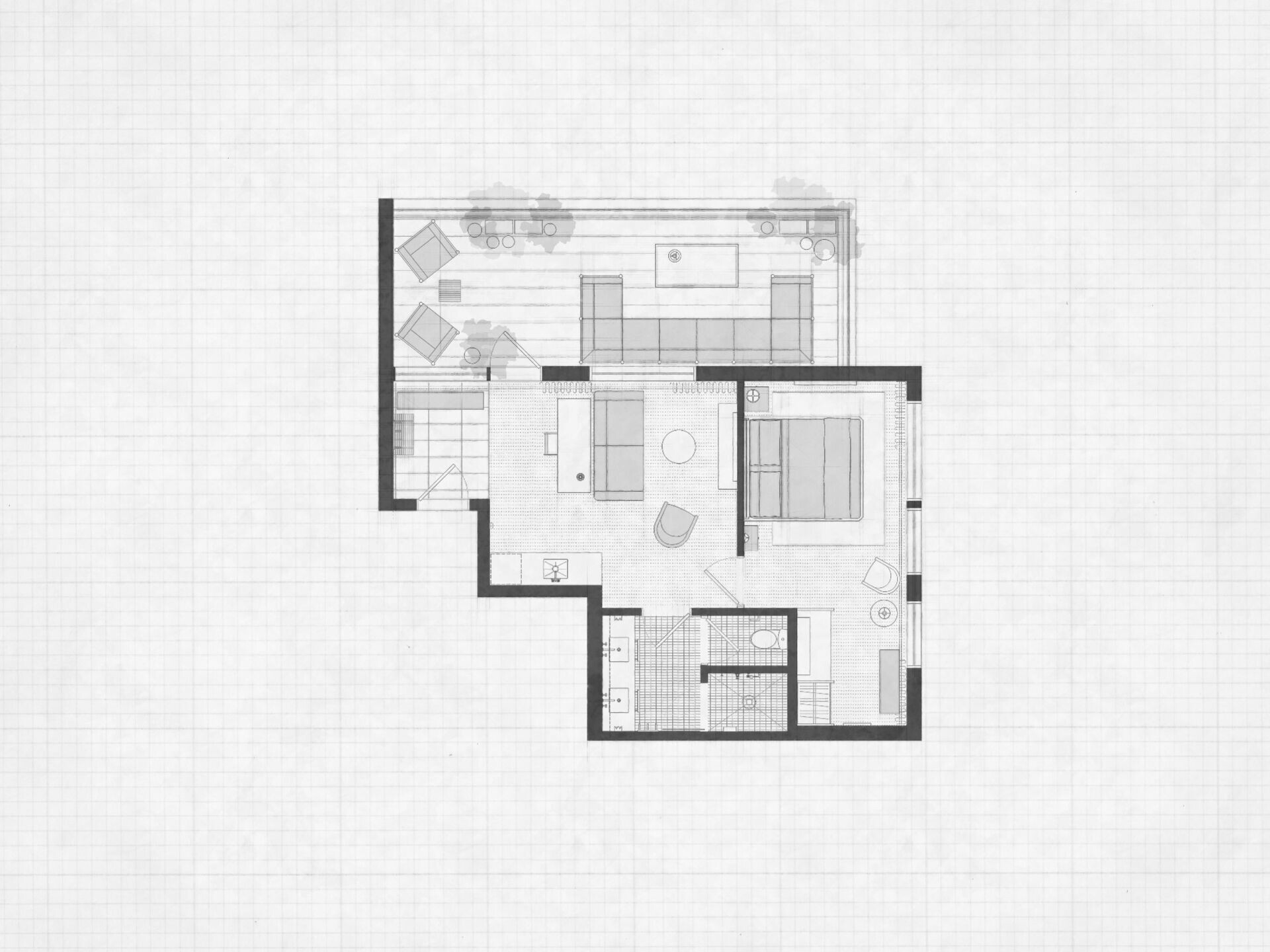
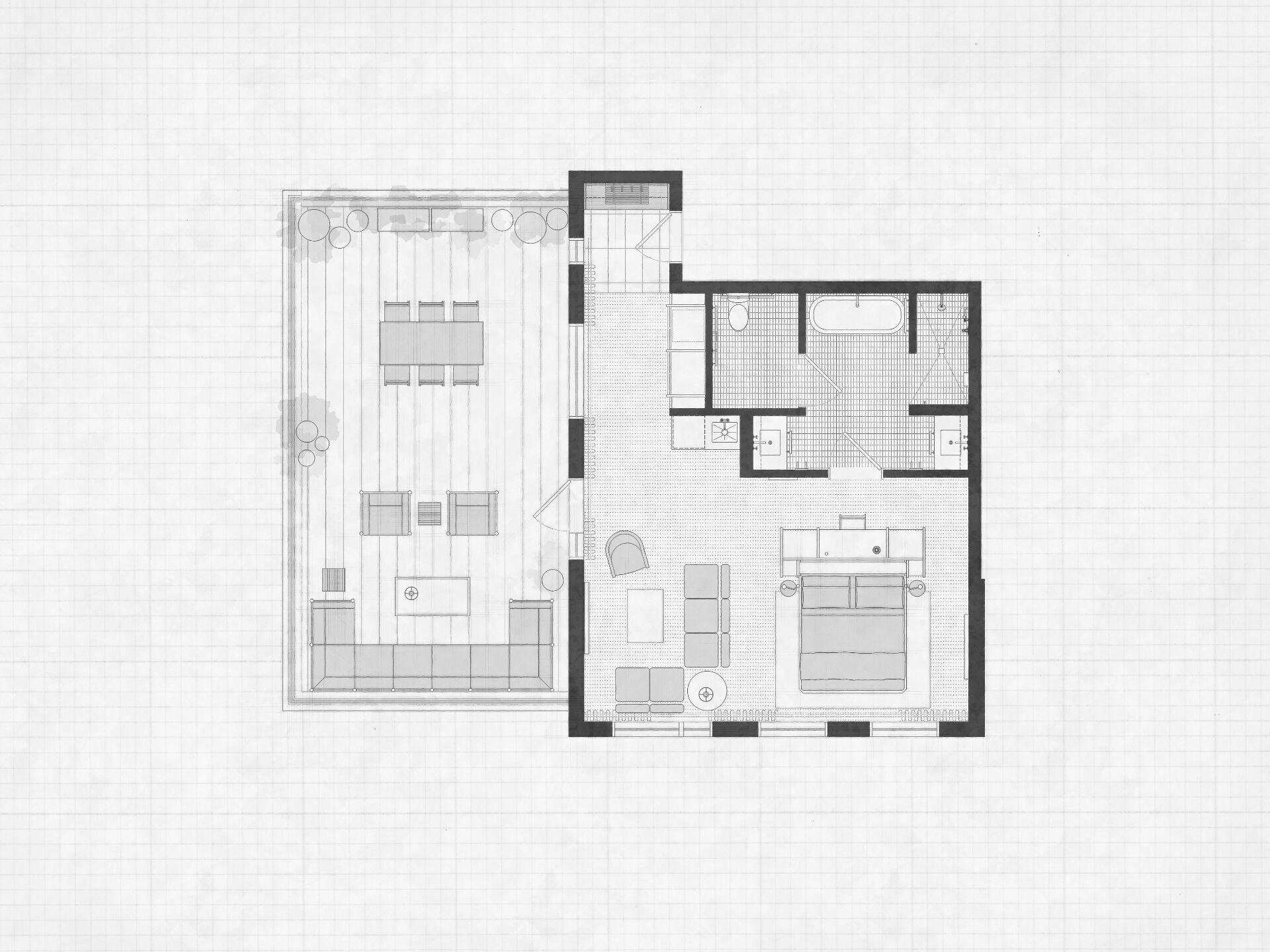
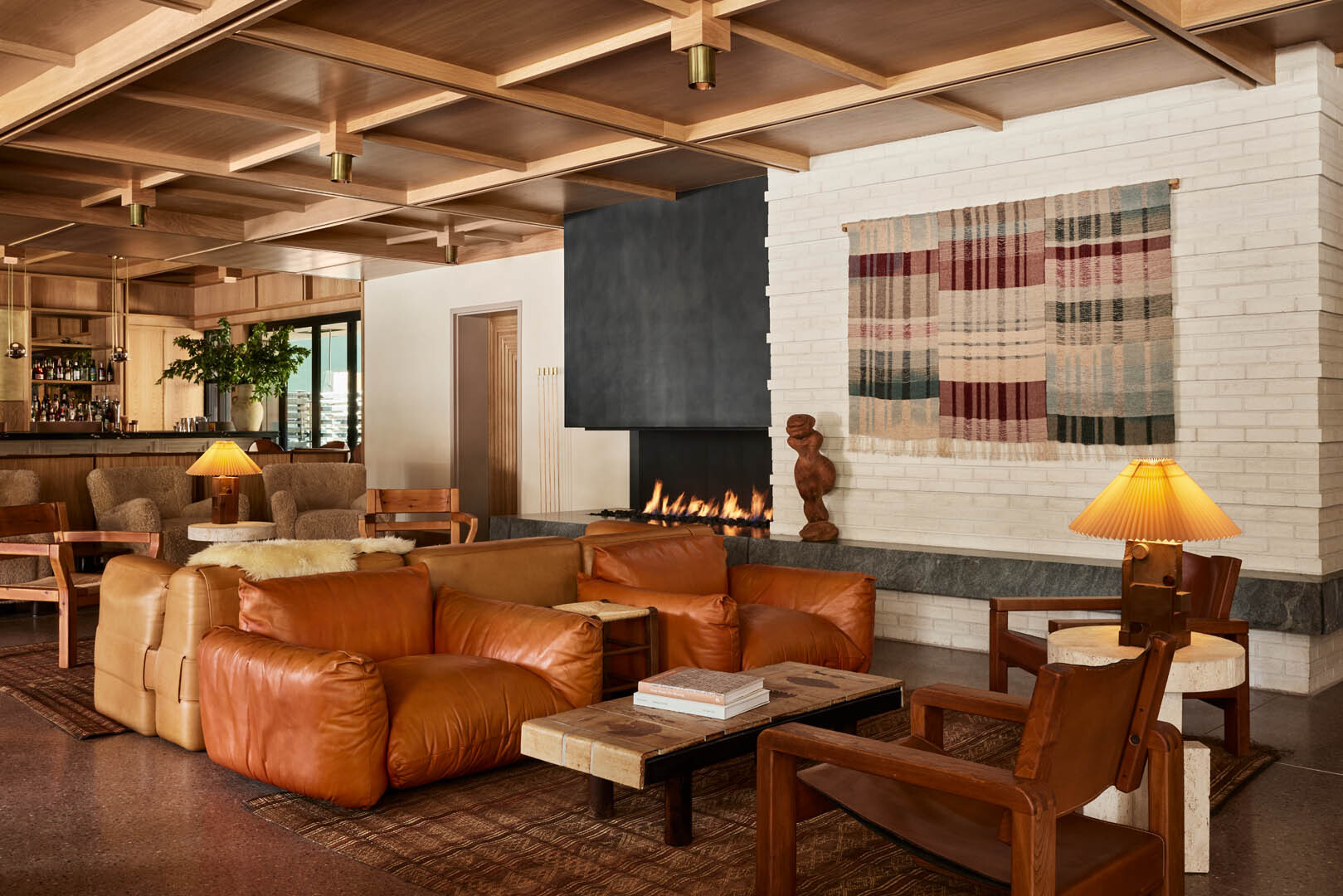
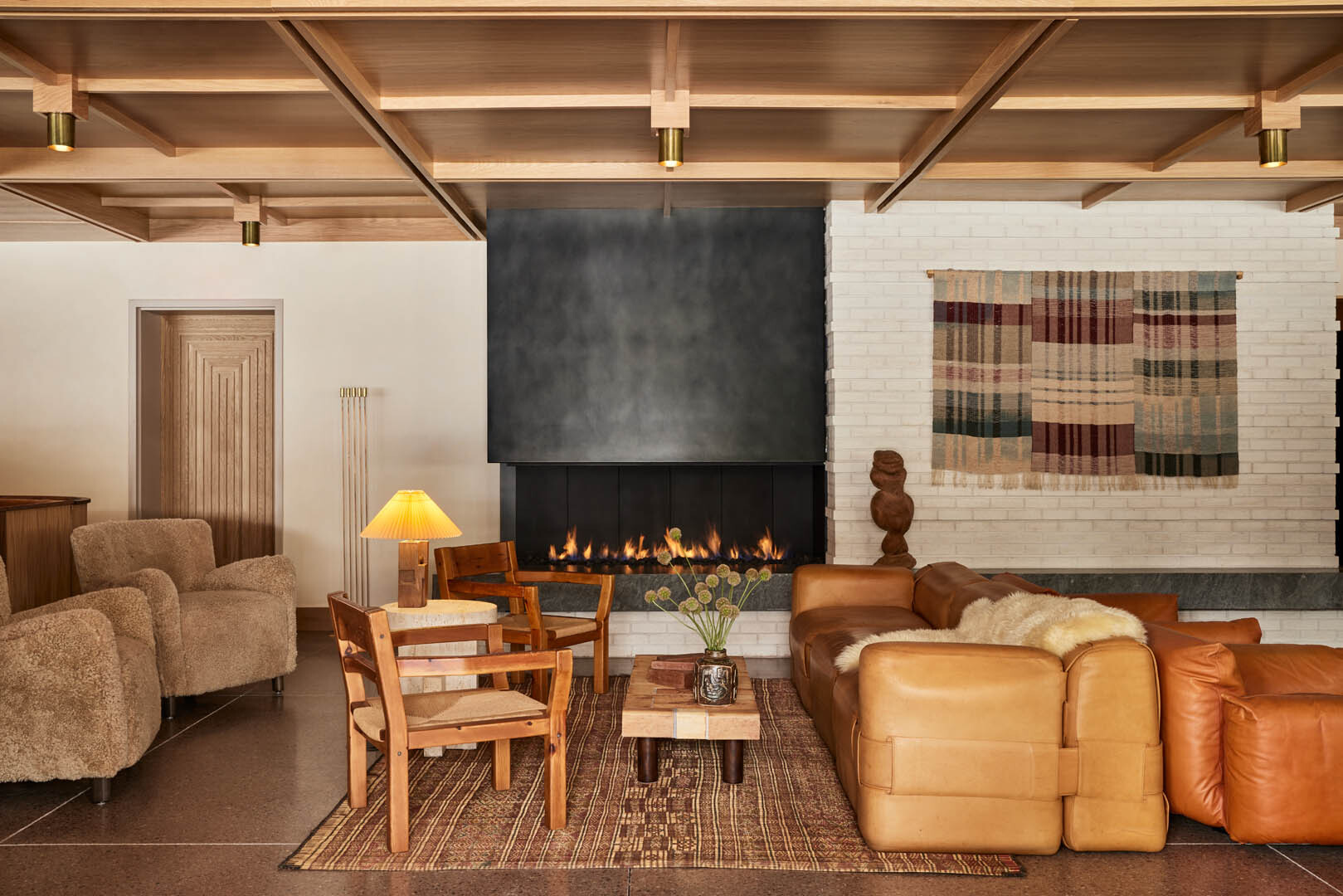
The hotel’s brand identity, crafted by Post Company, extends across its 68 guest rooms and shared spaces. Inspired by the woven language of Anni Albers, the design pays tribute through a consistent visual vocabulary—expressed in signage, spatial elements, and wall-based installations. In the lobby, a woven piece by textile artist Rachel Snack speaks in quiet tones, shaping the hotel into a space where guests experience more than rest: they are offered a sense of cultural encounter, of resonance, and of warmth that lingers long after departure.
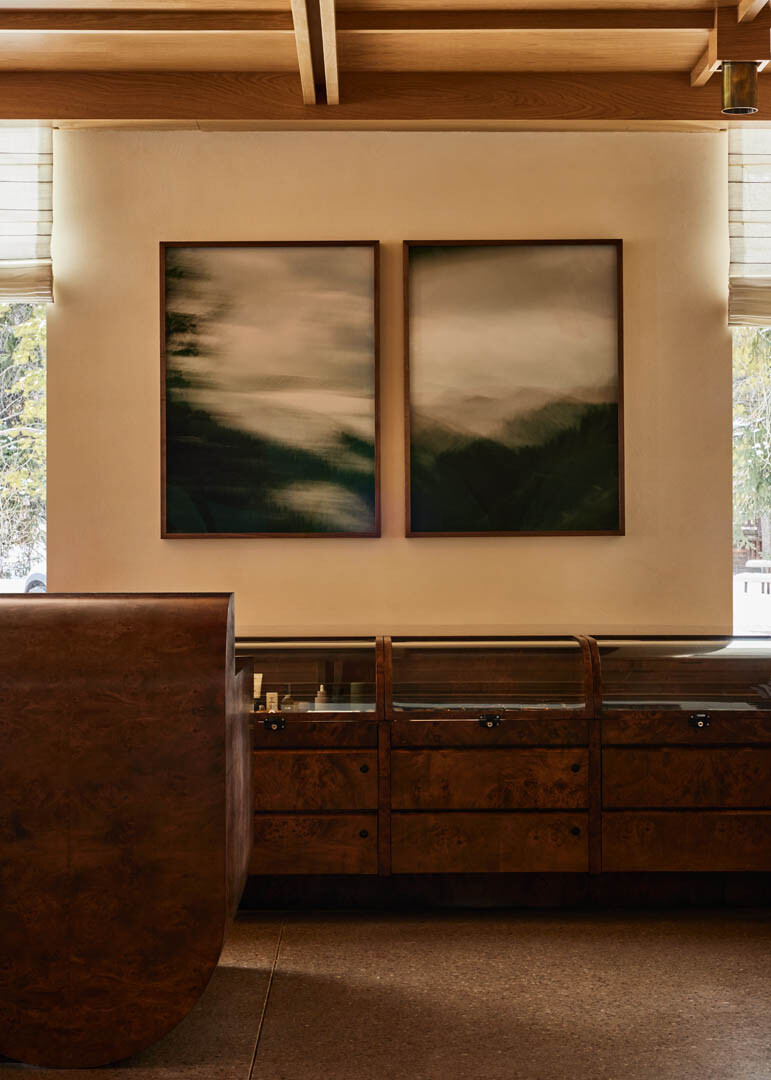
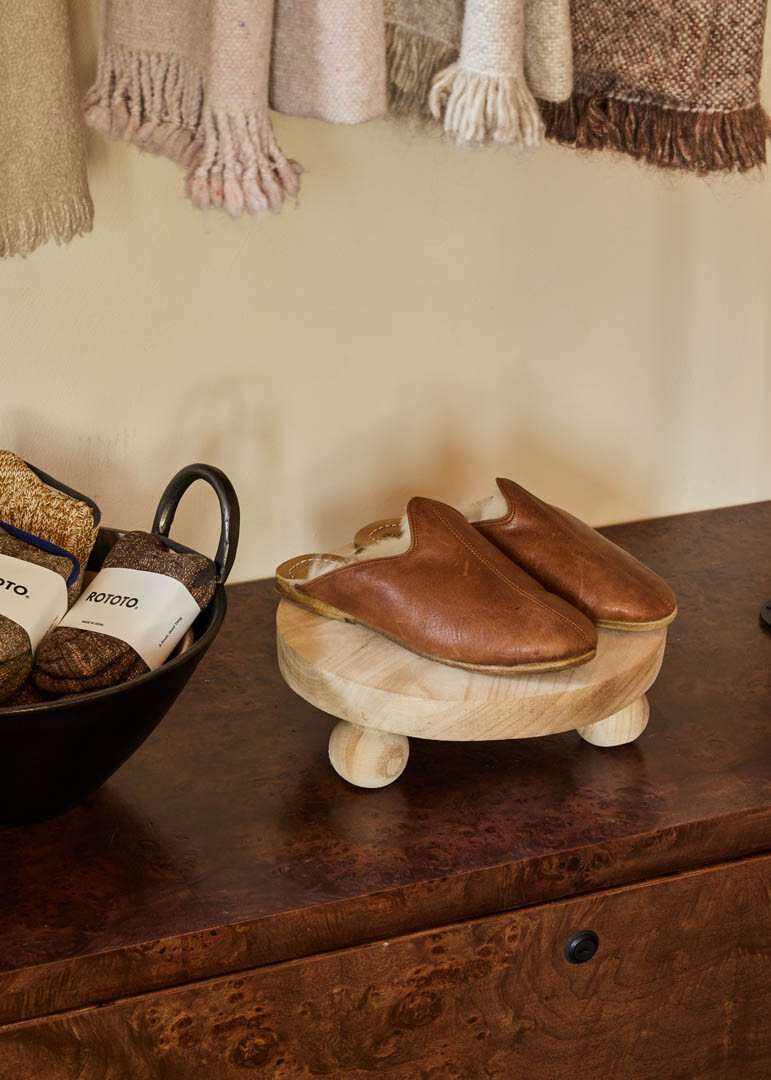
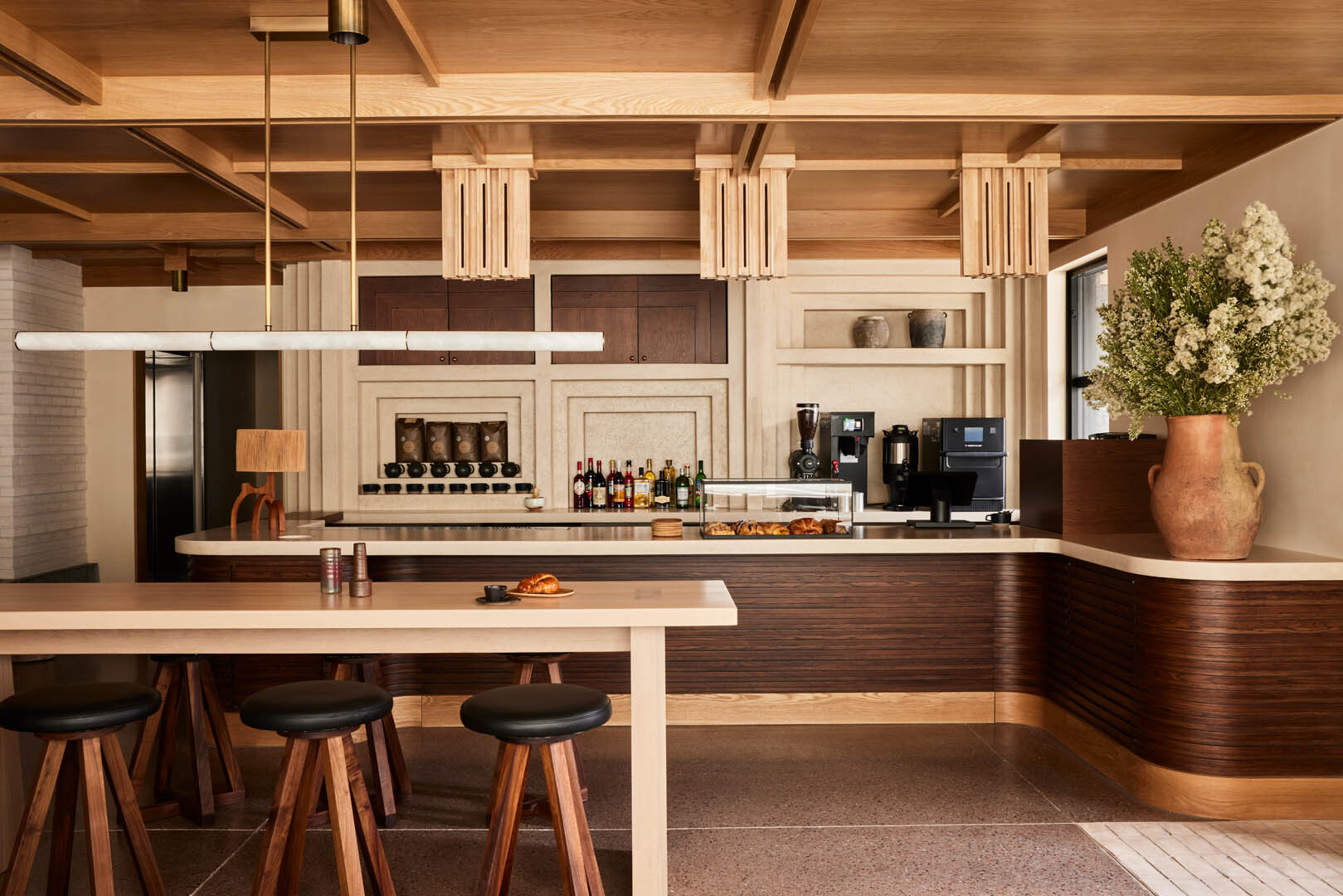
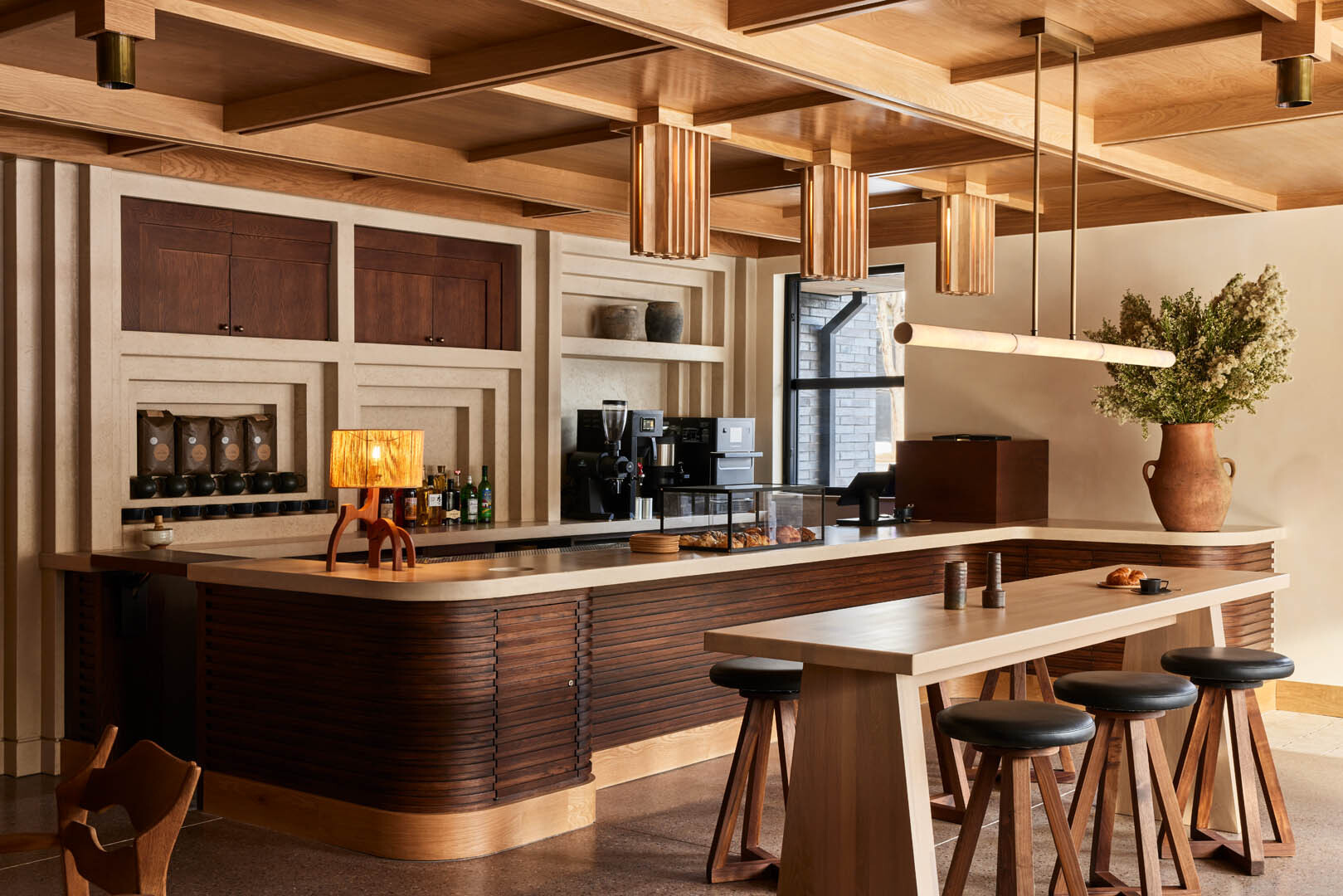
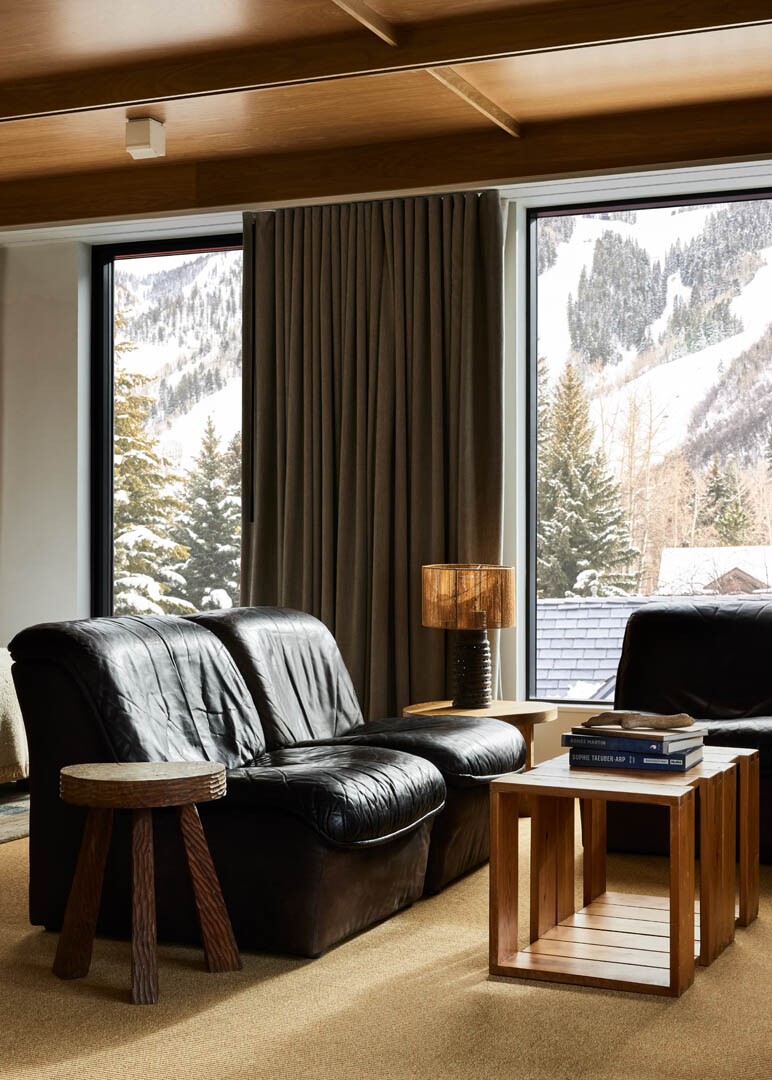
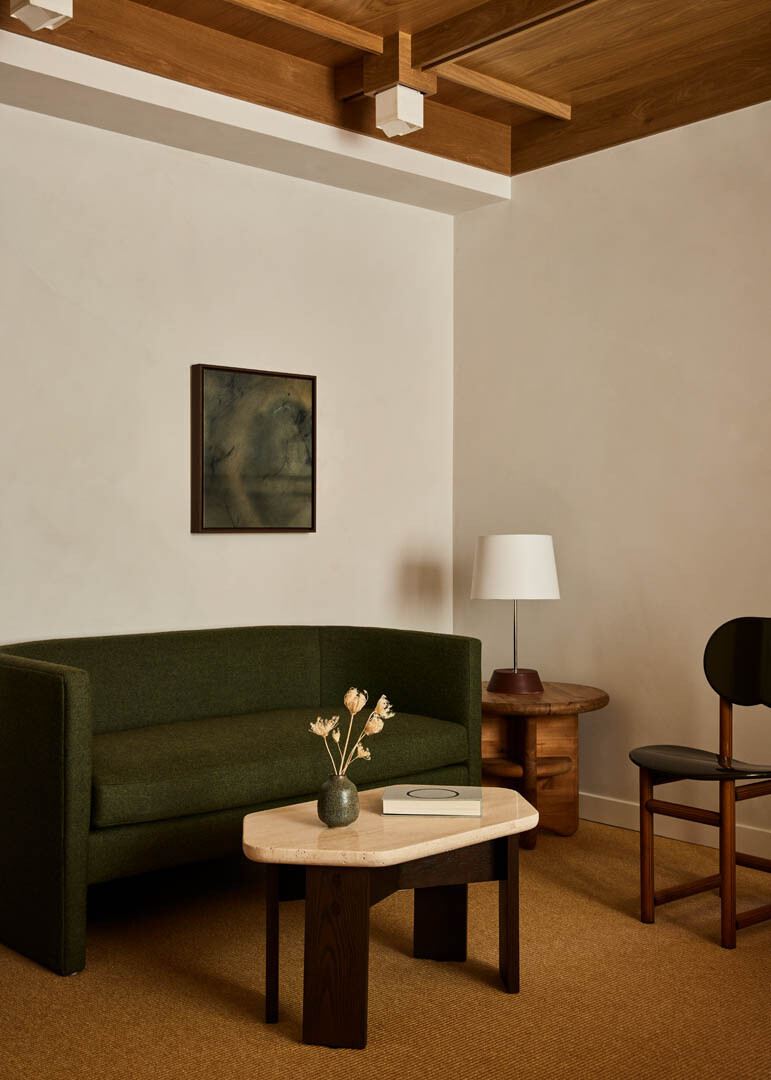
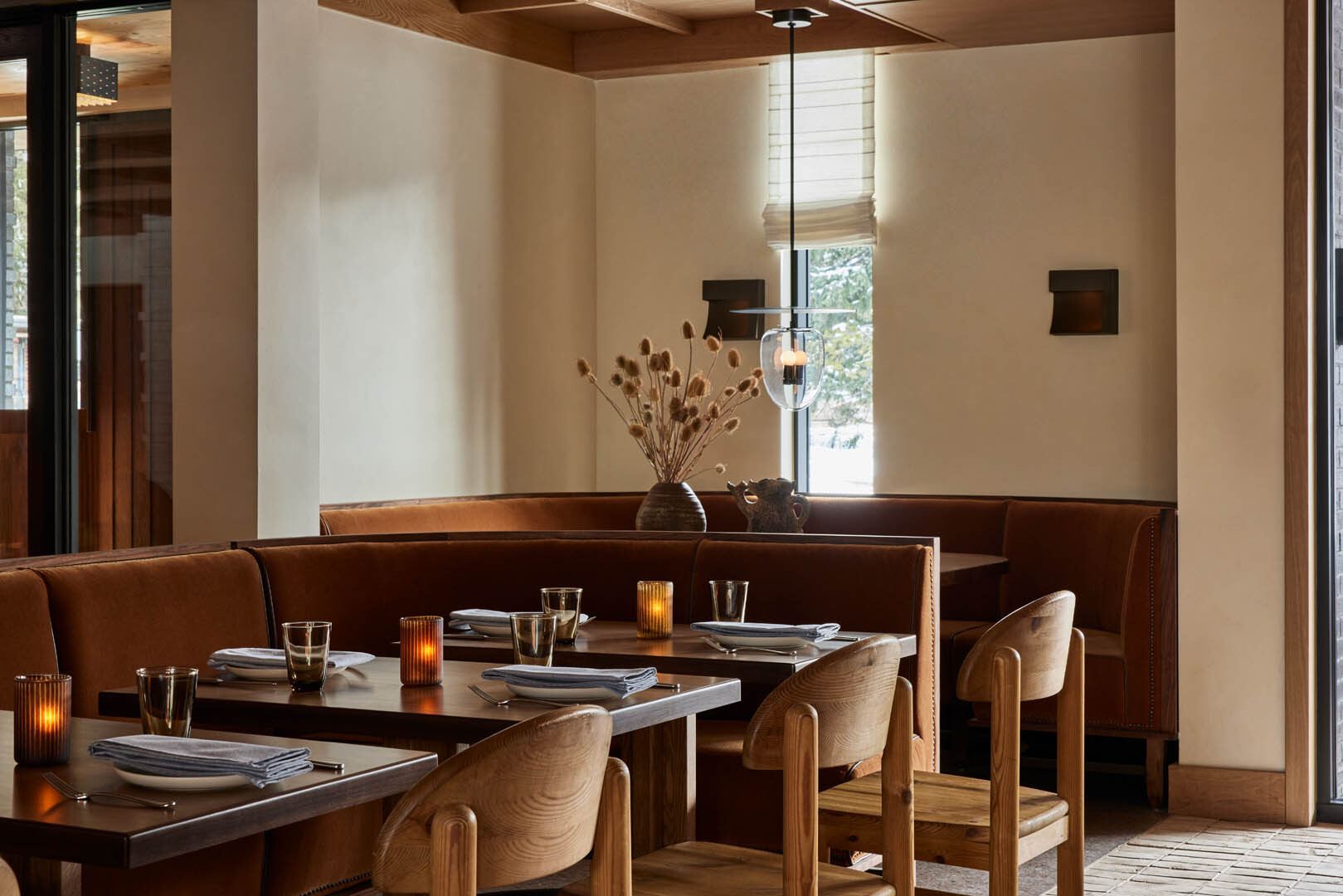
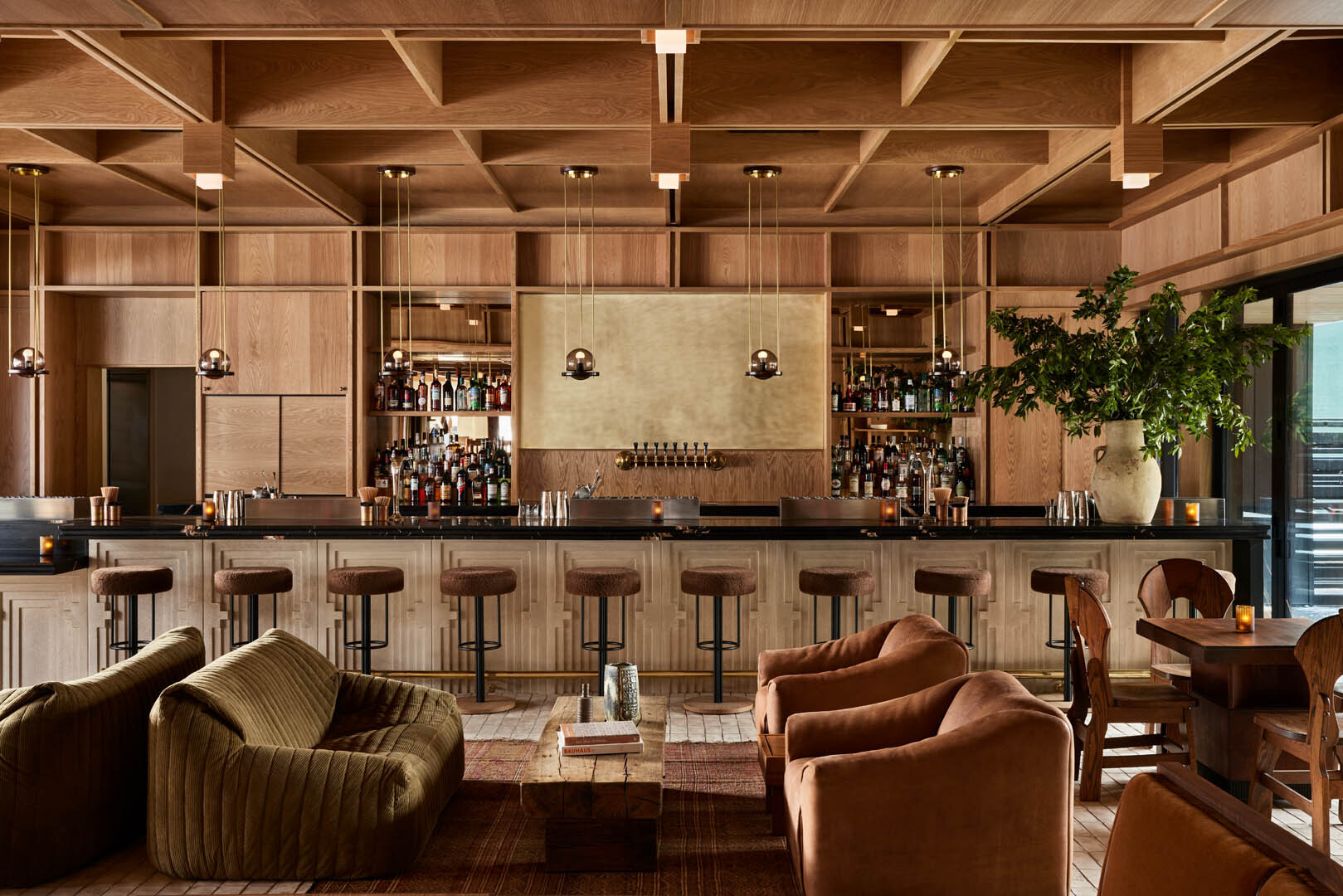
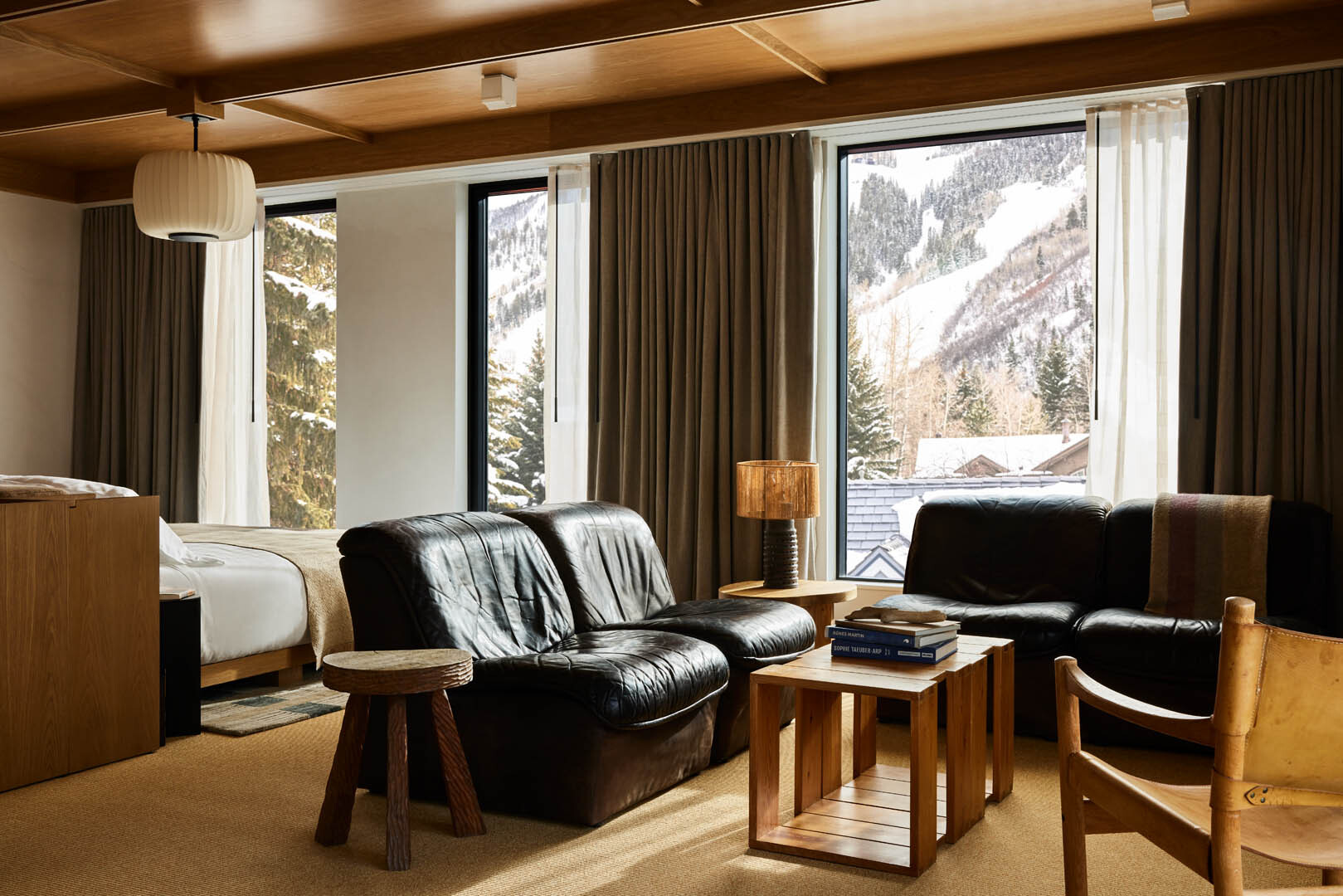
Upon entering, guests are greeted by a reception desk sculpted from rare burl wood, its form soft and sinuous. The bar area juxtaposes geometric cast-concrete walls with finely detailed millwork, revealing a precise yet tactile sensibility. Throughout the public areas and guest rooms, a continuous slatted wood ceiling creates cohesion and fluid visual rhythm, softening the volumes while guiding movement through space. Light pours in through large-scale windows, casting shifting patterns across brass, timber, and earthenware surfaces—instilling a sense of stillness, ease, and quiet immersion.
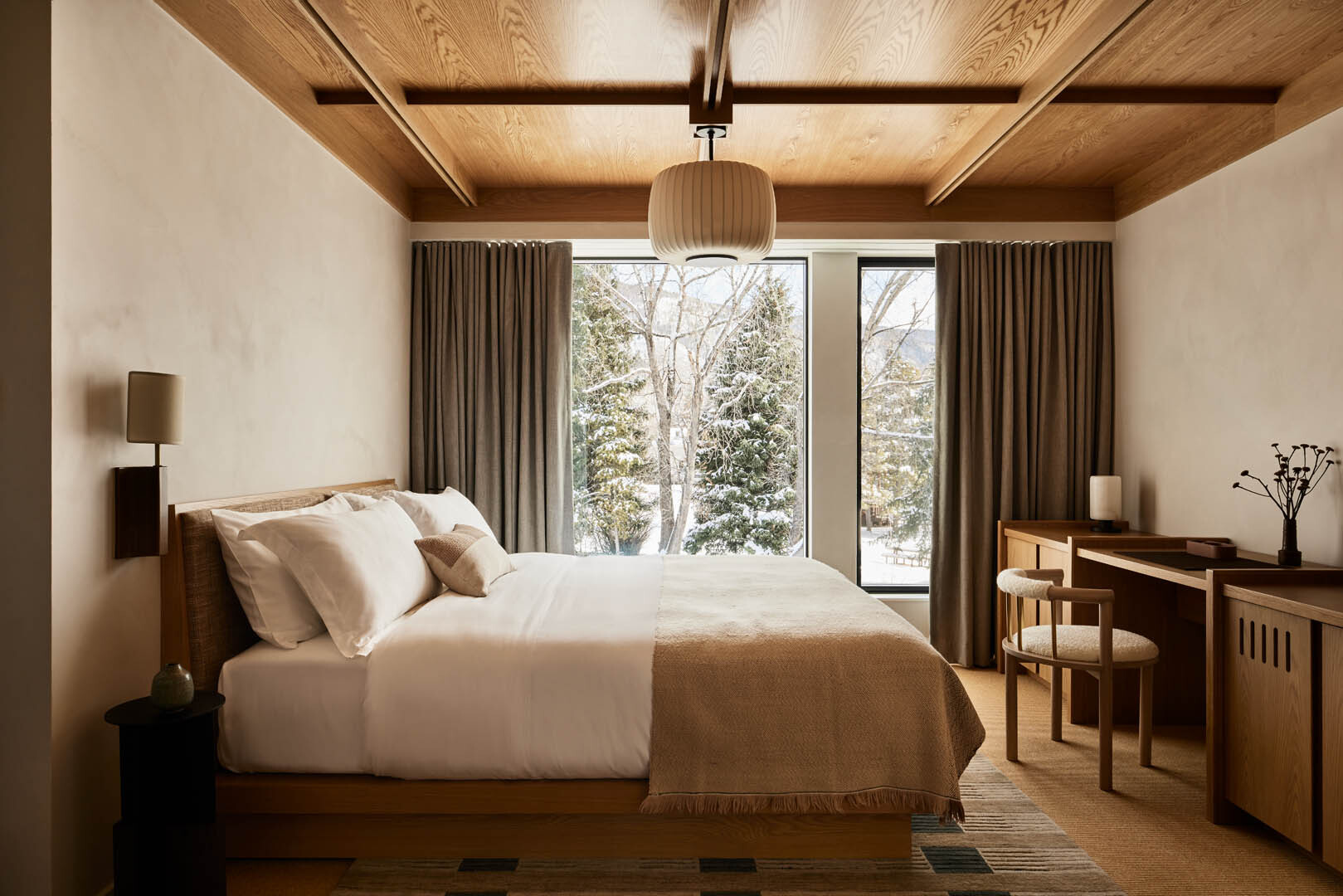
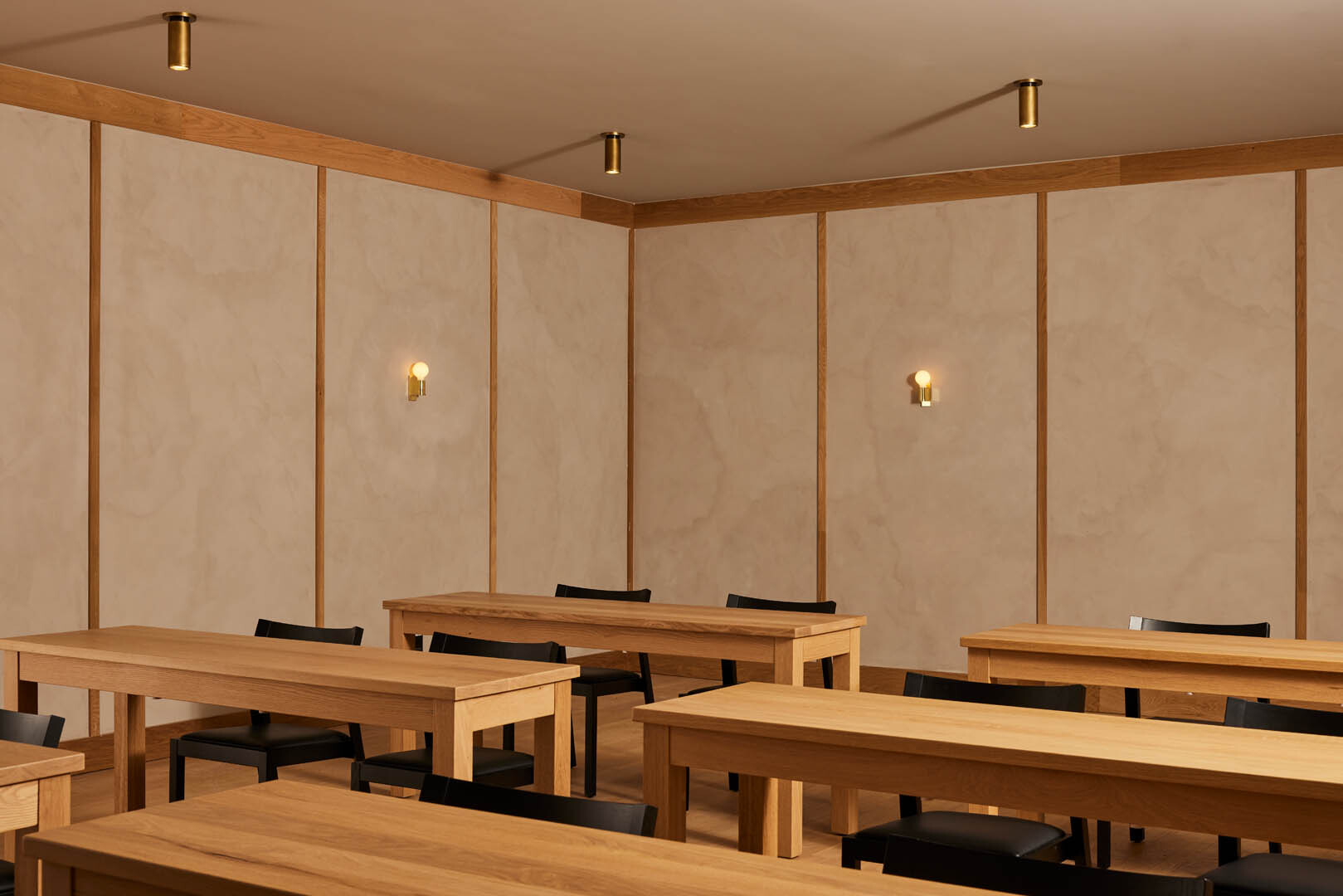
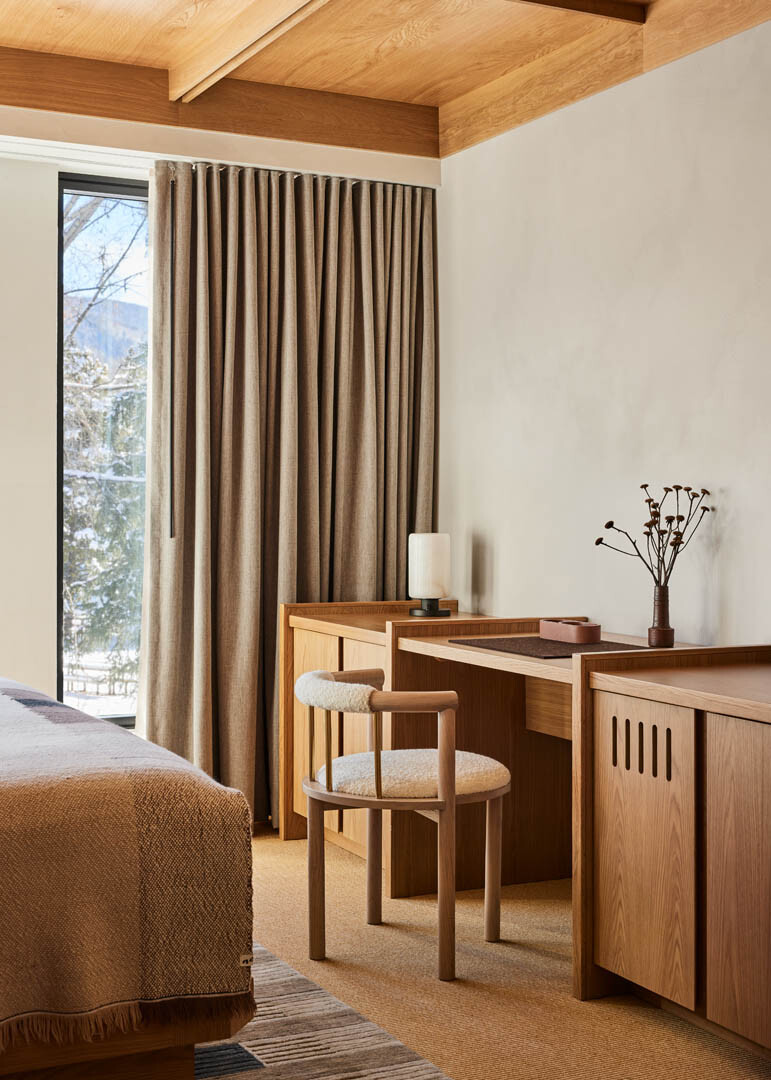
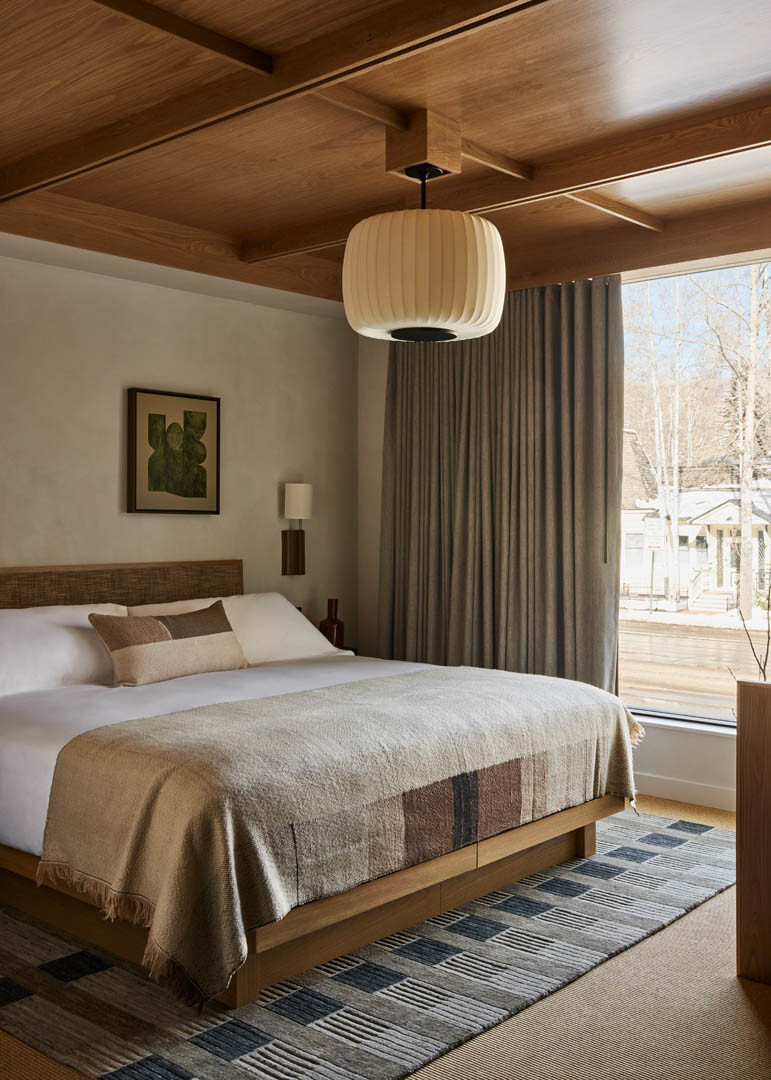
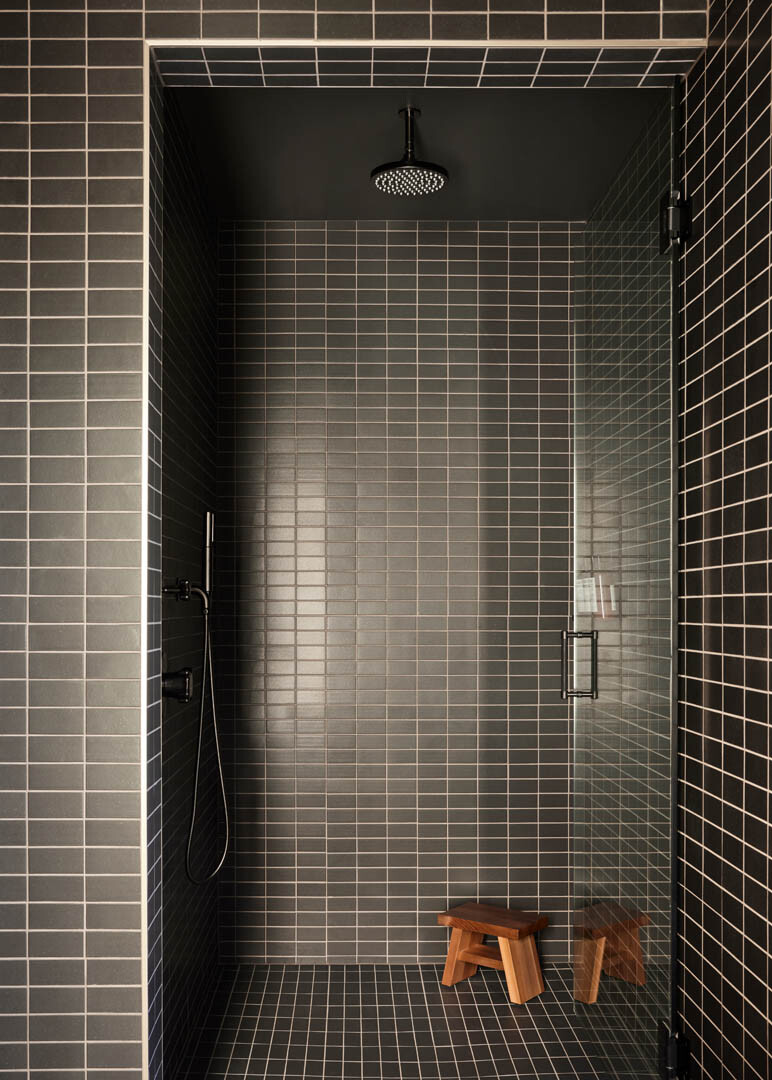
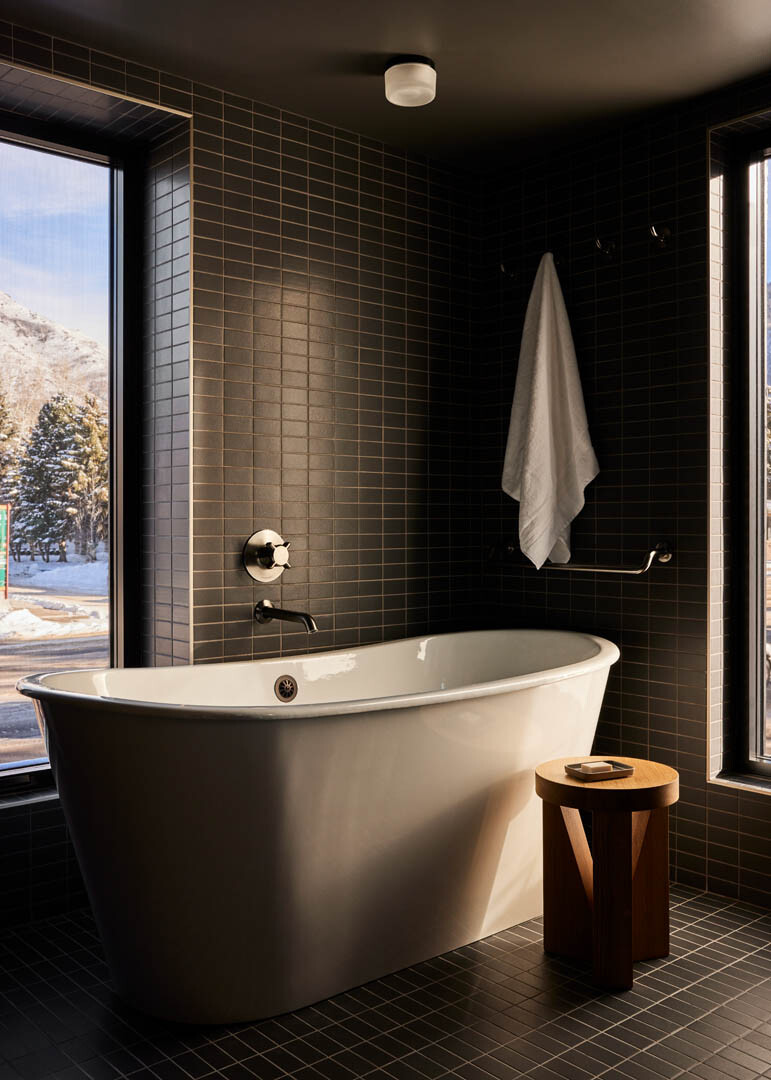
Here, design resists classification. It reconsiders the hotel as a mode of inhabitation—where choices in material, scale, and detailing reflect a deeper care for how one dwells. Furniture and textiles sourced from the American West respond to the spirit of craft and landscape. Heating and cooling are provided by solar-powered heat pumps, ensuring comfort while maintaining environmental awareness. Set atop the hotel is a rooftop pool that offers views of Aspen Mountain by day. By night, it transforms into a serene lounge. Whether in silence or conversation, guests are invited to settle into the stillness of the alpine air—a space where presence and place quietly converge.
Branding & Visual Identity | Post Company @post_company
Building Type | Boutique Hotel
Number of Rooms | 68 rooms
Developer | HayMax Capital
Location | Aspen, Colorado, USA