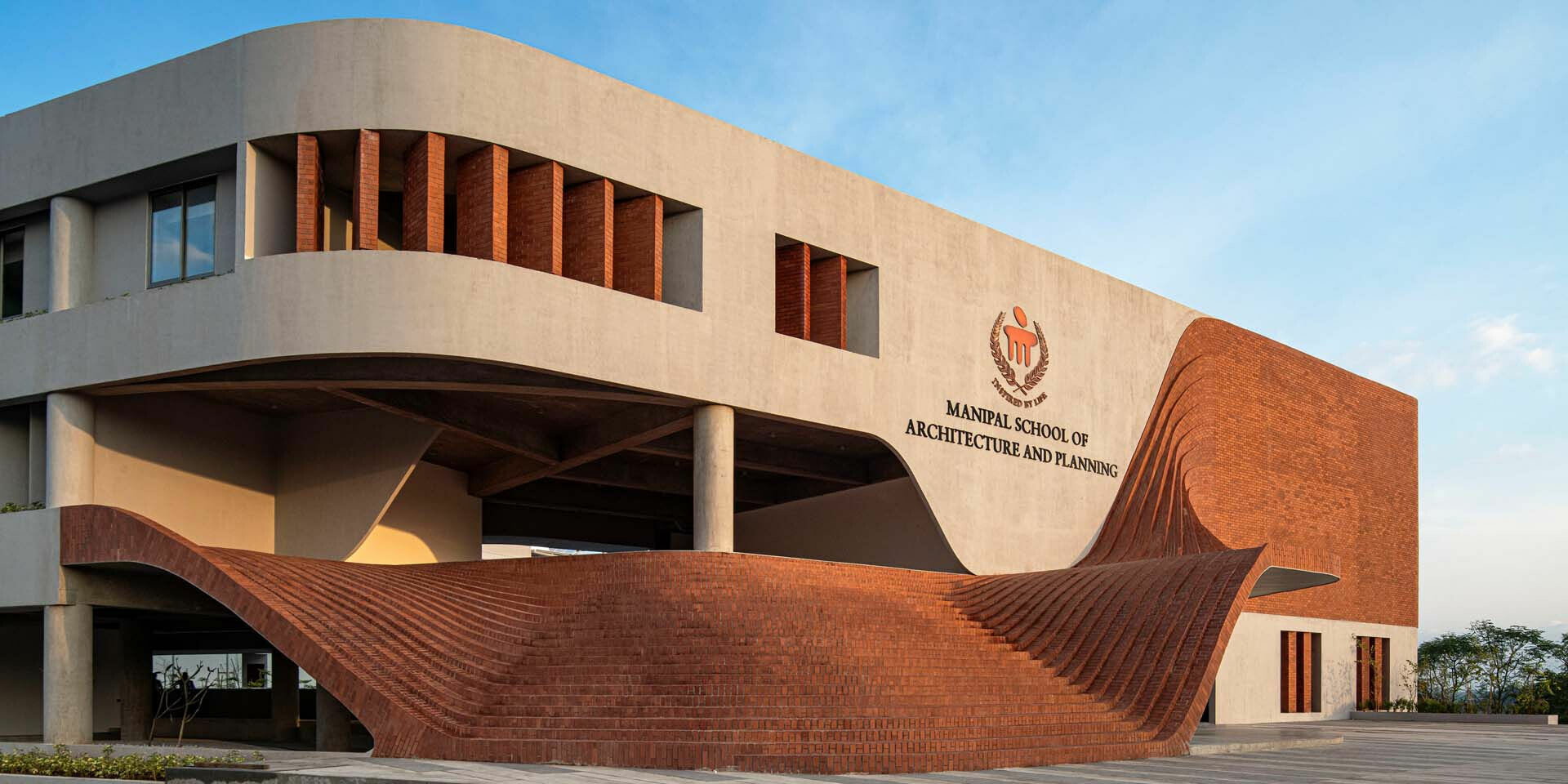
MANIPAL SCHOOL of ARCHITECTURE & PLANNING (MSAP)
Manipal Academy of Higher Education (MAHE) has established itself as a pioneer in the educational field with its liberal ideologies and strong vision over the decades. In a bid to create a new campus for The Manipal School of Architecture & Planning at Manipal, a closed design competition by invitation only was held. After a series of design presentations, discussions, and shortlisting, the project was awarded to The Purple Ink Studio in 2019.
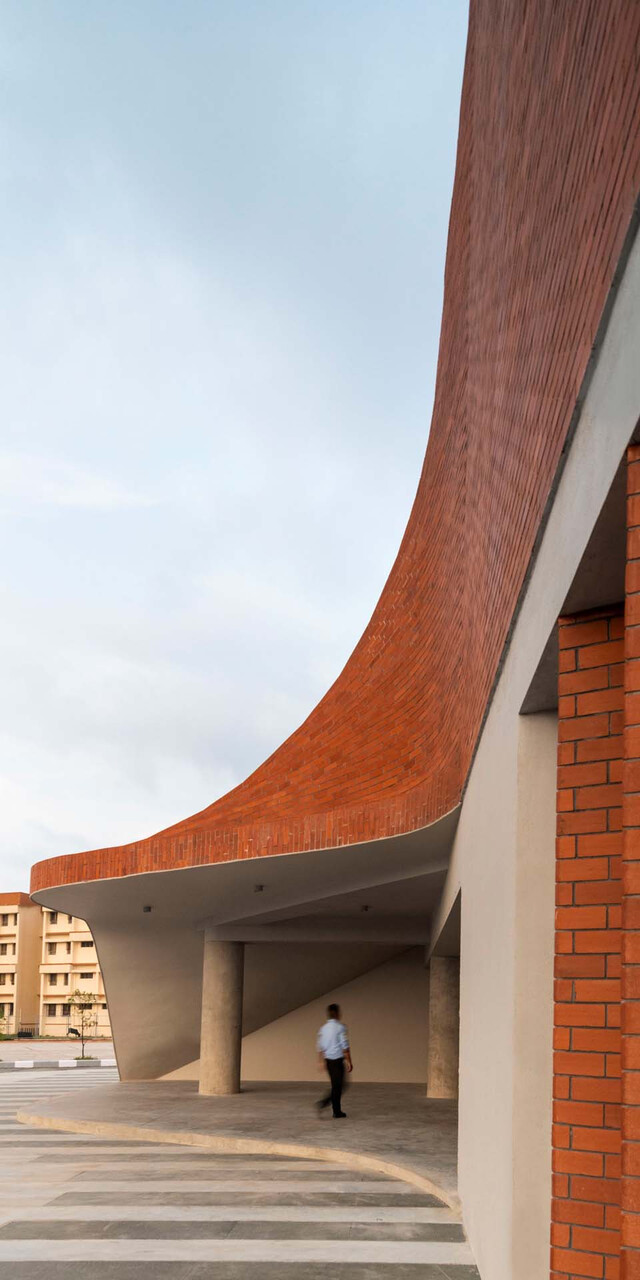
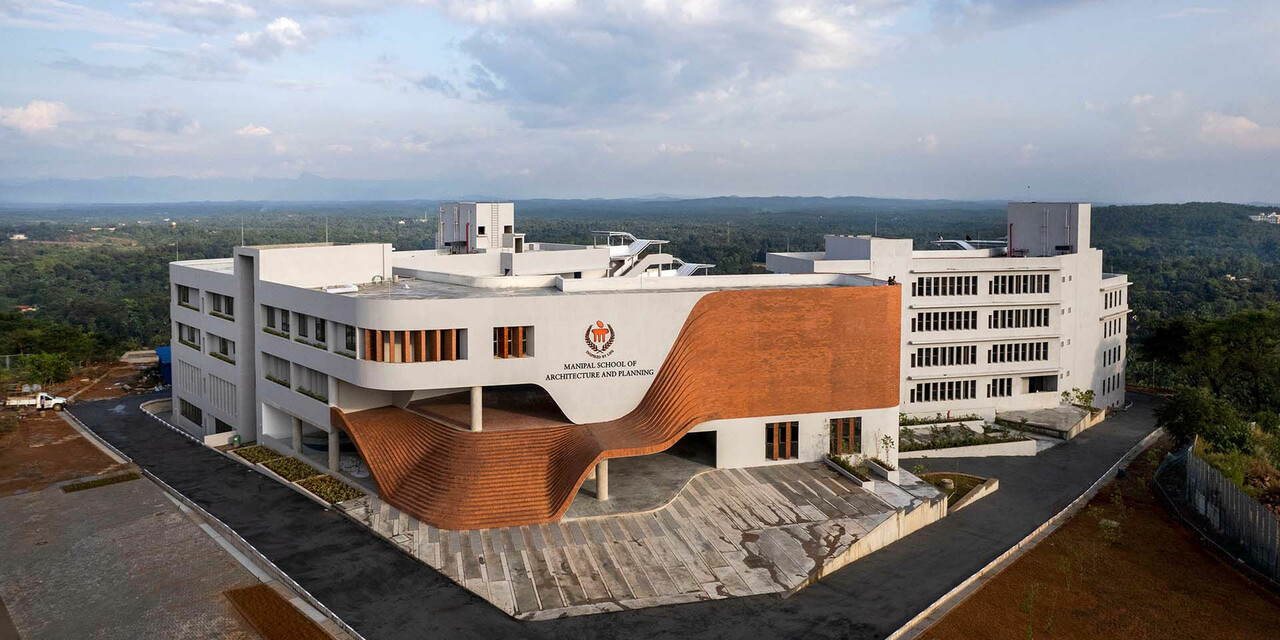
The 145,000-square-foot campus, built on a densely contoured 3.9-acre site, aims to create interwoven and fluid spaces. Designed to accommodate 1200 students from the fields of Architecture, Design, and Fashion, the campus is situated in the coastal town of Manipal, Karnataka, the heart of Manipal Academy of Higher Education Institutes. The vibrant city life, coupled with a diverse student population from around the world, enriches the academic experience. The new facility, an extension of the existing infrastructure with a forward-thinking vision, fosters a design philosophy that is both innovative and sensitive. As Indian cities evolve into megacities with limited planning capacity, the next generation must steer the development of smart cities. Hence, design colleges must be progressive and innovative, with educational spaces reflecting the ideological framework and being contextually rooted. The design process involved extensive reinterpretation to grasp the true essence of a design learning institute.
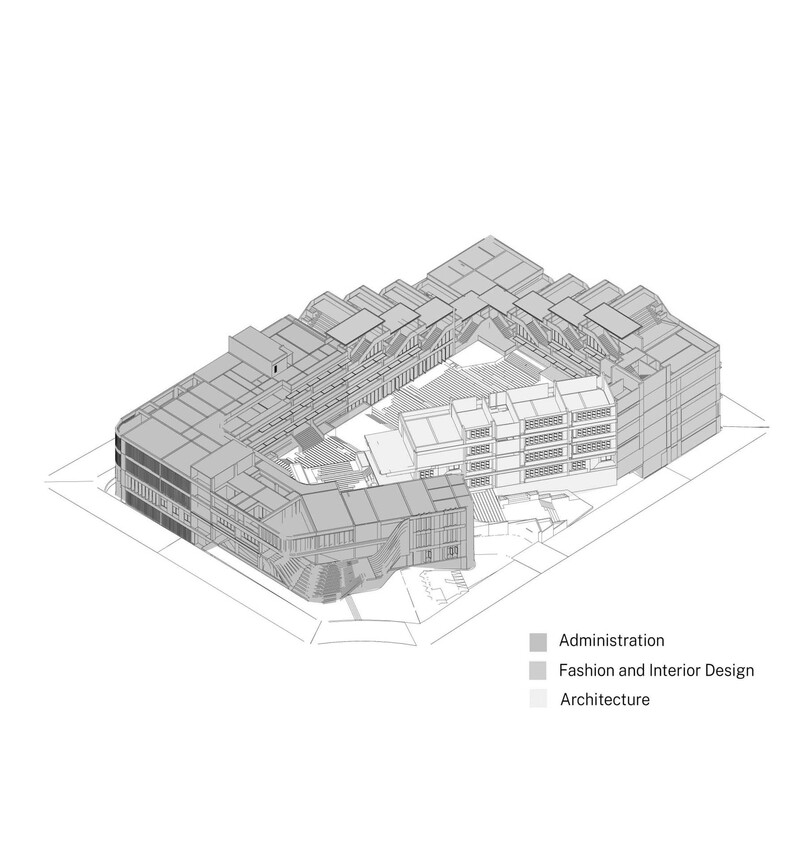
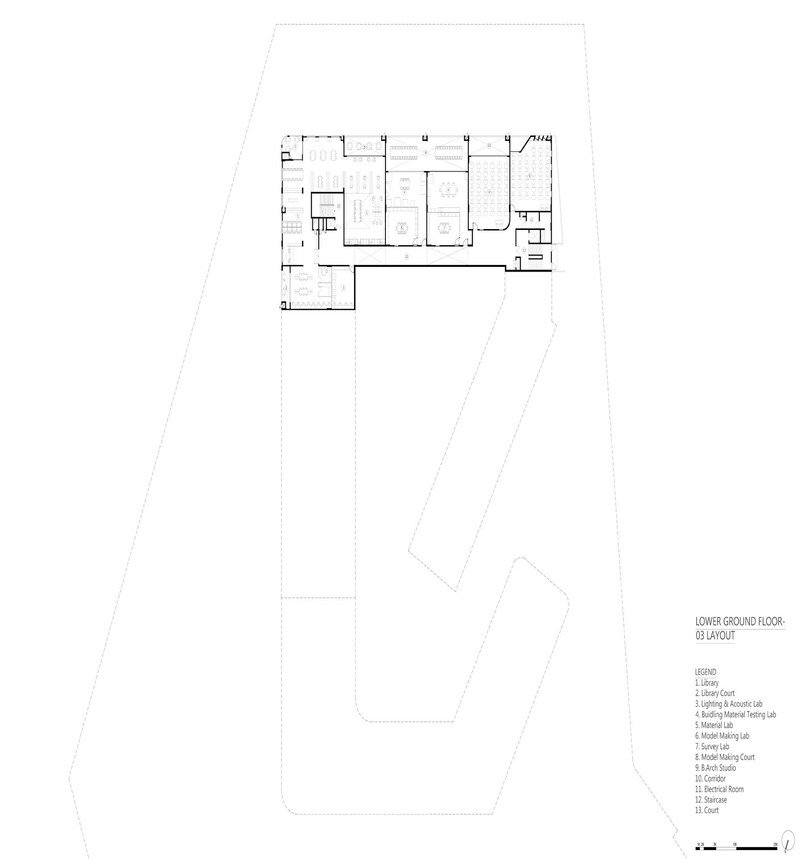
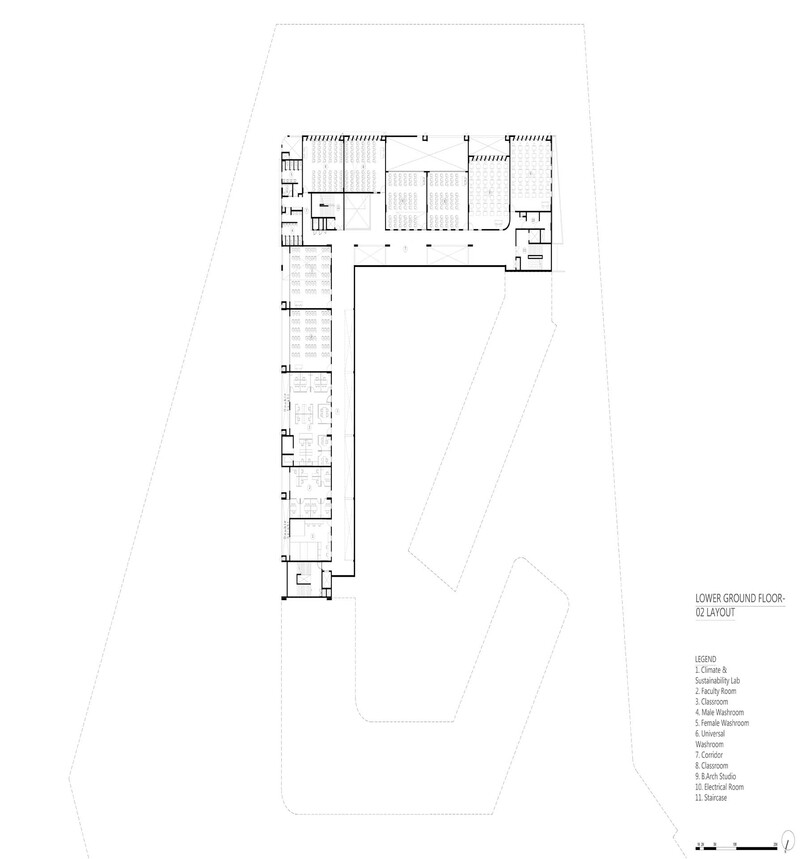
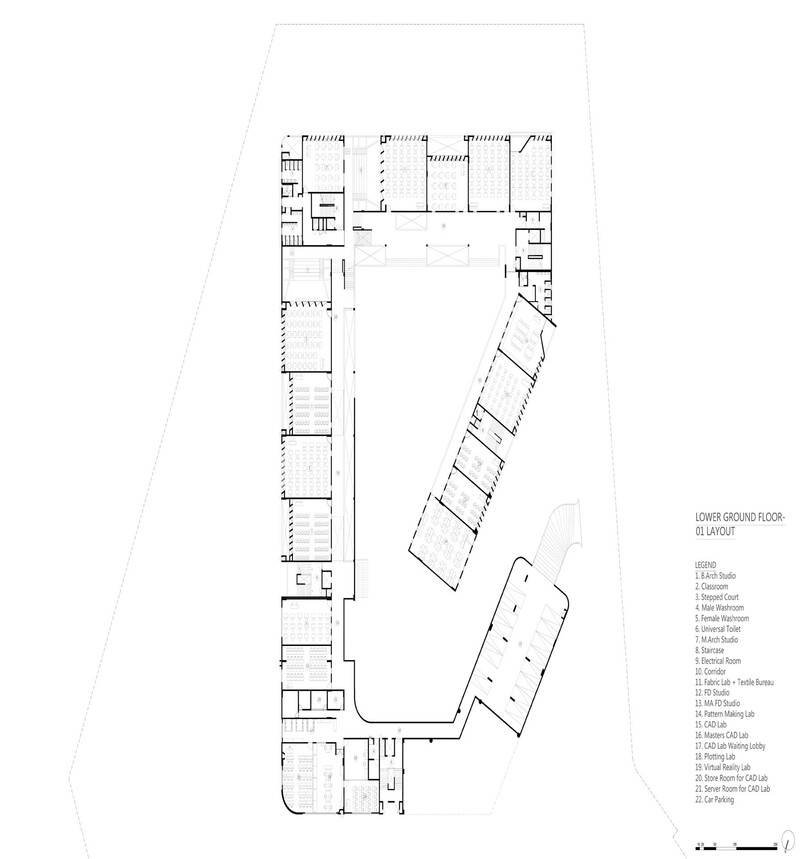
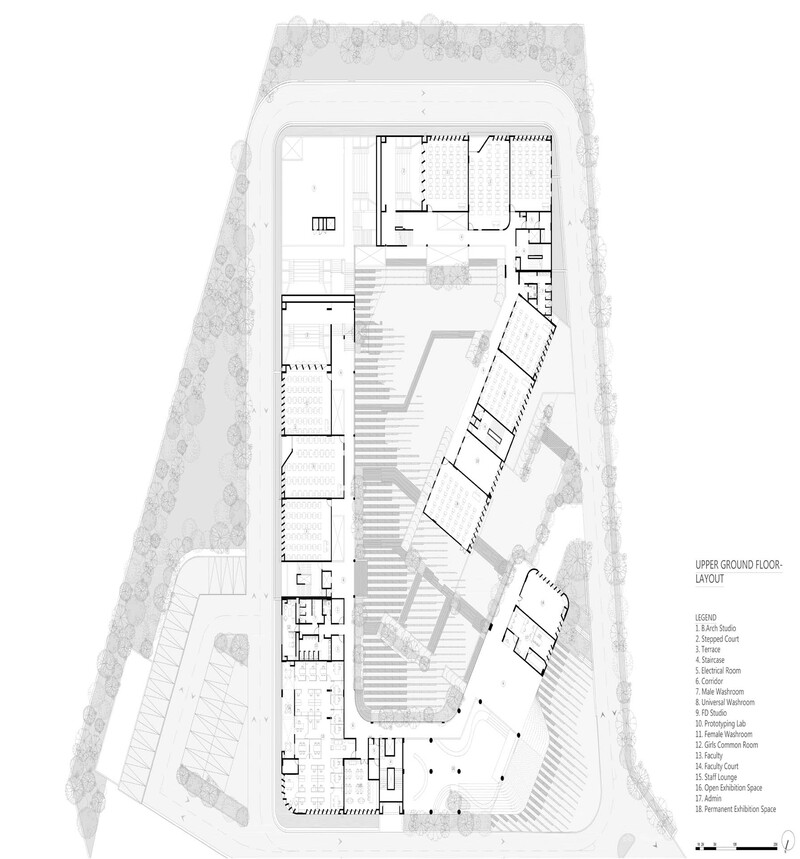
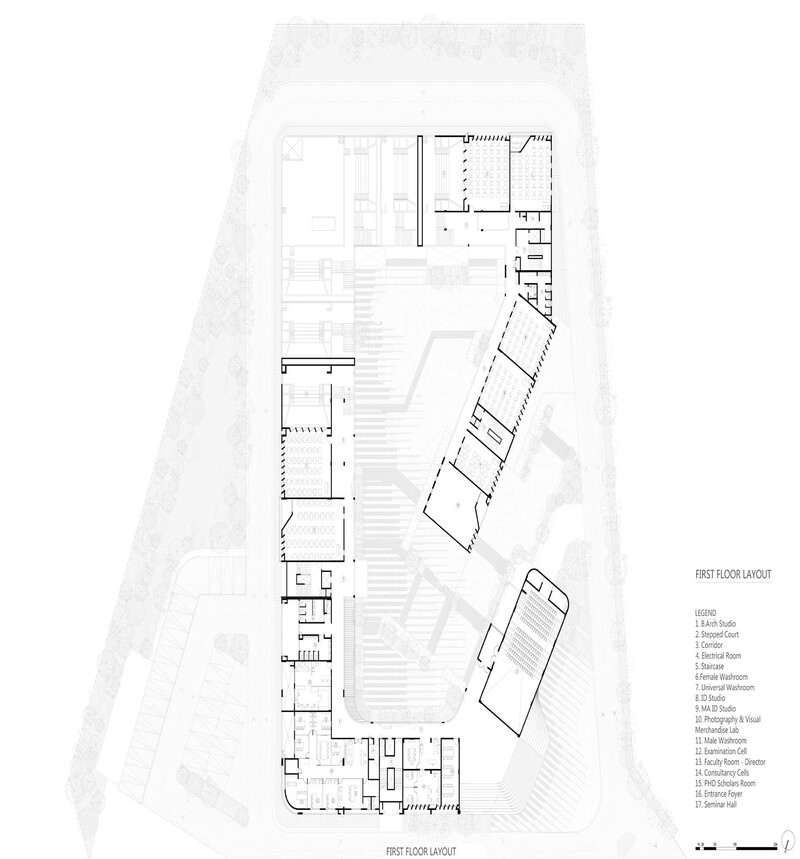
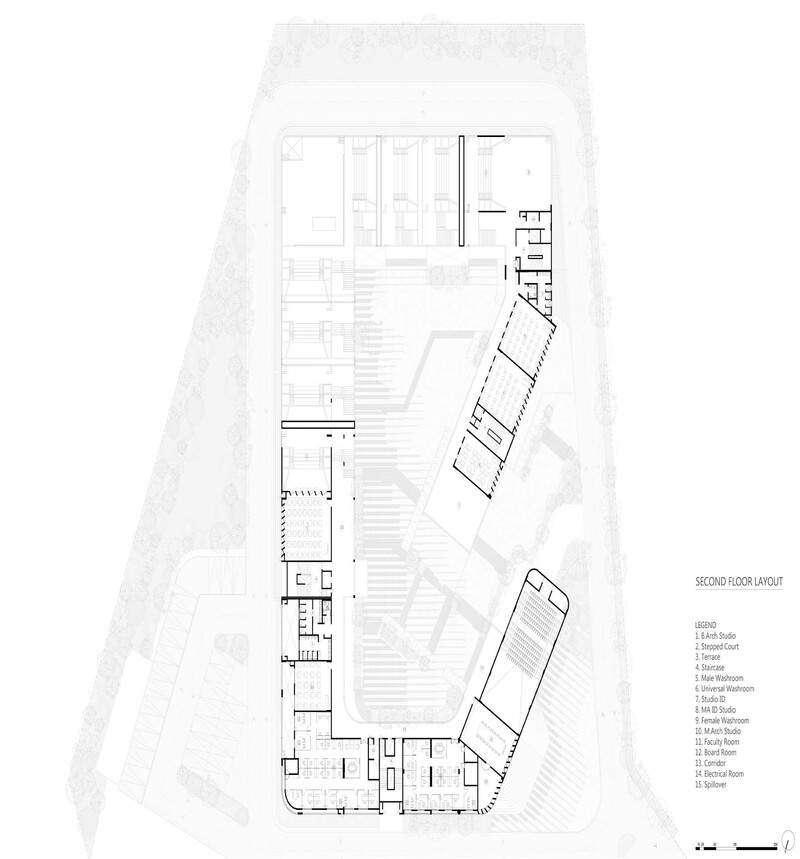
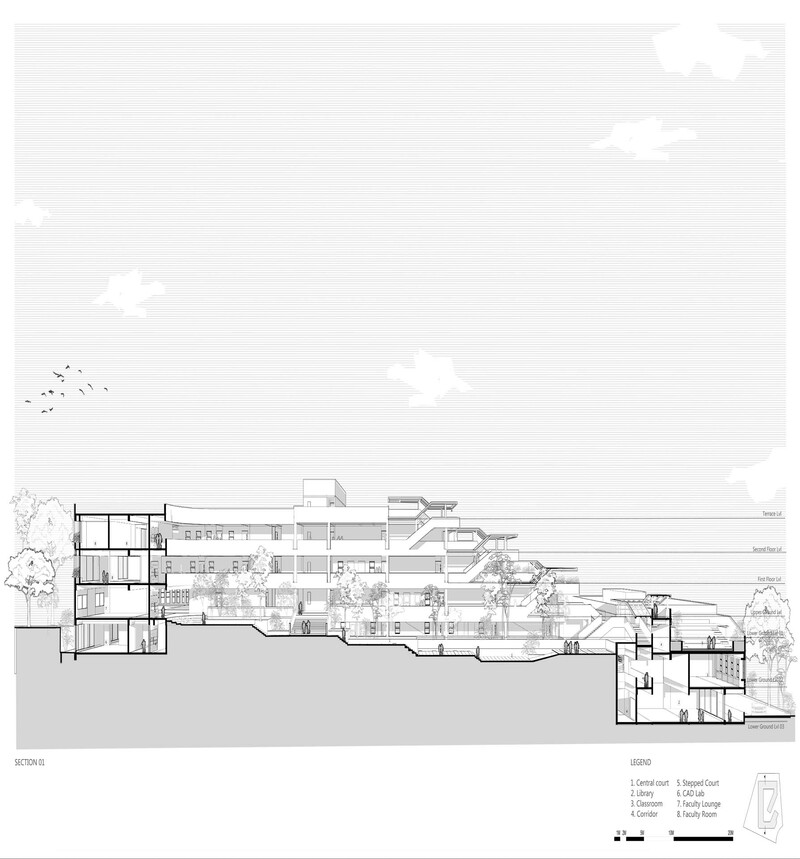
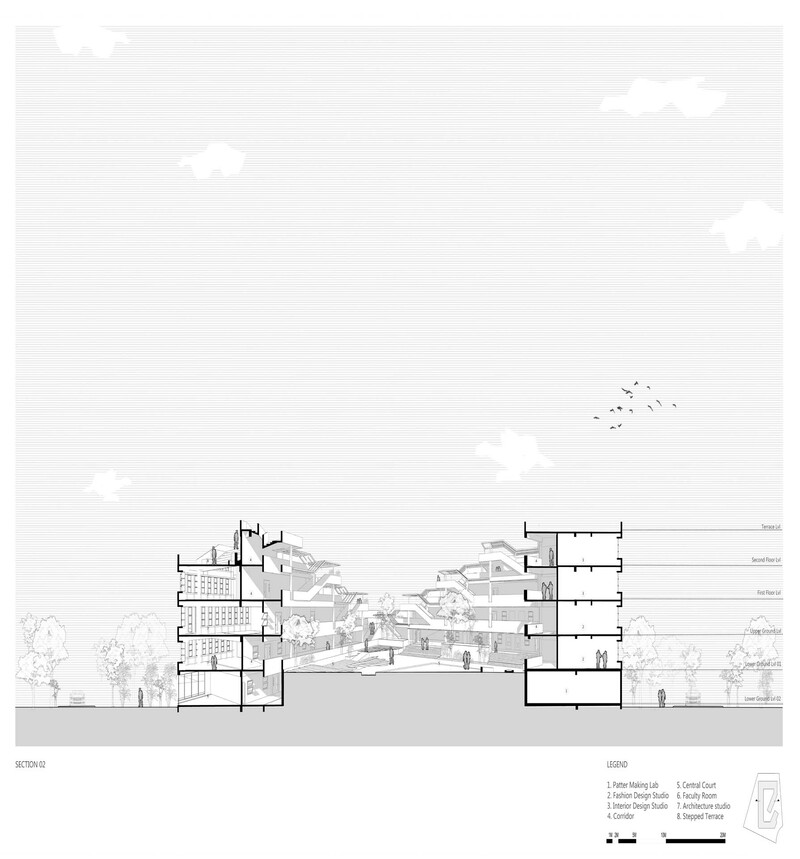
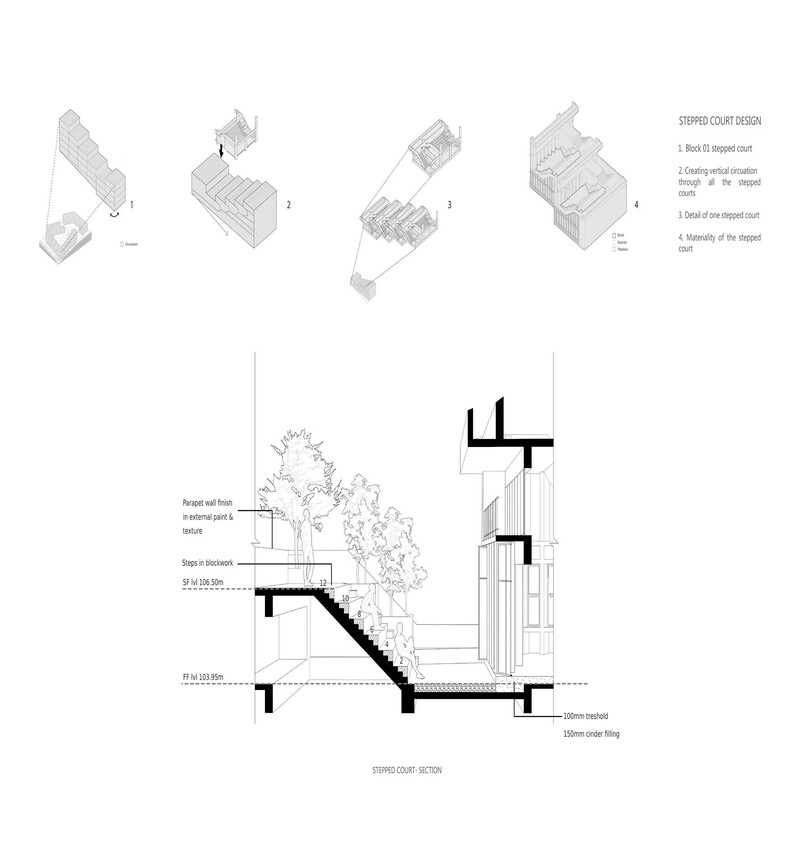
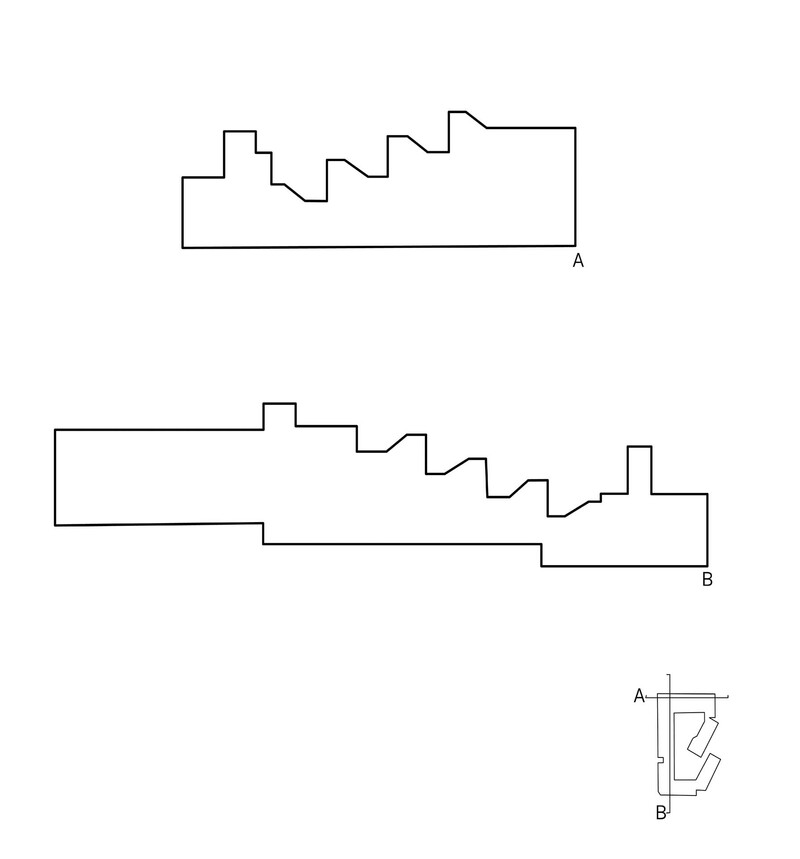
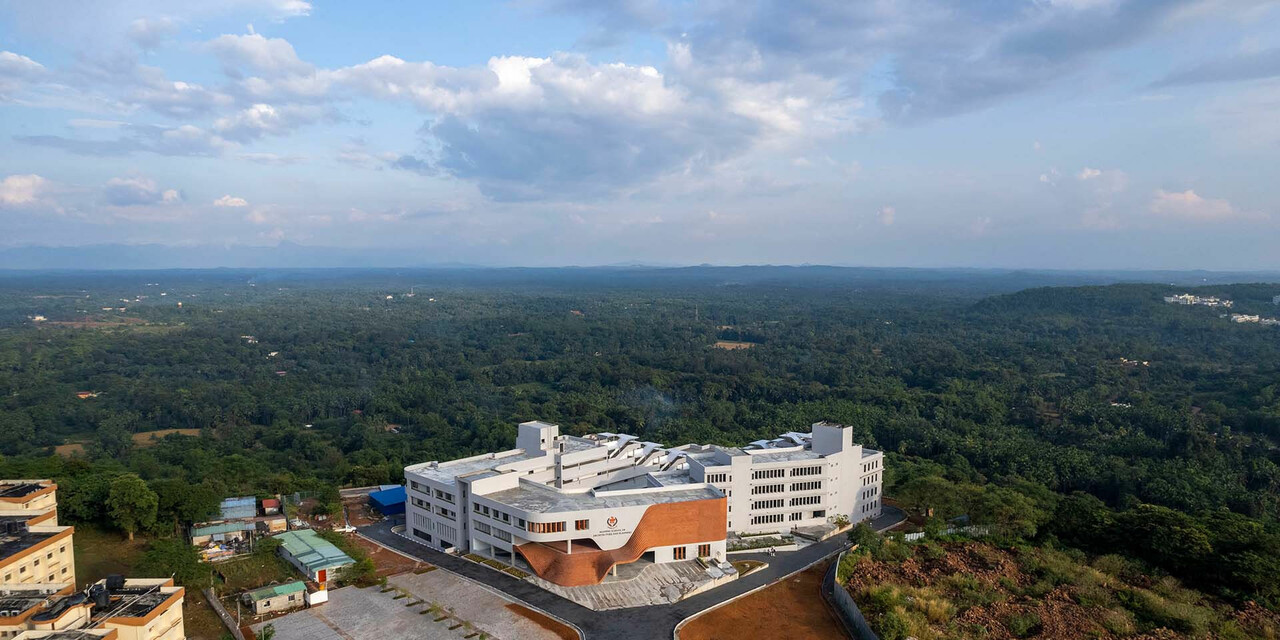
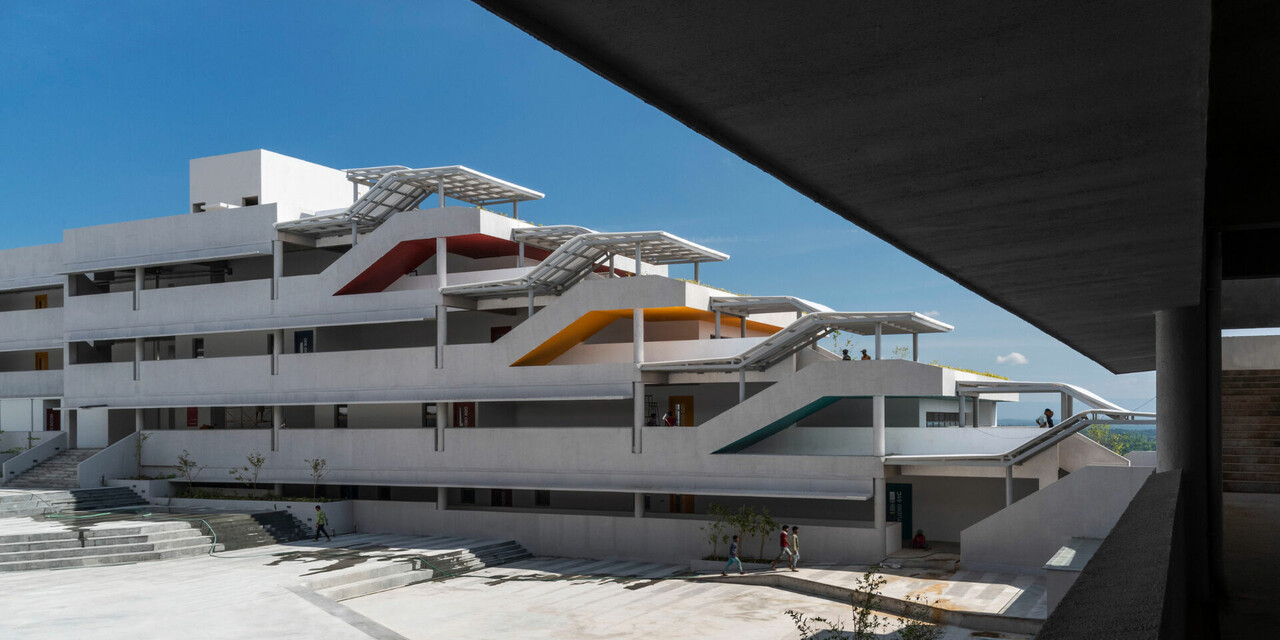
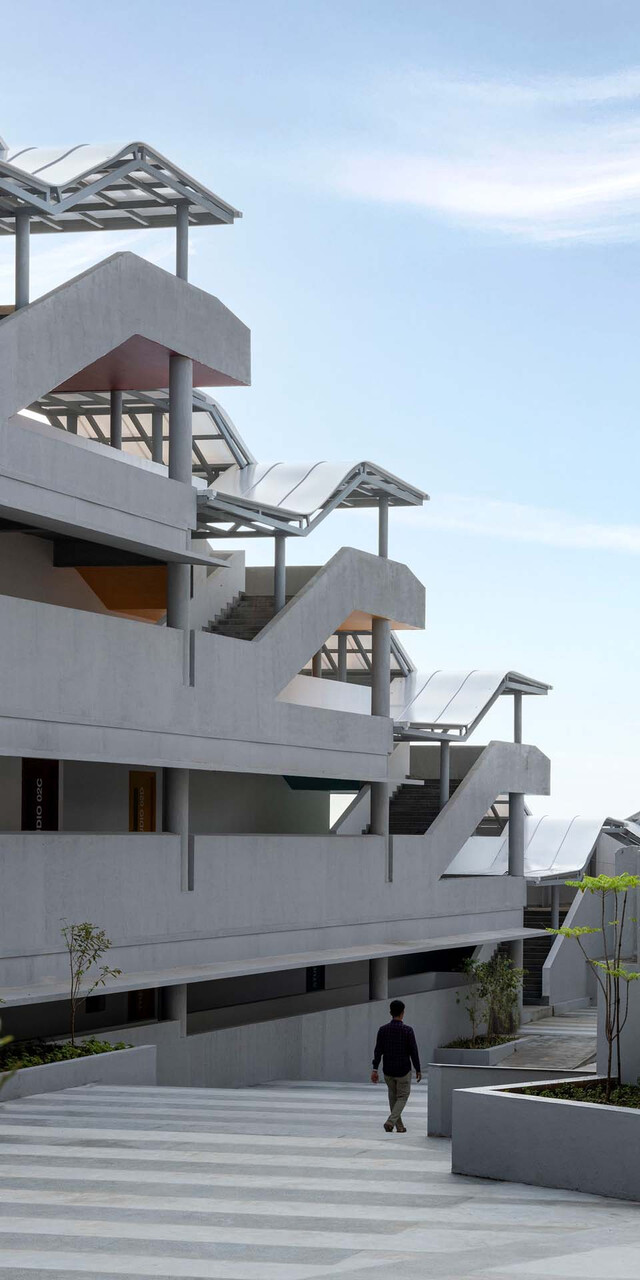
The design originated from the strong topographical site- context. The site had a major slope of 18m towards the South-East side at a mere distance of 100m, facing the valley. Working with a 10mx10m grid, the building blocks were stepped down to have undisturbed views of the valley while also respecting the existing contours. The design program was divided into four blocks placed across the site. Wind direction being the important factor in the orientation of the blocks, the placement was planned around a central open space. The central court became an informal stepped forum encouraging an open-ended space for faculty-student interaction. The court also offered a visual window to all the blocks internally. The circulation is thus planned around it with meandering staircases connecting the terraces at various levels capturing panoramic views of the valley. The flooring of the court is monochromatically derived from tones of the granite stone available in the region. The flooring patterns are derivatives of the shadow patterns formed by the built forms.
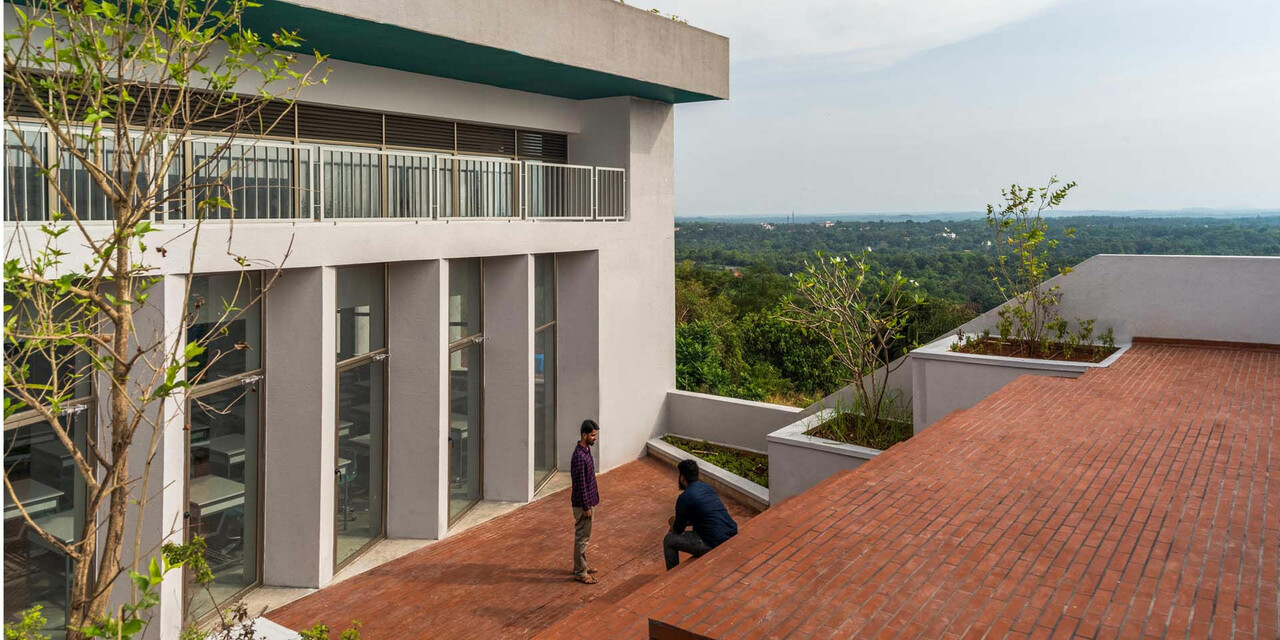
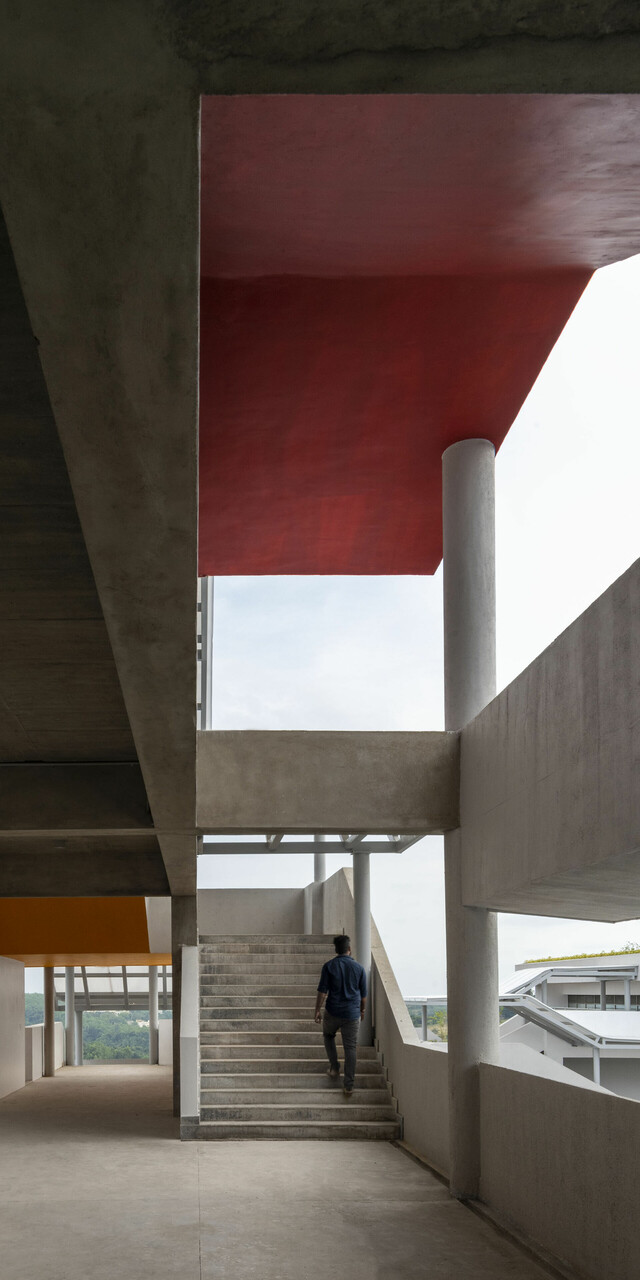
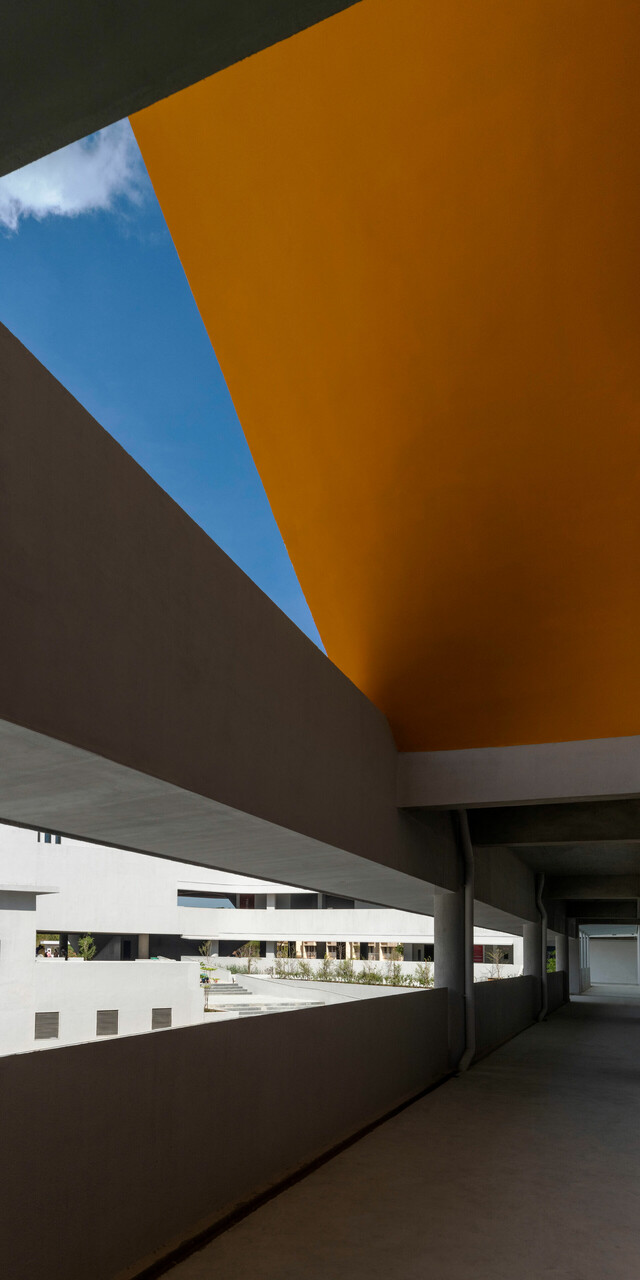
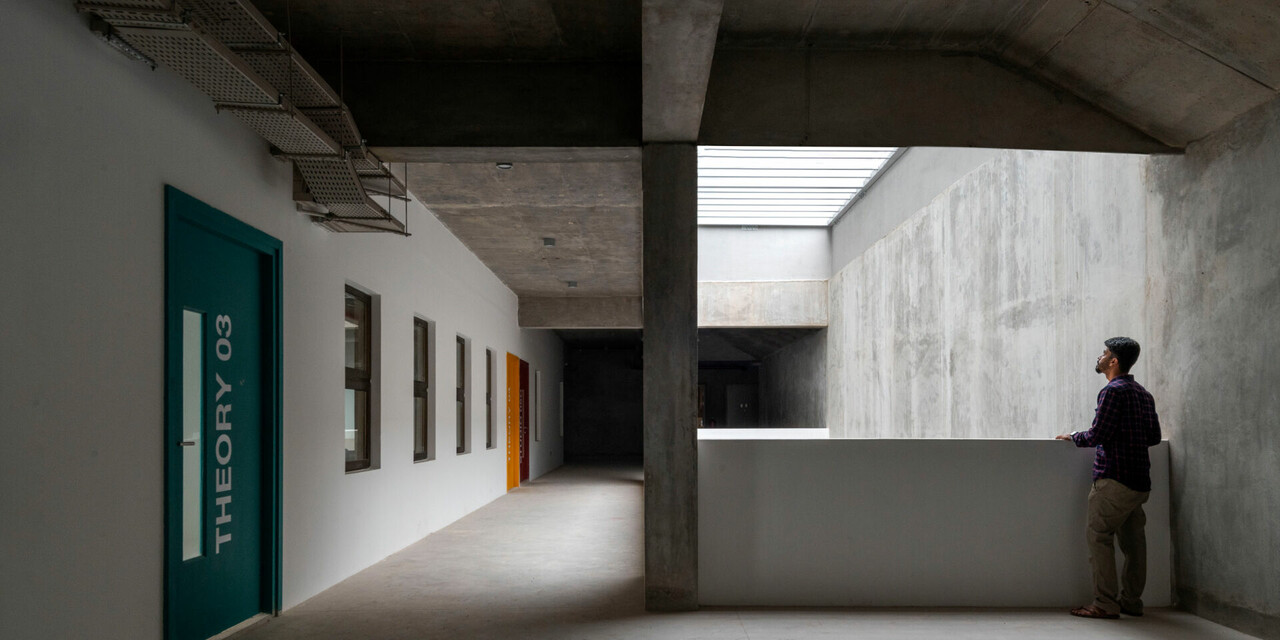
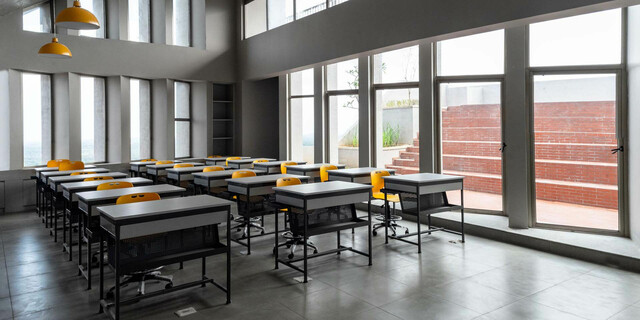
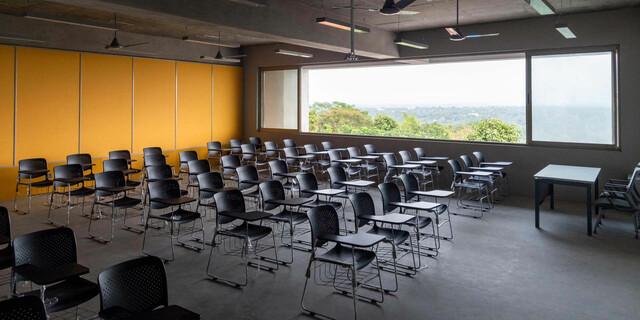
Design studios, located on the topmost level, extend into a stepped court/terrace, creating interactive pockets open to the sky. Visual connectivity from corridor staircases forms a dynamic relief and visual access for peers, bridging the connection between indoor and outdoor spaces. Clad in terracotta's red hues, the steps serve as informal outdoor extensions of the studios, spaces for contemplation, and offer panoramic valley views. The corridor widths are exaggerated with punctured volumes to foster multi-level interaction and display work and installations, promoting collaboration. Carefully placed apertures connect with the outdoors and encourage interdisciplinary exchange.
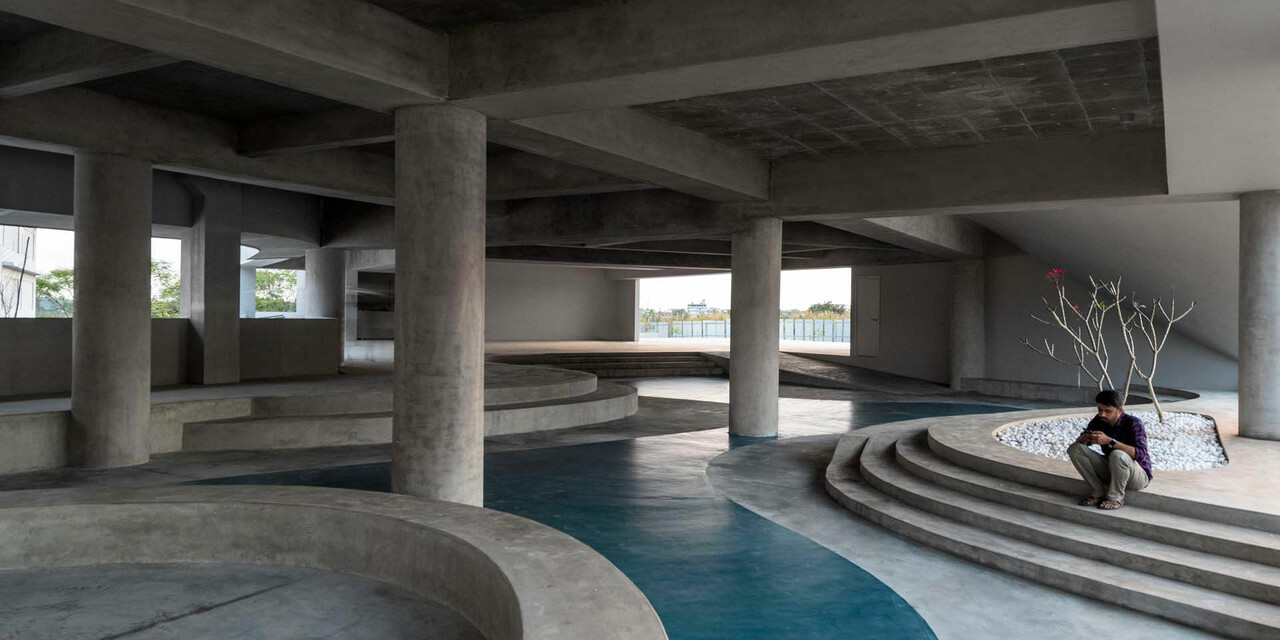
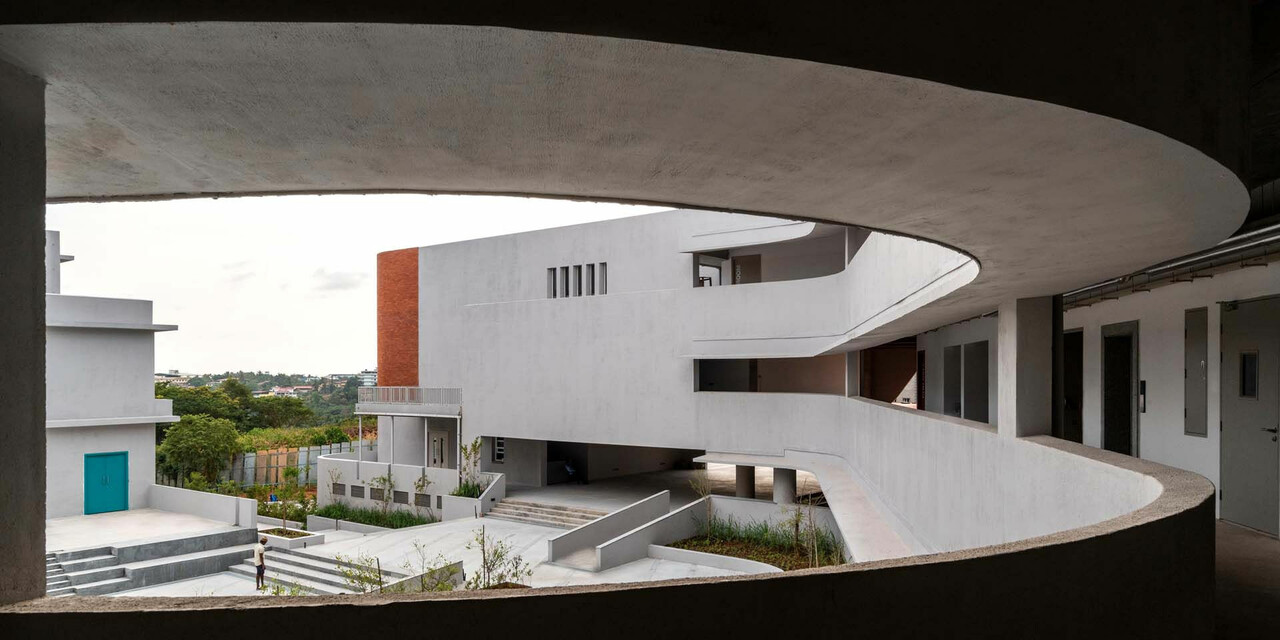
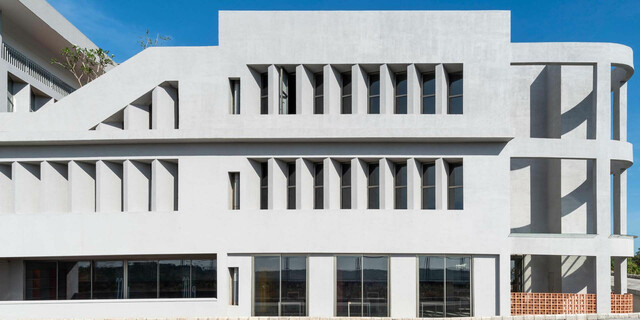
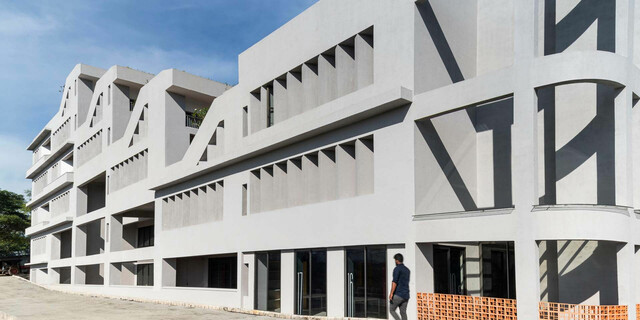
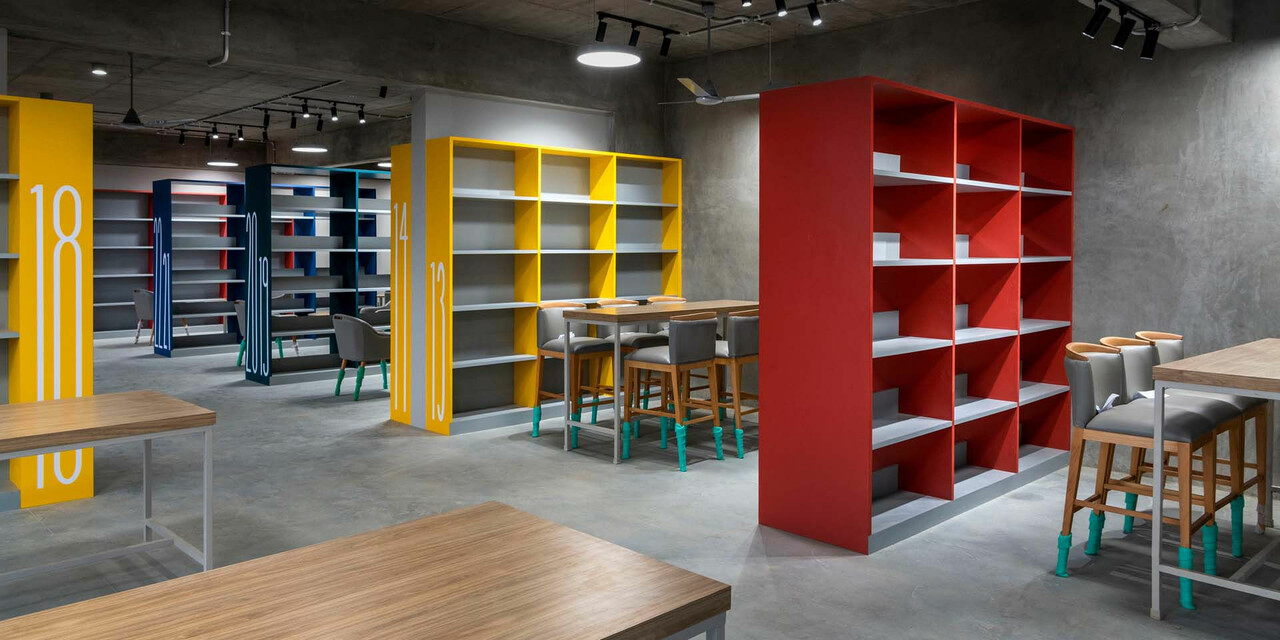
The design brief called for an emblematic entrance, envisioned as a spatial continuum. The fluidic form serves as undulating steps leading to the auditorium and administrative spaces, inspired by the prominent religious center, Udupi Shri Krishna Matha, which also symbolizes an entry portal to the old city. The complex structure was divided into several construction processes, combining RCC and ferrocement to achieve the twisted form revealing the entries. Flowing rhythmic brick waves on the façade gave the campus a new identity, with organic forms continuing at the entrance, introducing a new dimension to the access level. The material palette emphasizes utility and maintenance while remaining true to its form. Building materials and cultural nuances were carefully considered and interpreted throughout the design process. Exposed concrete ceilings with speckles of colors derived from the region's shared cultural landscape form inseparable design elements, blending tradition with modernity.
Location | India
Type | Campus Building, Educational Facility
Area | 13,470.94 m²
Year | 2022
Manufacturers | Carrier, thyssenkrupp
Lead Architects | Akshay Heranjal, Nishita Bhatia