WABISABI
  • Projects
    • Worldwide
    • Interiors
    • Features
  • Contemporary
    • Exhibitions
  • Record
  • Lifestyle
  • City Explore
  • News
  • Issue
  • Account
  • Search
  • Language
Mobile nav


維度相交|深圳南頭

古城有熊酒店

Nantou City Guesthouse

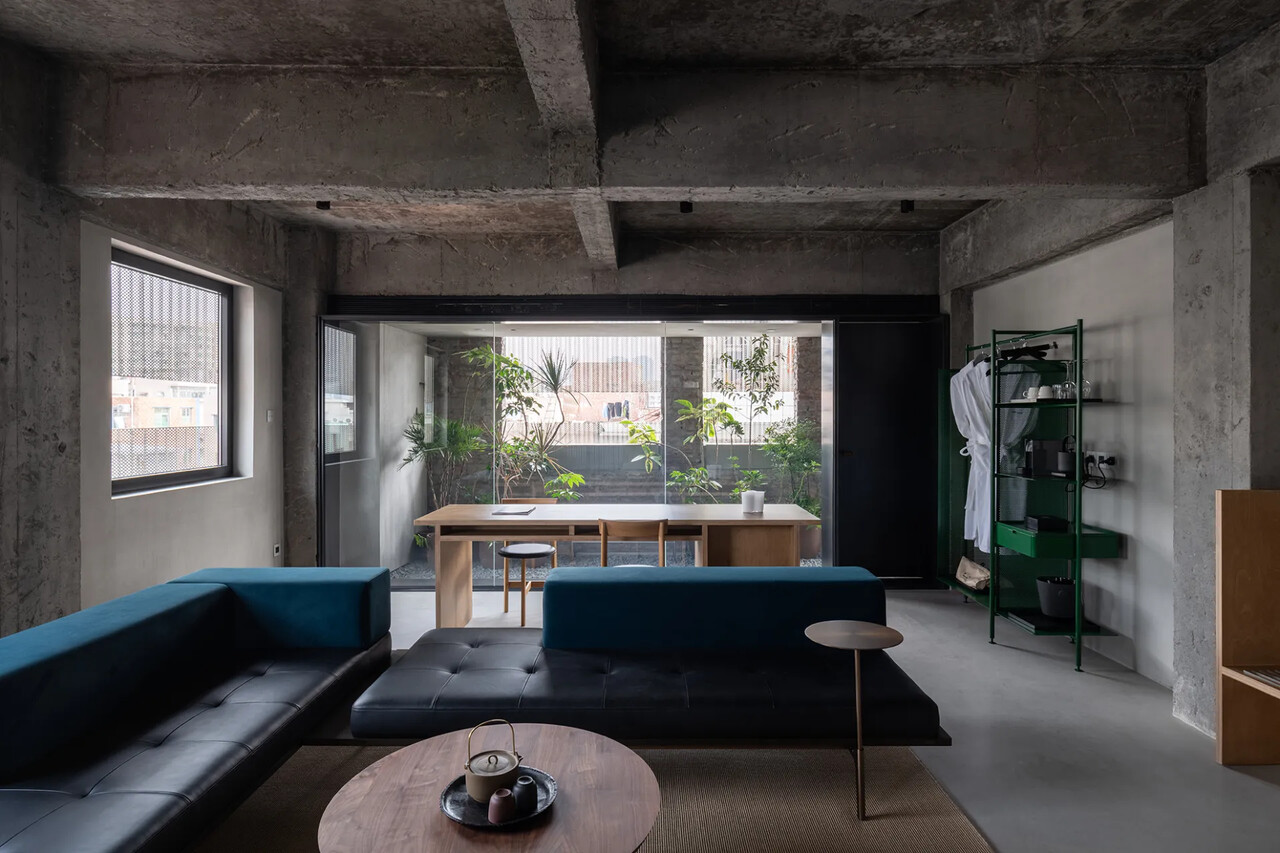
城中村依偎在現代化的都市中,是城市化進程的遺留。擁有近1700年歷史的南頭古城,位於深圳的城市中心,從昔日的富庶古都演變為如今擁擠喧鬧的城中村。古城內的蜿蜒小巷、廣場和胡同,錯綜複雜、緊密相連,吸引著無數遊客的好奇駐足。當地居民、街頭小販、嬉鬧孩童和流動人口亦在此棲居。如恩設計將位於南頭古城的一棟居民住宅,改造成為設有十一間客房的精品酒店。


Urban Village, or cheng-zhong-cun, is a phenomenon where the remnants of pre-industrial settlements are nestled amidst a seemingly modern metropolis. Nantou City, the site of Neri&Hu’s adaptive reuse project for an eleven-room guesthouse, is an example of such an urban village. Situated at the heart of Shenzhen, a burgeoning city with astonishing growth, Nantou City has evolved from a well-heeled ancient capital to the overcrowded inner city it is now. Visitors today are immediately immersed in the tightly knit alleys, plazas and dead-ends, where residents, street vendors, unsupervised children, nomads alike roam.
 

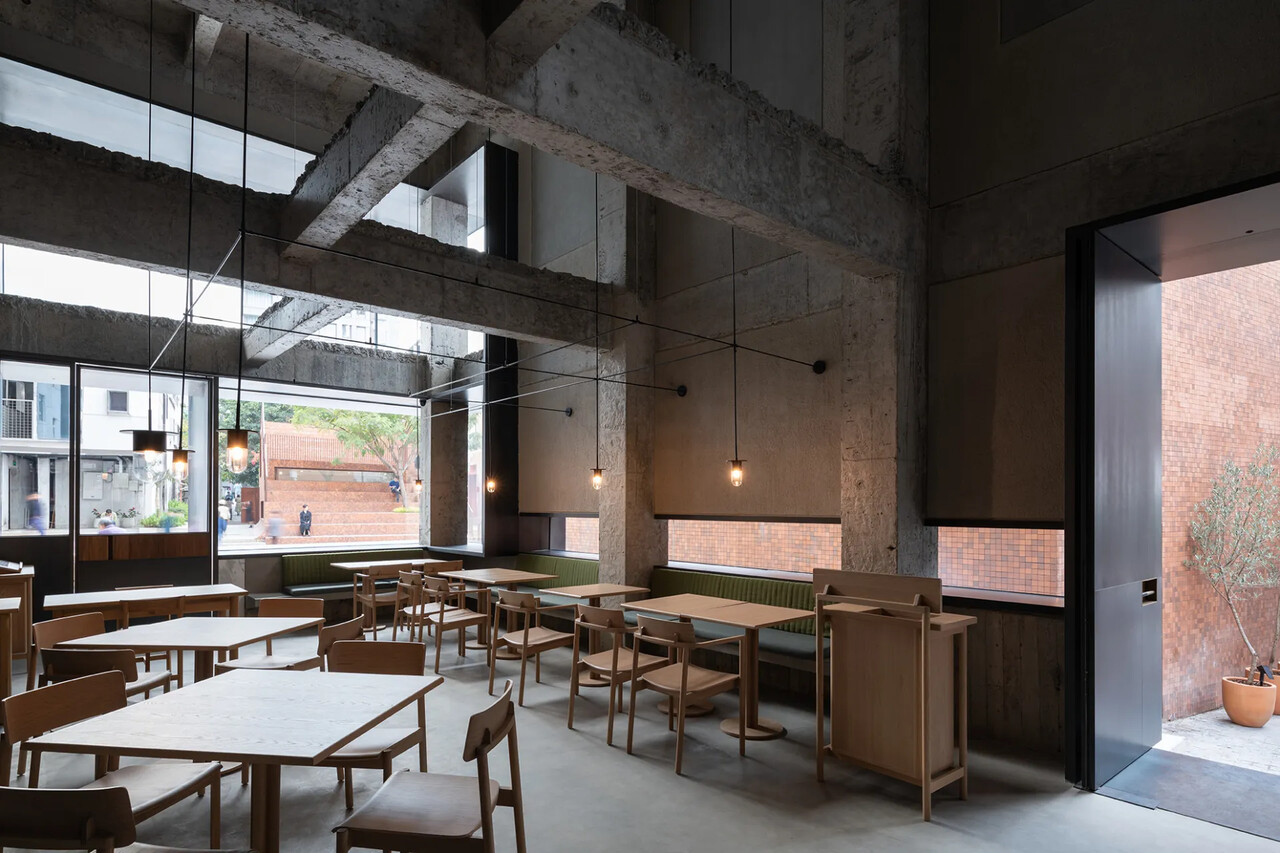
南頭古城的街頭巷尾充盈著勃勃生機。設計者試圖將日常生活的景象納入設計——人、物件和他們所處的環境,都是靈感的來源。為了延續城中村的市井煙火,如恩對原建築進行切割,將外部景象引入的同時,也在內部創造出全新的公共空間。在這一過程中,設計師如臨考古現場一般,將諸多材料和建築結構層層剝離,建立起過去與當下的對話。
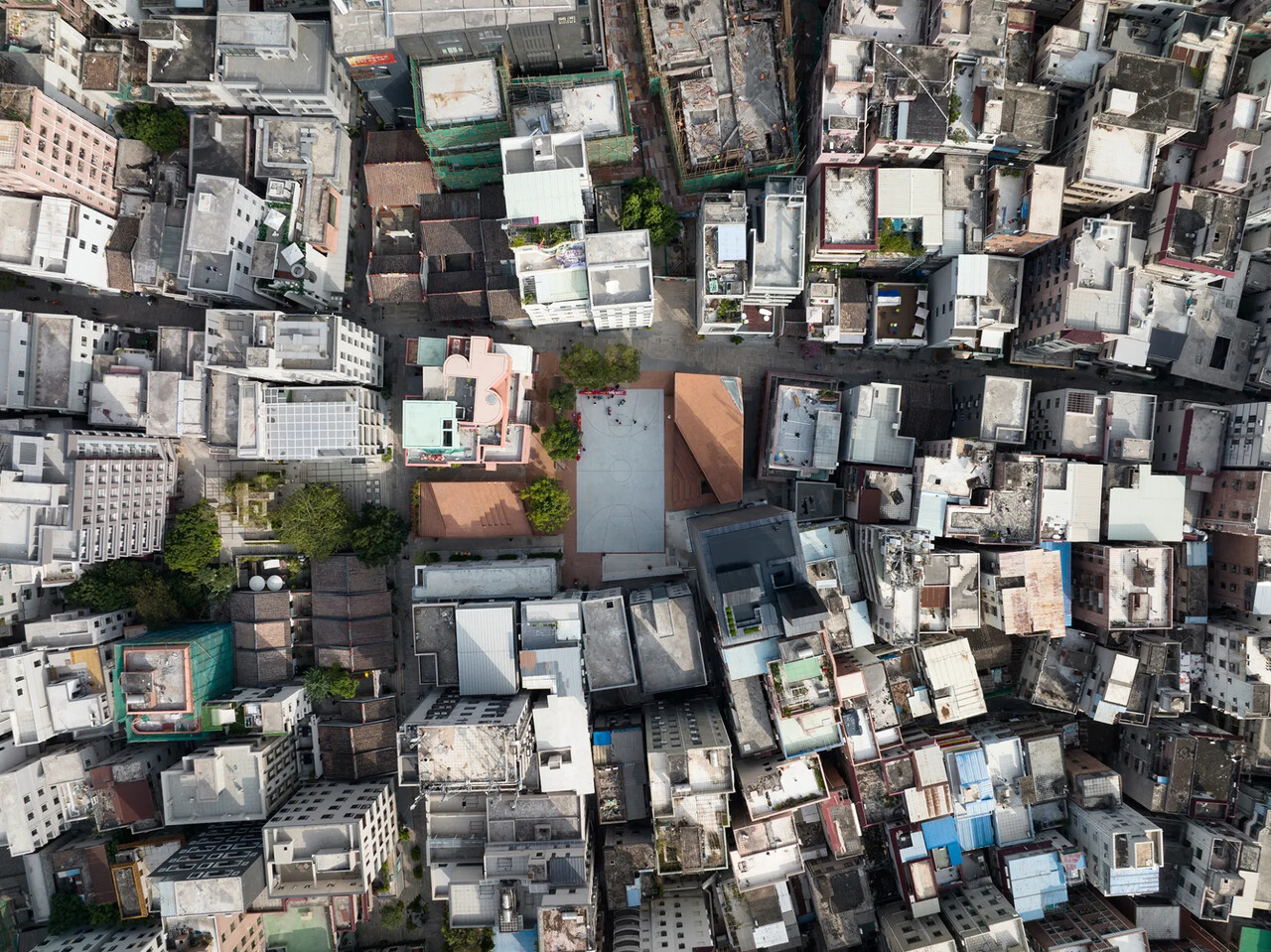
 

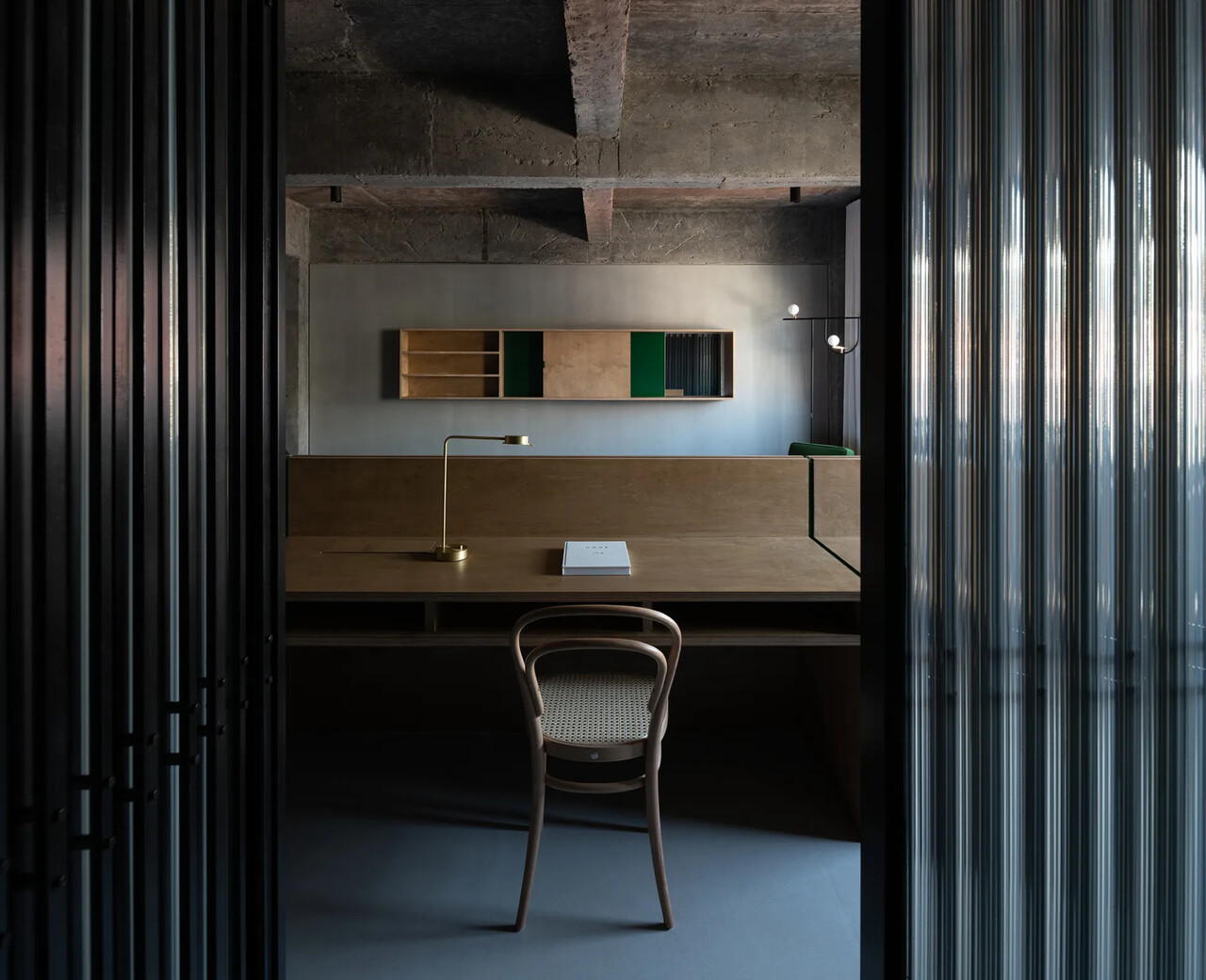
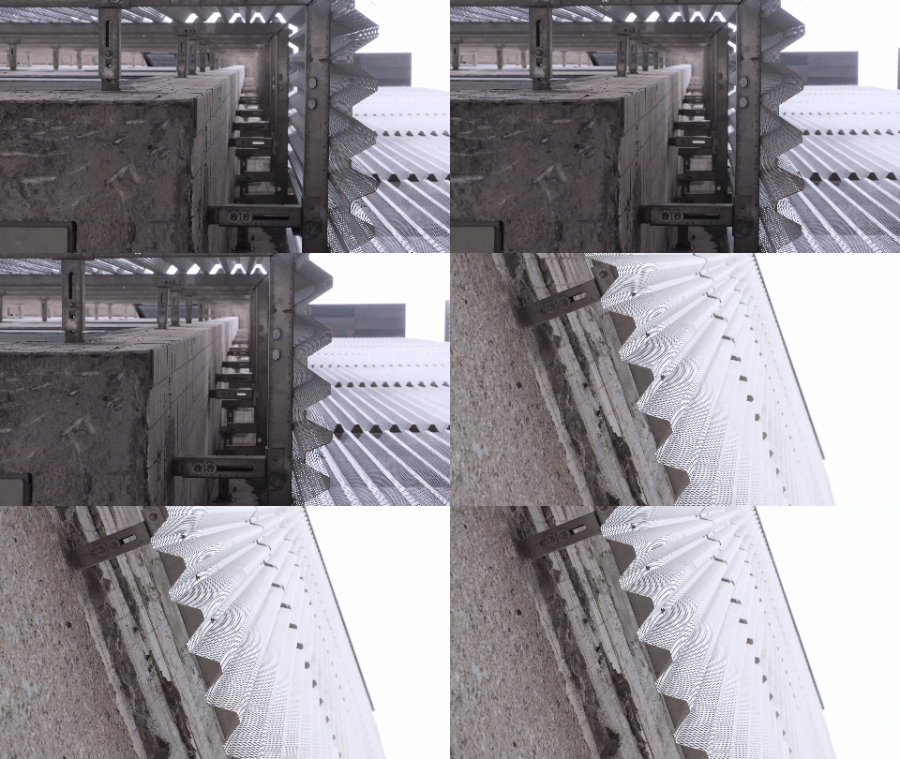
Inspired by the vibrant milieu of the alleyways in Nantou City, the project seeks to reflect on the cultural heritage of the mundane. Scenes of the everyday—people, objects and their settings—are the primary source material for design. To celebrate life in the urban village, the existing structure was cut into as a massing strategy, allowing such “urban incisions” to foster a new public realm on the inside of the previously private apartment block. At the same time, the excavation revealed the many material layers and building structures as if at an archeological site, only to allow new interventions to instigate unexpected dialogues between the past and the present.


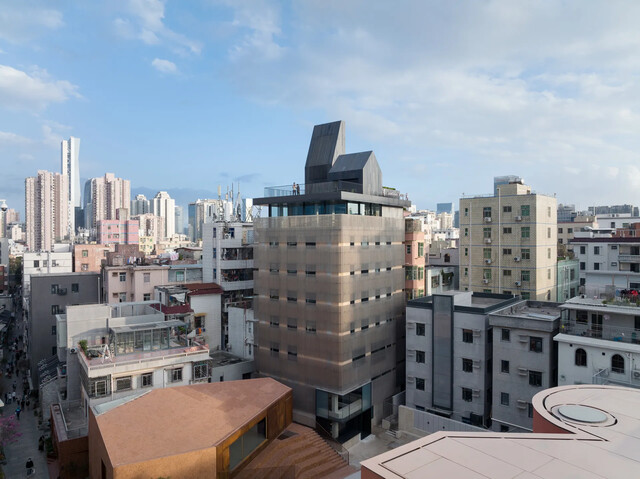
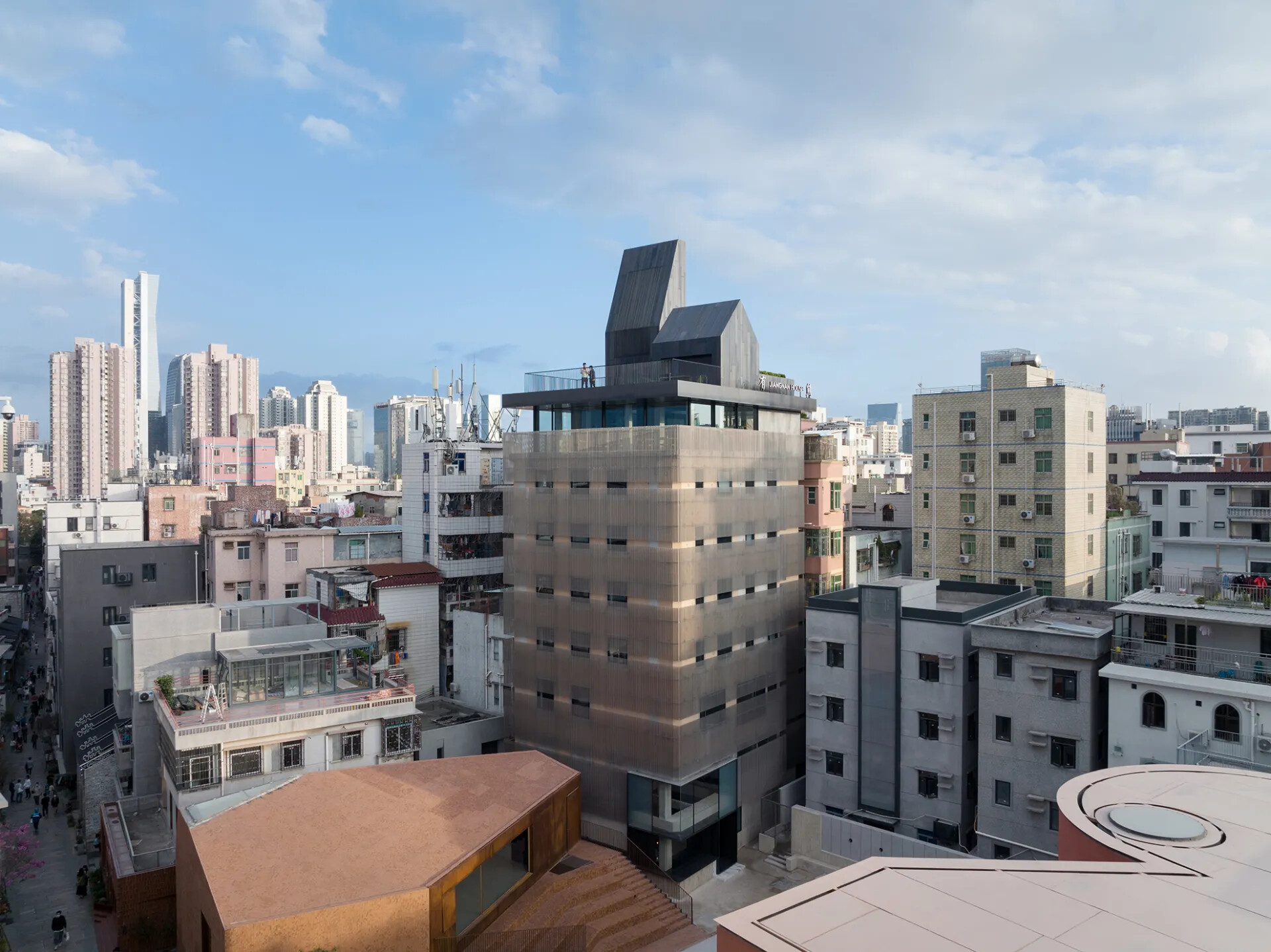
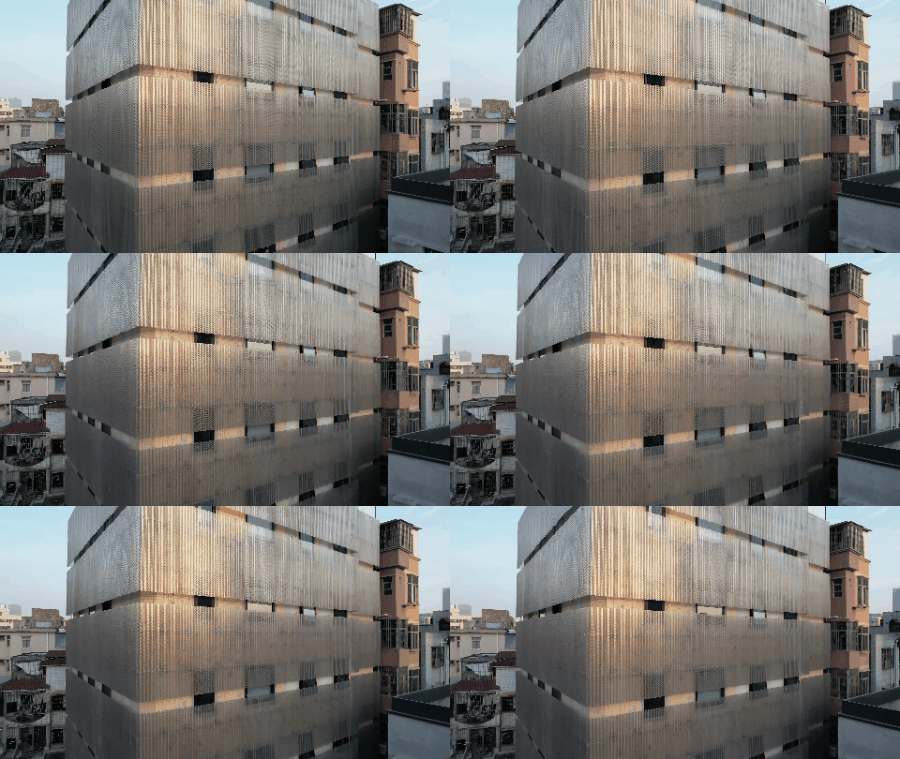
斯維特拉娜·博伊姆(Svetlana Boym)的「反思性懷舊」(reflective nostalgia)理念貫穿於項目的研究及設計過程。設計師並非簡單地模仿過去事物的表象,而是試圖發掘隱匿於過去的各種可能,並賦予當代文化更多的活力。如恩以兩種不同的建築語言,應對城市複雜的肌理與碎片化的形態:建築的立面由輕盈的屏罩包裹,而頂層則以厚重、富有表現力的形式,為古城的天際留下一道別緻的輪廓。


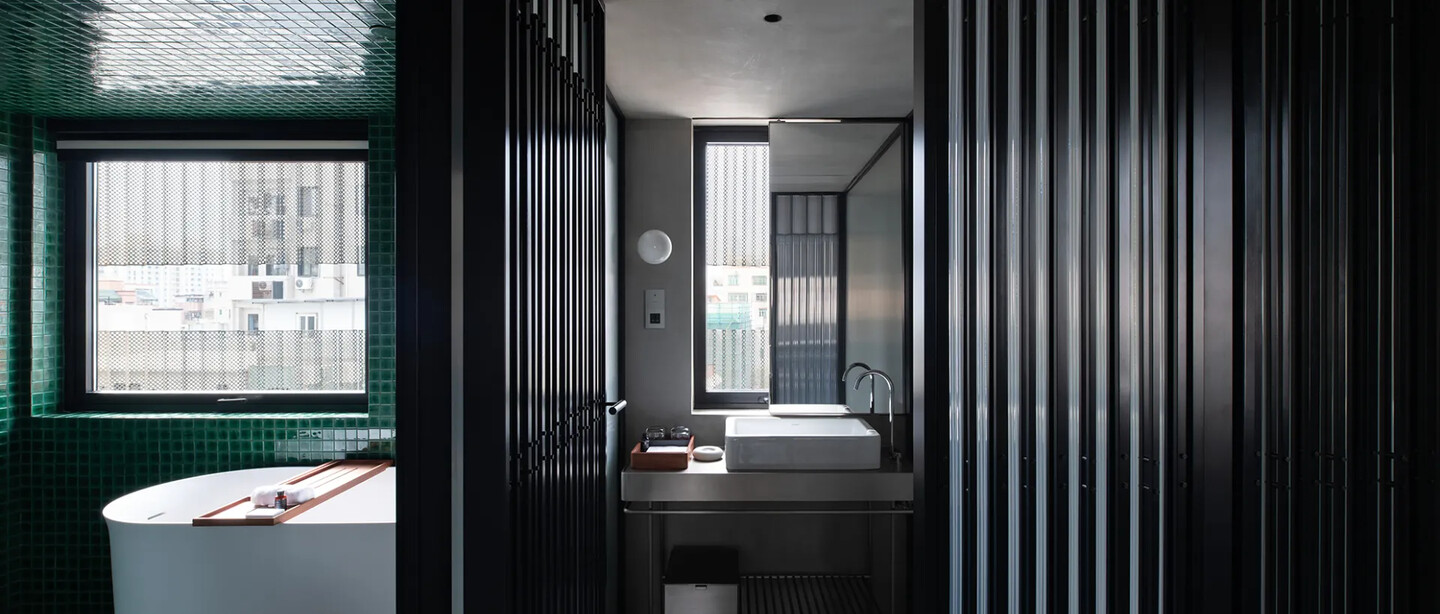
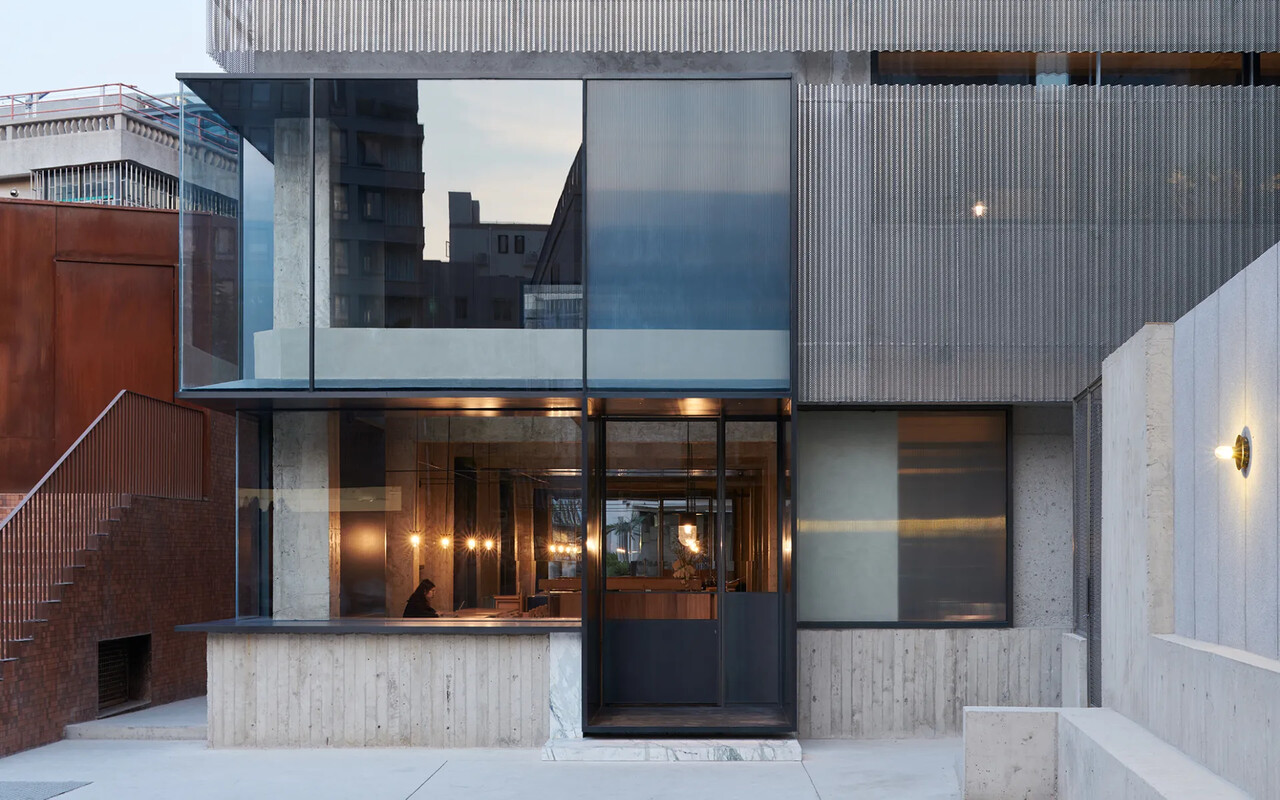
Throughout the research and design process for the Nantou City Guesthouse, Svetlana Boym’s writings on the topic of reflective nostalgia have guided the thinking behind the project. Rather than simply mimicking the past for its superficial material effects, the project has sought to unearth the possibilities of certain kinds of past that could invigorate our contemporary culture. A tectonic language was developed to articulate two divergent treatments that probe the notion of urban layering and the embracing of fragments: that of a light, screen-like cladding as the major façade element, and the other a heavier, expressive assemblage to contrast as a skyline “capping” atop.
 

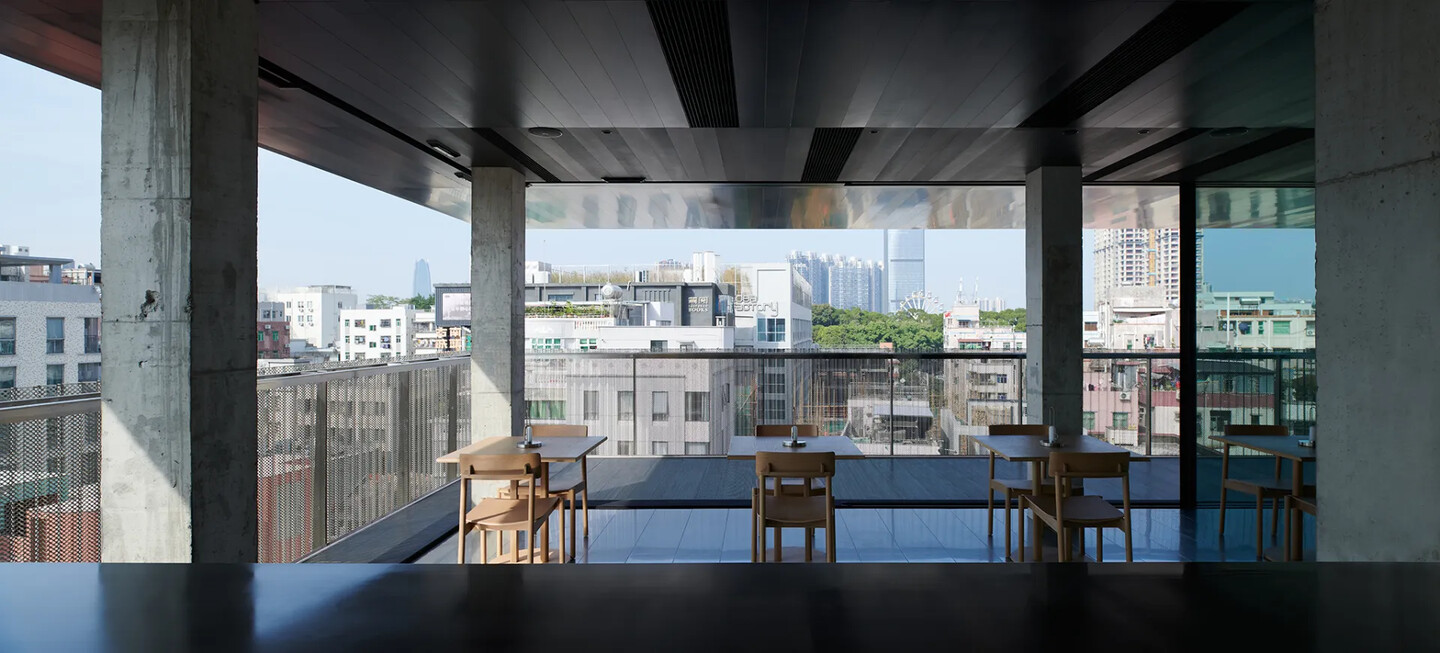
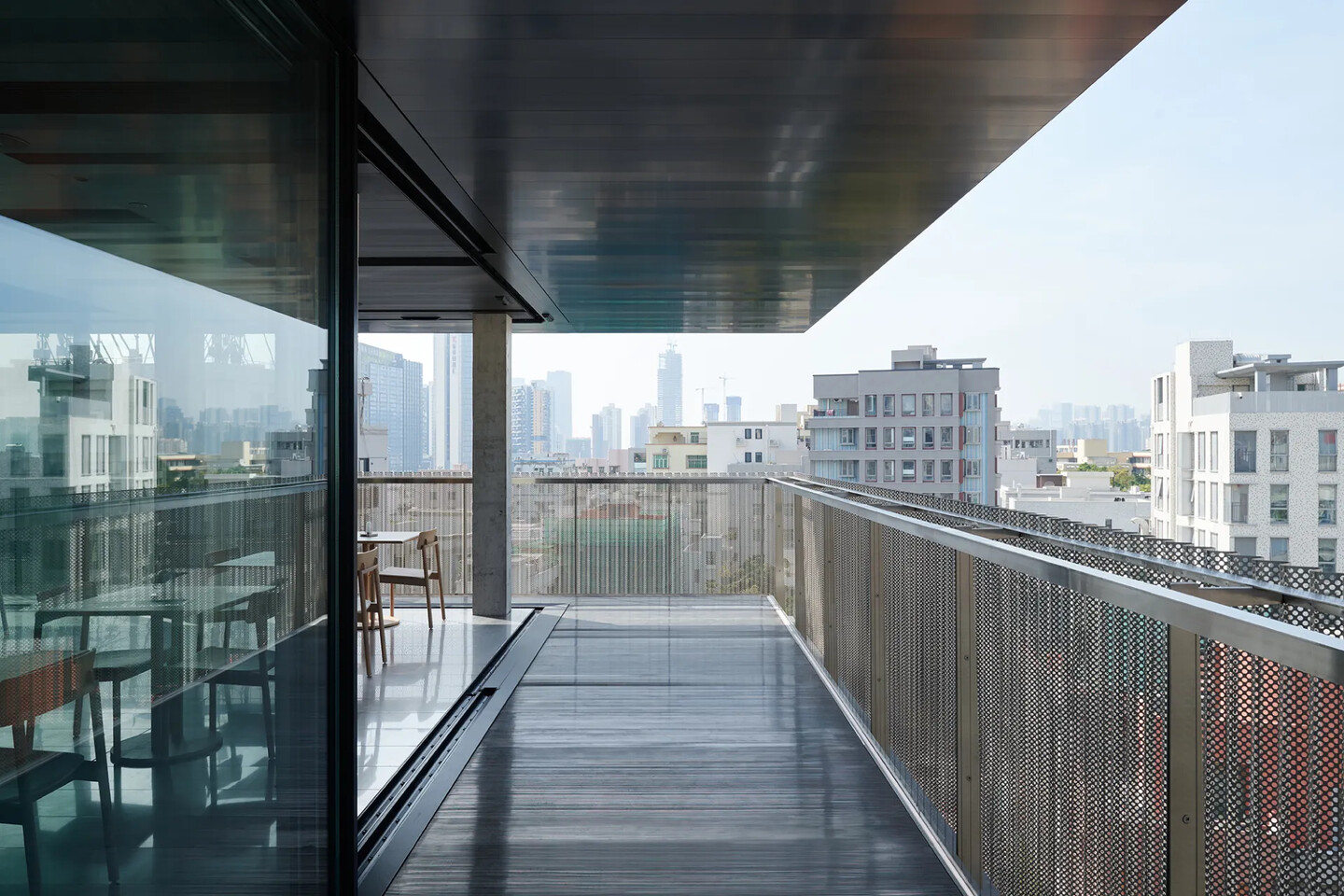
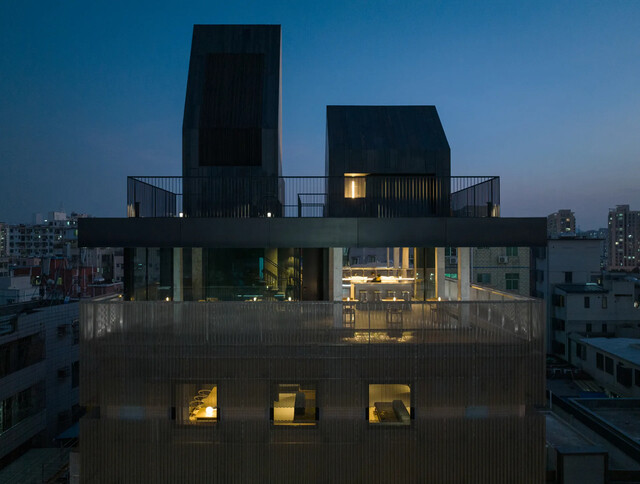
南頭古城的風景日新月異。如同熙攘的巷道一般,古城中各棟樓房上的屋頂平台也是別有一番景象。簡易搭建的小花園與蔬果園點綴其中,描繪出高低不一的景觀。在頂層設計中採用了平屋頂的形式,並加蓋了金屬結構。對於空間局促的城中村而言,這一向上伸展的空間,將當地巷道生活的畫幅延伸至屋頂,為公共空間帶來了新的詮釋。
 

Like the bustling scenes in the alleyways below, the roofscape across the Nantou urban village has a life of its own, with makeshift gardens and vegetable farms popping up along the jagged skyline. To reframe views of this ever-evolving village, a flat floating roof is installed to create a dramatic panorama of the street life below, and a new public ground above. Housing public spaces and service functions, the metallic monoliths of the rooftop play on vernacular add-ons, which are much sought after by space-starved attic-level residents. 


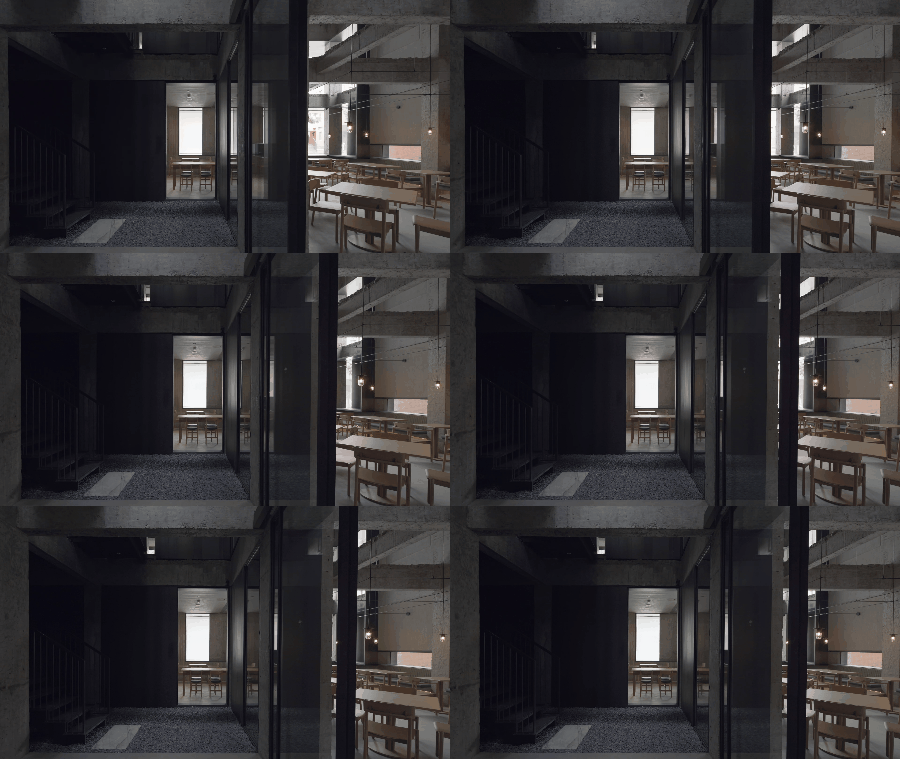
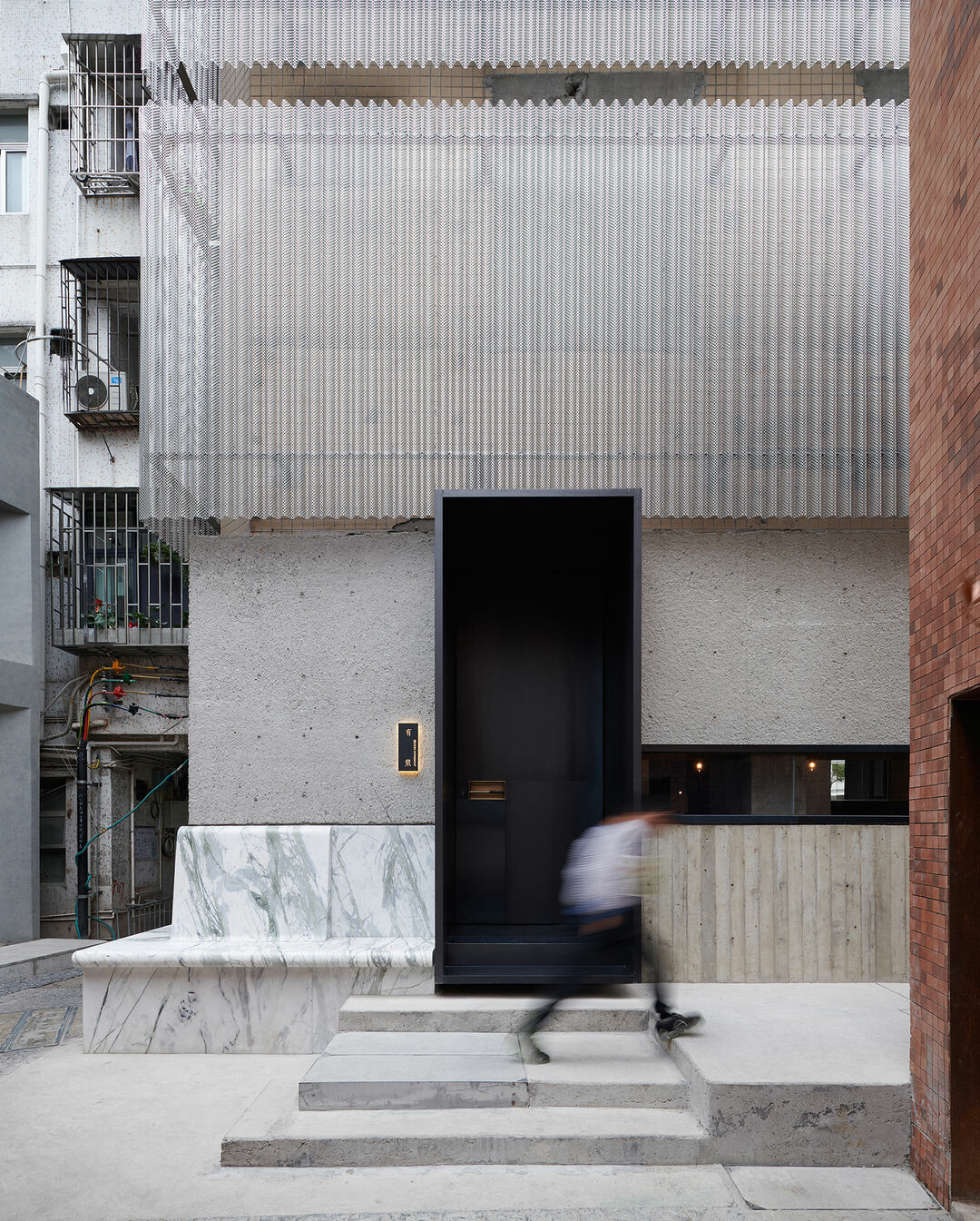
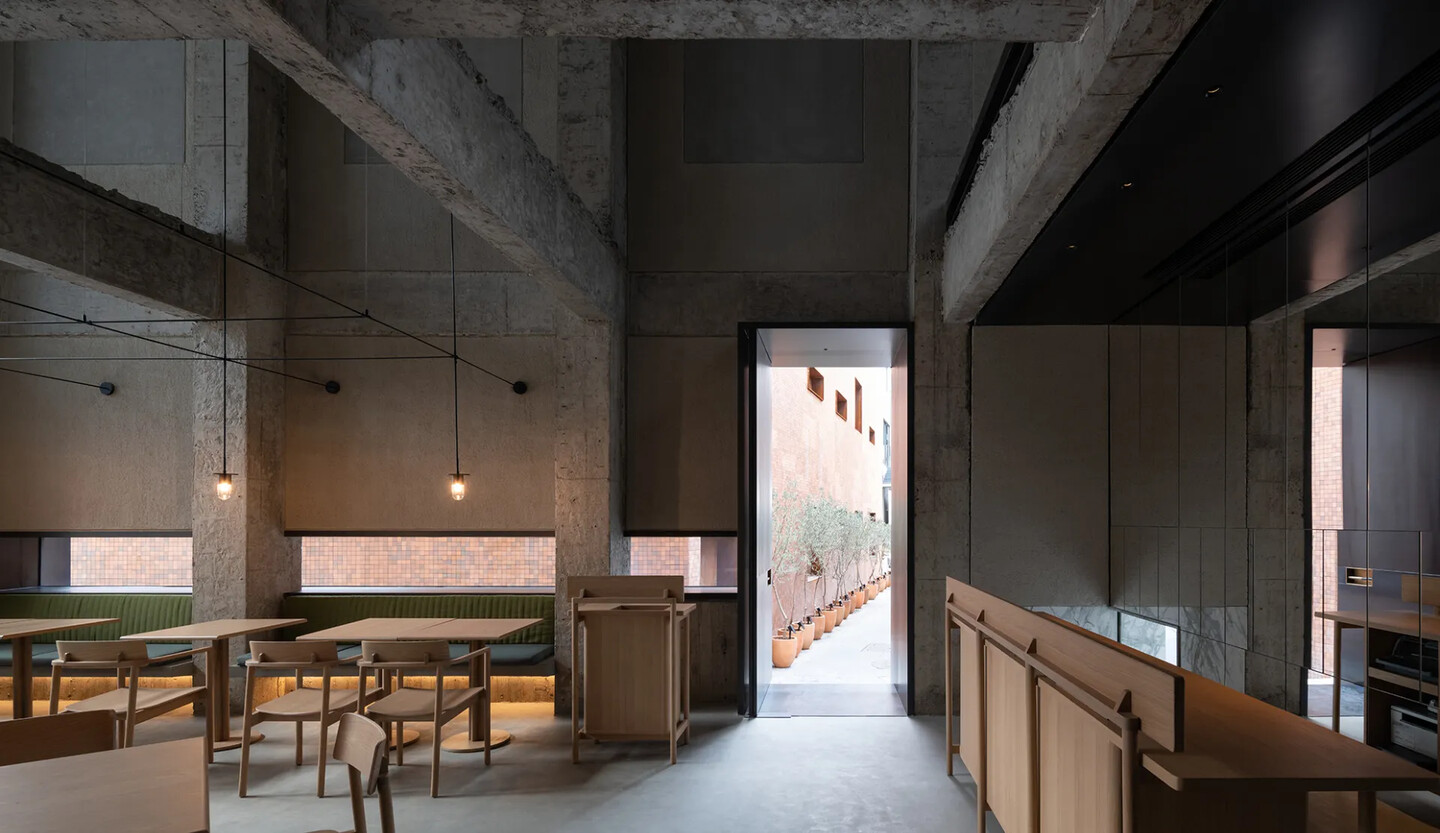
建築入口及公共區域有意地串聯併入當地的街道小巷之中,融入南頭古城獨特的城市肌理之中。沿著小巷可直接抵達,隨後步入建築中心,如同邀請鄰里朋友來自己家中做客一般。

 
To engage with the uniquely organic circulation that is quintessential to Nantou’s urban fabric, the guesthouse’s access and public realms are designed to be woven back into the network of intricate alleyways found on site. The new entrance to the guesthouse is created by extending a side street directly into the heart of the building, as if to invite neighbors and friends into one’s private home. 


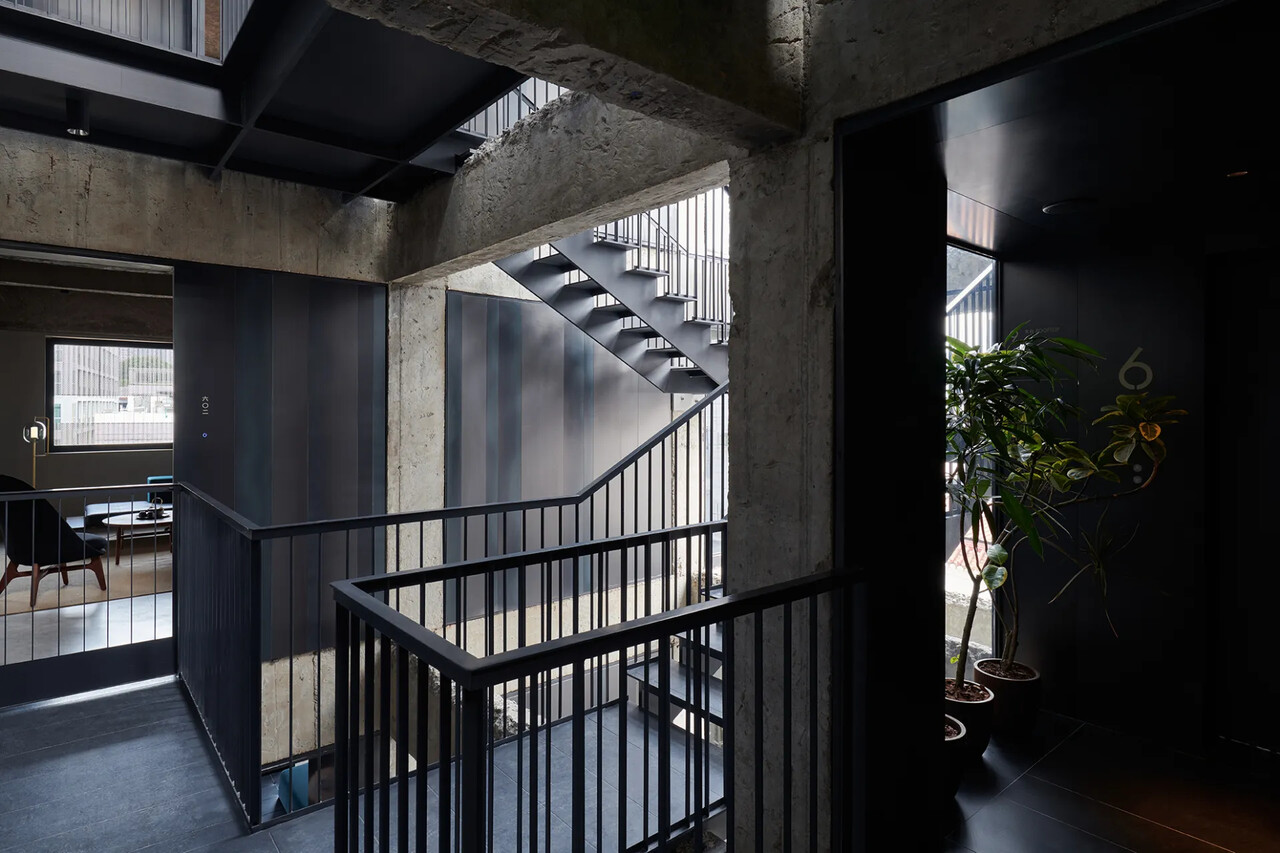
新與舊在建築內並存融合。穿過巷道步入酒店後,訪客站立於公共空間,視線隨著軸線不斷移至向上。原本將各樓層連接起來的樓梯井,被切割、擴寬,創造出全新的垂直庭院。切割開的建築立面及上方的採光井,將自然光及建築外的街景引入至建築內部。全新的金屬樓梯懸置於垂直庭院之中,訪客由此到達各層客房及屋頂平台。在頂層設計中採用了平屋頂的形式,並加蓋了金屬結構。對於空間局促的城中村而言,這一向上伸展的空間,將當地巷道生活的畫幅延伸至屋頂,為公共空間帶來了新的詮釋。
 

Old and new are juxtaposed throughout the building to celebrate ruins. Once the visitor arrives at the building, the public gesture of opening up the building along the urban axis is turned upward. An existing stairwell that had previously connected all nine tenement floors was now cut open and expanded to create a new vertical courtyard. Natural elements are allowed to pass through from the open façades to the side and a light well above. A new metal stair suspended within the vertical courtyard takes the visitor on a journey to the guest rooms on the mid-levels, and finally to the public rooftop gardens. 


新與舊在建築內並存融合。穿過巷道步入酒店後,訪客站立於公共空間,視線隨著軸線不斷移至向上。原本將各樓層連接起來的樓梯井,被切割、擴寬,創造出全新的垂直庭院。切割開的建築立面及上方的採光井,將自然光及建築外的街景引入至建築內部。全新的金屬樓梯懸置於垂直庭院之中,訪客由此到達各層客房及屋頂平台。在頂層設計中採用了平屋頂的形式,並加蓋了金屬結構。對於空間局促的城中村而言,這一向上伸展的空間,將當地巷道生活的畫幅延伸至屋頂,為公共空間帶來了新的詮釋。
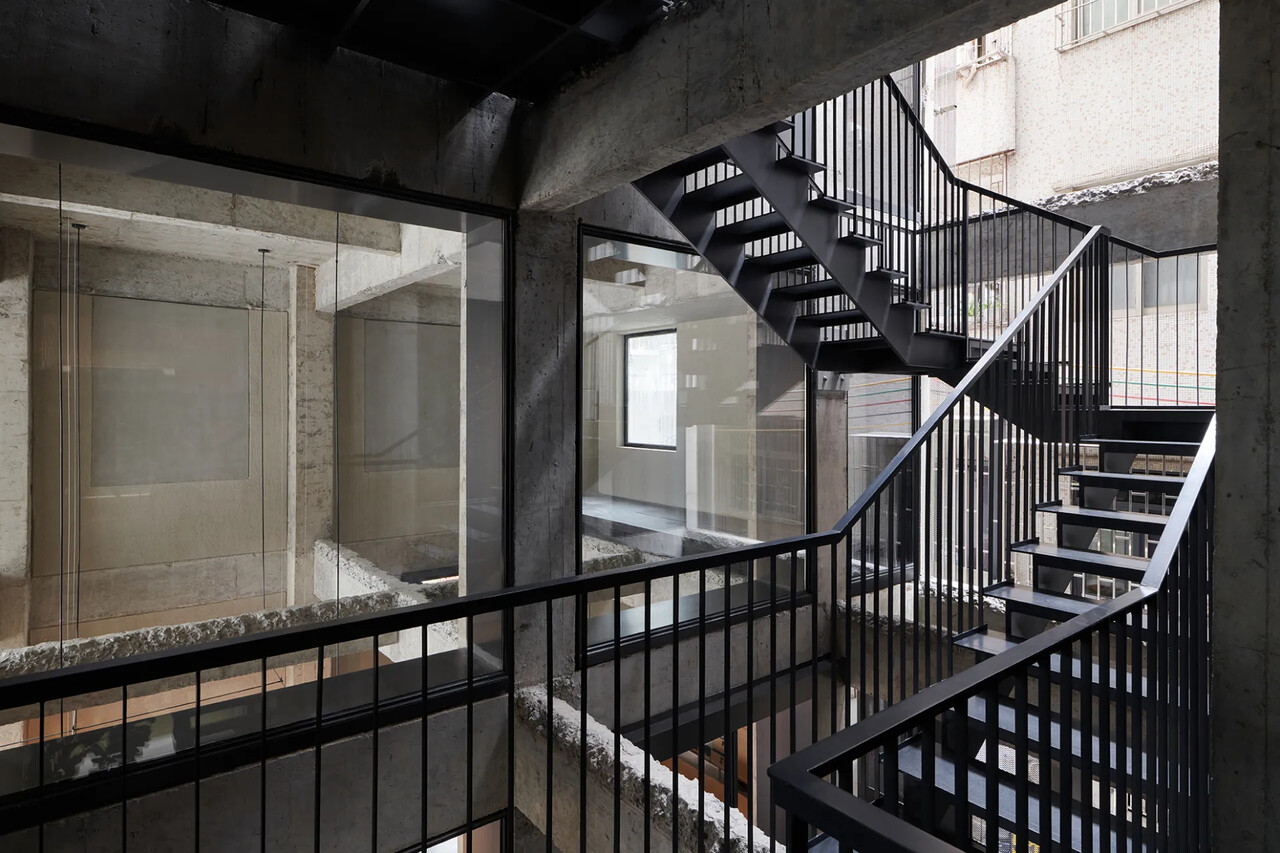
 

Old and new are juxtaposed throughout the building to celebrate ruins. Once the visitor arrives at the building, the public gesture of opening up the building along the urban axis is turned upward. An existing stairwell that had previously connected all nine tenement floors was now cut open and expanded to create a new vertical courtyard. Natural elements are allowed to pass through from the open façades to the side and a light well above. A new metal stair suspended within the vertical courtyard takes the visitor on a journey to the guest rooms on the mid-levels, and finally to the public rooftop gardens. 


切割並非僅僅意味著破壞,它同時也是空間與意義的創造。深圳南頭古城有熊酒店的設計融入了城市特徵,扎根於城市的興衰,使私人化的生活歷史變得清晰可辨,追隨著城市不斷向前的步伐,須臾不停。不斷變化的「切口」彷彿開啓了一個全新的入口,可以通往過去,亦可進入平凡而奇特的當下。
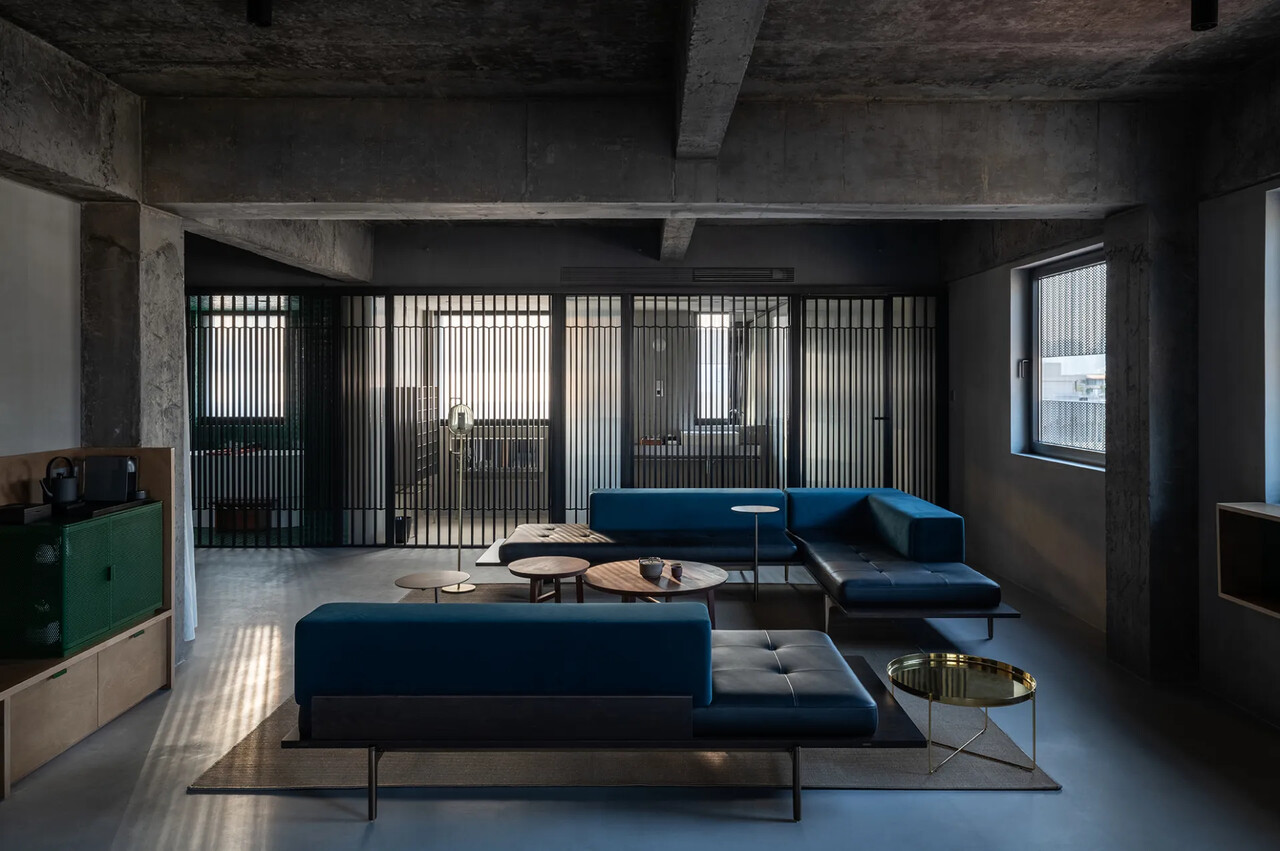
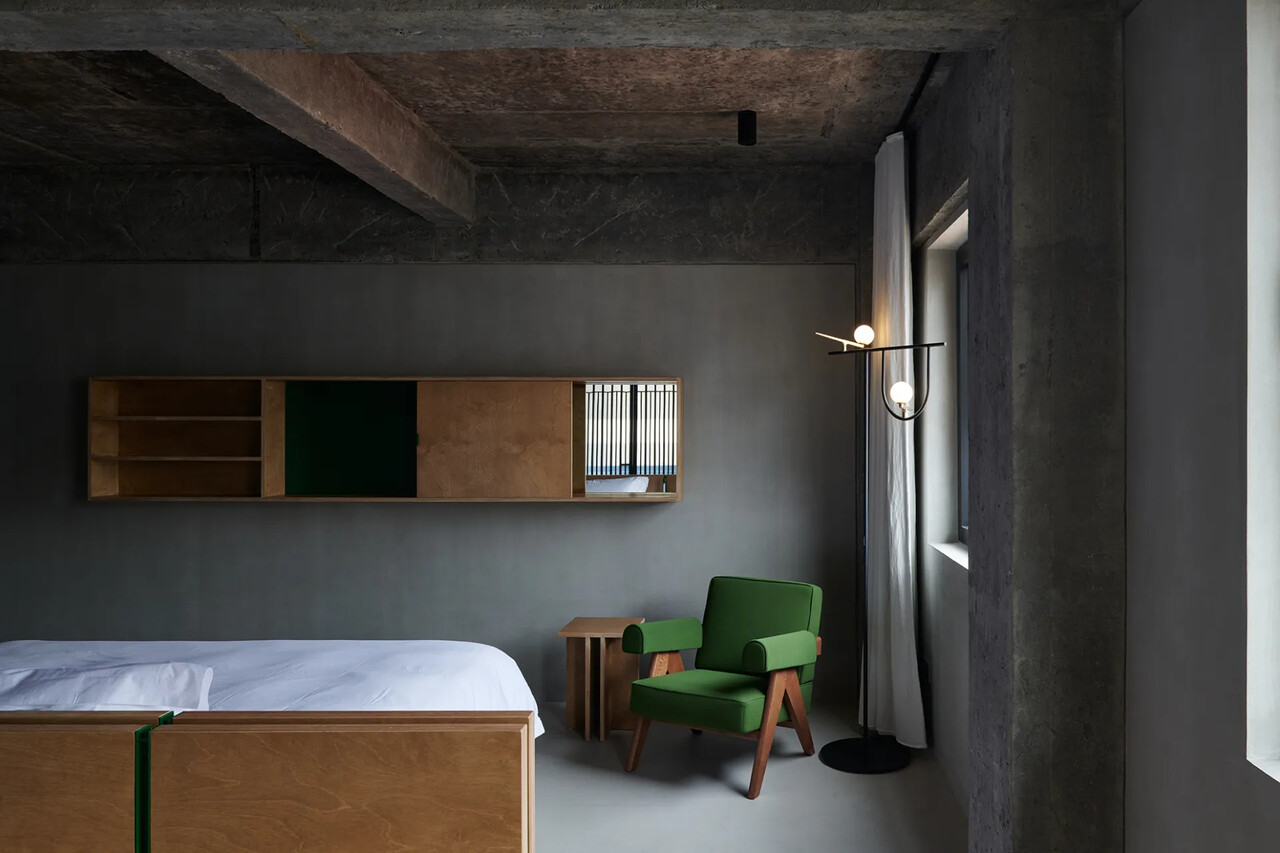
 

To cut does not simply connote destruction, but also creation, in this case, of spaces and meanings. By absorbing the urbanity into the building, Nantou City Guesthouse in turn makes its private history legible and becomes fully ingrained in the ebb and flow of the city. In that transformation, the self-healing incision opens a new portal into as much as the past, as the mundane yet singular present. 


Design Studio| Neri&Hu Design and Research Office • facebook  @neriandhu
Photography|Chen Hao • @chenhao.etsam
  • About
  • Privacy policy
  • Track Order
  • Customer
  • Contact
  • Join us
FACEBOOK
instagram
Language

Copyright © WABISABI ISSUE. 侘寂傳媒有限公司 統一編號:90451315

  • Projects
    • Worldwide
    • Interiors
    • Features
  • Contemporary
    • Exhibitions
  • Record
  • Lifestyle
  • City Explore
  • News
  • Issue
  • About
  • Privacy policy
  • Track Order
  • Customer
  • Contact
  • Join us
Language