WABISABI
  • Projects
    • Worldwide
    • Interiors
    • Features
  • Contemporary
    • Exhibitions
  • Record
  • Lifestyle
  • City Explore
  • News
  • Issue
  • Account
  • Search
  • Language
Mobile nav


Old Mill Conversion into Cultural Centre 

古老磨坊改建文化中心
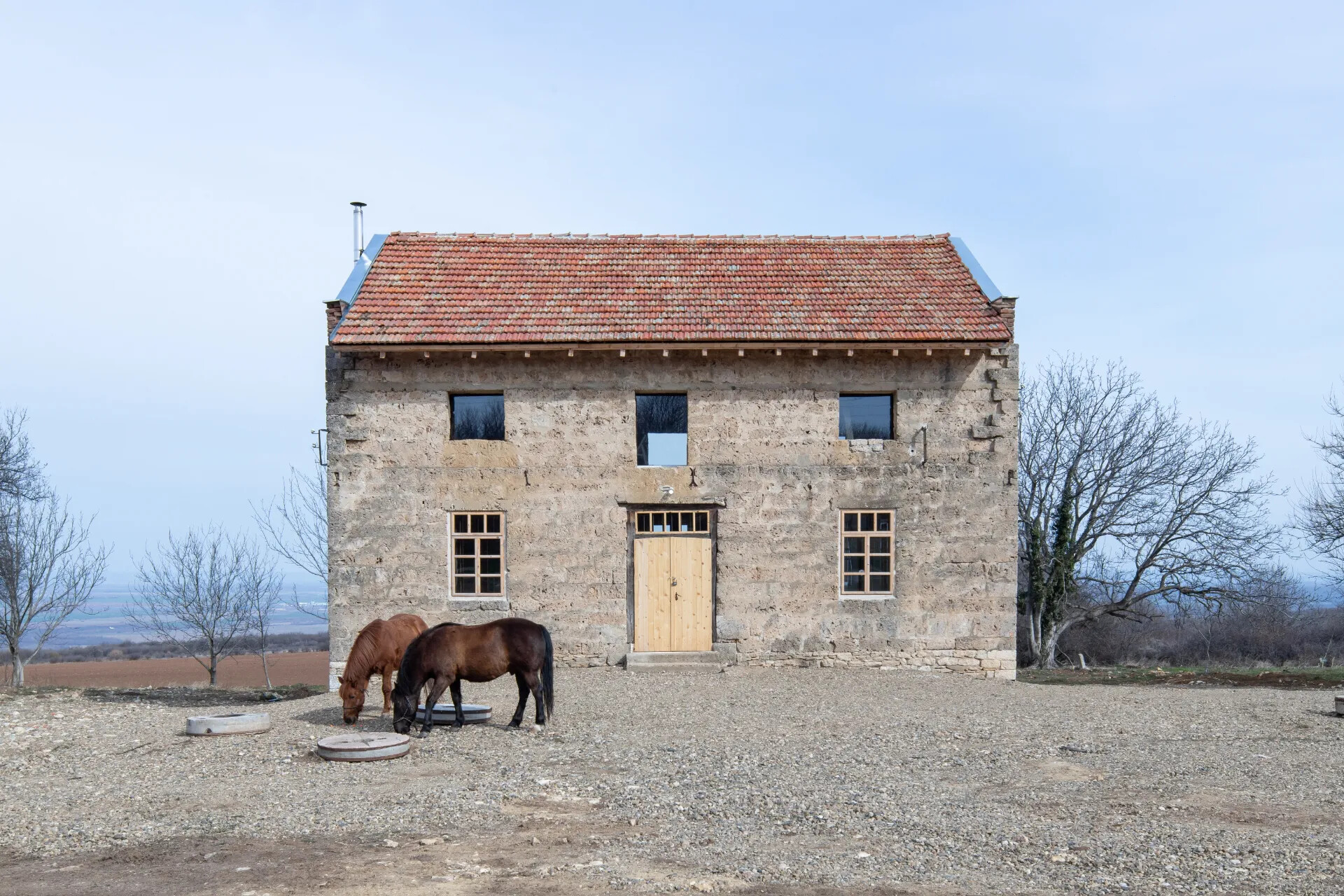
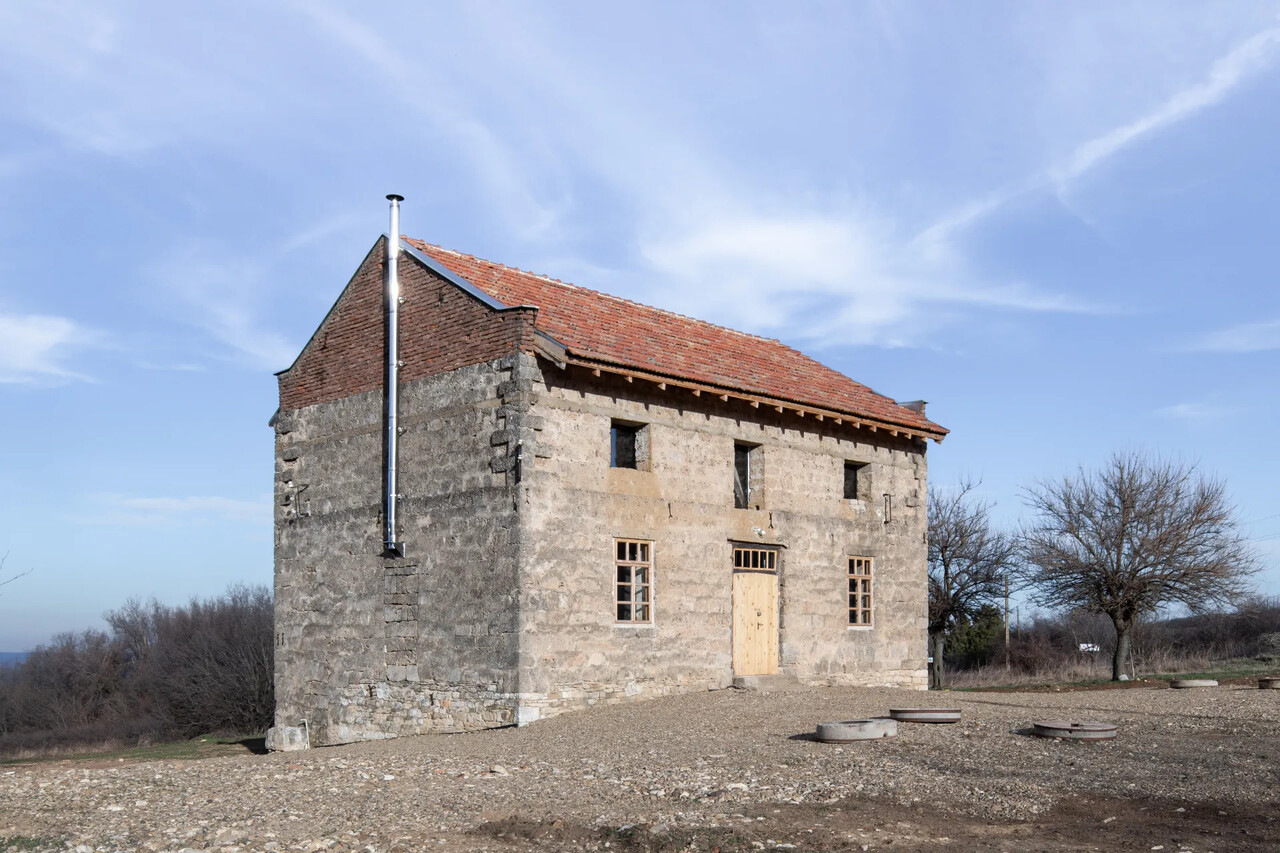
Standing at the very entrance of the village, the old Mill is not only an important landmark, but also a meeting point of cultures, nationalities, generations and ideas. In 2022, it was converted into a cultural center awakening the social and cultural life in the village and the region. The Mill underwent dramatic transition from an abandoned ruin to a vibrant public space, regained back to the community it belongs.
 

這座老磨坊佇立在村莊的入口處,它不僅是一個重要的地標,也是文化、國界、世代與思想的交匯點。在2022年,它被改建為一個文化中心,重新喚醒了村莊與地方社區的文化生活。磨坊從一個被遺棄的廢墟經歷了劇變,成為一個充滿活力的公共空間,重新回歸它屬於社區的樣貌。

 
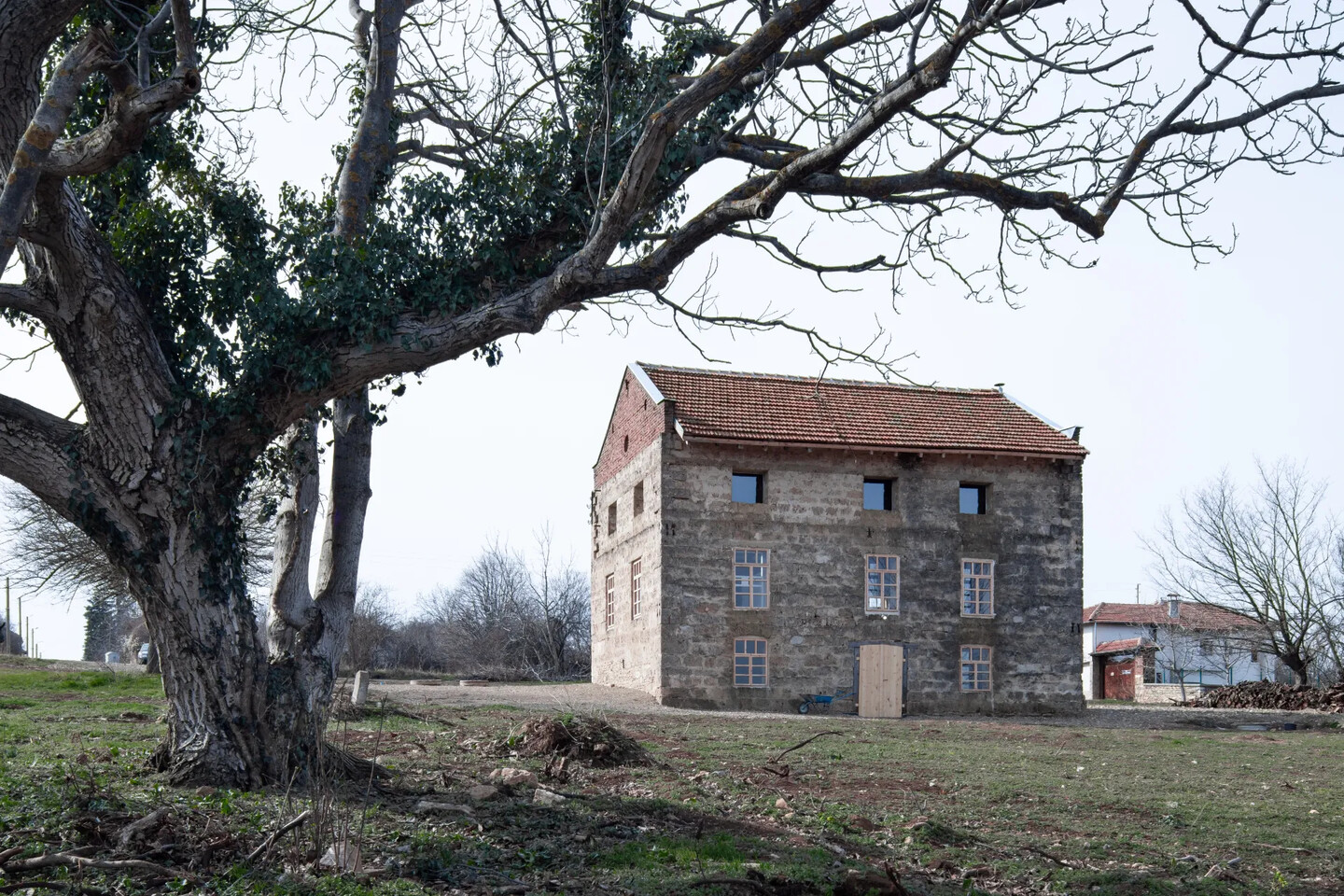
The old Mill was initially built in the nearby village. Later on it was moved all the way to Karpachevo and rebuilt on the place it stands now. After it closed down it was abandoned and suffered serious damages. In 2019 the Devetaki Plateau Association decided to bring life back to the Mill.
 

古老的磨坊最初建在附近的村莊,後來它被搬遷到卡爾帕切沃,並在現在的位置上重建。在它關閉之後,被遺棄並遭受了嚴重的損壞。於2019年,德韋塔基高原(Devetaki Plateau)協會決定讓這座磨坊重獲新生。
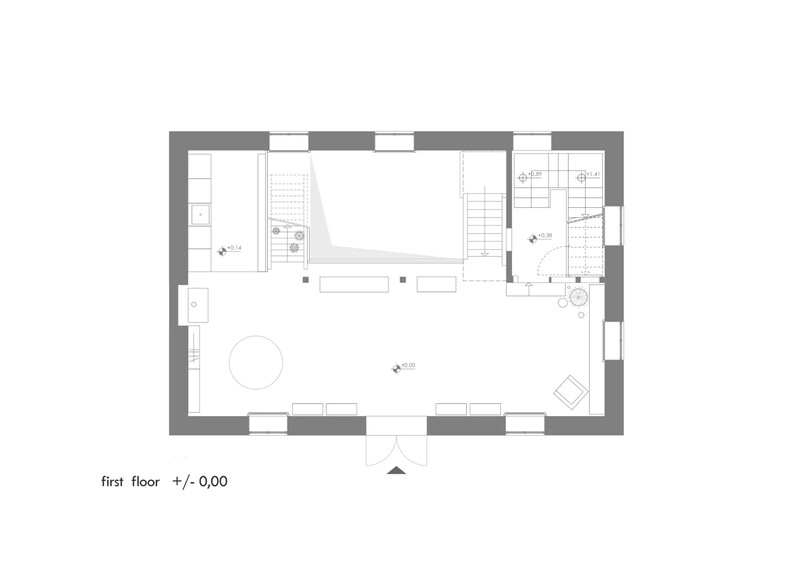
一樓

一樓


MORE
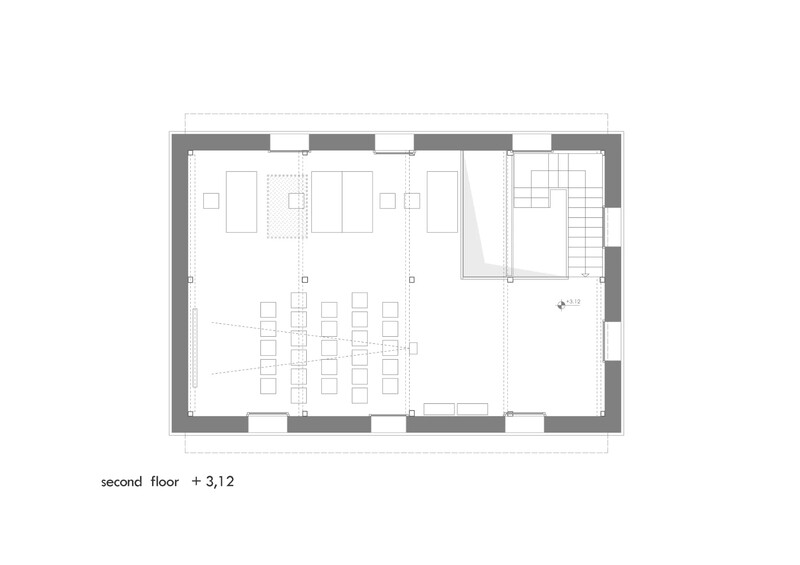
二樓

二樓


MORE
三樓

三樓

MORE
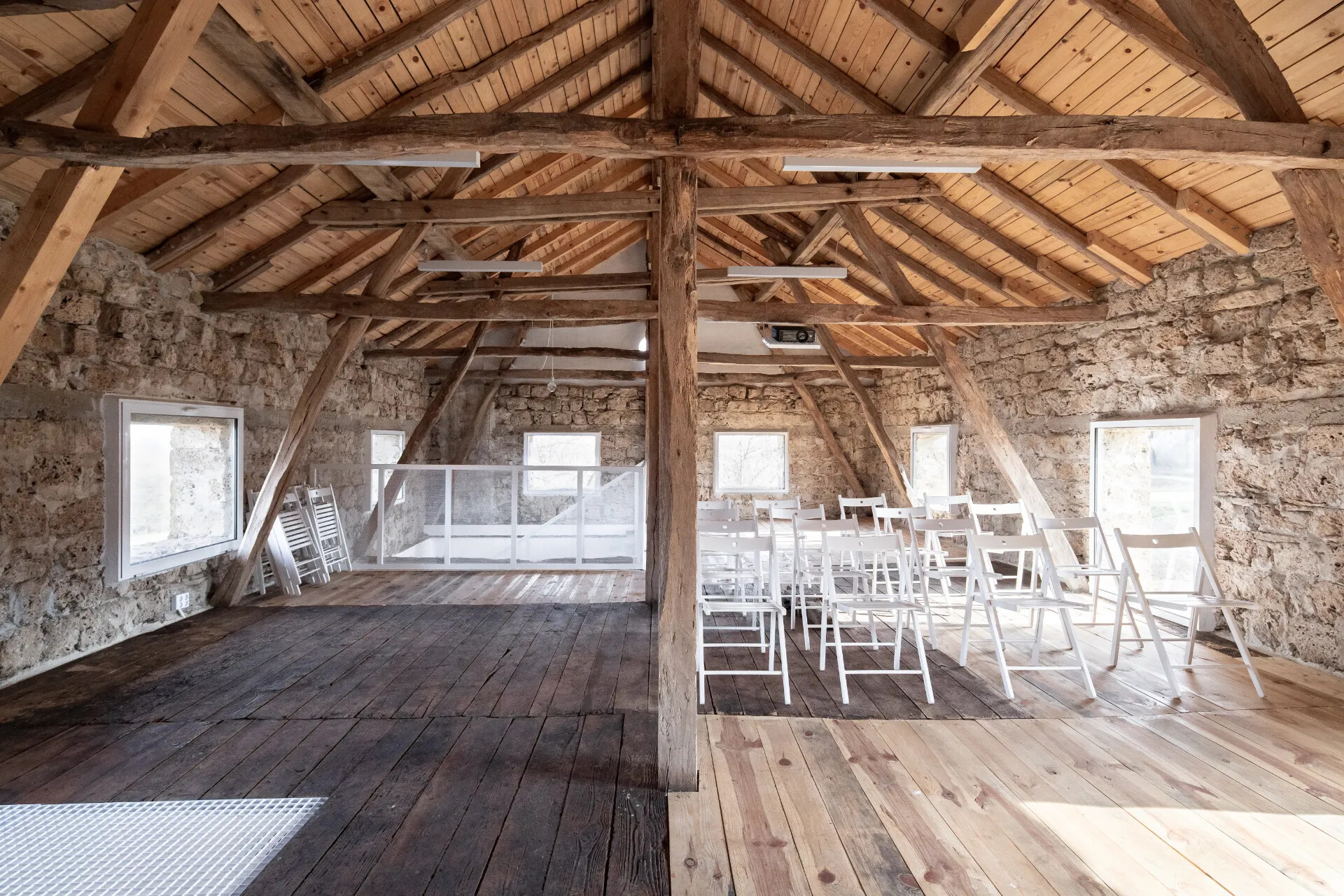
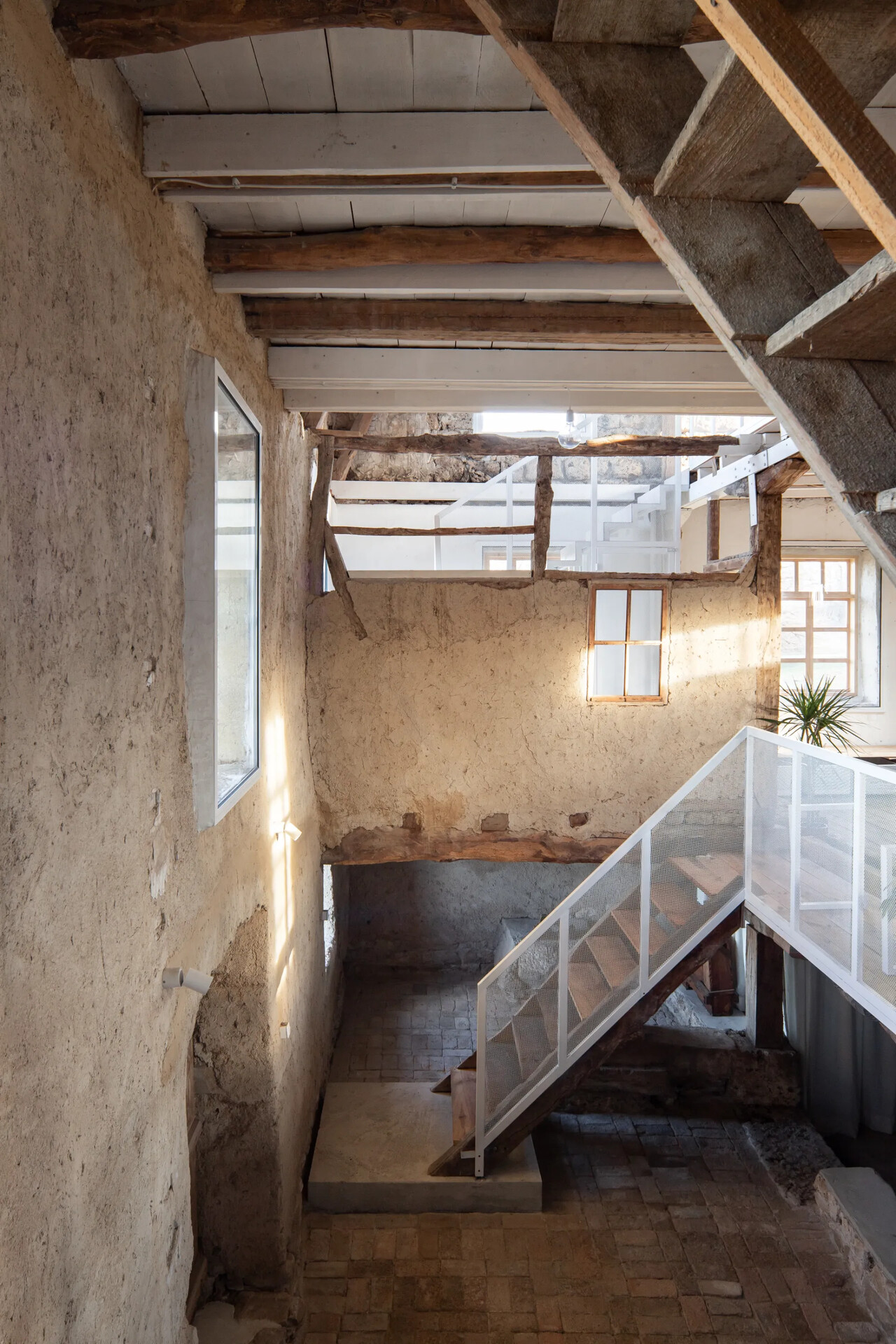
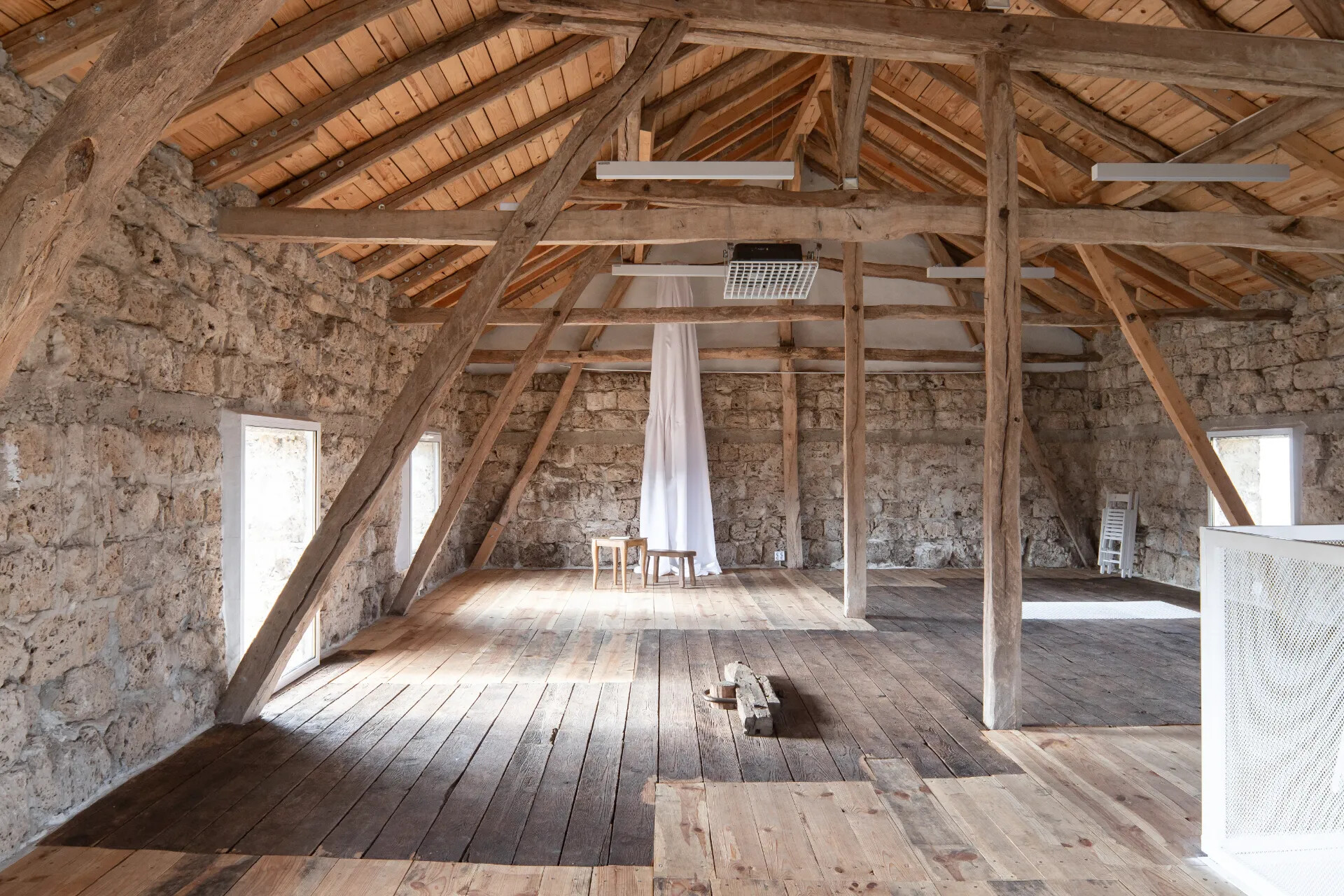
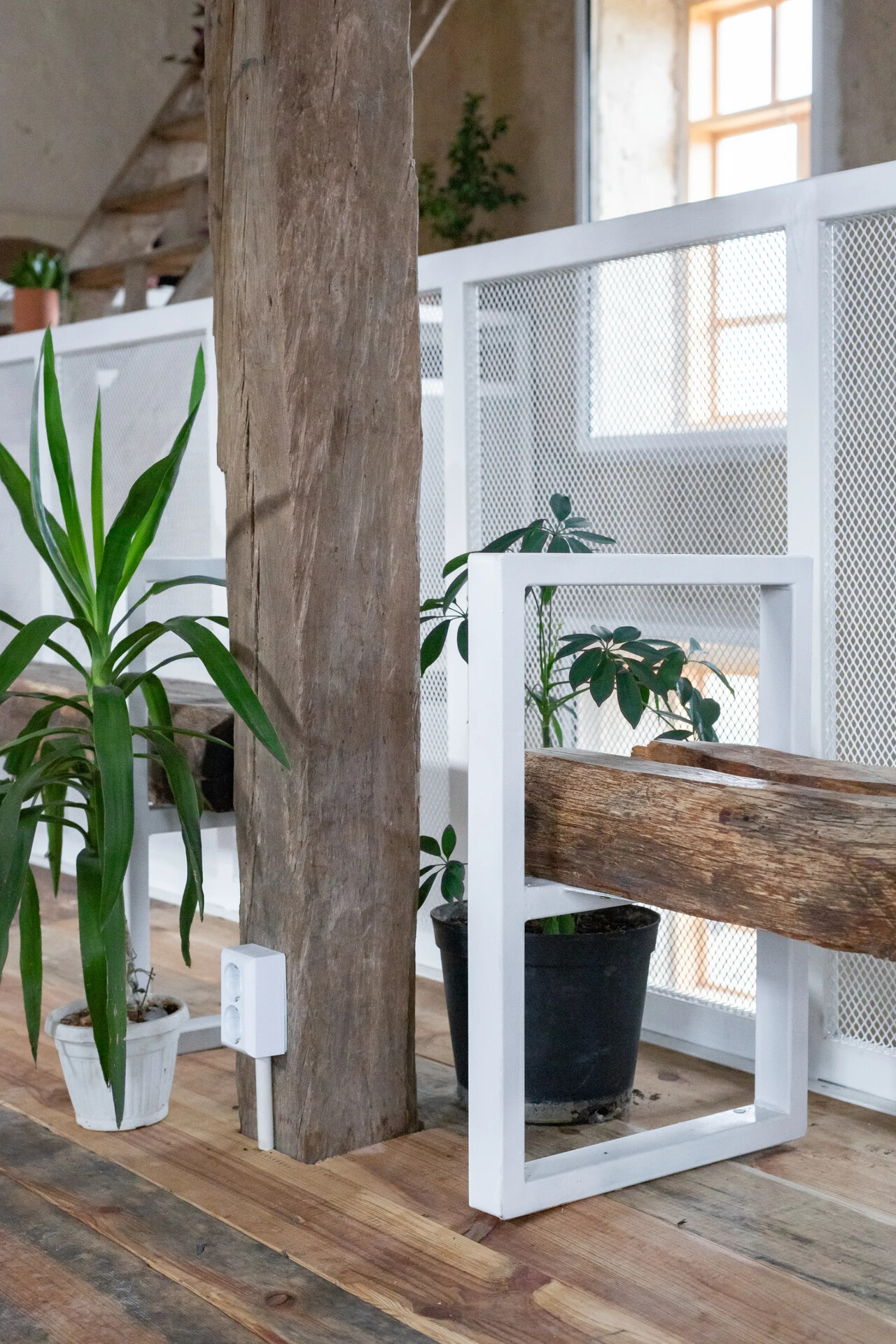
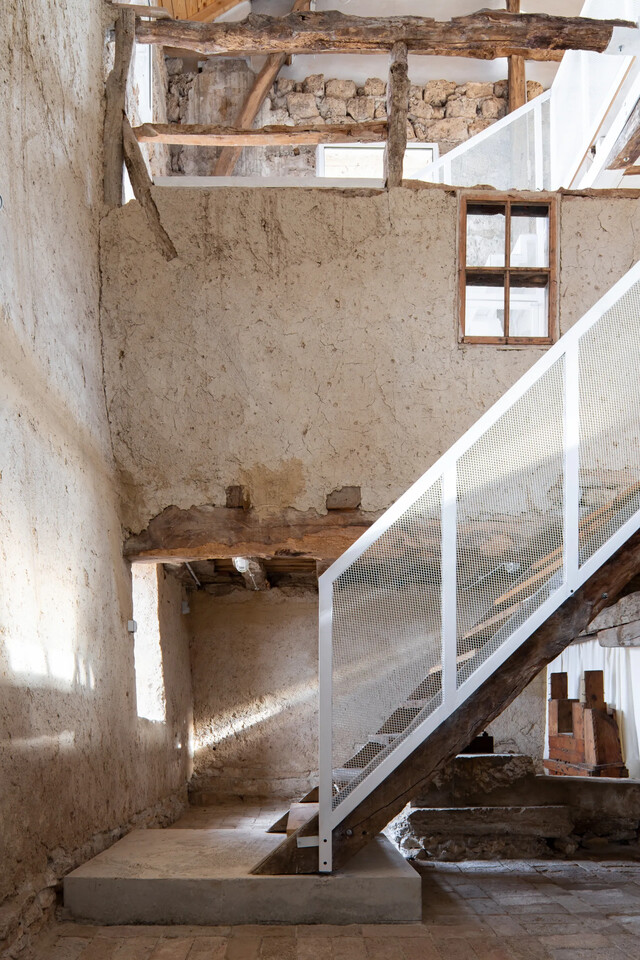
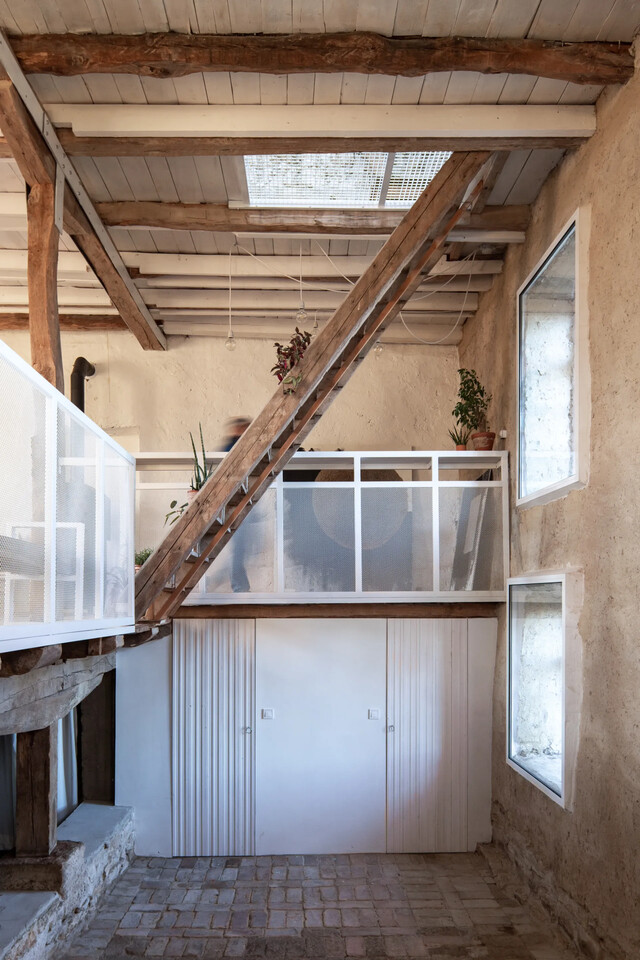
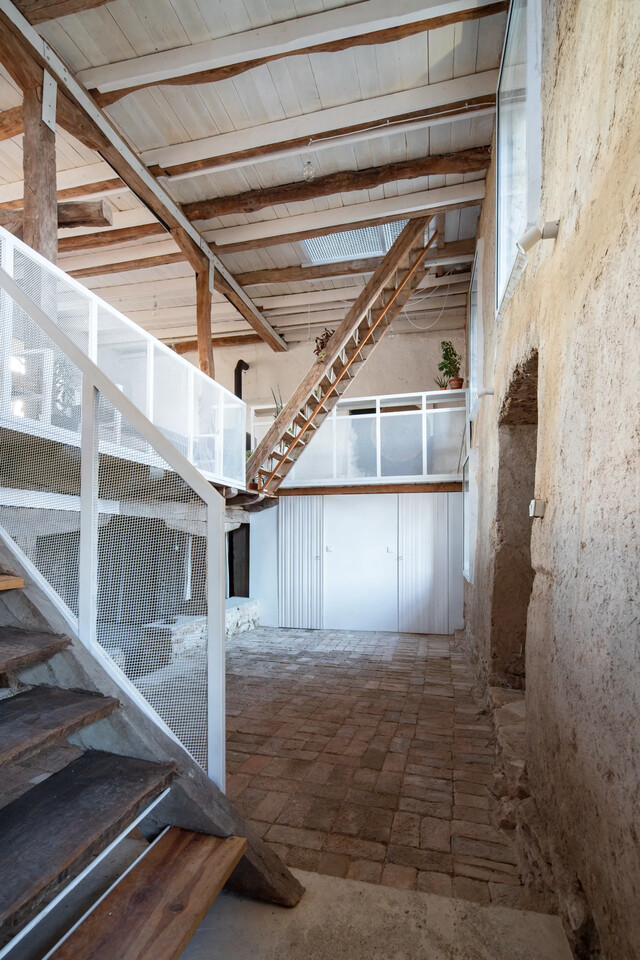
  The main aim of the project was the adaptation and repurposing of the abandoned building by using local natural materials and recycling the available ones. (wooden planks, roof tiles, adobe bricks and plaster, baked bricks, stone, etc.) Essential concept was keeping  the raw, rural aesthetics of the original fabric. In the same time to  integrate the new function in a holistic sensible manner to meet the new needs. The main design concept for the new intervention was adopting the principle of contrast and balance. Following this idea metal elements painted in white were introduced to the interior as a contradiction to the rustic rough old timber structure. The newly added elements not only enhance the natural look of the old structure but also introduce light to the interior space. A tender metal “lace” was used to frame the banisters and the ascetic furniture. It offers safety and new functionality at the same time, still allowing the visitor to see the authentic elements behind. The play between old and new, dark and light, ‘clean’ and ‘dirty’ create the special atmosphere of harmony and balance with respect to the authentic spirit of the place. The overall result – a hybrid space that managed to keep its unique and genuine character, but also satisfying all the contemporary needs of the newly added function.
 

該項目的主要目標是使用當地天然的以及回收再生的建材(木板、屋頂瓦片、土磚和石膏、燒製磚、石頭等),對個這個被遺棄的建築進行改造和重新定位。其中重要的概念是保留原始結構的粗糙、鄉村美學,同時以一種體驗的方式融入新的功能,以滿足新的需求。新的設計概念主要是採用了對比和平衡的原則,順著脈絡在室內引入了塗成白色的金屬元素,與粗糙的老木結構形成對比。新添加的元素不僅提升了老建築的自然風貌,也為室內空間引入了光線。使用了精緻的金屬”雷絲”來裝飾扶手和簡樸的家具。它在提供安全和新功能的同時,仍然讓遊客可以看到背後的原始元素。舊與新、暗與明、"潔凈"與"骯髒"之間的對比創造了一種特殊的和諧與平衡的氛圍,尊重了這個地方的真實精神。整體結果是一個混合的空間,既保留了其獨特且真實的性格,也滿足了新添加功能的所有現代需求。
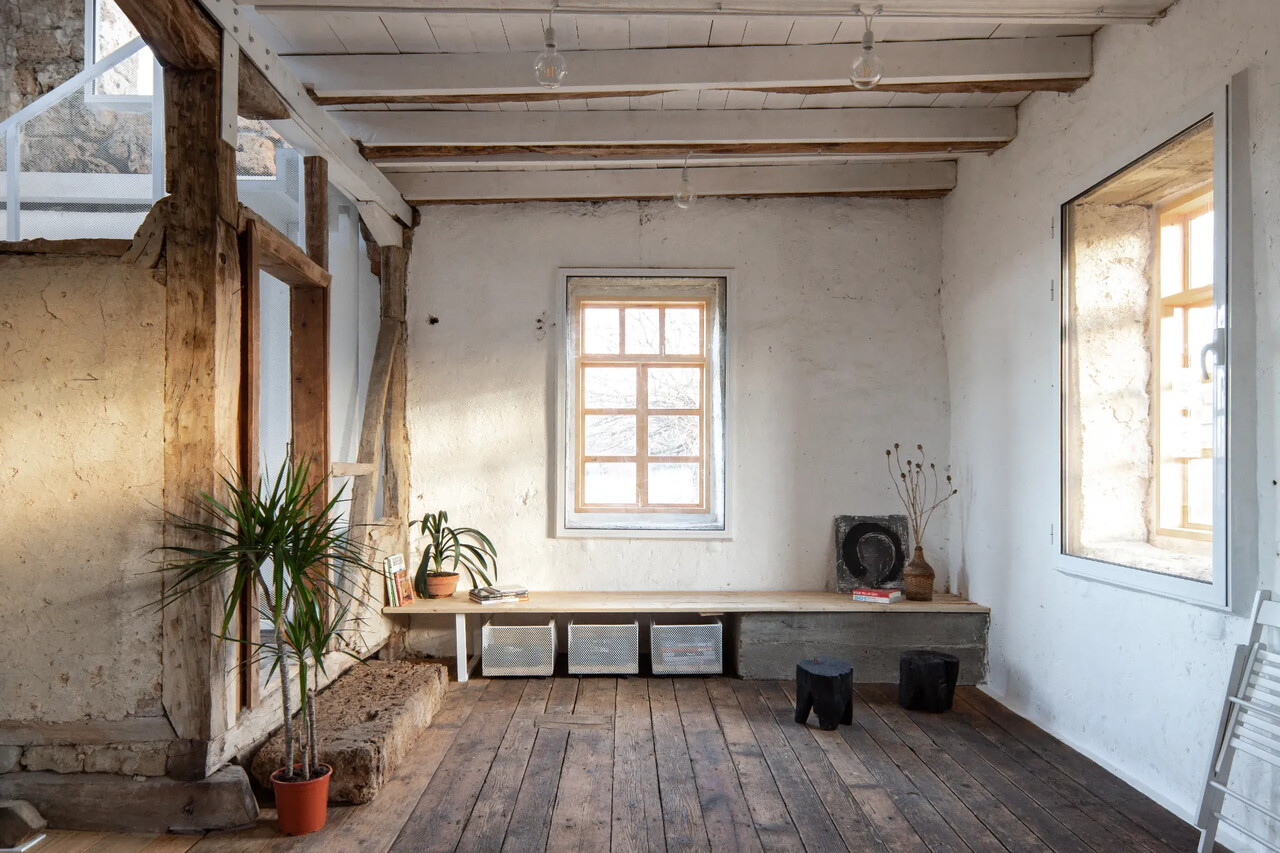
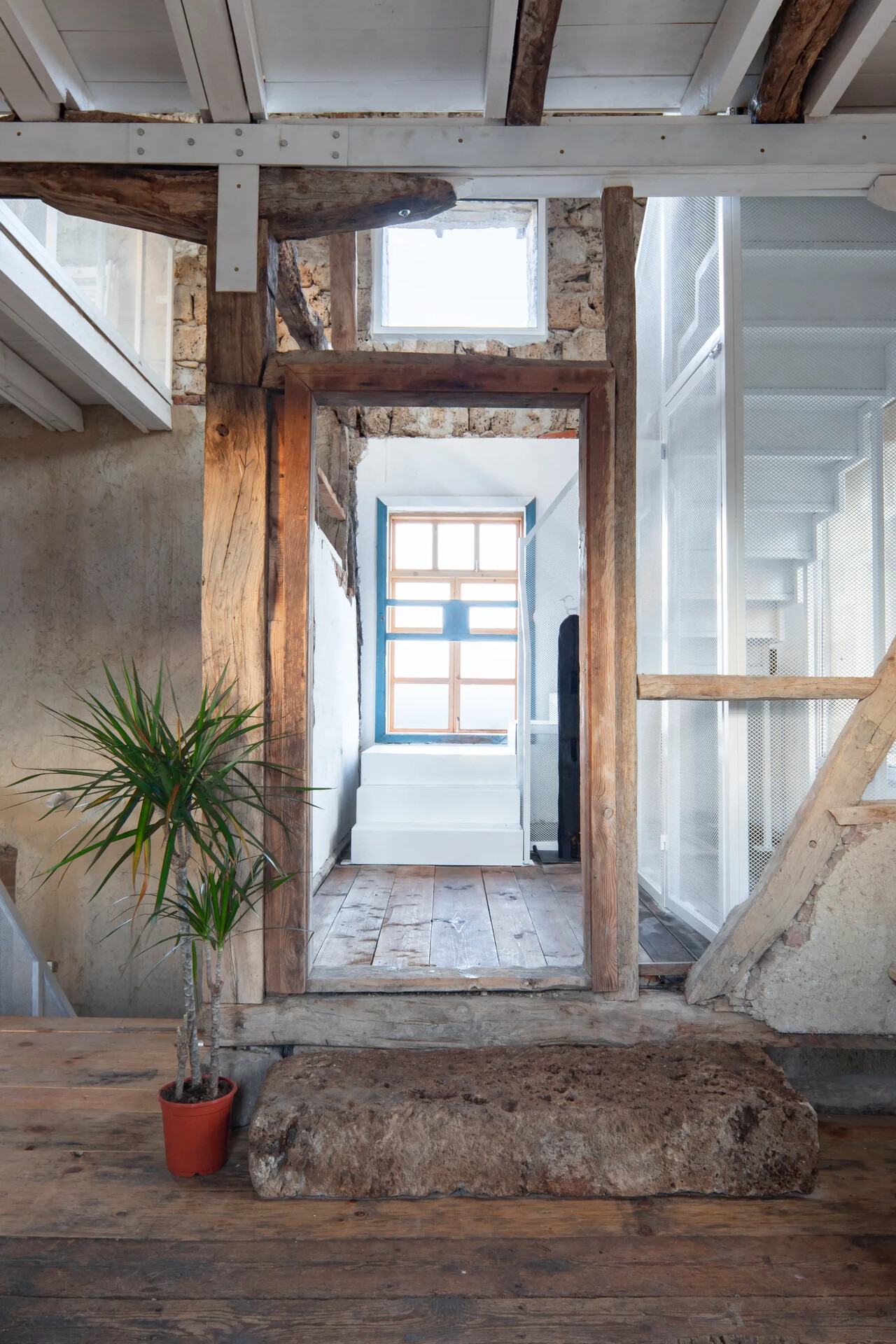


The 3-storey  timber structure was kept in its original state – undergoing structural reinforcement where needed to provide safety for the visitors. Openings through the floors allow multi-storey vertical visual connection and communication.
 

這座三層的木結構保持了原始狀態,只在需要的地方進行了結構加固,以確保遊客的安全。藉由地板的開口,表現了多層垂直的視覺層次和不同層面之間的互動與交流。


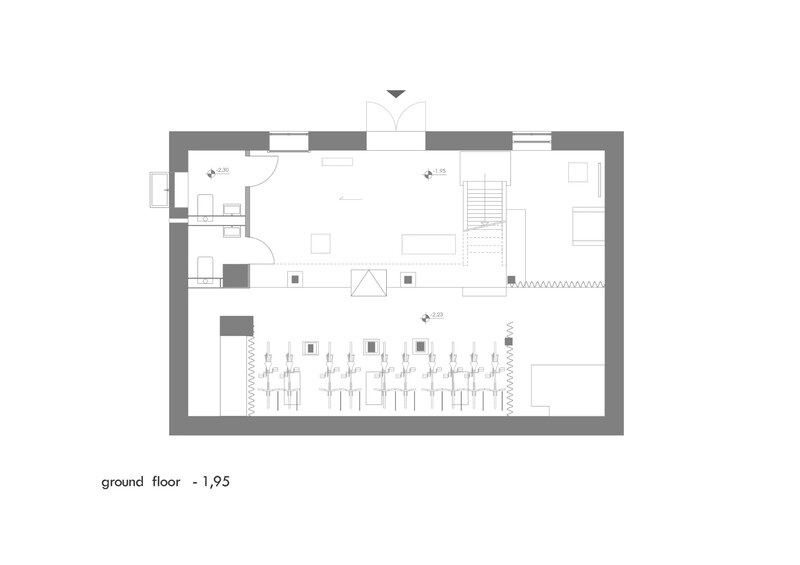
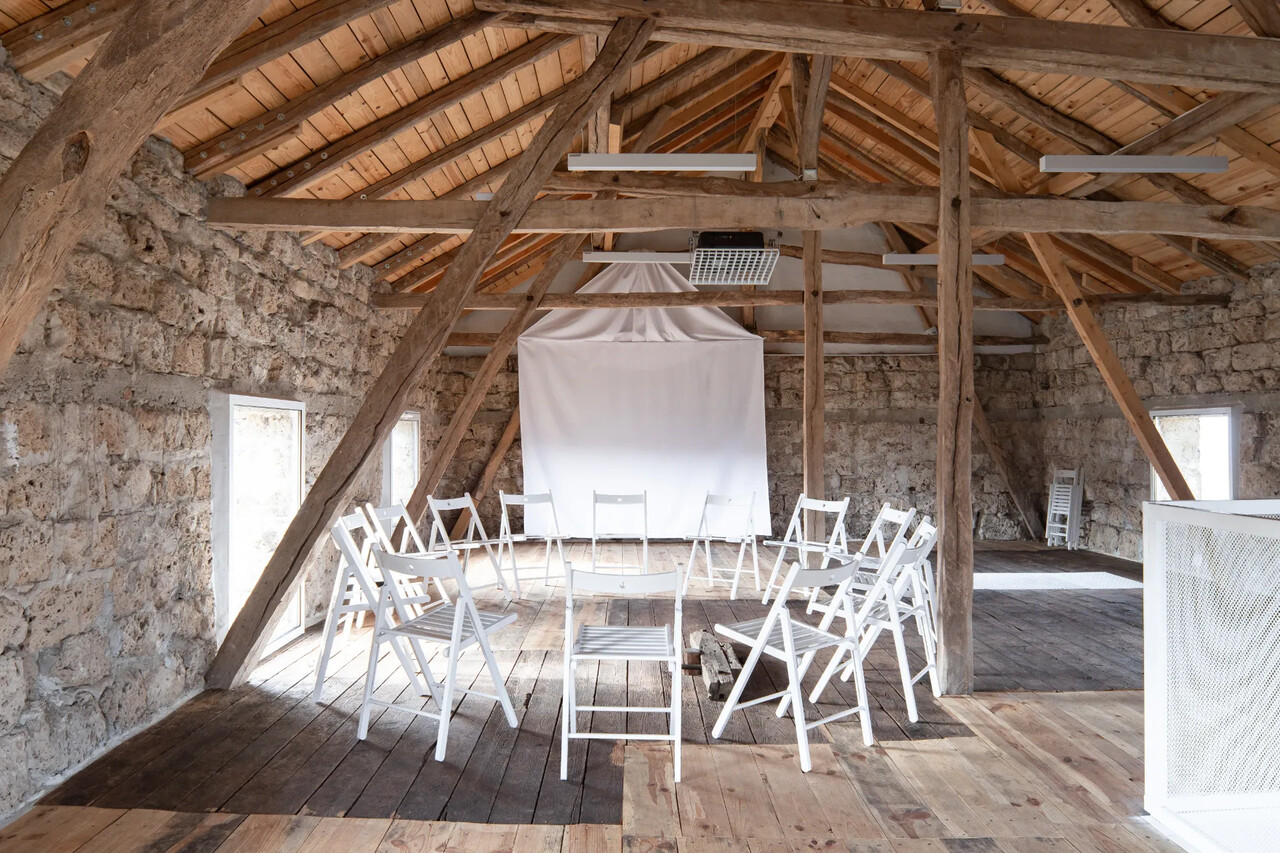
The 1st floor,  accessible from the main entrance to the south, consists of 3 zones – information point, kitchenette and communal area – a meeting place for all generations. The 2nd floor acts as a multifunctional space that provides stage for different kinds of cultural events – trainings, presentations, workshops, lectures, public discussions and co-working space. Lavatories for visitors, storage space and rent-a-bike facilities are positioned at the ground floor. To secure the access to the 2nd floor a new staircase and railings were added. The wooden windows were remade in their original layout and doubled on the inside with aluminium double-glazed windows to ensure energy saving. 


由一樓南側的主入口進入,分為三個區域 - 資訊站、廚房區和公共區域,並為遊客設置洗手間、儲存空間和租借自行車的設施,這是各世代的人們聚集的地方。二樓的通道則添加了新的樓梯和欄杆,木窗按照原來的布局重新製作,並在內側加裝了鋁質雙層窗戶以確保節能,這是一個多功能空間,提供不同類型的文化活動 - 如培訓、表演、工作室、講座、公開討論和共享工作空間。


What was once an abandoned ruin is now returned to the local community adding new meaning to an old landmark.
 

這曾經是一個廢棄的老建築,現已經回歸當地社區,為一個古老地標增添了新的意義。


Design Studio | studio nada @studionada_arch
Photography | Todor Todorov @_todortodorov
  • About
  • Privacy policy
  • Track Order
  • Customer
  • Contact
  • Join us
FACEBOOK
instagram
Language

Copyright © WABISABI ISSUE. 侘寂傳媒有限公司 統一編號:90451315

  • Projects
    • Worldwide
    • Interiors
    • Features
  • Contemporary
    • Exhibitions
  • Record
  • Lifestyle
  • City Explore
  • News
  • Issue
  • About
  • Privacy policy
  • Track Order
  • Customer
  • Contact
  • Join us
Language