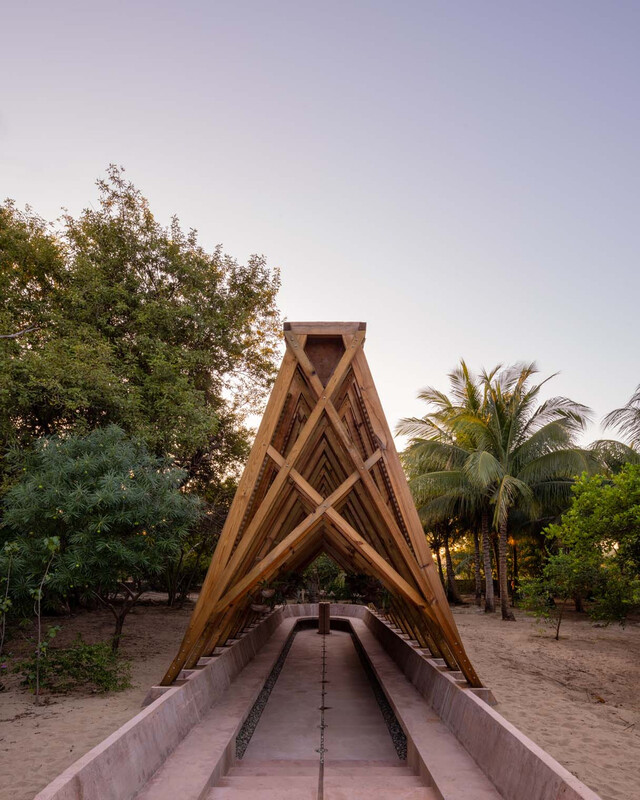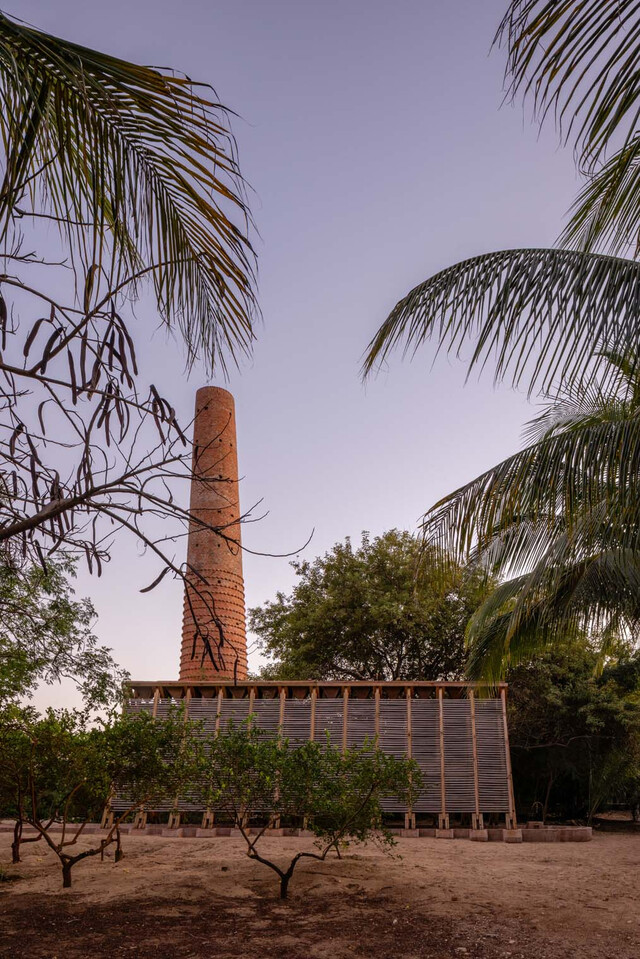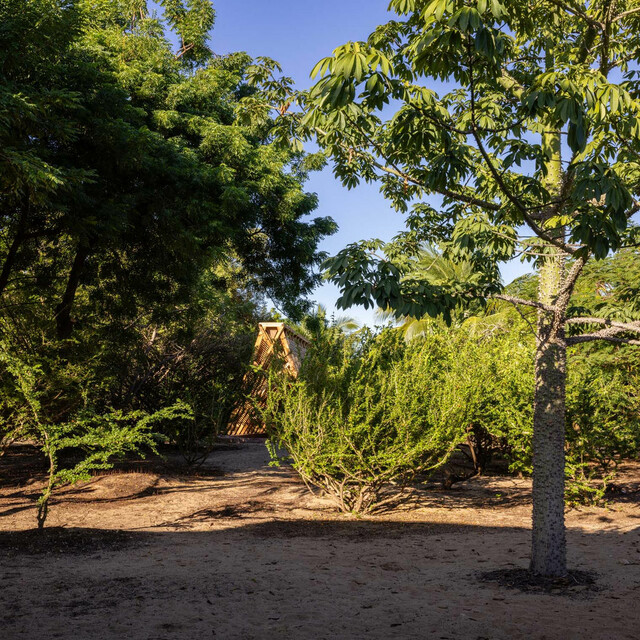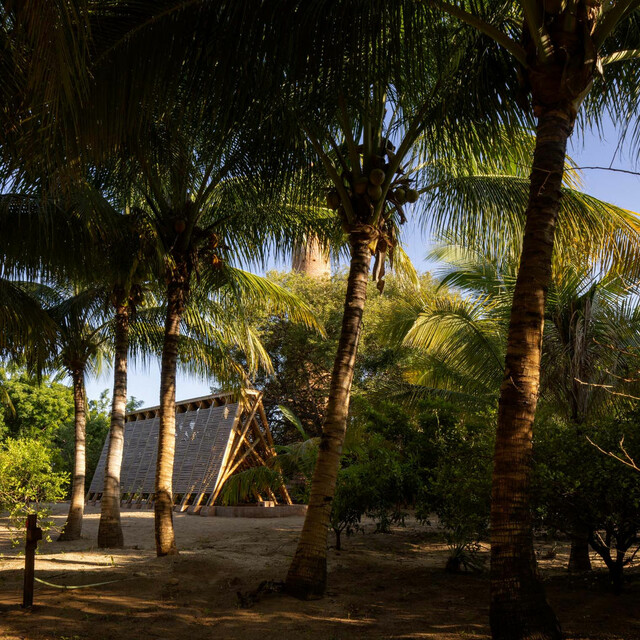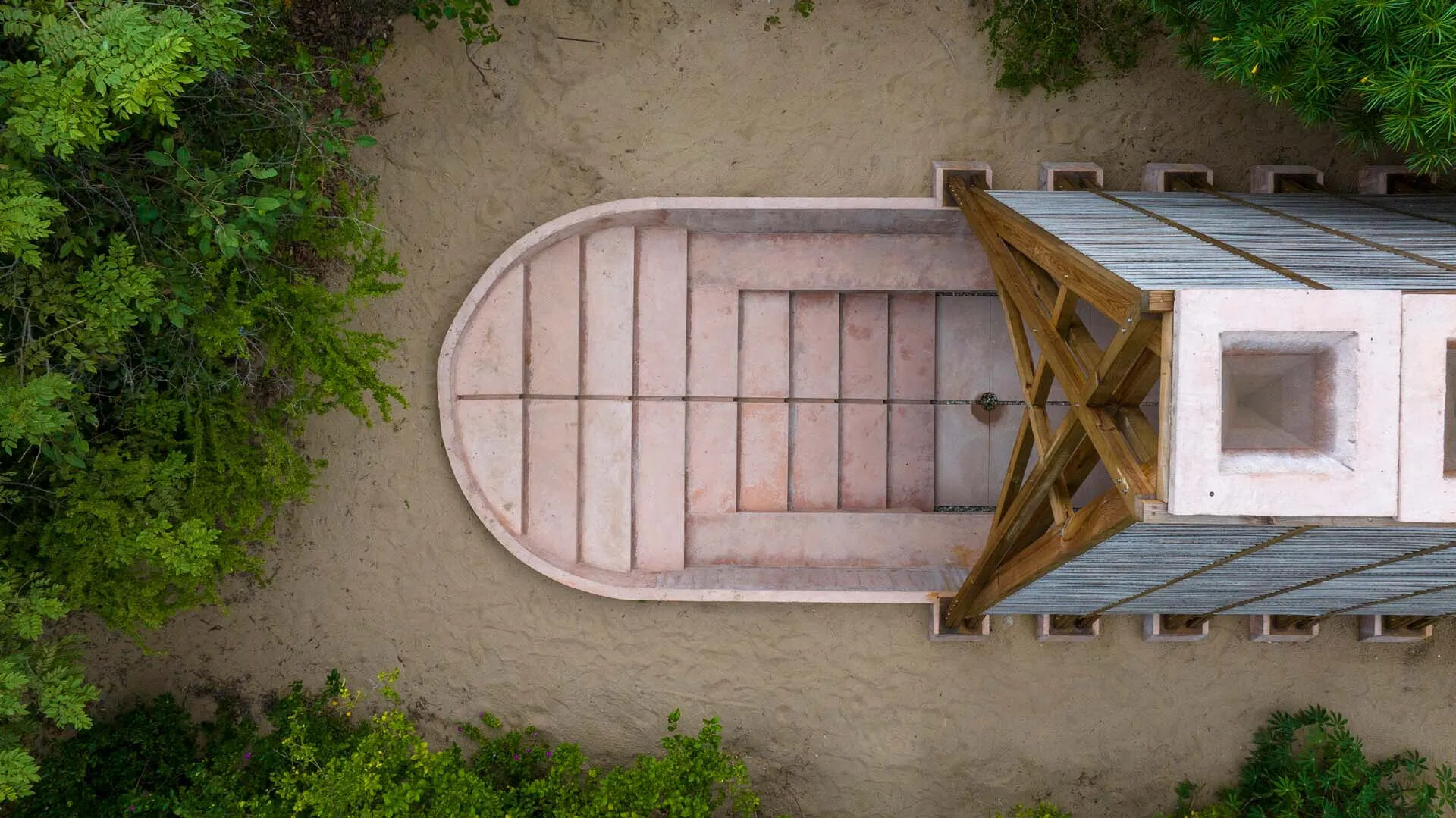
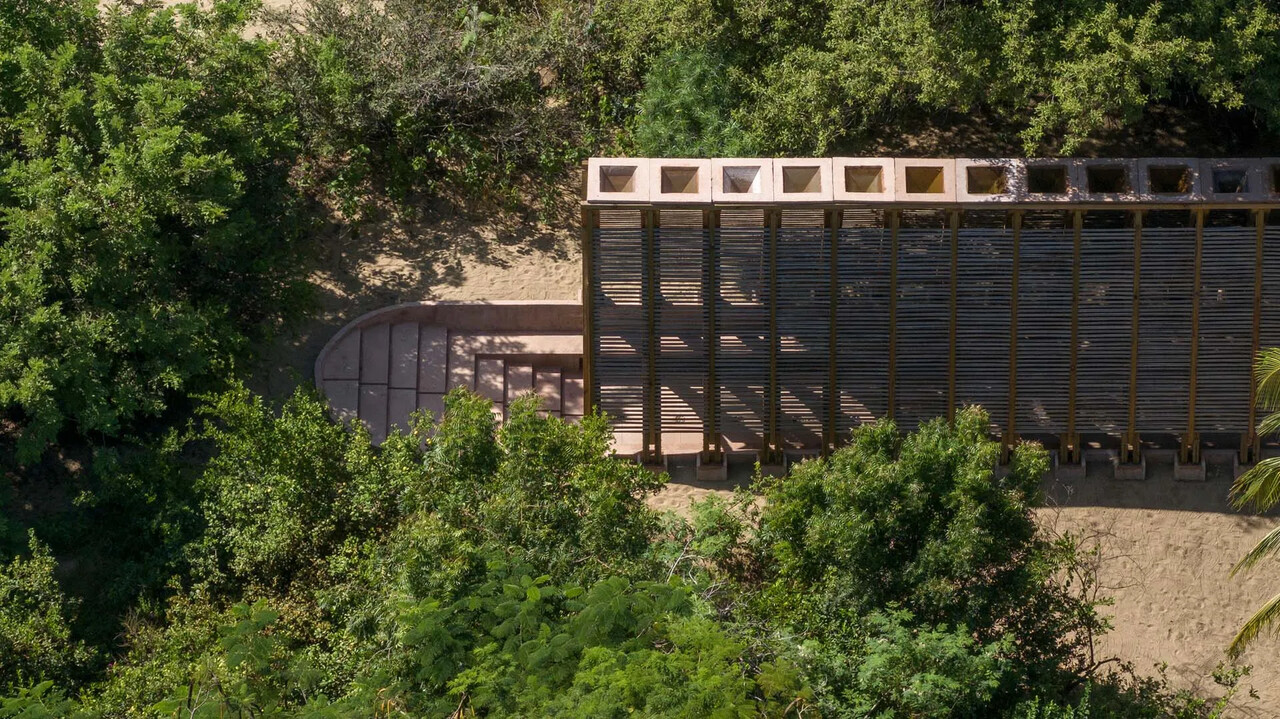
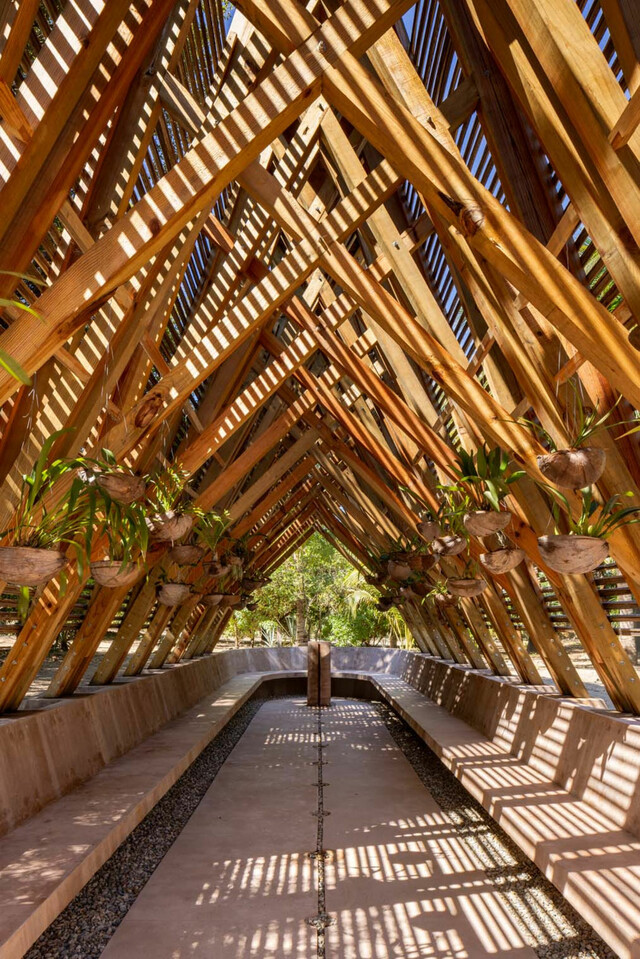
The Orchid Pavilion, designed for Casa Wabi, is located on the outskirts of Puerto Escondido, between the sea and the mountains. It is a wooden structure, permanent, sustainable, and lightweight, dedicated to the conservation of orchids in the Oaxaca region, which highlights the strong relationship between the biological and cultural diversity of the landscape.
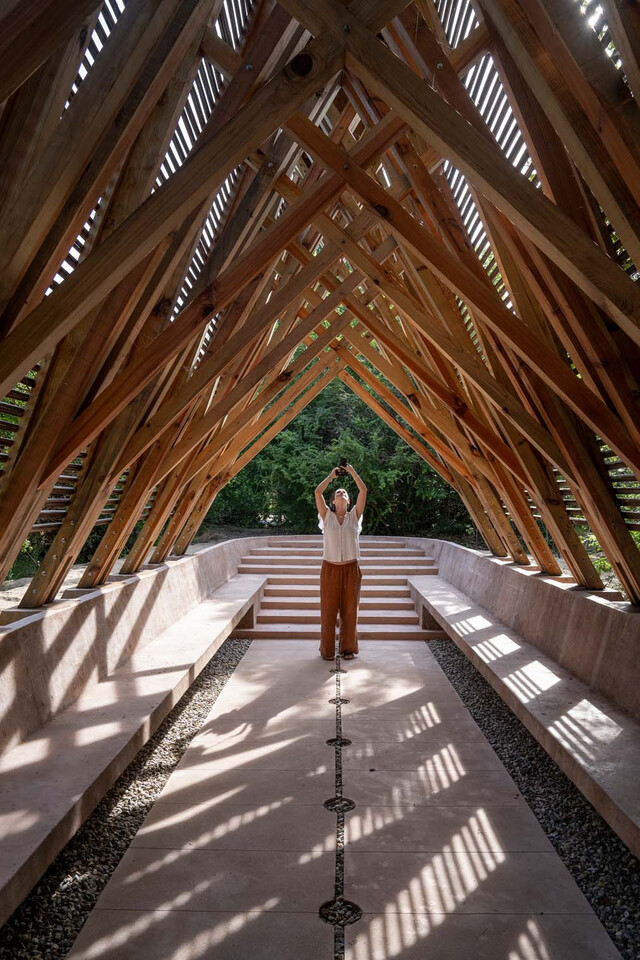
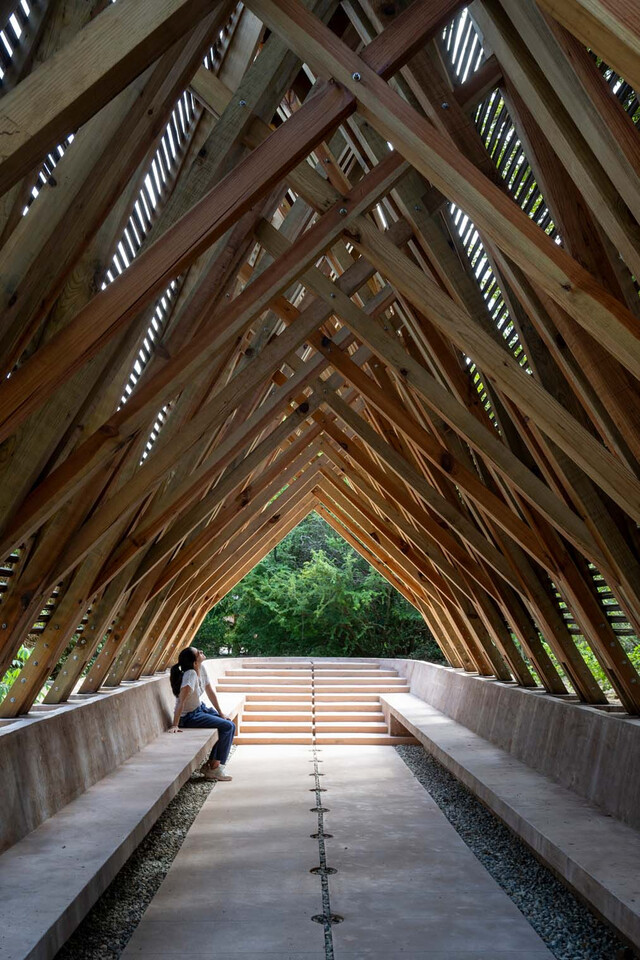
As we approached the design of the Orchid Pavilion at Casa Wabi, our research pointed toward some clear technical features, components, and facts. It became evident that in order to grow, reproduce, and collect orchids, we needed to create the right environment for them to thrive: humid, partially shaded, and well-ventilated.
But more interestingly, the relationship between the Japanese philosophy of Wabi-Sabi, which believes that beauty and harmony are found in simplicity, imperfection, and unconventionality, and the rich and complex traditions of the Oaxacan coast—its vernacular, locally sourced materials, and the high quality of the artisanal works of the local craftsmen—were to be at the center of our proposal. Then, unexpectedly, we thought of the Japanese word Ikigai.
Use | Cultural
Area | 40.45m²
Location | Puerto Escondido, Oaxaca
Architects | Bernardo Quinzaños
Team | Santiago Vélez, Begoña Manzano, Andrés Suárez, Miguel Izaguirre, Florencio de Diego, Carlos Cruz Ay, Javier Castillo, Carlos Molina, Fernanda Ventura
Client | Fundación Casa Wabi
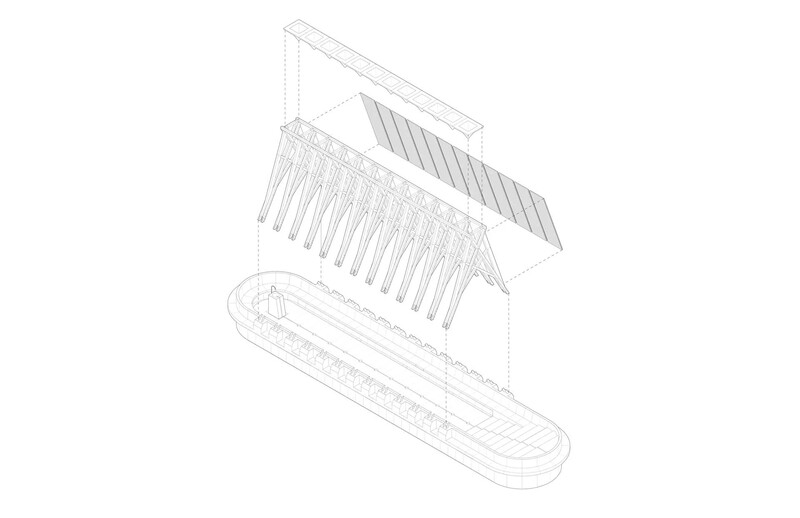
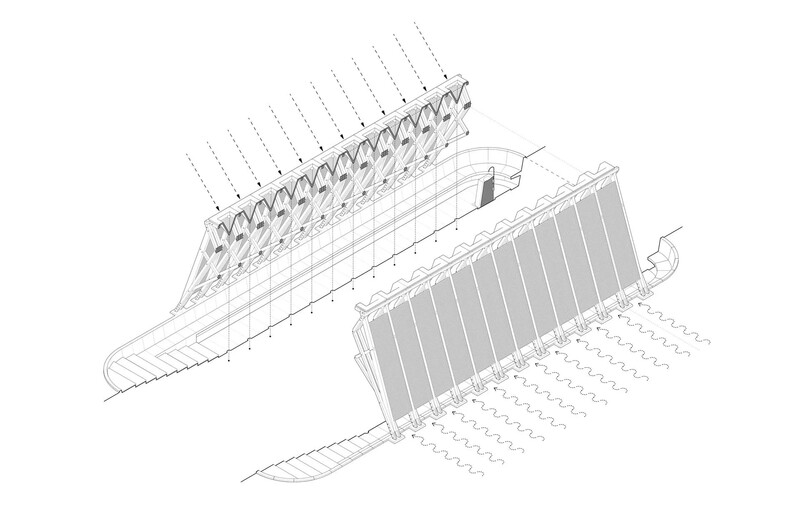
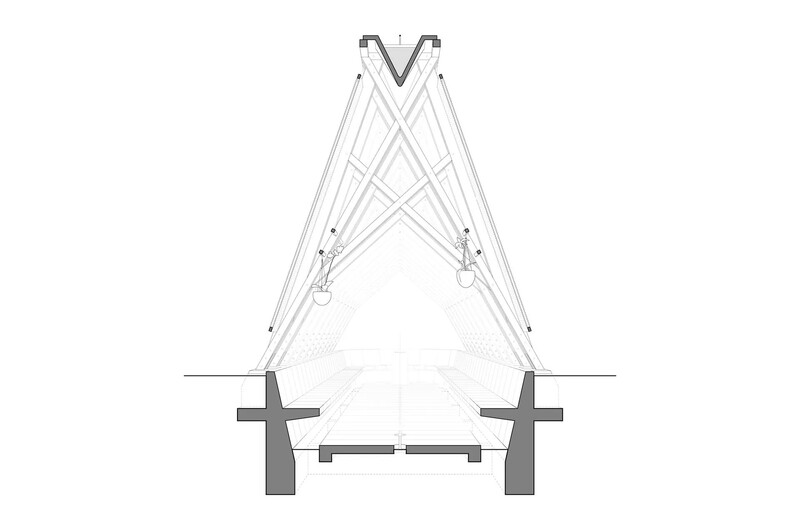
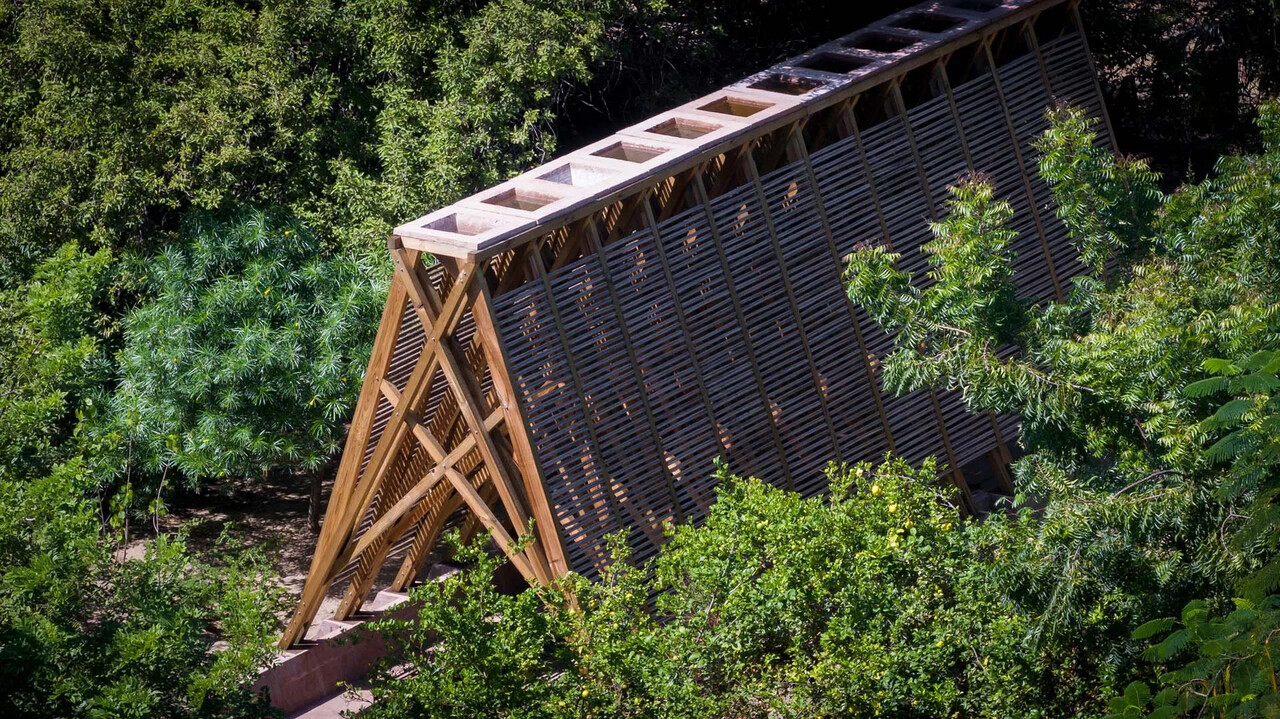
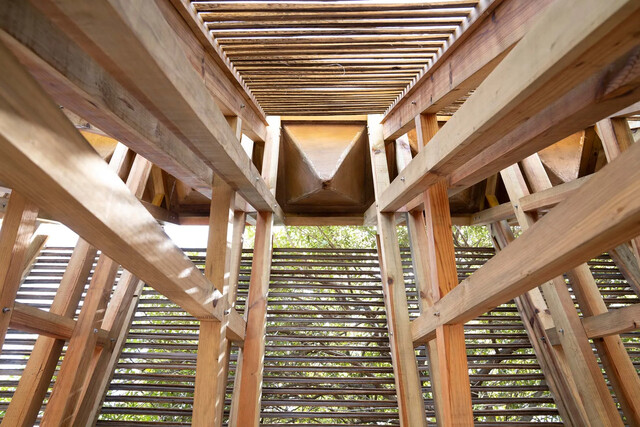
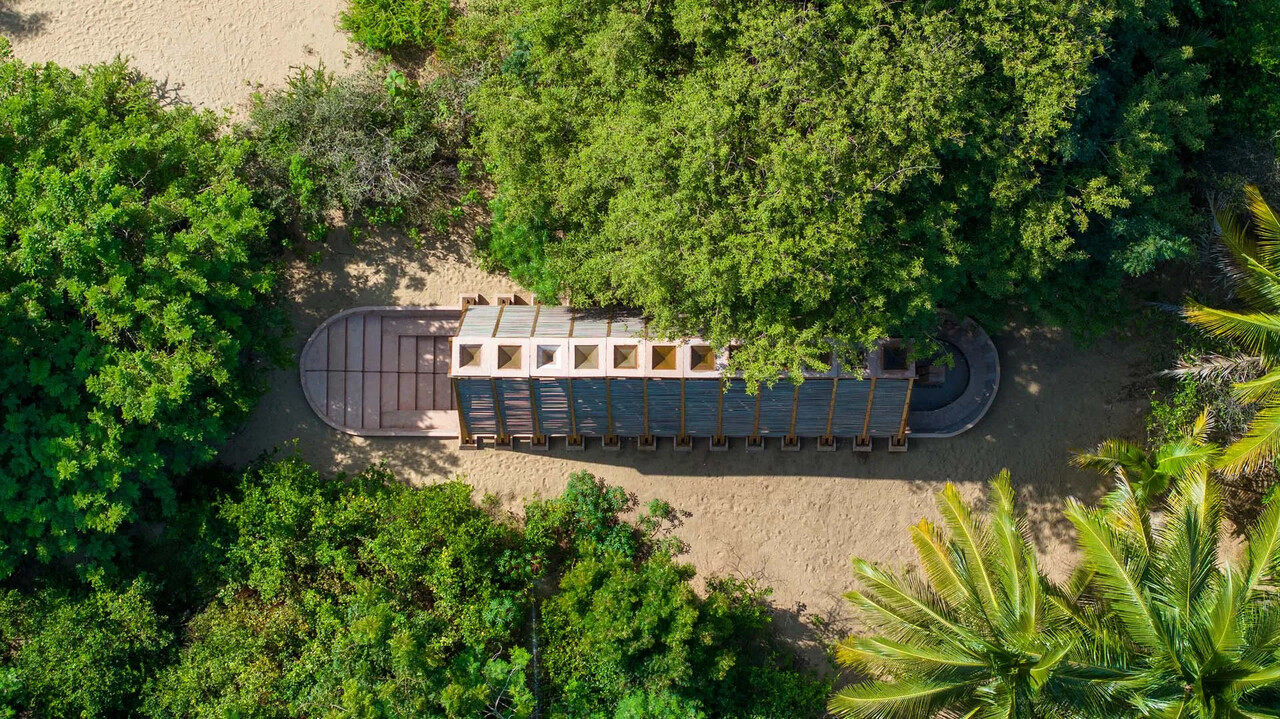
The main element that allows orchids to thrive is a humid environment. A series of pyramid-shaped, water-filled concrete basins rests at the top of a simple wooden structure. The basins slowly filter tiny droplets of water that fall to the ground, allowing for drip irrigation. The water is collected by concrete-based trays that remain permanently humid. The breeze and heat enable the orchids to drink water directly from the environment, eliminating the need for manual watering of the specimens.
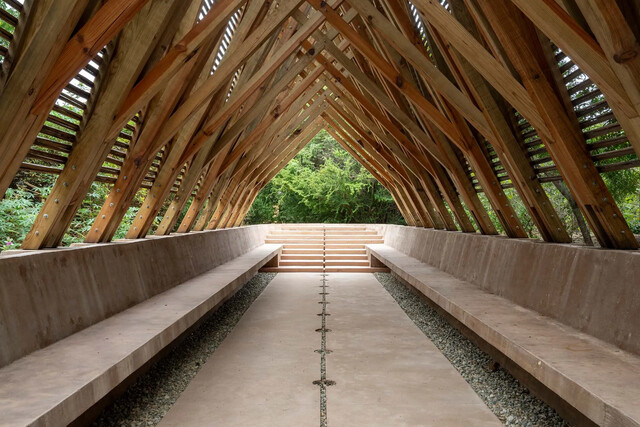
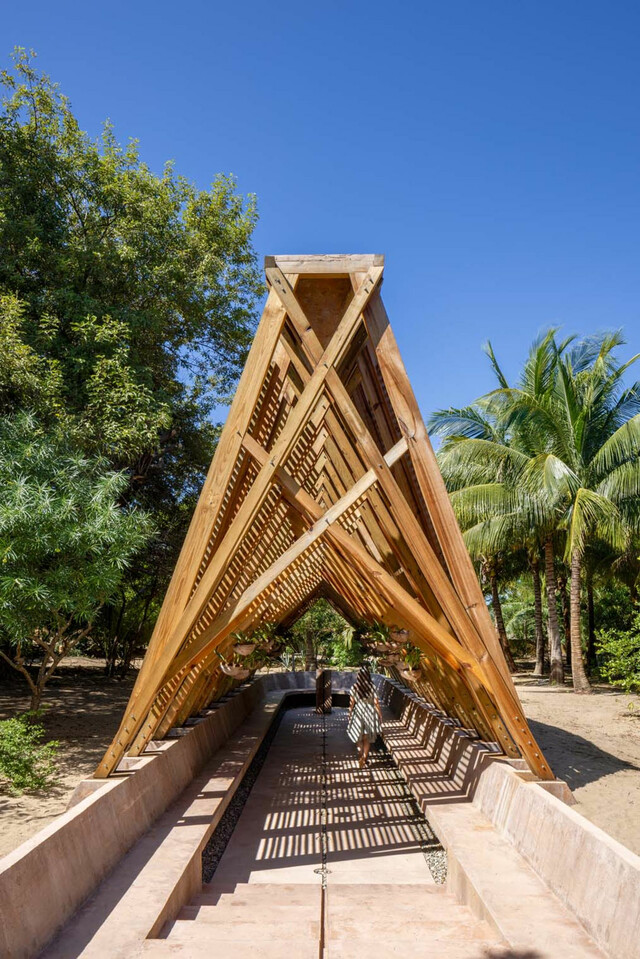
To the guests of Casa Wabi, the orchid pavilion offers a refuge to sit and drink water after a long walk.
The sound of dripping in the bowls resonates with different natural cycles and human activity. This cool, semi-submerged space changes the horizon and perspective of visitors as they descend to ground level.
Fundación Casa Wabi has inaugurated a Ceramic Pavilion designed by the Portuguese Architect Álvaro Siza (Pritzker, 1992), a Guayacán Pavilion by the Mexican studio Ambrosi Etchegaray, a Henhouse by the Japanese architect Kengo Kuma, a Compost Pavilion by Paraguayan architects Solano Benítez and Gloria Cabral, and more recently, a high-temperature Oven and gardens by the Mexican architect Alberto Kalach. These pavilions are designed to provide functional spaces that support the development of the foundation 's programs.