PAIR Pavilion
Before the collective contract and right after our assumed singular subjectivity, there lays an individual mirrored into another individual, this is: the couple.
在社會文化價值觀與我們預設獨立的主觀架構下,存在著鏡像映照在另一個體上,即:伴侶。
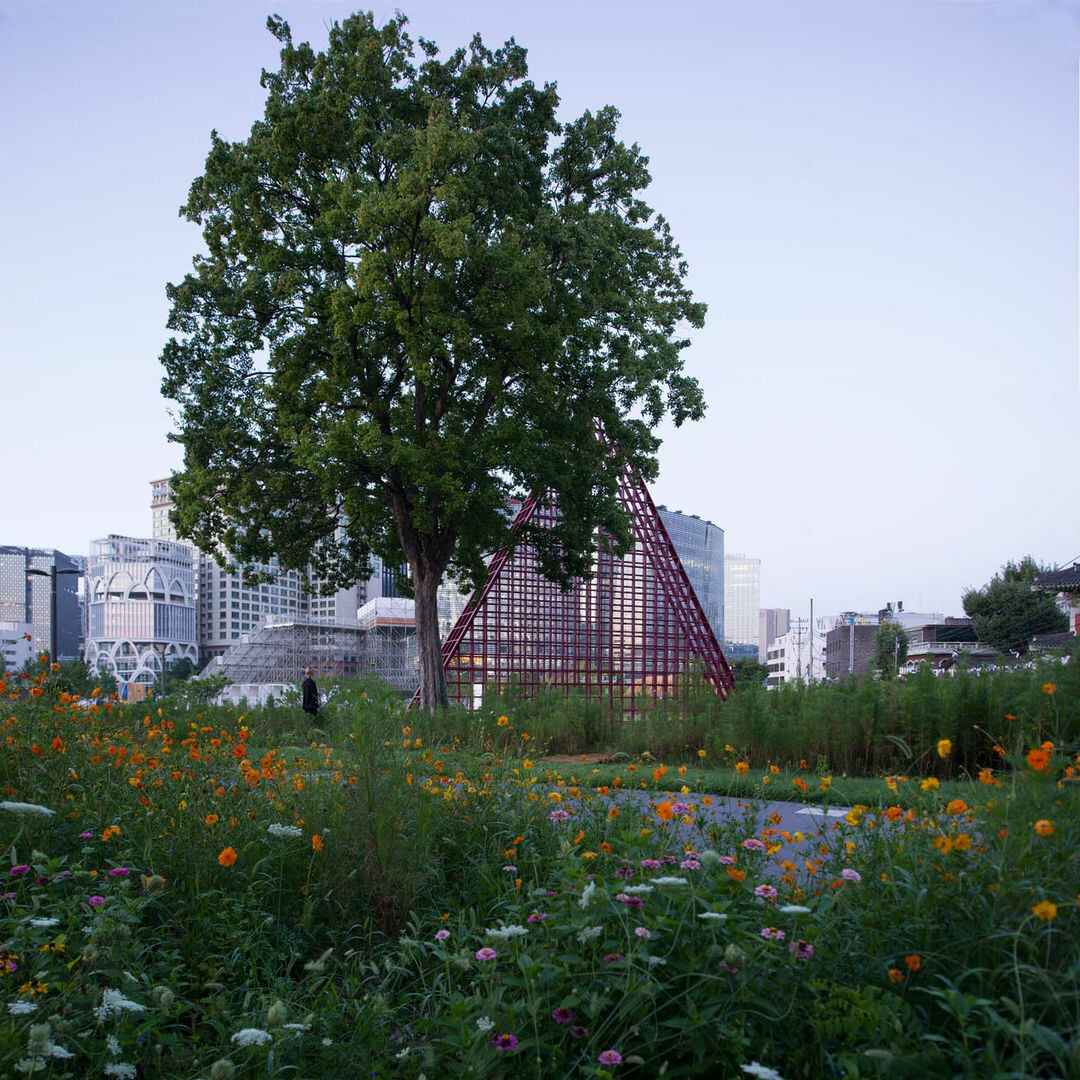
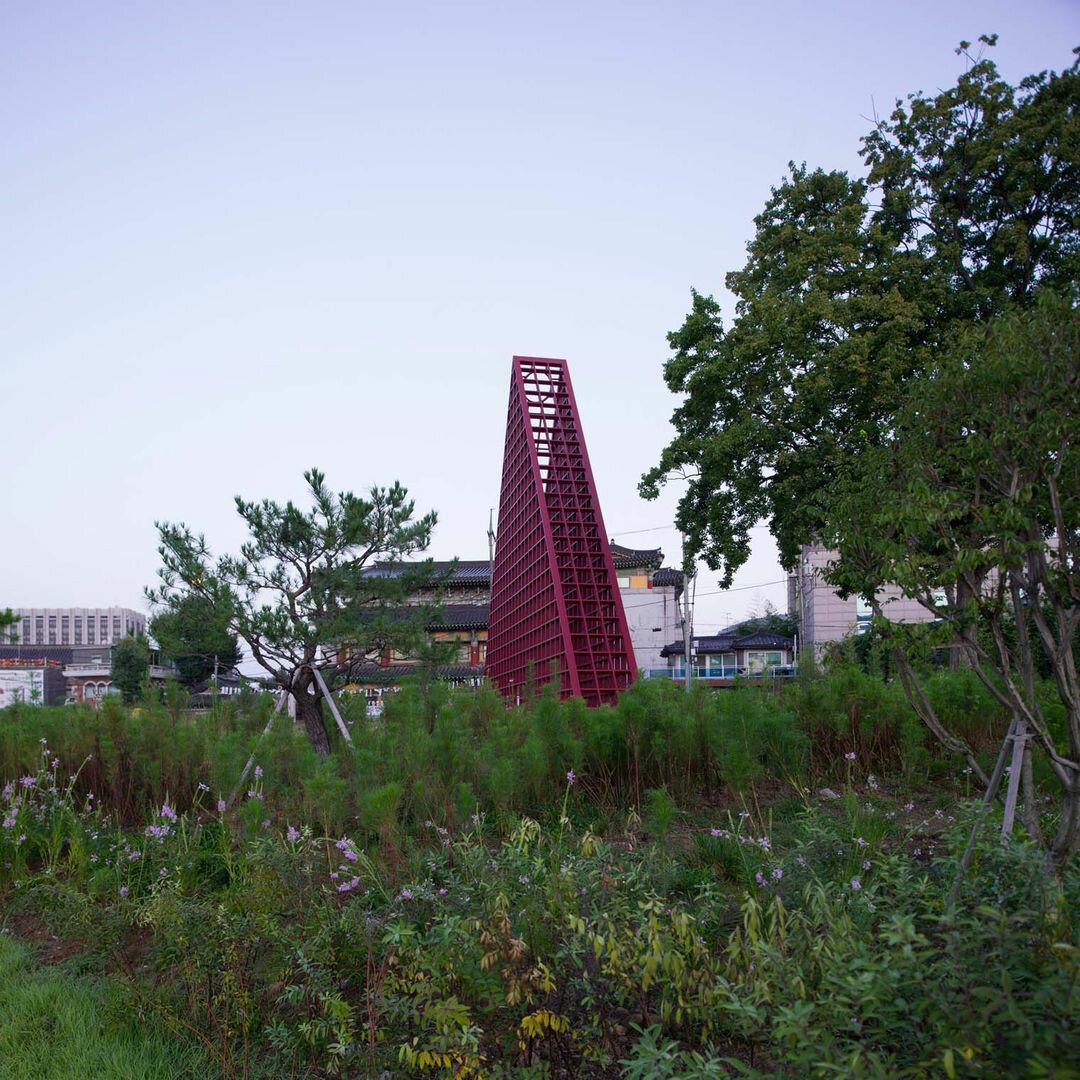
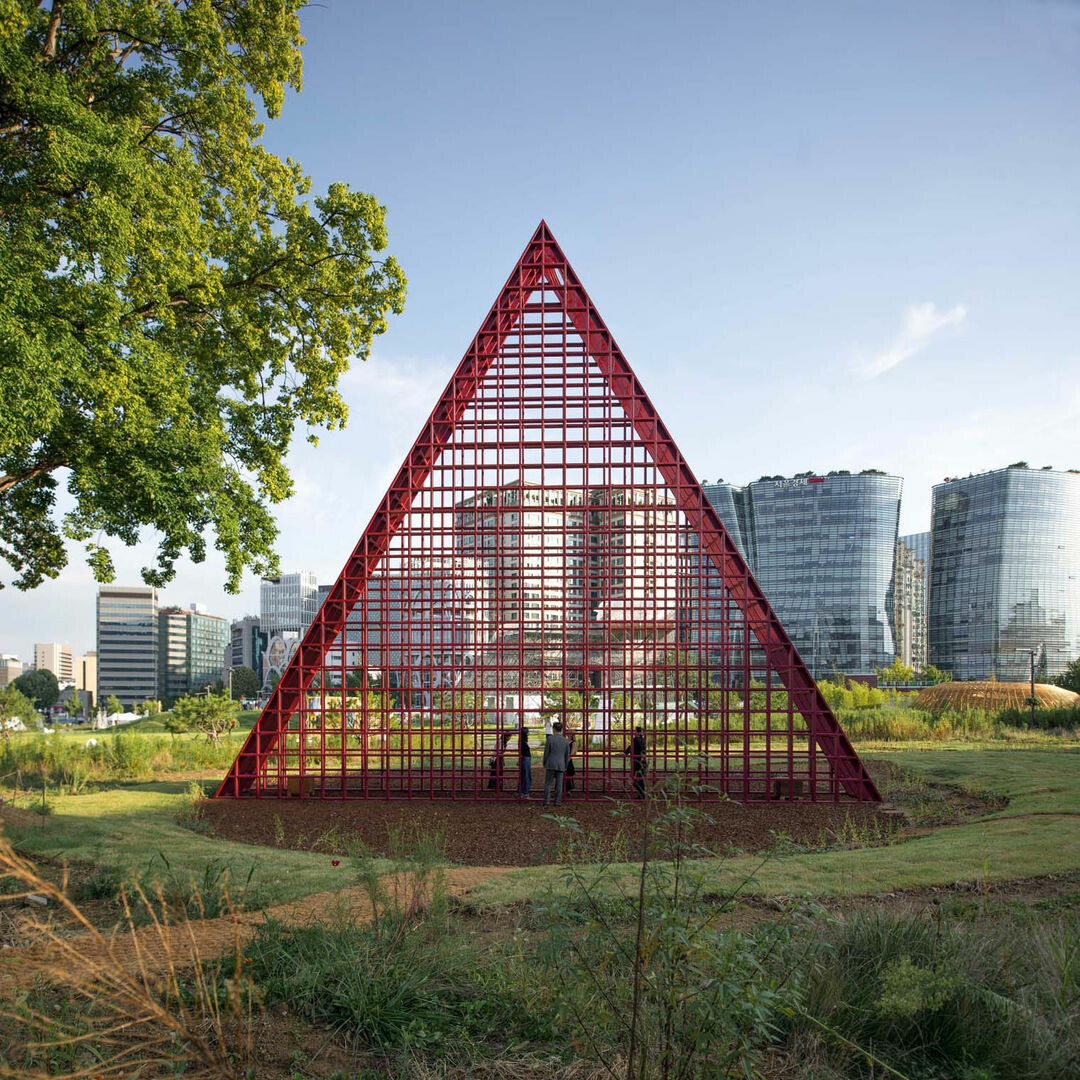
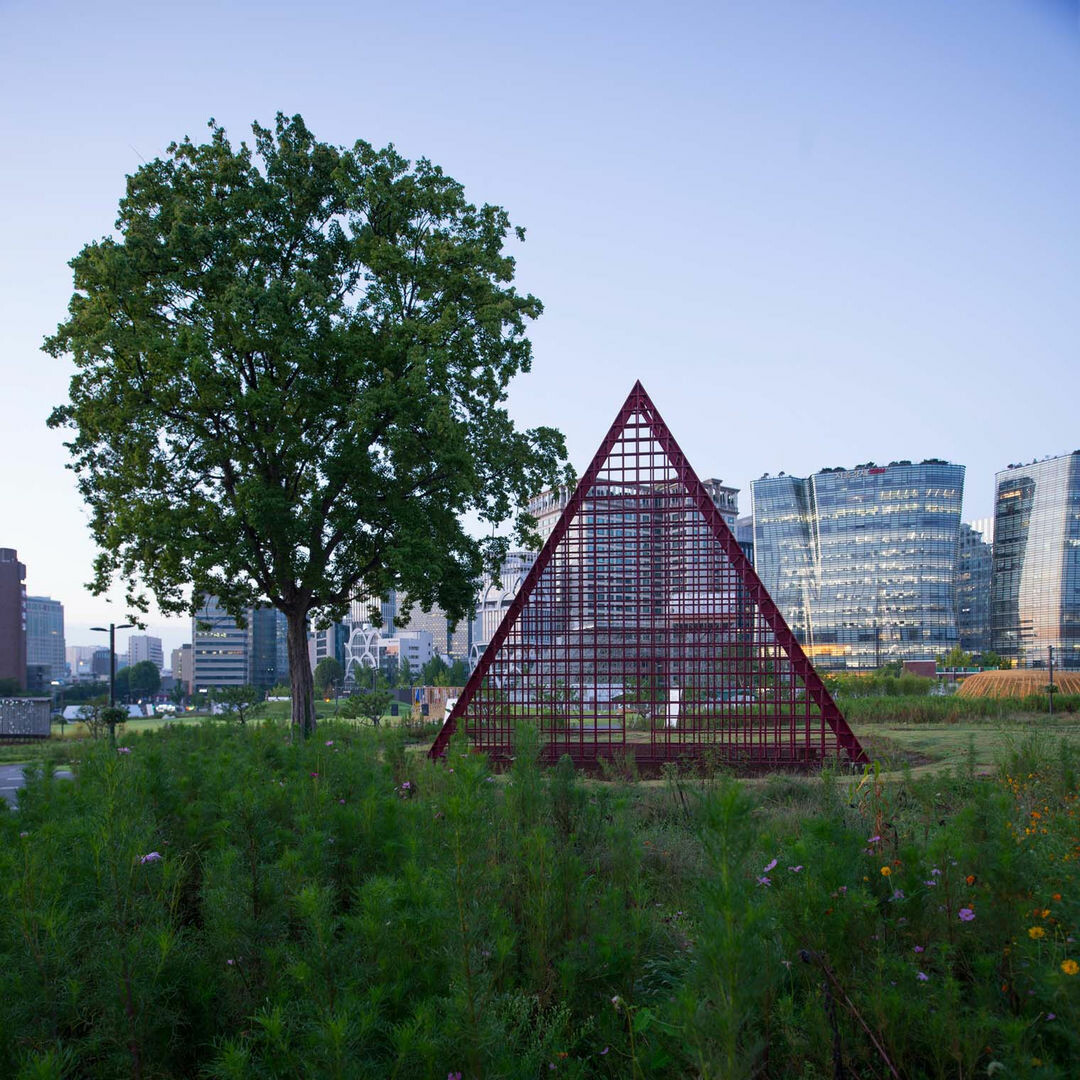
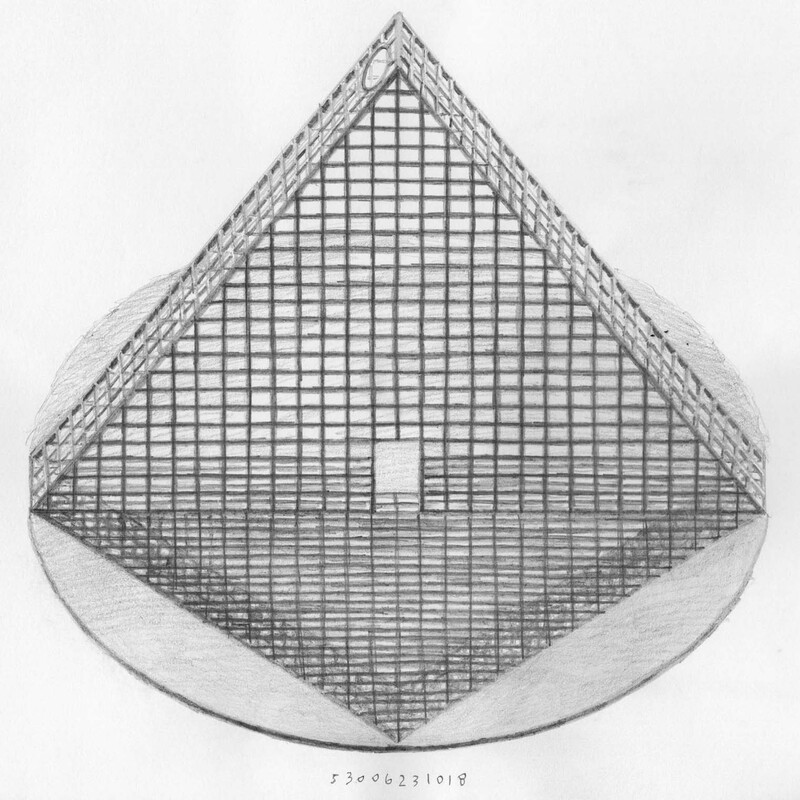
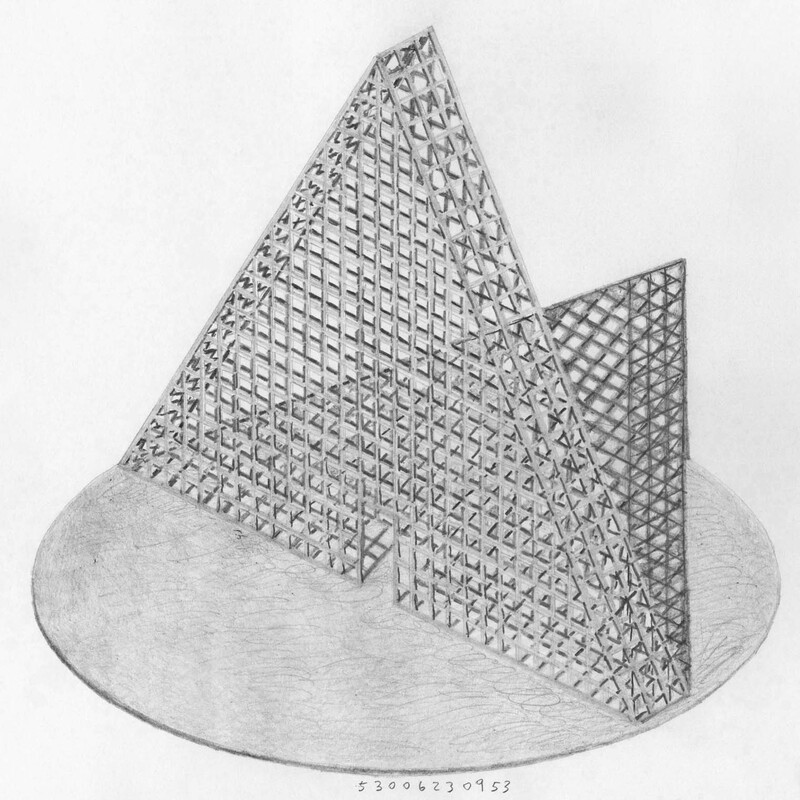
This unified character, epitomized in the double portrait (e.g. van Eyck or Hockney), is the idealized and certainly romantic inhabitant for this artful but enigmatic piece. The figure, a stable equilateral triangle with almost no thickness, a kind of scaleless pediment without a building, becomes the theatrical stage for a dramatic double relationship: frontal to its single access, there is an open projection beyond its interior, turning the façade into a threshold between here and there; while inside, the projection becomes a direct, intimate and unavoidable relationship between one person and the one at the opposite end.
這種統一的角色,在兩個面容中得到了體現(例如梵艾克或霍克尼),是這件巧妙具神秘作品的理想化,且肯定是浪漫的居住者。作品結構形體,幾乎是一個沒有厚度的穩定等邊三角形,一種無建築與尺度的山形牆,成為了戲劇性雙重關係的舞台:正面對其唯一的入口,有一個超越其內部的開放投影,將立面轉化為此地與彼地之間的閾值;而在內部,投影成為了一端的人與對面人之間直接、親密且不可避免的關係。
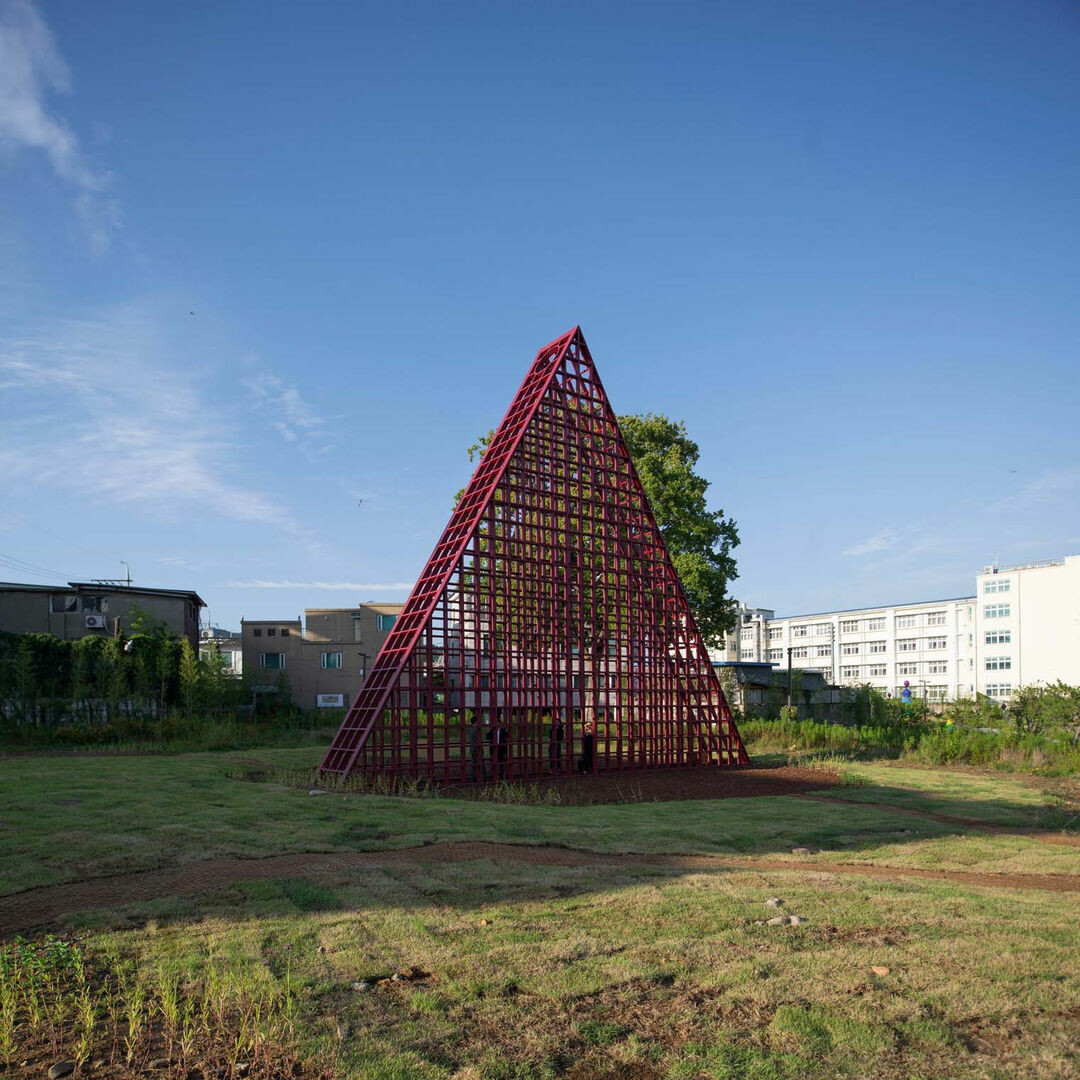
Who are they? Perhaps a real couple (mother and child, two friends or two strangers), perhaps a fictional one (you with your dreams, your idols or your shadows).
他們是誰?也許是一對真實的伴侶(母親和孩子、兩個朋友或兩個陌生人),也許是虛構的(你和你的夢想、你的偶像或你的影子)。
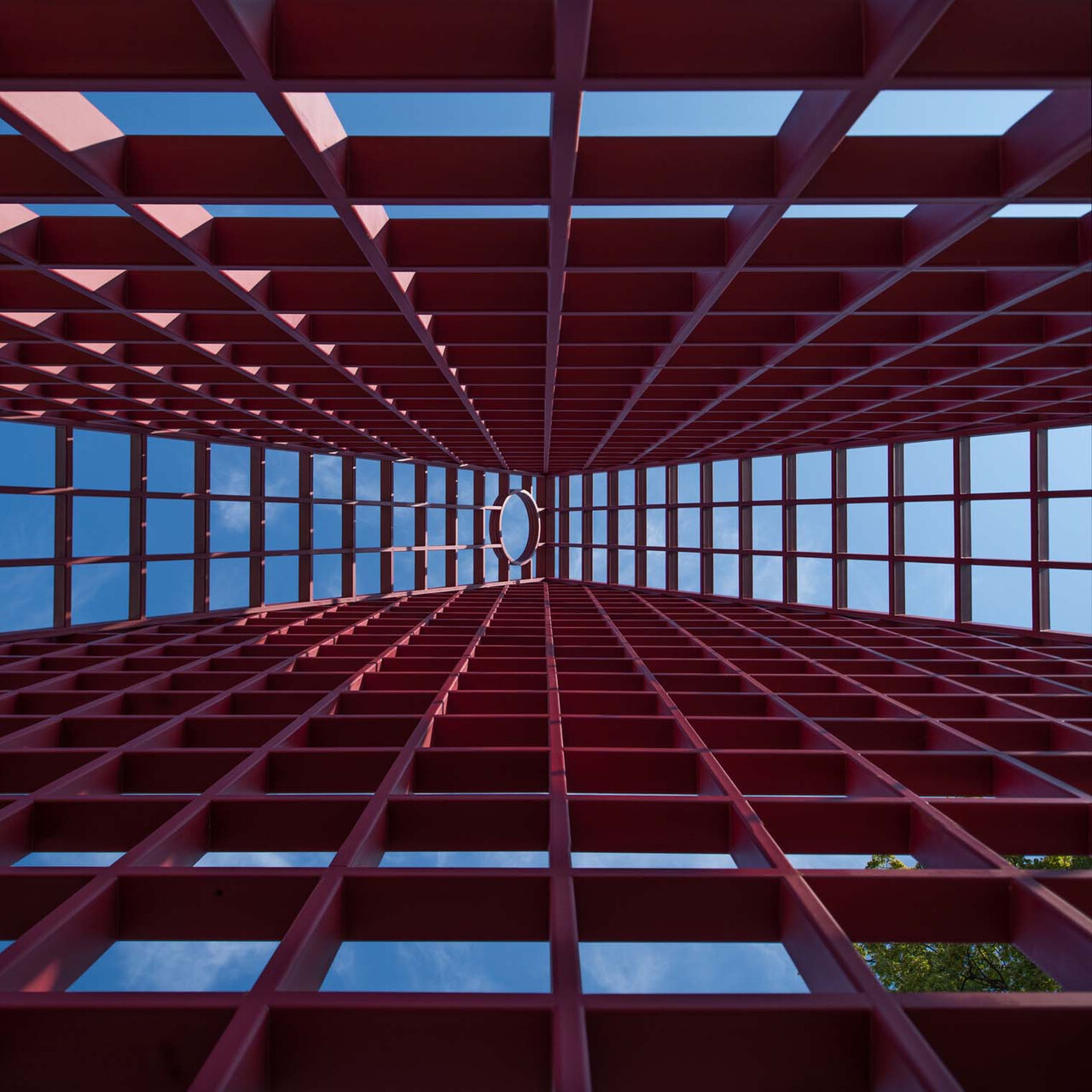
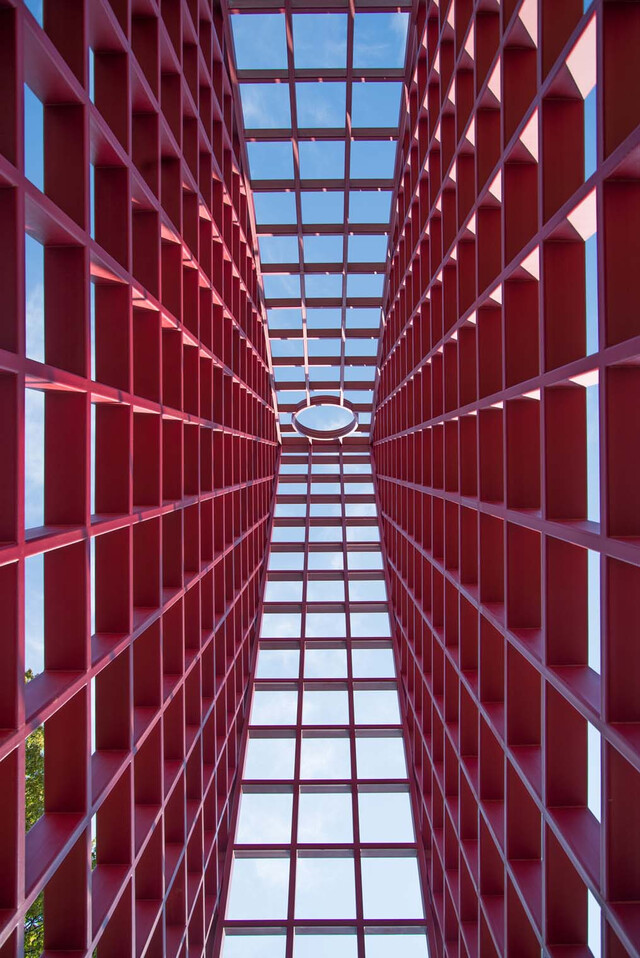
The pavilion is indeed a space out of the everyday world. It is a room for two, a resting room, a meeting room, a charged void. It is a vertical split, a gap in the ordinary life, simply transfigured into a supernatural domain, even a superstition, by an asymmetrical sky peephole that crowns the only unreachable inner corner. Such is the tension within this compact artifact.
這個裝置無疑就是與日常生活分開的空間。它可以是一個兩人房間、休息室、會議室或一個充滿能量的想像空間。垂直的裂縫,一個日常生活中的間隙,簡單地轉化為一個神秘而引人入勝的領域,甚至是一種信仰,透過這個非對稱的天窗開口,一處唯一無法到達的角落。局促受限的裝置傳達創作內在的張力。
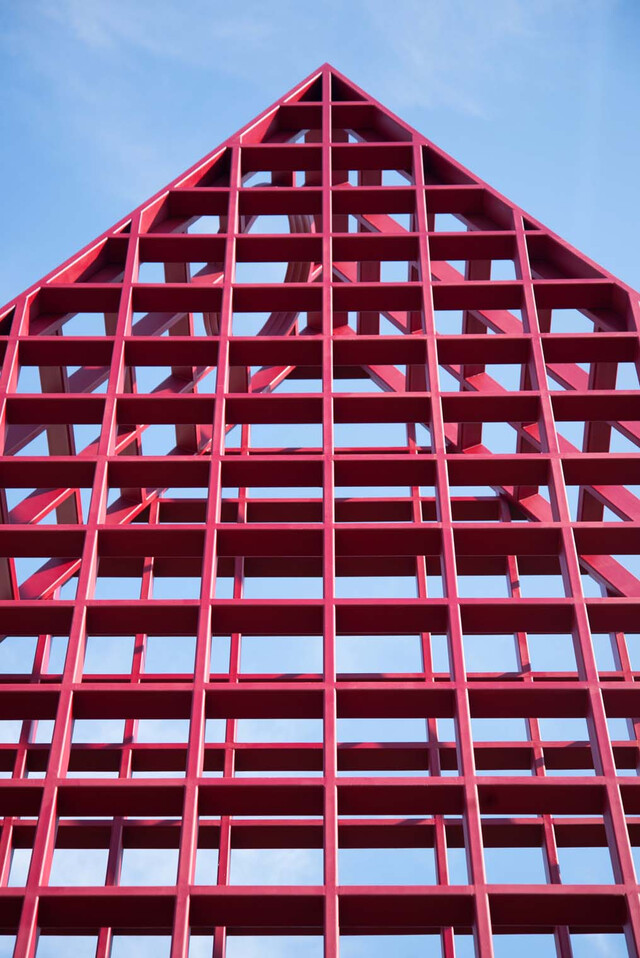
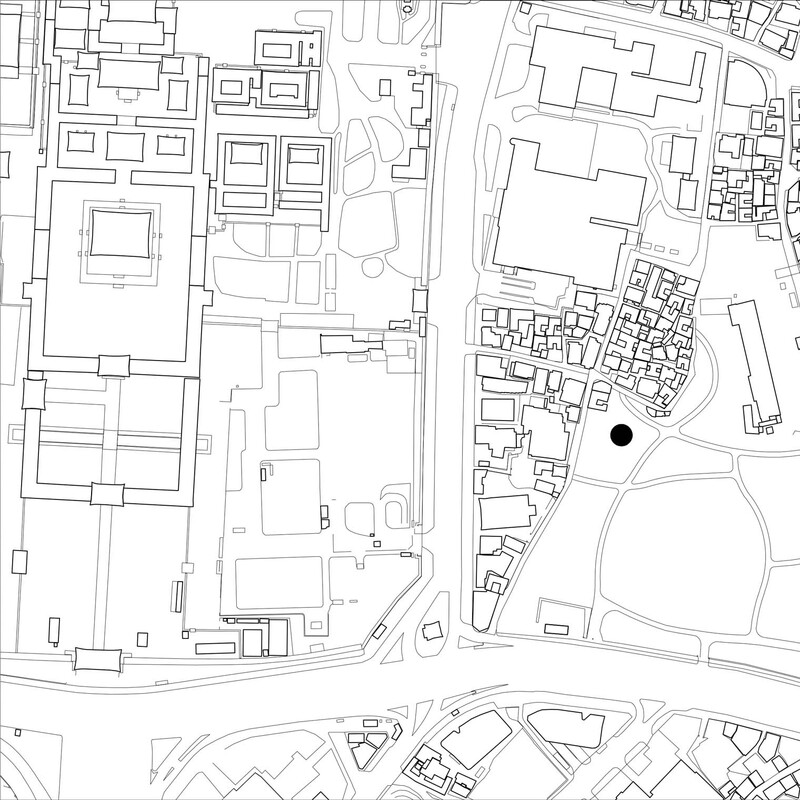
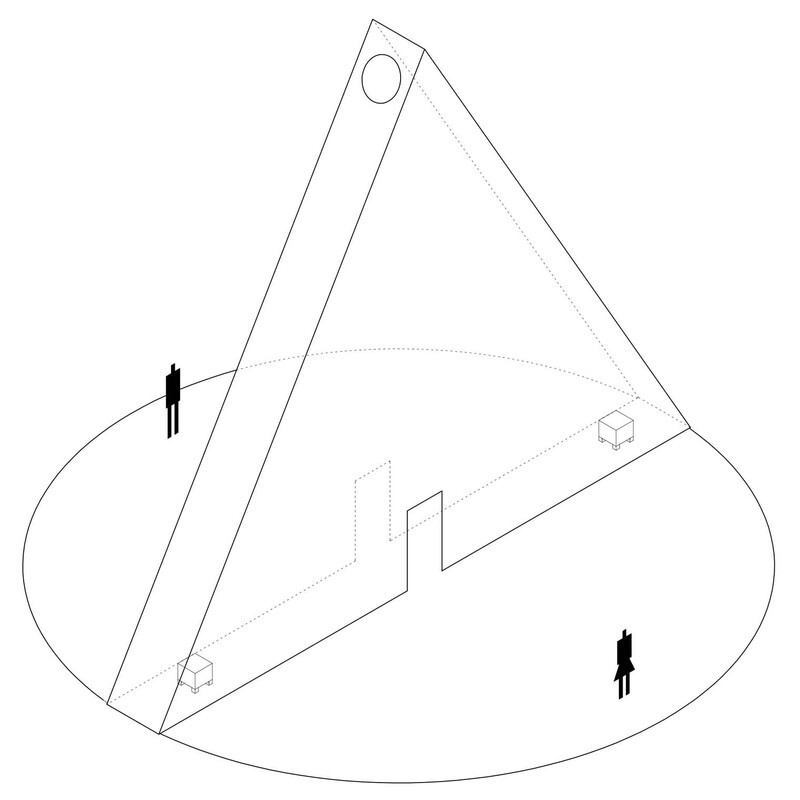
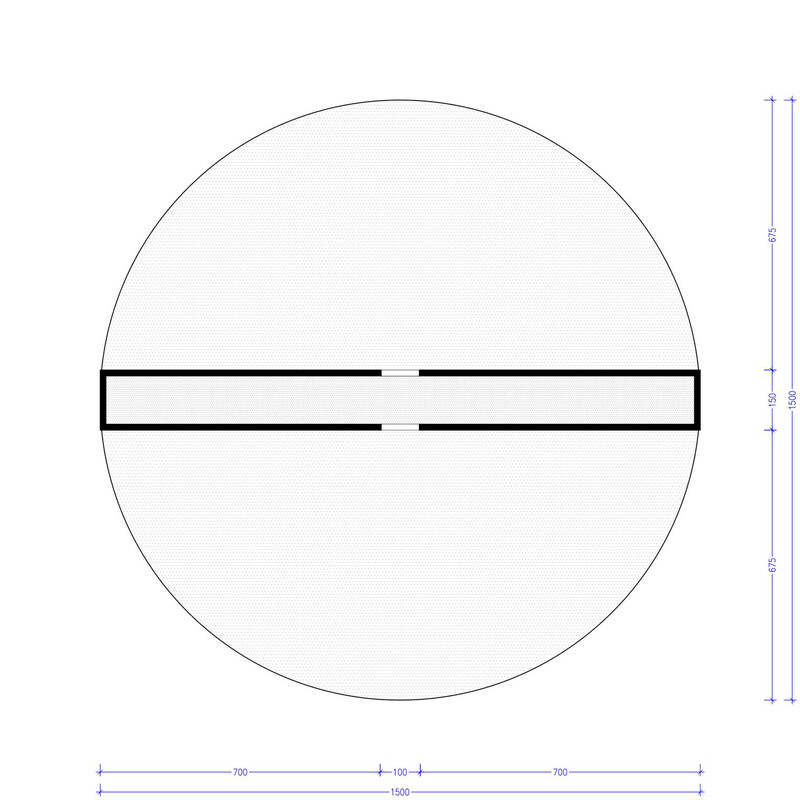
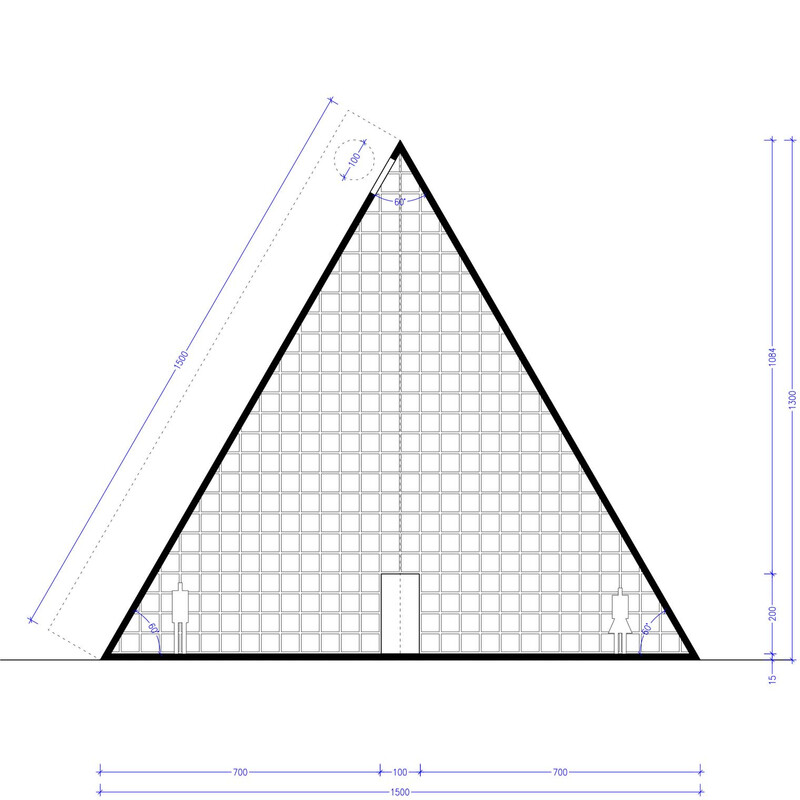
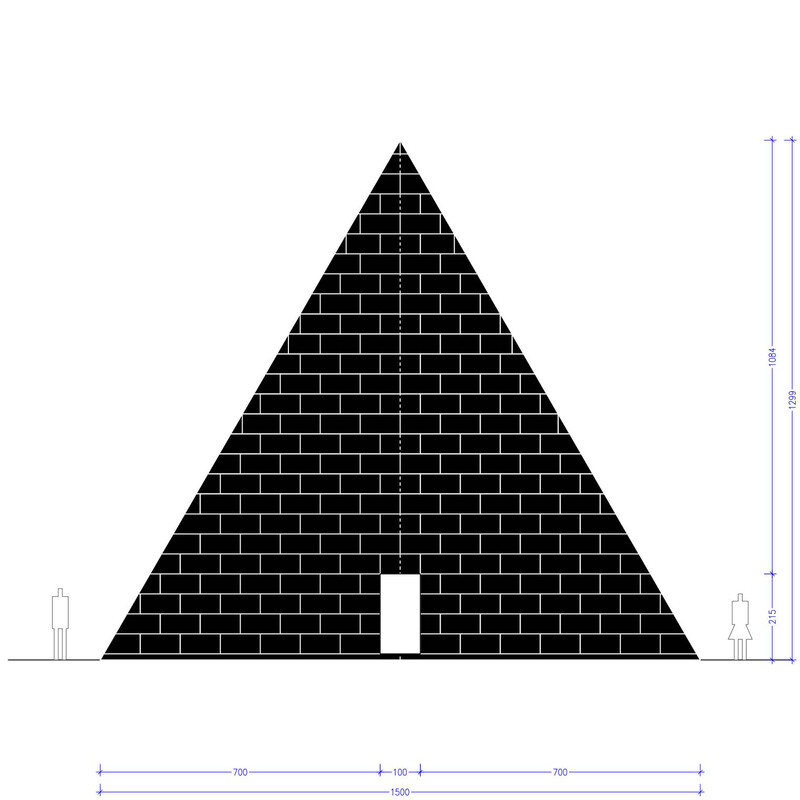
From afar, its regular outline will exude a sense of discreet monumentality, not only a sign of itself but a timeless landmark. In apparent contrast to the surrounding landscape, its mirror cladding (in a regular stone-like pattern) is meant to unveil the subtle humors of the local weather. Conceivably, the flat figure will become a screen; a sun in the snow or a frozen pyramid for summer holidays.
從遠處觀看規則的輪廓,猶如低調的紀念碑,不僅是自身的標誌,也是一個永恆的地標。其與周圍景觀形成明顯對比,鏡面覆蓋物(以規則的堆疊石頭圖案)旨在揭示當地氣候微妙的變化。可以想像,這個平面將成為一個螢幕介面;夏季,雪地上的太陽或冰凍的金字塔。
* Note: The pavilion is meant to have two lives; a temporary one at the urban context of Seoul Biennale of Architecture and a permanent afterlife for a new botanical garden in Gyeonggi province.
*註:展亭有兩種生命; 首爾建築雙年展的城市環境中的臨時花園和京畿道新植物園的永久來世。