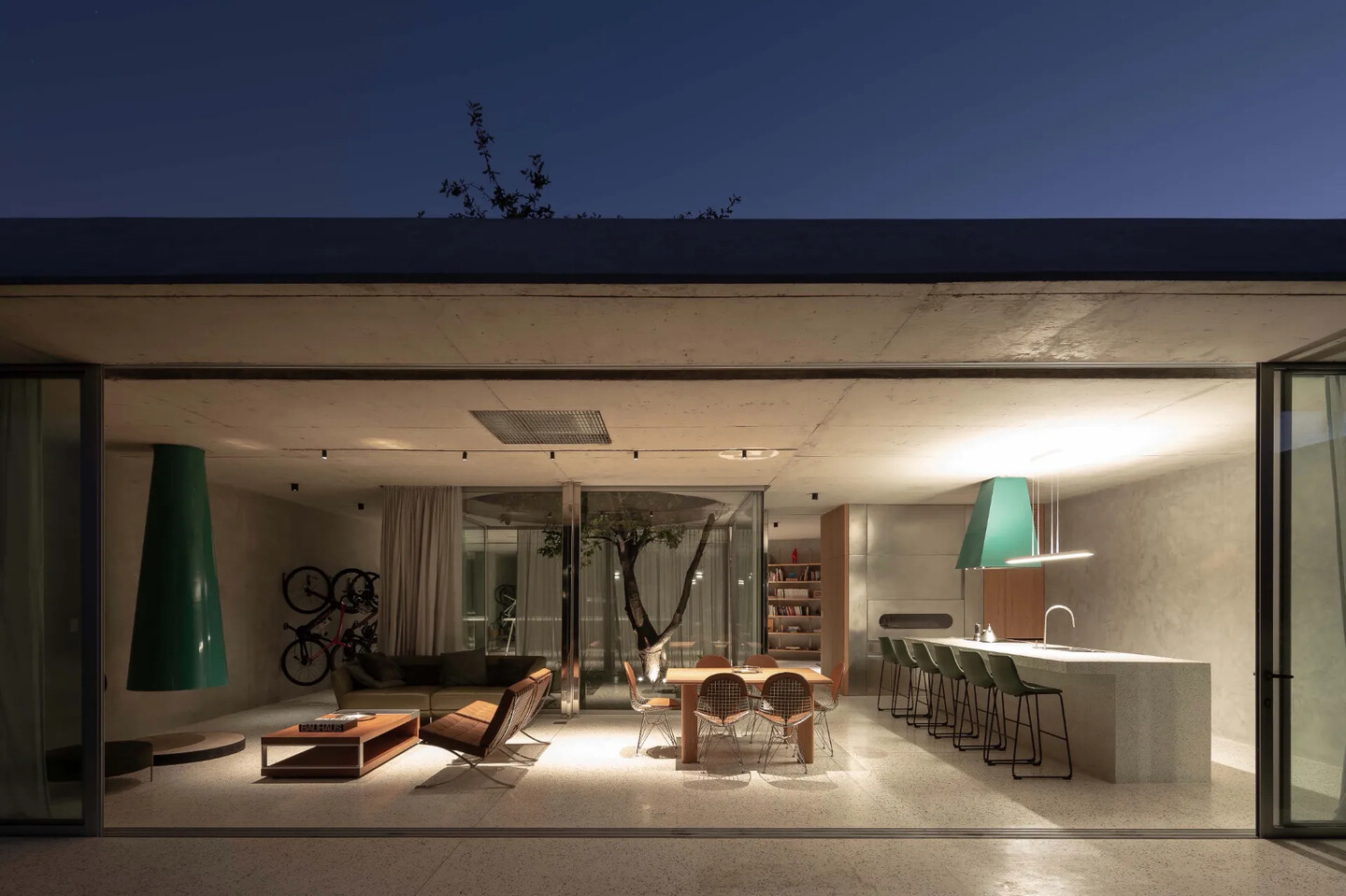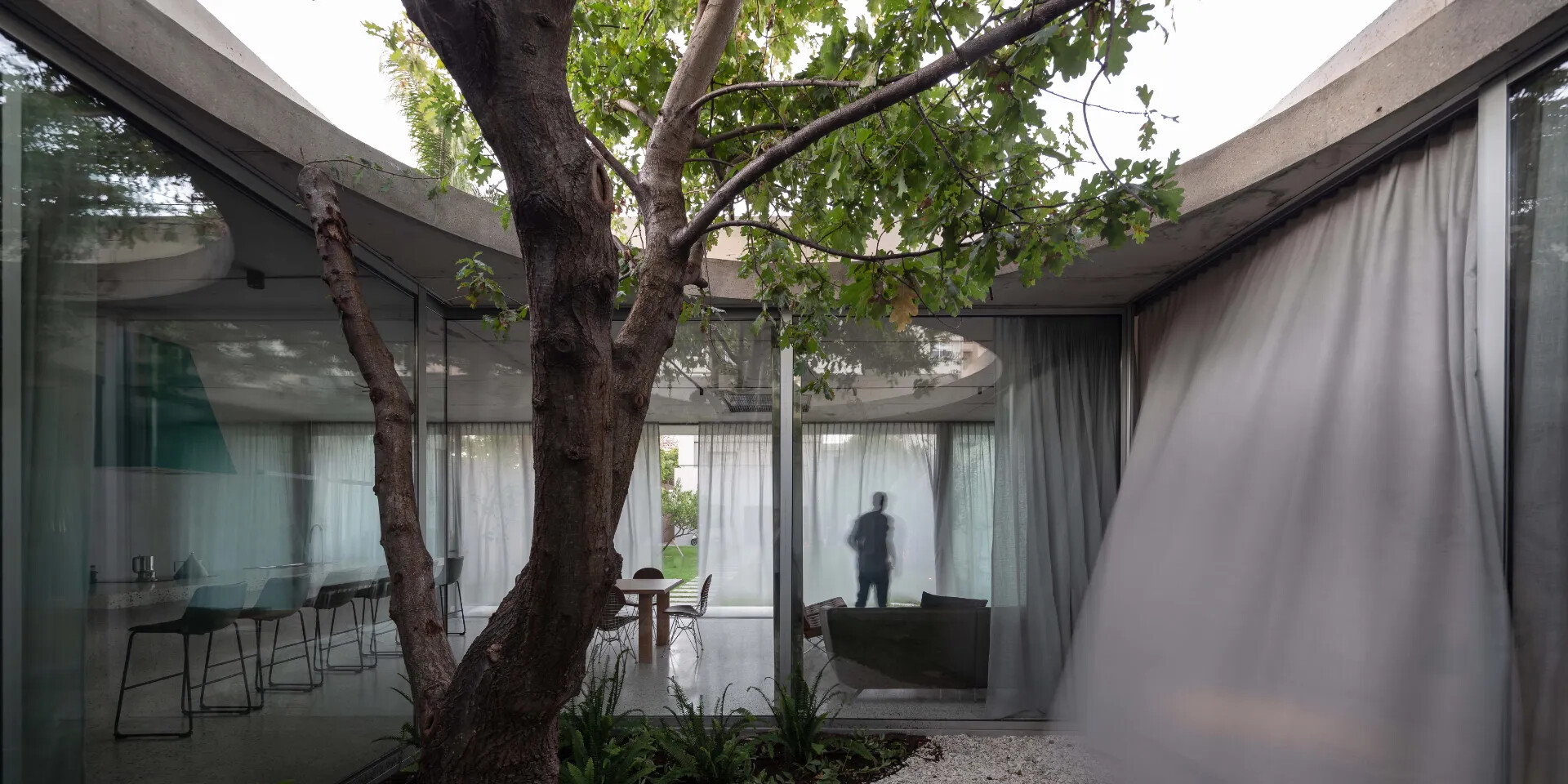
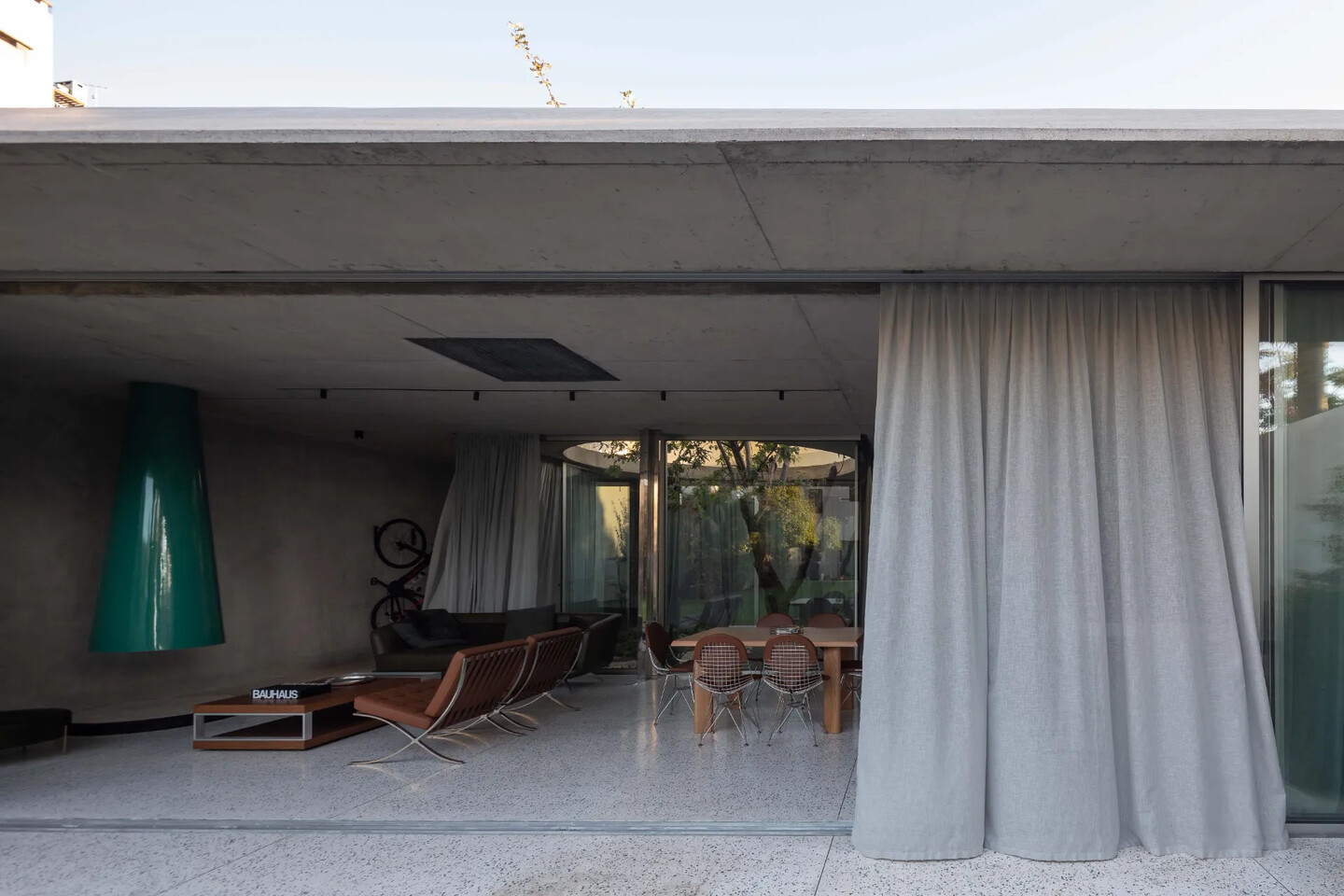
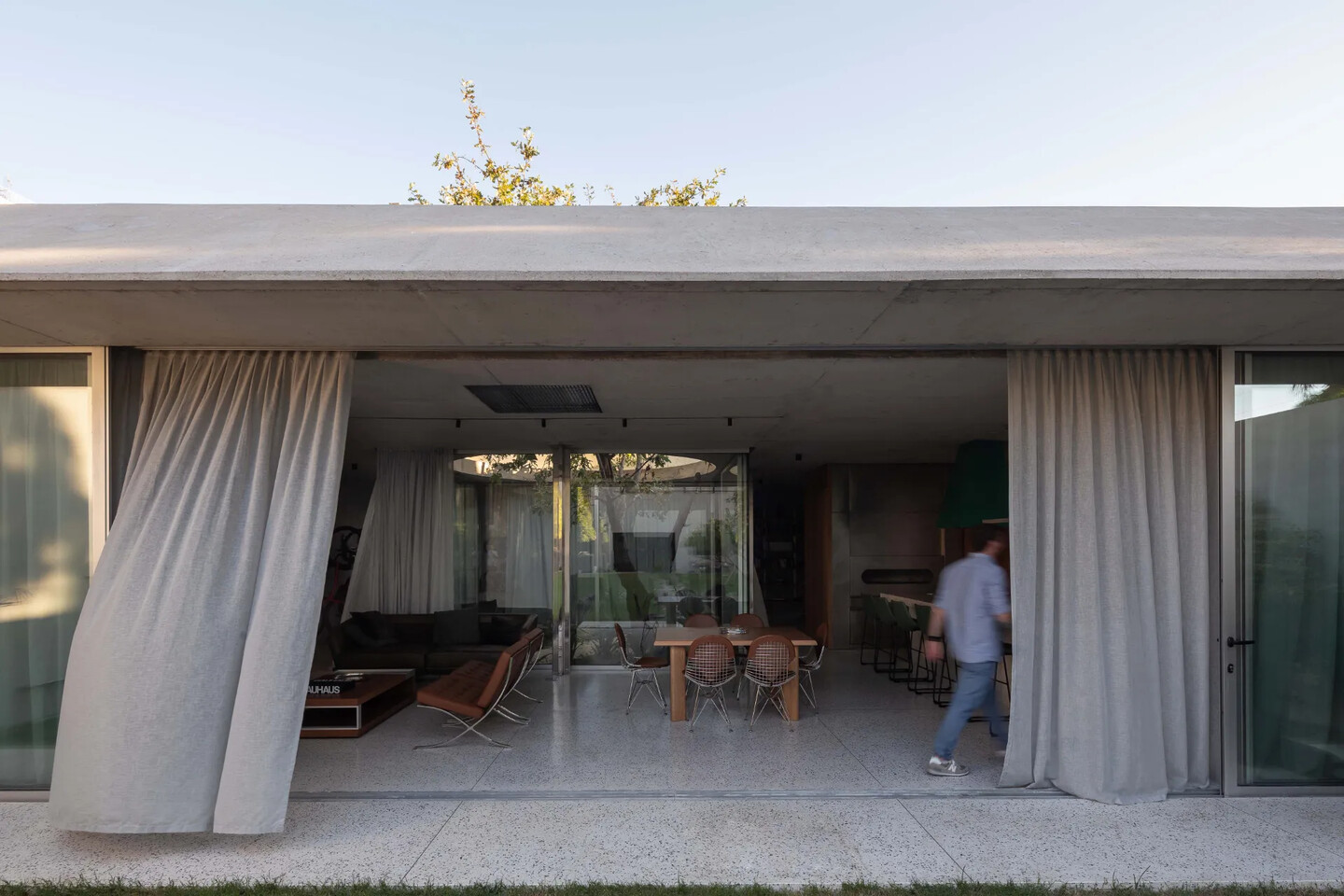
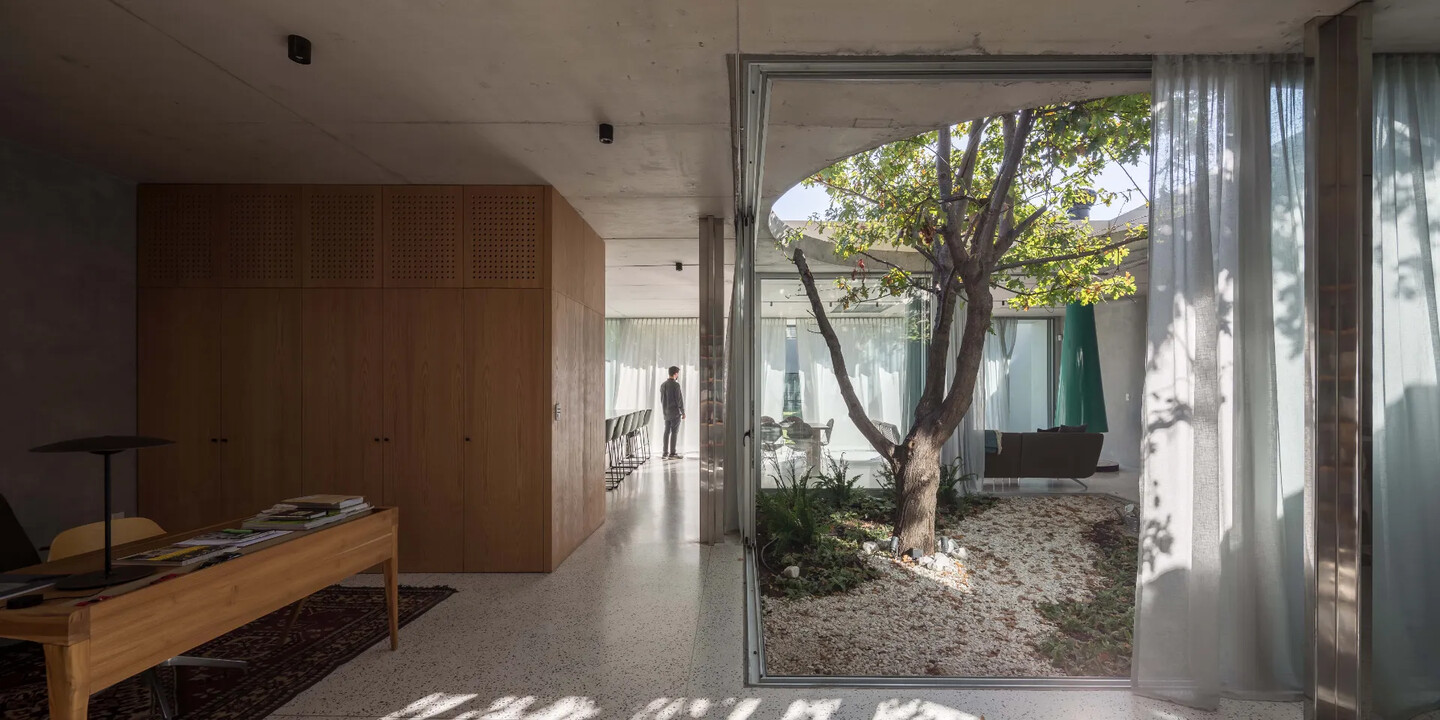
The commission, which had no other programmatic definition than of a livable space able to gather a big feast, is approached with the freedom of planning a pavilion. Everything revolves around a square-like patio that engulfs an existing oak tree. The patio serves as the rotatory center in which different elements are laid, drawing the activities and spaces. Inverting the square-circle relation of the Mantegna house, the square shape layout of the patio is framed by the circle opening towards the sky. The square emerges again on the roof defined by the beams that support it. In the middle of each side, square cruciform pillars, the same ones Mies will use in his Barcelona’s Pavilion, direct the loads towards the floor.
這個委託項目並沒有其他特定的計畫定義,唯一的目標是打造一個能夠容納大型聚會的宜居空間,並以自由彈性的方式來規劃展示的場域。所有設計都圍繞著一個類似正方形的庭院,這個庭院包圍著一棵現有的橡樹。該庭院成為一個旋轉中心,用來佈置各種不同元素,形成人們活動和交流空間。將正方形和圓形的關係刻意顛倒佈局,庭院的方形設計被一個朝向天空的圓形所環繞,正方形再次呈現在頂部,由支撐它的樑而組成。在每一側的中央都有正方十字形的柱子,這些柱子與米斯(Mies)在他的巴塞隆納展覽館中使用的相同,將承重引導至地板上。
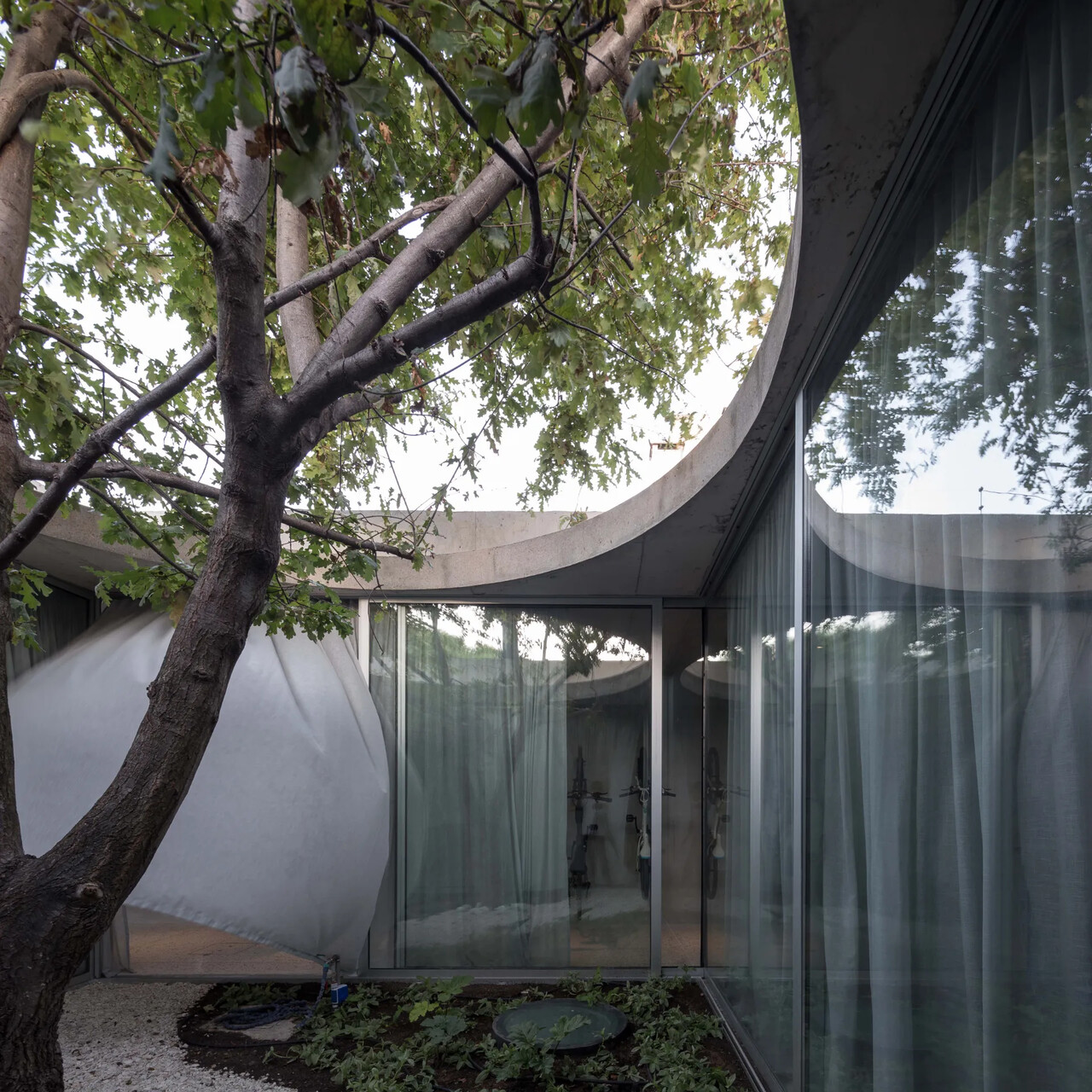
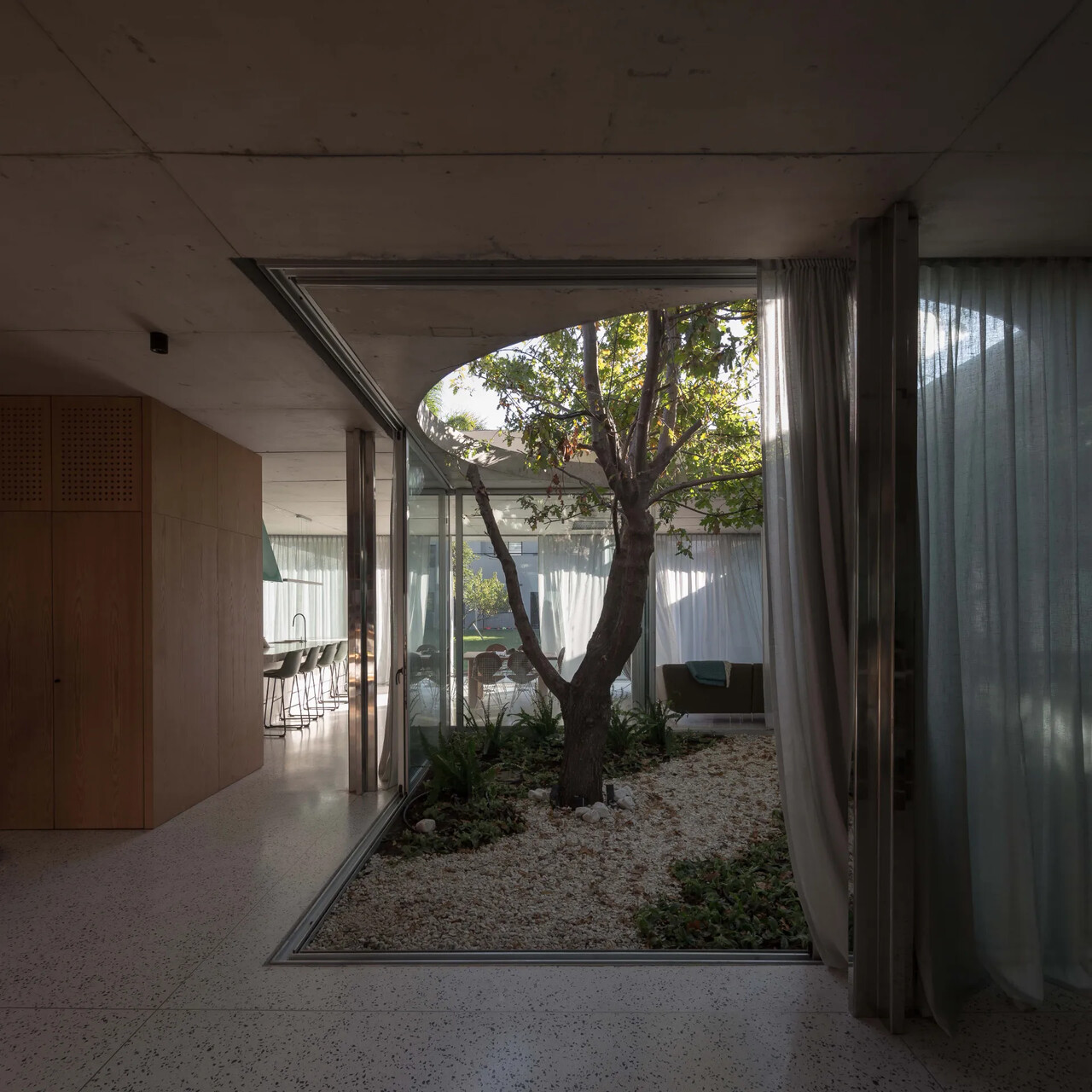
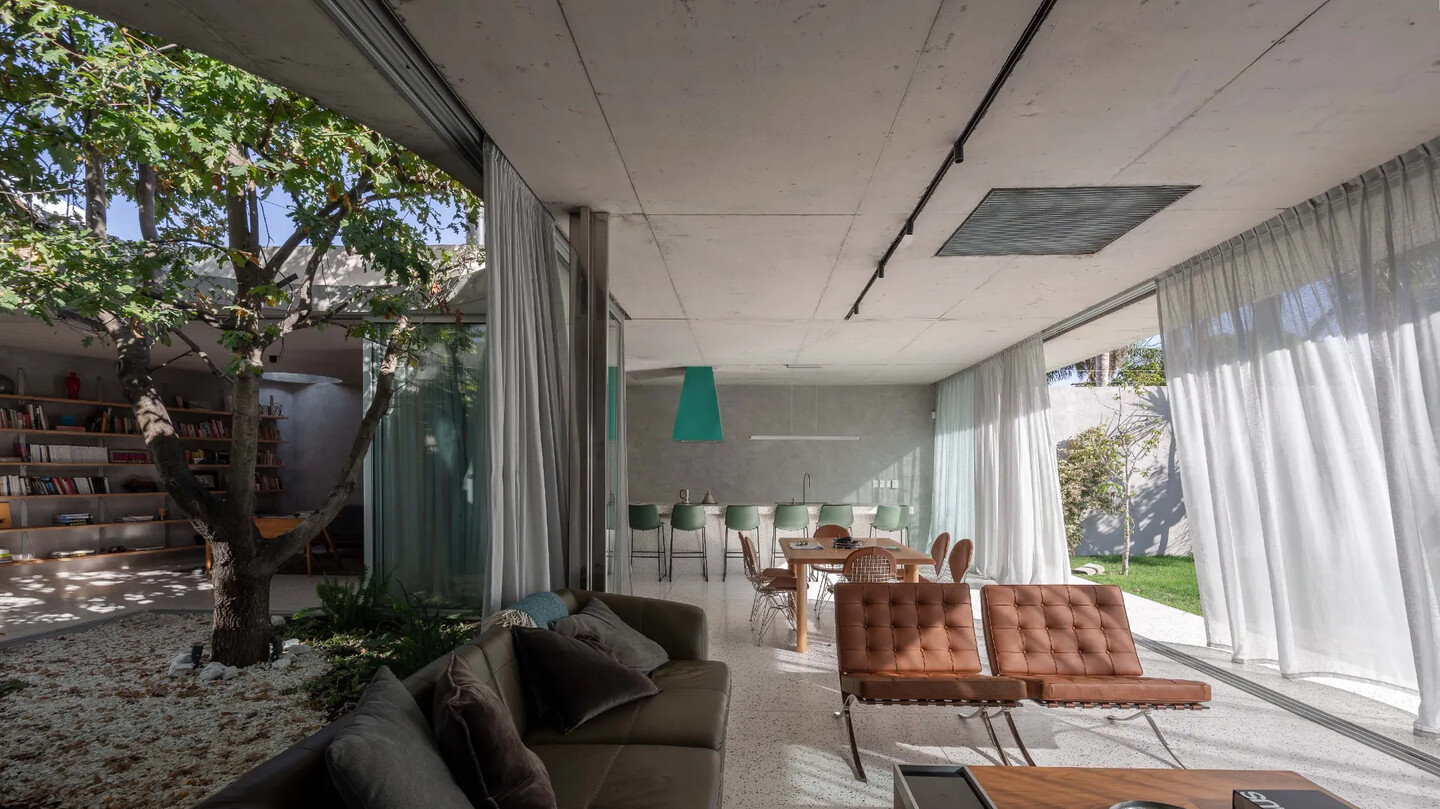
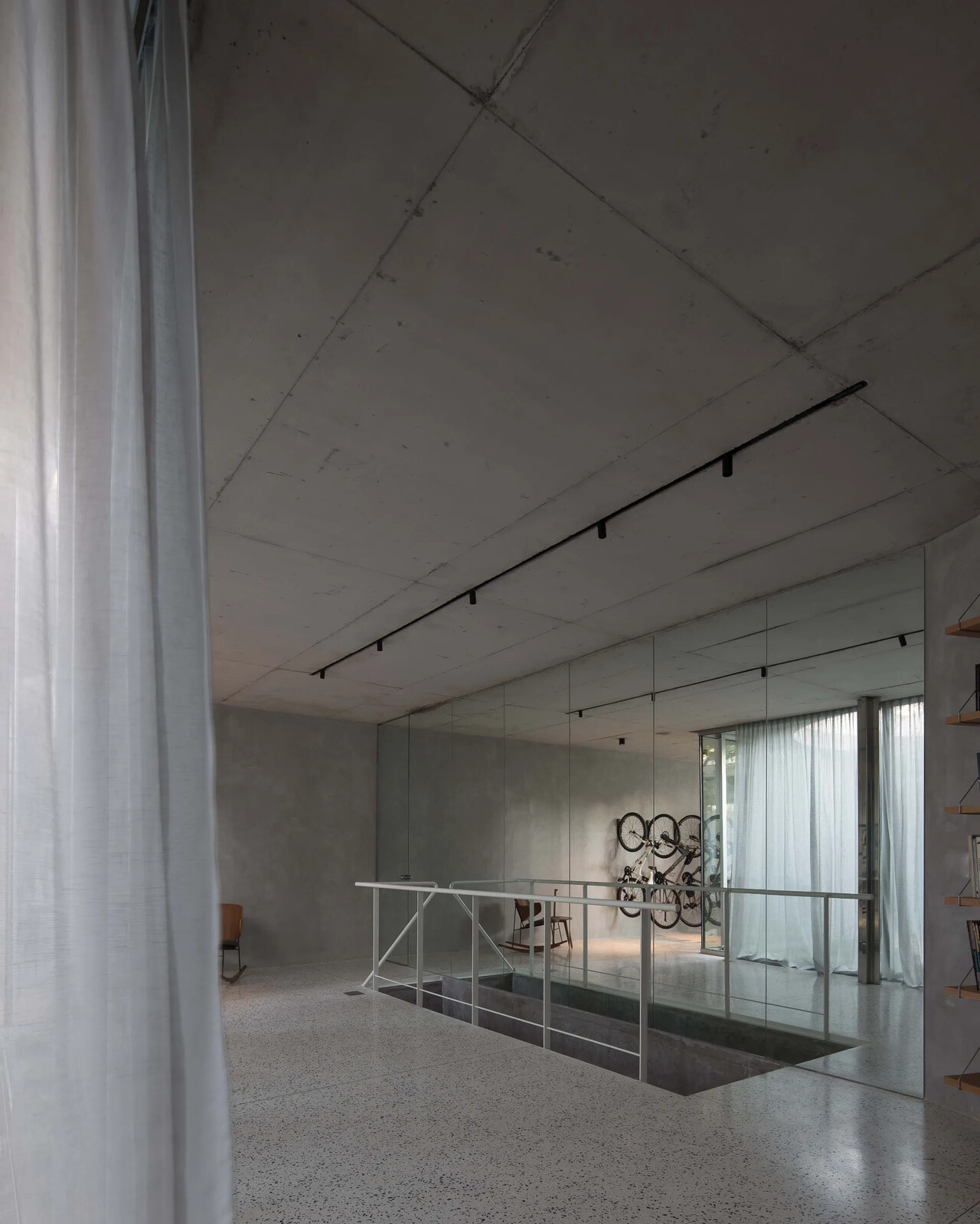
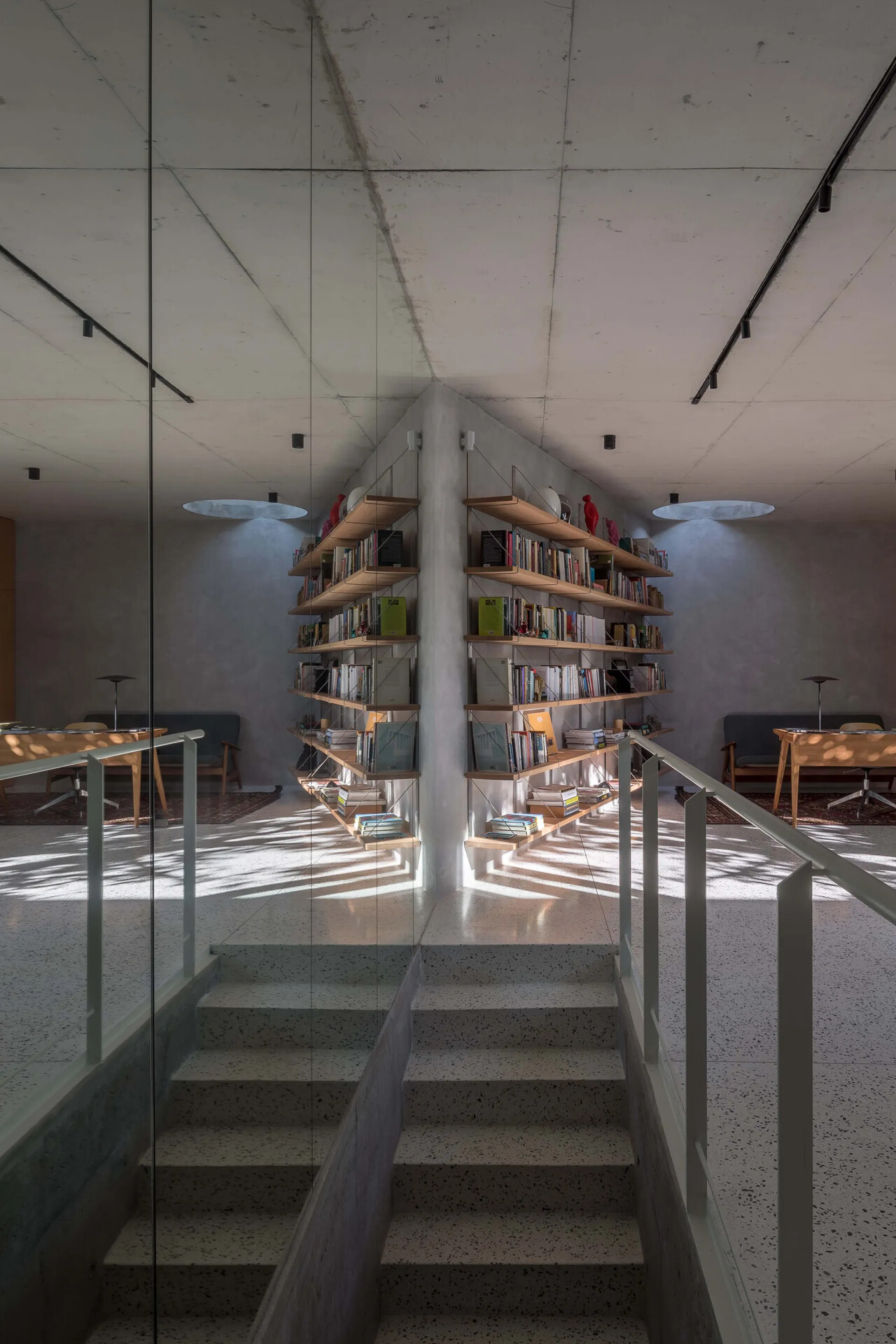
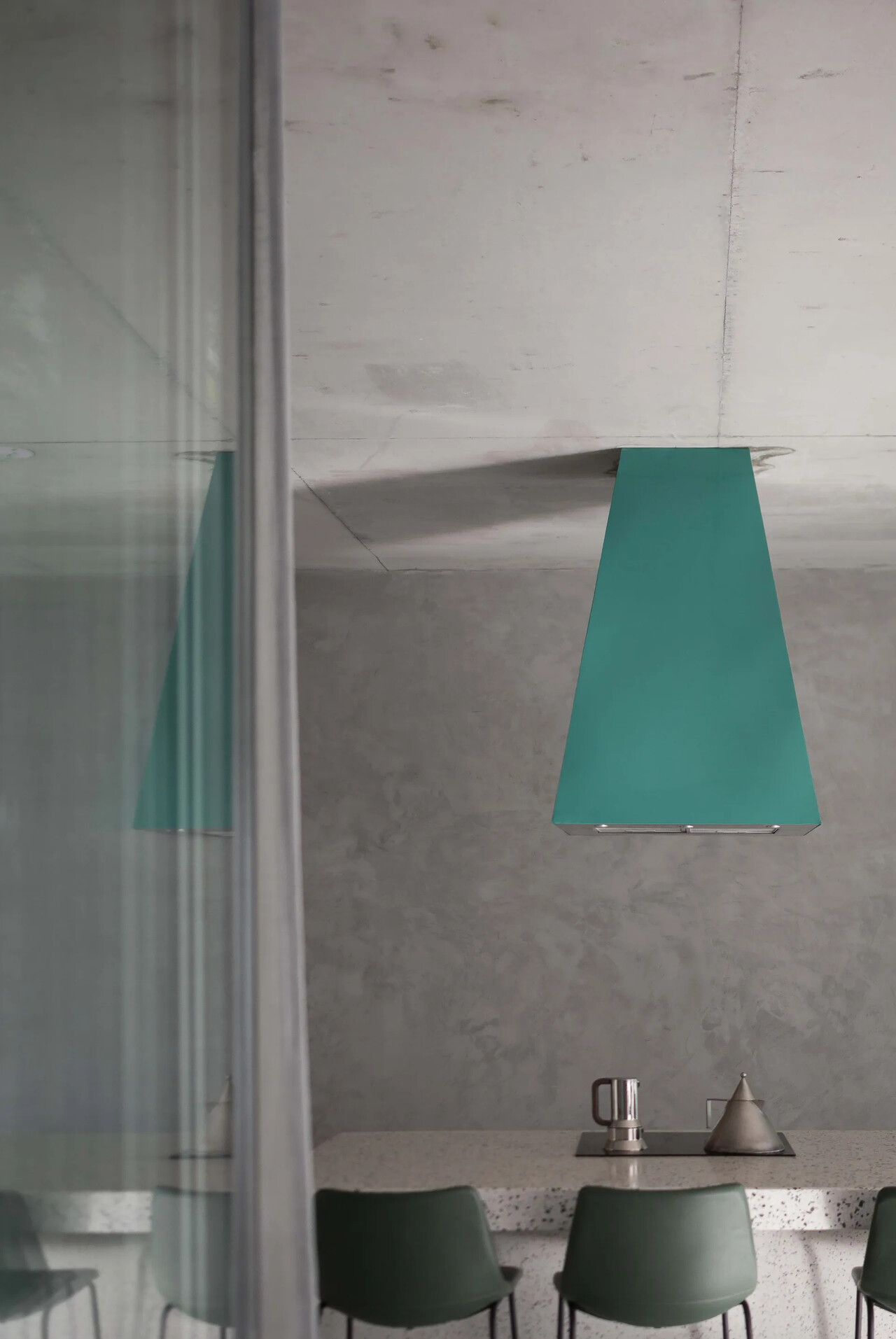
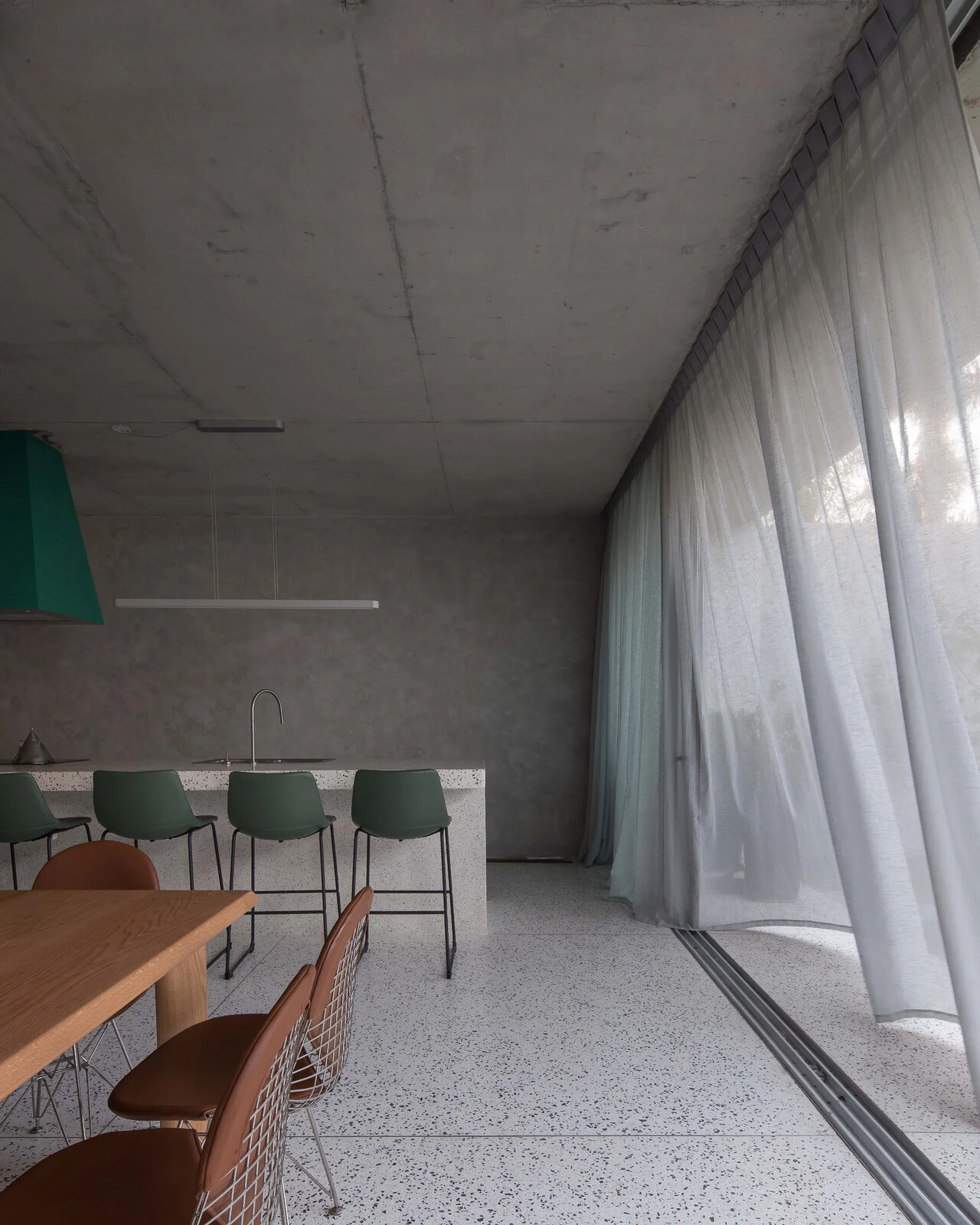
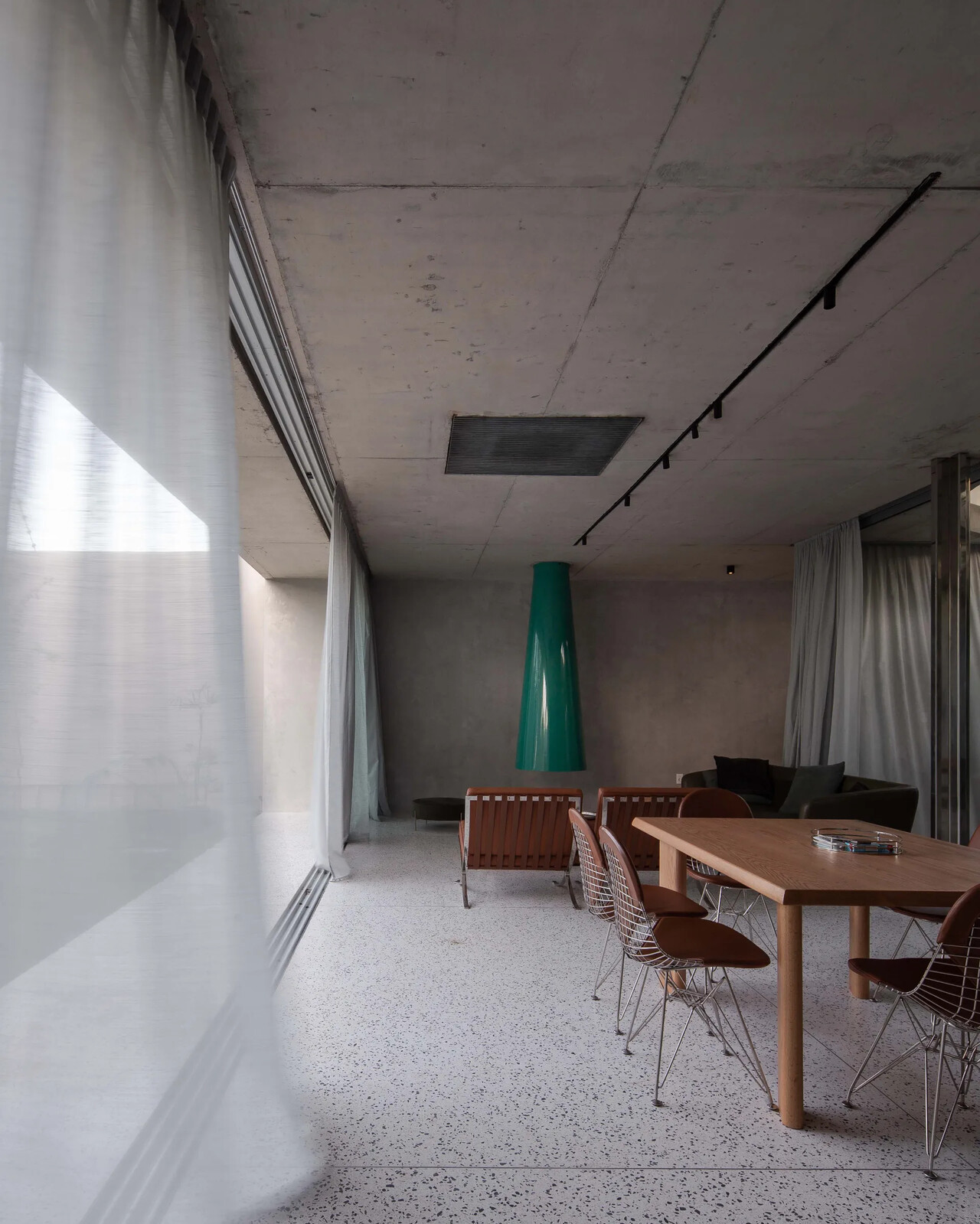
牆面及天花板使用混凝土,整體拋光地面定義了空間的單一材質及中性簡約的氛圍。引入獨特的Pantone色彩,綠色元素形成對比,這種綠色是來自於建築大師勒·柯布西耶的Pantone色卡,與周圍的自然環境交織輝映,在拋光的地面上形成一系列反射,試圖模糊內外之間的關係。
Walls and ceilings of concrete, polished monolithic floors, define a monomaterial and neutral condition of space. As a counterpoint, color is introduced as singular green elements that talk with the enclosed nature. The green is taken from Le Corbusier’s Pantone. A sequence of reflections on the polished surfaces aims to psych out the relationship between the inside and the outside.
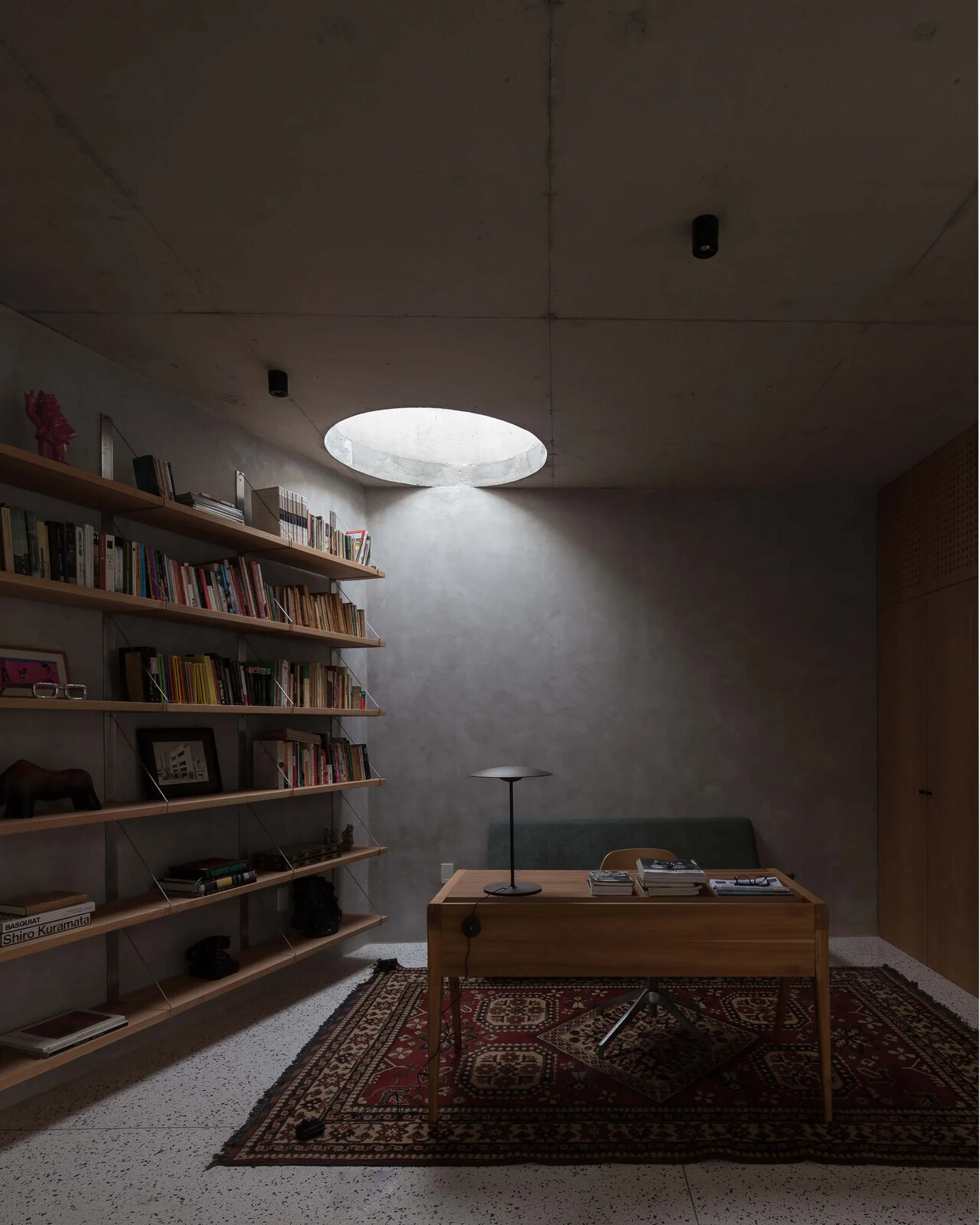
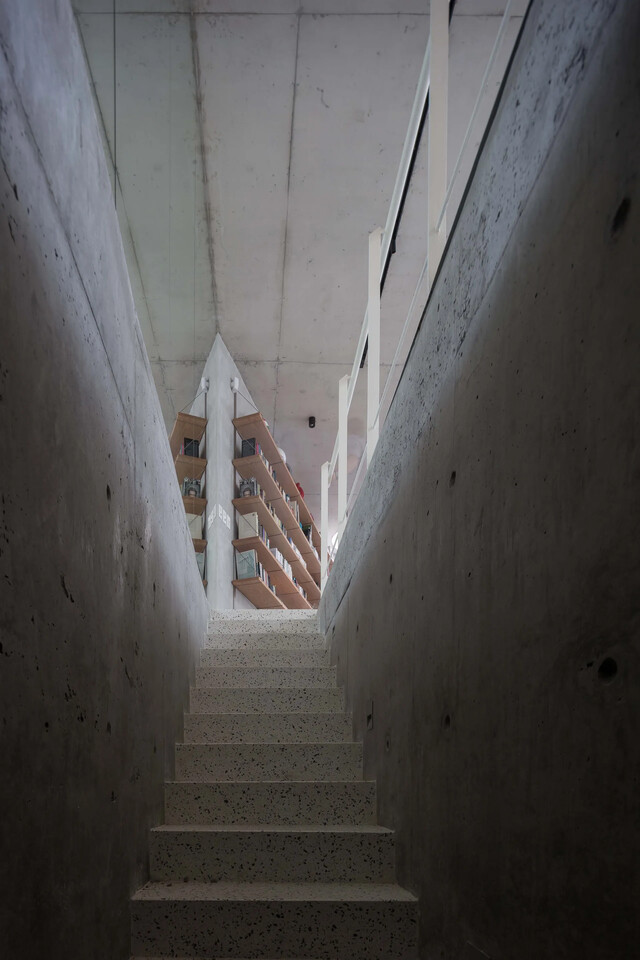
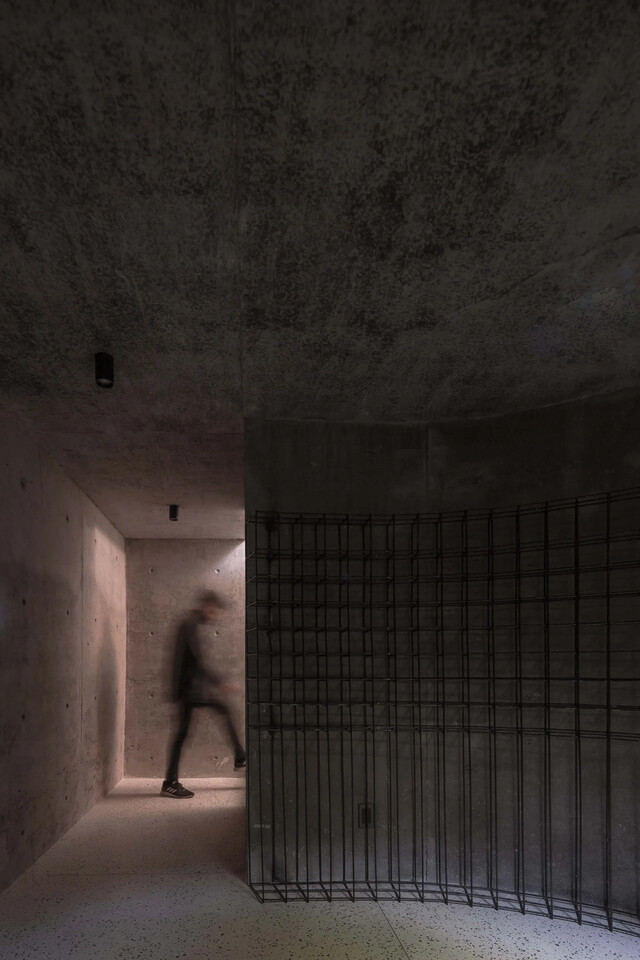
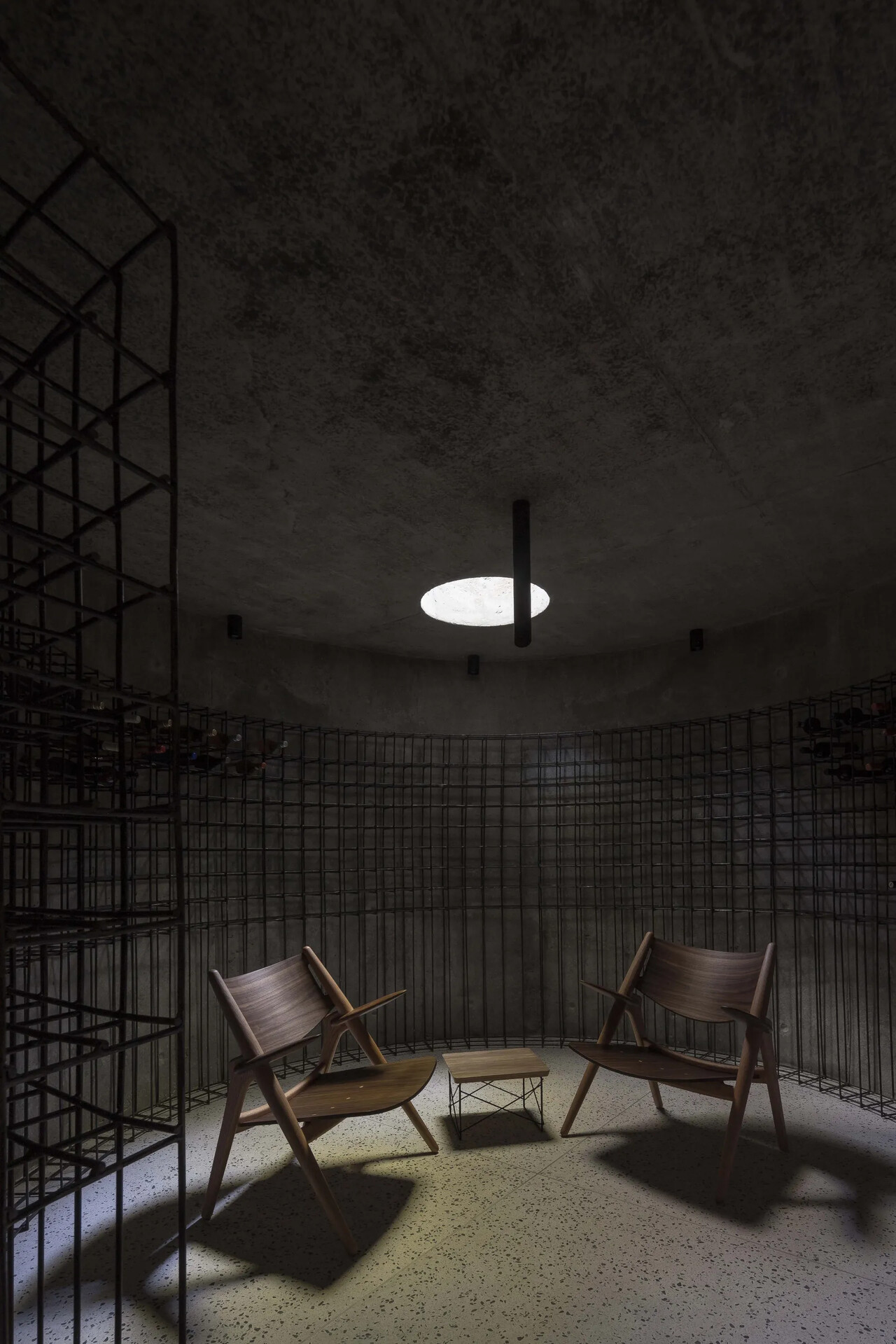
地下室相較於一樓透明細緻的設計形成鮮明對比。企圖營造洞穴般的氛圍,其昏暗混凝土空間設有一個儲藏室及一個酒窖。該平面是一個圓形,將光圈安排在天花板上,為空間頂部崁入微光,讓人聯想起建築師迪斯特(Dieste)為亞特蘭蒂達(Atlantida)的“克里斯托·奧布雷羅”教堂(Cristo Obrero)所設計的洗禮池,這個洗禮池以謙遜和謙卑的形式呈現。
Opposed to the diaphanous noble floor, the basement holds a storeroom and a wine cellar, meant to feel like a dimly lit concrete cave. The wine cellar has a circle shape plan, with an oculus in its ceiling which embeds the space in a zenithal dim light, reminisce on the humility of Dieste’s baptistery that he will project for the “Cristo Obrero” church in Atlantida.