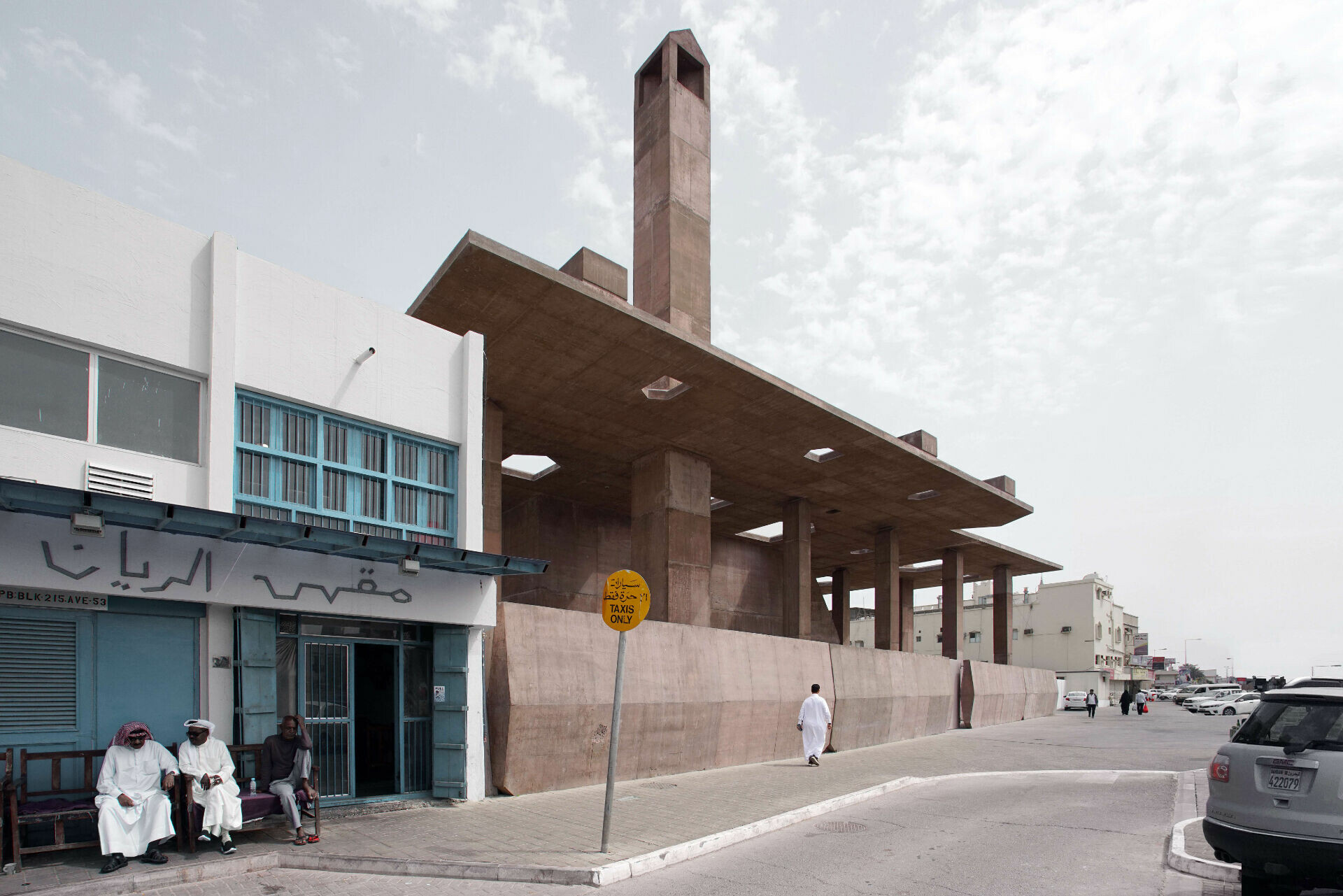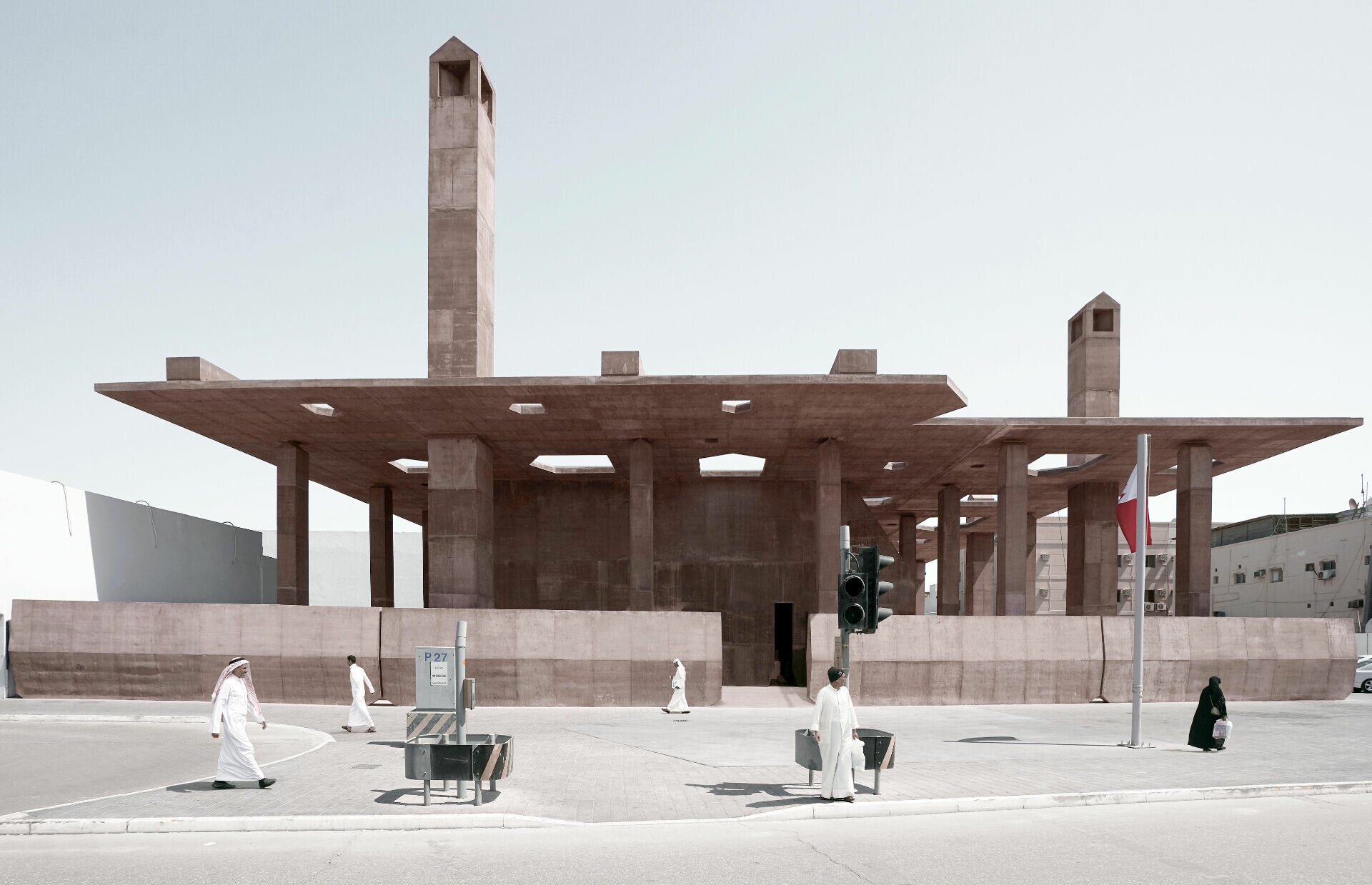
Pearling Site Museum and Entrance to the Pearling Path
Before the discovery of oil, Bahrain’s economy was anchored in the natural pearl trade. For centuries, fleets of pearl-diving vessels departed from the island’s shores, and the town of Muharraq stood at the heart of this maritime economy. The “Pearling Path” draws its name from this legacy—a rich cultural route that threads through the historic core of Muharraq, connecting homes of former pearl merchants, community spaces, and 17 heritage structures. It not only records the economic and social development of the island, but also charts the contours of a coastal nation shaped by the sea. As Bahrain transitioned into the oil era, the decline of the pearl industry marked a deeper cultural shift from traditional livelihoods to modern systems—a transformation that this path still silently narrates.
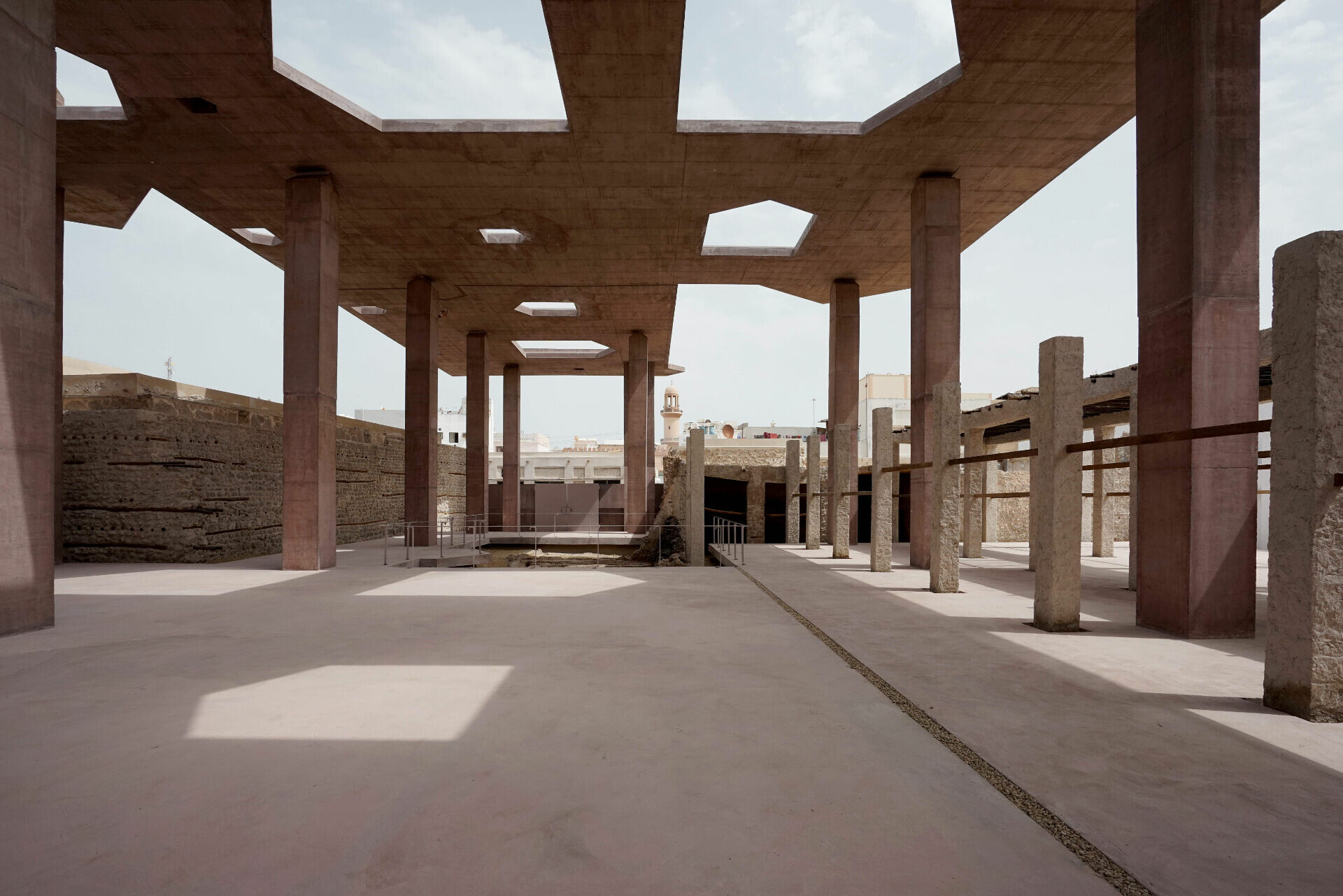
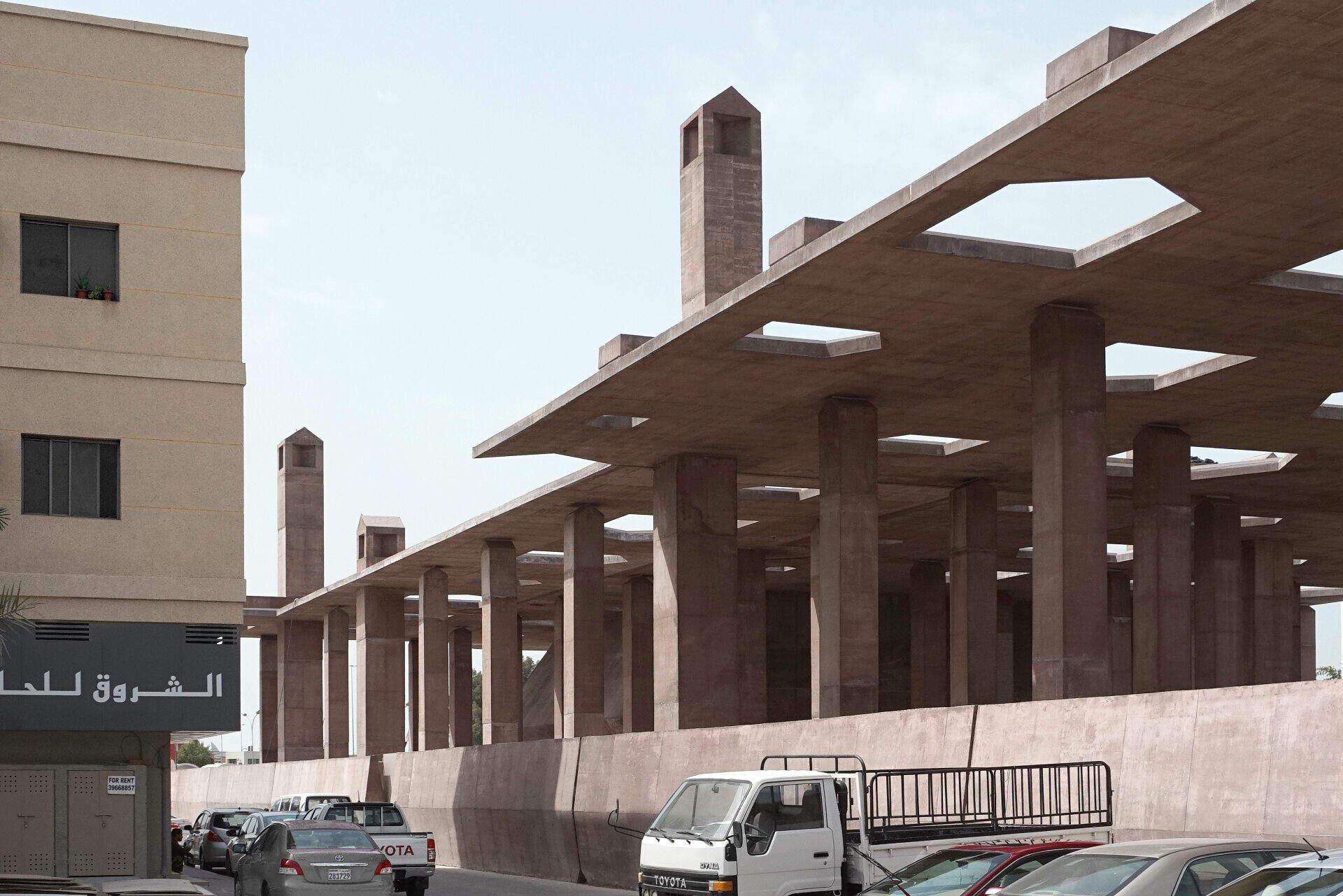
Situated at the entry point of this historic route is the Pearling Site Museum and Entrance, designed by Swiss architect Valerio Olgiati as part of UNESCO’s World Heritage preservation initiative. Rather than referencing vernacular motifs or historical styles, the architecture speaks in an abstract, geometric vocabulary—an autonomous formal language. This structure doesn’t attempt to mimic the past but offers a quiet and commanding presence within the city. It acts as both a prologue and a civic threshold, a spatial proscenium through which visitors begin their journey along the Pearling Path. With the expansive scale of a public park, it functions as an “urban room” for the people of Muharraq, fostering both encounter and reflection.
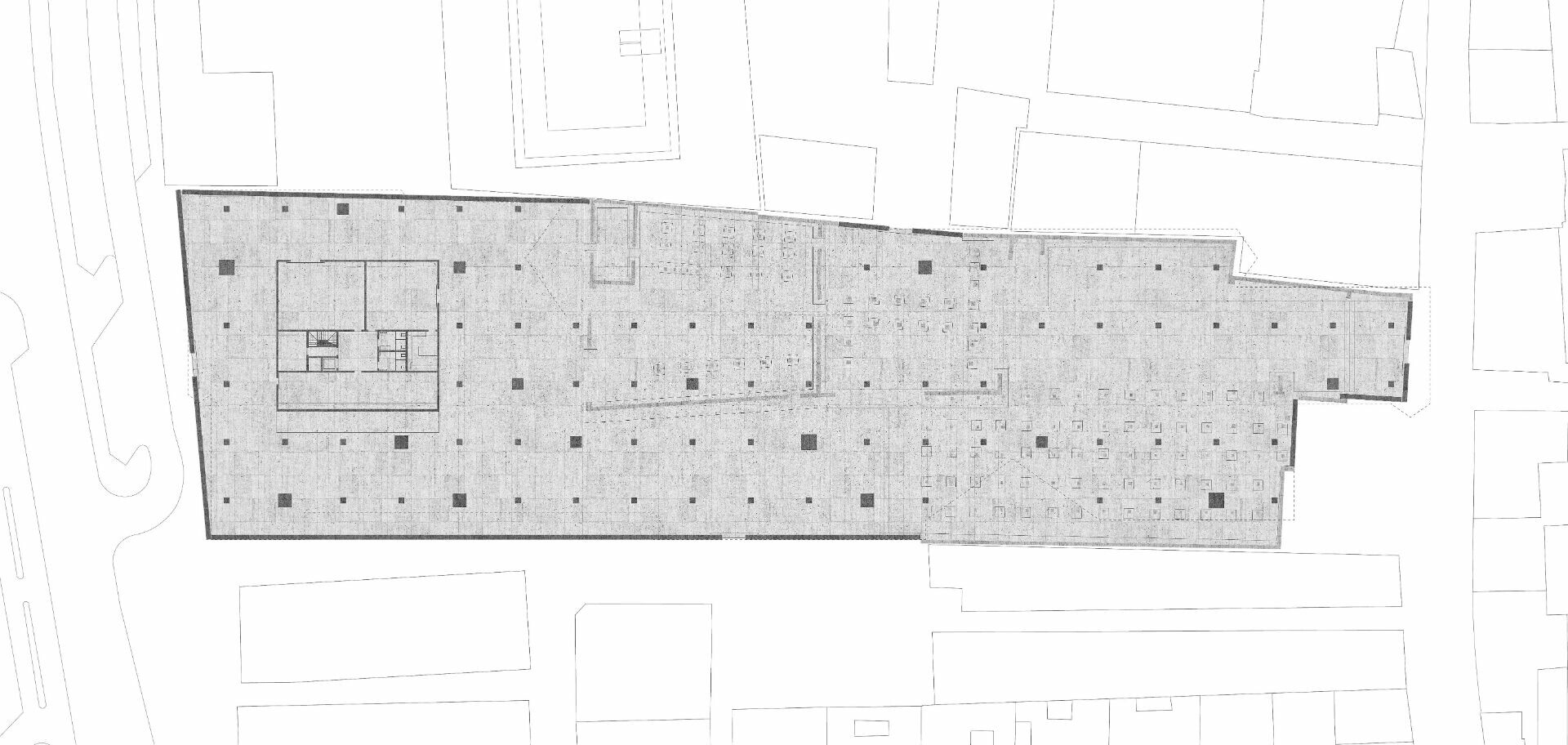
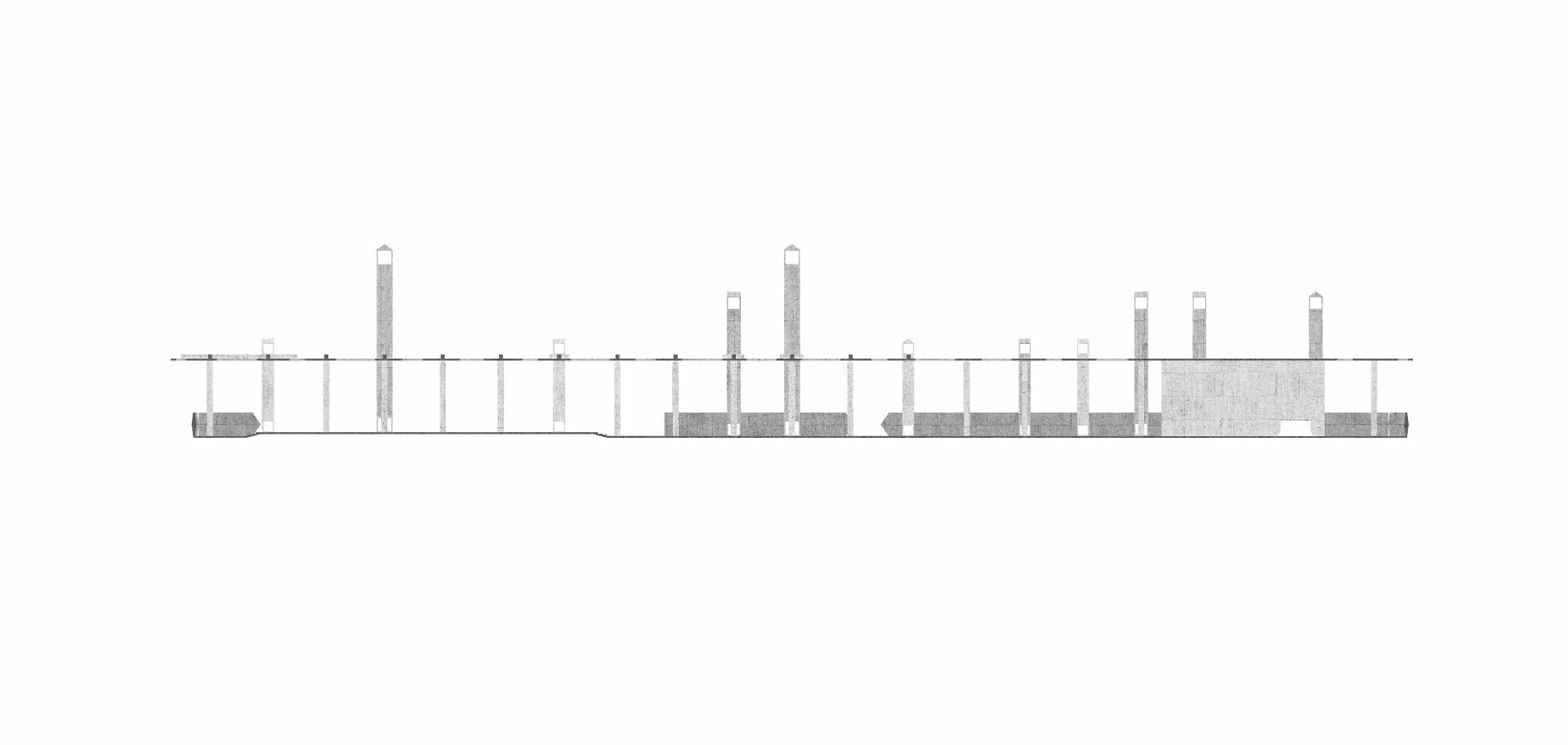
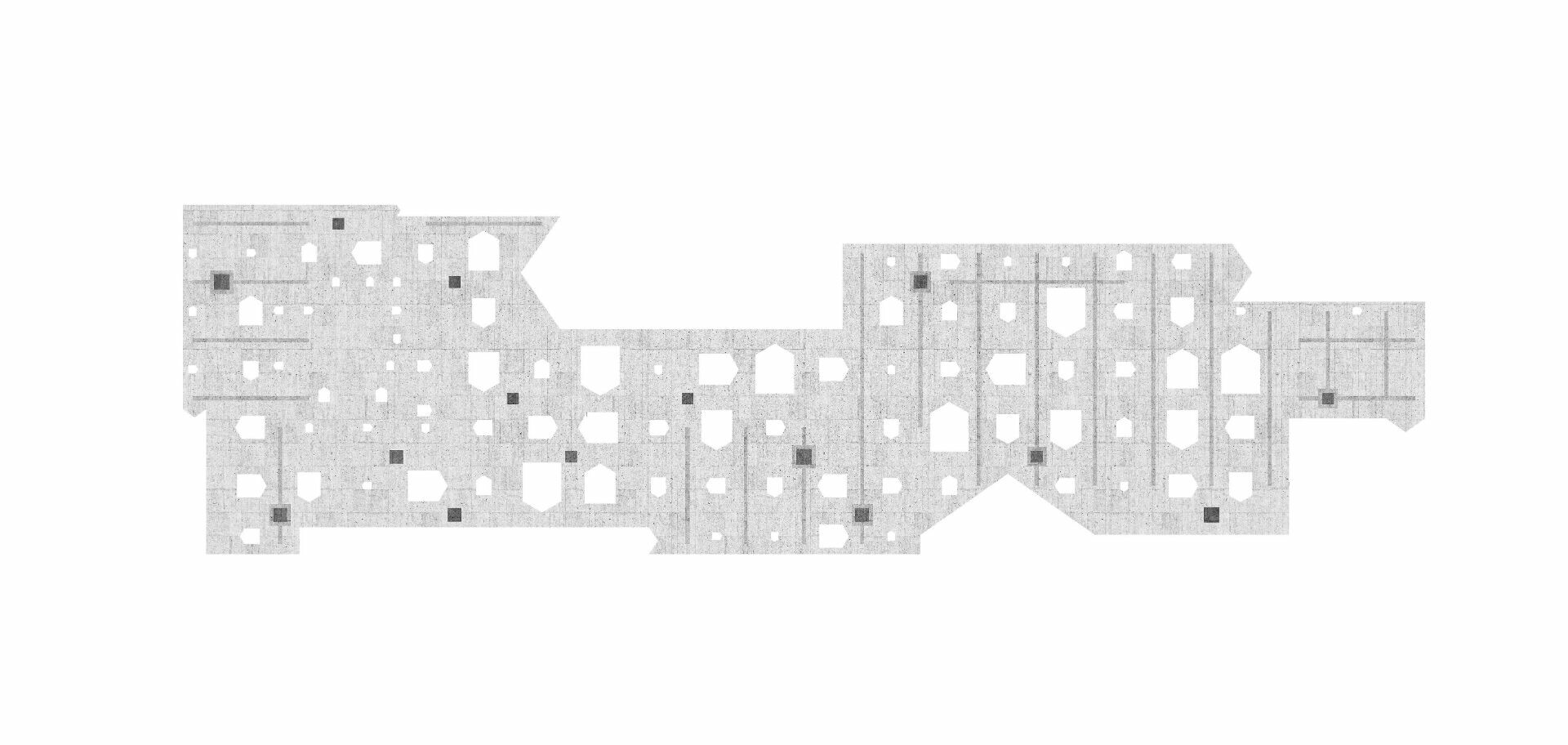
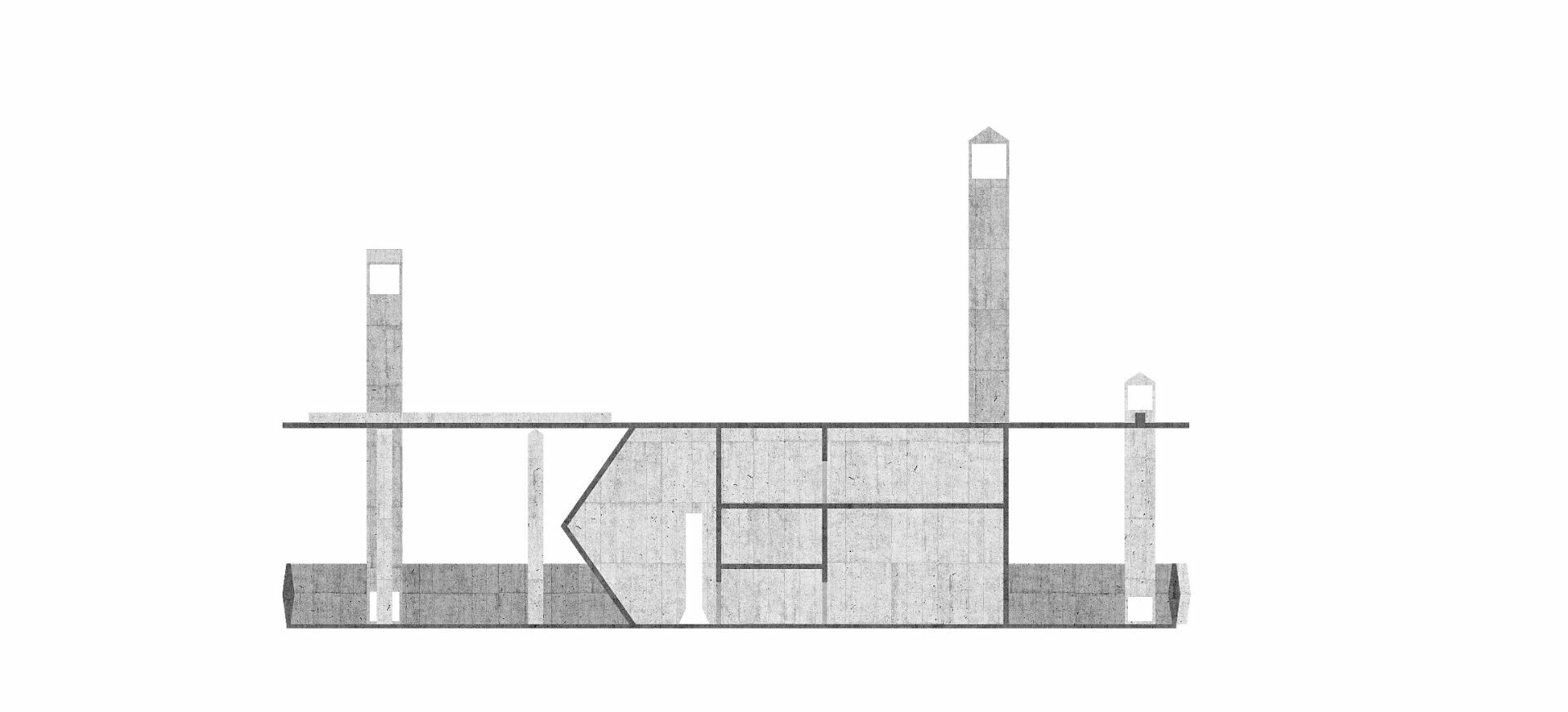
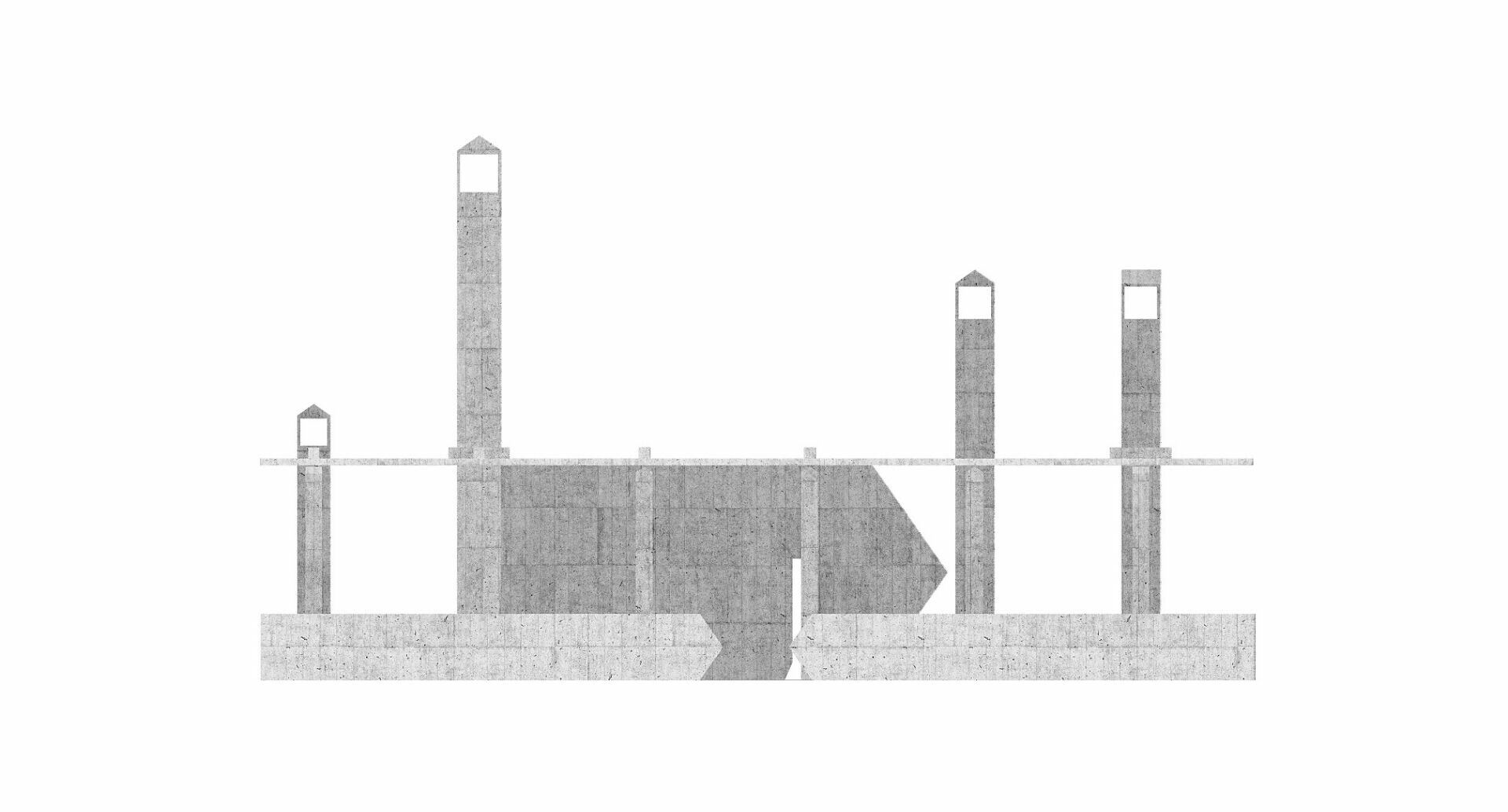
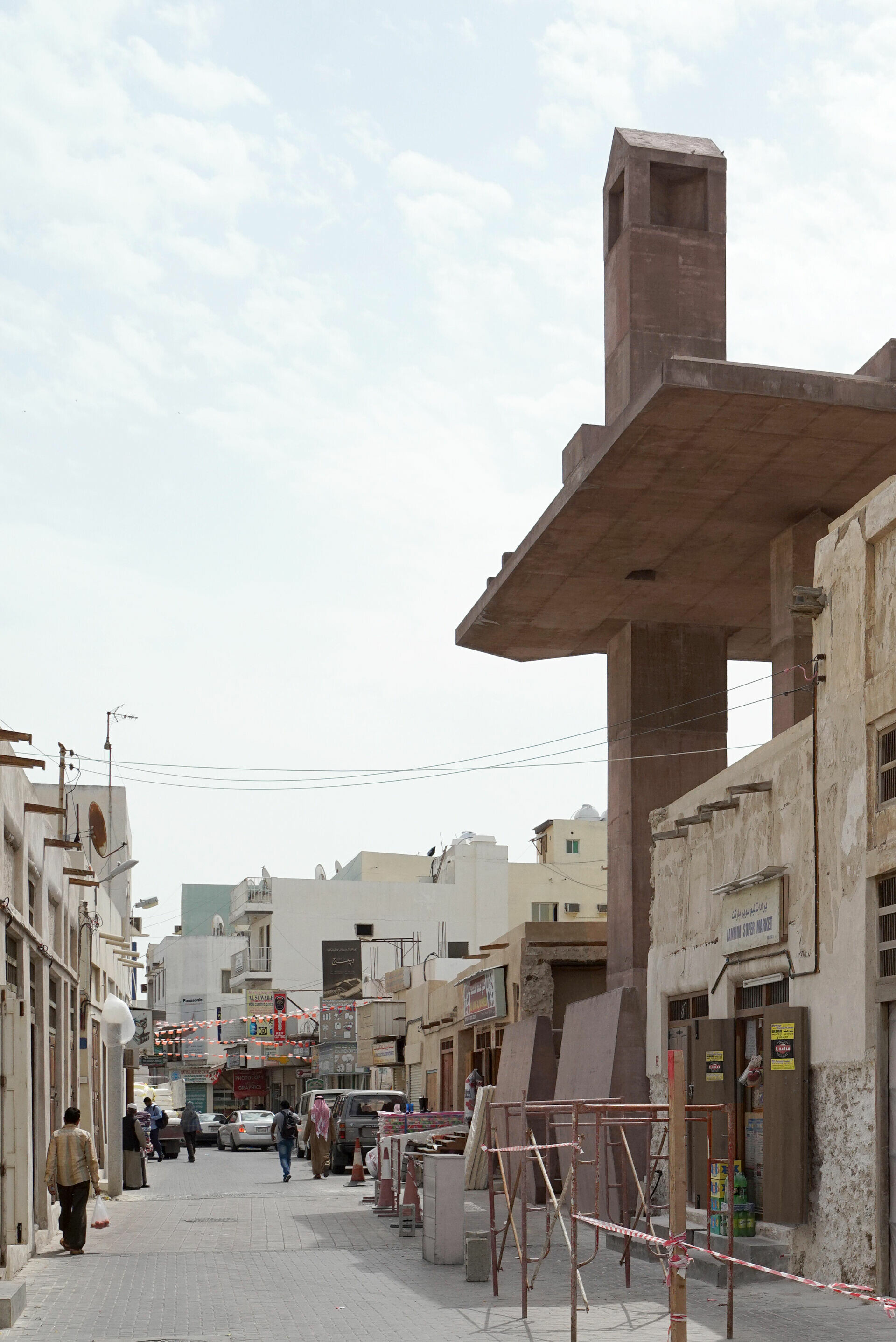
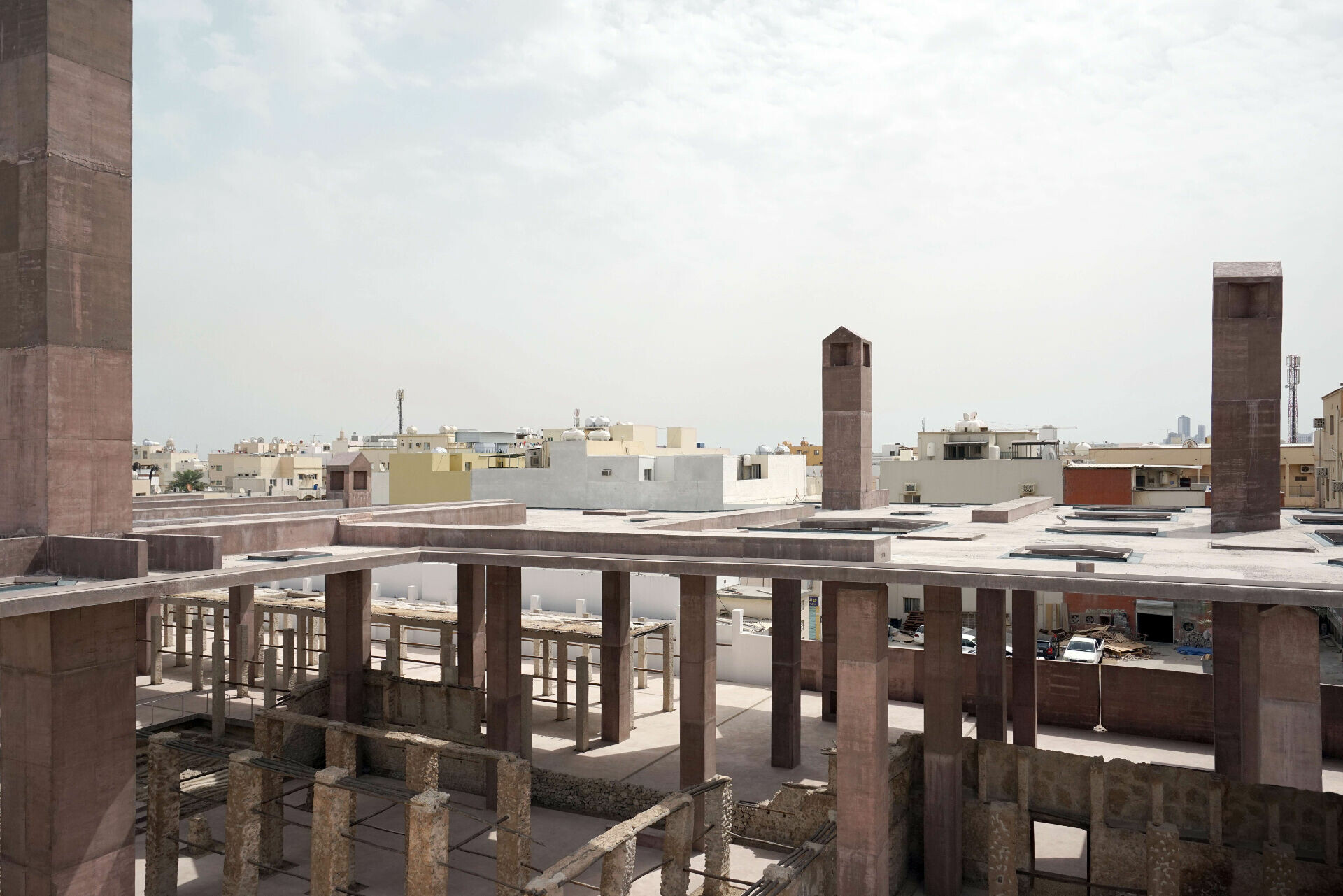
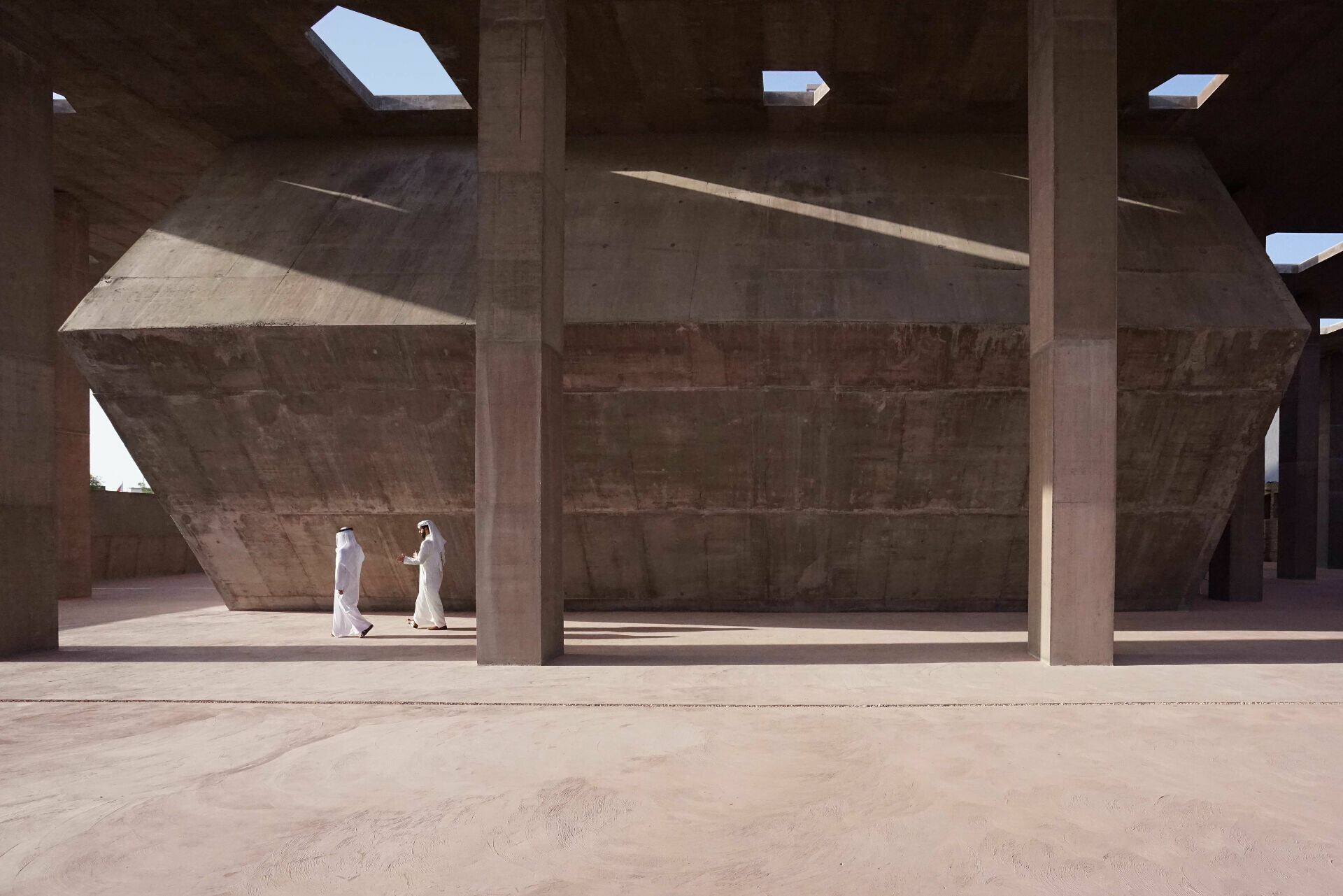
At the core of the building’s structure is a monumental horizontal concrete slab, ten meters above ground, supported by a dense grid of columns. Some of these columns are fitted with reinterpretations of traditional wind towers—not in the literal sense, but abstracted into a passive ventilation strategy. This broad horizontal roofscape provides vital shade under the Bahraini sun, creating a much-needed microclimate within the dense city. It evokes memories of traditional souks, mosque courtyards, and shaded plazas, while the columnar rhythm and tower-like elements form a spatial order akin to a cultivated urban forest. More than symbolic, these interventions subtly guide airflow and thermal comfort, embodying a sustainable gesture deeply rooted in desert culture.
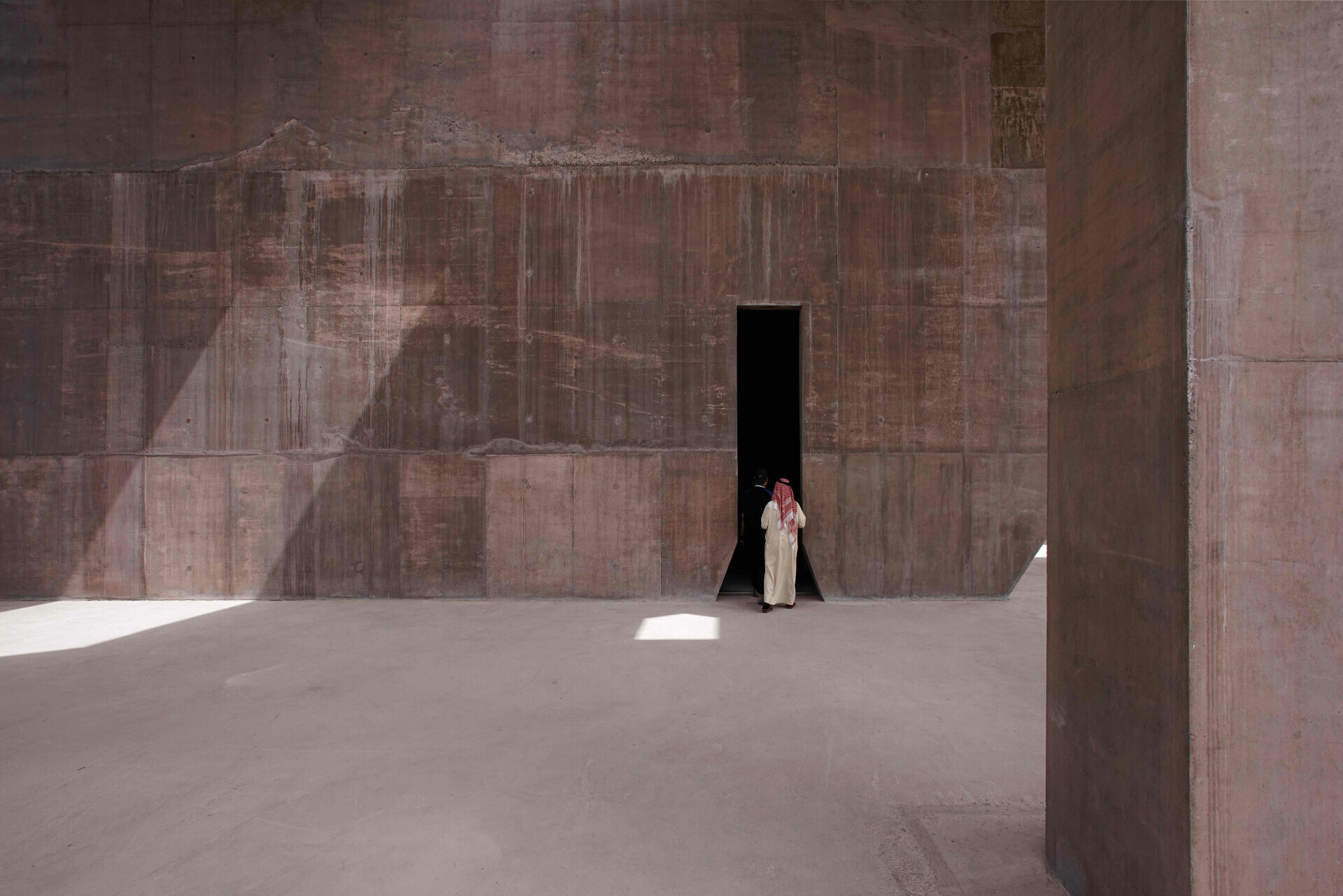
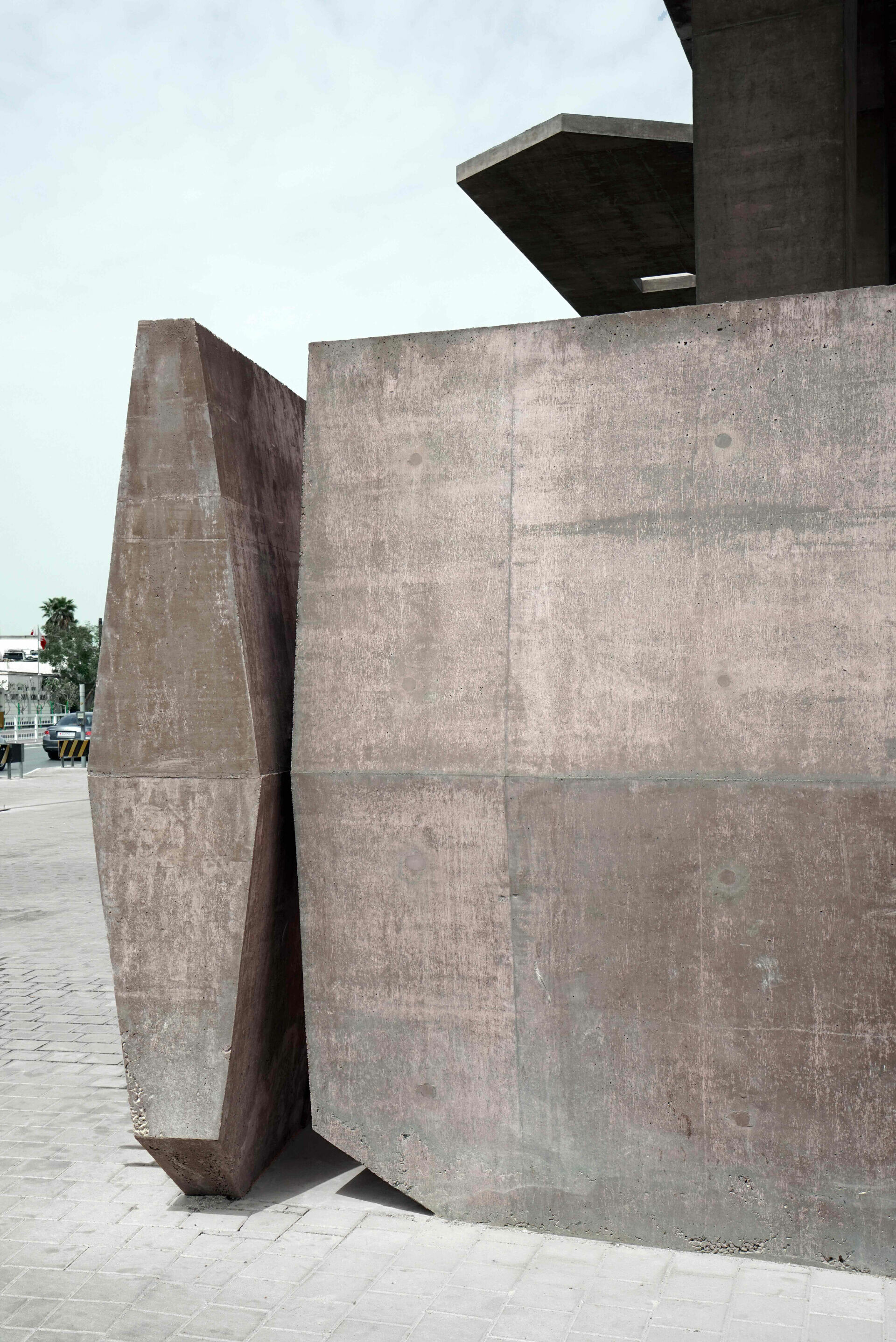
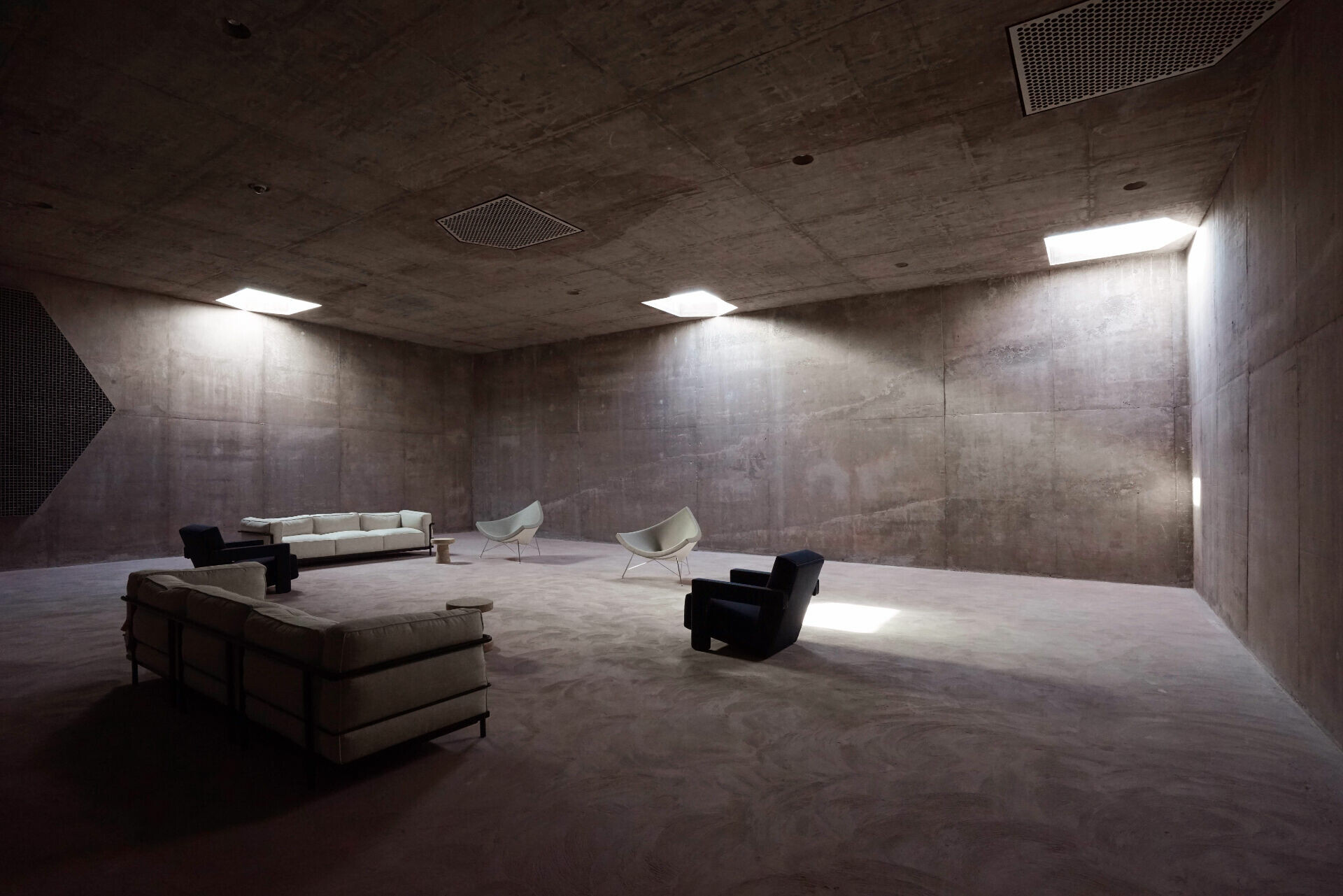
Nestled within the shadows of the canopy is a modest yet powerful volume—the museum itself. Cast in in-situ concrete with exposed formwork texture, its reddish-brown facade resonates with the surrounding stone walls and narrow alleys of the historic town. But Olgiati resists any gesture toward nostalgic revival. Instead, he constructs an architecture of non-referentiality—eschewing symbolism, imitation, or historical pastiche. Meaning emerges not from external associations but from the intrinsic relationships between form, space, material, and structure. This enigmatic volume does not reenact history; rather, through its rough tactility and monolithic presence, it invites abstract recollection. It offers a contemporary reading of heritage—not through representation, but through experience. In this space, one is called to engage with architecture not as narrative, but as encounter—through light, weight, enclosure, and the body’s own movement through space.
Architect | Valerio Olgiati
Project Manager | Sofia Albrigo
Collaborator | Anthony Bonnici
Local Architect | Emaar Engineering
Client | Bahrain Authority of Culture & Antiquities
Type | Cultural Facility / Museum / Urban Room
Materials | In-situ Concrete / Steel
Contractor | Almoayyed Contracting Group
Location | Muharraq, Bahrain
Planning Start | August 2016
Construction Start | May 2018
Completion | February 2019
Site Area | 6,726 m²
Volume | 49,855 m³
Plans Copyright | Archive Olgiati